FULL STORY:“YOU’RE NOT FAMILY, WANDA! YOU’RE OUR HIRED HELP!” My Daughter-in-Law Humiliated Me in Front of 40 Thanksgiving Guests After I Spent 8 Hours Cooking for Them — But Months Later, I Discovered What She Had Done Using My Name
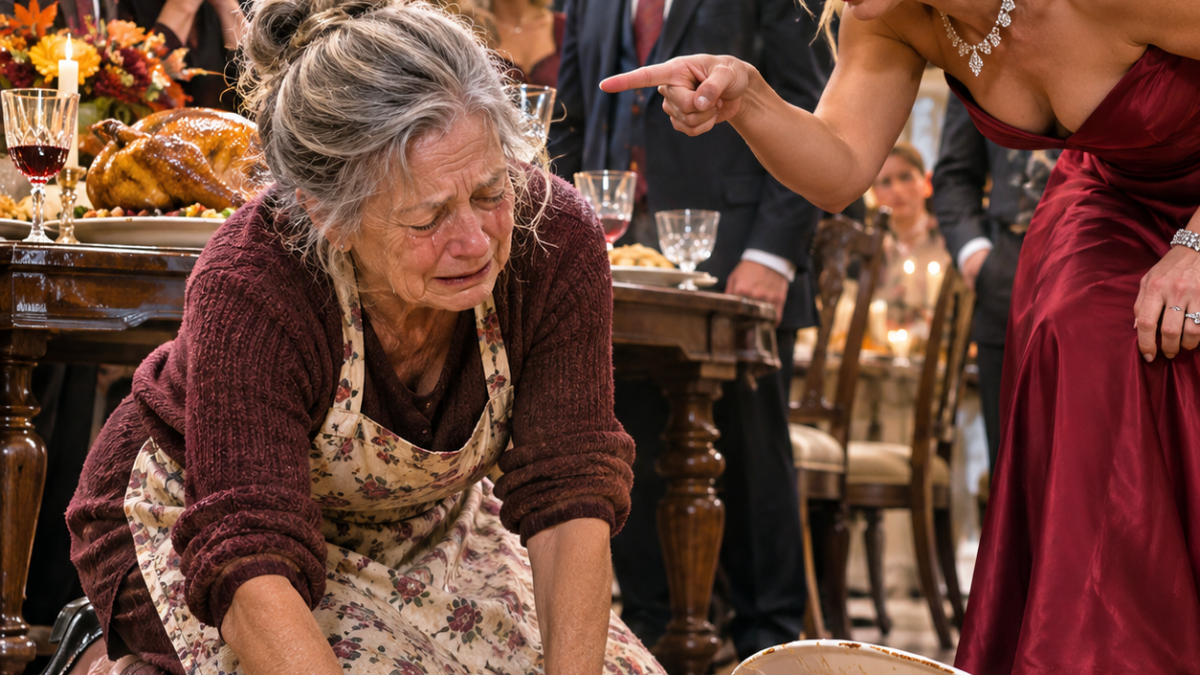
The search results filled my laptop screen.
Lisbon.
Portugal.
Long-stay visas.
Apartments.
Retirement income requirements.
Flights from Toronto.
I sat at the kitchen table with my coat still on, staring at photographs of streets paved with small patterned stones and buildings covered in blue-and-white tiles.
Outside, the October wind moved through the bare branches of the maple tree Glenn had planted beside our driveway.
The house was quiet.
Too quiet.
It had been quiet for four years.
But this was the first time I wasn’t afraid of what that silence might mean.
I removed my coat.
Hung it over the back of a chair.
And opened the folder again.
Later.
Glenn had named it.
He’d always been the more optimistic one.
Not because his life had been easy.
It hadn’t.
But he had a remarkable ability to believe that something wonderful might still be waiting around the next corner.
“We’ll go when we’re retired, Wanda,” he used to say.
I’d laugh.
“Which time? When you’re retired or when you’re actually willing to stop doing favors for everybody?”
He’d grin.
“Both.”
Then he’d reach across the kitchen table, squeeze my hand, and say, “One day we’re going to sit in a little café somewhere and let other people do the cooking.”
I could still hear his voice.
So clearly that for a moment, I turned my head toward his empty chair.
Then the silence returned.
Glenn died of a heart attack at sixty-one.
Four years before that Thanksgiving.
We had been married long enough that his absence changed the shape of everything.
The kitchen.
The grocery store.
The sound of the television.
The bed.
Even the way I locked the front door at night.
There were days when I reached for the phone to tell him something, then remembered.
There were mornings when I made two cups of coffee without thinking.
And there were evenings when I opened our travel folder because looking at the places we’d wanted to see felt like having one more conversation with him.
I’d kept adding to it after he died.
Apartments in France.
A walking tour of Spain.
A cooking class in Italy.
A little furnished flat in Lisbon with a view of the Tagus River.
But I never booked anything.
There was always a reason.
Aaron needed help.
Kristen had something planned.
Holly was busy.
There was a birthday.
A holiday.
A family dinner.
Somebody else’s life always seemed to require my presence.
And mine could wait.
That was the bargain I’d made without realizing it.
Everyone else got the present.
I got later.
My name is Wanda Bailey.
I was sixty-four that Thanksgiving Monday.
I’m sixty-five now.
For thirty years, I worked for a school board.
It wasn’t glamorous work, but I was proud of it.
There were schedules to manage, problems to solve, parents to reassure, colleagues to support, and a thousand small responsibilities that kept ordinary days moving.
I became the person people approached when they needed something done.
Not because I was especially powerful.
Because I usually said yes.
Could I stay late?
Yes.
Could I help organize the event?
Of course.
Could I review the paperwork?
Leave it with me.
Could I cover for someone?
I’ll figure it out.
I enjoyed being dependable.
I liked making things easier for people.
For most of my adult life, I believed usefulness was one of the most important forms of love.
And perhaps it can be.
But somewhere along the way, I stopped recognizing the difference between helping because I wanted to and helping because everyone expected that I would.
The difference seems obvious now.
It wasn’t obvious then.
Aaron was my only son.
Holly was my daughter, and she’d built a full life of her own.
She had a husband, a home, and a twelve-year-old daughter named Piper.
They lived close enough for visits but far enough that nobody expected me to appear at their house whenever something needed doing.
Holly called often.
She asked how I was.
She listened when I answered.
Piper FaceTimed every Sunday, usually carrying some new obsession into the conversation.
One week it was deep-sea creatures.
The next, architecture.
Another week, she’d spent hours photographing interesting shadows and wanted me to examine every picture.
I loved those conversations.
Piper was bright, curious, and beautifully direct.
She never asked me to prove I loved her by exhausting myself.
If I couldn’t visit, she understood.
If I was busy, we talked later.
But Aaron was different.
Not because I loved him more.
I didn’t.
I loved both my children fiercely.
Aaron simply had a way of making me feel needed.
And after Glenn died, being needed had seemed like a reason to keep moving.
When Aaron married Kristen nine years earlier, I was genuinely happy for him.
Their wedding was held at a winery in Niagara-on-the-Lake.
The weather was beautiful.
The tables were decorated with flowers.
I wore a lavender wrap dress that Glenn said made me look like someone who belonged on the cover of a magazine.
I laughed at him.
He took my hand.
“You do.”
At the ceremony, Aaron looked nervous until Kristen appeared.
Then his face changed.
He smiled in a way I hadn’t seen since he was a little boy running toward me with his arms open.
I remember thinking, She makes him happy.
And I wanted that for him.
Kristen was ambitious.
Confident.
Social.
She had a way of walking into a room and making people pay attention.
Aaron was quieter.
Thoughtful.
Sometimes hesitant.
I believed they balanced each other.
At the reception, Kristen hugged me.
“I’m so happy to be part of your family, Wanda.”
I hugged her back.
“So am I, sweetheart.”
I meant it.
I wish I could tell you that I saw everything coming.
That I recognized every warning sign and simply ignored them.
But that’s not true.
The changes were too small at first.
And because I liked Kristen, I interpreted them generously.
The first Thanksgiving after their wedding, Kristen asked whether I would help with dinner.
“Your turkey is amazing,” she said.
I laughed.
“It’s a turkey, sweetheart.”
“Not yours. Yours is special.”
I was flattered.
Glenn and I went over early.
He helped carry groceries.
I cooked.
Kristen arranged the table and greeted guests.
Aaron poured drinks.
It was a lovely day.
Everyone thanked me.
I went home tired but happy.
The following year, Kristen said, “We thought you’d do the turkey again.”
I did.
Then she asked me to make the pies.
Of course.
The year after that, she handed me a shopping list.
The year after that, she assumed I would arrive early enough to prepare almost everything.
The transition happened so gradually that I never identified the moment a favor became a permanent duty.
I simply showed up.
Every Thanksgiving.
Every time.
When Glenn was alive, he sometimes noticed things before I did.
After one holiday dinner, he found me in the kitchen washing the last of the serving dishes while laughter came from the living room.
He picked up a towel.
“You know,” he said, “those people have hands.”
I laughed.
“Glenn.”
“I’m serious.”
He began drying a plate.
“You cooked everything.”
“It’s fine.”
He looked toward the living room.
“And you’re cleaning everything.”
“They hosted.”
He raised an eyebrow.
“They provided a house.”
I smiled.
“Don’t start.”
He leaned closer.
“Wanda, I love that you’re generous.”
I kept washing.
“But sometimes you make it too easy for people to forget you’re a person.”
I remember laughing at that.
I wish I hadn’t.
Because after he died, there was no one left standing beside me in the kitchen, quietly reminding me that I was allowed to sit down.
Kristen’s expectations grew after Glenn’s funeral.
At first, I welcomed the requests.
She asked whether I could prepare a casserole while she and Aaron were busy.
I did.
She asked me to help with a dinner.
I did.
She needed someone to watch their dog one weekend.
Of course.
I liked feeling useful.
The house was so empty without Glenn that sometimes even an inconvenient task seemed better than another afternoon alone.
But the favors became assumptions.
If I watched the dog once, I was apparently available every time.
If I cooked during a busy week, the next busy week brought another request.
If I said yes to a holiday meal, I was automatically responsible for the next one.
Gradually, the language changed.
“Would you mind helping?”
Became:
“We’ll need you here by ten.”
Then:
“Make sure you bring the cranberry sauce.”
Then:
“Don’t forget to pick up the groceries.”
There were no real questions anymore.
Only instructions delivered with the cheerful confidence of people who expected me to comply.
Aaron noticed.
I know he did.
There was a particular expression he wore when Kristen crossed a line.
He would look just past my shoulder.
Not at me.
Not directly at his wife.
At some fixed point in the distance.
As though the wall behind me had become fascinating.
I learned to recognize that expression.
It appeared when Kristen criticized something I’d cooked.
When she changed a plan without asking me.
When she volunteered my time.
When she handed me a task in front of other people, making refusal awkward.
Aaron rarely objected.
Sometimes he offered a weak smile.
Sometimes he said, “Mom doesn’t mind.”
And I let him say it.
Because I didn’t want to embarrass him.
Because I didn’t want to create conflict in his marriage.
Because I thought keeping the peace was the loving thing to do.
I didn’t understand then that peace maintained by one person’s constant surrender isn’t peace.
It’s exhaustion with better manners.
The real trouble began eight months before Thanksgiving.
Kristen left her marketing job to launch a business.
She called it a boutique personal chef service.
Daily Table Co.
She had a website designed.
Business cards printed on expensive paper.
Professional photographs taken.
Her social media accounts filled with pictures of elegant dinner tables and beautifully plated meals.
She talked about her vision constantly.
“Intimate supper experiences,” she called them.
Personalized menus.
Thoughtful hospitality.
Elevated home dining.
I thought it sounded promising.
Kristen was talented at marketing.
She understood presentation.
She knew how to make ordinary things seem special.
And I wanted her to succeed.
I told her so.
“I’m proud of you for taking the chance.”
She hugged me.
“Thank you, Wanda.”
Then she added, “You know, your cooking experience could be really helpful.”
I smiled.
“I can give you a few recipes.”
She laughed.
“Oh, I have something bigger in mind.”
I didn’t ask what she meant.
I should have.
The first Thursday call seemed harmless.
“Wanda, can I run the weekend menu by you?”
Of course.
We discussed ingredients.
Cooking times.
What could be prepared ahead.
I enjoyed the conversation.
It reminded me of planning holidays with Glenn.
Kristen seemed grateful.
Then on Saturday, she asked whether I could come over for a couple of hours.
“We have a full booking.”
I hesitated.
“What do you need?”
“Just a little prep help.”
I went.
When I arrived, the kitchen was full of ingredients.
Vegetables.
Herbs.
Meat.
Sauces.
Shopping bags.
Kristen handed me a knife.
“Can you start with the onions?”
I looked around.
“How many?”
She pointed toward a large pile.
“All of those.”
I laughed.
“That’s quite a few.”
She smiled.
“I knew you could handle it.”
Three hours later, I was still chopping, peeling, washing, and preparing.
Kristen moved through the dining room wearing a beautiful linen apron.
She spoke with paying customers about her culinary philosophy.
The importance of family traditions.
The warmth of home cooking.
The emotional meaning of food.
I listened from the kitchen.
My hands smelled of onions.
My back ached.
And every time she described the menu as her personal creation, I felt an uncomfortable little flicker inside my chest.
I told myself not to be petty.
It was her business.
She had developed the concept.
I was helping.
But the thought stayed with me.
She was the face of the business.
I was doing much of the work behind the door.
The customers had paid two hundred and fifty dollars a person.
I learned that accidentally.
I overheard Kristen discussing the booking with Aaron.
I wasn’t upset that she charged for her service.
She was running a business.
I understood that.
What troubled me was that my role had never been discussed honestly.
I wasn’t an employee.
I wasn’t a partner.
I wasn’t being paid.
And I hadn’t agreed to volunteer indefinitely for commercial events.
I’d agreed to help family.
Kristen seemed to consider those things interchangeable.
After the guests left, I stayed to clean.
Aaron came into the kitchen holding a glass of water.
“Thanks, Mom.”
I looked toward him.
“Your wife had a good night.”
He smiled.
“Yeah.”
I glanced toward the sink.
“Could you help with these dishes?”
His eyes moved toward the living room.
“Kristen wanted me to check something.”
I waited.
Then he said, “Just leave them if you’re tired.”
I looked at the stacked pans.
I knew that if I left them, Kristen would complain the next day.
So I stayed.
And finished.
I helped again the following Saturday.
And the following Thursday, Kristen called as though my availability had already been established.
“Wanda, I’m sending the shopping list.”
I stared at my phone.
“Kristen, I haven’t said I can come.”
There was a pause.
“Oh.”
I waited.
Then she laughed lightly.
“I just assumed.”
I tried to keep my voice warm.
“I have plans this weekend.”
“What plans?”
The question caught me off guard.
I wasn’t accustomed to having to justify a Saturday.
“Personal plans.”
She sighed.
“That’s unfortunate. We’re fully booked.”
“I hope it goes well.”
There was another pause.
Then she said, “I’ll figure something out.”
Her tone made it sound as though I’d let her down.
I spent the rest of the afternoon feeling guilty.
That was the worst part.
I hadn’t broken a promise.
I hadn’t canceled an agreement.
I’d simply declined unpaid work.
And I still felt as though I’d failed someone.
Aaron called that evening.
“Hey, Mom.”
I smiled.
“Hello, sweetheart.”
He sounded uncomfortable.
“Kristen says you can’t help Saturday.”
“That’s right.”
He paused.
“She’s kind of stressed.”
I looked toward the window.
“I’m sorry to hear that.”
Another pause.
“She has a full booking.”
“I understand.”
“She’s counting on you.”
I felt something tighten inside me.
“Aaron, she never asked whether I was available.”
He sighed.
“Could you please just help one more time?”
I closed my eyes.
“Why?”
He seemed surprised.
“What?”
“Why does she need me specifically?”
He hesitated.
“She trusts your cooking.”
“Then perhaps she should hire kitchen help.”
Silence.
Aaron shifted.
“Mom, you know how expensive that is when you’re starting out.”
I stared at the floor.
There it was.
The part nobody wanted to say.
Paying a worker would cost money.
Asking me wouldn’t.
Aaron continued.
“It would mean a lot.”
I hated that phrase.
Not then.
Not consciously.
But later, when I looked back, I realized how often it had been used to turn my reluctance into guilt.
It would mean a lot.
As though loving my son required me to ignore what I needed.
I sighed.
“All right.”
Aaron sounded relieved.
“Thanks, Mom.”
I closed my eyes.
“One more time.”
“Of course.”
But we both knew how little that promise meant.
By September, I was tired.
Not simply physically.
Emotionally.
I didn’t want to resent Kristen.
I didn’t want to feel used.
And I certainly didn’t want to become the mother-in-law who complained about every little thing.
So I kept telling myself that the business was new.
That she was under pressure.
That eventually she would hire proper staff.
That eventually things would settle down.
Eventually.
It was another version of later.
I was becoming very skilled at postponing my own life.
The website was what first made me truly uncomfortable.
I was looking up the spelling of Daily Table Co. because I wanted to write Kristen a birthday card.
I opened her website.
Scrolled past the menu photographs.
The elegant dining tables.
The carefully written descriptions.
Then noticed a section titled:
OUR TEAM.
I clicked.
There was Kristen.
Founder.
Creative director.
Then below her photograph was another picture.
Mine.
I froze.
It was a photograph taken two Christmases earlier.
I was standing in a kitchen wearing an apron Holly had given me as a joke.
My hair was pulled back.
I was smiling.
Glenn had already died by then, but I remembered that Christmas as one of the few recent holidays when I’d felt genuinely relaxed.
Kristen had apparently saved the photograph.
Now she’d placed it on her commercial website.
Beside my name was a title.
Wanda Bailey — Culinary Consultant and Kitchen Manager.
I stared.
Then read the description.
Bringing forty years of home-cooking expertise to every experience.
For a moment, I couldn’t breathe.
Every experience?
I’d helped at a few events.
I had never agreed to work for the company.
Never accepted a position.
Never signed anything.
Never discussed compensation.
Yet there I was.
Publicly advertised as part of her team.
I felt oddly exposed.
As though someone had entered my home, taken a piece of my private life, and attached it to a business without asking.
I took a screenshot.
Then sent Kristen a text.
I saw my photo and biography on the Daily Table website. I didn’t agree to be listed as staff. Please remove it.
My phone rang almost immediately.
Kristen.
I answered.
“Hello.”
Her voice was bright but impatient.
“Wanda, I got your message.”
“I thought you might.”
She laughed.
“It’s a compliment.”
I stared at the website.
“It’s a business listing.”
“People love that we have someone with your background.”
“Kristen, you didn’t ask me.”
She sighed.
“You’re not doing anything you weren’t already doing.”
I felt my chest tighten.
“That’s not the point.”
“What is the point?”
“You’ve given me a job title on a public website.”
She laughed again.
“Oh, Wanda.”
I waited.
“Don’t make this into something negative.”
I looked at the photograph.
“Please take it down.”
Her voice hardened.
“I listed you as family.”
I closed my eyes.
“No. You listed me as kitchen manager.”
She paused.
“It’s the same thing.”
Something inside me went very quiet.
“No, Kristen.”
I looked toward Glenn’s empty chair.
“It isn’t.”
She sighed dramatically.
“I can’t believe you’re upset about being appreciated.”
I ended the call before I said something cruel.
Then I waited.
The next day, the website still listed me.
The day after that too.
And the week after.
Kristen hadn’t removed the photograph.
I began to understand that my consent mattered to her only when it was convenient.
Then Thanksgiving arrived.
Canadian Thanksgiving falls in October.
That year, Kristen told me we’d be hosting the usual group.
“Maybe a few extra people,” she said.
I asked how many.
She shrugged over the phone.
“Nothing crazy.”
I offered to prepare the turkey and a couple of sides.
She sounded delighted.
“Perfect.”
I should have asked for a clear number.
I should have explained exactly how much work I was willing to do.
But I had spent nine years cooking Thanksgiving dinner for Aaron and Kristen.
I knew the routine.
Or thought I did.
So I agreed.
On Thanksgiving Monday, I arrived at their house at ten in the morning.
The first thing I saw was a truck unloading rental tables.
Then a white tent in the backyard.
Then propane heaters.
I stood beside my car staring.
Forty people.
That was the actual number.
Not the usual family gathering.
Not a few extra guests.
Forty.
Kristen appeared at the front door wearing leggings and carrying her phone.
“Wanda! You’re here.”
I pointed toward the backyard.
“What’s all this?”
She smiled.
“Isn’t it beautiful?”
“How many people are coming?”
She hesitated.
Then laughed.
“About forty.”
I stared at her.
“Forty?”
“Don’t look like that.”
“Kristen, you told me the usual crowd.”
“It grew.”
I looked toward the rental truck.
“And when were you planning to tell me?”
She sighed.
“Wanda, today’s supposed to be happy.”
I felt the first edge of anger.
“Forty people require a different amount of food.”
“Which is why I bought extra.”
She gestured toward the kitchen.
“Everything’s ready for you.”
For a moment, I wanted to turn around.
Get back into my car.
Drive home.
I could have.
But guests were coming.
The ingredients were waiting.
And I could already imagine Aaron’s voice if the dinner fell apart.
Mom, couldn’t you have helped just this once?
So I followed Kristen into the kitchen.
And spent the next eight hours working.
By eleven o’clock, the kitchen looked like a commercial operation.
There was a twenty-four-pound turkey waiting to be prepared.
A second turkey had been purchased in case the first wasn’t enough.
Four pies.
Two varieties of stuffing.
Three large pans of vegetables.
Cranberries.
Potatoes.
Rolls.
Gravy.
A mountain of ingredients covering every available counter.
I looked at the list Kristen had printed.
Then at the clock.
I took a breath.
And started.
For the first two hours, I barely spoke.
I chopped.
Measured.
Seasoned.
Mixed.
Checked cooking times.
Rearranged oven shelves.
Worked out how to get everything ready without ruining the dishes that had to be served hot.
I’ve cooked for large groups before.
I knew what I was doing.
But experience doesn’t make a task effortless.
It simply means you understand exactly how much work is involved.
By noon, my feet were aching.
By two, my shoulders hurt.
By four, I was beginning to feel dizzy from standing too long without a proper break.
Kristen moved through the house taking photographs.
She adjusted place settings.
Arranged flowers.
Spoke with the rental staff.
Greeted early arrivals.
Every so often, she entered the kitchen and asked whether something was ready.
“Wanda, the vegetables?”
“Almost.”
“The pies?”
“Cooling.”
“The gravy?”
“Not yet.”
She checked her watch.
“We really need everything on schedule.”
I looked at her.
“I have two turkeys in the oven and potatoes for forty people.”
She smiled.
“I know. You’re amazing.”
Then she disappeared.
I stared at the doorway.
You’re amazing.
It was becoming another phrase I didn’t want to hear.
Especially when it meant someone expected me to do the work of several people without complaint.
Aaron entered around three.
He was carrying a tray of glasses.
“Hey, Mom.”
I looked up.
“Hello.”
He glanced at the food.
“Wow.”
I continued stirring.
“Forty people, Aaron?”
He hesitated.
“Kristen invited a few friends.”
“A few?”
He gave a weak laugh.
“You know how she gets.”
I set down the spoon.
“Yes.”
He stared toward the counter.
I continued.
“I was told this would be the usual gathering.”
“Mom, it’s Thanksgiving.”
“I know what day it is.”
He flinched slightly.
I wasn’t usually sharp with him.
But my patience had begun to fray.
I looked directly at my son.
“Aaron, I’ve been here since ten.”
He nodded.
“I know.”
“I’m tired.”
“I know.”
“And I’ve barely had anything to eat.”
His expression softened.
“Do you want me to make you something?”
I almost laughed.
I was standing in the middle of an enormous kitchen surrounded by enough food for forty people.
And my son was asking whether I wanted him to make me something.
What I wanted was for him to recognize that his mother had become the unpaid staff behind his wife’s performance.
Instead, I shook my head.
“Could you help with the dishes?”
He glanced toward the living room.
“Kristen needs me to move the chairs.”
Of course.
I looked back at the stove.
“Then go.”
He hesitated.
“Mom—”
“Go, Aaron.”
He left.
I turned toward the gravy.
And felt tears gathering.
I blinked them away.
There wasn’t time to cry.
The potatoes needed draining.
By six, the guests were eating.
The backyard glowed with warm lights beneath the tent.
People stood around the heaters holding glasses.
The dining room was full of conversation.
Everyone seemed happy.
The food looked beautiful.
The turkey was moist.
The stuffing was perfect.
The vegetables had come out exactly as I’d hoped.
Someone asked Kristen whether she’d prepared everything.
I was standing near the kitchen doorway when I heard her answer.
“We put so much love into this meal.”
I looked at her.
She was smiling.
Holding a glass.
Talking about the importance of gathering around good food.
She didn’t mention the eight hours I’d spent in the kitchen.
Perhaps she assumed people knew.
Perhaps she didn’t think it mattered.
I went back to the sink.
Around seven, the worst of the serving was finished.
There were dishes everywhere.
Large pans stacked beside the stove.
Serving spoons.
Trays.
Bowls.
Glasses.
I was cleaning the counter when Kristen approached.
“Wanda, can I have a second?”
I looked up.
She seemed excited.
I assumed she wanted to thank me.
Perhaps even suggest I sit down and eat.
Instead, she handed me the folded invoice.
I opened it.
Read it.
Then looked at her.
“What is this?”
She smiled.
“It’s perfect, isn’t it?”
I stared.
She pointed to the total.
“Now you can invoice Daily Table Co. properly.”
I felt my stomach drop.
“Why would I invoice your company?”
“So I can record the expense.”
I looked at the paper again.
“Kristen, this was Thanksgiving dinner.”
She waved a hand.
“It’s all about structuring things correctly.”
I frowned.
“Structuring what?”
“The work.”
She smiled.
“You’re already part of the team, Wanda.”
I looked toward Aaron.
He stood near the doorway.
Listening.
Kristen continued.
“This way it’s official.”
I stared at her.
Then asked quietly, “Have you discussed this with me?”
She blinked.
“What?”
“Have you ever asked whether I wanted a job?”
She laughed.
“Don’t be dramatic.”
I looked down.
The words service provider seemed to blur.
I thought about the Christmas photograph.
The website.
The Saturdays.
The shopping lists.
The endless holiday dinners.
And suddenly, everything fit together.
Kristen hadn’t accidentally made me part of her company.
She’d been treating me as part of it for months.
Only without the courtesy of asking.
I looked toward Aaron.
“Did you know about this?”
He shifted his weight.
“Mom—”
“Did you?”
His eyes moved toward the ceiling.
That familiar empty point over my shoulder.
I felt something inside me break.
Not loudly.
Not dramatically.
Just a quiet separation.
The realization that I could no longer count on my son to recognize when his wife was crossing a line.
Kristen sighed.
“Wanda, you’re making this uncomfortable.”
I stared at her.
I wanted to ask whether she had any idea how uncomfortable I’d been all day.
How painful my feet were.
How tired I felt.
How humiliating it was to discover that my name had been turned into a business asset without permission.
But I was suddenly too tired to explain.
I folded the invoice.
Carefully.
Once.
Then placed it beside the gravy boat.
“I think you have the wrong person.”
Kristen stared.
“What is that supposed to mean?”
I didn’t answer.
I removed my apron.
Hung it over the chair.
Then walked toward the back door.
Aaron called after me.
“Mom?”
I kept walking.
He followed a few steps.
“Where are you going?”
“Home.”
“But dinner’s not over.”
I looked at him.
For a moment, I saw the little boy he had once been.
The child who ran to me when he fell.
The teenager who asked for advice.
The young man who hugged me at his wedding.
I loved him.
I still do.
But love didn’t make the exhaustion disappear.
“I’m finished, Aaron.”
Then I took my coat.
Picked up my purse.
And left.
I remember the drive home in fragments.
The red traffic lights.
The empty roads.
The cold darkness.
My hands resting on the steering wheel.
The radio remained off.
I expected myself to start crying.
I imagined anger arriving in waves.
Perhaps I’d pull into a parking lot and scream.
Perhaps I’d call Holly.
Perhaps I’d turn around and demand an apology.
But none of that happened.
I felt strangely clear.
As though someone had opened a window in a room I hadn’t realized was full of smoke.
For years, I’d been moving from one obligation to another.
I hadn’t noticed how little room remained for the life I wanted.
Now, after one humiliating piece of paper, I could see the entire pattern.
And I didn’t want to continue it.
When I reached home, I went directly to my laptop.
Opened the folder.
Later.
Then began researching Portugal.
Not booking.
Not making dramatic plans.
Researching.
I had always been careful with decisions.
Glenn used to tease me about it.
He said I could spend forty minutes choosing a kettle because I wanted to compare every possible feature.
He wasn’t wrong.
But I had also learned that careful planning could turn frightening dreams into manageable steps.
So I read.
And read.
For two hours.
Then longer.
I explored the long-stay visa options for Canadian retirees.
Looked at requirements relating to pension income, proof of accommodation, insurance, banking, and documentation.
I made notes.
Opened spreadsheets.
Calculated expenses.
And slowly began realizing that I might be able to do something I’d spent years treating as impossible.
I could go.
Not someday.
Not after everyone else finished needing me.
I could actually go.
I had a stable retirement income.
Canada Pension Plan benefits.
Old Age Security.
A pension from my thirty years at the school board.
And investment income from the life insurance proceeds Glenn had left me.
I’d kept that money safe.
Conservative investments.
Careful withdrawals.
No unnecessary risks.
Glenn had worked hard.
So had I.
We’d spent decades building security.
Not enormous wealth.
But enough.
Enough to maintain our home.
Enough to live comfortably if I was sensible.
And, I discovered, potentially enough to support a carefully planned extended stay in Portugal.
The realization frightened me.
Not because the numbers didn’t work.
Because they did.
For years, I’d told myself I couldn’t go.
But now I had to face the possibility that the biggest obstacle wasn’t money.
It was my belief that I needed permission.
I didn’t buy a ticket that night.
I didn’t tell Aaron I was moving.
I didn’t send Kristen an angry message.
Instead, I created a new folder.
Portugal — Practical Steps.
Then I made a list.
Research the applicable visa route.
Check income requirements.
Contact a Portuguese immigration lawyer.
Compare neighborhoods.
Investigate short-term accommodation.
Calculate medical insurance costs.
Review Canadian tax considerations.
Speak with my accountant.
Arrange care for the house.
Update my estate documents.
I stared at the list.
Then smiled.
For the first time in years, I was organizing a project that belonged entirely to me.
Aaron called twice during the week after Thanksgiving.
The first call went to voicemail.
I listened later.
“Hey, Mom.”
He sounded uncomfortable.
“Kristen feels terrible about what happened.”
I waited.
“She wants to apologize.”
Another pause.
“Call me when you get a chance.”
I stared at the phone.
There was something almost remarkable about the message.
Kristen supposedly wanted to apologize.
But Kristen hadn’t called.
Aaron was explaining her feelings.
Not her actions.
I placed the phone on the table.
And returned to my research.
The second time Aaron called, I answered.
“Hello.”
“Mom?”
“Yes.”
“Are you okay?”
I looked toward the laptop.
“I’m fine.”
He exhaled.
“Good.”
Then a pause.
“Kristen wants to explain the invoice.”
I closed my eyes.
“Aaron.”
“What?”
“How long have you known she listed me on her website?”
Silence.
I waited.
He cleared his throat.
“She mentioned it.”
I felt my chest tighten.
“When?”
“I don’t remember exactly.”
“Before I found it?”
Another pause.
“Probably.”
I stared toward the window.
“Did you think to ask whether I’d agreed?”
He sighed.
“Mom, I figured you knew.”
I felt a sad, familiar ache.
There it was again.
That instinct to look away from anything difficult.
Only this time, I wasn’t standing in Kristen’s kitchen.
I was in my own house.
And I didn’t have to pretend the answer was enough.
“You figured I knew.”
He sounded defensive.
“I didn’t think it was a big deal.”
I looked at the photograph of Glenn beside the lamp.
“That’s the problem, Aaron.”
He went quiet.
I continued.
“You didn’t think it mattered whether your mother agreed to work for your wife’s company.”
“Mom, nobody was forcing you.”
I took a breath.
“Then why did she list me as staff?”
He had no answer.
I could hear him moving around.
A door closed in the background.
Then he sighed.
“Can’t we just move past this?”
I stared at the phone.
“Move past what?”
“The Thanksgiving thing.”
I felt something inside me harden.
“Your wife handed me an invoice in front of forty people after I’d cooked for them all day.”
“She thought you’d appreciate having things official.”
“Official?”
I almost laughed.
“Aaron, I’ve never been paid by Daily Table Co.”
“I know.”
“I’ve never agreed to work there.”
“I know.”
“I asked her to remove my photograph from the website.”
Silence.
“And she didn’t.”
He exhaled.
“Mom, the business has been stressful.”
I closed my eyes.
“I’m sorry it’s stressful.”
He sounded relieved.
Then I continued.
“But her stress doesn’t give her ownership of my time.”
Another silence.
I waited for him to say something that acknowledged what I’d been telling him.
Instead, he whispered, “I just don’t want you and Kristen fighting.”
I felt tears gather.
“We’re not fighting, Aaron.”
He was quiet.
“I’m simply not going to keep doing this.”
After the call, I sat at the kitchen table for a long time.
I thought about Kristen.
Her confidence.
Her assumptions.
Her tendency to turn every favor into another expectation.
But increasingly, I found myself thinking about Aaron.
Because Kristen had never been my child.
I hadn’t raised her.
I didn’t know every part of her history.
I couldn’t expect her to understand me the way my son should.
Aaron had been there for decades.
He knew how much I loved cooking for family.
He knew how devastated I’d been after Glenn died.
He knew I struggled to say no.
He knew I would exhaust myself before disappointing someone I loved.
And instead of protecting that vulnerability, he had learned to benefit from it.
Maybe not deliberately.
Maybe not maliciously.
But the result was the same.
I had become the person they called when something needed fixing.
Not the woman they called because they wanted to know how she was.
That distinction hurt.
I didn’t decide to stop loving Aaron.
I couldn’t have.
He was my son.
I remembered holding him as a newborn.
Teaching him to tie his shoes.
Watching him leave for school.
Standing beside Glenn at his graduation.
Dancing with him at his wedding.
Those memories weren’t erased by his silence.
But I began accepting something I’d resisted for years.
I could love my son without making myself available for every demand in his household.
And perhaps I needed to learn that before he could.
For the next three weeks, I researched.
I contacted an immigration lawyer in Lisbon.
We discussed the documentation applicable to the long-stay route I was considering.
I learned about obtaining a Portuguese tax identification number.
Opening a local bank account.
Showing proof of accommodation.
Preparing appropriate background-check documents.
Arranging health coverage.
And demonstrating sufficient financial resources.
The paperwork was extensive.
But that didn’t frighten me.
I’d spent thirty years working for a school board.
Complicated forms were practically my native language.
I made folders.
Saved copies.
Recorded deadlines.
Kept receipts.
Asked questions when requirements were unclear.
I arranged for an RCMP criminal record check and the necessary document authentication.
One afternoon, after spending time in a courier line handling paperwork, I sat in my car eating a Tim Hortons sandwich.
I looked at the receipt beside me.
Then began laughing.
There I was.
A sixty-four-year-old widow.
Eating a sandwich in a parked car.
Preparing documents to move across the Atlantic Ocean.
And feeling more excited than I’d felt in years.
On a Tuesday afternoon in November, I booked the flight.
Toronto Pearson International Airport.
Destination: Lisbon.
Departure: February twelfth.
One-way.
I stared at the confirmation.
My name.
My flight.
My seat.
A date that belonged to me.
For a moment, my hands trembled.
Then I printed the itinerary.
Placed it inside my folder.
And made another cup of coffee.
I didn’t call Aaron.
Didn’t tell Kristen.
Didn’t ask whether February was convenient.
Because for once, convenience was not the question.
I did think about Piper.
That was the hardest part.
My granddaughter was twelve.
She lived about forty minutes away.
Every Sunday, she FaceTimed me with a new subject she’d been researching.
Sometimes she showed me drawings.
Sometimes photographs.
Sometimes she asked strange questions that made me laugh.
“Grandma, if you lived underwater, would you rather have eight arms or gills?”
I’d once spent fifteen minutes trying to answer that.
She had a good life.
Two loving parents.
Friends.
School.
Activities.
And the comfortable certainty that I would answer the phone on Sunday.
I worried that moving would hurt her.
Then I considered what our relationship actually looked like.
We already spoke through a screen every week.
That screen could connect us from Burlington.
Or Lisbon.
The time difference would require planning.
But love didn’t end at an airport.
And I didn’t want Piper growing up believing that becoming a grandmother meant a woman had to stop having dreams.
One Sunday, she called while I was reviewing photographs of Lisbon.
“Grandma!”
I smiled.
“Hello, sweetheart.”
“I have something to show you.”
She turned the camera.
There was an elaborate photograph of a building reflected in a puddle.
She explained the angle.
The light.
The composition.
I listened.
Then asked where she’d learned to notice reflections that way.
She shrugged.
“I just like how things look different depending on where you’re standing.”
I smiled.
For some reason, the sentence stayed with me.
Things look different depending on where you’re standing.
For years, I’d been standing in other people’s kitchens.
Perhaps it was time to see what life looked like from somewhere else.
By January, the arrangements were taking shape.
I met my accountant.
Reviewed my financial position.
Updated my will.
Established automatic payments.
Organized the household accounts.
Made arrangements for someone to check the house while I was away.
I wasn’t ready to rent it out.
There was too much history there.
Glenn’s tools in the garage.
Our wedding photograph in the hallway.
The maple tree outside.
The little garden he loved.
I wanted to know the house would remain waiting while I decided what came next.
So I spoke with Peggy.
She lived three doors down.
A retired schoolteacher.
We had been neighbors for fifteen years.
She was practical, kind, and wonderfully uninterested in dramatic gossip.
I explained that I was planning an extended stay abroad.
Peggy smiled.
“Good for you.”
I laughed nervously.
“You haven’t even asked where.”
She shrugged.
“Does it matter? You look happy.”
I felt my throat tighten.
Then I told her about Lisbon.
She smiled wider.
“Oh, Wanda.”
“What?”
“Glenn would have loved that.”
My eyes filled.
“Yes.”
She took my hand.
“He would.”
Peggy agreed to keep an eye on the house.
I made arrangements for the necessary property checks and maintenance.
She had emergency contact information.
I had a property-management plan.
Everything was organized.
I was proud of that.
Not because I needed to prove I was capable.
But because doing things carefully allowed me to feel confident about leaving.
I wasn’t running away in panic.
I was making a considered decision about how I wanted to live.
Two weeks before departure, I told Aaron and Kristen.
Not by asking permission.
Not by apologizing.
I simply informed them that I was taking an extended trip.
Aaron called almost immediately.
“Portugal?”
“Yes.”
“How long?”
“I’m starting with a few months.”
He sounded bewildered.
“By yourself?”
“Yes.”
“Mom, that’s a long way away.”
I smiled slightly.
“I’ve seen a map, Aaron.”
He didn’t laugh.
“Why didn’t you tell me sooner?”
I looked around my kitchen.
“Because I wanted to have the arrangements in place first.”
He paused.
“Is this because of Thanksgiving?”
I thought carefully.
Then answered, “Thanksgiving made me recognize some things.”
“Like what?”
I looked toward Glenn’s photograph.
“That I’ve been postponing my own life.”
He was quiet.
I continued.
“Your father and I wanted to travel. We kept waiting until the timing was right.”
Aaron sighed.
“Mom—”
“He died before we went.”
Silence.
I swallowed.
“I’m not waiting anymore.”
Kristen’s message arrived forty minutes later.
Extended how long exactly? We were hoping you could help with the spring supper series launch in March.
I stared at the screen.
There it was.
Not:
Congratulations.
Not:
Are you excited?
Not even:
Will you be safe?
Just a question about whether my absence would interfere with her business.
I set the phone facedown on the counter.
Then returned to packing.
I didn’t answer.
Not because I wanted to punish her.
Because there was nothing left to explain.
On February twelfth, I went to Toronto Pearson Airport.
My luggage was checked.
My documents were organized.
My boarding pass was ready.
I felt nervous.
Of course I did.
I’d never moved abroad alone.
I wasn’t fluent in Portuguese.
I didn’t know anyone in Lisbon.
I had arranged accommodation and professional guidance, but I also knew that plans sometimes changed.
I was leaving a house filled with memories.
A city I understood.
A country I’d lived in my entire life.
And I was flying toward a future I couldn’t predict.
But beneath the fear was something stronger.
Excitement.
The flight lasted a little over seven hours.
I slept through much of it.
Not the restless sleep I’d experienced after Glenn died.
Not the uneasy dozing that came after spending a day exhausted in Kristen’s kitchen.
Deep sleep.
The kind that arrives when a person finally stops holding a responsibility that was never theirs to carry forever.
When I woke, the cabin lights were dim.
The map on the screen showed us approaching Portugal.
I looked out the window.
Beyond the glass, the sky was beginning to lighten.
And for the first time in years, I felt genuinely curious about what would happen next.
Lisbon in February was cold.
Not Canadian cold.
Nothing like a Burlington winter.
But damp.
Atlantic air moved through the streets and settled into old stone buildings.
I arrived wearing a coat that suddenly felt too heavy.
The city smelled different.
The light looked different.
The streets rose and fell in ways I hadn’t expected.
And the sound of trams rattling along narrow roads made me stop and smile like a tourist.
I’d rented a furnished apartment in Alfama for three months.
The stairs were steep.
Uneven.
An undeniable challenge with my suitcase.
By the time I reached the door, I was breathing hard.
I stood there laughing.
“Glenn, you would have complained about these stairs.”
Then I opened the apartment.
The rooms were small.
There was a living area.
A modest kitchen.
A bedroom.
And windows overlooking rooftops toward a silver slice of the Tagus River.
Nothing extravagant.
Nothing that would impress Kristen’s paying customers.
But the apartment was mine for those months.
Nobody had arranged a dinner for me to prepare.
Nobody had left a shopping list on the counter.
Nobody expected me to start chopping onions.
I set down my suitcase.
Walked to the window.
And looked at the river.
For a long time, I simply stood there.
Then I whispered, “We made it, Glenn.”
My eyes filled.
I wished he were beside me.
But the sadness was accompanied by something unexpected.
Pride.
I’d made a promise to myself.
And kept it.
My first grocery trip in Lisbon was an adventure.
I walked to a small market two streets away.
The vegetables looked beautiful.
The bread smelled wonderful.
I recognized some products immediately and had to examine others before understanding what they were.
My Portuguese was terrible.
I knew a few polite phrases.
Enough to greet someone, say thank you, and apologize when I couldn’t follow a conversation.
I bought onions.
Tomatoes.
Olive oil.
Bread.
Eggs.
A few things for soup.
Then returned to my apartment with the groceries in two bags.
I placed everything on the counter.
Stared at it.
And began laughing.
For years, I had spent so much time shopping for other people’s meals that buying food for only myself felt strangely luxurious.
I didn’t need to ask what Aaron preferred.
Didn’t need to consider Kristen’s menu.
Didn’t need to prepare enough for forty people.
If I wanted soup, I could make soup.
If I wanted toast, I could eat toast.
If I wanted to skip cooking and walk to a café, nobody would complain.
It sounds trivial.
But for me, it was freedom.
The first soup I made was too salty.
I laughed.
Ate it anyway.
The next time, I adjusted the seasoning.
A few days later, I attempted bread.
It came out dense enough to serve as a doorstop.
I took a photograph and sent it to Holly.
She replied with laughing emojis.
Then called.
“Mom, are you seriously baking bread in Portugal?”
I smiled.
“Apparently.”
She laughed.
“Did you forget how?”
“I think Portuguese ovens and Canadian grandmothers need time to understand one another.”
Holly laughed harder.
Then grew quiet.
“Are you happy?”
I looked toward the window.
The Tagus caught the late-afternoon light.
A tram rattled somewhere below.
I considered the question.
“Yes.”
Her voice softened.
“Good.”
I felt my eyes fill.
She didn’t ask when I’d come home.
Didn’t tell me I was selfish.
Didn’t remind me that someone might need me.
She simply sounded happy that I was happy.
On my first Sunday in Lisbon, Piper called.
“Grandma!”
I smiled.
“Hello, sweetheart.”
“Show me everything!”
I laughed.
“Everything?”
“Yes!”
So I carried my tablet around the apartment.
Showed her the kitchen.
The little table.
The windows.
The tiled walls.
The view across the rooftops.
Piper gasped.
“It looks like a painting!”
I smiled.
“It does, doesn’t it?”
She wanted to see the street.
Then the stairs.
Then the river.
Then she asked whether Portugal had octopus.
I laughed.
“Quite a lot of it.”
She made a face.
“Do people actually eat it?”
“Yes.”
“Is it good?”
“I haven’t tried enough to make a final judgment.”
She thought about that.
“Bring some home.”
I laughed.
“Sweetheart, I’m not sure when I’m coming home.”
There was a pause.
My heart tightened.
I waited for sadness.
Perhaps disappointment.
Perhaps the question I’d been dreading.
Why did you leave us?
Instead, Piper tilted her head.
“Can we still video call on Sundays?”
I smiled through tears.
“Every Sunday.”
She shrugged.
“Then it’s fine.”
And immediately began telling me about a photograph she’d taken.
I laughed.
Because twelve-year-old Piper understood something I’d spent sixty-four years forgetting.
Love didn’t have to mean living close enough to be constantly useful.
Sometimes it simply meant showing up when you said you would.
Even through a screen.
The first weeks were not perfect.
I got lost.
Several times.
I struggled with pronunciation.
I once misunderstood a shopkeeper so completely that we both ended up laughing.
My apartment stairs were harder on my knees than I expected.
Some evenings, I missed Glenn so sharply that I couldn’t finish dinner.
And there were moments when I wondered whether I’d made a mistake.
But none of those difficulties made me want to return to the life I’d left.
They were ordinary problems.
Problems that belonged to my choices.
I could solve them.
Learn from them.
Ask for help.
I wasn’t being punished for refusing to cook someone else’s dinner.
I was simply learning how to live somewhere new.
In March, Aaron emailed.
It was a long message.
Carefully written.
Full of phrases that sounded more formal than the way he normally spoke.
He said he understood that I needed space.
He said Kristen was sorry about the invoice.
He said she had meant well.
I stopped reading for a moment.
Meant well.
I’d heard those words so often that they had nearly lost meaning.
I didn’t need Aaron to prove that Kristen had intended to hurt me.
Intent mattered, certainly.
But so did the effect of her choices.
She had listed me as staff without asking.
Ignored my request to remove the listing.
Used my unpaid labor in a commercial business.
Then handed me an invoice during Thanksgiving.
Even if she believed some of those decisions were helpful, she had still made them without my consent.
I continued reading.
Aaron mentioned that Daily Table Co. was struggling.
Bookings were less consistent than expected.
Kristen was stressed.
Then, near the end, came another problem.
Their furnace had failed during a cold spell.
Replacing it would be expensive.
I sat at my little table with the laptop open.
And waited for the familiar instinct.
The urge to fix it.
To ask how much.
To offer money.
To call someone who might help.
To turn another person’s problem into my responsibility before they even asked.
I could almost feel the old Wanda reaching for her phone.
Then I looked out the window.
The river was silver beneath the morning sky.
I took a breath.
And did something different.
I wrote back.
I told Aaron that I was glad he understood my decision.
That Lisbon was beautiful.
That I hoped Kristen was doing well.
And that I hoped they found a manageable solution to the furnace problem.
I didn’t offer money.
Didn’t ask for a quote.
Didn’t volunteer to coordinate repairs from another continent.
I wished them well.
And meant it.
Then I closed the laptop.
Put on my coat.
And walked toward the waterfront.
For a while, I felt guilty.
Of course I did.
I’d spent forty years responding to other people’s needs before they became emergencies.
I was good at it.
People praised me for it.
My family depended on it.
But I was beginning to understand how that habit had made me disappear.
If someone needed food, I cooked.
If someone needed help, I arrived.
If someone had a problem, I tried to solve it.
And because I rarely asked for anything in return, people stopped considering what their requests cost me.
It wasn’t always deliberate.
But it was still harmful.
I had become so skilled at filling gaps in other people’s lives that I had stopped noticing the gaps in my own.
On the waterfront, I stood watching the water.
A couple walked past holding hands.
For a moment, I thought of Glenn.
We’d once imagined standing together in a place like this.
Perhaps we’d have argued about where to eat lunch.
He would have wanted to walk farther.
I would have insisted we stop for coffee.
He would have made a joke about my terrible pronunciation.
I felt tears gathering.
“I wish you were here,” I whispered.
Then I looked toward the river.
And added, “But I’m glad I came.”
In April, I met Rita.
It happened in a café near the university.
I was sitting beside a window with a phrasebook open, practicing Portuguese under my breath.
I had been trying to pronounce obrigada properly.
Apparently, I’d been trying rather loudly.
A woman at the next table leaned toward me.
“It’s better than it was twenty minutes ago.”
I stared.
Then began laughing.
“Oh, dear.”
She smiled.
“Sorry. I couldn’t help overhearing.”
I closed the book.
“Am I that bad?”
She tilted her head.
“Not hopeless.”
We both laughed.
Her name was Rita.
She was originally from Montreal.
A retired textile designer.
She had lived in Lisbon for six years.
Her silver hair was cropped short.
She sat with the relaxed confidence of someone who had stopped worrying whether strangers approved of her choices.
We talked.
At first, about language.
Then about Canada.
Then retirement.
Then travel.
Before I knew it, two hours had passed.
Rita told me which markets she liked.
Which tourist areas she avoided.
Which hills were worth climbing.
And which streets required sensible shoes.
I laughed.
“I could’ve used that advice last month.”
She grinned.
“Then you’re learning.”
Before we parted, Rita mentioned a walking group.
They met on Thursday mornings.
A mixture of locals and expatriates.
Usually eight or ten people.
They walked through different parts of Lisbon, sometimes stopping for coffee.
“Come along,” she said.
I hesitated.
I hadn’t joined a new group in years.
I was accustomed to relationships built through work, family, school events, and neighbors.
Not simply because I found people interesting.
Rita noticed my uncertainty.
“We don’t bite.”
I laughed.
“I’ll think about it.”
She raised an eyebrow.
“That’s what people say when they mean no.”
I smiled.
“Then I’ll come.”
And I did.
The first Thursday, I was nervous.
I arrived too early.
Then worried I was standing in the wrong place.
But Rita appeared and introduced me.
There were retired teachers.
A former engineer.
A woman who had spent years working in hospitality.
A local couple who enjoyed showing newcomers lesser-known parts of the city.
Nobody asked whether I could cook for them.
Nobody handed me a shopping list.
Nobody assumed that because I knew how to organize things, I should organize the entire group.
They asked where I was from.
What I’d enjoyed seeing.
What books I liked.
What had brought me to Lisbon.
For a moment, I struggled to answer.
I’d spent so many years describing myself through other people.
Aaron’s mother.
Holly’s mother.
Piper’s grandmother.
Glenn’s widow.
A retired school-board employee.
Those things were true.
But I wanted to remember that I was also Wanda.
A woman who liked old buildings.
Strong coffee.
Walking beside the water.
Learning languages badly.
And discovering new places.
The group listened.
And I realized how much I’d missed conversations where nobody wanted anything from me except my company.
I returned the next Thursday.
And the week after.
Soon I was making plans.
Coffee with Rita.
Walks along the river.
Visits to markets.
Afternoons exploring neighborhoods.
I had friends.
Real friends.
Not people who needed a favor.
People who liked spending time with me.
It was a quiet revelation.
In May, I extended my apartment lease by six months.
I wasn’t ready to leave.
The city was beginning to feel familiar.
I knew where to buy good bread.
Which market stall sold the tomatoes I liked.
How to navigate certain tram routes.
Where to find a café that didn’t mind if I spent an hour reading.
My Portuguese was improving slowly.
My confidence was growing.
And my days no longer revolved around waiting for somebody else to call with a problem.
I started looking at other neighborhoods too.
A little quieter than Alfama.
Perhaps somewhere with a balcony.
A proper kitchen.
Fewer steep stairs.
I liked the idea of staying.
Not necessarily forever.
But long enough to find out who I might become when I stopped treating my own life as temporary.
Then a letter arrived in Canada.
Peggy scanned it and sent it to me.
It was from the Canada Revenue Agency.
At first, I assumed it concerned an ordinary tax matter.
I opened the scanned pages.
Read the first paragraph.
Then sat very still.
The agency was asking me to confirm income allegedly received from Daily Table Co.
Kristen’s company.
The amount was $4,800 for the previous tax year.
I stared at the number.
Then read the accompanying documentation.
There was an invoice.
My name was on it.
And a statement indicated that the amount had been paid.
I felt cold.
I had never received $4,800 from Daily Table Co.
Never received four hundred dollars.
Never received a single cent.
I’d never signed a contract.
Never accepted an employee position.
Never authorized Kristen to issue an invoice on my behalf.
The only invoice I’d seen was the one she placed in my hands at Thanksgiving.
The one I’d folded.
The one I’d left beside the gravy boat.
I looked at the scanned document again.
And suddenly understood why that piece of paper had mattered so much to her.
I sat in my apartment for a long time.
Outside, Lisbon continued moving.
A tram rattled somewhere downhill.
People talked in the street.
A neighbor’s television played through the wall.
The afternoon light shifted across my table.
But I barely noticed.
My name.
On a business document.
Claiming money I’d never received.
I thought back to Thanksgiving.
Kristen smiling.
“This way it’s official.”
Aaron standing in the doorway.
Looking past my shoulder.
And I felt an anger different from the one I’d experienced that night.
Thanksgiving had been humiliating.
The website had been presumptuous.
The unpaid work had been unfair.
But this was something else.
This was a false financial record connected to my identity.
I had been listed as receiving income that had never reached me.
And now a government agency was asking questions.
For a moment, the old reflex returned.
Protect the family.
Avoid embarrassment.
Keep things quiet.
Perhaps Kristen had misunderstood something.
Perhaps it was a mistake.
Perhaps I should call her first and give her a chance to explain.
Then I looked at the invoice again.
The statement claiming payment.
The amount.
My name.
I didn’t know precisely how Kristen had processed the transaction or what she’d told her accountant.
I wasn’t going to invent motives or accuse her of facts I couldn’t prove.
But I knew what I had and hadn’t done.
I hadn’t worked as a paid contractor.
I hadn’t billed the company.
And I hadn’t received the money.
That was enough.
I opened a new document.
Then began writing a response.
Clear.
Chronological.
Factual.
Just as I’d written difficult letters during my years at the school board.
I explained that I had never been an employee or contractor of Daily Table Co.
That I had received no payment.
That I hadn’t issued the invoice.
That Kristen had handed me a proposed document during a family Thanksgiving gathering.
That I had left it unsigned.
I attached the screenshot of the company’s website listing me as staff.
I attached my messages asking Kristen to remove the listing.
I included the relevant dates and circumstances.
I didn’t write that Kristen was evil.
Didn’t accuse her of trying to destroy my life.
Didn’t describe every painful holiday dinner.
I simply told the truth.
Then I reviewed the letter carefully.
Corrected a few sentences.
Attached the documents.
And sent it through the appropriate process.
Afterward, I sat at the table.
My hands were trembling.
I had spent years avoiding situations that might upset Aaron or Kristen.
Now I’d submitted information that could have serious consequences for Kristen’s business.
The thought frightened me.
But something inside me remained certain.
I couldn’t protect my family by allowing a false statement under my own name to stand.
That wouldn’t be kindness.
It would be surrender.
And I was finished surrendering.
The review took time.
There were questions.
Requests for clarification.
Additional documents.
I responded as accurately as I could.
I kept copies.
Followed instructions.
And let the process continue.
Meanwhile, my life in Lisbon went on.
I met Rita for walks.
Visited markets.
Spoke to Piper every Sunday.
Sometimes I cooked dinner for myself.
Sometimes I ate out.
Sometimes I sat beside the window with coffee and watched the city.
The CRA correspondence remained important.
But I refused to let Kristen’s decisions occupy every hour of my life again.
That was a boundary too.
As the review progressed, the agency examined the claimed business expenses.
The disputed deduction involving my alleged payment was disallowed.
Other expense claims also came under scrutiny.
According to the outcome later described to me, some family groceries had been recorded as client supplies.
Expenses involving the Thanksgiving tent and heaters had also been treated as business costs despite the gathering not being a genuine business event.
The review led to additional taxes, interest, and penalties.
I didn’t know every accounting detail.
I wasn’t involved in Kristen’s books.
But I knew the false income attributed to me had been corrected.
And eventually, I learned that the financial consequences for Kristen were substantial.
A little over eleven thousand dollars.
The amount startled me.
I sat staring at the figure.
Eleven thousand dollars.
In the same year their furnace had failed.
While the supper series was struggling.
I didn’t feel pleased.
I didn’t raise a glass.
Didn’t call Holly to celebrate.
This wasn’t what I’d wanted.
I’d wanted Kristen to stop using me without permission.
I’d wanted Aaron to recognize that his mother was a person with a life of her own.
I’d wanted to travel with the money Glenn and I had saved.
I’d wanted peace.
I hadn’t wanted my daughter-in-law to face a painful financial consequence.
But I also understood that the consequence didn’t come from my decision to tell the truth.
It came from financial records that didn’t accurately represent what had happened.
That distinction mattered.
In June, Kristen called me directly.
For the first time since Thanksgiving.
I was sitting beside the window when my phone rang.
Her name appeared.
I stared at it.
For a moment, I considered letting the call go to voicemail.
Then I answered.
“Hello, Kristen.”
Her voice sounded different.
Quieter.
Flatter.
“Hi, Wanda.”
I waited.
She took a breath.
“I hope I’m not interrupting.”
I looked toward the river.
“No.”
There was a pause.
Then she said, “I wanted to talk.”
I remained quiet.
Kristen exhaled.
“The supper series didn’t work out.”
I closed my eyes.
“I’m sorry.”
She continued.
“The bookings weren’t consistent enough.”
I listened.
“We tried to make it work, but I couldn’t keep going the way I was.”
Her voice trembled slightly.
“I’m going back to marketing in the fall.”
I nodded.
Even though she couldn’t see me.
“That sounds like a practical decision.”
She was quiet.
Then said, “Aaron and I received the final tax letter.”
I felt my stomach tighten.
“I see.”
She swallowed.
“We sat at the kitchen table and read it.”
I remained still.
Her voice grew rough.
“He read every line.”
I could hear traffic outside.
A car horn.
Footsteps in the hallway.
Then Kristen whispered, “Including the part about you.”
I closed my eyes.
She continued.
“He kept saying, ‘You put her name on it, Kristen.’”
Her voice cracked.
“Over and over.”
I felt tears gathering.
For months, I’d wanted Aaron to recognize what had happened.
Not because I wanted him to punish his wife.
But because I needed him to understand how far the situation had gone.
Kristen was silent for a moment.
Then said, “It was the worst night of our marriage.”
I didn’t know what to say.
Part of me wanted to ask whether Aaron had finally looked directly at her when he spoke.
Whether he’d stopped staring past the difficult things.
But I didn’t.
Kristen continued.
“I owe you an apology.”
I sat straighter.
She took a breath.
“For the website.”
Her voice trembled.
“For the way I listed you as part of the company without asking.”
I looked down at my hands.
“For the Saturdays.”
She paused.
“And for Thanksgiving.”
I closed my eyes.
She continued.
“I treated the work you did for us like something I was entitled to.”
For a moment, I couldn’t speak.
Then she added, “And the tax thing.”
Her voice broke.
“I shouldn’t have put your name on a record saying you were paid.”
Tears filled my eyes.
Not because everything was suddenly repaired.
Because for the first time, Kristen was describing what she had actually done.
Without telling me it was a compliment.
Without calling me dramatic.
Without claiming I should be grateful.
She said quietly, “I know you didn’t have to answer them the way you did.”
I looked toward the window.
“Kristen, I had to answer truthfully.”
She was silent.
“I couldn’t confirm money I never received.”
Her voice softened.
“I know.”
I took a breath.
“It was a lie with my name on it.”
A long silence followed.
Then she whispered, “I know that now.”
I could hear her breathing.
For a moment, she sounded less like the woman who had confidently handed me an invoice before forty guests and more like someone confronting an uncomfortable truth for the first time.
I didn’t know whether she’d fully changed.
I couldn’t know that from one telephone call.
But I could acknowledge the apology.
“Thank you for saying it,” I told her.
Her breath caught.
“I mean that.”
We spoke for another ten minutes.
Not about invoices.
Not about unpaid work.
Not about financial penalties.
Just ordinary things.
How Lisbon was treating me.
Whether I liked the food.
How the weather had been in Burlington.
What Aaron had been doing.
Kristen asked questions.
And, for once, she seemed interested in my answers.
Not because my experiences might help her business.
Not because she needed recipes.
Because I was telling her about my life.
At one point, she asked, “Are you coming home?”
I looked around my apartment.
The books.
The little kitchen.
The sunlight.
The view of the river.
Then I answered honestly.
“I don’t know yet.”
She was quiet.
I continued.
“I’m not finished here.”
Another pause.
Then she said, “Okay.”
I waited.
“That’s fair.”
I closed my eyes.
Those two words were almost more surprising than the apology.
That’s fair.
No demand.
No guilt.
No reminder that the family needed me.
Just acceptance.
It was the best conversation I’d ever had with Kristen.
And I knew it had happened only because I was finally speaking as someone whose choices mattered.
After the call, I sat quietly for a long time.
I didn’t feel suddenly healed.
I didn’t forgive every painful moment simply because Kristen had apologized.
And I didn’t decide to return to Canada.
But I felt something loosen.
For months, I’d been carrying the memory of that Thanksgiving dinner like a stone in my chest.
The paper.
The guests.
The exhaustion.
Aaron’s silence.
Kristen’s smile.
Now, at least, the woman who had handed me the invoice had acknowledged why it was wrong.
That mattered.
An apology didn’t erase the past.
But it meant I no longer had to argue that the past had happened.
Aaron called a few days later.
His voice was quieter than usual.
“Hey, Mom.”
I smiled.
“Hello, sweetheart.”
He asked about Lisbon.
I told him I’d joined a walking group.
That I was getting to know the city.
That I’d discovered a market I loved.
He listened.
Then said, “Kristen told me you two talked.”
“Yes.”
He paused.
“I’m glad.”
I waited.
Then he said, “Mom, I owe you an apology too.”
My hand tightened around the phone.
“For what?”
He took a breath.
“For not saying anything.”
I closed my eyes.
He continued.
“At Thanksgiving.”
His voice grew rough.
“And before that.”
I sat very still.
He swallowed.
“I knew you were doing too much.”
I felt tears gathering.
“I knew Kristen kept asking for more.”
He paused.
“And I kept telling myself it was easier not to get involved.”
I looked toward the window.
“Aaron.”
He continued.
“I figured you’d say no if you didn’t want to do something.”
I took a breath.
“I should have.”
“I know.”
I looked down.
“But you knew how hard that was for me.”
Silence.
Then he whispered, “Yes.”
For a moment, I couldn’t speak.
The acknowledgment hurt almost as much as the original silence.
Because there it was.
The truth I’d suspected.
Aaron knew.
He knew I struggled to refuse family.
And he’d allowed that knowledge to become a convenience.
He spoke again.
“I didn’t think about what it was costing you.”
I swallowed.
“No.”
His voice broke.
“I should have.”
I closed my eyes.
For a moment, I wanted to tell him it was all right.
To soothe him.
To reassure him.
To make the conversation easier.
The old instinct rose immediately.
Then I let it pass.
Because he needed to feel the discomfort of what he’d done.
Not forever.
Not as punishment.
But long enough to understand it.
So I said, “Yes, Aaron. You should have.”
He was quiet.
Then whispered, “I’m sorry, Mom.”
My eyes filled.
“Thank you.”
We didn’t settle everything in that conversation.
There were years of habits behind us.
Years when I’d offered help before being asked.
Years when he’d learned to accept it without questioning whether I was tired.
Years when love had been expressed through labor so consistently that nobody noticed the labor anymore.
That couldn’t be undone in one telephone call.
But it could begin changing.
And it did.
We started speaking once or twice a month.
Not only when something had broken.
Not only when Kristen had a booking.
Not only when someone needed advice.
Sometimes Aaron called just to ask how I was.
The first time he did, I almost didn’t know how to answer.
I was so accustomed to waiting for the request that I kept expecting it.
But there wasn’t one.
He asked about the walking group.
About Rita.
About my apartment.
I told him I’d been exploring quieter neighborhoods.
He listened.
Then said, “Sounds nice.”
I smiled.
“It is.”
The relationship wasn’t perfect.
Sometimes he still sounded disappointed that I wasn’t coming home immediately.
Sometimes I felt guilty when I knew he was dealing with a problem I could once have solved for him.
But we were learning.
He was learning not to treat my availability as automatic.
I was learning not to mistake his disappointment for an emergency.
There is a difference.
It took me sixty-five years to understand it.
That summer, I began looking more seriously at apartments in Lisbon.
My lease ran through the fall.
I could extend it again.
But I wanted somewhere a little quieter.
The hills were beautiful, yet my knees had begun expressing a rather strong opinion about them.
I also wanted a proper kitchen.
Not because I intended to cook for paying customers.
Not because I planned to become anyone’s unpaid kitchen manager.
Because I liked cooking.
I’d always liked it.
That was part of what made Kristen’s behavior so painful.
She hadn’t taken away my enjoyment of food.
She had taken something I loved and turned it into an obligation I could no longer recognize.
In Lisbon, I’d begun finding that pleasure again.
A little soup.
Fresh vegetables.
Bread.
A meal shared with a friend.
No performance.
No invoice.
No forty guests.
Just the satisfaction of creating something good because I wanted to.
Rita invited me to dinner one evening.
She was trying a new recipe.
“Come tell me what you think,” she said.
I laughed.
“Are you sure you want my opinion?”
She grinned.
“Absolutely. And I’ll give you mine when you cook.”
I smiled.
There was something wonderfully different about that invitation.
Rita wasn’t asking me to prepare the meal.
She wasn’t assigning me a role.
She was inviting me to sit at her table.
Eat.
Talk.
And enjoy being there.
I accepted.
Around that time, I became friends with another woman in the walking group.
Her name was Susan.
She was seventy-one.
She had moved to Lisbon after the birth of her third grandchild.
One afternoon, while we were walking, she told me that her daughter had assumed she would move into the family home and become a full-time babysitter.
Susan laughed.
“She’d planned the whole thing.”
I looked at her.
“Without asking?”
“Without asking.”
I smiled sadly.
“That sounds familiar.”
Susan nodded.
“She showed me the spare bedroom they’d prepared.”
I stared.
“And what did you say?”
She grinned.
“I told her it looked lovely.”
I laughed.
“Then?”
“Then I told her I’d already made other plans.”
I looked toward the street.
“Portugal?”
“Portugal.”
We both began laughing.
Not because either of us thought family was unimportant.
Not because we didn’t love our children or grandchildren.
But because we recognized the same assumption.
That once women reached a certain age, their lives were supposed to become supporting roles in everyone else’s stories.
We were allowed to be loved.
Needed.
Useful.
Grateful.
But wanting something solely for ourselves could still surprise people.
Susan looked at me.
“My daughter loves me.”
I nodded.
“I know.”
“She wasn’t trying to be cruel.”
I waited.
“She simply never considered that I might want something else.”
I looked toward the rooftops.
“That might be the hardest part.”
Susan nodded.
“Yes.”
Then she smiled.
“But now she calls every Sunday.”
I laughed.
“So does my granddaughter.”
We continued walking.
And for a moment, I felt less alone in the strange, wonderful business of choosing a new life after sixty.
My daughter Holly planned to visit in September.
She was bringing Piper.
When she told me, I was so excited that I immediately started making a list.
Places to see.
Foods to try.
Markets to visit.
Viewpoints Piper might enjoy photographing.
I began researching activities that might interest a twelve-year-old who loved architecture and unusual sea creatures.
Piper had her own lists.
One containing everything she wanted to eat.
Another containing everything she absolutely refused to try.
She proudly showed both during our Sunday call.
I laughed.
“Sweetheart, you’re coming to Portugal, not organizing a diplomatic negotiation.”
She grinned.
“Grandma, food is serious.”
I smiled.
“Yes, it is.”
Then she looked toward the camera.
“Are you going to stay there?”
I considered.
“I think I may stay longer.”
Piper nodded.
“Good.”
I laughed.
“Good?”
“You look happy.”
My throat tightened.
She continued.
“You smile more now.”
For a moment, I couldn’t answer.
Then I whispered, “Do I?”
She nodded seriously.
“Yep.”
I looked at my granddaughter.
And realized that the life I had chosen wasn’t teaching her that family meant abandonment.
It was teaching her that someone she loved could make a brave decision and still remain part of her world.
Sometimes, late at night, I still thought about Glenn.
I wondered what he’d make of my new life.
The apartment.
The friends.
The markets.
The Portuguese lessons.
My terrible first loaf of bread.
I could almost hear him laughing.
“Wanda, that thing could stop a train.”
I smiled.
He would have loved Rita.
He would have enjoyed the waterfront.
He would have complained about the stairs and then insisted on climbing them anyway.
I missed him.
I always would.
But I no longer believed honoring our marriage meant remaining in the house where we’d planned everything and done so little of it.
Glenn and I had dreamed together.
Now I was living part of that dream for both of us.
Not because I could replace him.
But because the life we’d imagined still mattered.
One evening, I opened the old folder on my laptop.
Later.
I scrolled through the photographs.
The apartments.
The tours.
The cities.
The restaurants.
Some links no longer worked.
Some properties were no longer available.
A few plans had become unrealistic.
But there were also photographs of Lisbon.
Streets I’d now walked.
Markets I’d visited.
Views I’d seen with my own eyes.
I sat staring at the screen.
Then created a new folder.
I called it:
Now.
Inside, I placed photographs from my first months in Portugal.
The view from my apartment.
The river.
Rita laughing at a café.
A group photograph from one of our walks.
A terrible loaf of bread.
A much better second attempt.
A picture of Piper smiling during one of our video calls.
And a photograph of myself standing beside the Tagus with the wind moving through my hair.
I studied that last picture.
I looked older than I remembered.
Of course I did.
I was sixty-five.
There were lines around my eyes.
Gray in my hair.
A softness in my face that hadn’t been there twenty years earlier.
But I looked happy.
Not because my life had become perfect.
Because I was finally present in it.
I didn’t hate Kristen.
That may surprise you.
For a while, I was deeply angry with her.
And I still believed she had behaved terribly.
She had taken advantage of my willingness to help.
Used my photograph without permission.
Assigned me a position I hadn’t accepted.
Put my name on inaccurate business records.
And placed me in a situation that eventually required me to correct a false claim with the Canada Revenue Agency.
Those were serious things.
An apology didn’t make them disappear.
But I also saw that Kristen had begun facing consequences and making different choices.
She was returning to marketing.
She had acknowledged the truth.
She had apologized without demanding immediate forgiveness.
And she had finally asked about my life without attaching a task to the conversation.
I could appreciate those changes without pretending everything was repaired.
I could wish her well.
Without offering to manage her next business venture.
I could love Aaron.
Without returning to his kitchen every holiday.
And I could remain open to a healthier relationship.
Without returning to the old one.
What I had to forgive, slowly, was myself.
For all the times I said yes when I wanted to say no.
For treating exhaustion as evidence of love.
For assuming the people I cared about would eventually notice how much I was doing.
For feeling guilty whenever I chose something for myself.
For spending years building a life in which usefulness became my entire identity.
But I was learning not to judge that younger version of myself too harshly.
She had loved her family.
She had grieved her husband.
She had wanted to help.
Those weren’t failures.
The problem was that she hadn’t understood she could offer love without offering every hour of her life.
I understand that now.
Sometimes I imagine the woman I was on Thanksgiving Monday.
Sixty-four years old.
Standing beside a kitchen counter.
Flour on her sleeves.
A burn on her wrist.
Her feet aching.
Forty people eating food she’d cooked.
A daughter-in-law smiling while handing her an invoice.
A son standing silently nearby.
I remember how small I felt.
How invisible.
How suddenly foolish for thinking my effort would be recognized as love.
But I also remember what I did next.
I folded the paper.
Placed it beside the gravy boat.
And left.
I didn’t know then that I would end up in Lisbon.
I didn’t know I’d meet Rita.
Or join a walking group.
Or begin learning Portuguese.
I didn’t know Kristen’s false financial records would eventually bring a government inquiry.
I didn’t know she would apologize.
Or that Aaron would finally acknowledge his silence.
I knew only one thing.
I could not keep living as the person everyone else had decided I should be.
Now, as I write this, the evening light is turning the buildings across from my apartment gold.
My coffee has gone cold on the windowsill.
Somewhere below, a tram rattles uphill.
A door opens in the building.
I can smell garlic and olive oil from someone’s kitchen.
Later, I’m going to Rita’s for dinner.
She’s trying another recipe.
She wants my opinion.
I’ll give it honestly.
Then she’ll probably tell me something I’ve cooked could use a little more salt.
We’ll laugh.
Perhaps argue cheerfully.
Then I’ll walk home through streets that are slowly becoming familiar enough to feel like mine.
Tomorrow, I may visit the market.
On Thursday, I’ll meet the walking group.
On Sunday, Piper will call.
Aaron will phone when he wants to talk.
Holly and Piper will visit in September.
And when the time comes to decide whether to renew my lease or find another apartment, I’ll make that decision carefully.
For myself.
I don’t know exactly what my life will look like a year from now.
My visa arrangements will need to remain in good standing.
There are practical questions about my house in Canada.
My finances.
My health.
Where I want to live.
How often I’ll travel.
I may return to Burlington for visits.
I may eventually spend more time in Canada.
Or I may remain in Portugal longer than I first imagined.
I don’t need to know everything yet.
For someone who spent decades organizing everyone else’s plans, that’s a strange thing to say.
But it’s true.
I finally have a future that doesn’t need to be scheduled around somebody else’s convenience.
I still love cooking.
I love making soup on a rainy afternoon.
I love the smell of fresh bread.
I love sharing a table with people who enjoy good food and conversation.
And I still love my family.
Aaron.
Holly.
Piper.
Even Kristen, in the complicated way a family relationship can include hurt, distance, and the possibility of change.
But love is no longer a contract requiring me to disappear.
It is something I can give freely.
And freely means I am allowed to choose.
On Thanksgiving Monday, my daughter-in-law handed me an invoice after I’d spent eight hours cooking for forty guests, and my only son stood silently while she turned years of unpaid family help into a business expense. Months later, after I had finally left Canada to begin a new life in Portugal, I discovered that Kristen’s company had reported $4,800 in income under my name—money I’d never received.
I told the truth, the tax records were corrected, and Kristen’s business faced significant financial consequences. She eventually apologized, Aaron acknowledged his silence, and our family began rebuilding a relationship that no longer depended on my constant sacrifices.
But the greatest change wasn’t what happened to Kristen.
It wasn’t the failed supper series.
The tax penalties.
Or the uncomfortable conversation Aaron and his wife had at their kitchen table.
The greatest change was what happened to me.
I stopped waiting for somebody to tell me that I was allowed to live.
For nine years, I’d walked into Aaron and Kristen’s kitchen because I believed being a good mother meant always being available.
For four years after Glenn’s death, I’d stayed close to home because I was afraid that wanting something new meant leaving the past behind.
For decades, I’d been the person everyone trusted to handle the work nobody else wanted.
I was proud of being dependable.
But I had confused being dependable with being endlessly available.
Now I understand the difference.
A few nights ago, I stood beside my apartment window with a cup of coffee.
The river was silver beneath the evening sky.
I thought about Glenn.
About the travel folder we’d created.
About the plans we kept postponing.
And I suddenly realized something.
I wasn’t looking at a photograph of Lisbon anymore.
I was standing inside the life we’d once imagined.
I placed my hand against the window.
Then whispered, “I’m here, Glenn.”
For a moment, I cried.
Not because I wanted to go back.
Because I wished he could see how far I’d come.
The woman who walked out of that Thanksgiving dinner was exhausted, hurt, and frightened by the realization that her own family had stopped seeing her as someone with a life of her own.
The woman standing at this window is still a mother.
Still a grandmother.
Still a widow.
Still someone who loves her family deeply.
But she is also a traveler.
A friend.
A woman learning a new language.
Someone who can decide what to cook and whom to invite to her table.
Someone whose time belongs to her.
And I wouldn’t trade that for the approval of forty Thanksgiving guests.
I spent most of my life thinking that the greatest proof of love was showing up whenever someone needed me.
Now I know there is another kind of love.
The kind that allows people to grow.
The kind that respects boundaries.
The kind that doesn’t turn generosity into a debt.
The kind that doesn’t ask someone to become smaller so everyone else can remain comfortable.
I hope Aaron and Kristen continue learning that.
I hope our conversations become easier.
I hope Piper grows into a woman who knows she can love deeply without abandoning herself.
And I hope that, when she thinks about her grandmother, she remembers more than the woman who cooked holiday dinners.
I hope she remembers the sixty-five-year-old woman who packed her suitcase and went to Portugal because she finally understood that her own life was worth living.
Tonight, I’ll walk to Rita’s apartment.
We’ll sit at her table.
Eat something delicious.
Laugh about our imperfect Portuguese.
And talk about whatever interests us.
When dinner ends, I’ll help clear the plates if I feel like it.
And if Rita tells me to sit down and enjoy another cup of coffee, I will.
Without guilt.
Without looking for another task.
Without wondering whether I have done enough to deserve my place at the table.
Because I have.
Kristen once handed me an invoice and told me cooking for her family was officially my job. She thought she was giving me a permanent position in her world. Instead, she gave me the moment of clarity I needed to leave that position behind and finally build a world of my own.
I was sixty-four when I walked out of her kitchen.
I’m sixty-five now.
My coffee is cold.
The evening light is beautiful.
And somewhere outside, Lisbon is waiting.
I spent forty years making sure everyone else had a place at the table. It took one humiliating Thanksgiving to understand that I deserved a life beyond the kitchen—and this time, I’m the one deciding what’s on the menu.








