FULL STORY:“THAT PIG? I WISH SHE WOULDN’T SHOW UP.” I Heard My Husband Mock Me at the $15,000 Birthday Dinner I Was Paying For—He Never Asked Why I Smiled When the Bill Arrived
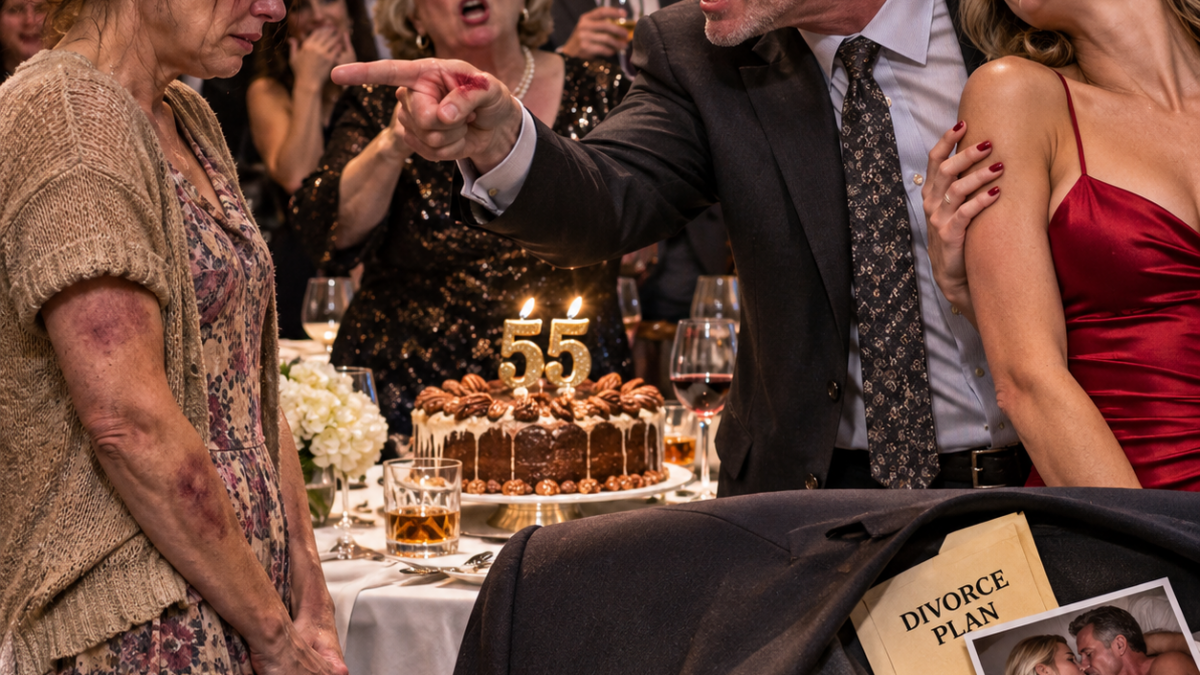
FULL STORY CONTINUATION
Vincent laughed because he thought I was complimenting him.
That was the strange thing about arrogance.
It makes people hear only the version of your words that flatters them.
He placed one hand on my shoulder.
“See?”
He looked around the table.
“My wife always comes through.”
Several people raised glasses.
I recognized almost every face.
Greg, who had eaten Thanksgiving dinner at our home three years running.
Owen, Vincent’s regional vice president.
Two clients I had entertained when Vincent wanted to impress them.
A couple who had stayed at our house during a storm.
Gloria, wearing the pearl earrings I had purchased for her seventieth birthday.
People I had fed.
Welcomed.
Helped.
Some had been laughing seconds earlier.
Now they smiled at me as though nothing unusual had happened.
I wondered how many had actually participated and how many had simply laughed because everyone else had.
Not that it mattered.
Cruelty becomes easier in groups because responsibility gets diluted.
Nobody thinks:
I humiliated Nora.
They think:
Everyone was joking.
The waiter approached.
“Mrs. Whitmore, can I bring you something to drink?”
“Sparkling water, please.”
Vincent gave me an exaggerated look.
“It’s my birthday. Have champagne.”
“I’m fine.”
“Come on.”
“I said I’m fine.”
Something in my voice made him pause.
Only briefly.
Then Greg began telling another story, and Vincent’s attention moved away.
I watched him.
Really watched him.
Twenty-two years.
His hair had gone gray at the temples.
There were lines around his eyes that had not existed when we married.
I knew which shoulder hurt after golf.
Knew he hated cilantro.
Knew he slept badly before large presentations.
Knew the sound he made when he was trying not to sneeze.
A marriage gives you thousands of intimate pieces of information.
It does not guarantee any of them will protect you.
That was perhaps the most painful realization of all.
I still knew Vincent.
He had simply stopped valuing the fact that I did.
At 7:19, Gloria leaned closer.
“You’re very quiet.”
“Long week.”
“You work too much.”
I almost laughed.
Vincent’s mother had spent two decades enjoying what my work purchased while periodically criticizing me for doing it.
“You should slow down,” she continued.
“Vincent needs somebody who has time for him.”
I turned toward her.
“Does he?”
She smiled.
“A man in his position has needs.”
The implication was so obvious that for a second I wondered whether she knew about Paige.
Then I remembered her laughter outside the door.
Of course she did.
Maybe not every detail.
Enough.
I said:
“You’re absolutely right, Gloria.”
She looked pleased.
“I’m glad you’re finally realizing it.”
I took a sip of water.
“I’ve realized quite a lot this week.”
She did not hear the warning.
At 7:24, Vincent tapped his wineglass.
The table quieted.
He stood.
“Before dinner, I want to thank everyone for being here.”
Applause.
He smiled broadly.
“Fifty-five.”
He shook his head.
“I don’t feel it.”
Greg called:
“You look sixty-five.”
Laughter.
Vincent gave him the finger in that playful male-bonding way people somehow consider charming when expensive wine is present.
Then he continued.
“I’ve been fortunate.”
His hand landed on my chair.
“Great career.”
“Great friends.”
“And, of course, Nora, who somehow keeps all of us organized.”
More laughter.
I smiled.
He believed he was being generous.
That was perhaps the ugliest part.
He had just called me a pig and wished I would stay away.
Now, because I was physically present, he performed affection.
He raised his glass.
“To the next chapter.”
My stomach almost turned.
Those exact words had appeared in his messages to Paige.
A new chapter.
After my bonus.
After I financed his party.
After his apartment.
After he extracted everything he thought he could.
I lifted my glass.
“To the next chapter.”
Vincent winked.
I almost admired the timing.
At 7:31, the door opened.
At first nobody noticed.
The restaurant manager entered with a man in a dark suit.
Not one of the servers.
Vincent continued talking.
The man scanned the table.
“Vincent Whitmore?”
Vincent stopped.
“Yes?”
The man approached.
“Mr. Whitmore, you’ve been served.”
The room became silent so quickly I heard a fork strike a plate at the far end.
The envelope landed beside Vincent’s wineglass.
His face changed.
Not dramatically at first.
Confusion.
Then recognition of Hannah’s firm’s name.
Then he looked at me.
“Nora?”
I folded my hands.
“Happy birthday.”
Greg actually inhaled loudly.
Gloria said:
“What is that?”
Vincent tore open the first page.
His skin went pale.
Not theatrical.
Real.
Blood seemed to leave his face from forehead downward.
He read the caption.
PETITION FOR DIVORCE.
Owen looked away.
One woman at the table covered her mouth.
Vincent whispered:
“What the hell is this?”
“The next chapter.”
Nobody laughed.
He stared at me.
For perhaps five seconds, he could not form a sentence.
Then:
“Are you joking?”
“No.”
“You filed for divorce?”
“Yes.”
“Tonight?”
“Yes.”
“On my birthday?”
I almost smiled.
“You planned to file after my bonus arrived.”
The silence changed.
This was no longer private-marriage discomfort.
Everyone heard.
Vincent’s eyes widened.
“You’ve been going through my things?”
“I found your messages to Paige.”
Gloria stiffened.
Greg looked down.
I continued.
“And the Gatlinburg receipt.”
Vincent’s mouth tightened.
“And the downtown lease.”
That landed.
Owen looked directly at him.
“What lease?”
Vincent ignored him.
I said:
“The luxury apartment Vincent paid twelve thousand dollars for from our joint savings.”
Gloria snapped:
“Nora, this isn’t the place.”
I turned toward her.
“You were laughing at me here fifteen minutes ago.”
She went silent.
“You made it the place.”
Vincent leaned toward me.
“Lower your voice.”
I stared.
For twenty-two years, those kinds of sentences had worked.
Not necessarily those exact words.
But the message.
Don’t embarrass me.
Don’t question me here.
Don’t make a scene.
Protect appearances.
I said:
“No.”
His jaw tightened.
“Nora.”
“No.”
Then:
“I’m not shouting.”
I looked around the table.
“You seem far more uncomfortable with the truth being spoken calmly than you were with my husband calling me a pig.”
That was the moment several people stopped looking at me.
Not because they were angry.
Because they were ashamed.
Good.
Owen cleared his throat.
“Vincent, is there really another apartment?”
“This is personal.”
“You brought Paige up ten minutes ago.”
Greg shifted.
“Maybe we should all—”
“No.”
I looked at him.
“You don’t need to leave.”
Greg froze.
“Everybody was comfortable enough when I was the joke.”
I turned back toward Vincent.
“Stay.”
“No secrets tonight.”
Vincent hissed:
“You’re humiliating me.”
I almost could not believe the sentence.
“You called me a pig.”
“That was a joke.”
“Was Paige a joke?”
Silence.
“The apartment?”
Nothing.
“The forty-two thousand dollars you were waiting to take access to before filing?”
His eyes moved.
That confirmed everything more effectively than words.
Gloria said:
“Forty-two thousand?”
Interesting.
Apparently there were details she had not known.
Vincent turned on me.
“That money is marital income.”
“Which is why my attorney has documented every dollar.”
His expression changed again.
I continued.
“It is not hidden.”
“It is not spent.”
“It is not sitting in the joint account waiting for you to use it.”
Vincent grabbed his phone.
I knew exactly what he was doing.
Checking the bank.
The bonus had posted to an account under my sole transactional control that morning, as Hannah had advised, with the amount disclosed and preserved for the divorce process.
I had not taken marital property and vanished.
I had simply stopped giving him unilateral access.
Vincent stared at the screen.
“Where is it?”
“With complete documentation.”
“You moved my money.”
I laughed.
Actually laughed.
“Your money?”
That sentence turned Owen’s head.
Vincent immediately realized what he had said.
Too late.
Gloria placed her napkin on the table.
“Nora, after twenty-two years, you owe this family more dignity than this.”
I looked at her.
For the first time all night, I felt no anger.
Only clarity.
“Gloria, your son rented an apartment for his mistress using twelve thousand dollars from our savings.”
Her face hardened.
“He planned his divorce around the date my bonus arrived.”
She opened her mouth.
I continued.
“And you sat in this room and laughed when he insulted me.”
Her eyes shifted.
“If dignity mattered to you, you had an interesting way of showing it.”
That ended her participation.
Then, with timing so perfect I almost believed the universe had hired a screenwriter, our waiter approached.
He had no idea what was happening.
“Mr. Whitmore?”
Vincent looked up sharply.
“Yes?”
“I’m sorry to interrupt. You asked us earlier to authorize the Palladium card for the open bar and dinner balance.”
I already knew.
Vincent straightened slightly.
“Yes.”
The waiter lowered his voice, though everyone heard.
“The card isn’t authorizing.”
For one second nobody moved.
Then Greg stared into his wine.
I looked at Vincent’s breast pocket.
The metal card was there.
Exactly where he had placed it.
The most important piece of my plan.
Vincent reached inside.
Pulled it out.
“That’s impossible.”
The waiter remained professional.
“We tried twice.”
Vincent looked at me.
“Nora.”
I took another sip of water.
“What did you do?”
“I removed your authorization from my account yesterday.”
“You gave me the card knowing it wouldn’t work?”
“Yes.”
His mouth opened.
Nothing.
“You asked because appearances were important.”
I looked around.
“I thought you should have the appearance.”
Nobody laughed.
Vincent lowered his voice.
“Unlock it.”
“No.”
“We have twenty people sitting here.”
“Yes.”
“The bill is almost fifteen thousand dollars.”
“I know.”
“You booked this.”
“At your request.”
“You agreed to pay.”
“I agreed before discovering you were using our savings to furnish an apartment for your girlfriend while waiting to collect my bonus.”
He leaned closer.
“You cannot strand me here.”
“You are a regional sales director.”
I smiled politely.
“You spent years telling people how successful you are.”
“I’m sure you’ll solve it.”
The cruelty of the line was that I did not have to exaggerate.
He had money.
Credit.
Resources.
This was embarrassment.
Not destitution.
For twenty-two years, I had rushed to rescue him from every embarrassment.
I did not feel obligated anymore.
Owen reached for his wallet.
Vincent stopped him.
“No.”
Owen hesitated.
Vincent was sweating now.
“I have another card.”
He handed the waiter a black personal card.
The waiter left.
For thirty seconds, nobody spoke.
The door reopened.
Declined.
Vincent’s face darkened.
Apparently the twelve-thousand-dollar apartment deposit, resort, and other spending had put more pressure on his personal credit than his friends knew.
Greg eventually said:
“I can put some on mine.”
Another client offered part.
Vincent hated every second.
Not because he could not pay eventually.
Because everybody was seeing the gap between the life he projected and the resources actually supporting it.
Me.
That was what he could not tolerate.
I stood.
Vincent grabbed my wrist.
Not hard.
Enough.
I looked down.
“Let go.”
He did.
Immediately.
I picked up my handbag.
“What about the cake?”
Greg asked, absurdly.
Everyone looked at him.
“What?”
He shrugged.
I looked at the beautiful bourbon-pecan cake.
The gold lettering.
HAPPY 55TH, VINCENT.
I had paid for it separately.
I considered taking it.
Then smiled.
“Keep it.”
I looked at Vincent.
“It’s already paid for.”
That was the last thing I said before leaving.
I made it to my car before my hands began shaking.
That surprised me.
Not crying.
Shaking.
I sat behind the wheel.
Did not start the engine.
Twenty-two years.
Twenty-two.
You cannot detonate that much history and feel nothing just because the person betrayed you.
I still remembered our wedding.
The small church.
Vincent’s nervous hands.
My father walking me down the aisle.
The first apartment.
The nights when we ate pizza on moving boxes.
The year Vincent cared for me after surgery.
The funerals we attended together.
Christmas mornings.
Arguments.
Reconciliations.
Ordinary Tuesdays.
Marriage is not erased retroactively when somebody betrays it.
That is why betrayal hurts.
It corrupts something that was once real.
I put both hands over my face.
Then cried.
Not elegantly.
Not triumphantly.
I cried until mascara ran.
Then my phone rang.
Hannah.
I answered.
“How did it go?”
“They served him.”
“And?”
“Card declined.”
She was silent.
Then:
“Nora.”
“Yes?”
“Go home.”
I looked toward the restaurant.
“I don’t know if that house feels like home tonight.”
“Then go somewhere safe.”
That practical sentence helped.
I drove to a hotel.
Not a luxury one.
Not a symbolic one.
Just somewhere I could lock a door and sleep.
Vincent called twenty-seven times.
I counted because my phone displayed it.
Then texts.
You humiliated me.
This was insane.
We need to talk.
You can’t move money like this.
My mother is devastated.
Not one message:
I’m sorry.
Not one:
I shouldn’t have cheated.
Not one:
I took money from our savings and lied.
Only consequences.
That told me I had made the right decision more clearly than anything Hannah could have said.
At 1:03 a.m., one message finally arrived.
Paige has nothing to do with our marriage problems.
I laughed in the hotel bed.
Actually laughed.
Then turned off my phone.
The next morning, Hannah met me at her office.
Russell was already there.
Coffee.
Bank statements.
Legal pads.
No melodrama.
I appreciated that.
“How much of last night do you remember?” Hannah asked.
“All of it.”
“Any alcohol?”
“Sparkling water.”
“Good.”
She reviewed the service confirmation.
Then we discussed next steps.
Preserve documents.
No destroying property.
No impulsive withdrawals.
No retaliatory spending.
No accessing Vincent’s private accounts without authorization.
The house.
Business interests.
Retirement accounts.
Debt.
Joint savings.
Everything had to be properly disclosed and evaluated.
I wanted revenge.
A small part of me did.
I was human.
Hannah’s job was to make sure pain did not persuade me to make stupid legal decisions.
She was very good at it.
Russell looked up from his laptop.
“The twelve-thousand-dollar apartment payment is easy to trace.”
“Good.”
“The resort charge too.”
“Good.”
“There may be other expenditures we need to classify, but I’m not assuming anything until the records support it.”
That sentence mattered.
Facts.
Not imagination.
I had already spent enough time married to someone who preferred stories over numbers.
Vincent hired counsel within forty-eight hours.
That was when his tone changed.
No more yelling.
No more accusations by text.
Professional messages.
He wanted to meet.
Hannah advised me not to meet alone yet.
I listened.
For once, I did not feel compelled to fix the emotional atmosphere.
Vincent had created it.
He could sit in it.
Then Paige called me.
That surprised me.
Unknown number.
I almost ignored it.
“Is this Nora?”
“Yes.”
“My name is Paige.”
I knew.
Silence.
“I think we should talk.”
“No.”
She clearly had not expected that.
“What?”
“We do not need to talk.”
“Nora, I know you’re angry.”
“I’m not interested in discussing my marriage with you.”
“Vincent told me—”
I interrupted.
“Whatever Vincent told you is between you and Vincent.”
She became quiet.
“I didn’t know about the bonus plan.”
That stopped me.
Not enough to invite conversation.
But enough.
“He told me he was already separated emotionally.”
I closed my eyes.
Classic.
“He said you hadn’t been a real couple in years.”
I looked at the hotel window.
Nashville traffic below.
“He slept in my bed Tuesday night.”
Paige said nothing.
“He asked me to iron his shirt Thursday.”
Still nothing.
“He kissed me before leaving for dinner.”
Her breathing changed.
I did not enjoy hurting her.
That surprised me too.
She had made choices.
But she was not the person who had made vows to me.
“I’m not telling you this to punish you.”
I said.
“I’m telling you because Vincent’s definition of ‘separated’ may not match yours.”
Paige whispered:
“I’m sorry.”
I believed she meant it in that moment.
“I have to go.”
“Nora—”
“Please don’t contact me again.”
She did not.
The house became complicated.
Not legally unusual.
Emotionally.
Belle Meade.
Four bedrooms.
Twenty-two years of photographs.
Furniture.
Holiday decorations.
Closets filled with shared history.
Vincent remained there temporarily.
I stayed elsewhere because I did not want a nightly war.
Hannah made it very clear that leaving temporarily did not mean surrendering whatever legal interest I had.
Again:
Procedure.
Documentation.
I removed personal work files and essential belongings through an agreed arrangement.
The first time I returned, Vincent was there.
He stood in the kitchen.
The same counter where I had placed the Gatlinburg receipt.
For a moment we simply looked at each other.
Then he said:
“You look tired.”
I almost laughed.
“So do you.”
He had lost weight.
Not dramatically.
Enough.
He looked older without the performance.
No custom suit.
Sweatshirt.
Bare feet.
Twenty-two years suddenly visible.
“Can we talk?”
“We’re here to inventory.”
“Nora.”
I stopped.
“What?”
His eyes filled.
That affected me.
I hated that it affected me.
“I never thought you would do that.”
“File?”
“No.”
He swallowed.
“Leave.”
I stared.
“You planned to divorce me.”
“I know.”
“After taking my bonus.”
“I wasn’t taking it.”
“You wrote that you were waiting for it to hit the account.”
He looked away.
“I was angry when I wrote that.”
“The lease wasn’t anger.”
Silence.
“The twelve thousand dollars wasn’t a sentence.”
More silence.
“Paige wasn’t punctuation.”
He sat down.
“I screwed up.”
I had waited days to hear that.
It brought no satisfaction.
“Yes.”
“I screwed up.”
“Yes.”
“Can we fix it?”
That question hurt more than the affair.
Because some part of me still remembered the man I married.
“No.”
His face changed.
“You don’t even want to try?”
“I tried for years.”
“You didn’t know about Paige for years.”
“No.”
I looked around the kitchen.
“But I knew I was carrying the marriage.”
He shook his head.
“That’s not fair.”
“Maybe not.”
I was tired of arguing for perfect fairness.
“You asked me to fund the house.”
“Plan your birthday.”
“Manage the bills.”
“Protect your image.”
“And then you built a new life using money from ours.”
I met his eyes.
“What exactly do you want me to try?”
He cried.
Quietly.
I did too.
Two people at the same kitchen table grieving something one of them had destroyed and both of them had neglected in different ways.
That was the truth.
Less satisfying than revenge.
More painful.
Gloria blamed me.
Of course.
She called Hannah’s office before calling me.
When Hannah refused to discuss anything, Gloria phoned my personal number.
“I hope you’re proud.”
I almost smiled.
“For what?”
“My son is devastated.”
“I’m sorry he’s hurting.”
“You did this publicly.”
“Vincent insulted me publicly.”
“You could have handled it privately.”
“So could he.”
“He made a mistake.”
I looked at the wall.
“Which one?”
Silence.
“The affair?”
“The apartment?”
“The money?”
“Planning around my bonus?”
“Calling me a pig?”
“Encouraging twenty people to laugh?”
Gloria snapped:
“Men say things.”
There it was.
The philosophy that had protected Vincent his entire life.
Men say things.
Men make mistakes.
Women absorb them.
I said:
“And women make decisions.”
Then ended the call.
Owen contacted me differently.
Not socially.
Professionally.
“Nora, I owe you an apology.”
I did not say it was okay.
Because it wasn’t.
He continued.
“I shouldn’t have laughed.”
“You weren’t the loudest.”
“That doesn’t matter.”
Good answer.
Then:
“I also need to tell you that Vincent’s personal situation is beginning to affect work.”
“That has nothing to do with me.”
“I know.”
He paused.
“I’m not asking you to intervene.”
Another good answer.
“I just wanted you to know I’m not going to participate in covering for him.”
That surprised me.
“Thank you.”
He never contacted me again.
I respected that.
Greg sent flowers.
I sent them back.
Not because I wanted drama.
Because the card said:
We all got carried away.
No.
Nobody carried him anywhere.
He laughed.
He was an adult.
I did not need flowers that turned choices into weather.
My quarterly bonus became a major point of anger for Vincent even though it had been fully disclosed.
He had expected immediate access.
That expectation had become entitlement without either of us noticing.
Russell documented the amount.
Hannah handled the classification through the divorce process.
I did not secretly keep what I was not legally entitled to.
That was important to me.
I did not want to win by becoming dishonest.
I wanted accurate accounting.
Appropriate division.
Recognition of marital funds spent on Vincent’s separate apartment and affair-related expenses where legally relevant.
Nothing more.
Nothing less.
Numbers.
Finally.
The $12,000 apartment payment mattered.
So did the resort.
But there was no secret million-dollar theft.
No offshore account.
No hidden criminal empire.
Vincent had not become a cartoon villain simply because he betrayed me.
He was a man who had grown selfish, dishonest, entitled, and deeply invested in appearances.
That was bad enough.
Reality did not need embellishment.
Hannah once asked:
“Do you want the house?”
I looked at her.
The question stunned me.
“I don’t know.”
“Think before answering.”
I did.
For three days.
I walked through memories.
The front porch.
The office I had built.
The dining room where I hosted Christmas.
The bedroom.
The kitchen.
Then the party.
The messages.
Paige.
I realized I wanted the equity.
Not the house.
Those were different things.
“I want it sold if the settlement supports that.”
Hannah nodded.
“Good.”
“Why good?”
“Because that’s a clear answer.”
Vincent initially resisted.
Of course.
“It’s our home.”
That word.
Home.
I said through counsel:
“It was.”
Eventually he agreed.
Not from generosity.
Because settlement negotiations made sense.
The house went on the market.
Selling it hurt more than divorcing him some days.
A house can be innocent.
It had not betrayed me.
It had simply held everything.
Good and bad.
When the listing photos appeared online, I cried over a photograph of the breakfast nook.
Twenty-two years reduced to square footage and countertops.
Life is strange.
Paige did not move into the downtown apartment with Vincent.
I learned that indirectly during document review because the lease became an issue.
I did not ask why.
Maybe she ended things.
Maybe he did.
Maybe the fantasy could not survive exposure.
It wasn’t my concern.
That was another kind of freedom.
For weeks, I had obsessed over a woman twenty-four years younger than me.
Her hair.
Body.
Career.
What Vincent saw.
Then one morning, I looked at myself in the mirror.
Fifty-two.
Lines around my eyes.
Strong shoulders.
A face I had spent decades criticizing for normal aging.
And thought:
What exactly am I competing for?
A man who planned to raid access to my bonus before leaving?
There was no prize.
I stopped comparing.
Not immediately.
But enough.
Vincent’s fifty-fifth birthday became office legend despite everyone’s attempts to bury it.
I heard versions.
The card.
The process server.
The cake.
Apparently Greg told someone, who told someone.
Nashville can behave like a small town when gossip is interesting enough.
I hated that.
For a while.
Then stopped caring.
I had not staged the evening for public entertainment.
I had simply refused to protect Vincent from the social consequences of behavior he had already made public.
That distinction mattered to me even if nobody else cared.
One afternoon, three months into the divorce, Gloria appeared at my office.
No appointment.
My receptionist called.
“There’s a Mrs. Whitmore here.”
I almost told her to send Gloria away.
Then:
“Five minutes.”
Gloria entered wearing a navy suit.
Pearls.
Perfect hair.
Armor.
She sat.
“I won’t take much time.”
“Good.”
She looked around my office.
I wondered whether she had ever actually visited before.
Probably not.
“This is impressive.”
“Thank you.”
“My son says you built all of this yourself.”
I stared.
“He’s known that for twenty-two years.”
Gloria looked uncomfortable.
Interesting.
Then:
“I came to ask whether there is any way to stop this.”
“No.”
“You haven’t even heard what I—”
“No.”
She exhaled.
“Nora, marriages survive affairs.”
“Some do.”
“Yours could.”
“I don’t want it to.”
That sentence shocked her.
Maybe me too.
Not:
I can’t.
I don’t want to.
Gloria’s expression changed.
“You really hate him.”
“No.”
She looked confused.
“I still love parts of who Vincent was.”
My throat tightened.
“That is why staying would be unbearable.”
Gloria looked down.
Then something unexpected happened.
She said:
“I shouldn’t have laughed.”
I said nothing.
“I heard him say it.”
“Yes.”
“I laughed because everyone else did.”
“Yes.”
“That isn’t an excuse.”
“No.”
She rubbed one thumb against the other.
“I’ve spent my whole life excusing men in this family.”
That surprised me enough that I stayed silent.
“Vincent’s father humiliated me too.”
She swallowed.
“I thought enduring it made me strong.”
I looked at her.
“Maybe I was angry that you wouldn’t.”
There are apologies that erase nothing but reveal something.
This was one.
Gloria did not become my friend.
We did not embrace.
She did not suddenly denounce her son.
She simply allowed one honest sentence into the room.
Before leaving, she said:
“I am sorry I laughed.”
I nodded.
“Thank you.”
That was enough.
The forensic process took months.
So did negotiation.
There were arguments about the house.
Retirement assets.
Savings.
The apartment payment.
Expenses.
Business valuations.
Nothing happened overnight.
That was the part people missed when they retold the restaurant story.
The public moment took twenty minutes.
The consequences took almost a year.
Real life is not a two-minute revenge clip.
It is forms.
Phone calls.
Tax records.
Appraisals.
Emails at 6:40 in the morning.
Therapy appointments.
Nights when you nearly call the person who betrayed you because loneliness temporarily feels worse than disrespect.
I had those nights.
I am not ashamed.
I started therapy three weeks after filing.
Hannah suggested it.
Not because I was unstable.
Because twenty-two years is too much history to audit alone.
My therapist, Dr. Maren Cole, asked me during our third session:
“What are you angriest about?”
“The affair.”
She waited.
“The money.”
Waited.
“The birthday.”
Still waited.
I became irritated.
“What answer do you want?”
“Yours.”
I thought.
Then it came.
“That I made it easy.”
My eyes filled.
“I spent years making his life easy.”
“And he interpreted that as evidence I would always remain available.”
Dr. Cole nodded.
“You are angry with yourself.”
“Yes.”
That was worse than anger at Vincent.
Because I could divorce him.
I still had to live with me.
Therapy helped me separate generosity from self-erasure.
I had done good things in my marriage.
Paying bills wasn’t stupidity.
Planning birthdays wasn’t weakness.
Supporting a spouse wasn’t shameful.
The mistake was not loving generously.
The mistake was ignoring evidence that generosity was no longer reciprocal.
That distinction saved me from becoming bitter about my own character.
I did not want Vincent’s betrayal to turn kindness into something I regretted.
The house sold in early spring.
The closing happened without Vincent and me in the same room.
Efficient.
Merciful.
My share of the proceeds went where the settlement directed.
His went to him.
I did not care what he bought.
That surprised me.
Months earlier, I would have imagined Paige choosing furniture.
Now?
Nothing.
His money.
His apartment.
His life.
Not my ledger.
Freedom.
My accounting firm grew that year.
Not magically because I divorced.
If anything, the first months made work difficult.
Concentration disappeared.
Sleep became erratic.
But I eventually returned with sharper boundaries.
I promoted a senior manager who had deserved it for years.
Delegated.
Took Fridays off twice a month.
The first Friday, I sat at home staring at the wall because I did not know what adults did with unassigned time.
The second, I took myself to lunch.
The third, I visited an art museum.
The fourth, I drove to Chattanooga for no reason other than I wanted to.
I had spent decades ensuring everyone else’s calendar made sense.
I learned how to have one of my own.
The divorce became final eleven months after Vincent’s birthday.
I wore a navy dress.
No dramatic red.
No power suit.
Just something comfortable.
Vincent sat across the room with his attorney.
When everything was complete, the judge asked the necessary questions.
Nobody delivered a speech.
Nobody humiliated anyone.
Then it was done.
Twenty-two years changed legal status in minutes.
I walked outside.
Hannah joined me.
“How do you feel?”
I thought.
“Sad.”
She nodded.
“And relieved.”
“Those can live together.”
“I know.”
Then I laughed.
“What?”
“I just realized I’m hungry.”
Hannah smiled.
“That’s usually a good sign.”
We went for sandwiches.
Not champagne.
Sandwiches.
Best divorce meal imaginable.
Vincent sent one email about two weeks later.
No lawyer copied.
Subject:
No response necessary.
I nearly deleted it.
Then opened.
Nora,
I have spent months trying to decide whether apologizing is useful or selfish. I think most of my apologies have been attempts to make myself feel less like the man I became.
I stopped.
Continued.
You were right that I had begun treating your competence as something I was entitled to use. I told myself we were partners while allowing you to carry most of the partnership. Then I resented you for being the person I relied on.
That hurt because it sounded true.
Paige did not make me betray you. My mother did not make me insult you. My friends did not make me laugh. I did those things.
I read that paragraph twice.
You did not deserve what happened at the restaurant or before it.
I am sorry.
Vincent
No request.
No:
Take me back.
No:
Can we talk?
Just accountability.
I cried.
Then printed the email.
Not because I planned to treasure it.
Because some part of me needed evidence that the man I had loved eventually understood the damage.
I did not respond.
He had said none was necessary.
For once, I allowed silence to be enough.
A year after the divorce, I saw Gloria at a charity luncheon.
We made eye contact.
I expected awkwardness.
She approached.
“Nora.”
“Gloria.”
“You look well.”
“So do you.”
Then:
“Vincent is doing better.”
“I’m glad.”
I meant it.
“He’s in therapy.”
I nodded.
“He says you probably don’t want updates.”
“He’s correct.”
She smiled faintly.
Then:
“I still think about that cake.”
I laughed despite myself.
“Why?”
“Greg took half of it home.”
I stared.
“He did not.”
“He did.”
We both started laughing.
For the first time since the restaurant, the memory contained something other than humiliation.
A birthday cake surviving the collapse of a marriage and ending up in Greg’s refrigerator.
Life is absurd.
I appreciated that.
I eventually learned that Vincent had moved out of the downtown apartment.
Where he went afterward was none of my business.
Paige disappeared from the story.
Not literally.
From mine.
That was healthier.
She had occupied far too much mental space for someone I had never willingly invited into my life.
People sometimes asked whether I regretted not walking into Ironwood immediately and confronting Vincent before calling Hannah.
No.
Not once.
If I had burst through the door, he would have denied.
Deflected.
Called me emotional.
Told everyone I misunderstood.
Maybe convinced me to discuss it privately.
I knew my own history.
I had been talked out of trusting myself before.
Calling Hannah first meant the next action had structure.
I could not be charmed backward into ignorance.
That was important.
Others asked whether the declined Palladium card was petty.
Perhaps.
That part was personal.
But I had removed Vincent’s access before the dinner because I had discovered financial betrayal.
He had asked for my card afterward because he wanted to perform wealth in front of clients.
I handed him a card he was no longer authorized to use.
I did not create his lack of preparation.
I stopped subsidizing it.
There is a difference.
And yes, I admit it:
Watching his face when the waiter said it had been declined gave me one small, imperfect human moment of satisfaction.
I can live with that.
The $42,000 bonus became symbolic in retellings.
People liked saying:
“He waited for her bonus, but she moved it first.”
The legal reality was more careful.
I did not hide income.
I did not pretend marital funds magically became separate because I was angry.
Hannah made sure everything was disclosed.
What changed was control.
Vincent no longer had unilateral access to money I had earned while secretly planning to use that access against me.
That mattered.
Financial transparency and unrestricted access are not the same thing.
I had spent years treating them as if they were.
Never again.
I also changed procedures at my own firm.
Not because of Vincent specifically.
Because I saw how many professionally sophisticated people can be financially passive in their personal lives.
We began offering employees optional financial-wellness workshops.
Credit awareness.
Joint-account controls.
Emergency documentation.
Understanding marital financial records.
Nothing about hiding money from spouses.
The opposite.
Know what exists.
Know what you sign.
Know whose name is attached to debt.
Know where records are.
Trust should never require ignorance.
One younger employee stayed after a workshop.
“My husband handles everything.”
“Do you trust him?”
“Yes.”
“Good.”
Then:
“Do you understand everything?”
She hesitated.
“No.”
I smiled.
“Trust him and learn.”
Those are compatible.
I wish somebody had told me that twenty years earlier.
My fiftieth-third birthday was very different from Vincent’s fifty-fifth.
Eight people.
Not twenty.
Small Italian restaurant.
No private room.
No open bar.
No $15,000 bill.
Hannah came.
Russell came for dessert.
Two close friends.
My sister.
Three employees who had become family.
Someone ordered a chocolate cake from a bakery.
When it arrived, the writing said:
HAPPY BIRTHDAY, NORA — CARD ALREADY APPROVED.
I laughed until I cried.
Hannah claimed innocence.
Liar.
That night, driving home, I realized something.
I had been terrified that divorce at fifty-two meant life was narrowing.
Instead, it felt wider.
Not because single life is inherently better.
Not because marriage was a trap.
Because the version of marriage I had been living required me to become smaller.
Remove that requirement, and space returned.
I did not start dating immediately.
People kept suggesting it.
“There’s a great man at my church.”
“My cousin is divorced.”
“Have you tried the apps?”
No.
For the first time since I was thirty, I wanted to know what my own silence sounded like without somebody else’s expectations filling it.
I bought a smaller house.
Not Belle Meade large.
Two bedrooms.
A sunroom.
Small garden.
Paid comfortably within my means.
The first night, I sat on the floor eating Thai takeout because my dining table had not arrived.
I loved it.
Nobody needed me to iron a shirt.
Nobody asked whether a client would be impressed.
Nobody had secretly leased another home.
Just me.
A carton of noodles.
A quiet room.
Peace.
Eventually I dated.
Briefly.
A widower named Michael.
Kind man.
We lasted six months and realized friendship suited us better.
No catastrophe.
No betrayal.
Ending something before resentment is also a form of success.
That was another lesson I had not learned in my marriage.
Vincent and I crossed paths unexpectedly almost three years after the divorce.
Airport lounge.
Of course.
He saw me first.
“Nora.”
I turned.
For one second, my body remembered everything.
Then it passed.
“Vincent.”
He looked older.
So did I.
Fair.
“Traveling for work?”
“Yes.”
“You?”
“Conference.”
We stood awkwardly.
Then he said:
“You look happy.”
I smiled.
“I am.”
No need to wound him.
He nodded.
“Good.”
Then:
“I mean that.”
“I know.”
He hesitated.
“I still think about that birthday.”
“I’d be worried if you didn’t.”
He laughed softly.
Then surprised me.
“I deserved the papers.”
I raised an eyebrow.
“The card was brutal.”
“That part I enjoyed.”
He laughed harder.
Actual laughter.
For a moment, he looked like the man I married.
Not enough to want him back.
Enough to remember why I once loved him.
His boarding group was called.
He lifted his bag.
“Take care, Nora.”
“You too.”
That was it.
No reunion.
No late-life twist.
No revenge.
Two people whose lives had once been inseparable walking toward different gates.
Appropriate.
I never saw Paige.
Not once.
For years, I imagined that if I did, I would know exactly what to say.
Then eventually I realized I had nothing to say.
The person who betrayed my marriage was Vincent.
Whatever responsibility Paige carried belonged to her conscience.
Mine had enough work.
Greg eventually apologized properly.
Two years late.
He ran into Russell at a golf fundraiser, got my email through him, and wrote:
I laughed because Vincent was my friend and I wanted to be part of the room. That is not an excuse. I am ashamed of it.
That was better than flowers.
I replied:
Thank you for saying that.
We did not become friends again.
Forgiveness and access are different things.
Another useful distinction.
Owen retired.
Hannah became one of my closest friends.
Russell still jokes that Vincent’s birthday was the only forensic-accounting consultation he ever attended where dessert became part of the evidence.
It wasn’t.
Russell enjoys exaggerating.
I let him.
The original Palladium card expired.
When the replacement arrived, I almost threw the old one away.
Then stopped.
The metal card still had a faint scratch near one corner.
The same card Vincent had slipped into his breast pocket while calling me a lifesaver.
I kept it.
Not framed.
Not displayed.
Inside a drawer.
People keep strange souvenirs from the ends of relationships.
My reason is simple.
It reminds me of the difference between paying and being valued.
For years, I had confused the two.
I could finance vacations.
Dinners.
Homes.
Celebrations.
That did not purchase respect.
Respect does not arrive on a statement.
I also kept the divorce-service copy Hannah gave me.
Different drawer.
Different lesson.
The card reminds me what I funded.
The papers remind me what I finally stopped funding.
When people hear the short version of my story, they love the restaurant.
Of course they do.
Cruel husband insults wife.
Wife calls lawyer.
Divorce papers arrive.
Card declines.
His face goes white.
It is neat.
Satisfying.
Viral.
The actual lesson came later.
There was no single action that rebuilt me.
Not the lawsuit.
Not the house sale.
Not keeping my bonus out of Vincent’s immediate reach.
Not watching his friends go silent.
Healing was less cinematic.
Sleeping through a night without checking his phone location.
Realizing I had gone three days without thinking about Paige.
Ordering dinner for myself without wondering what Vincent wanted.
Taking a Friday off.
Laughing at Gloria’s story about Greg stealing the cake.
Seeing Vincent at the airport and feeling no desire to punish him.
Those moments mattered more.
The deepest wound was never that Vincent wanted another woman.
That was painful.
But the thing I had to unlearn was the belief that his betrayal somehow measured my worth.
He called me a pig.
I spent weeks hearing that word.
Looking in mirrors.
Questioning every pound.
Every wrinkle.
Every gray hair.
Then one morning in therapy, Dr. Cole asked:
“If Vincent had called a priceless painting ugly, would that change the painting?”
I rolled my eyes.
“That sounds like a motivational poster.”
“Answer.”
“No.”
“Then stop treating an unfaithful man’s cruelty like an expert appraisal.”
I laughed.
Then cried.
Annoyingly useful woman.
Vincent’s insult told me something about Vincent.
Not my body.
His affair told me something about his choices.
Not my desirability.
His financial plan told me something about his entitlement.
Not my intelligence.
Once I separated those things, shame loosened.
That was when I really began recovering.
I had spent my career telling corporate clients that controls matter because trust alone is not a system.
Then I came home and ran my marriage on trust without controls.
I never reviewed joint spending carefully because questioning Vincent felt unloving.
I allowed him access to my personal credit because we were married.
I let him define financial transparency as suspicion whenever I asked questions.
That was not trust.
It was avoidance.
Healthy trust survives information.
Healthy love survives reasonable questions.
If asking where twelve thousand dollars went threatens the relationship, the question is not the problem.
I wish I had learned that before the Gatlinburg receipt.
Still, I learned it.
Fifty-two is not too late.
Years later, one of my employees came into my office carrying a bank statement.
Her hands shook.
“I think my husband is hiding something.”
I looked at her.
For one second, I saw myself.
I did not say:
Leave him.
Did not say:
He’s cheating.
Did not project my story.
I said:
“Start with facts.”
She nodded.
“Document what you know.”
“Do not take money.”
“Do not destroy anything.”
“Get appropriate professional advice.”
“And don’t confront until you understand your situation.”
She whispered:
“Were you scared?”
“Yes.”
“Did you know your marriage was over?”
“No.”
That surprised her.
“I knew something was wrong.”
“Those aren’t the same.”
She started crying.
I handed her tissues.
Then:
“Whatever you discover, do not confuse somebody else’s dishonesty with your value.”
That was advice I could finally give because I had earned it.
Not through the divorce.
Through what came after.
My house now has a dining table for eight.
Not twenty.
Sometimes I host.
Sometimes I order pizza.
Nobody performs.
Nobody needs to impress a regional vice president.
One Thanksgiving, Hannah brought bourbon-pecan cake.
I stared.
She smiled.
“What?”
“You’re horrible.”
“It was on sale.”
“Liar.”
Everyone laughed.
And for the first time, that flavor belonged to something good.
Memory can be reclaimed.
Even cake.
Gloria died?
No.
She’s still alive as far as I know.
Older.
Quieter, according to mutual acquaintances.
I do not wish suffering on her.
I also do not miss her.
Both can be true.
Vincent apparently remarried eventually.
I heard through someone else.
I hope he learned.
Truly.
Because becoming different is more meaningful than being punished forever.
I do not need his second marriage to fail in order for my first one to have mattered.
That realization surprised me.
Revenge has an expiration date if you let yourself heal.
I sometimes wonder what would have happened if I had never found the resort receipt.
Vincent planned to wait for my bonus.
Maybe I would have paid for his birthday.
Deposited forty-two thousand dollars.
Gone to work Monday.
Then received divorce papers on Tuesday while he moved into the apartment I helped finance without knowing it.
That alternate version still makes my stomach tighten.
Then I stop.
It did not happen.
Numbers saved me.
A receipt.
A bank transfer.
A notification.
Small evidence.
I noticed.
That is the timeline I live in.
The morning after Ironwood, Vincent probably believed the worst thing that had happened was public humiliation.
He was wrong.
The worst thing for him was that I had stopped automatically protecting him from the consequences of his own choices.
That protection had been invisible.
He only noticed it when it disappeared.
So did I.
I used to believe my marriage worked because Vincent and I were a team.
Afterward, I realized I had often been the infrastructure.
Mortgage paid.
Taxes filed.
Dinner planned.
Family remembered.
Crisis absorbed.
Image maintained.
Vincent was very good at standing on infrastructure and describing the view as his achievement.
I helped him believe that.
Never again.
That does not mean I stopped helping people.
Quite the opposite.
I became more generous once generosity stopped being compulsory.
I helped my sister.
Mentored employees.
Donated.
Hosted friends.
Paid for my mother’s roof replacement when she needed it.
The difference was choice.
Love given freely feels completely different from service extracted through expectation.
On the fifth anniversary of the birthday dinner, Hannah texted me:
7:12 PM. Any regrets?
I looked at the time.
Exactly.
Five years.
I replied:
One.
She answered immediately.
What?
I wrote:
I should have eaten the cake.
She sent eleven laughing emojis.
I laughed alone in my kitchen.
That is how I knew the memory no longer owned me.
So yes.
I overheard my husband call me a pig at the birthday dinner I was funding.
Yes, twenty people laughed.
Yes, I called my lawyer and said:
“Do it.”
Twenty minutes later, Vincent was staring at divorce papers while the color drained from his face.
And yes, the expensive metal card in his pocket failed when he tried to use my account to maintain the image he had spent years building.
Those facts make a satisfying story.
But they are not the part I am proudest of.
I am proud that I did not empty our accounts.
I did not destroy his career.
I did not contact Paige’s employer.
I did not post their messages online.
I did not spend the next year trying to humiliate him as thoroughly as he humiliated me.
I documented.
Protected myself.
Listened to counsel.
Demanded honest accounting.
Accepted grief.
And walked away.
That was harder than revenge.
It also gave me a life afterward.
The last time I held that old Palladium card, I thought about Vincent saying:
“You’re a lifesaver.”
In a strange way, he had been right.
Just not how he intended.
For twenty-two years, I kept saving him.
From bills he forgot.
From awkward family obligations.
From appearances he could not afford.
From uncomfortable questions.
From his mother’s expectations.
From the financial consequences of wanting a life larger than his income.
That night, for the first time, I stopped.
And the person I finally saved was me.
If I could speak to the Nora standing outside the Ironwood Steakhouse with that white cake box in her arms, I would not tell her to be strong.
She had been strong for too long.
I would tell her:
You do not have to carry this marriage through one more doorway.
I would tell her that the laughter behind the door was not proof she was foolish.
It was proof she had finally heard what people felt safe saying when they thought she wasn’t present.
I would tell her not to waste energy wondering whether Vincent truly meant the insult.
A man does not need to mean every cruel word for cruelty to matter.
I would tell her to make the call.
Then breathe.
Then walk inside if she wanted.
Or leave.
Either choice belonged to her now.
I chose to walk in.
Not because I wanted a scene.
Because I wanted Vincent to look at me once before the performance ended.
He smiled.
Called me “the woman of the hour.”
Pulled out my chair.
For a few minutes, he still believed I was the same Nora who would pay, smile, clean up afterward, and help him build the life he planned to leave me for.
Then the door opened.
A stranger walked toward him.
Placed an envelope beside his wine.
And said:
“Mr. Whitmore, you’ve been served.”
That was when the color left his face.
But the real change had happened twenty minutes earlier.
Outside the room.
When I stopped holding the cake.
Set it down.
Called Hannah.
And used two words.
“Do it.”
They were not a command to destroy my husband.
They were permission to stop abandoning myself.
Everything that came afterward—
the declined card,
the financial review,
the house sale,
the divorce,
the grief,
the quiet new home,
the birthdays that no longer cost fifteen thousand dollars,
the ordinary mornings when I woke without resentment—
began with that.
For twenty-two years, I had believed keeping a marriage together was proof of love.
Now I know something better.
Sometimes the most loving thing you can do for yourself is stop holding together a life that somebody else has already decided to tear apart.
And sometimes the person everyone at the table is laughing at is the only one in the room who knows the bill has finally come due.








