FULL STORY:“SHE’S ALMOST BROKEN—JUST A FEW MORE MONTHS, AND I’LL TAKE HALF HER LIFE!” For Two Years, I Lifted My Mother-in-Law, Bathed Her, Fed Her, and Gave Up the Life I Loved—Until I Caught Her Walking Across the Kitchen and Heard My Husband Say the Words I Could Never Forget…
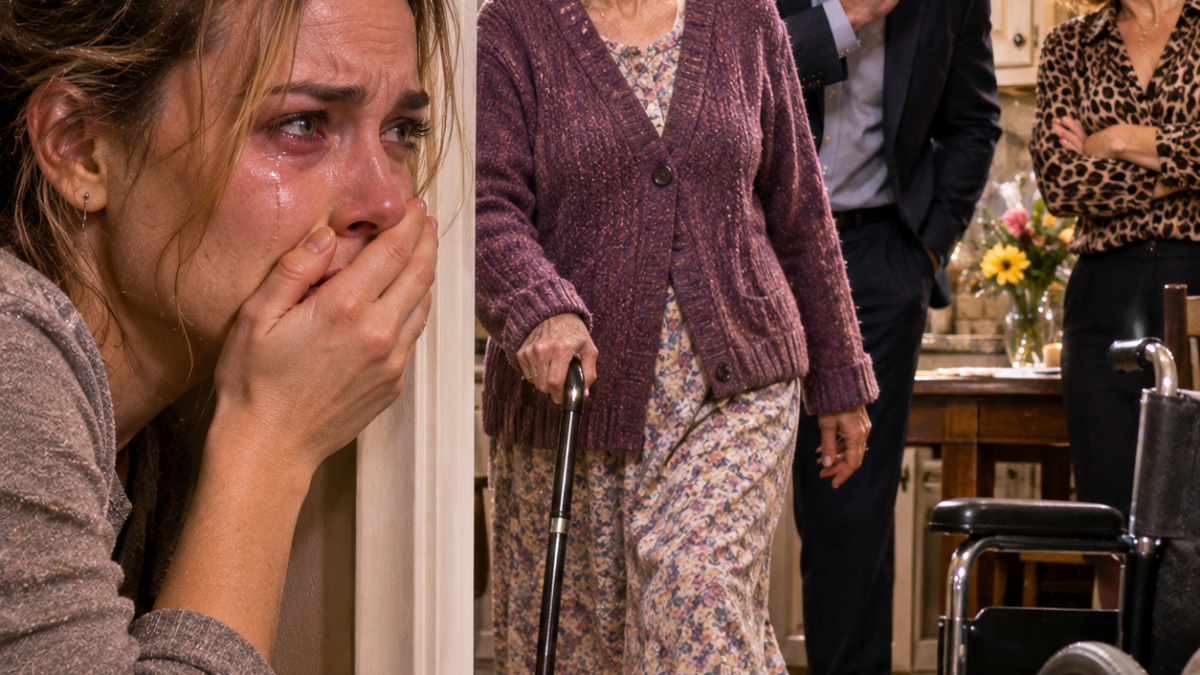
FULL STORY CONTINUATION
His mother hadn’t been paralyzed.
He was crying because the plan had begun.
Within three weeks, Linda moved into the Alder Lane house where Jason and I lived.
The house didn’t belong to either of us.
It belonged to my grandmother Dorothy Mercer—Dot to everyone who knew her.
Dot had moved voluntarily into Maple Grove Senior Living the year before our wedding.
She was fiercely independent, financially comfortable, and completely uninterested in watching a good house sit empty.
“A sturdy house requires breathing people,” she’d told me.
So Jason and I lived there rent-free while paying utilities, insurance-related expenses assigned to us, and routine upkeep.
Linda moved into the downstairs guest suite after her “accident.”
At first, we assumed it would be temporary.
Then Jason began talking about long-term care.
He couldn’t reduce his work hours because his job carried our health insurance.
Private nursing care was expensive.
Linda insisted she couldn’t tolerate strangers touching her.
And every time we discussed alternatives, she cried.
“I hate being a burden.”
That sentence worked on me every time.
Six weeks after Linda moved in, I declined the regional-director promotion.
Three months later, I reduced my hours.
By the end of that year, I resigned entirely.
Linda needed help getting dressed.
Help showering.
Help transferring from bed to wheelchair.
Help using the bathroom.
Help exercising her legs.
Twice a day, I massaged muscles I believed were deteriorating from disuse.
I learned how to move her without hurting her back.
I woke at 2:00 a.m. when she rang the brass bell she kept beside her bed.
I canceled dinners with friends.
Stopped traveling.
Stopped running in the mornings because I was too tired.
Stopped wearing anything I couldn’t wash quickly after helping with personal care.
And every night, Jason wrapped his arms around me and whispered:
“I don’t deserve you.”
I believed him.
Then, at 12:06 on a Tuesday morning, I walked downstairs because I’d forgotten my phone charger.
And saw Linda standing in the kitchen.
Not struggling.
Not leaning against the counter.
Standing.
Perfectly.
Her wheelchair was abandoned beside the pantry.
She poured Cabernet into a crystal glass.
Then turned and walked six effortless steps toward the kitchen island.
My mind refused to understand what my eyes were seeing.
Jason sat across from her.
My husband smiled.
Not shocked.
Not confused.
Smiled.
Linda took a drink.
Then rolled her shoulders.
“God, I’m sick of that wheelchair.”
Jason laughed.
“You’ve gotten too convincing.”
“Sitting all day makes my back hurt.”
My heart stopped.
I stood in the dark hallway, invisible to them.
Then Linda asked:
“How much longer?”
Jason glanced toward the ceiling.
“Not long.”
He lowered his voice.
“She’s close to shattering.”
I stopped breathing.
“I heard her crying in the bathroom yesterday.”
Linda smiled.
Jason continued.
“Once she breaks and files for divorce, I get leverage on the house, the accounts, the settlement—everything. And everyone will remember Hannah as the woman who abandoned her disabled mother-in-law.”
Linda lifted her wine.
“To patience.”
Jason clinked his glass against hers.
Then she laughed.
“Four years.”
He shook his head.
“Mom.”
“No. Four years I’ve waited.”
She leaned forward.
“That arrogant girl humiliated me at your wedding over flowers. Twenty arrangements, thrown aside like garbage.”
My stomach dropped.
Our wedding.
June 12, 2021.
The carnations.
The argument I’d almost forgotten.
Linda smiled.
“Now look at her. No career. No friends. No energy.”
Jason grinned.
“And soon no husband.”
Something inside me became very still.
I pulled out my phone.
Opened the recorder.
Pressed start.
Then Linda said the sentence that changed anger into something colder.
“Once Dorothy dies, Hannah gets Alder Lane and the Mercer inheritance. You make sure she mixes it with the marriage before she realizes what you’re doing.”
Jason replied:
“I already have a plan.”
My hand started trembling.
And suddenly, I remembered the crumpled parking receipt I’d found in Jason’s coat ten months earlier.
A receipt from the night Linda supposedly lost the use of her legs.
A receipt that proved my husband had lied from the very beginning.
PART2
I remained in the hallway for another eleven minutes.
Eleven minutes is an eternity when your entire life is being dismantled twenty feet away.
I recorded Linda laughing about how convincing she had become.
I recorded Jason explaining that he’d deliberately taken over several household payments so he could later argue that he had “financially maintained” Alder Lane.
I recorded him complaining that Dot was taking too long to “finish the transfer.”
I recorded Linda saying:
“Dorothy won’t live forever.”
That sentence almost made me walk into the kitchen.
Almost.
Dot was eighty-one.
Sharp as a blade.
She still played bridge every Thursday and corrected the grammar on restaurant menus.
Hearing Linda discuss her death as a financial calendar made rage explode through me.
But I stayed hidden.
Because for two years, I had reacted emotionally while they planned.
Now I needed to reverse that.
Linda refilled her glass.
Jason leaned back.
“She’ll file.”
“You’re sure?”
“She can’t take much more.”
“What if she doesn’t?”
Jason smiled.
“Then we increase the pressure.”
My skin went cold.
“How?”
“More nighttime calls. More accidents. More arguments. I’ll start staying later at work.”
Linda laughed.
“She already looks awful.”
“She’ll blame herself.”
That sentence was almost worse than everything else.
Because he was right.
I had been blaming myself.
I thought I was selfish for resenting Linda.
Weak because I felt exhausted.
A terrible wife because I sometimes snapped at Jason.
An even worse person because there were nights when I looked at Linda sleeping peacefully and imagined simply packing a bag and disappearing.
I had hated myself for those thoughts.
Jason had been waiting for them.
Manufacturing them.
Using them.
I backed slowly toward the staircase.
Every floorboard felt loud enough to expose me.
I reached the top.
Closed our bedroom door silently.
Then sat on the edge of the bed.
My hands were shaking so violently I almost dropped my phone.
The recording was there.
Twenty-three minutes and fourteen seconds.
I immediately uploaded it to a private cloud folder Jason didn’t know existed.
Then I emailed a copy to a second account.
Only after that did I allow myself to cry.
But I cried quietly.
Because my husband was downstairs celebrating.
And I wanted him to keep believing I knew nothing.
At 1:02 a.m., Jason came upstairs.
I was lying on my side facing the wall.
He slipped beneath the blanket.
Then placed his hand against my waist.
I nearly vomited.
“You awake?” he whispered.
I slowed my breathing.
Pretended to sleep.
His hand remained there for several seconds.
Then he kissed the back of my head.
“My poor girl.”
My eyes opened in the darkness.
I stared at the wall.
That sentence once made me feel loved.
Now I heard what it really meant.
My poor girl.
Poor exhausted Hannah.
Poor unstable Hannah.
Poor selfish Hannah who couldn’t care for a disabled woman.
Poor Hannah who would eventually crack exactly when her husband needed her to.
I waited until Jason fell asleep.
Then I looked at his face.
I’d known him for seven years.
Married him for four.
I knew the small scar above his eyebrow.
The way he breathed through his mouth when sleeping.
The little twitch in his left hand when he dreamed.
I’d believed familiarity meant intimacy.
That night, I understood you can know everything about someone’s face and almost nothing about their character.
At 4:30 a.m., I got out of bed.
Showered.
Dressed.
And packed a small bag.
Not enough to make him suspicious.
Just my laptop, personal documents, medication, a change of clothes, and the old receipt I’d kept without understanding why.
I found it inside a folder in my desk.
CAPITAL MOBILITY & ORTHOTICS
The date matched Linda’s accident.
The time was 8:18 p.m.
The item description wasn’t fully printed on the receipt I’d found.
Only:
CUSTOM MOBILITY DEPOSIT
Jason had told me Linda fell at approximately 8:05.
He’d told me he received the call while driving home from work and went straight to Riverside Methodist Hospital.
He could not have been at a mobility-equipment company thirteen minutes after a supposedly unexpected accident unless something about his story was false.
At the time, I’d asked him about the receipt.
He said it came from “some equipment thing after the hospital.”
I’d accepted that.
Now I looked at the timestamp.
The accident hadn’t even happened yet according to the story he’d given me.
My hands went cold.
The wheelchair hadn’t followed the injury.
The wheelchair may have preceded it.
By 1:15 the following morning, I was sitting alone in a diner just off Interstate 270.
Neon light reflected in the window.
The coffee tasted like burnt cardboard.
I didn’t care.
I sat in a cracked vinyl booth with my laptop open and headphones in my ears.
For the first time, I listened to the entire recording.
Jason:
“She’s close to shattering.”
Linda:
“Once Dorothy dies…”
Jason:
“I already have a plan.”
Linda:
“Remember the wedding?”
Then the part that made my hands curl into fists.
Jason laughing.
My husband.
Laughing about the woman I’d become while caring for his mother.
I paused the recording.
Removed my headphones.
And stared at the steam rising from my coffee.
Seven hundred and thirty nights.
I thought of Linda calling me at 2:00 a.m.
“Hannah, my left foot feels numb.”
Me crawling out of bed.
Rubbing her legs.
Adjusting pillows.
Checking blankets.
Whispering:
“Is that better?”
Sometimes Linda would touch my face.
“You’re such a good girl.”
I wanted to scream.
Instead, I opened my contacts.
There were two people I needed.
The first was my grandmother.
Dot answered on the third ring.
“Hannah?”
Her voice was sleepy but alert.
“Sweetheart, it’s after one.”
“Dot.”
Something in my voice changed her immediately.
“What happened?”
I started crying.
Not elegantly.
Not quietly.
My grandmother let me.
When I finally managed to speak, I told her enough.
Linda walking.
Jason’s conversation.
The inheritance.
Alder Lane.
Dot was silent for so long I checked the phone.
“Dot?”
Her response was terrifyingly calm.
“Where are you?”
“At a diner.”
“Are you safe?”
“Yes.”
“Do not go back into that house alone.”
I wiped my eyes.
“They think the house is going to become mine.”
“It will.”
I froze.
“What?”
Dot exhaled.
“Hannah, I’ve had a transfer-on-death arrangement and trust plan in place for years.”
My heart pounded.
“You never told me.”
“You never asked, and I don’t discuss inheritances with people who aren’t dead yet.”
Despite everything, I laughed through tears.
That was Dot.
Then her voice hardened.
“Jason knows more than he should.”
I stopped laughing.
“What does that mean?”
“There was an envelope missing from my desk after you two visited last Christmas.”
My blood went cold.
“What envelope?”
“A copy of my estate-planning summary.”
I closed my eyes.
Jason hadn’t merely stumbled onto the possibility of an inheritance.
He’d gone looking.
Dot continued.
“And for the record, darling, Jason doesn’t automatically get half of an inheritance because he says so.”
I wiped my face.
“He thinks he does.”
“Then he’s an idiot as well as a liar.”
I laughed again, despite myself.
Then Dot said:
“We need Mara.”
Mara Levin was Dot’s estate attorney.
She had handled the Alder Lane property and most of Dot’s planning for nearly twenty years.
“I don’t want to drag you into my divorce.”
Dot’s voice sharpened.
“You didn’t drag me anywhere. Those two dragged themselves into my estate plan.”
I stared at the coffee.
Then she said:
“Call Mara. I’ll call her too.”
“What about the house?”
“My house?”
“Yes.”
“Hannah.”
Dot’s tone softened.
“You have lived there because I wanted you there.”
Tears filled my eyes.
“Not because Jason earned it.”
I swallowed.
“And certainly not because Linda learned how to sit in a wheelchair.”
Mara called me at 6:40 a.m.
By then, I had moved from the diner to a small hotel.
I hadn’t slept.
She listened to the recording.
Not all of it.
Enough.
Then she said:
“You need a family-law attorney.”
“I know.”
“I can refer you.”
“Okay.”
“And Hannah?”
“Yes?”
“Do not confront them yet.”
I closed my eyes.
“I wasn’t planning to.”
“Good. Because right now you have information. We need to convert information into protection.”
That sentence became my roadmap.
Mara connected me with a divorce attorney named Rachel Kim.
Rachel was forty-five, practical, and completely uninterested in revenge fantasies.
I appreciated her instantly.
She listened to everything.
Then asked:
“Whose name is on the Alder Lane deed?”
“Dot’s.”
“Not yours?”
“No.”
“Not Jason’s?”
“No.”
She nodded.
“Then Jason’s assumption that divorcing you gives him half of that house is, at best, wildly premature.”
I almost laughed.
“He sounded so confident.”
“People often do before reading the documents.”
She asked about my own assets.
I had a brokerage account funded with money inherited from my mother years before.
Most of it remained separate.
Jason knew about it.
He had recently encouraged me to move some of it into our joint investment account.
I’d refused because I was uncomfortable making large changes while unemployed.
Now I understood why he’d been pushing.
Rachel asked:
“Anything else?”
“My grandmother has a trust.”
“Do you control it?”
“No.”
“Then it isn’t yours for Jason to divide today.”
I pressed my fingers against my temple.
“Everything he’s been saying…”
“May reflect what he wants rather than what the law actually gives him.”
I stared at the wall.
For two years, Jason and Linda had treated their plan like engineering.
Precise.
Inevitable.
But they’d built it on assumptions.
My emotional collapse.
My voluntary divorce.
My willingness to sign an unfavorable settlement.
My future inheritance.
My silence.
Rachel continued.
“The recording may be useful, but we’ll evaluate it properly. More importantly, we need documentation of finances, the property arrangement, and any deception that affected your decisions.”
I looked at the receipt.
“I may have proof the accident was staged.”
Silence.
Then:
“Tell me.”
I spent that day reconstructing the accident.
Jason’s original text.
My calendar.
Credit-card transactions.
The Capital Mobility receipt.
A photograph Linda had posted on social media the afternoon before the supposed fall.
She was standing at a charity luncheon in heels.
Nothing strange there.
But tucked into the corner of the photograph was Jason.
He’d told me he had been at a construction site in Cincinnati that day.
Cincinnati was nearly two hours away.
The luncheon was in Columbus.
I enlarged the image.
His face wasn’t perfectly clear.
But it looked like him.
Then I searched our shared email.
Months of messages.
Receipts.
Appointments.
One message nearly stopped my heart.
It came from a mobility supplier two days before Linda’s supposed accident.
Your chair customization appointment has been confirmed.
The customer name was abbreviated.
L. Brooks.
I stared.
The wheelchair wasn’t an emergency purchase.
It had been arranged before the fall.
I forwarded everything to Rachel.
She called ten minutes later.
“Where did you find this?”
“Shared household email.”
“Preserve it exactly. Don’t alter anything.”
“I won’t.”
There were more inconsistencies.
Linda’s original hospital paperwork.
I had handled almost all her medical documents because Jason claimed he became overwhelmed by medical language.
The discharge summary from the night of the accident was vague.
Back pain.
Observation.
Neurological follow-up recommended.
Nothing on the page I possessed said complete permanent paralysis.
The first explicit claim of paralysis came from a photocopied letter Jason brought home four days later.
I had never questioned it.
I had been too busy helping.
Now I looked closely.
Different font.
No electronic signature.
A doctor’s name.
A clinic.
Rachel told me not to investigate the doctor myself.
“We’ll address medical claims through legitimate discovery if necessary.”
I nodded.
The temptation to call the clinic was enormous.
But for once, I listened.
I returned to Alder Lane that evening.
Not alone.
Rachel advised me that if I felt unsafe, I should stay elsewhere.
Physically, I had never feared Jason.
But I no longer knew him.
So I told my friend Claire where I was.
Dot knew.
Rachel knew.
My phone stayed with me.
I walked into the house at 6:20.
Linda sat in her wheelchair beneath a knitted blanket.
“Hannah!”
Her face lit up.
“Where were you?”
I stared at her legs.
The legs I had massaged for two years.
“I needed air.”
Jason entered from the kitchen.
“You disappeared.”
“I texted.”
“You said you needed time.”
“I did.”
His eyes searched my face.
For evidence.
Had I cracked?
Was this the moment?
I gave him what he wanted.
I looked exhausted.
Because I was.
“I can’t do this much longer.”
A tiny change passed over Linda’s face.
Hope.
It lasted less than a second.
But I saw it.
Jason came closer.
“Hannah.”
I looked away.
“I mean it.”
He placed his hands on my shoulders.
“You’ve been amazing.”
I almost flinched.
“But maybe this is too much for you.”
There it was.
The opening.
I let my eyes fill with tears.
“I gave up everything.”
Jason sighed.
“I know.”
Linda whispered from the wheelchair:
“Oh, sweetheart. We never asked you to.”
I looked at her.
If hatred had weight, it would’ve broken the floor.
Instead, I said:
“I know.”
Then went upstairs.
Behind me, I heard silence.
They thought I was breaking.
Exactly as planned.
That night, I cried in the bathroom.
But not because they had won.
Because playing weak in front of the people who had destroyed two years of my life required me to touch every wound they had created.
When I returned to bed, Jason wrapped his arms around me.
“Whatever happens, we’ll figure it out.”
I stared into the darkness.
I knew exactly what would happen.
I just needed him to keep believing he didn’t.
Over the next two weeks, I became unbearable by design.
Not cruel.
Exhausted.
I sighed.
Forgot little things.
Told Jason I needed space.
Mentioned missing work.
Asked whether perhaps Linda needed professional care.
Each time, Linda resisted gently.
“Oh, no. I couldn’t stand a stranger.”
Jason became more distant.
He began staying later “at work.”
The plan was moving.
So was mine.
Rachel helped me secure my personal financial records.
Dot and Mara reviewed the Alder Lane arrangements.
My inherited account remained separate.
I documented joint balances.
I did not hide money.
I did not empty accounts.
I did not try to punish Jason financially before a court could determine anything.
I simply made sure I knew what existed.
That alone exposed something.
Nearly nineteen thousand dollars had disappeared from our joint savings over eighteen months.
Small withdrawals.
Transfers.
Charges.
I had assumed the money went toward Linda’s care.
It hadn’t.
Many expenses went to restaurants.
Hotels.
Cash withdrawals.
And something called JB Property Strategies LLC.
I searched the public business registry.
Jason Brooks.
Organizer.
My husband had created a company I knew nothing about.
Rachel obtained additional information through the legal process later.
But the discovery told me something important immediately.
The scheme wasn’t merely emotional.
Jason had been positioning himself financially.
Then Dot made her move.
She invited us to Sunday lunch at Maple Grove.
Jason hated visiting senior living.
He said the place smelled like “old furniture and medicine.”
But when Dot called, his voice became syrup.
“Of course, Dot.”
I nearly laughed.
We arrived at noon.
Dot wore red lipstick and a cream cardigan.
At eighty-one, she looked more alive than either Jason or Linda had managed to look in months.
Linda arrived in her wheelchair.
Jason pushed her.
I walked behind them.
Dot stared at the wheelchair.
Then at me.
For one terrifying second, I thought she would expose everything.
Instead, she smiled.
“Linda.”
“Dorothy.”
Dot leaned down.
“How are you feeling?”
Linda gave the delicate smile she used when discussing her suffering.
“One day at a time.”
“I imagine.”
Dot looked at me.
Her eyes sparkled.
She was enjoying this far too much.
Lunch was pleasant.
Painfully pleasant.
Then Dot casually said:
“I’ve been updating some estate documents.”
Jason’s fork stopped.
I saw it.
So did Dot.
Linda looked toward him.
Dot continued eating.
“At my age, you should keep things tidy.”
Jason cleared his throat.
“Absolutely.”
I watched him.
He asked:
“Anything we should know?”
Dot looked innocent.
“Why would you need to know?”
His face flushed.
“I just meant Hannah.”
“Oh.”
Dot dabbed her mouth.
“Hannah already knows anything she needs to know.”
That was a lie.
A deliberate one.
I knew the structure generally.
Not every detail.
Jason’s face tightened.
Then Dot smiled at him.
“Don’t worry, Jason. Nobody’s dying today.”
I almost choked on my water.
Linda laughed too loudly.
After lunch, Jason cornered me in the parking lot.
“What has she told you?”
I stared.
“Who?”
“Dot.”
“About?”
“Her estate.”
I shrugged.
“Not much.”
His eyes narrowed.
“You sure?”
I looked offended.
“Why are you asking?”
He recovered immediately.
“No reason.”
I studied him.
Then said:
“You’ve been weird about money lately.”
His face changed.
Perfect.
I continued.
“And I’m tired of feeling like I don’t know what’s happening.”
Jason exhaled.
“Hannah, you’re overwhelmed.”
The gaslighting voice.
Soft.
Measured.
I wanted to slap him.
Instead, I whispered:
“I think maybe we need time apart.”
His eyes flashed.
Victory.
Only for a second.
Then concern returned.
“Hannah.”
“I don’t know.”
He took my hands.
“Don’t make decisions when you’re exhausted.”
I almost admired the performance.
“Maybe you’re right.”
He hugged me.
Over his shoulder, I saw Linda sitting in the passenger seat.
Watching.
Smiling.
That night, the recording captured another conversation.
This time, I didn’t need to hide downstairs.
Jason called Linda from the garage after he thought I was asleep.
I didn’t record it covertly through any illegal device.
Our shared smart-home system retained garage-door voice-command activity and timing, and later legal discovery uncovered text messages between them.
But at the time, I already knew enough from his behavior.
The next morning, Jason said:
“If you need some space, maybe you should stay with Claire.”
Not him.
Me.
Leave the house.
Exactly what Rachel predicted.
I looked at him.
“Why me?”
He blinked.
“What?”
“This is Dot’s house.”
“I know.”
“So why should I leave?”
His face tightened.
“Because Mom can’t move.”
There it was.
Linda’s wheelchair wasn’t just a prop for sympathy.
It was a shield against eviction from a house she didn’t own.
Jason rubbed his forehead.
“Don’t turn this into a fight.”
“I didn’t.”
I looked toward Linda’s closed bedroom door.
Then back at him.
“I’ll think about it.”
His jaw tightened.
He was losing control of the timing.
I enjoyed that more than I should have.
Three days later, I received a formal job offer.
My former company had heard through a former colleague that I was considering returning to work.
My old director, Melissa Grant, asked me to meet for coffee.
“Hannah,” she said, “I have wanted to call you for a year.”
I stared at her.
“Why didn’t you?”
“You told us family care required all your attention. I didn’t want to pressure you.”
I swallowed.
She slid a folder toward me.
“We’re opening a strategic-operations role. Hybrid. Some travel.”
My hands trembled.
“You’re offering me a job?”
“I’m asking if you want your career back.”
My eyes filled immediately.
Melissa reached across the table.
“Hey.”
I laughed through tears.
“Sorry.”
“Don’t apologize.”
I stared at the description.
The salary was higher than what I’d earned before resigning.
Not because they felt sorry for me.
Because my previous record was good.
My work still mattered.
For two years, Jason and Linda had taught me to think my professional life was something I’d voluntarily thrown away because family came first.
Now I understood they’d wanted it gone because independence made me harder to control.
I looked at Melissa.
“When do I start?”
She smiled.
“That sounds like a yes.”
“It is.”
I walked out of the café and sat in my car.
Then screamed.
Not from fear.
Joy.
The sound frightened a man walking past.
He looked toward my car.
I waved apologetically.
Then laughed until I cried.
I didn’t tell Jason about the job.
Not immediately.
I wanted one more week.
Rachel filed the divorce petition on a Thursday morning.
Jason wasn’t served at work.
I didn’t want humiliation.
The papers were delivered appropriately later that day.
At 5:47 p.m., my phone exploded.
JASON CALLING.
Then again.
And again.
I didn’t answer.
A message appeared.
What the hell is this?
Then:
You filed?
Then:
HANNAH ANSWER ME.
I was at Rachel’s office.
She looked at the phone.
“Do you want to respond?”
I shook my head.
My hands were trembling.
Not because I regretted filing.
Because this was the moment their plan was supposed to succeed.
They wanted me to file.
But not like this.
Not with representation.
Not with my finances documented.
Not with Dot’s property protected.
Not with a recording.
Not with the mobility receipt.
Not with questions already being raised about Linda’s alleged condition.
They wanted an exhausted woman making an emotional decision.
Instead, they got a prepared one.
I eventually texted:
Please communicate through counsel regarding the divorce. I will discuss household logistics in writing.
Jason called again.
I silenced the phone.
Rachel smiled slightly.
“You’re very calm.”
“No.”
I looked at my shaking hands.
“I’m just done.”
When I returned home, Jason was waiting.
Linda sat in her wheelchair in the living room.
He held the divorce papers.
“What did you do?”
I closed the front door.
“Exactly what you thought I would.”
His face changed.
Linda stared.
I removed my coat.
Jason followed me.
“What is that supposed to mean?”
I looked at him.
“Nothing.”
“Hannah.”
“Talk to my attorney.”
He grabbed the edge of the papers.
“You blindsided me.”
I nearly laughed.
“Did I?”
Linda spoke.
“Hannah, please.”
I turned.
Her face wore the wounded expression I’d comforted for two years.
“This family is already under so much stress.”
I looked at the blanket covering her legs.
“Yes.”
My voice was calm.
“It is.”
She swallowed.
Jason said:
“You’re really going to abandon my disabled mother?”
There it was.
The line.
Exactly as recorded.
I turned toward him.
For one second, I considered ending everything right there.
Playing the recording.
Watching their faces.
Instead, I said:
“Your mother is your responsibility.”
Linda’s eyes filled.
“How can you say that?”
I looked at her.
“Very easily.”
Jason’s expression hardened.
“You’re unbelievable.”
I nodded.
“You’ll survive.”
Then I walked upstairs.
Behind me, Linda began crying.
Fake tears.
Real fear.
I didn’t yet know which.
For the first time, I didn’t care.
The next step came from Dot.
She invited Jason, Linda, Rachel, Mara, and me to Alder Lane for what Jason believed was a discussion about “temporary living arrangements.”
He arrived confident.
Linda wore a soft gray sweater.
Wheelchair.
Blanket.
Fragile smile.
Jason sat beside her.
I sat across the room beside Rachel.
Dot occupied her own armchair.
Mara had a folder in front of her.
Jason frowned.
“Why are there lawyers here?”
Dot smiled.
“Because the last time I handled an important decision without a lawyer, I bought a timeshare in Myrtle Beach.”
Nobody laughed except me.
Dot looked at Jason.
“This is my house.”
He nodded cautiously.
“Of course.”
“I permitted you and Hannah to occupy it.”
“Yes.”
“I did not give it to you.”
His jaw tightened.
“I know.”
“Good.”
Dot looked toward Linda.
“And I certainly did not give permanent occupancy rights to your mother.”
Linda looked offended.
“Dorothy—”
Dot raised one finger.
“I wasn’t finished.”
Linda stopped.
My grandmother turned toward Jason.
“Any future inheritance I choose to leave Hannah is controlled by my estate plan. You are not a beneficiary simply because you married my granddaughter.”
Jason looked at me.
I remained still.
Dot continued.
“And before you repeat whatever internet nonsense convinced you that divorce automatically gives you half of everything Hannah might someday inherit, Mara has assured me that you’re confusing wishful thinking with legal reality.”
Jason’s face flushed.
He turned toward me.
“You told her?”
Dot laughed.
“No, Jason.”
She leaned forward.
“You did.”
Silence.
His face changed.
“What?”
Dot’s eyes became cold.
“You removed a confidential estate summary from my desk last Christmas.”
Jason stared.
“I didn’t—”
“Don’t.”
Dot’s voice cracked through the room.
I had never heard her sound like that.
“You were visible on the hallway security camera.”
Jason went white.
I looked toward Mara.
This was new information even to me.
Mara opened the folder.
“The document that disappeared was a copy, not an operative original. But its removal is one reason Mrs. Mercer reviewed her security arrangements.”
Linda looked toward her son.
Jason’s breathing quickened.
Then Dot said:
“So before we discuss who stays in my house, perhaps you’d like to tell me why you’ve spent two years planning around my death.”
The room froze.
Jason looked at me.
Then at Linda.
Linda clutched her blanket.
“I don’t know what you’re talking about.”
I finally spoke.
“Don’t you?”
She stared.
I took out my phone.
Jason’s face changed.
Not fear yet.
Recognition.
I pressed play.
Linda’s own voice filled the room.
“Once Dorothy dies, Hannah gets Alder Lane and the Mercer inheritance.”
Then Jason:
“I already have a plan.”
Linda’s face became white.
The recording continued.
“Four years I’ve waited. That arrogant girl had to pay for humiliating me at the wedding.”
Jason stood.
“Hannah.”
Rachel spoke calmly.
“Sit down, Jason.”
He looked toward her.
Then at me.
“What the hell did you do?”
I laughed.
“I walked downstairs.”
His mouth closed.
I continued the recording.
Jason’s voice:
“Once she breaks and files for divorce, I get leverage on the house, the accounts, the settlement—everything.”
Silence.
Dot stared at him.
Not angry.
Disgusted.
Linda’s eyes filled.
“Hannah, please.”
I looked at her.
Then stopped the audio.
“No.”
Her mouth trembled.
“You don’t understand.”
“I understand exactly.”
She shook her head.
“It wasn’t about money at first.”
I stared.
“No.”
Her voice became desperate.
“You humiliated me at the wedding.”
I actually laughed.
“You faked paralysis for two years because I didn’t use your carnations?”
Her face twisted.
“It wasn’t the flowers!”
“Then what?”
“You made me look ridiculous.”
I stared at her.
“At my wedding?”
“You rejected Patricia in front of everyone.”
“I had already hired a florist.”
“You embarrassed me!”
Her voice rose.
She gripped the arms of the wheelchair.
“You acted like you were better than me from the moment Jason met you!”
I stared.
Then something extraordinary happened.
Linda became so angry that she forgot herself.
She pushed down on the wheelchair arms.
Rose.
And stood.
Silence swallowed the room.
No struggle.
No shaking.
No hesitation.
Standing.
Perfectly upright.
Her blanket fell to the floor.
Nobody breathed.
Linda looked down.
Then at me.
Then at Dot.
Mara slowly removed her glasses.
Rachel’s mouth opened.
Jason whispered:
“Mom.”
Linda’s eyes widened.
She realized what she’d done.
Too late.
Dot leaned back in her chair.
“Well.”
Her voice was almost cheerful.
“I believe we’ve solved the mobility question.”
I started laughing.
I couldn’t help it.
Two years.
Seven hundred and thirty days.
Bathing.
Lifting.
Massaging.
Cooking.
Canceling my career.
And Linda had just ended the performance herself because anger mattered more to her than discipline.
She looked at the wheelchair.
Then sat down abruptly.
As though that could undo what everyone had seen.
Dot laughed.
“Oh, don’t bother now.”
Linda began crying.
Real tears this time.
“Hannah…”
I stared at her.
“How long?”
She shook her head.
“How long were you able to walk?”
No answer.
“From the beginning?”
Jason whispered:
“Hannah.”
I turned toward him.
“The beginning?”
His face crumpled.
“Yes.”
My entire body went cold despite already knowing.
Hearing it directly was different.
I looked at Linda.
“You were never paralyzed.”
She covered her face.
“No.”
The word barely escaped.
I closed my eyes.
For a moment, I felt the weight of every hour I’d spent caring for her.
Then Dot asked:
“What accident?”
Linda froze.
I opened my eyes.
Jason looked at his mother.
Too late.
I placed the Capital Mobility receipt on the coffee table.
“This was issued thirteen minutes after Linda supposedly fell.”
Jason stared.
I added the email confirmation.
“The mobility appointment was booked two days earlier.”
Dot’s face hardened.
Mara looked toward Jason.
He seemed suddenly unable to breathe.
I said:
“Tell her.”
Jason shook his head.
“Hannah…”
“Tell Dot what happened.”
He lowered his face.
I waited.
Finally:
“There wasn’t an accident.”
Dot inhaled sharply.
Linda sobbed.
Jason continued.
“Mom went to the hospital complaining of numbness and pain. She exaggerated the symptoms.”
I stared.
“And the wheelchair?”
“We already had it arranged.”
My stomach turned.
“Why?”
He looked at me.
His face collapsed.
“Because Mom knew you would help.”
The cruelty of that sentence stripped away every remaining illusion.
Not because I was weak.
Because I was kind.
They had built the scheme around the assumption that I wouldn’t abandon someone who appeared helpless.
Linda whispered:
“It wasn’t supposed to last two years.”
I looked at her.
“How long was it supposed to last?”
She stared at the floor.
“A few months.”
“Until what?”
Jason answered.
“Until you quit.”
I went still.
He looked at me.
“Mom said your job made you arrogant.”
My eyes filled.
“And you agreed?”
He didn’t answer.
I laughed softly.
“That was phase one?”
He began crying.
“Hannah—”
“Get me isolated. Exhaust me. Make me financially dependent.”
His face twisted.
“It wasn’t supposed to get this far.”
“Stop saying that.”
My voice finally rose.
“Every time you say that, you’re pretending the plan grew legs and walked by itself.”
He flinched.
“You made choices.”
Tears ran down his face.
“So did she.”
I pointed toward Linda.
“So did I.”
I swallowed.
“And now I’m making another one.”
Rachel slid a folder onto the table.
Jason stared.
“What is that?”
“The documentation concerning the divorce, financial preservation, and discovery requests,” she said.
Mara added another folder.
“And these are the property notices concerning Alder Lane.”
Jason’s face emptied.
Dot looked at him.
“You will not inherit my house.”
He swallowed.
“I never said—”
“You planned around my death in my granddaughter’s kitchen.”
His eyes lowered.
Dot continued.
“And you will leave this property according to the lawful process my attorneys have begun.”
Linda gasped.
“Where am I supposed to go?”
Dot looked at her.
Then at the wheelchair.
“Apparently anywhere within walking distance.”
I covered my mouth.
Even Rachel almost smiled.
Jason followed me into the hallway after the meeting.
“Hannah.”
I kept walking.
“Hannah, please.”
I reached the stairs.
He caught up but didn’t touch me.
“Please look at me.”
I turned.
He was crying.
Not the controlled tears from the night of Linda’s supposed accident.
Real panic.
“My life is over.”
I stared.
“No.”
He swallowed.
“My marriage—”
“Yes.”
“My home—”
“Was never yours.”
His face crumpled.
“I’ll fix it.”
“How?”
“I don’t know.”
I looked at him.
“Give me two years back.”
He stopped.
I continued.
“Give me the promotion I turned down.”
His shoulders shook.
“Give me the nights I spent carrying your mother to the bathroom.”
“Hannah…”
“Give me the friends I stopped calling because I was ashamed to admit I resented taking care of her.”
He began sobbing.
“Give me my thirty-second and thirty-third birthdays.”
I swallowed.
“Give me every morning I woke exhausted and thought I was a terrible person because I didn’t want to do it anymore.”
Jason covered his face.
Then he did something I never expected.
He dropped to his knees.
Right there in the hallway.
“Hannah, please.”
I stared.
“Please don’t leave.”
For one surreal second, I thought about Linda’s wheelchair.
About how carefully she had performed helplessness.
Now her son knelt in front of me, begging.
But I had learned something.
Someone looking helpless does not automatically make you responsible for saving them.
Jason reached toward my hand.
I stepped back.
“I’ll change.”
“You already did.”
He stared.
“What?”
“You changed into someone who could watch his wife give up her life for a lie.”
His mouth opened.
No answer.
I continued.
“I don’t hate you, Jason.”
His eyes filled with hope.
Then I finished.
“I just finally believe you.”
The hope disappeared.
I turned.
And walked away.
Linda found me near the front door.
Without the wheelchair.
She had apparently decided the performance was pointless.
Her face was blotched.
She looked older.
“Hannah.”
I stopped.
She clasped her hands.
“I know you won’t forgive me.”
I looked at her.
“Then why are we talking?”
Her mouth trembled.
“I need you to understand.”
“No.”
She stared.
“I don’t.”
She began crying.
“I was angry after the wedding.”
I shook my head.
“You were angry about flowers.”
“It wasn’t flowers!”
Her voice cracked.
“It was what they represented.”
I waited.
She wiped her face.
“Jason used to call me every day.”
I stared.
“Before you.”
There it was.
The real wound.
“You came along, and suddenly I wasn’t the most important woman in his life.”
I felt something between pity and disgust.
Linda continued.
“You had a career. A grandmother who gave you a house to live in. People respected you.”
Her voice grew bitter.
“You didn’t need him the way I did.”
I stared.
“So you wanted to make me need him.”
She stopped crying.
The truth landed between us.
I continued.
“You took my job.”
Her lips trembled.
“You took my time.”
She looked down.
“You turned kindness into a weapon.”
Tears slid down my cheeks.
“And all because your son loved someone else.”
Linda covered her mouth.
I leaned closer.
“You know what the saddest part is?”
She looked up.
“I would’ve loved you.”
Her face collapsed.
“I did love you.”
I swallowed.
“I bathed you.”
She sobbed.
“I sat beside you when you said your legs hurt.”
“Hannah…”
“I learned how to care for you because I thought you were scared.”
She began sinking toward the floor.
Not pretending.
Her knees seemed to fail.
She knelt.
“Please.”
I looked down at her.
“I am sorry.”
I closed my eyes.
For two years, I’d imagined what it would feel like if Linda ever appreciated everything I’d done.
Now she was literally at my feet.
And it meant nothing.
Because gratitude after exposure isn’t the same as love before betrayal.
I stepped around her.
Then opened the door.
The divorce lasted eleven months.
Not because Jason had a magical claim to half of Dot’s estate.
He didn’t.
Dot remained alive and in control of her assets.
Alder Lane belonged to her during the relevant proceedings.
My separate inherited investments remained subject to legal review, but the records supported their separate origin.
The marital assets were addressed under Ohio law through the proper process rather than Jason’s fantasy that simply making me file first guaranteed him half of my future.
The financial discovery hurt him far more than I’d expected.
JB Property Strategies LLC had received money that originated from our joint accounts.
Jason had been accumulating funds in preparation for our separation.
Some expenditures related to Linda.
Others had nothing to do with caregiving.
Rachel traced everything through formal discovery.
I did not get “everything.”
That isn’t how a lawful divorce works.
We divided what was marital under the applicable process.
Separate property questions were evaluated separately.
Debts were examined.
But Jason’s attempt to manufacture a financial advantage through deception became part of the evidence considered in resolving disputed issues.
Most importantly, the Alder Lane house never became the trophy he imagined.
Dot continued owning it until her estate plan later transferred it according to her wishes.
Jason left.
Linda left.
The wheelchair went with them.
I almost told them to leave it behind.
Then decided I never wanted to see it again.
The fake-paralysis issue created consequences outside the divorce too.
Linda had submitted documentation to a long-term-care insurer and had received reimbursements connected to assistance she claimed to need.
I had signed caregiver logs believing they were truthful.
The moment I discovered the deception, my attorneys helped me preserve records and notify the appropriate parties through proper channels.
The insurer opened a fraud investigation.
I cooperated.
Linda’s medical claims were examined.
So were the documents Jason had provided.
I wasn’t accused of knowingly participating.
My records showed what I’d believed.
The texts.
The care schedules.
My resignation.
The repeated requests for medical clarification.
Linda and Jason had counted on my caregiving to make the story look authentic.
Instead, my meticulous notes showed just how thoroughly they had deceived me.
Linda ultimately faced financial consequences, repayment obligations, and legal exposure arising from false claims established by the investigation.
Jason’s participation was examined as well.
I didn’t celebrate.
I didn’t need to.
The image that stayed with me wasn’t Linda leaving an office after an interview.
It was her standing effortlessly in my kitchen.
That was the moment I got my life back.
Everything after it was accounting.
Three months after filing for divorce, I returned to work.
The first morning, I stood outside the glass doors of my new company for five minutes.
My hands were sweating.
I felt twenty-two again.
Then Melissa came through the lobby.
She saw me.
“Hannah.”
I smiled nervously.
“Hi.”
She looked at my badge.
“Ready?”
“No.”
She laughed.
“Good. Anybody who says yes on their first day is lying.”
I followed her inside.
The elevator doors closed.
For the first time in two years, I was going to a meeting that didn’t involve medication schedules, wheelchair transfers, insurance forms, or Linda’s bell.
I sat at a conference table.
Opened my laptop.
Someone asked my opinion.
I almost cried.
Not because the question was profound.
Because someone expected my brain.
Not my hands.
Not my patience.
Not my caregiving.
My judgment.
I answered.
The meeting moved on.
And slowly, I remembered who I had been before they turned my life into a nursing shift.
My first paycheck felt ridiculous.
I had savings.
Dot wasn’t going to let me become homeless.
The divorce had financial safeguards.
Yet when the direct deposit appeared, I stared at it for ten minutes.
Money I earned.
From work I chose.
I bought Dot dinner.
She ordered the most expensive steak on the menu.
“You’re paying,” she said.
I laughed.
“You’re shameless.”
“I funded your wedding. We’re nowhere near even.”
The wedding.
The flowers.
For a moment, my smile faded.
Dot noticed.
“Don’t.”
“What?”
“Let that woman ruin peonies for you.”
I laughed.
“She almost ruined weddings.”
Dot cut into her steak.
“Marriage ruined that wedding.”
I nearly choked.
“Dot.”
“What? I’m old, not dead.”
We laughed until the waiter stared.
Then Dot became serious.
“I need you to understand something.”
I looked up.
“You didn’t waste two years.”
I frowned.
“It feels like I did.”
“You learned who they were.”
“At a terrible price.”
“Yes.”
She reached across the table.
“But don’t turn their cruelty into another way to punish yourself.”
My eyes filled.
She squeezed my hand.
“You cared because you are capable of caring.”
I looked down.
“They abused that.”
“Yes.”
“That does not make your kindness stupid.”
I started crying.
Dot rolled her eyes.
“Oh, don’t cry. You’ll ruin my reputation.”
I laughed through tears.
Then she added:
“Just be more selective about who gets your back rubs.”
I laughed so loudly people turned.
For the first time since the night in the kitchen, my laughter didn’t feel like recovery.
It felt like living.
The divorce became final on a bright Monday morning.
Jason and I stood on opposite sides of a hallway afterward.
For months, we’d communicated mainly through attorneys.
He looked different.
Thinner.
Quieter.
He had moved into a small apartment.
His relationship with Linda had become strained after the fraud investigation.
I didn’t take pleasure in that.
Their relationship had helped destroy ours.
But I wasn’t going to spend my freedom monitoring what remained of theirs.
Jason looked toward me.
“Hannah.”
I stopped.
Rachel stood several feet away.
“What?”
He swallowed.
“Congratulations on the job.”
I stared.
“Thank you.”
“I heard you’re doing well.”
“I am.”
His eyes filled.
For a moment, neither of us spoke.
Then he said:
“I’ve been seeing a therapist.”
I nodded.
“Good.”
“Mom too.”
“Good.”
He looked down.
“I understand now that what we did—”
I raised a hand.
He stopped.
“You don’t have to explain it to me.”
His face tightened.
“I need you to know I know.”
I studied him.
The old Hannah would’ve asked what he meant.
Would have helped him articulate his remorse.
Would have turned his guilt into another responsibility.
I wasn’t her anymore.
So I said:
“Then live differently.”
He stared.
I continued.
“That’s what knowing is for.”
His eyes filled.
Then he nodded.
I walked away.
He didn’t follow.
Six months later, Dot officially transferred Alder Lane into a trust structure that protected the property according to her wishes and made my future interest clear.
She refused to let me call it “my house” while she was alive.
“Don’t rush me,” she said.
“You’re eighty-two.”
“Exactly. I’ve finally gotten good at this.”
I laughed.
But she gave me permission to renovate.
The first thing I changed was Linda’s downstairs bedroom.
I thought about tearing everything out.
Instead, I turned it into an office.
My desk faced the window.
Bookshelves covered one wall.
The brass bell Linda used to summon me at night disappeared into a box that went to her attorney with other belongings.
The wheelchair marks in the baseboard were painted over.
I replaced the curtains.
Then I placed one photograph on the desk.
Me at work.
Standing beside my new team after a successful product launch.
Every morning, I walked into that room and remembered that it no longer belonged to someone pretending she couldn’t stand.
It belonged to a woman who had learned how.
The garden took longer.
Linda had always hated the landscaping at Alder Lane.
She said Dot’s taste was “too loose.”
I loved it.
Hydrangeas.
Lavender.
Old roses.
One spring morning, Dot and I visited a nursery.
We walked past rows of flowers.
Then stopped.
Ivory peonies.
I stared.
Dot smiled.
“Those look familiar.”
My wedding flowers.
I laughed.
“Maybe too familiar.”
“Buy them.”
“Dot.”
“Buy the damn flowers.”
I did.
We planted them beside silver eucalyptus.
The exact combination Linda had tried to replace at my wedding.
Not because I wanted to spite her.
Because I wanted the memory back.
For years, the wedding-flower argument had belonged to Linda.
Her humiliation.
Her rage.
Her justification.
I refused to give her ownership of something beautiful.
By June, the first peonies opened.
I stood outside holding coffee.
White petals.
Soft silver leaves.
Morning sun.
No carnations.
No wheelchair.
No Jason.
I smiled.
Linda wrote me one letter.
Unlike Jason, she didn’t ask me to return.
She didn’t ask for money.
She apologized.
Not perfectly.
There were still explanations.
Her loneliness after her husband Richard died.
Her dependence on Jason.
Her resentment when he married.
Her humiliation at the reception.
Her jealousy of my career.
But near the end she wrote something that made me stop.
I believed if I made you smaller, there would be more room for me.
I read that sentence several times.
Then she continued.
Instead I destroyed the relationship I wanted to protect.
That, at least, was true.
I never responded.
Maybe someday I will.
Maybe I won’t.
Forgiveness doesn’t require reopening every door.
Sometimes forgiveness is simply putting down a burden and refusing to carry it farther.
I don’t know whether I’ve forgiven Linda.
I know I no longer wake angry at her.
That’s enough for now.
Two years after the night I found her standing in the kitchen, I attended a leadership conference in Chicago.
My company had promoted me to vice president of strategic operations.
I stood backstage waiting to speak to nearly four hundred people.
My hands were shaking.
Not because I feared public speaking.
Because I remembered who I’d been the last time I had been close to that kind of career opportunity.
The woman who turned down a promotion because somebody needed help transferring into a wheelchair.
Melissa came backstage.
“You okay?”
I smiled.
“Yeah.”
“You’re lying.”
“Absolutely.”
She laughed.
Then the host introduced me.
I walked onto the stage.
Applause.
Bright lights.
A screen behind me.
For a moment, I saw Linda’s kitchen.
Midnight.
Wine.
Jason smiling.
She’s almost broken.
I looked across the audience.
Then began speaking.
My presentation wasn’t about betrayal.
Nobody there knew the story.
It was about organizational resilience.
How systems fail when people ignore inconvenient evidence.
How healthy organizations make it safe for people to question assumptions.
Halfway through, I said something I hadn’t planned.
“Sometimes the most expensive mistake we make is continuing to support a system simply because we’ve already sacrificed so much to it.”
The room became quiet.
I paused.
Then continued.
It was a business principle.
But I knew what it meant.
A marriage.
A family.
A lie.
Two years of caregiving.
Sacrifice doesn’t always prove you should stay.
Sometimes it proves you’ve already paid enough.
After the conference, I returned to my hotel.
There was a message from Dot.
CALL ME BEFORE I DIE OF BOREDOM.
I laughed and called.
She answered:
“How’d you do?”
“Good.”
“Standing ovation?”
“No.”
“Demand a refund.”
I laughed.
Then she said:
“You happy?”
I looked out over Chicago.
Lights stretching between buildings.
People below.
A whole city moving.
I thought about the career I’d rebuilt.
The house.
My friends.
The garden.
The fact that I could spend a night away without wondering whether Linda needed help.
“Yes.”
The answer surprised me with its certainty.
“I am.”
Dot became quiet.
Then said:
“Good.”
I smiled.
“You okay?”
“Fine. Terrible bridge partner tonight.”
“Tragic.”
“Absolutely.”
We talked for twenty minutes.
Ordinary things.
Weather.
Work.
A neighbor at Maple Grove who kept stealing sugar packets.
When we hung up, I sat beside the window.
And realized I no longer measured my life by what Jason and Linda had taken.
I measured it by what I had rebuilt.
That was the real victory.
People sometimes hear my story and ask the same question.
“How could you not know?”
I understand why they ask.
A woman pretends to be paralyzed for two years.
Surely someone should notice.
But deception doesn’t survive because every detail is perfect.
It survives because the larger story feels believable.
Linda had an accident.
Doctors were involved.
Jason cried.
There was paperwork.
A wheelchair.
Pain.
My husband loved his mother.
I loved my husband.
The structure made sense.
So when one beam looked crooked, I assumed my perspective was wrong.
That is how manipulative people survive inside ordinary life.
They don’t need you to believe every lie.
They need you to doubt yourself just enough not to challenge the whole structure.
I did.
Until midnight.
Until wine.
Until Linda stood.
Then the entire house came down.
I still have the original recording.
It’s stored securely.
I don’t play it.
I don’t need to.
I remember the important lines.
“She’s close to shattering.”
I didn’t.
“Once she files, I get half.”
He didn’t.
“That arrogant girl had to pay.”
I did pay.
For two years.
Then the bill changed hands.
Not because I destroyed them.
Because truth did what lies eventually fear most.
It introduced consequences.
Jason lost a marriage he had treated like a strategy.
Linda lost the daughter-in-law who would’ve cared for her when she genuinely became old and frail.
They lost access to a house they had begun treating as theirs.
They faced financial scrutiny they never expected.
And they learned that a woman can be kind without being permanently available for exploitation.
On the third anniversary of the night everything changed, I woke shortly after midnight.
For a moment, I didn’t know why.
Then I heard movement downstairs.
My body reacted before my mind did.
Heart pounding.
Hands cold.
I sat upright.
Then listened.
A cabinet closed.
Footsteps.
My stomach tightened.
I reached for my phone.
Then remembered.
Dot was staying overnight.
She’d had a late appointment in Columbus and didn’t want to drive back to Maple Grove.
I walked downstairs.
The kitchen light was on.
Dot stood beside the refrigerator in a bathrobe.
She looked at me.
“What?”
I stared.
She held a slice of cheesecake.
“Are you sleepwalking?”
I began laughing.
Dot frowned.
“What is wrong with you?”
“Nothing.”
I leaned against the doorway, laughing harder.
She looked offended.
“I am eighty-three years old. I can eat cheesecake at midnight.”
I wiped tears from my eyes.
“Absolutely.”
She studied me.
Then understood.
Her face softened.
“The kitchen.”
I nodded.
For a moment, neither of us spoke.
Then Dot took another fork from the drawer.
“Come here.”
I walked over.
She handed it to me.
We stood at the kitchen island eating cheesecake straight from the container.
The same island where I’d once watched Linda pour wine and heard my husband plan my collapse.
Now my grandmother was beside me complaining about the price of cream cheese.
I smiled.
The room no longer belonged to the worst thing that had happened there.
It belonged to us.
Sometimes healing is dramatic.
Court papers.
New jobs.
Moving boxes.
Divorce decrees.
Sometimes it’s planting peonies.
Sometimes it’s eating cheesecake at midnight.
Sometimes it’s waking up and realizing nobody in your home needs you to become smaller so they can feel powerful.
That is the life I have now.
Not perfect.
Mine.
For two years, I believed my mother-in-law couldn’t stand.
So I carried her.
What I didn’t understand was that while I carried Linda, Jason and Linda were slowly teaching me to stop standing for myself.
I gave up my career.
My routines.
My friendships.
My confidence.
And nearly my marriage to my own identity.
Then one night, I walked downstairs.
Linda rose from her wheelchair.
Jason smiled.
And they told the truth because they believed I wasn’t listening.
They thought I was almost broken.
They thought divorce was the finish line.
They thought Dot’s death was an estate-planning event they could build their future around.
They thought my kindness made me weak.
Every assumption was wrong.
I filed for divorce—but not exhausted, isolated, and unrepresented.
I filed with counsel.
Records.
The recording.
Financial statements.
The receipt from the night of the fake accident.
And a grandmother who was very much alive and absolutely furious that anyone had begun dividing her property before she was finished living in it.
Jason did not get half of Dot’s house.
Linda did not get to remain its helpless permanent resident.
Their staged disability became their liability.
The money trail they thought I would never examine became evidence.
And the woman they’d deliberately pushed out of her career walked back into corporate life stronger than she’d been before.
The last conversation I ever had with Jason happened almost three years after our divorce.
We crossed paths unexpectedly at a coffee shop near downtown Columbus.
He looked older.
So did I.
He saw me first.
“Hannah.”
I stopped.
“Jason.”
For a moment, neither of us knew what to do.
Then he nodded toward my laptop bag.
“Work?”
“Yes.”
“I heard you made VP.”
I studied him.
“Where did you hear that?”
“Mutual friend.”
I nodded.
“Congratulations.”
“Thank you.”
He looked down.
Then said:
“I meant what I said before.”
“What?”
“That I’m sorry.”
I waited.
He swallowed.
“I know that doesn’t fix anything.”
“No.”
“I know you don’t owe me forgiveness.”
“No.”
His eyes filled.
“Do you hate me?”
For a moment, I considered the question.
Then I realized the answer.
“No.”
He looked surprised.
I continued.
“I don’t think about you enough to hate you anymore.”
The words weren’t cruel.
They were true.
And somehow truth seemed kinder than pretending.
Jason looked down.
Then nodded.
“I guess that’s fair.”
I picked up my coffee.
“Take care of yourself.”
“You too.”
I walked away.
Halfway down the sidewalk, I realized my hands weren’t shaking.
My heart wasn’t racing.
I didn’t look back.
The man who had once controlled almost every emotional decision in my life had become someone I could pass in a coffee shop.
That was when I knew healing had finally outrun the damage.
That evening, I went home.
The peonies were blooming beside the porch.
I changed clothes.
Opened the windows.
Put music on.
And walked into my office—the room where Linda had once rung a bell demanding that I come move her supposedly useless legs.
My desk was covered with strategy documents for a new expansion project.
My phone showed messages from colleagues asking for my input.
On the shelf stood a photograph of Dot and me planting flowers.
I sat down.
Then looked toward the baseboard where the wheelchair had once left marks.
The paint was smooth now.
You couldn’t see them.
But I remembered.
Scars work that way.
Sometimes the damage remains visible.
Sometimes it doesn’t.
Either way, you know where it was.
I opened my laptop.
Before starting work, I looked out the window.
The garden moved gently in the evening breeze.
Then I thought of Linda’s voice that midnight.
“How much longer?”
Jason’s answer:
“Not long. She’s close to shattering.”
I smiled.
They were right about one thing.
It wasn’t long.
But I wasn’t the thing that shattered.
Their plan was.
Their certainty was.
Their control was.
And the life they’d constructed around my exhaustion collapsed the moment I finally saw it standing upright in my kitchen.
I spent seven hundred and thirty days helping a woman who never needed help.
For a long time, I thought that made me foolish.
Now I know better.
It made me someone capable of extraordinary loyalty.
Their mistake was believing that loyalty had no limit.
It does.
The limit is the moment love requires you to disappear.
And when I finally reached that limit, I didn’t scream.
I didn’t destroy anything.
I didn’t need revenge.
I recorded the truth.
I protected what was mine.
I went back to work.
I let the law sort out the money.
I let Dot protect her own property.
And I walked away while the two people who expected me to collapse discovered that the woman they’d been trying to break was the only person in that house who still knew how to stand.
Linda faked paralysis for two years.
Jason faked a marriage for even longer.
But when the truth finally stood up, neither of them had anywhere left to hide.








