FULL STORY:“No Doctors. Let Her Suffer.” My Husband Ordered Me Into the Basement—But One Silver Medallion Was About to Awaken a Secret He Had Feared for Three Years
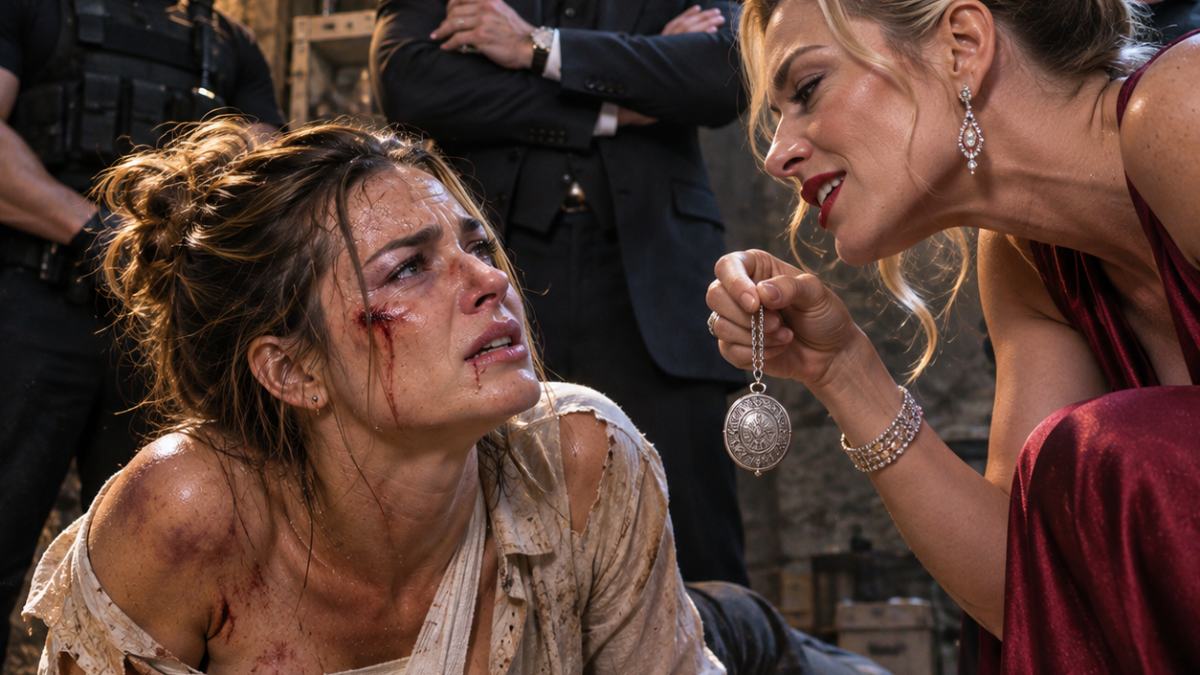
FULL STORY CONTINUATION
Dean did not move for several seconds.
I could hear his breathing.
Mine was worse.
Short.
Shallow.
Every attempt to inhale deeply sent a sharp pain through my ribs.
“Mrs. Fontaine…”
“Please.”
“You need medical care now.”
“I know.”
“Then let me call—”
“If Patrick intercepts it, he’ll move me.”
Dean looked toward the metal basement door.
He knew I was right.
Patrick’s estate in Paradise Valley did not operate like a normal home.
It had gates.
Private cameras.
A security room.
Staff entrances.
A vehicle checkpoint.
Patrick liked to say that successful people bought privacy.
What he had really purchased was control over who came and went.
Dean had worked for him for seven years.
Former sheriff’s deputy.
Former military policeman before that.
Not a cruel man.
Which meant I had spent hours wondering why he still worked there.
“I’ll get the medallion.”
He said.
“But after that, I’m getting you out.”
“First Don.”
His jaw tightened.
“Why is the medallion so important?”
I opened my eyes.
“Because if I’m right, it proves my father knew something before he died.”
Dean stared.
I whispered:
“And if I’m wrong, we’ve already lost everything anyway.”
He stood.
Before leaving, he placed a bottle of water within reach.
Pain medication beside it.
Then stopped.
“I need to tell you something.”
“What?”
“I wasn’t here when this started.”
I waited.
“I was in Scottsdale handling an alarm at one of Callahan Development’s properties.”
His voice was low.
“When I came back, Monroe and Kessler were down here.”
Two guards.
I knew the names.
“They told me Mr. Callahan ordered them to ‘make sure you understood.’”
My stomach turned.
Dean looked sick.
“I told them to stop.”
“Patrick said keep going?”
“Yes.”
The words barely came.
“I called him myself.”
“I told him you were injured.”
“What did he say?”
Dean swallowed.
“You heard part of it through the intercom.”
I remembered his voice.
Faint through the speaker.
No doctors.
“Did you record the call?”
Dean’s eyes lifted.
That was all the answer I needed.
“You did.”
“Our security system logs command calls automatically.”
“Does Patrick know?”
“He knows calls are logged.”
“Does he know you copied it?”
“No.”
Something like hope moved through me.
Tiny.
Dangerous.
“Copy everything.”
I said.
“Tonight.”
“Cameras.”
“Audio.”
“Gate logs.”
“Everything before anyone can erase it.”
Dean nodded.
Then:
“Megan came down here.”
“Yes.”
“I saw her leave.”
“She told me something.”
“What?”
I hesitated.
Saying it aloud made it more real.
“She said my family’s banks didn’t cancel their credit lines on their own.”
Dean’s face hardened.
“She said ‘we’ caused it.”
“And?”
“She said my parents’ plane did not crash by accident.”
Dean stared.
I continued.
“She said they had to die.”
“And Lucas too.”
He looked away.
“Jesus.”
“She admitted all of that?”
“Yes.”
“Was the basement camera on?”
My heart stopped.
“Camera?”
Dean looked toward the ceiling.
A black dome was recessed near the corner.
I had never noticed.
“Patrick had cameras installed in all secure areas.”
“Audio?”
“Yes.”
“Megan knows?”
“She should.”
I almost laughed.
Pain stopped me.
Maybe arrogance had finally done something useful.
“Get it.”
Dean said:
“I will.”
He reached for the door.
“Dean.”
He turned.
“If Patrick asks whether I’m conscious?”
“What do you want me to say?”
I thought of Megan’s final words.
The only thing I don’t understand is why you’re still alive.
“Tell him I’m getting weaker.”
Dean’s expression tightened.
“That isn’t exactly a lie.”
“No.”
It wasn’t.
The metal door closed.
I listened to his footsteps fade.
Then I was alone.
For the first time that night, I let myself be afraid.
Not frightened.
Afraid.
There is a difference.
Fright is immediate.
A sound.
A hand.
A door opening.
Fear stretches farther.
It shows you futures.
Patrick returning.
Megan deciding she had said too much.
My body failing before anyone came.
The realization that the man who had slept beside me for three years might have known exactly why my parents were dead.
I pressed my palm flat against the concrete.
Cold.
Real.
“Stay awake.”
I whispered.
My father used to say that in emergencies.
Not literally always.
It was one of his expressions.
Stay awake means keep thinking.
Do not let panic choose the next move.
Henri Fontaine had built a logistics company by treating disasters as sequences.
What is true?
What is urgent?
What is controllable?
I could hear his voice.
So I forced myself to think.
True:
Megan had confessed.
True:
Patrick had refused medical care.
True:
Dean had recordings.
True:
The medallion might still mean something.
Urgent:
Do not lose consciousness.
Controllable:
Very little.
I laughed once.
Immediately regretted it because my ribs screamed.
“Great.”
I whispered.
Then I waited.
The medallion had belonged to my father.
Silver.
About the size of a half-dollar.
Heavy.
One side carried the Fontaine crest.
Not a noble crest.
My grandfather designed it when the company opened its first warehouse.
A compass rose behind a bridge.
Beneath it:
FIND THE WAY HOME.
The reverse side had nothing but a tiny number.
17-43-9
When Dad gave it to me on my eighteenth birthday, I thought it was sentimental.
He made me promise never to sell it.
“If there is ever a moment when you don’t know who to trust, take this to Don.”
“Don who?”
“You know Don.”
I did.
Don Wyatt had serviced my grandfather’s watches.
Then my father’s.
An old man with a narrow shop in downtown Tucson called The Brass Anchor.
Clocks everywhere.
Ship chronometers.
Watches.
Brass instruments.
As a child, I believed Don knew how to fix time itself.
“What will he do?”
I asked Dad.
“Whatever is necessary.”
“That sounds dramatic.”
“Fontaines are dramatic.”
My mother shouted from the kitchen:
“Your father is dramatic.”
We laughed.
Years later, after the crash, I found the medallion among my belongings.
I almost took it to Don.
Patrick stopped me.
Not directly.
I mentioned the medallion once.
Patrick said:
“Your father filled your head with contingency plans because he couldn’t accept losing control.”
Then:
“You’re grieving.”
“Don’t let old men convince you there’s some conspiracy behind a business failure.”
I listened.
That memory made me feel sick now.
Had Patrick known exactly what the medallion could do?
Maybe not.
If he had, he would have searched for it.
Unless he thought it died on the plane with Dad’s secrets.
The suitcase had been my mother’s.
False bottom sewn into the lining decades earlier for jewelry during international travel.
Patrick never used it.
I did.
The medallion stayed there for three years.
Waiting for me to stop trusting the wrong man.
Dean left the estate through the south service gate at 9:18 p.m.
I learned that later.
He used an unmarked security vehicle.
Before leaving, he copied the basement footage to two encrypted drives.
One he hid inside his boot.
The other he put beneath the spare tire.
Then he forwarded an automated archive link to an account Patrick did not control.
Dean had spent seven years learning Patrick’s systems.
That night, he used that knowledge differently.
The Brass Anchor closed at six.
Dean reached Tucson after eleven.
Downtown was almost empty.
He found the shop dark.
Knocked.
Nothing.
Then looked at the upstairs apartment.
Light.
He called the number listed on the door.
An old voice answered.
“We’re closed.”
“My name is Dean Walsh.”
“Congratulations.”
“I’m looking for Don Wyatt.”
“You found his phone.”
Dean looked at the medallion in his palm.
“Camille is still alive.”
Silence.
Then he said:
“And the time has come.”
The line went dead.
Thirty seconds later, lights came on inside the shop.
Don opened the door holding a cane in one hand and what Dean later described as the coldest expression he had ever seen on an eighty-year-old man.
“Show me.”
Dean handed him the medallion.
Don examined the number.
Then closed his fist around it.
“Where is Camille?”
“Paradise Valley.”
“Is she alive?”
“Yes.”
“For now.”
Don’s face changed.
“What happened?”
Dean told him.
Not everything.
Enough.
Don locked the front door.
Walked behind the counter.
Moved an antique marine clock.
Pressed something hidden in the wood panel.
A narrow safe opened.
Dean stared.
Don removed a sealed envelope.
Three phones.
And a small black notebook.
“What is all that?”
Don looked at him.
“The reason Henri Fontaine told me never to retire completely.”
The first person Don called was not Lucas.
Not yet.
He called a woman named Evelyn Hart.
Former federal prosecutor.
Now private counsel.
She answered on the fourth ring.
“Don?”
“Protocol seventeen.”
Silence.
“You’re certain?”
“I’m holding Camille’s medallion.”
Evelyn’s voice sharpened.
“Is she safe?”
“No.”
“Location?”
Dean gave it.
“Medical condition?”
“Potential internal bleeding.”
“Call emergency services.”
Dean started:
“Patrick—”
Evelyn cut him off.
“No.”
“If there is an immediate medical emergency, you call 911.”
“Private gates do not outrank emergency medicine.”
Dean looked at Don.
Don nodded.
Dean made the call.
Not from the estate.
From Tucson.
He gave his name.
Position.
Address.
Explained a woman with serious injuries was being held against her will in a basement at the Callahan residence.
Then he called a former colleague in Maricopa County law enforcement.
Not to request favors.
To make sure the report was not lost in bureaucracy.
Evelyn meanwhile contacted an emergency judge regarding preservation of evidence and access concerns.
Then Don made the second call.
This time, the number was not stored under a name.
It rang once.
Twice.
A man answered.
“Wyatt.”
Don said:
“Lucas.”
Dean stopped breathing.
“Camille used the medallion.”
Silence.
Then a voice:
“Where is my sister?”
Lucas Fontaine was alive.
I did not learn that in the basement.
Not yet.
If I had, maybe the shock would have killed me before the injuries did.
For three years, the world had believed my brother died with our parents.
The truth was both simpler and more complicated.
Lucas had been listed on the original passenger manifest.
He had intended to board.
Twenty-six minutes before departure, my father sent him back into St. George to retrieve a packet of documents from a bank attorney.
The plane left without him because Henri believed Lucas could catch a commercial flight later.
The aircraft crashed before reaching Arizona.
The public manifest had already been transmitted.
In the chaos after the accident, early reports listed Lucas among those aboard.
Before corrections could be made publicly, someone attempted to break into the hotel room where he was staying.
Then another vehicle followed him from the bank attorney’s office.
Lucas called Don.
Don called Henri’s old attorney.
Within hours, they realized two things.
One:
The documents Lucas collected related to the coordinated cancellation of Fontaine credit lines.
Two:
Someone believed Lucas had them.
Evelyn persuaded Lucas not to return openly until authorities could determine what had happened.
They moved him.
New Mexico first.
Then Colorado.
He cooperated quietly with investigators.
But the evidence was incomplete.
Banks blamed automated covenant triggers.
Advisers blamed Fontaine’s debt ratios.
Emails disappeared.
One bank executive died in an unrelated accident months later.
Another refused to cooperate.
The trail went cold.
Lucas wanted to call me.
Evelyn advised against it.
Someone had already searched my Phoenix apartment while I was hospitalized after surgery.
Nothing taken.
Only searched.
I never knew.
Patrick entered my life six weeks later.
By the time Lucas learned I was dating him, Don found something worse.
Patrick had purchased an option on one of Fontaine’s distressed industrial parcels through a shell company before the public bankruptcy filing.
That meant he knew enough about the collapse to position himself early.
Still not proof he caused it.
Enough to frighten Lucas.
If Patrick knew Lucas was alive, he might act.
If Patrick believed I was the last Fontaine, Lucas could keep investigating.
So my brother stayed dead.
For three years.
I would later tell him I understood the logic.
And hated him for it.
Both were true.
In the basement, I knew none of this.
I only heard the house change.
At first, footsteps.
Then voices upstairs.
Raised.
A door slammed.
Someone shouted my name.
Not Patrick.
Dean?
No.
Then sirens.
Real.
Close.
The metal basement door opened.
I flinched violently.
A uniformed deputy appeared.
Then a paramedic.
“Camille Fontaine?”
I tried to answer.
Nothing came.
The paramedic knelt.
“You’re safe.”
I almost laughed.
Safe.
The word sounded foreign.
He asked:
“Can you tell me what happened?”
I whispered:
“My husband.”
Then:
“Camera.”
“What?”
I lifted one finger toward the ceiling.
“Save the camera.”
The deputy looked up.
“Already secured.”
That was Dean.
I knew it.
Then the room tilted.
The last thing I remember before waking in the hospital was someone saying:
“Blood pressure dropping.”
When I opened my eyes, everything hurt differently.
Not sharp basement pain.
Hospital pain.
Managed.
Heavy.
My left shoulder was immobilized.
There was a monitor beside me.
IV.
Oxygen.
White ceiling.
I moved.
A nurse appeared.
“Easy.”
“Where…”
“You’re at St. Joseph’s.”
“Patrick?”
“Not here.”
“Megan?”
“Not here.”
My throat hurt.
“Dean?”
“Your security officer?”
I nodded.
“He’s been speaking to law enforcement.”
Relief came so fast I cried.
The nurse gave me water.
“Your attorney is outside.”
“My attorney?”
“Evelyn Hart.”
I did not know Evelyn.
Then a man’s voice came from the hallway.
Not loud.
But familiar enough that my entire body went rigid.
“Can I see her?”
I stared at the door.
No.
Impossible.
The nurse noticed my heart rate increase.
“Ms. Fontaine?”
The door opened.
A man stepped in.
Older.
Thinner.
Beard.
A scar near his left eyebrow I did not remember.
But the eyes.
My father’s eyes.
I stopped breathing.
“Camille.”
The room disappeared.
“Lucas?”
My brother took one step.
Then stopped.
He did not touch me.
Maybe because he saw fear.
Maybe because he knew he had no right.
I stared.
“You’re dead.”
His face crumpled.
“No.”
“You’re dead.”
“I know.”
“They told me you were dead.”
“I know.”
Three years of grief hit me at once.
My monitor began alarming.
The nurse moved closer.
Lucas backed away.
“I’m sorry.”
I started crying.
Not soft tears.
Ugly.
Furious.
“You were alive.”
“Yes.”
“Three years.”
“I know.”
“You let me bury you.”
His eyes filled.
“I know.”
“I buried an empty coffin.”
“I know.”
“Stop saying you know!”
He flinched.
I tried to sit.
Pain stopped me.
“You don’t know.”
“I married Patrick because I thought everyone was gone.”
Lucas looked destroyed.
“I know that too.”
“Get out.”
“Camille—”
“Get out!”
The nurse stepped between us.
Lucas nodded.
He left.
The door closed.
I cried until medication and exhaustion pulled me under again.
When I woke next, Evelyn Hart sat beside the window.
Late fifties.
Silver hair cut short.
Dark suit.
No nonsense.
“I’m Evelyn.”
“I figured.”
“How are you feeling?”
“Like my dead brother just walked into my hospital room.”
“That is a reasonable description.”
I almost smiled.
Almost.
Then:
“Did you know?”
“Yes.”
“For three years?”
“Yes.”
“Then I hate you too.”
“That’s also reasonable.”
I stared.
She did not defend herself.
“I need to tell you something before anything else.”
“What?”
“You do not owe Lucas forgiveness because his reasons were strategic.”
Good.
That was not what I expected.
“He should have contacted you?”
“Yes.”
“Would that have created risk?”
“Yes.”
“Both can be true.”
I looked at her.
“You sound like a lawyer.”
“I have been accused.”
Then she grew serious.
“Camille, Patrick has not been arrested for conspiracy in your family’s deaths.”
I felt anger flare.
“Megan confessed.”
“We have the basement recording.”
“You do?”
“Yes.”
“Then why—”
“Because a confession from Megan is evidence.”
“Not the entire case.”
“We have to prove what she knows, how she knows it, and whether her statements are true.”
I hated that.
Which meant it was probably right.
“What happened to Patrick?”
“He was detained during the emergency response because officers found you being held injured and received information about possible unlawful confinement and assault.”
“Monroe and Kessler?”
“Also being investigated.”
“Megan?”
“Her attorney is now involved.”
“Dean?”
“Cooperating.”
I closed my eyes.
“Did Patrick really say no doctors?”
“Yes.”
“There is a recorded security call.”
“Clear audio.”
I felt sick.
Some part of me had wanted Dean to tell me I imagined it.
Evelyn continued:
“Your medical injuries are documented.”
“Three rib fractures.”
“Collarbone injury.”
“Internal bleeding that fortunately did not require major surgery after stabilization.”
“You will recover.”
The words hit strangely.
Will recover.
Future tense.
I still had one.
The next morning, Dean came.
He stood at the doorway holding his hat.
No suit.
No security earpiece.
Just a man who had not slept.
“Come in.”
He did.
“I’m sorry.”
“For what?”
“For working for him long enough not to see what he was.”
“Did you know he was hurting me?”
“No.”
“Did you know he could?”
Dean looked down.
“I knew he scared people.”
“That isn’t what I asked.”
“No.”
A pause.
“I saw things I should have questioned.”
“What things?”
“Employees disappearing after disagreements.”
“Security being used to intimidate contractors.”
“People told never to contact police over internal matters.”
He swallowed.
“I told myself rich men are controlling.”
“I told myself I was there to keep things professional.”
“And then?”
“Then I came home and found you downstairs.”
He looked at me.
“I’m sorry I didn’t act faster.”
“You got the medallion.”
“Yes.”
“You saved the camera files.”
“Yes.”
“Then you acted when it mattered.”
His eyes filled.
I realized I had said something to him I could not yet say to Lucas.
Maybe because Dean had failed me for hours.
Lucas had failed me for years.
Grief does strange mathematics.
Don Wyatt visited that afternoon.
He looked almost exactly as he had when I was eighteen.
Which was impossible.
Maybe old men become visually permanent after seventy-five.
He carried the medallion in a cloth pouch.
He placed it on the tray.
“Your father would be furious with me.”
“Why?”
“For letting it take this long.”
“You didn’t control when I used it.”
“I could have come to you.”
“You didn’t.”
“No.”
At least he was honest.
I picked up the medallion.
The silver was warm from his hand.
“What is seventeen-forty-three-nine?”
Don sat.
“Seventeen was your grandfather’s original warehouse number.”
“Forty-three was the year he was born.”
“And nine?”
“Nine was the protocol.”
“What protocol?”
“Continuity.”
I frowned.
Don explained.
After Fontaine Global began expanding aggressively, my father worried one day the company could face a coordinated attack.
Not a movie-style hostile takeover.
Something real.
Credit pressure.
Fraud.
Corrupt partners.
Regulatory manipulation.
He created contingency packets with outside counsel.
Separate records.
Beneficial ownership documents.
Copies of debt agreements.
Asset maps.
Insurance information.
Family trust instruments.
Most importantly, authorization procedures if standard corporate records were compromised.
The medallions were authentication tokens.
My father had one.
Lucas had one.
Mine was the third.
“You’re telling me Dad built a doomsday plan?”
Don shrugged.
“Henri enjoyed being prepared.”
“That’s an understatement.”
“What did mine activate?”
“Access to your family’s sealed continuity archive.”
“Where?”
“Not in one place.”
Of course.
My father never trusted a single place.
“What does it contain?”
Don looked toward Evelyn.
She answered.
“Enough to prove some Fontaine assets Patrick claimed were lawfully acquired may have been transferred through transactions that need serious review.”
My heart accelerated.
“The land?”
“Some.”
“Not everything.”
“Do not build hope around totals yet.”
I nodded.
“What else?”
Don said:
“A ledger your father kept during the final two weeks.”
“What ledger?”
“Banks.”
“Calls.”
“Names.”
“People who approached him about selling Fontaine assets before the credit cancellations became public.”
I knew.
“Patrick.”
Don nodded.
“Patrick’s name appears twice.”
My skin went cold.
“In what context?”
“Henri wrote that Patrick Callahan asked whether Fontaine would consider selling Mesa Verde Industrial Park.”
“Dad refused.”
“Three days later, one of the banks froze Fontaine’s revolving line.”
“And the second mention?”
Don’s expression hardened.
“Patrick’s holding company acquired a purchase option through an intermediary before your father’s plane went down.”
I stared.
“Dad knew?”
“He suspected.”
“Not enough to prove.”
“Then why did he let me date Patrick?”
Don looked at me sadly.
“He didn’t.”
“What?”
“Henri was already dead.”
Of course.
I closed my eyes.
For a second, I hated myself for the stupid question.
Grief had broken time.
Lucas returned two days later.
This time I let him stay.
Barely.
He sat across the room.
Not near the bed.
I said:
“Tell me everything.”
He did.
The missed plane.
The bank documents.
The hotel intrusion.
The decision to disappear.
The early investigation.
The lack of proof.
Patrick’s shell-company option.
Don discovering Patrick had begun approaching former Fontaine vendors.
Then:
“I wanted to call you every day.”
I stared.
“But you didn’t.”
“No.”
“Why?”
“Because two weeks after the crash, someone searched your apartment.”
“I didn’t know that.”
“You were recovering from surgery.”
“Hospital staff told us a man came asking questions about your discharge schedule.”
My stomach tightened.
“Patrick?”
“We don’t know.”
“Then six weeks later, you met him.”
“How did you know?”
“I watched from a distance.”
That enraged me.
“You watched me?”
“Yes.”
“For how long?”
“On and off.”
“Did you watch me marry him?”
Lucas’s face crumpled.
“Yes.”
I turned away.
“You could have stopped me.”
“I didn’t know he was involved in the crash.”
“You knew enough to hide from him.”
“I knew enough to suspect he was connected to the financial collapse.”
“That was enough!”
“I thought if I came back without proof, he’d know I was alive and destroy whatever chance we had to find out what happened.”
“So you used me as bait without telling me?”
“No.”
“That is exactly what happened.”
“Camille—”
“You let me live beside a man you feared.”
“I thought he’d protect you because publicly you were his wife.”
I laughed bitterly.
“Great calculation.”
“I was wrong.”
I looked at him.
“Say that again.”
“I was wrong.”
“Not unlucky.”
“Not forced.”
“Wrong.”
“Yes.”
Tears ran down his face.
“I was wrong.”
That mattered.
Not enough.
Something.
I said:
“You don’t get to protect me by deciding what truths I’m allowed to know.”
Lucas nodded.
“I know.”
“Don’t say you know.”
He stopped.
“Okay.”
That was the first step toward becoming siblings again.
Not forgiveness.
Respect.
The basement recording changed everything.
Megan’s voice was clear.
Fontaine Global Logistics’ credit lines weren’t canceled on their own. We made them disappear.
Then:
The plane didn’t crash by accident either.
Then:
Your parents died because they were in our way. Your brother had to die too.
No ambiguity.
But Evelyn kept reminding us:
“Confession is not corroboration.”
So investigators corroborated.
Financial records came first.
Fontaine had six major lenders.
Three had received nearly identical anonymous risk memoranda within forty-eight hours.
The memoranda claimed Fontaine had hidden covenant violations, inflated property valuations, and undisclosed related-party debt.
Some allegations were false.
Others distorted.
Several supporting documents were forged.
One originated from a consulting firm with indirect connections to Holloway Advisory Group.
Megan’s family business.
Megan had worked there before becoming Patrick’s adviser.
Then bank communications showed a coordinated fear cascade.
One bank froze a line.
Others followed.
Fontaine’s liquidity collapsed.
Vendors panicked.
Projects stalled.
Patrick’s entities began buying claims and distressed options.
Not proof of criminal conspiracy by itself.
Then investigators found payments.
A Callahan-controlled company had paid a “strategic consulting fee” to an intermediary tied to the same firm that distributed the false risk memoranda.
Patrick had approved the payment.
Megan had been copied on internal emails discussing “accelerated asset opportunities” before the collapse became public.
Lucas sat beside me when Evelyn showed us.
He whispered:
“They knew.”
I stared at Patrick’s electronic approval.
“Yes.”
But the plane was harder.
Much harder.
Aircraft accidents produce investigations.
The original report cited a mechanical failure compounded by weather.
No criminal cause identified.
Three years later, investigators reopened aspects of the maintenance history based on Megan’s statement.
A subcontractor had performed service days before the flight.
The records contained irregularities.
A technician had later disappeared from the industry.
Payments from a company tied indirectly to Patrick had reached a business associated with that technician months afterward.
No document said:
Sabotage the Fontaine plane.
Nothing so easy.
Then Dean turned over archived Callahan messages from old systems.
One message from Megan to Patrick, two days before the crash:
If H gets to Tucson with Lucas’s documents, the banks may reverse. M says the flight issue is handled.
Patrick replied:
No loose ends.
I read the exchange three times.
“What does M mean?”
Investigators believed it referred to Marcus Vale.
A fixer who had worked quietly for several developers.
Vale died eighteen months earlier.
Convenient.
Terrible.
Still evidence had to connect.
A deleted payment ledger recovered from a Callahan server showed a transfer to Vale’s company the week before the crash.
Description:
risk remediation
I vomited after reading it.
Not metaphorically.
Lucas held my hair.
That was the first time I allowed him to touch me after the hospital.
Patrick’s defense was immediate.
The payments were legitimate.
The messages were about commercial risk.
Megan was lying to save herself.
The security call was taken out of context.
The guards exceeded his instructions.
I had assaulted Megan.
He had merely ordered me restrained until police could be contacted.
Except police were never contacted.
Doctors were forbidden.
And the recording captured him saying:
Keep going until she admits what she did.
Then later:
Lock her downstairs. No doctors.
His own voice did more damage than any witness.
Monroe and Kessler eventually cooperated.
Not out of conscience at first.
Out of fear.
They admitted Patrick ordered them to “teach her not to put hands on Megan.”
They claimed they did not intend serious injury.
That statement enraged me.
Intentions become very convenient after consequences arrive.
Dean’s logs showed he ordered them to stop upon returning.
Then called Patrick.
Investigators confirmed.
That saved Dean from being treated like the others.
It did not erase his years of looking away from Patrick’s intimidation.
He knew that.
The stair incident also unraveled.
Megan claimed I shoved her.
There was no camera inside the bedroom.
But the hallway camera caught enough.
She entered carrying tea.
Fourteen minutes later, the bedroom door opened.
I was visible standing several feet inside.
Megan backed out.
Paused.
Looked toward the landing.
Then fell.
No contact.
Not even close.
Patrick arrived seconds later.
He never reviewed the video before ordering me downstairs.
Later, Dean asked why.
Patrick said:
“I don’t need a camera to know what Camille is capable of.”
That sentence stayed with me.
He did not want truth.
He wanted permission.
Megan gave it.
Why stage the fall?
That answer appeared in a folder inside Patrick’s study.
A closing package.
Three Fontaine parcels.
Patrick’s companies had acquired them through distressed transactions.
Title challenges remained possible because of irregular creditor transfers.
My signature—Fontaine heir and surviving trust beneficiary—would strengthen a settlement agreement waiving future claims.
Patrick had asked me to sign similar documents twice.
I refused until my attorney could review them.
Megan’s staged fall happened the night before an expected closing.
One handwritten note from Patrick:
C must sign before Friday. If she delays again, financing expires.
My body went cold.
He did not only want to punish me for Megan.
He needed me frightened.
Compliant.
Still alive enough to sign.
That was why Megan said she did not understand why I was still alive.
She and Patrick were not necessarily operating from exactly the same plan anymore.
Patrick needed my signature.
Megan apparently believed eliminating the last Fontaine would solve more problems.
Except I was not the last Fontaine.
And the signature never came.
The criminal cases took time.
A lot of time.
The public wanted one clean headline.
BILLIONAIRE HUSBAND BEHIND FAMILY PLANE CRASH
Reality moved more carefully.
Patrick faced charges connected first to my unlawful confinement, assault conspiracy, obstruction, and financial crimes.
The aviation investigation developed separately.
Megan faced charges connected to false statements, conspiracy, financial fraud, and later evidence related to the crash investigation.
Monroe and Kessler entered negotiated pleas involving the attack on me.
Dean testified.
Lucas testified.
Bank executives testified.
Forensic accountants testified.
Aircraft experts testified.
I testified too.
More than once.
The first time I saw Patrick in court, he looked directly at me.
No smile.
No wineglass.
No estate.
Just a suit and two attorneys.
For one second, my body remembered the basement.
Cold floor.
Metal door.
I could not breathe.
Evelyn leaned closer.
“Look at me.”
I did.
“You are not in the basement.”
“I know.”
“Say it.”
“I’m not in the basement.”
“Again.”
“I am not in the basement.”
My breathing slowed.
Patrick watched.
I stopped looking at him.
That was another lesson.
Courage does not always mean staring down the person who hurt you.
Sometimes courage is refusing to give them the center of your vision.
Megan eventually tried to recant her basement confession.
She said she had exaggerated to frighten me.
Her attorney claimed she wanted me to believe Patrick was more dangerous than he was because she resented our marriage.
Then prosecutors played the video.
Not only the confession.
Her body language.
Calm.
Controlled.
No panic.
Then financial records.
Emails.
Payments.
The recantation failed to make the evidence disappear.
Still, the plane case remained difficult.
No living witness admitted physically tampering with the aircraft.
Marcus Vale was dead.
The technician associated with the questionable maintenance was eventually located in Mexico.
He denied sabotage.
Then admitted Vale had paid him to falsify part of the maintenance record.
He claimed he had not understood that additional interference would occur after his work.
Investigators proved someone accessed the aircraft after the signed service inspection.
Who exactly performed the final act remained disputed.
But the broader conspiracy became clearer.
Patrick and Megan had funded Vale.
Vale had arranged compromised maintenance and false documentation.
The purpose was to prevent my parents from reaching Tucson with records that could reverse the engineered banking crisis and expose the asset scheme.
Under conspiracy law, Patrick did not need to physically touch the plane for the consequences to be devastating.
Evelyn warned me not to celebrate before verdict.
I didn’t.
Nothing about my parents’ deaths felt celebratory.
Patrick tried to negotiate.
Not directly with me.
Through lawyers.
He offered information.
Assets.
Admissions to financial crimes.
He wanted reduced exposure in the aviation case.
Prosecutors decided what mattered.
Not me.
That became one of the hardest boundaries.
I wanted to control the result.
I had lost my parents.
Three years with Lucas.
My marriage.
My body almost failed in that basement.
Surely I should get to decide Patrick’s punishment.
No.
That was not how justice worked.
My role was truth.
The state’s role was prosecution.
The court’s role was sentence.
I hated the separation.
Eventually respected it.
Civil recovery was another battle.
The Fontaine estate reopened several matters.
Not every land sale could be reversed.
Some properties had passed to innocent third parties.
Some claims were time-barred or complicated.
Some creditors had acted lawfully based on information they believed.
The fantasy ending would be:
We got everything back.
We did not.
We recovered enough.
Two industrial parks.
A logistics campus outside Tucson.
Significant damages from entities involved in fraudulent transfers.
Insurance proceeds previously contested.
Trust assets hidden beneath layers of litigation.
More importantly, the official record changed.
Fontaine Global had not simply collapsed because Henri Fontaine recklessly overleveraged the company.
It had been deliberately destabilized through false information and coordinated financial pressure.
Dad had made mistakes.
Real ones.
He expanded too fast.
Carried too much short-term debt.
Those weaknesses made the attack possible.
Truth did not require turning him into a flawless martyr.
He was a brilliant, stubborn businessman whose vulnerabilities were exploited by people waiting to profit.
I could live with that truth.
Lucas wanted to rebuild Fontaine Global immediately.
Of course he did.
Three months after I left the hospital, he spread plans across Don’s back room.
Warehousing.
Land.
Freight lanes.
A new company.
I stared.
“No.”
He blinked.
“What?”
“No.”
“You haven’t even looked.”
“I don’t care.”
“Camille—”
“I almost died.”
“I know.”
“You spent three years pretending to be dead.”
His face tightened.
“I know.”
“Stop saying that.”
“Right.”
I continued.
“Our parents are dead.”
“We have criminal cases.”
“Civil cases.”
“I can barely sleep.”
“And you want me to review a warehouse model?”
Lucas looked embarrassed.
“When you put it like that…”
“There is no other way to put it.”
He gathered the papers.
“I don’t know what to do if we’re not rebuilding.”
There it was.
The truth beneath his obsession.
I softened.
“You can be my brother.”
He looked at me.
“I don’t know if I remember how.”
“Neither do I.”
That was the work we needed first.
Not logistics.
Family.
We started with breakfast.
Once a week.
No lawyers.
No case files unless both agreed.
Lucas told me where he had lived.
Colorado.
Then Montana briefly.
He had worked under a shortened version of his middle name consulting for freight companies.
I laughed.
“You hid from Patrick by working in logistics?”
“It’s the only thing I’m good at.”
“You’re terrible at golf.”
“Exactly.”
He told me he had been engaged once during those three years.
“What?”
“It ended.”
“Why?”
“I wouldn’t tell her my real name.”
“Reasonable objection.”
He laughed.
First real laugh between us.
Then I cried.
Because his laugh sounded like Dad.
Lucas reached across the table.
Stopped.
“Can I?”
I nodded.
He held my hand.
We sat like that.
Three years cannot be restored.
But time can start moving forward again.
Don retired six months later.
Actually retired.
We held a small dinner at The Brass Anchor.
He complained the entire time.
“I’m eighty-two.”
“You were already retired.”
“I came in Tuesdays.”
“That’s employment.”
“That’s avoiding my wife’s book club.”
His wife, June, threw a napkin at him.
Before closing the shop for the final time, he gave me the medallion.
“I thought Dad told you to keep it.”
“He told me to return it when it did its job.”
“What if I need it again?”
Don smiled.
“Then we failed you.”
I looked at the silver disk.
Fontaine crest.
FIND THE WAY HOME.
“What does home mean now?”
I asked.
Don shrugged.
“That’s above a watchmaker’s pay grade.”
I laughed.
Then hugged him.
Dean testified at Patrick’s trial.
Afterward, he resigned from private security.
He told me:
“I don’t want to protect rich men anymore.”
“What will you do?”
“Maybe courthouse security.”
I raised an eyebrow.
“Very exciting.”
“Exactly.”
He eventually joined a nonprofit that provided security assessments for shelters and advocacy organizations.
That felt appropriate.
Before he left Arizona, he came to see me.
“I still think about the basement.”
“So do I.”
“I should have refused Patrick years earlier.”
“Probably.”
He nodded.
“I appreciate that you don’t make me feel better.”
“I’m not your therapist.”
He laughed.
Then became serious.
“Thank you for trusting me with the medallion.”
“I didn’t trust you.”
He looked surprised.
“I was desperate.”
Then I smiled faintly.
“But you earned trust after.”
That meant more.
Trust should sometimes be earned.
Patrick’s trial ended almost two years after the basement.
The jury found him guilty on multiple counts involving the financial conspiracy, my confinement and assault, obstruction, and conspiracy connected to the events surrounding my parents’ deaths.
Not every count.
Some acquitted.
Some dismissed earlier.
Again, reality.
Megan was convicted in a separate proceeding after cooperating partly and then contradicting herself.
Her sentence reflected both her role and limited cooperation.
Monroe and Kessler had already been sentenced under plea agreements.
The aviation-related findings led to an amended public report acknowledging deliberate criminal interference connected to the crash.
That document mattered to me more than Patrick’s sentence.
My parents’ deaths were no longer recorded as an unfortunate mechanical tragedy.
The truth had a place in the official history.
Lucas stood beside me when we received the amended report.
He touched Dad’s name.
Then Mom’s.
“They know.”
I said:
“Who?”
He looked embarrassed.
“Mom and Dad.”
I did not argue.
I wanted to believe something like that too.
Patrick received a long prison sentence.
When the judge asked whether I wanted to give a victim-impact statement, I almost refused.
What could I say?
He knew what he did.
Then I thought about the basement.
The wineglass.
No doctors.
So I stood.
Patrick looked at me.
I read from one page.
“Three years ago, I believed you were the person who helped me survive losing my family.”
“You held me while I grieved deaths you had helped make possible.”
The courtroom was silent.
“You did not simply take money or land.”
“You made yourself the safe place after helping create the danger.”
“That was the betrayal I struggled hardest to understand.”
Patrick looked down.
I continued.
“The night I was locked in your basement, you believed pain would make me surrender.”
“It did the opposite.”
“It made me stop explaining you to myself.”
“I am not asking this court to punish you because I hate you.”
“I am asking the court to recognize that power without accountability allowed you to treat people as obstacles.”
“My parents became obstacles.”
“My brother became an obstacle.”
“I became one.”
“And when I refused to obey, you thought hurting me was another management decision.”
I folded the paper.
“You were wrong.”
That was all.
No screaming.
No threat.
I sat down.
My hands shook under the table.
Lucas covered one with his.
I let him.
After Patrick’s conviction, people wanted interviews.
Documentaries.
Podcasts.
Books.
I refused almost all of them.
I had spent enough of my life inside other people’s narratives.
The story became public anyway.
Fontaine heir.
Dead brother alive.
Business conspiracy.
Plane sabotage.
Abusive husband.
Hidden medallion.
It sounded fictional when compressed into headlines.
Real life had been much slower.
Three years of grief.
Months of financial review.
Painful rehabilitation.
Therapy.
Nightmares.
Court delays.
Some mornings where brushing my hair hurt because of my shoulder.
Others where I woke convinced the basement door was opening.
The dramatic events were minutes.
Recovery was years.
I eventually returned to work.
Not Callahan Development.
Obviously.
Not immediately to Fontaine either.
I joined a logistics consulting group as an adviser.
Anonymous enough.
Useful enough.
I discovered I still loved the industry.
That surprised me.
Patrick had not ruined warehouses.
Megan had not ruined balance sheets.
Fraud did not get to own logistics forever.
A year later, Lucas and I formed a new company.
Not Fontaine Global Logistics.
That company belonged to another era.
We called it Northbridge Logistics.
Why?
Dad’s crest.
Compass rose.
Bridge.
We began with one recovered industrial park.
Then a second.
No empire.
No rushing.
Conservative debt.
Independent board.
Strong controls.
Lucas ran operations.
I handled strategy and governance.
We argued constantly.
Healthily.
The first time he raised his voice over an acquisition, I froze.
He noticed immediately.
Stopped.
“Camille.”
I hated myself for reacting.
“I’m fine.”
“No.”
He sat.
“I’m sorry.”
“You’re allowed to disagree.”
“Not like that.”
I looked at him.
“Dad yelled.”
“Yes.”
“So did Mom.”
“Mostly at Dad.”
I laughed.
Tension broke.
Then we finished the disagreement without anyone being afraid.
That mattered more than the acquisition.
The estate in Paradise Valley was sold during the legal and financial resolution of Patrick’s affairs.
I never returned.
Investigators collected my belongings.
Lucas offered to retrieve them.
I said:
“Anything important?”
“Your mother’s suitcase.”
That stopped me.
“Yes.”
He brought it.
The suitcase still had the false bottom.
Empty now.
I ran my hand along the fabric.
Three years.
The medallion had waited there while I slept beside Patrick.
I did not blame myself anymore.
That took therapy.
For a long time, I asked:
How could I not see?
My therapist asked back:
“What did Patrick gain by being kind to you after your family died?”
“Trust.”
“What did you need most?”
“Safety.”
“Then perhaps he presented himself as exactly what you needed.”
That was manipulation.
Not stupidity.
I could accept that eventually.
Megan wrote to me once from prison.
Eight pages.
I almost burned it unopened.
Lucas said:
“Your call.”
Progress.
No telling me what to do.
I read it.
She claimed Patrick recruited her first.
That he found evidence Fontaine was financially vulnerable.
That the original plan was to force asset sales, not kill anyone.
That Vale escalated the plane operation after Henri discovered the false bank memoranda.
She insisted she had not known exactly what would happen to the aircraft until afterward.
Maybe true.
Maybe self-serving.
Then she wrote:
I came to the basement because I wanted you to finally understand that none of what happened to you was random. I wanted to see your face when you knew.
That sentence told me enough.
Cruelty was not collateral for Megan.
She enjoyed knowledge as power.
Near the end:
I don’t expect forgiveness.
Good.
She did not get it.
I gave the letter to Evelyn for the record.
Then stopped thinking about whether Megan was sorry.
Remorse is useful for the person who has to live with themselves.
It is not rent owed to the victim.
Patrick wrote too.
I never opened his first three letters.
The fourth came five years after the basement.
The envelope sat on my desk for a week.
Then I read.
He wrote:
I still remember telling Dean not to call a doctor.
I stopped.
My hands went cold.
Then:
For years I told myself I didn’t think you were seriously hurt. That was a lie. I knew he was frightened. I knew what that meant. I cared more about keeping control than whether you were safe.
I kept reading.
I also told myself the plane operation got away from us. That I only wanted Fontaine weakened enough to sell assets. That is another lie by omission. Once I knew Vale was willing to remove people, I did not stop him because the outcome benefited me.
There.
Not legal testimony.
Not useful now.
Just truth.
Then:
The worst thing I did was let you believe I rescued you afterward.
I cried.
Quietly.
Because he finally understood the thing I had said in court.
He had become my shelter after helping create the storm.
I did not respond.
There was nothing left to say.
My relationship with Lucas became ordinary again slowly.
That was the best outcome.
He annoyed me.
Borrowed books and forgot them.
Called during meetings.
Sent terrible memes.
He married eventually.
Her name was Sofia.
An environmental engineer.
She knew the entire story before their third date because Lucas had finally learned that secrets framed as protection were still secrets.
At their wedding, I stood beside him before the ceremony.
He looked nervous.
“You’re pale.”
“I’m fine.”
“You look like Dad before a bank presentation.”
“Helpful.”
I adjusted his tie.
Then he said:
“Camille.”
“What?”
“I’m sorry.”
“For what now?”
“The three years.”
I sighed.
“Lucas.”
“I know we’ve talked about it.”
“Yes.”
“I just—”
I put a hand on his arm.
“You cannot repay lost time.”
He looked at me.
“So stop trying.”
“Are we okay?”
I smiled.
“We’re annoying siblings.”
“That sounds promising.”
“It’s the goal.”
He hugged me.
This time, no permission needed.
Some relationships earn ease back.
Northbridge grew.
Not explosively.
I refused explosive growth.
Every major debt package passed independent review.
Every related-party transaction disclosed.
No executive signed documents without reading them.
Lucas once joked:
“You’re traumatizing the entire management team with footnotes.”
“Good.”
At annual leadership training, I placed the old Fontaine medallion on the table.
Not as a mystical object.
As a reminder.
Systems fail when people assume trust can replace verification.
I told young managers:
“Trust people.”
“Then build controls so trust does not require blindness.”
That became part of our culture.
On the tenth anniversary of my parents’ death, Lucas and I drove to the desert memorial outside Tucson.
Don came.
Dean too.
Evelyn.
Sofia.
A few former Fontaine employees.
No press.
We placed flowers.
My parents’ names.
The seven others who died.
There was no grave for Lucas anymore, obviously.
The original memorial plaque had once listed him.
We replaced it years earlier.
Lucas touched the empty space where his name had been removed.
“Strange.”
“What?”
“Seeing proof you officially came back to life.”
I smiled.
“You’re still irritating.”
“Strong evidence.”
Then he walked away to give me a moment.
I stood before Mom and Dad.
Took out the medallion.
Silver worn smooth from years of handling.
“Find the way home.”
I whispered.
For a long time, I thought home meant Fontaine Global.
Our old house.
Parents alive.
Lucas beside me.
Something I could never regain.
I understood differently now.
Home was not restoration.
It was truth without fear.
People who did not require me to disappear for their plans to work.
A company I could leave at night.
A brother allowed to make his own mistakes.
My body no longer belonging to Patrick’s anger.
That was home.
I never remarried quickly.
For years, people assumed trauma had made me afraid of love.
Maybe partly.
Mostly, I was finally enjoying choices that belonged entirely to me.
I dated.
Badly sometimes.
One man talked about himself for ninety minutes.
Another asked about the medallion story on our second date because he had searched me online.
No third date.
Eventually, I met Nathan Cole.
Architect.
Divorced.
Father of one adult daughter.
On our fifth date, he asked:
“What do you need to feel safe with somebody?”
I almost laughed because the question sounded like therapy homework.
“Why?”
“Because everyone has an answer.”
“Most people just don’t ask.”
I thought.
“Consistency.”
He nodded.
“Anything else?”
“Don’t make decisions for me and call it protection.”
He smiled slightly.
“That sounds specific.”
“It is.”
“I can work with specific.”
We moved slowly.
Very slowly.
He never treated that as a test he needed to pass.
That helped.
Years later, when he proposed, he did not hide a ring in food or arrange an audience.
We were in my kitchen.
He said:
“I love our life.”
“I’d like to keep building it.”
“Would you marry me?”
I stared.
Then:
“Can I think?”
He smiled.
“Of course.”
That answer mattered more than the proposal.
I said yes the next morning.
Before our wedding, I took off the medallion I had worn almost every day since the hospital.
Nathan noticed.
“You’re not wearing it?”
“No.”
“Why?”
I placed it in a small wooden box.
“Because I don’t need emergency instructions around my neck anymore.”
He nodded.
No dramatic speech.
Exactly right.
The medallion went into my desk.
Accessible.
Not hidden.
That was the difference.
Dean attended the wedding.
Don did not.
He had died the year before at eighty-eight.
Peacefully.
June sent me the old marine clock from his shop.
The one hiding the safe.
A note in Don’s handwriting had been taped underneath.
TIME DOES NOT FIX THINGS. PEOPLE DO. TIME JUST GIVES THEM ROOM.
Typical Don.
Pretending not to be sentimental while writing something devastating.
The clock hangs in my office at Northbridge.
Still loses two minutes a month.
I refuse to repair it.
Lucas says this is irrational.
Probably.
Years later, a young woman at Northbridge came to me after a meeting.
She worked in accounting.
Smart.
Quiet.
“Can I ask something personal?”
“You can ask.”
“I might not answer.”
She hesitated.
“My boyfriend keeps asking me to put his company debt in my name because my credit is better.”
I felt the past move.
Not like a wound.
Like knowledge.
“Do you want to?”
“No.”
“Then don’t.”
“He says if I loved him—”
I raised a hand.
“Stop there.”
She did.
“Love does not require you to become somebody else’s collateral.”
Her eyes filled.
I softened.
“If you want financial advice, we can connect you with someone independent.”
“If you want personal support, HR has resources.”
“But your no does not require a closing argument.”
She nodded.
I thought of the basement.
Three cracked ribs.
Cold floor.
How many times had I explained instead of leaving?
You cannot hand somebody your hard-earned wisdom before they need it.
But you can offer language.
Sometimes language is the first door.
The official Fontaine case file eventually became thousands of pages.
Bank records.
Maintenance reports.
Transcripts.
Trials.
Appeals.
I could have spent the rest of my life reading it.
I chose not to.
Evelyn stored what needed preservation.
Some went into the family archive.
The rest belonged to institutions.
I kept only three personal items from the entire case.
Dad’s ledger.
The medallion.
And a photograph of Lucas and me as children sitting on the loading dock of Fontaine’s first warehouse.
I was eight.
He was eleven.
Dad had written on the back:
My two most difficult assets.
I laughed every time.
Patrick appealed parts of his conviction.
Expected.
Some issues were reviewed.
Most major findings remained.
I followed through counsel.
Not obsessively.
That was another freedom.
For a while, every court filing felt like Patrick reaching through prison bars into my life.
Then Evelyn said:
“You are allowed to let lawyers read these first.”
Revolutionary concept.
I did.
Eventually, legal developments became updates rather than emergencies.
That is how power fades.
Not all at once.
By reducing how much of your nervous system another person gets to occupy.
The basement itself was demolished when the Paradise Valley estate was redeveloped years later.
A developer asked whether I wanted anything preserved.
“No.”
He seemed surprised.
“Nothing?”
“Nothing.”
Some survivors need places remembered.
I needed that room to become drywall dust.
Both responses are valid.
I did not visit demolition.
Did not need to watch.
The basement existed in memory.
That was enough.
Megan once said the only thing she did not understand was why I was still alive.
For a long time, I thought survival itself should be my answer.
I survived.
You failed.
But survival alone is too small.
I did more than remain alive.
I learned to stop mistaking control for protection.
Stopped romanticizing secrecy.
Let Lucas become a flawed brother instead of a resurrected hero.
Let Dad be a brilliant man who made mistakes.
Let Mom be remembered for more than dying on a plane.
Built a company without rebuilding an empire.
Married a man who could hear “I need time” without treating it as rejection.
Drank wine without seeing Patrick’s glass.
Went into basements without panic eventually.
Not immediately.
Eventually.
Life expanded again.
That was the answer.
On the fifteenth anniversary of the crash, Northbridge opened a new logistics center outside Tucson.
We named the main training room after Henri and Celeste Fontaine.
Not the building.
Dad would have loved a building.
That was exactly why I refused.
Lucas complained.
“He deserves the building.”
“He already had an empire.”
“Training room feels small.”
“Good.”
Mom would have approved.
At the opening, Lucas gave a speech.
Shorter than expected.
He said:
“Our parents believed logistics was about moving things.”
“Freight.”
“Money.”
“Materials.”
“But eventually we learned the hardest thing to move is truth when powerful people want it buried.”
He looked toward me.
“Northbridge exists because truth moved anyway.”
I cried.
Nathan handed me a tissue.
“Your family is dramatic.”
“You have no idea.”
After the ceremony, a reporter asked:
“Mrs. Fontaine-Cole, if you could go back to the night you used the medallion, would you do anything differently?”
I thought.
So many things.
I would leave Patrick sooner.
Call Lucas impossible because I thought he was dead.
Take the medallion to Don immediately after the crash.
Question Patrick’s acquisitions.
Trust my discomfort around Megan.
But those answers treated hindsight like wisdom available at the time.
I said:
“I would ask for medical help sooner.”
The reporter looked surprised.
“Not confront Patrick?”
“No.”
“Not expose the conspiracy?”
“No.”
“I almost died because I thought strategy had to come before my body.”
“That was wrong.”
“Evidence matters.”
“Justice matters.”
“But if you’re injured, get help.”
That was what Dean had wanted.
What Evelyn ordered.
What I resisted.
Survival should never become subordinate to revenge or proof.
I understood that now.
The reporter asked:
“What did the medallion really summon?”
I smiled.
That word.
Summon.
People loved it.
A secret army.
A dead brother.
Power.
The truth was less cinematic and more meaningful.
“It summoned people who still believed my voice mattered.”
I said.
“An old watchmaker.”
“A lawyer.”
“My brother.”
“A security officer who finally chose conscience over employment.”
“Doctors.”
“Investigators.”
“Eventually jurors.”
I looked toward Lucas.
“The medallion didn’t save me.”
“It reminded me I was allowed to call for help.”
That became the quote people repeated.
Fine.
For once, the simplified version was not entirely wrong.
That evening, after everyone left, Lucas and I stood alone in the new warehouse.
Forklifts silent.
Lights humming.
He said:
“Dad would complain about the floor finish.”
“Absolutely.”
“And the loading dock height.”
“He’d measure it personally.”
Lucas smiled.
Then:
“Do you ever think about what happens if you hadn’t used the medallion?”
I did.
I hated the question.
“Yes.”
“What do you think?”
“That Patrick would have forced me to sign.”
“Maybe.”
“That Megan might have decided I knew too much.”
Lucas looked down.
“I’m sorry.”
“Not your fault.”
“I mean for not being there.”
I leaned against the railing.
“You were there eventually.”
“Too late.”
“For some things.”
He flinched.
I continued.
“Not for everything.”
He looked at me.
“Is that forgiveness?”
“I don’t know.”
“Does it need a name?”
Lucas laughed.
“You sound like Don.”
“Terrifying.”
We stood in silence.
Then he said:
“I’m glad you’re alive.”
I looked at him.
“Likewise.”
Simple.
Enough.
I still have nightmares occasionally.
Less often.
Sometimes the basement.
Sometimes the plane.
Strange because I was never on it.
The mind borrows images from photographs.
In one dream, Dad sits at the controls.
Mom beside him.
Patrick in the back drinking wine.
Megan smiling.
I try to warn them.
No sound comes out.
Then I wake.
Nathan knows not to grab me suddenly.
He turns on a lamp.
Waits.
“Here.”
He says.
Not:
You’re safe.
Sometimes that phrase makes people feel pressured to calm down.
Just:
“Here.”
I look around.
Bedroom.
Window.
Clock.
Nathan.
Present.
Here.
That works.
When Don died, June gave me another envelope.
Inside was a photocopy of the note Dad left with Protocol Seventeen.
I had never seen it.
Dad’s handwriting.
If Camille presents her medallion, do not ask whether she has earned help. Do not ask why she waited. Help first. Questions later. She has always tried to carry too much alone.
I sat at Don’s old counter and cried.
Dad knew me.
Even then.
Eighteen.
Stubborn.
Independent.
He understood the exact trap I would one day fall into.
Thinking asking for help required justification.
It doesn’t.
That might be the most important thing he ever taught me.
Not logistics.
Not money.
Help first.
Questions later.
I framed the note.
Not in my office.
At home.
Near the front door.
Nathan once asked why.
“So I see it when I leave.”
“And when you come home?”
“That too.”
He smiled.
People sometimes ask whether I hate Patrick.
No.
That answer shocks them.
Hatred requires maintenance.
Attention.
Fuel.
For years, Patrick already took enough from my life.
I will not give him permanent residence in my anger too.
I believe he is responsible.
I believe his sentence was justified.
I believe what he did to my family and to me was monstrous.
Those beliefs do not require me to wake every morning hating him.
Mostly, I don’t think about him.
That is better.
The last direct message I ever received from Patrick came through his attorney after my remarriage became public.
One sentence.
I hope he treats you better than I did.
I stared.
Then forwarded it to Evelyn.
No response.
But privately, I thought:
That is an incredibly low standard.
Nathan did not need to be “better than Patrick.”
He needed to be himself.
I needed to remain myself.
That was the marriage.
Not rescue.
Not ownership.
Two people.
The medallion now sits inside a glass box in my home office.
Not locked.
The silver has darkened slightly.
Nathan offered to polish it.
“No.”
“Why?”
“I like the wear.”
Every scratch came from hands.
Dad’s.
Mine.
Dean’s.
Don’s.
Lucas probably handled it too.
An object traveled through fear and came back ordinary.
I like that.
Sometimes I take it out.
Feel the weight.
Not because I expect another emergency.
Because I remember the woman on the basement floor.
She believed she had nobody.
She was wrong.
But not in the way Patrick was wrong.
Patrick believed she had no power because he had isolated her.
She believed she had no power because she could not physically stop him.
Both definitions were too narrow.
Power was a security officer deciding to copy a recording.
An old man opening a safe.
A lawyer answering at midnight.
A brother who had made terrible mistakes still getting in a car.
A paramedic walking through a locked gate.
A woman saying the truth into a courtroom microphone.
Power was connection.
Patrick understood domination.
He never understood connection.
That was why he lost.
If I could return to that basement for only ten seconds, I would kneel beside myself.
I would not say:
Don’t worry, you win.
There was no win.
My parents remained dead.
Three years with Lucas remained lost.
My body carried scars.
I would say:
“Stay awake.”
Dad’s words.
“Dean is coming back.”
“Don will answer.”
“Lucas is alive.”
That one would probably break her.
Then:
“You are not the last Fontaine.”
But even that would not be the most important thing.
I would tell her:
“You do not need to be a Fontaine to deserve rescue.”
Because for years after, part of me romanticized the medallion.
My powerful family.
Hidden protocol.
Secret resources.
What about a woman with no medallion?
No logistics empire?
No brother in hiding?
No expensive lawyer?
She deserves help too.
Human worth is not an inheritance.
The medallion gave me access.
It did not create my right to survive.
That right existed before silver.
Before money.
Before Fontaine.
Patrick believed the opposite.
He believed worth followed power.
People mattered if they were useful.
Land mattered if it could be acquired.
Banks mattered if they could be influenced.
A wife mattered if she obeyed.
Once she resisted, she became a problem.
That worldview built him an empire.
For a while.
Then collapsed around him.
Not because of magic.
Because eventually people documented things.
Emails.
Payments.
Calls.
Camera footage.
Signatures.
Truth accumulates too.
Sometimes slower than lies.
But it accumulates.
Megan believed secrets were permanent if enough powerful people benefited.
She underestimated the dullest people in the world.
Auditors.
Records clerks.
Bank compliance officers.
Aircraft investigators.
IT forensic specialists.
Lawyers.
People who keep copies.
My father loved copies.
I used to tease him.
“Why do you have four versions of the same contract?”
“Because one day somebody will claim none existed.”
He was right.
Annoyingly.
When Northbridge built its records policy, Lucas suggested a simple seven-year retention schedule.
I stared.
“What?”
He laughed.
“Sorry.”
We hired experts.
Naturally.
Every significant contract preserved properly.
Independent backups.
Clear audit trails.
No secret protocols hidden behind clocks.
Don would have hated the lack of drama.
I loved it.
Healthy systems should be boring.
My life had enough suspense.
The final civil case closed almost nine years after the night in the basement.
Nine years.
The last disputed Fontaine parcel resolved through settlement.
Not fully ours.
Not fully theirs.
Money.
Title.
Compromise.
Evelyn called.
“It’s over.”
I looked at my calendar.
“What?”
“The Fontaine recovery litigation.”
“All active matters resolved.”
I waited for emotion.
Nothing.
Then:
“That’s it?”
“That’s it.”
I laughed.
“Shouldn’t there be thunder?”
“I can arrange weather.”
“No.”
I hung up.
Went downstairs.
Nathan was making soup.
Lucas and Sofia were coming for dinner.
I said:
“The case ended.”
Nathan turned.
“All of it?”
“Yes.”
He put down the spoon.
“What do you want to do?”
That question.
What do you want?
I thought.
“Eat.”
He smiled.
“Excellent.”
So we ate soup.
Lucas opened wine.
Sofia complained it was terrible.
Lucas defended it.
We argued about a movie.
No speech.
No champagne.
No Patrick.
Nine years of litigation ended on a Tuesday with soup.
Perfect.
Before bed, I took the medallion from its box.
Held it once.
Then returned it.
The time had come.
That was the sentence I gave Dean.
At the time, I believed it meant:
Time for revenge.
Time to expose them.
Time to summon whatever my father had left.
I understand it differently now.
The time had come to stop waiting for Patrick to become safe.
Stop waiting for grief to become logical.
Stop waiting for permission to believe what I saw.
Stop waiting for my old family to return exactly as it had been.
The time had come to live with what was true.
Truth was ugly.
And freeing.
Lucas alive.
Parents murdered.
Patrick complicit.
Megan cruel.
Dean flawed.
Dad imperfect.
Me injured.
Still alive.
Still myself.
Megan’s last words to me in that basement had been:
The only thing I don’t understand is why you’re still alive.
For years, I wanted to answer her.
Maybe:
Because you failed.
Because my family was stronger.
Because the medallion existed.
Now I know the answer.
I am alive because a series of people made choices.
Dean chose to help.
Don chose to answer.
Evelyn chose to act.
Paramedics chose urgency.
Investigators chose patience.
Lucas chose eventually to stop hiding.
I chose to tell the truth.
No single heroic moment.
A chain.
That is how most rescues really work.
One person opens one door.
Another makes one call.
Another believes one sentence.
Then suddenly the basement is no longer sealed.
On the twentieth anniversary of Fontaine Global’s original founding, Northbridge employees gave Lucas and me a gift.
A new medallion.
Not silver.
Simple steel.
One side:
A compass.
A bridge.
The other:
NO ONE BUILDS ALONE.
Lucas handed it to me.
“Better than Dad’s?”
“Less dramatic.”
“He’d hate it.”
“Then perfect.”
We laughed.
I put the new medallion beside the old one.
Two eras.
Fontaine:
Find the way home.
Northbridge:
No one builds alone.
Both true.
The first got me out of a basement.
The second taught me how to stay free.
And if Patrick Callahan ever understood one thing about the woman he once ordered locked beneath his house, I hope it was this:
I did not survive because I was more powerful than he was.
I survived because the moment I finally asked for help, his control stopped being the only force in the room.
He thought the medallion would summon an army.
It didn’t.
It summoned the truth.
And once the truth reached the door, no lock in his house was strong enough to keep it out.








