FULL STORY:“MAYBE YOUR PREGNANT WIFE SHOULD SIT ON THE FLOOR!” My Family Laughed After My Sister Threw a Shoe at Her—By Monday Morning, the House I’d Been Paying For Was Up for Sale
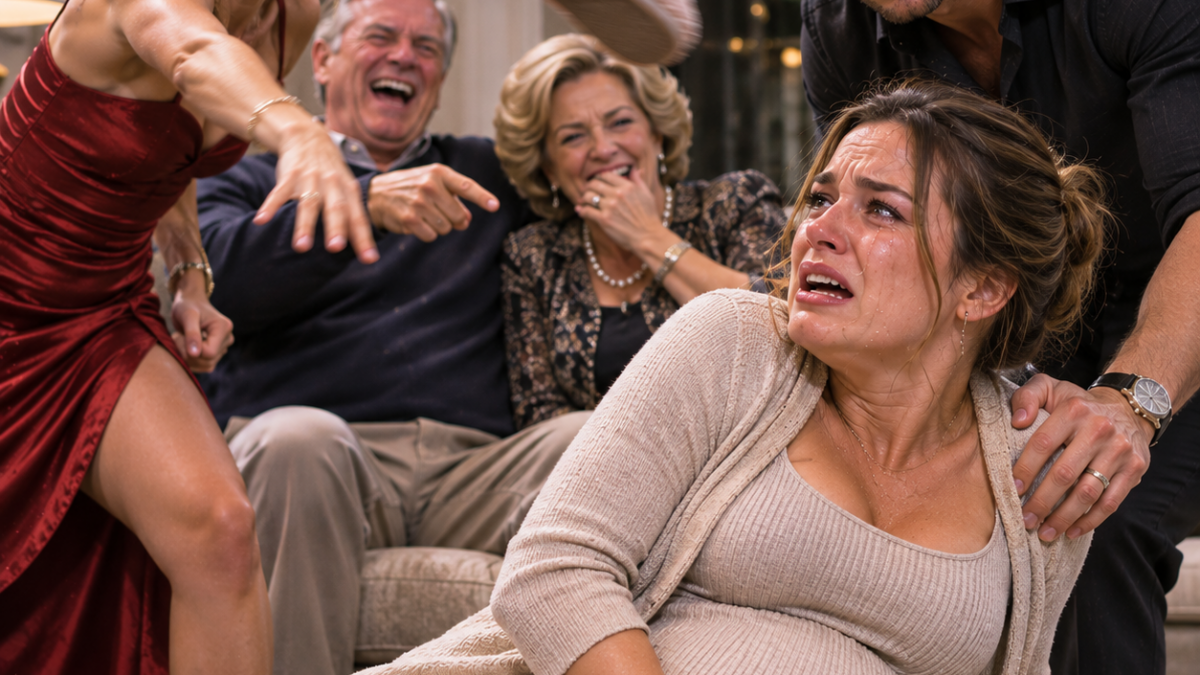
FULL STORY CONTINUATION
Clare was seven months pregnant with our first child.
A little girl.
We had already named her Audrey.
Pregnancy had not been easy.
Nothing catastrophic.
But nausea lasted longer than expected.
Then sciatica.
Lower-back pain.
Swollen feet.
Sleep that came in forty-minute pieces.
Clare hated complaining.
Which meant if she said her back hurt, it hurt.
That Saturday, we drove to Brookfield because Mom wanted everyone there for lunch.
I brought food from the restaurant.
Roasted chicken.
Potatoes.
Salad.
A lemon tart Clare loved.
When we arrived, Dad was watching television.
Mom was in the kitchen.
Tessa was upstairs.
The burgundy recliner sat empty beside the window.
Clare lowered herself into it slowly.
One hand against her back.
“Better?”
I asked.
“Much.”
Three minutes later, Tessa came downstairs.
She stopped halfway into the room.
Her eyes went directly to Clare.
Then the chair.
“You’re in my chair.”
Clare looked up.
“I’m sorry?”
“That is my chair.”
Tessa was not smiling.
She genuinely expected immediate obedience.
Clare shifted carefully.
“My back is killing me. I’ll move in a few minutes.”
“No.”
Tessa pointed.
“Move now.”
I set the food containers on the dining table.
“Tessa.”
She looked at me.
“Clare is seven months pregnant.”
“So?”
“She’s comfortable.”
“I always sit there.”
“There’s an entire sofa.”
“I don’t want the sofa.”
I kept my voice even.
“Then stand.”
Her face changed.
“You don’t get to tell me what to do in my house.”
My house.
Interesting.
I could have corrected her then.
I didn’t.
Clare said:
“Tessa, I really don’t want an argument. Give me five minutes.”
Tessa glared.
Then bent down.
Slipped the heavy house shoe from her right foot.
And threw it.
Not tossed.
Threw.
Hard.
It missed Clare’s temple by inches.
Hit the wall.
The framed photograph behind the chair exploded.
Glass fell onto the coffee table.
For one second nobody moved.
Clare stared at Tessa.
“Did you just throw a shoe at me?”
Tessa’s chest rose and fell.
“You wouldn’t move.”
That answer did something to me.
Not the throw alone.
The complete absence of regret.
Then Dad laughed.
A full laugh.
“Oh, Lord.”
He slapped his knee.
“Pregnancy hormones have everybody crazy.”
I looked at him.
“Tessa threw something at Clare.”
“She missed.”
As if that mattered.
Mom came from the kitchen.
Saw the glass.
Saw the shoe.
Saw Clare.
Her first reaction should have been horror.
Instead, she looked irritated.
“What’s going on?”
“Tessa threw her shoe at me,” Clare said.
Mom sighed.
Then gave my pregnant wife a patronizing smile.
“Clare, honey, maybe next time just sit on the floor.”
Silence.
“You know how Tessa is about that chair.”
The floor.
My seven-month-pregnant wife.
In a house I owned.
Because a thirty-two-year-old woman had claimed a recliner.
Something inside me became very quiet.
Not rage.
Clarity.
I picked up Clare’s coat.
Helped her stand.
Put it over her shoulders.
Took her hand.
Mom blinked.
“Where are you going?”
“Home.”
“I’m serving lunch.”
“We’re not staying.”
Dad groaned.
“Don’t be dramatic.”
I looked at him.
He smiled as though this was already becoming another family joke.
“It’s a chair, Ian.”
No.
It wasn’t.
But I finally understood that explaining the difference would be wasted breath.
“You’ll get over it tomorrow,” Dad said.
I nodded once.
“Maybe.”
Then I took my wife home.
Clare said almost nothing during the drive.
That scared me more than crying would have.
At a red light, I looked at her.
“You okay?”
“Yes.”
“No.”
Her hands rested over Audrey.
She swallowed.
“I’m not hurt.”
“That isn’t what I asked.”
She looked through the passenger window.
Then:
“Does your family hate me?”
The question hit harder than anything Tessa had thrown.
“No.”
Clare laughed softly.
No humor in it.
“Ian.”
“They don’t hate you.”
“Then why was everybody okay with that?”
I had no answer.
She continued.
“I didn’t even argue.”
“I know.”
“I was sitting.”
“I know.”
“She could have hit me.”
“I know.”
“Could she have hit the baby?”
Probably not from where the shoe flew.
But that wasn’t the point.
I pulled into a parking lot.
Put the car in park.
Turned toward her.
“I’m sorry.”
Clare immediately shook her head.
“You didn’t throw it.”
“I kept bringing you around people who treat you badly.”
Her eyes filled.
“They’re your family.”
“So are you.”
That sentence had always been true.
But I realized I had not always behaved like it was.
The first year Clare and I dated, Mom called her “the restaurant girl.”
Clare was a high-school counselor.
Nothing to do with my restaurants.
Mom knew that.
She simply liked reducing people.
When we got engaged, Dad asked whether I planned to get a prenup before he asked when the wedding was.
Tessa complained that Clare “changed me” because I stopped paying for Tessa’s vacations after we bought our own house.
At Christmas, my family gave Clare a twenty-dollar candle.
I had paid for Mom’s new dishwasher that same week.
None of those things seemed large enough to confront.
So I absorbed them.
Smoothed them.
Explained.
“They’re just like that.”
The same sentence Evan had used in another life, in another family, probably.
It is astonishing how often “that’s just how they are” really means:
Please accept behavior I don’t want to confront.
Clare had accepted too much because she loved me.
Then Tessa threw a shoe.
And my mother told my wife to sit on the floor.
There are moments when a system becomes visible all at once.
That was mine.
At home, Clare showered.
Then went to bed early.
I sat in the living room.
No television.
No whiskey.
Just silence.
At 10:18, I called Melissa Grant.
Melissa had been my real-estate attorney for eight years.
Sharp.
Methodical.
Never dramatic.
She answered on the second ring.
“Ian?”
“Sorry it’s late.”
“What happened?”
“Pull Brookfield.”
Pause.
“The house?”
“Yes.”
“What am I looking for?”
“The complete file from five years ago.”
Longer pause.
She knew enough about my family to hear the change in my voice.
“Ian.”
“Yes?”
“What are you considering?”
“Selling it.”
Silence.
“Are you sure?”
“Yes.”
“Your parents live there.”
“I know.”
“Is this an immediate safety situation?”
“No.”
“Then do not do anything tonight you haven’t thought through.”
“I have thought through it for five years.”
“That is not the same as thinking through it tonight.”
Fair.
I explained what happened.
Not emotionally.
Facts.
Clare.
Pregnant.
Chair.
Shoe.
Dad laughing.
Mom’s floor comment.
Melissa let me finish.
Then:
“Okay.”
“Okay what?”
“I understand why you’re done.”
“I want the property listed.”
“I can prepare it.”
“Tomorrow.”
“No.”
“Melissa.”
“Sunday listing isn’t going to improve anything.”
“I don’t care.”
“I do.”
That irritated me.
She continued.
“If you’re selling, we do it correctly.”
“The property is legally mine.”
“Yes.”
“Any tenancy issue?”
“Possibly.”
That mattered.
My family lived there.
No written lease.
No rent.
Still, occupancy rights and notice requirements existed.
Melissa knew exactly what needed doing.
“First,” she said, “I confirm title, occupancy status, and required notice.”
“Fine.”
“Second, we list Monday morning.”
“Why Monday?”
“Because if you’re going to make a financial decision, make one that serves you rather than your anger.”
I exhaled.
“Eight a.m.”
“Market opens effectively then.”
“Do it.”
Another pause.
“Ian.”
“What?”
“Once the sign is up, the family consequence is real.”
I looked down the hallway toward our bedroom.
My wife was sleeping with one hand over our unborn child.
“It became real this afternoon.”
Melissa lowered her voice.
“Understood.”
I slept badly.
At 6:40 Sunday morning, Dad texted.
You calm down yet?
I stared.
Then another:
Your mom says Clare left the tart. Tell her it was good.
No apology.
No mention of Tessa.
At 8:12, Mom:
Tessa was upset too. Maybe everybody should say sorry and move on.
Everybody.
Clare had sat in a chair.
Apparently equal guilt.
At 9:03, Tessa:
Hope princess enjoyed ruining lunch.
I screenshotted all three.
Not for court.
For myself.
Because every message confirmed I had not misunderstood the afternoon.
Clare woke around nine.
I made eggs.
She sat at the kitchen island wearing my sweatshirt.
“Did you talk to your parents?”
“No.”
“Are you going to?”
“Eventually.”
She looked at me.
“You’re doing something.”
My wife knew my face.
“What?”
“I called Melissa.”
“Why?”
“Brookfield.”
Her fork stopped.
“The house?”
“Yes.”
“Ian.”
“I’m selling it.”
She stared.
“No.”
That surprised me.
“No?”
“You cannot sell your parents’ home because Tessa threw a shoe at me.”
“It isn’t because of a shoe.”
“It happened yesterday.”
“It started five years ago.”
Clare set down her fork.
“I don’t want to be the reason your parents lose their house.”
“You’re not.”
“It will feel that way.”
I sat opposite her.
“The house was being foreclosed when I bought it.”
“I know.”
“They have paid no mortgage.”
“I know.”
“No property tax.”
“I know.”
“No insurance.”
“Ian—”
“I replaced the roof.”
“You don’t need to list everything.”
“Yes.”
I looked at her.
“I think I do.”
Then I told her what I had never fully admitted.
Not even to myself.
The money.
Not just Brookfield.
Dad’s car repair.
Mom’s dental work.
Tessa’s credit-card payoff.
Christmas trips.
Utilities.
A furnace.
Property taxes.
Phone bills.
Emergency after emergency.
Over five years, I had spent more than two hundred thousand dollars supporting adults who increasingly acted as if that support were a natural resource.
Clare stared.
“I didn’t know it was that much.”
“I know.”
“Why didn’t you tell me?”
“Because it was my family.”
“That isn’t an answer.”
No.
It wasn’t.
I had hidden the scale because part of me knew how absurd it looked.
Then she asked:
“If I weren’t pregnant, would you still sell?”
I thought carefully.
“Yes.”
“If Tessa had apologized?”
“Maybe not immediately.”
“If your parents had defended me?”
I looked at her.
“No.”
That was the truth.
If Dad had stood.
If Mom had told Tessa to leave.
If someone had treated the act like what it was.
I would have repaired the wall.
Set rules.
Moved on.
What ended the arrangement was not Tessa’s loss of control.
It was discovering my parents believed keeping her comfortable mattered more than protecting my wife.
Clare nodded.
“Then do what you think is right.”
“Are you sure?”
“No.”
She almost smiled.
“But I trust you.”
Monday arrived bitterly cold.
Ohio frost whitened every lawn.
At 7:52, Melissa texted.
Title clear. Required occupancy notice prepared. Listing goes live 8:00. Sign installation 8:15.
I was in the downtown restaurant.
Monday prep.
Produce delivery.
Inventory.
Payroll review.
At 8:14, I was inspecting tomatoes with Miguel Alvarez, my sous-chef.
My phone buzzed.
Security-camera notification from Brookfield.
I still paid for the system.
A man in a heavy coat drove a wooden post into the lawn.
FOR SALE.
For one second, I felt sick.
Not triumphant.
Sick.
Then I remembered Mom:
Maybe next time she should sit on the floor.
8:22.
Dad called.
Then Mom.
Tessa.
Unknown number.
Dad again.
I kept working.
Miguel watched my phone crawl across the stainless counter.
“Everything okay, Chef?”
“Couldn’t be better.”
He raised an eyebrow.
“My family is getting acquainted with capitalism.”
Miguel laughed.
“You finally charging them for brunch?”
“Something like that.”
The phone buzzed again.
Dad.
I dried my hands.
Answered.
“What the hell is that sign doing in my yard?”
Good morning to you too.
“If you mean the lawn, it’s still there.”
“The For Sale sign!”
“Yes.”
“Why is my house for sale?”
“Because I listed the property.”
Silence.
Then Dad laughed.
Nervous.
“You cannot sell our house.”
“I can.”
“That’s just a technicality.”
“No.”
I looked at a bruised tomato.
“That is the whole point.”
Movement.
Then Mom’s voice.
“Ian?”
“Yes.”
“What is happening?”
“I’m selling Brookfield.”
“Because of Saturday?”
“Saturday clarified something.”
“One little misunderstanding?”
I closed my eyes.
“Mom, Tessa threw a hard object at my pregnant wife.”
“She was angry.”
“You told Clare to sit on the floor.”
“I was trying to defuse things.”
“You defended the person who threw the shoe.”
“That isn’t fair.”
“No.”
“It’s exact.”
Dad took the phone again.
“Take the sign down.”
“No.”
“Ian.”
“No.”
“You’re going to throw your own parents into the street because your wife can’t take a joke?”
That sentence removed the last doubt.
“It wasn’t a joke.”
“Everything is serious with you now.”
“Maybe because I’m paying for everything.”
Silence.
Dad changed tone.
“Son.”
I hated that tone.
Warmth only when leverage failed.
“You know we’re grateful.”
“No.”
“Of course we are.”
“When?”
“What?”
“When have you acted grateful?”
“That’s insulting.”
“Dad, you called the house yours on Saturday.”
“It is our home.”
“Home, yes.”
“Property, no.”
“That isn’t how family works.”
I almost laughed.
“You’re right.”
“It isn’t supposed to work like this.”
I ended the call.
Tessa called from another number.
I answered only because I wanted to hear whether one apology had arrived.
It had not.
“You psycho.”
Interesting opening.
“You’re selling my house because Clare stole my chair?”
“Neither the house nor chair belongs to you.”
“You bought the house for Mom and Dad.”
“I bought it to stop foreclosure.”
“Same thing.”
“No.”
“Where are we supposed to live?”
“You’re thirty-two.”
Silence.
Then:
“You asshole.”
“Probably.”
“You’re punishing everyone because your gold-digger wife cried.”
I went very still.
“Do not call Clare that again.”
“Oh my God.”
“You always defend her.”
“Yes.”
“She made you hate us.”
“No, Tessa.”
I looked at the kitchen staff beginning prep.
“She made it impossible for me to keep pretending.”
She laughed sharply.
“What are you even talking about?”
“Five years of free housing.”
“You offered.”
“Yes.”
“That means you can’t take it back.”
“That is not how ownership works.”
“You’re evil.”
“Anything else?”
She started crying.
Not soft.
Furious.
“I have nowhere to go.”
“You have a job.”
“It barely pays anything.”
“You make forty-seven thousand dollars.”
“How do you know?”
“You asked me to cosign your car.”
Silence.
“You can rent an apartment.”
“I shouldn’t have to.”
There it was.
The purest sentence of the entire conflict.
Not:
I can’t.
I shouldn’t have to.
I said:
“Melissa will send written notice today.”
“What notice?”
“Your timeline to move.”
“You cannot evict your own sister.”
“I’m not discussing legal details with you.”
“Because you know you’re wrong.”
“No.”
“Because I have an attorney.”
Then I hung up.
At 9:30, Mom called again.
This time crying.
Not angry.
“Ian, please.”
I stepped into my office.
“What?”
“Take the listing down.”
“Why?”
“Because this is our home.”
“I understand.”
“Your father is beside himself.”
“Tessa?”
“She’s hysterical.”
“And Clare?”
Silence.
“Mom.”
“What about her?”
I closed my eyes.
That answered everything.
“Exactly.”
“Ian, I care about Clare.”
“Then why haven’t you called her?”
Mom became quiet.
“You have her number.”
“She probably doesn’t want to hear from me.”
“Have you tried?”
“No.”
“There it is.”
“I don’t know what you want me to say.”
“Start with ‘I’m sorry my daughter threw a shoe at you while you were pregnant and I told you to sit on the floor.’”
Mom started crying harder.
“You make it sound horrible.”
“It was horrible.”
“I didn’t mean it the way you’re making it sound.”
“Then what did you mean?”
Silence.
When people say:
You know what I meant.
Ask them.
Sometimes they realize they don’t.
Mom whispered:
“I wanted the fighting to stop.”
“So you asked the easiest person to surrender.”
“I didn’t think.”
“You did think.”
I was learning to use that sentence.
“You thought Tessa would explode if challenged.”
“You thought Dad would defend her.”
“And you thought Clare would absorb the insult because she is polite.”
Mom said nothing.
“You chose the person who was safest to hurt.”
Her crying stopped.
That landed.
The listing attracted interest immediately.
Brookfield was in a desirable school district.
Four bedrooms.
Updated electrical.
New roof.
Finished basement.
Large lot.
The upgrades I paid for mattered.
Melissa estimated the sale could clear enough for me to recover much of what I had invested and still leave substantial equity beyond the original rescue amount.
Dad called this “profiting from family.”
I called it selling property.
By Monday evening, we had three showing requests.
That created the next crisis.
Dad refused access.
Melissa expected it.
Our attorney served the required written notices and coordinated lawful showing procedures based on their occupancy status.
We did not arrive with police.
We did not shut off utilities.
I did not change locks.
That would have been stupid and possibly unlawful.
I did everything through counsel.
This frustrated Dad more than yelling would have.
He could not bait me.
Tuesday morning, he appeared at my restaurant.
During breakfast rush.
No appointment.
Miguel spotted him first.
“Chef.”
I followed his eyes.
Dad stood near the host stand.
Face red.
Coat unbuttoned.
I walked over.
“You can’t be back here.”
“I need five minutes.”
“Not during service.”
“You’re selling my house.”
“I’m working.”
“You care more about pancakes than your parents?”
I looked at him.
“That line used to work better.”
He stepped closer.
“Take the house off the market.”
“No.”
“I’ll pay you.”
That surprised me.
“With what?”
His mouth tightened.
“I have retirement.”
“How much?”
“That isn’t your business.”
“It becomes my business when you offer to buy a house worth over four hundred thousand dollars.”
He lowered his voice.
“Give us time.”
“What does that mean?”
“A year.”
“To do what?”
“Figure something out.”
“Dad.”
“What?”
“You’ve had five.”
He looked around.
Customers were watching.
I hated that.
“Not here.”
“Then come outside.”
“No.”
He stared.
“You used to respect me.”
I felt something old inside me react.
Child.
Son.
Approval.
Then adult me answered.
“I paid your foreclosure.”
His face hardened.
“That doesn’t buy the right to humiliate us.”
“No.”
“It bought a house.”
I walked back into the kitchen.
Clare received her first direct apology Tuesday afternoon.
Not from Tessa.
Not Dad.
Mom.
Voicemail.
Clare let me hear it.
“Clare, it’s Linda.”
Long pause.
“I am ashamed of what I said Saturday.”
Another pause.
“I should have stopped Tessa the moment she raised her hand.”
Her voice cracked.
“I am sorry I suggested you sit on the floor.”
Then:
“You did nothing wrong.”
Clare cried.
I nearly did too.
Mom continued:
“I don’t expect you to make Ian stop the sale.”
That mattered.
“I just wanted you to know I’m sorry.”
Clare called her back.
They spoke twenty minutes.
I stayed out of the room.
When Clare returned, she said:
“Your mom understands.”
“Does she?”
“More than she did.”
“What about the house?”
“She asked once if I could influence you.”
My jaw tightened.
Clare smiled slightly.
“I told her I wasn’t going to.”
Good wife.
Dad apologized next.
Sort of.
Text to Clare:
Sorry things got out of hand Saturday. Hope you’re feeling better.
Clare showed me.
“What do you think?”
“That is an apology written by a hostage negotiator.”
She laughed.
We ignored it.
Tessa sent nothing.
Instead, she posted online:
Some men forget their mothers the second a woman gets pregnant.
No names.
Everybody knew.
Then:
Imagine making your elderly parents homeless because your wife can’t share a chair.
That post cost her.
Not legally.
Socially.
Cousin Marie commented:
Didn’t Ian pay off the house?
Tessa deleted the comment.
Aunt Denise called Mom.
Then me.
“What actually happened?”
I told her.
No embellishment.
She became quiet.
“I thought your parents owned the house.”
“No.”
“Ron says you forced them to sign it over.”
I laughed.
Of course.
“Ask him who paid the foreclosure.”
Aunt Denise did.
Dad’s story began developing cracks.
Wednesday, Melissa found something important in the original file.
A letter.
Five years earlier.
Written by Dad.
Signed by Mom and Tessa as witnesses.
I had forgotten it existed.
Not a lease.
A family acknowledgment.
Drafted because Melissa had insisted everyone understand the arrangement.
It stated clearly that I had acquired full legal ownership after satisfying secured debts and that my parents were being permitted to remain without rent at my discretion, subject to future written arrangements.
Dad had signed.
Mom had signed.
I had signed.
Tessa had initialed one page because she was present.
Melissa emailed the scan.
This will be useful when Ron says nobody understood.
I stared at Dad’s signature.
He had known.
Of course.
Memory becomes creative when entitlement grows.
The first offer arrived Thursday.
$421,000.
Below asking.
No.
Second:
$436,000.
Contingent on sale.
No.
Friday afternoon:
$452,500.
Conventional financing.
Strong earnest money.
Flexible closing.
The buyer was a young couple with two children.
Teacher and respiratory therapist.
They loved the backyard.
I stared at their offer.
The house where Dad had laughed at my wife.
The house I had spent money saving.
The house where we had Christmas.
Dad’s birthday.
Mom’s surgery recovery.
Family life doesn’t stop being family life because a deed changes.
I felt grief.
I called Melissa.
“Accept?”
“Your choice.”
“What would you do?”
“I bill you so I don’t have to answer questions like that.”
“Melissa.”
She softened.
“The offer is strong.”
I looked at Clare.
She was reading on the couch.
Audrey moving beneath her shirt.
“Accept.”
We did.
Subject to inspection and normal contingencies.
The sale became real.
That was when Dad stopped being angry.
And became afraid.
He called Friday evening.
“Ian.”
“Yes.”
“Mom and I found an apartment.”
I was surprised.
“Okay.”
“Two-bedroom.”
“Good.”
“It’s smaller.”
“I imagine.”
“We’ll need first month and deposit.”
I closed my eyes.
There it was.
Still.
Even now.
He expected me to fund the transition caused by losing my funding.
“How much?”
“Three thousand eight hundred.”
“No.”
Silence.
“Ian.”
“No.”
“You have the money.”
“Yes.”
“We don’t.”
“Dad, you have retirement income.”
“Not liquid enough this month.”
“Use a credit card.”
“You know we’ve been trying to reduce debt.”
I almost laughed.
“Then ask Tessa.”
“She doesn’t have it.”
“Then she needs another plan.”
“You’re really going to make your mother struggle?”
No.
I was not doing this again.
“I will pay the security deposit directly to the apartment complex for Mom and you.”
He went quiet.
“Thank you.”
“Not first month.”
“Fine.”
“And not Tessa.”
“What?”
“She is not moving into your two-bedroom apartment.”
“She’s our daughter.”
“And thirty-two.”
“She needs somewhere.”
“Then she needs to find it.”
“Ian.”
“No.”
The line went quiet.
Then Dad said:
“Your wife did this.”
I became cold.
“No.”
“She came into our family and—”
“Stop.”
“She turned you against—”
“Dad, I rescued you before I met Clare.”
Silence.
“I financed Tessa before I married Clare.”
Nothing.
“I tolerated this because I chose to.”
My voice lowered.
“Do not make my wife responsible for a boundary I should have set years ago.”
He hung up.
Tessa finally apologized Saturday.
A week after throwing the shoe.
She came to our house.
Clare was home.
I almost did not open the door.
Tessa stood there carrying flowers.
Cheap grocery-store bouquet.
Mascara smeared.
“I need to talk.”
“To me?”
“To Clare.”
I looked back.
Clare nodded.
We let her in.
Tessa sat on the edge of the sofa.
Clare stayed in an armchair.
Not the burgundy one.
Tessa looked at her.
“I’m sorry I threw the shoe.”
Clare waited.
“I was angry.”
Still waiting.
“And stupid.”
Clare said:
“Yes.”
Tessa blinked.
I almost smiled.
Then Tessa continued.
“I shouldn’t have done it.”
“No.”
“I didn’t mean to hit you.”
Clare tilted her head.
“You threw it at me.”
“I threw it toward you.”
“That isn’t helping.”
Tessa started crying.
“I’m sorry.”
This time it sounded less rehearsed.
Clare asked:
“Why were you so angry about the chair?”
Tessa wiped her face.
“It was Grandma’s.”
I had forgotten.
Our grandmother had owned that recliner before she died.
It went to Mom.
Tessa claimed it afterward.
“She used to rock me in it.”
That explained attachment.
Not assault.
Clare said exactly that.
“I understand why it matters.”
Tessa looked relieved.
“But you threw something at my head while I was pregnant.”
Relief disappeared.
“You scared me.”
“I know.”
“No.”
Clare touched her stomach.
“I don’t think you do.”
Tessa cried.
Then:
“I’m losing the house.”
I knew we had reached the real reason for the visit.
Clare knew too.
She leaned back.
“Tessa.”
“I can’t afford anything decent.”
“What do you want from us?”
Tessa looked at me.
There it was.
Housing.
Money.
Rescue.
I said nothing.
She whispered:
“Can I stay at one of your apartments?”
I owned no apartment building.
She meant a condo I had purchased near restaurant two for managers who occasionally relocated.
It was currently vacant.
“No.”
Her face hardened immediately.
“Why?”
“Because this is what always happens.”
“What?”
“You apologize when you need something.”
“That is not fair.”
“Maybe not.”
“You have places!”
“I have assets.”
“You would leave your sister homeless?”
“You have six weeks before closing.”
“I can’t save enough in six weeks.”
“How much do you have saved?”
She looked away.
“Tessa.”
“Fourteen hundred.”
Five years rent-free.
Forty-seven-thousand-dollar salary.
Fourteen hundred dollars.
“Where does your money go?”
“That’s none of your business.”
“Correct.”
I nodded.
“Neither is your housing.”
She stared.
Then stood.
“Forget it.”
Clare said:
“Tessa.”
She stopped.
“I accept your apology for the shoe.”
Tessa looked at her.
“That doesn’t mean Ian owes you an apartment.”
Tessa’s face twisted.
“So this was all fake.”
“No.”
Clare’s voice stayed calm.
“An apology isn’t a transaction.”
That sentence followed me for years.
Tessa left.
Flowers remained.
The inspection found only minor issues.
Roof good.
Electrical excellent.
Of course.
We moved toward closing.
Mom and Dad signed a lease on the apartment.
I paid the deposit directly.
Mom thanked me.
Dad did not.
Fine.
Tessa rented a one-bedroom apartment fifteen minutes from work.
How?
She sold the luxury SUV I had helped her finance three years earlier.
Bought a used Honda.
Freed enough cash for deposit and moving expenses.
Interesting.
She had options.
She simply preferred mine.
Moving day was awful.
Not because anyone fought.
Because nobody did.
I went to Brookfield to supervise items that belonged to me.
Appliances remained.
Certain furniture did not.
Mom packed dishes.
Dad carried boxes.
Tessa stood beside the burgundy recliner.
“I’m taking it.”
I looked at her.
“Fine.”
She stared.
“You don’t care?”
“It’s a chair.”
The exact sentence Dad had used.
Tessa heard it.
Her face changed.
She nodded.
The recliner went to her apartment.
Good.
Let it.
I never wanted to see the thing again.
Mom paused near the kitchen.
“You remodeled this.”
“Yes.”
“I loved this kitchen.”
“I know.”
She started crying.
I hugged her.
“I’m sorry.”
She whispered:
“Are you?”
I thought carefully.
“I’m sorry it ended like this.”
That was true.
“But?”
“But I’m not sorry I ended the arrangement.”
She nodded against my shoulder.
“I understand.”
Dad stood near the doorway.
Said nothing.
The sale closed seven weeks after the shoe incident.
Net proceeds after fees, remaining adjustments, and transaction costs were significant.
I did not make a fortune.
I recovered much of what I had poured into Brookfield over five years.
Enough that Melissa said:
“Congratulations.”
I said:
“It doesn’t feel like anything.”
“It will.”
She was right.
Not because money feels good.
Because the monthly drain stopped.
Taxes.
Insurance.
Repairs.
Utilities I had quietly covered whenever Dad “forgot.”
Almost $3,000 a month disappeared from my obligations.
Then more.
I reviewed every recurring family expense.
Dad’s cell phone.
Mom’s supplemental insurance premium I had paid.
Tessa’s car insurance.
Streaming subscriptions somehow billed to my card.
Gym membership.
Storage unit.
I canceled almost all of it.
Not Mom’s health coverage immediately.
I gave her three months and helped transition it.
Everything else:
Done.
That was the phone call that truly changed everything.
Not only sell Brookfield.
Melissa helped me identify every financial tie and unwind them legally and cleanly.
My family had never realized how many parts of life were being subsidized because each bill was individually small.
Together:
Nearly $4,600 a month.
Fifty-five thousand dollars a year.
Before restaurants, I had once lived on less.
Monday after the cancellations hit, Dad called again.
“What happened to the phone plan?”
“You need your own.”
“We’ve been on your family plan for years.”
“Not anymore.”
“The storage place says the card failed.”
“Use yours.”
“Tessa’s insurance—”
“She has her own.”
His voice tightened.
“You are cutting us off.”
“Yes.”
“Completely?”
“Financially, mostly.”
“Why?”
I almost laughed.
“Dad.”
“This is punishment.”
“No.”
“What would you call it?”
“Independence.”
He hated that word.
People love independence when they are prescribing it to someone younger.
Less when it applies to themselves.
Mom adapted faster.
She learned the apartment budget.
Reduced shopping.
Joined a local community center instead of the expensive gym I had paid for.
She told me once:
“I didn’t realize how much you were covering.”
I said:
“I know.”
“How much?”
I told her.
She sat down.
“No.”
“Yes.”
“Why?”
Good question.
I thought.
“Because every bill seemed easier to pay than discuss.”
She stared.
“That was stupid.”
“Yes.”
She laughed.
First time we could laugh about it.
Then she said:
“We let you.”
Also true.
Dad struggled.
His identity had been built around being provider long after he stopped providing.
My money allowed the illusion to continue.
Once bills arrived in his name, reality became less flattering.
He took a part-time consulting role.
At sixty-seven.
He complained constantly.
Then something strange happened.
He liked it.
Not the work itself.
Being useful.
Having his own money.
One afternoon, six months later, he called.
“I paid the electric bill.”
I laughed.
“Congratulations.”
“Shut up.”
He laughed too.
Growth sometimes has a low bar.
Tessa struggled more.
Her apartment was not terrible.
She told everyone it was.
No garage.
Shared laundry.
No private yard.
The horror.
But rent forced math.
For the first time in years, she looked at where her salary went.
Food delivery.
Clothes.
Beauty subscriptions.
Weekend trips.
Online shopping.
She cut things.
Then got promoted.
Maybe because financial pressure made her take work more seriously.
Maybe coincidence.
A year later, she moved to a nicer place.
Without asking me.
That impressed me more than she knew.
Our relationship remained distant.
The shoe mattered.
But the years before it mattered too.
Nine months after Audrey was born, Tessa asked to visit.
I hesitated.
Clare said:
“She can come.”
Tessa arrived carrying a stuffed elephant.
She stopped at the door.
“Can I hold her?”
Clare looked at me.
Then nodded.
Tessa sat.
Held my daughter.
Started crying.
Audrey grabbed her necklace.
Tessa laughed through tears.
“I was awful.”
Clare said nothing.
Tessa continued.
“I keep thinking about what could have happened if the shoe hit you.”
“So do I.”
No comfort.
Tessa accepted that.
“I’m sorry.”
Clare nodded.
“I know.”
That was the first step.
Not forgiveness completed.
Trust beginning.
Dad became a good grandfather.
That complicated everything in the best and worst ways.
The man who laughed when a shoe flew toward my pregnant wife would sit on the floor for forty minutes letting Audrey stack blocks on his head.
People can fail badly and still contain good parts.
That does not erase the failure.
It makes decisions harder.
I did not cut my family out.
I changed the terms of access.
No financial dependence.
No disrespect toward Clare.
No unannounced visits.
No pretending conflict did not happen.
If someone crossed a boundary, we addressed it.
Immediately.
Not five years later.
That was the real reform.
Mom apologized again after Audrey was born.
We were in our kitchen.
Clare upstairs.
Mom held the baby monitor.
She said:
“I keep hearing myself say the floor thing.”
I looked at her.
“I wish I could take it back.”
“So does Clare.”
“I was scared Tessa would have a meltdown.”
“I know.”
Mom’s eyes filled.
“And I thought Clare was easier.”
“I know.”
“I always do that.”
“What?”
“Ask the reasonable person to give more.”
There it was.
The exact family mechanism.
Mom had spent decades keeping peace by taxing whoever was least likely to explode.
Dad.
Tessa.
Sometimes herself.
Then eventually Clare.
“That’s not peace,” I said.
“I know.”
“It’s rewarding the worst behavior.”
She nodded.
“I know.”
Better late than never.
Clare and Mom slowly built their own relationship.
Without me translating.
That mattered.
Mom babysat once a week after Audrey turned six months.
At first, I worried.
Not about safety.
About old dynamics.
Clare said:
“If your mom and I are going to have a relationship, you cannot monitor every conversation.”
Fair.
They figured it out.
Mom learned not to give advice unless asked.
Mostly.
Clare learned Mom’s cooking stories were her love language.
They became unexpectedly close.
I stayed out of it.
Good.
Dad apologized properly almost a year after Brookfield sold.
We were grilling at our house.
He waited until Clare went inside.
“Ian.”
“What?”
“I laughed because I didn’t know what else to do.”
I turned.
He stared at the grill.
“When Tessa threw the shoe.”
“I know what you’re talking about.”
“I saw it happen.”
“Yes.”
“And I thought if I made it funny, nobody would have to deal with it.”
He looked at me.
“I’ve done that my whole life.”
I said nothing.
“When your mother overspent.”
“Joke.”
“When Tessa lost jobs.”
“Joke.”
“When I got behind on the mortgage.”
“Joke.”
He nodded.
“Then you fixed everything.”
There it was.
His version of our pattern.
He joked.
I fixed.
“I’m sorry.”
I waited.
He continued.
“I should have protected Clare.”
That was the sentence I needed.
Not:
Sorry things got out of hand.
Not:
Sorry you were offended.
“I should have protected her.”
I nodded.
“Thank you.”
He looked relieved.
“Are we okay?”
“No.”
His face fell.
I smiled slightly.
“We’re better.”
Fair enough.
The buyers of Brookfield invited me to see the house a year later.
Unexpected.
A package came to restaurant one.
Inside:
A photograph.
Their kids in the backyard.
A note:
We heard you were the previous owner who renovated it. We love the house. Thank you for taking care of it before us.
I stared at the photo.
Then showed Clare.
“Want to see it someday?”
She looked at me.
“Do you?”
I thought.
“Yes.”
We visited.
The burgundy recliner gone.
Different furniture.
Crayon drawings on the refrigerator.
Backyard swing.
The house no longer looked like a family battlefield.
It looked like a house.
That helped.
I realized selling it had not destroyed a home.
It had ended one financial arrangement.
The building survived.
People filled it again.
Memory loosened.
Dad never forgave the For Sale sign.
He joked about it eventually.
At my forty-fifth birthday, someone asked what the biggest family fight had ever been.
Dad said:
“Your brother once sold my house over a chair.”
I looked at him.
“Your daughter threw footwear at a pregnant woman.”
Dad raised his glass.
“Details.”
Everyone laughed.
Including Clare.
Then Dad added:
“For the record, he owned the house.”
That mattered.
He stopped saying technicality.
Tessa kept the chair.
For years.
Then one afternoon she called.
“Do you want Grandma’s recliner?”
“No.”
“Mom?”
“No.”
“It’s broken.”
“Then throw it away.”
She was quiet.
“I feel weird.”
“Why?”
“Because everything started over this stupid chair.”
“No.”
I said it immediately.
“What?”
“Nothing started because of the chair.”
Silence.
“It started because none of us had boundaries.”
She absorbed that.
Then laughed weakly.
“Still throwing it away.”
“Good.”
She sent a picture of it beside the dumpster.
Caption:
NO PREGNANT WOMEN WERE HARMED DURING DISPOSAL.
I laughed despite myself.
Then sent:
Too soon forever.
She replied:
Fair.
That was us now.
Not pretending.
Still able to laugh.
When Audrey turned three, she became obsessed with sitting in everybody’s chair.
Children are terrorists with excellent timing.
At family dinner, Dad got up.
Audrey climbed into his seat.
He returned.
Looked at her.
Then at Tessa.
The room went silent.
Tessa put down her fork.
Dad said:
“Guess I’m sitting on the floor.”
Everyone exploded laughing.
Even Tessa.
Especially Tessa.
Clare covered her face.
I laughed until my eyes watered.
The old wound had finally become something we could touch without bleeding.
That took years.
Not one apology.
Not one house sale.
Years.
People who hear this story often think I sold Brookfield to punish my family.
Partly, maybe.
Anger accelerated a decision I had avoided.
I would be lying if I said there was no satisfaction in Dad discovering the sign.
But if punishment had been the goal, I could have done uglier things.
Locked them out.
Shut off utilities.
Dragged everyone through court immediately.
Publicly humiliated Tessa.
I didn’t.
I used counsel.
Gave proper notice.
Helped my parents secure an apartment.
Paid their deposit.
Kept Mom’s health coverage during transition.
Allowed them time.
The important change was not:
I hurt them back.
It was:
I stopped subsidizing adults who believed support removed their obligation to respect the people I loved.
There is a difference.
Melissa told me that.
Months after closing, we had lunch.
“You know what was interesting?”
“What?”
“You kept asking whether the sale was legally clean.”
“I pay you to worry about that.”
“No.”
She smiled.
“You never asked how to make it hurt more.”
I looked at her.
“I was angry.”
“Very.”
“But you still wanted process.”
Restaurant training.
Maybe personality.
Maybe Clare.
Maybe I simply did not want to become the family member who threw things when angry.
Whatever the reason, I was grateful.
Consequences are safest when they survive your anger.
The money from Brookfield went somewhere my family found almost offensive.
Not a vacation.
Not another restaurant.
A college account for Audrey.
Then part into retirement.
Part into an emergency reserve.
Boring.
Dad learned this and said:
“You sold my house for a toddler’s college fund?”
I replied:
“My house.”
He rolled his eyes.
But he stopped arguing.
Restaurants expanded too.
I opened a fourth location.
Then regretted every life decision for six months.
Normal restaurant ownership.
Clare returned to counseling part-time after Audrey was born.
We had a second child four years later.
A boy.
Thomas.
Named after Clare’s grandfather.
Not Dad.
Dad pretended not to care.
Very badly.
Then spoiled him anyway.
My parents remained in the apartment for three years.
Then moved into a smaller condo they actually bought themselves.
Dad used savings.
Mom sold some jewelry she never wore.
They qualified for a modest mortgage.
When they closed, Dad called.
“Guess whose name is on the deed?”
“Melissa’s?”
He laughed.
“Mine and your mother’s.”
“Congratulations.”
“No technicalities.”
That was his joke now.
He sounded proud.
I was proud of him.
Not because owning property makes someone better.
Because he had taken responsibility for housing after decades of assuming I would.
Independence improved him.
That surprised both of us.
Tessa bought a condo at thirty-seven.
No money from me.
Not even closing costs.
She called after signing.
“I did something.”
“What?”
“Bought a place.”
I actually sat down.
“You what?”
“Do not sound that shocked.”
“I’m not.”
“You absolutely are.”
She sent photos.
Two bedrooms.
Small balcony.
Nice kitchen.
No burgundy chair.
I asked:
“Need anything?”
Long pause.
“No.”
Then:
“Actually, can you recommend a plumber?”
I smiled.
“That I can do.”
Boundaries did not make us stop helping.
They changed what help meant.
Advice.
Contacts.
A moving truck.
Dinner.
Not endless rescue.
Years later, Tessa told me something I had never understood.
When I paid off Brookfield, she felt relieved.
Then ashamed.
Then relieved again.
She had been living there free before I owned it.
But once I owned it, something changed.
She began telling herself:
“Ian has money.”
“He doesn’t need rent.”
“He likes helping.”
“Family shares.”
Each sentence moved her a little farther from gratitude.
Eventually, she stopped viewing the arrangement as something I gave.
It became something she had.
Rights feel different from gifts.
That is why clarity matters.
If I had written a lease.
Even one dollar a month.
If we had reviewed the arrangement yearly.
If I had required Tessa to contribute to utilities.
Maybe entitlement would have grown slower.
Her choices remained hers.
But my vague generosity created perfect soil.
I learned from that.
With my own children, I became almost obsessive about contribution.
Not money.
Responsibility.
Audrey had chores.
Thomas had chores when old enough.
Clare once accused me of creating a restaurant brigade in our house.
“Station assignments?”
“They need structure.”
“They are six and three.”
“Exactly.”
I softened.
Eventually.
The point was not to make children earn love.
The point was to teach them that receiving and contributing can coexist.
Family should not be transactional.
Neither should it be a place where one person gives until everyone forgets giving is happening.
Mom once asked:
“Do you regret helping us five years before the sale?”
I thought.
“No.”
She seemed surprised.
“Even after everything?”
“I regret how I helped.”
“What does that mean?”
“I solved everything.”
“You needed help.”
“I know.”
“But I removed all consequences.”
Mortgage?
Gone.
Taxes?
Gone.
Repairs?
Handled.
Utilities?
Quietly covered.
Tessa?
Allowed to drift.
I had rescued so completely that nobody needed to change.
Mom nodded.
“So what should you have done?”
“Helped with conditions.”
She laughed.
“You sound like a bank.”
“Banks stay solvent.”
She threw a napkin at me.
Softly.
We laughed.
Shoes remained on feet.
Family improvement.
Clare never asked me to cut them off.
That deserves emphasis.
People later blamed her anyway.
Dad’s friends.
Extended relatives.
Even a cousin who barely knew us.
“Your wife changed you.”
Yes.
Marriage should change priorities.
But Clare never said:
Sell the house.
She initially told me not to.
She worried about my parents.
She accepted Mom’s apology before I did.
She allowed Tessa around Audrey eventually.
She encouraged Dad to rebuild trust.
What Clare changed was not my love for my family.
She showed me what mutual respect looked like.
Once you experience a healthy relationship, unhealthy ones become harder to rationalize.
That was not manipulation.
That was contrast.
The day Audrey was born, Mom came to the hospital.
Dad too.
Tessa waited until invited.
Important.
Clare exhausted.
Audrey tiny.
Pink face.
Perfect fingers.
Dad held her and cried.
Then looked at Clare.
“I’m glad that shoe missed.”
The room froze.
Dad’s humor reflex.
Again.
I looked at him.
He immediately closed his eyes.
“Wrong.”
“Yes.”
“Very wrong.”
“Extremely.”
Clare started laughing.
Not because it was funny.
Because Dad had caught himself.
“Ron.”
“Yes?”
“Never say that again.”
“Yes, ma’am.”
Progress.
Tessa held Audrey last.
She cried silently.
Then whispered:
“I’m going to be better.”
Clare heard.
“So be better.”
Tessa nodded.
That became their relationship.
Not sentimental.
Honest.
The strangest outcome was that selling Brookfield improved my family financially.
Dad worked again.
Mom budgeted.
Tessa advanced professionally.
They stopped relying on me.
I stopped resenting them.
No one planned that.
Dependency had been hurting both sides.
They feared losing support.
I hated being used.
Neither wanted to admit the arrangement itself had become toxic.
The shoe simply made denial impossible.
Sometimes a crisis does not create the underlying problem.
It removes the curtain.
Dad died when I was fifty-three.
Heart attack.
Fast.
No long decline.
I was at restaurant two when Mom called.
For a moment, I became thirty again.
The dependable son.
Fix it.
There was nothing to fix.
I went.
Tessa came.
We sat with Mom.
Dad had left everything organized.
Life insurance.
Condo information.
Passwords.
A folder labeled:
IN CASE IAN ISN’T AROUND TO FIX IT.
I laughed so hard I cried.
Inside, on top, a note.
Son, turns out paperwork is cheaper than pride. Don’t let your mother buy another kitchen. Love, Dad.
That was him.
Imperfect until the end.
Trying.
I keep the note in my office.
At his funeral, Tessa gave the eulogy.
She talked about his humor.
His stubbornness.
His tendency to laugh at exactly the wrong moment.
Then she looked at me.
“Dad spent years assuming Ian would catch us whenever we fell.”
She paused.
“One of the best things Ian ever did for Dad was finally stop.”
People who knew the story understood.
Others probably thought it was strange.
It was true.
Dad’s last years were more dignified because his life belonged to him again.
Bills.
Home.
Decisions.
No son quietly operating the machinery behind the curtain.
Mom lived another decade.
She never forgot Brookfield.
Sometimes she drove past.
The young family eventually sold it too.
Life moves.
One Christmas, Mom handed me a framed photograph.
Old.
Brookfield living room.
Before renovations.
Dad.
Mom.
Tessa.
Me.
Grandma in the burgundy recliner.
I stared.
“Why this?”
“Because you hated that chair so much.”
I laughed.
“I hated what happened around it.”
Mom nodded.
Then:
“Don’t let one ugly day erase every good one in that house.”
That was wise.
It took me years to learn.
Brookfield had held birthdays.
Christmas mornings.
Dad teaching me to tie a tie.
Mom sitting with me after my first restaurant failed to meet projections.
Grandma sleeping in the recliner.
Tessa at twelve with braces.
One terrible afternoon did not own the entire history.
Neither did nostalgia erase what happened.
Both.
Again.
Always both.
When Mom died, the four of us—me, Clare, Tessa, and the kids—went through her condo.
No hidden debts.
No unpaid bills.
Dad would have been proud.
Tessa found the Brookfield photograph duplicated in Mom’s drawer.
She held it.
“Grandma’s chair.”
“Yes.”
She smiled.
“Still sorry.”
“I know.”
Then she looked at Clare.
“Still really sorry.”
Clare said:
“You’ve apologized enough.”
Tessa blinked.
“Really?”
“Yes.”
Then:
“If you throw footwear at me in heaven, I’m sending you somewhere else.”
We laughed.
Mom would have hated that joke.
Dad would have loved it.
I am sixty-one now.
Restaurants are run mostly by younger people with stronger knees.
I still walk kitchens.
Still inspect tomatoes.
Miguel became executive chef, then operating partner.
He still tells new managers the story about the morning my phone wouldn’t stop ringing.
He changes details.
In his version, Dad called eighty times.
It was not eighty.
I correct him.
“Fifty-ish.”
“Chef, storytelling needs seasoning.”
He is impossible.
Clare and I have been married more than twenty years.
Audrey is in graduate school.
Thomas thinks he will become a chef.
I am trying to discourage him.
Not because I hate the business.
Because every restaurant owner has an obligation to warn the next generation.
He ignores me.
Family tradition.
Tessa is married now.
Late.
Good man.
Patient.
She has one daughter.
At a family dinner, her little girl once sat in Tessa’s favorite chair.
I noticed.
So did Clare.
Tessa walked into the room.
Stopped.
Her daughter looked up.
“Mommy, is this your chair?”
Silence.
Then Tessa sat on the floor.
“Nope.”
Clare laughed so hard she nearly spilled her drink.
I looked away because my eyes filled unexpectedly.
That was repair.
Not an apology.
Behavior.
Years later.
No audience required.
People assume the For Sale sign was the moment I took power back.
Maybe.
But I think the more important moment happened earlier.
I stood in my parents’ living room.
My wife had just had a shoe thrown near her head.
Dad laughing.
Mom blaming her.
Tessa unrepentant.
For most of my life, I would have argued.
Explained.
Raised my voice eventually.
Tried to make them admit I was right.
Instead, I put Clare’s coat on.
Took her hand.
Left.
That was new.
I stopped asking people committed to disrespect to approve my boundary.
The house sale came afterward.
My family spent Monday morning begging me to reverse the listing.
For years, I thought that was because they suddenly understood what they had done.
They didn’t.
Not immediately.
They understood what they were losing.
Housing.
Money.
Convenience.
Security.
Understanding the harm they caused came later.
That distinction matters.
Consequences can get someone’s attention.
They do not automatically create insight.
Insight requires work.
Dad did some.
Mom did a lot.
Tessa eventually did the most.
That was why our family survived.
If they had only begged for the house, I would have stayed distant forever.
But years changed the question.
Dad learned to say:
“I should have protected Clare.”
Mom learned to say:
“I asked the reasonable person to absorb the abuse.”
Tessa learned to say:
“I threw the shoe because I believed my wants mattered more than her safety.”
Specific apologies.
Specific change.
Not:
Sorry you felt hurt.
Not:
Everybody made mistakes.
Specificity is where accountability lives.
I also had things to admit.
I liked being the rescuer.
That was hard.
People praised me.
Ian always handles it.
Ian pays.
Ian knows somebody.
Ian will fix it.
Competence became identity.
If my family became independent, who was I inside the family?
Just their son.
Brother.
Not savior.
Maybe that scared me too.
So I kept rescuing long after resentment appeared.
Generosity can contain ego.
Mine did.
Not all of it.
Enough.
Recognizing that prevented me from telling the story like I had been a perfect victim.
I wasn’t.
I had power.
Money.
Legal ownership.
I kept participating in a dysfunctional arrangement because some part of me liked being indispensable.
Then I hated everyone for depending on me.
That wasn’t fair either.
We all had work to do.
The difference was that my mistake did not justify them humiliating Clare.
Nothing did.
Understanding complexity should never become a way to blur a clear line.
Tessa threw the shoe.
Dad laughed.
Mom told my pregnant wife to sit on the floor.
Those were wrong.
Period.
Everything afterward could be complicated.
That was not.
When younger employees ask me about boundaries, I never tell them:
Cut everyone off.
Sell the house.
Cancel everything.
Life isn’t a social-media revenge story.
I tell them:
Never give more than you can give freely.
The moment generosity becomes resentment, stop and renegotiate.
Put important arrangements in writing.
Do not use money to buy peace.
Do not confuse helping adults with removing every consequence.
And if someone throws something at your pregnant wife?
Leave first.
Make financial decisions after you have a lawyer.
Melissa would appreciate that last line.
I once asked her whether she thought I would regret Brookfield.
“No.”
“Why?”
“Because you didn’t sell it to strangers for one dollar just to hurt Ron.”
“Was that an option?”
“No.”
“Then why mention it?”
She rolled her eyes.
“You waited for market value.”
“Followed notice.”
“Helped with transition.”
“You were angry, but you stayed rational.”
I smiled.
“Restaurants.”
She shook her head.
“Therapy would be cheaper.”
Probably.
The young family who bought Brookfield eventually painted the living room.
Light gray.
The wall Tessa damaged was repaired.
Of course.
Nothing remained of the shoe incident physically.
That comforted me.
Human beings often assume damage should leave visible scars forever to prove it mattered.
No.
Repair is allowed.
Years after Dad died, I drove past Brookfield alone.
Different owners again.
Snow on lawn.
No For Sale sign.
Lights in windows.
I pulled over for maybe thirty seconds.
Remembered Monday morning.
Dad shouting:
“What is that sign doing in my yard?”
And my answer:
“The property is being put on the market.”
At the time, I had felt cold.
Now I felt sad for all of us.
We could have avoided years of resentment with one conversation five years earlier:
Here is what I will pay.
Here is what you will pay.
Here is how long Tessa can stay.
Here is what happens if circumstances change.
Love needs clarity too.
Maybe especially love.
I did not regret selling.
I regretted waiting until anger made the decision urgent.
There is a lesson there.
Boundaries work best before they become consequences.
The restaurant business taught me another thing.
If one employee keeps breaking rules and managers keep covering for them, eventually the entire staff learns that the rule is optional.
Families are the same.
Tessa was not the only problem.
Dad’s laughter protected her.
Mom’s peacekeeping protected her.
My money protected everyone.
We built an ecosystem where consequences disappeared.
Then wondered why entitlement grew.
When I removed my part, the ecosystem changed.
Not instantly.
But enough.
Audrey once asked me:
“Did Aunt Tessa really throw a shoe at Mom?”
She was fifteen.
Family stories travel.
“Yes.”
“While Mom was pregnant with me?”
“Yes.”
Audrey stared.
“That is insane.”
“Language.”
“Dad.”
“Fair.”
“Why do we still talk to her?”
Good question.
I thought.
“Because she changed.”
“How do you know?”
“Because for years afterward, she did things differently when nobody was forcing her.”
Audrey considered that.
“Would you forgive anyone?”
“No.”
“What’s the difference?”
“Change.”
“And time.”
“And whether having them in your life is safe.”
She nodded.
Then:
“If she had hit Mom?”
I looked at her.
“I don’t know.”
Honest.
Not every situation deserves repair.
Our family got lucky enough to have one.
Clare later said:
“You know what I remember?”
“What?”
“Not the shoe.”
I was surprised.
“What?”
“You putting my coat on.”
My throat tightened.
“Really?”
“Yes.”
“Why?”
“Because I knew you had finally chosen.”
I hated that word.
Chosen.
“You should never have had to wonder.”
“I did.”
That hurt.
She touched my hand.
“But I stopped wondering that day.”
That may be the most important thing I did.
Not sell Brookfield.
Show my wife, in the moment she needed it, that I would leave the room with her rather than stay and negotiate her dignity.
Everything else was paperwork.
Dad had said:
“You’ll get over it tomorrow.”
He was wrong.
I never got over it in the way he meant.
I did not forget.
Did not pretend.
Did not return to the arrangement.
But eventually I got through it.
There is a difference.
My parents built a life they could afford.
My sister grew up, finally, in her thirties.
My wife stopped dreading family visits.
Our children grew up knowing grandparents and an aunt who had learned the cost of disrespect.
I stopped writing checks every time guilt rang the phone.
That was better than “getting over it.”
The last recurring payment I canceled was Dad’s premium cable package.
I kept missing it on statements.
$189 a month.
One day Melissa saw it during an annual review.
“Why are you paying this?”
I stared.
“I don’t know.”
Dad called when service stopped.
“What happened to HBO?”
I laughed for almost a minute before I could answer.
“I canceled it.”
“Why?”
“Dad.”
“It’s eighteen dollars.”
“It is not.”
“Well, whatever.”
“Get your own.”
He grumbled.
Then paid.
Months later, he told me:
“You know there are cheaper packages.”
“Yes.”
“I should’ve done this years ago.”
“Yes.”
We both laughed.
Small consequences teach too.
Not everything needs a For Sale sign.
When Dad’s financial habits improved, he apologized for something I had not expected.
“All those years you paid.”
He paused.
“I told myself you had so much it didn’t matter.”
I nodded.
“That’s what Tessa thought too.”
“I know.”
He looked embarrassed.
“Money made it easy not to notice the person giving it.”
There it was.
That sentence explained more than greed.
People become invisible behind what they provide.
The paycheck.
The emotional labor.
The family house.
The reliable ride.
The person everyone calls.
Eventually, the resource seems permanent.
Then the person removes it.
Everyone shouts:
How could you?
Because they forgot there was a human attached.
I never wanted my children to learn that.
So when Audrey asked for help with graduate-school housing, I helped.
But we talked.
Budget.
Amount.
Duration.
Her contribution.
Not because I distrusted her.
Because I loved her enough not to let money become an unspoken test.
She said:
“Grandpa really traumatized you.”
“Multigenerational financial education.”
“Sure, Dad.”
She signed the spreadsheet.
Clare laughed.
Tessa once asked me if I would have sold the house if she had immediately apologized.
“I don’t know.”
She nodded.
“Fair.”
Then:
“I wish I had.”
“So do I.”
“I was waiting for you to apologize to me.”
I stared.
“For what?”
“Embarrassing me in front of everyone by telling me to sit on the sofa.”
We both laughed.
Not because her old logic was reasonable.
Because she could see how ridiculous it had been.
She shook her head.
“I was awful.”
“You were entitled.”
“Same thing.”
“Not always.”
She thought.
“Why does the distinction matter?”
“Because awful sounds permanent.”
Entitled can be unlearned.
She did.
Our family never became one of those inspirational groups who hugs at every meal.
We still fight.
Tessa and I argued last Christmas about Mom’s old jewelry.
Clare thought I was wrong.
I probably was.
Rachel—my cousin, not another story—told us both to stop behaving like children.
Family remains family.
The difference is conflict no longer threatens survival.
Nobody owns someone else’s housing.
Nobody controls another person’s bills.
Nobody has to accept disrespect because they cannot afford independence.
That makes disagreements smaller.
As they should be.
I still own three restaurants.
Sold the fourth.
Best decision of my life after marrying Clare.
Miguel says I am becoming soft.
Maybe.
I work fewer nights.
Spend more time with grandchildren.
Yes.
Grandchildren.
Audrey had a son last spring.
When I held him, Clare whispered:
“Do not buy him a house.”
I laughed.
“No promises.”
She gave me the look.
“Okay.”
“Maybe a savings bond.”
Better.
Tessa is a grandmother now too.
Her granddaughter crawled into her favorite armchair last Thanksgiving.
Tessa looked at Clare.
Clare looked at me.
I said nothing.
Tessa sat cross-legged on the carpet.
Her knees cracked loudly.
She groaned.
“Consequences.”
Clare laughed.
Audrey had no idea why all the adults were crying.
The burgundy recliner is long gone.
Brookfield belongs to strangers.
Dad is gone.
Mom is gone.
The For Sale sign became landfill years ago.
What remained was the lesson.
People often wait for enormous betrayals before setting boundaries.
I did.
I waited until a shoe nearly struck the mother of my unborn child.
But boundaries are not punishment for reaching a breaking point.
They are maintenance.
Like a restaurant kitchen.
Clean before the health inspector arrives.
Fix the refrigerator before food spoils.
Address disrespect before someone is throwing footwear.
I wish I had understood that earlier.
The Monday my family saw the sign, they believed I had suddenly become cruel.
Nothing about it was sudden.
The sign was simply the first consequence they could see.
They had not seen the swallowed resentment.
The bank transfers.
The bills.
The dinners where Clare was ignored.
The holidays I financed while Dad complained I was too busy.
The years Tessa lived without considering rent because someone else had made adulthood optional.
Consequences often look abrupt to people who have been ignoring warnings.
That does not make them abrupt.
If there is one thing I would tell the younger version of myself, it is this:
Do not measure love by how much discomfort you can absorb for someone.
I thought being a good son meant solving everything.
Then I thought being a good husband meant keeping my wife from seeing how dysfunctional the family finances were.
Both required concealment.
Neither was healthy.
Love should make truth easier.
Not more expensive.
Clare never sat on the floor.
That sounds ridiculous to write.
But it matters.
My mother suggested it.
My wife left instead.
Years later, Mom told Clare:
“I think about that sentence more than anything.”
Clare said:
“Good.”
Mom laughed.
She deserved that.
Then Clare hugged her.
Forgiveness does not have to be soft all the time.
Sometimes it comes with teeth.
When Mom moved into assisted living near the end of her life, she had one special chair.
Blue.
Recliner.
Tessa visited.
Mom pointed.
“My chair.”
Tessa froze.
Mom smiled wickedly.
“Sit.”
Tessa stared.
Mom started laughing.
We all did.
She had waited years for that joke.
Worth it.
I once believed selling Brookfield was the most decisive thing I had ever done for my family.
It wasn’t.
The most decisive thing was refusing to replace one unhealthy arrangement with another.
When Dad needed a deposit, I helped once and directly.
When Tessa needed housing, I said no.
When Mom needed health coverage transitioned, I helped.
When Dad wanted cable, no.
Specific help.
Specific boundaries.
Not:
Family always gets everything.
Not:
Family gets nothing.
That middle ground requires more thought than either extreme.
It also works better.
By the time Dad died, he had not asked me for money in four years.
That statistic sounds small.
For us, it was enormous.
He called for advice.
Recipes.
Restaurant reservations.
Grandchildren.
Sometimes just to talk.
For the first time in decades, our relationship was not built around rescue.
I got my father back after I stopped financing him.
I wish I had known that could happen.
Tessa and I reached the same place eventually.
She does not call me for money.
She calls because her sink is leaking and she wants the plumber’s number.
Or because she made Mom’s potato recipe and it tastes wrong.
Or because she saw a chair online that looks “dangerous.”
We joke.
The history remains.
It does not control every conversation.
That is what healing looks like for us.
Not erasure.
Proportion.
The day the Brookfield sale closed, Melissa handed me the final statement.
“Congratulations.”
I had told her it felt like nothing.
Years later, I understood why.
Money was never what I wanted back.
I wanted my family to see the difference between my help and their right.
A closing statement could not do that.
Only time did.
Only life without the subsidies did.
Only apologies did.
Only watching Tessa sit on the floor rather than move a child from a chair did.
Only Dad paying his own electric bill and laughing about it.
Those were the real returns on the sale.
If I had left Brookfield unchanged, maybe everyone would have calmed down.
Tessa might eventually have apologized.
Dad might have forgotten.
Mom would have resumed Sunday lunch.
I could have kept paying.
And something inside me would have hardened every month.
Resentment compounds too.
Eventually I might have hated them.
Selling the house looked like the destructive choice.
In our case, keeping the arrangement would have destroyed more.
That is the part outsiders often miss.
Peace that requires one person to remain resentful and overextended is only quiet.
Not peace.
The last photograph I have of Brookfield shows no family.
Just the house after snowfall.
The buyer sent it in a Christmas card.
Warm lights.
Smoke from the chimney.
Two bicycles leaning beside the garage.
I keep it because the house looks happy.
Not ours.
Not theirs in some cosmic sense.
Just occupied.
Useful.
A building.
Exactly what it should have been.
We had loaded too much emotion onto it.
Rescue.
Debt.
Obligation.
Entitlement.
Home.
Power.
Once sold, all of that had to find somewhere else to go.
Eventually, it went where it belonged.
Into conversations.
I am glad Clare was beside me through it.
Not because she forced the change.
Because she kept me from becoming cruel while changing.
When I wanted to cancel Mom’s insurance immediately, Clare said:
“Give her time.”
When Dad apologized badly, Clare said:
“He’s trying.”
When Tessa apologized, Clare accepted what was real without offering what she wasn’t ready to give.
She modeled boundaries better than I did.
Firm.
Specific.
Not punitive.
No wonder she became a counselor.
Our daughter once asked Clare:
“Why did you marry Dad?”
Clare said:
“He fed me.”
I objected.
“That’s all?”
“You owned restaurants.”
“I had other qualities.”
“Eventually.”
Twenty years and she still does that.
Marriage survived.
The family drama did not own us.
Good ending.
That Saturday, though, I could not see any future beyond anger.
I saw broken glass.
A shoe on the coffee table.
My father laughing.
My mother telling Clare to sit on the floor.
My sister standing there as though her chair mattered more than my unborn daughter’s safety.
And I finally understood a truth I had been avoiding for years:
I had not been supporting my family anymore. I had been financing their refusal to grow.
The house allowed Dad to avoid his financial mistakes.
My payments allowed Mom to avoid budgeting.
Free housing allowed Tessa to avoid adulthood.
And my endless willingness to fix things allowed all three of them to believe I would tolerate almost anything.
So I stopped.
Monday morning, the sign went into the lawn.
Dad called shouting.
Mom cried.
Tessa called me evil.
They begged.
Threatened.
Blamed Clare.
Called relatives.
Tried guilt.
None of it changed the title.
None changed the offer.
None changed the closing.
For the first time in years, their panic was not followed by my rescue.
And something remarkable happened after the panic ended.
They adapted.
Dad worked.
Mom budgeted.
Tessa moved.
Nobody died.
Nobody became homeless.
Nobody’s life was ruined.
The disaster they had predicted turned out to be adulthood.
That is why, looking back, I do not remember the For Sale sign as revenge.
I remember it as a boundary with a post driven into frozen ground.
Visible.
Unmistakable.
Five years too late.
Still useful.
The most important call that night was not really to a realtor.
It was the first time I told myself:
Enough.
Enough paying every bill.
Enough rescuing people who insult the woman carrying my child.
Enough pretending calm meant I had no limit.
Enough asking Clare to tolerate what I would never tolerate from an employee, customer, vendor, or stranger.
Family deserved grace.
It did not deserve immunity.
My father had laughed:
“Relax! It’s just pregnancy hormones!”
My mother had said:
“Maybe she should sit on the floor.”
Tessa had thrown the shoe.
And I had said almost nothing.
For years, my family thought silence meant weakness.
It didn’t.
That afternoon, silence meant I had finally stopped negotiating.
I took my wife home.
Called my attorney.
Listed my property.
Unwound the money.
Then allowed three adults to discover something they should have learned long before:
Love can be generous.
Love can rescue.
Love can forgive.
But love is not a lifetime contract guaranteeing free housing, free bills, and freedom from consequences.
Years later, Tessa asked me one final time:
“Was it really worth selling the house?”
I looked at her.
She was sitting in her own condo.
Mortgage statement on the counter.
Job she had earned.
Life she paid for herself.
Mom and Dad had built a smaller but stable life.
Clare no longer feared family gatherings.
My children knew their relatives without watching me be financially drained by them.
I smiled.
“Yes.”
Tessa nodded slowly.
Then:
“Yeah.”
She looked around her apartment.
“I think so too.”
That was the ending I never expected.
Not them begging me to reverse the sale.
Not Dad humiliated.
Not Tessa punished.
The ending was a sister who once screamed that she should not have to pay rent sitting inside a home she had purchased herself and admitting that being forced to stand on her own feet had not destroyed her.
It had finally introduced her to herself.
And Clare?
Whenever someone asks her about the infamous chair incident, she smiles.
Then says:
“I learned something that day.”
People expect:
Never sit in Tessa’s chair.
Instead she says:
“I learned Ian would walk out with me.”
That is enough.
Because after every bill, every argument, every legal document, every family apology, every year it took to rebuild trust, the decision I am proudest of remains the simplest one.
My pregnant wife was humiliated under a roof I owned.
So I took her hand.
And left with her.
Everything that changed afterward began there.
My family thought the For Sale sign was the punishment for choosing an old recliner over my pregnant wife, but the truth was much simpler: the moment they showed me they valued my money more than they valued her dignity, I finally stopped paying for the privilege of being disrespected in my own house.








