FULL STORY:“IF I WANTED YOUR MAN, HE’D BE MINE BY MIDNIGHT!” My Sister Tried to Steal My Boyfriend—Nine Months Later, She Was Begging Outside My Office
No calls from unfamiliar numbers.
No messages through mutual friends.
No carefully staged photographs designed to make me jealous.
Nothing.
I should have been relieved.
Instead, I checked my phone every morning before getting out of bed.
At work, I kept glancing toward the elevators.
When I walked to my car, I looked over my shoulder.
I hated that.
Mia had done something cruel, and somehow I was the one moving through the world as though I’d done something wrong.
Adam noticed.
One Friday evening, we were making dinner at his condo when he found me staring at the front door.
“Emma.”
I turned.
“What?”
“You’ve checked the lock three times.”
I looked down at the vegetables I’d been chopping.
“Have I?”
He nodded.
“I’m sorry.”
“Why are you apologizing?”
I shrugged.
“I don’t know.”
He moved beside me.
Not touching me until I looked up.
“Emma, I want to make something very clear.”
I swallowed.
“What?”
“I did not encourage your sister.”
“I know.”
“I did not invite her upstairs.”
“I know.”
“And I don’t want her in my apartment again.”
I set down the knife.
“I believe you.”
He studied my face.
“Then why do you look like you’re waiting for me to admit something?”
I wanted to answer.
But the truth embarrassed me.
A part of me kept hearing Mia’s voice.
If I really wanted him, he’d be mine by midnight.
It was ridiculous.
Adam had thrown her out.
He’d told me immediately.
He’d done everything a trustworthy partner should do.
Yet Mia had planted an image in my mind.
Her dress.
Her hand on his knee.
Her confidence that she was more desirable.
I looked away.
Adam turned off the stove.
Then he said:
“Emma, your sister tried to create a problem between us. Don’t let her finish the job from a distance.”
I stared at him.
He was right.
But knowing that didn’t make the insecurity vanish.
I whispered:
“She’s always been like this.”
His expression softened.
“How long?”
I almost laughed.
“My whole life.”
He pulled out a chair.
“Tell me.”
So I did.
I told him about the junior-high dance where Mia told my friends I hadn’t been invited.
The college graduation party where she announced an engagement that lasted only three weeks.
The Christmas dinner when she joked that I was the kind of woman men married because they wanted someone dependable to pay their bills.
I had laughed that night.
Everyone had.
Adam didn’t laugh now.
He looked at me.
“Emma, those aren’t harmless jokes.”
I swallowed.
“I know.”
“Did your parents ever intervene?”
“Sometimes.”
“What happened?”
I stared at the kitchen counter.
“They’d tell her to apologize.”
“And did she?”
“Usually.”
“How?”
I thought.
Then gave him the answer.
“She’d say she was sorry I couldn’t take a joke.”
Adam closed his eyes.
When he opened them, he looked angry.
Not at me.
At the years I’d spent believing that was an apology.
He reached across the table.
“I’m not going anywhere because Mia thinks she deserves my attention.”
I took his hand.
For a moment, I felt safe.
Then the following Tuesday arrived.
It was raining hard enough that morning to turn downtown Seattle into a blur of gray glass and headlights.
I was reviewing departmental forecasts when my desk phone rang.
The display showed building security.
I answered.
“Emma Hart.”
“Ms. Hart, this is Frank Ortiz in the lobby.”
Frank was a retired police sergeant who had worked building security for six years.
He was usually so calm that even fire drills sounded like routine appointments when he announced them.
That morning, his voice was strained.
“There’s a woman downstairs claiming to be your sister.”
My stomach dropped.
“Is she trying to come upstairs?”
“She’s been demanding access. We haven’t authorized it.”
I closed my eyes.
“Good.”
He hesitated.
“She’s very upset.”
I stared at the phone.
“How upset?”
“She’s crying, shouting, and saying she needs you to save her.”
My chest tightened.
“Save her from what?”
“She won’t give a clear answer. She keeps saying she won’t make it through the week if you refuse to see her.”
For one terrible moment, I forgot everything Mia had done.
That was the power of her voice in my life.
My little sister was frightened.
My little sister needed help.
My little sister might be in danger.
I stood.
Then stopped myself.
“What exactly is she saying?”
Frank lowered his voice.
“She says your boyfriend has ruined her life.”
I sat back down.
Of course.
He continued:
“She wants you to make him call her.”
I stared at the wall.
“Why?”
“She says he owes her an explanation.”
My heart began pounding.
Adam owed Mia nothing.
Not a conversation.
Not a second chance.
Not a polite response to a proposition she had made in his home.
I took a breath.
“Frank, has she threatened to hurt herself or anyone else?”
He paused.
“She’s used alarming language, but she hasn’t given us a clear answer about her intentions. We’re assessing whether emergency support is needed.”
I swallowed.
“Please handle any immediate safety concern according to your procedures. I don’t want her sent upstairs.”
“Understood.”
Then he asked:
“Would you like us to relay a message?”
I looked toward the rain-covered window.
For years, I had been the person who calmed Mia down.
When she fought with a boyfriend, she called me.
When she lost a job, she called me.
When she spent too much money, she called me.
I found solutions.
Lent money.
Made excuses.
Explained her behavior to our parents.
Now she was in the lobby of my workplace, making another public crisis.
I realized she had never learned what to do when I stopped being available.
“Tell her I won’t meet with her,” I said.
My voice shook.
“And tell her any further contact needs to go through an appropriate third party.”
Frank nodded, though I couldn’t see him.
“We’ll handle it.”
I hung up.
Then sat there with my hands pressed together.
I wanted to cry.
Instead, I called my mother.
Mom answered from her kitchen.
“Emma?”
“Mia’s at my office.”
There was a long silence.
Then:
“Oh, no.”
I closed my eyes.
“Mom, what’s happening with her?”
My mother, Lorraine Hart, was sixty-three and had spent thirty-four years working as an elementary-school librarian.
She believed almost any problem could be improved by sitting down, speaking calmly, and offering tea.
That approach had worked beautifully with frightened children.
It had not worked particularly well with Mia.
Mom sighed.
“She hasn’t been sleeping.”
“What do you mean?”
“She comes downstairs in the middle of the night. Walks around. Talks about Adam.”
I sat up.
“She’s living with you?”
“Temporarily.”
I stared.
After the family chat, my parents had told Mia she needed to take responsibility for what she’d done.
They had stopped paying her bills and refused to pressure me into reconciliation.
I thought that meant she’d found somewhere else to stay.
Apparently, she’d returned to their guest room.
Mom continued:
“Your father told her she cannot use our house to contact you. She promised.”
“Then she came to my office.”
“I know.”
Her voice trembled.
I pressed my fingers against my forehead.
“Mom, I’m worried about her behavior.”
“So am I.”
“Has she spoken to a doctor or counselor?”
“I suggested it.”
“What did she say?”
“That we’re all treating her like she’s the problem.”
I closed my eyes.
Of course.
Mom whispered:
“Emma, I don’t know what happened to the little girl who used to follow you around the house.”
I looked down.
I remembered that little girl too.
Mia at five, wearing shoes two sizes too large because she wanted to dress like me.
Mia at eight, holding my hand during a thunderstorm.
Mia at twelve, sitting beside me while I studied and asking whether she could be as smart as I was someday.
I loved that child.
I didn’t know how to reach the woman she had become.
“Mom,” I said, “you can help her find appropriate support without asking me to let her hurt me.”
My mother began crying.
“I know.”
I swallowed.
“And please don’t give her Adam’s schedule or my address.”
“I won’t.”
I hesitated.
“Promise?”
She took a breath.
“I promise.”
I believed she meant it.
I also knew Mia had spent her entire life persuading people to make exceptions for her.
The next three days were quiet.
Then the roses arrived.
Twenty-four crimson velvet roses appeared on my desk shortly after nine on Friday morning.
No card.
No sender information that the delivery worker could provide.
Just an enormous arrangement wrapped in expensive paper.
My coworker Rachel Whitcomb rolled her chair over.
Rachel was thirty-seven, worked in corporate reporting, and treated office gossip with the seriousness other people reserved for quarterly earnings.
“Oh, wow.”
I stared at the flowers.
She grinned.
“Secret admirer?”
My stomach tightened.
“No.”
She blinked.
“What?”
“I don’t think so.”
Rachel leaned closer.
The roses were unusually dark.
Almost black at the edges.
Their petals looked like velvet.
She frowned.
“Wait.”
I looked at her.
“What?”
“Didn’t Adam’s mother grow these?”
I stared.
Rachel had attended a dinner at Adam’s condo several months earlier.
His mother, Evelyn Bennett, had brought a small arrangement from her greenhouse.
Evelyn was a retired horticulture instructor who loved unusual rose varieties.
That evening, Adam had jokingly explained that his mother treated roses the way some people treated rare coins.
She grew a particular dark-red variety she called her velvet beauties.
Mia had been at that dinner.
I remembered her sitting near the window, scrolling through her phone.
I had assumed she wasn’t listening.
Rachel pointed at the arrangement.
“These look like the same kind.”
A chill moved down my spine.
I looked toward the elevators.
Then called building management.
Frank met me in a small security office.
I explained the flowers.
The absence of a card.
My sister’s recent appearance in the lobby.
Then asked whether he could review the relevant delivery records.
He nodded.
“We can examine what happened in the building.”
I waited while he accessed the footage he was authorized to review.
The camera near the service entrance showed a red sedan stopping five minutes before the flowers arrived.
Mia’s car.
I recognized the dent near the rear bumper.
The faded sticker in the back window.
She stepped out.
Spoke to a passerby near the curb.
Handed him something.
Then pointed toward the service entrance.
The man carried the bouquet into the building.
Mia drove away.
I stared at the screen.
For a moment, I felt almost relieved.
Not because the behavior was harmless.
Because at least I knew the flowers weren’t a secret message from Adam.
They were another performance.
Frank looked at me.
“Would you like us to preserve the relevant footage?”
“Yes.”
He nodded.
“We’ll follow the building’s procedures.”
Then he asked:
“Do you feel threatened?”
I swallowed.
“I feel watched.”
He looked at me carefully.
“That’s enough reason to take the situation seriously.”
I thanked him.
Then returned upstairs.
The flowers were still sitting on my desk.
Rachel had moved them away from my keyboard.
I stared at the dark-red petals.
Then opened Mia’s Instagram.
There they were.
Three new photographs.
Mia in a luxury steakhouse.
Mia holding an identical bouquet.
Mia smiling at the camera.
The captions read:
Finally knowing my worth.
When the right one realizes what he’s been missing all along.
Patience is a weapon for those who know how to wait.
I stared at the screen.
The first photograph had been posted less than an hour after Mia arranged the delivery to my office.
She wasn’t merely trying to make me believe Adam had bought her flowers.
She wanted other people to believe it too.
I thought of every friend who followed both of us.
Every relative who might see the photographs.
Every stranger who would read the captions and invent a romantic story that had never happened.
My hands began shaking.
Then my phone rang.
Adam.
“Emma, I need to tell you something.”
His voice was tense.
I closed my eyes.
“What happened?”
“Someone matching Mia was at the café beside my office this morning.”
I sat down.
“Are you sure?”
“A coworker recognized her from the photograph I showed building security.”
I swallowed.
“What was she doing?”
“Questions.”
“What questions?”
“My arrival time. My coffee order. Whether I work from home on Fridays.”
My stomach dropped.
Adam continued:
“She claimed she was planning a surprise for her sister’s boyfriend.”
I stared at the flowers.
Mia had spent the morning moving between our workplaces.
Collecting information.
Creating a false impression of intimacy.
Making sure both of us knew she could reach us.
“Did your coworker tell her anything?”
“Nothing useful. She said she couldn’t discuss employees’ schedules.”
I exhaled.
“Good.”
He paused.
“Emma, are you okay?”
I looked at the roses.
“No.”
His voice softened.
“Tell me.”
So I did.
The delivery.
The footage.
The Instagram photographs.
The resemblance to Evelyn’s flowers.
When I finished, Adam was quiet for several seconds.
Then he said:
“We need to stop treating this as an awkward family argument.”
I closed my eyes.
“I know.”
“This is deliberate.”
“I know.”
He exhaled.
“I’m calling my building manager and our security team. We should preserve the messages and get advice about what options we have.”
I looked toward the windows.
Rain clouds were moving over the city.
“What if she gets worse?”
Adam was silent for a moment.
Then answered honestly.
“I don’t know.”
I appreciated that.
He didn’t promise he could control Mia.
He didn’t tell me he could frighten her into stopping.
He said:
“But we can stop giving her access and start documenting what happens.”
I wiped my eyes.
“Okay.”
He hesitated.
“And Emma?”
“Yes?”
“I love you.”
My throat tightened.
“I love you too.”
Then he added:
“You don’t have to compete with your sister for me.”
I began crying.
Because I hadn’t realized how desperately I needed to hear that.
On Monday, Adam received the LinkedIn message.
It came from a profile claiming to belong to a senior executive recruiter at a company called Tech Forward Solutions.
The profile photograph looked professionally produced.
The biography listed impressive credentials.
The message described an extraordinary opportunity.
A vice-president role.
A seven-figure compensation package.
Confidential negotiations.
An immediate meeting at a secluded lounge near Seattle’s waterfront.
Adam forwarded it to me.
Does this look strange?
I read it twice.
It looked more than strange.
It looked manufactured.
The recruiter used excessive capital letters in the middle of sentences.
Placed double spaces before exclamation marks.
Described the opportunity as Life Changing.
Then demanded a response within the hour.
Mia wrote exactly like that.
She had since college.
Even her angry family messages contained the same strange formatting.
I called Adam.
“Don’t go.”
“I wasn’t planning to.”
“It’s Mia.”
He hesitated.
“Are you sure?”
I looked at the message.
The wording.
The punctuation.
The exaggerated flattery.
“I’m not certain enough to prove it, but everything about it fits.”
Adam nodded.
“I’ll verify the recruiter independently and decline the meeting.”
He sent a brief, professional response.
Thank you for reaching out.
He was not available for an unsolicited confidential meeting.
He would be happy to review verifiable information through an established recruiting channel.
Forty minutes later, another message arrived.
The tone had changed completely.
YOU ARE MAKING THE BIGGEST MISTAKE OF YOUR MISERABLE LIFE!!
I stared.
Then read the next lines.
You think you’re safe in your little glass tower? You rejected someone extraordinary for a plain, pathetic coward. You’ll regret what you’ve thrown away.
Adam called.
“Well.”
I swallowed.
“Well.”
We sat silently on the phone.
Then he said:
“That wasn’t much of a recruiting follow-up.”
I gave a shaky laugh.
He continued:
“I’m saving everything.”
“Good.”
“And I’m reporting the profile.”
“Good.”
Then his voice softened.
“Emma, I wish I could make this stop.”
I closed my eyes.
“So do I.”
Two days later, I saw Mia outside the grocery store.
I was picking up dinner ingredients after work.
Nothing special.
Salmon.
Rice.
Vegetables.
A bottle of sparkling water.
I was standing near the produce section when something red moved beyond the front windows.
I looked up.
Mia’s sedan was parked in the fire lane.
The engine was running.
She sat behind the wheel wearing dark sunglasses.
Her face was turned directly toward me.
I froze.
For a second, my mind returned to childhood.
Mia waiting outside my classroom.
Mia following me through the hallway.
Mia standing at my bedroom door demanding to know where I was going.
Only now we were adults.
And her attention no longer felt like attachment.
It felt like pursuit.
I abandoned my cart.
Walked toward an employee.
Explained that someone I was trying to avoid appeared to be waiting outside.
The manager helped me contact security and move to a safer area while I arranged to leave.
I didn’t confront Mia.
Didn’t run toward her car.
Didn’t shout through the window.
I went home by a route that made sense after checking that I wasn’t being followed.
When I reached my apartment, I locked the door.
Then checked it again.
My phone vibrated.
An anonymous Facebook account had sent a message.
You can run out the back door, little sister, but you can’t run out of this city.
I sat down on the entryway bench.
My hands were numb.
For several seconds, I couldn’t breathe normally.
Then I called Adam.
He answered immediately.
“Emma?”
I tried to speak.
Nothing came out.
His voice changed.
“Where are you?”
“Home.”
“Are you safe?”
“I think so.”
“What happened?”
I told him.
He listened.
Then said:
“I’m coming over.”
I closed my eyes.
“Please.”
Adam arrived twenty-five minutes later.
He didn’t ask whether I was overreacting.
Didn’t tell me Mia was only jealous.
Didn’t suggest we should sit down together and settle it like adults.
He checked that I was okay.
Then sat beside me while I cried.
When I could finally breathe normally, he asked:
“Do you want to contact the police?”
I looked at the message.
The roses.
The fake recruiter.
The workplace visits.
The grocery store.
For the first time, I understood that the incidents weren’t separate.
They formed a pattern.
A person trying to make us feel watched.
Confused.
Unsafe.
I nodded.
“Yes.”
Adam held my hand.
“Then we’ll do that.”
I looked at him.
“Will you stay tonight?”
“Of course.”
I leaned against his shoulder.
For a moment, I allowed myself to feel safe.
Then my laptop chimed.
A new email.
The sender’s name made me sit upright.
Hannah Price.
I hadn’t spoken to Hannah in nearly nine years.
We had been close friends in college.
She’d attended my graduation.
Helped me move into my first apartment.
Then our friendship faded after a painful period in my life that I rarely discussed.
The email subject read:
Emma, I think your sister is doing it again.
My stomach turned.
I opened it.
And before I’d finished the first paragraph, I understood that Mia’s obsession with destroying my relationship with Adam wasn’t new.
It was something she’d practiced on me before.
Hannah’s email began with an apology.
Not the vague kind people send when they want a difficult conversation to end.
A real apology.
Emma, I should have called you years ago, and I need you to know that I am ashamed of how long I’ve stayed silent.
I stared at the words.
Adam sat beside me.
He didn’t look at the screen until I turned it toward him.
I kept reading.
Hannah wrote that Mia had contacted her two evenings earlier, asking whether she still had access to old photographs and messages from our college years.
At first, Hannah thought Mia was organizing a reunion.
Then Mia mentioned Adam.
She claimed he was cheating on me.
She asked Hannah to send me a message saying she’d seen him with another woman.
Hannah refused.
Mia became angry.
Then she wrote something Hannah had never expected to see.
You helped me get Emma away from Nathan. Why are you being difficult now?
I stopped breathing.
Nathan.
I hadn’t heard that name in years.
Adam noticed.
“Emma?”
I couldn’t answer.
My hands had begun shaking again.
I scrolled down.
Hannah had attached screenshots of the conversation.
She’d asked Mia what she meant about Nathan.
Mia replied:
Don’t act innocent. I made sure she saw what she needed to see. It worked then and it’ll work now.
Hannah asked whether the messages about Nathan had been fabricated.
Mia answered:
You don’t understand. Emma always thinks she’s too good for everyone, and men keep falling for it. Sometimes people need help seeing who she really is.
I read the last sentence three times.
Then I whispered:
“Oh, my God.”
Adam moved closer.
“Who’s Nathan?”
I looked at him.
For a moment, I couldn’t speak.
Then I said:
“The man I thought I was going to marry before you.”
Nathan Cole and I had been together for nearly four years.
We met when I was twenty-six.
He worked in environmental engineering.
I was still establishing my career.
We weren’t glamorous.
We didn’t travel every weekend or post elaborate photographs of our relationship.
We cooked together.
Went hiking.
Saved for vacations.
Spent Sundays doing laundry and arguing about whose turn it was to buy groceries.
I loved him.
Not in the overwhelming, uncertain way I’d experienced as a teenager.
In the quieter way that made me imagine building an entire life beside him.
We’d discussed marriage.
Children.
Moving somewhere with a little garden.
Then, in the space of one terrible month, everything collapsed.
Nathan accused me of sending messages to one of his coworkers that embarrassed him professionally.
I had never sent them.
He showed me screenshots.
The sender’s name was mine.
The account used a variation of my email address.
The writing sounded vaguely like me.
But the messages were cruel.
They made me look jealous, possessive, and suspicious of his friendships.
I insisted someone had impersonated me.
Nathan wanted to believe me.
At least, I thought he did.
Then I received screenshots suggesting Nathan had been arranging dates with another woman.
Mia was the one who showed them to me.
She sat beside me on my sofa.
Held my hand.
Told me I deserved better.
I remember crying against her shoulder.
She stroked my hair and whispered:
“I knew he wasn’t good enough for you.”
Within weeks, Nathan and I stopped speaking.
Neither of us understood what had happened.
I believed he’d cheated.
He believed I’d tried to damage his reputation.
Mia told everyone that the breakup had been inevitable.
That I’d been too serious for him.
That he’d never appreciated me.
I spent nearly a year recovering.
Now I stared at Hannah’s email.
My younger sister had been beside me during one of the most painful periods of my adult life.
And she might have helped create the pain she was comforting me through.
I pressed my hand over my mouth.
Adam took the laptop gently from my knees and placed it on the table.
“Emma.”
I shook my head.
“No.”
He waited.
I whispered:
“Not Nathan.”
My voice broke.
“Please, not that too.”
Adam wrapped an arm around me.
I began sobbing.
It felt as though someone had opened a door in my memory and revealed that the room behind it had never looked the way I thought.
The breakup.
The arguments.
The screenshots.
The nights I blamed myself.
Mia sitting beside me saying she was the only person who truly understood.
I couldn’t make the pieces fit.
And yet, suddenly, they fit too well.
Hannah called twenty minutes later.
I answered with Adam beside me.
“Emma?”
Her voice sounded older than I remembered.
“Hannah.”
She began crying.
“I’m so sorry.”
I stared at the laptop.
“What happened nine years ago?”
She took a breath.
Then another.
“Your sister told me Nathan was behaving badly.”
“I know.”
“She showed me messages.”
“I know.”
“I believed her.”
My throat tightened.
“Did you know they were fake?”
“Not then.”
I closed my eyes.
Hannah continued:
“About six months after you broke up, she was drinking at a party and said she’d been the one sending some of the messages.”
I went still.
“What?”
“She said she had access to one of your old devices while she stayed with you.”
I stared at the wall.
Mia had stayed in my apartment for several weeks that year after fighting with our parents.
I’d given her the guest room.
Loaned her my laptop occasionally.
Trusted her with the spare key.
Hannah continued:
“She told me she’d created an account that looked like yours and used it to contact Nathan’s coworker.”
My stomach turned.
“And the messages saying Nathan was seeing someone else?”
Hannah’s voice cracked.
“She said she’d made those screenshots too.”
I bent forward.
Adam put his hand on my back.
Hannah began crying harder.
“I should have told you.”
“Yes.”
The word came out sharper than I’d intended.
But I didn’t take it back.
Hannah accepted it.
“I know.”
I swallowed.
“Why didn’t you?”
She was quiet for a long moment.
“Because I was ashamed I’d helped spread them. Because Mia insisted you already knew. Because when I finally tried to reach you, she told me you wanted nothing to do with people connected to Nathan.”
I closed my eyes.
“And you believed her.”
“Yes.”
A long silence.
Then Hannah said:
“I didn’t want to reopen the wound.”
I laughed bitterly.
“So you let me believe it was real.”
She began crying again.
“Yes.”
I covered my face.
There was no satisfying answer.
No apology that made nine years disappear.
Hannah continued:
“When Mia contacted me about Adam, I realized she’s doing the same thing again.”
I looked up.
“Do you still have the old messages?”
“Yes.”
“Original emails?”
“Some.”
“Anything showing how they were sent?”
“Not enough to establish everything by itself. But I have the conversations she sent me, and Nathan may still have his original records.”
I swallowed.
“Why would he help me?”
Hannah hesitated.
Then said:
“Emma, he tried to contact you several times after the breakup.”
I went still.
“What?”
“He wanted to ask whether the screenshots had been manipulated.”
I stared.
Hannah continued:
“Mia told him you had moved on and didn’t want contact.”
I couldn’t breathe.
“She told you the same thing about him,” Hannah said.
My eyes filled.
“Nathan eventually stopped trying.”
I looked down at my hands.
For years, I’d remembered Nathan as the man who hadn’t trusted me.
Now I was learning that both of us may have spent months trying to reach someone who was being told not to answer.
I felt sick.
Not because I still wanted to marry Nathan.
My life had moved forward.
I loved Adam.
But I had carried a false story about myself for nine years.
And Mia had helped write it.
After the call, Adam and I sat in silence.
Outside, rain struck the windows.
I stared at my hands.
For years, I’d believed Mia wanted attention.
Now I saw something more disturbing.
She wanted to decide who loved me.
If I was happy, she wanted to know why.
If someone chose me, she wanted to prove she could make him choose differently.
If she couldn’t replace me, she wanted to make me doubt the relationship enough to destroy it myself.
Adam spoke first.
“Emma, we don’t know every fact about what happened with Nathan yet.”
I looked at him.
He continued:
“But we know enough to take this seriously.”
I nodded.
Then whispered:
“I let her comfort me.”
His face softened.
“I know.”
“She held me while I cried over something she may have created.”
Tears spilled down my cheeks.
Adam took my hand.
I looked at him.
“What if I never find out what really happened?”
He thought for a moment.
“Then you still know this.”
“What?”
“You didn’t send those messages.”
My throat tightened.
“You knew that then. You know it now.”
I closed my eyes.
He continued:
“Your sister doesn’t get to take that knowledge away from you.”
I leaned against him.
For a long time, neither of us moved.
Then I said:
“I need an attorney.”
Adam nodded.
“Yes.”
“And I need to speak with Nathan.”
He looked at me.
Not threatened.
Not jealous.
Just concerned.
“Are you sure you’re ready?”
I swallowed.
“No.”
Then I looked toward the laptop.
“But I think he deserves the truth too.”
The next morning, I contacted a lawyer named Laura Mitchell.
She practiced civil litigation and had experience with harassment, privacy, and related disputes.
I brought a folder.
Adam brought his.
Inside were screenshots of the original seduction messages.
The Facebook threats.
The recruiter profile.
The workplace photographs.
The flower delivery records.
The dates and locations.
Hannah’s correspondence.
We had also written a timeline.
Not opinions.
Events.
Who contacted whom.
When.
What was said.
Which accounts were used.
Which records still existed.
Laura reviewed the material for nearly an hour.
Then closed the folder.
“Emma, I want to separate what we know from what we suspect.”
I nodded.
“Your sister has admitted approaching Adam sexually.”
“Yes.”
“She has continued unwanted contact after being told to stop.”
“Yes.”
“There are incidents suggesting surveillance and impersonation.”
I swallowed.
“Yes.”
“And you have some evidence of similar behavior years earlier.”
I looked down.
She continued:
“That history may help explain why you’re afraid, although each claim will require evidence appropriate to it.”
I nodded.
“What can we do?”
Laura explained the available options.
Documenting incidents.
Reporting threats and possible criminal conduct.
Requesting preservation of relevant building records.
Notifying workplaces.
Seeking an anti-harassment protection order if the statutory requirements were met.
And avoiding direct confrontation.
I asked:
“Can I make her stop?”
Laura’s expression softened.
“I can’t promise that one document will change her behavior.”
I looked down.
“But we can take lawful steps to protect you and create consequences if she continues.”
Adam leaned forward.
“What about the fake recruiter?”
Laura nodded.
“That should be reported to the platform, and if it involved fraud or impersonation, the appropriate authorities can evaluate the evidence.”
I swallowed.
“And the old messages about Nathan?”
“We should handle those carefully. Nine-year-old records can be difficult to authenticate. We don’t want to build a current case on assumptions.”
I nodded.
That was fair.
I wasn’t looking for a dramatic courtroom scene where someone shouted Mia’s name and every secret instantly became public.
I wanted my sister to stop appearing outside my workplace.
Stop gathering Adam’s schedule.
Stop sending messages that made me afraid to leave my apartment.
I wanted to buy groceries without checking the parking lot.
That was all.
It felt like asking for very little.
The following week, we made formal reports.
I described the incidents accurately.
Adam provided his own account.
We submitted the messages we possessed and identified witnesses who could confirm particular events.
The police did not immediately arrest Mia.
That disappointed part of me.
The frightened part that wanted somebody else to take responsibility for stopping her.
But the officer explained that the evidence would be reviewed and that further action depended on the applicable legal requirements.
Laura also helped us pursue protection through the proper court process.
It took time.
Documents.
Statements.
A hearing.
Notice to Mia.
I was terrified of seeing her again.
When the hearing day arrived, Adam drove me to the courthouse.
I sat in the passenger seat holding my folder.
My hands were cold.
He looked at me.
“Want to turn around?”
I stared.
For a second, I wanted to say yes.
Then I thought about the message from the anonymous account.
You can’t run out of this city.
I shook my head.
“No.”
He nodded.
“Okay.”
I looked toward the courthouse entrance.
“I don’t want to ruin her life.”
Adam was quiet.
Then said:
“Emma, you’re asking for her to stop contacting and following you.”
I swallowed.
“That’s not the same thing as deciding her entire future.”
I looked at him.
He was right.
But I knew Mia would never describe it that way.
To her, a boundary was an attack.
A refusal was humiliation.
And accountability was something cruel people invented to punish her.
I took a breath.
Then opened the car door.
Mia arrived wearing a cream-colored suit.
Her hair was perfect.
Her makeup flawless.
She looked calm.
Almost bored.
Seeing her like that frightened me more than the screaming had.
She had spent weeks trying to make me believe she was desperate, abandoned, and emotionally destroyed.
Now she sat with her attorney, looking as though we were attending an inconvenient business meeting.
When she saw me, she smiled.
The same smile she’d given me at family dinners when she knew she’d said something hurtful but expected me to pretend otherwise.
I looked away.
The court reviewed the materials relevant to the requested protection.
Adam described what happened at his condo.
I described the unwanted contacts and why I feared the pattern was escalating.
The flower delivery footage was discussed.
So were the threatening messages.
Mia’s attorney challenged whether particular accounts and incidents had been reliably attributed to her.
That was a legitimate issue.
Not every anonymous message could be treated as hers simply because I suspected it.
But the evidence of her direct conduct was substantial.
At one point, Mia was asked about the visit to Adam’s condo.
She called it a joke.
Then a loyalty test.
Then a misunderstanding.
I listened.
She never said she was sorry.
Not once.
When the court considered the repeated unwanted contacts and documented incidents, protective relief was granted under the applicable process.
The order restricted Mia from contacting or approaching us in specified ways and required her to respect defined boundaries.
It did not erase her from our family.
It did not guarantee she would obey.
But it gave those boundaries legal force.
Outside the courtroom, I stood beside Adam trembling.
Laura touched my arm.
“You did well.”
I stared.
“I feel terrible.”
She nodded.
“That’s understandable.”
I looked toward the doors.
Mia had already left through another exit.
“Do people normally feel happy after something like this?”
Laura considered the question.
“Sometimes.”
Then she said:
“But relief doesn’t always feel like happiness immediately.”
I looked down.
That was exactly right.
For the first time, I had official protection from my own sister.
And all I could think about was the little girl who used to hold my hand during thunderstorms.
My parents reacted differently.
Dad called that evening.
His voice was quiet.
“Emma.”
“Hi, Dad.”
“Your mother told me about the order.”
I swallowed.
“Yes.”
He was silent.
Then asked:
“Are you okay?”
I began crying.
I had expected him to ask whether I could reconsider.
Whether we could work something out.
Whether I understood how badly Mia was suffering.
Instead, he asked about me.
“No,” I whispered.
His voice broke.
“I’m sorry.”
I wiped my face.
“For what?”
He took a breath.
“For all the times we told you to be the bigger person.”
I closed my eyes.
Dad continued:
“I thought we were teaching you kindness.”
I pressed my hand against my mouth.
“I think we were teaching you that Mia’s feelings mattered more because they were louder.”
I began sobbing.
Dad was crying too.
“I didn’t see it.”
I shook my head.
“Dad—”
“No.”
His voice strengthened.
“I should’ve.”
For years, he’d been the person who intervened when Mia became impossible.
He’d tell me to apologize first.
To make peace.
To let something go.
Then we’d all sit down to dinner and pretend the problem was over.
Now he was acknowledging something I’d never expected him to say.
He’d helped establish the pattern.
Not because he wanted to hurt me.
Because he wanted the arguments to stop.
And I’d been easier to persuade.
Dad continued:
“Your mother and I are going to help Mia find appropriate professional support.”
I listened.
“But we won’t ask you to contact her.”
My throat tightened.
“And we won’t give her information about you.”
I wiped my face.
“Thank you.”
Dad was quiet.
Then said:
“I love both my daughters.”
“I know.”
“But loving Mia doesn’t mean pretending she hasn’t hurt you.”
I closed my eyes.
For the first time in years, I felt like my father understood the difference.
The contact restrictions created a strange kind of peace.
Mia stopped appearing at my office.
There were no more bouquets.
No more anonymous messages.
No more sightings near Adam’s café.
At least, none we could identify.
I began sleeping better.
But my body hadn’t forgotten.
When a red car passed my apartment, my heart still jumped.
When my office phone rang unexpectedly, I braced.
I found myself checking the entrance to restaurants.
Watching elevator doors.
Looking over my shoulder when I walked from the parking garage.
Adam noticed.
One night, we were eating dinner at his condo when he asked:
“Do you want to talk to somebody?”
I looked up.
“About what?”
He gave me a gentle look.
I laughed weakly.
“Right.”
He reached for my hand.
“You’ve spent weeks frightened in places where you used to feel comfortable.”
I looked down.
“I’m fine.”
He raised his eyebrows.
I sighed.
“Okay. I’m not fine.”
He smiled sadly.
“That’s allowed.”
I started crying.
Then admitted something I’d been ashamed to say.
“Sometimes I feel angry with you.”
Adam went still.
“Me?”
I nodded.
“Not because you did anything wrong.”
He waited.
“Because before you, Mia was cruel in ways I knew how to handle.”
I looked at him.
“Then she came after you, and suddenly I couldn’t convince myself it was harmless.”
He squeezed my hand.
I continued:
“I hate that it took her threatening something I loved for me to realize what she’d been doing to me all along.”
Adam was quiet.
Then said:
“Emma, you deserved protection before I showed up.”
I looked at him.
He continued:
“And you deserve it now.”
I began crying harder.
He moved beside me.
Held me.
Not as someone rescuing a helpless woman.
As someone who understood that I’d spent years being strong in ways nobody had bothered to notice.
I started counseling that month.
My therapist, Dr. Elena Brooks, was in her fifties and had an unsettling ability to ask questions that sounded simple until I tried to answer them.
During our third session, she asked:
“What did you learn you had to do to keep peace in your family?”
I stared.
Then said:
“Be reasonable.”
She nodded.
“What did reasonable mean?”
I thought.
“Don’t make things worse.”
“How?”
“Don’t argue when Mia is upset.”
She waited.
“Don’t embarrass her in front of people.”
Another pause.
“Don’t tell Mom and Dad every detail because they’ll worry.”
I looked down.
“Don’t be too happy when Mia is having a bad time.”
The room became very quiet.
I felt tears gathering.
Dr. Brooks asked:
“What happened when you needed support?”
I swallowed.
“People told me Mia was struggling.”
She nodded.
“And what did you conclude?”
I stared at my hands.
Then whispered:
“That I could handle things myself.”
For years, I had considered that independence a strength.
Sometimes it was.
But I’d also learned not to expect help.
I’d learned that my pain was something to manage privately so nobody else had to deal with it.
Mia’s pain, on the other hand, had always become a family emergency.
I looked up.
“Is that why I feel guilty now?”
Dr. Brooks considered the question.
“Guilt can have several sources. But it may be useful to examine whether you’ve been treating a boundary as though it’s a punishment.”
I thought about that.
I wasn’t trying to hurt Mia.
I was trying to stop being hurt.
The difference seemed obvious when someone else said it.
It had taken me thirty-six years to believe it.
Hannah helped me reconnect with Nathan through a mutually agreed introduction.
I hadn’t expected him to respond.
Nine years is a long time.
People marry.
Move.
Have children.
Build lives.
Old relationships become memories we rarely revisit.
I sent a short message explaining that I had recently learned some of the screenshots from our breakup may have been fabricated.
I didn’t accuse him.
Didn’t ask him to forgive me.
Didn’t suggest we needed to reopen our relationship.
I simply told him he deserved to know.
He replied the next evening.
Emma, I’ve wondered about those messages for years. I never believed you would deliberately hurt my coworker, but everything was so confusing that I didn’t know what to trust. I’d be willing to compare what we still have.
I read it with tears in my eyes.
Adam sat beside me.
“Good response?”
I nodded.
“Better than I expected.”
Several days later, Nathan and I spoke by video.
He was married now.
Had a little girl.
Worked for an environmental consulting firm in Oregon.
He looked older.
Of course.
So did I.
But when he smiled, I remembered the man who used to stand in my kitchen arguing that pancakes were appropriate for dinner.
For a moment, the past felt very close.
Then he said:
“Hi, Emma.”
My throat tightened.
“Hi, Nathan.”
We talked carefully.
Compared the records we still had.
Some emails had original headers.
Some old screenshots lacked clear provenance.
The account used to impersonate me had not been mine, but identifying its original operator after so many years was complicated.
We didn’t pretend every historical detail could be proven.
What was clear was that both of us had received deceptive messages.
Both had been told the other wanted no contact.
And Mia’s recent communications to Hannah strongly suggested she knew far more about the deception than she had ever admitted.
Nathan looked down.
“I thought you wanted me out of your life.”
I swallowed.
“I thought you had cheated.”
He shook his head.
“I didn’t.”
Tears spilled down my cheeks.
“I know that now.”
He gave a sad little smile.
“We were both so angry.”
I nodded.
For several seconds, neither spoke.
Then he said:
“Emma, I loved you.”
My throat tightened.
“I loved you too.”
He looked toward something offscreen.
A child’s voice called for him.
He smiled.
Then looked back.
“We’ve both got good lives now.”
I nodded.
“Yes.”
“I’m glad.”
“Me too.”
We didn’t end the call wondering whether we should have stayed together.
Too much time had passed.
We weren’t those people anymore.
But the conversation gave us something the breakup hadn’t allowed.
The truth that our relationship had not ended because one of us was secretly cruel.
Someone had interfered.
And both of us had deserved better.
Afterward, I closed my laptop and sat quietly.
Adam took my hand.
“Are you okay?”
I thought about it.
“Not exactly.”
He nodded.
Then I smiled through tears.
“But I think a piece of me finally is.”
Mia’s professional troubles began several months after the protective order.
I learned about them from Mom.
Not from social media.
Not through some revenge campaign.
My mother called one Sunday afternoon and asked whether we could talk.
I was folding laundry at Adam’s condo.
He had gone to visit his mother.
“Hi, Mom.”
“Emma.”
Her voice sounded exhausted.
I sat down.
“What happened?”
She hesitated.
“Mia lost her job.”
I closed my eyes.
Mia had been working as an account manager at a boutique marketing agency called Northpoint Creative.
She earned good money when business was steady.
She loved the parties.
The clients.
The chance to describe herself as someone who worked with important people.
For years, she had treated her job as proof that she was more sophisticated than I was.
“What happened?” I asked.
Mom took a breath.
“Her employer conducted an internal review after complaints about inappropriate use of company resources.”
I stared.
“What resources?”
“An account used to create online profiles.”
My stomach tightened.
Mom continued:
“Apparently some of the recruitment messages and promotional materials connected to Adam’s harassment were prepared using systems or assets she accessed through work.”
I closed my eyes.
The fake recruiter.
The stock photograph.
The corporate language.
Mia had been so determined to create a believable identity that she’d used professional resources she wasn’t authorized to use for that purpose.
“Did they fire her?”
“Yes.”
I looked down at the laundry.
For a moment, I felt nothing.
Then sadness.
Not because she was innocent.
Because Mia had been given so many chances to stop.
She could have walked away after Adam rejected her.
After I blocked her.
After our parents confronted her.
After the first security incident.
After the flowers.
After the fake recruiter.
After the court hearing.
Instead, she’d kept going until the consequences reached beyond our family.
Mom continued:
“She says you’ve ruined her career.”
I closed my eyes.
“Mom.”
“I told her that isn’t true.”
I looked up.
“You did?”
“Yes.”
Her voice trembled.
“I told her your workplace didn’t make her use Northpoint’s resources. Your boyfriend didn’t make her create false accounts. And you didn’t make her ignore the boundaries you clearly stated.”
I began crying.
Not because those words were extraordinary.
Because for most of my life, I’d never heard my mother say them.
Mom was quiet.
Then whispered:
“I wish I’d learned to say that sooner.”
I wiped my face.
“So do I.”
Mia tried to find another job.
That much I knew through family conversations.
She had contacts.
A polished résumé.
Strong experience in marketing.
But interviews became difficult when employers asked about the abrupt end of her previous position.
Some opportunities fell through.
Others never progressed.
I didn’t contact any employer.
Didn’t post about her.
Didn’t send anyone the family screenshots.
I had no interest in making Mia unemployable.
Her problems at work had resulted from conduct reviewed by her employer.
I didn’t need to add to the damage.
But Mia described every rejection as something I had done to her.
Then the money problems began.
She had an expensive apartment.
Car payments.
Credit-card balances.
A lifestyle built around the assumption that her income would keep growing.
For years, when she overspent, our parents helped.
Sometimes I did too.
Now Dad refused to write another check without a clear plan and accountability.
Mia called him cruel.
She called Mom weak.
She accused them of loving me more.
Then she moved out of their guest room after an argument and rented a smaller place she could barely afford.
Within months, she fell behind on payments.
She sold several designer bags.
Canceled subscriptions.
Eventually gave up the red sedan because she couldn’t afford to keep it.
When Mom told me, I closed my eyes.
That car had frightened me for weeks.
I’d watched it outside the grocery store.
In security footage.
Near my workplace.
Now it was gone.
And instead of feeling triumphant, I felt exhausted.
I hadn’t wanted her to lose a car.
I had wanted her to stop following me in it.
The difference mattered.
By the sixth month, Mia’s friendships had begun to unravel too.
Some people believed her initial version of events.
That I’d overreacted.
That Adam had flirted with her.
That a jealous older sister was punishing a younger one for being attractive.
Then the contradictions accumulated.
The staged flowers.
The false recruiter.
The repeated unwanted contacts.
The court order.
The workplace problems.
Friends began asking questions.
Mia responded with anger.
If someone challenged her account, she accused them of choosing me.
If someone suggested she apologize, she stopped speaking to them.
If someone refused to repeat her accusations, she called them disloyal.
One by one, people stepped away.
Mom told me Mia had spent a Saturday night crying because nobody came to her birthday dinner.
I sat quietly.
For years, I had attended those dinners.
Even after she’d insulted me.
Even after she’d ruined important occasions.
I’d shown up because I thought sisters were supposed to.
Now she was discovering that affection couldn’t be demanded forever without offering respect in return.
I didn’t enjoy hearing about her loneliness.
But I couldn’t fix it by returning to the role that had hurt me.
The hardest conversation came with Dad near Christmas.
He asked me to visit.
Adam offered to come.
I said I’d go alone.
Dad and I sat in the kitchen of the house where Mia and I had grown up.
Mom was upstairs organizing old photographs.
The smell of cinnamon tea drifted through the room.
Dad looked older than he had a year earlier.
His hair was almost entirely gray.
He rubbed his hands together.
“Emma, Mia wants to apologize.”
I went still.
“Has she written something?”
“No.”
“Has she acknowledged what she did?”
Dad hesitated.
“She says she’s ready to talk.”
I stared at him.
“Dad.”
He closed his eyes.
“I know.”
I waited.
Then he said:
“I’m not asking you to see her.”
I exhaled.
“Good.”
He looked toward the window.
“I just wanted to know whether there’s any kind of apology you might be willing to receive.”
I considered the question.
Then answered:
“Yes.”
He looked surprised.
“I’d read a letter through an appropriate channel.”
He nodded.
“But I don’t want another performance.”
“What do you mean?”
I looked at him.
“Not a letter telling me how badly she’s suffering because I won’t forgive her.”
Dad lowered his eyes.
“Not a list of what she’s lost.”
I swallowed.
“I already know she’s lost things.”
“Then what do you want?”
I thought about Nathan.
Adam.
The fake accounts.
The flowers.
The parking lot.
All those years of wondering why I never felt safe being happy around my sister.
“I want her to understand that I am a person.”
Dad looked up.
I continued:
“Not someone she has to beat.”
“Not someone whose boyfriend is a prize.”
“Not somebody she gets to humiliate because she feels small.”
My eyes filled.
“I want her to understand that I loved her.”
Dad’s face crumpled.
“I know you did.”
I shook my head.
“No.”
I wiped my cheeks.
“I think she believed that no matter what she did, I’d still be there to fix it.”
Dad was silent.
Then he whispered:
“Maybe we taught her that.”
I looked at him.
He nodded slowly.
“Maybe we did.”
At seven months, Adam asked me to move in with him.
We had discussed it before.
But after everything with Mia, neither of us wanted the decision to feel like an escape from something.
He brought it up one quiet Sunday morning.
We were making pancakes.
He was terrible at pancakes.
Every batch ended with at least one burnt edge and one undercooked center.
I had learned to supervise from a safe distance.
He stood beside the stove.
“Emma?”
“Yes?”
“Would you consider living here?”
I looked up.
He was holding a spatula.
I laughed.
“Is this because you need someone to make breakfast?”
“Partly.”
I smiled.
He turned off the stove.
Then looked at me seriously.
“I love you.”
My throat tightened.
“I love you too.”
“I want us to build a life together.”
I set down my coffee.
He continued:
“Not because of your sister.”
“Not because you’re frightened.”
“Not because we need to prove anything.”
He reached for my hand.
“Because I’d like to wake up beside you on ordinary Tuesday mornings.”
My eyes filled.
For months, Mia had turned our relationship into a battlefield.
She’d made love feel like something that had to be defended.
Adam was asking for something much simpler.
A shared life.
Groceries.
Laundry.
Bills.
Breakfast.
Bad pancakes.
I laughed through tears.
“Are you sure?”
He smiled.
“About the pancakes? Absolutely not.”
I shook my head.
He continued:
“About you? Yes.”
I kissed him.
And for the first time in months, the future felt like something I could choose without imagining Mia watching from the sidelines.
I moved in several weeks later.
We made the decision carefully.
Discussed expenses.
Shared responsibilities.
Personal space.
Work schedules.
The ordinary details that make living together possible.
I didn’t want a fairy tale.
I wanted a home where I could relax.
Adam wanted the same.
Nine months after Mia first appeared at his condo, the final security call came.
It was a Thursday.
Cold.
Clear.
One of those Seattle mornings when sunlight makes the glass buildings look almost blue.
I was in the middle of another budget review.
Rachel sat across from me with a laptop.
A senior manager was explaining why one department had exceeded its forecast.
My phone vibrated.
Building security.
For one horrible second, my body reacted before my mind did.
My chest tightened.
My hands went cold.
I answered.
“Emma Hart.”
Frank Ortiz spoke quietly.
“Ms. Hart, I’m sorry to interrupt.”
I stood.
“What happened?”
“Your sister is downstairs.”
I closed my eyes.
The room around me seemed to disappear.
Frank continued:
“She’s crying. She’s demanding to see you.”
My stomach dropped.
“Is she alone?”
“Yes.”
“Has she threatened anyone?”
“Not directly. But she’s extremely distressed.”
I looked toward the conference-room windows.
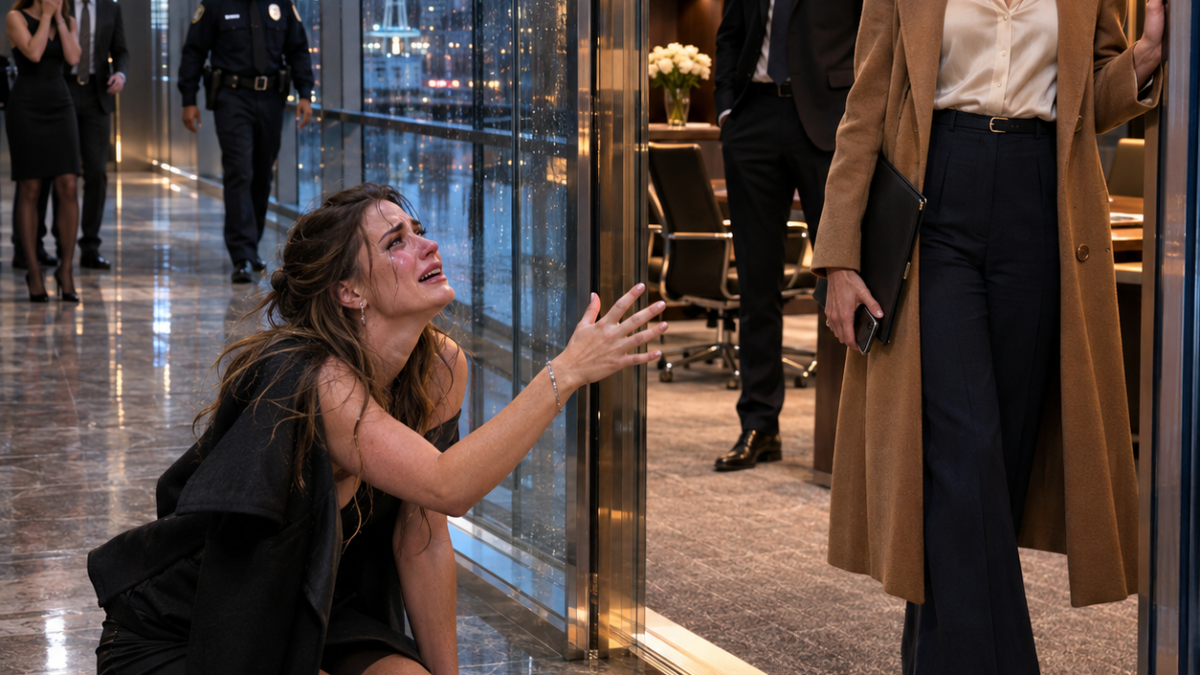
Nine months.
Nine months of legal documents.
Counseling.
Fear.
Workplace adjustments.
Nights when I checked the locks.
Mornings when I wondered whether the next message would appear.
And now she was back.
Frank lowered his voice.
“She says she’s lost everything.”
I closed my eyes.
“What does she want?”
There was a pause.
Then:
“She wants you to tell the police and the court that she never meant to frighten you.”
My heart began pounding.
“She says if you won’t help, she’s finished.”
I stood silently.
Frank continued:
“We’re keeping her in the public lobby area and addressing the situation under the building’s safety procedures. Given the protective order, we’re also notifying the appropriate authorities.”
I nodded, though he couldn’t see me.
Then I said:
“Please don’t send her upstairs.”
“Of course.”
I looked toward Rachel.
She was watching my face.
I whispered:
“I’ll come down to the security office, but I won’t meet with her directly.”
Frank agreed.
I ended the call.
Then stood in the conference room holding my phone.
Rachel rose.
“Emma?”
I looked at her.
“My sister’s downstairs.”
Her expression changed.
“Do you want me to come with you?”
I thought about it.
Then nodded.
“Yes.”
We left the meeting together.
And as the elevator descended toward the lobby, I realized I was no longer the woman who had answered Mia’s every emergency without asking whether it was real.
This time, I was going to decide what helping meant.
Frank met us outside the security office.
He looked tired.
“Emma.”
“Hi.”
He glanced toward Rachel.
“She can stay if you want.”
I nodded.
“Please.”
We stepped into the small room behind the reception area.
Several security monitors showed the building entrances, elevators, parking garage, and lobby.
On one screen, Mia sat on a bench near the front windows.
For a moment, I didn’t recognize her.
The perfect hair was gone.
She wore an oversized gray sweater, black leggings, and shoes that looked soaked from walking through the city.
Her face was red.
Mascara streaked her cheeks.
A crumpled folder rested in her lap.
The woman who once walked into Adam’s condo confident that she could take whatever she wanted now looked as though she barely had the strength to sit upright.
My chest tightened.
“Is she okay?”
Frank looked at me.
“She’s breathing normally and speaking with staff. We’re taking her statements about not being able to go on seriously. Appropriate assistance has been requested.”
I nodded.
“Thank you.”
He hesitated.
“She keeps asking us to bring you downstairs.”
I looked at the screen.
Mia stood suddenly.
Her mouth moved.
She pointed toward the elevators.
Then began crying again.
Frank lowered the audio from the lobby monitor.
I could hear her voice faintly.
“She’s my sister!”
My stomach twisted.
Then:
“Tell her I need her!”
I pressed my hand against my mouth.
For thirty-six years, those words had been enough.
She’s my sister.
She needs me.
No matter what Mia did, those facts had always been treated as reasons I should come running.
But I had learned something during the previous nine months.
Being somebody’s sister did not make me responsible for satisfying every demand.
And saying no did not mean I wanted her to suffer.
I turned toward Frank.
“Has she said what happened?”
He nodded.
“She brought papers. She says she has a court appearance coming up and can’t afford her attorney anymore.”
I looked at the folder.
Frank continued:
“She also says she’s being asked for an explanation by potential employers and wants you to withdraw your allegations.”
I closed my eyes.
Of course.
Even now, Mia believed I possessed the power to erase everything if I would simply agree to do what she wanted.
The court order.
The documented harassment.
The false accounts.
Her workplace problems.
Nine months of decisions.
She wanted me to make them disappear.
Rachel touched my arm.
“Emma.”
I opened my eyes.
“I’m okay.”
She looked at me carefully.
“Are you?”
I stared at Mia on the monitor.
“No.”
Then I took a breath.
“But I know what I need to do.”
I asked Frank to tell Mia that I would not meet her in person.
I also asked him to make sure her statements about her immediate safety were passed to the responding professionals.
Then I called Laura.
My attorney listened.
Asked several questions.
Explained what the protective order required.
Advised me not to negotiate with Mia through building security.
And confirmed that any legally relevant information or proposed statement should go through the appropriate channels.
When I hung up, I felt steadier.
Not happy.
Steadier.
Frank returned several minutes later.
He looked uncomfortable.
“She wants to know why you won’t even look at her.”
I stared.
For a moment, I imagined walking into the lobby.
Sitting beside Mia.
Taking her hand.
Telling her we’d figure something out.
Then I imagined what would happen next.
She would ask me to withdraw the report.
I’d say no.
She would cry.
I’d feel guilty.
She would remind me we were sisters.
I’d begin explaining.
She would accuse me of loving Adam more than family.
The argument would become another performance.
And once again, the real problem would disappear beneath the demand that I soothe her.
I looked at Frank.
“Please tell her that any request concerning the legal matter needs to go through counsel.”
He nodded.
“And that if she needs help finding a safe place to stay or accessing services, she can speak with the responding support professionals.”
He looked relieved.
“I can do that.”
I took a breath.
Then added:
“Please don’t tell her I’m angry.”
Frank studied me.
“Are you?”
I looked at the monitor.
Mia had sat down again.
Her shoulders shook.
“Not the way I used to be.”
I wiped my face.
“I’m just finished.”
The police and appropriate support personnel arrived.
They spoke with Mia.
Reviewed the relevant information about the existing order.
Addressed her immediate safety.
And handled the potential violation through the applicable process.
I didn’t go into the lobby.
I stayed in the security office with Rachel until Frank confirmed that Mia had left the building in the care of the people responding to the situation.
There was no dramatic confrontation.
No screaming through the glass.
No scene where Mia fell at my feet and I delivered a speech about everything she’d done.
That would have made a powerful moment in a movie.
In real life, I wanted something different.
I wanted her to get appropriate help.
I wanted the unwanted contact to stop.
And I wanted to return to my life.
When the monitor showed the empty bench, I began crying.
Rachel hugged me.
“I know.”
I shook my head.
“No, you don’t.”
She waited.
I looked at the place where Mia had been sitting.
“I spent my whole childhood thinking that if I just loved her enough, she’d stop trying to hurt me.”
Rachel’s eyes filled.
I continued:
“And now I don’t know whether she’ll ever stop.”
She held my hand.
Then said:
“Maybe the part you can control is whether you keep letting her.”
I closed my eyes.
That was the truth I’d spent nine months learning.
Dad called that evening.
He and Mom had been contacted about Mia’s situation.
They were helping her connect with appropriate services and address her immediate housing and legal concerns.
I was relieved.
Then Dad said:
“Emma, she keeps asking why you won’t forgive her.”
I sat on the edge of Adam’s sofa.
“Did she apologize?”
Dad was quiet.
“Not really.”
I looked down.
“Then what am I supposed to forgive?”
He sighed.
“I know.”
I stared toward the window.
The city glittered beyond the glass.
I could hear Adam washing dishes in the kitchen.
Dad continued:
“She says you’ve taken everything from her.”
I closed my eyes.
There it was.
The same accusation.
The same story.
I had been the woman who ruined Mia’s life.
Not the person she’d followed.
Not the sister she’d tried to humiliate.
Not the one who’d spent months afraid.
The villain.
I took a breath.
“Dad, I didn’t take her job.”
“I know.”
“I didn’t make her use false accounts.”
“I know.”
“I didn’t make her show up at Adam’s condo.”
“I know.”
“And I didn’t make her ignore the court order.”
He was silent.
I continued:
“I wish she’d made different choices.”
My voice broke.
“I wish all of this had never happened.”
Dad began crying.
“So do I.”
I wiped my face.
“Then please help her find support without asking me to become responsible for her recovery.”
He swallowed.
“We will.”
I looked toward the kitchen.
Adam appeared in the doorway.
He saw my face.
Then quietly sat beside me.
Dad said:
“Emma?”
“Yes?”
“I’m proud of you.”
The words stunned me.
“For what?”
He took a shaky breath.
“For protecting yourself even though it hurts.”
I began crying again.
Dad continued:
“And I’m sorry we made that so hard for you.”
I closed my eyes.
For years, I’d wanted him to say something like that.
Now I finally believed he meant it.
Mia’s legal matters continued.
The court reviewed the reported violation and the evidence presented through the appropriate proceedings.
The restrictions protecting Adam and me remained in place.
Mia was required to comply with the applicable orders and consequences.
She also began receiving professional support.
I learned that through my parents.
I didn’t ask for details.
Her treatment was private.
Her progress belonged to her.
I wanted her to become healthier.
I wanted her to stop making choices that hurt other people.
But I didn’t want access to every moment of her recovery.
That would have turned her life into another responsibility I felt obligated to manage.
For once, I let my parents love her without making me the person who had to solve everything.
Three months after the second lobby incident, Laura forwarded a letter from Mia’s attorney.
Mia had asked to send a personal statement through an appropriate channel.
I was under no obligation to read it.
Laura made that clear.
I stared at the email for nearly an hour.
Then opened the attachment.
The letter was four pages long.
For the first time, Mia didn’t begin by describing what she’d lost.
She began with what she’d done.
Emma, I went to Adam’s apartment because I wanted to prove I could make him choose me.
I stopped reading.
Took a breath.
Then continued.
When he rejected me, I was humiliated. I told myself he must have been interested and that you had somehow turned him against me.
My hands began shaking.
I sent the flowers because I wanted you to imagine he was having an affair. I used false online accounts because I thought I could create enough confusion that you would break up.
I stared.
Then came the sentence I’d been waiting years to hear.
I did something similar with Nathan.
Tears filled my eyes.
She wrote about staying in my apartment.
Using access I’d trusted her with.
Sending messages.
Creating false screenshots.
Convincing herself she was helping me leave someone who supposedly didn’t appreciate me.
Then she admitted the truth.
I wasn’t protecting you. I couldn’t stand watching someone choose you when I wanted to be the center of attention.
I covered my face.
For years, she’d called me boring.
Too serious.
Too careful.
Too ordinary.
She had made me feel that the best parts of my life were things she could take if she became interested enough.
Now she was admitting that the problem had never been Adam’s loyalty.
Or Nathan’s.
It had been her inability to tolerate my happiness without turning it into a competition.
I kept reading.
Mia described losing her job.
Her apartment.
Her car.
Several friendships.
Much of our parents’ trust.
But this time, she didn’t say I had taken those things.
She wrote:
I made choices that damaged other people’s lives, and when they set boundaries, I behaved as though I was the person being attacked.
My tears fell onto the page.
Then I reached the final paragraph.
I know you may never want a relationship with me again. I am trying to accept that. I’m sorry for what I did to you, to Nathan, and to Adam. I don’t expect this letter to repair it. I just wanted to stop pretending none of it happened.
I read the letter twice.
Then closed my laptop.
Adam found me sitting beside the window.
He didn’t ask whether I was ready to forgive her.
He simply sat beside me.
I leaned into him.
For a long time, neither of us spoke.
Finally, I whispered:
“She admitted it.”
Adam held my hand.
“I know.”
I looked at him.
“Why doesn’t that make everything better?”
His eyes softened.
“Because knowing the truth doesn’t give you back the years she hurt you.”
I began crying.
He wrapped his arms around me.
And for the first time, I grieved not only the sister I had lost, but the relationship I’d spent my whole life hoping we could have.
I didn’t reply to Mia’s letter immediately.
I needed time.
Weeks later, I sent a short response through Laura.
I acknowledged receiving it.
I thanked Mia for accepting responsibility.
I said I hoped she continued getting help.
And I told her I wasn’t ready to resume contact.
I didn’t include a deadline.
Six months.
A year.
Five years.
Some relationships can recover.
Others cannot.
I didn’t know which ours would become.
For the first time in my life, I was willing to let that uncertainty exist without trying to fix it.
Adam and I celebrated our third anniversary with dinner at home.
No fancy restaurant.
No expensive wine.
He cooked salmon.
I made roasted potatoes.
We watched an old movie and ate dessert on the sofa.
At one point, he reached for my hand.
“Emma?”
“Yes?”
“Remember our fourth date?”
I laughed.
“When I was late?”
He nodded.
“You apologized about twelve times.”
“Fourteen.”
He smiled.
“Probably.”
I looked at him.
He continued:
“I told you that you didn’t have to apologize for having a life.”
I nodded.
“I remember.”
He squeezed my fingers.
“I’m still glad you have one.”
My throat tightened.
He smiled.
“And I’m glad I’m part of it.”
I leaned against him.
For years, Mia had made love feel like a competition I might lose if someone prettier, louder, or more confident walked into the room.
But Adam had never been a prize someone could steal.
He was a person.
With choices.
Values.
Loyalties.
And he had chosen to stand beside me.
Not because Mia failed to tempt him.
Because he loved me.
That difference had taken me longer to understand than it should have.
Sometimes, I still think about the day Mia arrived at his condo.
Her dress.
Her wine.
Her confident smile.
The way she placed her hand on his knee and announced that she could treat him better.
I think about the roses.
The fake recruiter.
The threatening messages.
The red sedan outside the grocery store.
The email from Hannah.
The old relationship Mia had helped destroy.
And the woman crying in my office lobby nine months later.
At first, I thought this was a story about my sister trying to steal my boyfriend.
It wasn’t.
It was about the years I’d spent believing that protecting my sister meant accepting whatever she did to me.
It was about the difference between kindness and surrender.
The difference between forgiveness and access.
The difference between helping someone and allowing them to control your life.
Mia lost her job, her apartment, several friendships, and the trust she’d taken for granted.
Those losses were painful.
I hope they became reasons for her to change.
But the most important thing she lost was the belief that she could hurt me and still demand that I rescue her from every consequence.
And the most important thing I gained wasn’t Adam’s loyalty.
He had already given me that.
It was the understanding that I deserved loyalty from myself too.
One Sunday morning, Adam and I walked through a small park near our apartment.
The air smelled of wet leaves.
Children played near a fountain.
A woman walked two golden retrievers along the path.
Adam slipped his hand into mine.
I looked at him.
“What?”
He smiled.
“Nothing.”
I laughed.
“You’re staring.”
“I like looking at you.”
I rolled my eyes.
“That’s a terrible line.”
“It’s true.”
I smiled.
We kept walking.
No suspicious car behind us.
No unknown messages.
No flowers pretending to be evidence of an affair.
Just a quiet morning.
Two people.
A relationship that belonged to them.
I thought about the little girl Mia had once been.
The sister who held my hand during thunderstorms.
I still hoped that somewhere inside the woman she’d become, there was a person capable of loving without competing.
Maybe one day we’d find a way to speak again.
Maybe not.
But I no longer needed that answer to keep living.
I squeezed Adam’s hand.
He squeezed back.
And for the first time in years, I felt no need to look over my shoulder.
Because Mia had been wrong about the one thing she’d always believed gave her power over me.
Love isn’t something you steal by being prettier, louder, or more determined to win. It’s something two people choose to give each other—and my sister’s greatest mistake was believing she could take what had never been hers.








