FULL STORY:I Was Answering 911 Calls While My Own Children Were Left to Freeze—Then My 12-Year-Old Son Whispered, “Mom, I Recorded Grandma…”
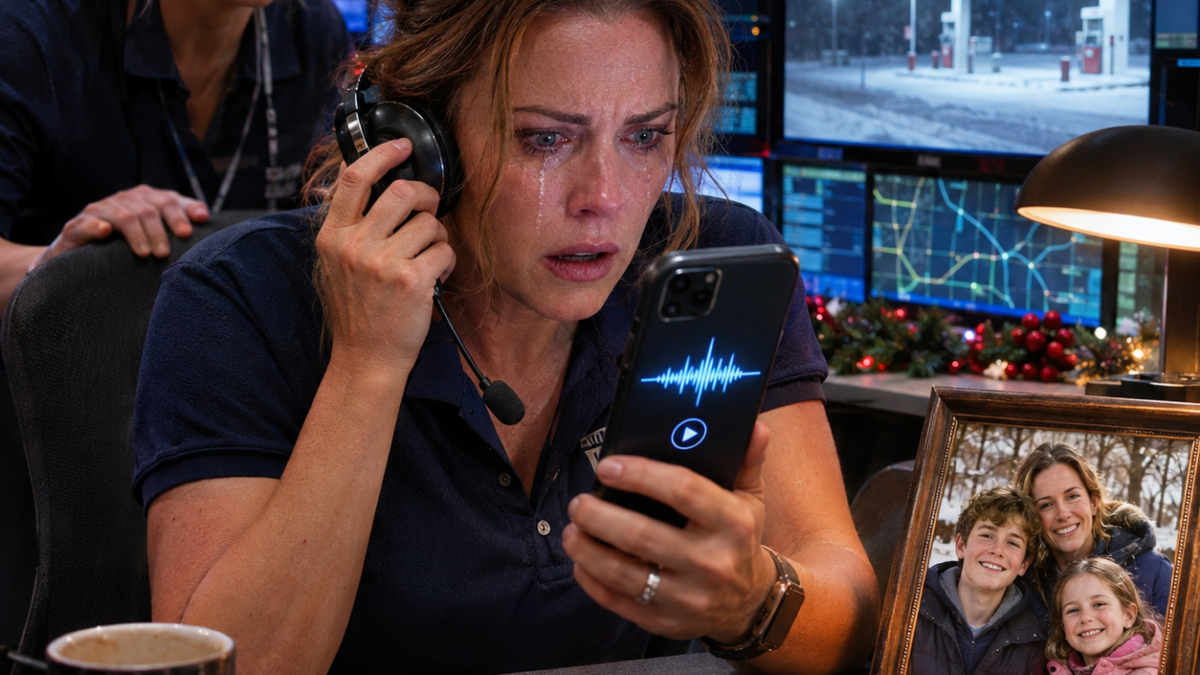
The emergency call was from a man who had lost control of his truck on an icy stretch of highway.
His vehicle had struck a guardrail.
He was conscious, but he was trapped, and another vehicle had nearly collided with him.
I recognized the location.
Route 9.
Not far from the Sunoco where my children had been abandoned.
For one terrible second, I couldn’t separate the two situations.
I pictured Jamie standing near the gas pumps, holding Christa’s hand.
I pictured headlights approaching through falling snow.
I pictured my daughter in her red coat, crying for me.
Then the caller spoke again.
“Ma’am? Are you still there?”
I forced myself to focus.
“Yes, sir. I’m here.”
Those words were the foundation of my job.
I’m here.
I’d said them to parents whose babies weren’t breathing.
To people trapped in burning buildings.
To elderly callers who had fallen and couldn’t get up.
To teenagers hiding from someone who frightened them.
And now, while my own children needed me, I had to say them to a stranger.
I followed our emergency procedures, confirmed the man’s location and condition, coordinated the necessary response, and remained on the line while help made its way toward him.
My personal phone lay facedown beside the console.
Every second felt unbearable.
I could hear my pulse beneath my headset.
I wanted to run.
I wanted to tear off the headphones, grab my coat, and drive to Route 9.
But abandoning an active emergency call without ensuring it was properly transferred would not make the stranger safer.
And I knew there was a way to get help for my children while remaining responsible for the call in front of me.
As soon as the situation allowed, I raised my hand toward my supervisor.
Denise Carter looked up from the opposite end of the room.
One glance at my face and she was already moving.
She had supervised emergency dispatch for seventeen years.
She could recognize a crisis before anyone finished explaining it.
When she reached my station, I pointed to my phone.
“My mother abandoned my two children at the Sunoco on Route 9.”
Denise’s expression changed.
“What?”
“They’re twelve and eight. It’s freezing. I can’t reach them.”
She looked at the active call information.
Then at me.
“Stay with this caller. I’m arranging a welfare check and relief.”
I nodded.
My throat felt painfully tight.
Denise moved immediately.
She coordinated coverage through the appropriate channels and ensured the situation involving my children was treated as a separate emergency requiring help.
Within minutes, arrangements were being made to check on Jamie and Christa.
I continued speaking to the stranded motorist.
He was frightened.
His breathing was fast.
He wanted to know how long help would take.
I couldn’t invent an answer.
I could only tell him what I knew and keep him informed.
At last, he reported seeing flashing lights.
Relief moved through me so sharply that I nearly cried.
The responders confirmed they had reached him.
Once my responsibilities for that call were properly transferred and Denise had secured coverage, she stepped beside me.
“Go.”
I looked up.
“Denise—”
“Your station is covered. Make the calls you need to make.”
For a moment, I couldn’t move.
Then I pulled off my headset.
Grabbed my phone.
And ran toward the break room.
The Sunoco employee answered on the third ring.
“Sunoco, this is Elijah.”
I tried to steady my voice.
“My name is Tara Shaw. My two children were left at your store. A twelve-year-old boy named Jamie and an eight-year-old girl named Christa.”
The young man’s response came immediately.
“Oh, thank God.”
My knees weakened.
“They’re there?”
“Yes, ma’am. They’re inside.”
I closed my eyes.
“Are they safe?”
“They’re sitting behind the counter. I’ve got the heat turned up. I gave the little girl some hot chocolate.”
I pressed my hand against the wall.
“Thank you.”
Elijah continued.
“I was about to call for help. Your boy told me you worked at dispatch and couldn’t leave right away.”
I swallowed.
“That’s right. Emergency personnel are checking on them too.”
“Good. I’m not letting them go anywhere with anyone until we know what’s happening.”
I took a breath.
“Can I speak to Jamie?”
“Absolutely.”
I heard movement.
A chair scraping.
Then my son’s voice.
“Mom?”
One word.
That was all it took.
I began crying.
“Jamie, baby, are you okay?”
“I’m okay.”
He was trying so hard to sound brave.
That hurt more than if he’d been sobbing.
“Where’s your sister?”
“Right here.”
“Is she warm?”
“Elijah gave her cocoa. She’s wearing my hoodie.”
My heart broke.
Jamie had gone to Grandma’s house wearing a new Christmas sweater.
A navy sweater with a little white reindeer on the front.
I’d bought it during a sale two weeks earlier.
He’d complained that the reindeer looked ridiculous.
Then worn it anyway because he knew I liked it.
Now he was sitting inside a gas station, giving his hoodie to his little sister because the people I’d trusted to care for them had left them in the cold.
“Jamie,” I whispered, “you did exactly the right thing by asking for help.”
He was quiet.
Then he said, “Mom?”
“Yes?”
“Grandma told us you knew.”
My stomach tightened.
“Knew what?”
“That she was leaving us.”
I closed my eyes.
“No, honey.”
“She said you were too busy at work to care.”
My breath caught.
“And that Jenna’s boys were the important ones this year.”
I pressed my hand against my mouth.
I couldn’t allow him to hear me fall apart.
Not yet.
“Jamie, listen carefully.”
“Okay.”
“I did not know she was leaving you there.”
He was silent.
“I would never have agreed to that.”
Another pause.
Then he whispered, “I know.”
Tears ran down my face.
“I love you and Christa more than anything.”
His voice cracked.
“I know, Mom.”
I swallowed.
“Help is coming, and I’m arranging to get to you. Stay with Elijah and the responders. Don’t leave with anybody unless the proper arrangements are confirmed.”
“Okay.”
Then he lowered his voice.
“Mom, I did the Rule.”
My entire body went still.
The Rule.
A family emergency rule I’d taught Jamie after a frightening incident at a crowded shopping mall two years earlier.
If an adult’s behavior made him feel unsafe, and he could do so without putting himself in more danger, he was supposed to get somewhere safe, call for help, remember important details, and preserve any message or information relevant to what happened.
He wasn’t supposed to confront anyone.
He wasn’t supposed to investigate.
He wasn’t supposed to prove he was brave.
His responsibility was to keep himself and his sister safe.
“What did you do?” I asked softly.
“I recorded what Grandma said.”
I stared at the phone.
“Jamie—”
“She was talking to that man.”
“What man?”
“The one in the SUV.”
My stomach tightened.
He continued.
“Grandma said you’d give them the file once you found out what they’d done to us.”
I closed my eyes.
For a moment, the room seemed to tilt.
“Baby, don’t worry about that file.”
“But—”
“No. You did enough. You don’t have to solve anything else tonight.”
His breathing became uneven.
“Mom, are we going to lose our house?”
I felt something inside me crack.
“No, sweetheart.”
I couldn’t promise there wouldn’t be legal problems.
But I could promise that a piece of paper handed to a child in a gas station didn’t magically erase our rights.
“We’re going to handle this properly,” I said. “You and Christa are not responsible for any of it.”
He was quiet.
Then he whispered, “Okay.”
“Can you put Christa on?”
I heard movement.
A small voice came through.
“Mommy?”
“Oh, sweetheart.”
She began crying.
“Are we bad?”
I felt tears spill down my face.
“No.”
“Grandma said Jenna’s boys deserved Christmas more.”
I couldn’t speak for a second.
Then I forced the words out.
“Christa, you did nothing wrong.”
She sniffed.
“Are you mad?”
“Not at you.”
“Are you coming?”
“Yes, baby. I’m coming as soon as I can.”
I closed my eyes.
“I promise I’m getting you somewhere safe tonight.”
After speaking with the children, I called Denise.
She confirmed that the welfare check was underway and that we would coordinate with the responding personnel.
My relief was being finalized.
I wasn’t going to run out of the building without ensuring my workstation was covered.
That would only create another emergency.
But I couldn’t remain through the end of my scheduled shift either.
Not while my children waited.
Denise understood.
“Go through the handoff,” she told me. “Then leave.”
I swallowed.
“Thank you.”
She paused.
“Tara?”
“Yes?”
“You don’t owe anybody an apology for needing help with your kids.”
My eyes filled.
I hadn’t realized I’d been about to apologize.
Again.
I looked toward the dispatch room.
The monitors.
The phones.
The people still working through Christmas Eve while their own families waited at home.
“Thank you, Denise.”
She nodded.
“Go get them.”
The single text I sent before returning to the console was addressed to my attorney.
Her name was Allison Reed.
She had represented me during my divorce and had later helped resolve several complicated property matters involving my father’s estate.
I typed:
Allison, they’re using the children to force the property file. Preserve everything. Do not release the originals. I need you to contact me urgently.
Then I sent it.
It wasn’t a dramatic threat.
It wasn’t a command to destroy anyone.
It was a request to protect evidence I already had a legal right to preserve.
And I knew exactly why it mattered.
Because my mother, father, and sister believed that by frightening my children, they could force me to give up the documents that stood between them and a very expensive mistake.
To understand what happened that Christmas Eve, you have to understand the family I grew up in.
My mother was named Lorraine.
Technically, she was my stepmother.
My biological mother died when I was six.
Dad married Lorraine four years later.
By the time I was fourteen, I’d grown accustomed to calling her Mom.
It was easier.
And for a long time, I wanted to believe she cared about me the way she cared about Jenna, her biological daughter.
Jenna was four years younger than I was.
Beautiful.
Outgoing.
The sort of girl who could cry for thirty seconds and somehow convince an entire room that everyone else had treated her unfairly.
As children, we shared a bedroom.
We fought over clothes.
Borrowed each other’s things.
Occasionally laughed ourselves breathless under the blankets after we were supposed to be asleep.
There were good memories.
Real ones.
That was part of what made the later years painful.
Because Jenna wasn’t always cruel.
But she grew up in a house where her wants were treated as urgent and mine were treated as negotiable.
When she wanted a new bicycle, Dad found the money.
When I needed school supplies, Lorraine told me to make do with what I had.
When Jenna failed a test, somebody found a reason.
When I earned an award, I was told not to brag.
At seventeen, I won a county scholarship.
I came home carrying the letter.
Dad was watching television.
Lorraine was cooking dinner.
Jenna sat at the table scrolling through her phone.
“I got it,” I announced.
Dad glanced up.
“Got what?”
“The scholarship.”
He nodded.
“Good.”
Then Lorraine asked whether I could pick Jenna up from a friend’s house after dinner.
I stood there holding the letter.
Waiting for somebody to ask how much the scholarship was worth.
What school it might help me attend.
Whether I was excited.
Nobody did.
Eventually, I folded it.
Put it in my pocket.
And drove to collect my sister.
That was how our family worked.
Jenna’s life happened in the center of the room.
Mine happened around the edges.
When I became a mother, I promised myself my children would never feel that way.
Not if I could help it.
Jamie was born when I was twenty-five.
Christa arrived four years later.
Their father, Michael, and I separated when Christa was still small.
We tried to make the marriage work.
But eventually, we admitted that we were better at raising children cooperatively than remaining married.
The divorce was difficult.
But we handled the parenting arrangements responsibly.
Michael later moved several states away for work.
He remained involved.
Called regularly.
Contributed under our arrangements.
Visited when schedules allowed.
But most school nights, illnesses, forgotten lunch boxes, and midnight fevers belonged to me.
I didn’t resent the children for that.
They were my life.
I worked hard to give them stability.
A small house.
Reliable routines.
Books.
Warm coats.
A Christmas tree they were allowed to decorate however they wanted.
Jamie always insisted the angel belonged on top.
Christa preferred a silver star.
Every year, we held a vote.
Every year, I pretended the result was a surprise.
Sometimes I stood in the doorway watching them argue about ornaments and felt a happiness so complete it frightened me.
Not because our life was perfect.
It wasn’t.
Money could be tight.
My shifts were unpredictable.
There were nights when I’d come home exhausted and still have laundry, school forms, and dinner dishes waiting.
But Jamie and Christa never had to wonder whether I wanted them.
I told them every day.
And I meant it.
My father, Harold, owned a modest stretch of property outside town.
It had been in our family for decades.
My grandfather bought the first parcel when the area was mostly farmland.
Over time, neighboring lots were added.
There was an old farmhouse.
A workshop.
Several acres of wooded land.
And a smaller residential lot where my children and I lived.
The property wasn’t glamorous.
But it mattered.
My grandfather had built much of the original farmhouse himself.
My grandmother planted the apple trees.
Dad learned to repair engines in the workshop.
And after my marriage ended, I bought the smaller residential lot through a documented transaction that Allison helped me complete.
I made the payments.
Maintained the house.
Paid the taxes associated with my property.
I believed the legal boundaries were clear.
For a while, they were.
Then Jenna and her husband began having financial problems.
And suddenly, the family property became something everyone wanted to discuss.
Jenna married Brandon Collins eight years before that Christmas.
They had two sons.
Both sweet boys.
Both energetic.
Both adored by Lorraine and Dad.
I loved my nephews.
That was important.
My anger was never about the children.
They hadn’t created the favoritism.
They were simply growing up inside it.
The problem was that Jenna expected everyone else to organize their lives around her family’s convenience.
If she wanted a babysitter, Lorraine called me.
If she needed help with school pickups, Dad asked whether I could rearrange my shift.
If Jenna couldn’t afford a vacation, the family discussed whether somebody could help.
When I needed childcare during an overnight emergency shift, I was reminded that everyone had responsibilities.
Still, I kept trying.
I wanted my children to have grandparents.
I wanted them to know their cousins.
And somewhere inside me, the little girl who’d once brought home a scholarship letter still hoped my father would eventually look at me and say he was proud.
So I accepted compromises I shouldn’t have accepted.
I made excuses.
I lowered expectations.
And I told myself that having imperfect family support was better than having none.
That Christmas Eve proved how wrong I could be.
The property dispute began four months earlier.
Jenna and Brandon wanted to expand a small business.
They’d invested in a regional delivery operation that had struggled with costs and financing.
Brandon insisted the business would become profitable if they could secure a larger loan.
Their bank wanted adequate collateral.
Jenna immediately suggested using family property.
Dad was willing to discuss the old farmhouse and adjoining land.
That was his decision, within whatever legal interests he actually held.
But then Brandon began talking about my house.
The smaller lot.
The one I’d purchased.
The one where Jamie and Christa slept.
At a Sunday dinner, he spread several papers across the table.
“It’s all connected property,” he said.
I looked down.
“Not legally.”
He frowned.
“It’s part of the original family parcel.”
“It was subdivided. My purchase was recorded.”
Jenna rolled her eyes.
“Do we have to make everything difficult?”
I looked at her.
“I’m not using my home as collateral for your business.”
She stared.
“Wow.”
I took a breath.
“I’m not saying you can’t borrow money. I’m saying my house isn’t available.”
Dad leaned back.
“Tara, nobody’s trying to take your house.”
I pointed toward the documents.
“Then why is it included?”
Brandon shuffled the papers.
“It’s only preliminary.”
I looked at him.
“Then remove it.”
Lorraine sighed.
“Your sister is trying to build something for her family.”
“So am I.”
She looked offended.
“You don’t have to be so defensive.”
I stared at her.
The familiar feeling returned.
My sister wanted something.
I said no.
And somehow my refusal became the problem.
But this time, the stakes were too high.
I wasn’t discussing a vacation.
Or babysitting.
Or who got Christmas morning at Grandma’s house.
I was discussing the roof over my children’s heads.
“No,” I repeated.
Then I gathered my coat and left.
Two weeks later, Allison discovered discrepancies in several property documents that had been circulated in connection with the proposed financing.
The documents included a description of my residential lot as though it remained available under the broader family property arrangements.
One draft even referred to consent supposedly given on my behalf.
I had given no such consent.
Allison explained that the documents needed careful review.
Some might simply be incorrect drafts.
Others raised more serious questions about how my property interest had been represented.
We requested the relevant records.
Reviewed the recorded property information.
Preserved copies.
And notified the appropriate parties that my property could not be treated as available collateral without valid authorization.
The process wasn’t dramatic.
There was no hidden treasure.
No secret bank account.
No extraordinary inheritance nobody knew about.
Just land records.
Financial documents.
Signatures.
And a family’s determination to pretend one woman’s property was still something they could decide how to use.
But the consequences were serious.
If the financing proceeded based on incorrect information, the dispute could become far more complicated.
And if false documents had been submitted knowingly, there could be legal consequences beyond a family argument.
I wanted to resolve it quietly.
Allison agreed that a proper correction would be preferable to prolonged litigation.
So we gave the relevant people an opportunity to clarify the records.
Instead, Jenna became furious.
She called me one evening while I was preparing dinner.
“Tara, what did you do?”
I held the phone between my shoulder and ear while stirring pasta.
“What are you talking about?”
“Our financing.”
I stopped.
“What about it?”
“Brandon says the lender is asking questions.”
I took a breath.
“Then answer them.”
She laughed bitterly.
“You know exactly what I mean.”
“I had Allison correct the information involving my house.”
“You went behind our backs.”
I stared at the kitchen wall.
“Jenna, I told you at dinner that my property wasn’t available.”
“You didn’t have to involve lawyers.”
“The documents were already being used in a financial transaction.”
She raised her voice.
“You are destroying our future!”
I looked toward the living room.
Jamie was helping Christa build a cardboard gingerbread village.
I lowered my voice.
“I’m protecting my children’s home.”
There was a pause.
Then Jenna said something I never forgot.
“Your kids always come first with you.”
I stared.
“Yes.”
She laughed.
“Of course they do.”
I felt my chest tighten.
“They’re my children, Jenna.”
“So are mine!”
“Then you should understand.”
She hung up.
I stood in the kitchen holding the phone.
For a long time, I didn’t move.
Then Jamie called from the living room.
“Mom, Christa glued the roof on backward!”
Christa shouted, “It’s artistic!”
I closed my eyes.
Then laughed.
I went into the living room.
Sat on the floor.
And helped them rebuild the roof.
I didn’t know then how determined Jenna had become to punish me for refusing to surrender the house I’d bought.
The weeks leading up to Christmas were tense.
Lorraine called repeatedly.
She wanted to know why Allison was involved.
Why I couldn’t trust family.
Why I insisted on making ordinary business matters legal.
Dad told me I was being stubborn.
Jenna accused me of ruining her marriage.
Brandon stopped speaking to me altogether.
I tried to explain.
Again and again.
The house wasn’t available.
The documents needed to reflect that.
The lender was entitled to accurate information.
And my children deserved the stability I’d worked to give them.
Nobody listened.
They talked as though my refusal was a betrayal.
Not because they believed the records were correct.
But because they believed family loyalty required me to stop objecting.
Eventually, Allison advised that all further property-related communication should be documented and handled through appropriate channels.
I agreed.
That was when the threats began.
Not obvious threats at first.
Hints.
Comments.
Suggestions that I would regret making things difficult.
Lorraine once said, “You know, families can decide who belongs.”
I stared at her.
“What does that mean?”
She smiled.
“Nothing, darling. Just that people remember how they’re treated.”
I went home feeling sick.
But I still allowed her to care for the children on Christmas Eve.
That was the decision I would replay more than any other.
My Christmas Eve shift had been scheduled months in advance.
Emergency dispatch doesn’t close for holidays.
People still have heart attacks.
Cars still crash.
Fires still start.
Children still need help.
I’d worked holidays before.
Usually, I arranged childcare with Michael when possible.
This year, his work schedule and travel plans prevented him from taking the children overnight.
So I asked Lorraine.
I didn’t ask casually.
I confirmed the arrangement three times.
She would keep Jamie and Christa overnight.
They’d sleep in the guest room.
I’d collect them after my shift and spend Christmas morning with them.
They would exchange gifts with their cousins later in the day.
Lorraine agreed.
In fact, she seemed unusually enthusiastic.
“Of course, Tara. They’re family.”
I wanted to believe the recent property arguments hadn’t changed that.
I wanted to believe my children were still safe with their grandparents.
So I packed their overnight bags.
Clean pajamas.
Toothbrushes.
Medication information.
Warm socks.
Extra clothes.
I helped Christa choose the red coat she’d received for her birthday.
Jamie carried his phone and charger.
Before leaving, I knelt in front of them.
“Remember the rules?”
Jamie rolled his eyes affectionately.
“Mom.”
“Humor me.”
He sighed.
“Stay together. Keep our phones charged. If something feels wrong, call you or another trusted adult. Get somewhere safe.”
“And?”
“Don’t get into a car with somebody you don’t know.”
I smiled.
“Good.”
Christa raised her hand.
“Can I call 911 if Jamie steals my cookies?”
“No,” I said.
Jamie laughed.
Christa grinned.
I hugged them both.
Then watched Lorraine lead them into her house.
She smiled at me from the doorway.
“Don’t worry, Tara. They’re fine.”
I drove away believing her.
At 8:47 that evening, everything changed.
But the part I didn’t learn until later was what happened before Jamie sent the text.
He told me in pieces.
At first, during the drive home.
Then later, when he felt safe enough to talk without worrying that Christa would overhear.
The family had eaten dinner.
Jenna’s boys opened a few early presents.
Jamie and Christa watched a Christmas movie.
Everything seemed normal.
Then Lorraine received a phone call.
She stepped into the kitchen.
When she returned, her expression had changed.
She told Jamie and Christa to get their coats.
Jamie asked where they were going.
She said she was taking them to meet me.
Jamie reminded her that my shift wouldn’t end until late.
She told him not to argue.
Dad was sitting in his recliner.
He didn’t intervene.
Jenna stood near the hallway.
According to Jamie, she looked annoyed rather than surprised.
Brandon was outside, loading something into a dark SUV.
The children were placed in Lorraine’s car.
They drove toward Route 9.
During the drive, Lorraine began talking about my house.
She said I had been selfish.
That I’d embarrassed the family.
That Jenna needed the property for her boys’ future.
Jamie didn’t understand everything.
But he understood enough to become frightened.
Then Lorraine told him something that made him start recording.
“If your mother would just hand over the file, none of this would be necessary.”
Jamie quietly activated the audio recording on his phone.
He didn’t confront her.
Didn’t tell her what he was doing.
He simply held the phone near his lap.
And listened.
The audio file was difficult to hear in places.
There was road noise.
The heater.
Christa asking whether they were going to Grandma’s house again.
But Lorraine’s voice was clear enough.
“Your mother thinks she can keep what belongs to this family.”
Jamie asked, “Our house?”
Lorraine replied, “Don’t be smart.”
Then Brandon’s voice came through the car’s speakerphone.
He was coordinating with a man named Warren Price, who was involved in the disputed property paperwork.
I recognized the name immediately.
Allison had already identified him as someone connected to the attempted financing transaction.
Brandon asked whether Warren had brought the envelope.
A male voice replied that he had.
Lorraine then said the sentence that would later become central to understanding the pressure they were applying.
“She’ll hand over the originals when she realizes we’re serious.”
Jamie asked what originals meant.
Lorraine told him to be quiet.
Then she said, “Jenna deserves a peaceful Christmas. We’re not spending another morning listening to your mother act like she’s better than everyone.”
Christa began crying.
Jamie told her everything would be okay.
And Lorraine said, “Then tell your mother to cooperate.”
That was the moment Jamie understood this wasn’t an ordinary change of plans.
He didn’t know about loan documents.
Property records.
Legal notices.
Or the meaning of a disputed signature.
He only knew that his grandmother was angry with his mother and was using him and his sister to deliver a message.
He did exactly what I’d taught him.
He preserved what he could.
And asked for help.
At the Sunoco, Lorraine told the children to get out.
Jamie asked where I was.
She said I knew.
Then she drove away.
The luxury SUV arrived shortly afterward.
A man stepped inside the store.
He spoke briefly to Elijah.
Left a black envelope.
Then returned to the vehicle.
The envelope contained a document purporting to be an emergency eviction notice and a sealed flash drive.
It was designed to frighten me.
That much was obvious.
But it wasn’t a lawful court order simply because someone printed the words emergency eviction across the top.
And the flash drive didn’t give anyone authority over my home.
Those questions would need proper legal review.
At the time, I didn’t care about the paper’s theatrical appearance.
I cared about the children sitting inside the gas station, frightened and cold.
That was what made the whole thing unforgivable.
They had taken a property dispute between adults and dragged two children into it.
Not because the children had done anything wrong.
But because they believed hurting me through them would make me surrender.
I reached the gas station at 11:25 p.m.
The parking lot was almost empty.
Snow had gathered along the edges of the pavement.
The fluorescent lights made the icy ground look pale blue.
I parked beside the entrance.
For a moment, I couldn’t move.
My hands were gripping the steering wheel so tightly that my fingers hurt.
Then I saw Jamie through the glass.
He was sitting behind the counter.
Christa slept against his shoulder.
Her red coat was still zipped to her chin.
I opened the door and ran inside.
The entrance chime sounded.
Jamie looked up.
For a second, he stared at me.
Then his face collapsed.
“Mom!”
I dropped to my knees.
He reached for me.
I pulled him into my arms.
Hard.
Carefully enough not to hurt Christa, but hard enough that I could feel him trembling.
“I’m here.”
He began crying.
All the composure he’d been forcing himself to maintain disappeared.
“They said you weren’t coming.”
I closed my eyes.
“I’m here now.”
“They said we didn’t have a house anymore.”
I held him tighter.
“You have a home, Jamie.”
His voice broke.
“Grandma said you abandoned us.”
I pulled back just enough to see his face.
“Look at me.”
He did.
His eyes were red.
His cheeks pale.
“You did not deserve what happened tonight.”
He swallowed.
“And I did not agree to it.”
He nodded.
Tears ran down his face.
“I know.”
I kissed his forehead.
Then Christa stirred.
“Mommy?”
“Oh, baby.”
She reached for me.
I lifted her carefully into my arms.
Her little body was warm from being inside the store, but she was exhausted.
She pressed her face against my neck.
“Are we going home?”
“Yes.”
“Now?”
“Yes.”
She began crying.
I held both children.
And for several moments, I forgot about the envelope.
The file.
Jenna.
Brandon.
Lorraine.
Dad.
All of it.
The only thing that mattered was that Jamie and Christa were safe enough for me to hold.
Elijah stood behind the counter.
He was perhaps twenty-two.
Sparse beard.
Green store vest.
Tired eyes.
He looked like someone who’d been working too many holiday shifts.
When I finally stood, I turned toward him.
“Thank you.”
He shook his head.
“Ma’am, you don’t have to—”
“Thank you for keeping them inside.”
He looked toward Jamie.
“Your boy did a good job.”
I nodded.
“He did.”
Elijah swallowed.
“I know how scary it is when adults leave you somewhere.”
I looked at him.
He hesitated.
“My mom left me at a supermarket when I was nine.”
My throat tightened.
He smiled sadly.
“I wasn’t going to let those kids sit outside.”
I stared at him.
Then reached for my wallet.
He raised both hands.
“No.”
“Elijah—”
“Please.”
I looked down.
He continued.
“They needed help. That’s all.”
For a moment, I couldn’t speak.
Then I nodded.
“Thank you.”
He reached beneath the counter.
“And there’s something else.”
He placed the black envelope in front of me.
“The man in the SUV left this.”
I looked at it.
My stomach tightened.
“Did he say anything?”
Elijah nodded.
“He said it was for you.”
“Did he give his name?”
“No. But the camera should have captured him.”
I looked toward the ceiling.
A security camera pointed at the register.
Another faced the entrance.
I took a breath.
“Please preserve the footage. The responding officers may need it.”
He nodded.
“I already told them.”
I looked at him.
Then smiled through tears.
“You’ve done more than enough tonight.”
He glanced toward the children.
“Just get them home.”
I didn’t open the flash drive at the gas station.
I didn’t insert it into my phone or laptop.
I wasn’t going to connect an unknown device supplied by someone involved in a disputed property transaction.
I placed the envelope in a separate bag and documented when and how I’d received it.
The responding personnel had already been informed about the children.
I provided the additional information relevant to the incident and asked that the circumstances be documented appropriately.
Then I helped Jamie and Christa into the car.
Christa fell asleep almost immediately.
Jamie remained awake.
He watched me through the rearview mirror.
“Mom?”
“Yes?”
“Are you mad at Grandma?”
I took a breath.
“I’m very upset about what she did.”
He looked down.
“Are you mad at me?”
I nearly pulled the car over.
“No, baby.”
He swallowed.
“I recorded her.”
“I know.”
“Was that wrong?”
I shook my head.
“You tried to get help and preserve what was happening without confronting anyone. But next time, remember that staying safe matters more than recording anything.”
He nodded.
“Okay.”
I looked toward him in the mirror.
“You are not responsible for fixing adult problems.”
He was quiet.
Then he whispered, “I was just trying to protect Christa.”
My eyes filled.
“I know.”
I swallowed.
“And I’m proud of how you helped her. But you don’t have to become the grown-up, Jamie.”
He looked out the window.
For several seconds, neither of us spoke.
Then he asked, “Can we still have Christmas?”
My throat tightened.
I looked toward the dark road.
The snow.
The distant headlights.
The long night behind us.
“Yes,” I whispered.
“We can still have Christmas.”
I didn’t take the children back to our house immediately.
Not because I believed Lorraine could simply evict us.
But because I didn’t know whether anyone involved in the threats might come there.
And I wasn’t willing to expose Jamie and Christa to another confrontation.
We went to a safe place where I could arrange support.
I contacted Allison again.
She answered shortly after midnight.
“Tara?”
“Allison.”
“Are the kids safe?”
“Yes.”
She exhaled.
“Thank God.”
I looked toward the bedroom where Jamie was helping Christa change into dry pajamas.
“I have the envelope.”
“Don’t connect the drive to anything.”
“I haven’t.”
“Good.”
I explained what Elijah had told me.
The purported eviction notice.
The man in the SUV.
The recording.
The messages.
Allison listened.
Then said, “We need to preserve these materials and determine exactly what they are.”
I nodded.
“I know.”
She paused.
“Tara, did anyone threaten you directly?”
I looked toward my phone.
Lorraine’s text.
Dad’s dismissal.
Jenna’s earlier accusations.
And the message that had arrived as I stood inside the gas station.
Found your little burdens yet? Savor tonight, Tara. By morning, you won’t have a single thing left.
I read it to Allison.
She was quiet for a moment.
Then said, “Save it. Don’t respond.”
I swallowed.
“Okay.”
She continued.
“I’m going to coordinate the appropriate steps. But right now, stay with the children. We’ll address the property documents through the proper channels.”
I looked toward the bedroom.
Jamie was speaking softly to Christa.
“Thank you.”
Allison paused.
“Tara?”
“Yes?”
“You don’t have to solve every part of this tonight.”
I closed my eyes.
“I know.”
“Your children are safe. Focus on that.”
I nodded.
Then whispered, “Okay.”
After the call, I sat alone in the living room.
My phone lay on the table.
The black envelope rested beside it.
I stared at both.
For years, I’d allowed my family to make me feel that saying no was an act of cruelty.
That protecting my own resources made me selfish.
That my sister’s needs should always come before mine.
But Christmas Eve had stripped away the last of my excuses.
My children had been left at a gas station in subzero weather.
A stranger had kept them safe.
Their grandmother had not.
Their grandfather had dismissed the danger.
Their aunt had accepted the idea that her children deserved a peaceful holiday at the expense of mine.
And a property dispute had been dragged into the middle of it.
I felt anger moving through me.
Cold.
Steady.
Not the kind that makes you scream.
The kind that makes you realize you have been negotiating with people who don’t recognize your right to say no.
I looked toward the bedroom door.
Then reached for my phone.
I had sent Allison one text earlier.
Now I sent another.
I will not discuss the property with any of them directly. Please preserve the threats and handle all communication through counsel.
Then I turned off the phone’s sound.
For the first time in years, I stopped trying to make my family understand me.
They had understood my position perfectly.
They simply hadn’t respected it.
And I was done asking.
At 6:18 on Christmas morning, someone began pounding on the door.
I was awake.
I hadn’t slept more than an hour.
Jamie and Christa were resting in the bedroom, and I was sitting at the kitchen table with a cup of coffee I hadn’t touched.
The pounding came again.
Three hard knocks.
Then a woman’s voice.
“Tara!”
Jenna.
My stomach tightened.
I stood.
Walked toward the door.
And stopped.
“Tara, please open up!”
Her voice was trembling.
I looked through the peephole.
My sister stood in the hallway wearing a beige winter coat over what appeared to be her Christmas pajamas.
Her hair was messy.
Mascara streaked beneath her eyes.
She was holding her phone.
Nothing about her looked like the polished woman who’d spent weeks insisting she deserved a perfect holiday.
“Tara!”
I didn’t unlock the door.
“What do you want, Jenna?”
She pressed one hand against it.
“Please. We need to talk.”
“About what?”
She made a choked sound.
“You know what.”
I stood still.
“Say it.”
A pause.
Then:
“The lawyer.”
My heart beat harder.
“What about the lawyer?”
Jenna began crying.
“Allison contacted Brandon. The lender is asking questions. Warren says there could be an investigation.”
I closed my eyes.
So that was why she’d come.
Not because Jamie had spent Christmas Eve terrified.
Not because Christa had cried in a gas station.
Because the adults responsible for the property scheme were finally being asked to explain their documents.
Jenna continued.
“Please, Tara. This could destroy us.”
I looked toward the bedroom.
The children were still asleep.
Then I spoke quietly.
“Where were you at eight forty-seven last night?”
Silence.
“Tara—”
“Where were you?”
She sniffed.
“At Mom and Dad’s.”
“Did you know they were taking my children to the gas station?”
Another silence.
Then she whispered, “I knew they were taking them somewhere.”
My hand tightened around the doorframe.
“Somewhere?”
“I didn’t know it would be like that.”
I stared at the lock.
“Did you know they were leaving them without an adult responsible for them?”
She began crying harder.
“Tara, please. I didn’t think—”
“No,” I said. “You didn’t.”
She pressed her forehead against the door.
“Can you just open up?”
“No.”
Her breathing became ragged.
“Please. Brandon is losing his mind. Warren says everything could fall apart.”
I looked down.
Then asked, “Have you called to ask whether Jamie and Christa are okay?”
She didn’t answer.
I waited.
Five seconds.
Ten.
Finally, she whispered, “I was going to.”
I closed my eyes.
And something inside me became very still.
“You came here to save your financing,” I said.
“No!”
“Then why haven’t you asked about my children?”
She began sobbing.
“Tara, they’re your kids. I knew you’d get them.”
I stared at the door.
There it was.
The same logic our family had used for years.
I would handle it.
I would adjust.
I would sacrifice.
Whatever Jenna wanted could come first because Tara would always find a way to make everything else work.
I took a slow breath.
“Jenna, go home.”
She gasped.
“You can’t do this.”
“I’m not discussing the property with you.”
“Tara, please!”
“Talk to Allison.”
I stepped away from the door.
Jenna pounded again.
Then shouted, “You’re ruining my children’s future!”
I stopped.
Turned.
And answered through the closed door.
“No, Jenna. I’m protecting mine.”
She stayed in the hallway for several minutes.
Crying.
Knocking.
Alternating between begging and blaming me.
At one point, she shouted that I was destroying the family.
At another, she promised to make Lorraine apologize.
Then she claimed Brandon had never meant to hurt anybody.
I didn’t respond.
Eventually, the knocking stopped.
I heard footsteps moving away.
Then the elevator doors opened.
Silence returned.
I stood in the living room for a long time.
My hands were shaking.
Part of me wanted to collapse.
Another part wanted to run after her and demand that she explain exactly what she’d known.
But I looked toward the bedroom instead.
Jamie and Christa were waking up.
I heard my daughter ask whether Santa had found us.
My chest tightened.
I had hidden two small gifts in my overnight bag before leaving for work.
A book for Jamie.
A little art set for Christa.
Not the elaborate Christmas morning I’d planned.
No decorated tree.
No stockings hanging from the mantel.
No cinnamon rolls in our kitchen.
But something.
I wiped my face.
Then went to the bedroom.
Christa sat beneath the blanket with her hair sticking up in every direction.
Jamie was beside her.
He looked exhausted.
When he saw me, his expression changed.
“Mom?”
I smiled.
“Merry Christmas.”
Christa blinked.
“Is it Christmas already?”
“Yes.”
She looked around.
Then her face fell.
“We’re not home.”
I sat beside her.
“No, baby. Not yet.”
She swallowed.
“Did Santa forget us?”
I felt tears rise.
“No.”
I reached into my bag.
Pulled out the wrapped presents.
And placed them on the bed.
Christa gasped.
Jamie stared.
For a second, neither of them moved.
Then Christa reached for the smaller package.
“Is this mine?”
I smiled.
“Yes.”
She tore the paper carefully.
When she saw the art set, her face lit up.
Jamie opened his book.
The one he’d been talking about for weeks.
He looked at me.
Then down at the cover.
Then back at me.
“Mom.”
I smiled.
“I know it’s not much.”
He shook his head.
“No.”
His voice trembled.
“It’s perfect.”
And I broke.
I pulled both children into my arms.
Held them.
And cried.
Not because Christmas had been ruined.
Because the holiday I’d spent weeks trying to make perfect had been reduced to one simple truth.
My children were safe.
They were with me.
And that was enough.
At 8:32, Dad called.
I let it go to voicemail.
He called again.
Then sent a text.
Your sister is hysterical. Call me.
I stared at the screen.
Not:
How are Jamie and Christa?
Not:
I’m sorry we left them.
Not:
Are the children warm and safe?
My sister was hysterical.
That was the emergency.
I saved the message.
Then replied once.
The children are safe. They will not be left in your care again. All property-related communication goes through Allison. Do not contact the children about this.
Dad called immediately.
I declined.
A voicemail appeared.
His voice was angry.
“Tara, enough. You’re making everybody miserable. We were trying to solve a family problem.”
I looked toward the bedroom.
Christa was showing Jamie the colored pencils from her art set.
I listened.
Dad continued.
“Your mother didn’t mean any harm.”
I closed my eyes.
He sighed.
“And now you’ve got lawyers involved.”
I felt something cold move through my chest.
Lawyers.
That was what upset him.
Not the temperature.
Not the gas station.
Not Jamie’s fear.
The lawyers.
Dad continued.
“Call me when you’re ready to behave like an adult.”
The message ended.
I sat quietly.
Then forwarded it to Allison.
I didn’t respond.
Lorraine called shortly afterward.
Her voicemail was different.
She sounded offended.
“Tara, I hope you’re proud of yourself.”
I stared at the phone.
She continued.
“Jenna has been crying all morning. Your father didn’t sleep. Brandon says you’re causing serious problems for their business.”
A pause.
“And for what? Your children were inside a store. They weren’t harmed.”
I closed my eyes.
She went on.
“You’ve always resented Jenna. Now you’re using this as an excuse to punish her.”
I felt my jaw tighten.
Then came the sentence that ended any remaining doubt about her priorities.
“You need to think about what this is doing to her boys.”
I looked toward Jamie.
He was helping Christa arrange her pencils by color.
I thought about my children sitting on milk crates behind a gas-station counter while their grandmother drove away.
Then I looked at the phone.
Lorraine finished.
“Call me when you’re ready to apologize.”
I saved the message.
And deleted nothing.
Later that morning, Allison called.
“Are the children okay?”
“Yes.”
“Good.”
I looked toward the window.
“Jenna came here.”
Allison paused.
“Did you speak with her?”
“Through the door.”
“Did she threaten you?”
“She begged me to make this go away.”
Allison sighed softly.
“Tara, I want you to understand something.”
I waited.
“Preserving evidence and insisting that property records be corrected is not an act of revenge.”
I closed my eyes.
“I know.”
“People may be upset because they now have to explain decisions they made.”
I nodded.
“But those consequences don’t mean you caused the original problem.”
I swallowed.
She continued.
“Your house doesn’t become available as collateral because your sister wants financing.”
I stared down at my hands.
“And an unofficial paper handed to children at a gas station doesn’t create a valid eviction.”
Relief moved through me.
I hadn’t believed the notice was legitimate.
But hearing Allison say it mattered.
She explained that the envelope needed to be examined, the relevant records preserved, and any attempted misrepresentation addressed through appropriate legal channels.
The unknown flash drive would be handled cautiously by qualified people, not casually connected to a personal computer.
She also said the incident involving the children should be investigated separately from the property dispute.
I agreed.
Because that distinction mattered.
My children weren’t evidence to be traded.
They weren’t bargaining chips.
They were children who had been frightened.
And what happened to them deserved attention for its own sake.
The recording Jamie made became an important part of understanding the events.
But I refused to treat him like a witness whose only value was what he’d captured.
He was twelve.
He should have spent Christmas Eve watching movies and complaining that his little sister kept stealing the good marshmallows from the cocoa.
Instead, he’d been forced to listen to adults argue about property records and threaten his mother’s home.
He’d been told I didn’t want him.
He’d been left responsible for an eight-year-old in freezing weather.
No recording could make that experience harmless.
I worked with the appropriate professionals to ensure any necessary discussion of the incident was handled sensitively.
I didn’t repeatedly ask Jamie to tell the story for relatives.
I didn’t play the audio at family gatherings.
I didn’t let anyone turn him into the hero of a dispute he never should have been part of.
When he asked whether the recording had helped, I told him the truth.
“Yes, sweetheart. It helped us understand what happened.”
He nodded.
Then I added, “But the most important thing you did was get yourself and Christa into a safe place and ask for help.”
He looked down.
“Okay.”
I touched his shoulder.
“And nothing that happened was your fault.”
His eyes filled.
For a moment, he looked like the little boy who used to fall asleep holding a stuffed dinosaur.
Then he leaned into me.
I held him.
And wished with everything I had that I could remove the memory of that night from his mind.
Christa had different questions.
She didn’t ask about documents.
Or lawyers.
Or property.
She asked whether Grandma still loved her.
That question nearly destroyed me.
We were sitting at the kitchen table several days after Christmas.
She was coloring a picture of a house.
The roof was purple.
The windows bright yellow.
The front yard contained a dog we didn’t own.
I smiled.
“Who’s that?”
She pointed.
“Our future dog.”
I laughed softly.
Then she looked up.
“Mommy?”
“Yes?”
“Does Grandma hate us?”
My smile disappeared.
I took a slow breath.
“Sweetheart, Grandma made a very hurtful and unsafe decision.”
Christa looked down.
“Because Jenna’s boys are better?”
“No.”
She looked up.
“They aren’t better than you.”
I swallowed.
“And you aren’t better than them. You’re all children who deserve to be cared for.”
She considered that.
“Then why did she leave us?”
I didn’t want to lie.
I also didn’t want to place adult motives onto her shoulders.
“Grandma was upset about something between adults, and she made a terrible choice. That choice had nothing to do with your worth.”
Christa stared at her drawing.
Then whispered, “I was scared.”
I reached for her hand.
“I know.”
She looked at me.
“Will she do it again?”
“No,” I said.
My voice was steady.
“Because I won’t put you in that situation again.”
She nodded slowly.
Then returned to coloring.
I watched her fill the front yard with flowers.
And made a promise to myself.
I would stop trying to purchase a perfect family image at the expense of my children’s safety.
They didn’t need grandparents who treated them like obligations.
They needed adults who behaved responsibly.
The investigation into the property paperwork moved forward over the following weeks.
It wasn’t glamorous.
There were no secret codes that instantly revealed a hidden fortune.
No dramatic computer screen flashing red while millions of dollars changed hands.
There were documents.
Recorded deeds.
Lender correspondence.
Draft agreements.
Signatures.
Emails.
And statements about who had authorized what.
The issue centered on whether my residential lot had been improperly represented as available to secure financing for Jenna and Brandon’s business.
Allison worked with the relevant professionals to examine the records.
The lender reviewed the information.
The questionable materials were separated from the legitimate property documents.
And the parties responsible for submitting or preparing them were asked to explain the discrepancies.
Warren Price, the man associated with the black envelope, was questioned about his involvement.
His claim that the paper left at the gas station amounted to an emergency eviction did not survive ordinary legal scrutiny.
It wasn’t a court order.
It wasn’t proof of a valid transfer of ownership.
And it didn’t give anyone the right to remove me or my children from our home.
The flash drive also became part of the review.
Its contents were examined through a controlled process rather than being trusted as authentic simply because someone had placed it in an envelope.
The important evidence remained the verifiable property records and associated communications.
The conclusion was straightforward.
I had not consented to use my home as collateral.
My family could not create that consent by threatening me.
And no amount of pressure involving my children changed the legal facts.
The financial consequences for Jenna and Brandon were serious.
Their proposed loan couldn’t proceed on the inaccurate basis they’d been pursuing.
The lender required correction and clarification of the relevant information.
The business financing they expected became uncertain.
Questions arose about the preparation and submission of the disputed materials.
And the family members who’d believed they could pressure me into surrendering documents suddenly faced a process they couldn’t control through shouting or guilt.
I didn’t celebrate.
I’d never wanted Jenna’s children to suffer.
I wanted my sister’s business to succeed if it could do so honestly.
But I wasn’t willing to risk my home to make it happen.
That distinction seemed impossible for Jenna to accept.
She called repeatedly.
Sometimes furious.
Sometimes crying.
Sometimes promising she’d never ask me for anything again.
Then, in the same conversation, she’d ask me to withdraw my objections.
I stopped taking the calls.
Allison handled the property communications.
I focused on my children.
And slowly, the house began feeling safe again.
The child-welfare concerns were handled separately.
The incident had been documented.
The circumstances were reviewed by the appropriate authorities.
The fact that the children had been inside the heated gas station by the time I reached them did not erase how they had been left there.
Nor did the family relationship automatically make the decision acceptable.
I gave the relevant information.
Elijah provided his account.
The messages were preserved.
The available store footage helped establish portions of the timeline.
Jamie received support appropriate to his age.
And I made it clear that Lorraine and Dad were not authorized to collect the children from school or supervise them without my explicit agreement.
I updated emergency contacts.
Informed the school about the changed arrangements.
And revised my childcare plan.
None of those steps felt dramatic.
But each one was a boundary.
A practical decision made to ensure my children never again had to depend on an adult who considered their safety less important than someone else’s convenience.
I had to make difficult changes at work too.
For years, Lorraine had been part of my backup childcare plan.
Even when I found her favoritism painful, I’d told myself she was dependable during emergencies.
That assumption was gone.
I spoke with Denise.
Explained that I needed to revise my emergency arrangements.
She listened without judgment.
Then helped me identify the procedures available when an unexpected family emergency affected my shift.
I also spoke with Michael about the children.
He was devastated.
Not because he wanted to blame me.
Because Jamie and Christa had been frightened while he was far away.
We discussed changes to our schedules and backup contacts.
Nicole offered to help.
Another trusted friend agreed to be part of the emergency contact plan.
I didn’t want my children growing up believing that help was something only one overwhelmed parent could provide.
I wanted them surrounded by responsible adults.
People who understood that caring for children wasn’t a favor to be withdrawn during an argument.
It was a commitment.
Elijah received a letter from me in January.
I didn’t know how to repay what he’d done.
He’d refused money.
He hadn’t asked for recognition.
He’d simply helped two frightened children.
So I wrote.
I told him how much it meant that he had brought them inside, kept them warm, and made sure they weren’t left alone.
I told him Jamie still talked about the hot chocolate.
That Christa remembered how he’d found an extra blanket.
And that his kindness had changed the worst night of our lives.
I didn’t include the legal dispute.
He didn’t need to be dragged into every detail of our family conflict.
I just thanked him.
A week later, he sent a short reply.
He said he was glad the children were safe.
Then he wrote something I read several times.
When I was little, I wished one adult had noticed I was scared. That night, I got to be the adult I needed back then.
I cried.
Then showed the message to Jamie.
He read it quietly.
Looked at me.
Then asked whether we could visit Elijah again.
I smiled.
“Of course.”
In February, we returned to the Sunoco.
Not at night.
Not during a storm.
On a clear Saturday afternoon.
The parking lot looked completely different in daylight.
Cars came and went.
The pumps were busy.
Sunlight reflected off the glass doors.
The place seemed ordinary.
That surprised me.
In my mind, it had remained frozen beneath harsh Christmas Eve lights.
A place of fear.
But the world had continued moving around it.
Elijah was behind the counter.
When he saw Jamie and Christa, his face brightened.
“Hey!”
Christa smiled shyly.
Jamie stepped forward.
“Hi.”
Elijah leaned over the counter.
“How are you guys?”
“Good,” Jamie said.
Christa held up a small card.
“I made you something.”
Elijah looked surprised.
“For me?”
She nodded.
He accepted it.
On the front, she’d drawn a gas station beneath a bright yellow sun.
Three people stood outside.
A little girl.
A taller boy.
And a smiling man in a green vest.
Across the top, in carefully written letters, were the words:
Thank you for keeping us safe.
Elijah stared at the card.
Then looked away.
His eyes filled.
He cleared his throat.
“This is awesome.”
Christa smiled.
“You can put it somewhere.”
He nodded.
“I’m putting it right behind the counter.”
Jamie reached into his pocket.
Pulled out a small packet of homemade cookies.
“Mom helped us make these.”
Elijah laughed.
“Now that’s what I’m talking about.”
I smiled.
Then quietly thanked him again.
He shook his head.
“Your kids are good kids.”
I looked at Jamie and Christa.
“Yes,” I said.
“They are.”
And for the first time, being inside that gas station didn’t make my chest tighten.
It reminded me that even in the worst moments, a stranger’s kindness could matter.
My father didn’t apologize quickly.
In fact, he spent weeks insisting the incident had been exaggerated.
He told relatives that Lorraine had merely changed the childcare arrangement.
That the children were never in serious danger.
That I had become emotional because of the property dispute.
He accused me of dividing the family.
For a while, those comments hurt almost as much as Christmas Eve.
Then I realized something.
I’d spent my entire life waiting for my father to acknowledge what was happening in our family.
The favoritism.
The unfair expectations.
The way Jenna’s needs always became emergencies.
The way I was expected to absorb every inconvenience quietly.
I had wanted him to see it.
To name it.
To tell me I wasn’t imagining it.
But he had been present for most of it.
He hadn’t simply failed to notice.
He had participated.
That realization was painful.
But it also freed me from a task I’d been trying to accomplish since childhood.
I didn’t have to convince my father to agree with me before I could protect my children.
I didn’t need him to declare that Christmas Eve was wrong.
It was wrong whether he admitted it or not.
And I could act accordingly.
Lorraine’s first written apology arrived in March.
It was a long message.
She said she was sorry the children had been upset.
She said the evening had gotten out of hand.
She claimed she’d expected me to collect them sooner.
She described the property dispute as stressful for everyone.
Then she asked when I would allow the children to visit again.
I read the message twice.
At first, I wanted to respond angrily.
To ask why she hadn’t simply stayed with the children until I could come.
Why she’d lied to Jamie.
Why she’d connected my home to their safety.
Why she’d told Christa that Jenna’s sons deserved Christmas more.
Then I looked at the message again.
It was full of explanations.
But it didn’t acknowledge the central decision.
She had knowingly left two children in circumstances that frightened them.
She had used them to pressure me.
And she was still treating their emotional distress as an unfortunate side effect of a family disagreement.
I didn’t answer immediately.
I discussed the message with the professionals helping us.
Then I sent a short response through the appropriate communication channel.
I acknowledged receipt.
Explained that the children would not resume visits at that time.
And said any future consideration would depend on their safety, well-being, and genuine accountability.
I didn’t promise forgiveness.
I didn’t threaten punishment.
I simply stated the boundary.
Lorraine responded with anger.
Then silence.
And I let the silence remain.
Jenna, meanwhile, was forced to confront the fact that her business plans could not proceed as though my home belonged to the extended family.
Brandon had to seek financing based on assets and obligations he could legitimately offer.
The disputed paperwork created additional scrutiny.
Their original plan became impossible on the terms they’d expected.
I wasn’t responsible for finding an alternative.
That was perhaps the hardest lesson for Jenna.
All our lives, when she encountered an obstacle, somebody rearranged the world to make her path easier.
Dad.
Lorraine.
Sometimes me.
Now, for the first time, the problem belonged to her and Brandon.
I wouldn’t sign away my property.
I wouldn’t withdraw truthful information.
And I wouldn’t pretend the documents were accurate when they weren’t.
Jenna called this cruelty.
I called it reality.
The children changed after Christmas Eve.
Not completely.
Not permanently in every way.
But enough that I noticed.
Jamie became more watchful.
If I was late coming home, he checked his phone.
If plans changed unexpectedly, he asked for details.
Sometimes he wanted to know exactly who would pick him up from school.
At first, those questions hurt.
I wanted him to feel carefree.
To believe adults would do what they promised.
But I understood why he needed reassurance.
So I answered.
Every time.
Without irritation.
Without telling him he was overreacting.
Christa became clingier for a while.
She wanted to sleep with her bedroom door open.
She sometimes asked whether I would leave before she woke up.
When I worked an overnight shift, she needed to hear the childcare plan more than once.
We gave both children support and space to process what had happened.
I didn’t expect them to recover according to my schedule.
Some days were easy.
Other days, an unexpected reminder brought back tears.
I learned to listen.
Not rush.
Not explain away their feelings.
And not treat their fear as an inconvenience.
One evening, Jamie asked whether he should have done more at the gas station.
I sat beside him.
“What do you mean?”
He stared at his hands.
“Maybe I should’ve called somebody sooner.”
I felt my chest tighten.
“Jamie.”
He looked up.
“You were twelve years old.”
“I know.”
“You kept your sister with you. You got help. You called me.”
He nodded.
I continued.
“The adults were responsible for keeping you safe. You weren’t responsible for correcting their decisions.”
His eyes filled.
Then he whispered, “I was scared too.”
I pulled him into my arms.
“I know, baby.”
And that time, he finally let himself cry without trying to sound grown-up.
By summer, our routines felt more settled.
The property dispute had been addressed through the proper records and procedures.
Our home remained ours.
The children had reliable childcare arrangements.
The school knew the authorized contacts.
And I had stopped trying to rebuild a relationship with Lorraine and Dad before they demonstrated that they understood the seriousness of what they’d done.
I still felt grief.
Not for the property dispute.
For the family I’d wanted.
The grandparents I’d hoped my children would have.
The Christmas mornings I’d imagined.
The idea that my father might someday become the person who noticed when I needed help instead of telling me I was making too much of things.
That grief didn’t disappear just because I’d made the right decision.
Sometimes it returned when I saw other families together.
At school concerts.
Birthday parties.
Holiday dinners.
I would watch a grandmother proudly photographing her grandchildren and feel a sharp ache.
Then I’d remind myself that the goal wasn’t to give Jamie and Christa the appearance of a loving family.
It was to give them actual love.
And they had that.
From me.
From Michael.
From Nicole.
From friends who showed up.
From teachers who cared.
From responsible adults who understood that children needed consistency more than expensive gifts.
It wasn’t the family structure I’d imagined.
But it was a family built on choices that made my children feel safe.
And that mattered more.
The following Christmas Eve, I worked a shorter shift.
Denise had helped arrange the schedule months earlier.
Nicole stayed with Jamie and Christa.
Michael was also able to join us for part of the holiday.
We had planned everything in advance.
No last-minute changes.
No uncertainty about where the children would be.
No reliance on people who might withdraw their help to settle an adult disagreement.
At four in the afternoon, I called home during my break.
Jamie answered.
“Mom?”
“Hey, sweetheart.”
“Everything okay?”
I smiled.
“Everything’s fine. Just checking in.”
“Christa’s making cookies.”
I laughed.
“Is she eating more dough than she’s baking?”
“Obviously.”
In the background, Christa shouted, “I heard that!”
Jamie laughed.
I closed my eyes.
For a moment, I simply listened.
The ordinary noise of our home.
My children arguing about cookies.
Nicole reminding them that the oven was hot.
Music playing somewhere in the kitchen.
It was the sound I’d spent the previous Christmas Eve fearing I might never hear in quite the same way again.
“Mom?” Jamie asked.
“Yes?”
“You’re coming home tonight, right?”
My throat tightened.
“Yes.”
“Okay.”
Then he added, “We saved the angel for you.”
I smiled through tears.
The angel.
Our annual Christmas-tree disagreement.
Christa had chosen the star that year, but apparently Jamie had arranged a compromise.
I laughed softly.
“Tell your sister I’ll be there.”
“Love you, Mom.”
“I love you too.”
I ended the call.
Then sat quietly for a moment.
One year earlier, I’d been staring at a message telling me my children had been abandoned at a freezing gas station.
Now I was listening to them laugh in our kitchen.
They weren’t completely untouched by what had happened.
Neither was I.
But we were healing.
And our lives were moving forward.
I reached home shortly after six.
Snow was beginning to fall.
Not heavily.
Just soft flakes moving through the streetlights.
I parked in the driveway.
For a moment, I sat behind the steering wheel.
The house glowed warmly.
Christmas lights framed the windows.
A paper snowman Christa had made was taped to the front door.
I could see movement inside.
Then the door opened.
Jamie stepped onto the porch.
“Mom!”
I smiled.
“Hey!”
Christa appeared behind him.
She was wearing red pajamas and carrying a wooden spoon.
“Mommy, hurry! The cookies are getting cold!”
I laughed.
I climbed out of the car.
Jamie ran down the steps and grabbed my bag.
Christa wrapped her arms around my waist.
I kissed the top of her head.
Then we walked inside together.
Warm air met us at the door.
The house smelled of cinnamon.
Cookies.
Hot chocolate.
And pine needles from the Christmas tree.
Nicole stood in the kitchen wearing an apron that read Santa’s Emergency Backup.
I stared at it.
“Where did you get that?”
She smiled.
“Custom-made.”
Michael was helping the children arrange the last decorations.
He looked up.
“Merry Christmas, Tara.”
I smiled.
“Merry Christmas.”
No one demanded that I apologize for working.
No one acted as though my children were inconveniences.
No one suggested Jenna’s boys deserved a better holiday than Jamie and Christa.
We were simply together.
And for the first time in years, I wasn’t waiting for somebody to turn a beautiful moment into an argument.
Later that evening, after the cookies were finished and the presents arranged beneath the tree, Jamie found me sitting near the window.
He lowered himself onto the sofa beside me.
For a while, we watched the snow.
Then he spoke.
“Mom?”
“Yes?”
“Do you think Grandma misses us?”
I took a slow breath.
“I don’t know exactly what she feels.”
He nodded.
Then asked, “Do you miss her?”
I considered the question.
“Yes,” I said.
He looked surprised.
I continued.
“I miss some of the good times. I miss what I hoped our family could be.”
He stared at the Christmas tree.
“But you’re still mad?”
“I’m still very concerned about what happened.”
He nodded.
I looked toward him.
“Missing someone doesn’t mean you have to let them hurt you again.”
He was quiet.
Then he asked, “Will we ever see her?”
I swallowed.
“I don’t know.”
He looked down.
I continued.
“What I do know is that any future contact would need to be safe and something we consider carefully. You don’t have to decide anything about that tonight.”
He nodded.
Then leaned against my shoulder.
I wrapped my arm around him.
After a while, he whispered, “I’m glad we’re home.”
My eyes filled.
“Me too, sweetheart.”
Just before midnight, Christa came downstairs carrying her stuffed rabbit.
She stood in the hallway.
“Mommy?”
I looked up.
“Why aren’t you asleep?”
She shrugged.
“Christmas.”
I laughed.
“Very convincing.”
She walked toward me.
Then climbed onto the sofa beside Jamie.
For a few minutes, we sat together beneath a blanket.
Three people.
One tired mother.
One growing boy who had learned too early how frightening adults could be.
And one little girl who still believed Santa needed help remembering which presents went under the tree.
Outside, the snow continued.
Christa looked toward the window.
“Mommy?”
“Yes?”
“Is the gas station still open?”
My chest tightened.
I glanced at Jamie.
He looked down.
Then back at his sister.
“Probably,” I said gently.
Christa nodded.
“Do you think Elijah’s working?”
“I don’t know, baby.”
She considered that.
Then smiled.
“I hope somebody brings him cookies.”
I felt tears rise.
Jamie looked at me.
Then smiled too.
For a moment, the old fear returned.
The bright lights.
The frozen parking lot.
My son sitting on a milk crate with his sister asleep against him.
But then I looked around.
We were home.
The children were warm.
The doors were locked.
Their Christmas presents waited beneath the tree.
And nobody was going to take them away as part of a family argument.
I reached for Christa’s hand.
“Maybe we can bring him some tomorrow.”
She grinned.
“Really?”
“Really.”
She leaned against me.
Then closed her eyes.
A few minutes later, both children were asleep.
I sat there holding them.
And listened to the quiet.
People sometimes ask what happened to Jenna after she came pounding on my door that Christmas morning.
They expect me to say I destroyed her business.
That I exposed some enormous secret.
That the one text I sent caused her to lose everything before sunrise.
But that isn’t what happened.
The text ensured that the evidence already being preserved by my attorney remained protected.
The questionable documents were examined.
The lender received the corrections and information it was entitled to consider.
The attempted pressure involving my children was documented.
And my sister had to face the consequences of pursuing financing through property she had no right to offer.
Her original plan failed.
She and Brandon had to address the problems in their own business without my house.
The people involved in preparing or distributing misleading documents had to answer questions through the appropriate processes.
But I didn’t take Jenna’s home.
I didn’t take money from her children.
I didn’t set out to destroy their future.
I simply refused to let her build that future by taking away mine.
As for Lorraine and Dad, the relationship never returned to what it had been.
I stopped handing them responsibility for my children.
I stopped confusing family loyalty with unlimited access.
And I stopped treating their anger as proof that I’d done something wrong.
Maybe one day there would be genuine accountability.
Maybe one day they would understand why abandoning two children at a gas station in freezing weather could never be dismissed as a minor family disagreement.
But I wasn’t going to spend the rest of my life waiting for that realization.
My children needed me in the present.
And I intended to be there.
At 12:07 on Christmas morning, I carefully lifted Christa into my arms and carried her upstairs.
Jamie followed, still half asleep.
I tucked them into bed.
Kissed their foreheads.
Then stood in the doorway.
The little Christmas lights in the hallway cast soft shadows across their blankets.
Christa’s stuffed rabbit rested beside her pillow.
Jamie’s new book lay on his nightstand.
I watched them breathe.
Slowly.
Peacefully.
And I remembered the night before Christmas a year earlier.
The missed call.
The desperate text.
The way Jamie’s voice had broken when he said Grandma wasn’t coming back.
I couldn’t erase that memory.
But I could make sure it wasn’t the only Christmas memory they carried.
I closed their bedroom door halfway.
Then went downstairs.
My phone sat on the kitchen counter.
There were no angry messages waiting.
No demands for property documents.
No one telling me that Jenna needed something more than my children did.
I poured myself a cup of tea.
Sat beside the tree.
And looked at the presents beneath it.
For years, I’d tried to make everyone happy.
Dad.
Lorraine.
Jenna.
Her husband.
Her boys.
I had rearranged shifts.
Given money.
Changed plans.
Accepted insults.
And convinced myself that if I just tried a little harder, someday they’d treat my children with the same warmth they showed Jenna’s sons.
But Christmas Eve had taught me something I could no longer ignore.
I couldn’t make other people love fairly.
I couldn’t force my father to acknowledge favoritism.
I couldn’t make Lorraine choose kindness.
And I couldn’t make Jenna understand that her children’s happiness didn’t require mine to suffer.
What I could do was stop allowing their choices to determine whether my children were safe.
I could protect our home.
Honor my responsibilities.
Ask for help from people who actually wanted to give it.
And build a family life where love wasn’t something Jamie and Christa had to earn.
I looked toward the staircase.
Then smiled.
The Christmas after the gas station wasn’t perfect.
We still had difficult conversations.
My children still needed reassurance sometimes.
I still felt the ache of losing the family I’d hoped we had.
But the house was warm.
The children were safe.
And when they called for me, they knew I would do everything reasonably possible to answer.
I thought about the words my father had spoken that terrible night.
You’re making this a bigger deal than it is.
For a long time, those words had hurt me.
Now they reminded me of the decision I’d made.
Because what happened to my children was a big deal.
Their fear mattered.
Their safety mattered.
Their trust mattered.
And no holiday celebration, business loan, inheritance dispute, or family preference could make those things less important.
I turned off the kitchen light.
The Christmas tree continued glowing in the living room.
Then I walked upstairs.
For twelve years, I’d spent my working life answering other people’s emergencies.
I’d learned to stay calm.
Ask questions.
Send help.
And remind frightened callers that they weren’t alone.
But the night my own children needed me, I learned something I should have understood much sooner.
Being a good daughter or sister could never require me to become a mother who stayed silent while her children were hurt.
Jenna had begged me for mercy because her financial plans were falling apart.
My father had demanded that I stop overreacting.
Lorraine had expected me to surrender my home to restore peace.
But the only promise I needed to keep was the one I’d made to Jamie and Christa.
They would never have to compete for my love.
They would never be used to pay for somebody else’s mistakes.
And they would never again be left wondering whether I was coming.
I reached the top of the stairs.
From inside the bedroom, Christa stirred.
“Mommy?”
I opened the door.
“I’m here, sweetheart.”
She smiled sleepily.
“Good.”
Then she closed her eyes.
I stood in the doorway a moment longer.
Because after everything that happened, those two words meant more to me than any revenge ever could.
I’m here.
And this time, my children knew they could believe me.








