FULL STORY:“GET OUT! THIS HOUSE BELONGS TO MY SON NOW!” My Mother-in-Law Changed the Locks While My Mother Was Fighting for Her Life—She Forgot Whose Name Was on the Deed
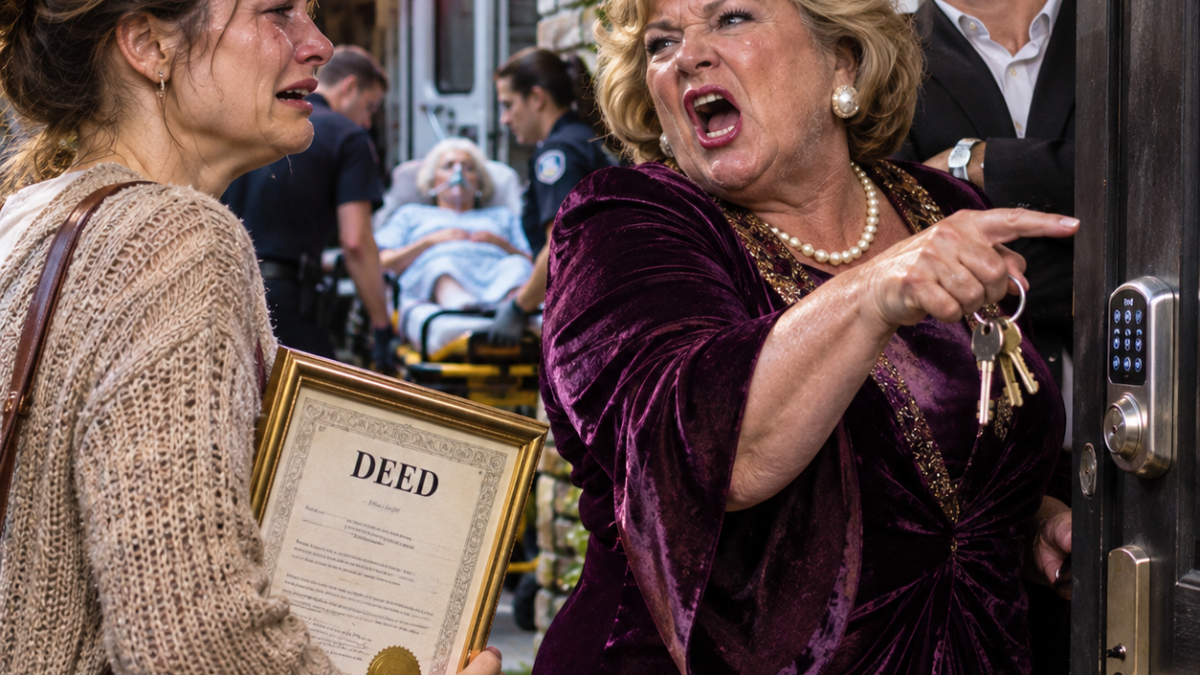
Nora didn’t reach for the deed immediately.
She looked at my face first.
That was something I’d always liked about her. She was a good real estate broker, but she was also the sort of woman who understood that people rarely walked into an office carrying property documents at six in the evening because everything was going wonderfully.
“Camille,” she said gently, “what happened?”
I took a breath.
“My husband and his mother changed the locks.”
Nora blinked.
“On your condo?”
“Yes.”
“The one you bought before you married Connor?”
“Yes.”
She glanced at the deed.
“Did you authorize the change?”
“No.”
“Are you safe?”
I nodded.
“I’m standing here, aren’t I?”
She didn’t smile.
“That wasn’t what I asked.”
Something in her voice almost made me cry.
For three days, I’d been listening to doctors explain my mother’s condition. For five years, I’d been listening to Brenda explain everything I did wrong. And now a woman I’d known for less than a decade was asking whether I was safe before asking what commission she might earn from selling my property.
I pressed my lips together.
“I’m safe. My mother is recovering. I just can’t get into my home.”
Nora exhaled slowly.
“Okay. First, you need somewhere comfortable to stay tonight.”
“I can find a hotel.”
“Good. Second, we need to talk to a real estate attorney before anybody starts making promises about a sale.”
I nodded.
“And third,” she continued, tapping the deed, “we need to know exactly what your marital and occupancy arrangements mean for transferring this property. Sole title and a prenuptial agreement matter, but they don’t necessarily eliminate every right your spouse may have while it’s the marital home.”
I looked down.
That wasn’t the answer I’d hoped for.
Some frightened part of me wanted Nora to say she could sell the condo immediately, hand me a check, and send Brenda and Connor searching for somewhere else to live by breakfast.
But I had spent my professional life working in marketing and business strategy. I knew the difference between making a satisfying announcement and completing a complicated transaction.
“I don’t need it finished tonight,” I said.
Nora studied me.
“Then what do you need?”
I looked directly at her.
“I need to start.”
She nodded.
That was the moment the situation became real.
Not when Brenda changed the locks.
Not when Connor chose silence.
When I stopped thinking about how to persuade them to let me back in and began thinking about what I wanted to do with the life waiting outside.
Nora pulled out a notepad.
“Let’s start with the facts.”
For the next forty minutes, we reviewed everything I knew.
I had purchased the condo almost seven years earlier, before meeting Connor.
The purchase had been funded through my savings, a mortgage in my name, and money my parents had given me after years of saving for my future.
There had been no subsequent addition of Connor to the deed.
We had signed a prenuptial agreement before our wedding that identified the condo as my separate property.
I had continued paying the mortgage, condominium association assessments, insurance, and most household expenses from my own earnings.
Connor contributed intermittently to groceries and utilities.
Brenda contributed nothing financially beyond occasional grocery purchases, which she liked to describe as generous gifts.
The more I explained, the more embarrassed I became.
Not about owning the property.
About how thoroughly I’d allowed the people living inside it to convince me I was merely a guest.
Nora finished writing.
Then asked:
“Has anyone ever told you why you stopped saying my condo?”
I looked up.
“What?”
She gestured toward the deed.
“You’ve been calling it Connor’s house since you came in.”
I stared at her.
Then tried to remember.
She was right.
I’d said Connor had locked me out of his house.
That his mother thought it was hers.
That they wanted me to apologize before returning.
Somewhere during five years of marriage, I’d gradually adopted the language Brenda used whenever she wanted something.
Connor’s home.
Connor’s kitchen.
Connor’s family property.
It hadn’t happened all at once.
It had happened slowly enough that I’d stopped noticing.
I looked at the deed.
“My condo,” I whispered.
Nora nodded.
“Yes, Camille.”
My eyes filled.
She pushed a box of tissues toward me.
“And you don’t have to make yourself homeless to prove that.”
I began crying.
Not loudly.
Just a few exhausted tears I hadn’t expected.
Nora waited until I could breathe.
Then she gave me the number of a family-law attorney who worked with property counsel on complicated separation cases.
Her name was Lauren Park.
Nora knew her from previous transactions.
“She’ll be able to explain your options,” she said. “And I can prepare a market analysis, discuss potential buyers, and handle the sale process when the legal side is clear.”
I nodded.
“Thank you.”
Nora reached across the desk.
“Camille, one thing.”
I looked up.
“Don’t go upstairs and try to force the door.”
I almost laughed.
“I wasn’t planning to.”
“Good. Keep the messages, preserve the camera footage if you can lawfully access it, and get advice about retrieving your belongings.”
I nodded.
She smiled gently.
“And go see your mother tomorrow. That is where you needed to be in the first place.”
My throat tightened.
“Yes,” I whispered.
“It was.”
I checked into a hotel six blocks from the hospital.
It wasn’t luxurious, but the room was clean, the bed was comfortable, and nobody inside it believed I needed permission to use the kitchen.
I set my bag on the floor.
Then sat on the edge of the mattress.
For several minutes, I didn’t move.
My phone was vibrating constantly.
Connor.
Brenda.
Connor again.
Then a message from Brenda.
Your little performance isn’t going to work. Connor has rights in this marriage, and you can’t abandon your responsibilities just because you’re upset.
I stared at the screen.
A second message arrived.
You embarrassed me in front of sixteen relatives. I deserve an apology before anything else.
I put the phone facedown.
Then picked it up again.
I couldn’t afford to ignore communication that might become relevant later.
So I saved the messages, made sure they were backed up, and wrote down the times of the conversation at the condo entrance.
Then I sent Connor one response.
I am staying elsewhere tonight because you and Brenda denied me access to my home. I do not agree to being locked out. Please communicate with me in writing so we can arrange lawful access to my belongings and address the property situation.
I read it twice.
Then sent it.
Connor replied almost immediately.
Mom is really upset. Just come tomorrow and apologize. We can reset the code after that.
I looked at the message.
Then typed:
My mother’s medical emergency was not an offense against your mother.
I pressed send.
His response came less than a minute later.
You’re making this bigger than it has to be.
I closed my eyes.
For five years, those words had been Connor’s favorite way of ending an argument.
When Brenda criticized my clothes, I was making it bigger than it had to be.
When she opened my mail, I was making it bigger than it had to be.
When she invited relatives to stay without asking, I was making it bigger than it had to be.
And when she changed the locks on a condo I’d bought before marriage, apparently I was still the one creating unnecessary drama.
I placed the phone on the nightstand.
Then called Aunt Sandra.
She answered immediately.
“Camille?”
I swallowed.
“How’s Mom?”
“Sleeping. The nurse says she’s comfortable.”
I closed my eyes.
Relief washed through me.
My mother, Elaine Dawson, had collapsed that Sunday morning after experiencing a sudden cardiac problem. The emergency team had stabilized her, and the doctors were continuing tests and treatment while monitoring her condition.
She was improving.
But she’d frightened all of us.
For seventy-two hours, I’d been afraid every time a monitor sounded.
Now Sandra’s voice was the first peaceful thing I’d heard all evening.
“Did you get home okay?” she asked.
I looked toward the hotel curtains.
For a moment, I almost lied.
Then I thought about Nora asking whether I was safe.
“No,” I said.
Sandra went quiet.
“What happened?”
“Connor and Brenda changed the locks.”
Silence.
Then:
“They did what?”
I explained.
The door.
The code.
Brenda’s messages.
Connor standing beside his mother and refusing to let me inside.
Sandra listened without interrupting.
When I finished, she said something so quietly that I almost missed it.
“Your father would be furious.”
My eyes filled.
Dad had helped me buy the condo.
He’d spent thirty-six years working in a manufacturing plant, saving carefully and telling me that everyone deserved a little financial independence before building a life with somebody else.
He’d died two years before this night.
I hadn’t realized how much I wanted to hear his voice until Sandra mentioned him.
“He told me never to let anybody take that place away from me,” I whispered.
Sandra’s voice softened.
“He didn’t mean you had to keep living there if it stopped being good for you.”
I looked up.
She continued:
“He wanted you to have choices.”
I began crying.
Sandra waited.
Then asked:
“Do you want me to come get you?”
I shook my head before remembering she couldn’t see me.
“No. Stay with Mom.”
“Camille.”
“I’m safe, Aunt Sandra. I have a room. I’ll see you both in the morning.”
She took a breath.
“All right.”
Then her voice became firm.
“But promise me something.”
“What?”
“Don’t go back to that condo alone while they’re behaving this way.”
I closed my eyes.
“I won’t.”
“Good.”
A pause.
Then she whispered:
“And sweetheart?”
“Yes?”
“You didn’t do anything wrong by coming to your mother’s bedside.”
My face crumpled.
I covered my mouth.
And cried until I couldn’t speak.
I bought the condo when I was twenty-eight.
It wasn’t particularly large.
Two bedrooms, two bathrooms, a narrow balcony, and a kitchen with more cupboard space than I’d ever needed.
But it was mine.
I remember standing in the empty living room after the closing, holding a ring of keys and wondering how an ordinary piece of metal could feel so important.
I’d worked six years as a marketing consultant by then.
Long hours.
Difficult clients.
Weekends spent preparing campaigns.
I drove an older silver Subaru Outback that I’d purchased with my own money.
I packed lunches instead of ordering takeout.
And I saved as much as I could.
My parents had given me additional funds toward the down payment.
I tried to refuse.
Dad laughed.
“Camille, we’ve been saving for years because we wanted you to have a good start.”
Mom nodded.
“Let us do something for you.”
I cried when they handed me the check.
Not because I expected money from them.
Because I knew exactly how hard they’d worked for every dollar.
Dad had worn the same winter coat for almost fifteen years.
Mom kept careful lists before going to the grocery store.
They had taken one real vacation during most of my childhood.
And they were giving me a portion of their savings because they wanted to know I had somewhere secure to live.
Dad helped me assemble the dining table.
Mom brought yellow curtains.
We ate pizza on the floor the first night because I didn’t have chairs yet.
And Dad told me:
“Never be ashamed of having something that’s yours, Camille.”
I smiled.
“I won’t.”
He looked around the room.
Then added:
“And don’t let anybody convince you that ownership makes you selfish.”
I laughed.
“Dad, who would do that?”
He smiled.
“I hope nobody.”
I thought about those words while lying in the hotel room five years later.
The condo had been a gift of independence.
Somewhere along the way, I’d allowed it to become the place where I felt least free.
Connor Gallagher entered my life about a year after I bought the condo.
He was charming.
Funny.
Warm in ways that made me feel immediately comfortable.
He worked as a regional operations coordinator for a distribution company and seemed genuinely impressed by my career.
On our third date, he asked about my business.
Not in the dismissive way some people had.
He asked thoughtful questions about clients, marketing strategy, and how I’d built my consulting practice.
When I told him I’d bought my own home, he smiled.
“That’s amazing.”
I blushed.
“It’s just a condo.”
He shook his head.
“No. It’s yours. You should be proud.”
I believed him.
For a while, I had every reason to.
Connor was kind to my parents.
He helped Dad carry furniture.
He remembered Mom’s birthday.
He made me breakfast when I worked late.
And when I told him I wanted a prenuptial agreement protecting property we’d each owned before marriage, he agreed.
“Of course,” he said.
“I don’t want your condo, Camille. I want you.”
I remember that sentence.
I remember how relieved I felt.
I thought I’d found a man who respected the work I’d done before meeting him.
I didn’t understand that agreeing with a principle during courtship was easier than honoring it after years of being influenced by somebody else.
We married in a small ceremony.
My father walked me down the aisle.
My mother cried.
Brenda wore a lavender dress and told everyone how proud she was of her son.
That was before she decided my marriage was something she could manage.
Three months after the wedding, she appeared at our front door with four suitcases.
Connor wasn’t surprised.
That should have been my first warning.
Brenda was sixty-two then.
Her husband had died several years earlier, and she said she’d lost her home because of fraudulent paperwork associated with a financial dispute.
She cried as she explained.
“I just need somewhere safe for a few weeks.”
I felt terrible for her.
Connor put an arm around his mother.
“It’s temporary, Cam.”
I looked at the suitcases.
Then at Brenda’s tearful face.
“Of course,” I said.
“We’ll make room.”
I meant it.
I wasn’t trying to become the kind of daughter-in-law who viewed every family emergency as an inconvenience.
I had no idea that the emergency Brenda was bringing into my home would last five years.
Brenda’s first week in the condo was almost pleasant.
She cooked dinner twice.
Bought flowers.
Washed the dishes.
Told me how grateful she was that we’d welcomed her.
She called me sweetheart.
She promised she wouldn’t be any trouble.
By the third week, she was complaining that the guest bedroom received too much afternoon sunlight.
I bought thicker curtains.
By the sixth week, she announced that my living-room furniture was arranged incorrectly.
I came home from a client meeting to find the sofa moved against another wall, the coffee table relocated, and a framed photograph of my parents replaced by a large picture of Connor’s late father.
I stood in the doorway.
“Brenda, where’s my family photograph?”
She pointed toward the hall cupboard.
“Oh, I put it away. This room needed something more traditional.”
I stared.
“That photograph was a gift from my mother.”
Brenda smiled.
“And now you have a husband, dear. You need to make room for his family too.”
I looked toward Connor.
He was sitting in the armchair watching television.
“Connor?”
He glanced up.
“What?”
“Your mother put away my parents’ photograph.”
He sighed.
“Camille, it’s just a picture.”
I felt my face grow hot.
“It’s not just a picture.”
Brenda made a wounded little sound.
“I was only trying to help.”
Connor immediately stood.
“Mom, don’t be upset.”
I watched him comfort her.
Then he turned toward me.
“Could you please stop making everything into an argument?”
I opened my mouth.
Then closed it.
That evening, I took my parents’ photograph out of the cupboard and placed it in our bedroom.
I told myself that marriage required compromise.
I didn’t realize I was becoming the only person expected to compromise.
Brenda began choosing the groceries.
Then the television programs.
Then the holiday plans.
She criticized my cooking while eating food I’d purchased.
She complained whenever my friends visited.
If I had an early client meeting, she knocked on my office door to ask why I was too busy to prepare breakfast.
When I suggested she might be comfortable in a nearby apartment, Connor became angry.
“She’s my mother.”
“I know.”
“She has nowhere else to go.”
“Connor, it’s been eleven months.”
He crossed his arms.
“Are you actually suggesting I put my own mother on the street?”
I stared.
“No. I’m suggesting we help her develop a realistic housing plan.”
He shook his head.
“I can’t believe how cold you’re being.”
I stopped bringing it up.
A year became two.
Two became three.
Eventually, Brenda stopped referring to the guest bedroom as temporary accommodation.
She called it her room.
She asked me not to enter without knocking.
She rearranged the kitchen cabinets to suit herself.
And one evening, when I mentioned replacing the living-room rug, she said:
“It’s Connor’s house too. You can’t just decide things without consulting him.”
I wanted to say that Connor had never paid the down payment or a mortgage installment.
But I didn’t.
I was afraid it would sound cruel.
Now, looking back, I wish I’d been less afraid of sounding unkind and more concerned about being treated fairly.
The worst part wasn’t Brenda’s behavior.
It was the way Connor slowly stopped being my partner.
At first, he apologized privately.
“I’m sorry about Mom.”
Then:
“You know how she gets.”
Eventually:
“Can’t you just let it go?”
He began repeating her opinions as though they were his.
When Brenda said I worked too much, Connor asked whether my career mattered more than family.
When she complained that I visited my parents too often, he wondered why I couldn’t prioritize our marriage.
When she suggested that married women shouldn’t travel for work, he told me he would be uncomfortable with an important consulting assignment in Chicago.
I turned down that assignment.
It would have been a significant step professionally.
A large national client.
Better pay.
The possibility of expanding my business.
I told the company I couldn’t commit to the travel schedule.
I said it was a personal decision.
And it was.
But it wasn’t a free decision.
It came after weeks of Brenda describing independent women as selfish and Connor asking why I needed more success when we already lived comfortably.
We lived comfortably because I worked.
That was the part neither of them acknowledged.
My consulting income covered most of the household expenses.
The mortgage.
Condo assessments.
Insurance.
Internet.
Repairs.
Groceries.
Even some of Brenda’s personal bills when she claimed she was short of money.
Connor had his own salary.
I never demanded that he hand it over.
But gradually, I noticed how often his money went toward things he and Brenda wanted while mine paid for the household they controlled.
He purchased expensive sports tickets.
Bought his mother jewelry.
Upgraded his phone.
Then told me we needed to economize when I suggested taking my parents on a weekend trip.
I kept thinking he would see the imbalance eventually.
He didn’t.
And whenever I protested, Brenda reminded me that a good wife wasn’t supposed to keep score.
Yet somehow, she always knew exactly how much she’d spent on a birthday gift and expected everyone to praise her for it.
By the fifth year, my father was gone.
His death had changed something inside me.
He’d become ill quickly.
One month, he was helping Mom repair a garden fence.
A short time later, we were discussing hospice care and trying to understand how a familiar person could become so weak.
Connor attended the funeral.
Brenda complained that the service was inconveniently scheduled and interfered with a luncheon she’d planned.
I remember standing beside Dad’s casket and hearing her whisper to Connor:
“I hope Camille doesn’t expect us to keep visiting her mother every weekend now.”
Connor didn’t answer.
I told myself he hadn’t heard.
But later, when I asked whether we could invite Mom for Sunday dinner, he sighed.
“Camille, your mother can’t become our responsibility.”
I stared at him.
“My mother isn’t asking to move in.”
He shrugged.
“You know what I mean.”
I looked toward Brenda, who was sitting on the sofa she’d rearranged.
She said nothing.
She didn’t need to.
The message was clear.
His mother could live in my condo indefinitely.
Mine was a burden if she wanted dinner.
That was the first time I seriously considered ending the marriage.
But I was grieving.
Exhausted.
And afraid of making a permanent decision during one of the worst periods of my life.
So I stayed.
I went to work.
Paid the bills.
Visited my mother when I could.
And kept telling myself that marriages sometimes passed through difficult seasons.
I didn’t realize that for five years, I’d been living in a season that never changed.
Then came the Sunday when everything finally broke.
Brenda had organized a gathering to commemorate the anniversary of her husband’s death.
Sixteen relatives.
A long lunch.
Flowers.
Photographs.
A catered main course she’d insisted I supplement with homemade side dishes.
For three days, she assigned tasks.
Polish the dining table.
Wash the guest towels.
Collect the dessert order.
Prepare the guest bedroom in case her sister wanted to stay overnight.
I tried not to argue.
I even took Friday afternoon away from work so I could help.
On Sunday morning, I was standing at the kitchen sink washing serving dishes when Aunt Sandra called.
I almost let it go to voicemail because Brenda was shouting something about a missing tablecloth.
Then I saw Sandra’s name.
Something made me answer.
“Hello?”
“Camille.”
Her voice was trembling.
I straightened.
“Aunt Sandra?”
“Your mother collapsed this morning. The ambulance brought her to the hospital.”
The glass in my hand slipped into the sink.
“What?”
“The doctors are running tests. She’s awake now, but they’re concerned about her heart.”
I felt my knees weaken.
“Which hospital?”
Sandra told me.
I grabbed a pen.
Then realized I couldn’t concentrate enough to write.
“Text me the room information. I’m coming.”
I ended the call.
Pulled off my apron.
Reached for my purse.
Brenda appeared in the kitchen doorway.
“Where are you going?”
“My mother’s in the emergency room.”
She stared.
“And the lunch?”
I couldn’t believe what I was hearing.
“Brenda, Mom collapsed.”
She crossed her arms.
“There are sixteen people coming.”
I moved toward the door.
“I have to go.”
She stepped directly in front of me.
“Absolutely not.”
My heart began pounding.
“Move, please.”
“You always do this.”
I stared.
“Do what?”
“Put your side of the family ahead of your responsibilities here.”
I felt a surge of anger so powerful it almost frightened me.
“My mother is in the hospital.”
Brenda shrugged.
“And you think nobody else has ever had a sick relative?”
I looked toward the living room.
Connor was sitting on the sofa watching football.
“Connor.”
He didn’t move.
“Please tell your mother I need to go.”
He looked annoyed.
“Camille, can you at least stay until everyone’s eaten?”
I stared.
For a moment, I wondered whether I’d misheard.
“Are you serious?”
He sighed.
“Mom has been planning this for weeks.”
I felt tears fill my eyes.
“My mother could be dying.”
Connor glanced at the television.
“Don’t be dramatic.”
The words were so cruel that I stopped breathing for a second.
Brenda leaned closer.
“If you walk out now, don’t expect to come back like nothing happened.”
I looked at her.
Then at Connor.
He said nothing.
I waited.
One second.
Two.
Three.
He could still stand up.
Still take my hand.
Still say we needed to go to the hospital together.
Instead, he looked away.
And in that silence, something inside me finally gave way.
I stepped around Brenda without hurting her.
Opened the door.
And left.
I didn’t know she meant to change the locks.
I didn’t know Connor would allow it.
But I knew I wasn’t going to spend another minute arguing about tablecloths while my mother needed me.
At the hospital, Aunt Sandra met me near the emergency department.
She looked exhausted.
Her eyes were red.
The first thing she did was hug me.
“She’s stable.”
I nearly collapsed with relief.
“Thank God.”
Sandra held me.
“The doctors are still watching her closely.”
I nodded.
Then asked a hundred questions.
What happened?
Had Mom been conscious?
Was she in pain?
Were the doctors concerned about another episode?
Sandra answered what she could.
The rest came from the medical team.
Mom had experienced a serious cardiac event requiring urgent evaluation and treatment. Her condition had stabilized, but she needed monitoring and follow-up care.
I spent that afternoon beside her bed.
When she woke fully enough to speak, she looked at me and smiled weakly.
“There you are.”
I began crying.
“Mom.”
She reached for my hand.
“Oh, sweetheart. Don’t look so frightened.”
I laughed through tears.
“That’s easy for you to say.”
She smiled.
“I’m sorry I worried you.”
I shook my head.
“Don’t apologize.”
Then I leaned close.
“I love you.”
She squeezed my fingers.
“I love you too.”
For a while, I sat beside her listening to the monitor and watching her breathe.
I didn’t think about Brenda’s lunch.
Or the dishes in the sink.
Or Connor’s football game.
I thought about my father.
About the way he’d held Mom’s hand when she was frightened.
About how quickly ordinary life could change.
I couldn’t bear losing her too.
The next three days passed in a blur.
I spoke with doctors.
Helped Sandra coordinate practical arrangements.
Bought clean clothes.
Answered Mom’s questions about home.
And slept in short stretches wherever I could.
Connor sent two messages.
The first asked when I planned to come home.
The second said his mother was hurt that I hadn’t apologized for walking out.
Neither asked how my mother was doing.
That hurt more than I wanted to admit.
When Mom was finally stable enough for the next stage of recovery, I returned to the condo.
I expected an argument.
I expected Brenda standing in the kitchen with her arms folded.
I expected Connor to tell me I owed everybody an apology.
I did not expect the lock to deny me entry.
But by then, I should have understood that Brenda’s threats were never merely words when Connor was willing to help her carry them out.
The morning after Nora began reviewing the condo’s market value, I met Lauren Park.
Lauren was a family-law attorney with a calm voice and an expression that suggested she had heard every possible version of someone using a marriage as an excuse to control another person’s property.
I brought the prenuptial agreement, the deed, mortgage statements, and the messages from Brenda and Connor.
Lauren read carefully.
Then asked:
“Did they give you notice before changing the lock code?”
“No.”
“Has Connor denied you access in writing?”
I showed her his message.
She read it twice.
Then said:
“Good. Preserve all of this.”
I frowned.
“Good?”
“Good that we have documentation. Not good that it happened.”
I nodded.
She continued:
“You don’t have to accept being excluded from the property, but we need to address the situation through the proper legal channels. Your spouse may have certain occupancy and homestead-related rights while the marriage continues, regardless of whose name appears on the deed.”
I leaned back.
“So I can’t just sell the condo tomorrow?”
“We need to confirm what the prenuptial agreement covers, what signatures or court authority might be required, and how to handle the existing occupants.”
I closed my eyes.
Lauren waited.
Then said:
“Camille, I know you want this resolved quickly. But doing it carefully is how we protect your interests.”
I nodded slowly.
She looked at me.
“Do you intend to continue the marriage?”
I stared at her.
That question felt different from everything else.
Not Are you angry?
Not Can you forgive Brenda?
Not Would Connor apologize if you begged him to?
Just:
Do you want this marriage?
I thought about Mom lying in the hospital.
Brenda screaming through the camera.
Connor refusing to open the door.
The years of compromises.
The career opportunity I’d declined.
The money I’d spent.
The countless times I’d made myself smaller so nobody else would feel challenged.
Then I looked at Lauren.
“No.”
The word was barely audible.
She waited.
I said it again.
“No. I don’t.”
For the first time, I wasn’t asking how to repair what had happened.
I was asking how to leave it.
Lauren nodded.
“Then we’ll prepare the appropriate separation and divorce filings, address access to your belongings and temporary occupancy, and work with Nora on a sale plan that complies with the law.”
I swallowed.
“What about the car?”
“Tell me about it.”
I explained that I owned a silver Subaru Outback purchased before the marriage, still titled in my name and identified in our prenuptial agreement.
Connor had been using it regularly since returning his leased vehicle several months earlier.
I had allowed him to.
But I no longer wanted him treating it as his.
Lauren reviewed the documents.
Then said:
“We can request that he return the vehicle and keys through a documented arrangement. Once possession and title issues are handled properly, you can consider selling it.”
I took a breath.
That wasn’t as dramatic as taking the keys and driving away.
But it was practical.
And practical decisions had built my life before Connor.
I was beginning to remember how to make them again.
The next morning, Connor and Brenda received the news.
Not from a screaming telephone call.
Not from a furious message written in the middle of the night.
From a formal letter prepared by Lauren’s office and delivered through the appropriate channels.
It explained that I was pursuing separation and divorce, that I disputed being excluded from the condo, and that I intended to exercise my lawful property rights, including preparing the home for sale once any necessary approvals and occupancy arrangements had been resolved.
It also requested the documented return of my Subaru and proposed a supervised appointment for collecting personal belongings.
Nora had already begun a market valuation.
She had identified several prospective buyers interested in that building, including one who had previously asked whether a unit with my floor plan might become available.
Nothing had been sold overnight.
The transaction still required proper steps.
But I was no longer agreeing to provide Connor and Brenda with an indefinite home and car while they denied me access to both.
At 9:18 a.m., my phone rang.
Connor.
I let it go to voicemail.
He called again.
Then again.
Finally, he left a message.
“Camille, what the hell is this? You’re selling the condo?”
I saved it.
A second message followed.
“Call me. Right now. Mom is freaking out.”
Then Brenda called.
I didn’t answer.
She left a voicemail loud enough that I could hear her voice through the phone even before raising it to my ear.
“YOU CANNOT SELL MY SON’S HOME OUT FROM UNDER HIM!”
I listened once.
Then saved it.
The third call came from Connor.
This time, I answered with Lauren’s permission because we needed to coordinate retrieving the car.
“Camille.”
His voice was sharp.
“Explain yourself.”
I sat at the small desk in my hotel room.
“Good morning, Connor.”
“Don’t do that.”
“Do what?”
“Act calm. You sent me divorce papers and a letter about selling our home!”
I looked toward the window.
“The condo is titled in my name. The prenuptial agreement addresses it as separate property, and the legal process will determine how the property can be dealt with.”
He went quiet.
Then said:
“Mom lives there.”
“I know.”
“What do you expect her to do?”
I took a breath.
“Connor, you’ve been living with your mother for five years. If you want to continue living together, the two of you can make a housing plan.”
He sounded stunned.
“Are you serious?”
“Yes.”
“She’s sixty-seven!”
“And my mother is recovering from a serious medical emergency.”
Silence.
I continued:
“You didn’t think her age or health mattered when you told me to wait until after lunch.”
“Camille—”
“You didn’t think I needed a place to sleep when you changed the locks.”
His breathing became audible.
For a moment, he had no answer.
Then he said:
“You’re punishing us.”
I shook my head.
“No.”
“Then what is this?”
I looked at the folder Lauren had given me.
“This is me deciding that I don’t want to continue living in a home where I’m treated as though I need permission to see my own mother.”
Connor was silent.
I continued:
“And I want my car returned.”
He almost laughed.
“What?”
“The Subaru.”
“Camille, I drive that to work.”
“I know.”
“You can’t just take away my transportation.”
I stared at the wall.
It was extraordinary.
He had stood behind a locked door while I was exhausted from caring for my sick mother.
Now he was outraged because he might have to make other transportation arrangements.
“Connor, we’ll arrange a proper return. You have notice, and Lauren’s office can coordinate the details.”
He swore.
Then said:
“You’re acting like a stranger.”
I closed my eyes.
“No.”
My voice was quiet.
“I’m acting like someone you stopped treating as your wife a long time ago.”
Then I ended the call.
My hands were shaking.
But I wasn’t crying.
That surprised me.
For years, any argument with Connor ended with me apologizing.
Even when I hadn’t caused the problem.
Now I’d told him what I intended to do.
And survived his displeasure.
I looked toward the hotel mirror.
The woman staring back at me looked exhausted.
Her hair was tied carelessly.
There were shadows beneath her eyes.
But I recognized her.
For the first time in years, I recognized myself.
I went to see Mom after the call.
She was sitting upright in her hospital bed when I arrived, wearing the soft blue cardigan Sandra had brought from home.
Her hair was brushed.
A book rested on the blanket beside her.
She looked tired but much better than she had on Sunday.
When she saw me, she smiled.
“Camille.”
I crossed the room.
Kissed her forehead.
“Hi, Mom.”
She studied my face.
Then frowned.
“Have you been sleeping?”
“Some.”
“Eating?”
“Yes.”
She raised an eyebrow.
I laughed.
“Mostly.”
She reached for my hand.
“Sit down.”
I sat.
For a while, we talked about her treatment and the arrangements for follow-up care.
Then she asked:
“How is Connor?”
I looked down.
Mom noticed immediately.
“What happened?”
I wanted to protect her.
She’d been ill.
She needed rest.
The last thing I wanted was to place another burden on her shoulders.
But she was looking at me with the same steady expression she’d worn all my life.
The one that said she would rather hear an uncomfortable truth than be comforted by a lie.
So I told her.
The anniversary lunch.
Brenda’s ultimatum.
Connor’s silence.
The changed lock code.
The hotel.
Nora.
Lauren.
The decision to divorce.
By the time I finished, Mom was crying.
Not loudly.
Tears simply moved down her cheeks.
I panicked.
“Mom, please. I shouldn’t have upset you.”
She shook her head.
“Camille.”
I reached for a tissue.
“I’m sorry.”
She gripped my hand.
“Stop apologizing.”
I froze.
She looked at me.
“Sweetheart, you came to the hospital because I needed you.”
I nodded.
“And your husband punished you for that?”
My eyes filled.
“Yes.”
Mom closed her eyes.
For several seconds, she didn’t speak.
Then she whispered:
“Your father would have been heartbroken to know you were living like this.”
I began crying.
She squeezed my fingers.
“And so am I.”
I looked down.
“I thought if I tried harder, things would get better.”
Mom shook her head.
“Marriage takes effort from two people.”
Her voice trembled.
“It isn’t something one person can hold together forever while the other stands aside.”
I wiped my cheeks.
She continued:
“You remember what Dad said when we helped you buy the condo?”
I nodded.
“Never be ashamed of having something that’s yours.”
Mom smiled sadly.
“Do you know why he cared so much?”
I shook my head.
She looked toward the window.
“When we were young, my friend married a man who controlled every dollar she earned. When she needed to leave, she didn’t even have enough money for a bus ticket.”
I listened.
“Your father saw what it did to her.”
Her eyes filled.
“He promised that if we ever had a daughter, we’d help her build something she could rely on.”
My chest tightened.
Mom turned toward me.
“We didn’t give you that money so you’d have a beautiful kitchen.”
She squeezed my hand.
“We gave it to you because we wanted you to have choices.”
I covered my mouth.
For a long time, I couldn’t speak.
Then I leaned forward and held her.
“I miss Dad.”
Mom wrapped her arms around me.
“I know, sweetheart.”
I cried into her shoulder.
Then whispered:
“I think he’d be proud of me for leaving.”
Mom stroked my hair.
“He’d be proud that you’re finally listening to yourself.”
The Subaru was returned two days later.
Not willingly at first.
Connor argued that he’d relied on it for months and deserved time to arrange another vehicle.
Lauren explained the legal position and helped document a practical return that avoided a confrontation.
We agreed on a time and neutral location.
Connor drove the car to a dealership parking lot.
A friend accompanied me.
The keys were handed over.
The mileage and condition were recorded.
Connor didn’t look at me.
He wore the same navy jacket he’d had when we first met.
For a second, I remembered the man who used to bring me coffee on rainy mornings.
The man who’d told me he was proud I owned my own home.
I wanted to ask where he’d gone.
Instead, I said:
“Thank you for bringing it.”
He stared at the keys.
Then whispered:
“Are you really going to sell it?”
“Yes.”
He looked up.
“But it’s our car.”
I took a slow breath.
“Connor, I bought it before we met.”
He looked away.
“I know.”
I waited.
He rubbed his forehead.
“I just thought…”
His voice faded.
I studied him.
“What?”
He shook his head.
“Nothing.”
Then he looked toward me.
“Camille, Mom didn’t think you’d actually do this.”
My chest tightened.
I stared at him.
After five years, it was still Mom.
Mom thought.
Mom wanted.
Mom was upset.
I took the keys.
“Connor, this isn’t about what Brenda expected.”
His eyes filled.
“I know.”
I wasn’t sure he did.
He looked toward my friend.
Then back at me.
“Can we talk?”
I considered the question.
“Not here.”
He swallowed.
“Are we really getting divorced?”
I looked at the man I’d once loved.
The man who had allowed his mother to lock me out while mine lay in a hospital.
“Yes.”
His expression crumpled.
For a moment, I thought he might reach toward me.
He didn’t.
I turned away.
And walked into the dealership.
The car was inspected, the purchase terms were reviewed, and I completed the sale after confirming the title and transaction requirements.
When the money reached my account, I stared at the confirmation.
Not because it made me wealthy.
Because I’d just sold something that had been part of my life before Connor.
I felt sad.
The Subaru had carried my father to doctor appointments.
Taken Mom grocery shopping.
Driven me to my first major client presentation.
It had been part of a life I loved.
But it had become another possession Connor treated as though he could use it indefinitely while I paid for it.
Selling it wasn’t about making him suffer.
It was about ending an arrangement I’d never freely agreed to continue after our separation.
That evening, I rented a small car for the coming weeks.
Then I drove to Mom’s apartment and sat with her while she watched an old cooking show.
Nobody demanded an explanation for why I was there.
Nobody made me feel guilty for leaving work early.
And when Mom fell asleep on the sofa, I covered her with a blanket.
It was a small moment.
Almost ordinary.
But I felt more at home there than I had in my condo for years.
Nora called the following Monday.
“Camille, I’ve completed the market analysis.”
I sat up.
“And?”
She told me the likely price range.
I stared at my notes.
It was considerably more than I’d paid for the condo.
Minneapolis property values had changed.
My unit’s location and layout remained desirable.
And I’d maintained it carefully despite Brenda’s insistence that everything needed her supervision.
Nora continued:
“There’s a potential buyer who’s particularly interested.”
I leaned forward.
“Who?”
“An investor who owns another unit in the building. She’s been considering purchasing a second property with this floor plan.”
I took a breath.
“Would she buy it with people still living there?”
“Potentially, but she’d need full information about occupancy, the legal arrangements, and any conditions affecting closing.”
I nodded.
Nora continued:
“We’ll market it properly, obtain appropriate access for inspections, and make sure any transaction is consistent with the advice from Lauren and the title professionals.”
I closed my eyes.
“Okay.”
She paused.
“Camille?”
“Yes?”
“Are you certain you want to sell?”
I looked toward the small rental apartment I’d moved into near Mom after leaving the hotel.
It had one bedroom.
A little desk.
An old wooden dining table.
But the front door opened with a key only I controlled.
“Yes.”
My voice was firm.
“I’m certain.”
Nora took a breath.
“Then we’ll move forward.”
And for the first time, I could imagine the condo becoming someone else’s home.
Not because Brenda had taken it from me.
Because I had decided I no longer wanted to live there.
That difference mattered more than the square footage, the market price, or the money I’d eventually receive.
I was choosing.
For myself.
Getting the condo ready for sale was more complicated than signing a listing agreement.
Connor and Brenda were still living there.
The divorce had been filed.
The ownership and occupancy issues needed to be addressed.
And although my prenuptial agreement strongly supported the condo’s status as separate property, Lauren made clear that we still had to satisfy the legal requirements affecting the marital home before transferring it.
I agreed.
I wasn’t going to become the person who changed locks or ignored somebody’s rights simply because I believed I was entitled to win.
I wanted a lawful sale.
A fair valuation.
And a clean ending.
Lauren arranged for the relevant property documents to be reviewed, and we addressed temporary access through the legal process.
The building’s security records and my saved messages helped establish what had happened when I returned from the hospital.
Connor could no longer pretend I’d voluntarily moved out without explanation.
Brenda could no longer claim that I had abandoned the condo and therefore surrendered my right to enter it.
At a temporary hearing, my attorney presented the messages and evidence of the lockout.
Connor’s lawyer argued that emotions had been running high.
Lauren asked whether high emotions had somehow prevented Connor from recognizing that his wife had a legal interest in the home.
The explanation didn’t become more persuasive when Brenda’s own message was reviewed.
Don’t come back until you’re ready to get on your knees, apologize, and accept who is in charge of this family.
I sat quietly while the court addressed access, occupancy arrangements, and the steps needed to preserve the property during the divorce.
The judge did not treat Brenda’s anger as authority over the condo.
Nor did the court grant her the right to determine whether I could retrieve my belongings.
Appropriate arrangements were established for access and for resolving the property situation without confrontation.
Connor was given the opportunity to obtain legal advice about his interests and responsibilities.
Brenda had to find another way to express her displeasure.
I considered that progress.
The first time I returned to collect my belongings, I wasn’t alone.
A neutral third party accompanied me under the agreed arrangement.
Connor was present.
Brenda had been asked to remain elsewhere during the scheduled visit, but she had left evidence of her anger everywhere.
The framed photographs of my parents were still missing from the living room.
The kitchen cabinets had been rearranged again.
My home office contained boxes that hadn’t been there before.
And the bedroom I’d once shared with Connor looked unfamiliar.
I stood in the doorway for several seconds.
Five years.
I’d lived there for five years as his wife.
Yet the room no longer felt connected to me.
Connor stood near the dresser.
“Camille.”
I turned.
He looked tired.
There were dark circles beneath his eyes.
“Hi.”
He swallowed.
“Your things are still in the closet.”
I nodded.
“Thank you.”
For a while, we packed in silence.
I collected clothing.
Personal records.
My father’s watch.
Photographs.
A few books.
The small wooden jewelry box Mom had given me when I graduated.
Then I found the yellow curtains she’d bought for my first night in the condo.
They were folded on a high shelf.
Brenda had removed them years earlier because she said yellow looked cheap.
I held the fabric in my hands.
For a moment, I could see Dad sitting cross-legged on the empty living-room floor, eating pizza from a paper plate.
Mom was beside him.
Laughing.
The condo was still new.
Everything was possible.
I began crying.
Connor noticed.
“Cam?”
I wiped my face.
“I’m okay.”
He looked toward the curtains.
Then said quietly:
“I remember those.”
I nodded.
“Mom bought them.”
He swallowed.
I folded them carefully.
Then placed them in my box.
Connor watched.
For several seconds, he seemed to be struggling with something.
Finally, he said:
“I didn’t think you would actually leave.”
I stopped.
Looked at him.
“What?”
He rubbed his forehead.
“Mom said you needed a few days to cool off.”
I stared.
“And what did you think?”
He didn’t answer.
I set the box down.
“Connor, I was standing outside my own home with nowhere to sleep.”
His face tightened.
“I know.”
“You knew my mother was in the hospital.”
He looked down.
“Yes.”
“And you still believed I needed to cool off?”
His eyes filled.
“I thought if you apologized, everything would go back to normal.”
I felt a strange, exhausted sadness.
“Normal for whom?”
Connor looked up.
I continued:
“Normal meant Brenda making decisions in my home.”
“Camille—”
“Normal meant me paying bills while you told me I shouldn’t keep score.”
He went quiet.
“Normal meant cancelling plans with my parents because your mother disapproved.”
Tears filled my eyes.
“And normal meant you asking me to accept things you would never have accepted if someone did them to you.”
Connor looked away.
For a moment, I thought he might argue.
Instead, he whispered:
“I let her do too much.”
I shook my head.
“No.”
He looked back.
“You helped her.”
His face crumpled.
I continued:
“You didn’t just fail to stop her, Connor. You agreed that I should be locked out.”
He wiped his eyes.
For several seconds, neither of us spoke.
Then he whispered:
“I’m sorry.”
I looked toward the boxes.
For five years, I’d wanted him to say those words and mean them.
Now I couldn’t tell whether he was sorry because he’d hurt me or because the consequences had finally reached him.
I didn’t need to settle that question.
Not that day.
“I hope you understand why I can’t come back,” I said.
Connor nodded slowly.
Then stepped aside so I could finish packing.
The buyer’s offer arrived two weeks later.
It was serious.
Well supported.
And conditional on the legal and occupancy issues being resolved properly before closing.
Nora reviewed the terms with me.
The proposed price was fair.
The inspection conditions were reasonable.
The expected timeline gave us enough room to complete the necessary steps.
I didn’t sign immediately.
I asked questions.
Lots of them.
About costs.
The deposit.
The buyer’s ability to close.
The condominium association’s requirements.
The handling of possession.
The title and spousal-interest documentation.
Nora answered what she could.
Lauren and the title professionals addressed the legal matters.
After reviewing the terms, I signed the purchase agreement.
I put down the pen.
Then stared at my signature.
Camille Dawson.
The same name I’d used when I bought the condo.
The same name appearing on the deed.
The same woman who had been told she couldn’t enter unless she apologized.
Nora smiled.
“How do you feel?”
I considered the question.
“Scared.”
She nodded.
“And?”
I looked down at the contract.
“Relieved.”
Her expression softened.
“That’s understandable.”
I smiled.
Then added:
“And strangely sad.”
Nora leaned back.
“Camille, homes hold memories. Selling one can be the right choice and still hurt.”
I nodded.
I thought about the first night with my parents.
The yellow curtains.
The empty living room.
The day Connor carried me across the threshold after our wedding because he thought it was romantic.
The day Brenda arrived with four suitcases.
The five years that followed.
I hadn’t hated the condo.
I’d hated the way I’d been made to feel inside it.
And now I was finally giving myself permission to separate those things.
Brenda reacted to the purchase agreement as though I’d announced plans to demolish the entire building.
She called from Connor’s phone.
I knew it was her before she spoke.
“Camille, are you out of your mind?”
I closed my eyes.
“Hello, Brenda.”
“How dare you put this home on the market?”
I took a breath.
“Brenda, please direct property questions through the attorneys.”
“This is where my son lives!”
“I know.”
“Where am I supposed to go?”
I looked toward the dining table in my rental.
There were photographs of my mother and father beside a small vase of flowers.
For five years, Brenda had lived in my home.
She’d had time to consider other arrangements.
She’d chosen not to.
Now she was asking me to solve a problem created in part by her determination to control a property that wasn’t hers.
“That’s something you and Connor will need to plan,” I said.
She gasped.
“You selfish little—”
I interrupted.
“Brenda, I’m ending the call if you insult me.”
For a moment, she was silent.
Then she spoke more quietly.
“I treated you like a daughter.”
I closed my eyes.
There it was.
The final attempt to turn the story around.
I thought about the hospital.
The anniversary lunch.
The camera beside my door.
Then answered:
“When my mother collapsed, you told me I wasn’t allowed to see her until your guests had eaten.”
Brenda said nothing.
“You changed the locks because I refused.”
A long silence.
Then she whispered:
“I was angry.”
I nodded.
“I know.”
She took a breath.
“People say things they don’t mean.”
I looked at the phone.
“Then why did you change the code?”
She had no answer.
I waited.
Finally, she said:
“I didn’t think you’d actually sell.”
My chest tightened.
That was the truth.
She’d believed she could control me because I had spent five years avoiding conflict.
She hadn’t expected me to use the options I’d possessed all along.
I took a breath.
“I didn’t think I’d have to.”
Then I ended the call.
The divorce settlement took additional negotiation.
Connor initially resisted signing the documents necessary to complete the property transfer.
He argued that he needed more time.
Then that Brenda needed a place to live.
Then that the condo had been our marital home and selling it was unfair.
Lauren responded through the appropriate process.
The prenuptial agreement was reviewed.
The history of ownership and payments was documented.
Any applicable spousal rights were addressed.
We negotiated a workable arrangement for Connor to move out, resolve relevant property issues, and complete the documents required for the sale.
I didn’t force him onto the street.
He had time to arrange housing.
And he had his own income.
Brenda eventually moved into a small apartment not far from Connor’s workplace.
She complained that the kitchen was too narrow.
That the neighbors were noisy.
That the living room didn’t receive enough sunlight.
For a moment, I almost laughed.
Some habits were impossible to break.
But none of those complaints were my responsibility anymore.
Connor found an apartment closer to his job.
He purchased a used car.
And the world, which he had once implied would fall apart without my condo and Subaru, continued turning.
At the final meeting, he signed the necessary documents.
Then looked toward me.
“I never realized how much you were paying for.”
I studied his face.
“Connor, you knew the mortgage was in my name.”
He nodded.
“I know.”
“You knew I paid the condo fees and insurance.”
“Yes.”
I took a breath.
“Then what didn’t you understand?”
He looked down.
For several seconds, he didn’t answer.
Then he whispered:
“How much I was taking it for granted.”
I felt a familiar ache.
Not anger this time.
Grief.
For the marriage we might have had if he’d understood that before changing the locks.
I nodded.
Then signed my part of the paperwork.
There wasn’t anything left to negotiate about love.
The condo sale closed several weeks later.
Nora called me as soon as the transaction was complete.
“Camille?”
I was at Mom’s apartment helping her prepare lunch.
“Yes?”
“It’s done.”
I stopped.
“The sale?”
“Yes. Everything has closed, and the proceeds will be handled according to the completed transaction and settlement arrangements.”
For a moment, I couldn’t speak.
Nora waited.
Then asked:
“Are you there?”
I laughed through tears.
“I’m here.”
“Congratulations.”
I looked toward Mom.
She was standing beside the stove holding a wooden spoon.
Her expression changed when she saw my face.
“Camille?”
I covered the phone.
“The condo sold.”
Mom put down the spoon.
For a moment, she stared.
Then she walked toward me.
I ended the call.
And my mother hugged me.
The same woman Brenda had expected me to abandon in the hospital.
The woman who had been there when I bought my first home.
The woman who’d brought yellow curtains and eaten pizza with me on the living-room floor.
Now she held me while I cried because that chapter of my life was finally over.
“Are you all right?” she whispered.
I nodded against her shoulder.
“Yes.”
Then I laughed.
“I think I really am.”
She held me tighter.
And said the words I’d needed for years.
“I’m proud of you.”
I didn’t rush into buying another property.
That surprised everybody.
Especially Nora.
She laughed when I told her I wanted to rent for a while.
“After all that work selling a condo?”
I smiled.
“Yes.”
“Are you sure?”
I nodded.
“I want to remember what it feels like to make decisions without somebody else sitting in the next room telling me what I should want.”
Nora smiled.
“Fair enough.”
I kept my rental apartment near Mom.
I returned to work with renewed focus.
A national client I’d once turned down because of Connor’s objections contacted me about another project.
This time, I accepted after reviewing the schedule and making sure Mom had the support she needed during her recovery.
It was challenging.
Exciting.
Exactly the kind of work I’d loved before I began shrinking my life to fit somebody else’s expectations.
I traveled for the first meeting.
The night before the presentation, I stood in my hotel room reviewing my notes.
Then I remembered Connor telling me that a married woman shouldn’t need to travel for business.
I looked at my reflection.
And smiled.
I was still Camille Dawson.
The woman who’d built a successful consulting career.
The woman who’d purchased her own condo.
The woman who’d loved a man and tried to make the marriage work.
But I was also becoming somebody new.
A woman willing to make decisions without asking permission from people who didn’t respect her.
Six months after the condo sale, Connor sent me a letter.
Not a demand.
Not a request for money.
A letter.
He wrote that he’d begun counseling and had spent time thinking about the way he’d allowed his mother to control our marriage.
He acknowledged that he’d chosen her comfort over my needs repeatedly.
He apologized for telling me to stay home while my mother was in the emergency room.
And he wrote that changing the locks had been cruel.
I read it twice.
Then set it aside.
For a long time, I didn’t know whether to answer.
Part of me still remembered the husband I’d loved.
The man who made breakfast on Sunday mornings.
The man who once told me he was proud of my independence.
I wondered whether that man had finally understood what he’d lost.
But I also knew I wasn’t required to return to the marriage simply because he had started recognizing his mistakes.
Eventually, I wrote a short reply.
I thanked him for acknowledging what had happened.
I wished him well in his efforts to change.
And I made clear that my decision to divorce was final.
I didn’t ask him to keep trying.
I didn’t leave a door half-open.
I simply told the truth.
Then I mailed the letter.
And went on with my life.
Mom recovered gradually.
She followed her medical team’s recommendations, attended appointments, and learned how to pace herself after the frightening episode that had brought me rushing to the hospital.
Some days she was tired.
Other days she seemed almost like her old self.
I visited often.
Not because I owed her the rest of my life.
Because I loved her.
We went to lunch.
Watched old movies.
Visited Dad’s grave.
Talked about everything from gardening to the absurd price of groceries.
Sometimes she asked whether I was lonely.
I’d smile.
“Sometimes.”
She would nod.
“That’s normal.”
Then she’d take my hand.
“Are you happy?”
I would think about the quiet apartment.
My work.
My friends.
The future that no longer felt controlled by somebody else’s anger.
And answer:
“Yes, Mom.”
She smiled.
“Then that’s enough for today.”
One afternoon, we drove past my old condo building.
I wasn’t planning to.
We’d taken a different route because of traffic.
Suddenly, there it was.
The familiar brick exterior.
The balcony where I’d once grown herbs.
The windows Dad had helped me measure for curtains.
I slowed the car.
Mom noticed.
“Do you want to stop?”
I looked toward the building.
For a moment, a hundred memories moved through me.
Good ones.
Painful ones.
The woman I’d been before marriage.
The woman I’d become during it.
The night I stood outside the locked door.
Then I shook my head.
“No.”
Mom smiled gently.
I continued driving.
And I felt no urge to turn back.
On the anniversary of the day Brenda changed the locks, I had dinner with Mom and Sandra.
Nothing elaborate.
Just roasted chicken, potatoes, and the lemon cake Aunt Sandra made every year because she knew it was my favorite.
We sat around Mom’s table telling stories.
At one point, Sandra mentioned how frightened she’d been when Mom was rushed to the emergency room.
Mom reached for her sister’s hand.
Then for mine.
“I was lucky,” she said quietly.
I nodded.
“So were we.”
She looked at me.
“You came so quickly.”
My throat tightened.
I remembered Brenda standing in front of the door.
Connor sitting on the sofa.
The football game playing.
The impossible request that I wait until sixteen relatives had finished eating.
I took Mom’s hand.
“There wasn’t anywhere else I was going to be.”
She smiled.
Then squeezed my fingers.
For a moment, I thought about what would have happened if I’d stayed.
If I’d finished the dishes.
Served the food.
Apologized for leaving too soon.
Waited another hour.
Maybe Mom would still have recovered.
Maybe everything medically would have turned out the same.
But something inside me would have been different.
I would have known I’d allowed Brenda’s demands to take precedence over being present when my mother needed me.
Instead, I’d walked out.
I’d chosen love over obedience.
And that choice had finally shown me what my marriage had become.
Later that night, I returned to my apartment.
I unlocked the door.
The lock clicked softly.
I stepped inside.
Set my keys on the little table.
Turned on the lamp.
Everything was quiet.
There were no orders from the kitchen.
No complaints about how I’d spent my afternoon.
No one asking whether I’d remembered to buy Brenda’s favorite groceries.
No husband explaining that I needed to be more understanding.
Just my books.
My photographs.
My work.
My choices.
I walked toward the window.
Minneapolis lights glowed beyond the glass.
For a moment, I remembered standing outside the old condo, entering my code again and again.
ACCESS DENIED.
I had thought the worst part was being locked out.
Now I understood that the worst part had happened long before Brenda touched the keypad.
It happened every time I ignored my own unhappiness because Connor told me not to make a fuss.
Every time I gave up something important to keep the peace.
Every time I allowed somebody else’s comfort to become more important than my dignity.
The changed locks hadn’t destroyed a healthy marriage.
They’d made it impossible for me to keep pretending that mine was healthy.
I looked toward the keys on the table.
Then smiled.
They belonged to a small apartment.
Not an expensive condo.
Not a property I’d worked years to purchase.
Just a place where I could close the door and feel safe.
And that was enough.
Brenda had shouted that I would never come home unless I apologized.
Connor had stood beside her and let her say it.
They’d believed taking away my access would force me to surrender.
Instead, it had forced me to see the truth.
The condo was mine, the car was mine, and I had been paying for nearly everything—but the one thing I had forgotten I owned was the right to choose the life I wanted.
I turned off the living-room lamp.
Walked toward my bedroom.
And before closing the door, I thought about Dad.
His old winter coat.
The pizza on the floor.
The yellow curtains.
The advice he’d given me when I first bought the condo.
Don’t let anybody convince you that ownership makes you selfish.
I smiled through tears.
“You were right, Dad.”
Then I went to bed.
For the first time in five years, I wasn’t wondering how to make my husband happy enough to treat me kindly.
I wasn’t planning another apology.
I wasn’t rehearsing how to defend my right to see my mother.
I was simply looking forward to tomorrow.
They changed the locks because they thought I had nowhere else to go. I sold the home and car they took for granted, built a new life, and discovered that the door I most needed to open had never belonged to them in the first place.








