FULL ENDING:“I GAVE FIVE YEARS OF MY LIFE TO THAT FARM… AND THIS IS MY REWARD!” My Vet Humiliated Me, Mother Cut Off My Food Supply, and My Lazy Brother Felix Laughed—So I Started a Secret Snack Revolution
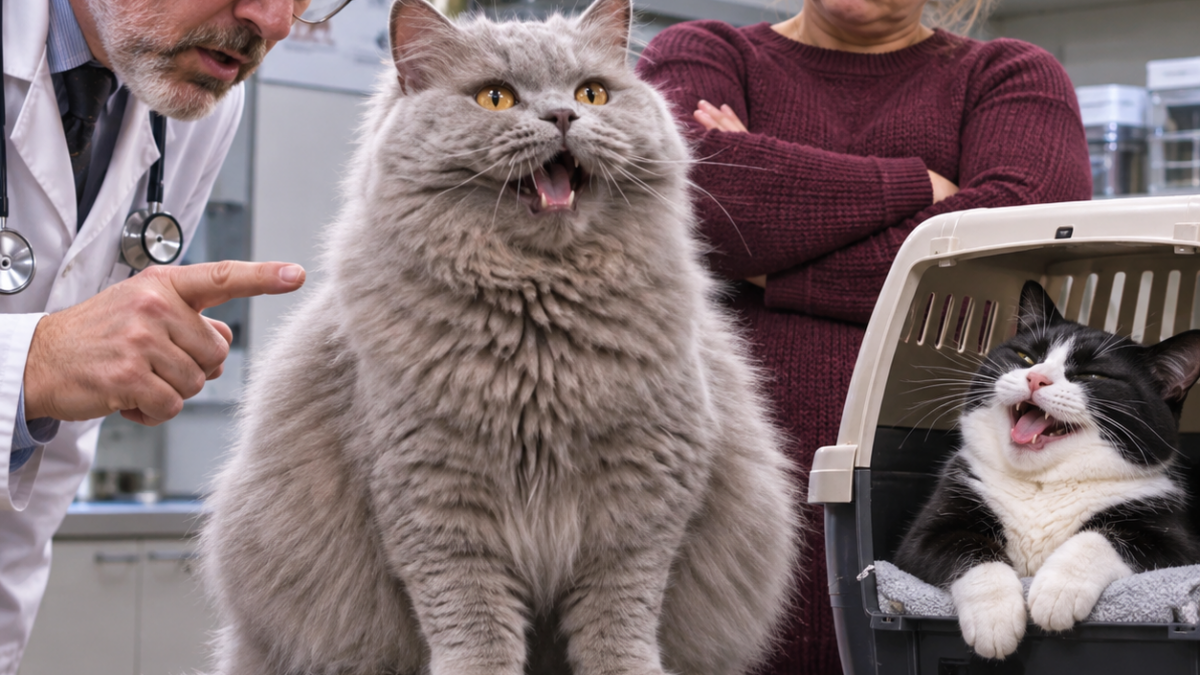
So when the carriers appeared again the following Tuesday morning, I naturally assumed Mother had experienced another catastrophic calendar event.
“Oh, come on, Willow.”
She said.
“We’re actually going today.”
Mother.
You said that last time.
I moved beneath the dining table.
Mother approached.
I activated boneless cat mode.
For humans unfamiliar with this technique, boneless cat mode is an advanced defensive strategy.
Front legs extend sideways.
Back legs lengthen to approximately twice normal size.
The spine loses all structural integrity.
The body becomes cooked spaghetti covered in fur.
Mother picked me up.
I became physically impossible.
“Willow, stop it.”
Stop what?
I am not doing anything.
I simply no longer possess bones.
She tried to place me into the carrier.
My left front paw caught the entrance.
Then right.
Back legs spread.
Mother turned me.
I rotated.
She sighed.
Dad appeared.
“Need help?”
No.
Nobody needs help.
This is between Mother and her poor decision-making.
Felix was already in his carrier.
He made a mournful sound.
I looked at him.
Have some dignity.
Eventually Mother succeeded.
Not because she outsmarted me.
Because I became bored.
Important distinction.
We arrived at the veterinary clinic.
This time, the receptionist checked the computer.
“Yes, Felix and Willow.”
Mother smiled.
I stared.
Congratulations, Mother.
You have successfully identified a Tuesday.
PART2
The waiting room contained a ginger cat making a noise so dramatic even Felix became quiet.
That is an achievement.
Felix can make suffering about himself during another animal’s surgery.
But this ginger cat sounded as though someone had repossessed his kidneys.
I watched from my carrier.
Felix watched from his.
The ginger cat screamed.
Felix looked at me.
I looked at Felix.
For once, agreement.
Sir.
Please compose yourself.
Eventually a veterinary nurse called our names.
Felix went first.
This delighted me.
He was placed on the scale.
The vet looked at the number.
Paused.
Then said:
“He’s gained weight.”
Magnificent.
I nearly fell over inside my carrier.
Felix.
My dear, overstuffed brother.
The vet continued discussing portion sizes.
Fewer biscuits.
Controlled meals.
Weight management.
Felix looked devastated.
Not concerned.
Not embarrassed.
Betrayed.
Then the vet examined his mouth.
Lifted his lip.
Looked at the remaining teeth.
And laughed.
Not cruelly.
But enough.
“How are you this heavy with so few teeth?”
I had to turn my head away.
Imagine being so committed to eating that you achieve overweight status with approximately four functioning pieces of cutlery.
Honestly, Felix.
I almost respect it.
Felix stared toward my carrier.
I could see murder in his eyes.
Then vaccination.
He complained.
Then thermometer.
His face became the physical embodiment of legal action.
If Felix could write, the RSPCA would have received a twelve-page letter before we left.
Eventually he was returned to the carrier.
He glared at everyone.
Then came my turn.
Felix will probably claim I was “suspiciously cooperative.”
Incorrect.
I am professional.
There is a difference.
I spent five years working around farm machinery.
I know when resistance is useful and when it merely extends an unpleasant procedure.
The vet lifted me onto the table.
I stood.
Calm.
He scratched my head.
I purred.
He placed a stethoscope against my chest.
I purred louder.
He moved it.
Still louder.
The vet laughed.
“She’s purring so loudly I can barely hear her heart.”
Doctor.
That is because you are examining an exceptionally well-maintained piece of equipment.
Try listening to a tractor engine while someone is revving it.
Felix stared from the carrier.
Jealous.
Obviously.
The vet checked my ears.
Eyes.
Coat.
Excellent.
Then came the scale.
I stepped on.
The vet looked.
Paused.
I felt something shift in the room.
Mother leaned closer.
“How is she?”
The vet looked at the number.
“She’s gained weight too.”
I beg your furry pardon?
No.
There must be an error.
Scale malfunction.
Uneven floor.
Local gravity anomaly.
Perhaps I am carrying additional muscle from years of professional rodent removal.
Mother looked at me.
I looked at Mother.
Do not believe him.
Felix suddenly sat very upright in his carrier.
Smug.
Oh, wipe that expression off your face, you walking Christmas pudding.
There is a substantial difference between a muscular former working cat and a tuxedo-shaped ottoman.
The vet pressed gently along my body.
“Just a little extra padding.”
Padding?
I am insulated.
Then he examined my mouth.
“Perfect teeth.”
Finally.
Recognition.
I turned toward Felix.
Did you hear that, Gummy?
Perfect.
Teeth.
Felix narrowed his eyes.
Wonderful morning.
Almost.
Then vaccination.
I purred.
Thermometer.
I continued purring.
What was I supposed to do?
Fight a man who already controlled the thermometer?
I am not stupid.
Felix believes volume improves medical outcomes.
I believe efficiency shortens appointments.
That is why one of us is management material.
The real betrayal came at home.
Mother placed both carriers down.
Opened them.
I emerged first.
Felix headed directly toward the automatic feeder.
As usual.
The machine sat in the kitchen.
White.
Round.
Reliable.
Several times per day, it dispensed small portions of dry biscuits.
Not endless food.
Not excessive.
Merely basic workplace support.
Felix sat.
Waited.
Nothing.
He looked at the feeder.
Then Mother.
Then feeder.
Mother crouched.
“Right.”
Her tone concerned me.
“The vet says you both need measured meals.”
I froze.
Felix froze.
Mother unplugged the automatic feeder.
Just like that.
No consultation.
No transitional period.
No ceremony.
Felix stared.
The machine remained silent.
I walked closer.
Mother said:
“No more little biscuit portions during the day.”
Excuse me?
Those biscuits are part of my employment agreement.
I patrol the garden.
I inspect the MOT garage next door.
I supervise Susan.
I monitor birds.
I perform pest-control services.
And you are canceling lunch breaks?
Mother continued.
“You’ll both get carefully measured meals.”
Felix looked like someone waiting for a deceased relative to return from war.
It was almost touching.
Almost.
Then Mother said:
“It’s for your own good.”
There it is.
The phrase humans use before doing something deeply unpopular.
Vaccinations?
For your own good.
Medicine?
For your own good.
No extra biscuits?
For your own good.
Mother kissed my head.
I remained disappointed.
Then I assessed my options.
Susan had chicken.
The MOT lads had Dreamies.
There were several gardens.
And I had eight years of experience convincing humans to give me things simply by arriving with an attractive face.
Mother had switched off one feeder.
Only one.
She had no idea how many humans I had access to.
The diet officially began the next morning.
Breakfast at seven.
Measured.
Precise.
Mother used a digital scale.
A digital scale.
For cat food.
She placed my portion in the bowl.
Then Felix’s.
Felix inhaled his.
I ate normally.
Because I possess manners.
When finished, Felix looked at my bowl.
I looked at him.
Don’t.
He moved closer.
I placed one paw on the edge.
Felix stopped.
Good decision.
Mother said:
“Willow, let him pass.”
He can pass around.
This is a large kitchen.
Felix eventually walked away.
Then sat beneath the dead automatic feeder.
Mother looked at him.
“Oh, Felix.”
He looked upward.
Nothing.
He tapped the machine.
Nothing.
I almost felt sorry for him.
Then he tried to eat one crumb beside my bowl.
Sympathy ended.
My first plan involved Susan.
Susan lived next door.
Retired.
Kind.
Dangerously generous.
She had previously looked after us when Mother and Dad went away.
Susan knew I liked chicken.
More importantly, Susan believed I was “too thin.”
This opinion had been formed several years earlier and had not been updated by current evidence.
A useful bureaucratic failure.
At 10:15, I went outside.
Patrolled the garden.
Inspected the hedge.
Then crossed into Susan’s property.
She was hanging washing.
“Hello, Willow.”
Perfect.
I sat.
Looked up.
No meowing.
Too obvious.
Just eyes.
Soft.
Professional.
Susan smiled.
“Are you hungry?”
What an intelligent woman.
She entered the kitchen.
I followed.
Chicken appeared.
Small pieces.
Fresh.
Warm.
I ate.
Not too quickly.
A professional never reveals desperation.
Susan stroked my back.
“Poor girl.”
Poor indeed.
“You’re wasting away.”
Correct.
This woman understood.
I returned home at 10:31.
Mother saw me enter.
“Where have you been?”
Work.
She sniffed.
Then narrowed her eyes.
“Why do you smell like chicken?”
No comment.
I walked past.
Mother watched.
This would require more subtlety.
Felix developed a different strategy.
Dad.
Dad is softer.
Everyone knows.
Mother says no.
Dad says:
“Well, maybe just a tiny bit.”
Felix understood this.
By afternoon, he had positioned himself beside Dad’s chair while Dad ate a sandwich.
Felix stared.
Dad ignored.
Felix placed one paw on Dad’s knee.
Dad looked down.
“No.”
Felix’s eyes widened.
Dad sighed.
“Your mother said no extras.”
Felix lowered his head.
Oscar-worthy.
Dad tore off a microscopic piece of chicken.
Felix ate it.
Then looked for more.
Dad whispered:
“That’s it.”
Felix continued.
Another piece.
So.
Felix and I had independently identified two vulnerabilities.
This household was not secure.
Mother discovered both networks within three days.
My failure occurred because Susan told her.
Casually.
“I gave Willow a little chicken yesterday.”
Mother stared at me.
I was on the windowsill.
We made eye contact.
Susan continued:
“She looked hungry.”
Mother said:
“She’s on a diet.”
Susan gasped.
“Oh!”
I closed my eyes.
Amateur.
The next failure involved Dad.
Mother caught him handing Felix cheese.
He tried the phrase:
“It fell.”
No one believed him.
After dinner, Mother held a family briefing.
She spoke to Dad.
Susan arrived at the back door.
I sat on the table.
Felix sat under the dead feeder.
Mother explained the weight-management plan.
Susan apologized.
Dad nodded.
Felix looked destroyed.
I began considering the MOT garage.
The garage sat beyond the side lane.
Technically, it belonged to a man named Dave.
But everyone knew the actual management structure was more complicated.
Dave handled cars.
Tony handled inspections.
Martin made tea.
I supervised.
I had been visiting for years.
The first time I entered, Dave tried to move me.
I returned.
Eventually he accepted reality.
They kept a small box of cat treats behind the reception desk.
Dreamies.
Excellent product.
Highly portable.
Easy to distribute.
I arrived at 11:40 the next morning.
Tony saw me.
“There she is.”
I walked in.
Dave looked up.
“Morning, boss.”
Correct.
Martin shook the treat box.
My ears moved.
Then I remembered.
Mother.
Diet.
I sat.
Tony gave me three.
Three.
A respectable quantity.
I ate.
Then he gave another two.
Excellent.
I returned the next day.
And the next.
By day four, Mother noticed my continued weight had not changed.
“How?”
She asked.
The tone was suspicious.
I maintained silence.
Then Saturday came.
Dad took his car to the garage for its MOT.
I did not know.
I was already there.
On the reception chair.
Tony giving me a treat.
Dad entered.
We looked at each other.
Tony said:
“Oh, she’s here every day.”
Dad closed his eyes.
I considered running.
Too late.
“Willow.”
Father.
Please think carefully before speaking.
Dad picked me up.
“You’re cheating.”
Cheating?
I am maintaining industry relationships.
Tony looked confused.
Dad explained.
Tony laughed so hard he nearly dropped the clipboard.
“You’re on a diet?”
Humiliating.
Dave came out.
“What’s funny?”
“Willow’s on a diet.”
The entire garage participated.
Humans have no discretion.
Dad took the treat box.
Read calories.
Then said:
“Mum’s going to love this.”
Traitor.
Mother did not love it.
She visited the garage.
Yes.
Personally.
With a small container.
She labeled it.
WILLOW — MAX 3 TREATS PER VISIT
This was workplace interference.
Tony laughed.
Dave said:
“Three?”
Mother said:
“Three.”
Martin asked:
“What if she looks really sad?”
Mother pointed.
“Three.”
The men agreed.
I stared at her.
Mother kissed my head.
“Nice try.”
War.
Felix’s black market also collapsed.
Dad became nervous after being caught.
He reduced unauthorized portions.
Felix increased emotional pressure.
One evening I watched him sit on Dad’s chest while Dad tried to read.
Felix stared at his face from six inches away.
Dad moved his head.
Felix moved too.
Dad said:
“You’re not getting anything.”
Felix remained.
Ten minutes.
Fifteen.
Dad finally got up.
Walked to the kitchen.
Felix followed.
Mother shouted from upstairs:
“Richard!”
Dad froze.
How does she know?
Mothers possess surveillance systems no government can match.
Dad returned to the sofa empty-handed.
Felix looked betrayed.
I almost laughed.
Almost.
Because my own networks had been damaged.
The diet produced something unexpected.
Energy.
This was annoying.
After several weeks, I noticed climbing the fence felt easier.
I could jump onto the garden table without using the chair.
I ran faster after moths.
At the garage, I climbed onto the reception counter in one movement.
Tony said:
“Look at you.”
I ignored him.
This was not evidence.
Felix also changed.
He became less round.
Still beanbag-shaped.
But a firmer beanbag.
Mother began playing with us every evening.
Feather wand.
Mouse toy.
Laser pointer.
Felix initially pretended disinterest.
Then the red dot moved.
He chased it directly into a cardboard box.
I laughed.
He climbed out with dignity destroyed.
Next night, he chased again.
Respectable persistence.
Mother introduced puzzle feeders.
I enjoyed them.
Felix did not.
Felix believed food should arrive without administrative barriers.
He sat beside the puzzle and complained.
I solved mine.
Then his.
Ate both portions.
Mother realized.
Separated us.
Unfortunate.
But for one glorious evening, professional experience paid dividends.
Our rivalry intensified.
Felix claimed Mother favored me because I had perfect teeth.
I believed she favored Felix because she called him “poor baby” whenever he complained.
We fought over the windowsill.
The warm blanket.
Dad.
Mother.
Boxes.
A specific cardboard box from a toaster purchased three years earlier.
Mother offered new boxes.
No.
Only toaster box.
Cats understand value.
Then winter arrived.
The garden became less attractive.
The MOT garage became warm because they ran heaters.
I spent more time there.
Mother allowed it because Dave promised not to feed me beyond regulation.
Mostly.
One morning, a mouse entered the parts storage room.
Everything changed.
Dave shouted.
Tony chased.
Martin lifted his feet.
Amateurs.
I saw movement.
Low shelf.
I crouched.
Farm memory returned.
Five years.
Barns.
Hay.
Rodents.
Work.
I moved.
Fast.
The mouse disappeared behind boxes.
I followed.
Waited.
Then it ran.
I caught it.
Professional.
Dave cheered.
Tony called me “the old farm girl.”
Old?
Watch yourself.
Martin offered Dreamies.
Dave stopped him.
“Three.”
Mother’s rules had infected everyone.
Still, I received three.
And applause.
I returned home taller.
Felix sniffed me.
I told him nothing.
He would not understand labor.
Mother heard about the mouse.
She looked proud.
“See? Still got it.”
Of course.
Weight had never removed skill.
But losing a little extra had made movement easier.
I knew.
I refused to admit this publicly.
There are principles.
Then Susan became ill.
Not severely.
She had knee surgery.
For several weeks, she could not move around easily.
Mother brought meals.
Dad carried shopping.
I visited.
At first for chicken.
Then because Susan sat alone.
She had a recliner near the window.
I jumped onto the footrest.
She smiled.
“There’s my girl.”
I sat.
No food.
Strangely, this was fine.
Susan stroked my head.
Talked.
About the hospital.
Her sister.
Old teaching stories.
I listened.
Humans underestimate how useful listening is.
You do not need answers.
Sometimes you only need fur.
Felix visited once.
He climbed directly into Susan’s lap.
Heavy.
She laughed.
“Oof.”
Felix purred.
For all my criticism, he is good at comfort.
Different skill set.
I patrol.
He absorbs sadness.
Like upholstery with feelings.
When Susan recovered, she resumed limited chicken privileges.
Mother approved tiny portions.
The system had matured.
Less rebellion.
More negotiation.
This is governance.
One evening, I caught Mother reading about feline obesity.
Her laptop screen showed diagrams.
Risks.
Diabetes.
Arthritis.
Reduced lifespan.
Mother’s face looked serious.
I sat beside her.
She did not notice immediately.
Then she touched my head.
“I know you think I’m horrible.”
Not horrible.
Authoritarian.
Important nuance.
She continued.
“I just want you both here as long as possible.”
Ah.
There it was.
Not weight.
Time.
Humans do strange things when afraid of losing time.
They measure grams.
Count calories.
Book appointments.
Remove feeders.
The next morning, I still protested breakfast size.
Understanding does not eliminate standards.
But something had shifted.
A year after the original vet visit, we returned.
Correct day.
Mother checked three times.
Felix complained in the carrier.
I activated boneless mode for tradition, not necessity.
At the clinic, Dr. Harris weighed Felix.
“Much better.”
Felix looked pleased.
Then me.
I stepped on.
Dr. Harris smiled.
“Perfect.”
I looked at Mother.
She smiled.
Then I looked at Felix.
He looked away.
Perfect.
Teeth still perfect too.
I mention this because accuracy matters.
Dr. Harris said we could maintain current portions.
No need for stricter reduction.
Mother thanked him.
Dad asked:
“Can we turn the feeder back on?”
Dr. Harris said:
“If programmed properly.”
Felix’s head snapped toward him.
Hope.
Mother agreed.
That evening, the automatic feeder returned.
Felix sat beside it before it was even plugged in.
Pathetic.
Mother programmed smaller measured portions.
Several times per day.
Not unlimited.
But regular.
The machine clicked.
Biscuits fell.
Felix stared as though witnessing resurrection.
He ate.
Then looked at Mother.
I ate mine more calmly.
But the sound did something.
Routine.
Familiar.
Home.
The feeder had not been the enemy.
Neither had Mother.
We had simply required regulatory reform.
Life continued.
The MOT garage.
Susan.
Garden patrol.
Dad’s snack crimes.
Felix’s dramatic complaints.
Mother’s measurements.
Willow operations.
Normal.
Then, two years later, something happened that made me understand the whole story differently.
Felix stopped eating.
Not diet protest.
Really stopped.
Breakfast remained.
Mother noticed immediately.
Felix walked away.
She followed.
He hid beneath the chair.
By lunchtime, she had called Dr. Harris.
Carrier.
Vet.
Blood tests.
Dental exam.
It turned out Felix had another painful tooth problem and an infection.
Treatable.
But seeing him quiet disturbed me.
Felix is never quiet.
At home after treatment, he lay on a blanket.
I approached.
Sniffed.
He smelled like clinic.
Medication.
Sadness.
Felix opened one eye.
I sat beside him.
No teasing.
No gummy jokes.
For three days, I stayed near.
Mother watched.
On the fourth day, Felix ate soft food.
Mother cried.
I pretended not to notice.
He returned to complaining by day five.
Relief.
That incident changed our relationship slightly.
Felix remained ridiculous.
But he was my ridiculous brother.
When he stole my bed, I still objected.
When he coughed, I looked.
When he slept too long, I checked.
Family is irritating that way.
People become important without permission.
At ten, my farm instincts remained strong.
I still patrolled.
Still visited the garage.
Still hunted occasional mice.
But I slept more.
Mother bought heated pads.
Luxury.
Felix claimed one.
I took the other.
Dad said:
“You two live better than us.”
Correct.
You have jobs.
Make better choices.
Mr. Bennett joined the network around then.
He lived three houses away.
Widower.
Retired electrician.
He noticed me sitting on his wall.
“Hello.”
I approached.
He had roast chicken.
This relationship began dangerously.
But after Mother discovered it, she explained the rules.
Mr. Bennett accepted.
Unlike Susan, he took regulations seriously.
Mostly.
He received approved treats.
I visited nearly every afternoon.
Not just for food.
Mr. Bennett talked about his wife, Margaret.
She had died two years earlier.
He still set two cups on the kitchen table sometimes.
Then remembered.
The first time I saw this, I sat in the empty chair.
He looked at me.
Then laughed softly.
“You’ll do.”
I stayed.
Sometimes Willow the professional barn cat became Willow the quiet companion.
Both were real.
Felix eventually joined.
Mr. Bennett loved him too.
“Look at this handsome fellow.”
Felix immediately claimed his lap.
Of course.
The man had circulation issues afterward.
But everyone was happy.
We became part of his routine.
He became part of ours.
Mother checked on him.
Dad fixed things.
Susan visited.
A tiny community formed around two cats who had originally been looking for chicken.
Humans should study this.
Cats build infrastructure.
Then Dad had a health scare.
Chest pain.
Hospital.
Mother panicked.
She tried not to show it.
Failed.
Dad came home with medication and instructions.
Weight loss.
Diet.
Exercise.
Biscuits reduced.
I watched Mother remove packets from the cupboard.
Dad protested.
I sat beneath the feeder.
Looked at him.
He looked at me.
We understood each other completely.
“Don’t.”
He said.
I continued staring.
Mother laughed.
“Now you know how they felt.”
Dad sighed.
“Apparently this house has become a dictatorship.”
Felix meowed.
Correct.
Dad began walking every morning.
Sometimes Mother joined.
Sometimes I followed to the end of the garden, then stopped.
I am not a dog.
Let us maintain standards.
Months later, Dad moved easier.
Looked healthier.
Still complained about biscuits.
Humans and cats are very similar when portions are involved.
That was disturbing.
As I aged, the diet stopped feeling like punishment.
It became simply how we ate.
Measured.
Predictable.
Occasional treats.
Extra chicken at Christmas.
A little fish.
Nothing extreme.
My weight stayed healthy.
Joints stayed comfortable longer.
I could still jump onto the garage counter at twelve.
Tony called me “the pensioner.”
I stared until he apologized.
Respect matters at every age.
Felix aged differently.
His missing teeth became more of an issue.
He transitioned mostly to wet food.
Mother prepared it carefully.
I watched.
No jealousy.
His meals smelled excellent, but he needed them.
Sometimes Mother let me lick the spoon.
Compromise.
Susan grew older.
Mr. Bennett too.
The garage lads acquired more gray hair.
Tony’s son started working there.
He had grown up hearing about me.
“This is Willow?”
This?
Young man.
Choose your words.
He gave me three treats.
I approved his employment.
One winter, Mr. Bennett died.
Quietly.
At home.
His daughter came.
Mother cried.
Susan cried.
Dad went silent.
I visited his garden at three that afternoon.
The chair was empty.
I waited.
No approved treats.
No voice.
No cardigan.
Nothing.
Mother found me there after dark.
She crouched.
“Come home.”
I stayed.
She waited.
Then sat beside me on the cold paving stone.
No pulling.
No carrying.
Just waiting.
After several minutes, I stood.
We went home together.
For weeks, I returned at three.
Eventually less often.
Mother kept one of his old cardigans because his daughter thought I might like the smell.
I slept on it.
Felix tried once.
I slapped him.
Some things are private.
Grief changed me.
I became quieter.
Not permanently.
I still terrorized moths.
But I understood absence.
The feeder still clicked.
Mother still made coffee.
Dad still read.
Felix still complained.
Mr. Bennett’s garden stayed quiet.
Life contains both.
Cats know this better than humans think.
Felix died before me.
He was fourteen.
Kidney disease.
Gradual.
Mother fought for good days without forcing bad ones.
Special food.
Fluids.
Medicine.
Warm blankets.
Dad carried him upstairs when his legs became weak.
I stayed near.
The day he stopped eating, the house changed.
Everyone knew.
Dr. Harris came.
Same man who had once laughed about Felix being fat with no teeth.
Older now.
Gentler.
He sat on the floor.
Felix lay between Mother and Dad.
I approached.
Sniffed him.
Felix opened his eyes.
For once, neither of us had anything insulting to say.
I lay down beside him.
Our bodies touched.
Mother cried.
Dad stroked Felix’s chest.
Dr. Harris helped him go peacefully.
No carrier.
No clinic.
Home.
Afterward, Mother lifted me because Felix did not move when I nudged him.
I hated that.
For days, I searched.
Kitchen.
Sofa.
Bedroom.
His carrier.
The dead feeder we had long ago replaced.
Everywhere.
No Felix.
The house was too quiet.
I slept on his blanket.
Mother sat beside me.
We grieved together without needing to define it.
After Felix, Mother changed my routine slightly.
More attention.
More monitoring.
Not smothering.
Mostly.
She knew I was older now.
I knew she was afraid.
We both pretended otherwise.
Dad became my primary lap.
Mother became my primary safety person.
If something hurt, I went to her.
If I wanted unauthorized snacks, Dad.
Clear division of labor.
At fourteen, arthritis arrived.
Mild.
Mother noticed me hesitating before the sofa.
Within a week, ramps appeared.
Dad built them.
They were ugly.
Absolutely terrible craftsmanship aesthetically.
Structurally sound.
I used them.
Tony at the garage built one to the reception chair.
Also ugly.
Men and wood.
No sense of design.
Still useful.
The feeder schedule changed again.
Smaller meals more frequently.
Excellent.
Finally, age brought political progress.
I received food six times a day.
Mother claimed it was for digestion.
I claimed victory.
Then came the morning I did not want breakfast.
Mother noticed before I had fully decided.
She watched.
I sniffed.
Walked away.
Her face changed.
“Willow?”
I went to my warm bed.
Within thirty minutes, she called Dr. Harris.
By ten, examination.
Bloodwork.
Kidneys.
Early changes.
Not crisis.
But age.
Diet adjustment.
More water.
Monitoring.
Mother sat in the car afterward with one hand on the carrier.
“You’re not allowed to get old.”
I looked at her.
Humans say impossible things when frightened.
I pressed my face against the carrier door.
She smiled.
Good.
The next year was good.
Slow.
Warm.
I stopped hunting.
The MOT garage remained part of my route but Dad sometimes carried me there in a basket.
Humiliating.
Efficient.
Tony gave me three treats.
Always three.
Rules became tradition.
Susan visited more because I visited less.
She sat with Mother and drank tea.
I sat between them.
People told stories.
Mr. Bennett.
Felix.
The original vet appointment mistake.
My boneless cat mode.
Mother laughed every time.
History becomes comedy when enough time passes around the painful parts.
One afternoon, Mother found the old automatic feeder in a cupboard.
The original one.
The machine she had switched off after that vet appointment.
She placed it on the kitchen counter.
I stared.
She cleaned it.
Dad said:
“Still works?”
Mother plugged it in.
The old motor made the familiar rattle.
My ears moved immediately.
All those years disappeared.
I was eight again.
Angry.
Elegant.
Certain Mother was ruining civilization.
A few brown rocks dropped.
Mother laughed.
“Look.”
I walked over.
Ate one.
Not because I needed it.
Because memory has taste.
Dad said:
“She remembers.”
Of course.
Cats remember sounds attached to important things.
Mother kept the machine.
Not as feeder.
As history.
Sometimes she switched it on and let it dispense one tiny portion as a joke.
I pretended to be offended.
Then ate.
Tradition.
At fifteen, my kidneys worsened.
Slowly.
Dr. Harris explained.
Mother asked questions.
Dad looked out the window.
I watched all of them.
I was not afraid exactly.
Tired.
More often.
But still happy.
Sun.
Warm bed.
Mother.
Dad.
Susan.
Garage visits.
Food.
Home.
A life does not need adventure every day to be complete.
Mine had had plenty.
Farm.
Mice.
Garage.
Diet wars.
Felix.
Chicken smuggling.
What more does a professional require?
Mother stopped caring about my weight.
That was how I knew things were changing.
For years, portions mattered.
Now if I ate, she smiled.
Chicken.
Tuna.
Soft food.
Anything appropriate I would accept.
The goal had reversed.
Once she measured because she wanted less weight.
Now she offered because she wanted more time.
Same love.
Different instructions.
One evening, Dad opened a biscuit packet.
Old habit.
He looked at me.
“Want a crumb?”
I did.
Tiny.
I ate.
Mother saw.
Did not object.
The regime had softened.
Dad smiled.
“Finally legal.”
Do not become excited.
I had already won this argument years ago.
My last visit to the MOT garage happened in spring.
Dad carried me.
Tony came outside.
Dave had retired by then.
Martin too.
Tony’s son worked full-time.
They placed a chair in the sun.
I sat.
Tony brought the treat container.
Three.
Still.
I ate two.
Left one.
Everyone went quiet.
Tony looked at Mother.
She smiled sadly.
“It’s okay.”
He stroked my head.
“You’ve been running this place a long time, girl.”
Correct.
“Who’s going to inspect us now?”
I looked toward the workshop.
Probably nobody competent.
But organizations must adapt.
I stayed twenty minutes.
Then looked at Dad.
Home.
He understood.
Susan visited the next day.
She brought chicken.
Mother had clearly authorized it.
Susan sat beside me.
“You remember when I nearly ruined your diet?”
Yes.
Amateur smuggling.
She laughed.
“You used to come through that hedge like you owned the place.”
I did own the place.
Spiritually.
She stroked my head.
“You were such a little madam.”
Were?
Careful.
I purred.
Susan cried.
Humans always think we do not notice tears if they wipe them quickly.
We notice.
I put one paw on her leg.
She cried harder.
This was not my intention.
But acceptable.
Then one morning, standing became difficult.
Mother saw immediately.
She lifted me.
I did not resist.
Boneless cat mode had become something else now.
Not strategy.
Age.
She held me against her chest.
I could hear her heart.
Fast.
“Okay.”
She whispered.
“Okay, sweetheart.”
Dr. Harris came to the house.
No carrier.
Good.
He examined me on my blanket.
Listened to my chest.
I purred.
Quietly now.
He smiled.
“Still doing that.”
Professional standards.
Mother sat beside me.
“What do you think?”
Dr. Harris did not answer immediately.
That was answer enough.
My kidneys were failing.
My body was tired.
There were treatments that might buy a little time.
But not necessarily good time.
Mother looked at me.
Not Dr. Harris.
Me.
That mattered.
She asked:
“Is she hurting?”
“Not severely.”
“Tired?”
“Yes.”
“Can we make her comfortable?”
“Yes.”
They talked.
I listened to voices.
Not words.
Tone.
Love has a tone.
Fear too.
Mother took me into the garden that afternoon.
Wrapped in a blanket.
She sat near the hedge I once used to reach Susan.
Sunlight.
Birds.
The old route toward Mr. Bennett’s house.
The lane toward the garage.
Everything smaller now.
Or perhaps I was simply viewing it from one place.
Mother said:
“You had quite an empire.”
Correct.
Dad sat beside us.
“You terrorized half the neighborhood.”
Administration.
Different.
Mother laughed.
Then cried.
I put my head against her wrist.
That evening, she brought out the old feeder.
The original.
Placed it near my blanket.
Dad looked confused.
“What are you doing?”
Mother plugged it in.
The motor rattled.
The sound.
My sound.
Brown rocks dropped into the tray.
I lifted my head.
Mother covered her mouth.
I walked two slow steps.
Ate one piece.
Only one.
Then turned away.
The food was not important anymore.
The sound was.
It meant morning.
Work.
Felix.
Arguments.
Routine.
Mother.
Home.
I returned to my blanket.
Mother sat beside me.
She cried into my fur.
“I’m sorry I switched it off.”
I looked at her.
After all these years?
Still?
Humans carry strange guilt.
I pressed my forehead against her hand.
Mother laughed through tears.
“Does that mean you forgive me?”
Let us not become reckless.
I purred.
That was enough.
The next morning, I did not eat.
Not chicken.
Not tuna.
Not biscuits.
Nothing.
I drank a little.
Then slept.
Mother called Dr. Harris.
He came in the afternoon.
Dad sat on one side.
Mother on the other.
Susan came briefly to say goodbye.
Tony sent a message.
Mother read it aloud.
Tell the boss the garage passed inspection.
Acceptable.
Mother placed Mr. Bennett’s cardigan near my blanket.
Felix’s old toy mouse beside it.
I smelled everything.
Family can fit into objects when necessary.
Dr. Harris sat on the floor.
The same man who once announced I was fat.
I looked at him.
He smiled sadly.
“You’ve had a good run, Willow.”
Good?
Excellent.
But yes.
Mother stroked my head.
Dad touched my back.
I was tired.
No fear.
That surprised me.
Maybe cats are wiser about endings.
Or maybe I simply knew where I was.
Home.
Mother whispered:
“You know, you really were impossible that first day.”
Boneless mode.
A classic.
Dad laughed softly.
“She nearly broke your wrist.”
“She did.”
Exaggeration.
Mother continued.
“And then she purred through the whole exam.”
Professional.
Dr. Harris smiled.
“I remember.”
Of course.
Exceptional patients remain memorable.
Mother leaned closer.
“You were such a good girl.”
I would have preferred competent employee.
But acceptable.
Then she said:
“You made this house better.”
That one I understood.
I closed my eyes.
The first medication made everything warm.
My muscles relaxed.
Mother’s fingers behind my ear.
Dad’s hand on my side.
No carrier.
No noisy waiting room.
No thermometer.
Finally, veterinary medicine had improved.
I heard Mother whisper:
“You can rest now.”
I did.
Afterward, the house became quiet again.
Mother kept my bowl for weeks.
Dad kept the ugly ramp beside the sofa.
Susan kept looking toward the hedge around three in the afternoon even though neither Felix nor I came through anymore.
At the garage, Tony placed a small photograph of me on the reception desk.
Mother laughed when she saw it.
The caption underneath said:
WILLOW — QUALITY CONTROL, 2018–2030
Apparently I had been employed after all.
Good.
The old automatic feeder remained in Mother’s cupboard.
Sometimes Dad found her holding it.
Not because she wanted the machine.
Because memory attaches itself to ridiculous objects.
A feeder.
A carrier.
A cardigan.
A toy mouse.
A treat container labeled MAX 3.
Objects become evidence.
Someone lived here.
Someone had routines.
Someone mattered.
Years later, Mother still told people the vet story.
She always began with:
“Willow thought she was a professional barn cat and therefore physically incapable of being overweight.”
Correct.
Then she described Felix.
His missing teeth.
The scale.
My outrage.
The feeder.
Susan’s chicken.
The MOT garage.
Mr. Bennett.
She laughed.
People laughed.
The story was funny.
It should be.
A life should not become sad merely because it ended.
That would be terribly unfair to all the ridiculous parts.
If I could explain one thing to Mother from wherever I am now, it would be this:
You did not betray me by switching off the feeder.
You irritated me.
Deeply.
There is a difference.
You were trying to keep my joints working.
My heart healthy.
My body comfortable.
You were trying to buy time with measured biscuits.
Humans cannot buy time.
But sometimes good care negotiates a little more of it.
You gave me years.
Years of garage inspections.
Garden patrols.
Susan.
Mr. Bennett.
Felix.
Dad.
Warm beds.
Old age.
That seems like a fair exchange for fewer biscuits.
Do not tell anyone I said this.
Especially Felix.
If he is somewhere nearby, he will become unbearable.
I still maintain several points.
The first vet appointment error was entirely Mother’s fault.
The scale may have been slightly inaccurate.
“Fat” was an inflammatory term.
“Substantially experienced farm cat with excellent winter insulation” would have been more appropriate.
Felix was objectively rounder.
My teeth were perfect.
These facts remain.
And the automatic feeder?
I hated when Mother switched it off.
Then later loved when it came back.
Eventually, on my last evening, its sound became something else entirely.
Not food.
Memory.
Routine.
Proof that home had a rhythm.
That is what cats love most.
Not necessarily endless treats.
Predictability.
A familiar voice.
The same window.
The same footsteps.
The same humans who come back.
The same machine rattling at the same time.
We build our world from repetition.
Humans do too.
You simply pretend yours are called schedules.
When Felix and I were younger, we thought Mother existed to interfere.
Close doors.
Control food.
Book vets.
Stop fights.
Move us off clean washing.
Later I understood.
She was maintaining the world.
Not perfectly.
Nobody does.
But every day, she kept the routines moving.
Food.
Water.
Warmth.
Medicine.
Doors.
Beds.
Names.
Love.
Cats notice more than we admit.
We simply prefer not to flatter humans unnecessarily.
So if you ever hear about a gray cat named Willow who spent five years working on a farm, then moved into a comfortable house and became outraged when a veterinarian suggested she had grown slightly round—
please tell the story properly.
Tell them about the failed Friday appointment.
The boneless cat maneuver.
Felix screaming like a bagpipe full of gravy.
My perfect teeth.
The insulting scale.
The automatic feeder.
The underground chicken economy.
Susan.
The MOT lads.
Mr. Bennett.
The mouse in the parts room.
Dad joining the diet.
Felix getting old.
The quiet years.
The feeder rattling one last time.
All of it.
Because the diet was only the beginning.
The real story was about a cat who spent years believing independence meant needing nobody—
because barn cats learn that quickly—
then slowly discovered an entire neighborhood had become hers.
Mother.
Dad.
Felix.
Susan.
Mr. Bennett.
Tony.
Dave.
Martin.
Even Dr. Harris.
Humans everywhere.
Watching.
Feeding.
Laughing.
Worrying.
Waiting.
At the farm, I learned how to survive.
At home, I learned how to belong.
Those are not the same skill.
Survival says:
Find food.
Find warmth.
Keep moving.
Belonging says:
Someone notices when you do not come for breakfast.
Someone knows how many treats you are allowed.
Someone builds an ugly ramp because jumping hurts.
Someone remembers your favorite chair.
Someone laughs at your attitude.
Someone cries when your bowl stays full.
I had that.
For years.
Perhaps Mother knew before I did.
Maybe that was why she cared so much about my weight.
Not because she wanted a thinner cat.
Because she wanted her cat.
Longer.
That is the irritating thing about love.
Sometimes it looks like restriction.
Sometimes it says no.
Sometimes it carries you to the vet on the correct Tuesday even though you have turned yourself into cooked spaghetti.
Sometimes it switches off the feeder.
And sometimes, many years later, it switches the old feeder back on one final time simply because it remembers the sound made you happy.
So yes.
Apparently I was fat.
Slightly.
Maybe.
We do not need to keep discussing it.
The case is closed.
But Mother’s diet worked.
The annoying man with the stethoscope was, regrettably, not entirely wrong.
Felix and I became healthier.
We moved better.
We stayed comfortable longer.
And we received years of extra opportunities to annoy everybody.
If that was the objective, I consider the program successful.
Still, there is one final point.
Mother believed she had switched off one feeder and therefore ended my snack empire.
She never really understood.
Food was available everywhere.
Susan.
The garage.
Mr. Bennett.
Dad.
But eventually, even I understood the snacks were never the empire.
The empire was the people.
All those humans who had somehow made space for one opinionated gray farm cat in their routines.
The woman next door who saved chicken.
The widower waiting in his garden.
The mechanics who called me boss.
The father who broke rules.
The mother who made them.
The ridiculous tuxedo brother who shared the same home and stole my cushion.
That was wealth.
Not biscuits.
And if there is somewhere beyond all this where cats meet again, I assume Felix is already there.
Probably sitting beside an unlimited feeder.
No teeth.
Still eating.
I will walk over.
He will look at me smugly.
I will remind him that I had perfect teeth.
He will tell me nobody cares.
We will argue.
Then share the food anyway.
Because that is what family does when nobody is watching.
And perhaps, much later, Mother and Dad will arrive.
Mother will say:
“Willow.”
I will activate boneless cat mode one final time.
Just for tradition.
Dad will laugh.
Mother will pick me up anyway.
And I will let her.
Because after all those years, there is one thing I know for certain.
I was never really fighting the carrier.
Or the diet.
Or the scale.
I was only trying to make sure the people I loved understood that I had opinions.
They understood.
Very clearly.
And they loved me anyway.








