FULL ENDING :“YOU DON’T BELONG HERE, LAUREL—SECURITY, THROW HER OUT!” My Ex-Husband Tried to Have Me Dragged Out of Charlotte’s Most Exclusive Mall Just Three Days After Our Divorce—His Mistress Was Already Laughing When Four Security Officers Approached, Until Their Supervisor Stopped, Called Me by Name, and Opened a Door He Never Expected Me to Enter…
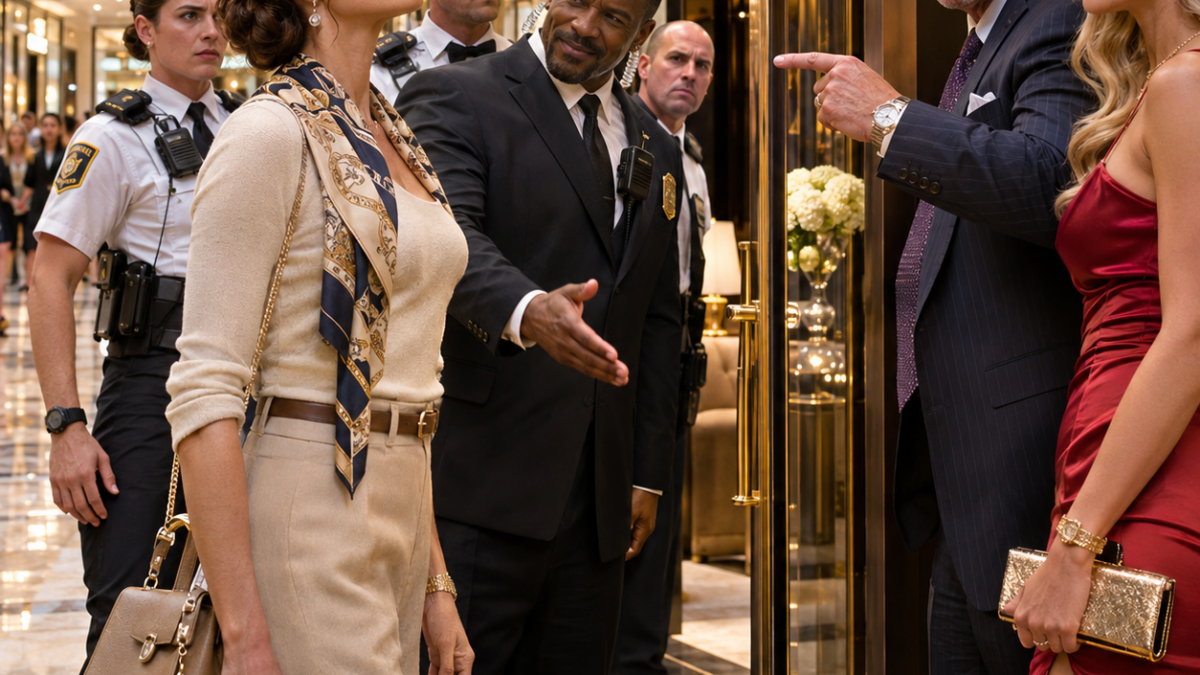
He would have gone quiet.
Driven too fast.
Spent hours explaining that I embarrassed him.
Three days after our divorce, his moods were no longer my responsibility.
I stepped around him.
He moved directly into my path.
“Who are you meeting?”
“Someone expecting me.”
Brielle tilted her head.
“Maybe one of the alterations girls.”
I looked at her.
She wore diamond earrings large enough to catch the light when she smiled.
Graham laughed.
“Careful, Brielle. Laurel might tell them she’s a fashion designer.”
They both laughed.
That one landed.
Not because it was clever.
Because I had heard versions of it for ten years.
Little handbag project.
Craft-room business.
Your Etsy phase.
Something to keep you busy.
I looked toward the restricted exhibition entrance.
Four security officers stood nearby.
Behind them, ivory partitions concealed the private event space.
I was already six minutes late.
“Move, Graham.”
His eyes sharpened.
“You don’t speak to me like that.”
“I just did.”
I stepped sideways.
His hand closed around my wrist.
The contact was not violent enough to knock me down.
It was worse in a quieter way.
Familiar.
A physical punctuation mark from a man who had spent years assuming he could end conversations by controlling the space around me.
“Let go.”
“Don’t cause a scene.”
“You’re holding me.”
Several shoppers turned.
Brielle’s smile faded slightly.
I raised my voice.
“Take your hand off me.”
Graham released me.
His embarrassment turned almost instantly into anger.
“Unbelievable.”
I rubbed my wrist.
“I supported you for twelve years.”
There it was.
His favorite accounting system.
Anything I achieved existed because he paid the mortgage.
Anything he achieved existed because he was brilliant.
“You supported me?”
“I paid for your entire lifestyle.”
He pointed toward my portfolio.
“You wouldn’t survive six months on your own.”
Behind him, the security supervisor touched his earpiece.
Then he and three officers began walking toward us.
Graham noticed.
His face brightened.
“There.”
He pointed at me.
“Security! This woman is creating a disturbance. She doesn’t belong here.”
The officers continued forward.
Graham stepped aside to give them room.
Then smiled at me.
The same satisfied smile he had worn during our final divorce meeting when he signed the financial schedule listing Morrow Leatherworks beneath my separately retained business interests and told his attorney, “Don’t waste billable time on her little craft operation.”
The security team reached us.
Their supervisor, Marcus Bell, did not look at Graham.
He stopped in front of me.
Inclined his head respectfully.
“Good morning, Ms. Whitcomb.”
Graham’s smile vanished.
Marcus continued.
“Ms. Ashford has been asking for you. Please accept our apologies for the delay at the entrance.”
Graham stared.
Brielle blinked.
“What?”
Marcus turned politely.
Brielle pointed at me.
“You know her?”
“Yes, ma’am.”
“How?”
Marcus looked back toward me.
“Ms. Whitcomb is today’s guest of honor.”
Graham laughed once.
It sounded wrong.
“There’s obviously some mistake.”
“No, sir.”
“That’s my ex-wife.”
Marcus remained perfectly professional.
“I’m aware of Ms. Whitcomb’s identity.”
Those words silenced Graham more effectively than any insult I could have delivered.
Then a woman in an ivory pantsuit hurried through the exhibition doors.
“Laurel.”
Evelyn Ashford.
Senior vice president of retail partnerships for the company overseeing Meridian Galleria and luxury properties across several states.
Graham knew exactly who she was.
For years, he had talked about how impossible it was to get a proposal in front of Evelyn Ashford.
Now she touched my arm gently.
“Are you all right?”
“I’m fine.”
Her gaze moved to Graham.
“Was there a problem?”
Graham straightened.
“Evelyn Ashford?”
She gave him a polite glance.
“Yes?”
“I’m Graham Ellison. Ellison & Price Furnishings.”
A pause.
“I see.”
His face tightened.
“We’ve submitted proposals to your organization.”
“Then our commercial team would handle those.”
He gestured toward me.
“This is my ex-wife.”
Evelyn looked at me instead of him.
I gave the smallest shake of my head.
Not here.
Not necessary.
“Ready?” she asked.
“Yes.”
Marcus opened the private entrance.
I took one step.
Graham called behind me.
“Laurel.”
I stopped.
“What are you doing here?”
For twelve years, he had never asked that question with genuine interest.
I turned.
“I’m working.”
“Doing what?”
Before I could answer, two event staff members behind him pulled away an enormous sheet of ivory silk.
Bronze lettering appeared across the twenty-foot display.
MORROW LEATHERWORKS
Beneath the name was a photograph of my signature structured handbag.
Deep oxblood leather.
Hand-finished edges.
Antique-brass clasp.
Graham stared at the clasp.
He knew it.
Years earlier, he had picked up the first crude prototype from our dining table, dropped it back down, and told me:
“Stop wasting money trying to make expensive purses nobody asked for.”
Now that clasp was twenty feet tall.
Evelyn looked at him.
“Mr. Ellison, Laurel founded Morrow Leatherworks.”
Brielle’s shopping bags slipped from her fingers.
Graham didn’t seem to hear them hit the floor.
Evelyn continued:
“And this morning we’re announcing Morrow’s largest retail partnership to date.”
Graham slowly looked at me.
For the first time in twelve years, my ex-husband looked at my work without laughing.
And he had no idea that the reason he knew so little about Morrow Leatherworks was not because I had hidden my life from him.
It was because every time I tried to tell him who I was becoming—
he had stopped listening.
FULL STORY CONTINUATION
I did not wait for Graham to recover.
I walked through the exhibition doors with Evelyn.
Marcus closed them behind us.
The sound was soft.
Almost nothing.
Yet it felt more final than the judge signing our divorce decree three days earlier.
For a few seconds, I stood inside the private event foyer without moving.
Evelyn watched me.
“Do you want five minutes?”
I looked down at my wrist.
A faint pink mark remained where Graham had grabbed me.
“I’m okay.”
“That wasn’t my question.”
I looked at her.
Six months earlier, that distinction would have broken me.
Instead, I exhaled.
“Yes.”
She nodded toward a private lounge.
“Take five.”
“I’m already late.”
“Laurel.”
I stopped.
“There are buyers from twelve retail groups in that room.”
My stomach tightened.
“Exactly.”
“They flew here because of you.”
She smiled.
“They can survive five more minutes.”
I laughed softly.
“Okay.”
The lounge was quiet.
Cream walls.
Low chairs.
A tray of coffee.
Through the frosted glass, I could see shadows moving in the exhibition hall.
Evelyn poured water.
I sat.
For the first time since Graham appeared, my hands began shaking.
Evelyn noticed.
“Do you want security to remove him from the property?”
“No.”
She waited.
“He’s allowed to shop here.”
“He put his hands on you.”
“I know.”
“Then at minimum, Marcus should document it.”
I nodded.
“That’s fine.”
I had learned during the divorce that documenting something did not automatically mean escalating it.
Sometimes documentation simply stopped another person from rewriting what happened later.
That lesson had cost me twelve years.
I looked toward the door.
“Is Brielle still out there?”
Evelyn almost smiled.
“I assume so.”
“I don’t care.”
“Good.”
I laughed.
“That sounded judgmental.”
“It was.”
She handed me the water.
Then sat across from me.
“Do you know what I find remarkable?”
“What?”
“You spent six months negotiating the most important deal of your company’s life without once mentioning that your husband thought your business was a hobby.”
“Ex-husband.”
“Three days.”
“Still counts.”
She smiled.
Then her expression softened.
“Did he really not know?”
I thought about that.
“He knew the name.”
“Morrow?”
“Yes.”
“He knew you had a company?”
“Yes.”
“But not the scale.”
“No.”
“How?”
I looked into the glass.
“That’s a longer answer.”
“We have four minutes.”
I smiled.
Then I told her the short version.
“I spent ten years trying to make him interested.”
Morrow Leatherworks began at our dining table nine years into my marriage.
But leather had been part of my life long before Graham.
My maternal grandfather, Samuel Morrow, repaired saddles and luggage in western Pennsylvania.
Not luxury handbags.
Work.
Bridles.
Tool belts.
Travel cases.
Anything made of leather that someone loved enough to repair instead of replace.
His shop smelled like cedar oil, wax, coffee, and hides.
When I was little, he taught me how to distinguish vegetable-tanned leather from cheaper corrected grain by smell before I knew either term.
He showed me how hand stitching behaved differently from machine stitching.
How brass aged.
Why edges mattered.
Why a bag that looked beautiful but hurt to carry was a failed design.
My mother thought I would become an artist.
Instead, I studied business.
Then married Graham at twenty-five.
By then, my grandfather had died.
His surname became my middle name legally only in old family documents.
But I kept it emotionally.
Morrow.
The name meant craftsmanship to me.
Graham knew all of that.
At least, he had once.
During our first years together, I worked in operations for a regional apparel distributor.
I was good at it.
Inventory.
Vendor management.
Forecasting.
Margins.
The invisible machinery behind beautiful things.
Graham worked in commercial furnishings.
His career accelerated quickly.
Mine became inconvenient.
His company dinners conflicted with my travel.
His clients expected spouses at events.
He liked coming home to someone available.
When I was offered a promotion that required forty percent travel, Graham said:
“We don’t both need to live like we’re single.”
It sounded reasonable.
That was the way many of our compromises sounded at first.
I declined.
Two years later, I left the company entirely.
Not because Graham ordered me to.
He never needed to.
He simply made every alternative feel selfish.
“I make enough for both of us.”
“Why are you exhausting yourself?”
“We’ll have children eventually.”
“Wouldn’t it be nice to build something flexible?”
So I became the flexible one.
I organized the house.
Managed appointments.
Remembered birthdays.
Hosted his clients.
Edited presentations.
Chose gifts for people whose names appeared in his promotion announcements.
And whenever someone asked what I did, Graham answered before I could.
“Laurel keeps everything running.”
People smiled.
It sounded flattering.
After enough years, I realized nobody—including Graham—could explain what everything meant.
Morrow began because I needed one thing in our house to belong entirely to my imagination.
I had been searching for a work bag.
Every bag I found irritated me.
Too heavy.
Too many logos.
Cheap hardware attached to expensive leather.
Bad pocket placement.
Laptop sleeves that distorted the shape.
So I sketched one.
Then another.
I bought leather.
My first attempt was awful.
The second was worse.
The third was usable.
Graham watched pieces of leather accumulate in the dining room.
“What is this phase?”
“I’m making a bag.”
“You can buy one.”
“I know.”
“Then why are you making one?”
“Because I want to.”
He laughed.
Not cruelly then.
Just dismissively.
“All right, Gepetto.”
I ignored him.
The first good bag took six weeks.
I carried it to lunch with a friend.
She asked where I bought it.
When I told her I had made it, she ordered one.
Then her sister did.
Then a coworker.
I made six bags that year.
Eighteen the next.
I registered Morrow Leatherworks.
Graham signed a tax document acknowledging the business because our accountant needed records.
He barely read it.
“This is adorable.”
I looked up.
“What?”
“Your little company.”
I remember smiling because I genuinely thought one day I would prove him wrong and we would laugh about it together.
That was how naïve love can be.
You think the person diminishing you will eventually become the person applauding loudest.
Sometimes they simply become more irritated when you grow.
I hired my first part-time craftsperson four years later.
Her name was Ana Ruiz.
She had worked in upholstery and knew more about edge finishing than I did.
We rented a 600-square-foot workspace behind a framing store.
Graham visited once.
He looked around at the cutting table.
Boxes.
Shelves.
Two industrial sewing machines.
“Cute.”
Ana heard him.
After he left, she asked:
“Does he always talk about your work like you’re making macaroni necklaces?”
I laughed.
Then realized I didn’t find it funny.
“Yes.”
She looked at me.
“Why?”
I had no answer.
Morrow kept growing.
Slowly.
Carefully.
Online sales.
Custom orders.
Small boutique accounts.
I reinvested almost everything.
That was one reason Graham misunderstood the company.
I wasn’t paying myself like someone whose business was growing.
I paid suppliers.
Employees.
Photographers.
Website developers.
Insurance.
Rent.
Then equipment.
Then inventory.
Revenue increased.
My personal spending did not.
Graham saw the part of business that entered our household and assumed that was the whole company.
He never opened the financial packets I occasionally left for him.
Never attended a product launch.
Never asked what wholesale meant.
If I said I had an important meeting, he answered:
“Can you move it? We’ve got dinner with the Prices.”
Often, I did.
Until I stopped.
That was when our marriage began cracking in ways neither of us wanted to name.
Two years before the divorce, Morrow reached its first seven-figure revenue year.
I brought champagne home.
Graham was watching a basketball game.
“I have news.”
He looked at the television.
“What?”
“Morrow crossed a million in annual sales.”
He paused.
“Gross?”
“Yes.”
“So not profit.”
The joy in me dimmed.
“No. Revenue.”
He nodded.
“Businesses love bragging about revenue.”
I stared.
He looked back at the game.
“Congratulations, though.”
That was it.
I took the champagne upstairs.
Never opened it.
The following morning, I brought it to the workshop.
Ana popped the cork at eleven.
We drank from paper coffee cups.
That became one of my favorite memories of Morrow.
Not because of the million dollars.
Because the people who helped build it understood what the number meant.
Evelyn discovered us eighteen months later.
Not through me.
Through a bag.
A buyer from one of Meridian’s affiliated properties bought our Hartwell satchel while visiting Charlotte.
She carried it to a strategy meeting.
Evelyn noticed the clasp.
Asked about it.
Two weeks later, an email arrived.
At first, I thought it was spam.
Retail Partnership Inquiry — Ashford Group Luxury Properties
I called Ana.
“Is this real?”
She read it.
Then screamed so loudly I pulled the phone away.
That began six months of meetings.
Product reviews.
Financial diligence.
Supply-chain assessments.
Manufacturing capacity.
Quality control.
Brand positioning.
Customer retention.
Returns.
Margins.
Expansion risk.
Evelyn’s team did not care that my husband thought handbags were cute.
They cared whether Morrow could fulfill orders without destroying quality.
That was much harder.
And far more respectful.
At the same time, my marriage was ending.
Brielle entered the story before I knew her name.
Graham became busier.
New client.
New account.
Late dinner.
Weekend event.
The pattern was embarrassingly ordinary.
I noticed perfume in his car once.
He said a client had ridden with him.
His phone started living facedown.
He joined a gym near his office although we had a full fitness room in our building.
Then came the conference in Atlanta.
Four days.
He sent three texts.
When he returned, he kissed my forehead instead of my mouth.
I knew.
Not factually.
Emotionally.
The confirmation arrived three months later through a hotel charge he had accidentally placed on a joint card.
Two rooms would have made sense.
One expensive suite.
Dinner for two.
Spa charges.
I asked him directly.
“Are you sleeping with someone?”
Graham stared at me for a long time.
Then sighed.
“Yes.”
No denial.
No collapse.
No apology at first.
Almost relief.
Her name was Brielle Sloane.
She worked for a luxury interior-products company that sometimes partnered with Graham’s accounts.
Thirty-one.
Unmarried.
Beautiful.
I had met her once without knowing.
At a client holiday party.
She shook my hand.
Said:
“I’ve heard so much about you.”
I later wondered what exactly she had heard.
The divorce took eight months.
More exhausting than dramatic.
Assets.
Accounts.
The condominium.
Retirement.
Vehicles.
Investments.
The usual machinery of ending a long marriage with money involved.
Morrow appeared in financial disclosure.
Of course it did.
I was not hiding it.
Graham looked at the business name during one meeting and laughed.
“Why are we even wasting time on this?”
His attorney said:
“Any business interest needs to be addressed.”
Graham looked toward me.
“Morrow belongs to Laurel. I’ve never wanted anything to do with it.”
My attorney, Serena Blake, glanced at me.
I said nothing.
His lawyer asked:
“You are disclaiming any ownership claim to Morrow Leatherworks under the proposed settlement terms?”
“Yes.”
Graham leaned toward him.
“It’s handbags.”
I remember that sentence.
Not because it hurt.
By then, most of his contempt had stopped hurting.
Because Evelyn’s team had already completed its first round of diligence.
Because our wholesale orders had doubled.
Because twelve people worked for Morrow.
Because Ana had become operations director.
Because we were negotiating the partnership Graham would see seventy-five hours after signing the divorce papers.
His lawyer asked him twice whether he understood the provision.
He did.
The final agreement reflected the negotiated treatment of our respective business interests.
I retained Morrow.
Graham retained his interests.
Other marital assets were divided separately.
No tricks.
No secret company revealed after the decree.
He saw the name.
He chose not to care.
That distinction mattered to me.
I had not hidden success from my husband.
He had dismissed it.
Evelyn checked her watch.
“Our four minutes are over.”
I looked up.
Back in the Meridian lounge.
The security incident.
The launch.
Graham outside.
All of it returned.
I stood.
“Let’s do this.”
She smiled.
“Now you sound like the woman I negotiated with.”
“That woman wasn’t recently grabbed by her ex-husband.”
“No.”
She opened the door.
“But she survived worse negotiations.”
I laughed.
We entered the exhibition hall.
And suddenly there was no room in my mind for Graham.
There were buyers waiting.
Retail executives.
Press invited specifically for the partnership announcement.
Our samples arranged under focused lighting.
Craftsmanship stations demonstrating edge painting and hand finishing.
A wall showing Morrow’s evolution from the first prototype to our current collection.
Then I saw Ana.
She stood near the stage wearing a navy suit.
Her eyes were wet.
“You okay?”
I hugged her.
“Yes.”
She pulled back.
“Marcus told us some guy grabbed you outside.”
“My ex-husband.”
Her face changed.
“Oh.”
“Don’t.”
“I wasn’t going to do anything.”
“You were absolutely about to do something.”
“I was going to look at him aggressively.”
I laughed.
“That I’ll allow.”
Then the event began.
Evelyn took the stage first.
She talked about the changing luxury market.
Consumers wanting craftsmanship.
Traceability.
Independent design.
Products with identifiable hands behind them.
Then she introduced Morrow.
Not me.
The company.
That mattered.
“Morrow Leatherworks began with one designer making one bag because she believed function and beauty should not be competing ideas.”
A photograph appeared behind her.
My first acceptable prototype.
The exact bag Graham had once tossed onto our dining table.
My throat tightened.
Evelyn continued.
“Today, Morrow employs skilled craftspeople in North Carolina, partners with domestic suppliers, and has developed a customer base remarkable for repeat purchasing and long-term product retention.”
Then came the announcement.
The Ashford property group would launch Morrow through a multi-market retail partnership.
A flagship Meridian Galleria salon.
Additional locations planned across selected properties.
A dedicated made-to-order program.
Seasonal exclusives.
Not instant global domination.
Something better.
A serious expansion we could actually fulfill.
Then Evelyn said my name.
I walked onto the stage.
Applause filled the room.
For one dangerous second, I looked toward the closed doors and imagined Graham outside.
Then I stopped.
That moment did not belong to him.
I looked at Ana.
My employees.
The buyers.
The people who had evaluated my work without needing to diminish it first.
Then I spoke.
I told them about Samuel Morrow.
His repair shop.
His belief that good leather should become more beautiful through use rather than disposable through fashion cycles.
I spoke about function.
Craft.
Patience.
And growth that did not require abandoning quality.
I did not mention my divorce.
I did not mention Brielle.
I did not mention Graham.
The greatest revenge fantasy would have been making my speech about him.
The greatest freedom was realizing he was irrelevant to it.
Afterward, buyers surrounded the display.
Orders.
Questions.
Introductions.
Photographs.
My phone vibrated constantly.
At some point, Marcus approached quietly.
“Ms. Whitcomb?”
“Yes?”
“Mr. Ellison is still outside the private area.”
I almost laughed.
“Has he caused another problem?”
“No.”
“He’s permitted to remain in the public mall.”
“Of course.”
“He asked whether he could enter the presentation.”
“No.”
Marcus nodded.
“I assumed that was the answer.”
“Did he say why?”
“He said he wanted to speak to you about a business matter.”
Of course.
For twelve years, Morrow had been a hobby.
Thirty minutes after seeing the display, it became a business matter.
“Tell him I’m unavailable.”
“Yes, ma’am.”
Marcus turned.
“Marcus?”
He looked back.
“Thank you.”
He inclined his head.
“You’re welcome.”
No bow.
No theatrical humiliation.
Just professional respect.
I later learned that four security officers had approached me outside because I was on the VIP arrival list and Marcus had already been watching for me.
Graham mistook their purpose because Graham routinely mistook attention for authority.
Brielle left before he did.
Ana saw her through the glass doors.
“She just walked out.”
I pretended to examine a sample.
“With Graham?”
“No.”
I looked up.
“Interesting.”
Ana grinned.
“Want me to stalk them?”
“No.”
“Professionally?”
“That’s not a thing.”
“It could be.”
I laughed.
“Go talk to the Bloomingdale’s buyer.”
Her eyes widened.
“She’s here?”
“That is literally why you are wearing a suit.”
Ana disappeared.
I looked toward the doors one last time.
Graham stood alone beneath the Morrow display.
For years, I had imagined a moment where he would finally see me.
I thought it would feel triumphant.
Instead, watching him stare at my company’s name filled me with sadness.
Not because I wanted him back.
Because twelve years is a long time to live beside someone and remain unseen.
We had shared a mortgage.
A bed.
Vacations.
Illness.
Family funerals.
Christmas mornings.
Thousands of dinners.
And Graham had known less about the thing I was most proud of than Evelyn Ashford learned during one week of due diligence.
That was not a failure of communication alone.
It was a failure of curiosity.
Love cannot survive forever where curiosity dies.
He called that evening.
I let it go to voicemail.
Then he called again.
Then texted.
We need to talk about Morrow.
I stared at the message.
Serena had once advised that post-divorce financial communication should stay documented until all final transfers were complete.
So I replied:
If this concerns the divorce settlement, contact Serena.
His answer came immediately.
It doesn’t.
Then:
I had no idea.
I put the phone down.
Ten minutes later:
Were you hiding this from me?
That made me laugh.
Actually laugh.
I answered:
No.
He called.
I declined.
Then another message:
I was your husband. How could I not know?
That question was almost too easy.
I typed three different responses.
Deleted all of them.
Finally:
That is a question only you can answer.
He did not reply for almost an hour.
Then:
Brielle thinks you did this on purpose.
I stared.
There it was.
His instinct.
If reality embarrassed him, someone must have engineered it.
I did not answer.
The next morning, a photograph from the Meridian event appeared in the Charlotte business press.
Me beside Evelyn.
Morrow display behind us.
Headline about the retail partnership.
Not my divorce.
Business.
By noon, our website traffic had quadrupled.
Orders surged.
Our customer service inbox filled.
Ana called.
“We need temporary help.”
“I know.”
“We definitely need temporary help.”
“I said I know.”
“Can I say I told you so?”
“About what?”
“Hiring before launch.”
“No, because we didn’t have cash flow justification then.”
“Fine. Ruin my moment.”
I smiled.
This was the part of success Graham never understood.
The announcement did not mean champagne and luxury handbags.
It meant inventory planning.
Fulfillment.
Training.
Customer service.
Production capacity.
Returns.
Cash management.
Quality control.
Expansion could destroy a company as efficiently as failure if handled badly.
For the next two weeks, I worked twelve-hour days.
Graham became background noise.
Until his attorney contacted mine.
Serena called me.
“Don’t panic.”
“I hate when lawyers start sentences that way.”
She laughed.
“Graham has questions about Morrow’s valuation.”
My stomach tightened.
“He signed the settlement.”
“Yes.”
“He said he wanted no claim.”
“Yes.”
“So why are we discussing this?”
“Because seeing the partnership made him wonder whether he misunderstood the value when he agreed.”
I sat down.
“Can he reopen the divorce?”
“Anyone can ask a lawyer almost anything.”
“That wasn’t my question.”
“No.”
She became serious.
“Based on what we have, there is no magical undo button because he now regrets dismissing an asset he knew existed and expressly addressed in the settlement.”
I exhaled.
“Was the Meridian deal disclosed?”
“The company’s existing financial information and material matters required under the process were handled according to our obligations. The partnership had not closed when certain earlier disclosures were prepared, and the final agreement specifically resolved the business-interest treatment.”
I trusted Serena.
Still, the old fear arrived.
“What if he says I hid it?”
“We have emails.”
“What emails?”
“Remember when we requested documents from you?”
“Yes.”
“You gave us the Ashford negotiations.”
I had forgotten.
Serena continued.
“And his side had opportunities for diligence.”
I closed my eyes.
“He just didn’t care.”
“That appears to be a recurring theme.”
I laughed despite myself.
“Serena.”
“What? Divorce is over. I’m allowed one.”
She advised me not to discuss valuation with Graham.
I didn’t.
His questions went through lawyers.
Then stopped.
Because regret is not fraud.
And contempt is not due diligence.
Graham appeared at Morrow’s workshop two weeks later.
That crossed a line.
Ana came into my office.
“He’s here.”
I looked up.
“Who?”
“Your former support system.”
I stared.
“Please never call him that again.”
“He says he wants five minutes.”
“No.”
“He brought coffee.”
“No.”
“He says it’s important.”
“No.”
Ana smiled.
“I like divorced Laurel.”
“Tell him to leave.”
She disappeared.
Thirty seconds later, Graham appeared behind her.
My expression changed.
“Ana.”
“He walked past me.”
Graham held up one hand.
“I’m not here to cause trouble.”
I stood.
“This is a workplace.”
“I know.”
“No, you don’t.”
His eyes moved around my office.
Through the glass wall, craftspeople worked at long tables.
Shelves held finished bags.
Hardware samples.
Leather swatches.
Shipping cartons.
He looked stunned.
“This is all yours?”
The question irritated me more than the mall.
“Yes.”
“How many people work here?”
“Leave.”
“Laurel.”
“You do not get to walk into my company without permission because we used to be married.”
His jaw tightened.
“I just want to understand.”
“Twelve years late.”
That landed.
He placed the coffee on my desk.
“I deserve that.”
I folded my arms.
“What do you want?”
He looked toward Ana.
She raised an eyebrow.
“Privacy?”
I said:
“No.”
Graham stared at me.
“I’m not discussing anything sensitive.”
“Then she can stay.”
Ana leaned against the doorway with enormous satisfaction.
Graham exhaled.
“Fine.”
He looked at me.
“Was Morrow making this much money while we were married?”
I almost laughed.
“That’s what you came here to ask?”
“I’m trying to understand what I missed.”
“Then ask a different question.”
His face changed.
“What?”
“Money is apparently the only part you’re suddenly interested in.”
“That’s not fair.”
“Isn’t it?”
“I saw the event.”
“Yes.”
“I saw your staff.”
“Yes.”
“I read the article.”
“Yes.”
“And I realized I didn’t know any of it.”
I looked at him.
“You knew I rented a workshop.”
“I thought it was small.”
“It was.”
“You knew I had employees.”
“I thought two or three.”
“Because when I told you we hired someone, you said, ‘Good for you,’ and went back to your phone.”
His face tightened.
“I was busy.”
“For twelve years?”
Silence.
Ana looked away.
I continued.
“You knew when we crossed one million in sales.”
He frowned.
“I remember you saying revenue.”
“I opened champagne.”
His expression changed.
The memory arrived.
“You never drank it.”
“No.”
“Why?”
“Because you told me gross revenue wasn’t impressive.”
Graham looked down.
I saw something I had waited years to see.
Shame.
It did not feel as good as I expected.
He sat in the chair across from my desk.
I did not invite him.
But I did not make him stand.
“Laurel, I thought…”
He stopped.
“What?”
“I thought you were happy.”
That surprised me.
“With what?”
“Our life.”
I leaned back.
“That’s different from being respected.”
“I respected you.”
“No.”
“Yes, I did.”
“You respected the parts of me that made your life easier.”
He stared.
I continued.
“You liked that I remembered your mother’s birthday.”
“That I hosted clients.”
“That I edited your decks.”
“That I moved my meetings when yours mattered more.”
“You liked having a wife who made your life smooth.”
His eyes filled.
“But the moment I wanted anything that competed for attention, you called it cute.”
“I didn’t mean—”
“You called Morrow a hobby in front of people.”
“I was joking.”
“Repeatedly.”
“I didn’t know it hurt you that much.”
“You never asked.”
That silenced him.
For a long moment, the workshop sounds filled the office.
Machines.
Scissors.
Someone laughing.
Shipping tape tearing.
My company living around us.
Graham looked through the glass.
Then said:
“Brielle left.”
I looked at him.
“I’m sorry.”
His expression flashed.
“You mean that?”
“Yes.”
He almost laughed.
“She said I was obsessed with finding out whether I got cheated in the divorce.”
“Were you?”
He looked embarrassed.
“Maybe.”
“At least she was honest.”
He stared.
“I didn’t come here to talk about her.”
“Good.”
He took a breath.
“I came to apologize.”
I waited.
Not all apologies deserve help.
He had to find the words himself.
“I grabbed your wrist.”
“Yes.”
“I shouldn’t have.”
“No.”
“I told security you didn’t belong there.”
“Yes.”
“I humiliated you.”
“You tried.”
He looked up.
That distinction mattered.
“I tried.”
He nodded.
“I’m sorry.”
I believed him.
That was strange.
Believing an apology does not automatically repair what preceded it.
“I accept that you’re sorry.”
His face softened.
Then he made the mistake of asking:
“Do you forgive me?”
I sighed.
“Graham.”
“I know. Bad timing.”
“Very.”
He stood.
Then looked around the office again.
“It’s beautiful.”
“Thank you.”
“I mean it.”
“I know.”
That was the tragedy.
For twelve years, I had wanted those three words.
By the time he finally gave them to me, they no longer had the power to change anything.
After he left, Ana sat in the chair.
“You okay?”
“Yes.”
“You sure?”
“No.”
“Better.”
She picked up the coffee Graham brought.
“Can I have this?”
I laughed.
“You’re disgusting.”
“He bought the expensive kind.”
“Take it.”
She drank.
Then asked:
“Did you want him to see the workshop?”
I thought.
“Yes.”
“Why?”
“I’m not proud of the answer.”
“Those are the interesting answers.”
I looked through the glass.
“Part of me wanted him to feel stupid.”
Ana nodded.
“Human.”
“But mostly…”
I stopped.
“What?”
“I wanted proof that I wasn’t crazy for being hurt all those years.”
Ana’s expression softened.
“You didn’t need him to validate that.”
“I know.”
“Do you?”
I looked at her.
Then smiled.
“I’m getting there.”
The Meridian flagship opened four months later.
We did not overexpand.
Evelyn and I fought about that.
She wanted two additional locations sooner.
I refused.
“Capacity.”
“We can support you.”
“Support doesn’t replace craftsmanship.”
She smiled.
“That is why we chose you.”
The flagship opening exceeded projections.
But the best moment was not sales.
It was watching Samuel Morrow’s name above a shop where customers could see craftspeople finishing pieces behind glass.
I brought my mother.
She had never loved Graham.
She had also never told me until after the divorce.
That annoyed me.
“You could have said something.”
“You wouldn’t have listened.”
“I might have.”
She gave me the maternal look that meant we both know that is nonsense.
At the opening, she stood beneath the Morrow sign.
Your grandfather would have cried,” she said.
“He cried over football.”
“He was emotionally versatile.”
I laughed.
Then she touched one of the bags.
“He would’ve liked this.”
I swallowed.
“I hope so.”
She looked at me.
“He would’ve liked that you kept going.”
That almost broke me.
Not the partnership.
Not the press.
That.
Graham came to the opening.
I had not invited him.
Evelyn had.
When I discovered it, I stared at her.
“Why?”
“He asked for a public-event invitation through our office.”
“You said yes?”
“It is a retail opening, Laurel, not your wedding.”
I groaned.
She smiled.
“If you want, I can have Marcus follow him around ominously.”
“Please don’t encourage him.”
Graham arrived alone.
That helped.
No Brielle.
No performance.
He stood near the back during remarks.
Bought a wallet.
Paid full price.
Ana nearly died laughing when she saw the transaction.
“He bought something.”
“I know.”
“What should we do?”
“Ship it?”
“He’s standing fifteen feet away.”
“Then put it in a bag.”
She laughed.
He approached later.
“Congratulations.”
“Thank you.”
“I mean it.”
“I know.”
He looked toward the display.
“I bought a wallet.”
“So I heard.”
“Employee discount?”
“You’re not an employee.”
“Ex-husband discount?”
“Twenty percent surcharge.”
He laughed.
So did I.
That surprised both of us.
For one second, we remembered how easy conversation once was.
Then the moment passed.
Not painfully.
Just honestly.
He looked at me.
“I’m glad you did this.”
I smiled.
“So am I.”
Then he walked away.
The business press eventually learned about the mall incident.
Not from me.
Someone had recorded part of Graham yelling for security.
A blurry clip circulated locally.
Headline writers loved it.
EXECUTIVE CALLS SECURITY ON EX-WIFE AT MALL—SHE’S THE EVENT’S GUEST OF HONOR
I hated it.
Not because it embarrassed Graham.
Because it reduced Morrow’s launch to my divorce.
Serena advised me to ignore it.
Evelyn’s communications team agreed.
For forty-eight hours, social media loved the story.
People wanted interviews.
Morning television.
Podcasts.
“Tell us about the look on his face.”
I declined all of them.
Ana thought I was crazy.
“That’s free publicity.”
“For me or the company?”
She stopped.
“Both?”
“I don’t want Morrow known because my ex-husband acted like an idiot.”
“That is a strong sentence.”
“You may quote me privately.”
We issued one short statement.
Morrow Leatherworks is grateful for the extraordinary response to our Meridian partnership. Our focus remains our craftspeople, customers, and responsible expansion. We do not comment on private family matters.
Then we went back to work.
Within a month, the viral clip faded.
Morrow remained.
That was exactly what I wanted.
I moved apartments six months after the divorce.
The condominium Graham and I shared had been sold as part of the settlement.
For a while, I rented.
Then I bought a smaller place in Charlotte.
Two bedrooms.
Large windows.
A workshop table in the second bedroom even though Morrow had a real facility.
My mother laughed when she saw it.
“You own a company and still need leather scraps on your dining table?”
“Tradition.”
The first thing I placed on the table was the original Morrow prototype.
The one Graham had tossed down years earlier.
It was ugly compared with current work.
Crooked stitching.
Overbuilt handle.
Clasp slightly off center.
I loved it.
Not because it was good.
Because it was proof.
Success rarely begins looking like success.
Sometimes it looks like something everyone around you can reasonably call unimpressive.
The important part is whether you care enough to keep improving after the laughter stops being funny.
One year after the divorce, Morrow held its annual staff dinner.
Twenty-three employees by then.
Not hundreds.
Not an empire.
A healthy growing company.
Ana had become chief operating officer.
She made a speech despite my threats.
“When I met Laurel, she worked in a room barely large enough to turn around carrying a hide.”
Everyone laughed.
“That is not exaggeration,” I said.
Ana continued.
“She was doing production, customer service, ordering, design, bookkeeping, and somehow making everyone believe she had a system.”
“I did have a system.”
“No.”
More laughter.
Then Ana became serious.
“She never asked us to make something faster if it meant making it worse.”
I looked down.
“She never treated craft like decoration.”
My throat tightened.
“And when Morrow got the opportunity to grow faster than we were ready for, she said no until we could do it responsibly.”
Ana raised her glass.
“That’s why we’re still here.”
People raised theirs.
I cried.
Of course I did.
And for once, when everyone looked at me, I did not feel embarrassed.
Graham sent flowers the following morning.
No romantic card.
Just:
Congratulations on another year. You built something remarkable. — G
I set the card beside my desk.
Not because I wanted him back.
Because I could finally accept appreciation without asking it to repair history.
There is freedom in letting an apology or compliment remain exactly what it is.
Not a door.
Not a promise.
Not a reason to reconsider.
Just words.
Good ones.
Late ones.
Still good.
Brielle resurfaced briefly six months later.
She emailed me.
I almost deleted it.
Then curiosity won.
Laurel, I owe you an apology for the way I behaved at Meridian. I had accepted a version of your marriage that made it easy for me to believe you were dependent on Graham and unwilling to let go. I participated in humiliating you because that version protected me from looking too closely at my own choices. I’m sorry. I don’t expect a response.
I read it twice.
Then forwarded it to no one.
Not Ana.
Not my mother.
Not Serena.
Just me.
I replied two days later.
Thank you for acknowledging it. I wish you well.
That was all.
I did not need Brielle punished forever.
The part of me that once wanted her to see Morrow and feel small had already gotten its dramatic mall moment.
It turned out to be far less satisfying than building a life where Brielle’s opinion no longer mattered.
Graham left Ellison & Price the following year.
Not because of me.
His career changed.
He joined a smaller commercial furnishings firm as a partner.
When I heard, my first reaction was surprise.
Then nothing.
Our lives had finally separated enough that his professional decisions no longer changed the temperature of my day.
That was more powerful than the security officers.
More powerful than the display.
More powerful than watching his face when Evelyn introduced me.
Indifference is not always coldness.
Sometimes it is healing completed quietly.
Two years after the Meridian launch, Evelyn and I stood inside our third permanent location.
Not twelve.
We had learned restraint.
Charlotte.
Atlanta.
Washington.
Each opened only when production could support it.
We had also expanded wholesale selectively.
Revenue grew.
Profits grew more slowly.
That was fine.
Craftsmanship remained intact.
I walked through the Washington store before opening.
A young employee was polishing the brass display fixtures.
She looked nervous when she noticed me.
“Ms. Whitcomb.”
“Laurel.”
She smiled.
“I watched the video.”
I groaned.
“What video?”
She laughed.
“The mall one.”
“Of course.”
“My mom sent it to me before I applied here.”
“That is horrifying.”
“She said, ‘Work for her.’”
I stopped.
“What?”
The employee smiled.
“My mom was married to someone who always told her she couldn’t do anything without him.”
My humor disappeared.
“She saw that clip and then read about Morrow.”
The woman looked around the store.
“She told me this seemed like a place that might understand people starting over.”
For a moment, I couldn’t speak.
Morrow had never had an official mission about divorce.
I didn’t want my personal story used as branding.
But the woman was not talking about marketing.
She was talking about recognition.
I smiled.
“I’m glad you’re here.”
“Me too.”
I walked away before I cried in front of the new employee.
Evelyn found me near the stockroom.
“You’re crying.”
“No.”
“You absolutely are.”
“Mind your business.”
“This is literally my business partnership.”
I laughed through tears.
That evening, I thought about the day at Meridian again.
Graham grabbing my wrist.
Brielle laughing.
The shoppers turning.
The guards approaching.
For years during our marriage, public embarrassment had been one of Graham’s most effective tools.
He never screamed at me in private and then became charming outside.
It was subtler.
If I contradicted him at dinner, he joked that I was “spiraling.”
If I corrected a business fact, he told friends, “Laurel gets very passionate about things she reads online.”
If I talked about Morrow, he called it my “purse project.”
He did not need to call me stupid.
He only needed to make my seriousness look silly.
Eventually, I began editing myself before he had the chance.
That was what I recognized when he yelled for security.
He thought the old mechanism still worked.
Humiliate Laurel.
Make the room look at her.
Control the story before she speaks.
Except divorce had changed one essential thing.
I no longer needed him to agree with my version of myself.
That was why I could stand there quietly.
Not because I knew security would greet me.
I genuinely did not know Marcus would arrive at that exact moment.
I stayed calm because Graham’s approval had finally lost jurisdiction over me.
The officers were just the visual punch line.
The real change had happened before they arrived.
My mother asked me once whether I regretted the marriage.
We were eating lunch in the Charlotte store.
I thought for a long time.
“No.”
She looked surprised.
“Really?”
“I regret pieces of it.”
“That isn’t what I asked.”
“I know.”
I looked toward the showroom.
“If I hadn’t married Graham, I might have stayed in corporate operations.”
“Maybe.”
“Morrow began because I needed something of my own.”
“That doesn’t mean you needed a bad marriage.”
“No.”
I smiled.
“But life doesn’t let us separate cause and effect neatly.”
I thought about all those years.
There had been good ones.
Graham and I had laughed.
Traveled.
Helped each other through illness.
Sat with each other through funerals.
Made plans.
Not every memory became fake because the marriage eventually failed.
I refused to turn him into a cartoon villain.
He cheated.
Belittled me.
Controlled conversations.
Tried to humiliate me three days after our divorce.
All true.
He was also a human being I once loved.
Both truths could exist without canceling each other.
That understanding allowed me to stop rewriting myself as foolish for staying.
I had stayed because I hoped.
Then I left because hope stopped being enough.
Three years after the divorce, Graham and I encountered each other again at Meridian.
Same mall.
Different floor.
I was leaving a meeting.
He was entering a restaurant.
No mistress.
No security.
No crowd.
We stopped.
Then both laughed.
“This place,” he said.
“I know.”
He looked around.
“Promise not to have me removed.”
I smiled.
“Behave yourself.”
He nodded toward the Morrow flagship visible below.
“It looks good.”
“Thank you.”
“How many stores now?”
“Four permanent. More wholesale.”
He whistled softly.
“I still can’t believe I didn’t know.”
I looked at him.
“You knew enough.”
He waited.
“You just didn’t think it mattered.”
He nodded slowly.
“That’s worse.”
I appreciated that he understood.
“Yes.”
Silence.
Then he asked:
“Are you happy?”
I thought.
“Yes.”
No hesitation.
He smiled.
“Good.”
“What about you?”
He considered.
“Getting there.”
I nodded.
“Good.”
Then we went opposite directions.
No dramatic final line.
No longing glance.
No sudden realization that we belonged together.
Two people who had once shared twelve years reached a place where seeing each other no longer required armor.
That was enough.
The original prototype eventually became part of a small Morrow heritage display.
Ana argued against it.
“It’s objectively ugly.”
“I know.”
“The stitching is criminal.”
“I did that stitching.”
“Exactly.”
I stared at her.
She smiled.
We put it behind glass.
A little plaque beneath it read:
Prototype No. 1 — Charlotte, North Carolina
Nothing about Graham.
Nothing about rejection.
Nothing about how someone laughed.
The prototype deserved to exist as the beginning of the company, not a prop in my divorce story.
That distinction mattered.
Morrow did not succeed because Graham underestimated me.
Morrow succeeded because we made good products.
Because Ana was brilliant.
Because customers returned.
Because we learned.
Because we reinvested.
Because our team cared.
Because Evelyn took the company seriously.
Because I kept going.
Graham was part of the emotional context.
He was never the reason for the achievement.
On the fifth anniversary of the Meridian partnership, Evelyn invited me back to the same private exhibition space where everything had begun.
We were renewing and expanding our agreement.
Marcus Bell still supervised security.
His hair had more gray.
He greeted me at the entrance.
“Ms. Whitcomb.”
“Marcus.”
He smiled.
“No disturbances scheduled today.”
I laughed.
“I appreciate your planning.”
He opened the door.
Inside, the twenty-foot promotional display had been replaced.
The old image showed one bag.
The new one showed the hands of five Morrow craftspeople working at different stages of construction.
Cutting.
Stitching.
Edge finishing.
Hardware setting.
Inspection.
I stood in front of it.
Evelyn joined me.
“Better?”
“Much.”
“No giant picture of you?”
“Absolutely not.”
“You’re terrible at luxury-brand ego.”
“It’s one of my strengths.”
She laughed.
Then handed me a folder.
Renewal agreement.
I opened it.
The numbers were larger.
The responsibilities too.
I signed.
Not because someone told me I should be grateful for access.
Not because a husband permitted a hobby.
Because two companies negotiated terms and found value in each other.
That kind of respect still moved me.
Afterward, I walked alone through the atrium.
Same marble.
Same escalator.
Same lights.
I stopped near the exact place where Graham had grabbed my wrist five years earlier.
No one else knew why I had stopped.
Shoppers moved around me.
A teenager carried three bags from a sneaker store.
An elderly couple argued about lunch.
A mother pushed a stroller.
Ordinary life.
I looked toward the security entrance.
Marcus was speaking to someone through his earpiece.
For a second, I could almost see Graham again.
His hand on my wrist.
Brielle smiling.
His finger pointing.
This woman doesn’t belong here.
That sentence had stayed with me longer than I liked.
Not because I believed him.
Because for much of our marriage, belonging had been the argument underneath everything.
Did I belong in his professional world?
Only as his wife.
Did Morrow belong beside a “real” company?
He didn’t think so.
Did my ambition belong in our marriage?
Only if it remained smaller than his.
Did I belong at Meridian?
His reaction answered that before security did.
He thought access was something people like him granted.
But standing there five years later, I understood something I wished I had understood at twenty-five.
You do not need a room to approve of you before you build something worthy of entering it.
And you do not need someone who loves you to understand every dream before you take that dream seriously yourself.
Support matters.
Respect matters enormously.
But permission?
That was the thing I had wasted too many years waiting for.
I continued toward the Morrow store.
A young sales associate smiled when I entered.
“Good afternoon.”
Then recognition.
“Oh! Ms. Whitcomb.”
“Laurel.”
She nodded.
“Laurel.”
I walked to the heritage display.
Prototype No. 1 sat behind glass.
Crooked stitching.
Off-center clasp.
Too-heavy handle.
The thing Graham once dropped onto our table.
I smiled.
If he had praised it that night, would Morrow have succeeded faster?
Maybe.
If he had taken my work seriously, would our marriage have survived?
I don’t know.
Those questions no longer interested me.
The bag existed.
Then the next one.
Then the next.
That was how a company was built.
Not from one dramatic reveal.
From repetition.
Improvement.
Patience.
The mall incident had gone viral for a week.
The business took years.
People often confuse visible moments with important ones.
The visible moment was four guards approaching.
The important moments were quieter.
The nights I stayed up learning construction techniques.
The first customer who paid full price.
The first refund I had to issue.
The first employee paycheck.
The first wholesale order.
The first time I said no to growth that could damage quality.
The first time I looked at Morrow’s financial statements and realized I no longer needed Graham’s income to feel safe.
That last one changed everything.
I had not left him because Morrow made me rich.
I left because financial independence removed one excuse for staying.
There is a difference.
When our divorce became final, Graham told me:
“I hope you realize how expensive life is without me.”
I said nothing.
Three days later, he tried to have me removed from Meridian.
He looked at four approaching guards and thought the building would automatically believe the louder, wealthier-looking man.
Then Marcus greeted me.
People love that part.
I understand.
It has perfect symmetry.
Arrogant ex-husband.
Laughing mistress.
Security arrives.
Unexpected reversal.
But the part that matters to me happened immediately afterward.
Graham asked:
“What exactly are you doing here?”
And I answered:
“I’m working.”
Just two words.
For twelve years, he had treated my work like decoration around his career.
Three days after our divorce, I no longer explained it.
I did not list revenue.
Employees.
Buyers.
Contracts.
I did not defend the word designer.
I simply turned around and walked through the door.
The company spoke for itself.
Years later, I would occasionally receive messages from women who had seen the old Meridian clip.
Some asked how to start a business.
Some told me their husbands laughed at their work.
Some said they had spent years calling their own ambitions “little” because everyone around them did.
I could not tell them to leave marriages based on one story.
I could not promise that every hobby becomes a company.
Most don’t.
I never wanted Morrow turned into a fairy tale where believing in yourself magically produces a luxury partnership.
That would insult everyone who worked for it.
So I told them something simpler.
Take your own work seriously enough to measure it honestly.
If it is a hobby, love the hobby.
If it is a business, learn the numbers.
If it is failing, understand why.
If it is growing, build systems before ego.
And if someone you love laughs every time you talk about something that matters to you, do not automatically assume the answer is to become more impressive.
Ask why your joy makes them uncomfortable.
That question would have saved me years.
My grandfather Samuel Morrow once told me that good leather remembers how it has been treated.
Neglect dries it.
Bad storage warps it.
Care softens it without weakening it.
Scars remain.
But sometimes they become part of what makes the material beautiful.
I used to think that was just an old craftsman talking about leather.
Now I know he was talking about almost everything.
I carry scars from my marriage.
Nothing dramatic enough for strangers to see.
The instinct to minimize good news before sharing it.
The hesitation before calling myself successful.
The reflex to apologize when work requires my time.
Those did not vanish when four security guards greeted me respectfully.
They disappeared gradually.
Every time I made a decision without wondering whether Graham would call it silly.
Every time I signed my own contract.
Every time I walked into a room without introducing myself in relation to someone else.
Every time I let something I built be large without apologizing for the space it occupied.
The last object from my marriage I kept was Graham’s tenth-anniversary watch receipt.
Not the watch.
He still had that.
The receipt appeared in an old file while I was cleaning.
I stared at it.
I had spent weeks choosing that watch.
Savings from Morrow’s first genuinely profitable quarter had paid for it.
I remembered Graham opening the box.
His face lighting up.
“This is insane.”
“You like it?”
“I love it.”
He wore that same watch the morning he grabbed my wrist at Meridian.
For a moment, the symbolism tempted me.
I could frame the receipt.
Write some clever caption.
Turn it into another story about how I paid for the watch he wore while humiliating me.
Instead, I shredded it.
Some objects do not deserve symbolism.
Some are simply trash.
That was surprisingly satisfying.
Morrow’s tenth anniversary arrived two years later.
We held the celebration at our expanded Charlotte workshop.
Not Meridian.
Home.
Forty-one employees.
Craft tables.
Samples from every collection.
Photographs of the tiny first workspace.
Samuel Morrow’s original tools displayed in a case.
My mother came.
Evelyn came.
Marcus even came off duty.
Ana organized everything despite claiming she hated events.
Near the end, she handed me a microphone.
I groaned.
“No.”
“Yes.”
“I hate you.”
“Everyone knows.”
Laughter.
I stood in front of the team.
For a second, I could not speak.
Ten years.
The company had existed almost as long as the marriage had.
Yet the company felt more like a truthful record of who I had been becoming all along.
I looked at Ana.
Then everyone else.
“I used to think Morrow began with a handbag.”
I paused.
“It didn’t.”
The room quieted.
“It began with the idea that something useful could still be beautiful, and that something carefully made deserved to be taken seriously.”
I smiled.
“That philosophy eventually applied to more than bags.”
A few people who knew my history laughed softly.
“I’m grateful to every person in this room who treated the work seriously before it was impressive.”
My voice tightened.
“Especially when it wasn’t impressive.”
Laughter.
I looked toward Prototype No. 1.
“Very much when it wasn’t impressive.”
More laughter.
Then I raised my glass.
“To the work.”
Everyone echoed:
“To the work.”
That was the toast.
Not to proving anyone wrong.
Not to Graham.
Not to resilience.
The work.
Because eventually I understood that building your life around proving someone wrong still leaves them at the center.
I wanted something better.
After the party, I stood alone outside the workshop.
The air was warm.
Charlotte traffic moved beyond the lot.
Ana came out carrying two leftover cupcakes.
“One?”
“Yes.”
She handed it over.
We ate in silence.
Then she said:
“Do you realize Graham accidentally did you a favor?”
I looked at her.
“Choose your next sentence carefully.”
She laughed.
“I mean the Meridian scene.”
“No.”
“It gave us unbelievable brand awareness.”
“I knew this was going somewhere terrible.”
“Numbers don’t lie.”
“I will push you into traffic.”
“See? Still violent.”
I laughed so hard frosting nearly went up my nose.
Then she became serious.
“Would you change any of it?”
I thought about Graham.
Brielle.
Twelve years.
The mall.
The divorce.
“No.”
“Nothing?”
“I’d change things I tolerated.”
She nodded.
“I’d speak sooner.”
Another nod.
“I’d stop shrinking things to make someone comfortable.”
Ana smiled.
“But I wouldn’t erase it.”
“Why?”
I looked through the workshop window.
The lights over the cutting tables were still on.
“Because I like who I became.”
Ana bumped my shoulder.
“So do I.”
Three days after my divorce, Graham thought four security guards were walking across Meridian Galleria to remove me.
He smiled.
Brielle laughed.
I stood there with a pink mark on my wrist and twelve years of old humiliation trying to convince me to explain myself.
Then Marcus Bell stopped in front of me and said:
“Good morning, Ms. Whitcomb. We’ve been waiting for you.”
Graham’s expression changed.
People remember that.
I remember something else.
I remember the second before Marcus spoke.
Because in that second, I did not know what the guards were going to do.
I knew I had done nothing wrong.
I knew I had every right to be there.
And for the first time in my marriage—or three days after it ended—that was enough.
The respectful greeting was satisfying.
The Morrow display was satisfying.
Watching Graham discover the company he mocked had earned a place inside a luxury retail network was certainly satisfying.
But none of those things gave me my dignity back.
I had already taken it back when I looked at my ex-husband and said:
“Take your hand off me.”
Everything after that was simply the world catching up.
Today, Morrow Leatherworks has more employees, more customers, and more responsibility than the woman making her first crooked bag could have imagined.
The original prototype still sits behind glass.
The antique-brass clasp is slightly crooked.
I could replace it.
I never will.
It reminds me that the first version of something does not need to impress everyone.
It just needs to be honest enough to become the next version.
The same was true of me.
Graham once told me I would not survive six months without him.
I survived.
Then I stopped counting.
Because eventually survival became an insulting word for the life I built afterward.
I wasn’t surviving Graham.
I was running a company.
Hiring people.
Designing collections.
Negotiating partnerships.
Eating dinner with friends.
Calling my mother.
Sleeping peacefully.
Laughing without checking whether someone disapproved of the volume.
Living.
And the greatest thing I ever built was not Morrow Leatherworks.
It was the ability to walk into a room where someone once taught me I did not belong—
and never again wait for him to tell me otherwise.








