FULL ENDING :“WE’RE FINALLY TAKING EVERYTHING FROM HER!” My Son Laughed as He Tried to Have Me Declared Mentally Incapable, Using My Own Bruises to Seize My Bank Accounts and the Home I’d Shared With My Husband for 40 Years—Then the Judge Read My Name and Asked: “Are You the Rosalind Miller From the Sunburst Fraud Case?”
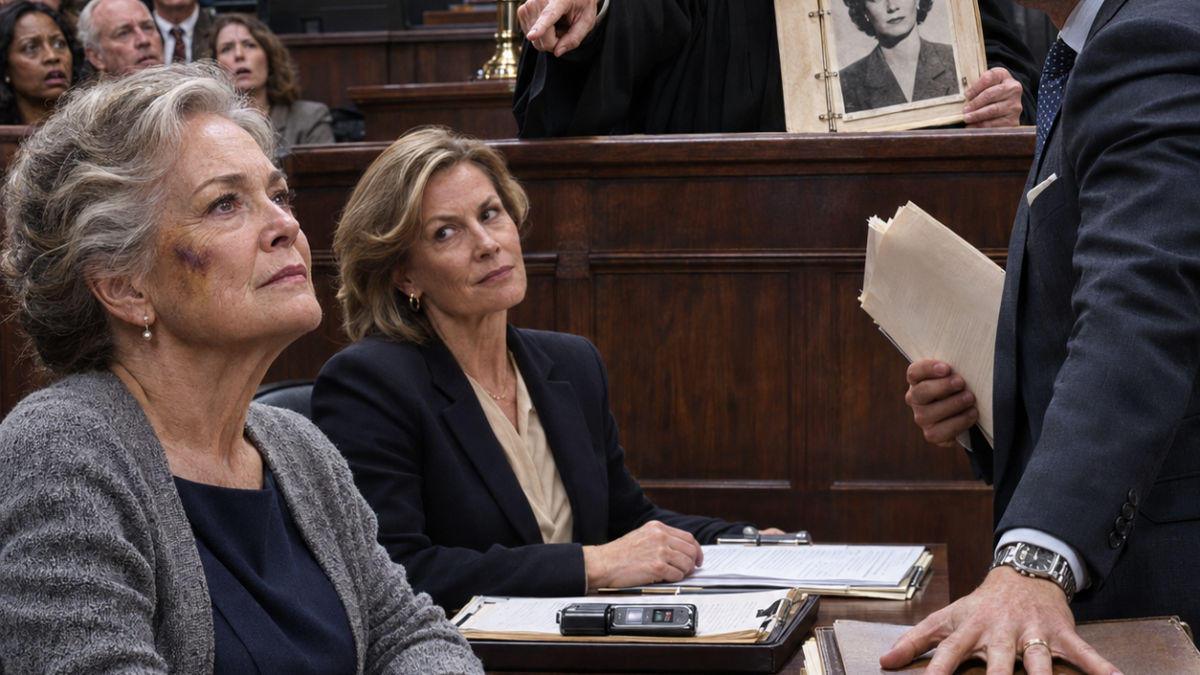
And Giselle would add another note to her little file.
They were not caring for me.
They were manufacturing incapacity.
Three weeks before the hearing, they changed the locks on my house while I was at a medical appointment.
I came home and found my key useless.
Zachary stood behind the glass front door.
“Go to a hotel tonight.”
“That is my house.”
“You’re confused.”
“Open the door.”
“We’re trying to protect you.”
I spent that night at a motel.
At 12:07 a.m., he texted:
Stop making this difficult.
He believed I had nowhere to go.
No lawyer beside me.
No children other than him.
No husband left to protect me.
No strength.
He mistook silence for helplessness.
That was his first mistake.
Their attorney stood when I entered.
“Your Honor, Mrs. Miller’s repeated injuries demonstrate why emergency intervention is necessary. She represents a danger to herself.”
Zachary lowered his head.
I saw the smile.
Then Judge Gabriel Hayes entered.
Everyone stood.
He opened the file.
Adjusted his glasses.
Looked toward me.
Then looked again.
“Rosalind Miller?”
“Yes, Your Honor.”
“The Rosalind Miller?”
Zachary’s smile disappeared.
Judge Hayes leaned slightly forward.
“The forensic accountant who uncovered the Sunburst Corporation pension fraud?”
I nodded.
“That was twenty-six years ago.”
Giselle turned toward Zachary.
Her face had gone pale.
Judge Hayes continued.
“You later founded Miller Forensic Advisory?”
“Yes.”
“The firm that specializes in inheritance diversion, fraudulent guardianship structures, and financial exploitation of older adults?”
“Yes, Your Honor.”
Zachary stared at me as though I had become someone else.
He had told Giselle I was a bookkeeper.
Technically, I had once been one.
Before I testified in a case that sent three corporate executives and a state treasurer to prison.
Before I built a firm that spent two decades following stolen money through trusts, forged powers of attorney, sham caregiver agreements, and guardianship petitions frighteningly similar to the one now lying on Judge Hayes’s desk.
The judge slowly looked at the photographs.
Then at Zachary.
Then back at me.
“Mrs. Miller.”
“Yes?”
“Are you telling this court those injuries were not caused by falls?”
I reached inside my coat.
“No, Your Honor.”
For the first time, Giselle looked genuinely frightened.
Because the photographs were not the only evidence I had brought.
FULL STORY CONTINUATION
I removed a thin black envelope.
Kenneth Sterling immediately stood.
“Your Honor, if Mrs. Miller intends to introduce undisclosed evidence—”
Judge Hayes raised one hand.
“Sit down, Mr. Sterling.”
Kenneth stopped.
“This is an emergency guardianship proceeding involving alleged incapacity, financial control, and an elderly respondent who has just disputed the factual basis of the petition.”
He looked at me.
“What do you have?”
“Not exhibits I expect you to admit without proper procedure.”
That mattered.
I knew enough about courtrooms to know expertise in forensic accounting did not make me an attorney.
“What is it, then?”
“A copy of the response filed yesterday through my counsel.”
Zachary turned sharply toward Kenneth.
My son mouthed something I could not hear.
Kenneth looked genuinely surprised.
Judge Hayes looked toward the clerk.
“Counsel?”
A woman stood from the second row behind me.
She had entered separately.
Dark gray suit.
Short black hair.
No theatrics.
Her name was Elena Park.
One of the best elder-law attorneys in the state.
She stepped forward.
“Good morning, Your Honor.”
Kenneth stared.
Zachary stared harder.
Giselle whispered:
“You said she didn’t have a lawyer.”
Zachary answered through clenched teeth.
“She didn’t.”
He was right.
Three weeks earlier, I had not.
Then he locked me out of my house.
Elena sat beside me.
Not before.
That was intentional.
She had asked me if I wanted her next to me when I entered.
I said no.
“Why?”
“Because Zachary needs to believe his case for thirty more seconds.”
She studied me.
“You enjoy your work too much.”
“I’m retired.”
“You clearly aren’t.”
Now she opened a binder.
“Your Honor, we filed a response, request for immediate restoration of access to Mrs. Miller’s residence, request for preservation of financial records, and a motion for an independent capacity evaluation.”
Kenneth stood again.
“We were not served.”
Elena looked at him.
“Electronic service was completed yesterday at 4:16 p.m. to the address listed on your appearance.”
Kenneth’s face changed.
The judge looked at the clerk.
She confirmed.
Kenneth sat.
That was the first crack.
A small one.
But I saw Zachary notice it.
He had hired Kenneth because he handled real estate and probate matters for people from Giselle’s social circle.
He was polished.
Confident.
Expensive.
He was not accustomed to being the least-prepared person in the room.
Judge Hayes addressed me.
“Mrs. Miller, before we go further, I need to understand the immediate situation.”
“Of course.”
“Where are you currently living?”
“A long-term hotel suite.”
“By choice?”
“No.”
“Why?”
“Because my son and daughter-in-law changed the locks on my residence.”
Zachary leaned toward Kenneth.
Kenneth rose.
“Your Honor, that characterization is incomplete. My clients secured the property because Mrs. Miller was repeatedly leaving doors open.”
I looked at him.
Judge Hayes noticed.
“Mrs. Miller?”
“That is false.”
Kenneth continued.
“She misplaced her keys repeatedly.”
“No.”
Zachary finally spoke.
“Mom, you did.”
The judge turned.
“Mr. Miller, you will speak through counsel unless I ask you directly.”
Zachary stopped.
I almost felt embarrassed for him.
Almost.
Judge Hayes looked at Elena.
“Do you have evidence concerning the lock change?”
“Yes.”
She opened the binder.
“A locksmith invoice ordered by Mr. Zachary Miller.”
Nothing dramatic.
No hidden camera.
No confession.
An invoice.
Dates.
Address.
Payment card.
The most ordinary evidence is often the most useful.
Elena continued.
“The lock change occurred while Mrs. Miller was attending a scheduled medical appointment.”
“Did she authorize it?”
“No.”
Kenneth answered:
“Mr. Miller believed emergency circumstances required intervention.”
The judge looked toward Zachary.
“Was there a guardianship order in place?”
“No.”
“Power of attorney?”
Kenneth hesitated.
“No.”
“Ownership interest in the residence?”
“No.”
“So his mother owned the house.”
“Yes.”
“And he changed the locks.”
“For safety.”
The judge looked at me.
“What happened to your belongings?”
“I have not been allowed unrestricted access.”
Something shifted in Judge Hayes’s face.
Not a decision.
Concern.
That distinction mattered.
He was not there to punish my son because he recognized my name.
He still needed evidence.
Good judges understand that familiarity is not proof.
The petition was seventy-six pages.
It looked impressive.
Medical terminology.
Photographs.
A calendar Giselle had maintained.
Statements from Zachary.
Statements from two people who barely knew me.
One was Giselle’s cousin.
The other was a neighbor who had seen me using a cane after I sprained my ankle.
The theory was simple.
Arthur died.
I deteriorated.
I fell repeatedly.
I denied needing help.
Therefore Zachary needed emergency control over my person and finances.
It was a pattern I knew well.
Not because every guardianship petition is abusive.
Most are not.
Guardianship can protect people who genuinely cannot protect themselves.
That is exactly why fraudulent petitions are so dangerous.
They borrow the language of care.
Protection.
Safety.
Best interests.
Then use those words to take autonomy from someone who still has it.
Judge Hayes looked at Kenneth.
“Mr. Sterling, what immediate authority are your clients requesting?”
Kenneth stood.
“Temporary guardianship over Mrs. Miller’s person and estate pending a full evaluation.”
“What specifically concerning the estate?”
“Authority to pay bills.”
“Manage investments.”
“Protect the residence.”
“Potentially liquidate assets if required for care.”
There it was.
Sell the house.
Zachary kept his face neutral.
Giselle did not.
Her eyes flickered.
I had spent thirty years reading eyes when numbers changed.
The body often reacts before the story catches up.
Judge Hayes looked toward me.
“Mrs. Miller, what is the value of your estate?”
Kenneth objected.
“Relevance—”
The judge ignored him.
I answered.
“Approximately six-point-eight million dollars in investable assets, excluding the residence.”
The room changed.
Giselle looked at Zachary.
Zachary’s face hardened.
Apparently he had not expected me to say it publicly.
“Residence value?” Judge Hayes asked.
“Approximately one-point-four million.”
The judge nodded.
“Any significant debt?”
“No.”
“Current bills unpaid?”
“No.”
“Tax delinquencies?”
“No.”
“Investment losses caused by cognitive error?”
“No.”
“Evidence of financial victimization?”
“Yes.”
That made everyone look up.
Judge Hayes leaned forward.
“Against you?”
“Yes.”
“By whom?”
I looked at my son.
“Potentially the petitioners.”
The silence that followed was different.
Kenneth stood quickly.
“Your Honor, this is precisely what concerns us. Mrs. Miller has become suspicious and accusatory.”
I almost smiled.
That move was familiar too.
When an older person notices exploitation, call the suspicion evidence of dementia.
I had seen it in case after case.
One seventy-nine-year-old woman realized her nephew had withdrawn $140,000 from her brokerage account.
His response?
She had become paranoid.
Another client discovered her caregiver had opened credit cards in her name.
The caregiver told family she was hallucinating.
Abuse loves diagnostic language when diagnostic language can silence the victim.
Judge Hayes said:
“Mrs. Miller, what financial conduct are you referring to?”
Elena answered.
“With the court’s permission, we would like to address that after capacity.”
The judge nodded.
“Agreed.”
Then:
“Let’s talk about the injuries.”
My stomach tightened.
Money was easy.
Bruises were harder.
Elena had arranged an independent medical examination twelve days earlier.
Dr. Miriam Chen.
Geriatrician.
No connection to me.
No connection to Zachary.
She had reviewed my medications, medical history, cognition, gait, and recent injuries.
She had administered standardized cognitive screening and referred me for a more detailed neuropsychological evaluation because Elena wanted nobody able to say we selected only favorable evidence.
Dr. Chen’s report had been filed under seal because it contained medical information.
Judge Hayes opened it.
He read quietly.
Zachary shifted.
Giselle whispered:
“What does it say?”
Kenneth motioned for silence.
The judge looked toward me.
“Your cognitive screening was normal.”
“Yes.”
“Neuropsychological testing?”
“Normal for age.”
“Any diagnosis of dementia?”
“No.”
“Delirium?”
“No.”
“Major neurocognitive disorder?”
“No.”
“Medication impairment?”
“No.”
He looked toward Kenneth.
“Your petition states Mrs. Miller has ‘documented progressive cognitive decline.’”
Kenneth answered carefully.
“My clients documented behavioral decline.”
“That is not the same thing.”
“No.”
“Which physician diagnosed progressive cognitive decline?”
Kenneth looked through his notes.
“No formal diagnosis yet.”
The judge removed his glasses.
“Then why is the word documented in the petition?”
Kenneth did not answer immediately.
That was crack number two.
Dr. Chen’s report contained another section.
The bruises.
She could not testify with certainty who caused them.
No honest physician could look at photographs and identify a perpetrator.
But she could say something else.
The distribution of certain injuries was not typical of the repeated falls described in Zachary’s notes.
The wrist bruising resembled patterned gripping.
The shoulder bruises could have occurred from impact against a wall or object.
The eyebrow injury was consistent with striking furniture.
None proved abuse.
Together, they contradicted the certainty of the story Zachary presented.
Judge Hayes looked at me.
“How did the wrist injury occur?”
I spoke slowly.
“Giselle asked me for access to my Vanguard account.”
Giselle’s face changed.
“I said no.”
“She grabbed my wrist.”
Giselle shot up.
“That is a lie!”
Kenneth grabbed her arm.
“Sit down.”
“But—”
Judge Hayes’s voice sharpened.
“Mrs. Miller.”
She froze.
Interesting.
Same last name now created confusion.
The judge clarified.
“Mrs. Zachary Miller, sit.”
Giselle sat.
I continued.
“She held me hard enough to leave marks.”
“Why did she want access?”
“She said Zachary needed to see whether I was making ‘unsafe investment decisions.’”
“Were you?”
“No.”
“What were you invested in?”
A strange question.
I answered.
“Mostly diversified index funds, municipal bonds, short-term Treasuries, and several legacy holdings.”
The judge’s mouth almost moved.
Not quite a smile.
Kenneth looked irritated.
“Your Honor, investment sophistication does not prove capacity.”
He was correct.
I respected him more for saying it.
Judge Hayes nodded.
“Agreed.”
Then looked back at me.
“What happened afterward?”
“Giselle photographed the bruise.”
“Did she mention that she had grabbed you?”
“No.”
“What did her note say?”
Elena found it.
Read:
Rosalind discovered bruising on wrist. Could not recall mechanism. Became defensive when asked.
The courtroom became completely silent.
I watched Giselle.
For months, she had believed that sentence belonged only to her.
Now a judge was reading it beside my sworn testimony.
Her confidence was gone.
Judge Hayes asked about the shoulder.
“Zachary pushed me into the hallway wall.”
Zachary clenched his jaw.
“When?”
“February ninth.”
“Reason?”
“I refused to sign a home-equity line of credit.”
Elena slid another document toward the clerk.
An unsigned bank application.
Prepared in my name.
Borrower:
Rosalind Miller.
Requested line:
$450,000.
Purpose:
Home improvements and family financial planning.
Judge Hayes looked at the document.
“Did you apply for this?”
“No.”
“Who prepared it?”
“The metadata provided by the bank indicates the initial online inquiry came from an email address associated with Zachary.”
Kenneth stood.
“Objection to counsel testifying.”
Elena nodded.
“Fair.”
She sat.
The judge looked at the report itself.
“Has the bank authenticated this?”
“Yes, Your Honor. Affidavit attached.”
The judge read.
Zachary stopped looking at me.
I had discovered the application by accident.
A bank representative called.
“Mrs. Miller, we’re following up on your home-equity inquiry.”
I said:
“What inquiry?”
There was a pause.
That pause saved me.
I asked the representative not to cancel anything immediately.
Instead, I requested written information.
For thirty years, I had taught investigators one rule:
When someone shows you the first thread of fraud, do not yank it until you know where it leads.
Preserve.
Document.
Then act.
So I did.
The application had not been completed.
No money moved.
But somebody had tested whether my house could become liquidity.
Two days later, Zachary asked casually whether I had ever considered “putting the equity to work.”
I said no.
He became angry.
The hallway incident happened that evening.
Then Giselle photographed the bruise.
Judge Hayes asked:
“Why did you not report the alleged assaults immediately?”
That was the question I feared.
Because I knew how it sounded.
A forensic accountant specializing in elder exploitation being exploited by her own child?
Surely I should have known better.
I looked at the judge.
“Because he is my son.”
The words nearly broke.
Nobody moved.
I continued.
“I spent twenty-three years advising families not to let emotion override evidence.”
My voice shook.
“Then it happened to me.”
I looked at Zachary.
“And I discovered expertise does not immunize you against loving the person hurting you.”
Judge Hayes’s expression softened.
Not pity.
Understanding.
“I kept thinking each incident would be the last.”
I swallowed.
“I also knew what would happen if I accused him.”
“What?”
“He would say I was confused.”
The judge looked at the petition.
Exactly.
Kenneth recovered well.
He had to.
He stood.
“Your Honor, even if family conflict occurred, that does not establish a deliberate scheme.”
Correct again.
“It also does not explain Mrs. Miller’s repeated falls.”
I turned toward Elena.
She nodded.
Time for the next layer.
Elena said:
“We agree.”
Kenneth looked surprised.
“We are not asking the court to accept Mrs. Miller’s account solely because she is accomplished or articulate.”
Judge Hayes listened.
“We have contemporaneous evidence.”
That was when Giselle reached for Zachary’s hand.
He pulled his away.
Small.
But I noticed.
Three months before the hearing, after the second unexplained confrontation, I had installed a security system.
Not secretly inside bedrooms.
Not illegal surveillance in private spaces.
Exterior cameras.
Entryway.
Main hallway.
Study doorway.
Common areas of my own house.
I had spent years advising older clients to document who entered their homes.
Now I followed my own advice.
I did not tell Zachary.
Not because I was building a trap.
Because he had begun going through Arthur’s study when I was away.
The cameras uploaded to a cloud account neither Zachary nor Giselle knew existed.
When they changed the Wi-Fi password after locking me out, the system lost connection.
But footage before that date remained preserved.
Elena asked to play one clip.
Kenneth objected until authentication was established.
We had expected that.
The installer had provided records.
The cloud provider preserved timestamps and hashes.
The judge allowed limited viewing subject to later evidentiary rulings.
The first clip showed February ninth.
Hallway.
No audio at first.
Then sound.
Zachary stood near the study.
I stood six feet away.
My own voice:
“I am not putting a mortgage on the house.”
His:
“It’s not a mortgage.”
“It puts debt against the house.”
“You’re being impossible.”
“No.”
“You don’t need all that equity sitting there.”
“It is my house.”
Then his voice sharpened.
“It’s going to be mine eventually anyway.”
The courtroom changed.
Zachary’s face turned red.
On the video, I tried to walk past.
He stepped in front of me.
I moved around.
He put one hand against my shoulder and shoved.
Not enough to send me to the floor.
Enough to drive my shoulder into the wall.
The video ended.
No one spoke.
I had watched it only once before.
I did not look at Zachary now.
If I did, I knew I would see the little boy inside him.
I needed to survive the hearing first.
Kenneth stood.
“That clip lacks context.”
Judge Hayes looked at him.
“What context would make pushing a seventy-one-year-old woman into a wall relevant to a claim that she injured herself falling?”
Kenneth paused.
“Your Honor, I am not defending physical contact.”
Good choice.
“My point is that this does not prove all injuries arose from abuse.”
“Agreed.”
The judge turned to Elena.
“Next.”
The second video hurt more.
Giselle.
Kitchen.
January twenty-third.
She had come over without Zachary.
I had made tea.
We discussed the investment account.
Then she said:
“You need to stop pretending this money is yours alone.”
I remembered that sentence.
On video, I answered:
“It is legally mine.”
“You’re Zachary’s mother.”
“Yes.”
“Then stop acting like a stranger.”
“I am not giving you passwords.”
Giselle reached across the counter.
I pulled my hand back.
She came around.
Took my wrist.
“Just unlock the phone.”
“No.”
“Rosalind.”
“Let go.”
Her fingers tightened.
I said it again.
“Let go of me.”
The clip showed me wrenching free.
I walked toward the sink.
Giselle followed.
Then, astonishingly, she took out her phone.
“Look what you’ve done.”
She photographed my wrist.
The courtroom was silent.
The video captured me asking:
“What are you doing?”
And Giselle answering:
“Keeping track.”
Judge Hayes paused the clip.
Giselle was crying now.
Not triumphantly.
Not performatively.
Real fear.
I felt no satisfaction.
Only nausea.
“You photographed the injury immediately after causing it?” Judge Hayes asked.
Giselle whispered:
“I didn’t cause it.”
The judge stared.
The video was frozen on the screen.
Her hand around my wrist.
Giselle continued.
“I was trying to stop her from dropping her phone.”
I almost admired the instinct.
Explain.
Always explain.
Judge Hayes looked toward Kenneth.
He looked exhausted.
“Counsel?”
Kenneth leaned toward Giselle.
Whispered.
Then said:
“My client will not make further statements without advice.”
Good attorney.
Late.
But good.
The cut above my eyebrow was different.
No camera captured the exact impact.
But there was audio.
My phone.
I had begun using voice memos after Zachary accused me twice of misremembering conversations.
Again, not every recording is lawful everywhere.
Elena had checked the law before relying on it.
The recording occurred during a conversation in my own study in a jurisdiction where my participation allowed the recording under the circumstances.
I did not hide that from the court.
The audio began after an argument had already started.
Zachary:
“Dad’s papers are useless.”
Me:
“Put them back.”
Giselle:
“They belong to family.”
Me:
“They belong to me.”
Zachary:
“You’re obsessed with old documents.”
Then sounds.
Drawer.
Papers.
My voice:
“Zachary, stop.”
His:
“Move.”
Me:
“No.”
Then a crash.
The recording became chaotic.
My voice cried out.
Then silence.
Giselle:
“Oh my God.”
Zachary:
“Mom?”
Then the sentence I would never forget.
Giselle, quieter:
“Take a picture before it swells.”
Elena stopped the audio.
The judge did not immediately speak.
That sentence did more damage than any accusation I could make.
Take a picture before it swells.
Not:
Call an ambulance.
Not:
Are you all right?
Photograph the evidence.
Because they needed the injury.
Zachary suddenly stood.
“I never meant for her to get hurt.”
Kenneth grabbed his sleeve.
“Sit down.”
Zachary did not.
Judge Hayes’s voice sharpened.
“Mr. Miller.”
Zachary looked toward me.
“Mom.”
I stared at him.
His eyes filled.
“She was blocking the desk.”
Kenneth closed his eyes.
The courtroom went silent again.
Zachary realized too late what he had said.
Not:
It didn’t happen.
Not:
She fell.
She was blocking the desk.
Judge Hayes said:
“Sit down.”
Zachary sat.
The lie had finally become too crowded to hold all of them.
But the guardianship petition was about more than injuries.
It was about money.
That was where I understood their strategy most clearly.
Elena asked permission to call our first witness.
Judge Hayes had originally expected only an emergency hearing.
Given the new evidence, he decided to continue the matter in stages.
But before deciding immediate relief, he allowed limited testimony.
Our witness entered.
Samuel Reed.
No relation to my late husband.
My former partner at Miller Forensic Advisory.
Sixty-eight.
Gray beard.
Still wore the same cheap glasses he had owned for ten years despite earning enough to buy a hundred better pairs.
Zachary knew him.
His face changed.
Samuel had attended Thanksgiving at my house when Zachary was a teenager.
“Uncle Sam,” Zachary used to call him.
Now Samuel raised his right hand and took an oath.
It almost broke me.
Elena asked:
“Mr. Reed, did Mrs. Miller contact you regarding her finances?”
“Yes.”
“When?”
“Approximately six weeks before the petition.”
“Why?”
“She had concerns about attempted access to accounts and pressure regarding her home.”
“Did she ask you to hide assets?”
“No.”
“Transfer money?”
“No.”
“Disinherit anyone?”
“No.”
“What did she ask?”
Samuel looked toward me.
“To make an independent image of relevant financial records and determine whether anyone had attempted unauthorized changes.”
“What did you find?”
Kenneth objected to scope.
The judge limited testimony.
Samuel summarized.
Three failed password-reset attempts on one brokerage account from an IP address associated with Zachary’s residence.
A request to add Zachary as an authorized contact on another account.
Not completed.
An online inquiry concerning the home-equity line.
Several emails between Zachary and a real estate broker discussing my house.
My house.
Before any guardianship existed.
The email subject line:
Possible listing after transfer of authority.
Giselle closed her eyes.
There it was.
The house had already been discussed as an asset to sell.
Before I was legally incapacitated.
Before any judge heard evidence.
Before any guardian existed.
They were planning the next step while still building the case for the first.
Judge Hayes asked:
“Do the emails state why the property would be sold?”
Samuel answered:
“One references ‘freeing capital for Rosalind’s care.’”
Kenneth seized the point.
“There.”
He stood.
“That is entirely consistent with my clients acting protectively.”
Samuel remained calm.
Elena asked:
“What care plan existed at that time?”
“None that I found.”
“Any assisted-living quote?”
“No.”
“Home-care assessment?”
“No.”
“Medical recommendation that Mrs. Miller leave the home?”
“No.”
“Any estimate of anticipated care costs?”
“No.”
“What else do the emails discuss?”
Samuel looked toward the judge.
“A potential purchase of a vacation property by Mr. and Mrs. Zachary Miller.”
Kenneth objected.
The judge allowed the question narrowly.
Samuel continued.
One email to the broker said:
If Mom’s place sells near list, we’ll finally have enough liquidity to move on the lake property without touching retirement accounts.
My son stopped breathing.
I watched his chest.
Nothing moved for a second.
Then he inhaled.
That email was the center of the entire case.
Not because it automatically proved every allegation.
Because it connected my incapacity to his future.
My house.
My money.
His lake property.
I had known about the email before the hearing.
Samuel showed me.
I read it in a motel room.
Then vomited in the bathroom.
People assume forensic accountants become numb to financial betrayal.
We do not.
We simply know how to trace it.
The pain remains personal when the name on the spreadsheet is your son’s.
I had spent decades following money from vulnerable people to greedy relatives.
A nephew buying a boat.
A daughter paying gambling debts.
A caregiver purchasing a car.
A son refinancing a house.
Every time, families said:
How could someone do that?
Now I knew something I had not understood fully before.
The question itself is useless.
People do terrible things because they find stories that make those things feel reasonable.
Zachary’s story was probably:
Mom has enough.
The house will be mine someday.
She doesn’t need it.
We’re helping her.
A lake house is an investment.
She’ll be safer somewhere smaller.
One rationalization stacked on another until theft began to resemble planning.
Judge Hayes recessed for twenty minutes.
Zachary tried to approach me.
A court officer stopped him.
He said:
“Mom, please.”
I did not look up.
“Please.”
Elena touched my hand.
“You don’t have to answer.”
I knew.
That did not make his voice easier to hear.
“Mom, I didn’t know Giselle was documenting everything like that.”
Giselle turned on him.
“What?”
Zachary looked at her.
“I didn’t.”
“You told me to keep records!”
“Of falls!”
“You knew they weren’t falls!”
Kenneth stood between them.
“Both of you stop talking.”
Too late.
Twenty people had heard.
Giselle’s face changed.
She pointed at Zachary.
“You said if we had enough photographs, the judge wouldn’t question it.”
Kenneth whispered:
“Stop.”
Zachary stared.
“You wanted the house more than I did.”
I finally looked up.
There is a moment when conspirators discover loyalty ends exactly where consequences begin.
I had seen it in white-collar cases.
Executives protect one another until indictment.
Then memory improves.
Suddenly everyone remembers who suggested what.
Zachary and Giselle were entering that stage.
I felt no pleasure.
Only grief.
They had built their marriage partly around taking from mine.
Now the structure was turning inward.
Judge Hayes returned.
His first decision was immediate.
The emergency guardianship petition was denied.
Not dismissed permanently yet.
Denied on the current request.
No temporary authority to Zachary.
No access to my accounts.
No authority over the residence.
Then the judge went further.
He ordered that I be restored immediate access to my home.
Zachary and Giselle were prohibited from changing locks, removing property, or accessing financial records without my written consent.
Any remaining property belonging to them could be retrieved through a scheduled process.
The court referred evidence of possible elder abuse, financial exploitation, false statements in a judicial proceeding, and unauthorized financial activity to the appropriate agencies.
That did not mean arrests.
It meant investigation.
Important distinction.
Judge Hayes appointed a neutral evaluator to confirm my capacity independently.
I welcomed it.
Then he looked directly at Kenneth.
“Counsel, I expect your clients to preserve every relevant communication and document.”
Kenneth nodded.
“Yes, Your Honor.”
Then Judge Hayes looked at Zachary.
“Mr. Miller.”
Zachary slowly stood.
“You came to this court asking for the extraordinary power to make decisions for another adult.”
“Yes.”
“You supported that request with representations that some injuries occurred because your mother fell.”
Zachary said nothing.
“The evidence presented today raises serious questions about those representations.”
“Yes, Your Honor.”
His voice had become almost inaudible.
The judge continued.
“Guardianship is not a shortcut to inheritance.”
That sentence landed like a hammer.
Zachary looked at me.
I did not rescue him.
Outside the courtroom, reporters were not waiting.
No one cared.
Real family disasters often happen without an audience.
Elena and I walked to the elevator.
Samuel followed.
I leaned against my cane.
My knees suddenly felt weak.
Samuel asked:
“You okay?”
“No.”
“Good.”
I glared.
He shrugged.
“You’d worry me if you were.”
The elevator doors opened.
We stepped inside.
Then I started crying.
Not victory tears.
Not relief exactly.
Grief.
Elena pressed the lobby button.
Samuel stared at the floor.
Neither told me to stop.
At seventy-one, I cried for the woman who had spent decades teaching others how to recognize exploitation and still needed six weeks to admit her own son was exploiting her.
I cried for Arthur.
God, I missed him.
He would have known Zachary had changed.
Or maybe he would have defended him longer than I did.
Parents are fools in predictable ways.
I cried because the judge believed enough evidence to protect me.
And because part of me still wished the evidence had been false.
We went directly to my house.
Not alone.
A court officer met us.
So did a locksmith.
The new locks came off.
Mine went on.
I stood in the doorway for almost a minute.
Forty years.
Arthur and I had bought the land before Zachary was born.
We built the house when money was still tight.
Arthur painted the nursery himself.
Badly.
I never told him.
The oak tree in the front yard came from a sapling Zachary brought home from school.
Everything contained him.
That was the cruelty of it.
How do you remove your son from a house without removing your own history?
You don’t.
You learn to live with both.
Inside, things had changed.
Not dramatically.
That would have been easier.
Small things.
Arthur’s bourbon bottle open.
One glass on the side table.
My desk drawers reorganized.
Folders missing.
The family silver moved.
A rug rolled up in the hallway because Giselle said it was a fall hazard.
My bedroom closet had been opened.
I stood there.
Someone had gone through my underwear.
There is something uniquely violating about another person reorganizing your private life while insisting they are protecting you.
Elena called from the study.
“Rosalind.”
I walked in.
Arthur’s desk.
One drawer empty.
The original trust documents were gone.
So were several deeds.
My late husband’s handwritten notebooks.
I gripped the cane.
“Zachary took these.”
Samuel said:
“We’ll request return.”
“No.”
They both looked at me.
“First, photograph everything.”
Samuel smiled sadly.
“There she is.”
The forensic accountant had returned.
The criminal investigation unfolded over months.
Again, not television.
Subpoenas.
Interviews.
Digital records.
Bank logs.
Emails.
Medical records.
The prosecutor’s elder-abuse unit became involved.
Zachary and Giselle hired separate attorneys.
That was inevitable after the hallway argument.
Kenneth withdrew from representing both of them because their interests had diverged.
Another predictable moment.
People who coordinate a story often need different lawyers once the story fractures.
I was interviewed three times.
Each time was painful.
Each time I answered.
The investigator, Detective Marisol Vega, never called Zachary a monster.
I appreciated that.
She asked:
“What happened?”
Not:
How could your son do this?
That was kinder.
The independent evaluator confirmed what Dr. Chen already had.
I was cognitively intact.
I had mild osteoarthritis.
A healing wrist sprain.
A cane because my right knee occasionally betrayed me on stairs.
Nothing that prevented me from managing finances, choosing where to live, or making medical decisions.
The guardianship petition was dismissed fully.
Judge Hayes’s written order was restrained.
Professional.
But one paragraph stayed with me:
Advanced age, physical frailty, bereavement, and family disagreement do not, individually or collectively, establish incapacity. The right of an adult to make decisions others consider unwise is not extinguished by age.
I printed it.
Not because I needed validation anymore.
Because I intended to use it in future training.
Yes.
Future.
I had retired.
Apparently not enough.
Two months after the hearing, Samuel called.
“Come to the office.”
“I don’t work there.”
“You founded it.”
“Same problem.”
“Come.”
I went.
Miller Forensic Advisory had changed since I sold my majority interest.
New carpet.
Younger analysts.
Too many screens.
A conference room that used to contain filing boxes now had a glass wall.
Samuel placed a folder in front of me.
“What is this?”
“A proposal.”
“No.”
“You haven’t opened it.”
“I know you.”
He grinned.
Inside was a plan for an Elder Financial Exploitation Response Unit.
Not a charity.
A professional service line.
Training for banks.
Families.
Attorneys.
Care organizations.
Protocols for recognizing coercive guardianship petitions.
I looked up.
“Why are you showing me?”
“Because you’re teaching it.”
“No.”
“Six seminars.”
“No.”
“Four.”
“Samuel.”
“Two and a recorded training.”
I stared.
He smiled.
“You’re bored anyway.”
“I just spent two months trying to keep my son from taking my house.”
“Exactly.”
“You think that qualifies me?”
“I think the fact that you almost missed it qualifies you.”
That stopped me.
Samuel became serious.
“Experts talk like recognition is easy.”
“It isn’t.”
“No.”
“You knew every red flag.”
“And still explained them away because they belonged to Zachary.”
My throat tightened.
He continued.
“That is what families need to hear.”
I eventually agreed to two seminars.
Then four.
Samuel knew me too well.
The first seminar was attended by bank compliance officers.
I stood behind a podium.
No cane that day.
Slide one:
WHEN THE VICTIM LOVES THE PERSON TAKING THE MONEY
The room became quiet.
I told them something I had never said publicly.
“Do not assume expertise protects someone from coercion.”
“Do not assume wealthy people cannot be exploited.”
“Do not assume a person who refuses to report family abuse is confused.”
Then:
“And do not assume concern is genuine merely because it is organized.”
Photographs.
Calendars.
Notes.
Medical language.
All can document care.
All can also manufacture a story.
Context matters.
Evidence matters.
Independent evaluation matters.
A young compliance officer raised her hand.
“What is the biggest warning sign?”
I thought of Zachary.
Then answered:
“When the proposed protector benefits significantly from the person being declared incapable.”
Not proof.
Warning.
Always distinguish the two.
That had been my career.
Now it had become my life.
The financial investigation discovered more than I expected.
Less than I feared.
Zachary had not stolen millions.
He had not emptied my accounts.
He had not forged a new will.
There was no secret offshore plot.
Reality was smaller.
And therefore sadder.
He had approximately $190,000 in personal debt.
Some from an unsuccessful business investment.
Some credit cards.
Some expensive renovations to his and Giselle’s home.
They had also placed a deposit on a lake property contingent on selling another asset or obtaining financing.
They did not have enough.
My house became the solution.
Not because they hated me.
Because they wanted something.
That is how much exploitation begins.
Desire creates arithmetic.
Arithmetic creates justification.
They estimated that after care expenses, selling my home would leave enough liquidity to “restructure” my portfolio.
Zachary wrote in one email:
She’ll never need a 4-bedroom place alone.
Maybe true.
Not his decision.
Another:
If she goes somewhere with staff, it’s safer anyway.
Maybe.
Still not his decision.
And finally:
Dad would want the house to help the family.
That one destroyed me.
Arthur would have wanted the house to help family.
He would not have wanted our son to manufacture my incapacity to get it.
People invoke the dead because the dead cannot correct them.
I could.
The prosecutor eventually charged Zachary and Giselle with offenses related to exploitation, attempted unauthorized financial conduct, and false representations associated with the guardianship scheme.
The exact counts changed during the case.
Some allegations were reduced.
Some evidence supported civil consequences more strongly than criminal ones.
The physical incidents were also addressed.
I did not control charging decisions.
That was difficult for me.
Forensic work creates the illusion that if you find the truth, the outcome follows automatically.
Law is messier.
Evidence thresholds differ.
Intent matters.
Negotiations happen.
Eventually both Zachary and Giselle entered negotiated resolutions.
No dramatic twenty-year prison sentences.
No courtroom applause.
There were findings they could not explain away, financial restitution obligations for my documented costs and losses, restrictions, probationary conditions, and required compliance with protective orders.
Zachary also lost professional opportunities because the case became part of his record.
Giselle’s employer terminated her after its own review because she worked in a regulated financial role and had failed to disclose the proceedings.
That consequence had nothing to do with me.
I took no pleasure in it.
But I did not interfere.
Consequences are not cruelty merely because the person experiencing them is related to you.
The lake house deposit was lost.
That part almost felt symbolic.
They had planned to use my home to help buy theirs.
In the end, they had neither.
I sold nothing.
Not because I was emotionally attached to every wall.
Because the decision remained mine.
That was the whole point.
Six months after the case ended, I did something that surprised everyone.
I put the house on the market.
Samuel stared at me.
“You fought all that to keep it.”
“No.”
“What?”
“I fought to keep the right to choose.”
He smiled.
“Fair.”
The house had become too large.
Stairs.
Maintenance.
Empty rooms.
Arthur had been gone four years.
I did not need four bedrooms.
Zachary had been right about one fact.
He was wrong about who had the right to act on it.
I sold the house for slightly more than expected.
Bought a smaller one-level home twelve minutes from my sister.
Invested the balance.
Not one dollar went toward a lake property.
That detail made Samuel laugh for nearly a minute.
Before the sale, I spent one final night there.
No furniture except a mattress and one chair.
I walked room to room.
The nursery.
Zachary’s old bedroom.
The pencil marks on a closet frame where Arthur measured his height.
Age six.
Eight.
Ten.
Thirteen.
At fifteen, Zachary wrote his own height because he insisted his father measured wrong.
I ran my fingers over the marks.
Then sat on the floor.
I had spent months trying to separate the man from the boy.
Impossible.
They were both my son.
The boy did not disappear simply because the man betrayed me.
That is one of the hardest truths parents face.
We remember someone who no longer exists exactly as we knew them.
But love for the memory cannot require surrender to the present.
I cried until my head hurt.
Then slept.
In the morning, I locked the door myself.
My key.
My choice.
The last time.
For nearly a year, Zachary and I had no direct contact.
Protective restrictions made part of that necessary.
Afterward, it became my decision.
He sent letters through counsel.
I read none at first.
Then one day, Elena called.
“He sent another.”
“Throw it away.”
“I can.”
Silence.
“What?”
“This one is different.”
I hated when lawyers said that.
“Send it.”
I opened it that evening.
Eight pages.
Too long.
Typical Zachary.
The first page was apology.
I nearly stopped.
Then he wrote:
I kept telling myself I was protecting you because admitting I wanted your money would have made me see what I was becoming.
I kept reading.
I did think you should move. I did think the house was too large. I did think you were becoming more fragile. None of those thoughts gave me the right to create evidence.
Then:
The photographs are the part I cannot excuse to myself. I looked at injuries I helped cause and turned them into evidence against you. I do not understand how I crossed that line, except that once we started, every next step felt like protecting the previous lie.
That sounded true.
Fraud grows that way.
One adjustment requires another.
One false note requires another photograph.
One lie needs paperwork.
Soon the lie becomes a system people feel compelled to defend because admitting the first step would destroy everything built after it.
He continued:
I blamed Giselle. She blamed me. The truth is that I wanted the money before she wanted the guardianship. She wanted control before I had the courage to say what I wanted. We made each other worse.
That was also plausible.
Then:
I am not asking you for forgiveness. I am asking you to believe I finally understand that I tried to turn being your son into ownership of you.
I stopped.
That sentence hurt.
Because it was accurate.
I did not answer for three months.
Then I wrote one page.
Zachary,
I believe you understand more than you did.
Understanding is not the same as trust.
I love you. That has never been the issue.
For now, I need distance.
If you want a life in which you are different from the man who sat in that courtroom laughing, build it whether I am there to reward you or not.
Mom
I mailed it.
No promise.
No deadline.
For the first time in my life as his mother, I let my son build something without checking whether he needed help.
Giselle and Zachary separated the following year.
I heard through Elena.
I did not celebrate.
Their marriage had been unhealthy, but I refused to reduce everything to “evil daughter-in-law corrupts son.”
That would let Zachary avoid responsibility.
Giselle had done terrible things.
So had he.
Adults own their choices.
Their divorce was theirs.
I stayed out.
Giselle wrote me once.
I read the letter.
She apologized.
She also explained too much.
Her father had controlled money.
Her mother had suffered.
She grew up believing financial security justified almost anything.
I understood the psychology.
I did not need the relationship.
I responded with three lines:
I accept that you are sorry.
I hope you continue treatment and build a different life.
I do not want future contact.
She respected that.
Good.
Boundaries work best when they are clear enough nobody has to interpret them.
My life became unexpectedly busy.
The seminars expanded.
I began consulting with state banking associations on elder financial exploitation protocols.
Then a law school invited me to speak.
I laughed.
“I’m not a lawyer.”
They said:
“Exactly.”
I accepted.
My lecture was titled:
THE MOST DANGEROUS WORD IN ELDER EXPLOITATION: FAMILY
Provocative.
Samuel chose the title.
I complained.
Then used it.
I told students:
“Family is not dangerous.”
“Assumption is.”
We assume family caregivers are safe.
We assume adult children know best.
We assume bruises mean falls.
We assume older adults who accuse relatives may be confused.
We assume competent professionals cannot become victims.
Every assumption can be reasonable.
Every assumption can also hide abuse.
Investigate.
Verify.
Do not romanticize family.
Do not demonize it either.
Follow evidence.
That was always my message.
At seventy-three, I accepted a pro bono advisory role with an elder-justice nonprofit.
One day a woman named Helen came in.
Eighty-two.
Former high-school principal.
Her nephew wanted guardianship.
She whispered:
“They’re saying I forget things.”
I asked:
“Do you?”
“Yes.”
I smiled.
“So do I.”
She laughed nervously.
Then told me her nephew had already contacted a realtor.
My stomach tightened.
Not every similar fact means the same scheme.
We investigated.
In Helen’s case, she did have early cognitive decline.
She also had enough capacity to participate in planning.
Her nephew was not stealing from her.
He was overwhelmed.
They needed supported decision-making, medical planning, limited financial assistance.
Not total guardianship.
I watched Helen remain involved in her own life.
That case mattered to me.
Because after Zachary, I could have become suspicious of every child.
That would have been another kind of distortion.
My work had to remain evidence-based.
Not trauma-based.
That was harder than I expected.
Two years after the hearing, Judge Hayes attended one of my seminars.
I spotted him in the third row.
Afterward, I walked over.
“Your Honor.”
“Mrs. Miller.”
“Rosalind.”
He smiled.
“Gabriel.”
I raised an eyebrow.
“Dangerous.”
He laughed.
Then became serious.
“How are you?”
“Good.”
“Really?”
“Yes.”
He nodded.
“I’m glad.”
I thanked him.
He immediately shook his head.
“I did my job.”
“You listened.”
“That is the job.”
Not always.
But I appreciated the humility.
Then he said something I never forgot.
“When I recognized your name that morning, I was worried.”
“Why?”
“That I might assume competence because of your history.”
I smiled.
“I wondered.”
“I had to remind myself that brilliant people can develop dementia.”
“True.”
“And accomplished people can lie.”
“Also true.”
“So the name could not decide the case.”
“Good.”
He continued.
“Then the evidence arrived.”
I laughed.
“That tends to help.”
He smiled.
“Your career didn’t save you.”
“No.”
“Your documentation did.”
That became another slide in my training.
Reputation is not evidence.
Credentials are not capacity.
Age is not incapacity.
Bruises are not self-neglect.
A child is not automatically a safe guardian.
A difficult family relationship is not automatically exploitation.
Verify.
Always verify.
Zachary completed his court requirements.
Found work.
Not in finance.
Good.
He began attending a men’s accountability program in addition to therapy.
I learned this not because I monitored him.
Because, eventually, he asked to tell me.
Three years after the hearing, he wrote:
Would you be willing to meet me for one hour in a public place? No Giselle. No lawyer. No money discussion. If not, I will understand.
I stared at the message for two days.
Then showed Elena.
She said:
“You don’t need my permission.”
“I know.”
“Do you want to go?”
“I don’t know.”
“Then don’t ask what you should do.”
“What should I ask?”
She smiled.
“What outcome can you live with?”
I hated good lawyers.
I agreed.
One hour.
A café.
My sister in the shopping center nearby.
Zachary arrived early.
He stood when I entered.
He looked older.
Of course he did.
So did I.
For several seconds, neither of us knew whether to hug.
We didn’t.
Good.
He sat.
“Thank you for coming.”
I nodded.
He had coffee.
I ordered tea.
Then silence.
Finally:
“How is the new house?”
“Good.”
“I saw the listing when you sold the old one.”
I waited.
He smiled sadly.
“I know.”
“You sold it.”
“Yes.”
“After everything.”
“Yes.”
He looked down.
“That taught me something.”
“What?”
“That I really wasn’t trying to protect the house for you.”
I appreciated that.
He continued.
“If I had been, I should have been happy you sold it when you chose.”
“Yes.”
“I was angry.”
“Why?”
“Because it proved the issue was never whether the house should be sold.”
“It was who decided.”
“Yes.”
Good.
He understood.
Then he said:
“Mom, I’m not going to ask you to forgive me today.”
“Good.”
“I’m not going to tell you Giselle made me do it.”
“Better.”
“I’m not going to say I was stressed.”
“Excellent.”
For a second, we almost smiled.
Then his eyes filled.
“I hurt you.”
“Yes.”
“I used the fact that you loved me to make you doubt yourself.”
“Yes.”
“I changed the locks.”
“Yes.”
“I pushed you.”
“Yes.”
“I helped build a case that said the injuries we caused were proof you needed us.”
My throat tightened.
“Yes.”
He nodded.
“I don’t know how to live with that yet.”
I looked at him.
“That is your work.”
“I know.”
There it was.
No request for me to make him feel better.
For once, he carried his own shame.
That mattered.
We met again two months later.
Then four months.
Slow.
No sudden reconciliation.
Trust is not a courtroom verdict.
You do not produce Exhibit A and receive it back.
He never entered my house without invitation.
Never asked about my estate.
Never joked about inheritance.
At Christmas, he sent a card instead of arriving.
The next year, I invited him for coffee.
Not dinner.
Then dinner.
Small steps.
I retained control of the pace.
He respected it.
That was the only apology that truly mattered.
Behavior.
At seventy-five, I updated my estate plan.
Not to punish Zachary.
That would have kept my money emotionally tied to the betrayal.
I created trusts.
Charitable gifts.
A substantial bequest to elder-justice programs.
Zachary remained a beneficiary.
Not sole.
Not trustee.
An independent fiduciary would manage certain assets.
When I told him, he said:
“You don’t have to leave me anything.”
I studied him.
Three years earlier, that sentence would have been impossible.
“I know.”
“Then why?”
“Because estate planning is not revenge.”
He cried.
I did not.
Much.
The funniest part came later.
My niece Anna asked:
“Aunt Rosalind, how much are you actually worth?”
I looked at her.
“Enough to make everyone irritating.”
She laughed.
Zachary did too.
It was the first time inheritance had become a joke again without feeling dangerous.
That was healing.
I kept the cane from the courtroom.
Even after I replaced it with a lighter one.
It stood in my office.
Samuel called it my “trial weapon.”
I told him to stop.
He did not.
Beside it, I kept a copy of the guardianship petition.
Not framed.
I’m not insane.
But preserved.
Page one:
PETITION FOR EMERGENCY GUARDIANSHIP OF ROSALIND MILLER
Petitioner:
Zachary Miller, devoted son.
Devoted.
That word used to make me furious.
Later, it made me sad.
Eventually, it became just ink.
That is what time can do when healing works.
It turns weapons back into paper.
People who hear my story usually love the courtroom reveal.
Judge recognizes famous forensic accountant.
Son panics.
Evidence appears.
Case collapses.
It is satisfying.
I understand.
But the most important part happened three weeks earlier in a cheap motel room.
No judge.
No Samuel.
No Elena.
No courtroom.
Just me sitting on a bedspread I did not want to touch, staring at Zachary’s text:
Stop making this difficult.
I almost called him.
I almost apologized.
I almost asked:
Can I come home?
That would have been easier.
Instead, I opened my laptop.
Downloaded account statements.
Called Samuel.
Called Elena the next morning.
That was the real turning point.
Not when the judge recognized me.
When I finally used my expertise on my own life.
I had spent years telling clients:
“Facts first.”
Then, when my son hurt me, I kept offering feelings instead.
He loves me.
He’s stressed.
He means well.
He would never steal.
Giselle is pushing him.
Arthur’s death changed all of us.
Every sentence may have contained some truth.
None changed the evidence.
That lesson humbled me.
Expertise is not knowing everything.
Sometimes it is remembering to apply what you already know after emotion tells you that your case is somehow exempt.
Mine was not.
The bruise around my wrist faded.
The cut above my eyebrow disappeared.
The shoulder healed.
The photographs remained in the court record.
For a while, I hated that.
Then I changed my mind.
Those images had been created to take my autonomy away.
In the end, they helped expose the scheme.
Not because bruises speak for themselves.
Because evidence placed in context tells a different story than evidence presented alone.
That became another lesson I taught.
Never look at one photograph.
Ask:
Who took it?
When?
Why?
What happened before?
What happened after?
What does the note claim?
What does independent evidence show?
Context is where manipulation often hides.
Giselle’s notes had been meticulous.
Dates.
Times.
Descriptions.
She thought detail made them true.
It did not.
That fascinated forensic accountants.
People think fraud looks sloppy.
Often the opposite.
Fraud loves neatness.
Columns that add perfectly.
Contracts with signatures.
Calendars.
Receipts.
Photographs.
Documentation can create credibility.
The investigator’s job is not to worship documentation.
It is to test it.
That principle saved me.
Five years after the hearing, I stood in front of another room.
This time, not bankers.
Judges.
Guardianship lawyers.
Social workers.
Medical evaluators.
My final slide contained no numbers.
Only one sentence.
THE PERSON WHO NEEDS PROTECTION MAY ALSO NEED PROTECTION FROM THE PERSON ASKING TO PROTECT THEM.
I looked at the audience.
“Do not become cynical.”
I told them.
“Most families seeking help are trying to do the right thing.”
“Do not become naive either.”
“Power over another adult is extraordinary.”
“Treat it that way.”
Then I added:
“And please remember that bruises do not become proof of incapacity merely because a relative labels them ‘falls.’”
Afterward, a young judge approached me.
“My father has dementia.”
“I’m sorry.”
“I’m his guardian.”
I waited.
“This talk made me uncomfortable.”
“Good.”
She laughed softly.
“I keep asking whether I’m doing what he needs or what makes things easier for me.”
“That question never becomes useless.”
She thanked me.
I drove home feeling Arthur beside me somehow.
Not literally.
Memory.
He always loved when my work made people uncomfortable.
Zachary and I never returned to the relationship we had before.
I am glad.
The old relationship contained too much unquestioned access.
He assumed a son could enter.
Ask.
Take.
Advise.
Pressure.
I assumed a mother should forgive quickly.
The new relationship had boundaries.
Phone calls.
Invitations.
Respect.
He knocked.
Always.
The first time he came to my new house, he stood on the porch until I opened the door.
He did not try the handle.
That tiny thing nearly made me cry.
He waited to be invited.
Then I said:
“Come in.”
And he did.
That was more meaningful than any dramatic apology.
Years after the courtroom, we sat in my kitchen.
He was helping me with a new tablet.
I could have figured it out.
He enjoyed being useful.
I allowed it.
At one point, he said:
“Mom, can I ask something?”
“Depends.”
“Did you know you were going to win before you entered court?”
I laughed.
“No.”
He looked surprised.
“Really?”
“Evidence does not guarantee outcomes.”
“But you had everything.”
“I had enough to fight.”
He became quiet.
“Were you scared?”
“Terrified.”
“Of losing the case?”
“That.”
“And?”
I looked at him.
“Of losing you.”
His face crumpled.
I continued.
“That is what you never understood.”
“I wasn’t fighting because I stopped loving you.”
“I was fighting because loving you had become dangerous to me.”
He wiped his face.
“I’m sorry.”
“I know.”
This time, I believed the apology without needing it to change anything.
That is another kind of healing.
He asked:
“When did you stop being afraid of me?”
Hard question.
I thought.
“I’m not sure.”
He looked down.
Then I said:
“Probably when you learned to hear no without treating it like abandonment.”
He nodded.
That was the answer.
Not when the court punished him.
Not when he lost Giselle.
Not when he paid restitution.
When he learned that my boundary did not mean I was attacking him.
Maturity often begins there.
I never again gave anyone unrestricted access to my financial life because they were family.
Not Zachary.
Not my sister.
Not my niece.
No one.
Independent fiduciary.
Dual verification.
Clear powers.
Revocable authority.
Annual review.
Some relatives teased me.
I smiled.
“Occupational hazard.”
Really, it was wisdom purchased painfully.
Trust people.
Structure systems as though trust may fail.
Those ideas are not opposites.
They protect each other.
At seventy-eight, I finally stepped away from seminars.
Samuel sent me a retirement gift.
A framed copy of the Sunburst newspaper headline from twenty-nine years earlier.
Below it, he had added another photograph.
Me leaving guardianship court with my navy coat and cane.
I called him.
“You’re sentimental.”
“No.”
“You framed newspapers.”
“Historical preservation.”
“I’m throwing it away.”
“You won’t.”
He was right.
I hung it in my study.
Not because I wanted to remember victory.
Because the two images represented opposite ends of my career.
In the first, I exposed strangers who stole from thousands of workers.
In the second, I had to expose someone I loved.
The second was infinitely harder.
Arthur’s photograph sits beneath them.
He never saw any of this.
Sometimes I am grateful.
Sometimes furious.
He left me to handle our son alone.
Death is selfish that way.
I still talk to him occasionally.
“Your son is coming Sunday.”
Or:
“You would hate my new curtains.”
Or:
“I finally sold the house.”
I imagine his answers.
Maybe that is foolish.
At seventy-eight, I have earned some foolishness.
If Arthur asked whether I forgave Zachary, I would say yes.
But forgiveness did not mean forgetting.
It did not mean pretending Giselle caused everything.
It did not mean restoring access.
It did not mean removing consequences.
It meant I no longer woke angry.
I no longer needed him punished to feel safe.
I could look at my son and see the man who harmed me without losing sight of the boy I once raised.
Both existed.
Forgiveness was making room for truth without letting truth poison every future day.
That is the only definition that worked for me.
The navy coat still hangs in my closet.
I rarely wear it.
Too heavy.
But sometimes I touch the sleeve.
I remember entering that courtroom.
Zachary laughing.
Giselle smiling.
Kenneth standing confidently.
Me with no lawyer visible beside me.
They thought appearance was evidence.
Old woman.
Cane.
Bruises.
Alone.
Therefore weak.
They forgot that weakness and age are not synonyms.
They also forgot something more important.
I had spent my career learning how people hide intent inside paperwork.
And they brought me paperwork.
So much paperwork.
Their petition said:
Repeated unexplained injuries.
I had explanations.
It said:
Confusion regarding finances.
I had account logs.
It said:
Unsafe residence.
They had already contacted a broker.
It said:
Protective son.
His emails discussed a lake house.
It said:
Emergency.
Their planning had started months earlier.
Each sentence was designed to make them look like caregivers.
The evidence told another story.
That is why facts matter.
Not because facts are emotionally neutral.
Because they give the vulnerable something solid when powerful people begin rewriting reality.
And Judge Hayes recognizing my name?
It helped only in one way.
For thirty seconds, it scared Zachary.
That was satisfying.
I am not above admitting it.
But my reputation did not win the case.
The videos did.
The bank records.
The medical evaluation.
The locksmith invoice.
The emails.
The testimony.
The metadata.
The ordinary details they believed nobody would connect.
That is what beat them.
Truth usually looks less dramatic than people expect.
It often arrives as timestamps.
So when people tell this story now, they say:
“Your son forgot who you were.”
I correct them.
“No.”
He knew I was his mother.
That was the problem.
He believed being my son gave him rights over me.
What he forgot was who I was separately from him.
Rosalind.
Woman.
Professional.
Homeowner.
Widow.
Adult.
A person whose life did not become communal property simply because she grew older.
Children sometimes forget their parents existed before parenthood.
Mine forgot I still existed beyond it.
The courtroom reminded him.
Eventually, life did too.
I once asked Zachary what he thought when Judge Hayes recognized my name.
He looked embarrassed.
“I thought you had tricked us.”
“Tricked you?”
“Yes.”
“By having a career?”
He laughed painfully.
“I know how stupid that sounds.”
“What did you think I did all those years?”
“Accounting.”
“I did.”
“You always said you were doing accounting.”
“I was.”
He shook his head.
“I thought bookkeeping.”
I stared.
He laughed.
“You never bragged.”
“That was apparently poor parenting.”
“No.”
He became serious.
“I just never asked.”
There it was again.
People sometimes do not know us because we are secretive.
Sometimes they do not know us because they never become curious.
My son became curious eventually.
At seventy-nine, I told him the full Sunburst story for the first time.
How workers’ pension money had been diverted through shell consulting agreements.
How a state treasurer received kickbacks.
How we traced payments.
How I testified for nine hours.
Zachary listened.
Then asked:
“Were you scared?”
“Yes.”
“You always seem like you know what to do.”
I smiled.
“That is because you usually met me after I had already figured it out.”
He looked at me for a long time.
Then said:
“I wish I had known you better.”
I answered honestly.
“So do I.”
We were working on it.
That was enough.
The guardianship case did leave one permanent scar.
Not physical.
Whenever a medical professional asked:
“Any history of falls?”
I became tense.
I hated the question.
Objectively harmless.
Important.
Yet it carried Giselle’s notes inside it.
I learned to answer:
“Yes, one actual fall last year. And several injuries from an abuse case that are documented separately.”
Direct.
No shame.
Language matters.
I would not let their version become my medical history.
At eighty, I did fall.
For real.
Slipped on wet leaves.
Broke nothing.
Bruised my hip.
I lay on the sidewalk laughing so hard my neighbor thought I had hit my head.
She asked:
“Why are you laughing?”
I said:
“Because this one actually was a fall.”
She had no idea what I meant.
I laughed harder.
When Zachary arrived at urgent care, he looked terrified.
The doctor asked how I fell.
Before Zachary could speak, he stopped himself.
Looked at me.
I answered.
“Wet leaves.”
He said nothing.
I noticed.
That restraint meant more than people would understand.
Years earlier, he narrated my injuries for me.
Now he let me tell my own story.
Small things.
Again.
They matter.
That evening, he drove me home.
At the door he asked:
“Do you want me to stay?”
I thought.
“No.”
He nodded.
“Okay.”
No hurt expression.
No persuasion.
No “You shouldn’t be alone.”
No taking my keys.
Just:
“Call if you need anything.”
“I will.”
He left.
I locked the door.
My key.
My house.
My decision.
Still.
That is my ending.
Not Zachary in prison.
Not Giselle ruined.
Not me keeping every dollar and laughing from a mansion.
Real justice was quieter.
I kept control of my life.
My home remained mine until I chose to sell it.
My money remained mine until I chose where it would go.
My medical decisions remained mine.
My son faced consequences.
Then, over years, he did the harder thing.
He changed without being guaranteed forgiveness.
And I did the harder thing too.
I learned that protecting myself did not require turning my heart to stone.
The day I walked into court, Zachary whispered:
“Now we’re going to leave her with nothing.”
He believed “nothing” meant no house.
No money.
No authority.
He did not understand what he was actually risking.
He nearly left himself without a mother.
Not because I would stop loving him.
Because love alone is not enough to make access safe.
That lesson cost him years.
It cost me too.
Eventually, we both learned it.
I still have money.
Less than before because I have given plenty away.
I still have my mind.
Slower with names sometimes.
Excellent with numbers.
I still use a cane on bad days.
Silver hair.
More wrinkles.
If you saw me walking into a courthouse today, you might see exactly what Zachary saw then.
An old woman.
That is fine.
Old women have histories.
Careers.
Evidence.
Boundaries.
And sometimes very good lawyers sitting two rows behind them.
If someone tries to tell my story as:
The brilliant forensic accountant who outsmarted her greedy son,
they miss the hardest part.
I did not outsmart him.
I survived admitting what he had become.
That was harder.
The evidence was easy.
The love was complicated.
And if someone asks what I reached inside my coat for after Judge Hayes asked whether the injuries were really falls, the answer is not simply a folder.
I was reaching for something I had spent weeks trying to recover.
Authority over my own story.
For months, Zachary and Giselle had written it for me.
Confused.
Frail.
Falling.
Unsafe.
Incapable.
They had photographs.
Notes.
Dates.
A lawyer.
They thought that meant they owned the truth.
They did not.
So I opened the envelope.
Looked at the judge.
And began with the sentence that finally gave me my life back.
“No, Your Honor.”
I looked directly at my son.
“Those injuries were not caused by falls.”
The smile disappeared from his face.
And this time—
I was the one keeping the record.








