FULL ENDING :“Mom, I Told Lily Grandpa Was Coming… I’m Sorry I Was Wrong.” My 11-Year-Old Son Tried to Comfort His Freezing Sister—Then I Found Out What My Father Had Done
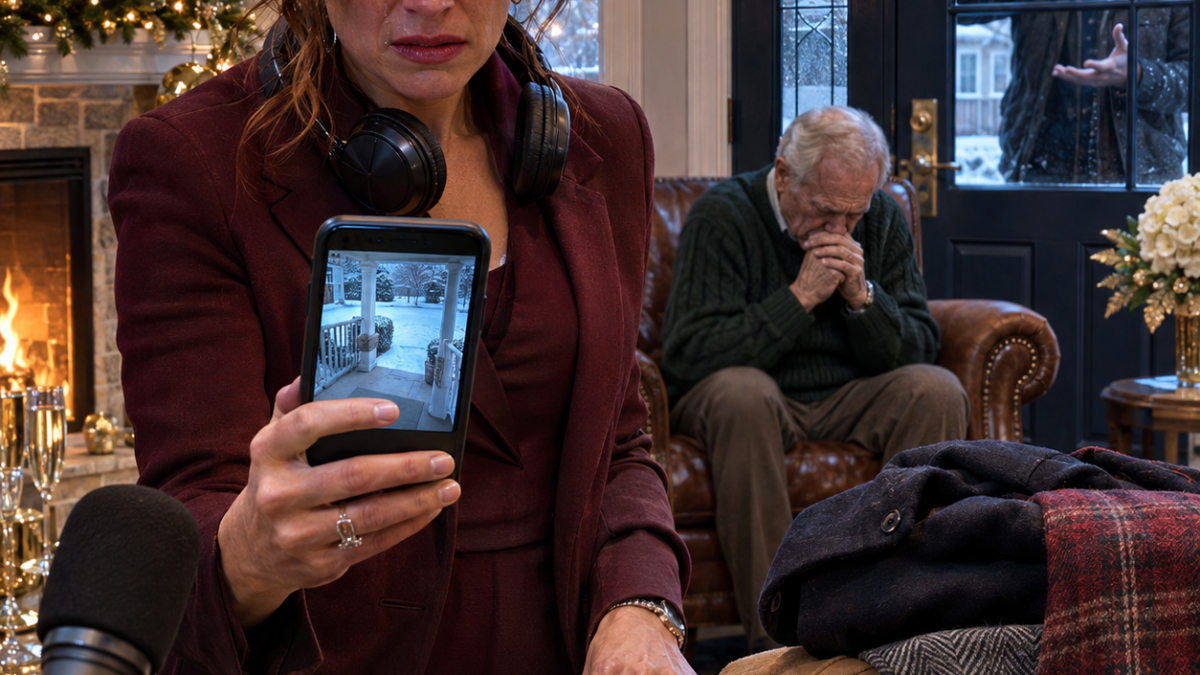
“You do your show. I’ve got Calvin and Maya.”
The station paid me well for New Year’s Eve.
The special broadcast mattered.
It was also the first year Calvin was old enough to understand why his father sometimes had to work when everybody else was celebrating.
He had rolled his eyes when I apologized.
“Dad, you literally talk for money.”
“That is a disrespectful description of a broadcasting career.”
“It’s accurate.”
Maya had laughed.
They were supposed to sleep at my parents’ house after the party.
Safe.
Warm.
With Grandpa.
I pressed the voicemail.
An older man’s voice came through.
Slow.
Breathless.
“Dwayne?”
I froze.
“This is Lamar Bennett.”
“I live in the blue house across from your brother Ross.”
The station suddenly felt too quiet.
“Your boy Calvin gave me your number.”
A pause.
“He had it memorized.”
My fingers tightened around the phone.
“I tried calling your father too.”
“No answer.”
Then Lamar said the sentence that divided my life into before and after.
“Your children are safe now.”
Now.
Not were safe.
Safe now.
I stood.
“What happened?”
I whispered to a recording that could not answer me.
Lamar continued.
“I saw them outside Ross’s house sometime before eight.”
“At first I thought maybe they were waiting for somebody.”
“Then I heard the door open.”
His voice changed.
Anger.
“I heard Ross say, ‘These kids don’t deserve to be here. My children don’t want them around.’”
My knees went weak.
“Then he shut the door.”
Silence.
“I kept thinking someone would come back out.”
“No one did.”
“The little girl was crying.”
“The boy gave her his gloves.”
My vision blurred.
“It was getting colder.”
“I brought them inside around ten forty-five.”
“They were frightened to leave the porch because Calvin said his grandfather was supposed to come.”
Lamar’s voice broke.
“Dwayne, I’m sorry.”
“They’re asleep in my living room.”
“They’re warm.”
“They’re okay.”
The voicemail ended.
I did not move.
Abby stood in the booth doorway.
Her face had changed.
“Dwayne?”
I replayed the message.
Once.
Then again.
I did not scream.
I did not throw anything.
I had spent thirty years in radio.
Words were my profession.
I knew the damage they could do when released before the mind caught up with anger.
So I put on my coat.
Took my keys.
And said:
“I have to get my children.”
PART2
Lamar Bennett lived four miles from the station.
I remember almost none of the drive.
Red lights.
Snow pushed into dirty piles along the curb.
A delivery truck.
Somebody walking home wearing a glittering paper crown from the night before.
Normal things.
That offended me.
The city had celebrated while Calvin and Maya stood on a porch wondering why their own family would not open a door.
I pulled in front of Lamar’s blue house at 6:24.
He opened the door before I knocked.
Seventy-something.
Thin.
Gray sweatshirt.
Slippers.
His eyes were red from being awake.
“Dwayne?”
“Yes.”
He stepped aside immediately.
“They’re in here.”
The living room was warm.
A space heater hummed near the sofa.
Calvin lay curled beneath a brown blanket.
Maya was tucked against him.
My son’s arm remained around his sister even in sleep.
Their coats hung over a chair.
Calvin’s gloves were on a heating vent.
Maya’s socks had been replaced with a pair far too large for her.
Probably Lamar’s.
I stopped walking.
Lamar stood behind me.
“She was shaking pretty badly when I brought them in.”
I closed my eyes.
“Did you call an ambulance?”
“I asked.”
“Calvin said no.”
“I checked them.”
“My wife was a nurse for thirty-eight years. She passed four years ago.”
He pointed toward a digital thermometer.
“They warmed up normally.”
“No confusion.”
“No blue lips.”
“They drank warm chocolate.”
“I kept checking.”
I nodded.
“Thank you.”
The words sounded pathetic compared to what he had done.
Lamar shook his head.
“You don’t thank somebody for opening a door.”
I looked at him.
“Yes.”
I said.
“You do.”
I sat beside the sofa.
Touched Calvin’s hair.
His eyes opened instantly.
For one second, he looked terrified.
Then:
“Dad?”
That one word nearly destroyed me.
“Hey.”
He sat up.
“Dad.”
I pulled him against me.
He was trying not to cry.
That made me cry first.
Maya woke.
She looked at me.
Then burst into tears.
“Daddy!”
I gathered both.
My children.
Warm now.
Safe now.
But there are things safety cannot undo immediately.
“Why didn’t Grandpa come?”
Maya sobbed.
I had no answer.
Calvin looked at the floor.
“Uncle Ross said Grandpa knew we weren’t invited.”
I pulled back.
“What?”
“He said Grandpa told him.”
My heart stopped.
“Tell me exactly what happened.”
Calvin looked at Maya.
Then me.
“We got there at seven forty.”
“Grandpa said he’d meet us at seven thirty, but I thought maybe traffic.”
“Did Ross let you in?”
Calvin shook his head.
“We rang.”
“He opened the door.”
“There was music.”
“Everyone was inside.”
“Did he know you were coming?”
“Yes.”
My voice hardened.
“How do you know?”
“You texted him yesterday.”
Correct.
I had.
Ross had replied with a thumbs-up.
Calvin continued.
“He looked behind us.”
“Asked where Grandpa was.”
“I said I didn’t know.”
“Then he said we couldn’t come in.”
Maya whispered:
“He said we ruin everything.”
I stared at her.
“What?”
She buried her face against me.
Calvin’s jaw tightened.
“He said his kids didn’t want us there.”
“He said we were always bringing drama.”
“What drama?”
“I don’t know.”
“Then he told me to take Maya home.”
“How?”
Calvin’s eyes filled.
“I told him you were working.”
“He said that wasn’t his problem.”
My hands had begun shaking.
“Then?”
“He shut the door.”
“Did you knock again?”
“Yes.”
“Twice.”
“He opened it the second time and yelled.”
Calvin’s voice cracked.
“He said if we kept bothering everybody, he’d call the police.”
I had to look away.
My eleven-year-old son had spent three hours believing police might punish him for asking his uncle not to leave his little sister outside.
“Why didn’t you leave?”
“Grandpa.”
Calvin said.
“He promised.”
There was no accusation in his voice.
That made it worse.
“I thought he’d come.”
Maya whispered:
“I thought maybe he was bringing presents.”
I stood.
Walked toward the window.
My rage felt strange.
Not hot.
Cold.
Focused.
“Lamar.”
He came closer.
“Do you have a doorbell camera?”
“Yes.”
“Does it see Ross’s porch?”
“Most of it.”
“Can I have the footage?”
His expression hardened.
“Every second.”
At 6:51, I had the video on my phone.
7:43 p.m.
Calvin and Maya appeared on Ross’s porch.
Calvin carried Maya’s small overnight bag.
They rang.
7:45.
Ross opened the door.
The camera had audio.
Not perfect.
Enough.
“What are you doing here?”
Calvin answered.
“Dad said Grandpa was coming.”
Then Ross.
Clear.
Cruel.
“I don’t care what your father said.”
“My kids don’t want you here.”
Maya said something too soft for the camera.
Ross replied:
“No.”
Then louder:
“THESE KIDS DON’T DESERVE TO BE HERE.”
Door slammed.
8:11.
Calvin knocked again.
Ross opened.
“You’re still here?”
“Grandpa’s coming.”
“No, he isn’t.”
“Go home.”
“We can’t.”
“Then call your dad.”
“He’s working.”
“Not my problem.”
9:03.
The children were sitting against the porch railing.
Maya’s head on Calvin’s shoulder.
9:48.
Snow beginning.
Calvin removed his gloves.
Put them on Maya.
10:37.
Lamar crossed the street.
He spoke to them.
Calvin resisted at first.
Then followed.
At 10:44, the porch was empty.
Three hours.
One minute.
I saved everything.
Then called my father.
No answer.
Again.
Nothing.
I called Mom.
My thumb stopped over the screen.
No.
Not yet.
First, I needed one more thing.
The truth.
I drove my children home.
Maya fell asleep in the car.
Calvin stayed awake.
Looking out the window.
After several minutes, he asked:
“Dad?”
“Yes?”
“Did we do something?”
The question came so quietly I nearly missed it.
I pulled to the curb.
Put the car in park.
Turned around.
“No.”
Calvin looked skeptical.
“Uncle Ross said—”
“I don’t care what Uncle Ross said.”
I leaned toward them.
“Listen to me.”
“You did nothing.”
“Neither of you did anything that made you deserve what happened.”
Maya’s eyes filled again.
“Then why?”
There are questions adults want to answer because saying I don’t know feels like failure.
But sometimes inventing an explanation is worse.
“I don’t know yet.”
I said.
“But I’m going to find out.”
I got them into their beds at 7:02.
Turned the heat up.
Made cocoa neither wanted.
Calvin asked if he could sleep in Maya’s room.
“Of course.”
I tucked blankets around them.
Then went downstairs.
Opened my laptop.
There was a folder I had not touched in almost two years.
ROSS — FAMILY ACCOUNTS
I stared at it.
For ten years, my brother had cultivated one particular story.
Ross was the successful son.
The entrepreneur.
The one with the six-bedroom house, imported SUV, country-club membership and annual New Year’s Eve party people talked about for weeks.
I was the radio guy.
Comfortable.
Divorced.
Two kids.
Normal house.
Normal mortgage.
Ross liked the contrast.
Especially in front of our parents.
What almost nobody knew was how much of Ross’s life had been financed by Mom and Dad.
I knew because ten years earlier, Dad had undergone heart surgery and asked me to help organize his accounts.
I found the transfers accidentally.
$40,000 toward Ross’s down payment.
Then another $35,000.
Then $18,000 labeled “business bridge.”
$12,500.
$25,000.
$8,400.
Again.
Again.
Again.
Some were legitimate gifts.
Others were written as loans.
Nearly none had repayments.
Then the house.
Ross liked telling people he had bought it after his consulting firm “finally exploded.”
That was technically true in the same way saying somebody climbed Mount Everest because they got off a helicopter fifty feet below the summit might be technically true.
The property was purchased through a family-owned real-estate LLC controlled by my mother.
Ross had been paying reduced rent.
Dad and Mom covered taxes for the first five years.
The company covered major repairs.
Ross paid a fraction of what that home cost.
Then there were business reimbursements.
Luxury car payments billed through Dad’s company.
Family health-account withdrawals Ross said were for helping Dad after surgery.
Payments for “property maintenance” that somehow corresponded to upgrades in Ross’s kitchen.
I had kept copies.
Not because I was building a weapon.
Because I had told Dad repeatedly:
“You need to stop.”
Dad always answered:
“He’s your brother.”
Mom would say:
“He’ll get on his feet.”
Then Ross would arrive in a new vehicle.
I stopped arguing.
But I kept the records.
Insurance.
Evidence.
Maybe cowardice.
I never intended to use them.
Until my children sat in the snow outside a house my parents had practically handed Ross while he told them they did not deserve to enter it.
I opened my phone.
One text.
To Mom.
I typed:
Before you defend Ross, watch the videos. Then open the bank statements. After that, ask Dad what Ross told him about Calvin and Maya last night. If you still think I should “keep the peace,” don’t call me.
I attached the footage.
The account records.
Screenshots.
Ross’s old messages asking Dad for money.
The LLC records showing ownership of the house.
Then I hit send.
7:15 a.m.
I put the phone face down.
Just like I had at the station.
Mom called at 7:21.
I did not answer.
Again at 7:27.
Then Dad at 7:31.
I answered him.
“Where were you?”
Silence.
Then Dad said:
“What are you talking about?”
My voice went cold.
“Last night.”
“Dwayne, Ross told me you changed the plan.”
Everything inside me stopped.
“What?”
“He texted me around six forty-five.”
“He said you got a sitter.”
“He said not to drive over.”
I closed my eyes.
“Send it to me.”
“Dwayne—”
“Send me the text.”
Thirty seconds later.
Screenshot.
Ross: Dad, Dwayne changed plans. Kids are staying home with a sitter. No need to come over. Enjoy your night.
Dad replied:
You sure?
Ross:
Yes. He called me himself.
I had never called Ross.
Dad’s voice trembled.
“I believed him.”
“Why didn’t you call me?”
“I did earlier.”
No missed call.
“Which number?”
Dad read it.
My old work number.
Disconnected eight months.
He had never updated the contact.
“Then I went to Harold’s.”
“They had the football game on.”
“My phone died.”
Every sentence was believable.
Every sentence still hurt.
“You promised me.”
“I know.”
“You promised Calvin.”
“I know.”
“They waited for you.”
Dad began crying.
I had rarely heard my father cry.
Not when his father died.
Not after heart surgery.
Now.
“I know.”
He whispered.
“No.”
I said.
“You don’t know yet.”
I sent him Lamar’s video.
“Watch.”
Then hung up.
At 7:42, Mom texted.
I watched everything.
7:44.
I found Ross’s message on Dad’s phone.
7:46.
I am calling Margaret.
Margaret Finley was the attorney who managed the family LLC and parts of my parents’ estate planning.
I sat down.
At 7:49, Mom texted again.
The distributions stop today.
Then:
His corporate card is frozen.
Then:
His authority on Dad’s accounts is revoked pending full review.
Then:
The house agreement will be reviewed by counsel.
I stared at the screen.
Mom had spent fifteen years refusing to confront Ross.
She had done more in seven minutes than I had managed in a decade.
7:53.
Another message.
I’m sorry.
That one hurt more.
I typed nothing.
Two minutes later—
BANG.
I froze.
Another.
BANG BANG BANG.
Then Ross’s voice.
“DWAYNE!”
My children were asleep upstairs.
I stood slowly.
More pounding.
“OPEN THE DOOR!”
I walked toward the entryway.
Looked through the camera.
Ross.
No coat.
Sweatpants.
Yesterday’s dress shirt.
Face red.
He must have driven like a lunatic.
I opened the inner door but left the storm door locked.
“What?”
His eyes widened.
“What did you do?”
“Happy New Year.”
“Dwayne, open this door.”
“No.”
“Mom froze everything!”
I stared.
“Everything?”
“My cards.”
“The company account.”
“She called Margaret.”
“She says they’re reviewing my house.”
“Sounds serious.”
“You sent her those statements.”
“Yes.”
“You’ve been keeping records on me?”
“For ten years.”
Ross stepped closer.
“Why?”
“Because somebody had to remember what everyone else kept pretending wasn’t happening.”
His jaw clenched.
“You vindictive son of a—”
I moved closer to the glass.
“Careful.”
Not loud.
That was enough.
Ross stopped.
“My children are upstairs.”
His expression changed.
A flicker.
Not guilt.
Annoyance.
“Dwayne, this has gotten completely out of control.”
“You left an eight-year-old and an eleven-year-old outside in nineteen degrees.”
“They had coats.”
I almost opened the door just to hit him.
Instead, I breathed.
“They had coats.”
He repeated.
“And they could have called someone.”
“They called you with their faces.”
“What?”
“They stood on your porch for three hours.”
“You walked past the window.”
“I have video.”
Ross’s face changed.
There.
Fear.
“Whose video?”
“Lamar’s.”
He looked toward the street.
“Christ.”
“Say his name again.”
“What?”
“Lamar.”
I said.
“The seventy-four-year-old stranger who did what their uncle wouldn’t.”
Ross looked away.
“I didn’t know they were staying out there.”
“You opened the door twice.”
“I thought they left.”
“On foot?”
Silence.
“Where did you think an eleven-year-old and eight-year-old were going?”
Nothing.
“Tell me.”
“They should never have come.”
“Dad was supposed to be there.”
Ross’s face tightened.
“Dad didn’t want to come.”
“Wrong.”
I held my phone against the glass.
His text to Dad filled the screen.
Ross went pale.
“You lied to him.”
He stared.
“You told him I had a sitter.”
“Dwayne—”
“You made sure the one adult I trusted to protect my children wouldn’t show up.”
“That’s not what happened.”
“Then tell me what happened.”
He exploded.
“My kids didn’t want them there!”
“Your kids?”
“Yes!”
“Why?”
Ross hesitated.
That hesitation told me everything.
“Why?”
I repeated.
“Because…”
He rubbed his face.
“Because things have been tense.”
“What things?”
“You know what Calvin is like.”
No.
I did not.
But I knew exactly what my brother was doing.
“He’s eleven.”
“He says things.”
“What things?”
“Competitive stuff.”
“With Jackson.”
Ross’s thirteen-year-old son.
“What competitive stuff?”
“School.”
“Sports.”
“You always make your kids seem—”
He stopped.
“Better?”
I asked.
“That isn’t what I said.”
“It’s what you meant.”
Ross began pacing.
“You’re missing the point.”
“No.”
“I think I’m finally standing directly on it.”
He looked at the house.
“Call Mom.”
“No.”
“Tell her you were angry.”
“I was.”
“Tell her you exaggerated.”
“I didn’t.”
“You sent ten years of private financial records because of one argument!”
I laughed.
“One argument?”
“My daughter spent last night asking what she did to deserve being left outside.”
Ross flinched.
Finally.
There.
A human reaction.
I stepped closer.
“Calvin gave Maya his gloves.”
“Did you know that?”
Ross said nothing.
“He was cold too.”
“But he gave them to her because he thought Grandpa was coming.”
Still nothing.
“Do you know what Maya asked me this morning?”
Ross looked away.
“She asked if you left them outside because they were bad.”
His face changed.
I saw it.
But I was not finished.
“She is eight years old.”
“And now there is a piece of her brain trying to understand what kind of bad an eight-year-old can be that makes family shut a door in her face.”
Ross whispered:
“I didn’t mean—”
“I don’t care what you meant.”
I had never spoken to him like that.
Not once in fifty years.
“I care what you did.”
He put both hands against the door frame.
“Fine.”
His voice hardened again.
“I was wrong.”
“Happy?”
“No.”
“What do you want?”
“Nothing.”
“That’s bullshit.”
“No.”
I said.
“That’s the part you don’t understand.”
“I did not send Mom those records to get something from you.”
“I sent them because I was finished helping everyone protect you from consequences.”
His eyes narrowed.
“So this is revenge.”
“No.”
“It feels like it.”
“Consequences often do when you’ve been protected from them for forty-five years.”
His face went still.
That landed.
Footsteps upstairs.
I turned.
Calvin stood halfway down the staircase.
Pajamas.
Blanket over his shoulders.
Ross saw him.
“Cal.”
My son stopped.
Ross’s expression softened instantly.
“Hey, buddy.”
Calvin did not answer.
Ross stepped toward the glass.
“I’m sorry about last night.”
Calvin looked at me.
Not him.
That hurt Ross.
I could tell.
“It got complicated.”
Ross continued.
“I didn’t realize you stayed outside.”
Calvin finally looked at him.
“You saw us.”
Ross froze.
“You opened the door twice.”
My son’s voice did not rise.
“You told Maya we didn’t belong there.”
Ross swallowed.
“I was angry.”
“At us?”
Calvin asked.
No answer.
“Why?”
Ross looked helpless.
For the first time that morning, I almost felt pity.
Almost.
Then Calvin said:
“Jackson didn’t even know we were outside.”
Ross’s head snapped up.
“How do you know?”
“He texted me.”
Calvin held up his phone.
I had not known.
“Show me.”
Calvin came down.
Passed the phone.
Message received 7:36 a.m.
Jackson: Dude I just found out you were here last night. Dad told us Uncle Dwayne kept you home. I swear I didn’t know. I’m so sorry.
Another.
Ava didn’t know either. She’s crying.
I looked at Ross.
His children did not want mine there?
Lie.
Another one.
Calvin had been reading his face too.
“You blamed them.”
He said.
“Why?”
Ross could not answer.
Calvin went upstairs.
He did not slam the door.
Did not insult his uncle.
Did nothing Ross could use to make himself the victim.
That was somehow more devastating.
Ross looked at me.
“Dwayne…”
“Go home.”
“I need you to call Mom.”
“No.”
“My entire life is tied up in this.”
“You should have thought about that before tying it to Mom and Dad’s money.”
“You think you’re better than me?”
“No.”
“That’s always been your thing.”
I stared.
“My thing?”
“Responsible Dwayne.”
“Good father Dwayne.”
“Stable Dwayne.”
“Everybody trusts Dwayne.”
There it was.
Not my kids.
Not his kids.
Us.
Two brothers still fighting a competition I had stopped participating in thirty years earlier.
“I never asked to compete with you.”
I said.
“You didn’t have to.”
Ross’s voice cracked.
“You always won.”
I almost laughed.
“Won what?”
“Dad’s respect.”
“Mom’s trust.”
“You were always the one they called.”
“Because I answered.”
He stared.
I continued.
“They called me when Dad had surgery because you were in Cabo.”
“That trip was booked.”
“They called me when Mom’s car broke down because you said you had dinner reservations.”
“I had clients.”
“They called me when taxes were wrong because your ‘business manager’ had no idea what he was doing.”
“That was temporary.”
“And when you needed forty thousand dollars for your house, who did you call?”
He said nothing.
“Dad.”
“When the business was failing?”
“Dad.”
“When the car lease got too expensive?”
“Dad.”
“When your taxes were late?”
“Mom.”
“When you wanted somebody to tell you none of this meant you were failing?”
“All of us.”
Ross’s eyes reddened.
“So congratulations.”
I said.
“You finally found something I will not fix.”
I closed the door.
Locked it.
Ross stood outside another five minutes.
Then left.
No dramatic final scream.
No threat.
Just a man getting into a car suddenly much more expensive than he could afford.
Mom came at 9:10.
Dad arrived ten minutes after.
I almost did not let them in.
Maya ran to Mom.
That decided it.
Mom dropped to her knees and held her.
Dad stood in the hallway.
Calvin did not approach him.
Dad understood.
He sat on the stairs.
Not close.
“I am sorry.”
Calvin looked at him.
“I thought you were coming.”
“I know.”
“You promised.”
“I know.”
“Why didn’t you call Dad?”
Dad swallowed.
“I tried the wrong number.”
Calvin’s jaw tightened.
“Why didn’t you call me?”
Dad looked confused.
“I don’t have your—”
“You do.”
Calvin said.
“You gave me your phone when we went fishing.”
“I put my number in.”
Dad’s face crumpled.
He had forgotten.
That was the truth.
Not malice.
Not conspiracy.
A seventy-three-year-old man trusted the wrong son and did not verify what mattered.
He cried.
“I should have checked.”
Calvin said nothing.
Dad did not ask for forgiveness.
Good.
Instead, he said:
“I failed you.”
That mattered.
No excuse.
No but Ross lied.
“He lied.”
Dad said.
“And I still should have checked.”
Calvin finally sat one step lower.
Not beside him.
Closer.
That was all Dad earned that morning.
It was enough.
Mom and I went into the kitchen.
She looked ten years older.
“I saw the accounts.”
I poured coffee.
“You’ve seen them before.”
“Pieces.”
“Not like that.”
She covered her face.
“I kept telling myself we were helping him.”
“You were.”
“Until helping became enabling.”
I did not say anything.
She looked toward the ceiling.
“I financed the house where he left my grandchildren outside.”
Her voice broke.
“That is not your fault.”
“No.”
She looked at me.
“But it is my responsibility to stop.”
That distinction reminded me of something.
Maybe because I needed it too.
Mom explained what she had done.
Ross’s corporate purchasing card was canceled.
His access to Dad’s convenience account suspended.
Monthly distributions that had never been contractually guaranteed were stopped.
The family LLC would review every payment and reimbursement Ross had submitted for five years.
The house was more complicated.
Ross had occupancy rights under a written agreement.
Mom could not throw him into the street because she was angry.
Nor should she.
But the artificially low rent and company-paid expenses were discretionary.
Those would end when legally permitted.
If Ross wanted the mansion, he would pay market rent or purchase it at fair value.
No more family subsidy.
“He’ll have to sell things.”
Mom said.
“Probably.”
“Maybe move.”
“Probably.”
She looked at me.
“You don’t seem happy.”
“I’m not.”
“You wanted consequences.”
“Yes.”
“And?”
“My kids still stood outside for three hours.”
Money could not erase that.
Nothing could.
Ava called me that afternoon.
Ross’s sixteen-year-old daughter.
She was crying.
“Uncle Dwayne?”
“Hey, kiddo.”
“I didn’t know.”
“I know.”
“Dad told us you had to work and the kids were with somebody else.”
“I know.”
“If I knew…”
Her voice broke.
“I would’ve let them in.”
“I know.”
“Jackson too.”
“I know.”
She cried harder.
“Please tell Maya I’m sorry.”
“You didn’t do anything.”
“But she might think we didn’t want her.”
That was the part Ross had damaged beyond my children.
He had used his own children as weapons.
“I’ll tell her.”
Ava hesitated.
“Dad and Mom are fighting.”
Ross’s wife Melissa.
“Stay out of it.”
I said.
“This is adult stuff.”
“Dad says you’re trying to destroy us.”
“No.”
I chose every word carefully.
“Your father made decisions.”
“Your grandparents made decisions afterward.”
“That is between adults.”
“You are not responsible.”
I wanted at least one generation to learn that lesson earlier than ours had.
The bank review took eleven weeks.
It was uglier than I expected.
Not criminal theft in the dramatic sense.
No secret offshore account.
Nothing cinematic.
Something more ordinary.
Entitlement.
Ross had submitted expenses through Dad’s company that should have been personal.
Golf memberships framed as client development.
Vehicle costs.
Travel.
Renovations to the mansion described as property preservation even when they were upgrades Ross requested.
Family loans rolled into new family loans.
Interest waived.
Deadlines extended.
Promises forgotten.
Over ten years, direct and indirect support exceeded four hundred thousand dollars.
Mom looked at the final accounting and cried.
Dad did not.
He simply stared.
Then said:
“I taught him we would always catch him.”
That may have been the truest sentence anybody spoke during the entire mess.
They did not sue Ross for everything.
Some transfers had clearly been gifts.
Some were authorized.
Some could not realistically be unwound.
But documented loans became actual loans again.
Payment schedule.
Market interest going forward.
Company reimbursements ended.
Ross resigned from the advisory role Dad had given him.
Not because I demanded it.
Because an outside accountant recommended it.
For the first time in his adult life, the family stopped absorbing the cost of Ross’s choices.
Ross hated me for months.
At least I assumed he did.
We did not speak.
His mansion went up for sale in April.
He and Melissa moved into a four-bedroom rental on the other side of town.
Still nice.
No tragedy.
No homelessness.
Just a house they could actually afford.
He sold the imported SUV.
Bought a used Lexus.
I almost laughed when Dad called it “humbling.”
A used Lexus is not exactly a Dickens novel.
But for Ross, image mattered.
The real consequence was not losing luxury.
It was losing the story he told about himself.
Self-made.
Independent.
The successful brother.
Without Mom and Dad’s money beneath the floorboards, he had to meet himself honestly.
That was harder than moving.
Melissa separated from him that summer.
Not because of New Year’s Eve alone.
A marriage does not collapse because of one door.
She later told Mom that the night had “made something impossible to ignore.”
Ross had spent years managing appearances.
Controlling what people knew.
Blaming.
Deflecting.
She had watched him open the door to my children.
That part I did not know.
She had been upstairs helping Ava.
She heard him shout.
Came down after.
Asked where Calvin and Maya were.
Ross told her:
“Dwayne picked them up.”
Another lie.
Melissa believed him.
By the time she looked outside later, Lamar had already taken them inside.
When she discovered the truth, something broke.
She apologized to my children personally.
No excuses.
Maya hugged her.
Calvin did not.
Both responses were allowed.
Dad worked harder.
That surprised me.
He did not demand Calvin forgive him.
He began showing up.
Basketball games.
School pickup.
Saturday breakfast.
Every time he promised, he arrived ten minutes early.
If plans changed, he called all of us.
Not because I required it.
Because Calvin noticed.
Three months after New Year’s Eve, Dad was waiting outside Calvin’s school.
Calvin got into the car.
Looked at the clock.
“You’re early.”
Dad smiled.
“Ten minutes.”
Calvin nodded.
That evening, Calvin told me:
“I think Grandpa means it.”
Trust returning in increments.
Not speeches.
Minutes.
Maya had a harder time with doors.
For months, if we visited somebody and the door did not open immediately, she became anxious.
“Do they know we’re here?”
“Yes.”
“Are we invited?”
“Yes.”
“You promise?”
That question killed me every time.
So I started showing her invitations.
Texts.
Messages.
Not because she should need proof.
Because her nervous system did.
Eventually she stopped asking.
Children heal when adults stop telling them to “get over” what adults caused.
I took both kids to see Lamar every Sunday for the first month.
He protested.
“I don’t need all these groceries.”
“You opened your house at ten forty-five on New Year’s Eve.”
“I had heat.”
“You had a choice.”
He shook his head.
“So did Ross.”
Exactly.
Calvin helped Lamar shovel his walkway.
Maya baked cookies with me and brought them over.
Eventually Lamar became Uncle Lamar.
No blood.
No inheritance.
No complicated history.
Just the man who saw two children outside and decided being somebody’s family was less important than acting like one.
That lesson stayed.
The next New Year’s Eve approached faster than I wanted.
The station asked me to host again.
I said no.
Abby stared.
“You’ve done this show seventeen years.”
“I know.”
“Is this because of last year?”
“Yes.”
“You don’t have to stop forever.”
“I’m not.”
I smiled.
“Just this year.”
At 11:45 p.m., Calvin, Maya and I were home.
Dad and Mom came over.
Lamar too.
Jackson and Ava were there.
Ross was not.
Not because I had banned him forever.
Because we were not there yet.
At midnight, we stood in the living room.
No giant party.
No mansion.
No forty thousand listeners.
Maya held sparkling cider.
Calvin complained about my music.
Dad watched both grandchildren like a man who knew exactly how expensive a broken promise could become.
Ten.
Nine.
Eight.
Maya shouted too early.
Six!
“You skipped seven.”
Calvin said.
“I’m excited.”
Four.
Three.
Two.
One.
Happy New Year.
Maya hugged me.
Calvin hugged Mom.
Then Grandpa.
That mattered.
Lamar lifted his glass.
“To open doors.”
The room went quiet.
Then everyone raised theirs.
“To open doors.”
Ross wrote me a letter eleven days later.
Actual paper.
No text.
No email.
I almost did not read it.
Then I saw Calvin’s name.
I opened it.
He did not ask me to forgive him.
Good start.
He wrote:
I have spent a year trying to explain that night in ways that made me less disgusting to myself. I was angry at you. I was jealous of you. I had convinced myself your kids looked down on mine because that made it easier to justify resenting them. None of that matters because they were children and I was the adult at the door.
I kept reading.
I lied to Dad because I knew he would let them in.
That sentence made my stomach turn.
So it had been deliberate.
I lied to Melissa because I knew she would go outside.
Worse.
I lied to Jackson and Ava because I knew they would fight me.
Worse again.
Then:
I left two children outside because I wanted to punish their father. There is no version of that sentence where I am the victim.
I stopped reading for several minutes.
When I resumed:
Losing the house did not teach me that. Losing Mom and Dad’s money did not teach me that. Seeing Calvin look through your door at me like I was a stranger did.
He wrote that he had been attending therapy.
That Melissa had not come back.
That he was rebuilding his relationship with his own children slowly.
That he had taken a salaried job with a logistics company.
That for the first time since his twenties, nobody in the family signed his paycheck or covered the gap when he overspent.
Then:
I owe your children an apology, but I understand I do not have the right to demand the opportunity to give one. If they ever want to hear it, I will show up. If they never do, I will live with that.
I folded the letter.
Did not call him.
Not yet.
I showed it to Calvin first.
He was twelve.
Old enough to decide whether he wanted to read.
He read slowly.
Then handed it back.
“What do you think?”
I asked.
“He finally told the truth.”
“Yes.”
“Do I have to forgive him?”
“No.”
That answer mattered.
“Can I?”
“Yes.”
“That’s confusing.”
“Most real things are.”
He thought.
“What does Maya want?”
We asked her.
She wanted to see Uncle Ross.
Children sometimes move toward repair faster than adults.
That does not make them naive.
Sometimes they simply carry less pride.
We arranged a meeting at Lamar’s house.
Neutral ground.
Ross arrived early.
No gifts.
I had told him not to bring any.
Buying forgiveness would have been too familiar.
He sat across from Calvin and Maya.
For a long time, he said nothing.
Then:
“I lied.”
Good.
No preamble.
“I told Grandpa you weren’t coming because I knew he would protect you.”
“I told my kids you weren’t there because I knew they would let you inside.”
“I told Aunt Melissa you had already left because I knew she would come looking.”
Maya’s eyes filled.
“Why didn’t you want us?”
Ross’s face collapsed.
“It wasn’t you.”
“That’s what adults always say.”
Calvin said.
Ross nodded.
“You’re right.”
Then he looked at them.
“I was angry at your dad.”
“I was jealous.”
“And I was selfish enough to use you to hurt him.”
Maya whispered:
“Did you hate us?”
“No.”
Ross was crying now.
“But I acted like someone who did.”
There was no defense.
No “if.”
No “but.”
“I’m sorry.”
Calvin stared.
Then asked:
“If Mr. Lamar didn’t get us, when were you going to come outside?”
Ross’s face went white.
He could not answer immediately.
That was the hardest question.
Finally:
“I don’t know.”
Calvin nodded.
He needed that truth too.
Ross continued:
“And that is the part I’m most ashamed of.”
Silence.
Maya got off the sofa.
Walked toward him.
I tensed.
She stopped three feet away.
“You can’t do that again.”
“I won’t.”
“You promise?”
Ross’s voice broke.
“Yes.”
Maya looked at me.
I did not validate his promise.
That was his work.
She gave him a small hug.
Calvin did not.
Ross did not ask.
That was progress.
Over the following year, Ross came back into our lives carefully.
Not family dinner every Sunday.
Not immediate restoration.
Slow.
Public places.
Children present when they wanted.
No pressure.
He apologized to Dad separately.
To Mom.
To Jackson.
Ava.
Melissa.
Some relationships recovered.
His marriage did not.
Consequences do not disappear because a person changes.
That is another adult lesson.
Melissa eventually remarried.
Ross remained single.
They learned to co-parent.
He and his kids became closer after he stopped making them accessories to his image.
Jackson once told Calvin:
“My dad is way less annoying now that he’s broke.”
Ross was not broke.
He was normal.
Teenagers have dramatic financial standards.
Two years after that New Year’s Eve, Mom asked the whole family to dinner.
Her house.
Not Ross’s.
We arrived separately.
Ross was already there.
He helped Dad carry dishes.
No performance.
No speech.
Dinner went well.
Then dessert.
Mom brought out an old photograph.
Ross and me as boys.
Maybe seven and nine.
Standing in snow.
My arm around him.
She placed it on the table.
“I kept wondering where I went wrong.”
Ross looked uncomfortable.
“Mom.”
“No.”
She shook her head.
“I spent years believing loving my sons meant protecting them from pain.”
She looked at him.
“I protected you from consequences.”
Then me.
“And I expected you to absorb the consequences because you were ‘the responsible one.’”
That sentence stunned me.
She continued.
“That was unfair to both of you.”
Ross stared at the table.
Mom looked at us.
“I am sorry.”
No parent is too old to apologize.
No adult child is too old to need it.
Dad reached for her hand.
“I did it too.”
He looked at Ross.
“Every time you fell, I caught you before you learned how to get up.”
Then at me.
“And every time Dwayne stayed standing, I assumed he didn’t need help.”
There it was.
Our entire childhood in one sentence.
Ross began crying.
I did too.
Not reconciliation magic.
Not all wounds gone.
Just truth finally sitting at the table without anyone trying to shove it under a napkin.
The financial consequences remained.
Mom and Dad never restarted Ross’s allowance.
There was no allowance officially.
That was the problem.
They kept paying one thing, then another, until dependence became invisible.
It stayed ended.
Ross repaid the documented loans monthly.
No special forgiveness.
He joked once that Mom’s accountant was “more terrifying than the IRS.”
Mom said:
“Good.”
The mansion sold.
The proceeds returned mostly to the LLC after the occupancy and investment structure was settled.
Ross received what his agreement entitled him to.
No more.
No less.
He lived in the four-bedroom rental for three years, then bought a modest house with his own mortgage.
The first time he showed it to me, he stood in the kitchen.
“Mine.”
He said.
I smiled.
“Bank’s.”
He laughed.
“Fair.”
But I understood.
This time, the down payment came from Ross.
The payment came from Ross.
If the roof leaked, Ross paid.
Responsibility had become ownership in a way luxury never had.
Calvin never forgot that night.
Neither did Maya.
I would never insult them by pretending otherwise.
But memory changed shape.
It stopped being something they were trapped inside.
Calvin became fiercely protective of younger kids.
At sixteen, he volunteered with a winter shelter.
I asked why.
He shrugged.
“Cold sucks.”
That was as much emotion as teenage boys often volunteer.
Maya became the person at school who noticed the kid sitting alone.
She once told me:
“I hate when people act like they don’t see someone.”
Lamar would have understood.
Lamar lived another six years.
He attended every New Year’s celebration at our house.
Every one.
On the fifth anniversary, his health had declined.
He walked with a cane.
Calvin took his coat.
Maya made his cocoa.
At midnight, Lamar raised his glass.
His hand shook.
“To open doors.”
We all answered:
“To open doors.”
Ross was there that year.
He stood beside me.
Quiet.
After midnight, he walked to Lamar.
“I’ve wanted to say this for years.”
Lamar looked at him.
Ross swallowed.
“Thank you for taking care of them when I didn’t.”
Lamar studied him.
Then said:
“You don’t owe me thanks.”
Ross’s face tightened.
“I think I do.”
“No.”
Lamar pointed toward Calvin and Maya.
“You owe them a life where they never have to wonder if you’ll open the door again.”
Ross nodded.
“Yes, sir.”
Then Lamar smiled.
“So do that.”
Simple.
Lamar died the following spring.
His daughter called me.
There was a small funeral.
Calvin carried the casket with five other men.
Maya read a short letter.
She was fourteen.
Her voice shook.
She said:
“When I was eight years old, Mr. Lamar opened his door to me when someone else closed one.”
She paused.
“He taught me that family is not only who is related to you.”
“It is also who notices that you are cold.”
There was not a dry eye in the church.
Ross sat three rows behind us.
He cried openly.
Good.
Some tears should not be hidden.
Years later, I found the original voicemail on an old phone backup.
10:52 p.m.
I listened once.
Lamar’s voice.
“Your kids are alright.”
I almost deleted it afterward.
Calvin stopped me.
“No.”
He said.
“Keep it.”
“Why?”
“Because that’s the moment someone helped.”
I had always heard the voicemail as evidence of what Ross did.
Calvin heard it differently.
Evidence of what Lamar did.
That perspective humbled me.
Pain attracts the eye.
Sometimes healing deserves equal attention.
I kept the message.
My career continued.
I returned to the New Year’s Eve broadcast eventually.
Not every year.
But sometimes.
The first time back, Abby was still producing.
At 11:58, she leaned through the booth doorway.
“Phone?”
I held it up.
“Right here.”
She smiled.
“Kids?”
“At home.”
“Who’s watching them?”
I looked through the studio glass.
Calvin was twenty by then.
Maya seventeen.
They were standing in the control room themselves.
They had come to spend midnight with me.
“Apparently themselves.”
Abby laughed.
At ten seconds to midnight, I opened the microphone.
Forty thousand listeners.
Maybe more by then.
Ten.
Nine.
Eight.
I looked through the glass.
Calvin raised his phone, filming.
Maya waved.
Seven.
Six.
Five.
For one second, I saw two little children on a snow-covered porch.
Then the image passed.
Four.
Three.
Two.
One.
“Happy New Year.”
The city exploded in celebration.
I muted the microphone.
Walked out.
Hugged both children before the song even started.
Maya laughed.
“Dad, you’re supposed to be working.”
“I’ve learned to prioritize.”
Calvin said:
“Growth.”
Disrespectful child.
Still.
I hugged him harder.
Ross was never the monster I wanted him to be that first morning.
That would have been easier.
Monsters do not require complicated decisions.
You cut them off.
Finished.
Ross was my brother.
Jealous.
Entitled.
Cowardly on one unforgivable night.
A liar.
A man who had spent decades being rescued from his own choices until he started believing other people existed to absorb whatever he did.
Then consequences arrived.
Real ones.
He hated them.
Then eventually used them.
That is less satisfying than instant destruction.
And far more satisfying than revenge.
Because years later, when Maya graduated high school, Ross sat in the audience.
He did not make a speech.
Did not remind anyone how far he had come.
He simply showed up.
Early.
When Calvin got married, Ross helped arrange chairs.
When Dad became sick, Ross took Tuesday and Thursday medical appointments without asking me to cover half.
When Mom needed surgery, he stayed overnight at the hospital.
Not to prove himself.
Because somebody needed to.
One day I realized I had stopped waiting for him to fail.
That was forgiveness arriving before I had formally announced it.
Dad died at eighty-one.
Calvin held his hand.
That matters.
For years, I feared the New Year’s Eve mistake would define their relationship.
It did not.
Dad spent almost a decade showing up early.
Football games.
Graduations.
Fishing trips.
Birthdays.
When he could no longer drive, Calvin picked him up.
Near the end, Dad asked Calvin:
“Did you ever forgive me for that night?”
Calvin smiled.
“You’ve asked me that like twenty times.”
“I’m old.”
“I know.”
“Did you?”
Calvin looked at him.
“You kept coming back.”
Dad cried.
That was the answer.
Mom lived longer.
Still runs the family trust like a tiny dictator.
Ross complains about required documentation.
She tells him to submit receipts.
I enjoy this immensely.
The family money eventually went into professionally managed trusts for all the grandchildren equally.
No child favored.
No son given secret support.
Mom learned too.
We all did.
Money had been her way of preventing conflict.
Instead, it postponed conflict until it became poison.
Transparency became part of the family after that.
Awkward.
Necessary.
I still think about 7:15 a.m.
That text.
People who hear the story sometimes imagine I sent Mom some clever threat.
I didn’t.
No curse words.
No dramatic ultimatum except the last sentence.
I sent evidence.
That was enough.
Video.
Bank statements.
Ross’s messages.
Truth does not always need volume.
Sometimes the most powerful thing you can do when someone has spent years manipulating the story is stop arguing and place the facts where everyone can see them.
Then let consequences belong to the people who created them.
Ross once asked me years later:
“Did you know Mom would cut me off?”
“No.”
“You didn’t?”
“No.”
“What did you think she’d do?”
I considered.
“Defend you.”
He looked hurt.
“Seriously?”
“Yes.”
“That bad?”
“That consistent.”
He laughed sadly.
“Fair.”
“Why send the bank records then?”
“Because if she defended you after seeing everything, I needed to know.”
“Know what?”
“Whether protecting my kids meant creating distance from more than just you.”
Ross went quiet.
That was the real risk of the text.
I was prepared to lose the whole family.
Mom.
Dad.
Ross.
Anybody who asked my children to swallow humiliation so adults could remain comfortable.
I did not have to.
But I would have.
Becoming a parent changes the definition of peace.
Peace is not a quiet table where nobody discusses what happened.
Peace is your children knowing the adults around them will not trade their safety for family appearances.
Maya asked me once, as an adult:
“Would you really have stopped talking to Grandma?”
“Yes.”
She looked shocked.
“She’s Grandma.”
“You’re my daughter.”
Simple hierarchy.
She smiled.
“Good answer.”
Ross heard that story later.
He said:
“I would’ve hated you.”
“I know.”
“But you would’ve been right.”
Maybe that was when I knew he truly changed.
Old Ross believed being hurt meant someone else must be wrong.
New Ross had learned pain and accountability can occupy the same room.
There is one moment I rarely tell people.
The morning after Lamar’s funeral, I drove past Ross’s old mansion.
New family lived there.
Christmas lights.
Children’s bicycles near garage.
Different curtains.
The porch looked smaller than I remembered.
I pulled over.
Not sure why.
That porch had lived in my mind for years as something enormous.
A stage.
The place my brother betrayed my children.
The place Calvin gave Maya his gloves.
The place they waited for Grandpa.
Seeing it again, I realized it was just concrete.
A door.
A railing.
A few steps.
Buildings do not hold morality.
People do.
A door can be slammed.
A door can be opened.
Same object.
Different person.
I drove on.
I never went back.
The last time our entire family gathered for New Year’s Eve, my children were grown.
Calvin brought his wife.
Maya brought her fiancé.
Jackson and Ava came with their partners.
Ross.
Mom.
Melissa even stopped by early with her husband because after enough years, family arrangements can become civil in ways nobody expects.
We ate too much.
Dad was gone.
Lamar was gone.
Their absence sat with us.
At 11:58, Ross walked toward the front door.
Maya noticed.
“Where are you going?”
He opened it.
Cold air came in.
Then he propped it wide.
“Just making sure.”
We all understood.
Nobody laughed at first.
Then Calvin did.
“You’re letting all the heat out.”
Ross smiled.
“Some doors are expensive to keep open.”
Mom shouted from the kitchen:
“I’m not paying your heating bill.”
Everyone laughed.
Even me.
Especially me.
At midnight, we counted down.
Ten.
Nine.
Eight.
Seven.
Six.
Five.
Four.
Three.
Two.
One.
The door was still open.
Ross stood beside it.
Snow outside.
Warmth inside.
Maya walked over.
Closed it herself.
Then hugged him.
Not because the past disappeared.
Because it no longer controlled the room.
Ross held her.
His face collapsed.
She whispered something to him.
Later I asked what.
She said:
“I told him he finally learned.”
“What?”
“How to open a door.”
That is where I choose to end the story.
Not with Ross pounding on mine.
That morning felt powerful.
Forty minutes after my text.
His cards frozen.
His money threatened.
His mansion suddenly uncertain.
For a few hours, watching him panic satisfied the angry part of me.
But anger is hungry.
Feed it one consequence and it asks for another.
Lose the mansion.
Lose the marriage.
Lose the business.
Lose everything.
Then what?
My children would still have spent three hours in the cold.
Revenge cannot go backward.
What satisfied me eventually was something harder.
Ross lost the protections that allowed him to remain the worst version of himself.
Dad stopped rescuing him.
Mom stopped financing him.
His wife stopped covering for him.
His children stopped accepting his lies.
I stopped fixing the damage.
And without all those cushions beneath him, Ross finally hit the ground.
Then—
for the first time—
he learned how to stand up himself.
That is justice I can live with.
Calvin once asked whether I hated Ross that morning.
“Yes.”
I said.
“Do you hate him now?”
“No.”
“Why not?”
I thought for a while.
“Because the man I hated doesn’t exist anymore.”
Calvin raised an eyebrow.
“That sounds dramatic.”
“I work in radio.”
“Fair.”
Then I corrected myself.
“Actually, parts of him probably still exist.”
“Parts of all our worst selves probably do.”
“The difference is what we feed.”
Calvin nodded.
“And what do you feed?”
I smiled.
“Your sister, apparently.”
He laughed.
Maya ate like a linebacker.
Some things never change.
If there is one thing I wish I could tell myself at 6:00 that New Year’s morning, standing in that radio booth listening to Lamar’s voicemail, it would be this:
Get your children.
Warm them.
Listen.
Believe them.
Do not make them responsible for adult reconciliation.
Do not force forgiveness because sharing blood makes holidays easier.
Do not confuse silence with peace.
Then tell the truth.
And let everyone decide what kind of person they are going to become after hearing it.
That is all I did.
I sent one text.
The truth did the rest.
I kept Lamar’s voicemail.
I kept the video too.
Not to watch.
I have not watched it in years.
But I kept it because there was a time when my children needed proof that what happened was real.
That adults believed them.
That no one could later say:
“It wasn’t that cold.”
“They weren’t outside that long.”
“Ross didn’t mean it like that.”
Family has a dangerous habit of sanding down painful history until the person who was hurt starts wondering whether they imagined the sharp edges.
Not in my house.
The truth stayed.
Then we built something better around it.
Calvin is a father now.
A little boy.
Eli.
Three.
Last Christmas, Ross came by carrying a ridiculous toy truck.
Eli ran to him.
“Uncle Ross!”
Technically great-uncle.
No one corrects him.
Ross dropped to his knees.
Caught him.
For one second, I saw my brother at forty-eight standing behind glass demanding that I repair his life.
Then the image vanished.
Ross was sixty now.
Gray hair.
Cheaper watch.
Better man.
Eli dragged him toward the playroom.
“Come see!”
Ross followed immediately.
I stood near the doorway.
Maya nudged me.
“You okay?”
“Yeah.”
She looked at Ross.
“Life is weird.”
“Very.”
Then she said:
“Do you trust him with Eli?”
I thought.
“Yes.”
That answer meant more than forgiveness.
Trust was the thing Ross had destroyed.
Years of apology could not rebuild it.
Behavior did.
One open door at a time.
That night, after everyone left, I stood outside on my porch.
Cold.
Not nineteen degrees.
Still cold enough.
I thought of Calvin’s small hands pulling off his gloves.
Maya’s face.
Lamar watching from across the street.
Dad sitting at Harold’s house believing my children were somewhere safe.
Mom waking into a family she could no longer pretend was fine.
Ross behind that beautiful front door choosing resentment over two children.
All those lives intersecting around one terrible mistake.
No.
Not mistake.
Choice.
That distinction matters.
Ross chose.
Then later he chose differently.
Again and again.
People are the sum of more than their worst choice.
But only if they stop making it.
Before going inside, I checked the front lock.
Old habit.
Then I left the porch light on.
I always do now.
Calvin jokes about it.
“You know nobody’s coming over at two in the morning, right?”
“Doesn’t matter.”
“Waste of electricity.”
“Your grandmother would agree.”
“Then why?”
I never explained.
But maybe he knows.
A porch light says something.
Not a promise that life will never hurt.
Not a promise everyone will always belong.
Something simpler.
If you arrive here cold, frightened, and unsure whether anyone wants you—knock.
I will look.
I will see you.
And if you need shelter, this door opens.
That is the inheritance I want my children to carry.
Not Ross’s mansion.
Not Mom’s trust.
Not Dad’s money.
Not my radio career.
A door that opens.
Because years ago, on the coldest night of our family’s life, one relative closed his—
and one old stranger across the street opened his.
Everything that happened afterward came from those two choices.
And in the end, Lamar Bennett—the man who shared none of our blood—was the one who reminded all of us what family was supposed to mean.








