“DON’T WASTE ANOTHER SECOND ON THAT DOG!” People Walked Past Fairy as Her Frail Body Collapsed Under Her Own Weight — Until One Person Finally Saw the Desperate Plea Hidden in Her Eyes
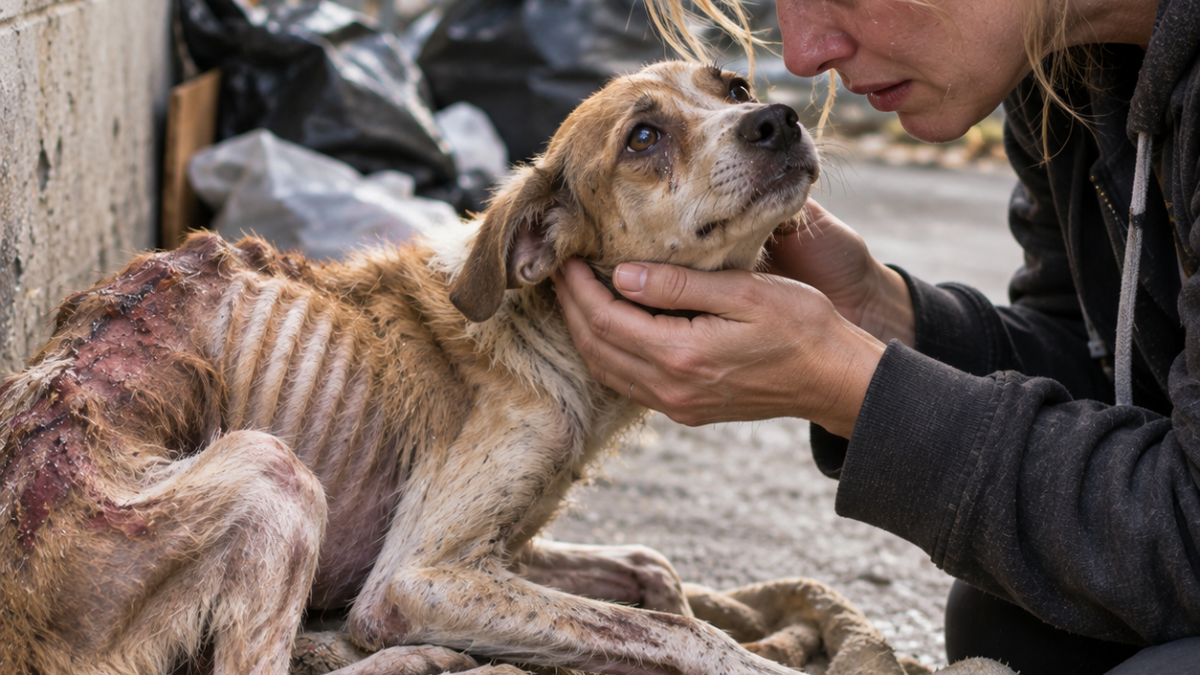
“STOP TRYING TO MAKE HER STAND! CAN’T YOU SEE HER BACK IS BROKEN?” someone cried as the little dog collapsed beside a pile of garbage, her trembling legs folding underneath a body so painfully thin that I could count almost every rib. Fairy had been abandoned to an existence nobody could explain, and by the time we reached her, she was so frightened and weak that even lifting her head toward a bowl of food seemed to take more strength than she had left. But when I knelt beside her and watched those enormous, terrified eyes follow my every movement, I saw something the people who had passed her at the shelter had missed—and I made a promise I wasn’t certain I could keep.
The first time I touched Fairy, she flinched so violently that I pulled my hand away.
Not because she tried to bite me.
She didn’t.
She barely had the strength to open her mouth.
She flinched because she was afraid.
That was the first thing I understood about her.
Before I understood the injuries.
Before I understood how little she weighed.
Before I knew how badly her back and legs had been affected.
I understood that this little dog had learned to expect something terrible whenever a human hand came close.
She lay on a worn blanket in a shelter enclosure, her body curled awkwardly to one side.
Her fur was dirty.
Her legs looked painfully thin.
Her hip bones pressed against her skin.
When she tried to reposition herself, her front paws scraped against the blanket, but the rest of her body didn’t follow properly.
She stopped.
Panted.
Then tried again.
I watched the effort drain what little energy she had.
“Sweetheart,” I whispered.
Her eyes moved toward my face.
“Please don’t hurt yourself.”
She didn’t understand the words.
Of course she didn’t.
But she understood my presence.
Her expression changed immediately.
Her ears lowered.
Her body tightened.
And she stared at me as though she were trying to decide whether I was another danger she needed to survive.
I sat on the floor.
Not too close.
Just near enough that she could see me.
My fellow rescuer crouched beside the enclosure.
“That’s Fairy.”
I looked at the little dog.
“Fairy?”
She nodded.
“That’s what they’ve been calling her.”
I studied the tiny body on the blanket.
It was such a hopeful name.
A name that belonged to something light and magical.
Something that could dance through a garden.
Something that ought to be running through grass with sunlight on its face.
Instead, Fairy could barely lift herself from the floor.
I swallowed.
“Do they know what happened?”
My colleague shook her head.
“She was found among garbage. Alone.”
I looked back at the dog.
“How long was she there?”
“Nobody knows.”
The words made my stomach turn.
Nobody knew how long Fairy had been hungry.
How many nights she’d spent frightened.
Whether she’d dragged herself toward people who ignored her.
Whether she’d watched vehicles pass, waiting for someone to stop.
Nobody knew how she’d injured her back.
Nobody knew why her legs could no longer support her properly.
And nobody knew how much she might recover.
What we did know was written all over her body.
She had been suffering.
For far too long.
A bowl of food sat nearby.
Fairy looked toward it.
Her nose twitched.
She tried to raise herself.
One front paw moved.
Then the other.
Her chest lifted an inch.
I leaned forward instinctively.
“Come on, baby.”
Her hind legs trembled.
For one beautiful second, I thought she might manage it.
Then her body twisted.
Her strength disappeared.
And she collapsed sideways onto the blanket.
The sound she made was barely audible.
A tiny, breathless whimper.
I felt my eyes fill.
Fairy didn’t try again immediately.
She lay still.
Breathing.
Looking toward the food she couldn’t reach.
I reached for the bowl.
Then stopped.
I didn’t want to frighten her.
I moved slowly, placing it close enough that she wouldn’t need to struggle.
She watched every movement.
When I withdrew my hand, she leaned toward the food.
Her little tongue touched it.
Then she began eating.
Eagerly.
Desperately.
Her body remained pressed against the blanket, but her appetite told us something important.
She still wanted to eat.
Still wanted comfort.
Still responded to the possibility of something good.
I watched her take another mouthful.
Then another.
Tears blurred my vision.
“Look at you,” I whispered.
“You’re still trying.”
My colleague remained quiet.
After a while, she asked the question neither of us wanted to face.
“Do you think we can help her?”
I looked at Fairy.
She had stopped eating for a moment.
Her eyes had returned to my face.
And even though she was exhausted, frightened, and unable to stand, she hadn’t turned away.
I didn’t know what her future held.
I couldn’t promise she would run.
Couldn’t promise she’d ever walk normally.
Couldn’t even promise that the coming days would be easy.
But I knew what would happen if everyone continued to look at her and see only the things she couldn’t do.
She would remain the little dog nobody chose.
I reached toward the blanket.
This time, I allowed Fairy to smell my fingers before moving closer.
She hesitated.
Then lowered her head.
I gently touched the soft fur near her cheek.
She didn’t flinch.
My throat tightened.
I looked toward my colleague.
“We’re bringing her with us.”
She nodded.
Then I looked back at Fairy.
“You don’t have to prove you’re worth saving.”
My voice broke.
“You already are.”
We prepared a safe, padded place to carry her.
And as I carefully supported her fragile body, Fairy looked up at me one more time.
Her eyes were still frightened.
But she didn’t struggle.
She rested against my hands.
And I carried her out of the shelter.
I thought the hardest part would be getting her safely into our care.
I was wrong.
Because that first night, when the lights went out and the building became quiet, Fairy began trying to stand again.
And every time her legs failed, she pushed herself up once more.
Until I sat beside her in the darkness, crying quietly, afraid that the little dog I’d promised to protect might never understand that she no longer had to fight alone.
FULL STORY CONTINUATION
The first time Fairy tried to stand that night, I heard her claws against the bedding.
A soft scratching sound.
Then a pause.
Then another scrape.
I had been sitting in the chair beside her resting area, reviewing the notes from her intake examination.
I looked up.
Fairy was struggling to lift her chest.
Her front paws pushed against the blanket.
Her shoulders trembled.
She looked toward the water bowl.
Then toward the door.
Then back at me.
“Hey, sweetheart.”
I set the papers aside.
“What’s going on?”
She made another effort.
Her front legs straightened a little.
For a moment, her head rose.
Then her back shifted awkwardly.
Her hindquarters failed to follow.
She slipped sideways.
I was beside her immediately.
Not grabbing.
Not forcing her upright.
Just supporting her so she wouldn’t hurt herself.
“Easy.”
My voice was barely above a whisper.
“Easy, little girl.”
Fairy panted.
Her heart was beating quickly beneath my hand.
I could feel every sharp bone under her thin body.
For a moment, she seemed almost embarrassed by her own helplessness.
I know dogs don’t necessarily experience embarrassment the way humans do.
But there was something in the way she lowered her head that made my chest ache.
She’d tried.
She’d failed.
And now she was looking toward the floor as if she expected the next thing to happen would be something unpleasant.
I gently rearranged her blanket.
Made sure she could lie comfortably.
Moved the water closer.
Then sat on the floor beside her.
“You’re safe.”
She watched me.
“Nobody’s angry.”
Her ears moved slightly.
“You don’t have to get everything right tonight.”
I rested my hand on the blanket, leaving her the choice to come closer.
After a while, Fairy shifted her head toward my fingers.
Her nose touched my knuckles.
Just once.
Then she closed her eyes.
I stayed beside her until her breathing became slow and even.
There are some animals you remember because of how much noise they make.
Dogs that bark when the door opens.
Puppies that tumble over one another trying to reach you.
Older dogs that announce their presence with a deep, grumbling greeting.
Fairy was different.
She barely made a sound.
Her suffering was quiet.
That made it easier for people to overlook.
And much harder for me to forget.
I have worked with rescued dogs long enough to know that the loudest animal in a shelter isn’t necessarily the one who needs attention most.
Sometimes the animal in greatest distress is the one who has stopped expecting anyone to respond.
Fairy wasn’t completely withdrawn.
She watched.
Listened.
Reacted.
But every movement seemed to require careful thought.
If someone entered the room, her eyes followed their shoes.
If a bowl touched the floor, her ears moved.
If a hand approached her too quickly, she tightened her body.
She seemed to be studying us.
Trying to understand whether this place was different from wherever she had been before.
I wanted to tell her that it was.
That no one here would deliberately leave her hungry.
That she wouldn’t have to lie among garbage.
That there would be a clean blanket, fresh water, and food.
But trust isn’t something you can give an animal with a speech.
It has to be earned through the same small kindnesses, repeated until fear begins losing its grip.
And with Fairy, even the smallest kindness took patience.
The next morning, I arrived before the building was fully awake.
The hallway lights were dim.
A fan hummed somewhere near the storage area.
I carried a small bowl of food prepared according to her care plan.
When I entered, Fairy was lying exactly where I’d left her.
For one awful second, my heart dropped.
She looked so still.
So fragile.
I stopped in the doorway.
Then her ears moved.
She lifted her head a little.
And I realized she’d recognized my footsteps.
“Good morning, beautiful.”
Her eyes followed me.
I set the food down nearby.
She sniffed.
Then immediately tried to move toward it.
Her paws scraped against the blanket.
Her shoulders tightened.
I crouched.
“Don’t hurt yourself.”
I brought the bowl closer.
The smell reached her.
Her tail moved.
Just a little.
I froze.
Had I imagined it?
I watched carefully.
Her tail moved again.
One small, uncertain motion against the bedding.
I felt a ridiculous smile spread across my face.
“Oh, Fairy.”
I laughed softly.
“Was that for breakfast?”
She lowered her head toward the bowl.
And began eating.
For a moment, I forgot the exhaustion of the previous night.
Forgot the uncertainty.
Forgot the frightening questions about her future.
Because there it was.
A tiny movement.
A little tail wag.
Something ordinary for most dogs.
Something that felt extraordinary coming from her.
We had no complete history.
That was one of the hardest parts.
When an animal arrives with a documented injury, you can sometimes understand the events that led to the condition.
With Fairy, there was only a beginning we didn’t know.
Someone had found her alone among garbage.
She was frightened.
Underweight.
Injured.
Unable to move normally.
Everything before that was a blank space.
We didn’t know whether she’d once lived in a home.
Whether she had been born outside.
Whether she’d experienced an accident.
Whether she’d been abandoned after becoming injured.
We couldn’t assume any one explanation was true.
But sometimes I found myself wondering.
Had somebody once held her?
Had she ever slept on a soft bed?
Had she ever chased a toy?
Had anyone called her by a name?
Or had she spent so much of her life struggling that safety was something entirely unfamiliar?
I tried not to let those questions consume me.
Because the past couldn’t be reconstructed from wishes.
What mattered was the little dog in front of us.
What she needed today.
What she could tolerate.
What progress her body might make with appropriate care.
And whether we could help her begin to feel safe while she recovered.
Fairy’s physical condition required careful attention.
Her back and legs were weak, and we weren’t going to assume that determination alone could overcome whatever was affecting them.
The team arranged veterinary assessment and guidance for her supportive care and mobility exercises.
We monitored her comfort.
Her appetite.
Her ability to change position.
The amount of effort movement required.
And how she responded afterward.
There were no miraculous promises.
No one told us that a certain number of days would guarantee she could walk.
We understood that recovery might be incomplete.
It might be slow.
Some improvements might be difficult to recognize.
Others might come unexpectedly.
But we would follow what her condition allowed, not force her body to match our hopes.
When the veterinarian discussed her limitations, I found myself looking down at my hands.
I wanted certainty.
A timeline.
A sentence that would make the fear disappear.
Instead, the important message was practical.
Help her become stronger.
Keep her comfortable.
Provide adequate nutrition.
Encourage appropriate movement without overexertion.
And observe.
I nodded.
Then returned to Fairy.
She was resting on her blanket.
Her eyes moved toward me when I entered.
I smiled gently.
“All right, little girl.”
I sat beside her.
“We’re going to take it one day at a time.”
The first few days became a routine of small responsibilities.
Food.
Water.
Clean bedding.
Assisted repositioning.
Gentle contact.
Observation.
Rest.
Then the same things again.
Every task required us to pay attention to how Fairy responded.
She wasn’t a dog we could simply carry into the yard and expect to walk beside us.
When she needed to move, she required help.
When she became tired, she needed a comfortable place to recover.
Even eating could be difficult if the bowl sat beyond her reach or her body wasn’t properly supported.
Sometimes she tried to do more than she could manage.
She’d push her front paws against the floor.
Lift her head.
Shift one leg.
Then become exhausted.
I learned to recognize the difference between an effort that seemed manageable and one that was leaving her distressed.
At times, the most compassionate thing we could do was stop.
Let her rest.
And try again later.
That was harder than it sounds.
When you’re desperate to see an injured animal improve, you want to do something.
Anything.
You want to encourage another attempt.
One more movement.
One more step.
But Fairy couldn’t heal according to our impatience.
We had to respect her limits.
And that meant learning to celebrate rest as much as effort.
On the third evening, I found her awake.
She was lying with her head resting against the edge of the blanket.
I sat beside her.
“Can’t sleep?”
Her ears moved.
I smiled.
“Me neither, sometimes.”
The room was quiet.
Outside, rain tapped lightly against the windows.
Fairy watched me.
I moved my hand slowly toward her shoulder.
She hesitated.
Then allowed me to touch her.
Her fur felt softer than it had when she arrived.
We’d cleaned away the dirt carefully, making sure not to cause unnecessary discomfort.
Now I could see more of her natural appearance.
Her small face.
The shape of her ears.
The gentle expression that sometimes emerged when she wasn’t frightened.
She was beautiful.
Not because she’d become healthy.
Not because she looked like the dogs in adoption photographs.
Because she was herself.
I stroked her gently.
Then whispered:
“Do you know something?”
She watched me.
“You don’t have to become a different dog for somebody to love you.”
Her eyes softened.
At least, that’s how it seemed to me.
I continued.
“If you walk one day, we’ll be happy.”
I swallowed.
“And if you need help moving for the rest of your life, you still deserve to be safe.”
My throat tightened.
Fairy rested her head near my hand.
And for a long time, I stayed beside her while the rain continued outside.
We began learning her preferences.
She liked food that was easy to eat.
She seemed calmer when people spoke before approaching.
She preferred a soft blanket folded beneath her chest.
She settled more easily when her resting area stayed in the same position.
And she loved being near someone.
That last discovery surprised me.
At first, her frightened expression made us think she might want as little interaction as possible.
She did need space.
And she didn’t always welcome touch.
But once she began recognizing us, she seemed uncomfortable when everybody left the room.
If she heard footsteps in the hallway, she’d lift her head.
If someone passed the doorway without stopping, her eyes followed them.
And when I sat nearby, she often relaxed.
I began bringing a chair into her room while I completed paperwork.
Sometimes I read her intake notes.
Other times I answered emails.
She would watch me for a while.
Then close her eyes.
And sleep.
I wondered whether she had spent so many nights alone that the sound of another living creature breathing nearby had become something she needed to learn was safe.
I couldn’t know.
But I could give her company.
So I did.
On the fourth morning, Fairy made a sound I’d never heard from her before.
I was preparing her breakfast.
She saw the bowl.
Lifted her head.
Then made a tiny noise.
Not quite a bark.
Not quite a whine.
A short, questioning little sound.
I turned.
“Did you say something?”
She looked at the bowl.
Then at me.
I smiled.
“Oh, you have an opinion now?”
Her tail moved once.
I laughed.
“Fair enough.”
I placed the food within reach.
She began eating immediately.
Her appetite was still one of the clearest signs that she wanted to engage with the world.
And it gave us something hopeful to work with.
We could support her nutrition.
Help her regain body condition gradually.
Observe how she tolerated meals.
And use tiny pieces of food as gentle encouragement when appropriate.
It wasn’t a dramatic breakthrough.
No television cameras would have appeared to film a little dog eating breakfast.
But to us, every meal mattered.
Because Fairy had arrived looking like there had been too many days when food wasn’t something she could count on.
Now it was.
And I wanted her to learn that it always would be.
By the end of the first week, her belly had begun to look a little fuller.
I noticed it while changing her blanket.
Her ribs were still visible.
Her body was still fragile.
But there was a subtle difference.
The hollow appearance around her middle wasn’t quite as severe.
Her eyes seemed a little brighter.
And she anticipated meals instead of simply reacting when food appeared.
I looked toward my colleague.
“Do you see it?”
She crouched beside Fairy.
Then smiled.
“I do.”
My eyes filled.
“She looks better.”
My colleague nodded.
“A little stronger.”
I laughed softly.
“It’s happening.”
She placed a gentle hand on my shoulder.
“One step at a time.”
I nodded.
Then looked down at Fairy.
The little dog was watching the food bowl with intense concentration.
She didn’t care that we were emotional.
She wanted lunch.
I laughed through tears.
“All right, sweetheart.”
I moved the bowl closer.
“Let’s eat.”
But gaining strength didn’t immediately change her mobility.
That was the difficult truth.
Her appetite was improving.
She was becoming more comfortable around us.
Her body was beginning to respond to consistent nourishment.
Yet when she tried to stand, her legs still struggled.
Her back remained a serious concern.
Her movements were awkward.
And even small efforts could exhaust her.
I remember one afternoon in particular.
We’d helped position Fairy on a padded surface.
She seemed alert.
Interested.
A little brighter than she’d been earlier in the week.
I placed a small piece of food within easy reach.
She ate it.
Then looked toward another piece a short distance away.
I watched her front paws.
One moved forward.
Then the other.
Her chest shifted.
Her body followed slightly.
For a moment, I felt hope rise so suddenly it was almost painful.
“Good girl.”
She moved again.
A tiny distance.
Barely enough to measure.
But it was movement she had initiated.
I smiled.
“That’s it.”
Then she stopped.
Her breathing became faster.
Her legs trembled.
She lowered herself onto the padding.
And closed her eyes.
The effort had exhausted her.
I immediately removed the remaining food and allowed her to rest.
I sat nearby.
Watching her small chest rise and fall.
And felt tears begin slipping down my face.
Because I’d wanted that movement so badly.
But seeing how much it cost her was heartbreaking.
That night, I went home feeling defeated.
Not because Fairy had failed.
She hadn’t.
She had done exactly what her body allowed.
But I was struggling with my own expectations.
I wanted to see her stand.
I wanted to see her walk.
I wanted to watch her run toward someone who loved her.
Every time I looked at her, I imagined the ordinary life she’d been denied.
Chasing a toy.
Exploring grass.
Walking toward a food bowl without help.
Finding a comfortable place to sleep.
Then reality returned.
And I remembered that she still needed assistance with things most healthy dogs did without thinking.
I sat on the edge of my bed.
Closed my eyes.
And cried.
I cried for the dog found among garbage.
For the days nobody could account for.
For the frightened eyes that watched every approaching hand.
For the little body that wanted to move but couldn’t.
And for the uncertainty that continued hanging over her future.
Eventually, I wiped my face.
Then reminded myself of the promise I’d made.
I hadn’t promised Fairy that she would walk.
I’d promised she wouldn’t have to face everything alone.
That promise was still within my power to keep.
And the following morning, I returned.
When I opened Fairy’s door the next morning, she lifted her head before I spoke.
I stood still.
Her ears moved forward.
Then her tail tapped softly against the blanket.
Once.
Twice.
I felt something inside me loosen.
“Good morning, Fairy.”
Her eyes followed me across the room.
I sat beside her.
“Did you miss me?”
Her tail moved again.
I laughed.
“That’s a yes, then.”
For several minutes, I did nothing but sit.
Fairy rested with her head near my knee.
There was no exercise.
No effort to stand.
No food placed just beyond her reach.
Just a quiet morning.
A tired rescuer.
And a little dog who seemed pleased that someone she recognized had returned.
I began to understand that her progress couldn’t be measured entirely in the movement of her legs.
Trust mattered, too.
The first day, she’d flinched when I touched her.
Now she watched the doorway for me.
The first night, she’d struggled desperately whenever she wanted something.
Now she was beginning to accept help.
The first time I brought food, she’d eaten while staring at me in fear.
Now she sometimes relaxed enough to wag her tail.
Those weren’t medical measurements.
But they were changes in her life.
And they were worth noticing.
We continued her care carefully.
The days had a rhythm now.
Breakfast came at a predictable time.
Her resting area was cleaned and made comfortable.
We observed how she positioned herself.
Helped her move when necessary.
Provided gentle opportunities for activity under the guidance we’d received.
Then allowed her to recover.
Fairy gradually became more willing to participate.
At first, she’d seemed confused whenever food appeared a small distance from her nose.
She wanted it.
That was obvious.
But the effort required to reach it frightened and exhausted her.
We began with tiny distances.
Sometimes only the length of a paw.
We never withheld a meal to force her to exercise.
Her nutrition came first.
The little food pieces were simply encouragement during short, supervised sessions.
If she showed discomfort or fatigue, we stopped.
Some days, all she managed was shifting her weight.
Other days, she moved a paw forward.
Sometimes she attempted a small change in position.
Each effort told us something.
Not that recovery was guaranteed.
But that Fairy was becoming stronger and more willing to explore what her body could do.
One afternoon, I placed a small piece of food on the padding in front of her.
Fairy looked at it.
Then at me.
I smiled.
“Whenever you’re ready.”
She shifted her front paw.
Stopped.
Shifted again.
Her shoulders moved forward.
Her head lowered.
Then she reached the food.
She ate it immediately.
I smiled so widely my cheeks hurt.
“Good girl!”
Fairy looked up.
Her tail moved.
My colleague, who was standing near the door, laughed.
“Did she get it?”
“She did.”
I looked down at Fairy.
“She really did.”
It was such a small accomplishment.
A few inches.
One piece of food.
But for a dog who’d once been unable to lift herself comfortably, it mattered.
I wanted to scoop her into my arms.
Kiss her head.
Celebrate loudly.
Instead, I kept my movements gentle.
Praised her softly.
Then let her rest.
Fairy’s body relaxed against the padding.
A few minutes later, she fell asleep.
I watched her.
Her mouth slightly open.
Her breathing steady.
And I realized that perhaps some of the most important moments in rescue happen when nobody is looking.
No dramatic announcement.
No extraordinary transformation.
Just a little dog reaching something she couldn’t reach before.
As her appetite improved, we began seeing more of her personality.
At first, everything about Fairy had seemed shaped by pain and fear.
Her expression.
Her posture.
The way she moved.
The way she reacted to unfamiliar sounds.
But gradually, other qualities appeared.
She was curious.
Stubborn in the gentlest way.
Very interested in food.
And increasingly eager to know what the people around her were doing.
If someone walked into the room carrying a bowl, Fairy lifted her head immediately.
If we spoke softly, she listened.
If we moved a blanket, she watched as though the process was a complicated mystery.
Sometimes she’d tilt her head slightly.
Other times she’d make that tiny questioning noise.
One afternoon, I was folding towels near her resting area when she made the sound again.
I turned.
“Yes?”
She looked toward me.
Then toward the towels.
I laughed.
“Are you supervising?”
Her tail moved.
I shook my head.
“Very demanding little manager.”
She watched me finish.
Then settled her head back onto the blanket.
For the first time, I could imagine her as a dog who might one day insist on having her favorite sleeping place, complain when breakfast was late, and greet people with impatient little sounds.
That possibility made me smile.
Because beneath everything she’d suffered, Fairy was still there.
The dog she was meant to be.
We were finally beginning to meet her.
The first time she went outside with us, I was nervous.
It wasn’t a long outing.
We weren’t going to ask her to walk.
We simply wanted her to experience fresh air and sunlight while remaining comfortable and supported.
We prepared a safe place for her to rest.
Checked the temperature.
Made sure the ground and surroundings were suitable.
Then carefully brought her outside.
The morning was beautiful.
Warm without being hot.
A gentle breeze moved through the trees.
Birds called from somewhere beyond the fence.
Fairy looked around.
For a moment, she seemed overwhelmed.
Her nose moved constantly.
New smells.
Fresh air.
Leaves.
Grass.
The distant sounds of ordinary life.
She raised her head.
I sat beside her.
“Welcome outside, sweetheart.”
She watched a leaf move across the ground.
Then another.
Her ears tilted toward a bird.
I smiled.
“That’s a bird.”
She looked toward the sky.
I laughed softly.
“Lots of new things out here.”
Then sunlight touched her face.
Fairy became very still.
Her eyes narrowed slightly.
Not with fear.
Almost as though she were enjoying the warmth.
She lifted her nose.
The breeze moved through her fur.
And for a moment, she looked peaceful.
Completely peaceful.
I felt tears gather.
Because the little dog who’d been found among garbage was now lying in the sun on clean bedding, with someone beside her who intended to keep her safe.
She wasn’t walking yet.
But she was outside.
She was comfortable.
She was alive.
And there were still beautiful things waiting for her to discover.
We began including short outdoor visits when appropriate.
Fairy seemed to enjoy them.
She watched the trees.
Listened to birds.
Followed movement with her eyes.
Sometimes she rested her head against the bedding and simply soaked up the warmth.
Other times, she seemed eager to investigate.
We let her set the pace within what was safe for her.
One afternoon, a butterfly passed near the edge of the garden.
Fairy’s ears lifted.
Her eyes followed it.
The butterfly moved over a patch of flowers.
Then disappeared.
Fairy kept looking toward the place it had gone.
I laughed softly.
“Was that your friend?”
She tilted her head.
I smiled.
“You’ve got a magical name. Maybe butterflies are your relatives.”
It was a silly thing to say.
But after so many difficult days, I welcomed anything that made me laugh.
Fairy looked at me.
Then wagged her tail.
I felt as though she’d joined the joke.
Other dogs gradually became part of her world.
Not all at once.
And never in a way that overwhelmed her.
We had to consider her physical vulnerability, comfort, and the behavior of any animal introduced to her.
Fairy couldn’t simply move away quickly if another dog became too excited.
So every introduction was controlled and supervised.
At first, she watched from a comfortable distance.
Her ears moved.
Her nose twitched.
She seemed curious.
A calm dog would pass through the area.
Fairy would look.
Then glance toward us.
As if asking whether this new creature was allowed to be here.
We spoke softly.
Let her observe.
Gave her time.
Gradually, she seemed less anxious.
She began showing interest when another friendly dog was nearby.
Sometimes her tail moved.
Sometimes she’d lift her head.
And sometimes she’d make a tiny sound that seemed almost like a greeting.
I remember the first time she watched another dog play with a toy.
The healthy dog nudged the toy across the floor.
Chased it.
Then returned with it.
Fairy followed every movement.
Her eyes were bright.
For a moment, I felt an ache in my chest.
I wanted her to have that freedom.
To chase something simply because it was fun.
To move without calculating whether her legs would hold.
But I reminded myself that longing wasn’t enough.
We had to continue helping the dog in front of us.
Not the imaginary healthy version of Fairy I kept wishing to see.
One evening, I sat beside her with a small, soft toy.
It was light enough that she could investigate without having to move far.
I placed it near her front paws.
Fairy sniffed.
Then looked at me.
I smiled.
“It’s yours.”
She sniffed again.
The toy moved slightly when her nose touched it.
She startled.
I kept still.
“That’s okay.”
After a moment, she leaned forward.
Touched it again.
This time, the movement didn’t frighten her.
She nudged it.
The toy shifted.
Fairy watched.
Then nudged it once more.
I laughed.
“Oh, you like that.”
Her tail moved.
I felt my heart lift.
It wasn’t running.
Wasn’t chasing.
Wasn’t a game that required strong legs.
But it was play.
A tiny, fragile beginning.
I watched her investigate the toy.
And thought about how much of her life had been spent simply trying to survive.
Now, for a few minutes, she was doing something unnecessary.
Something joyful.
Something she chose because it interested her.
I leaned back against the wall.
And smiled through tears.
There were still difficult days.
That mattered.
Progress wasn’t a smooth line.
Fairy didn’t wake each morning suddenly stronger than the day before.
Sometimes she seemed tired.
Sometimes her movements were limited.
Sometimes she needed more rest than we’d anticipated.
There were sessions when she wanted food but couldn’t comfortably reach it.
Moments when she tried to reposition herself and needed assistance.
Evenings when she seemed unsettled.
I learned not to interpret every difficult day as a disaster.
But knowing that intellectually didn’t always make it easier emotionally.
I remember one morning when Fairy seemed particularly exhausted.
She had eaten.
She was responsive.
But she didn’t want to attempt much movement.
We checked her comfort and adjusted the day’s activities accordingly.
I sat beside her.
For a moment, I felt the old fear return.
What if this is all she can do?
I watched her breathing.
Then looked toward the window.
What if the improvement stops?
The thought hurt.
But another thought followed.
Would she become less worthy of care?
Of course not.
I looked back at Fairy.
She was resting peacefully.
I gently touched the blanket beside her.
“It’s all right.”
Her ears moved.
“You can have a quiet day.”
I stayed near her.
And learned, again, that caring for an injured animal requires accepting the pace of its body, even when your heart wants more.
By the second week, Fairy was beginning to anticipate the routine.
She knew when someone was bringing food.
Recognized familiar voices.
Looked toward the door when she heard footsteps.
And seemed increasingly comfortable with gentle handling.
We could see small changes in how she supported herself.
She sometimes held her head higher.
Shifted her front paws with more purpose.
And recovered more comfortably after short periods of activity.
We were careful not to confuse willingness with physical readiness.
A dog can desperately want to move even when the body isn’t prepared to support that movement.
Fairy had shown us that from the first night.
So we continued working within the guidance we’d received.
Short opportunities.
Appropriate support.
Plenty of rest.
And constant attention to discomfort.
The work wasn’t glamorous.
Sometimes it looked like nothing more than helping a little dog adjust her position.
But over time, those ordinary moments began adding up.
One morning, Fairy did something unexpected.
I was sitting on the floor beside her.
Her breakfast had finished.
She seemed alert.
Relaxed.
I reached toward a towel.
And suddenly felt a small pressure against my leg.
I looked down.
Fairy had shifted herself closer.
Not far.
Just enough that her shoulder touched my knee.
I froze.
Then looked at her face.
She was watching me.
Her expression calm.
I slowly lowered my hand.
“Did you come over here?”
Her tail moved.
I laughed softly.
“Oh, Fairy.”
She rested her head against my leg.
And I began crying.
Because the first time I’d touched her, she’d flinched away.
Now she’d chosen to move toward me.
Not because food was waiting.
Not because I was helping her change position.
Simply because she wanted to be close.
I gently stroked her head.
She closed her eyes.
And for a long time, neither of us moved.
That was the day I began thinking differently about what she had lost.
When Fairy arrived, I focused on what her body couldn’t do.
Stand.
Walk.
Move easily.
Reach food without help.
But there was another injury we couldn’t measure with the same clarity.
The fear she carried.
The uncertainty around people.
The expectation that an approaching hand might hurt her.
Those things had begun changing, too.
She was learning that care could be predictable.
That voices could be gentle.
That hands could bring food and comfort.
That she didn’t have to struggle alone whenever she needed something.
And perhaps most importantly, she was learning that she could ask for attention.
A look.
A small sound.
A movement toward someone’s hand.
Every one of those moments told us that Fairy was beginning to participate in life rather than merely endure it.
One afternoon, a volunteer who hadn’t spent much time with Fairy came to visit.
She stopped near the doorway.
Looked at the little dog.
Then at me.
“Is that the one who couldn’t stand?”
I nodded.
“Yes.”
She crouched.
“Oh, sweetheart.”
Fairy watched her carefully.
The volunteer spoke softly.
Didn’t reach too quickly.
Waited.
After a moment, Fairy lifted her head.
Her tail moved.
The volunteer looked startled.
“She’s wagging.”
I smiled.
“She does that now.”
The woman reached out cautiously.
Fairy sniffed her fingers.
Then allowed a gentle touch.
For a moment, the volunteer didn’t speak.
Then her eyes filled.
“I remember seeing her when she first arrived.”
I nodded.
“She was so frightened.”
The volunteer swallowed.
“I didn’t think she’d ever be comfortable around people.”
I looked toward Fairy.
The little dog was leaning gently into the volunteer’s hand.
I smiled.
“She surprised us.”
Then Fairy made her tiny questioning sound.
We both laughed.
And for a few minutes, the room felt full of something that had been missing during those first difficult days.
Lightness.
As her trust grew, Fairy seemed to enjoy being included in ordinary activity.
We didn’t need to entertain her constantly.
Sometimes she’d rest while we prepared meals.
Other times she’d watch someone fold bedding.
She seemed especially interested in familiar footsteps.
If she heard me approaching, she’d often lift her head.
If another caregiver entered, she might wag her tail.
We began discovering which voices reassured her.
Which gentle touches she enjoyed.
When she preferred to be left alone.
And when she wanted company.
She was becoming a little individual with preferences.
Not merely a medical case.
Not just an injured dog.
Fairy.
The little girl who loved food.
Sunshine.
Soft blankets.
Quiet company.
And the occasional chance to investigate a toy.
I started talking about her that way when people asked.
Not just describing her injuries.
Describing who she was.
Because I didn’t want the condition of her legs to become her entire identity.
The first time she stood with less assistance, I almost missed it.
It happened during a short, supervised movement session.
We had positioned her carefully.
She was alert.
Interested.
Her body had been supported according to her needs.
I was watching her front paws when I noticed something different.
She was taking a little more of her own weight.
Not all of it.
Not perfectly.
But more than before.
I looked up.
“Wait.”
My colleague leaned closer.
“What?”
I watched Fairy’s posture.
Her legs trembled.
But she was maintaining the position more actively.
I felt my heart pound.
“Do you see that?”
My colleague nodded.
Her face changed.
“I do.”
For a few seconds, Fairy remained there.
Supported.
Working.
Trying.
Then she became tired.
We helped her return to a comfortable position.
The whole moment lasted only a short time.
But when I looked toward my colleague, both of us were crying.
Because something had shifted.
Fairy wasn’t simply being held upright.
She was beginning to participate more strongly in standing.
And that was a milestone we’d hardly dared to imagine during her first week.
I went home that evening smiling.
For the first time in days, I didn’t feel entirely overwhelmed by worry.
I still understood that the future was uncertain.
That one successful effort didn’t guarantee recovery.
That her back and legs still needed careful support.
But hope no longer felt like something I was forcing myself to believe.
We’d seen real improvement.
Small.
Incomplete.
But real.
I made dinner.
Sat by the window.
And thought about Fairy.
I imagined her lying on her soft blanket, sleeping after a day that had required so much effort.
Then I remembered the dog I’d first seen at the shelter.
Her ribs.
Her frightened eyes.
The way her legs failed when she tried to reach food.
I closed my eyes.
And whispered:
“Look how far you’ve come, little girl.”
The following morning, Fairy greeted me with a little sound before I reached her.
I smiled.
“Good morning, trouble.”
Her tail moved.
I laughed.
“Yes, you.”
I set down my bag.
Washed my hands.
Then sat near her.
She looked toward the food I’d brought.
Then back at me.
I raised an eyebrow.
“Breakfast first?”
Another tail wag.
I laughed softly.
“Very well.”
She ate eagerly.
When she finished, she rested.
Then later, during her scheduled movement work, she made another determined effort.
She pushed with her front paws.
Shifted her body.
Accepted the support we provided.
And briefly maintained a stronger position than she’d managed before.
We praised her gently.
Then stopped when she needed rest.
It wasn’t a dramatic transformation.
But there was a growing consistency to her efforts.
And I could see that something important was changing.
Fairy was beginning to discover that her body might be able to do more tomorrow than it had done yesterday.
I began looking forward to the little moments that came after her exercises.
Not the exercises themselves.
Those were important, but they were work.
I loved the moments afterward.
When Fairy settled into her blanket.
When her breathing slowed.
When the room became quiet.
And when she looked toward us with the soft, trusting expression she’d developed.
Sometimes she was so tired that she fell asleep almost immediately.
Her body seemed to surrender to rest the moment she realized no more effort was being asked of her.
I would sit nearby.
Watch her chest rise and fall.
Then think about how different her life had become.
Once, she had been lying among garbage.
Alone.
Weak.
Unable to move properly.
Now, when she became tired, someone helped her rest.
When she was hungry, food came.
When she seemed uncomfortable, we adjusted her position.
When she needed reassurance, familiar people stayed nearby.
I couldn’t erase the unknown days before her rescue.
But I could make sure the days ahead were filled with something gentler.
Fairy began showing a playful stubbornness that made us laugh.
One morning, I arrived carrying her food and a fresh blanket.
She immediately focused on the bowl.
I set it safely out of the way while preparing her resting area.
Fairy made her little noise.
I turned.
“Yes?”
She looked at the bowl.
I smiled.
“I’m working.”
Another sound.
I laughed.
“I know. You’re starving.”
Her tail moved.
I shook my head.
“You ate very well at your last meal, young lady.”
She didn’t appear convinced.
I finished preparing the blanket.
Then brought the food.
Fairy immediately became quiet.
I stared at her.
“Oh, so that’s how it works?”
She began eating.
I laughed.
My colleague looked in from the doorway.
“What’s so funny?”
I pointed toward Fairy.
“She has opinions.”
My colleague smiled.
“Oh, we’ve noticed.”
It was a small exchange.
But later, when I thought about it, my eyes filled.
Because I remembered the first day.
When Fairy had been too frightened to make much noise.
When she hadn’t seemed to expect anyone to respond to her needs.
Now she was confidently telling us when breakfast was taking too long.
And I loved every second of it.
One afternoon, we brought Fairy outside again.
The weather was beautiful.
Sunlight rested across the grass.
A few leaves moved in the breeze.
She settled comfortably in her supported resting position and raised her head.
I sat beside her.
“Beautiful day, isn’t it?”
Her nose moved.
She watched the branches overhead.
Then she turned toward me.
For a moment, her eyes looked almost mischievous.
I smiled.
“What are you planning?”
She shifted a front paw.
Then another.
I watched.
She seemed interested in a small patch of grass just beyond her resting area.
We ensured she was comfortable and appropriately supported.
Then allowed her to investigate a little within her limits.
She stretched her nose toward the grass.
Sniffed.
Paused.
Then sniffed again.
I laughed softly.
“You like that?”
Her tail moved.
She looked toward the sun.
Then toward me.
I felt tears rising unexpectedly.
I thought about the first time I’d seen her.
Lying on a blanket.
Unable to reach food.
Watching me as though she expected pain.
Now she was curious about grass.
A breeze.
A patch of sunlight.
Ordinary things.
The world had begun offering her reasons to look forward instead of only reasons to be afraid.
There was one question people kept asking.
“Will she walk?”
At first, I struggled to answer.
I wanted to say yes.
Desperately.
I wanted to reassure everyone.
Tell them that all the work would be rewarded.
That the little dog who had endured so much would eventually stand and run.
But we didn’t know.
And I couldn’t turn hope into a promise.
So I learned to answer differently.
“We’re helping her become as strong and comfortable as she can.”
Some people nodded.
Others looked disappointed.
I understood.
People love a miracle.
They love the moment when something impossible becomes possible.
But Fairy didn’t need us to turn her into an inspirational ending.
She needed patient, appropriate care.
If her recovery allowed independent walking, we would celebrate.
If it didn’t, we would still protect her comfort and quality of life.
That was the promise.
I repeated it often.
Especially to myself.
One evening, I stayed late because Fairy seemed unsettled.
She wasn’t showing the same fear as the first night.
Her behavior had changed.
But she kept shifting slightly and looking toward the doorway.
I sat beside her.
“What’s going on, little girl?”
She looked at me.
Then lowered her head.
I adjusted the blanket.
Checked that she was comfortable.
Offered water.
Then remained nearby.
For a while, she watched me.
I began speaking softly.
Not about anything important.
The weather.
The garden outside.
The funny way another dog had insisted on carrying the same toy all afternoon.
Fairy’s ears moved.
I smiled.
“Very serious business around here.”
She rested her head.
I continued talking.
Eventually, her breathing slowed.
Her eyes closed.
And she fell asleep.
I stayed a little longer.
Then, before leaving, I whispered:
“You can rest now.”
I turned off the brighter light.
And walked toward the door.
For a moment, I looked back.
Fairy was sleeping peacefully.
I remembered the first night, when she kept pushing herself up despite her exhaustion.
Now she seemed able to trust that nothing terrible would happen simply because she stopped trying.
That was progress, too.
The next stage of her recovery required more patience.
Standing with assistance was one thing.
Taking a step was another.
When Fairy began supporting herself more effectively, we gradually worked toward controlled movement as her condition allowed.
It was careful work.
We watched how she placed her paws.
How her body balanced.
How quickly fatigue appeared.
Whether movement seemed comfortable.
And how much help she needed.
Fairy didn’t understand our goals.
She simply knew there was sometimes a little food nearby.
A familiar person speaking gently.
And an opportunity to move toward something she wanted.
She was motivated.
Sometimes almost too motivated.
We had to make sure her eagerness didn’t lead to more effort than she could safely manage.
I learned to speak to her in the same quiet tone during every session.
“Easy.”
“Good girl.”
“That’s enough for now.”
“Time to rest.”
She began recognizing the rhythm.
And slowly, movement became something less frightening.
One morning, Fairy stood with noticeably less help.
My colleague had been supporting her while I watched from the front.
Fairy’s legs trembled.
But her chest was raised.
Her head was up.
She looked toward me.
For a moment, everything seemed to slow.
I held my breath.
Her paws stayed beneath her.
Her body remained upright.
Not perfectly.
Not without effort.
But more independently than before.
“Oh, Fairy.”
My voice trembled.
“Look at you.”
She moved her head toward me.
Her tail gave a little wag.
My colleague smiled through tears.
“She’s doing it.”
I nodded.
“I see.”
Then Fairy began tiring.
We supported her as she returned to the padding.
She rested her head.
Closed her eyes.
And let out a long breath.
I crouched beside her.
My hands were shaking.
“Sweetheart.”
I gently touched her head.
“You were standing.”
I looked toward my colleague.
She was crying.
So was I.
We stood there smiling at each other through tears.
Because we remembered the dog who hadn’t been able to raise herself to eat.
And now, even for a short moment, she had helped hold herself upright.
Later that day, I looked at her original intake photographs.
I’d kept them in her records.
They were difficult to see.
Fairy lying weakly.
Her body painfully thin.
Her expression frightened.
The way her hind legs rested awkwardly beside her.
I stared at the images.
Then looked toward the little dog sleeping nearby.
Her belly was fuller now.
Her fur cleaner.
Her eyes brighter.
She had begun playing.
Recognizing familiar people.
Enjoying the outdoors.
And making progress with her movement.
For a moment, I felt an overwhelming wave of gratitude.
Not because the work was finished.
It wasn’t.
But because we’d been given the chance to help.
I thought about the people at the shelter who had walked past her.
I didn’t hate them.
Some might have been frightened by the responsibility.
Some might not have had the resources or experience to care for an animal with complex needs.
That didn’t mean they were cruel.
But Fairy had remained unchosen.
And I wondered what might have happened if nobody had finally come.
I closed the photographs.
Then looked toward her.
She was sleeping.
Her little paws twitching faintly.
I smiled.
“I’m glad we found you.”
Sometimes the emotional weight of rescue catches you at strange moments.
Not when you’re doing something difficult.
Not when you’re carrying an injured animal.
Not when you’re worried about an examination.
Sometimes it arrives while you’re washing a bowl.
Or folding a blanket.
Or hearing a dog make a happy little noise.
One afternoon, I was cleaning Fairy’s feeding area.
She had just finished eating.
The room was warm.
Everything was quiet.
Then I looked over.
Fairy was resting with her head lifted slightly.
Watching me.
When our eyes met, her tail moved.
I smiled.
Then suddenly, I began crying.
I leaned against the counter.
Covered my face.
And tried to understand why.
There was nothing wrong.
Nothing frightening had happened.
She’d eaten well.
She seemed comfortable.
Her progress was encouraging.
But I think the tears came because I remembered how little hope I’d felt when I first saw her.
How small she’d looked.
How exhausted.
How frightened.
And now she was looking at me as though she expected good things when I entered the room.
That was a kind of happiness I hadn’t known how to prepare for.
The first independent step happened so quietly that I almost didn’t recognize it.
We were working in a safe, supervised area.
Fairy had rested well.
She was alert.
Her body was supported as needed while we assessed how much movement she could initiate.
I was positioned a short distance in front of her.
A tiny piece of food rested in my hand.
She looked toward it.
Then toward me.
I smiled.
“Whenever you’re ready.”
She shifted her weight.
One front paw moved.
Her body steadied.
Then another paw followed.
I watched her legs.
For a moment, I thought I was seeing the same small adjustment she’d made during previous sessions.
But this time, something different happened.
She moved forward.
A real step.
Tentative.
Uncertain.
But her own.
I froze.
My colleague looked toward me.
“Did you see that?”
I couldn’t answer.
Fairy paused.
Her body trembled.
Then she made another small movement.
I felt tears rush into my eyes.
“Oh, Fairy.”
My voice broke.
“You did it.”
She looked toward the food.
Completely unaware that two grown adults were on the verge of sobbing.
We carefully helped her rest before she became overtired.
Then I sat beside her.
My hands were shaking.
I laughed through tears.
“One step.”
My colleague nodded.
“One step.”
For several seconds, neither of us spoke.
Then I looked at Fairy.
Her head was resting on the blanket.
Her eyes half closed.
She was exhausted.
But she’d done something that had once seemed impossibly far away.
She had taken a step.
That evening, I couldn’t stop thinking about it.
One step.
For a healthy dog, it would have meant nothing.
An ordinary movement.
Barely worth noticing.
But for Fairy, that step represented countless quiet efforts.
Meals.
Rest.
Careful handling.
Gentle exercises.
Days when she couldn’t manage much.
Nights when she needed reassurance.
The trust she’d learned to place in us.
The strength slowly returning to her body.
It wasn’t just a step.
It was evidence that the work had helped her reach something new.
I went home.
Sat on the sofa.
And allowed myself to cry.
This time, I wasn’t crying because I was afraid.
I was crying because I was grateful.
But one step wasn’t the end of the story.
I knew that.
So did everyone caring for Fairy.
She still needed strengthening.
Her balance remained uncertain.
Her stamina was limited.
Her back and legs still required careful attention.
Some movements were easier than others.
Some days she made encouraging progress.
Other days, fatigue came quickly.
We couldn’t assume that because she’d taken a step, she was ready to walk freely.
So we continued gradually.
Short sessions.
Appropriate support.
Rest.
Observation.
The same patient approach that had brought her this far.
But something had changed in Fairy’s behavior.
She seemed increasingly interested in moving toward us.
Instead of simply watching from her resting place, she sometimes shifted forward when she heard a familiar voice.
If I crouched nearby, she’d raise her head.
Plant her paws.
And make an effort.
It was as though the possibility of reaching the people she trusted had become a new reason to try.
One afternoon, I entered carrying a clean blanket.
Fairy was resting on the floor in the safe area prepared for her.
She looked up.
Her tail began moving.
I smiled.
“Hello, sweetheart.”
I set the blanket down.
Then crouched.
“Did you have a good rest?”
She made her little sound.
I laughed.
“Yes, yes. I’m here.”
Then Fairy shifted.
She pushed herself upward.
Her front legs straightened.
Her hind legs adjusted beneath her.
I watched carefully.
She held herself.
For a moment, I couldn’t breathe.
Then she took a small step toward me.
And another.
I felt my heart pound.
“Fairy?”
She paused.
Looked at my face.
Then moved again.
I began crying.
Not loudly.
I didn’t want to distract her.
But tears were streaming down my cheeks.
My colleague appeared in the doorway.
She stopped.
Then covered her mouth.
Fairy moved across the floor.
Slowly.
Unevenly.
Her steps were uncertain.
But she was walking.
On her own.
Toward me.
I lowered myself onto the floor.
My hands were trembling.
Fairy continued.
One step.
Then another.
She paused briefly.
Adjusted her balance.
Then moved forward again.
I could hear the tiny sound of her paws against the floor.
I don’t think I’ll ever forget that sound.
Soft.
Uneven.
Beautiful.
The little dog who’d once lain helplessly beside a garbage pile was crossing the floor under her own power.
Not being carried.
Not being moved by someone else.
Walking.
When she reached me, I opened my arms.
She leaned against my knees.
Her tail moved.
I gently supported her as she rested.
And I began sobbing.
“Oh, Fairy.”
My voice broke.
“Oh, sweetheart.”
She lifted her head toward me.
Her eyes were bright.
I stroked her fur.
“You came to me.”
I laughed through tears.
“You walked all the way over.”
My colleague was crying beside us.
For a while, neither of us tried to speak.
We simply sat there with Fairy.
The dog who had been too weak to stand.
The dog nobody had chosen.
The dog who had once flinched at my touch.
Now resting against my knees after walking across the floor to find me.
I wish I could tell you that Fairy immediately began running everywhere after that.
That she raced across the room.
Chased toys.
Jumped onto furniture.
And never struggled again.
But that isn’t what happened.
Her legs were still weak.
Her movements were sometimes unsteady.
She tired more quickly than a healthy dog.
And the progress we’d seen didn’t erase the need for continued care.
The first time she walked across the floor was a milestone.
Not a complete recovery.
We knew the difference.
So we continued helping her strengthen her legs and become more comfortable moving.
We kept her surroundings safe.
Allowed her to rest whenever she needed.
And followed the guidance of the professionals involved in her care.
Some days, she walked farther.
Other days, she needed more assistance.
There were moments when she lost her balance and required help.
But she no longer seemed as helpless as she had when she arrived.
She was learning how to get herself up.
How to move toward what interested her.
How to reach the people caring for her.
And with every careful step, the world she could explore became a little larger.
A few days after that first walk, I came into her room and found her awake.
She was lying on her blanket.
Her little soft toy rested near her paws.
When she saw me, her tail began moving.
I smiled.
“Good morning, Fairy.”
She lifted her head.
Then began shifting her body.
I crouched a short distance away.
“Easy, sweetheart.”
She placed her front paws beneath her.
Raised her chest.
Then carefully adjusted her hind legs.
For a moment, she held herself still.
I watched.
She stood.
Not perfectly.
Not effortlessly.
But on her own.
I felt my throat tighten.
Then Fairy looked toward me.
And started walking.
One small step.
Then another.
I stayed where I was.
Letting her move at her own pace.
She reached me.
Pressed her head against my hand.
And wagged her tail.
I smiled through tears.
“Look at you.”
She looked up.
I gently stroked her cheek.
“You don’t have to wait for me to come carry you anymore.”
My voice broke.
“You can come find me.”
Later that afternoon, we brought Fairy outside.
The sun was warm.
A breeze moved through the grass.
She settled into her comfortable resting place and looked around with the curiosity we’d come to love.
For a while, she simply watched.
The birds.
The leaves.
The light moving across the ground.
Then she lifted her head toward me.
I smiled.
“Beautiful day, isn’t it?”
Her tail moved.
I reached toward her.
But before I could offer assistance, Fairy began adjusting her paws.
Carefully.
Slowly.
She pushed herself upward.
For a moment, she stood.
Then took a tiny step.
I kept close enough to support her if necessary.
She paused.
Sniffed the air.
Then lowered herself to rest.
I smiled.
“That’s enough, sweetheart.”
She looked toward me.
I laughed softly.
“You’ve earned a break.”
She settled comfortably.
And I sat beside her.
We didn’t need to go any farther.
She had done what she wanted to do.
She’d stood.
Moved.
Experienced the garden from a new position.
Then chosen to rest.
The simplicity of that freedom made my eyes fill.
I thought about the shelter.
The people who had seen Fairy lying weakly in her enclosure.
The uncertainty that frightened potential adopters.
The injuries nobody knew how to fix immediately.
I understood why people had been afraid to take on her care.
Not everyone has the resources, experience, or time to support an animal with significant mobility needs.
But I also remembered the way Fairy had looked at me that first day.
The fear.
The hunger.
The exhaustion.
The little body that collapsed every time she tried to lift herself.
And I wondered what she would have become if we’d judged her entire future by that one moment.
We might never have discovered the playful dog who liked soft toys.
The little girl who demanded breakfast with tiny sounds.
The dog who enjoyed sunlight on her face.
The sweet creature who learned to approach gentle hands.
And the determined little survivor who could now walk toward someone she trusted.
One evening, after Fairy had settled for the night, I sat beside her for a while.
She was resting on a clean blanket.
Her food bowl had been washed.
The room was quiet.
Everything was in its place.
I looked at her.
Then thought about our first night together.
The scratching sounds.
The repeated attempts to stand.
The way she’d collapsed.
The fear in her eyes.
I remembered sitting on the floor beside her, wondering how much of her strength she had left.
Now she could raise herself more easily.
Move short distances.
Find a comfortable place to rest.
And walk toward familiar people when she wanted attention.
Her future still required care.
But she wasn’t living in that first night anymore.
Neither was I.
I reached toward her.
Fairy lifted her head.
Then placed it gently against my fingers.
I smiled.
“Do you remember when we met?”
She blinked.
I laughed softly.
“You probably remember the food.”
Her tail moved.
I stroked her cheek.
“I remember your eyes.”
My voice trembled.
“You looked so frightened.”
Fairy leaned closer.
I swallowed.
“And I didn’t know how to tell you that things were going to be different.”
For a moment, I couldn’t speak.
Then I whispered:
“I think you know now.”
I can’t tell you everything that happened before Fairy was rescued.
Nobody could.
We don’t know how she ended up among garbage.
We don’t know how long she’d been there.
We don’t know the complete cause of her injuries.
And we don’t know every frightened night she spent before someone finally noticed her.
Those missing pieces will always be part of her story.
But they don’t have to define the rest of it.
I know what happened when she reached safety.
She was fed.
Comforted.
Helped when she couldn’t move.
Given time to recover.
Allowed to rest.
And surrounded by people who didn’t require her to become healthy overnight before deciding she mattered.
I know her appetite improved.
Her body grew stronger.
Her fear gradually softened.
She discovered the pleasure of sunshine.
Learned to trust gentle hands.
Began making friends.
Found a playful side of herself.
And eventually, after so many small efforts, she stood.
Then walked.
The day Fairy first crossed the floor toward me, I understood something that has stayed with me ever since.
She wasn’t trying to prove anything to us.
She wasn’t trying to become an inspiring story.
She didn’t know we’d spent days worrying about whether she’d recover.
Didn’t know we’d cried after difficult sessions.
Didn’t know how many times we’d talked about her progress.
She simply saw someone she trusted.
Wanted to be near them.
And found that, this time, her legs could carry her there.
That was all.
And somehow, it was everything.
I still remember the sound of her paws against the floor.
The tiny pauses.
The uncertain steps.
The way her body trembled as she moved.
The way she looked up at me when she reached my knees.
Then leaned into my hands.
I cried because I was proud of her.
I cried because I was relieved.
And I cried because I thought about the little dog who had once lain among garbage, so thin and weak that reaching a bowl of food was almost beyond her strength.
I wished I could have gone back to that moment.
Kneeled beside her frightened body.
And told her:
“One day, you’re going to stand.”
I would have touched her gently.
Waited for her to feel safe.
Then told her:
“One day, you’re going to walk across a room.”
And perhaps, most importantly:
“One day, you’re going to look at people without expecting them to hurt you.”
Fairy still has strengthening to do.
We don’t pretend that her recovery is finished.
Her legs need attention.
Her movement needs monitoring.
And we continue to respect the limits of her body.
But she’s no longer the frightened little dog who could barely lift herself.
She’s a dog who looks forward to meals.
Who enjoys gentle company.
Who has discovered how wonderful warm sunlight feels.
Who plays in the ways she can.
Who recognizes familiar voices.
And who can rise and walk toward the people who care for her.
That is the ending I once hardly dared to imagine.
Not an impossible transformation.
Not a promise that every injury disappeared.
A real little dog.
With real limitations.
Making real progress.
And finally living somewhere she can feel safe.
This morning, I entered Fairy’s room carrying breakfast.
She lifted her head immediately.
Her tail began wagging.
I smiled.
“Good morning, sweetheart.”
She watched the bowl.
Then made her familiar little sound.
I laughed.
“Yes, I know. Breakfast.”
I placed the food in its usual spot.
Then turned to prepare her fresh water.
Behind me, I heard a soft movement.
A paw against the floor.
Then another.
I looked over my shoulder.
Fairy was standing.
She took a careful step toward me.
Then another.
Her movements were still a little uneven.
But her eyes were bright.
Her tail moved.
And she came forward with the same gentle determination that had carried her through those first difficult weeks.
I crouched.
She reached me.
Pressed her little head against my hand.
And waited for me to stroke her cheek.
I smiled.
“Hello, Fairy.”
Her tail wagged harder.
I laughed through tears.
“There you are.”
For a moment, I pictured the place where she had been found.
The garbage.
The loneliness.
The frightening uncertainty.
Then I looked down at the dog standing in front of me.
Her body no longer as painfully thin.
Her eyes no longer filled with the same overwhelming fear.
Her legs carrying her toward the person she’d chosen to trust.
I gently rested one hand beside her shoulder.
And felt something warm settle in my chest.
We couldn’t give Fairy back the days she’d lost.
Couldn’t erase every consequence of her injuries.
Couldn’t explain why she had been left to struggle.
But we’d given her something she hadn’t had when we first found her.
A chance.
A chance to grow stronger.
To discover kindness.
To enjoy life.
To learn that rest didn’t mean being forgotten.
And to take a few small steps toward something she wanted.
I sat on the floor with her until she was ready for breakfast.
Fairy leaned against me for a moment.
Then turned toward the bowl.
She walked carefully.
Stopped.
Adjusted her balance.
And continued.
I watched without rushing her.
When she reached the food, she lowered her head and began eating.
Just like that.
An ordinary breakfast.
An ordinary morning.
A little dog eating from her own bowl.
Except I remembered the first day.
When she couldn’t get to her food.
When her injured back and weak legs had failed her.
When I’d needed to move the bowl beneath her nose because even that small distance was too much.
I felt tears sliding down my cheeks.
Then I laughed softly.
Because Fairy didn’t need to know why I was crying.
She was busy eating.
And after everything she’d endured, I couldn’t imagine a more beautiful thing for her to be doing.
When Fairy finished, she looked toward me.
I smiled.
“Ready to rest?”
Her tail moved.
I helped make her comfortable.
She lowered herself onto her blanket.
Then rested her head against the soft fabric.
I sat beside her.
The morning light moved slowly across the floor.
Somewhere outside, birds were singing.
For a while, neither of us moved.
Then Fairy closed her eyes.
Safe.
Fed.
Warm.
Loved.
I looked at her little face.
And whispered:
“You made it, sweetheart.”
My voice broke.
“Not all the way yet.”
I gently touched her paw.
“But look how far you’ve come.”
She shifted in her sleep.
I smiled.
Then sat quietly beside her, grateful that the dog nobody had chosen at the shelter had finally been given enough time to show us who she really was.
Fairy was found frightened and helpless among garbage, with a body too weak to stand and a future nobody could promise would improve. But she was never just a broken little dog: beneath her fear was a gentle, determined soul who still wanted food, comfort, sunshine, friendship, and the simple freedom to move toward someone she trusted.
And the day she stood up and walked across the floor on her own, the greatest reward wasn’t seeing her prove everyone wrong—it was watching her discover that she was no longer alone, no longer forgotten, and finally strong enough to walk toward the love that had been waiting for her all along.








