“DO NOT TELL YOUR SON WE CALLED YOU!” The Hospital Security Director Warned Me — Then He Played a Secret ICU Recording That Revealed What My Own Son Did While I Was Unconscious.
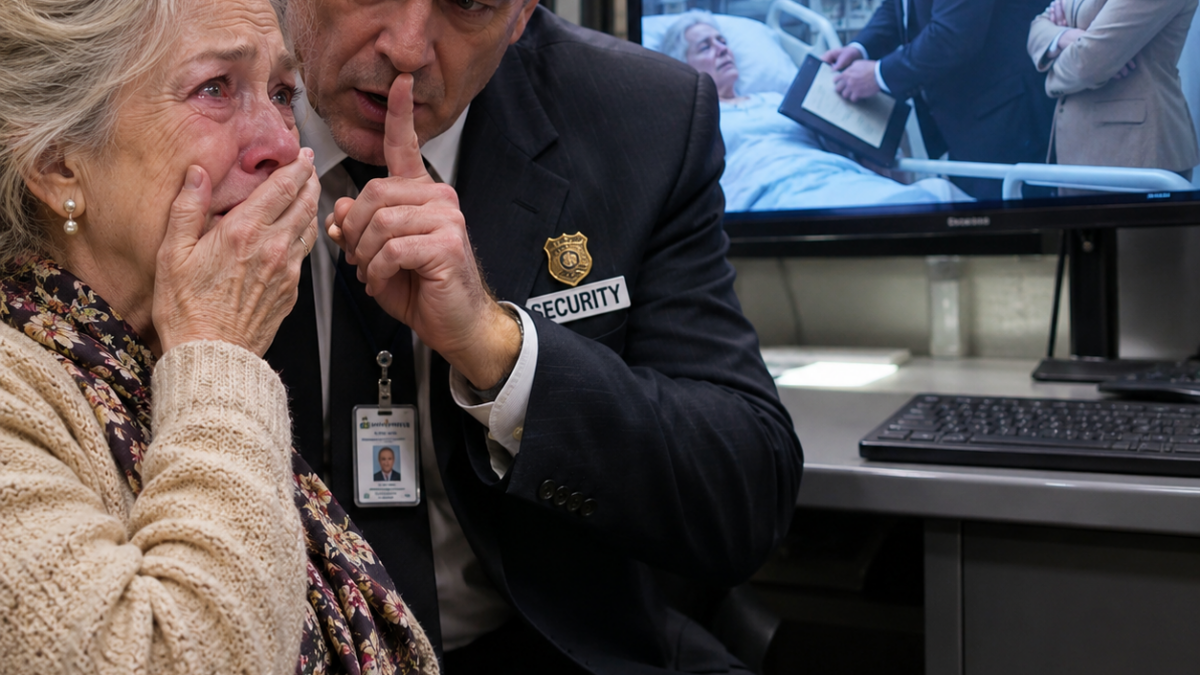
FULL STORY CONTINUATION
For several seconds, I couldn’t understand what I was hearing.
I recognized my daughter-in-law’s voice.
The confident tone.
The slight impatience she used when someone didn’t move quickly enough.
I recognized David’s voice, too.
I had heard that voice when he was a little boy asking me to check beneath his bed for monsters.
I had heard it break during his father’s funeral.
I had heard it whisper that he loved me while I lay in a hospital bed.
But the words coming from the computer made no sense.
My money?
While I was unconscious?
I leaned toward the screen.
“Please,” I whispered. “Play that again.”
Mr. Harrison looked at me with an expression I couldn’t bear.
“Mrs. Vance, there’s more.”
He restarted the recording.
The timestamp showed that the conversation had taken place shortly after I was admitted to the ICU.
David stood close to Jessica, one hand rubbing the back of his neck.
He looked frightened.
Jessica looked irritated.
“She’s got over a hundred and fifty thousand dollars sitting there,” Jessica said. “We only need fifty.”
David glanced down the corridor.
“We can’t just take it.”
“Why not?”
“Because it’s hers.”
Jessica moved closer to him.
“And we’re her family. She’s been telling us for years that everything will be ours someday.”
My chest tightened.
I had said something like that.
Not because I wanted them to take my money.
Because I had trusted them to care about my welfare.
Because parents sometimes speak casually about inheritance without imagining that their children might begin considering it an entitlement.
David lowered his voice.
“The account has security.”
“We have the passcode to her iPad.”
“That only opens the tablet. The banking app uses her fingerprint.”
Jessica gave a short, contemptuous laugh.
“David, she’s lying unconscious in the ICU.”
He looked toward the nurses’ station.
“What are you suggesting?”
“Use her thumb.”
I stopped breathing.
On the screen, my son stared at his wife.
She continued speaking as calmly as if they were discussing dinner reservations.
“I’ll get the iPad from her purse. You watch the door. Nobody’s going to question the devoted son and daughter-in-law sitting beside their poor, sick mother.”
David shook his head.
“What if a nurse comes in?”
“Then we’re praying.”
The words landed like a slap.
Praying.
That was what they’d told everyone they had been doing.
Praying for my recovery.
Praying that I would survive.
Jessica leaned closer to David.
“We need the fifty thousand for the down payment. We need it now. Not after she wakes up and starts asking questions.”
David’s shoulders slumped.
“All right.”
One word.
Two syllables.
And forty-five years of motherhood seemed to collapse inside me.
All right.
He hadn’t said no.
He hadn’t insisted they leave my money alone.
He hadn’t demanded that Jessica stop.
My son had agreed.
Mr. Harrison paused the recording.
The office became painfully quiet.
I could hear the ventilation system humming above us.
Somewhere beyond the door, a telephone rang.
Normal life continued outside that room.
Inside, mine had stopped.
“Mrs. Vance?”
I stared at the frozen image of David’s face.
“Is that really him?”
My own question sounded foolish.
I knew my son’s face.
I knew his voice.
I knew the slight movement of his jaw when he was nervous.
There was no possibility of mistaken identity.
Still, I wanted Mr. Harrison to tell me the recording was wrong.
That someone had manipulated the voices.
That there was a harmless explanation I hadn’t considered.
Instead, he said gently, “I’m afraid it is.”
I pressed my fingers against my mouth.
“Oh, David.”
I hadn’t meant to speak aloud.
The name escaped me like a cry.
Mr. Harrison reached for a box of tissues.
I couldn’t take one.
My hands were trembling too badly.
“There’s a second recording,” he said.
I looked up.
“What second recording?”
He hesitated.
“From your ICU room.”
I shook my head.
“No.”
“Mrs. Vance—”
“No, please.”
I already knew what he was going to show me.
And yet some desperate, irrational part of me hoped David had changed his mind.
Perhaps he had told Jessica to stop.
Perhaps he’d stood between her and my belongings.
Perhaps the recording would show the frightened young man on the screen finally remembering that the woman lying helpless in that bed was his mother.
I closed my eyes.
“Show me.”
The second recording began with a view of a hospital room.
My hospital room.
I saw the bed first.
The pale blanket.
The monitor beside it.
The oxygen tubing near the pillow.
Then I saw myself.
I wasn’t prepared for that.
There’s something deeply disturbing about watching your own body while knowing you had no awareness of what was happening around you.
My face looked pale.
My silver hair was spread awkwardly against the pillow.
A medical line disappeared beneath the blanket.
I looked smaller than I remembered.
Frail.
Helpless.
Nothing like the woman who had spent thirty years standing before classrooms full of teenagers, teaching them how to think for themselves.
I stared at the screen.
“That’s me.”
Mr. Harrison nodded.
I watched my chest rise and fall.
I remembered none of it.
Then David appeared near the door.
He was wearing the navy sweater I had given him for Christmas.
I remembered buying it.
He’d admired a similar one in a store window, but said it was too expensive.
So I’d returned the following week and purchased it as a surprise.
Now he stood in that sweater, looking up and down the hallway.
Jessica entered the frame.
She walked directly toward the small table near my bed.
My purse was sitting there.
A brown leather handbag Robert had bought me for our fortieth wedding anniversary.
Jessica opened it.
I watched her remove my iPad.
My stomach turned.
“Oh, God.”
She crossed toward the bed.
David remained near the door.
For a brief moment, Jessica disappeared behind the angle of the furniture.
Then the camera caught her lifting my left hand.
I watched my unconscious arm rise.
My hand hung loosely between her fingers.
She pressed my thumb against the tablet.
Nothing happened.
She adjusted it and tried again.
The screen unlocked.
I heard myself make a noise.
Not a word.
Something wounded and involuntary.
Jessica lowered my hand onto the bed and began tapping rapidly.
David glanced toward the hallway.
Once.
Twice.
Again.
He wasn’t trying to stop her.
He was watching for witnesses.
My son was standing guard while his wife stole from me.
For approximately three minutes, Jessica worked with complete concentration.
She barely looked at my face.
I lay motionless beside her.
I thought about the years I’d spent caring for David when he was helpless.
The nights I’d sat awake beside his crib when he had a fever.
The time he broke his wrist falling from a bicycle and I’d held him through the emergency-room visit.
The endless childhood illnesses, scraped knees, nightmares, and disappointments.
When he was vulnerable, I had protected him.
When I was vulnerable, he had used the opportunity to rob me.
Jessica finished what she was doing.
She returned the iPad to my purse.
Then she smoothed the blanket over my arm.
That was the detail that destroyed me.
Not the tablet.
Not the money.
The blanket.
She gently straightened it as though she were being considerate.
As though she hadn’t just used my unconscious body to gain access to my bank account.
As though her next act of kindness could erase what had happened.
She walked toward David.
He looked at her.
She gave him a small smile.
He nodded.
Then they resumed their places beside my bed.
The devoted family.
The worried relatives.
The loving son and daughter-in-law who had been telling hospital staff how frightened they were of losing me.
I stared at the screen until it went black.
Mr. Harrison turned the monitor away.
I couldn’t stop looking at the space where my unconscious body had been.
“How much?” I whispered.
He folded his hands.
“Fifty thousand dollars.”
I closed my eyes.
“Fifty thousand.”
The number meant something, of course.
It represented years of work.
Retirement savings.
Robert’s insurance money.
The inheritance my parents had left me.
But in that moment, the dollars almost didn’t matter.
I would have been devastated if strangers had taken that money.
I was being destroyed because the thieves were my own family.
“Where did it go?”
“The account information associated with the transfer identifies a joint account under David and Jessica Vance.”
I pressed a tissue against my mouth.
“Are you certain?”
“The timing and transaction details have been documented. Your bank will need to confirm the account records directly, but the footage clearly shows what happened.”
I nodded.
I was grateful for the distinction, even though my mind could barely process it.
A recording was evidence.
A financial investigation would establish the complete transaction.
But the truth of my son’s conduct was already there.
Visible.
Audible.
Impossible to deny.
Mr. Harrison leaned forward.
“Mrs. Vance, I know this is extremely difficult.”
I laughed once.
It sounded almost like a cough.
“Difficult?”
He lowered his eyes.
“I’m sorry.”
“Do you have children, Mr. Harrison?”
“Yes, ma’am.”
“Then imagine watching one of them do that to you.”
He didn’t answer.
I looked toward the closed office door.
“David held my hand when I woke up.”
My voice began shaking.
“He cried. He told me he thought he was going to lose me.”
I tried to swallow.
“He told me he loved me.”
Mr. Harrison remained silent.
“And all that time, he’d already taken my money.”
The tears finally came.
Not gentle tears.
Not the kind that gather quietly while watching a sad movie.
They came from somewhere deep and raw.
I bent forward, covering my face with both hands.
I wasn’t crying over fifty thousand dollars.
I was crying because I had just watched my son decide that my unconsciousness was an opportunity.
Because I had seen him stand at the door while his wife used my helpless body like a key.
Because the memories of his devotion at the hospital suddenly felt contaminated.
Because I no longer knew which parts of my life had been real.
I don’t know how long I sat in that office.
At some point, Mr. Harrison brought me water.
I took a few sips.
My hands shook so badly that the rim of the cup tapped against my teeth.
He gave me time.
I appreciated that.
I’d spent decades helping frightened students find words when something painful happened.
I knew that people don’t always become eloquent in moments of crisis.
Sometimes they become silent.
Sometimes they repeat the same question.
Sometimes their minds refuse to accept what their eyes have seen.
Mine kept returning to one sentence.
She trusts us too much to suspect anything.
Jessica had said it without hesitation.
And David had known she was right.
I looked at Mr. Harrison.
“Why did you call me?”
He explained that a security review had brought the footage to his department’s attention.
The irregularity had prompted a closer examination of the recordings from the night of my admission.
Once the concerning conversation and the activity in my room were identified, the matter had been escalated.
There were procedures involved.
Hospital officials and legal personnel had been consulted.
The recordings needed to be preserved appropriately.
He spoke carefully, and I appreciated that he didn’t pretend the situation was simple.
“Why tell me not to contact David?”
“Because the recordings suggest he was involved, Mrs. Vance. We didn’t want you placed in a position where evidence could be destroyed or where someone might pressure you before you had the opportunity to protect yourself.”
I stared down at the cup.
“Pressure me.”
The phrase sounded so strange when applied to my son.
David had always been persuasive.
As a child, he could talk me into allowing one more hour outside.
As a teenager, he knew exactly how to ask for money when he wanted something beyond our budget.
As an adult, he had convinced me that he should help manage my financial affairs.
I’d considered those qualities signs of intelligence.
Ambition.
Confidence.
Now I wondered how many times I had mistaken manipulation for charm.
“Mrs. Vance,” Mr. Harrison said, “you need independent advice.”
I looked at him.
“Not from your son. Not from your daughter-in-law. An attorney who works for you.”
I nodded slowly.
“You should also contact your bank, explain that you believe an unauthorized transfer occurred, and ask how to secure your accounts and access credentials.”
My mouth went dry.
“David knows almost everything.”
“Then that’s particularly important.”
I thought about the passwords.
The financial documents.
The emergency contact information.
The bank statements I’d stopped reviewing because David told me everything was under control.
And suddenly, fifty thousand dollars seemed less like the entire crime and more like the amount I’d happened to discover.
“What if there’s more?”
Mr. Harrison didn’t answer immediately.
“That’s something your attorney and bank should help you determine.”
I stood, then sat back down because my hip hurt and my knees felt unreliable.
He waited.
Finally, I managed to rise.
“Thank you for telling me.”
He looked genuinely sad.
“I’m sorry it had to be this way.”
I picked up my purse.
The same brown leather purse Jessica had opened while I lay unconscious.
I held it close to my body.
For the first time in my life, I felt frightened of my own family.
Outside, Boston moved around me as though nothing had happened.
People hurried toward elevators.
Visitors carried flowers.
A man laughed into his telephone.
A nurse pushed an empty wheelchair past the lobby.
I stood near the hospital entrance and watched strangers living ordinary afternoons.
I wanted to stop someone.
Anyone.
And say, “My son stole from me while I was unconscious.”
I wanted the world to acknowledge how impossible that sentence felt.
Instead, I walked to my car.
I sat behind the wheel for several minutes without starting the engine.
My phone vibrated.
David.
Mom, checking in. How’s the hip today? Love you.
I stared at the message.
The word love made me physically nauseated.
Three weeks earlier, that same message would have warmed my heart.
I would have replied immediately.
I might have sent a photograph of the roses.
I might have told him how lucky I was to have such a thoughtful son.
Now I looked at the screen and saw the man who had stood guard while my daughter-in-law stole my money.
I didn’t answer.
A few minutes later, Jessica sent a message.
Ellen, don’t forget to rest! We’re still planning to bring you dinner. Let us know if you need anything.
Need anything.
I nearly threw the phone onto the passenger seat.
I needed my son to be the man I’d believed he was.
I needed the recording not to exist.
I needed to go back three hours, before Mr. Harrison’s call had changed everything.
I needed Robert.
The thought of my husband hit me so hard that I began crying again.
“Robert,” I whispered into the empty car. “What happened to our boy?”
There was no answer.
There hadn’t been an answer for five years.
I imagined what Robert would have said if he’d seen the footage.
He had adored David.
Our son had been his pride.
But Robert had also been a man of uncompromising honesty.
He returned extra change when cashiers made mistakes.
He taught David that borrowing something without permission was still taking it.
He believed a person’s character mattered most when no one was watching.
I gripped the steering wheel.
Our son had known someone might be watching.
And he’d done it anyway.
I finally started the car.
But I couldn’t drive home.
Not yet.
My house was filled with photographs of David.
His childhood.
His graduation.
His wedding.
His children.
His smiling face beside mine at my seventieth birthday party.
I couldn’t bear to walk into that house and see those photographs before I had spoken to someone who loved me without wanting anything from me.
So I drove to Martha’s.
Martha had been my neighbor and closest friend for thirty years.
She was also David’s godmother.
She’d attended his school plays, celebrated his birthdays, and helped us through the difficult years when work and family obligations threatened to overwhelm us.
If anyone understood how deeply I loved my son, it was Martha.
She opened the door wearing gardening gloves.
“Ellen?”
Her smile disappeared.
“Sweetheart, what happened?”
I tried to answer.
Nothing came out.
Then I began crying.
Martha pulled me inside and held me while I shook.
She didn’t demand an explanation.
She didn’t tell me to calm down.
She simply wrapped her arms around me and waited until I could breathe.
Finally, she guided me to the kitchen table.
“Tell me.”
I looked at her.
“David stole from me.”
She stared.
“What?”
“Fifty thousand dollars.”
Her expression changed from confusion to disbelief.
“No.”
“While I was unconscious.”
Martha’s hands fell to the table.
I told her everything.
The telephone call.
The security office.
The corridor recording.
Jessica’s plan.
David’s agreement.
The video showing my unconscious hand being pressed against the iPad.
By the time I finished, Martha was standing.
Her face had gone red with anger.
“That miserable little coward.”
I’d never heard her speak about David that way.
She’d been his godmother since he was a baby.
“Jessica used your hand?”
I nodded.
“And David watched?”
“He stood at the door.”
Martha pressed her palms against the kitchen counter.
For several seconds, she said nothing.
Then she turned.
“I held that boy when he was baptized.”
Her voice cracked.
“I changed his diapers. I took him for ice cream. I sat with him when Robert was sick.”
I stared at the floor.
“He knew what they were doing.”
“Of course he knew.”
“He seemed nervous.”
“Ellen.”
She pulled out the chair beside mine.
“Nervous isn’t innocent.”
The words struck me.
Because part of me had already begun searching for an explanation that would make David less responsible.
Jessica had been forceful.
Jessica had sounded confident.
Jessica had clearly pushed the plan.
But David had agreed.
He had watched the door.
He had accepted the money.
He had later sat beside my hospital bed and told me he loved me.
Martha took my hands.
“Don’t you dare turn this into something Jessica made him do.”
I began crying again.
“He was my baby.”
“I know.”
“My only child.”
“I know.”
“I would have helped them if they were in trouble.”
Martha shook her head.
“That doesn’t make what they did less cruel.”
I looked toward the window.
Her garden was beginning to turn gold with autumn.
Life looked so ordinary outside.
“I don’t know who he is anymore.”
Martha’s expression softened.
“You know what he did. Start there.”
That evening, we sat at her kitchen table with a notebook.
Martha made tea I barely touched.
I wrote down everything Mr. Harrison had advised.
Contact the bank.
Secure every account.
Change access credentials.
Find an attorney.
Report the theft.
Preserve the evidence.
The list seemed impossibly practical compared with what I was feeling.
I wanted to crawl into bed and stay there.
I wanted to pretend that if I didn’t act, the truth might somehow disappear.
But I also understood something frightening.
David and Jessica had no idea I knew.
They still believed I trusted them.
They still had access to parts of my life.
And if I gave them time, they might take more.
“I need to protect myself,” I said.
Martha nodded.
“Yes.”
“But I also need them to know I know.”
She studied my face.
“What are you thinking?”
I looked down at my trembling hands.
“I don’t want to confront them alone.”
“Then don’t.”
“I don’t want them standing in my living room telling me I’m confused.”
Martha’s jaw tightened.
“That sounds exactly like something they’d try.”
“I don’t want Jessica explaining it away. I don’t want David crying until I forgive him.”
I looked at her.
“Because I know myself, Martha. If he cries in front of me, some part of me will want to make him feel better.”
Her eyes filled.
“Oh, Ellen.”
“I’ve been doing that his entire life.”
I remembered the times David had disappointed me.
Small things at first.
Broken promises.
Money borrowed and returned late.
Responsibility avoided because he knew I would step in.
I had always believed love meant helping him find his way.
Now I wondered whether he’d learned that my needs would always come second.
Martha reached across the table.
“Then this time, we do it differently.”
I looked at her.
“We?”
“You’re not doing this alone.”
For the first time since leaving the hospital, I felt something other than despair.
Not happiness.
Not relief.
Something steadier.
The knowledge that at least one person in my life was standing beside me without asking for anything in return.
The next morning, I called the bank.
I sat at Martha’s kitchen table while a fraud specialist reviewed the situation with me.
Explaining it aloud was humiliating.
Not because I had done anything wrong.
But because every sentence forced me to confront another detail I’d trusted David to handle.
“Your son had access to your financial information?”
“Yes.”
“Did you authorize the fifty-thousand-dollar transfer?”
“No.”
“Was there ever an agreement that he could use those funds for a home purchase?”
“No.”
“Did you personally initiate the transaction?”
I closed my eyes.
“I was unconscious in intensive care.”
The representative paused.
Then her voice softened.
“I’m very sorry, Mrs. Vance.”
She explained the immediate measures available to secure my accounts and begin an investigation.
I asked that David’s access be restricted wherever possible.
I changed passwords.
I reviewed contact information.
I asked how to obtain complete records of recent transactions.
Every step felt like cutting another thread connecting my finances to my son.
When we finished, I sat staring at the notebook.
Martha set a fresh cup of tea beside me.
“One thing done.”
I nodded.
But my chest still hurt.
That afternoon, I met Charles Lynn.
He was a lawyer in his late fifties with a calm, precise manner that reminded me of Robert.
He listened without interrupting.
Then he reviewed the information I’d brought from the hospital.
His expression grew increasingly serious.
When I finished, he removed his glasses.
“Mrs. Vance, this is not an ordinary family disagreement.”
“I know.”
“It involves potential theft and financial exploitation during a period when you couldn’t give meaningful consent.”
I looked down.
“He was helping me manage my money.”
“That doesn’t give him permission to take it.”
“He told me everything would eventually be his.”
“An expected inheritance is not ownership.”
I swallowed.
“Can they claim I gave it to them?”
“They can make that claim. The evidence will determine whether it’s credible.”
He explained the process.
Police reports.
Bank records.
Preserved recordings.
Possible criminal charges.
Potential civil action to recover funds.
There would be investigators.
Legal arguments.
Delay.
And perhaps a trial.
“There’s something else,” I said.
He waited.
“I don’t want them to talk their way out of this.”
“That’s why we rely on evidence.”
“No.”
I leaned forward.
“You don’t understand.”
He watched me carefully.
“David has spent his entire life being charming.”
Martha nodded beside me.
“He can make people believe almost anything.”
“He cries when he’s caught doing something wrong,” I said. “He apologizes. He promises he’ll change. And people forgive him because he’s so good at looking sorry.”
Charles folded his hands.
“What would you like to do?”
I looked at Martha.
Then back at him.
“I want them to face what they did.”
“That’s what the legal process is for.”
“I know.”
I took a breath.
“But I want the people they’ve been lying to to see the truth.”
The idea came to me that night.
At first, it felt so outrageous that I almost dismissed it.
I was seventy-two.
A retired English teacher.
A woman who preferred book clubs to confrontation and quiet dinners to extravagant gatherings.
Public humiliation wasn’t something I’d ever considered appropriate.
But neither was using an unconscious woman’s fingerprint to steal her retirement savings.
For years, David and Jessica had built a reputation around being successful, generous, devoted family members.
They attended the right events.
Made the right connections.
Displayed the right photographs.
And during my hospitalization, they had apparently used my illness as further proof of their devotion.
I could already imagine what they’d told people.
How frightened they’d been.
How they’d spent endless hours beside my bed.
How grateful they were that I’d survived.
I wondered how much admiration they’d collected while hiding what they’d done.
And the thought made me sick.
The next morning, I told Martha and Charles my plan.
“I want to host a party.”
Martha blinked.
“A party?”
“A celebration of life.”
Charles looked cautious.
“Mrs. Vance—”
“I’m serious.”
I explained.
I’d recently survived a frightening medical emergency.
Everyone knew it.
A celebration would make sense.
I could invite family, friends, David’s business associates, Jessica’s social circle, and the people who believed they were the perfect couple.
I would tell everyone I wanted to thank my son and daughter-in-law for their devotion.
Then I would reveal what had actually happened.
Martha stared at me.
Finally, she said, “Good Lord.”
Charles leaned back.
“There are legal considerations.”
“I understand.”
“We would need to ensure that any evidence shown publicly was lawfully obtained and appropriately prepared. The hospital’s recordings may contain protected information.”
“Then handle it properly.”
He studied me.
“You’re certain?”
I looked at him.
“They stole from me while I couldn’t defend myself. I am not going to let them use my silence to preserve their reputation.”
Martha reached for my hand.
“Ellen, this will hurt.”
I looked at her.
“It already does.”
“No. I mean standing in front of everyone and saying it aloud.”
I thought about David.
The little boy who used to bring me dandelions.
The teenager who hugged me after receiving his college acceptance letter.
The grown man who held my hand at Robert’s funeral.
Then I pictured him standing at my ICU door while Jessica used my thumb to open the banking app.
“My relationship with my son ended in that hospital room,” I said.
My voice surprised me with its steadiness.
“The party will simply be where he finds out.”
We chose Colonial Hills Country Club in Weston.
David loved that place.
He talked about it as though membership were a measure of personal worth.
The business connections.
The private dining rooms.
The golf course.
The people who made decisions over expensive lunches.
He had been working for years to move into that social circle.
Once, he’d told me that the right relationships could be worth more than an advanced degree.
I’d laughed and reminded him that his education hadn’t exactly been free.
He hadn’t laughed.
Now I thought about that conversation differently.
I had spent much of my life teaching young people that character mattered more than appearances.
Somehow, my own son had grown into a man who cared more about his reputation than his integrity.
And I was going to confront him in the very place where he felt most important.
The invitation described the event as my rebirth celebration.
A gathering to honor recovery, family, and gratitude after my hospitalization.
I invited sixty people.
Close friends.
A few former colleagues.
Members of our extended social circle.
David’s business contacts.
Jessica’s friends.
People who had congratulated them on their devotion while knowing absolutely nothing about what had happened in my ICU room.
When I called David, I made myself sound delighted.
“Darling, I’ve decided to celebrate.”
“Celebrate what, Mom?”
“Being alive.”
He laughed.
“That sounds wonderful.”
“I want to host a dinner at Colonial Hills. A proper party. I think surviving such a frightening experience deserves something special.”
“Colonial Hills?”
His voice brightened immediately.
“Mom, that’s fantastic.”
“I especially want to thank you and Jessica. You were both so devoted while I was in the hospital.”
There was a pause.
For one sickening second, I wondered whether he suspected something.
Then he said, “We just did what any loving family would do.”
I closed my eyes.
Any loving family.
I thought about the video.
The purse.
The iPad.
My unconscious hand.
“I know, sweetheart.”
He sounded pleased.
“Jessica’s going to love this. She’ll help you organize everything.”
“Oh, no need. Martha and I have it under control.”
“Are you sure? Jess is great at events.”
“I’m sure.”
He laughed again.
“All right, Mom. Whatever makes you happy.”
When I hung up, I put the phone on the table and stared at it.
Martha was sitting across from me.
“How did it go?”
“He loved the idea.”
“Of course he did.”
“He said they did what any loving family would do.”
Martha’s expression hardened.
I began laughing.
Then the laughter became crying.
Martha moved beside me.
I covered my face.
“I don’t understand how he can keep lying.”
She held my shoulders.
“Because he doesn’t know the truth has caught up with him.”
The days before the party were some of the strangest of my life.
I was preparing for a celebration while secretly grieving my son.
I ordered flowers.
Selected a menu.
Discussed seating arrangements.
Chose music.
Reviewed lighting and projection equipment with the club manager.
Meanwhile, Charles continued coordinating with the appropriate people regarding the evidence and legal proceedings.
The hospital’s security material had to be handled carefully.
We were not going to compromise the investigation through recklessness.
A version of the relevant footage was prepared for the presentation after the necessary arrangements were made, with the central evidence preserved for the authorities.
Charles also made sure the financial records were being obtained through proper channels.
Everything had to be documented.
No assumptions.
No exaggeration.
No invented details.
I wanted David and Jessica confronted with precisely what they’d done.
Not a distorted version.
The truth was devastating enough.
At home, I practiced my speech.
The first attempt lasted less than a minute.
I got as far as thanking everyone for coming before I broke down.
The second time, I reached the part about David and Jessica.
Then my throat closed.
Martha sat beside me with a notebook.
“Again,” she said gently.
“I can’t.”
“You can stop for tonight.”
I looked at the paper.
“I have to be able to say it without crying.”
“Why?”
“Because they’ll use it against me.”
She didn’t answer immediately.
Then she said, “Ellen, crying doesn’t make you confused. It makes you human.”
I shook my head.
“If I cry, David will come over and put his arms around me. He’ll look concerned. Jessica will say I haven’t recovered from the hospital. They’ll make everyone wonder whether I’m thinking clearly.”
Martha became quiet.
We both knew I was right about what they might attempt.
So we practiced.
Again.
And again.
I learned to pause when my voice shook.
To look at one person rather than the entire room.
To hold my notes without gripping them so tightly they crumpled.
I was an English teacher.
I had spoken in front of hundreds of students over the years.
But nothing in a classroom had prepared me to accuse my own child of stealing from me while I lay unconscious.
Sometimes, after rehearsing, I would go upstairs and sit on the edge of Robert’s side of the bed.
I imagined him beside me.
“Would you do this?” I whispered once.
I wanted an answer.
I wanted him to tell me whether I was being too harsh.
Whether a mother should protect her son’s reputation even when he had betrayed her.
But the room was quiet.
And eventually, I realized Robert had already taught me what he believed.
He had always said that love without honesty became something dangerous.
He had taught David that responsibility didn’t disappear when acknowledging it was uncomfortable.
Now I would have to live by those principles myself.
Jessica called three days before the party.
“Ellen, I hope you’re not wearing something too plain.”
I looked at the navy dress hanging in my bedroom.
“Actually, I’ve bought something special.”
“Oh, wonderful. You’ll be photographed all evening.”
Her tone was bright.
Almost affectionate.
“You know, David’s colleagues are really excited. Everyone thinks it’s beautiful that you’re honoring us.”
My stomach turned.
“Do they?”
“Of course. They’ve heard how we practically lived at the hospital.”
I closed my eyes.
“Yes. You certainly spent a lot of time there.”
“We were terrified, Ellen.”
I gripped the telephone.
“We couldn’t bear the thought of losing you.”
For a moment, I wanted to ask her whether she had felt terrified while navigating my banking app.
Whether her hands had trembled while lifting my unconscious thumb.
Whether she had thought about the possibility that I might never wake up, or whether that possibility had simply made stealing easier.
Instead, I said, “I’m grateful you’re both coming.”
“We wouldn’t miss it.”
After we hung up, I stood beside my bedroom window.
The hydrangeas outside had begun turning brown at the edges.
Autumn was moving forward.
Everything in nature seemed to understand that one season was ending and another beginning.
I wished human hearts could change so cleanly.
On the night of the party, Martha arrived early.
She found me standing before the bedroom mirror in a deep sapphire gown.
I’d almost chosen something more modest.
Then I decided I wanted to look like myself.
Not a sick woman.
Not a helpless grandmother.
Not the confused elderly mother David and Jessica might try to portray.
I wanted to look like Ellen Vance.
A woman who had spent thirty years teaching.
A woman who had loved a husband, raised a son, managed a household, and worked hard for every dollar in her accounts.
A woman who had survived a frightening medical emergency.
And a woman who was finally prepared to defend herself.
Martha stopped in the doorway.
“Oh, Ellen.”
I turned.
“Too much?”
“Absolutely not.”
She crossed the room and adjusted the neckline of my dress.
“You look beautiful.”
I looked at my reflection.
My silver hair was pinned neatly.
I wore pearl earrings Robert had given me.
There were still faint shadows beneath my eyes from weeks of poor sleep.
But I stood straight.
“Do I look frightened?”
Martha met my eyes in the mirror.
“You look determined.”
I gave a small smile.
“That’s close enough.”
Charles met us at the club.
He reviewed the final arrangements with the manager and made sure the presentation equipment was ready.
The dining room looked magnificent.
White tablecloths.
Autumn flowers.
Soft candlelight.
Crystal glasses.
A large screen positioned discreetly against one wall.
Sixty chairs arranged around beautifully set tables.
It looked like a celebration of everything my life had supposedly become.
Successful son.
Devoted family.
Financial security.
Recovery.
Love.
I stood near the entrance and wondered whether I had made a terrible mistake.
Then the guests began arriving.
Former colleagues hugged me.
Friends told me how wonderful I looked.
A neighbor said she’d prayed for me every day after the collapse.
I thanked them.
Their kindness was real.
I held on to that.
Not everyone in my life had been pretending.
Not every affectionate word was false.
Some people had come because they genuinely loved me.
I needed to remember that.
Then David and Jessica arrived.
My son looked magnificent.
That was the first thought that went through my mind, and I hated myself for it.
He wore a tailored charcoal suit.
His hair was neatly styled.
He carried himself with the easy confidence of a man accustomed to being admired.
Jessica wore an elegant dress and expensive jewelry.
They looked like the perfect successful couple.
David spotted me and smiled.
“Mom!”
He crossed the room.
Then he embraced me.
For an instant, his arms around me awakened forty-five years of memory.
A toddler reaching up to be carried.
A little boy hugging me after his first school play.
A teenager wrapping his arms around my shoulders before leaving for college.
The grown man holding me while we buried Robert.
I wanted desperately to believe the embrace was real.
Then I remembered him standing at the ICU door.
I went rigid.
He pulled back.
“You okay?”
I forced a smile.
“Just a little overwhelmed.”
He kissed my cheek.
“You look incredible.”
“Thank you.”
He glanced around.
“This place looks amazing. You really went all out.”
“I wanted the evening to be memorable.”
Jessica approached carrying a beautifully wrapped gift.
“Ellen, sweetheart.”
She kissed the air beside my cheek.
“We brought you something.”
I opened the package.
Inside was a cashmere shawl.
Soft.
Expensive.
Beautiful.
“For your evening walks,” she said. “Now that you’re getting stronger.”
I ran my fingers across the fabric.
I thought about the money she’d taken.
Fifty thousand dollars.
And now she was giving me a shawl.
“How thoughtful.”
She smiled.
“You deserve to be spoiled.”
I looked at her.
For one fleeting moment, I wondered whether she felt any guilt.
Her face showed none.
Perhaps she had convinced herself that the money would eventually belong to them anyway.
Perhaps she’d decided that my savings were more useful to her than to me.
Perhaps she believed I was too old, too trusting, or too dependent to notice.
Whatever she believed, she was smiling at me while surrounded by people who admired her.
“Thank you, Jessica.”
I folded the shawl carefully.
“I won’t forget this.”
Dinner began beautifully.
That was the strangest part.
The guests enjoyed themselves.
They admired the flowers.
Complimented the food.
Discussed work and grandchildren and vacation plans.
A retired colleague told me about a new literature course she was teaching.
One of David’s business associates congratulated him on his promotion.
Jessica laughed with friends from her office.
I watched the two of them moving effortlessly through the room.
David shook hands.
Jessica embraced acquaintances.
They accepted praise for their devotion during my hospitalization.
Every compliment felt like another small insult.
A woman near my table leaned toward me.
“You must be so proud of David.”
I looked at him across the room.
He was laughing at something a colleague had said.
“He’s certainly accomplished a great deal.”
“He’s such a wonderful son. He told us how worried he was when you were in intensive care.”
I set down my glass.
“Did he?”
“Oh, yes. He was devastated.”
I looked toward Martha.
She was watching me carefully.
I turned back to the woman.
“Tonight, you’ll learn a little more about that.”
She smiled, apparently assuming I meant a touching family tribute.
I smiled back.
I felt almost detached from my own body.
As though I were watching another woman sit at a table while her life approached a collision.
Then David stood and raised his glass.
“Before Mom says anything, I’d like to make a toast.”
I froze.
Martha’s expression sharpened.
David looked around the room.
“My mother is the strongest woman I know.”
People smiled.
He continued.
“She’s been there for me my entire life. Through every success, every setback, every difficult moment.”
I gripped the edge of my chair.
“And when she got sick, Jessica and I realized how lucky we were to still have her.”
His voice thickened.
I watched him carefully.
He seemed emotional.
Genuinely emotional.
That was what made the moment unbearable.
How could a man look so sincere while telling a lie?
“Mom,” he said, raising his glass toward me, “we love you. And we’re grateful every day that you’re still here.”
The room applauded.
I sat still.
A wave of nausea swept through me.
For a moment, I couldn’t move.
Then I stood.
I raised my glass.
“Thank you, David.”
My voice was steady.
“That was very moving.”
He smiled.
He had no idea.
When the main course was finished, the club manager gave me a discreet signal.
The presentation equipment was ready.
Charles stood near the back of the room.
Martha sat beside me.
I looked at the guests.
People were finishing coffee.
A few were laughing quietly.
David was leaning toward Jessica, whispering something that made her smile.
I wondered whether they were discussing the party’s success.
Whether David was pleased that his colleagues had seen him honored.
Whether Jessica was already imagining the photographs she’d share with friends.
I rose.
The room gradually became quiet.
I tapped my glass lightly.
“Thank you all for coming.”
People turned toward me.
I smiled.
“This has been an extraordinary year.”
A few guests nodded.
“Three weeks ago, I woke up in a hospital room after a collapse that frightened me more than anything I’ve experienced since losing my husband.”
The room settled into attentive silence.
“I had spent much of my life believing that I understood what mattered. Family. Loyalty. Honesty. The comfort of knowing that the people closest to you would stand beside you when life became difficult.”
I glanced toward David.
He smiled proudly.
“When I woke in the hospital, my son was holding my hand.”
His expression softened.
“My daughter-in-law brought me blankets. They checked on me, encouraged me, and told me how grateful they were that I had survived.”
Jessica squeezed David’s arm.
A woman near the front dabbed at her eyes.
I continued.
“For several days, I believed I was witnessing the purest expression of family love.”
My throat tightened.
I paused.
Martha gave me a small nod.
I looked down at my notes.
“But something happened while I was unconscious that I didn’t learn about until recently.”
The room became still.
David’s smile faded slightly.
I raised my eyes.
“I received a telephone call from the director of security at Massachusetts General Hospital.”
Jessica’s hand stopped moving.
I saw it.
A tiny change.
Her fingers tightened around David’s sleeve.
“He asked me to come to the hospital alone.”
I looked directly at my son.
“And he warned me not to tell David or Jessica.”
A murmur passed through the room.
David sat straighter.
“Mom?”
I didn’t answer.
“At the hospital, I was shown recordings from the night I was admitted to intensive care.”
Jessica’s face changed.
The color seemed to drain from it.
David looked toward her.
I took one careful breath.
“Those recordings showed me something I never believed I would see.”
My voice began shaking.
I steadied it.
“They showed my son and daughter-in-law planning to steal fifty thousand dollars from my savings while I was unconscious.”
For one second, nobody moved.
Then David stood so quickly that his chair scraped against the floor.
“Mom, what the hell are you talking about?”
Jessica rose beside him.
“Ellen, you’re confused.”
There it was.
Exactly what I’d expected.
I looked at her.
“No, Jessica.”
She forced a laugh.
“This is ridiculous. You’ve been through a traumatic medical event. You shouldn’t be making accusations like this.”
David stepped forward.
“Mom, sit down. We can talk about this privately.”
I felt the familiar pull of his voice.
The instinct to obey the pleading tone.
To avoid embarrassing him.
To make the situation comfortable for everyone.
Then I remembered my unconscious hand.
“No, David.”
The entire room was watching.
I raised my head.
“We are going to talk about it here.”
I turned toward the screen.
“Charles.”
The lights dimmed.
The first recording began.
David and Jessica appeared in the hospital corridor.
The room went completely silent.
Then Jessica’s voice filled the speakers.
“She’s unconscious. This is our chance.”
I watched the faces around me.
Confusion.
Disbelief.
Shock.
David stood frozen.
Jessica looked toward the screen, then the door.
The conversation continued.
The money.
The passcode.
The fingerprint.
The fifty-thousand-dollar transfer.
The down payment.
And finally, Jessica’s devastating assurance.
“She trusts us too much to suspect anything.”
I heard a woman gasp.
Someone whispered, “Oh, my God.”
David’s business associate slowly lowered his glass.
Martha sat rigidly beside me.
On the screen, my son agreed.
The recording ended.
David immediately spoke.
“That was taken out of context.”
I looked at him.
“Was it?”
“Mom, please.”
Jessica stepped forward.
“That recording doesn’t prove anything. We were discussing a family financial arrangement.”
Charles remained near the projection controls.
I looked toward him.
“Show the second recording.”
Jessica’s voice rose.
“No!”
Every person in the room turned toward her.
She realized what she’d done.
Her expression hardened.
“Ellen, you cannot show private medical footage to a room full of people.”
Charles answered calmly.
“The relevant material has been reviewed and prepared through the proper process. The authorities have the original evidence.”
David looked suddenly ill.
“What authorities?”
I said nothing.
The second recording appeared.
My ICU room.
My unconscious body.
The cardiac monitor.
The pale blanket.
The purse.
Jessica opening it.
I heard someone begin crying softly.
On the screen, Jessica removed the iPad.
Then she lifted my hand.
A horrified sound passed through the room.
I couldn’t watch the guests anymore.
I watched David.
He stared at the floor.
Jessica pressed my thumb against the tablet.
Once.
Twice.
The screen unlocked.
David stood by the door.
Watching.
Waiting.
Guarding the woman who was robbing his mother.
When the recording ended, the lights came back on.
No one applauded.
No one spoke.
There was only the heavy, stunned silence of people who had just witnessed something they couldn’t reconcile with the couple sitting among them.
I looked at my son.
“Fifty thousand dollars, David.”
His lips moved.
No sound came out.
“You took fifty thousand dollars from my retirement savings while I was lying unconscious in intensive care.”
“Mom—”
“You used my fingerprint.”
He flinched.
“Your wife used my hand like a key while you watched the door.”
Jessica crossed her arms.
“You’re making this sound much worse than it was.”
I turned toward her.
“Worse?”
Her face was pale, but her voice remained sharp.
“We needed money. We were going to put it back.”
I stared at her.
“You were going to put it back?”
“Yes.”
“Then why didn’t you ask me?”
She looked toward David.
I waited.
“Why didn’t you ask me, Jessica?”
Neither of them answered.
I looked around the room.
“Because they knew I might say no.”
Jessica opened her mouth.
I continued.
“And apparently my right to say no was the one thing they couldn’t tolerate.”
David began crying.
Not a few tears.
He bent forward, covering his face with his hands.
“Mom, please.”
His voice was broken.
“We were desperate.”
A familiar ache opened in my chest.
I had seen him cry countless times.
When he was little, I had always gone to him.
When he was older, I listened.
I reassured him.
I helped him.
I made his problems my own.
And even now, after everything, part of me wanted to walk across the room and put my arms around him.
That instinct frightened me more than his tears.
Because I knew he was counting on it.
“We made a mistake,” he said.
I looked at him.
“A mistake?”
He nodded desperately.
“Yes.”
I felt something cold settle inside me.
“A mistake is forgetting a birthday.”
My voice carried across the room.
“A mistake is sending money to the wrong account and immediately reporting it.”
I stepped closer.
“A mistake is something you do without intending to hurt someone.”
He shook his head.
“Mom—”
“You planned this.”
He stopped.
“You discussed my banking security. You waited until I was unconscious. You used my hand. You transferred my money.”
Jessica interrupted.
“Ellen, you’re being theatrical.”
Martha rose.
“Sit down, Jessica.”
Jessica turned toward her.
“Excuse me?”
“I said sit down.”
Martha’s voice was unlike anything I’d heard from her in thirty years.
She looked at David.
“I carried you to the baptismal font.”
His face crumpled.
“Aunt Martha—”
“Don’t.”
She moved closer.
“I watched your mother work herself sick so you could have opportunities she never had.”
David looked down.
“I know.”
“No, you don’t.”
Martha’s eyes filled with tears.
“Because if you understood what that woman gave you, you never would have used her unconscious body to steal from her.”
He began sobbing harder.
Jessica looked increasingly furious.
She turned toward the door.
Charles stepped into the open space near her.
“Mrs. Vance, the police have been contacted. It would be wise to remain available to speak with them.”
Her expression became sharp.
“You can’t hold us here.”
“I’m not physically preventing you from leaving,” Charles said. “I’m advising you that this is now an active criminal matter.”
David looked at me.
“Police?”
I nodded.
“Yes.”
His eyes widened.
“Mom, you called the police on me?”
I looked at him for a long moment.
Then I said something I never imagined saying to my child.
“No, David. Your actions brought the police into this.”
He shook his head violently.
“We’re family!”
The words echoed through the room.
I felt tears gather again.
“Family?”
I looked at the man who had once slept against my shoulder.
“The night you used my fingerprint, did you remember we were family?”
He couldn’t answer.
“Did you think about your father?”
His expression changed.
“Mom, don’t.”
“Did you remember how hard he worked to leave me with some security?”
“Please.”
“Did you remember that money was supposed to help me live independently if I became ill?”
His face twisted.
“Please stop.”
I stepped back.
“I wish you had said those words to Jessica.”
The room remained silent.
“I wish you’d stood in that ICU doorway and told her to stop.”
My voice broke.
“I wish you’d remembered that I was your mother before you remembered how much money I had.”
The officers arrived shortly afterward.
They had been coordinating with the investigation and Charles had made the necessary arrangements for them to be present nearby.
Their entrance was quiet.
No dramatic shouting.
No unnecessary force.
But when David saw them, his face seemed to collapse.
He turned toward me.
“Mom, please don’t let them do this.”
I couldn’t answer.
I felt as though I were watching two different people occupying the same body.
The boy I had loved.
And the man who had betrayed me.
Jessica began protesting.
She argued that the money belonged to the family.
That I’d always intended to leave it to them.
That I’d been medically confused.
That the transfer had been misunderstood.
The officers listened and addressed the situation according to the investigation.
Then David and Jessica were taken into custody.
I stood motionless.
As they were escorted toward the doors, David turned one last time.
“Mom!”
I looked at him.
His eyes were wet.
His mouth trembled.
For one terrible second, he looked eight years old.
The age he’d been when he broke a neighbor’s window with a baseball and came home terrified.
The age he’d been when he fell asleep holding my hand during a thunderstorm.
The age he’d been when he still believed I could fix everything.
“Mom, I’m your son.”
The words almost brought me to my knees.
I wanted to say, I know.
I wanted to say, I wish that had mattered to you.
Instead, I spoke quietly.
“Being my son never gave you the right to steal my dignity.”
He began crying again.
Then the doors closed.
And he was gone.
I had imagined that I would feel victorious.
For days, I’d pictured the moment when David and Jessica would be exposed.
I’d imagined their expressions.
The shocked guests.
The collapse of their carefully maintained image.
I’d thought that once everyone knew the truth, something inside me might finally settle.
But as the doors closed behind my son, I felt no triumph.
Only grief.
A terrible, hollow grief.
The room seemed too large.
The lights too bright.
The flowers too beautiful for what had just happened.
I remained standing beside the table.
Martha approached.
“Ellen?”
I tried to answer.
My knees weakened.
She caught my arm and guided me to a chair.
I sat.
Then my body began shaking.
Not because I was cold.
Because the strength I’d been forcing myself to maintain had finally disappeared.
Martha wrapped her arms around me.
“It’s over.”
I shook my head.
“No.”
She held me tighter.
“It’s over for tonight.”
I stared toward the doors.
“He’s my son.”
“I know.”
“He’s still my son.”
Martha’s own voice broke.
“I know, sweetheart.”
I covered my face.
And I cried.
I cried for the fifty-thousand-dollar betrayal.
For the little boy who had once placed dandelions in my hand.
For Robert, who would never have to see what our son had become.
For the family dinners I’d believed were genuine.
For the hospital visits.
For every affectionate message I’d received since coming home.
For the life I’d thought I possessed.
And for the terrible realization that protecting myself had required publicly confronting the person I loved most.
Charles quietly helped the club manager bring the evening to an end.
Guests collected their coats.
Some approached to offer sympathy.
Others avoided my eyes.
I couldn’t blame them.
They’d witnessed something intimate and devastating.
A mother watching her only child taken away after evidence of serious financial wrongdoing was revealed.
No one knew what to say.
Neither did I.
When the room finally emptied, Martha sat beside me.
Charles approached.
“Mrs. Vance, you shouldn’t be alone tonight.”
I nodded.
For once, I didn’t argue.
I went home with Martha.
And at seventy-two years old, I spent the night in my best friend’s guest bedroom, crying for a son who was still alive.
The next morning, sunlight came through Martha’s bedroom curtains.
For a moment, I forgot where I was.
Then I remembered everything.
The hospital footage.
The party.
David’s tears.
The officers.
His final words.
I’m your son.
I turned toward the wall.
I had barely slept.
Every time I closed my eyes, I saw him being escorted out of the country club.
I wondered where he’d spent the night.
Whether he’d eaten.
Whether he was frightened.
Whether Jessica was blaming him.
Then I hated myself for worrying.
Martha knocked softly.
“Ellen?”
“Come in.”
She entered carrying tea and toast.
I sat up.
She studied my face.
“You look exhausted.”
“I am.”
She set the tray down.
“Charles called.”
I stared at her.
“The court proceedings are beginning. He’ll explain everything when you’re ready.”
I looked toward the window.
“Was I cruel?”
Martha sat beside me.
“What?”
“Last night. The party. Showing everyone what they did.”
She was quiet.
I continued.
“I could have handled it privately.”
“You did involve an attorney and the authorities.”
“But I wanted people to see.”
My voice cracked.
“I wanted David to feel ashamed.”
Martha took my hand.
“Ellen, you didn’t fabricate what happened. You showed people what he did.”
“But he looked so broken.”
Her expression hardened.
“Think about the recording.”
I closed my eyes.
“Don’t.”
“You need to remember both versions of him, sweetheart. Not just the crying man at the party.”
She squeezed my hand.
“Remember the man standing guard while Jessica used your unconscious hand.”
I began crying quietly.
“I wish I didn’t have to.”
“So do I.”
We sat together until the tea grew cold.
The legal proceedings moved forward quickly at first, then slowed into the exhausting rhythm of investigations, hearings, motions, and arguments.
David and Jessica obtained legal representation.
Their attorneys initially maintained that the money had been a gift.
Then they suggested there had been a misunderstanding.
Then they raised questions about my health, my memory, and whether I had previously authorized access to my accounts.
I expected all of it.
Charles had warned me.
Still, seeing those arguments written down felt like being betrayed again.
At seventy-two, I’d survived a serious medical emergency.
I’d experienced a period of unconsciousness.
I’d needed several days of hospital care.
Now my own son was using that medical history to challenge my credibility.
Charles spread the documents across his office table.
“They’re trying to establish that your recollection is unreliable.”
I stared at him.
“My recollection of what?”
“Your financial arrangements with David.”
“I didn’t authorize the transfer.”
“I know.”
“I was unconscious.”
“The evidence supports that.”
I shook my head.
“Then why are we even discussing whether I’m confused?”
“Because the defense is looking for uncertainty.”
I looked down at the paperwork.
The words seemed deliberately cold.
Consent.
Authorization.
Access.
Capacity.
Transfer.
None of them captured what I’d lost.
How could a legal document describe the horror of watching your daughter-in-law manipulate your unconscious hand?
How could it explain the way hearing your son agree to the theft changed every memory of his childhood?
Charles seemed to recognize what I was thinking.
“Mrs. Vance, the legal process will focus on what can be proved.”
I nodded.
“And that matters.”
“Very much.”
He paused.
“But it won’t answer every emotional question you’re carrying.”
I looked at him.
“No.”
It wouldn’t.
No verdict could tell me when David had stopped seeing me as someone he loved and started seeing me as a financial resource.
No judge could explain why Jessica had been able to smile at me after what she’d done.
No restitution order could return the trust I’d lost.
The law could address the crime.
The grief was something I would have to survive myself.
When I finally returned to my house in Newton, Martha came with me.
I unlocked the front door and stood in the entryway.
Everything looked exactly as I’d left it.
The polished wooden table.
The framed photograph of Robert.
The familiar rug.
The pale walls.
The quiet elegance of a home I’d spent decades caring for.
But something had changed.
For the first time, my own house felt unfamiliar.
I walked into the living room.
David’s photographs covered an entire wall.
There he was at ten, blowing out birthday candles.
At seventeen, wearing his graduation gown.
At twenty-two, accepting his college diploma.
At his wedding, standing beside Jessica.
At forty-five, smiling with his own children.
I moved closer.
I had arranged those photographs myself.
They represented the story I’d told myself about my life.
A loving marriage.
A successful son.
A close family.
A peaceful retirement.
Now I looked at them and saw questions.
When had David become capable of what I’d witnessed?
Had he always been selfish?
Had I ignored warning signs?
Had Jessica encouraged him, or had she merely recognized something already present?
Had any of their affection been genuine?
I stopped in front of his wedding photograph.
Robert stood beside me, smiling.
I touched the frame.
“How did we miss it?”
Martha stood quietly behind me.
I began speaking without looking at her.
“I worked so hard to give him a good life.”
“I know.”
“I tutored during the summers. I took extra classes. I saved money instead of buying things for myself.”
“You were a wonderful mother.”
I shook my head.
“Was I?”
Martha approached.
“Ellen.”
“Maybe I taught him that whatever he wanted mattered more than what I needed.”
She took my arm.
“That may be something worth understanding. But it doesn’t make you responsible for his choices.”
I stared at the photograph.
David’s smile was so familiar.
So innocent in the picture.
So impossible to reconcile with the hospital footage.
“I can’t keep looking at these every day.”
Martha nodded.
“Then we don’t have to.”
That afternoon, we began taking down the photographs.
Not angrily.
Not throwing them across the room.
We wrapped them carefully and placed them in boxes.
Graduation pictures.
Childhood artwork.
Wedding photographs.
Sports memorabilia.
Little reminders of a life I’d spent decades organizing around my son.
I wasn’t ready to destroy them.
But I couldn’t keep living inside a shrine to someone who had betrayed me.
When the wall was empty, I brought out several abstract paintings I’d purchased over the years.
I hung them where David’s photographs had been.
The room looked different.
Lighter.
More like a home belonging to a woman with her own interests.
I sat on the sofa and looked around.
For the first time, I began wondering what my house might look like if it reflected Ellen Vance rather than David Vance’s mother.
My sister Clara flew in from Arizona after hearing what happened.
She was three years younger than me and had always been the practical one.
Where I worried about hurting feelings, Clara worried about whether doors were locked.
Where I tried to understand other people’s motives, Clara asked what the evidence showed.
She arrived carrying a suitcase and an expression that frightened even Martha.
“Where’s the paperwork?”
I blinked.
“Hello to you, too.”
She hugged me hard.
Then stepped back.
“Now show me the paperwork.”
Within two days, Clara had helped me arrange new locks, review my security arrangements, and examine every financial account David had ever touched.
We went through bank statements.
Credit information.
Automatic payments.
Account permissions.
Transaction histories.
I was exhausted by the process.
Clara wasn’t.
She spread several months of statements across my dining-room table.
Then she stopped.
“Ellen.”
I looked up.
“What?”
“Come here.”
She pointed to a transaction.
Five hundred dollars.
Then another.
One thousand.
Then another five hundred.
The withdrawals had occurred over several months.
Small enough that I might not have noticed them individually.
Large enough that together they mattered.
I stared at the page.
“Those weren’t mine.”
Clara nodded.
“I didn’t think so.”
My mouth went dry.
“There are more?”
She turned another page.
I sat down.
The fifty-thousand-dollar transfer had been the most dramatic discovery.
But it wasn’t necessarily the beginning.
The records suggested that money had been leaving my accounts in smaller amounts before my hospitalization.
David had been helping manage my finances during that period.
The realization made my chest tighten.
I looked at Clara.
“He was already taking from me.”
She didn’t soften the truth.
“It certainly looks like there’s a pattern that needs investigating.”
I pressed my fingers against my forehead.
“Why?”
Clara sat beside me.
“Because he thought he could.”
I looked at the statements.
All those months, David had hugged me.
Called me.
Brought the children over for Sunday dinner.
Complimented my cooking.
Asked about my garden.
And I had believed that we were close.
I thought of the times he’d encouraged me not to worry about my savings.
It’s all under control, Mom.
I began crying again.
Clara put her arm around me.
“This is why we’re going through everything.”
“I feel so stupid.”
“You’re not stupid.”
“I trusted him.”
“Yes.”
I looked at her.
“That’s what hurts.”
She nodded.
“I know.”
Clara was the one who insisted I begin therapy.
At first, I resisted.
“I’m not unstable.”
“Nobody said you were.”
“I’ve survived terrible things before.”
“I know.”
“Robert died. I’ve been through illness. I’ve handled grief.”
Clara sat across from me.
“Ellen, your son used your unconscious body to steal from you. That’s not something you should have to process alone.”
I looked away.
She continued.
“You’ve been asking yourself what you did wrong every day. You need someone who can help you work through that.”
Eventually, I agreed.
Dr. Ana Sharma was a psychologist who worked with people experiencing trauma and family abuse.
At our first appointment, I sat in her office and tried to explain the story without crying.
I lasted seven minutes.
Then she asked one simple question.
“What has been hardest for you?”
I opened my mouth.
Nothing came out.
She waited.
Finally, I whispered, “I don’t know if my son ever loved me.”
The tears came immediately.
Dr. Sharma handed me a tissue.
“Tell me about that.”
I told her about David as a child.
About Robert.
About the sacrifices.
The private school tuition.
The summers I spent tutoring instead of taking vacations.
The money I’d helped David with over the years.
The financial arrangements after Robert’s death.
The hospital.
The recording.
The party.
His final plea.
I’m your son.
When I finished, I felt emptied.
Dr. Sharma remained quiet for a moment.
Then she said, “You’re mourning someone who is still alive.”
I looked at her.
“Yes.”
“You’re mourning the relationship you believed you had.”
I nodded.
“And you’re also trying to understand how the person you love could have committed such a serious betrayal.”
I began crying again.
“Exactly.”
She leaned forward slightly.
“Ellen, you can examine the patterns in your relationship without accepting responsibility for David’s choices.”
I stared at her.
“But I raised him.”
“Yes.”
“I taught him everything.”
“Did you teach him to steal?”
“No.”
“Did you tell him he could use your unconscious hand to access your money?”
“Of course not.”
“Then we need to distinguish between your loving choices as a parent and his choices as an adult.”
I looked down.
For years, I had believed that a mother’s job was to protect her child from pain.
Now the child I’d protected had become the source of mine.
And I didn’t know how to stop trying to protect him.
Therapy didn’t fix me quickly.
Some weeks, I left Dr. Sharma’s office feeling stronger.
Other weeks, I drove home crying.
We talked about boundaries.
Entitlement.
Guilt.
The difference between generosity and obligation.
The habit I’d developed of placing David’s comfort above my own needs.
I remembered things I’d nearly forgotten.
A teaching opportunity in London I’d declined because David didn’t want to leave his friends.
Home repairs I’d postponed because he needed help with an apartment.
Vacations Robert and I had delayed because David wanted something expensive.
None of those decisions had seemed dramatic at the time.
They’d felt like ordinary parental sacrifices.
But over the years, I’d taught myself that my own wants were optional.
David’s needs always came first.
Dr. Sharma helped me recognize how that pattern had affected our relationship.
Yet she was careful not to turn the explanation into an excuse for his conduct.
“Understanding a family dynamic is not the same as assigning responsibility for a crime,” she reminded me.
David had made choices.
Jessica had made choices.
I hadn’t forced either of them to steal.
I hadn’t made them lie.
I hadn’t made them use my unconsciousness to obtain access to my savings.
Those decisions belonged to them.
Learning to accept that distinction was painful.
But necessary.
The legal case continued.
David’s attorneys argued that the fifty thousand dollars had been intended as a gift.
They questioned my memory.
They challenged the interpretation of the recordings.
They made settlement proposals.
Some included offers to repay money if I would withdraw my cooperation with the criminal proceedings.
Charles explained that the prosecution was not something I could simply switch off by changing my mind, but my participation and testimony remained important.
One afternoon, he called with news.
The bank’s investigation had succeeded in securing forty-five thousand dollars of the disputed transfer.
I sat down.
“Forty-five thousand?”
“Yes.”
I felt a strange mixture of relief and sadness.
“What happened to the rest?”
“The records indicate five thousand dollars was spent in connection with a luxury vehicle lease.”
I closed my eyes.
A car.
My retirement savings had helped pay for a luxury vehicle.
I thought about the old coat I’d worn for ten years.
The home improvements I’d postponed.
The careful budgeting Robert and I had practiced throughout our marriage.
And David had been spending my money on a lifestyle he wanted people to admire.
Charles continued speaking.
There would be efforts to recover the remainder through the legal process.
I thanked him.
But after hanging up, I sat quietly for a long time.
Forty-five thousand dollars had been recovered.
That mattered.
But no financial recovery could make my son trustworthy again.
Six months after the party, I attended a pretrial hearing.
Clara came with me.
Charles sat beside us.
I hadn’t seen David in person since the night of the confrontation.
When he entered the courtroom, my stomach tightened.
He looked older.
His face was drawn.
His suit hung differently from the expensive clothes he’d worn at Colonial Hills.
Jessica sat beside him.
She looked toward me only briefly.
Her expression was cold.
David, however, searched for my eyes.
When he found them, his face changed.
He looked almost hopeful.
For one awful moment, I felt the old instinct return.
He’s frightened.
He needs his mother.
I looked away.
Clara reached beneath the table and squeezed my hand.
The prosecutor presented the evidence.
The hospital recordings.
The transaction records.
The circumstances surrounding my unconsciousness.
The defense continued insisting there had been a misunderstanding about authorization.
But the recorded conversation made that argument difficult to sustain.
David and Jessica had discussed the need to act while I was unconscious.
They had discussed using my fingerprint.
They had spoken about getting the money before I could question them.
I listened to those words again.
It didn’t hurt less.
I simply understood them more clearly.
The judge determined that the case should proceed.
David and Jessica would face trial.
As the proceedings ended, David turned toward me.
“Mom?”
I froze.
His attorney touched his arm.
David looked desperate.
“Please.”
I didn’t respond.
Clara guided me toward the exit.
Outside, I finally breathed.
For months, I’d feared that seeing him would break my resolve.
And it had hurt.
More than I expected.
But I had walked past him.
I had not allowed his fear to erase what he had done.
That was progress.
During that period, I made another decision.
I sold my house in Newton.
It wasn’t easy.
Robert and I had lived there for decades.
Every room held memories.
The kitchen where we’d argued about recipes.
The dining room where we’d celebrated birthdays.
The sunroom where I’d read beside him on winter afternoons.
The garden where I’d collapsed.
And the living room that had once been filled with David’s photographs.
I loved that house.
But I had begun to feel trapped by its history.
I wanted a place that belonged to the person I was becoming.
So I bought a smaller condominium in Boston, near Symphony Hall and the Museum of Fine Arts.
The space was bright.
Modern.
Easy to maintain.
There were no photographs of David hanging on the walls.
I brought Robert’s favorite books.
My favorite paintings.
A few pieces of furniture I truly loved.
And, for the first time in years, I decorated without wondering whether David or Jessica would approve.
I enrolled in an art history course.
I joined a book club.
I began spending afternoons at museums.
I met women who asked about my opinions rather than my children.
It felt strange at first.
For decades, I’d introduced myself as a teacher, Robert’s wife, and David’s mother.
Now I was learning to be Ellen.
Just Ellen.
A woman with interests and plans that didn’t revolve around taking care of someone else.
I met Edward through my new social circle.
He was a retired architect.
Gentle.
Intelligent.
Quietly funny.
He loved old buildings, classical music, and long conversations about art.
At first, I was cautious.
I had spent so long being deceived by people close to me that trusting someone new felt dangerous.
Edward didn’t rush me.
He didn’t ask intrusive questions about my finances.
He didn’t try to manage my life.
He listened.
When I told him about Robert, he listened.
When I spoke about teaching, he asked thoughtful questions.
When I eventually told him about David, he didn’t respond with a dramatic declaration that he would fix everything.
He simply said, “I’m sorry someone you loved treated you that way.”
I looked at him.
“That’s all?”
He smiled sadly.
“What else would you like me to say?”
I thought about it.
“Nothing, actually.”
He took my hand.
We sat quietly.
For the first time in a long while, silence felt comfortable.
A year after the country club confrontation, the trial began.
I had been preparing for months.
Still, nothing prepared me for sitting in a courtroom while my son and daughter-in-law watched from the defense table.
The prosecutor asked me to describe my hospitalization.
I explained the collapse.
The loss of consciousness.
The ICU.
The recovery.
Then the security director’s telephone call.
The recordings.
The unauthorized transfer.
I tried to keep my answers clear.
Precise.
Factual.
When I was asked whether I had given David permission to withdraw fifty thousand dollars, I answered firmly.
“No.”
When asked whether I had authorized Jessica to use my fingerprint while I was unconscious, I answered again.
“No.”
The defense questioned my age.
My hospitalization.
My previous financial arrangements with David.
I recognized the strategy.
They wanted uncertainty.
But I knew what I had and had not authorized.
I could acknowledge that David had helped organize my accounts without agreeing that he owned them.
I could acknowledge that I’d spoken about leaving him an inheritance without accepting that he had a right to take it while I was alive.
I could acknowledge loving my son without excusing a crime.
The prosecutor eventually asked me how the experience had affected my life.
I took a long breath.
Then I looked toward the jury.
“They stole more than money.”
My voice was quiet but clear.
“They stole my ability to trust my own memories.”
I paused.
“For forty-five years, I believed I knew my son. I believed that when he hugged me, he loved me. When he helped me after my husband’s death, I believed he wanted me to be safe.”
I could feel tears gathering.
“But after seeing those recordings, I began questioning everything.”
I looked down briefly.
“Every birthday. Every holiday. Every conversation. Every time he told me he loved me.”
The courtroom was silent.
“They took fifty thousand dollars from an account. But they also made me feel like my life had been reduced to the balance in that account.”
My voice shook.
“I was his mother. I was unconscious in a hospital bed. And he treated my body as a way to reach my money.”
David began crying.
I heard him.
For once, I did not turn toward him.
I finished speaking.
“I cannot tell you how much it hurts to love someone and know that they were capable of doing that to you.”
Then I sat back.
I had told the truth.
That was all I could do.
The jury deliberated for three days.
Three days during which I barely slept.
Three days of wondering whether the evidence would be enough.
Three days of imagining what would happen if David and Jessica were acquitted.
Then the verdict came.
Guilty.
On the charges of theft and financial exploitation.
I sat completely still.
David slumped forward.
Jessica clutched her attorney’s arm.
Clara held my hand.
I expected to feel relief.
I did, in a way.
But the emotion was tangled with profound sorrow.
The law had confirmed what I’d known.
My son had committed a serious crime.
And that confirmation meant he would face consequences I had spent my entire life trying to protect him from.
At sentencing two weeks later, David received eight years in state prison, with the possibility of parole after four.
Jessica received six years.
Restitution and compensatory damages were ordered, including the remaining five thousand dollars.
When the judge finished, I lowered my head.
I wasn’t celebrating.
I wasn’t smiling.
I was thinking about the little boy who had once asked me whether prison was where bad people went.
I’d told him that people sometimes made serious choices that had serious consequences.
I’d explained that the law existed to protect others.
Now my son was a grown man facing those consequences.
I felt a terrible sadness.
But I didn’t feel responsible for saving him from them.
Not anymore.
The year after sentencing was not easy.
I had imagined that the end of the trial would bring peace.
Instead, I discovered that grief doesn’t follow a courtroom schedule.
There were nights when I woke from dreams about the hospital.
I could still see Jessica lifting my hand.
I could still hear David agreeing to the plan.
Sometimes, the memory arrived while I was shopping.
Sometimes, while I was reading.
Sometimes, while making tea.
I would be having an ordinary day, and suddenly the image of that hospital room would return.
Dr. Sharma helped me understand that healing wasn’t a straight line.
I could enjoy dinner with Edward and still feel devastated the following morning.
I could be proud of my independence and still cry over David’s childhood photographs.
I could believe the verdict was justified and still mourn what had happened to my son.
Those feelings didn’t cancel one another.
They were part of living with a loss that had no funeral.
David was alive.
But the relationship I’d believed in had ended.
And I had to learn how to grieve that reality without allowing it to consume the rest of my life.
I began painting again.
Watercolors had been a passion when I was younger.
Somewhere between teaching, raising David, caring for Robert, and managing the house, I’d stopped making time for them.
Now I enrolled in a serious art program.
At first, I felt ridiculous standing beside younger students.
My hands were unsteady.
My colors sometimes bled into one another.
My compositions weren’t always successful.
But I loved it.
I loved choosing colors without worrying whether anyone approved.
I loved making mistakes that harmed no one.
I loved being a beginner again.
One afternoon, I painted a shoreline in deep blue and green.
Edward saw the finished picture.
“That’s beautiful.”
I laughed.
“It’s not particularly good.”
“I didn’t say it was technically perfect. I said it was beautiful.”
I looked at him.
There was something wonderful about being appreciated without being evaluated for what I could provide.
He didn’t need my savings.
He didn’t need me to solve his problems.
He was interested in my thoughts.
My company.
The person I was.
That was a new kind of comfort.
I also began attending a support group for older adults who had experienced financial exploitation.
There, I met Anne.
She was two years younger than me.
Her daughter and son-in-law had pressured her into signing over financial authority, then used that control to drain her retirement funds.
The details were different.
The emotional damage was familiar.
One afternoon, we sat together after a meeting.
Anne stirred her tea.
“The worst part isn’t the money.”
I nodded.
“I know.”
She looked at me.
“It’s wondering whether you were a terrible mother.”
My eyes filled.
“Yes.”
She laughed sadly.
“I replay everything. Every punishment. Every decision. Every time I said yes when I should have said no.”
I looked toward the window.
“I do that, too.”
“Do you ever wonder whether they loved you at all?”
“Every day.”
We sat quietly.
Then Anne said something that stayed with me.
“I think I spent so much time trying to understand how my daughter became this person that I forgot I still had a life.”
I turned toward her.
She smiled faintly.
“I’m trying to remember that.”
I reached across the table and squeezed her hand.
“So am I.”
For the first time, I understood how powerful it could be to speak with someone who didn’t need the experience explained.
Anne understood the shame.
The confusion.
The guilt.
The strange combination of love and anger.
And through those conversations, I began to feel less isolated.
David continued writing from prison.
At first, his letters were full of tears and apologies.
Then they became requests.
He wanted me to speak with his attorney.
He wanted me to support an appeal.
He wanted me to write to the parole board when the time came.
He wanted me to explain that Jessica had pressured him.
He wanted me to remember that he was my only son.
One letter began:
Mom, I know I made a mistake, but I never stopped loving you.
I read that sentence several times.
Then the letter continued.
He described prison.
The hardship.
The humiliation.
His fear that his life was permanently ruined.
He asked why I couldn’t forgive him.
Why I was willing to let my only child suffer.
I sat with the paper in my hands for a long time.
There was no acknowledgment of the terror I’d experienced.
No genuine attempt to understand what seeing the hospital recording had done to me.
No recognition that he’d endangered my financial security.
He was sorry for where he was.
But he still seemed unable to confront what he’d done to put himself there.
I brought the letter to Dr. Sharma.
She read it carefully.
Then asked, “What do you want to do?”
I looked down.
“Part of me wants to answer.”
“What would you say?”
“I don’t know.”
“Would answering help you?”
I thought about it.
“I think it would help him.”
She waited.
I stared at the letter.
“And then he’d ask for something else.”
She nodded gently.
“You’re allowed to decide what contact is healthy for you.”
I folded the paper.
For the first time, I understood that refusing to respond wasn’t necessarily cruelty.
It could be a boundary.
David had made choices that changed our relationship.
I didn’t have to pretend otherwise simply because he now disliked the consequences.
So I didn’t answer.
The hardest unexpected conflict came from Martha.
She had been my greatest defender.
She had stood beside me through the hospital revelation, the party, the trial, and the months afterward.
But she was also David’s godmother.
And eventually, her feelings became complicated.
One afternoon, she visited me after speaking with him.
He was serving his sentence at a Massachusetts state prison.
Martha looked unusually quiet.
I knew something was wrong.
“What’s happened?”
She set down her cup.
“I visited David.”
I remained still.
“How is he?”
She hesitated.
“Not well.”
I looked toward the window.
“He’s lost weight. He seems broken, Ellen.”
I said nothing.
She continued.
“I know what he did was terrible.”
“Yes.”
“I know he deserves consequences.”
“Yes.”
“But he’s still your son.”
The words hurt more than I’d expected.
I turned toward her.
“What are you asking me to do?”
“Perhaps write him a letter. Just one. Let him know you haven’t forgotten him.”
I felt a familiar exhaustion.
“Martha, I haven’t forgotten him for one minute.”
She looked down.
“Then tell him.”
“Why?”
She blinked.
“Because he needs his mother.”
I stared at her.
“And what did I need when I was unconscious in that hospital bed?”
Her eyes filled.
“Ellen—”
“What did I need when Jessica lifted my hand and David watched the door?”
“I know.”
“What did I need when he told lawyers I was confused?”
She looked away.
I took a breath.
“I’m not asking you to stop loving him.”
Her face softened.
“But I can’t keep being the person who makes him feel better about the harm he caused.”
Martha wiped her eyes.
“I understand.”
I wasn’t sure she did.
But I knew she was trying.
She continued visiting David occasionally.
We didn’t always agree about him.
There was distance between us for a while.
That hurt.
But I came to understand that Martha’s relationship with my son was hers to manage.
She could care about him without deciding what I should do.
And I could protect myself without demanding that everyone else feel exactly as I did.
It was a difficult lesson.
But an important one.
Eventually, I sold the condominium and bought a beautiful townhouse closer to my new friends.
I wanted more room for painting.
More natural light.
A small place where Edward and I could sit outdoors when the weather was pleasant.
The townhouse felt like a home chosen for my future rather than inherited from my past.
Clara visited regularly.
She helped me review financial arrangements, but I gradually took greater responsibility myself.
I attended workshops about retirement planning and investment security.
I asked questions.
I read statements.
I stopped signing documents simply because someone told me everything was fine.
Clara seemed proud.
One afternoon, she sat across from me while I reviewed an account statement.
“Look at you.”
I smiled.
“What?”
“You’re doing this yourself.”
I glanced at the papers.
“I should have been doing it all along.”
She shook her head.
“Maybe. But you are now.”
I looked at her.
For the first time, financial independence felt like more than having money.
It meant understanding what belonged to me.
Knowing where it was.
Making informed decisions.
And recognizing that I didn’t owe anyone unrestricted access simply because we shared a family name.
The recovered savings were invested conservatively for my own needs.
I began making plans with the money I’d worked so hard to accumulate.
Plans that didn’t involve rescuing David from another financial problem.
Plans for travel.
Care.
Education.
Pleasure.
My life.
Two years after the trial, I finally addressed the last boxes of David’s belongings.
They had followed me from the Newton house to the condominium and then to the townhouse.
Photographs.
Framed jerseys.
Old school awards.
College memorabilia.
Childhood artwork.
I’d kept them because throwing them away felt like erasing my son.
But I no longer wanted those boxes occupying space in my home and mind.
I arranged a private estate sale for the items I was ready to part with.
When the auctioneer brought out the final box, I asked him to wait.
I sat on the floor and opened it.
At the top was a photograph of David at eight years old.
He was missing his front teeth.
His hair stuck up in several directions.
He was holding a crooked wooden birdhouse he’d made in Cub Scouts.
I remembered that day.
He’d been so proud.
He’d insisted the birdhouse was perfect, even though one side was uneven and the roof leaned.
Robert had helped him hang it in the backyard.
For weeks afterward, David checked every morning to see whether a bird had moved in.
I held the photograph.
And suddenly, I was crying harder than I had in months.
Not for the man in prison.
For the little boy.
For the child who had believed a crooked birdhouse could become someone’s home.
For the mother who had loved him with everything she possessed.
For the future I’d imagined.
For the relationship that might have existed if he had grown into a different kind of man.
I cried for a long time.
Then I wiped my face.
I looked at the photograph one last time.
The childhood memory was real.
I didn’t have to pretend otherwise.
I had loved that little boy.
There had been happy moments.
Those moments didn’t become false simply because the adult he became later betrayed me.
But I also didn’t have to spend the rest of my life surrounded by objects that reopened the wound.
I placed the photograph back in the box.
Then I stood.
The auctioneer waited.
“Are you certain, Mrs. Vance?”
I looked around my home.
At the paintings.
The books.
The sunlight.
The life I’d slowly built.
“Yes.”
I took a breath.
“I’m ready.”
Edward and I booked a Mediterranean cruise.
Two weeks.
Italy.
Greece.
The kind of trip Robert and I had once dreamed about taking.
We had postponed it year after year.
There was always something more urgent.
A school expense.
A financial obligation.
A request from David.
A repair.
An excuse.
Eventually, Robert became ill.
Then he died.
And the trip remained an unfinished dream.
When Edward suggested we go, my first reaction was to hesitate.
“It seems extravagant.”
He smiled.
“Can you afford it?”
“Yes.”
“Do you want to go?”
I looked at him.
“Very much.”
“Then why not?”
I almost gave him a list.
Responsibilities.
Concerns.
Reasons to wait.
Then I realized that most of the obligations I’d once used to justify postponing my dreams no longer governed my life.
I had worked hard.
I had saved.
I had protected my finances.
And I was allowed to enjoy the years I still had.
So we went.
On the ship, I discovered a kind of peace I hadn’t felt in years.
The Mediterranean stretched around us in brilliant shades of blue.
The mornings were warm.
The evenings carried the scent of salt.
We visited places I’d once taught students about through books and photographs.
Ancient buildings.
Museums.
Old streets.
Art that had survived centuries of human ambition, love, conflict, and loss.
I walked beside Edward through historic cities and felt something inside me slowly opening.
At seventy-four, I was no longer waiting for permission to enjoy my own life.
I wasn’t measuring every purchase against what David might need.
I wasn’t wondering whether Jessica would approve of my plans.
I wasn’t organizing my days around the possibility that my son might call asking for help.
I was simply living.
One evening, Edward and I stood on the deck watching the sunset over the Aegean Sea.
The sky glowed orange and gold.
The water reflected the last light.
Edward rested his arm gently around my shoulders.
“What are you thinking about?”
I considered the question.
For a moment, I thought about the hospital.
The security office.
The recording.
The party.
The trial.
The letters.
The years of grief.
Then I looked at the horizon.
“Love,” I said.
He smiled.
“That’s a serious subject.”
I laughed softly.
“At my age, I’ve had time to study it.”
He waited.
I leaned against him.
“I used to think loving someone meant never letting them suffer.”
I paused.
“I thought being a good mother meant giving everything I could.”
Edward remained quiet.
“But now I think love without boundaries can become something dangerous.”
I looked at him.
“And I think real love has to include respect.”
He nodded.
“That sounds right to me.”
I watched the sun lower toward the water.
“I loved David. I still do, in a way I can’t completely explain.”
My voice softened.
“But loving him doesn’t mean I have to let him destroy me.”
Edward squeezed my shoulder.
“No, Ellen. It doesn’t.”
I stood beside him until the last sunlight disappeared.
And for the first time, I felt that I could remember my son without allowing the memory to dictate what happened next.
David continued sending letters.
Some were apologetic.
Some were angry.
Some tried to make me feel guilty.
Others asked for help with his parole prospects.
I kept my boundaries.
I didn’t answer simply because he demanded it.
I didn’t allow his circumstances to become another reason to surrender my peace.
Jessica remained responsible for her own actions.
The legal consequences had been established.
The money had been addressed through the recovery and restitution process.
Nothing further required me to pretend the betrayal hadn’t happened.
Martha and I slowly found a way to remain close despite our differences over David.
Clara continued visiting from Arizona.
Anne remained a dear friend.
Edward brought laughter and companionship into my life.
And Dr. Sharma had helped me understand that surviving a betrayal was not the same as allowing it to define me forever.
I still had difficult days.
Occasionally, I remembered the hospital video so vividly that my chest tightened.
Sometimes, I wondered whether David might one day accept full responsibility for what he’d done.
Sometimes, I imagined receiving a letter that contained no excuses, no requests, and no attempt to make me responsible for his suffering.
Perhaps that day would come.
Perhaps it wouldn’t.
I no longer organized my future around the possibility.
Nearly two years after the trial, I stood in the living room of my townhouse and looked out over Boston.
The city lights shimmered beyond the windows.
A painting I’d made hung above the sofa.
Books filled the shelves.
There was a photograph of Robert on a small table.
And nearby, a picture of Edward and me smiling during our Mediterranean cruise.
I looked around.
This was my home.
Not a shrine to the past.
Not a place arranged around someone else’s needs.
Mine.
I thought about the seventy-two-year-old woman who had answered a telephone call from the hospital security office.
She’d been frightened.
Confused.
Certain that the people she trusted most would never deliberately hurt her.
She had walked into that office believing that family loyalty was something guaranteed by love.
She’d walked out knowing how badly that belief could be abused.
I wished I could go back and comfort her.
I wished I could tell her that the next few years would hurt terribly.
That she would lose the relationship she thought she had with her only child.
That she would cry over photographs, sit through court proceedings, and spend nights wondering whether she’d failed as a mother.
But I would also tell her something else.
She would survive.
She would find people who cared for her without asking for her money.
She would learn to protect herself.
She would discover that she was allowed to have dreams unrelated to her son’s ambitions.
She would paint again.
Travel.
Laugh.
Fall in love with life.
And one day, she would stand in a home that truly belonged to her and understand that the loss of one relationship had not erased her worth.
I walked toward Robert’s photograph.
For a moment, I studied his familiar smile.
“I did my best,” I whispered.
I no longer needed to imagine him answering.
I knew I had.
I had loved our son.
I had given him opportunities.
I had tried to teach him right from wrong.
And when he became an adult who violated the trust between us, I had finally accepted that his choices were his responsibility.
I touched the edge of the frame.
Then I turned toward the window.
Boston stretched beyond the glass.
The city was alive.
And so was I.
The greatest lesson of my life came at seventy-two, when I watched my unconscious hand being used to open a bank account I had never authorized anyone to access.
For years, I’d believed that being a good mother meant protecting my child from the consequences of his mistakes.
But the moment I saw David standing guard while Jessica stole from me, I understood that protecting him again would mean abandoning myself.
I wasn’t willing to do that.
Not anymore.
David and Jessica had taken fifty thousand dollars.
The legal system addressed the theft.
The bank recovered most of the money.
Restitution was ordered for the remainder.
They were convicted and sentenced.
Those consequences mattered.
But the greatest victory wasn’t financial.
It wasn’t the confrontation at Colonial Hills.
It wasn’t the shocked faces of their friends.
It wasn’t even the guilty verdict.
It was the moment I finally stopped believing that my value depended on what I could give to other people.
I had spent decades making sure everyone around me was comfortable.
I had postponed dreams.
Ignored my own needs.
Excused behavior that should have worried me.
And convinced myself that sacrifice was the highest form of love.
Now I knew better.
Love could be generous without being blind.
Family could be important without being entitled to everything I owned.
Forgiveness could be considered without requiring reconciliation.
And boundaries could exist even between a mother and her only son.
I still carried sadness.
I probably always would.
There are wounds that become part of us.
But a wound does not have to become our entire identity.
I had lost the son I believed I knew.
I had lost the illusion of a perfect family.
I had lost a kind of innocence that would never return.
But I had not lost myself.
For a while, I thought I had.
Then, slowly, through grief, therapy, friendship, justice, and the quiet work of rebuilding, I found the woman who had existed long before David called me Mom.
She was still there.
She still loved books.
Still loved art.
Still loved traveling.
Still believed in honesty.
Still had dreams.
And she was finally ready to live them.
I looked out over the city one last time.
Somewhere beyond those lights was the prison where my son was serving his sentence.
That was his life now.
His consequences.
His responsibility.
Mine was here.
In this warm room.
With my books and paintings.
With friends who loved me.
With Edward waiting to share another beautiful day.
With enough peace to remember the past without surrendering the future.
I turned off the living-room lamp and walked toward the bedroom.
And for the first time in a long while, I didn’t feel like a mother who had failed to save her son.
I felt like a woman who had finally learned to save herself.








