“BUY YOURSELF A REAL JACKET—MY HUSBAND MAKES $400,000 A YEAR!” My Ex-Wife Mocked Me Outside His Office—She Had No Idea I Owned the Company
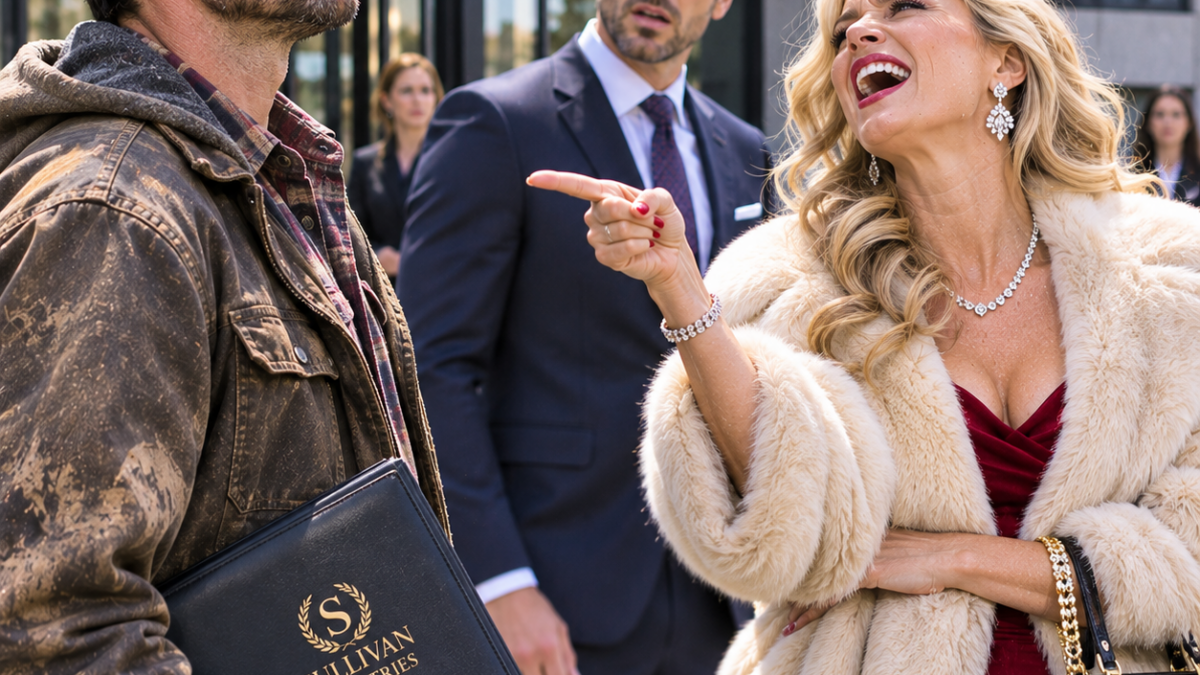
“BUY YOURSELF A REAL JACKET—MY HUSBAND MAKES $400,000 A YEAR!” My Ex-Wife Mocked Me Outside His Office—She Had No Idea I Owned the Company
“STILL DRESSING LIKE THAT, MARCUS? MY HUSBAND MAKES FOUR HUNDRED THOUSAND A YEAR—HERE, BUY YOURSELF A REAL JACKET,” my ex-wife Vanessa laughed as she threw five hundred dollars toward my shoes outside the glass tower where her new husband worked, never realizing the man she was humiliating was Marcus Reed—the billionaire founder and controlling owner of Reed Meridian, the company that paid Daniel Whitmore every dollar she had just bragged about.
I could have embarrassed her on that sidewalk, but I simply picked up the money, handed it to the security guard she had snapped at, and walked into my own building—because what Vanessa did not know was that an hour later she was scheduled to enter my boardroom asking the Reed Meridian Foundation for $2.5 million, a committee chairmanship, and corporate sponsorship based on paperwork supposedly approved by Daniel.
Then our compliance director placed the proposal in front of me, Daniel went white when he saw the signature at the bottom, and Vanessa walked into the room smiling at her husband’s “billionaire boss”—only to hear me ask, “Before we discuss your gala, Vanessa, perhaps you can explain why my regional vice president’s name is forged on a $2.5 million request.”
My name is Marcus Reed.
Eight years earlier, Vanessa had called me a man with no future.
That morning, she called me poor.
I found the second accusation easier to hear.
Maybe because I had already survived the first.
Maybe because once someone has watched you fail at twenty-nine, struggle at thirty, and bleed through your last savings trying to keep thirty construction workers employed, a cheap jacket becomes the least interesting thing they can use against you.
Or maybe it was because the jacket was not cheap.
It was just old.
My father had given it to me when I started Reed Construction with two borrowed trucks and four employees.
Brown wool.
Plain buttons.
One repaired cuff.
By the time Reed Construction became Reed Infrastructure, and Reed Infrastructure merged with Meridian Engineering, and the combined company eventually became the privately controlled multinational everyone now knew as Reed Meridian, I could have replaced that jacket with almost anything.
I never did.
The coat reminded me of when payroll frightened me more than quarterly earnings.
It reminded me that success should not make memory embarrassing.
Vanessa had never understood that.
She stood outside Reed Meridian Tower at 8:27 on a Tuesday morning wearing a cream designer coat and sunglasses despite the cloudy sky.
I had just stepped out of a coffee shop across the plaza.
She looked at me.
Stopped.
Then laughed.
“Marcus?”
“Good morning, Vanessa.”
She looked me up and down.
Slowly.
The same way she had eight years earlier when I came home from a construction site with concrete dust on my boots and told her a subcontractor had missed payroll.
“Wow.”
“What?”
“Nothing.”
She smiled.
“You still dress exactly the same.”
I glanced at my jacket.
“It still fits.”
“That isn’t the point.”
“Then I missed it.”
She sighed theatrically.
“See this?”
She gestured toward the forty-two-story glass tower behind us.
“This is what real success looks like.”
I looked over my shoulder at my building.
“Is it?”
“My husband works here.”
“I know.”
She did not hear that properly.
Or did not care.
“Regional vice president.”
“Four hundred thousand a year before bonus.”
“Beautiful house in Westbridge.”
“New Mercedes.”
“We’re hosting a foundation gala next month.”
I nodded.
“Congratulations.”
She stared.
“You know, you could have been somebody too.”
There it was.
Same sentence.
Different decade.
Then her phone rang.
She answered immediately.
“Daniel?”
Her voice changed.
Warm.
Proud.
Possessive.
“Yes, babe.”
“Of course.”
“I’m already downstairs.”
Pause.
“Emergency meeting?”
She frowned.
“Fine.”
“Maybe your billionaire boss can find my ex a job while you’re up there.”
She laughed.
Then froze when I heard Daniel’s voice faintly through the phone.
“Good morning, Mr. Reed.”
I looked toward the lobby.
Daniel Whitmore was crossing the marble floor toward the executive elevators, phone at his ear.
Our eyes met through the glass.
He raised a hand.
“See you at nine, sir.”
Vanessa lowered the phone.
Slowly.
She stared at me.
“Why did Daniel call you Mr. Reed?”
I smiled.
“Perhaps because that’s my name.”
PART2
“Don’t play games with me, Marcus.”
“I wasn’t aware we were playing.”
Her eyes moved from me to the tower.
Then back.
“Did you get a job at Reed Meridian?”
“Something like that.”
For one second, uncertainty disturbed her expression.
Then she recovered.
“Well.”
“That’s good.”
“At least you finally found something stable.”
I nearly laughed.
Eight years.
Still the same skill.
When reality did not fit Vanessa’s preferred hierarchy, she adjusted reality until she stayed above me.
I looked at my watch.
“I should go.”
She stepped in front of me.
“Marcus.”
“What?”
“You don’t get to walk away every time I’m talking.”
Interesting.
She had walked away from our marriage.
But apparently sidewalks were different.
“Explain yourself.”
“Daniel works for a billionaire.”
“He doesn’t call random employees Mr. Reed.”
“You’re right about that.”
Her eyes narrowed.
“Who are you?”
A security officer named James Mercer approached from the lobby.
He had worked for us six years.
“Morning, Mr. Reed.”
“Morning, James.”
Vanessa turned toward him.
Then back to me.
I saw the exact second she began understanding.
Not fully.
Enough.
James noticed several hundred-dollar bills on the sidewalk.
Vanessa had pulled them from her wallet during her speech.
Five crisp bills.
She had flicked them toward me and said:
“Here.”
“Buy yourself a real jacket.”
The gesture had been so absurd that I did not react.
One bill now sat near James’s shoe.
He bent to pick it up.
“Ma’am?”
“I think you dropped something.”
Vanessa snapped:
“Mind your own business.”
James straightened.
I looked at him.
Then at the money.
“Give it to the winter shelter collection.”
James smiled slightly.
“Yes, sir.”
Vanessa looked furious.
“Marcus.”
“I have a meeting.”
“Stop.”
“Have a nice day.”
“Don’t embarrass yourself in front of Daniel.”
I turned.
Behind me, I heard another voice.
“Vanessa?”
Daniel.
He had come back toward the entrance.
Maybe he had seen us through the glass.
His face looked pale.
“What did you say to him?”
Vanessa waved one hand.
“To Marcus?”
“Relax.”
“He works in your building now.”
“Some little job.”
Daniel closed his eyes.
Not metaphorically.
Actually closed them.
Then:
“Did you say something to Mr. Reed?”
She smiled.
“Baby.”
“I just reminded my ex what success looks like.”
Daniel stared at me.
Then at her.
Then whispered:
“No.”
“No, no, no.”
Vanessa laughed.
“What?”
Daniel did not answer.
I walked inside.
Emily Grant, my executive assistant, met me near the private elevator.
She had been with me eleven years and possessed the most dangerous combination in corporate America:
Perfect memory and no tolerance for nonsense.
“Good morning, Mr. Reed.”
“Morning.”
She looked past me.
“Everything all right?”
“Unexpected reunion.”
“With?”
“My ex-wife.”
Emily’s eyebrows rose.
“Vanessa?”
I looked at her.
“Hard to forget someone who sent seventeen emails about a car you didn’t own.”
That was true.
Three years after my divorce, Vanessa somehow became convinced I had hidden a vintage Porsche during our marriage.
I had never owned a Porsche.
She emailed legal, my accountant, my mother, and once—memorably—the dealership.
Emily had archived everything.
“Is she still on today’s visitor list?” I asked.
Emily checked her tablet.
“Yes.”
“Vanessa Whitmore.”
“Foundation sponsorship meeting at ten.”
“Daniel’s wife?”
“Yes.”
“She’s requesting consideration as chair of the outreach committee for next year’s gala program.”
I stopped walking.
“What?”
Emily looked at me.
“You didn’t approve that?”
“No.”
“I assumed not.”
She swiped.
“Mr. Whitford from compliance is already in the boardroom.”
“He asked for ten minutes before Daniel arrives.”
“Why?”
“He found irregularities in the sponsorship package.”
“Define irregularities.”
Emily looked at me.
“Two point five million dollars.”
That got my attention.
“Let’s go.”
The boardroom on thirty-two looked north over the city.
I hated the table when we bought the building.
Too polished.
Too long.
It made conversations feel like negotiations even when they weren’t.
Harold Whitford, our chief compliance officer, sat halfway down with three folders.
Sixty-three.
Former federal prosecutor.
Dry sense of humor.
Terrible ties.
“Morning.”
“Marcus.”
He did not call me Mr. Reed unless someone else was in the room.
“Emily said there’s a problem.”
“There are several.”
He pushed over the first document.
REED MERIDIAN FOUNDATION
COMMUNITY BRIDGE GALA SPONSORSHIP PROPOSAL
Request:
$2.5 million.
Beneficiary structure vague.
Administrative expenses surprisingly high.
Proposed outreach chair:
Vanessa Whitmore.
Executive sponsor:
Daniel Whitmore.
Signature.
Daniel’s name.
I stared.
“What did Daniel say?”
“I haven’t shown him.”
“Why not?”
“I wanted you present.”
Fair.
I examined the signature.
Something bothered me.
Not because I knew Daniel’s handwriting.
Because the loop on the W looked familiar.
Emily noticed my face.
“What?”
I looked at the visitor request Vanessa had signed electronically the week before.
Then the sponsorship proposal.
Same habit.
Capital letters leaning right.
The W.
I said:
“I think Vanessa signed this.”
Harold nodded.
“That is one concern.”
“What are the others?”
He opened the next folder.
The proposal described a fundraising gala supporting transitional housing for women leaving abusive relationships.
Worthwhile cause.
But the beneficiary organization listed in the documents had only been incorporated six months earlier.
The board included Vanessa.
Her friend Camille Orton.
And a financial adviser named Peter Lang.
Administrative budget:
Thirty-one percent.
Consulting contracts:
Several to companies connected to committee members.
Nothing automatically illegal.
Everything worth scrutiny.
“What does Daniel know?”
Harold said:
“That’s the question.”
I looked at Emily.
“Bring him in.”
Daniel entered five minutes later.
He looked like a man walking toward his own execution.
“Mr. Reed.”
“Sit.”
He sat.
I did not mention Vanessa outside yet.
I pushed the proposal toward him.
“Have you seen this?”
His eyes moved across the page.
Then widened.
“No.”
“Look at the signature.”
He did.
His face went white.
“That isn’t mine.”
“You’re certain?”
“Yes.”
“I don’t sign Daniel Whitmore like that.”
He took a pen.
Signed on a notepad.
Different.
Completely.
He looked genuinely frightened.
“Sir.”
“I swear I have never seen that document.”
Harold asked:
“Did you authorize your wife to use your name on a foundation request?”
“No.”
“Did you discuss a two-and-a-half-million-dollar sponsorship?”
“She mentioned a gala.”
“That’s it?”
“She said she was helping organize a charity event.”
“She asked whether Reed Meridian sponsored outside causes.”
“I told her applications go through the foundation.”
“Did she ask you to endorse?”
“No.”
“Chairmanship?”
Daniel shook his head.
“She said the committee might nominate her.”
“I thought she meant their committee.”
I sat back.
This mattered.
Daniel was one of our strongest regional executives.
He ran a division employing nearly eight hundred people.
His performance was excellent.
I was not going to destroy his career because his wife had humiliated me outside.
But forged executive authorization?
Different.
I said:
“Daniel.”
“Yes, sir.”
“Do you know what happened outside this building this morning?”
His eyes dropped.
“Some of it.”
“Tell me what you know.”
“I saw Vanessa talking to you.”
“I heard her say she had reminded you what success looked like.”
He swallowed.
“I realized she didn’t know who you were.”
“No.”
“She didn’t.”
“I am sorry.”
“Don’t apologize for something you didn’t say.”
His eyes lifted.
That surprised him.
I continued.
“Your wife threw five hundred dollars at me on a public sidewalk.”
Daniel closed his eyes again.
“She told me to buy a real jacket.”
“She described your salary.”
“Your Mercedes.”
“Your house.”
“And how fortunate she was to marry a man with a future.”
Daniel looked mortified.
“Mr. Reed…”
“This isn’t about my feelings.”
“I’ve heard worse.”
“Then what—”
“It’s about judgment.”
“Character.”
“And whether someone attempting to represent our foundation understands what our name is attached to.”
I pushed the forged proposal forward.
“This matters.”
“Not my jacket.”
Daniel nodded.
“I understand.”
Then Emily entered.
“Sir.”
She held another folder.
“You need to see this.”
She placed it down.
Internal foundation planning email.
Draft organizational chart.
DANIEL WHITMORE — EXECUTIVE SPONSOR
VANESSA WHITMORE — PROPOSED CHAIR, COMMUNITY OUTREACH
Daniel stared.
“I never approved that.”
Emily continued:
“There’s more.”
“Several emails were sent from a Gmail address using Daniel’s full name.”
“Not company infrastructure.”
“We’re preserving them.”
Daniel looked sick.
“I had no idea.”
Harold asked:
“Does Vanessa have access to your personal email?”
“My home laptop.”
“Passwords?”
“Possibly saved.”
“Company credentials?”
“No.”
“That’s monitored separately.”
Good.
I asked:
“Does she know your corporate signature format?”
“She’s seen contracts.”
“Expense forms.”
“Things I bring home.”
I looked toward the city.
Eight years earlier, Vanessa had told me:
One day you’ll understand love isn’t enough.
Maybe she had been right.
Love was not enough.
Not without respect.
Not without character.
But success was not enough either.
She had replaced one scoreboard with another and never noticed she was still keeping score.
The door opened.
Vanessa entered.
Cream coat gone.
Black dress underneath.
Diamond bracelet.
Perfect hair.
She smiled at Daniel first.
Then me.
“Good morning, everyone.”
She stopped beside her husband.
“Sorry I’m late.”
Then smiled at him.
“Baby, did you tell your boss about my gala?”
No one answered.
Her eyes moved toward the documents.
I said:
“Good morning, Vanessa.”
Her smile tightened.
“Marcus.”
I pointed to the chair.
“Sit.”
She looked at Daniel.
He would not meet her eyes.
That was the first moment she became afraid.
I slid the sponsorship request toward her.
“Perhaps you can explain whose signature this is.”
She looked.
Then laughed lightly.
“Oh.”
“That.”
“Daniel approved the concept.”
Daniel looked at her.
“No, I didn’t.”
Her smile froze.
“Of course you did.”
“You said Reed Meridian sponsors charities.”
“That is not approval.”
“Daniel.”
Her tone changed.
Private marital tone.
Warning.
“Don’t do this.”
He stared.
“Did you sign my name?”
She laughed.
“Don’t be dramatic.”
Harold spoke.
“Mrs. Whitmore.”
“Answer the question.”
She looked at him.
“And you are?”
“Harold Whitford.”
“Chief compliance officer.”
Her eyes shifted.
Just slightly.
Then back to Daniel.
“I completed preliminary paperwork.”
“That’s all.”
“Using his signature?”
“It was an administrative placeholder.”
Emily said:
“The application explicitly certifies that the executive sponsor personally approves the request.”
Vanessa looked at her.
“Who are you?”
“Emily Grant.”
Vanessa smiled.
“Assistant?”
“Chief of staff to Mr. Reed.”
Emily did not smile back.
I almost did.
Vanessa turned toward me.
“This is ridiculous.”
“You’re making a federal case because I teased you outside?”
“No.”
I shook my head.
“I told Daniel that already.”
“The sidewalk is irrelevant.”
“You forged an executive signature on a two-and-a-half-million-dollar funding request.”
“I did not forge anything.”
“What do you call signing someone else’s name?”
“I had permission.”
Daniel said:
“No.”
One word.
Vanessa turned.
“Excuse me?”
“I did not give you permission.”
Her face changed.
“Daniel.”
“No.”
He sat straighter.
“I told you to submit through the normal foundation process.”
“I never agreed to sponsor it.”
“I never agreed to put you forward as chair.”
“And I certainly never told you to sign my name.”
Vanessa stared at him.
“You’re humiliating me in front of him.”
Daniel almost laughed.
“You threw money at my CEO this morning.”
She snapped:
“He was my ex-husband before he was your CEO.”
That sentence told me everything.
Hierarchy.
Always hierarchy.
Who was above.
Who was below.
Which identity mattered more.
I said:
“And you were my wife before you became Daniel’s.”
She looked at me.
“Don’t.”
“I’m not interested in revisiting our marriage.”
“Good.”
“Then stop acting like this is revenge.”
“It isn’t.”
Harold opened another document.
“Mrs. Whitmore, what is the relationship between you and Community Bridge Initiative?”
“I’m a volunteer.”
“Board member?”
“Technically.”
“Founding board member?”
She hesitated.
“Yes.”
“Are you compensated?”
“No.”
Harold placed a consulting agreement down.
Her face changed.
“Your personal communications firm is scheduled to receive $180,000 for gala strategy and outreach.”
“That is market rate.”
“Possibly.”
“Why isn’t the conflict disclosed?”
Vanessa looked at Daniel.
“Did you give them my private documents?”
“I didn’t know they existed.”
Harold continued.
“Camille Orton’s event company receives $310,000.”
“Peter Lang’s advisory firm receives $225,000.”
“That’s nearly seven hundred fifteen thousand dollars to firms connected to the founding board before grants are distributed.”
Vanessa’s voice hardened.
“Are you accusing me of stealing?”
“No.”
I said.
“We’re asking why a charitable proposal requesting $2.5 million from my foundation omitted material conflicts and included a forged endorsement.”
She leaned back.
“This is unbelievable.”
“You think because you got rich after I left, you can punish me.”
There it was.
Finally.
Daniel looked at me.
Then her.
“What did you just say?”
Vanessa stood.
“You know exactly what this is.”
She pointed at me.
“He’s been waiting for this moment.”
I remained seated.
“What moment?”
“The moment he gets to show me I was wrong.”
I looked at her.
Eight years disappeared.
Our apartment kitchen.
Unpaid invoices.
Vanessa in a red sweater.
Suitcase beside the door.
Marcus, I’m done.
Can we talk?
We’ve been talking for two years.
Things are improving.
Improving? You canceled our anniversary dinner because a subcontractor didn’t get paid.
He had twenty-three employees waiting on wages.
And I had a husband who couldn’t afford to take me to New York.
I need twelve months.
I’m thirty-two years old. I refuse to waste my best years waiting for you to become somebody.
You’re my wife.
Not anymore.
Then the last sentence.
One day you’ll understand love isn’t enough.
I had loved her.
That part embarrassed me for years.
Not anymore.
Loving someone who chooses differently does not make you stupid.
It makes the ending painful.
I looked at Vanessa.
“You were not wrong to divorce me.”
That silenced the room.
Her face changed.
“What?”
“I wasn’t a good husband near the end.”
“I worked constantly.”
“I canceled dinners.”
“I made promises about timelines I couldn’t guarantee.”
“You were unhappy.”
“You had the right to leave.”
She stared.
I continued.
“What you did not have the right to do was decide my struggle made me worthless.”
Daniel looked toward her.
She said nothing.
I tapped the proposal.
“And today is not about that marriage.”
“It’s about this.”
Vanessa’s voice became quieter.
“You really own Reed Meridian?”
“Yes.”
“All of it?”
“Controlling interest.”
“How much?”
I almost laughed.
“That question is exactly why we failed.”
She flinched.
I continued:
“You need to leave the boardroom.”
“What?”
“Compliance will communicate through counsel regarding the application.”
“You are not approved for foundation participation.”
“Your gala will not receive Reed Meridian sponsorship under this proposal.”
She looked at Daniel.
“Say something.”
He stared at her.
“I need to know what else you signed.”
Her face hardened.
“Nothing.”
“Can I see your laptop?”
“No.”
“Vanessa.”
“No.”
He looked like she had slapped him.
I said:
“Daniel.”
He turned.
“This becomes an internal compliance matter only to the extent company information or credentials were used.”
“Do not investigate your wife yourself.”
“Do not access personal accounts without authorization.”
“Let Harold handle what belongs to us.”
Daniel nodded slowly.
“Yes, sir.”
Vanessa laughed.
“So generous.”
“Protecting him because he’s useful.”
I looked at her.
“No.”
“I’m protecting due process because anger is a terrible governance system.”
She stared.
Then walked out.
The door slammed.
Silence.
Daniel remained seated.
After almost a minute:
“Mr. Reed.”
“Yes?”
“I need to disclose something.”
Harold opened his notebook.
Daniel swallowed.
“Vanessa has used my company title in charity materials before.”
“Did you approve?”
“Some.”
“Which?”
“I need to reconstruct.”
“Then reconstruct.”
“I should have watched more carefully.”
“Yes.”
He nodded.
No defense.
Good.
Then:
“I also need you to know I had no idea she was your ex-wife until this morning.”
I looked at him.
“I believe you.”
“She told me her ex was named Marcus.”
“Construction guy.”
“Failed business.”
“Financially irresponsible.”
He stopped.
“I’m sorry.”
“Again.”
“Don’t apologize for a story you were told.”
“But I believed it.”
“That’s between you and your marriage.”
I stood.
“Your employment is not being decided today.”
Daniel looked stunned.
“Sir?”
“You are being removed from any foundation-related approvals pending review.”
“Your regional role continues unless we find company misconduct.”
Harold nodded.
“That is appropriate.”
Daniel whispered:
“Thank you.”
“Don’t thank me.”
“Give compliance everything.”
“I will.”
I left the room.
Emily followed.
In the hallway she said:
“That was annoyingly mature.”
I smiled.
“You wanted me to fire him?”
“No.”
“I wanted you to say something vicious about the jacket.”
“I have a company to run.”
“You can multitask.”
I laughed.
The truth?
Part of me wanted the petty moment.
Of course.
I am human.
I wanted Vanessa to see the lobby portrait where my name sat beneath:
MARCUS REED — FOUNDER & EXECUTIVE CHAIRMAN
I wanted her to understand that the man she had told to become somebody now owned the building in which her husband had built his career.
But satisfaction lasted maybe thirty seconds.
Then I saw Daniel’s face.
A man discovering he might not know his own wife.
I remembered that feeling.
Suddenly revenge looked cheap.
The compliance review took three weeks.
Not one dramatic afternoon.
Real investigations rarely cooperate with storytelling.
We reviewed foundation applications.
Company emails.
Expense submissions.
Any use of Daniel’s title.
No evidence showed Daniel had diverted company funds.
No evidence showed he knowingly participated in the forged proposal.
He had been careless about letting Vanessa use his title socially.
That earned a formal reprimand and mandatory conflict-of-interest training.
Not termination.
Several board members thought I was being soft.
I disagreed.
Consequences should match conduct.
We discovered Vanessa had submitted versions of the proposal to two other corporate foundations.
One contained Daniel’s name as “executive sponsor.”
Another used an old scanned signature from a legitimate charity letter he had signed the previous year.
That crossed another line.
Those organizations handled their own reviews.
Community Bridge Initiative’s board suspended Vanessa as chair pending independent accounting.
Camille resigned.
Peter Lang’s contract was canceled.
The gala was postponed.
Then newspapers found out.
Not from us.
Someone on the charity board leaked.
Headline:
EXECUTIVE’S WIFE ACCUSED OF USING HUSBAND’S SIGNATURE IN $2.5M FOUNDATION BID
My name appeared two paragraphs later.
Then Vanessa’s prior marriage became public.
Social media did the rest.
SHE MOCKED HER BILLIONAIRE EX OUTSIDE HIS OWN BUILDING.
That was the story everyone wanted.
Not governance.
Not nonprofit disclosure.
Not forged authorization.
A humiliating sidewalk reversal.
I refused interviews.
Vanessa did not.
She gave one.
Big mistake.
She sat in a studio and said:
“Marcus has always resented that I left before he became successful.”
Then:
“This is a powerful man using corporate machinery to settle a personal score.”
That accusation mattered.
Even though it was false.
Power creates responsibility.
I called Harold.
“Independent review.”
He answered:
“Already arranging one.”
Outside counsel examined our handling of the proposal.
My involvement.
Daniel’s treatment.
Foundation procedure.
Everything.
I recused myself from final disciplinary decisions involving Daniel.
That annoyed me.
Which meant it was probably correct.
The review concluded our actions followed existing policy, though it recommended tighter controls around executive sponsorship verification.
Good.
We changed the process.
No scanned signatures.
Direct electronic approval through internal systems.
Conflict disclosures verified separately.
Vanessa had exploited a weak procedure.
We fixed the procedure.
That should have ended the corporate part.
It didn’t.
Because Daniel went home every night.
To Vanessa.
And their marriage was collapsing.
He never told me details initially.
I learned later.
The first night after the boardroom, Daniel asked:
“How many documents?”
Vanessa said:
“One.”
Compliance eventually found three.
Then five uses of his name in fundraising correspondence.
Not all fraudulent.
Some ambiguous.
She had repeatedly told sponsors:
“Daniel and Reed Meridian are behind this.”
Daniel had attended one gala the previous year.
That was enough for Vanessa to build a narrative.
He asked:
“Why?”
She answered:
“Because nobody takes a woman seriously unless a powerful man is attached to her.”
There was pain in that statement.
Possibly truth.
Daniel said:
“Then build something people take seriously.”
“Don’t borrow my name.”
She accused him of choosing his boss.
He said:
“This isn’t about Marcus.”
She laughed.
“Everything is about Marcus now.”
Daniel finally asked the question he had avoided.
“Why did you leave him?”
Vanessa told the version he already knew.
Marcus was broke.
Obsessed with work.
Neglected her.
No future.
Daniel said:
“He built Reed Meridian.”
“After me.”
“Why does that matter?”
“Because he became the man I asked him to become after I left.”
That sentence revealed more than she intended.
Daniel reportedly stared at her.
“You don’t miss him.”
“You miss being the woman beside the billionaire.”
She slapped him.
Then apologized.
Then blamed stress.
Their marriage survived another month.
Barely.
Meanwhile, I kept working.
Westcliff.
That was why Daniel had been summoned to my boardroom in the first place.
A major reconstruction project.
Thirty floors.
Hospital-adjacent complex.
Strict structural timeline.
Daniel’s region had procurement problems.
Subcontractors delayed.
Steel alignment issue.
The part of my life Vanessa never understood was that success did not eliminate the same problems I had faced when we were married.
It scaled them.
Instead of twenty-three employees waiting for wages, I had thousands of employees depending on decisions.
Instead of one subcontractor invoice, one missed decision could affect a city block.
At 6:10 one morning, I stood on Westcliff’s twenty-second floor wearing a hard hat and the old brown jacket.
James, our project superintendent, looked at me.
“Chairman wearing that thing again?”
“It’s warm.”
“It looks like it survived Korea.”
“It survived my marriage.”
James laughed.
Daniel approached from the temporary stairs.
He had lost weight.
“Morning.”
“Morning.”
He pointed toward the beam line.
“We corrected the alignment.”
“Show me.”
We spent forty minutes with engineers.
No mention of Vanessa.
Then, as we left, Daniel said:
“Sir.”
I stopped.
“She filed for divorce.”
I looked at him.
“I’m sorry.”
He laughed bitterly.
“Ironic.”
“No.”
“Not really.”
“What do you mean?”
“You probably think I deserve it.”
I stared.
“Why?”
“I married your ex-wife.”
“That is not a crime.”
“She humiliated you.”
“That was her choice.”
Daniel looked exhausted.
“She says I ruined her gala.”
“Did you forge the signature?”
“No.”
“Then you didn’t ruin it.”
“I should have seen.”
I remembered myself eight years earlier.
Every conversation with Vanessa becoming evidence of failure.
Every missed dinner.
Every bill.
Every promise.
It is easy after a relationship collapses to decide you should have predicted everything.
I said:
“Daniel.”
“Yes?”
“You’re responsible for what you ignored after you knew.”
“Not for predicting what someone concealed.”
He stared.
Then:
“Did someone tell you that once?”
“No.”
“I wish they had.”
He nodded.
We walked away.
That conversation changed our relationship.
Not friends.
Not yet.
But we stopped being billionaire and employee connected by the same woman.
We became two men who had loved Vanessa at different times.
And survived different versions of her.
The divorce turned ugly when money entered.
Not mine.
Daniel’s.
Vanessa had signed a prenuptial agreement.
Reasonable terms.
She would receive substantial marital property.
She challenged parts.
Then she made a claim that Daniel had promised to fund Community Bridge personally.
He denied it.
Texts surfaced.
Some made him look careless.
We’ll figure out funding.
Don’t worry about the gala.
Vanessa interpreted those as commitments.
His lawyer interpreted them as marital reassurance.
People can build lawsuits from vague sentences.
Daniel learned to stop writing vague sentences.
I learned that lesson years earlier.
Vanessa’s media strategy also continued.
She implied Reed Meridian had destroyed her nonprofit because she rejected my attempt to reconnect romantically.
That was false enough to be actionable.
My counsel drafted a threat letter.
I stopped it.
“Why?” Emily asked.
“Because suing my ex-wife for saying I want her makes the story live longer.”
“She is damaging your reputation.”
“Our audit is public.”
“Foundation review is documented.”
“Anyone serious can read it.”
Emily looked unconvinced.
“You’re annoyingly calm.”
“I’m tired.”
That was true.
Success had taught me something failure never could.
You do not have to respond to every insult.
Some fires die faster without oxygen.
The story moved on.
Then Vanessa came to my office.
No appointment.
James called upstairs.
“Mr. Reed.”
“Vanessa Whitmore is in the lobby.”
“Does she have counsel?”
“No.”
“Does she have an appointment?”
“No.”
Emily looked at me.
“Absolutely not.”
I surprised her.
“Send her up.”
“Marcus.”
“She’s not armed.”
“You don’t know that emotionally.”
I laughed.
“Ten minutes.”
Vanessa entered.
No cream coat.
No diamonds.
Simple black dress.
Her face looked tired.
She sat.
I waited.
Finally:
“Did you enjoy it?”
“What?”
“All of this.”
“My marriage collapsing.”
“The newspapers.”
“Everyone laughing at me.”
“No.”
She laughed.
“Liar.”
“I enjoyed about thirty seconds outside.”
That surprised her.
I continued.
“When you realized.”
“The building.”
“My name.”
“For thirty seconds, yes.”
“Then it became sad.”
Her face hardened.
“You pity me.”
“No.”
“That would be worse.”
“Then what?”
I thought.
“I think you spent so long measuring people by what they had that eventually you did it to yourself.”
She stared.
“That sounds like something rich people say.”
“Maybe.”
“You weren’t rich when you met me.”
“No.”
She looked toward the city.
“You know what I remember?”
“What?”
“Our anniversary.”
Of course.
“The one you canceled.”
“Yes.”
“I had bought a dress.”
“I know.”
“No, you don’t.”
“I had saved for three months.”
“I thought we were finally going to New York.”
“You called at four and said a subcontractor’s payroll had failed.”
“I remember.”
“You chose twenty-three strangers.”
“They weren’t strangers.”
“They worked for the subcontractor.”
“If they didn’t get paid, their families didn’t get paid.”
“And I was your wife.”
“Yes.”
She looked at me.
“That was when I knew I’d always come second to whatever emergency made you feel important.”
That hurt because there was truth there.
I said:
“I’m sorry.”
Her eyes widened.
“What?”
“I should have handled our marriage differently.”
“I thought if I saved the company, everything else would wait.”
“You didn’t.”
“No.”
“We both failed.”
Vanessa’s eyes filled.
Then:
“But I was right.”
“About what?”
“You needed me to leave.”
I frowned.
She smiled sadly.
“You became successful after.”
I shook my head.
“No.”
“You think that proves I was holding you back?”
“I think it proves timing is cruel.”
She looked away.
“You could have been this with me.”
“Maybe.”
“Would you have wanted that?”
Silence.
Then I answered honestly.
“At twenty-nine?”
“Yes.”
“Now?”
“No.”
She cried.
Quietly.
I did not move toward her.
We were past that.
After a minute, she wiped her eyes.
“I did forge Daniel’s signature.”
I already knew.
Still, hearing it mattered.
“I told myself it was temporary.”
“He would approve later.”
“The gala would succeed.”
“The foundation would see the impact.”
“Everyone would win.”
“Except you took away his choice.”
She nodded.
“I know.”
“Why are you telling me?”
“Because Daniel thinks there may be criminal charges.”
“There could be consequences.”
“I don’t control that.”
“I know.”
She looked at me.
“I wanted you to know I did it.”
“Not him.”
“He was stupid.”
“He let me use his title.”
“But he did not sign.”
That was the first thing she had done in months that resembled responsibility.
I said:
“Tell compliance.”
“I will.”
“Through counsel.”
“Yes.”
She stood.
At the door:
“Marcus.”
“Yes?”
“When I threw that money at you…”
I almost smiled.
“That part was objectively ridiculous.”
She laughed despite herself.
Then covered her face.
“Oh God.”
“Five hundred dollars.”
“I was angry.”
“At what?”
“That you looked peaceful.”
Interesting.
She continued.
“I thought I had won.”
“The house.”
“Daniel’s salary.”
“The gala.”
“I saw you in that old jacket and thought you were proof I made the right choice.”
“And then Daniel called you Mr. Reed.”
I said nothing.
Vanessa looked at me.
“I hated you for making me wrong without even saying anything.”
Then she left.
Her admission went to counsel.
Compliance.
Community Bridge’s independent board.
The forgery issue was resolved through legal channels.
I did not ask for prosecution.
Nor could I dictate everything.
Daniel declined to pursue a personal complaint beyond what was necessary to clear his name.
The charity reorganized.
Vanessa resigned from all leadership positions.
She reached a civil settlement involving costs created by the false submissions.
No prison.
No dramatic handcuffs.
Consequences.
Real ones.
Her reputation in the charity world collapsed.
That was enough.
Daniel remained at Reed Meridian.
Some executives objected.
One said:
“Optics.”
I asked:
“Did he forge anything?”
“No.”
“Did he disclose once asked?”
“Yes.”
“Did the review find misconduct warranting termination?”
“No.”
“Then we do not fire people because their spouse embarrassed us.”
End of discussion.
Daniel eventually became senior vice president.
Not immediately.
Two years later.
Earned.
Before announcing the promotion, I called him.
“Congratulations.”
He laughed.
“Are you sure?”
“What?”
“My ex-wife was married to your ex-wife’s husband.”
I stared.
“That sentence is why HR should never write comedy.”
He laughed harder than I had ever heard.
Then:
“Thank you.”
“You earned it.”
That mattered.
Success built on revenge rots.
I had learned enough to know that.
Vanessa disappeared from my life for almost three years.
Then Emily walked into my office one morning.
“She’s downstairs.”
“Who?”
“Vanessa.”
I looked up.
“With?”
“A teenager.”
That confused me.
“Send them.”
Vanessa entered with a seventeen-year-old girl.
Dark hair.
Nervous.
“This is Lily.”
I stood.
“Hello.”
Lily smiled awkwardly.
“Hi.”
Vanessa said:
“She’s my niece.”
“My sister died last year.”
I had heard vaguely.
I offered condolences.
Vanessa continued.
“Lily got accepted to the Reed Meridian summer engineering program.”
I looked at Lily.
“Congratulations.”
“Thank you.”
“She’s worried you’ll reject her because of me.”
That sentence irritated me.
Not at Lily.
At the possibility she believed it.
I said:
“Lily.”
“Yes?”
“Did you complete the application yourself?”
“Yes.”
“Grades yours?”
“Yes.”
“Essay yours?”
“Yes.”
“Then your aunt has nothing to do with it.”
Vanessa looked at me.
I continued.
“Admissions are independent.”
“If you were accepted, you earned your place.”
Lily smiled.
“Thank you.”
She left for orientation.
Vanessa remained.
“You didn’t have to do that.”
“Yes, I did.”
“Why?”
“Because children should not inherit adult grudges.”
She looked down.
“I didn’t know that once.”
“No.”
She nodded.
That was all.
Lily completed the summer program.
Brilliant student.
Later interned with a competitor because I insisted she choose based on opportunity.
Vanessa laughed when I told her.
“You finally learned work-life balance and now you’re sending talent away?”
“Growth.”
She smiled.
We were not friends.
But hostility had cooled into something more mature.
History without active warfare.
The jacket survived too.
Emily tried to have it replaced.
I refused.
She had it professionally repaired instead.
On my fiftieth birthday, the executive team gave me a framed photograph.
Not of the tower.
Not a stock chart.
A construction photograph from twenty years earlier.
Me.
Hard hat.
Brown jacket.
Thirty workers behind me.
The first major reconstruction contract that saved the company.
Underneath:
THIRTY PEOPLE WERE COUNTING ON HIM.
I stared.
Emily said:
“You say that line every time someone complains about the jacket.”
I laughed.
Daniel stood nearby.
He knew the story by then.
Everyone did.
He raised his glass.
“To simple jackets.”
I said:
“And expensive salaries?”
He laughed.
“Apparently.”
Then I saw Vanessa at the back of the room.
Not invited by me.
Lily had brought her as family to the scholarship presentation held afterward.
Vanessa saw the jacket photograph.
Our eyes met.
For once, she did not look embarrassed.
She smiled.
Small.
Almost apologetic.
I nodded.
That was enough.
People often tell the story wrong.
They say my ex-wife left me when I was poor.
Then I became a billionaire.
Then she accidentally bragged about her new husband to me without knowing he worked for me.
Then I destroyed them both.
Good internet story.
Terrible truth.
I did not destroy Daniel.
Why would I?
He was not responsible for my marriage.
He was not responsible for Vanessa’s insult.
He was not responsible for her forged signature.
If I had fired him because I wanted to humiliate my ex-wife, I would have proved something ugly:
That money had changed me into exactly the kind of man she believed success required.
Someone who used power personally.
I refused.
Vanessa had made that mistake.
She believed status was a weapon.
Salary was proof.
Houses were proof.
Cars were proof.
A billionaire boss was proof.
She threw five hundred dollars at an old jacket because in her world generosity was not generosity unless someone beneath you felt the distance.
I understood why better later.
Vanessa grew up poor.
Poorer than I had.
Her father disappeared when she was twelve.
Her mother worked two jobs.
They moved six times.
She told me once that she had promised herself she would never check a bank balance before ordering dinner.
I had forgotten that when we were married.
She never wanted luxury merely for luxury.
Luxury meant safety.
Then somewhere along the way, safety became status.
Status became worth.
And worth became hierarchy.
That did not excuse cruelty.
It explained the road.
I had my own road.
I grew up with a father who believed a man was measured by how many people could depend on him.
Useful value.
Dangerous if misunderstood.
When Reed Construction struggled, every emergency became moral.
A subcontractor missed payroll?
I had to fix it.
A project was late?
I had to stay.
Worker injured?
Hospital.
Vanessa lonely?
Later.
Marriage problem?
After this project.
There was always another project.
I told myself responsibility made me a good man.
Sometimes it made me an absent husband.
Both truths can exist.
The failure of our marriage did not need one villain.
The sidewalk did.
The forged signature did.
Different issues.
One of the biggest changes in my life happened after the Vanessa scandal.
I created a rule for senior leadership.
Not formal policy.
A question.
Whenever someone wanted to make a decision affecting a person they were angry with, I asked:
Would you make the same decision if you liked them?
If no?
Wait.
Review.
Get independent eyes.
That rule saved me more than once.
Years later, a vice president insulted me publicly during a conference dispute.
Two days later, his division faced restructuring.
My instinct said:
Remove him.
Then the question.
Would I remove him if I liked him?
No.
His performance was excellent.
The insult was irrelevant.
He stayed.
Eventually apologized.
Power requires brakes.
Vanessa had no brakes that morning.
Neither did I when I was younger.
I just used different vehicles.
The Reed Meridian Foundation changed too.
We partnered with established transitional-housing organizations rather than launching flashy gala structures controlled by social committees.
Community Bridge was eventually absorbed into a larger nonprofit after independent review.
Some of its original program ideas were good.
That mattered.
A bad process does not make every intended beneficiary imaginary.
Women still needed housing.
Children still needed stability.
We funded the mission without funding the vanity.
Vanessa heard about it.
She sent Emily a note:
Tell Marcus I’m glad he didn’t kill the program because of me.
Emily showed me.
I replied:
Tell Vanessa beneficiaries were never responsible for her paperwork.
Emily said:
“You two communicate like divorced diplomats.”
Probably.
Years passed.
I stepped back from day-to-day leadership at Reed Meridian.
Executive chairman.
Then chairman.
Eventually majority owner who spent more time at project sites than boardrooms.
Still preferred concrete to polished tables.
Westcliff opened successfully.
Hospital offices.
Research labs.
Commercial floors.
At the opening, Daniel stood beside me.
His daughter from a prior marriage—something Vanessa had never mentioned when bragging about their perfect life—attended.
She hugged him.
He looked happy.
Daniel remarried eventually.
Years later.
A woman named Claire.
School principal.
When he introduced us, he looked nervous.
“Claire.”
“This is Marcus Reed.”
She smiled.
“The jacket.”
I stared at Daniel.
He covered his face.
“I told one story.”
She laughed.
“Everyone knows the jacket.”
I liked her immediately.
Vanessa never remarried.
Not while I knew her.
She built a small consulting business eventually.
Actual clients.
Actual contracts.
No borrowed signatures.
She was good at it.
That did not surprise me.
Vanessa had always been capable.
Her problem had never been talent.
It was what she believed talent needed to look like.
At a nonprofit conference almost twelve years after the sidewalk incident, I saw her speaking on a panel.
Topic:
Ethics, Image, and Institutional Trust
I nearly laughed at the universe.
Then I listened.
She told the audience:
“I once confused access with authority.”
Interesting.
“I thought being close to powerful institutions gave me the right to speak for them.”
She paused.
“It did not.”
Then:
“I also confused public success with personal value.”
Her eyes found me in the audience.
Briefly.
“And that mistake cost me more than any failed gala ever could.”
No names.
No melodrama.
Accountability.
Afterward, I approached.
“Good talk.”
She smiled.
“Still dressing terribly.”
I looked at the brown jacket.
“Tradition.”
She laughed.
Then:
“Do you remember the five hundred dollars?”
“Unfortunately.”
“I think about it every time I see a coat drive.”
“Good.”
She smiled.
“I deserved that.”
“No.”
I shook my head.
“You deserved consequences for what you did.”
“Not permanent humiliation.”
She stared at me.
“That sounds suspiciously healthy.”
“Therapy.”
“Daniel too?”
“Apparently.”
She laughed.
Then became serious.
“Marcus.”
“Yes?”
“I was wrong when I said you could have been somebody.”
I looked at her.
She continued:
“You already were.”
That sentence landed harder than I expected.
Because she was not talking about Reed Meridian.
The tower.
The net worth.
She meant the man with thirty workers and a failing construction company.
The man who canceled an anniversary dinner because twenty-three people needed wages.
Flawed husband.
Stubborn founder.
Still somebody.
I smiled.
“So were you.”
Her eyes filled slightly.
“Even then?”
“Even then.”
We hugged.
Briefly.
No romance.
No rekindling.
No billionaire gets the ex-wife back fantasy.
We had become people who could finally recognize each other without wanting ownership.
Then we went separate ways.
I returned to the conference.
Vanessa went to her next panel.
The world did not stop.
Good.
That is what healing should look like eventually.
Ordinary.
The $500 incident became corporate legend despite my attempts to kill it.
Every winter, someone anonymously donated exactly $500 to the employee coat drive under:
REAL JACKET FUND
Emily swore it was not her.
I never proved otherwise.
Then one year a second $500 donation appeared.
Memo:
VANESSA
I stared.
Emily grinned.
“Well.”
I laughed.
The next year, I doubled both.
A silly insult became coats for people who needed them.
I liked that ending better.
Daniel eventually retired from Reed Meridian.
At his farewell dinner, he gave a speech.
Thanked teams.
Family.
Mentors.
Then looked at me.
“I met Marcus under unusual circumstances.”
Laughter.
Everyone knew.
He continued:
“He had every reason to make my life miserable.”
“I worked for him.”
“I was married to his ex-wife.”
“She threw money at him.”
“My name was forged on a foundation document.”
“HR still considers that sequence statistically impossible.”
More laughter.
Then Daniel became serious.
“He taught me something.”
“Leadership is not proving you have the power to punish.”
“It is knowing when your anger has no right to enter the decision.”
The room became quiet.
I looked down.
That was one of the best compliments I ever received.
Not billionaire.
Not founder.
Not visionary.
Restraint.
It took me decades to earn that.
Daniel raised his glass.
“To Mr. Reed.”
I raised mine.
“To four hundred thousand dollars.”
The room exploded.
Daniel nearly dropped his glass.
Perfect.
Vanessa heard about that joke.
She texted:
I hate both of you.
I replied:
Buy us jackets.
First text conversation we had in years.
She sent a laughing emoji.
Life.
Strange.
When I finally stepped down as chairman, reporters asked what accomplishment made me proudest.
They expected:
Reed Meridian Tower.
International expansion.
Westcliff.
Acquisitions.
I answered:
“Making payroll.”
They laughed.
I did not.
First year.
Construction recession.
Thirty employees.
I sold my truck.
Borrowed against everything.
We paid Friday.
Every dollar.
That day mattered more to me than becoming a billionaire.
Because money means something different depending on which side of the check you stand.
Vanessa saw $400,000 and thought:
Success.
I saw a payroll system supporting hundreds of families and thought:
Responsibility.
Neither definition was entirely wrong.
Hers became dangerous when it decided people earning less were less.
Mine became dangerous when responsibility justified neglecting everything else.
We both had to learn.
The brown jacket now hangs in my office at home.
I finally stopped wearing it after one sleeve became impossible to save.
Emily had it preserved.
Plaque underneath:
YOU COULD HAVE BEEN SOMEBODY.
I objected.
She refused to change it.
Then below, smaller:
HE ALREADY WAS.
I kept it.
Not because Vanessa said the sentence.
Because I had spent years believing it too.
That was the hidden part.
When she left, I did not merely lose a wife.
I accepted her verdict.
Not enough.
Poor.
Failure.
No future.
Every contract after became an appeal.
Every building:
Evidence.
Every acquisition:
Evidence.
Every zero added to the company:
Evidence.
See?
I became somebody.
It took me becoming absurdly successful to understand the trap.
If your worth depends on proving someone wrong, that person still controls the scoreboard.
I stopped playing.
That is why the sidewalk confrontation did not become revenge.
Eight years earlier, it would have.
I would have fired Daniel.
Canceled the gala publicly.
Humiliated Vanessa.
Made sure everyone knew the poor construction guy owned the tower.
And I would have called that justice.
It would not have been.
It would have been the same insecurity wearing an expensive suit.
Instead, Vanessa’s actual misconduct produced actual consequences.
Daniel’s actual conduct produced his.
The nonprofit’s actual weaknesses were corrected.
My bruised ego stayed out of governance.
Mostly.
Thirty seconds.
I admitted that.
Nobody is a saint.
Years after retirement, I walked past Reed Meridian Tower on a cold December morning.
I no longer had an office there.
Still owned shares.
Less involvement.
People hurried through the plaza.
A young man stood near the entrance.
Twenty-something.
Thin jacket.
Holding a résumé folder.
He looked terrified.
I asked:
“Interview?”
He nodded.
“Internship.”
“Engineering?”
“Yes.”
“You work here?”
“Used to.”
He looked toward the tower.
“I don’t think I’m dressed right.”
I looked at his jacket.
Cheap.
Clean.
He pulled at the sleeve.
“Everyone coming in has suits.”
I smiled.
“Can I give you some advice?”
“Please.”
“Know your work.”
“Be respectful.”
“Tell the truth when you don’t know something.”
“Jackets are overrated.”
He laughed nervously.
Then:
“Were you an engineer?”
“Something like that.”
I walked away before James’s replacement at security recognized me.
No dramatic reveal.
Did not need one.
The young man’s value did not increase because a billionaire had spoken to him.
That was the point.
Success has symbols.
Buildings.
Cars.
Salaries.
Titles.
Fine.
Symbols can be useful.
But a title does not create character.
A cheap coat does not erase competence.
A wealthy spouse does not prove a good marriage.
A billionaire employer does not make an employee successful by association.
And throwing five hundred dollars at someone’s shoes does not make you generous.
It just creates an excellent story for security cameras.
Vanessa learned.
I learned.
Daniel learned.
Eventually even the company learned.
That is enough.
If you ask Vanessa now what happened that morning, she tells it differently than I do.
She says:
“I saw my broke ex-husband outside my husband’s office and tried to buy him a jacket.”
Then she waits.
People laugh.
Then she adds:
“The building was his.”
More laughter.
Then:
“That was not even the worst part.”
“Ten minutes later I walked into his boardroom carrying a $2.5 million sponsorship proposal with a signature I had no right to use.”
The laughter stops.
Good.
Because that is where the lesson lives.
Not in the billionaire reveal.
The reveal is fun.
The lesson is what happened afterward.
Power does not excuse retaliation.
Love does not excuse deception.
Fear does not create permission.
Success cannot be borrowed from someone else’s salary.
And sometimes the person you dismissed as a failure does become spectacularly wealthy.
Sometimes he does not.
Neither outcome changes what he deserved when he was struggling.
That is what took Vanessa years to understand.
It took me almost as long.
The morning she left our marriage, she said:
One day, Marcus, you’ll understand that love isn’t enough.
She was right.
Love is not enough.
Love needs honesty.
Respect.
Attention.
Boundaries.
Shared values.
Accountability.
And success?
That is not enough either.
Success without those things only gives failure a nicer address.
The last time Vanessa and I spoke, she was leaving the ethics conference.
Snow had started.
She looked at the jacket I was wearing.
Not the old brown one.
A newer navy coat.
She smiled.
“Finally bought a real jacket?”
I looked down.
“Gift.”
“From who?”
“Emily.”
“Of course.”
She laughed.
Then she reached into her purse.
For one terrible second I expected cash.
Instead, she pulled out a folded receipt.
“Five hundred dollars.”
“What?”
“Coat drive.”
“I donated downstairs.”
I smiled.
“Good.”
She pointed at me.
“Do not tell anyone I’ve become sentimental.”
“Your reputation is safe.”
She started walking.
Then turned.
“Marcus?”
“Yes?”
“I really am sorry.”
“I know.”
“For all of it.”
“I know.”
She waited.
Maybe expecting forgiveness to sound dramatic.
It didn’t.
“I forgave you years ago.”
Her eyes filled.
“When?”
I thought.
“Probably around the time I stopped needing you to regret leaving.”
She nodded slowly.
Then:
“I’m glad you became somebody.”
I smiled.
“Vanessa.”
“What?”
“I was somebody when you left.”
She laughed through tears.
“I know.”
Then she walked away.
No limousine.
No husband earning four hundred thousand dollars waiting at the curb.
No billionaire plot twist.
Just Vanessa.
Just Marcus.
Two people who had once loved each other badly.
Two people who had hurt each other differently.
Two people who finally understood that neither money nor failure had ever been the real measure.
I stood beneath the Reed Meridian sign while snow gathered on my shoulders.
Then James—the original James, now retired but visiting for the foundation coat drive—came through the lobby.
He looked at me.
“Mr. Reed.”
“James.”
He glanced after Vanessa.
“Everything all right?”
“Yes.”
Then he smiled.
“Need five hundred dollars for a jacket?”
I stared at him.
He laughed so hard he had to grab the door.
I shook my head.
“Retirement made you disrespectful.”
“Financial freedom.”
He said.
“Real success.”
I laughed.
And for once, that phrase did not hurt at all.








