A 77-Pound Stray Guarded My Missing 6-Year-Old at a Bus Stop for Hours—Then the Shelter Scanned His Chip and I Recognized the Name
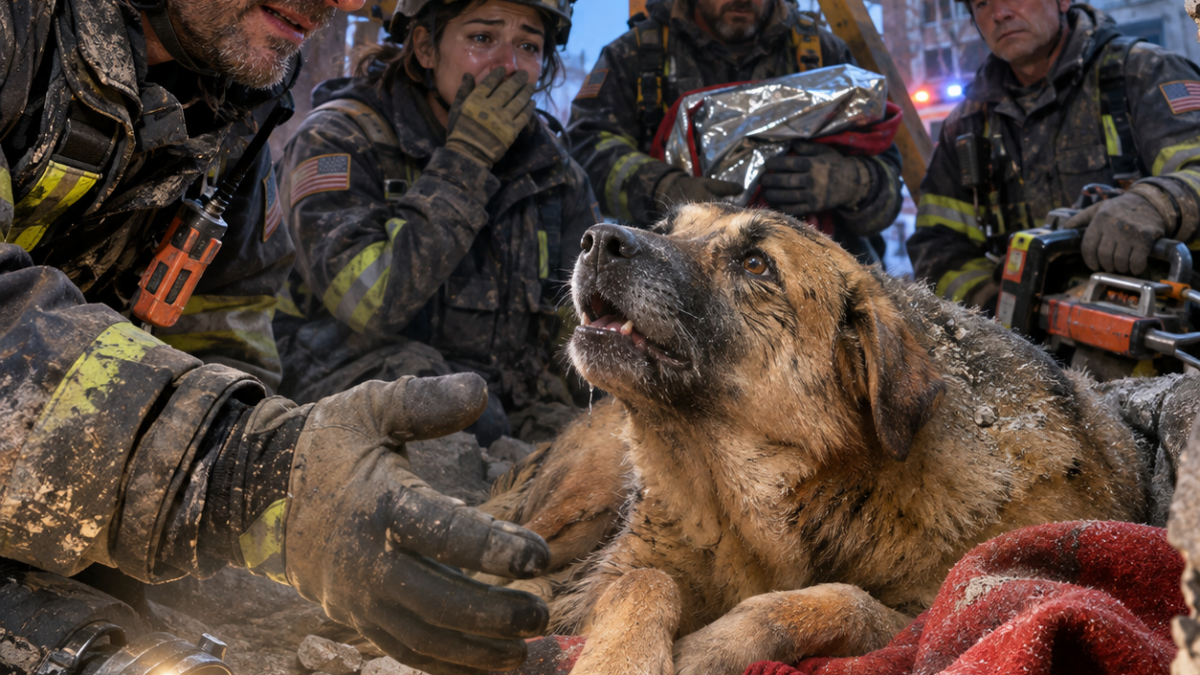
A 77-Pound Stray Guarded My Missing 6-Year-Old at a Bus Stop for Hours—Then the Shelter Scanned His Chip and I Recognized the Name
My six-year-old daughter vanished somewhere in Nashville while I sat through the most important job interview of my life, and by the time I realized she had never made it home, she had already spent hours alone at a fog-covered bus stop while hundreds of people passed without understanding that she was lost.
The only one who stayed beside her was a seventy-seven-pound stray German Shepherd who positioned his body between Emily and every unfamiliar dog that approached, refusing to leave until police and animal-control officers finally realized the frightened little girl and the battered stray seemed to know each other.
The next morning, a shelter worker scanned the dog’s microchip and led me into a kennel room—and the moment those brown eyes met mine, I dropped to my knees because the “stray” protecting my daughter was Max, the dog she had cried herself to sleep over after he disappeared from our yard three years earlier.
My name is Claire Bennett.
At 3:15 that afternoon, I walked out of a job interview believing my life had finally started moving in the right direction.
I had gotten the job.
After months of applications.
Months of calculating groceries before reaching the register.
Months of deciding which bill could survive being five days late.
The director had smiled across the table and said:
“We’d like you to start Monday.”
I nearly cried.
Instead I shook her hand.
Held myself together until I reached the sidewalk.
Then immediately called Sarah.
My older sister had agreed to pick up my daughter Emily from school and ride the bus home with her.
Sarah helped me often.
Too often, probably.
But I was raising Emily alone, and some weeks survival looked like accepting help even when pride told you not to.
The phone rang.
No answer.
I tried again.
Voicemail.
I assumed they were on the bus.
Traffic in Nashville could turn a twenty-minute trip into an hour without warning.
I sent:
I GOT IT!!! Call me when you guys get home.
Three exclamation points.
I remember that detail because later I stared at that message until the letters no longer looked real.
I took a bus back toward our neighborhood.
Bought broccoli at a corner market.
Emily’s favorite dinner was pasta with broccoli and enough cheese to erase any nutritional value the vegetable might have provided.
I was celebrating.
At 5:45, I had water boiling.
The apartment smelled like garlic.
I kept looking at the clock.
6:00.
6:15.
6:30.
Sarah still wasn’t answering.
I called again.
Nothing.
Then Emily’s school.
Closed.
Sarah’s apartment.
No answer.
Her best friend.
Hadn’t seen her.
My happiness disappeared so quickly it frightened me.
By seven, I was standing at our front window.
By eight, I was calling every number I had.
By nine, I was walking the blocks between our apartment and the nearest bus routes.
By ten, I was no longer telling myself there was a reasonable explanation.
Something was wrong.
Very wrong.
I called police.
I gave Emily’s name.
Six years old.
Blue jacket.
Pink backpack.
Dark hair.
Brown eyes.
I was frantic enough that every answer sounded like somebody trying to slow me down.
I was told information would be taken and that officers would check relevant locations.
At some point, someone mentioned procedures and timelines.
I barely heard them.
All I knew was my daughter was six.
And she was not home.
I called hospitals.
Emergency rooms.
Urgent-care centers.
I called Sarah until my phone battery nearly died.
At one in the morning, I put on sneakers and went back outside.
Fog had rolled over Nashville.
Streetlights glowed inside it like pale circles.
I walked bus stops.
Gas stations.
Convenience stores.
Parking lots.
I showed Emily’s school photograph to strangers.
“Have you seen her?”
No.
Again.
“Have you seen this girl?”
No.
Every no became heavier.
By sunrise, I had searched until my legs shook.
At 7:30, I returned home only because my phone was nearly dead and I needed a charger.
I had not slept.
The pasta was still sitting in the refrigerator.
Untouched.
Then my phone rang.
Unknown number.
I answered on the first vibration.
“This is Claire.”
A woman said:
“Ms. Bennett? I’m calling from the municipal animal shelter.”
I thought she had the wrong person.
Then she said:
“We have a dog connected to your daughter.”
My entire body went cold.
“What does that mean?”
A pause.
“You need to come here.”
PART2
FULL STORY CONTINUATION
I did not drive.
I did not own a car then.
The shelter was a little over two miles away, and I ran most of it.
I remember traffic lights.
Not whether they were red or green.
I remember one man shouting something after I nearly stepped into the street.
I remember my lungs burning.
My shoes slipping on damp pavement.
I remember thinking:
Emily.
Emily.
Emily.
Nothing else existed.
When I reached the shelter, I must have looked insane.
Hair wet from fog.
Sweater inside out.
No coat.
A receptionist stood immediately.
“Claire Bennett?”
“Yes.”
“Come with me.”
“Where is Emily?”
“She’s safe.”
My knees almost gave out.
“Where?”
“She’s here.”
“Can I see her?”
“Yes.”
“Now.”
“Ms. Bennett—”
“Now.”
The woman touched my arm gently.
“She is sleeping.”
I stared.
“Sleeping?”
“In our waiting room. A female officer stayed with her until we reached you.”
I could not process why my missing daughter was sleeping inside an animal shelter.
Then a veterinarian entered.
Gray-haired man.
Maybe sixty.
He held a small handheld scanner.
“Ms. Bennett?”
“Yes.”
“I’m Dr. Lewis.”
“Where is my daughter?”
“Safe.”
“Everyone keeps saying that.”
“I understand.”
“No, you don’t.”
My voice broke.
“I haven’t known where my six-year-old child was all night.”
His expression softened.
“You’re right.”
That stopped me.
No argument.
No defensiveness.
“Let me explain as quickly as I can.”
He lifted the scanner.
“Animal control brought in a German Shepherd found with your daughter.”
I stared.
“What German Shepherd?”
“That’s where this becomes unusual.”
He opened a folder.
“The dog was scanned.”
I didn’t care.
Not yet.
“He has a microchip.”
“Okay.”
“The registration led us to an owner.”
“Why does that have anything to do with Emily?”
He hesitated.
“Because when we showed Emily the dog, she called him Max.”
My heart stopped.
Not metaphorically.
It felt like my body forgot what came next.
“What?”
The veterinarian watched me carefully.
“She said his name was Max.”
I grabbed the edge of the desk.
“No.”
“Do you know a dog named Max?”
I could barely speak.
“Three years ago.”
My mouth went dry.
“We had a German Shepherd.”
Dr. Lewis said nothing.
“He disappeared.”
I felt suddenly dizzy.
“From our yard.”
“How old was Emily?”
“Three.”
His eyes changed.
He understood before I finished.
“She cried for two days.”
Then corrected myself.
“No.”
“Longer.”
“She asked about him for months.”
I looked at the kennel hallway.
“Where is the dog?”
“Come with me.”
The room smelled like disinfectant.
Metal.
Wet fur.
Morning kennel smell.
Dr. Lewis opened an interior door.
Near the window was a large kennel.
Inside stood a German Shepherd.
Thin.
Dirty.
Nearly eighty pounds even underweight.
His coat was matted around the legs.
One ear had a small tear along the edge.
His paws looked rough from years of pavement.
He was older than the Max in my memory.
Of course he was.
We all were.
I took one step.
He raised his head.
Then stood.
His ears came forward.
I stopped breathing.
Three years vanished.
I knew those eyes.
Brown.
Dark at the center.
A tiny amber ring when light hit them.
“Max?”
His tail moved.
Slow first.
Then faster.
I covered my mouth.
“Oh my God.”
Max moved toward the kennel door.
Pressed against it.
A sound came from his chest.
Not bark.
Whine.
Deep and broken.
I dropped to my knees.
“Max.”
He pushed his nose through the gap.
I put both hands against the bars.
He licked my fingers.
Again.
Again.
I started crying so hard I could not see him.
Dr. Lewis crouched several feet behind me.
“You’re sure?”
I laughed through tears.
“Look at him.”
Then:
“He has a little white spot.”
I pointed under his chest.
“Right there.”
Dr. Lewis nodded.
“And when he gets excited, his right ear bends before the left.”
It did.
I cried harder.
“That’s him.”
There was no doubt.
Max.
The dog I had searched for three years earlier.
The dog Emily had once slept beside.
The dog I thought had disappeared forever.
Had somehow appeared beside my missing daughter during the worst night of my life.
Then Dr. Lewis said:
“There is another part.”
I looked at him.
“What?”
“The microchip isn’t registered to you.”
That pulled me back.
“What do you mean?”
“The registered owner lives in Huntsville.”
Alabama.
My confusion deepened.
“No.”
“Yes.”
“A woman named Margaret Ellis.”
“I don’t know her.”
“She says Max disappeared approximately three and a half years ago after jumping from her vehicle near Nashville.”
I stared at him.
Three and a half years.
Our Max had entered our lives only months before he disappeared.
I had always assumed he was an unclaimed stray when a neighbor found him wandering near our street.
We had fed him.
Taken him in.
Put up local found-dog notices.
No one contacted us.
I had never thought to have him scanned.
That realization hit like a physical blow.
“You’re saying he had another family before us?”
“Yes.”
I closed my eyes.
For three years I had believed only Emily and I had lost Max.
Another woman had lost him before we ever knew his name.
Dr. Lewis continued.
“We contacted Ms. Ellis.”
“What did she say?”
“She cried.”
Of course.
“Does she want him back?”
“That conversation is still happening.”
I looked at Max.
My stomach twisted.
I had just found him.
Could I lose him immediately to someone who had technically been searching first?
Then I remembered why I was there.
Emily.
“Where is my daughter?”
Dr. Lewis nodded.
“Come on.”
Before we left the kennel room, I asked one more question.
“How did he end up with Emily?”
“That is the part the officers are trying to reconstruct.”
“What happened?”
He looked at the folder.
“Your daughter was found near a bus stop on Westmore.”
I knew the stop.
Miles from home.
My legs weakened.
“Why?”
“She apparently got off the bus.”
“Alone?”
“We believe so.”
“What about Sarah?”
“Your sister?”
“Yes.”
“Police haven’t spoken with her yet.”
I felt panic rise again.
“Sarah is missing too.”
“We know.”
Dr. Lewis continued carefully.
“Several witnesses remember seeing Emily at the stop in the afternoon.”
“How long?”
He hesitated.
“Hours.”
I stared.
“How many?”
“Possibly four to six before someone understood she was alone.”
The hallway tilted.
“No.”
“People saw her?”
“Yes.”
“And nobody—”
“Most assumed someone was nearby.”
My mouth opened.
Nothing came.
A six-year-old girl.
Blue jacket.
Pink backpack.
Sitting alone at a Nashville bus stop.
Hundreds of cars.
People getting on buses.
Getting off.
Walking past.
Everyone assuming somebody else must be responsible.
But someone had noticed.
Max.
According to what police and animal-control officers later pieced together, Emily got off the bus before she should have.
Why?
At first she could not explain.
Later, slowly, we learned Sarah had fallen asleep.
They had been sitting together.
The bus was warm.
Sarah had worked an overnight shift.
She closed her eyes.
At one stop, Emily saw something familiar outside.
A playground, maybe.
A store sign.
Something she associated with home.
She got off.
By the time Sarah woke farther down the route, Emily was gone.
Why Sarah did not immediately reach me became another painful question.
Her phone had died.
Then panic.
Then a sequence of increasingly bad decisions made by an exhausted, terrified person.
But while all of that unfolded elsewhere, Emily stood at the wrong stop.
She did not know our address.
Not fully.
She knew our building.
Street color.
Corner store.
Not enough.
She waited because she believed Sarah would come back.
People came and went.
Some looked at her.
One woman asked whether she was waiting for her mother.
Emily said:
“My aunt.”
The woman assumed the aunt was nearby.
Another person gave her a bottle of water.
Still no one understood.
Then Max appeared.
No one knew where he came from.
One witness said he had been across the street.
Another said he emerged from an alley.
A large, dirty German Shepherd with no collar.
He walked directly toward Emily.
Not cautiously.
Directly.
Emily recognized him.
“Max.”
She said his name before he reached her.
The dog sat.
She hugged him.
And from that moment, Max did not leave.
The strange part was that Max had avoided people for years.
Animal control later found records.
Sightings across at least fifteen neighborhoods.
A big shepherd moving through alleys.
Industrial lots.
Vacant yards.
Behind restaurants.
People had fed him.
Some tried capturing him.
He kept his distance.
Three years of surviving Nashville without allowing strangers close.
Then he saw Emily.
And sat beside her.
At some point, two loose dogs approached the bus shelter.
Medium-sized.
Excited.
Not necessarily aggressive.
But their energy frightened Emily.
Max stood.
Moved in front of her.
The dogs came closer.
Max warned them.
Growled.
They continued.
A witness said Max lunged.
Not at people.
At the dogs.
He drove them backward.
Then returned to Emily.
Sat.
Again.
Later another dog approached with an owner.
Max immediately stood between it and Emily.
The owner crossed the street.
That pattern repeated enough that people began noticing.
Large stray shepherd.
Little girl.
Something strange.
But still, hours passed.
Humans are experts at explaining away scenes they do not understand.
Maybe it’s her dog.
Maybe her parents are inside.
Maybe someone is coming.
Maybe not my problem.
Max apparently did not have that problem.
Emily was his problem.
His little girl.
Again.
Eventually, someone called police.
Not because Emily was visibly screaming.
She wasn’t.
She had become quiet.
A child waiting too long sometimes stops looking distressed enough to trigger adult concern.
The call initially focused on the dog.
Large shepherd acting defensively around a child.
An officer arrived.
Max stood.
The officer later told shelter staff the dog never threatened him.
He watched.
Then looked at Emily.
When another animal-control dog came too near, Max reacted.
That was the pattern.
Humans allowed.
Dogs kept away.
Protect the child.
The officer asked Emily:
“Is this your dog?”
She said:
“Max came back.”
That confused everyone.
“Where is your mom?”
“At home.”
“How do we call her?”
Emily knew my first name.
Not my phone number.
My number was in Sarah’s phone.
Not Emily’s backpack.
She had no ID besides her school information.
By the time police contacted the school and followed the chain, communication became delayed by overnight staffing and bad assumptions.
Not acceptable.
But that investigation belonged to later.
The immediate problem was Emily.
Cold.
Exhausted.
Terrified.
And Max.
Dirty.
Hungry.
Refusing to leave her.
When officers tried guiding Emily toward the patrol car, she refused unless Max came too.
“He stays.”
The officer said:
“We’ll take care of him.”
“No.”
“He’s coming.”
According to the report, Max simply sat beside her.
Decision made.
Animal control transported him.
Emily rode separately with an officer.
At the shelter, they reunited them immediately because Emily became distraught when separated.
That was where she finally fell asleep.
Her arms around Max’s neck.
She whispered:
“Max came to me.”
Then slept.
I found her in a small waiting room.
Blue jacket still on.
Pink backpack beneath the chair.
An old brown shelter blanket covered her legs.
She looked tiny.
Smaller than six.
The moment I entered, something inside me collapsed.
I crossed the room.
Dropped beside the couch.
“Emily.”
Her eyes opened.
Confused first.
Then:
“Mommy.”
She reached.
I pulled her into me.
Too tightly.
I knew it.
Could not help it.
Her arms wrapped around my neck.
“I’m sorry.”
“No.”
I buried my face in her hair.
“No, baby.”
“I got off.”
“I know.”
“I waited.”
“I know.”
“Sarah didn’t come.”
My chest cracked.
“I know.”
Then Emily leaned back.
Her eyes were swollen.
But there was something almost triumphant in her expression.
“Mom.”
“What?”
“I told you.”
“Told me what?”
“Max would come back.”
I stared.
She smiled.
A six-year-old’s certainty.
Not logic.
Not probability.
“Max came back.”
I cried again.
Of course I did.
I was going to spend the entire week dehydrated from crying.
Emily wanted him immediately.
“Can Max come home?”
I looked toward Dr. Lewis.
He had followed us quietly.
“There are ownership details.”
Emily frowned.
“He’s ours.”
Then I had to explain something no six-year-old should have needed to process that morning.
Max had once belonged to another woman.
Before us.
Before our yard.
Before Emily remembered.
“She lost him too?”
“Yes.”
“Is she sad?”
“She was.”
Emily looked down.
“Does she want him?”
“I don’t know.”
That frightened her.
She gripped my sweater.
“No.”
I said:
“We’re going to figure it out.”
Then she asked:
“Can I see him?”
“Yes.”
We returned to Max.
When Emily entered, his whole body changed again.
Tail.
Ears.
Whine.
She walked into the kennel only after staff allowed it safely.
Max sat.
Emily wrapped both arms around him.
“You found Mommy too.”
I laughed through tears.
Not exactly.
But close enough.
The registered owner, Margaret Ellis, called the shelter again while we were there.
She wanted to speak with me.
I didn’t know what to expect.
Anger.
Claim.
Guilt.
A fight over a dog both of us had lost.
Instead, the first thing she said was:
“Is the little girl okay?”
“Yes.”
“Thank God.”
Her voice sounded older.
Tired.
“Dr. Lewis told me what happened.”
I swallowed.
“I’m sorry.”
“For what?”
“We had Max.”
Silence.
“Three years ago.”
“I know.”
“We didn’t know he had a chip.”
“I know.”
“We should have checked.”
Another pause.
“Yes.”
She said it gently.
Not cruel.
That somehow hurt more.
“I searched for him.”
“So did I.”
“I believe you.”
Then Margaret told me her story.
Max had been hers first.
He was younger then.
She had driven through Nashville visiting family.
A collision ahead forced traffic to stop.
Someone opened her rear door at a gas station.
Max slipped free after thunder frightened him.
She searched.
Weeks.
Months.
Then eventually returned to Huntsville because she could not remain in Tennessee forever.
She kept calling shelters.
Then sightings stopped.
Six months later, Max somehow ended up near our neighborhood.
A neighbor found him.
I took him in.
We posted signs.
No one connected the two searches.
Different areas.
No microchip scan.
For several months, Max lived with Emily and me.
Then one morning, he pushed through our loose backyard gate.
Gone again.
Three years passed.
Now a single dog had somehow belonged to two grieving households.
And had found the smallest member of one of them when she needed him most.
Margaret asked:
“Does he recognize your daughter?”
“Yes.”
“Clearly?”
I looked at Emily.
Max’s chin rested on her shoulder.
“Yes.”
She started crying.
Then something unexpected happened.
Margaret laughed softly through tears.
“He always liked children.”
I did not know what to say.
She continued.
“I don’t think I’m coming for him.”
My heart stopped again.
“What?”
“I’m seventy now.”
She paused.
“I have two small dogs.”
“Max has lived half his life somewhere else.”
“But legally—”
“I know what the chip says.”
She inhaled.
“Tell me something.”
“What?”
“When he saw your daughter…”
Her voice cracked.
“What did he do?”
I told her.
He approached.
Sat.
Stayed.
Protected her.
Would not leave.
Margaret cried quietly.
Then:
“Keep him.”
I covered my mouth.
“Are you sure?”
“No.”
That honesty mattered.
Then:
“But I think it’s right.”
I looked at Emily.
“What do I tell her?”
Margaret said:
“Tell her the lady who loved Max before she did is happy he found his little girl.”
That sentence destroyed me.
The paperwork took time.
Ownership transfer.
Veterinary records.
Shelter release.
Nothing cinematic.
But by afternoon, Max belonged legally with us.
Again.
Perhaps for the first time in paperwork.
Emily sat beside him through everything.
She had no interest in food.
Neither did he.
They simply touched.
Her hand in his fur.
His body against her legs.
As if both were checking:
Still here?
Still here.
Sarah returned four days later.
That part was ugly.
Painful.
Complicated.
She had not intentionally abandoned Emily.
She had fallen asleep on the bus.
When she woke, she panicked.
Her phone had died.
She got off several stops later.
Went backward along the route.
Missed the exact stop because she believed Emily had stayed aboard longer.
Then spent hours searching independently instead of immediately reaching police.
Why?
Shame.
Fear.
She thought I would never forgive her.
So she kept trying to fix the mistake before telling me.
That made everything worse.
By the time she finally contacted authorities through another person’s phone, information was fragmented across agencies.
A disaster built from exhaustion, bad communication, and one terrible decision after another.
When Sarah stood at my door four days later, she looked twenty years older.
“I’m sorry.”
I stared at her.
Emily was behind me.
Max beside her.
I wanted to scream.
Part of me did.
Words came out sharp.
“How could you not call me?”
“I know.”
“You lost my child.”
“I know.”
“You let me sit at home cooking dinner.”
“I know.”
“I thought she was dead.”
Sarah covered her face.
“I know.”
Then Emily walked past me.
She looked at Sarah.
“Aunt Sarah.”
Sarah dropped to her knees.
Emily hugged her.
And I watched my six-year-old do something I was not ready to do.
Forgive.
Not erase.
Not pretend.
Just love someone who had failed badly.
I didn’t forgive Sarah that minute.
That would be dishonest.
But I allowed her inside.
That was the beginning.
It took months for trust to recover.
Sarah stopped being responsible for school pickup for a long time.
Not as punishment.
Because I could not handle it.
She understood.
She went to counseling.
So did I.
Emily met with a child therapist because spending hours alone at a bus stop, even with Max, was frightening.
We did not pretend the happy reunion erased the fear.
That’s not how children work.
Or adults.
Emily developed a habit of checking doors.
“Mom?”
“Yeah?”
“You’re coming back?”
“Yes.”
“Promise?”
“Yes.”
For months.
Eventually less.
Then rarely.
Max helped, but we never made him responsible for fixing everything.
He was a dog.
Not a therapist.
Not a guardian angel.
A very good dog who happened to remember a child.
That was enough.
The first night Max came home, he refused the dog bed.
We had bought one on the way back.
Blue.
Too expensive.
Emily insisted.
Max sniffed it.
Then climbed onto her bed.
Problem solved.
“Mom?”
“Yes?”
“Can he stay?”
I should have said no.
Large dog.
Newly returned stray.
Need boundaries.
Veterinary checks.
Instead I looked at them.
Emily under her blanket.
Max curled near her feet.
Three years apart.
One impossible night together again.
“Tonight.”
That became approximately every night.
Parenting failure.
I regret nothing.
The veterinarian estimated Max had lost weight but was otherwise remarkably resilient.
Parasites.
Skin irritation.
Minor scars.
Arthritis beginning earlier than expected.
Nothing catastrophic.
He had survived three years on Nashville streets.
How?
We never learned.
People had fed him.
Records proved sightings.
A mechanic remembered giving a shepherd leftovers.
A woman near Antioch said a dog matching him slept behind her porch one winter.
Someone else saw him near a church.
Fifteen neighborhoods.
Maybe more.
A whole invisible life running parallel to ours.
That thought haunted me.
How many times had I driven within a mile of him?
How many strangers saw him without knowing one little girl still talked about him?
Emily did.
For years.
Not every day.
Children move forward naturally.
But sometimes:
“Do you think Max has a house?”
“Maybe.”
“Do you think someone feeds him?”
“I hope.”
“Would he remember me?”
I always said:
“Yes.”
I had no evidence.
I said it because she needed it.
Turns out I was right.
Or Max knew her scent.
Voice.
Face.
Some combination.
I don’t care which.
Recognition does not become less beautiful because biology explains it.
Once Max settled, he developed a strange routine.
Every weekday morning, he walked Emily to the front door.
She put on her backpack.
He sat.
Then she touched his head.
“Stay.”
He did.
He was not allowed to ride the school bus.
Obviously.
For the first month, he whined when she left.
Then waited at the window around the time she returned.
The first afternoon the bus appeared, Max started barking.
Emily got off.
He ran circles inside the living room.
I cried.
Again.
This story had destroyed my tear ducts.
I had gotten the job.
Remember that?
The interview?
The thing that seemed like the most important event that afternoon?
I almost forgot.
My new director called two days after Emily came home.
“You were supposed to fill out onboarding paperwork.”
I burst into tears.
Poor woman.
“What happened?”
I told her.
All of it.
Silence.
Long silence.
Then:
“Take the week.”
“I haven’t started.”
“Take it.”
“Are you sure?”
“Yes.”
Then:
“And when you start Monday…”
Pause.
“Bring the dog.”
I laughed.
“What?”
“We’re dog-friendly.”
“You have an office dog?”
“We have three on Fridays.”
Max came to work with me.
At first temporarily.
Then often.
He slept beneath my desk.
Employees loved him.
He disliked the copier.
Reasonable.
My new job became part of our recovery.
Another place where Max learned people could be safe.
Another place Emily could visit and see her mother building something stable.
Sarah visited the office months later.
Max greeted her.
No judgment.
Of course.
Sarah crouched.
“You remember me?”
Max sniffed.
Tail wag.
She started crying.
“Everybody forgives me faster than Claire.”
I heard.
“Correct.”
She laughed.
That helped.
Humor returned slowly.
One night, Sarah asked me:
“How did you forgive me?”
I thought.
“I didn’t.”
Her face fell.
“I mean, not once.”
“What?”
“I forgave you in pieces.”
That was the truth.
First, I stopped imagining never speaking again.
Then I trusted her in my apartment.
Then around Emily while I was present.
Then short errands.
Years later, full trust returned differently than before.
Not blind.
Built.
Sarah accepted that.
Failure does not always require permanent exile.
But forgiveness doesn’t require pretending nothing changed either.
Max taught us both something about that.
He recognized us.
But his years away mattered.
Love resumed.
Not reset.
Margaret, Max’s first owner, eventually visited Nashville.
I was terrified.
She was not.
She arrived at our apartment carrying a faded red tennis ball.
“His favorite.”
Max saw her.
Stopped.
Then something extraordinary happened again.
His tail moved.
He approached.
Slowly.
Margaret knelt.
“Hi, sweetheart.”
Max sniffed her face.
Then licked her cheek.
Margaret cried.
Emily watched carefully.
No jealousy.
She asked:
“Are you Max’s other mom?”
Margaret laughed through tears.
“I guess I was.”
Emily thought.
“Then we can share.”
Children can solve emotional problems adults build entire legal systems around.
Margaret stayed for lunch.
Max moved between all of us.
Old life.
Middle life.
Now.
No conflict.
Just one dog whose history had been bigger than any of us knew.
Margaret told Emily stories.
Max as a puppy.
How he stole shoes.
How he was afraid of the vacuum.
Emily shouted:
“He still is!”
We all laughed.
Continuity.
Proof that street years had changed him without erasing him.
Before Margaret left, Emily asked:
“Do you want him back?”
The room went quiet.
Margaret took Emily’s hands.
“No.”
“Why?”
“Because he chose where he needed to be.”
Then she corrected herself.
“And because I already know he’s loved.”
Emily hugged her.
Max leaned against both.
Ridiculous dog.
Perfect timing.
After that visit, Margaret sent birthday cards.
To Emily.
Sometimes Max.
She included treats.
She called herself:
“Grandma Margaret.”
Max technically had more family than I did.
Good for him.
The shelter story circulated locally.
People focused on one detail:
A seventy-seven-pound stray German Shepherd protected a six-year-old girl for hours while strangers walked by.
That made people angry.
“How could nobody notice?”
I asked that too.
Then I thought about city life.
People assume.
A child at a bus stop must belong to someone.
A big dog beside her must be her dog.
Someone else will handle it.
Humans navigate overwhelming environments by filtering.
Sometimes that filtering becomes dangerous.
I stopped judging every passerby as cruel.
Most simply did not understand what they were seeing.
Max did.
Or at least he understood Emily.
That was enough.
Afterward, I taught Emily something simple.
If you are lost:
Find a worker.
A mother with children.
A police officer.
A bus driver.
Say clearly:
I am lost. I am six. I need help calling my mom.
Not:
I’m waiting.
Not vague.
Children assume adults understand context they do not have.
We practiced.
Again.
Again.
It felt awful.
Necessary.
The transit system reviewed the incident too.
Policies changed around unattended young children.
Drivers received reminders.
Could it prevent everything?
No.
But one frightening story should produce more than tears if there are practical lessons available.
I appreciated that.
Max became locally famous for about ten minutes.
A reporter came.
Emily hated the camera.
Max loved the microphone because it smelled interesting.
I refused to let the story become:
Hero dog proves all humans are terrible.
Too simple.
The real story was about attention.
One animal noticed.
Eventually humans did too.
Then people helped.
Police.
Shelter workers.
Dr. Lewis.
Margaret.
My employer.
Sarah after she returned.
The story became better when more people showed up.
When Emily turned seven, she drew the same picture repeatedly.
A little girl.
Blue coat.
Bench.
Huge brown-and-black dog beside her.
Sometimes fog.
Sometimes cars.
Always Max.
Her therapist said drawing can help children organize experiences.
One picture had a speech bubble over Max.
It said:
I STAY.
I framed that one.
Max did stay.
Everywhere.
Bathroom door.
Kitchen.
Bed.
School pickup window.
Office.
If Emily cried, Max appeared.
If I cried, Max appeared.
Sometimes if nobody cried, Max appeared because we had snacks.
Important not to over-romanticize him.
He was also a professional opportunist.
One afternoon, a loose dog approached Emily while we were walking.
Nothing dangerous.
Friendly Labrador.
But Max immediately stepped in front of her.
No attack.
Body between.
Watchful.
I saw the bus-stop behavior for myself.
“Max.”
His ear moved.
“It’s okay.”
He looked back at me.
Then relaxed when I greeted the other dog.
That protective pattern had not disappeared.
We worked with a trainer so it would not become reactivity.
Max learned.
He didn’t need to guard every second.
We would handle some things now.
That was important.
Protectors need permission to rest too.
Over time, Max stopped scanning every approaching dog.
He began sleeping deeper.
At the office, he eventually ignored the copier.
Mostly.
Storms remained harder.
Thunder meant pacing.
We created a quiet space.
Emily sometimes sat with him.
“It’s okay, Max.”
Funny.
The dog who had protected her now needed her reassurance.
Relationships should be allowed to change roles.
I often thought about the three years Max spent wandering.
Thirty-five kilograms of dog becoming invisible to a city.
People saw him.
Fed him.
Reported him.
But no one knew his name.
That bothered me.
Then I realized humans experience versions of that too.
People can be seen without being known.
Emily sat at a bus stop for hours.
Seen.
Not understood.
Max lived in Nashville for years.
Seen.
Not identified.
Maybe that was why their reunion felt so powerful.
Two beings others had looked past recognized each other immediately.
I told Sarah that once.
She said:
“You’re getting poetic.”
“Trauma does that.”
She laughed.
Good.
Margaret died several years later.
Her niece called me because Margaret had listed our number in her papers under:
Max’s family.
That broke me.
Emily was older by then.
She understood.
We attended the memorial.
Max did not.
Too old for the trip.
Margaret’s niece gave us the original puppy photographs.
Max with giant ears.
Max asleep under Margaret’s table.
Max carrying the red tennis ball.
Emily studied them for hours.
“He had a whole life before me.”
“Yes.”
“Is that weird?”
“No.”
She thought.
“I like it.”
“Why?”
“Because he was loved.”
Exactly.
Being loved before us did not make our love smaller.
That lesson took me longer than six-year-old Emily.
Max aged.
Slowly at first.
Gray around the muzzle.
Stiff hips.
More sleeping.
He still waited for Emily.
By then she was in middle school.
Then high school.
Different backpacks.
Different worries.
Max stayed the same in the important ways.
Head at the window.
Tail when she returned.
He became the bridge between the little girl at the bus stop and the teenager she became.
At thirteen, Emily went through a period when she barely spoke to me.
Apparently universal.
Doors closed.
Headphones.
Eye rolling.
But she still spoke to Max.
Every night.
I would pass her room and hear:
“You won’t believe what Mom did.”
Traitor.
Max listened.
Never defended me.
Terrible dog.
One night Emily came downstairs crying.
Friend drama.
First heartbreak.
Something enormous at thirteen.
I opened my mouth.
She said:
“Not now, Mom.”
Then sat beside Max.
He rested his head in her lap.
Same dog.
Same gesture.
I walked away.
Not every rescue is mine.
Sometimes you let someone else sit beside the person you love.
Max lived longer than any of us expected.
By fourteen, his hearing faded.
His eyes clouded.
He walked slowly.
Thirty-five kilograms became closer to thirty.
Still substantial when he decided the center of a hallway was a good place to sleep.
Emily was seventeen.
Almost the same age Sarah had been when she first started helping me more regularly.
Time was playing tricks.
One afternoon, Emily asked:
“Do you think Max knew it was me at the bus stop?”
“Yes.”
No hesitation.
“How?”
“I don’t know.”
She smiled.
“Good answer.”
We had stopped needing explanations.
His final year was gentle.
Medication.
Rugs on slippery floors.
A ramp beside Emily’s bed.
Short walks.
Office visits ended.
Storms didn’t bother him much anymore because hearing had faded.
There was something merciful about that.
The thing that once frightened him could no longer reach him clearly.
When Max stopped eating, we knew.
The veterinarian came to our home.
Emily insisted.
“He found me outside.”
She said.
“He leaves from home.”
That sentence reminded me of another rescue family I had once heard about.
Maybe grief creates similar truths.
Home matters at the end.
Sarah came.
I came.
Emily sat on the floor with Max’s head in her lap.
He was old.
So old.
Nothing like the large stray at the bus stop.
Nothing like the younger dog disappearing through our backyard gate.
Nothing like Margaret’s puppy photographs.
All of them still Max.
Emily stroked between his ears.
“You came back.”
She whispered.
His tail moved faintly.
“You found me.”
Another movement.
Then:
“You can sleep now.”
I cried so hard I had to turn away.
Sarah held my hand.
No old anger remained.
Only history.
Max died with Emily touching him.
No gate.
No city streets.
No shelter cage.
No uncertainty.
Just home.
I thought about Margaret too.
His first family.
I hoped, wherever memory lives, she would have liked that.
Afterward, Emily kept his collar.
Not on display.
In a drawer beside the framed picture from when she was seven.
Little girl.
Bus bench.
Big dog.
Speech bubble:
I STAY.
That was enough.
The house became unbearable for a while.
No nails on floors.
No body beside the bed.
No face at the window.
Emily left for college the following year.
Then suddenly I had lost the two beings who had filled the house.
One to adulthood.
One to time.
Different losses.
Still quiet.
I started noticing stray animals more.
Always had.
Now I stopped.
Not to grab them recklessly.
To look.
Collar?
Condition?
Danger?
Could someone be searching?
I kept slip leads in my car.
Water.
Shelter numbers.
A microchip scanner? No.
I was not that person.
But I learned how to get found animals safely to professionals.
Because Max had taught me something uncomfortable.
A stray is not a blank story.
You do not know who is waiting.
Emily eventually studied social work.
Not veterinary medicine.
Not animal science.
People expected those.
Her choice made sense to me.
She said:
“I want to work with kids who get overlooked.”
I stared at her.
She rolled her eyes.
“Don’t make it about the bus stop.”
“I said nothing.”
“You were thinking loudly.”
Fair.
Maybe her experience influenced her.
Maybe not.
People deserve careers that are more than metaphors for childhood trauma.
Still, she became very good at seeing children adults misread.
I sometimes wondered whether Max had taught her that too.
Sarah and I stayed close.
Closer after the incident eventually.
The worst thing that happened between us forced us to learn how to speak honestly.
She stopped hiding mistakes.
I stopped pretending I could handle everything alone.
Neither of us became perfect.
Good.
Perfect families make boring stories and impossible standards.
We became accountable.
Better.
Years after Max died, Sarah asked:
“Do you really forgive me?”
“Yes.”
“No pieces?”
I thought.
“Pieces are still how forgiveness works.”
She nodded.
“But all the pieces?”
I smiled.
“Enough.”
She cried.
Then laughed.
“That is such a Claire answer.”
Probably.
The shelter later asked me to speak during a lost-pet awareness event.
I almost refused.
Then agreed.
I told Max’s story.
But not as:
Dog hero saves girl.
I focused on three things.
Microchips.
Recognizing unattended children.
And never assuming a stray has no one.
Margaret had microchipped Max.
That was how the truth about his earlier life emerged.
I had failed to scan him when he first entered ours.
I admitted that publicly.
Embarrassing.
Useful.
If I had scanned him three years earlier, Margaret would have gotten Max back.
Emily would have lost him then.
And maybe Max would never have been at that bus stop.
That thought made me uncomfortable.
But you cannot build responsible lessons around what benefited you by accident.
The right action would have been scanning him.
So I told people.
“Scan every found pet.”
Even if the outcome would have changed my own story.
Responsibility has to be honest.
Someone asked:
“Do you regret not scanning him?”
“Yes.”
“Even though he saved your daughter?”
“Yes.”
Both things can be true.
I was grateful Max was there.
I also wished Margaret had not spent years grieving a dog who had been living with us for months.
Life does not always arrange morality into neat outcomes.
We learn.
Then do better.
Another person asked:
“Do you think fate brought Max to Emily?”
I smiled.
“I think Max smelled or recognized a child he knew.”
Less poetic.
More honest.
“Isn’t that fate?”
Maybe.
They could call it whatever helped.
For me, the facts were enough.
He had avoided strangers.
He approached Emily.
He stayed.
Protected.
Waited.
Home.
The bus stop changed after renovations.
New shelter.
Brighter lighting.
Security camera.
Bench replaced.
One afternoon, Emily and I visited.
She was nineteen.
No blue jacket.
No pink backpack.
Just a young woman.
We stood near the bench.
“Is this it?”
“Yes.”
She looked around.
“It’s smaller than I remember.”
“You were six.”
She sat.
I sat beside her.
For a minute, neither spoke.
Then she said:
“I don’t remember being scared the whole time.”
“What do you remember?”
“Being cold.”
Pause.
“People’s shoes.”
That hurt.
“So many people walking.”
Then:
“And Max.”
I looked at her.
“What about him?”
“He was warm.”
Of all the things.
Not barking.
Not protecting.
Warm.
She leaned against my shoulder.
“I knew if he was there, someone would find me.”
I swallowed.
“You really thought that?”
“Yes.”
Children sometimes trust before evidence.
Maybe Max gave her enough courage to wait.
Emily asked:
“Were you mad that people walked past?”
“Yes.”
“Still?”
“Less.”
“Why?”
“Because I understand how it happened.”
She nodded.
Then:
“I still look at kids at bus stops.”
“So do I.”
That is how experiences move forward.
Not as permanent rage.
Attention.
A bus arrived.
Doors opened.
People stepped off.
For one second, I could imagine six-year-old Emily sitting there.
Blue coat.
Hands around backpack straps.
Max beside her.
Large enough that people gave them space.
Maybe that space protected her too.
Then the image faded.
My daughter sat beside me.
Alive.
Adult.
I exhaled.
“Ready?”
She stood.
“Yeah.”
We walked home.
Not literally.
Different neighborhood.
Different era.
But it felt like closing something.
I still have the job I got that day?
No.
Life moved.
I stayed there six years.
Then became office manager elsewhere.
The original director remained a friend.
Every Christmas she asked about Max until he died.
The first year afterward, her card said:
Thinking of your office dog.
I cried.
Small kindness.
People often say the biggest moment of that day was my job interview.
It wasn’t.
Then they say it was finding Emily.
Closer.
But I think the real turning point happened before I knew anything.
A stray German Shepherd who had spent years avoiding humans walked toward one small girl sitting alone.
He recognized something.
Maybe scent.
Voice.
Memory.
Whatever it was, he stopped wandering.
For those hours, Max had somewhere to be.
Beside Emily.
That decision changed everything.
He could have kept walking.
He didn’t.
That is the detail I return to.
Because for years Max had survived by not trusting.
Not approaching.
Staying mobile.
Keeping distance.
Then one afternoon, survival changed shape.
Staying became safer than leaving.
For Emily too.
People describe Max as protecting Emily for six hours.
Some records suggested closer to four hours.
Witness timelines were imperfect.
That happens.
Memory changes under stress.
The exact number matters less to me now.
Four hours.
Six.
It was too long for a six-year-old to sit unseen.
And long enough for one dog to make all the difference.
I also stopped repeating the dramatic version that Max “tried to bite every dog.”
He warned and drove away dogs that approached too closely.
That is enough.
I don’t need to make him violent to make him protective.
He used his body.
Position.
Voice.
He kept space.
Good dog.
One day, years later, a child at Emily’s internship went missing briefly inside a large community center.
Ten minutes.
Nothing compared with our night.
Still terrifying.
Emily found him sitting behind a stairwell.
She did not rush.
She sat several feet away.
“Hey.”
He looked at her.
“Are you lost?”
He nodded.
She stayed until his mother arrived.
Later Emily called me.
“I thought about Max.”
Of course.
“He didn’t drag me anywhere.”
“No.”
“He just sat.”
That may have been the deepest lesson.
Sometimes protection looks like presence without pressure.
I think about Margaret too.
People sometimes leave her out when retelling the story.
I don’t.
Max had been loved before us.
Lost before us.
Her decision to transfer ownership mattered.
She could have demanded him.
Legally perhaps she had strong rights.
Instead she listened.
Considered his bond with Emily.
Chose compassion over possession.
That deserves remembering.
Max had three families in one lifetime if you count the years alone as a strange fourth chapter.
Margaret.
Us.
The city that fed him without knowing him.
Then us again.
Complicated.
Beautiful.
The last photograph I have of Max and Emily was taken six months before he died.
She was sitting on the kitchen floor.
Seventeen.
Max’s head in her lap.
Same body position as when she was little, except now she was almost grown and he was gray.
No one posed them.
I walked in and saw them.
Took the picture.
Emily protested.
“Mom.”
“Too late.”
Max slept through it.
I framed that one.
Not the bus stop drawing.
Not shelter photos.
That.
Because rescue stories should eventually become ordinary photographs.
If you’re lucky.
Sometimes strangers ask:
“If Max hadn’t been there, what would have happened?”
I never answer.
I refuse.
There is no value in building the worst alternate ending.
Emily was found.
Max was there.
People eventually acted.
That is the reality I choose to carry.
Fear already took enough.
I do think about the people who walked past.
Not to blame them.
To remind myself:
Look twice.
The child who seems to be waiting may be lost.
The old person sitting alone may need help.
The stray dog may have a chip.
The quiet person may not be fine.
Attention is cheap until the moment it becomes priceless.
Max possessed it naturally.
We can practice.
The shelter worker who scanned Max told me years later:
“He looked different when you came.”
“How?”
“Before you arrived, he looked tired.”
I remembered Dr. Lewis saying similar.
“And after?”
“Like he had a job again.”
That made me smile.
Protect Emily.
Go home.
Simple.
Dogs appreciate clear assignments.
The truth is, Max did not only find Emily.
He found all of us.
Me, drowning in fear and work.
Sarah, drowning in guilt.
Margaret, carrying an unresolved loss.
Emily, sitting where nobody understood she was lost.
Even the shelter staff learned something from him.
One dog connected mistakes, grief, responsibility, forgiveness, and home across two states and almost four years.
Not because he planned to.
Because he walked toward someone he remembered.
Sometimes that is enough to reorganize several lives.
When Emily was six, she told me:
“I knew Max would come back.”
At the time, I thought it was childish certainty.
Years later I asked:
“Did you really?”
She laughed.
“No.”
“What?”
“I hoped.”
“That’s different.”
“Not when you’re six.”
Fair.
Maybe hope at six gets to call itself knowledge.
I like that.
I had stopped hoping for Max.
That is one truth I carried guilt about.
After months, then a year, I put away his bowl.
Stopped checking neighborhood groups.
Stopped calling shelters.
Emily didn’t.
Not actively.
But somewhere in her mind, Max remained present tense.
Then he was.
I learned not that children are magical.
Not that belief guarantees outcomes.
Only that sometimes hope lasts longer in people who haven’t yet learned to be embarrassed by it.
The night Emily went missing, I believed I had failed her.
For a long time afterward, part of me still did.
I should have had better backup plans.
Emergency contact card.
Phone number in backpack.
Location tracking perhaps.
Clearer transportation routines.
We changed all of that.
Guilt is useful only when it becomes preparation.
Otherwise it is just another way to suffer.
Sarah learned the same.
We created a family rule.
No fixing mistakes alone when safety is involved.
If something goes wrong:
Call.
Immediately.
Even if you’re ashamed.
Especially if you’re ashamed.
That rule came from Sarah’s worst decision.
Years later, Emily used it.
She was sixteen.
Minor car accident with a friend.
She called instantly.
“I messed up.”
I said:
“Are you safe?”
“Yes.”
“Then we’ll handle the rest.”
Afterward she said:
“Family rule.”
Exactly.
Pain turned into procedure.
Useful legacy.
Max’s legacy became similar.
When we found a stray, we scanned.
When we saw a child alone, we noticed.
When someone was lost, we did not assume someone else had it handled.
Nothing mystical.
Behavior.
That is how love lasts after the animal is gone.
I still occasionally dream about the phone call.
“We have a dog connected to your daughter.”
Even in dreams, it sounds absurd.
I wake before the explanation.
For a few seconds, I am back in that apartment.
Pasta in refrigerator.
Phone charging.
No child.
Then I remember.
Emily is grown.
Max lived a long life.
Sarah is okay.
I breathe.
Memory loosens.
If there is one moment I would preserve exactly, it is not even the reunion with me.
It is something I did not witness.
Six-year-old Emily alone at the bus shelter.
Fog.
People passing.
Then a large dirty German Shepherd crossing the street.
She looks up.
Recognition.
“Max.”
He sits.
That is all.
No speech.
No miracle light.
A dog stops wandering.
A child stops being completely alone.
Everything after grows from that.
Max did not know I had spent the afternoon celebrating a job.
Did not know Sarah had fallen asleep.
Did not know police procedures.
Did not know microchips or Huntsville or ownership paperwork.
He knew Emily.
Sometimes knowledge does not need to be complicated to be lifesaving.
The phrase people used afterward was:
He remembered.
I believe that.
But what moves me more is what he did with the memory.
Recognition alone would have been beautiful.
He could have sniffed.
Wagged.
Moved on.
He stayed.
That was the choice.
Or instinct.
Or attachment.
Whatever word belongs there.
He stayed.
And maybe that is why Emily’s drawing still hangs in my house.
Little blue-jacket girl.
Big dog.
Bus bench.
Crayon cars passing.
Speech bubble above Max:
I STAY.
Not:
I save you.
Not:
I protect you.
I stay.
At six, she understood something adults often complicate.
Being found does not always begin with somebody solving everything.
Sometimes it begins when one living creature refuses to leave you alone while the world figures out where you belong.
Max did that for Emily.
Later, Emily did it for Max when he was old.
Margaret did it for us when she let him remain.
Sarah did it by returning after her mistake instead of disappearing from shame.
I did it by learning that forgiveness and boundaries can exist together.
Maybe all of us spent those years learning the same lesson in different forms.
Stay.
But stay responsibly.
Stay honestly.
Stay when it would be easier to vanish.
On Max’s final day, Emily whispered:
“You came back.”
I think that was the sentence that mattered most.
Because for years, Max’s story had been about leaving.
Escaping a car.
Leaving Margaret.
Escaping our yard.
Disappearing into Nashville.
Then one day:
Coming back.
Not to a house.
To a person.
And after that, he spent the rest of his life proving that sometimes returning can be permanent enough.
Not forever.
Nothing is forever.
But enough years.
Enough mornings.
Enough school days.
Enough nights on the bed.
Enough.
I no longer say Max was a stray.
Not really.
He was lost.
There is a difference.
“Stray” describes where someone is.
“Lost” reminds you there may be somewhere they belong.
That distinction changed how I look at every animal wandering a roadside.
Maybe no one is searching.
Maybe someone is.
You don’t know until you check.
It changed how I see people too.
Emily looked like a child waiting for transportation.
She was lost.
Sarah looked like someone irresponsible.
She was lost inside panic and shame.
I looked like a mother who had everything under control at a job interview.
I had no idea my child was missing.
Appearances are thin evidence.
Look deeper.
Ask.
Scan twice.
Call.
Stay.
Years after the story first spread, someone asked Emily during a college interview about “the famous dog who saved her.”
She hated the question.
Later she told me:
“They make it sound like I was helpless and Max was Batman.”
I laughed.
“What did you say?”
“That he was my friend.”
Good answer.
Friend.
Not hero.
Not guardian angel.
Not miracle.
Friend.
The one who happened to show up when friendship mattered most.
Maybe that is the best way to end this.
Not with the police.
Not the shelter.
Not the owner transfer.
Not even Max’s death.
Just with a six-year-old girl sitting on a cold bench long after she should have been home.
She is confused.
People pass.
She does not know how to explain that she needs help.
Then a dog who has spent years surviving by avoiding people sees her.
He recognizes the child he once slept beside.
He walks over.
She says his name.
He sits.
And for the next several hours, whatever else the city fails to understand, one thing is true:
Emily is no longer alone.
When I finally brought them both home, the sun was rising over Nashville.
Emily walked beside me.
Max beside her.
His coat matted.
Body thin.
Paws worn.
Every few steps he touched Emily’s hand with his nose.
She smiled each time.
Like it was proof.
Still here.
Still here.
Still here.
I watched them from half a step behind.
I had spent the entire night believing the worst thing in my life was happening.
Then morning gave me back my daughter.
And somehow, impossibly, gave us back Max too.
I did not understand then why the sight of them walking together made me cry harder than the shelter reunion.
I do now.
Because home was not the apartment waiting ahead.
Home was the movement.
Three figures going in the same direction.
Together.
No one missing.
No one wandering.
No one left sitting unseen.
That is what Max taught me.
Sometimes the ones everyone else stops noticing are the ones still paying attention.
Sometimes a dog the city has labeled “stray” remembers exactly who his family is.
Sometimes the child everyone assumes is waiting for an adult is actually waiting for someone to notice she is alone.
And sometimes protection is not dramatic at all.
It is a large tired dog choosing a patch of pavement beside a little girl and refusing to move.
Max stayed until police came.
He stayed at the shelter until I came.
He stayed beside Emily for years afterward.
And when he finally became too old to stay any longer, Emily stayed beside him.
That is the part I hold onto.
Because love cannot promise no one will ever leave.
Bodies fail.
Lives change.
Mistakes happen.
People get lost.
But love can promise something smaller and more honest:
While I am here, you will not face this alone.
That was Max’s promise at the bus stop.
It became ours afterward.
And every time I see an animal alone beside a road, or a child sitting somewhere adults hurry past, I remember the big shepherd nobody could catch for three years.
The dog who ignored an entire city—
until he found one little girl he remembered.
Then he sat beside her.
And stayed until she got home.








