𝗙𝗨𝗟𝗟 𝗦𝗧𝗢𝗥𝗬:“STOP BEING SO NEEDY! YOUR SISTER DESERVES OUR ATTENTION!” My Parents Celebrated Madison’s Newborn While I Lay Bleeding in the Hospital Two Doors Away — Then My Husband Returned With a Document That Made His Hands Tremble
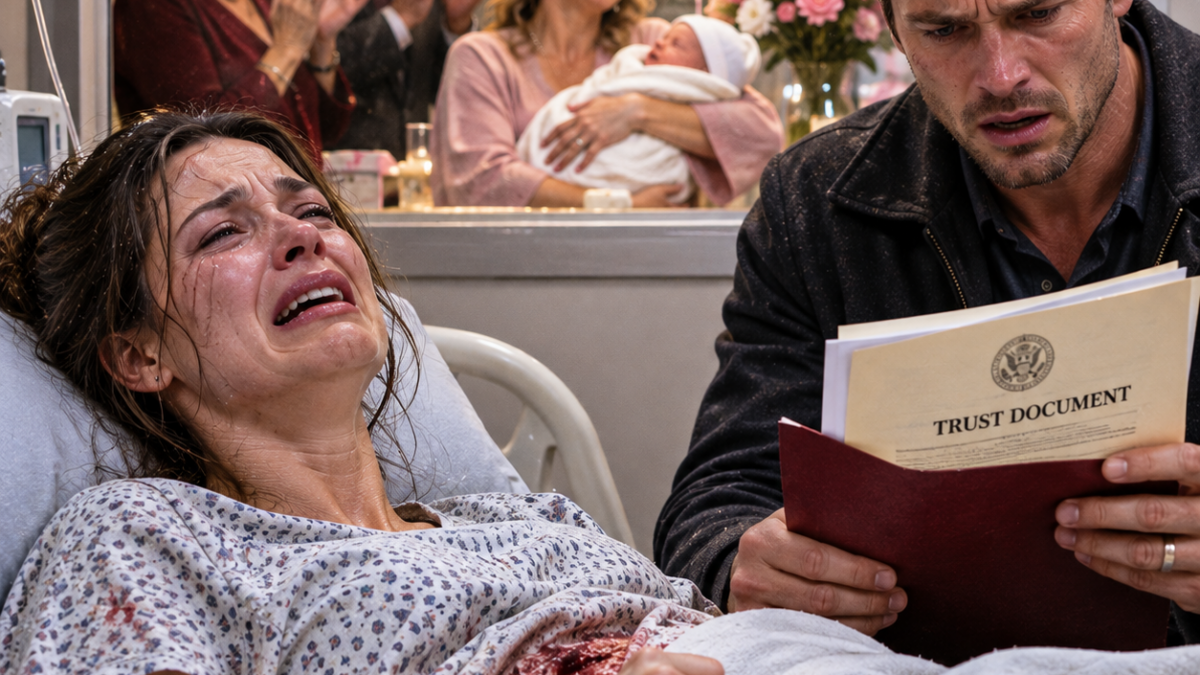
Madison requested a luxurious birthing suite and private postpartum support, insisting that ordinary hospital accommodations weren’t good enough.
I chose a standard recovery room.
All I wanted was a safe delivery and a healthy baby.
Our daughters and sons didn’t need to compete.
Unfortunately, my parents disagreed.
At 9:42 on that Thursday morning, after twenty-two hours of painful labor, I gave birth to Eleanor.
She was tiny, warm, and absolutely perfect.
When the nurse placed her against my chest, I cried so hard I could barely speak.
Ethan kissed my forehead.
“You did it, Liv.”
I smiled through my tears.
“We did.”
Two doors away, Madison had delivered a boy named Oliver.
Within hours, my parents arrived at the maternity ward with flowers, balloons, catered food, and a cake decorated with the words:
WELCOME TO THE WORLD, LITTLE PRINCE.
I waited for them to visit us.
One hour passed.
Then three.
Then six.
Ethan kept checking the hallway.
“Maybe they don’t know which room we’re in,” he suggested.
I shook my head.
“I texted Mom.”
By early evening, I was exhausted, sore, and struggling with postpartum bleeding while the nurses continued checking my recovery.
Eleanor slept peacefully in her bassinet.
I called my mother.
She answered over loud laughter.
“Mom,” I whispered, “are you coming to meet Eleanor?”
A pause.
“Oh, honey, we’re exhausted. Madison had such a difficult day.”
I stared at my daughter.
“I gave birth today, too.”
My father’s voice erupted in the background.
“Tell Olivia we’re tired! Stop being so needy! She’s always been independent!”
My throat closed.
“Dad, you’re thirty feet away.”
“Then you should understand we’re not making another trip around this hospital!”
Behind him, someone laughed.
I ended the call before they heard me cry.
Ethan sat beside me, furious.
“That’s enough, Olivia.”
I looked at Eleanor.
“I know.”
“No more paying their bills.”
I nodded slowly.
“No more.”
He kissed my forehead and left to find something for me to eat.
Ten minutes passed.
Then twenty.
Then forty.
When the door finally opened, Ethan wasn’t carrying food.
His face was pale.
He held a crumpled legal document in one hand.
“Olivia,” he whispered, “your father just tried to trick me into putting our house up as collateral.”
I stared at him.
“What?”
“He claimed the hospital was going to stop your care unless I signed an emergency guarantor form.”
Ethan spread the paper across my tray.
The heading made my stomach turn.
EMERGENCY SECONDARY EQUITY LIEN AUTHORIZATION.
The document referred to a $25,000 obligation connected to Madison’s private birthing suite and nursing arrangements.
“Our house?” I whispered.
Ethan nodded.
“He wanted me to sign it without reading.”
I looked at him, horrified.
“What happened when you refused?”
Ethan’s jaw tightened.
“He called your mother.”
“What did he say?”
My husband’s voice dropped.
“Plan A failed. Get the spare keys from your purse and drive to their house.”
He swallowed.
“Then he said, ‘We change the deadbolts before they ever leave recovery.’”
For several seconds, I couldn’t breathe.
My parents weren’t just ignoring my newborn daughter.
They were trying to take the home where she was supposed to grow up.
And they believed we were too distracted by childbirth to stop them.
FULL STORY CONTINUATION
“Call the police,” I said.
Ethan looked at me.
For a second, I barely recognized my own voice. It was quiet, almost unnaturally calm, the kind of voice I’d used during equipment emergencies in Antarctica when losing control of your emotions could make a dangerous situation worse.
“Olivia, you’re supposed to be resting.”
“Ethan. Call the police.”
He nodded immediately.
I tried to sit up farther, but a sharp pain spread through my lower abdomen. I gasped and grabbed the edge of the blanket.
“Liv, don’t move.”
He reached for the call button.
A nurse entered moments later.
Her name was Rebecca. She’d been caring for me since I arrived in recovery, and she had the reassuring manner of someone who’d helped hundreds of frightened new mothers through the most vulnerable hours of their lives.
“What’s happening?”
“My parents are trying to get into our house,” I managed.
She glanced at Ethan.
He held up the document.
“My father-in-law attempted to get me to sign this under false pretenses. He said it was necessary for my wife’s hospital care. Now he’s threatening to send someone to change the locks on our home.”
Rebecca’s expression grew serious.
“First, Olivia, I need you to lie back so I can check you.”
“I can’t just lie here while they—”
“I understand. But you have a newborn daughter who needs you healthy, and I am not going to let this situation interfere with your recovery.”
Something about her firmness cut through my panic.
I lay back.
She checked my vital signs, assessed my bleeding, and confirmed that the medical team needed to continue monitoring me.
Then she looked at Ethan.
“I’m contacting hospital security and the charge nurse. If someone is using the hospital’s name to pressure patients or their families into signing financial documents, administration needs to know.”
Ethan nodded.
“Thank you.”
She looked at the paper.
“I’ve never seen that form used on this unit. Billing procedures do not involve patients signing over their houses to cover another family’s accommodations.”
I felt my stomach twist.
“Another family,” I repeated.
Rebecca’s expression softened.
“Olivia, your care and your sister’s arrangements are separate matters.”
I stared at the ceiling.
My parents had spent years pretending our lives were interchangeable whenever Madison needed something.
Now they had apparently tried to make our home responsible for her luxury hospital bill.
Rebecca adjusted the blanket around my legs.
“Stay here. Take care of your baby. We’ll help you address the hospital side of this.”
I looked toward Eleanor.
She was sleeping peacefully, her tiny fist pressed against her cheek.
She had been alive for less than twelve hours.
And already my parents were trying to take something from her.
I turned toward Ethan.
“Call Nora.”
He nodded.
Nora Whitfield lived across the street from us. She was a retired elementary school teacher who had become a trusted friend during my pregnancy.
She watered our plants when we traveled, brought homemade soup when I was sick, and had insisted on being one of the first people to meet Eleanor after we came home.
She also had an excellent view of our front porch.
Ethan called her.
She answered immediately.
“Ethan! Is everything all right? How’s Olivia? How’s the baby?”
“Eleanor’s healthy,” he said. “But I need a favor.”
“Anything.”
“Can you look across the street and tell me whether anyone is at our house?”
There was a pause.
“Why?”
“Olivia’s parents may be heading there.”
Nora didn’t ask for an explanation.
“Give me a second.”
I could hear her footsteps.
A door opened.
Then silence.
“Oh,” she said.
My blood ran cold.
“What?” Ethan asked.
“Carol’s car is pulling into your driveway.”
I closed my eyes.
My mother.
The woman who was supposedly too exhausted to walk thirty feet to see my daughter had enough energy to drive across town and interfere with our home.
Nora continued.
“She’s getting out.”
“Is she alone?”
“Yes. Wait. She’s talking on her phone.”
Ethan looked at me.
I mouthed, Police.
He nodded.
“Nora, please don’t confront her. We’re calling the police. If you can safely note what happens, that would help.”
“Of course.”
She paused.
“Ethan, why does she have your house keys?”
I looked at my husband.
Because we’d trusted her.
Because three months earlier, when my pregnancy became more difficult and we were preparing for the possibility of an early delivery, I had given Mom a spare key.
Just in case.
Just in case we needed something brought to the hospital.
Just in case someone had to feed the cat while we were away.
Just in case we needed family.
I had trusted her with access to our home.
And she was using it against us.
Ethan called the local police department and reported the situation.
He explained that the homeowners were at the hospital, that a family member with a spare key was threatening to change their locks without permission, and that the threat followed an attempt to obtain a questionable financial document.
The dispatcher took the address and details.
Ethan then called our home security provider to confirm that the cameras were functioning.
I watched him moving between the door and the window, phone in hand, trying to manage everything while still checking on me every few minutes.
I hated seeing him like that.
Ethan was usually the steady one.
He worked as a civil engineer, designing infrastructure and coordinating construction projects. He was patient, methodical, and rarely raised his voice.
Even during the worst parts of my pregnancy, he’d remained calm.
But now his face was tight with anger.
Not ordinary irritation.
The furious, frightened expression of a man who had just realized someone was willing to endanger his wife and child for money.
Our security camera feed loaded on his phone.
He brought it to my bedside.
“Do you want to see?”
I hesitated.
Then nodded.
Mom stood on our front porch wearing the same burgundy sweater she’d worn in Madison’s hospital room.
She had a handbag tucked beneath one arm and her phone pressed to her ear.
She tried the door.
Unlocked it.
And stepped inside.
My stomach dropped.
“She went in.”
Ethan’s jaw tightened.
“I see.”
Mom disappeared from the entrance camera.
Then the interior hallway camera showed her walking toward our kitchen.
She wasn’t carrying flowers.
Or baby gifts.
Or anything for Eleanor.
She was looking around our house as though searching for something.
Then she pulled open a drawer.
My drawer.
The one where we kept spare batteries, takeout menus, and ordinary household paperwork.
She began rummaging through it.
“What is she doing?” I whispered.
Ethan zoomed in.
“I don’t know.”
Mom moved toward the study.
Our study.
Where I kept personal documents, research notes, and the files relating to our mortgage.
I felt sick.
“She knows where the paperwork is.”
Ethan looked at me.
“What?”
“Dad asked me about our mortgage three months ago.”
He went still.
I remembered the conversation with awful clarity.
My father had come over for dinner.
He asked how much equity we had built.
I told him we weren’t discussing our finances.
He laughed and said he was just curious.
Then he asked whether Ethan and I had both signed the deed.
I’d thought he was making conversation.
Now I understood why he’d wanted to know.
Ethan took a slow breath.
“We’ll tell the officer when they arrive.”
On the camera, Mom opened the study door.
Then she began pulling folders from a filing cabinet.
I watched her flip through them.
My entire body trembled.
She wasn’t looking for family photographs.
She wasn’t looking for a blanket or a diaper bag.
She was looking for information she could use.
I turned toward Ethan.
“Save the footage.”
“Already doing it.”
Nora called again six minutes later.
“Ethan, there’s a locksmith van in your driveway.”
My husband closed his eyes.
“Of course there is.”
A man wearing a work jacket stepped out of the van.
He approached the porch carrying a tool bag.
Mom emerged from the house and began speaking to him.
Nora watched from across the street.
“I can’t hear everything, but she’s pointing at the front door.”
Ethan called the police again to update the report.
Then he used the security system’s two-way audio.
“Carol.”
On the camera, my mother jumped.
She looked around.
“Who’s there?”
“It’s Ethan.”
Her face changed.
For a moment, she looked genuinely frightened.
Then she lifted her chin.
“Ethan! Thank goodness. I was just making sure everything was ready for the baby.”
I stared at the screen.
Ready for the baby.
By changing our locks.
Ethan’s voice was controlled.
“Carol, you do not have permission to change any locks or remove anything from our home.”
She laughed nervously.
“Oh, don’t be ridiculous.”
“Leave the property.”
“I’m your mother-in-law!”
“That doesn’t make you an owner.”
Her expression hardened.
“Your father-in-law is handling a financial emergency, and you two are being terribly uncooperative.”
Ethan glanced toward me.
Then looked back at the camera.
“The police are on their way.”
Mom went silent.
The locksmith took a step backward.
He looked from the door to my mother.
Then raised both hands.
Whatever he’d been told, he clearly wasn’t interested in becoming part of a family dispute involving the police.
Mom shouted toward the camera.
“You called the police on your own family?”
Ethan’s answer was immediate.
“You entered our home without permission and tried to change the locks while my wife is recovering from childbirth.”
She folded her arms.
“After everything we’ve done for Olivia!”
I felt something inside me break.
Everything they’d done for me.
I had paid their bills for four years.
I had purchased their groceries when Dad claimed money was tight.
I had replaced their refrigerator when it stopped working.
I’d paid for repairs to the heating system.
I’d sent money without asking questions because I believed they needed help.
And now my mother stood in our doorway talking about everything she’d done for me.
I reached for Ethan’s hand.
“Let me speak.”
He hesitated.
“Liv, you need to rest.”
“Please.”
He held the phone closer.
I stared at my mother’s face on the screen.
“Mom.”
She looked up.
“Olivia?”
“Get out of my house.”
Her mouth fell open.
“Sweetheart—”
“Don’t.”
My voice shook.
“You spent nine hours celebrating Madison’s son. You couldn’t walk two doors down to see Eleanor.”
She looked annoyed.
“We’ve already discussed that.”
“No. You told me to stop being needy.”
“Olivia, you’re being emotional.”
I felt tears rise.
“I’m a mother now.”
For once, the words gave me strength rather than fear.
“And I will not let you take something from my daughter because Madison wants it.”
Mom’s face hardened.
“You’ve always been jealous of your sister.”
I closed my eyes.
There it was.
The same accusation she’d used since childhood.
If Madison received something and I felt hurt, I was jealous.
If Madison took something that belonged to me, I was selfish for wanting it back.
If I asked why my parents treated us differently, I was creating conflict.
Now she was standing inside my house, attempting to change the locks, and still insisting the problem was my jealousy.
I opened my eyes.
“Leave.”
She stared into the camera.
“Olivia—”
“Leave now.”
A police vehicle appeared in the driveway behind her.
Mom turned.
The locksmith stepped away from the door.
And for the first time in my life, my mother had no one available to force me to change my mind.
The officers handled the situation calmly.
They spoke with my mother.
They spoke with the locksmith.
They confirmed that Ethan and I owned the property and had not authorized the lock change.
Mom claimed there had been a misunderstanding.
She said she was simply helping prepare the house for a newborn.
The locksmith explained that he’d been contacted to replace the locks but hadn’t been told the homeowners were objecting.
No locks were changed.
Nothing was removed.
The officers documented the incident and told Mom to leave the property.
She protested.
Of course she did.
But she eventually returned to her car.
I watched from the hospital bed as she backed out of our driveway.
Nora stood on her own porch, arms folded, observing everything.
When the police car left, Ethan called her.
“Thank you.”
“Don’t thank me,” she replied. “Tell Olivia I love her, and tell her that baby has a whole neighborhood ready to spoil her.”
I began crying.
Nora’s voice softened.
“Oh, honey. Don’t you dare waste another minute worrying about those people tonight.”
I couldn’t speak.
She continued.
“Your daughter’s here. You’re both alive. You’ve got a good husband. Let the rest of us help with the ordinary things.”
Ethan smiled for the first time since entering my hospital room.
“We appreciate you, Nora.”
“Good. Now get back to your wife.”
When the call ended, I looked at him.
“Our house?”
“Safe.”
“The locks?”
“Unchanged. We’ll have them rekeyed and the security codes updated.”
I nodded.
“And Mom?”
“Gone.”
I closed my eyes.
For a moment, the relief was almost overwhelming.
Then Eleanor began crying.
A small, hungry sound.
I reached toward her bassinet.
Ethan lifted her carefully and placed her in my arms.
She settled against me.
Her little mouth moved against the blanket.
Her eyes remained closed.
I looked down at her face.
“You don’t even know what’s happening, do you?” I whispered.
Ethan sat beside us.
“No.”
I kissed her forehead.
“And we’re going to make sure you never have to.”
We didn’t sleep much that night.
Rebecca continued checking my recovery.
The baby needed feeding.
The room was full of the ordinary sounds of a maternity ward.
Footsteps.
Monitors.
Quiet conversations.
The occasional cry of a newborn.
But every time I closed my eyes, I saw Mom in our study, searching through our papers.
Then I heard Dad’s voice.
Stop being so needy.
I thought about the legal document.
The false hospital emergency.
The $25,000 suite.
And the spare key I’d given Mom because I believed family should be trusted.
By midnight, the anger began turning into something else.
Clarity.
I’d been trained for years to evaluate data without letting my hopes dictate the conclusions.
In Antarctica, wishful thinking didn’t change a weather system.
If a pressure reading indicated an approaching storm, you didn’t ignore it because you wanted clear skies.
You prepared.
You acted.
You trusted the evidence.
For years, I’d done the opposite with my family.
Every insult was an exception.
Every financial demand was temporary.
Every broken promise had an explanation.
Every moment of favoritism was something I should understand.
I’d spent four years sending money to people who treated my generosity as an entitlement.
Now they were willing to put my home at risk to fund Madison’s luxury.
I looked toward Ethan.
He was sitting in the visitor chair, holding Eleanor against his chest.
His eyes were tired.
He looked frightened.
But when he noticed me watching, he smiled.
“What?”
I shook my head.
“Nothing.”
He moved closer.
“Talk to me.”
I took a breath.
“I want to stop the payments.”
He nodded.
“We will.”
“All of them.”
“Yes.”
“No more mortgage help. No emergency transfers. No money for repairs.”
“Olivia, you don’t have to convince me.”
My eyes filled.
“I know. I’m trying to convince myself.”
He reached for my hand.
“Then listen to me.”
I looked at him.
“You’ve helped them for four years. You’ve done more than enough.”
I swallowed.
“They’re still my parents.”
“Yes.”
“They raised me.”
“Yes.”
“I feel like I’m abandoning them.”
Ethan’s expression softened.
“Liv, you’re lying in a hospital bed after giving birth. They spent the day celebrating your sister, tried to trick me into signing away rights over our home, and then went there to change the locks.”
My tears spilled.
He squeezed my hand.
“Protecting our family isn’t abandoning anyone.”
I looked down at Eleanor.
For the first time, I understood the difference.
Helping my parents had once felt like kindness.
Now it had become a demand that required sacrificing the security of my own child.
And that was a price I was no longer willing to pay.
At seven the next morning, hospital security asked to speak with Ethan.
I was awake, feeding Eleanor with Rebecca’s help, when a hospital administrator named Michelle Grant entered the room.
She wore a navy blazer and carried a slim folder.
“Mrs. Bennett, I understand your family experienced a troubling situation yesterday.”
I looked toward Ethan.
He stood beside the bed.
“Yes,” I said.
Michelle pulled up a chair.
“We’ve reviewed the document your husband brought to our attention.”
My chest tightened.
“And?”
“It is not a hospital form.”
I closed my eyes.
She continued.
“Our billing department did not prepare it, and our staff did not authorize anyone to present it as a condition of your medical treatment.”
Ethan’s jaw tightened.
“My father-in-law said Olivia would be discharged if I didn’t sign.”
Michelle shook her head.
“That was not true. Any discharge decision would be based on your wife’s medical condition and the judgment of her treating team. We would never make continued medically necessary care conditional on signing a private agreement pledging your home for another patient’s expenses.”
I felt a strange mixture of relief and disgust.
I’d known the story was suspicious.
But hearing a hospital administrator say plainly that Dad had lied made it impossible to retreat into excuses.
“He told Ethan it was urgent,” I whispered.
Michelle nodded.
“I’m sorry someone used your concern for your wife’s well-being to pressure you.”
She explained that the hospital would document the incident, preserve any relevant security records under its procedures, and cooperate with appropriate authorities if requested.
Then she asked whether I wanted my parents to have access to my medical information or hospital room.
I looked at Ethan.
“No,” I said.
“Would you like them removed from your approved visitor list?”
“Yes.”
“Both of them?”
I hesitated.
Then answered, “Madison, too.”
Michelle nodded.
“We’ll update your preferences.”
I stared at the blanket.
For years, I’d been terrified of doing anything that might make my parents feel rejected.
Now I was formally telling a hospital not to let them into my room.
The decision felt enormous.
Michelle stood.
“One more thing. Your sister’s accommodation charges are separate from your medical account. Whatever private financial arrangements her family has made do not transfer responsibility to you.”
I looked up.
“Thank you.”
She smiled gently.
“Congratulations on your daughter, Mrs. Bennett.”
Then she glanced toward Eleanor.
“She’s beautiful.”
I began crying.
Michelle looked concerned.
“Are you all right?”
I nodded.
“I’m sorry.”
“There’s nothing to apologize for.”
I wiped my face.
It was such a small thing.
A stranger congratulating me on my baby.
But after everything that had happened, I realized how desperately I’d wanted someone to acknowledge that Eleanor’s birth mattered.
The next call came from Dad.
He didn’t call my phone.
He called Ethan’s.
We were both sitting beside Eleanor’s bassinet when his name appeared on the screen.
Ethan looked at me.
“Do you want me to answer?”
I thought about it.
Then nodded.
“Put it on speaker.”
Ethan accepted the call.
“Richard.”
Dad didn’t bother with a greeting.
“What the hell is wrong with you?”
I closed my eyes.
Ethan remained calm.
“What are you referring to?”
“You sent police officers to harass my wife!”
“Carol entered our home and tried to change the locks without our permission.”
“She has a key!”
“A key isn’t ownership.”
Dad made an angry sound.
“You’re being ridiculous.”
Ethan didn’t respond.
My father continued.
“There’s a serious financial problem that needs to be handled, and you two are acting like children.”
I reached for the phone.
“Dad.”
Silence.
Then, “Olivia?”
“Yes.”
“Good. Maybe you can talk some sense into your husband.”
I felt the old reflex to explain.
To negotiate.
To keep everyone calm.
Instead, I asked a question.
“Why did you tell Ethan the hospital was going to stop my care?”
Dad hesitated.
“What?”
“Why did you lie?”
His tone hardened.
“Watch your mouth.”
My stomach tightened.
I was suddenly sixteen again, standing in our kitchen while Dad threatened to take away my car keys because I’d questioned why Madison received money for a school trip I had been told we couldn’t afford.
I gripped the edge of the blanket.
“Answer me.”
He exhaled sharply.
“Madison needed help.”
I stared at the phone.
“And?”
“And you have a perfectly good house with equity sitting there doing nothing.”
Ethan’s expression changed.
I felt as though someone had struck me.
“Doing nothing?”
Dad continued, as if he were discussing a normal financial arrangement.
“You two have excellent credit. You can borrow against the property without much difficulty.”
I looked down at Eleanor.
“Dad, we’re not paying for Madison’s birthing suite.”
“She just had a baby!”
“So did I.”
“Don’t start that again.”
My chest tightened.
“She wanted a private suite,” I said. “She chose it.”
“She deserves a comfortable experience.”
“And what does Eleanor deserve?”
He sighed loudly.
“Olivia, don’t be dramatic.”
I stared at the phone.
“I’m asking you a question.”
“You’ve always managed fine on your own.”
I could barely speak.
“She’s twelve hours old.”
“What?”
“Eleanor. My daughter. She’s twelve hours old.”
He said nothing.
“You haven’t even met her.”
There was a pause.
Then Dad snapped, “We’re talking about a financial emergency, not your feelings.”
I felt something inside me go completely still.
There were no more excuses left.
No misunderstandings.
No confusion.
My father wasn’t forgetting that I had given birth.
He knew.
He simply didn’t consider it important enough to affect what he wanted.
“Dad,” I said quietly, “the payments stop today.”
Silence.
Then a disbelieving laugh.
“What payments?”
“The $1,200 I’ve been sending you every month.”
His tone changed instantly.
“Olivia, don’t be stupid.”
“They’re stopping.”
“You can’t do that.”
“Yes, I can.”
“Your mother and I have obligations!”
“So do Ethan and I.”
“You promised to help us.”
“I offered temporary assistance four years ago. I’ve continued because I believed you needed it.”
“We do need it!”
I took a breath.
“Then you’ll have to make a budget and find another solution.”
His voice rose.
“After everything we sacrificed to raise you?”
My eyes filled.
I wanted to shout.
I wanted to ask whether he’d kept a ledger of every school lunch, every birthday, every coat he’d purchased for me as a child.
I wanted to ask whether Madison would ever receive a bill for being loved.
But I was too tired.
Instead, I said, “Goodbye, Dad.”
He began shouting again.
I ended the call.
Then I handed the phone to Ethan.
My hands were trembling.
Ethan placed it on the table.
For several seconds, neither of us spoke.
Then he whispered, “I’m proud of you.”
I started crying.
Because I’d waited my entire life to hear those words from the wrong man.
Madison called an hour later.
Her name appeared on my phone while Eleanor was sleeping against my chest.
I almost ignored it.
But a small part of me wanted to hear her voice.
Maybe she’d finally realized what had happened.
Maybe she’d heard about the document and was horrified.
Maybe she would apologize.
I answered.
“Madison.”
“Are you out of your mind?”
I closed my eyes.
So much for that.
“What?”
“Mom is crying!”
I looked toward the window.
“Why?”
“Because you sent police to your own house over a stupid misunderstanding.”
I took a slow breath.
“Madison, Mom tried to change our locks.”
“She was helping.”
“How?”
“Dad said there was a financial issue.”
I stared at the phone.
“Did he tell you he tried to use our house as collateral for your hospital bill?”
She went quiet.
Then she said, “I don’t know all the details.”
“Did you know they were asking Ethan to sign something?”
“Olivia, why are you making this so complicated?”
My chest tightened.
“Because it’s our house.”
“You can afford it!”
I closed my eyes.
There it was.
The same argument I’d heard since childhood.
I could afford it.
Therefore, Madison deserved it.
She needed it.
Therefore, I should provide it.
She wanted it.
Therefore, refusing would make me selfish.
“You chose the VIP suite,” I said.
“Because I wanted Oliver to have the best possible start!”
I looked down at Eleanor.
“She hasn’t even left the hospital, Madison. What exactly does a luxury suite give Oliver that my daughter doesn’t have?”
“That’s not the point.”
“Then what is?”
She sighed dramatically.
“Not everything has to be a competition.”
I almost laughed.
For thirty years, every important event in my life had been measured against Madison’s.
My grades.
My scholarships.
My career.
My wedding.
My pregnancy.
And now, childbirth.
But the moment I questioned the inequality, I was the one creating competition.
“Madison,” I said, “I didn’t ask for your suite.”
“Then why are you so upset about it?”
“Because Dad tried to put my home at risk to pay for it.”
She went quiet.
I continued.
“Ethan and I didn’t agree to that.”
“Mom said you’d help.”
“I didn’t.”
“Well, I assumed—”
“That’s the problem.”
My voice shook.
“You assumed.”
She sounded irritated.
“What do you want me to do, Olivia?”
I stared at the ceiling.
For a moment, the answer was obvious.
Apologize.
Acknowledge what had happened.
Tell our parents they were wrong.
Come down the hall and meet your niece.
But asking Madison to care had never worked.
I didn’t want to spend Eleanor’s first day begging her aunt to treat her like family.
“Nothing,” I said.
“What?”
“I don’t want anything from you.”
Madison scoffed.
“Fine.”
Then she added, “You know, you’re ruining what should be the happiest day of my life.”
I looked down at Eleanor’s tiny face.
“No, Madison.”
My voice was quiet.
“I’m finally protecting mine.”
I ended the call.
And this time, I didn’t cry.
Ethan returned to the chair beside me.
“You okay?”
I thought about it.
“No.”
He nodded.
“Fair.”
I laughed weakly.
Then I began crying again.
He moved closer.
I leaned against him carefully, trying not to disturb Eleanor.
“I keep thinking about when we were kids,” I whispered.
Ethan rubbed my shoulder.
“What about it?”
“Madison used to take my things.”
He listened.
“When I was eight, I got a bicycle for my birthday. It was the first thing I’d ever received that was completely mine.”
I smiled sadly.
“It was blue. I loved it.”
“What happened?”
“Madison wanted it.”
Ethan waited.
“She threw a tantrum because hers was smaller. Mom told me to let her borrow mine. Then Dad said I was too old to be so attached to a bicycle.”
I swallowed.
“By the end of the week, she had my bike.”
Ethan’s expression tightened.
“What did you get?”
“Nothing.”
He looked at me.
I shrugged.
“Dad said I should be proud of being generous.”
Ethan was quiet.
I continued.
“When I won a scholarship to college, Mom said it was wonderful because they could finally afford to help Madison with tuition.”
I gave a bitter laugh.
“I remember being so happy. I thought they were proud of me.”
Ethan squeezed my hand.
“They should have been.”
“Instead, they talked about how much money my scholarship freed up for her.”
I looked toward the window.
“And I still kept sending them money.”
“Because you loved them.”
I shook my head.
“Because I thought maybe one day they’d love me the way they loved her.”
Ethan’s eyes filled.
“Liv.”
I swallowed.
“I know how pathetic that sounds.”
He gently turned my face toward him.
“It doesn’t sound pathetic.”
I started crying harder.
“It sounds like a little girl who kept hoping her parents would notice her.”
For a long time, he simply held me.
And for the first time since Eleanor’s birth, I allowed myself to mourn something that had been missing long before she arrived.
The family I had spent my entire life trying to earn.
That afternoon, Ethan contacted a local attorney named Sarah Mitchell.
Sarah specialized in real estate disputes and civil litigation.
Ethan explained the attempted signature, the visit to our home, and the threat to change the locks.
Sarah listened carefully before asking us to send copies of the document and the security footage.
She called back less than two hours later.
“The first thing I want you both to understand,” she said, “is that your father-in-law cannot simply take your house by persuading someone to sign a paper in a hospital hallway.”
I felt my chest loosen.
“But he had our property information,” I said.
“Yes, and that’s concerning. The document appears designed to create or support a claim against the property, but it raises significant questions about validity, authorization, and disclosure.”
Ethan leaned forward.
“So there isn’t a lien?”
“Not merely because he handed you this paper. We need to verify that nothing has been recorded or submitted elsewhere, but an unsigned document doesn’t automatically give someone an enforceable interest in your home.”
I closed my eyes.
Sarah continued.
“Do you both hold title?”
“Yes,” Ethan answered.
“Have either of you signed any security agreement related to Madison’s expenses?”
“No.”
“Have you authorized Richard or Carol to borrow against the house?”
“Absolutely not.”
“Then we will document those facts and take appropriate protective steps.”
I felt the first genuine relief I’d experienced in nearly twenty-four hours.
Sarah explained that she would review the property’s public records and help us determine whether any suspicious filing had been attempted.
She also recommended preserving the hospital document, the messages, and the camera recordings.
“We should not assume that a legal claim exists just because someone threatened one,” she said. “But the attempt to obtain a signature through a false story about medical treatment is serious.”
Ethan nodded.
“What about Carol entering our home?”
“You’ve already made a police report. We can give written notice revoking permission for both parents to enter the property. If they continue interfering, we’ll evaluate the appropriate civil protections.”
I looked toward Eleanor.
“Can they claim they have a right to see our daughter?”
Sarah’s tone softened.
“Those are separate questions, and the specific law depends on the circumstances and jurisdiction. But your parents do not gain automatic authority to dictate your newborn’s care simply because they’re grandparents.”
I swallowed.
“We don’t want them near her right now.”
“Then we can document that boundary clearly.”
I looked at Ethan.
He squeezed my hand.
For the first time since Dad’s phone call, the world felt a little less dangerous.
That evening, I opened my banking app.
The recurring transfer was still scheduled.
$1,200.
Every month.
It had been running for almost four years.
I stared at the screen.
Forty-eight payments.
$57,600.
That was before the groceries, home repairs, emergency purchases, and other expenses I’d covered whenever my parents said they were struggling.
I thought about all the things Ethan and I had postponed.
The kitchen renovation.
The additional savings we’d wanted before having a baby.
The vacation we’d canceled during my pregnancy because I was too tired and we wanted to be careful with money.
We weren’t poor.
We had good careers and a comfortable home.
But that didn’t mean our resources were unlimited.
And every dollar I sent to my parents was a dollar I wasn’t putting toward our own family’s future.
I opened the scheduled payment settings.
My finger hovered over the screen.
A wave of guilt swept through me.
What if their mortgage fell behind?
What if they couldn’t afford their utilities?
What if they blamed me?
I almost laughed at the last question.
They were already blaming me.
For having a daughter instead of a son.
For asking them to visit.
For refusing to fund Madison’s suite.
For protecting my home.
For calling the police.
I could give them every dollar I earned, and somehow it would still be my fault when they wanted more.
I took a slow breath.
Then I canceled the transfer.
The confirmation appeared.
Recurring payment canceled.
I stared at it.
A tiny action.
A few taps on a phone.
Yet it felt like I had just broken a chain I’d been wearing for years.
Ethan watched quietly.
I looked up.
“It’s done.”
He smiled.
“Good.”
I wiped my eyes.
“I’m scared.”
“I know.”
“What if they really need the money?”
He took my hand.
“Then they need to make decisions about their finances. They don’t get to solve their problems by deceiving us.”
I nodded.
“And what if they never speak to me again?”
He was quiet for a moment.
Then he said, “Liv, they didn’t come to see you when you gave birth.”
My throat tightened.
“They didn’t come to meet Eleanor.”
I looked down.
“They spoke to you today because they wanted money.”
He squeezed my hand.
“Whatever happens next, you won’t be facing it alone.”
I leaned against his shoulder.
And for the first time, I allowed myself to believe him completely.
The next morning, my father tried to visit.
I learned about it when Rebecca came into the room looking unusually serious.
“Olivia, there’s a gentleman at the nurses’ station asking to see you.”
I already knew.
“Richard?”
She nodded.
“He says he’s your father.”
Ethan stood immediately.
“He isn’t allowed in here.”
Rebecca raised a reassuring hand.
“We know. Your visitor preferences are documented, and security has been notified.”
I looked at Eleanor.
She was sleeping in the bassinet beside me.
I felt a sudden, irrational urge to move her farther away from the door.
“Is he angry?”
Rebecca hesitated.
“He’s been informed that you aren’t receiving visitors from your family.”
I swallowed.
Then we heard his voice.
Even through the closed door, I recognized it.
“This is ridiculous! That’s my daughter in there!”
My whole body tensed.
Ethan moved beside the bed.
“You don’t have to deal with him.”
Dad’s voice rose again.
“I have a right to see my granddaughter!”
I stared at the door.
My granddaughter.
Yesterday, he’d been too tired to walk thirty feet.
Today, after learning the money was gone and the house was protected, he suddenly remembered Eleanor existed.
I wanted to cry.
I wanted to laugh.
Instead, I held my daughter closer.
A hospital security officer spoke in a calm, firm voice from the hallway.
My father argued.
Then his voice grew quieter as he moved farther away.
Rebecca returned a few minutes later.
“He’s left the unit.”
I nodded.
“Thank you.”
She glanced at Eleanor.
“Would you like me to take her to the bassinet so you can rest?”
I looked down at my daughter.
Her tiny fingers were wrapped around the edge of my gown.
“No,” I whispered. “Just a little longer.”
Rebecca smiled.
“Of course.”
When she left, Ethan sat beside me.
My eyes filled.
“Why does he want to see her now?”
Ethan didn’t answer immediately.
Then he said, “I don’t know if he really does, Liv.”
The truth hurt.
But I appreciated that he didn’t lie.
We went home the following afternoon.
I had imagined that moment for months.
During my pregnancy, I’d pictured Ethan carrying Eleanor through our front door while I stood beside him smiling.
I’d imagined taking photographs in the nursery.
I’d imagined Mom waiting with dinner.
Dad holding a tiny bouquet.
Madison arriving with Oliver so the cousins could meet.
The reality was different.
Ethan loaded our bags into the car while I sat carefully in the passenger seat, holding a pillow against my abdomen for support.
Eleanor was secured in her car seat behind us.
I checked her straps three times.
Then I checked them again.
Ethan smiled gently.
“She’s safe.”
“I know.”
He touched my hand.
“We can sit here another minute.”
I looked through the windshield at the hospital entrance.
People were coming and going.
A man carried flowers through the revolving doors.
A grandmother hurried past holding a pink teddy bear.
I felt tears rise.
“Do you think Mom came to Madison’s room again?”
Ethan hesitated.
“Probably.”
I looked down.
“I don’t understand.”
He turned toward me.
“What?”
“I don’t understand how she could love one grandchild so much and completely ignore the other.”
Ethan was quiet.
Then he said, “I don’t think this is about the babies.”
I looked at him.
“I think it’s about the way your parents have treated you and Madison for years.”
I stared at the dashboard.
He was right.
Eleanor wasn’t being rejected because of anything she’d done.
She was only a newborn.
She had no personality for them to criticize.
No accomplishments for them to minimize.
No mistakes for them to exaggerate.
She was being overlooked because she was mine.
And that hurt in a way I couldn’t explain.
“I don’t want her growing up like I did,” I whispered.
Ethan took my hand.
“She won’t.”
I looked at him.
He continued.
“We can’t control whether your parents decide to change. But we can control what we allow around her.”
I nodded slowly.
Then I reached back and touched Eleanor’s little blanket.
“Let’s go home.”
Nora was waiting on the porch when we arrived.
She had hung a small wreath on the front door.
Pink and white flowers surrounded a wooden sign that read:
WELCOME HOME, ELEANOR.
I stared at it.
My throat tightened.
Ethan parked.
Nora came down the steps carrying a covered dish.
“Don’t you dare try to carry anything,” she announced.
I laughed through my tears.
“Nora.”
She opened my door.
“Sweetheart, you’ve just had a baby. Let someone take care of you.”
I began crying.
She put the dish down and hugged me carefully.
For a moment, I couldn’t speak.
Then she whispered, “I’ve got you.”
I clung to her.
I had known Nora for only three years.
She wasn’t related to me.
She hadn’t watched me grow up.
She didn’t know all the family history that made accepting help difficult.
But she was standing on our porch with dinner because she knew we’d had a baby and needed support.
That was enough.
Inside, the house smelled faintly of lemon and fresh laundry.
Nora had arranged for a few trusted friends to help with groceries and meals while we recovered.
The nursery was ready.
The changing table was stocked.
The baby clothes were folded.
The kitchen counter held a basket of fruit, bread, and snacks.
There was even a small vase of white flowers on the dining table.
I stared at everything.
“Nora, you didn’t have to do all this.”
She looked at me.
“I know.”
I started crying again.
She squeezed my shoulder.
“That’s the point, honey.”
I looked around our home.
For years, my parents had reminded me how much I owed them.
Nora had done something kind without expecting repayment.
It felt almost impossible to understand.
Ethan had arranged for our locks to be rekeyed before we returned.
He’d also changed the security codes and reviewed the camera access permissions.
My parents no longer had a functioning key.
The study documents were secured.
Our attorney had confirmed that no lien connected to the attempted hospital document had been recorded against our property.
I should have felt completely safe.
Instead, I found myself checking the front door every time I heard a car slow outside.
I was frightened that Dad might appear.
Frightened that Mom would somehow find another way inside.
Frightened that Madison would show up demanding money.
The fear embarrassed me.
I’d spent six years working in an environment where storms could isolate a research station and equipment failures could become life-threatening.
Yet I was afraid of my own parents.
One evening, Ethan found me standing by the living-room window.
I was watching the street.
“Liv?”
I turned.
He looked concerned.
“What’s wrong?”
I shook my head.
“Nothing.”
He came closer.
“Did someone call?”
“No.”
“Then what is it?”
I stared at the window.
“I keep thinking they’re going to come back.”
He wrapped his arms around me.
“I know.”
“I hate feeling like this.”
He held me gently.
“We’ve taken the precautions we can. Sarah’s handling the legal side. You don’t have to keep watch all night.”
I leaned against him.
“I’m supposed to be enjoying our baby.”
His expression softened.
“You are enjoying her.”
I shook my head.
“Not enough.”
“Olivia.”
I looked up.
“You’ve been through childbirth, a serious family betrayal, and a threat against our home in less than two days.”
My eyes filled.
“You don’t have to pretend that everything feels normal.”
I started crying.
He kissed my forehead.
“We’ll get there.”
The next week was a blur of feedings, diapers, laundry, and exhaustion.
Eleanor rarely slept for more than a few hours at a time.
I was sore.
My emotions seemed to change without warning.
Sometimes I felt overwhelmed by love when I looked at her.
Other times I cried because I’d forgotten where I put a pacifier.
I worried that I wasn’t healing quickly enough.
I worried that my milk supply wasn’t sufficient.
I worried that my parents would somehow find a way to hurt us again.
At a postpartum follow-up, I told my doctor what had happened.
She listened carefully.
Then she asked about my sleep, anxiety, and mood.
I admitted that I felt constantly on edge.
She explained that emotional changes after childbirth were common but that my circumstances also involved significant stress.
She encouraged me to accept practical help, remain in contact with my medical team, and seek counseling rather than trying to manage everything alone.
I agreed.
It was strange.
For years, I’d been the person everyone called when something went wrong.
The person who had an answer.
The person who could solve a problem.
Now I needed help.
And I was learning that needing help didn’t make me weak.
It made me human.
Sarah contacted us ten days after Eleanor was born.
She had finished her initial review of the property records and the attempted lien document.
“The good news,” she said, “is that your home is not subject to a valid lien arising from this incident.”
I closed my eyes.
Ethan squeezed my hand.
Sarah continued.
“Your father-in-law had no authority to pledge your property. The document was unsigned, and the records we’ve checked show no completed encumbrance from this transaction.”
I let out a long breath.
“But?”
She paused.
“There are still concerns about the way the document was presented and the apparent attempt to gain access to your property.”
I nodded.
“Can we do anything?”
“We’ve provided the relevant materials to the appropriate authorities. Whether the attempted deception supports criminal charges will depend on the evidence and applicable law.”
I understood.
“What about preventing them from coming back?”
“We’re sending formal written notice revoking any permission they previously had to enter your home. It will also direct them not to interfere with your property or attempt transactions on your behalf.”
I looked toward Ethan.
“Will that be enough?”
“It creates a clear record of your boundaries. If they ignore it, we can evaluate further legal steps based on what happens.”
I nodded.
Sarah’s voice softened.
“Olivia, I also want you to understand that the $1,200 monthly payments are a separate issue.”
I felt my stomach tighten.
“Dad says we promised to support them.”
“A voluntary family contribution doesn’t ordinarily become an indefinite legal obligation simply because it continued for several years. We can review any specific agreements if there are any.”
“There aren’t.”
“Then you should not assume you must continue paying.”
I swallowed.
“I’ve already stopped.”
“Good. Keep records of everything, and direct any financial demands through counsel.”
When the call ended, I sat silently.
Ethan looked at me.
“What are you thinking?”
I stared toward Eleanor’s bassinet.
“Four years.”
He waited.
“Four years of paying their bills.”
I looked down.
“And the first time I said no, they tried to take our house.”
He moved closer.
I began to cry.
Not because of the money.
Because I finally understood what my parents believed my love was worth.
My mother sent her first letter the following Monday.
It was handwritten on pale blue stationery.
The same kind she used for birthday cards and holiday greetings.
For a brief moment, seeing her familiar handwriting made my heart lift.
Then I opened it.
Olivia,
Your father and I are deeply hurt by the way you’ve treated us since the babies arrived.
I stared at the words.
The way I’d treated them.
Not the other way around.
She continued.
We were trying to help Madison through an exceptionally stressful experience. You have always been more capable of managing things on your own, and we assumed you understood that.
I read the sentence twice.
More capable.
There it was again.
My independence.
The convenient explanation for every absence.
I kept reading.
Mom complained about the police visit.
She described the attempt to change our locks as a harmless family misunderstanding.
She said Dad had only wanted to arrange temporary financing.
She accused Ethan of turning me against my parents.
Then she wrote:
We are extremely disappointed that you’ve canceled the monthly support without considering how it affects your father’s responsibilities.
I lowered the letter.
Their responsibilities.
The ones they expected me to pay for.
I continued.
Your father sacrificed a great deal raising you, and we never expected you to become so selfish after having a child of your own.
At the bottom, she added:
We hope Eleanor is doing well.
That was all.
One sentence.
My daughter’s entire existence had been reduced to seven words at the end of a letter about money.
I folded the paper.
My hands were steady.
Ethan came into the kitchen.
“What’s that?”
“A letter from Mom.”
He looked at me.
“Are you okay?”
I thought about it.
Then nodded.
“I think I finally understand.”
He sat down.
“Understand what?”
I looked at the letter.
“They don’t miss me.”
He was quiet.
“They miss what I gave them.”
My voice broke slightly.
“And I kept confusing those two things.”
Madison sent photographs of Oliver when he was two weeks old.
I received them through a family group message I hadn’t yet left.
There he was.
Beautiful.
Tiny.
Wrapped in a pale blue blanket.
Mom held him in one photograph.
Dad smiled proudly in another.
A third showed Madison standing beside an enormous arrangement of flowers.
The caption read:
Our precious prince is already so loved.
I stared at the pictures.
Oliver was innocent.
He hadn’t asked for the private suite.
He hadn’t demanded that my parents ignore Eleanor.
He hadn’t planned anything.
I couldn’t resent him.
But I could grieve the difference in how our babies were welcomed.
I looked toward the photograph Ethan had taken of Eleanor on her first morning home.
She was curled against my chest, her little mouth open in sleep.
There were no balloons.
No elaborate cake.
No expensive flowers.
Just a baby and her exhausted mother.
For years, I would have felt ashamed of the comparison.
I would have told myself I was jealous.
That I should be happy for Madison.
That I shouldn’t make everything about me.
But now I understood something.
Wanting my daughter to be acknowledged wasn’t jealousy.
Wanting my parents to treat their grandchildren with equal dignity wasn’t selfishness.
And refusing to finance Madison’s luxury wasn’t cruelty.
I saved Oliver’s photographs in a folder for family memories.
Then I left the group chat.
It was a small decision.
But my phone became quieter afterward.
And so did my life.
Six weeks after Eleanor was born, my parents requested a family meeting.
They didn’t contact me directly.
Their attorney sent Sarah a letter suggesting that the situation had escalated unnecessarily and that everyone would benefit from a conversation.
I almost refused.
I was still recovering physically.
I was exhausted.
I hadn’t slept through the night since before the delivery.
And every time I thought about seeing my father, I remembered his voice shouting through the hospital phone while I held my newborn daughter.
But there was something I wanted to say.
Not because I believed I could change him.
Because I’d never been allowed to finish a sentence in my parents’ house without someone telling me I was overreacting.
Sarah agreed to arrange one structured meeting with legal representatives present.
Ethan would come.
Eleanor would stay with Nora for a few hours.
I hated leaving her.
It would be the longest we’d been apart since she was born.
But I knew bringing a six-week-old baby into a confrontation with my parents would be unfair to her.
The meeting was scheduled for a Tuesday morning.
I chose a navy blouse and comfortable black pants.
I put my hair up.
Then I stood in front of the bathroom mirror.
My face looked tired.
There were shadows beneath my eyes.
My body still felt unfamiliar after childbirth.
For a moment, I saw the younger Olivia who used to stand outside her father’s study, rehearsing what she wanted to say before knocking.
I remembered how carefully I chose my words.
How frightened I was of sounding disrespectful.
How often I apologized before asking for something reasonable.
I looked at myself.
Then whispered, “You’re allowed to speak.”
Ethan appeared in the doorway.
“Ready?”
I took a breath.
“Yes.”
My parents were already seated when we entered the conference room.
Dad sat at the head of the table as though he owned the building.
Mom was beside him, holding a tissue.
Madison sat near the window.
She looked tired, but her hair was perfectly styled and her expensive handbag rested on the chair beside her.
For a moment, I felt a familiar ache.
We had both given birth six weeks earlier.
We should have been exchanging stories about feeding schedules and sleepless nights.
We should have been laughing about how much our lives had changed.
Instead, we were meeting through attorneys because my family had tried to use my home to pay for her hospital accommodations.
Dad stood.
“Finally.”
I stopped near the door.
Ethan moved beside me.
Sarah gestured toward our seats.
I sat down.
Dad looked irritated.
“Are we really doing this with lawyers?”
Sarah’s voice remained calm.
“You requested the meeting, Mr. Whitmore.”
He waved a hand.
“I requested a conversation with my daughter.”
I looked at him.
“Then you can speak to me respectfully.”
His eyes narrowed.
“Olivia, don’t start.”
I felt my stomach tighten.
Then I remembered why I was there.
“No,” I said quietly. “You don’t get to say that anymore.”
Mom looked offended.
“Sweetheart—”
“Please don’t call me that while you’re asking me to give you money.”
She stared at me.
I turned toward Dad.
“Why did you prepare the lien document?”
He shifted in his chair.
“Your sister needed help.”
I looked at Madison.
She lowered her eyes.
I turned back.
“That doesn’t answer the question.”
Dad exhaled sharply.
“We were trying to arrange financing.”
“Using our home?”
“Temporarily.”
“Without asking us?”
He frowned.
“Ethan could have signed.”
I stared at him.
“You told him the hospital would stop my medical care.”
Dad glanced toward his attorney.
The attorney remained silent.
“That’s what Ethan claims.”
Ethan leaned forward.
“Richard, I still have the document. I reported the conversation that day, and I preserved the details immediately afterward.”
Dad looked away.
I continued.
“Did you expect him to sign because he was frightened for me?”
No answer.
“Did you think he’d be too worried about my recovery to read the fine print?”
Dad’s jaw tightened.
“Olivia, you always assume the worst.”
I took a breath.
“Then give me a better explanation.”
He said nothing.
The silence stretched.
Finally, Mom spoke.
“We didn’t want to bother you while you were recovering.”
I turned toward her.
“You didn’t want to bother me?”
She nodded quickly.
“We knew you’d been through a difficult delivery.”
I stared at her.
“You were two doors away.”
Her expression changed.
“Olivia—”
“Two doors.”
My voice shook.
“You didn’t have to drive across town. You didn’t have to take a day off work. You didn’t have to arrange transportation.”
I looked between them.
“You only had to walk down a hallway.”
Mom’s eyes filled.
“Madison needed us.”
I glanced toward my sister.
Then back at my mother.
“And I didn’t?”
She looked down.
For a moment, I thought she might finally say it.
I’m sorry.
We should have come.
We were wrong.
Instead, she whispered, “You’ve always been stronger.”
I felt something inside me break cleanly.
Not shatter.
Not collapse.
Break free.
“Mom, being strong doesn’t mean I don’t need love.”
She looked up.
I continued.
“It doesn’t mean I don’t get scared.”
My voice trembled.
“It doesn’t mean childbirth hurts less for me.”
I swallowed.
“And it doesn’t mean my daughter matters less because I can afford to buy my own flowers.”
Nobody spoke.
Madison finally broke the silence.
“This is getting ridiculous.”
I turned toward her.
She folded her arms.
“You’ve turned one bad day into some kind of family crisis.”
I stared at her.
“One bad day?”
“Yes.”
I took a slow breath.
“Madison, Dad tried to get Ethan to sign a document putting our home at risk for your expenses.”
She rolled her eyes.
“And he failed, didn’t he?”
The room went still.
Even Mom looked uncomfortable.
I stared at my sister.
“That makes it okay?”
Madison shrugged.
“You still have your house.”
I looked toward Ethan.
His jaw was clenched.
Then I turned back.
“Do you know how frightened I was?”
She sighed.
“Olivia—”
“I was recovering from twenty-two hours of labor. I was bleeding. I was trying to feed my daughter. And Ethan came back telling me Dad had tried to use our home as collateral.”
Madison looked away.
“That’s between you and Dad.”
“No,” I said. “It was for your bill.”
She stared at me.
“I didn’t ask him to trick Ethan.”
I studied her face.
“Did you know he was trying to find someone else to pay?”
She hesitated.
“I knew Mom and Dad were helping.”
“Did you know they couldn’t afford it?”
She looked down.
“I thought they’d figure it out.”
I nodded slowly.
That was Madison’s entire life in one sentence.
I thought they’d figure it out.
Someone would pay.
Someone would sacrifice.
Someone would make the problem disappear.
And usually, that someone was me.
“Madison,” I said, “I love Oliver.”
Her expression softened slightly.
“He’s my nephew. He hasn’t done anything wrong.”
I swallowed.
“But your son doesn’t need a luxury suite to prove he’s loved. And my daughter doesn’t deserve to lose the security of her home because you wanted something expensive.”
She stared at me.
For once, she didn’t immediately argue.
Then she looked at Dad.
“Can we just pay the bill and move on?”
I almost laughed.
There it was again.
She still hadn’t asked who would pay.
Sarah placed a document on the table.
“Let’s clarify the legal issue.”
My father leaned back.
“Finally.”
Sarah ignored the sarcasm.
“The property belongs to Olivia and Ethan. Neither authorized its use as collateral for Madison’s expenses. The hospital has confirmed that the form presented to Ethan was not a hospital document and was not required for Olivia’s care.”
Dad shifted in his chair.
“The lender gave me that form.”
“Then any proposed financing would still require proper authorization and valid documentation,” Sarah replied. “Your possession of a form did not give you a right to pledge someone else’s house.”
His attorney nodded slightly.
Sarah continued.
“We have also documented Carol’s attempted lock change and the police response.”
Mom looked offended.
“I was only trying to help!”
Sarah turned toward her.
“Mrs. Whitmore, Olivia and Ethan have revoked your permission to enter the property. There is no ambiguity about that now.”
Mom’s expression hardened.
“You can’t keep a mother away from her daughter’s home forever.”
I looked at her.
“Yes, Mom. I can decide who comes into my house.”
She stared at me.
I continued.
“And I can decide who spends time with my daughter.”
Her eyes filled.
“Are you threatening to keep Eleanor away from us?”
I felt a sharp ache.
I had expected that question.
I’d rehearsed my answer.
But saying it aloud was harder than I’d imagined.
“I’m saying you haven’t shown me that I can trust you.”
Mom began crying.
Dad slammed his palm against the table.
“This has gone far enough!”
Ethan straightened.
Sarah remained calm.
I looked directly at my father.
“You’re right.”
He stopped.
“This has gone on far too long.”
I took a breath.
“For four years, I’ve paid $1,200 toward your bills every month. That’s $57,600 in regular transfers, before the other expenses I covered.”
Dad stared at me.
I continued.
“I did it because I thought you needed help. I did it because I loved you.”
My voice shook.
“But you started treating my generosity as something you owned.”
Mom whispered, “That’s not fair.”
I looked at her.
“Was it fair to spend nine hours celebrating Madison’s baby while ignoring mine?”
She looked away.
“Was it fair to use a false story about my medical care to pressure my husband?”
No answer.
“Was it fair to enter our home and try to change the locks?”
Dad’s expression hardened.
I leaned forward.
“You don’t get to call me selfish because I finally stopped letting you take whatever you wanted.”
My father stood so suddenly that his chair scraped against the floor.
“You think you’re better than this family because you have a fancy science job?”
I looked up at him.
There he was.
The man who had mocked my scholarships.
The man who called Antarctica a ridiculous place for a woman to work.
The man who complained that my career took me too far away, then accepted every dollar I sent home.
“You’ve always acted superior,” he continued. “Always showing off your degrees and your research.”
I felt the old fear rising.
Then I looked at Ethan.
He was beside me.
Calm.
Steady.
Waiting.
I turned back toward Dad.
“I never thought I was better than you.”
He scoffed.
“I just wanted you to be proud of me.”
For a moment, he looked surprised.
I swallowed.
“When I graduated, you left before the ceremony ended because Madison had a recital.”
Mom shifted.
“When I got my first research appointment, you asked whether I could earn more by working somewhere normal.”
Dad looked away.
“When I returned from Antarctica, I brought you gifts. You asked whether I could help with your mortgage.”
My voice cracked.
“And when I gave birth to Eleanor, you didn’t even come meet her.”
The room was silent.
I wiped my eyes.
“I spent years trying to make myself worth noticing.”
Dad said nothing.
“But I can’t keep doing that.”
I stood slowly.
Ethan rose beside me.
“I love you both,” I said.
Mom began crying harder.
“I probably always will.”
I looked at Madison.
“And I hope Oliver has a beautiful childhood.”
My sister stared at me.
“But I am done financing a family that treats me and my daughter like we’re disposable.”
Dad opened his mouth.
I continued.
“The monthly payments are finished. You will not use our home for financial arrangements. You will not enter our property without permission. And you will not have access to Eleanor until Ethan and I believe contact would be safe and healthy.”
Mom pressed her tissue against her mouth.
Dad stared at me.
“You’ll regret this.”
I felt tears rising again.
But my voice remained steady.
“Maybe I’ll grieve it.”
I looked directly into his eyes.
“But I won’t regret protecting my daughter.”
I turned toward the door.
Ethan followed.
Behind us, Dad shouted my name.
For thirty years, that tone had made me turn around.
This time, I kept walking.
The legal aftermath wasn’t dramatic.
There were no helicopters.
No secret bank accounts.
No mysterious inheritance waiting to rescue us.
The house was ours because Ethan and I had worked for it, financed it, and paid for it.
My parents had no legitimate ownership interest.
The attempted lien arrangement never became an enforceable claim against our property.
Their attorney ultimately confirmed in writing that they would not pursue any interest in our home.
The hospital maintained its own records of the incident, and the authorities reviewed the complaint and supporting materials.
Sarah made sure the appropriate documentation was preserved.
The matter did not require us to surrender our property or finance Madison’s expenses.
My parents remained responsible for whatever financial commitments they had actually undertaken.
The money I’d sent over four years was gone.
I didn’t recover it.
It had been voluntary support, not a loan.
For a while, that bothered me.
I thought about the savings we could have built.
The experiences we’d postponed.
The way I’d made myself anxious over every large purchase while quietly transferring money to people who rarely said thank you.
But eventually, I stopped treating that $57,600 as a debt I needed to collect.
The real boundary wasn’t about getting back what I’d given.
It was about refusing to keep paying.
My parents could not control our home.
They could not force us to finance Madison.
And they could not make me responsible for the consequences of their own spending decisions.
That was the resolution I needed.
The first few months of Eleanor’s life taught me how much I’d missed while trying to earn my parents’ approval.
I had imagined motherhood would be a series of important milestones.
The first smile.
The first laugh.
The first time she rolled over.
The first word.
And those moments were wonderful.
But the small things mattered just as much.
The way Eleanor relaxed against my shoulder after a feeding.
The tiny sounds she made when she was dreaming.
The way Ethan talked to her while changing her diaper, narrating every movement as though he were explaining an engineering project.
“Now, Miss Eleanor, we’re removing the old equipment and installing a fresh unit.”
I laughed so hard one evening that I had to sit down.
Ethan looked offended.
“I’m providing a detailed technical briefing.”
Eleanor gurgled.
He grinned.
“See? She appreciates it.”
I watched them together.
My husband.
My daughter.
The little family we’d created.
And I realized that for the first time in years, my home felt like a place where love wasn’t followed by a bill.
Nobody demanded payment for kindness.
Nobody kept score of ordinary sacrifices.
When I was exhausted, Ethan took Eleanor so I could sleep.
When he was overwhelmed, I made sure he had time to rest.
When we disagreed, we talked.
Sometimes imperfectly.
Sometimes through tears.
But neither of us used affection as a weapon.
It was so different from the way I’d grown up that I occasionally found myself waiting for the punishment that never came.
At four months old, Eleanor laughed for the first time.
It happened on an ordinary Tuesday afternoon.
I was sitting on the living-room rug while Ethan made ridiculous faces at her.
He puffed out his cheeks.
She stared.
He crossed his eyes.
She blinked.
Then he made a small, exaggerated sneezing sound.
Eleanor burst into laughter.
Not a polite little giggle.
A full, delighted baby laugh that seemed to fill the entire room.
I gasped.
“Ethan!”
He looked at me.
“Did you hear that?”
I was already crying.
“Do it again!”
He sneezed dramatically.
Eleanor laughed again.
I grabbed my phone and recorded them.
For several minutes, we forgot everything else.
The legal documents.
The canceled payments.
The hospital.
The parents who hadn’t come.
The sister who believed I should pay for whatever she wanted.
There was only our daughter’s laughter.
And it was enough.
That evening, I almost sent the video to Mom.
My finger hovered over her name.
For a moment, I imagined how she might respond.
Perhaps she’d smile.
Perhaps she’d ask to visit.
Perhaps she’d finally realize what she’d missed.
Then I remembered her letter.
We are extremely disappointed that you’ve canceled the monthly support.
I closed the message without sending it.
It wasn’t because Eleanor’s laughter needed to be hidden.
It was because I no longer wanted to offer my child’s joy as another opportunity for someone to reject us.
I sent the video to Nora instead.
She replied almost immediately.
That is the sweetest sound I’ve ever heard! Tell my little sunshine I’ll be over tomorrow with her favorite book.
I laughed.
Then I put my phone away.
Madison and I didn’t speak for several months.
Occasionally, I heard news through mutual acquaintances.
Oliver was healthy.
Madison was adjusting to motherhood.
My parents continued spending most of their time with her family.
I was glad Oliver was doing well.
I genuinely was.
But the updates no longer carried the same power to hurt me.
I had stopped comparing the attention our babies received.
Not because my parents had suddenly become fair.
Because I no longer treated their behavior as the measure of my daughter’s worth.
Eleanor had people who loved her.
Nora came over regularly.
Friends from my research team sent books and little stuffed penguins.
Former colleagues from McMurdo mailed a photograph of the Antarctic landscape with a handwritten note welcoming Eleanor to the world.
One of them had written:
Your mom knows how to find warmth in the coldest places. You’re lucky to have her.
I framed it.
For years, I’d allowed my parents to make my career sound like an inconvenient hobby.
Now I was beginning to see it again for what it was.
Years of demanding work.
Important research.
Friendships.
Perseverance.
A life I’d built through discipline and curiosity.
I wanted Eleanor to grow up knowing that her mother had once crossed oceans to study the world’s most extreme environment.
And that she had also learned something equally important much closer to home.
You could be strong and still deserve tenderness.
You could be capable and still need support.
You could be independent without being abandoned.
When Eleanor was six months old, Mom sent a birthday card.
Not for Eleanor.
For me.
Inside was a short message.
We hope you’ve had enough time to calm down and reconsider your behavior.
There was no apology.
No acknowledgment of the hospital incident.
No mention of the house.
No expression of concern about my recovery or Eleanor’s development.
Just an invitation to return to the role I’d played for years.
The daughter who understood.
The daughter who forgave.
The daughter who paid.
I placed the card in a folder with the other correspondence.
Then I went outside.
Ethan was in the garden, holding Eleanor while she reached for a bright yellow flower.
I stood in the doorway watching them.
He looked up.
“Everything okay?”
I nodded.
“Yes.”
He studied my face.
“Really?”
I smiled.
“Really.”
And for once, I meant it.
When Eleanor’s first birthday approached, I decided to give her the celebration I’d once been ashamed to want.
Nothing extravagant.
No rented ballroom.
No expensive catered meal.
No balloons large enough to fill a hospital suite.
Just a party in our backyard with people who had been there for us.
Nora helped bake the cake.
Ethan hung decorations.
A few friends brought their children.
My colleagues sent gifts.
We decorated the porch with pink and white flowers.
On the kitchen counter sat a framed photograph of Eleanor from the morning she was born.
I looked at it for a long time.
Her tiny face.
The hospital blanket.
The identification bracelet around my wrist.
I remembered holding her while listening to my parents celebrate Oliver two doors away.
I remembered the phone call.
Dad’s voice.
Stop being so needy.
I remembered Ethan returning with the crumpled document.
The terror of realizing our home might be under threat.
Mom searching through our filing cabinet.
The locksmith.
The police.
The first time I canceled the monthly transfer.
It seemed impossible that all of that had happened on the day Eleanor entered the world.
Then I heard her laugh.
She was sitting on the living-room floor surrounded by wrapping paper.
Ethan had placed a small stuffed penguin in front of her.
She grabbed it and held it against her cheek.
I smiled.
One year.
We had made it through one entire year.
And the little girl my parents hadn’t bothered to meet was growing into a happy, curious child.
Just before the guests arrived, my phone rang.
Madison.
I stared at the screen.
For several seconds, I considered ignoring it.
Then I answered.
“Hello?”
There was a pause.
“Olivia?”
“Yes.”
She sounded nervous.
“Happy birthday to Eleanor.”
I looked toward the living room.
“Thank you.”
Another pause.
“Oliver’s doing really well.”
“I’m glad.”
She hesitated.
“Mom and Dad miss you.”
I closed my eyes.
There it was.
The familiar opening.
I waited.
Madison continued.
“They’ve had a rough year.”
I said nothing.
“The money situation has been difficult.”
I took a slow breath.
“Madison, I’m not sending them money.”
She sounded offended.
“I didn’t ask you to.”
“Okay.”
Silence.
Then she said, “I just think this has gone on long enough.”
I looked toward the backyard, where Ethan was arranging chairs.
“What has?”
“This family disagreement.”
I closed my eyes.
Family disagreement.
A fraudulent financial pressure tactic.
An attempted lock change.
The deliberate exclusion of my newborn daughter.
And Madison still wanted to call it a disagreement.
“Madison,” I said quietly, “do you understand why I stopped speaking to Mom and Dad?”
She sighed.
“Because they didn’t come to your room.”
“No.”
I took a breath.
“That’s where the hurt became impossible to ignore. But it wasn’t the only reason.”
I looked down at my wedding ring.
“I stopped because I couldn’t trust them.”
She didn’t answer.
“They were willing to deceive Ethan and threaten our home to pay for something they wanted to give you.”
Madison was quiet.
“And when I told them how much they’d hurt me, they acted as though I was the problem.”
She exhaled.
“I didn’t know they were going to change your locks.”
“I believe you didn’t know every detail.”
I paused.
“But you knew they were trying to make us pay for your suite, and you still defended them.”
She didn’t argue.
For a moment, I thought we might finally have an honest conversation.
Then she whispered, “I just don’t want the kids growing up without their grandparents.”
My chest tightened.
I looked toward Eleanor.
She was holding her penguin.
“Neither did I,” I said.
Madison was silent.
“But I want Eleanor to grow up around people who treat her with love and respect.”
I swallowed.
“I won’t teach her that she has to tolerate cruelty simply because someone is family.”
Madison began crying quietly.
“Olivia, I don’t know what you want me to say.”
I looked toward the window.
“For once, Madison, I don’t want you to say anything just to make me feel better.”
I took a breath.
“I want you to think about what happened.”
She was quiet.
“And if someday you genuinely understand it, maybe we can talk.”
I heard her sniffle.
“Okay.”
I looked toward Eleanor.
“Take care of Oliver.”
“You too.”
The call ended.
I stood there for a moment.
Then I put my phone away.
I didn’t feel victorious.
I didn’t feel cruel.
I simply felt certain that I had made the right choice for my daughter.
The birthday party was wonderful.
Nora arrived early with the cake.
Ethan’s colleagues brought a basket of children’s books.
My research friends organized a video call and sang Happy Birthday from three different time zones.
Eleanor had no idea why everyone was gathered around her.
She only knew that people were smiling, clapping, and making funny faces.
When we placed a small piece of cake on her high-chair tray, she stared at it suspiciously.
Then she touched the frosting.
Licked one finger.
And grinned.
Everyone laughed.
I looked around the table.
At Nora.
At our friends.
At Ethan.
At the people who had shown up during the hardest year of my life.
For so long, I’d thought family was something you received at birth and had no right to question.
Now I understood that family was also something you built.
Through kindness.
Consistency.
Respect.
And the simple act of being present when someone needed you.
After the guests left, Ethan and I sat on the porch.
Eleanor had fallen asleep in his arms.
The garden was quiet.
A few decorations moved gently in the evening breeze.
I leaned against his shoulder.
“Remember the hospital?”
He nodded.
“I don’t think I’ll ever forget it.”
I looked down at our daughter.
“Neither will I.”
Ethan kissed her forehead.
“Look at her now.”
I smiled.
“She had a good day.”
“She had a great day.”
I sat quietly for a moment.
Then I whispered, “Do you think she’ll ever ask why my parents aren’t around?”
“Probably.”
“What will we tell her?”
Ethan thought about it.
“The truth. When she’s old enough to understand it.”
I nodded.
“Without making her feel like she wasn’t worth loving.”
He looked at me.
“Especially that.”
I watched Eleanor sleep.
Her little hand rested against Ethan’s shirt.
I reached over and gently touched her fingers.
And suddenly, I remembered the night I’d canceled the transfer.
The guilt.
The fear.
The feeling that I was doing something terrible by refusing to keep paying my parents’ bills.
One year later, I understood how wrong that fear had been.
I hadn’t abandoned my family.
I had protected the family I was responsible for.
A few weeks later, I returned to work more fully.
My research had changed during my maternity leave, and there were projects to catch up on.
I missed being in the laboratory.
I missed the questions.
The data.
The strange satisfaction of finding an explanation for something that had seemed impossible to understand.
But motherhood had changed the way I thought about my career.
I no longer wanted to prove that I could endure anything.
I’d already done that.
I wanted balance.
I wanted to do meaningful work and still come home in time to hear Eleanor laugh.
I wanted to succeed without feeling guilty for needing rest.
I wanted to raise a daughter who understood that ambition and love didn’t have to compete.
One afternoon, I opened an old photograph from my years at McMurdo.
I was standing outside a research building, bundled beneath layers of cold-weather gear.
Snow stretched in every direction.
The sky was a pale, impossible blue.
I remembered the wind.
The exhaustion.
The isolation.
And the extraordinary relief of stepping into a warm building after hours in the cold.
For years, I had believed Antarctica taught me everything I needed to know about strength.
But it was Eleanor who taught me the lesson I’d been missing.
Strength wasn’t simply enduring hardship.
It was knowing when endurance had become unnecessary.
It was recognizing that you didn’t have to remain in a place that hurt you just to prove you could survive it.
Sometimes the bravest thing you could do was leave the cold behind.
I still think about those nine hours in the hospital.
My parents were so close.
Two doors away.
Just thirty feet.
They had flowers, balloons, food, laughter, and enough energy to celebrate one grandchild all day.
But they couldn’t find five minutes for mine.
For a long time, I wondered what I could have said to make them come.
Maybe I should have called earlier.
Maybe I should have sounded happier.
Maybe I should have reminded them that I was their daughter, too.
But eventually, I stopped asking those questions.
Because the problem wasn’t that I hadn’t invited them.
The problem was that they didn’t come.
And when I needed them most, they tried to take advantage of my vulnerability rather than protect me.
The document Ethan brought into my hospital room changed the way I understood my family.
It showed me how far my father was willing to go when he believed I would keep giving.
It revealed how quickly my mother could move when money was involved.
And it forced me to confront the fact that my independence had never been the reason they overlooked me.
It was the excuse they used.
I no longer accept that excuse.
I don’t need my parents to pretend they loved both daughters equally.
I don’t need Madison to admit that she benefited from years of favoritism.
I don’t need anyone to reimburse the money I sent.
I only need the freedom to stop repeating the pattern.
And I have that freedom now.
On a quiet Sunday morning, long after Eleanor’s first birthday, I sat on our living-room floor while she played with wooden blocks.
She stacked two.
Then three.
The tower collapsed.
She stared at it.
For a moment, I expected her to cry.
Instead, she laughed and started again.
I watched her little hands work.
Ethan was making pancakes in the kitchen.
Sunlight filled the room.
There were toys scattered across the rug and a basket of laundry waiting to be folded.
Nothing about the morning was extraordinary.
But I felt happier than I had in years.
Eleanor looked up at me.
“Mama.”
I smiled.
“Yes, baby?”
She held out a block.
I took it.
“Thank you.”
She grinned.
Then she crawled into my lap.
I wrapped my arms around her and kissed the top of her head.
For a moment, I imagined the little girl I’d once been.
The one who worked hard for praise.
The one who learned not to ask for too much.
The one who believed she had to be strong because nobody would come when she needed help.
I wished I could tell that little girl something.
That she would grow up.
That she would travel to one of the coldest places on Earth.
That she would build a career, find a husband who loved her, and give birth to a beautiful daughter.
And that one day, she’d finally understand she had never needed to earn the right to be treated with kindness.
I held Eleanor closer.
She rested her head against my chest.
And I made her a promise.
She would never have to be more successful, more obedient, more beautiful, or more useful than someone else to deserve my love.
She wouldn’t have to compete with Oliver.
She wouldn’t have to pay for affection.
She wouldn’t have to pretend she wasn’t hurt to make adults comfortable.
I would teach her independence.
Of course I would.
I wanted her to be capable, curious, and brave.
But I would never use her independence as an excuse to abandon her.
If she called for me, I would listen.
If she needed comfort, I would come.
And if she became a mother someday, I wouldn’t need a reminder to walk down the hallway and meet her child.
Ethan appeared in the doorway.
“Pancakes are ready.”
I smiled.
Eleanor squealed.
He laughed.
“Apparently somebody’s hungry.”
I stood carefully, lifting our daughter into my arms.
As we walked toward the kitchen, I glanced through the window at our front door.
The same door my mother had tried to put new locks on while I was recovering from childbirth.
The same home my father had tried to use as collateral for a bill that wasn’t ours.
The same place where my daughter’s laughter now filled the rooms.
Nothing about the house had become more luxurious.
We hadn’t suddenly inherited a fortune.
We hadn’t won some extraordinary legal prize.
We’d simply protected what belonged to us.
And that was enough.
For six years, I’d lived and worked in Antarctica, believing I understood what true cold felt like.
I was wrong.
The coldest place I’d ever been was a hospital room thirty feet from my own parents, holding a daughter they couldn’t be bothered to meet.
But the greatest lesson of that day wasn’t how cruel my family could be.
It was how much my own little family deserved to be protected.
My parents spent nine hours celebrating their little prince while I waited for someone to acknowledge my daughter.
I no longer wait.
I no longer send $1,200 every month in exchange for the possibility of approval.
And I no longer mistake being needed financially for being loved.
My father tried to put a lien on our home while I was giving birth to the next generation of our family. He lost access to our money, our house, and the right to dictate our lives.
As for Eleanor, she lost nothing that she needed.
She has a safe home.
A father who adores her.
A mother who will always show up.
And people who celebrate her because she’s here, not because she can give them something.
I sat down at the kitchen table with Ethan and our daughter.
He placed a plate of pancakes in front of me.
Eleanor reached eagerly toward a piece he’d prepared for her.
I laughed.
Ethan smiled.
And in that simple moment, I finally understood the difference between the family I had spent my life trying to please and the family I was now building.
One taught me that love came with a price.
The other taught me that real love never sends a bill.








