𝗙𝗨𝗟𝗟 𝗦𝗧𝗢𝗥𝗬:“SHE CAN’T EVEN KEEP HER OWN SON CLEAN!” My Millionaire Ex Humiliated Me in Family Court and Demanded Full Custody — Until Our 8-Year-Old Stood Up and Asked the Judge One Question
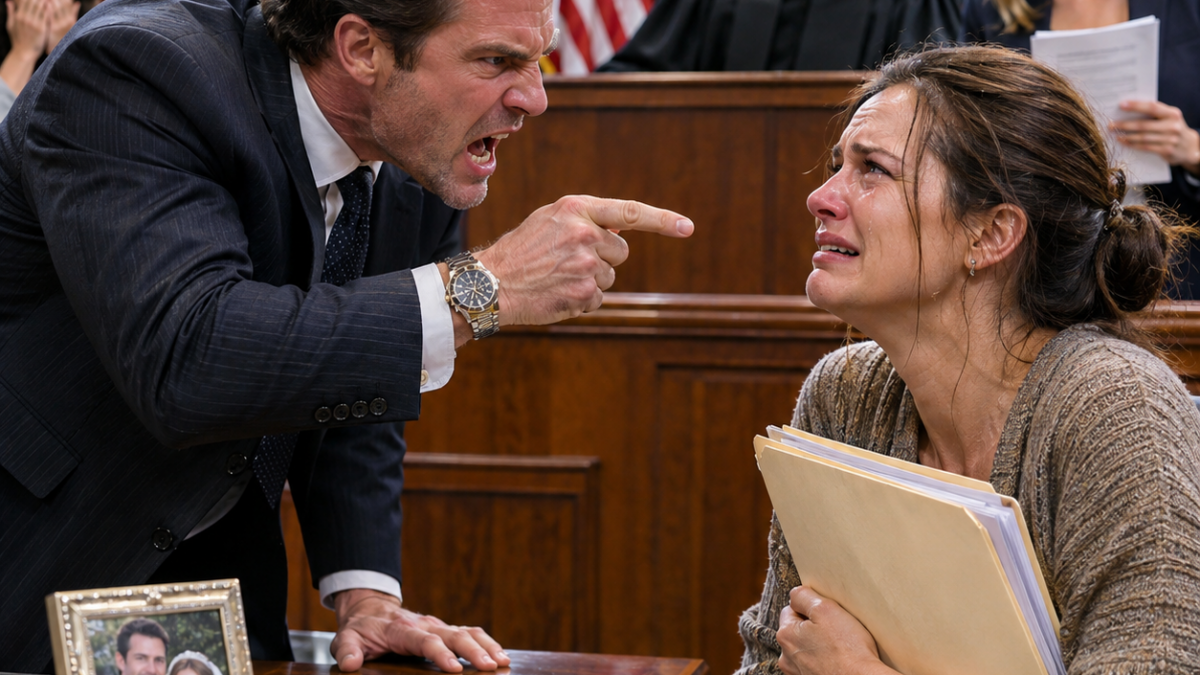
𝗙𝗨𝗟𝗟 𝗦𝗧𝗢𝗥𝗬
Across the courtroom, Grant leaned toward his attorney, Preston Carroway, and said something that made them both smile.
I recognized that smile.
I’d seen it two years earlier, when Grant told me our marriage was over.
I’d seen it when he carried the expensive television out of our bedroom.
I’d seen it when he insisted we didn’t need lawyers to settle our finances fairly, then stopped answering my calls.
And I’d seen it in the messages he sent whenever I asked about overdue child support.
Maybe if you managed money better, you wouldn’t need mine.
Two years ago, I’d been a married mother living in a comfortable house.
Now I worked breakfast shifts at a diner, lived in a cramped apartment above a bakery, and sometimes told Nolan I wasn’t hungry so he could have the last piece of toast.
My mother, Ruth, had moved in to help us.
She was sixty-eight, with aching knees and hands worn from decades of work, but she still packed Nolan’s lunches and watched him when I had early shifts.
For a while, we’d been managing.
I had two jobs.
The diner paid enough to cover groceries and utilities. My evening contract cleaning executive offices downtown paid most of our rent.
Then, without warning, the cleaning company canceled my contract.
They claimed someone had complained about “unprofessional conduct.”
No one would explain what I’d supposedly done.
I later learned that Grant’s golfing friend managed the building and had arranged the complaint.
Our landlord also began threatening us over problems that had never existed.
Suddenly, the two sources of stability I’d worked so hard to build were disappearing.
And Grant was ready with a custody petition.
He claimed I couldn’t provide a safe home.
That Nolan was neglected.
That my apartment was unsuitable.
That my unpredictable work schedule endangered our son.
He even hired a private investigator to photograph Nolan leaving school.
Now his attorney stood in front of Judge Harlan holding one of those photographs.
“Your Honor,” Carroway announced, “this image demonstrates a disturbing pattern.”
He raised the picture.
There was Nolan outside his elementary school, wearing the little moon shirt.
Dark, sticky stains covered the fabric.
His hair was messy.
His face was pale.
He looked like a child who’d had a terribly difficult day.
“His mother cannot even ensure that he arrives home in clean clothing,” the attorney said.
Grant shook his head with a practiced expression of disappointment.
I wanted to scream.
I wanted to tell the judge about the nights I stayed awake calculating bills.
About the birthday cake I’d purchased after pawning my grandmother’s antique gold locket.
About the small astronomy book and the navy shirt I’d bought because Nolan loved the moon.
I wanted to explain that poverty wasn’t neglect.
But I had no attorney.
Only a battered folder filled with receipts, messages, and records.
Carroway turned toward me.
“Mrs. Bellamy, is this the level of care you believe your son deserves?”
My throat tightened.
Before I could answer, a small voice spoke beside me.
“That picture is a lie.”
Every head turned.
Nolan stood up.
His hands were trembling.
“Nolan, sweetheart,” I whispered.
He looked at me, then at his father.
“Dad made me spill it.”
Grant’s smile disappeared.
Carroway immediately objected, but Nolan was already gripping the bottom of his shirt.
“He tried to throw this away,” my son said, his voice shaking. “Because he found out what I wrote inside.”
He lifted the faded fabric.
And Judge Harlan leaned forward.
FULL STORY CONTINUATION
For several seconds, nobody moved.
Nolan stood beside me with his shirt lifted just high enough to expose the inside of the lower hem.
There, written in uneven black letters, was a message.
The words were small. Some letters leaned sideways, and one had been crossed out and written again. There were places where the ink had spread into the cotton.
But I could read every word.
DAD TOLD ME TO SPILL CHOCOLATE SYRUP ON MY SHIRT FOR THE PICTURE.
HE SAID DON’T TELL MOM OR SHE WON’T GET TO KEEP ME.
Below that was a date.
And beneath the date, in the careful handwriting of an eight-year-old boy:
I DIDN’T DO ANYTHING BAD.
My breath caught.
I hadn’t known it was there.
I hadn’t known Nolan had written anything inside his shirt.
And I certainly hadn’t known that the photograph Preston Carroway was holding had been deliberately staged.
“Nolan,” I whispered.
He didn’t look at me.
He was staring at his father.
“Tell them,” my son said.
Grant’s jaw tightened.
“Nolan, sit down.”
My little boy flinched.
I felt it as though someone had struck me.
Grant had barely raised his voice, but Nolan reacted immediately.
Judge Harlan straightened.
“Mr. Bellamy, you will not address the child.”
Grant opened his mouth.
“Your Honor, I—”
“I said you will not address him.”
The judge’s voice was quiet.
That made it more frightening.
Carroway stepped forward.
“Your Honor, this is highly irregular. We have no indication that the child has been properly prepared to testify, and any statements written on clothing are clearly susceptible to coaching.”
I looked toward him.
Coaching.
He was accusing me of coaching Nolan.
The man had just held up a photograph designed to humiliate my son, and now he was suggesting that the child was somehow responsible for manipulating the court.
I felt anger rise through the fear.
“I didn’t know about that writing,” I said.
My voice sounded small.
Carroway turned toward me.
“Mrs. Bellamy, please wait until you’re addressed.”
I gripped the edge of the table.
Judge Harlan looked at me.
“Mrs. Bellamy, you’ll have an opportunity to respond.”
Then he turned toward Nolan.
“Son, I want you to take a breath.”
Nolan lowered his shirt.
His hands were shaking.
The judge’s expression softened slightly.
“You don’t have to explain anything further in front of everyone right now. Do you understand?”
Nolan nodded.
“I just don’t want Mom to lose me.”
The words almost brought me to my knees.
I reached for him.
He slipped his hand into mine.
Judge Harlan glanced toward the court officer, then at both sides of the room.
“We’re going to take a recess. The child will not be questioned further in open court at this moment.”
Carroway started to speak.
The judge raised a hand.
“I will determine the appropriate procedure for receiving any information from Nolan, including whether an independent professional should assist. I also expect the photograph and its circumstances to be examined carefully.”
Carroway lowered his head.
“Yes, Your Honor.”
The judge continued.
“The court is concerned by the possibility that a photograph offered as evidence of neglect may have been deliberately manufactured. That concern does not establish the facts by itself, but it requires serious attention.”
I watched Grant.
He wasn’t smiling anymore.
His face had gone pale beneath the courtroom lights.
For the first time in two years, he looked uncertain.
He glanced at Nolan’s shirt.
Then at Carroway.
Then toward the courtroom doors.
And I understood something.
Grant wasn’t afraid of a stained shirt.
He was afraid that our son had stopped keeping his secrets.
When we stepped into the hallway, Nolan grabbed both my hands.
“Mom?”
I knelt in front of him.
“Yes, baby?”
“Are you mad?”
My heart broke.
“Mad at you?”
He nodded.
His eyes were filling with tears.
“Because I talked when I wasn’t supposed to.”
I pulled him into my arms.
“Oh, sweetheart. No.”
He began crying against my shoulder.
“I didn’t want him to take me.”
I held him tighter.
“He doesn’t get to decide that just because he says it, Nolan.”
He pulled back.
“But Dad said judges listen to people with lawyers.”
I closed my eyes.
I had been afraid of that myself.
Grant had spent two years telling me that money determined everything.
He could afford a lawyer.
I couldn’t.
He had a large townhouse.
I had a two-bedroom apartment above a bakery.
He drove a luxury vehicle.
I drove a twelve-year-old sedan with a broken heater.
Somewhere along the way, Nolan had begun absorbing the same message.
That people with money were automatically believed.
That people without it had to prove they deserved ordinary things.
I brushed tears from his cheeks.
“Listen to me.”
He looked at me.
“You are not responsible for winning this case.”
His lip trembled.
“But I can help.”
“I know you want to.”
“I wrote it down because Dad said nobody would believe me.”
My throat tightened.
“Why didn’t you tell me?”
He looked at the floor.
“Because he said you’d get in trouble.”
I swallowed.
“What kind of trouble?”
Nolan’s voice dropped.
“He said if I told you about the picture, you would get so mad that the judge would see how mean you are.”
I stared at him.
My eight-year-old son had been carrying that fear for days.
He’d believed that telling me the truth might somehow help his father take him away.
So he’d written it down.
Not because he understood evidence or custody law.
Because he wanted someone, someday, to know what had really happened.
I hugged him again.
“You did nothing wrong, baby.”
He whispered, “But I spilled the syrup.”
I leaned back.
“Did someone tell you to?”
He nodded.
“Then you didn’t do anything wrong by trusting an adult.”
His eyes searched mine.
“Really?”
“Really.”
I wanted to ask a hundred questions.
I wanted to know exactly where Grant had taken him, who had held the camera, how long the incident had lasted, and what else his father had told him.
But Judge Harlan had been clear about protecting Nolan from being questioned in the middle of a custody fight.
My son wasn’t a witness I could prepare.
He was a little boy who needed to know that adults would handle the problem.
So I kissed his forehead.
“Let’s get you some water.”
He nodded.
We sat together on a bench near the courtroom.
He leaned against me, holding my hand.
Across the hallway, Grant stood with Carroway.
They were speaking urgently.
I couldn’t hear most of their conversation.
But I heard Grant say one sentence.
“He was never supposed to keep that shirt.”
Carroway glanced toward us.
Then he lowered his voice.
I looked down at Nolan.
My son was tracing the tiny moon on his pocket.
Suddenly, I remembered how that shirt came into our lives.
And why he’d refused to let me throw it away.
Four months before the hearing, Nolan turned eight.
I had forty-seven dollars in my checking account and six days until my next paycheck.
There were overdue bills on the kitchen table.
The electric company had sent a warning.
Our landlord had left another notice.
The pantry contained rice, canned tomatoes, oatmeal, and a few boxes of macaroni.
My mother, Ruth, had quietly begun skipping breakfast.
She always said she wasn’t hungry.
I knew better.
For weeks, she’d been trying to make the groceries stretch so Nolan wouldn’t notice how bad things had become.
His birthday was approaching.
Every time I thought about it, my chest tightened.
The year before, we’d gone to a science museum.
Nolan loved space.
He could name every planet, several constellations, and more facts about the moon than most adults I knew.
He kept a notebook beside his bed where he drew stars.
Sometimes he stood at the kitchen window at night, searching for familiar patterns in the sky.
For his eighth birthday, he’d asked for a book about constellations.
Nothing expensive.
Nothing extravagant.
Just a book.
But I wanted to give him more than one small present.
I wanted him to have a cake with his name on it.
I wanted to wrap something new.
I wanted him to experience one day when our financial problems didn’t reach across the table and steal the joy from him.
So I went to the pawn shop.
My grandmother’s gold locket had been in our family for three generations.
It was small, oval, and engraved with delicate flowers.
Inside were faded photographs of my grandparents when they were young.
Grandma gave it to me shortly before she died.
“Keep this close,” she’d told me. “It’ll remind you that you come from people who knew how to survive hard times.”
I had worn it at my wedding.
I’d worn it the day Nolan was born.
And during the worst months after Grant left, I’d sometimes held it in my hand while sitting at the kitchen table, trying not to cry.
Now I stood beneath the fluorescent lights of a pawn shop and watched a stranger examine it through a jeweler’s loupe.
He offered less than I’d hoped.
I tried negotiating.
He raised the offer slightly.
I accepted.
When he handed me the money, I felt as though I’d traded away a piece of my grandmother.
I sat in my car afterward and cried.
Then I wiped my face and went shopping.
I found a small chocolate cake at the grocery store.
A book about constellations at a discount bookstore.
And on a clearance rack near the children’s clothing, I found the navy-blue shirt.
It had a tiny silver moon embroidered above the pocket.
I touched the stitching.
Nolan had always loved the moon because he said it followed us home.
When he was four, he’d asked why the moon moved whenever our car moved.
I explained that it was so far away that it only seemed to follow us.
He considered that for a moment.
Then he said, “Maybe it just doesn’t want us to get lost.”
I remembered that conversation as I stood holding the shirt.
I bought it.
On his birthday, my mother made spaghetti because it was his favorite.
We put eight candles on the cake.
Nolan opened the astronomy book first.
His face lit up.
Then he unfolded the shirt.
He stared at the tiny moon.
“Mom!”
I smiled.
“Do you like it?”
He jumped out of his chair and hugged me.
“It’s perfect!”
I laughed.
“It’s just a shirt, honey.”
He shook his head seriously.
“No, it’s my moon shirt.”
He put it on immediately.
Then he stood in front of the mirror, turning sideways to see the embroidery.
“Do you think astronauts would wear this?”
“Absolutely.”
He grinned.
Grandma Ruth took a photograph of him.
I still have that picture.
My little boy standing barefoot in our cramped living room, smiling as though the world had given him everything.
He didn’t know about the pawn shop.
He didn’t know that I’d cried over my grandmother’s locket.
He didn’t know that I’d spent the following week eating peanut butter sandwiches so there would be enough money for his school lunches.
He knew only that his mother had remembered how much he loved the moon.
That was why the courtroom photograph hurt so much.
Grant had taken the one thing I’d been proud to give our son and turned it into an accusation.
But I hadn’t realized that Nolan had found a way to protect the truth inside that same piece of fabric.
When the hearing resumed, Judge Harlan explained that he would not make a final custody decision based on a photograph whose circumstances were now disputed.
He also made clear that Nolan’s spontaneous statement did not automatically establish what happened.
There would need to be an appropriate way to assess the child’s account without turning him into a weapon for either parent.
Carroway argued that the photograph was only one piece of evidence.
“The respondent’s financial instability remains substantial,” he said.
I felt my stomach twist.
Grant had been working toward that argument for months.
He didn’t need the photograph alone.
He had the lost job.
The landlord’s accusations.
The missed rent payments.
The photographs of our small apartment.
The records showing I worked irregular hours.
He’d constructed an entire story in which the hardships he’d helped create were presented as reasons I didn’t deserve to raise my son.
Judge Harlan looked at him.
“Financial circumstances are relevant where they affect a child’s welfare, Mr. Carroway. But the court will not equate modest income with an inability to parent.”
Carroway nodded stiffly.
“Of course, Your Honor.”
The judge continued.
“The court also needs to understand the circumstances under which this photograph was taken and whether any party has intentionally misrepresented evidence.”
He turned toward Grant.
“Mr. Bellamy, preserve all communications and records related to the investigator and this photograph.”
Grant’s jaw tightened.
“Yes, Your Honor.”
The judge looked toward me.
“Mrs. Bellamy, do you have records concerning your employment, housing, and support payments?”
I gripped my battered folder.
“Yes, Your Honor.”
“Keep those records available. You’ll have an opportunity to present relevant evidence. We’ll also address how the child’s interests can be independently evaluated.”
I nodded.
For the first time that morning, I felt as though someone was listening to more than Grant’s money.
The judge then made an interim ruling.
Nolan would remain living with me while the matter was examined further.
The existing parenting schedule would be subject to temporary safeguards pending the court’s review of Nolan’s account and the allegations raised.
The court would not force an immediate change of primary custody based solely on the photograph.
I heard the words.
But for several seconds, I couldn’t process them.
Nolan was staying with me.
At least for now.
I pressed one hand against my mouth.
Across the courtroom, Grant leaned toward his lawyer.
His expression was furious.
Not frightened anymore.
Furious.
He had walked into court expecting to leave with a victory.
Instead, his carefully prepared photograph had become a question he was now required to answer.
The judge adjourned the hearing.
I gathered my papers with shaking hands.
Then I turned toward Nolan.
He looked up.
“Mom?”
“Yes, sweetheart?”
“Do I get to go home with you?”
I crouched beside his chair.
“Yes.”
His face crumpled.
“Today?”
I nodded.
“Today.”
He threw his arms around my neck.
I held him tightly.
And I cried into the faded blue fabric of the shirt his father had tried to use against us.
Grant was waiting near the courthouse exit.
I saw him before he saw us.
He stood beside his attorney, staring at his phone.
When he looked up, his expression changed.
“Claire.”
I froze.
My name sounded strange in his mouth.
For two years, I’d heard it spoken with impatience, contempt, or false sweetness whenever he wanted something.
Nolan gripped my hand.
I looked toward Grant.
“What do you want?”
His eyes moved toward our son.
“Nolan, come here.”
My little boy stepped closer to me.
Grant’s jaw tightened.
“Don’t start this nonsense. I just want to talk to my son.”
I felt my pulse quicken.
“Not here, Grant.”
He looked at me.
“You put him up to that.”
I stared at him.
“What?”
“The shirt. The little speech. Don’t pretend you didn’t know.”
I shook my head.
“I didn’t.”
Grant laughed sharply.
“Right. An eight-year-old just happens to write a perfectly convenient accusation inside his clothes?”
Nolan began trembling.
I looked down.
“Sweetheart, stay beside me.”
Grant heard me.
His face darkened.
“You’re turning him against me.”
I wanted to answer.
I wanted to tell Grant that he was the one who’d frightened our son.
That he had staged a photograph.
That he’d used our child’s love for his mother as leverage.
But I could see Nolan struggling not to cry.
So I looked back at Grant.
“This isn’t a conversation we’re having in front of him.”
His attorney approached.
“Mr. Bellamy, let’s go.”
Grant ignored him.
“You think this is over, Claire?”
I held my son’s hand.
“No.”
I looked straight into his eyes.
“But I think it’s finally being examined.”
Then I walked away.
Grant called after us.
“You’re making a mistake!”
I didn’t turn around.
For two years, I’d measured every decision against the possibility of Grant becoming angry.
I had worried about what he’d do if I demanded support.
What he’d do if I challenged his statements.
What he’d do if I refused another change to our parenting schedule.
Now I was beginning to understand that his anger wasn’t something I could prevent by being obedient.
He had been angry when I asked for money for Nolan’s shoes.
He had been angry when I took a second job.
He had been angry when I found a way to survive without him.
And now he was angry because our son had told the truth.
I wasn’t going to spend the rest of Nolan’s childhood trying to purchase peace from a man who profited from keeping us afraid.
My mother was waiting in the hallway when we returned to our apartment.
She had spent the morning pacing between the kitchen and living room, unable to sit still while we were in court.
When she heard the key turn, she came toward us so quickly that she almost stumbled.
“Claire?”
I stepped inside.
Nolan was still holding my hand.
My mother’s eyes went straight to him.
“Oh, sweetheart.”
He ran toward her.
“Grandma!”
She wrapped both arms around him.
“Are you alright?”
He nodded against her sweater.
“I’m staying home.”
My mother closed her eyes.
For a moment, she looked as though her knees might give out.
Then she looked at me.
I nodded.
“The judge didn’t change custody today.”
She began crying.
“Thank God.”
I closed the door behind us.
Outside, the January wind whistled through the narrow alley beside the bakery.
Inside, the apartment smelled of cinnamon rolls and fresh bread rising from the business downstairs.
Normally, I loved that smell.
It reminded me that even when our lives were difficult, there were still ordinary comforts.
But that afternoon, all I could think about was how close we’d come to losing everything.
Nolan climbed onto the couch.
My mother brought him hot chocolate.
I sat at the kitchen table and opened my folder.
The papers inside were bent from being carried back and forth to court.
Receipts.
Bank statements.
Child-support records.
Messages from Grant.
Copies of letters from the cleaning company.
A notice from the landlord.
Everything I’d been able to gather.
I’d spent weeks preparing because I knew Grant would use money to make me look irresponsible.
But I hadn’t known about the photograph.
And I hadn’t known my son had written a secret message inside his shirt.
My mother sat across from me.
“Tell me everything.”
I looked toward Nolan.
He was watching a cartoon with the sound turned low.
“Later,” I whispered.
She followed my gaze.
Then she nodded.
We sat quietly.
After a while, she reached across the table and placed her hand over mine.
“You’re doing better than you think.”
I looked down.
“Mom, I almost lost him.”
“But you didn’t.”
“Grant has money for lawyers, investigators, and witnesses. I have a folder full of bills.”
My mother squeezed my hand.
“You have more than that.”
I gave a bitter laugh.
“Not much more.”
She studied me.
“Claire, I watched you work two jobs until you could barely stand. I watched you learn to fix that old car because you couldn’t afford another repair. I watched you take the last piece of bread off your own plate because Nolan was still hungry.”
My eyes filled.
“You think a man with an expensive watch is a better parent because he knows how to spend money?”
I shook my head.
“Then don’t start believing him just because he’s repeated it enough times.”
I looked at her.
She wasn’t finished.
“I know you’re tired. I know you’re frightened. But your son knows who comes home when he’s sick. He knows who remembers his school projects. He knows who sits beside him when he has nightmares.”
I wiped my eyes.
“Mom—”
“And he knows who bought him that moon shirt.”
My breath caught.
I looked toward Nolan.
He had pulled his knees up against his chest.
The little silver moon rested over his heart.
My mother followed my gaze.
“What happened in there today?” she asked softly.
I told her.
Not every detail.
Just enough.
I described the photograph.
The lawyer’s accusation.
Nolan standing up.
The message inside the shirt.
My mother’s face slowly changed.
When I repeated the words Nolan had written, she covered her mouth.
“Oh, that poor baby.”
I nodded.
She began crying.
“He shouldn’t have had to carry that.”
“No.”
“He’s eight years old.”
“I know.”
She wiped her cheeks.
Then she looked at me.
“Claire, listen carefully. You’re going to need help with this case.”
I laughed without humor.
“I can’t pay for help.”
“Then we’ll find someone who can help without charging you.”
“Mom, I’ve already called three attorneys.”
“Call three more.”
I stared at her.
She continued.
“We’ll ask the courthouse about legal clinics. We’ll call nonprofit organizations. We’ll ask whoever can point us in the right direction.”
I shook my head.
“I don’t know if anyone will take a case like this.”
My mother leaned forward.
“Then we keep asking until someone does.”
For months, I’d been too embarrassed to tell anyone how bad things had become.
I had convinced myself that if I worked harder, budgeted better, and needed less, I could solve everything alone.
Now my mother was reminding me that surviving didn’t require isolation.
I took a breath.
“Alright.”
She nodded.
“Good.”
Then she reached for the folder.
“Now tell me what you need help organizing.”
That evening, after Nolan went to bed, I found the navy-blue shirt folded on the bathroom counter.
He had changed into pajamas.
I picked it up.
The fabric was soft from repeated washing.
The tiny silver moon had begun to lose a few threads around one edge.
I turned the shirt inside out.
The message was still there.
I ran one finger close to the faded letters without touching them.
DAD TOLD ME TO SPILL CHOCOLATE SYRUP ON MY SHIRT FOR THE PICTURE.
Below that:
HE SAID DON’T TELL MOM OR SHE WON’T GET TO KEEP ME.
And the final line:
I DIDN’T DO ANYTHING BAD.
I sat on the edge of the bathtub.
For weeks, I’d believed the stain came from an ordinary school mishap.
Nolan had told me he’d spilled something while leaving school.
When I asked what happened, he’d shrugged.
“Just chocolate stuff.”
I’d assumed he’d bought a snack or someone had spilled a drink near him.
I didn’t press him.
Children spill things.
Clothes get stained.
That shouldn’t be a catastrophe.
I washed the shirt that evening.
When the dark discoloration remained, I soaked it again.
Then scrubbed it by hand.
I remember Nolan standing in the bathroom doorway watching me.
“Mom?”
“Yes, honey?”
“Are you going to throw it away?”
I looked at him.
“Of course not. It just needs cleaning.”
He seemed relieved.
I hadn’t understood why.
Now I realized he wasn’t worried about losing a favorite shirt.
He was worried about losing the only record he had made of something that frightened him.
I looked down at the words.
The handwriting was unmistakably Nolan’s.
He always made the letter R too large.
He often forgot to leave spaces between words.
And he still reversed one of his lowercase letters when he was tired.
He had written the message in the only way he knew how.
Then he’d hidden it beneath the hem of his favorite shirt.
I began crying.
Not because I thought the writing would automatically win a custody case.
I knew enough by then to understand that Grant’s attorney would challenge it.
He would say I’d coached Nolan.
He would question when the words had been written.
He would argue that children misunderstand conversations.
But those lines meant something far more important to me.
My son had been frightened.
He’d believed he might be taken away.
And he’d tried to protect himself by leaving a record.
I folded the shirt carefully and placed it in a clean paper bag so it could be preserved as evidence.
Then I went into Nolan’s room.
He was asleep.
His astronomy book lay open beside his pillow.
I sat on the edge of the bed.
He shifted slightly.
“Mom?”
“It’s okay, sweetheart. Go back to sleep.”
His eyes opened halfway.
“Did I do good today?”
My throat tightened.
I brushed his hair away from his forehead.
“You were very brave.”
He smiled faintly.
Then he whispered, “Did the judge believe me?”
I paused.
I didn’t want to promise something I couldn’t control.
“The judge wants to understand what happened.”
Nolan looked worried.
“Will Dad be mad?”
I felt my chest ache.
“I know you’re worried about that.”
He nodded.
“Whatever feelings Dad has are for grown-ups to handle. You don’t have to fix them.”
He studied my face.
“Even if I made him sad?”
“Even then.”
He seemed to think about that.
Then he reached for my hand.
“Mom?”
“Yes?”
“Can I still love Dad?”
I couldn’t speak for a moment.
That question hurt in a way Grant’s lawyer never could.
My son was afraid that telling the truth meant he had to stop loving his father.
I leaned closer.
“Of course you can.”
His eyes filled.
“Even when he’s mean?”
“You can love someone and still tell the truth about something they did wrong.”
He looked confused.
I continued gently.
“You don’t have to choose which parent you’re allowed to love. That’s not your job.”
He squeezed my fingers.
“Okay.”
I kissed his forehead.
“Sleep, my little moon.”
He smiled.
Then he closed his eyes.
I stayed beside him until his breathing became steady.
And I made a promise to myself.
No matter what happened in court, I would not let Nolan become responsible for protecting me from Grant.
He was my son.
Not my attorney.
Not my witness to be coached.
Not a tool for revenge.
I would fight with every resource I had.
But I wanted him to have permission to be eight years old.
The next morning, I began making calls.
I contacted a local legal aid organization.
Then a family justice center.
Then a courthouse self-help resource line.
I explained that my ex-husband had hired an attorney, that a photograph used against me appeared to have been staged, and that I had evidence suggesting he had deliberately interfered with my employment and housing.
Some offices couldn’t represent me.
Others had waiting lists.
One gave me a number for a volunteer legal clinic.
I called.
A woman answered.
I explained the situation again.
By the end, my voice was shaking.
She asked whether I could bring my documents for an initial review.
I nearly cried.
“Yes.”
Two days later, I sat across from an attorney named Elena Brooks.
She was in her early forties, with short dark hair and a calm, practical manner.
She didn’t have Grant’s expensive suit.
She didn’t wear a watch that caught the light whenever she moved.
She had a notebook, a pen, and a stack of folders beside her desk.
She listened while I explained the marriage, the divorce, the missed support payments, the lost cleaning contract, the landlord’s accusations, and the courtroom incident.
I told her about Nolan’s shirt.
Then I placed the paper bag on her desk.
She looked at it carefully.
“Has anyone else handled this since the hearing?”
“Just me. I folded it and put it in the bag.”
She nodded.
“We’ll document that.”
I looked at her.
“Is it enough?”
She didn’t pretend to misunderstand.
“Enough to win?”
I nodded.
She leaned back.
“Claire, the shirt is important. Nolan’s account is important. But we need to approach this carefully.”
My stomach tightened.
“Because he’s a child?”
“Yes. And because the other side will likely argue that his statement was influenced by you.”
I looked down.
“I didn’t tell him to write it.”
“I believe you understand that. But our job is to establish what happened through reliable evidence, not simply ask the judge to take our word for it.”
I nodded.
She continued.
“The court can consider Nolan’s account through an appropriate process. We also need to look at the photograph itself, the investigator’s records, communications surrounding it, and any independent witnesses.”
I swallowed.
“What about the job I lost?”
“That may be relevant if we can show your ex-husband influenced the complaint or termination.”
“And the landlord?”
“Same principle. We need evidence.”
I stared at my hands.
Elena studied me.
“Claire, can I ask you something?”
“Yes.”
“Have you been keeping track of the child support Grant owes?”
I nodded.
I opened my folder and removed a spreadsheet I’d made by hand.
Each month had a line.
Amount due.
Amount received.
Date.
Balance remaining.
Elena examined it.
Then she looked at the accompanying bank records.
“This is useful.”
I felt a flicker of hope.
“I’ve been saving everything.”
“I can see that.”
She kept reading.
“Do you have messages where Grant discusses why he’s not paying?”
I pulled out another section.
There were dozens.
Some contained excuses.
Others were openly cruel.
Maybe you should get a better job.
I’m not funding your bad choices.
If you want money, stop making custody difficult.
Elena read them slowly.
When she finished, she looked at me.
“Your financial hardship isn’t the whole story being presented by the other side.”
I felt tears gather.
“No.”
She nodded.
“Then we need to make sure the court sees the rest.”
I looked at her.
For the first time in months, someone was discussing my situation without treating poverty as a personal defect.
I wasn’t being asked why I hadn’t bought a nicer apartment.
I wasn’t being told I should have hired a better attorney.
I wasn’t being judged because my son’s shirt was old.
Elena was looking at the records.
The facts.
The pattern.
She agreed to help pursue representation through the available pro bono program, and after the intake and conflict checks were completed, she took on my case.
I sat in her office for a long moment after she told me.
“Does that mean you’ll come to court with me?”
She smiled.
“Yes, Claire.”
I covered my face.
And cried.
Not because the case was over.
Because for the first time since Grant filed for custody, I wasn’t going to have to stand in front of his lawyer completely alone.
The investigation into the photograph began with the investigator’s original files.
Carroway had described him as licensed and independent.
His name was Philip Maddox.
He had been hired to observe Nolan’s school departures and document my parenting arrangements.
According to his initial report, he photographed Nolan outside school shortly after dismissal.
The photograph was timestamped.
It showed my son standing beside a school fence, looking miserable, with chocolate-colored stains down the front of his shirt.
Grant had submitted the image as evidence of neglect.
But the circumstances were more complicated.
Through the court-authorized process, Elena obtained records concerning the photo assignment, including communications and the original image sequence.
The investigator had taken more than one picture.
There were images of Grant arriving near the school.
There were images of Nolan speaking with his father.
There was a gap.
Then came the stained-shirt photographs.
The investigator maintained that he had been asked to document Nolan’s condition and had not been told to manufacture evidence.
But his records showed something Grant hadn’t emphasized.
Grant was present shortly before the images were taken.
And the photographer had not observed Nolan in his mother’s care that afternoon.
The picture didn’t show what Grant claimed it showed.
It showed Nolan with a stained shirt after contact with Grant.
Elena called me when she received the records.
“Claire, I want you to come in.”
My stomach tightened.
“Is something wrong?”
“No. We have information we need to review.”
I went to her office after my diner shift.
She spread printed images across the table.
I recognized Nolan’s school.
The sidewalk.
The fence near the pickup area.
Then I saw Grant.
He stood beside his silver SUV, one hand resting on the open passenger door.
In another photograph, Nolan was walking toward him.
His navy shirt appeared clean.
I leaned forward.
“That’s before the stains.”
Elena nodded.
“According to the timestamps, yes.”
I looked at the next picture.
Grant and Nolan were standing close together near the vehicle.
Nolan’s face was turned away from the camera.
Then came a photograph showing my son with the dark stains across his chest.
I pressed a hand over my mouth.
“Oh, Nolan.”
Elena waited.
I looked at her.
“Why didn’t they show the whole sequence?”
“That is one of the questions we’ll raise.”
I stared at the photographs.
I had spent weeks scrubbing that shirt.
I had felt ashamed when Grant’s lawyer held up the picture.
And all along, there were earlier images showing that Nolan’s clothes hadn’t been stained before the encounter with his father.
Elena continued.
“The investigator’s photographs don’t prove every detail of Nolan’s account. But they undermine the suggestion that this image documents the condition in which you sent him to school.”
I nodded.
For the first time, the photograph began to look less like an accusation and more like evidence of how Grant had constructed one.
The school provided further context.
Nolan’s teacher, Ms. Alvarez, had taught third grade for nearly eighteen years.
She was a patient woman with a gentle voice and an ability to notice when children were struggling.
She knew Nolan loved astronomy.
He often stayed after class to ask questions about science projects.
When Elena contacted the school through the proper channels, Ms. Alvarez was willing to provide relevant records and observations.
She confirmed that Nolan regularly arrived at school clean, appropriately dressed, and prepared for class.
His attendance was strong.
His homework was usually completed.
He had a reliable lunch arrangement.
On the day of the photograph, she remembered his moon shirt.
He had worn it while giving a short presentation about the phases of the moon.
She also remembered that he became unusually quiet the following day.
“He kept asking whether children could be sent to live somewhere else if their parents didn’t have enough money,” she explained.
When Elena told me that, I felt as though the room had tilted.
Nolan had asked his teacher about losing his home.
At eight years old.
Because his father had frightened him.
I remembered the morning after the photo.
Nolan stood in the kitchen while I made oatmeal.
He watched me count the remaining slices of bread.
Then he asked, “Mom, do rich kids get to stay with their moms more?”
I thought he was asking an ordinary childhood question about money.
I told him every family was different.
He looked down.
Then he said, “Okay.”
I’d been rushing to get him to school.
I didn’t ask why he wanted to know.
Now the memory hurt so badly I could hardly breathe.
I wanted to go back to that morning.
I wanted to put down the oatmeal spoon, kneel beside him, and ask what was frightening him.
But I couldn’t go back.
I could only listen better now.
The next blow to Grant’s story came from my former cleaning job.
After losing the contract, I’d spent weeks begging for an explanation.
The cleaning company told me that the building manager had reported serious concerns about my conduct.
But nobody produced a specific incident report.
Nobody showed me a complaint from a tenant.
Nobody identified property damage or missing items.
I was simply told that my services were no longer required.
At the time, I’d been devastated.
The evening work paid more than my diner shifts.
I could complete most of it after Nolan went to bed, with Mom staying in the apartment while I worked.
Losing that contract meant losing the money that covered our rent.
Grant had learned about it almost immediately.
He sent a message the next day.
I heard you lost your cleaning job. That’s exactly why Nolan needs a stable home.
I remembered staring at my phone, wondering how he’d found out before I’d told him.
Now Elena asked the same question.
Through the authorized information-gathering process, she requested records relating to the complaint.
The building manager was a man named Mark Dwyer.
I recognized his name from years of Grant’s conversations.
They played golf together.
They attended the same charity tournaments.
And Grant had once described Mark as someone who “always knew how to get things done.”
Mark initially denied any wrongdoing.
He maintained that the complaint was legitimate.
But when records were examined more closely, the story began to weaken.
There were no documented tenant complaints matching the allegations.
No security report describing the supposed incident.
No evidence that I’d violated the building’s rules.
Instead, the available communications showed repeated contact between Grant and Mark shortly before my contract was terminated.
Mark eventually acknowledged that Grant had expressed concerns about my employment and encouraged him to remove me from the building.
The cleaning company reviewed the matter.
The result wasn’t an instant restoration of everything I’d lost.
My contract had already ended.
The company had filled the work.
There were procedures to follow and disputes about responsibility.
But the false description of my conduct was formally challenged, and records were corrected.
The company offered me an opportunity to return to similar evening work.
I sat in Elena’s office holding that letter.
For several minutes, I couldn’t speak.
I thought about the months after I lost the job.
The overdue bills.
The night I cried in the kitchen because I didn’t know how to pay rent.
The mornings I went to the diner exhausted because I’d spent half the night calculating expenses.
Grant had watched me struggle.
He’d criticized me for struggling.
And according to the evidence Elena was uncovering, he’d helped create the very hardship he claimed made me an unfit mother.
I pressed the letter against my chest.
“Why would he do that?”
Elena looked at me.
“Claire, I can’t tell you exactly what he was thinking.”
I nodded.
“But we can document what he did.”
I wiped my eyes.
“And that’s what matters.”
She smiled faintly.
“Yes.”
The landlord’s testimony was the next part of Grant’s plan to unravel.
Our landlord, a man named Dalton Briggs, owned several small apartment buildings around Knoxville.
When Mom and I first moved into the apartment above the bakery, he seemed pleasant enough.
The place was old.
The windows rattled during storms.
The kitchen cabinets had chipped paint.
And the bathroom fan made a terrible grinding noise.
But the apartment was clean, affordable, and close to Nolan’s school.
Mom could walk him to the bus stop.
I could get to the diner in less than fifteen minutes.
It wasn’t perfect.
But it was home.
Then Dalton began behaving strangely.
He appeared without much notice to inspect things that had never concerned him before.
He photographed the kitchen.
He complained about ordinary wear.
He accused us of creating sanitation problems because the bakery downstairs occasionally attracted insects near the rear entrance.
He refused to repair the window that leaked cold air, then complained that the room felt damp.
I kept records.
I photographed everything.
I saved maintenance requests.
I noted dates and conversations.
When Grant filed for custody, Dalton suddenly provided a statement describing our apartment as unsuitable for a child.
He claimed there were serious hygiene problems.
He suggested I failed to maintain the property.
He even described the home as unsafe.
I had read that statement three times before the first hearing.
It made me feel physically ill.
Because I knew how carefully Mom and I kept the apartment.
My mother scrubbed the floors every Saturday.
I washed Nolan’s bedding every week.
We repaired things ourselves when Dalton ignored requests.
The apartment was small.
But it was never filthy.
Now Elena began reviewing the landlord’s statement alongside the maintenance records.
She also examined financial evidence relevant to Dalton’s relationship with Grant.
Eventually, documents showed that Dalton had received money from Grant shortly before providing the statement.
Grant described it as payment for unrelated consulting assistance.
But the timing, surrounding communications, and Dalton’s changing explanations raised serious questions.
When confronted through the legal process, Dalton’s account shifted.
He admitted that Grant had encouraged him to present the apartment in the worst possible light.
He also acknowledged that several maintenance problems had existed before Mom and I moved in.
The statement he’d prepared for court was no longer something he could confidently defend.
When Elena told me, I stared at her.
“Does that mean the judge will know?”
“Yes. We’ll present the evidence through the appropriate procedure.”
I looked down at my hands.
For months, I’d felt ashamed of our apartment.
I’d apologized when Nolan’s friends came over because we didn’t have a separate playroom.
I’d worried that the windows were old.
I’d felt embarrassed when the floor creaked.
Grant had used all those insecurities against me.
And now I was learning that he had paid someone to exaggerate them.
I looked at Elena.
“Is this really happening?”
She nodded.
“We’re building a record, Claire.”
I began crying.
Not because I wanted Grant punished.
Because the truth was finally becoming visible.
At home, Mom noticed the change in me.
One evening, I came back from Elena’s office and found her sitting at the kitchen table mending Nolan’s school jacket.
The apartment smelled of fresh bread from downstairs.
Nolan was in the living room working on a model of the solar system.
Mom looked up.
“How did it go?”
I placed my bag on the chair.
“Good.”
She studied my face.
“Good?”
I nodded.
“We have records about the cleaning job. And the landlord’s story is starting to fall apart.”
Mom set down the jacket.
For a moment, she looked stunned.
Then she covered her mouth.
“Oh, Claire.”
I sat opposite her.
“I spent months thinking I was failing because I couldn’t keep up.”
Her eyes filled.
“You weren’t failing.”
“I know that now.”
She reached for my hand.
“I wish you’d known it then.”
I laughed through tears.
“So do I.”
From the living room, Nolan called, “Mom! Can you help me with Saturn?”
I wiped my face.
“Coming, sweetheart.”
I stood.
Mom squeezed my hand.
“Go.”
I looked at her.
She smiled.
“Your boy needs his astronaut expert.”
I laughed.
Then I walked into the living room.
Nolan had arranged painted foam balls across the coffee table.
Earth was blue and green.
Mars was red.
Jupiter was enormous.
Saturn’s rings were made from cardboard.
He looked up at me.
“I can’t get the rings to stay.”
I sat beside him.
“Let’s see.”
We worked together for nearly twenty minutes.
Glue stuck to my fingers.
Nolan accidentally painted part of the table.
We laughed.
And for those twenty minutes, there was no courtroom.
No expensive attorney.
No child-support dispute.
No fear of losing him.
Just a mother and her son trying to make Saturn’s rings stay attached.
I realized how much Grant’s case had stolen from us.
Not only money.
Time.
Peace.
Ordinary evenings.
The freedom to laugh without worrying about what might happen next.
I wanted those things back.
For Nolan.
And for myself.
The next hearing took place nearly three months after Nolan stood up in court.
By then, spring had begun softening the cold Tennessee mornings.
The trees along the road to the courthouse were showing new leaves, and the sky was bright enough that I didn’t need my headlights on the drive downtown.
But my hands still shook as I parked.
I was nervous.
More nervous, in some ways, than I’d been during the first hearing.
Back then, I hadn’t understood how thoroughly Grant had prepared his case.
Now I did.
And I knew how much was at stake.
Nolan wasn’t with us that morning.
That was a deliberate decision.
The court had arranged for his account to be assessed through an independent, child-appropriate process.
A court-appointed professional had spoken with him without either parent directing the conversation. The report addressed what Nolan said happened, how the incident had affected him, and whether there were signs that his statements had been influenced by either parent.
My son had already carried enough.
He didn’t need to sit in a courtroom watching adults argue about whether his father had deliberately frightened him.
Mom stayed home with him.
Before I left, Nolan handed me a folded piece of paper.
“What’s this?” I asked.
He looked down.
“Just something.”
I opened it.
There was a drawing of a courtroom.
I was standing beside a table.
Above me, he’d drawn a giant yellow moon.
Underneath, he’d written:
YOU ARE BRAVE, MOM.
I looked at him.
Tears filled my eyes.
“Oh, Nolan.”
He shrugged.
“You always tell me that.”
I knelt in front of him.
“You know you don’t have to make me brave, right?”
He nodded.
“I know.”
I hugged him.
He whispered, “I just wanted you to remember.”
I folded the drawing carefully and placed it in my bag.
Then I kissed his forehead and left.
Elena was waiting outside the courtroom.
She wore a dark blue suit and carried two organized binders.
One contained financial records.
The other contained evidence relating to the custody allegations.
When she saw me, she smiled.
“Good morning.”
I managed a nervous smile.
“Morning.”
She studied my face.
“Have you eaten?”
I almost laughed.
“Mom made me.”
“Good.”
I looked toward the courtroom doors.
“Is Grant here?”
“Yes.”
My stomach tightened.
Elena touched my arm.
“Claire, remember what we discussed. You don’t have to respond to anything that isn’t a question directed to you.”
I nodded.
“If you don’t understand something, ask for clarification. If you need a moment, take one.”
“Okay.”
She smiled.
“We’re prepared.”
I looked down at my bag.
Nolan’s drawing rested inside.
I took a breath.
Then we went in.
Grant sat beside Preston Carroway.
He was wearing another expensive suit.
And the same silver watch.
But something about him had changed.
He wasn’t smiling.
He wasn’t leaning back as though the outcome had already been decided.
He sat stiffly, occasionally whispering to his attorney.
When he saw me, his jaw tightened.
I looked away.
For two years, he’d used his appearance of certainty to intimidate me.
Now I understood that confidence wasn’t proof.
And wealth wasn’t character.
Judge Harlan entered.
Everyone stood.
Then the hearing began.
Carroway opened by emphasizing Grant’s financial resources.
He described the townhouse.
The reliable transportation.
The neighborhood schools.
The extracurricular opportunities Grant could provide.
He spoke about stability.
Security.
Comfort.
I listened carefully.
There was a time when those words would have crushed me.
I knew Grant could give Nolan things I couldn’t afford.
He could buy him an expensive bicycle.
Take him on vacations.
Pay for private lessons.
Purchase new clothes without checking the clearance rack.
I couldn’t compete with that.
But Elena had helped me understand that raising a child wasn’t a competition over who could spend more money.
And Judge Harlan was interested in more than financial appearances.
When Carroway finished, Elena stood.
“Your Honor, no one disputes that Mr. Bellamy has substantial financial resources.”
She paused.
“The concern is whether those resources have been used to support his son—or to undermine the parent who has provided the child’s primary daily care.”
Grant shifted in his chair.
Elena continued.
“We intend to present evidence concerning three matters: the circumstances surrounding the photograph previously offered to the court, the respondent’s financial situation, and the impact of the parties’ conduct on Nolan’s well-being.”
She opened her binder.
Then she began.
The first exhibit was the full photographic sequence.
I watched as the images appeared on the courtroom monitor.
Grant arriving near Nolan’s school.
Nolan approaching his father’s vehicle.
The navy-blue shirt appearing clean.
The encounter near the SUV.
Then the photographs of Nolan with dark stains across the front.
Elena directed the court to the timestamps.
“The photograph originally presented as evidence of the mother’s inadequate care was taken after the child had contact with his father,” she said.
Carroway stood.
“Your Honor, the father’s presence does not prove he caused the stain.”
Elena nodded.
“Agreed. We are not asking the court to draw that conclusion from the photographs alone.”
She turned another page.
“We are asking the court to consider the photographs alongside the child’s independently obtained account and the surrounding evidence.”
Judge Harlan reviewed the material.
Carroway sat down.
Then the report concerning Nolan’s statements was addressed.
I held my breath.
The independent professional had found Nolan able to describe the events in age-appropriate detail.
He consistently explained that Grant had instructed him to spill chocolate syrup on his shirt while they were near the school.
He described being told that a man needed to take a photograph.
He also described Grant warning him that if he told me, I might lose custody of him.
The report did not claim Nolan was incapable of misunderstanding anything.
It acknowledged the ordinary limitations of an eight-year-old child’s memory and the importance of considering other evidence.
But his account had remained materially consistent.
And it aligned with parts of the photographic sequence and additional records.
I stared at my hands.
I wasn’t relieved that my son had told strangers about his fear.
I wished he’d never needed to.
But I was grateful that he had been heard.
Elena then introduced the shirt.
The real shirt.
The same navy-blue fabric.
The same little silver moon.
And the handwritten message inside.
Carroway questioned whether anyone could determine exactly when the words were written.
Elena acknowledged that the writing was not independently dated by scientific testing.
But she explained how the shirt had been preserved after the hearing, and the court considered it together with Nolan’s account rather than treating it as an isolated, conclusive piece of proof.
Judge Harlan looked toward Grant.
Then he looked back at the documents.
For the first time, I saw the entire picture through the court’s eyes.
The original image had been presented without context.
It was meant to make Nolan look neglected.
But the context had changed its meaning.
The photograph didn’t establish that I had failed to care for my child.
Instead, it raised serious questions about Grant’s willingness to manipulate him.
The financial evidence followed.
Elena presented the child-support records.
Month after month, Grant had paid late, paid less than required, or paid nothing.
His messages showed that he knew the payments were overdue.
His financial disclosures showed resources inconsistent with the claim that he simply couldn’t afford to comply.
I watched the judge review the records.
Then Elena discussed my employment.
She explained that I had worked two jobs while maintaining Nolan’s daily routine with my mother’s help.
She submitted records of my breakfast shifts at the diner.
Proof of my evening cleaning work.
The complaint that led to losing the cleaning contract.
The lack of substantiating incident reports.
And the communications linking Grant to Mark Dwyer before the contract was canceled.
Carroway challenged the relevance of the employment dispute.
Elena responded calmly.
“Mr. Bellamy has made Mrs. Bellamy’s financial instability a central part of his argument. Evidence that he sought to interfere with her employment is directly relevant to the weight the court should give that argument.”
Judge Harlan allowed the matter to be addressed within the appropriate scope.
I sat very still.
For months, Grant had told everyone I couldn’t maintain stable work.
Now the court was hearing evidence that he’d helped deprive me of it.
Then came the apartment.
Elena presented photographs of our home.
Not the selective images Dalton Briggs had supplied.
Actual photographs showing the kitchen after cleaning.
Nolan’s neatly made bed.
His books arranged beside the window.
His school supplies.
Our pantry.
The living room.
The small table where Mom helped him with homework.
She also presented maintenance records.
The leaking window.
The faulty bathroom fan.
The unanswered repair requests.
And the evidence concerning Dalton’s financial relationship with Grant.
I watched Grant’s face.
He was staring straight ahead.
Elena explained that the landlord’s earlier description was contradicted by other records and by his later admissions.
She didn’t pretend the apartment was luxurious.
It wasn’t.
She didn’t pretend I had no financial struggles.
I did.
But she showed that the home was clean, that Nolan had consistent care, and that the conditions Grant portrayed as proof of neglect had been exaggerated or misrepresented.
Then she said something I will never forget.
“Your Honor, Mrs. Bellamy has never claimed to be wealthy.”
Her voice was steady.
“She has claimed to be a responsible parent who has continued providing a loving, consistent home under difficult circumstances.”
She paused.
“Those circumstances should be evaluated fairly, including the evidence that Mr. Bellamy deliberately contributed to them.”
I looked down.
Tears slipped onto my hands.
For two years, I’d been ashamed of how little money I had.
Now Elena was telling the truth without apologizing for it.
We were poor.
We were not careless.
We were struggling.
We were not neglectful.
And my son was not a dirty little boy simply because he wore a shirt his mother couldn’t afford to replace.
When Grant was questioned, his confidence returned for a few minutes.
He spoke clearly.
He explained that he wanted what was best for Nolan.
He described his home.
His income.
His ability to provide opportunities.
He insisted that he had been concerned about my instability.
Then Elena began asking questions.
“Mr. Bellamy, were you present at Nolan’s school when the photograph was taken?”
“Yes.”
“Did you speak with him before the photograph?”
“Yes.”
“Did you have chocolate syrup with you?”
Grant paused.
“I may have had food in the vehicle.”
Elena looked at her notes.
“Did you instruct Nolan to spill syrup on his shirt?”
“No.”
His answer was immediate.
Too immediate, I thought.
But I forced myself not to react.
Elena continued.
“Did you tell Nolan that his mother might lose custody if he told her what happened?”
“Absolutely not.”
“Did you attempt to throw away the navy-blue shirt?”
Grant shifted.
“I told him it was dirty and should be replaced.”
“That wasn’t my question.”
He looked toward the judge.
Elena repeated it.
“Did you attempt to dispose of the shirt?”
Grant took a breath.
“Yes. I believed it was unsuitable for him to keep wearing.”
“Was that before or after you saw writing inside it?”
His jaw tightened.
Carroway stood.
The attorneys briefly argued about the question.
The judge ruled on the appropriate scope, and the questioning continued.
Grant eventually acknowledged that he had seen writing inside the shirt before the hearing.
My heart began pounding.
Elena looked at him.
“And you did not disclose that fact when your attorney presented a photograph of the same shirt as evidence of neglect?”
Grant stared at her.
“I didn’t think a child’s scribbling was relevant.”
I felt anger burn through me.
A child’s scribbling.
That was how he described our son’s attempt to record something frightening.
Elena paused.
“Did you tell your attorney that Nolan had written an accusation against you inside the shirt?”
Grant looked toward Carroway.
For the first time, his attorney appeared genuinely uncomfortable.
“I don’t recall.”
Elena let the silence remain.
Then she moved to the financial records.
Grant’s answers became less precise.
He acknowledged knowing Mark Dwyer.
He acknowledged communicating with him before my cleaning contract ended.
He acknowledged discussing the apartment with Dalton Briggs.
He disputed that he had paid anyone to lie.
But the records were already before the court.
The judge would evaluate them.
Elena then asked about child support.
“Mr. Bellamy, did you purchase a luxury watch during the period when your support payments were overdue?”
Grant’s face tightened.
Carroway objected to the way the question was framed.
The court addressed the objection, and Elena clarified the financial issue.
Grant confirmed the purchase.
I stared at the watch on his wrist.
For months, I’d been calculating grocery prices down to the dollar.
I’d been terrified of another overdue notice.
I’d sold my grandmother’s locket to buy Nolan a birthday present.
And Grant had spent ten thousand dollars on something he wore to impress strangers.
Elena didn’t ask the judge to punish him for owning expensive things.
She asked the court to consider whether his claimed inability to pay child support was consistent with his actual resources and spending.
That was enough.
When Grant finished answering questions, he looked exhausted.
The man who had walked into the first hearing smiling beside his attorney now seemed unable to meet my eyes.
But I wasn’t celebrating.
I was thinking about Nolan.
How frightened he must have been when his father told him to spill the syrup.
How confused he’d been when he saw a stranger photograph him.
How desperately he must have wanted to tell me.
And how carefully he’d written his secret message inside the shirt because he didn’t know who would believe him.
No court ruling could give him back those days of fear.
That was the part I couldn’t stop thinking about.
By late afternoon, both sides had finished presenting the main evidence.
Judge Harlan took time to review the record before delivering his decision.
I sat beside Elena, trying to breathe normally.
My hands were cold.
Across the courtroom, Grant stared at the table.
I could hear the faint hum of the ventilation system.
Then the judge began.
He spoke carefully.
He acknowledged that both parents had expressed a desire to raise Nolan.
He discussed the importance of stability, safety, and the child’s emotional well-being.
He recognized that financial resources were relevant to meeting a child’s needs.
But he also emphasized that income alone did not determine who should have primary custody.
I listened.
Every sentence seemed to last an hour.
Then he addressed the photograph.
The court found that the image had been presented in a materially misleading context.
The evidence surrounding its creation, including Nolan’s account, raised serious concerns about Grant’s conduct.
Judge Harlan also expressed concern about the effect of frightening a child with threats of separation from a parent.
I felt tears gathering.
Then came the words I’d been praying to hear.
The request to transfer primary custody to Grant was denied.
Nolan would continue living with me.
The court also ordered arrangements designed to protect his emotional well-being while preserving appropriate parental contact, including safeguards and professional involvement where necessary.
The judge made clear that Nolan should not be pressured to participate in adult disputes or told that he was responsible for custody decisions.
I covered my mouth.
Elena touched my arm.
The judge continued.
He addressed Grant’s overdue child support, his documented financial circumstances, and the need for compliance with payment obligations.
He ordered enforcement of the support requirements and addressed the arrears under the applicable procedures.
The court also granted relief concerning part of the legal expenses caused by the conduct established in the case.
Other allegations, including the employment interference and false statements associated with the housing evidence, could be pursued through the appropriate processes beyond the custody determination.
It wasn’t a single magical ruling that solved every problem.
But it was the first time in two years that the full pattern of what Grant had done was being formally recognized.
My son was staying home.
The evidence against me had been challenged.
Grant was no longer free to pretend that the consequences of his own actions proved I was a bad mother.
And the court had made clear that Nolan’s welfare mattered more than his father’s desire to win.
I began crying.
Not quietly.
I tried to control it, but the relief was too much.
Elena handed me a tissue.
I whispered, “Thank you.”
She smiled.
“You did the work, Claire.”
I shook my head.
“I couldn’t have done this alone.”
She looked at me.
“You shouldn’t have had to.”
When we stepped outside the courthouse, the sun was beginning to set.
The air was cool.
Cars moved along the street.
People passed us carrying briefcases, talking on phones, thinking about dinner and traffic and ordinary evening plans.
I stood on the courthouse steps with tears drying on my cheeks.
Elena handed me the final set of documents.
“We’ll talk tomorrow about the next steps,” she said.
I nodded.
“Okay.”
She smiled.
“Go see your son.”
I laughed through another wave of tears.
“I think that’s exactly what I’m going to do.”
I drove home carefully.
At every red light, I glanced at my phone.
I wanted to call Mom.
I wanted to tell Nolan.
But I also wanted to see their faces when I walked through the door.
When I reached our apartment, I barely remembered climbing the stairs.
I opened the door.
Mom was sitting at the kitchen table.
Nolan was beside her, drawing stars on a piece of construction paper.
They both looked up.
My mother stood so quickly that her chair scraped against the floor.
“Claire?”
I couldn’t speak.
I simply nodded.
Her hands flew to her mouth.
“Oh, thank God.”
Nolan jumped down from his chair.
“Mom?”
I knelt.
He ran toward me.
I wrapped my arms around him.
He pulled back.
“Do I get to stay?”
I looked into his eyes.
“Yes, sweetheart.”
His mouth fell open.
“For real?”
“For real.”
He began crying.
Then he hugged me so tightly that I nearly lost my balance.
“I knew it,” he whispered.
I held him.
“You did?”
He nodded against my shoulder.
“Grandma said the judge would listen.”
I looked toward my mother.
She was crying.
I smiled through my own tears.
“He did listen, baby.”
Nolan pulled back.
“What about Dad?”
My heart tightened.
I took a breath.
“Dad is still your dad. There will be arrangements for you to see him safely, and the grown-ups will explain them to you.”
He looked worried.
“Is he mad?”
I brushed his hair away from his forehead.
“I don’t know exactly how he’s feeling.”
Nolan lowered his eyes.
“Did I make him lose?”
I felt my chest ache.
“No.”
He looked up.
“Nolan, the adults made decisions, and the judge made a ruling after looking at the evidence. You didn’t make anybody lose.”
His eyes filled.
“But I told about the shirt.”
I held his face gently.
“You told the truth about something that happened to you.”
He nodded.
“And you were never responsible for the rest.”
He leaned against me.
I kissed his hair.
Behind us, Mom quietly began setting the table for dinner.
There were three plates.
Three glasses.
And a pot of spaghetti warming on the stove.
Nothing expensive.
Nothing impressive.
But for the first time in months, I looked at that small table without wondering whether we would still be sitting together the following week.
We were home.
Together.
And that was enough.
The months after the final hearing were quieter than the months before it.
Not easy.
Not perfect.
But quieter.
Grant’s financial obligations didn’t disappear simply because he’d lost his attempt to take primary custody.
The overdue support had to be addressed.
The court’s enforcement arrangements began taking effect.
There were still administrative delays, and I learned not to plan my grocery budget around money until it actually arrived.
But eventually, regular payments began coming through.
For the first time in a long while, I could buy groceries without calculating whether the total would leave enough for electricity.
I continued working at the diner.
I also returned to evening cleaning work under a new arrangement.
The schedule wasn’t glamorous, but it was manageable.
And because Mom was still living with us, Nolan had someone he trusted at home when I worked late.
I began rebuilding our savings.
Slowly.
Twenty dollars here.
Fifty dollars there.
There were months when an unexpected expense wiped out most of what I’d saved.
But I kept going.
The first time our emergency fund reached one thousand dollars again, I sat at the kitchen table staring at the balance.
It wasn’t a fortune.
Grant could probably spend that much on a single dinner.
But to me, it meant the car could break down without immediately threatening our rent.
It meant Nolan could need new shoes without my having to skip meals.
It meant I could breathe a little more easily.
Mom sat beside me.
“What’s that smile about?”
I turned the screen toward her.
She studied the number.
Then she smiled.
“Look at you.”
I laughed.
“It’s not that much.”
She shook her head.
“It’s yours.”
I looked at her.
She reached across the table and squeezed my hand.
“And nobody can tell you it doesn’t matter.”
Nolan began meeting with a child counselor who helped him work through the fear and confusion surrounding the custody case.
At first, he was reluctant.
He didn’t want to talk about the courtroom.
He didn’t want to talk about his father.
And he became upset whenever he thought someone was asking him to choose between us.
The counselor helped him understand that loving both parents did not require keeping frightening secrets.
Gradually, he began sleeping better.
He stopped asking whether the judge might change his mind every time a letter arrived in the mail.
He started enjoying school again.
He asked more questions about astronomy.
And one evening, while we were making pancakes for dinner, he told me something I will never forget.
“Mom?”
“Yes, baby?”
“Do you think Dad was mad because I told what happened?”
I set down the spatula.
“I think Dad has some things he needs to work through.”
Nolan looked worried.
“Maybe I should say sorry.”
My heart tightened.
“For telling the truth?”
He nodded.
I knelt beside him.
“Sweetheart, you don’t need to apologize for telling the truth.”
He stared at me.
“Even if someone doesn’t like it?”
“Even then.”
He considered that.
Then he asked, “Can Dad get better at being nice?”
I swallowed.
“I hope so.”
“Will he?”
“I don’t know, honey. That’s something he has to choose.”
Nolan looked down at his hands.
I reached for him.
“But whatever Dad decides, you are loved. And you don’t have to make the adults happy to deserve that love.”
He leaned against me.
“Okay.”
We stayed like that for a moment.
Then he looked toward the stove.
“Mom?”
“Yes?”
“Are the pancakes burning?”
I jumped up.
They were.
Nolan burst into laughter.
And I laughed with him.
Grant’s attempts to rebuild contact with Nolan proceeded under the safeguards established after the hearing.
I followed the court’s arrangements.
I didn’t use Nolan’s fear to punish his father.
But I also stopped pretending that Grant’s wealth or his apologies entitled him to unquestioned trust.
When he sent messages about parenting matters, I responded through the agreed communication system.
I kept conversations factual.
I didn’t argue about the marriage.
I didn’t defend my character every time he criticized me.
And when he tried to turn a practical question into another accusation, I ended the exchange.
For years, Grant had been able to unsettle me with a single sentence.
Now I was learning that I didn’t have to respond to every provocation.
His financial position also became less useful as a weapon.
The support obligations, legal expenses, and consequences of his conduct required him to account for money he’d previously treated as a tool for controlling me.
The custody ruling had damaged the image of himself he’d worked so hard to maintain.
He had wanted to appear like the successful father rescuing his neglected son from poverty.
Instead, the evidence showed that he’d withheld support, interfered with my ability to earn a living, and used our child in an effort to manufacture a claim of neglect.
His expensive watch hadn’t changed those facts.
Neither had his attorney’s polished arguments.
And although other disputes still needed to be resolved, the version of the story Grant had tried to impose on everyone no longer stood unchallenged.
That mattered.
But it wasn’t the center of my life anymore.
Nolan was.
The following autumn, we moved into a slightly larger apartment.
It was still modest.
There was no marble entryway or impressive staircase.
But Nolan had a bedroom with a window overlooking a small courtyard.
The kitchen was bright.
The windows didn’t leak.
And there was enough space in the living room for Mom to have her favorite armchair beside the bookshelf.
On moving day, Nolan carried his astronomy books inside before anything else.
He arranged them carefully on his new shelf.
Then he stood at the window.
“Mom!”
I appeared in the doorway.
“What is it?”
He pointed outside.
“There’s a perfect spot for my telescope!”
I smiled.
“You think so?”
He nodded enthusiastically.
“There’s not a big streetlight right in front of it.”
I laughed.
“Well, I guess we’d better put the telescope near the window.”
He grinned.
Then he ran toward me and hugged me.
“Thank you, Mom.”
I held him.
“For what?”
“For our new home.”
My eyes filled.
I looked around the little room.
The furniture was secondhand.
The paint wasn’t perfect.
We still had to unpack most of the boxes.
But Nolan was smiling.
And I was standing in a home we could afford without begging Grant to keep his promises.
I kissed my son’s forehead.
“You’re welcome, sweetheart.”
That night, after Mom went to bed, Nolan and I sat beside his window watching the sky.
He pointed toward the moon.
“Look.”
I followed his finger.
It was bright and nearly full.
“Beautiful,” I said.
He smiled.
“Remember when I was little and I thought the moon followed us?”
I laughed softly.
“I remember.”
He looked at me.
“Sometimes I still like to think it does.”
I brushed a hand through his hair.
“Why?”
He considered the question.
“Because it’s nice knowing something’s there even when everything else changes.”
I felt tears gathering.
I looked at my son.
He was growing up.
He had endured more fear than any eight-year-old should have to carry.
But he still saw beauty in the world.
He still believed in kindness.
He still wanted to learn about the stars.
And he still reached for my hand when he was tired.
I squeezed his fingers.
“You know something, Nolan?”
“What?”
“You don’t have to look all the way up at the moon to find someone who’ll be here for you.”
He looked at me.
I smiled.
“I’m not going anywhere.”
He leaned against my shoulder.
“I know, Mom.”
We sat quietly.
And for the first time in a long while, I believed that the future might hold more ordinary happiness than fear.
I kept the navy-blue shirt.
I didn’t frame it or display it where Nolan would have to see it every day.
After the legal proceedings, when it was returned to us, I folded it carefully and placed it in a box of things I wanted to preserve.
His first school photograph.
A drawing from kindergarten.
The paper moon he’d made for a science project.
And the shirt that had once been used to humiliate us.
I kept it not because I wanted Nolan to remember the courtroom forever.
I kept it because someday, when he was older, he might want to understand how much courage it took to tell the truth when he was frightened.
The stain never completely disappeared.
Neither did the message inside.
But I stopped looking at those marks as evidence of something shameful.
They reminded me of a little boy who knew something was wrong and tried to make sure the truth wasn’t lost.
They reminded me that poverty hadn’t made me an unfit mother.
That my son’s clothes didn’t measure the love inside our home.
And that someone with enough money to buy almost anything could still fail to provide the one thing a child needed most.
A sense of safety.
I never recovered my grandmother’s locket.
For a long time, that hurt.
I had loved it.
I had worn it during important moments in my life.
And I’d sold it because I wanted Nolan to have a birthday that felt special.
But when I remembered his face as he opened the little moon shirt, I stopped thinking about the locket as something I’d simply lost.
It had become part of a birthday my son would remember.
A book about constellations.
A chocolate cake.
A navy-blue shirt.
And the knowledge that his mother saw what made him happy.
I hoped Grandma would have understood.
I think she would have.
On Nolan’s ninth birthday, I bought him another shirt.
This one was dark blue, with a large golden moon and a scattering of stars across the front.
It wasn’t expensive.
I found it at a department store during a sale.
But I didn’t have to pawn anything to buy it.
I didn’t have to choose between the shirt and the electric bill.
I didn’t have to pretend I wasn’t hungry so I could afford the birthday cake.
When Nolan opened the package, he grinned.
“Mom!”
I laughed.
“Another moon shirt.”
He held it up.
“This one’s awesome!”
He disappeared into his bedroom to try it on.
A minute later, he came back wearing it.
Mom clapped.
I laughed.
Nolan stood in front of the mirror, studying himself.
Then he turned toward me.
“Mom?”
“Yes?”
“Can I keep the old one, too?”
My smile softened.
“Of course.”
He looked relieved.
“Even though it’s stained?”
I nodded.
“Even though it’s stained.”
He considered that for a moment.
Then he smiled.
“Good.”
He came over and hugged me.
I held him tightly.
And I thought about that January morning in court.
Grant had walked into the room wearing a $10,000 watch, believing he could use my poverty to take our child.
His attorney had held up a picture of Nolan’s stained shirt and treated it like proof that I didn’t deserve to be a mother.
But they hadn’t understood what was hidden inside the fabric.
They hadn’t understood the little boy wearing it.
And they hadn’t understood that truth doesn’t become less important because it comes from someone without money or power.
I looked down at Nolan.
His new shirt was bright and clean.
The moon on it was golden.
He was laughing because Mom had brought out his cake with one candle that refused to stay lit.
There were no attorneys.
No investigators.
No court orders sitting on the kitchen table.
Just three people celebrating a little boy who loved the stars.
I had spent two years believing that if I could only earn enough money, buy nicer things, or move into a better apartment, nobody would be able to question my worth as a mother.
Now I knew better.
I would always work hard to provide for Nolan.
I wanted him to have security, opportunities, and a childhood filled with ordinary joys.
But I would never again allow anyone to convince me that the price tag on his clothing determined whether he was loved.
Grant thought the stained shirt would prove I had failed our son. Instead, it revealed how far he was willing to go to make us look broken.
And when the judge finally looked beyond the photograph, he saw what my little boy had known all along: we didn’t have everything money could buy, but we had a home where he was loved, believed, and safe.








