𝗙𝗨𝗟𝗟 𝗦𝗧𝗢𝗥𝗬 The Woman at the Charity Gala Told Her Son to Slap Me for Laughs, Never Knowing I Was the Investor Keeping Her Company Alive
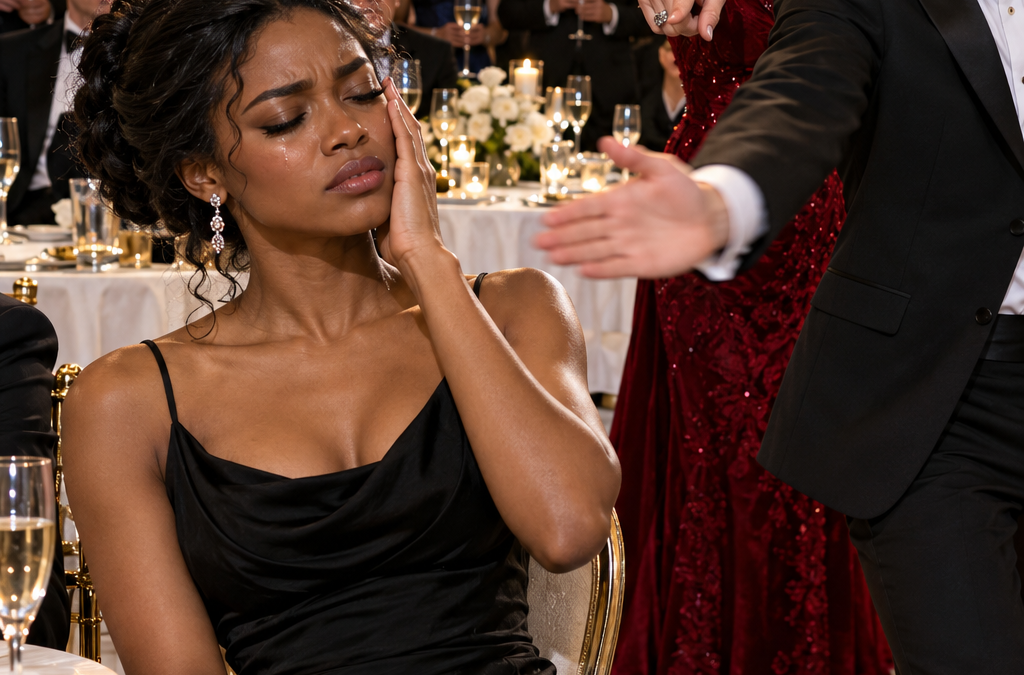
𝗙𝗨𝗟𝗟 𝗦𝗧𝗢𝗥𝗬
That was Gloria.
She never taught me to pretend prejudice did not exist.
She taught me not to let it write my measurements.
I earned an engineering scholarship.
Graduated near the top of my class.
Worked three years for a software firm where I was promoted once and ignored twice.
Then left.
Pinnacle Tech began on a folding table inside a garage apartment.
A secondhand laptop.
One server.
Three hundred dollars left after rent.
No wealthy family.
No venture-capital uncle.
No elite school network waiting to open doors.
The first product failed.
The second nearly did.
The third earned a government contract.
By thirty-one, I held four patents.
By thirty-four, Pinnacle had contracts on three continents.
By thirty-seven, the company was valued in the billions.
Three years before the gala, my mother died from breast cancer.
I sat beside her hospital bed while monitors slowed around us.
Her hands had become thin.
The gold bracelet she always wore slid loosely around her wrist.
She removed it.
Placed it in my hand.
“Don’t let them make you small, baby.”
Those were her last clear words to me.
I wore the bracelet almost every day after that.
Not diamonds.
Not platinum.
Thin gold.
Slightly scratched.
Worth almost nothing at auction.
Worth everything to me.
That evening, before leaving for the gala, I fastened it around my wrist.
Zoe stood in my bedroom doorway.
“You look nice.”
“Thank you.”
“Still boring.”
“Go brush your teeth.”
She hugged me.
“Come home tomorrow?”
“I will.”
“Promise?”
“Promise.”
I kissed her forehead.
Then left.
The Sterling Foundation gala was held at an estate in Connecticut.
Old money has a particular architecture.
Wide staircases.
Stone columns.
Windows tall enough to make people feel small.
Valets who recognize expensive cars faster than faces.
The invitation listed black tie.
Pinnacle Tech had donated two million dollars that year to the foundation’s STEM scholarship initiative.
I attended because the program mattered to me.
Students from neighborhoods like mine.
Girls being told the same things I had been told.
Black children learning early that talent does not guarantee access.
I came alone.
No assistant.
No security.
No entourage.
I wore a simple black dress.
No necklace.
No earrings beyond small studs.
My mother’s bracelet.
A five-year-old Honda sat with the valet.
Most people in technology knew my company.
Some knew my name.
Fewer knew my face.
I preferred that.
The gala was already full when I entered.
Three hundred guests.
Crystal chandeliers.
String quartet.
Champagne towers.
Silk dresses.
Tailored tuxedos.
People who had spent fortunes looking effortless.
I recognized several executives.
One senator.
Two financiers.
A former governor.
I spoke to a foundation trustee.
Thanked her for the scholarship work.
Then drifted toward the terrace doors with a glass of champagne I barely touched.
That was where Victoria Hargrove first saw me.
I recognized her immediately.
She was difficult to miss.
Red gown.
Diamonds at her throat.
More diamonds at her ears.
Blonde hair arranged perfectly.
Laughter loud enough to move through the room even when nobody nearby had said anything funny.
Beside her stood two women I later learned were Pamela Whitfield and Diane Caldwell.
And her son.
Bryce.
Nineteen.
Blazer over a polo shirt.
Phone constantly in his hand.
They had the comfortable body language of people who had never considered that a room might not belong to them.
Victoria looked at me.
Then whispered something to Pamela.
All three women laughed.
I ignored it.
People have laughed at me before.
You cannot run a company if every smirk becomes a meeting.
A few minutes later, Victoria crossed the ballroom.
Bryce followed.
She stopped in front of me.
“Excuse me.”
Her voice was sweet.
Too sweet.
“I think you’re in the wrong room.”
I looked at her.
“Am I?”
“The service entrance is behind the house.”
For half a second, I thought I had misunderstood.
“I’m a guest.”
She blinked.
Then laughed.
Not because I had said something funny.
Because she believed I had.
“A guest?”
“Yes.”
She turned to the women behind her.
“She says she’s a guest.”
Pamela smiled.
Diane laughed openly.
People nearby heard.
A few turned.
I felt an old sensation return.
Not fear.
Recognition.
I had been in this moment before, in a hundred smaller forms.
Someone had decided what I was before asking who I was.
Victoria stepped closer.
“I’ve attended this gala for twenty-two years.”
“That’s a long time.”
“I know everyone on the list.”
“I doubt that.”
Her smile tightened.
“I have never seen someone who looks like you standing in this room.”
I touched my mother’s bracelet.
“Someone who looks like me.”
She did not retreat.
“You know exactly what I mean.”
Yes.
I did.
“I’m here on behalf of my company.”
“Your company.”
She dragged out the words.
“Yes.”
“And what company would that be?”
“Pinnacle Tech.”
Nothing moved in her face.
The name meant nothing to her.
She looked at Diane.
“Heard of it?”
Diane shrugged.
“Sounds like one of those phone-repair places.”
Bryce laughed.
“Mall kiosk.”
They all enjoyed that.
I watched them.
Sometimes powerful people expose themselves when they think nobody powerful is watching.
Victoria wiped at the corner of one eye as though the joke had made her cry.
“A phone repair girl at the Sterling Gala.”
She looked around, making sure others heard.
“This is what happens when foundations get obsessed with inclusion.”
The word inclusion sounded dirty in her mouth.
“You open the door a crack and the street comes in.”
A waiter slowed beside us.
He heard.
Our eyes met.
He looked away.
An older couple at a nearby table exchanged a glance.
They looked uncomfortable.
Neither spoke.
Another man stared down at his plate.
I remember every one of them.
Not their names.
Their faces.
Because that was when I began understanding this was not going to be one cruel woman.
It was going to be a room.
Victoria leaned closer.
“You know what your problem is?”
“No.”
“You actually think you belong here.”
Her voice dropped.
“That cheap dress. Standing there with champagne.”
She looked at my shoes.
My bare neck.
“No jewelry worth mentioning.”
I touched Gloria’s bracelet again.
Victoria noticed.
“People like you don’t sit at tables like this.”
I looked at her.
“What people?”
She smiled.
“You know.”
“No.”
I wanted her to say it.
Her eyes hardened.
“People who serve.”
The room around us had quieted.
Not completely.
But enough.
“People who clean.”
She continued.
“People who stand at the back and watch people like me live the lives they’ll never have.”
There are words you remember because they hurt.
And words you remember because they reveal.
That sentence revealed almost everything about Victoria Hargrove.
She believed hierarchy was moral.
That wealth proved worth.
That race indicated place.
That inherited access was evidence of superiority.
And because nobody in her life had forced her to confront those beliefs, she mistook them for facts.
She picked up a full champagne glass.
For one second, I thought she would drink it.
Instead, she raised it over my chest.
Then poured.
Cold champagne ran down the front of my dress.
Across my stomach.
Onto the marble.
Someone gasped.
My body reacted before my mind did.
One sharp breath.
Then stillness.
I looked down.
My mother’s bracelet remained dry.
“Ooops,” Victoria said.
Pamela covered her mouth.
Diane turned away laughing.
Bryce raised his phone.
The red recording light was visible.
I looked back at Victoria.
“Are you done?”
Her face changed.
That question hurt her pride more than anger would have.
Because I had not given her what she wanted.
No crying.
No shouting.
No pleading.
No retreat.
“No.”
She said it quietly.
“I’m not done.”
Then she turned toward her son.
“Bryce.”
He looked up from the phone.
“Slap her.”
For the first time that night, I thought I had heard something wrong.
Bryce did too.
“What?”
“Slap her.”
Victoria lifted her own phone.
Turned the camera toward us.
“This is going to be hilarious.”
The room stopped.
Actually stopped.
Music still played for another few seconds.
Then even the quartet faltered.
I looked at Bryce.
He was smiling.
That remains one of the hardest details to remember.
He was not reluctant.
Not horrified.
Not confused.
He was excited.
Victoria adjusted her camera.
“Make it loud.”
I could have stepped backward.
Could have screamed.
Could have thrown my glass.
I did none of those things.
Partly because I was stunned.
Partly because I knew two cameras were pointed directly at us.
And partly because something in me understood that the moment violence entered the room, the truth needed to remain clean.
Bryce walked toward me.
Raised his hand.
Then hit me.
The first slap landed across my left cheek.
The sound traveled farther than the pain.
My head turned.
My ear rang.
Heat rushed beneath my skin.
Somewhere behind me, a woman gasped.
Nobody moved.
Victoria laughed.
Not nervously.
Not in disbelief.
She laughed with pleasure.
“Oh my God.”
Her phone remained steady.
“Did you see her face?”
Bryce replayed his recording.
Mother and son leaned toward the screen.
Watching me get hit again.
Victoria howled.
“The way her head went.”
My cheek was already swelling.
I tasted blood where my teeth had cut the inside of my mouth.
I looked around.
Three hundred people.
Some horrified.
Some frozen.
Some staring at the floor.
A few still holding champagne glasses.
I remember wondering what number of witnesses would finally make one person brave.
Ten?
Fifty?
Three hundred apparently was not enough.
Victoria turned the camera back toward me.
“Smile.”
I said nothing.
“You’re about to go viral.”
That sentence was prophetic.
Just not in the way she intended.
She studied my face.
I watched something dark happen behind her eyes.
My silence was making her more furious.
Because cruelty requires participation.
The victim is supposed to perform injury.
She wanted me small.
She wanted me begging.
Instead, I stood.
Then she said it again.
“Bryce.”
He looked at her.
“Again.”
This time, no surprise.
He shifted his weight.
“Which cheek?”
Victoria laughed.
“The other one.”
That question would later matter in court.
Which cheek?
Not reluctance.
Choice.
He hit me harder the second time.
My head snapped right.
I stumbled.
My hip struck a cocktail table.
A champagne flute fell.
Shattered.
Crystal pieces slid across the marble.
Pain spread from my jaw toward my temple.
My knees weakened for half a second.
I caught the table.
Stayed upright.
Victoria stepped over the glass.
“Much better.”
She zoomed in.
Both cheeks were swelling now.
She called Bryce beside her.
He put one arm around his mother.
Flashed a peace sign.
I stood behind them like scenery in their photograph.
Victoria panned the camera across the room.
“Who wants this on TikTok?”
No answer.
She laughed.
“Teaching the help a lesson.”
Still no answer.
“Know your place.”
A man near the east side finally stood.
His chair scraped.
Every head turned.
For one second, I thought:
Finally.
His wife grabbed his sleeve.
Whispered something.
He looked at me.
Then sat down.
That moment hurt more than the second slap.
Because cowardice had become a decision.
Victoria turned back to me.
Her breathing was heavier now.
She was no longer performing for the room.
She had become intoxicated by the absence of consequences.
“Kneel.”
I stared at her.
“What?”
“I said kneel.”
Her voice carried across the ballroom.
“You’ve been standing there like you matter.”
She stepped closer.
“You don’t.”
I could smell champagne on her breath.
“Your kind was built for kneeling.”
Something inside me became perfectly calm.
Not because I was unhurt.
My face throbbed.
My dress was wet.
My mouth tasted metallic.
But clarity can arrive in ugly places.
I realized Victoria had given me something rare.
Not revenge.
Evidence.
Her son’s phone.
Her phone.
Hundreds of witnesses.
Seven uninterrupted minutes of her saying exactly who she was.
No coded language.
No HR euphemisms.
No corporate deniability.
Just truth.
I touched my left cheek.
Then my right.
Slowly.
Victoria mistook the movement for weakness.
“Kneel.”
I looked directly at the phone in her hand.
“You filmed everything.”
Five words.
That was all.
For the first time, Victoria hesitated.
Her eyes flicked toward the screen.
Red recording indicator.
Seven minutes.
Twelve seconds.
Her laughter changed.
“So what?”
I said nothing.
“My party.”
Nothing.
“My video.”
Nothing.
“My rules.”
I turned.
Walked toward the exit.
My shoes left wet champagne marks behind me.
At the door, I removed my phone.
Called my chief financial officer.
He answered immediately.
“Serena?”
“Withdraw Meridian from Hargrove Beauty.”
Silence.
“All of it?”
“All thirty-eight percent.”
“Tonight?”
“Yes.”
“What happened?”
“Execute first.”
I looked back once.
Victoria was still laughing with Pamela.
Bryce was showing someone the replay.
“Ask me tomorrow.”
The call lasted eleven seconds.
I walked outside.
The doors closed.
Behind me, according to witnesses, Victoria turned to her friends and announced that I had run away.
Then she posted the video herself.
Caption:
Teaching the help a lesson.
Laughing emojis.
Hashtags.
At 9:46 p.m., the footage went live.
I was driving toward the airport when it happened.
My face hurt badly enough that I had wrapped ice from a gas station in a towel.
I did not check social media.
I did not want to see myself being hit.
At 9:58, Meridian Capital formally initiated withdrawal from Hargrove Beauty.
That action had been in motion before the internet knew my name.
People later called it revenge.
It wasn’t.
I could no longer justify placing shareholder capital behind a chief executive whose judgment, ethics and behavior represented a direct threat to the company.
The fact that she had personally assaulted and racially degraded me made the decision emotional.
But it did not make it financially irrational.
A company led by someone willing to behave that way in a room full of cameras was a governance catastrophe waiting to happen.
Victoria simply made the catastrophe visible.
By the time my plane landed, the video had millions of views.
The internet had identified me.
A technology journalist posted my name.
Then my company.
Then my ownership of Meridian.
Someone connected the investment.
Everything accelerated.
At home the next morning, Zoe was still asleep when I entered.
I had makeup over one cheek.
It did not hide the swelling.
I stood in the bathroom for a long time looking at myself.
Two handprints.
One darkening bruise.
A cut inside my mouth.
My mother’s bracelet.
Still there.
I thought about Gloria.
Don’t let them make you small.
I had always interpreted that as ambition.
Build.
Win.
Enter the room anyway.
That morning, I understood another meaning.
Do not shrink your own memory of what happened to make other people comfortable.
Zoe woke around seven.
She ran into my room.
Stopped.
“Mommy?”
I smiled.
“Morning.”
“What happened to your face?”
There are conversations you hope your child will never need.
I sat on the bed.
“Someone hit me.”
Her eyes widened.
“Why?”
Because racism is real.
Because wealth can protect cruelty.
Because three hundred adults were afraid to move.
Because one mother taught her son violence could be entertainment.
I could not give a seven-year-old all of that.
“A woman was being cruel.”
“Did you hit her back?”
“No.”
“Why?”
I touched her hair.
“Because I didn’t need to.”
“Did police get her?”
“Not yet.”
Zoe studied me.
Then climbed into my lap.
“She’s bad.”
I held her.
“She did something bad.”
Zoe frowned.
“That means she’s bad.”
Children prefer clean categories.
Adults know better.
Sometimes.
My phone rang.
My CFO.
“Serena.”
“Yes.”
“You need to see the market reaction.”
“I don’t.”
“Hargrove is collapsing.”
“How badly?”
“Meridian’s withdrawal triggered their debt covenant.”
I closed my eyes.
“The bank?”
“Freezing revolving credit.”
“Retail partners?”
“Three requested emergency calls.”
I looked at Zoe.
“Protect our position. Do nothing punitive beyond the withdrawal. Legal handles the rest.”
“Understood.”
“And document every decision.”
“Already doing it.”
That was the difference between consequences and vengeance.
I did not want Hargrove Beauty destroyed because Victoria hurt me.
I wanted every decision around it defensible.
The market did the rest.
Retailers watched the video.
Consumers watched it.
Employees watched it.
By eight that morning, Hargrove Beauty’s largest retail partner announced it would remove the company’s products.
Others followed.
The stock opened sharply lower.
Then fell again.
Trading paused twice.
Victoria attempted a press conference.
I watched that one later.
She stood behind a podium.
Different dress.
No diamonds.
A statement in front of her.
“Last night I made a terrible mistake.”
A reporter interrupted.
“You called a Black woman trash, poured champagne on her, ordered your son to slap her twice, told her to kneel, filmed it and posted the footage yourself. Which part of that does not reflect who you are?”
Victoria stared.
Another reporter asked:
“Did you know Serena Adams was your largest investor?”
Victoria said no.
The reporter followed:
“So if she had been an unknown woman, would this incident be less serious?”
That question mattered.
It was the same question I had been thinking since the ballroom.
People became obsessed with the fact that Victoria had attacked a billionaire.
That was not why what she did was wrong.
My money only made it harder for her to bury.
If I had been a waitress, the slap would still have been assault.
If I had been a scholarship student, the humiliation would still have been racist.
If I had been unemployed, homeless, undocumented or unknown, I would still have deserved someone in that ballroom to stand.
My wealth did not create my dignity.
It created leverage.
There is a difference.
At three that afternoon, police arrested Bryce.
I was not present.
The arrest footage appeared online anyway.
He looked stunned.
Not remorseful.
Stunned.
His own video showed him smiling before the first slap.
Asking which cheek before the second.
Posing beside me afterward.
Victoria had told him to do it.
But he was nineteen.
A legal adult.
Old enough to understand another person’s face was not entertainment.
The incident also drew attention to Hargrove Beauty’s internal history.
That was where the story grew darker.
Federal investigators subpoenaed corporate communications.
Former employees contacted journalists.
Then attorneys.
The gala stopped looking like an isolated breakdown.
It started looking like the public version of private behavior that had been tolerated for years.
Emails emerged.
A Black applicant from Howard University.
Victoria had written:
Find a reason. I don’t want that energy in my office.
A marketing employee with strong performance numbers.
Victoria wrote that she did not fit “the brand aesthetic.”
No explicit racial word.
None needed.
Former employees explained the translation.
Tamara Collins had spent six years at Hargrove Beauty.
Four as the only Black woman regularly working on the executive floor.
She went on national television.
Victoria, she said, never used her name.
She called her “the diversity hire.”
In meetings.
In front of clients.
Tamara filed a complaint.
Two weeks later, her office moved to the basement.
Two months later, she was terminated for “cultural misalignment.”
I watched her interview alone.
Her hands remained steady.
“I learned not to confront Victoria,” she said. “You survived her.”
That sentence haunted me.
Then Angela came forward.
A receptionist instructed to screen Black clients differently.
Then a sales director denied promotion repeatedly despite leading her division.
Then an intern who had worn braids to work and been told:
“We don’t do costumes here.”
One person.
Five.
Nineteen.
Eventually twenty-three plaintiffs.
A class action.
The gala had not created the culture.
It had exposed it.
Victoria simply forgot that cameras were less loyal than people.
Bryce’s criminal case moved first.
I testified briefly.
The prosecutor asked me to describe the assault.
I did.
No dramatic language.
No speech.
The video already spoke.
Bryce’s lawyer argued that his mother had pressured him.
That he had grown up under her control.
That he wanted her approval.
I believed all of those things could be true.
They did not erase his choice.
The judge said almost exactly that.
“You are nineteen years old.”
Bryce stared at the table.
“You smiled.”
The courtroom was silent.
“You asked which cheek.”
His shoulders dropped.
“You struck Ms. Adams twice.”
She looked at him.
“Coercion requires evidence of reluctance. The evidence here shows participation.”
He received two years in federal prison and three years of supervised probation.
As deputies approached him, he turned toward Victoria.
“Mom.”
I heard him.
So did every microphone.
He did not sound angry.
He sounded confused.
That hurt to hear.
Because whatever else Bryce had done, I understood in that moment that Victoria had taught him something poisonous long before the gala.
She had taught him that power meant never having to ask whether another person mattered.
He had learned it.
Then discovered the world outside his mother’s protection did not accept the lesson.
Victoria’s company collapsed faster than I expected.
I did not celebrate.
Hargrove Beauty employed people who had nothing to do with her conduct.
Factories.
Warehouses.
Retail staff.
Designers.
Chemists.
Accountants.
Thousands of livelihoods tangled inside one woman’s failure.
That is another reason I disliked headlines saying I had “destroyed her empire.”
Reality was uglier.
Companies do not fall cleanly.
Innocent people get frightened.
Retirement accounts shrink.
Employees update résumés at midnight.
I instructed Pinnacle’s advisers to cooperate with restructuring efforts where doing so protected employees without rescuing Victoria from accountability.
But the damage was enormous.
Major retailers left.
Credit collapsed.
Investors fled.
The stock was delisted.
Hargrove Beauty entered Chapter 11.
Then came the civil trial.
Twenty-three plaintiffs.
Eleven years of records.
Emails.
Performance reviews.
Transfer histories.
Complaint files.
I sat through several days.
Not because I needed to.
Because Tamara had sat through my humiliation on television.
The least I could do was sit while she told hers.
One former employee described being denied promotion four times.
Another described being sent through service entrances when white colleagues used the front.
A third said Victoria touched her braids during a meeting and asked whether they were “real.”
The jury heard all of it.
The verdict came after six hours.
Hargrove Beauty was ordered to pay forty-four million dollars in damages.
Victoria was personally liable for twelve million.
By then, much of what she had inherited was already gone.
The company.
The estate.
Cars.
Artwork.
Jewelry.
The diamond necklace she wore at the gala went to auction.
I heard it sold for sixty-two thousand dollars.
When someone told me, I felt nothing.
Not satisfaction.
Not pity.
Just distance.
Pamela Whitfield and Diane Caldwell released statements claiming they barely knew Victoria.
I had seen them laughing beside her.
That did not surprise me.
Cowardice changes costumes quickly.
Six months after the gala, I stood behind a podium in Washington, D.C.
The banner behind me read:
THE GLORIA ADAMS FOUNDATION
Dignity. Equity. Opportunity.
I wore navy.
My mother’s bracelet.
No other jewelry.
The room was full.
Camera crews along the back.
Students.
Parents.
Attorneys.
Engineers.
Teachers.
Civil-rights advocates.
I had avoided most interviews about the gala.
I did not want the worst seven minutes of my life to become the most important thing people knew about me.
That day was different.
That day was about Gloria.
“My mother’s name was Gloria Adams.”
The room quieted.
“She raised me on the South Side of Chicago.”
I looked toward Zoe in the front row.
“Three jobs.”
I paused.
“Four hours of sleep.”
My throat tightened.
“She ironed my school uniform at five in the morning so I could walk into classrooms where people had already decided what kind of future a Black girl should expect.”
I touched the bracelet.
“She never founded a company.”
“Never held a patent.”
“Never appeared in a magazine.”
I smiled slightly.
“But everything I built started with her.”
The room became very still.
“When I came home one day crying because a teacher told me Black girls didn’t become engineers, my mother did not give me a speech.”
I remembered the hiss of the iron.
“She pressed my uniform.”
“Packed my lunch.”
“And the next morning she said, ‘Walk in there like you own it. One day you will.’”
Somebody in the audience began crying.
I nearly did too.
“This foundation exists for every child who has been told the room was built for someone else.”
The Gloria Adams Foundation launched with forty-two million dollars.
STEM scholarships.
Legal assistance for victims of racial discrimination.
Mentorship.
Engineering programs.
Internships.
Emergency support for employees fighting retaliation.
Within three months, more than four hundred students received scholarships.
Sixteen discrimination cases received legal funding.
Dozens of mentorship partnerships formed.
People asked why forty-two million.
The answer was simple.
My mother died at forty-two.
I did not explain that publicly.
Some numbers belong to family.
The foundation mattered to me more than anything that happened to Victoria.
That surprised people.
They wanted a revenge ending.
They wanted me smiling while her mansion was seized.
They wanted justice to look like a balance sheet:
She lost this.
I gained that.
But revenge is too small a use for pain.
My mother did not spend her life making sure I could enter powerful rooms so I could eventually become powerful enough to destroy someone.
She wanted me large.
There is a difference.
Months later, Bryce wrote to me from prison.
Three handwritten pages.
The envelope sat unopened on my desk for two days.
Then I read it.
He did not ask me to forgive him.
That helped.
He wrote about his mother.
About growing up believing humiliation was humor.
About watching her destroy employees, servers, classmates’ parents.
About the first slap.
He admitted he had enjoyed it.
That mattered too.
No excuses.
He wrote:
I keep seeing your face before I hit you the second time. You weren’t scared of me. I think that made me want to hit harder. I don’t know what that says about me.
I knew.
It said he needed to spend a very long time examining who he had become.
I did not answer.
Forgiveness is not a debt victims owe people who hurt them.
But I did not throw the letter away.
I placed it in a drawer beside my mother’s obituary and a photograph of Zoe’s first day of school.
Not because I cherished it.
Because memory has value.
Some things should not be erased merely because they hurt.
Victoria contacted me only once directly.
Weeks after her company filed for bankruptcy.
The call never reached me.
My staff blocked it.
Later she sent an email.
Subject:
PLEASE.
I did not open it for three days.
When I finally did, it was shorter than I expected.
Serena,
I do not know what apology could mean anything after what I did.
I keep watching the video and I do not recognize the woman on the screen, but I understand that saying that is another lie because she is me.
I thought people existed in categories. Useful. Important. Invisible.
I thought money proved which category you belonged in.
I understand now that I was wrong.
I know understanding it after losing everything is not noble.
I don’t expect forgiveness.
I am sorry.
Victoria.
I read it twice.
Then closed the computer.
I never replied.
Maybe she meant it.
Maybe she did not.
Her transformation was no longer my responsibility.
That was one of the most important boundaries I learned.
A victim does not owe the person who hurt them participation in their redemption.
They are allowed to heal without supervising the other person’s growth.
My healing took longer than the headlines suggested.
For weeks, I flinched when someone moved a hand quickly near my face.
That embarrassed me.
Then angered me for being embarrassed.
I had nightmares about the ballroom.
Except in the dreams, the slaps rarely mattered.
The silence did.
Three hundred faces.
No one moving.
The chair scraping as the man almost stood.
His wife’s hand pulling him back.
That was what woke me.
I eventually told a therapist.
She asked what I wished had happened.
“I wish one person had said stop.”
“Only one?”
“Yes.”
“What would that have changed?”
I thought for a long time.
“Everything.”
Not the assault.
Maybe Bryce still would have hit me.
Maybe Victoria would have kept screaming.
But cruelty grows differently when somebody challenges it.
The room teaches the aggressor what is permitted.
Three hundred people had accidentally taught Victoria she could keep going.
That lesson stayed with me.
At Pinnacle, we changed our bystander policy.
Not a glossy corporate initiative.
Real training.
What employees should do if they witness harassment.
How to interrupt safely.
How to call security.
How to document.
How to support the target afterward.
How management would protect people against retaliation.
I required executives to attend first.
One vice president complained.
“We’re senior leadership. This material is obvious.”
I looked at him.
“Three hundred senior people at a charity gala thought silence was obvious.”
He stopped complaining.
I also asked our investment teams to expand culture review when assessing companies.
For years we had evaluated governance through boards, lawsuits, HR metrics and financial risk.
After Hargrove, I understood how much damage could remain hidden behind respectable numbers.
I wanted interviews deeper into organizations.
Former employees.
Vendors.
Assistants.
Security.
People whose opinions never reach board presentations.
Hargrove Beauty had looked stable because the people harmed by its culture rarely sat at the table where investors asked questions.
That was our failure too.
Months passed.
Zoe stopped asking about my cheeks after the bruises faded.
Children move forward more naturally than adults.
One night she sat beside me while I reviewed scholarship applications.
She picked up a file.
“What’s this?”
“Students applying for the foundation.”
“Do they all get money?”
“No.”
“Why not?”
“Because there are more students than money.”
She frowned.
“That’s dumb.”
“I agree.”
“Make more money.”
I laughed.
“I’m working on it.”
She climbed into my lap.
“Grandma would like this.”
I looked at her.
“What makes you say that?”
“Because you put her name on it.”
“That’s your evidence?”
“Yes.”
“Strong case.”
She studied my bracelet.
“Can I have that when you’re old?”
I laughed.
“How old?”
“Like forty.”
I stared at her.
“Go to bed.”
She ran away laughing.
I held the bracelet between my fingers.
That thin gold circle had been with my mother through parent-teacher conferences.
Hospital waiting rooms.
Church.
Work.
Funerals.
Graduations.
Then with me through board meetings.
Patent hearings.
My mother’s death.
And a ballroom where another woman told me to kneel.
Victoria had worn diamonds that night.
Expensive enough to buy houses.
The diamonds were eventually auctioned.
My bracelet remained.
That became symbolic to strangers.
To me it was simpler.
Some things have price.
Other things have history.
Price can disappear in a week.
History stays.
One year after the gala, the Sterling Foundation invited me back.
I almost declined.
The idea of returning made my stomach tighten.
Then I thought about the scholarship recipients.
Girls who knew what had happened.
Girls who might interpret my absence as evidence that one hateful woman had successfully driven me from a room.
I accepted.
The estate looked the same.
Same marble.
Same chandeliers.
Same terrace doors.
Different crowd in some ways.
Some of the same faces in others.
I recognized the man who had stood and then sat.
He saw me.
Looked away.
I could have ignored him.
Instead, I walked over.
His face turned pale.
“Ms. Adams.”
“Good evening.”
“I’ve wanted to—”
He stopped.
I waited.
“That night…”
His wife stood beside him.
She looked terrified.
“I should have stood up.”
“Yes.”
He swallowed.
“I did stand.”
“I remember.”
“Then I sat down.”
“Yes.”
“My wife was afraid something would happen.”
His wife looked at me.
“I was.”
“I understand fear.”
She blinked.
“That doesn’t mean I think you made the right choice.”
Her eyes filled.
“No.”
I looked at both of them.
“I don’t need an apology tonight.”
The man nodded.
“But next time…”
I paused.
“Don’t sit.”
His jaw tightened.
“I won’t.”
I believed he wanted that to be true.
Whether it would be was his responsibility.
The foundation director introduced me later.
I walked onto the stage.
Applause rose.
I stood at the podium.
For a second, I could see the place where Victoria had poured champagne over me.
Same floor.
Polished clean.
No stain.
That interested me.
Physical evidence disappears faster than memory.
I looked at the students seated near the front.
Young.
Nervous.
Hopeful.
Then I began.
“A year ago, something happened to me in this room.”
Silence.
“I am not here to retell it.”
A few people shifted.
“You already know the video.”
I looked around.
“What I want to talk about is everything outside the camera frame.”
The room changed.
“Three hundred people were present.”
I let the number sit.
“Most were decent people.”
Another pause.
“Some were probably horrified.”
I looked across the tables.
“Some were afraid.”
I could see faces tightening.
“Almost all were silent.”
No one moved.
“I have thought more about that silence than I have about the woman who attacked me.”
The string quartet members watched from the side.
“Because we spend a lot of time teaching people not to become cruel.”
I looked toward the scholarship students.
“We spend less time teaching good people what to do when cruelty happens in front of them.”
I thought of my mother.
“Silence feels neutral when you’re sitting safely.”
I touched my bracelet.
“To the person standing alone, it does not feel neutral.”
Nobody looked away.
“That night changed several lives.”
“Some because of consequences.”
“Mine because it clarified something.”
I took a breath.
“Power is not the ability to make someone kneel.”
The room was perfectly quiet.
“Power is being the person willing to stand when everyone else is sitting.”
I stepped away from the podium.
The applause came slowly.
Then grew.
I did not need it.
But this time, the sound meant something different.
After the event, I went outside alone.
Cold air.
Dark lawn.
My car waited beyond the drive.
I touched my cheek.
No pain.
No mark.
Only memory.
For a long time, people described what happened to me as the night Victoria Hargrove destroyed herself.
That was not how I remembered it.
I remembered my mother.
The bracelet.
Three hundred silent people.
Two phones recording.
My eleven-second call.
My daughter asking why I had not hit back.
Tamara finally telling her story.
Twenty-three former employees realizing their experiences belonged to a pattern.
Scholarship applications stacked across my desk.
The first girl funded by the Gloria Adams Foundation.
Her name was Maya Robinson.
Seventeen.
Detroit.
Wanted to become an aerospace engineer.
In her essay, she wrote that a counselor had suggested she choose something “more realistic.”
I read that sentence three times.
Then thought of Gloria ironing my uniform.
We funded Maya.
Of course we did.
That was the ending I preferred.
Not Victoria losing her mansion.
Not Hargrove Beauty collapsing.
Not diamonds at auction.
A seventeen-year-old Black girl receiving an email saying:
You have been awarded a full STEM scholarship.
That felt like justice I could live inside.
I still run Pinnacle quietly.
Still drive cars longer than my board thinks I should.
Still avoid most red carpets.
Zoe is older now.
She no longer believes billionaires get crowns.
Progress.
My mother’s bracelet is still on my wrist most days.
Sometimes people recognize it from photographs.
They ask whether it represents resilience.
I usually tell them no.
It represents my mother.
The rest is something people added later.
But privately, when I fasten it, I remember what Gloria taught me.
Walk in there like you own it.
One day you will.
She had meant opportunity.
Confidence.
Refusal to shrink.
But I understand the sentence differently now.
Ownership is not always legal.
Sometimes it means refusing to surrender your right to occupy a space.
Your body.
Your name.
Your dignity.
Victoria tried to decide that room was hers.
Tried to decide I was small enough to humiliate.
Tried to decide which bodies belonged at which tables.
Then she ordered me to kneel.
I didn’t.
Not because I knew what her company would lose.
Not because I knew millions of people would watch.
Not because I had money.
I did not kneel because Gloria Adams had spent a lifetime making sure her daughter understood something Victoria Hargrove never did.
A person’s worth does not increase when powerful people recognize it.
And it does not decrease when cruel people refuse to.
That night, Victoria had diamonds around her neck, an empire behind her name and a room full of people afraid to challenge her.
I had a wet black dress.
Two swollen cheeks.
A thin gold bracelet.
And eleven seconds on a telephone.
She looked more powerful.
For a few minutes, maybe she was.
But power built entirely on other people’s fear is fragile.
Eventually someone refuses to kneel.
Everything changes after that.
𝗧𝗛𝗘 𝗘𝗡𝗗
The Woman at the Charity Gala Told Her Son to Slap Me for Laughs, Never Knowing I Was the Investor Keeping Her Company Alive
The first slap hurt less than the laughter that followed it, because pain from one hand is simple compared with the silence of three hundred people deciding not to move. By the time Victoria Hargrove ordered her son to hit me again, I had stopped wondering whether anyone in that ballroom would help and started memorizing everything I would need when the room finally had to answer for what it had watched.
Twelve hours earlier, I had been standing barefoot in my kitchen in Chicago, stirring oatmeal for my seven-year-old daughter.
Zoe sat at the table drawing with purple and green crayons.
Our apartment had two bedrooms, a faucet that leaked whenever the weather changed, three crooked family photographs on the refrigerator, and a collection of Zoe’s artwork taped to almost every surface I had not managed to protect.
One drawing showed a stick figure with enormous hair standing beside a building.
Across the top, in letters that leaned in every direction, Zoe had written:
MOMMY THE BOSS.
I had laughed when she gave it to me.
Then I had framed it with a magnet from a pizza restaurant.
That kitchen was where I preferred to be known.
Not Forbes.
Not television.
Not by a net worth estimate that strangers updated as if my life were a stock ticker.
To Zoe, I was the woman who burned pancakes if I answered emails while cooking.
The mother who sometimes forgot pajama day.
The person who could never braid hair as evenly as Grandma Gloria used to.
That morning, I had a charity gala in Connecticut.
Zoe had school.
Our schedules could not have felt farther apart.
“You’re wearing the black dress?” she asked.
“Yes.”
“The boring one?”
“It is not boring.”
“It’s black.”
“That does not make it boring.”
She considered that.
“Do you get a crown?”
“At a charity gala?”
“You’re rich.”
I turned from the stove.
“So?”
“Rich people get crowns in movies.”
“Movies have lied to you.”
She sighed dramatically and returned to coloring.
I smiled.
There are mornings I wish I could trap inside glass.
Zoe at seven.
Steam from oatmeal.
My mother’s old bracelet on the counter beside my coffee.
Nothing urgent.
Nothing breaking.
My phone buzzed.
A message from my chief financial officer.
MERIDIAN CAPITAL – HARGROVE REVIEW COMPLETE. NO ISSUES. RETAIN CURRENT POSITION.
I read it twice.
Then locked the screen.
Meridian Capital Holdings was one of several entities Pinnacle Tech used for institutional investment.
For four years, Meridian had quietly held 38 percent of Hargrove Beauty’s equity capital.
Almost no one outside a small financial circle knew Pinnacle controlled Meridian.
That was deliberate.
Strategic investment works better when ego is removed from the room.
Hargrove Beauty was an old American cosmetics company.
Seventy years of brand recognition.
Huge distribution network.
Decent margins.
A loyal customer base.
Weak leadership.
For years I believed the underlying company was worth protecting despite its problems.
I had never met Victoria Hargrove.
I knew the name.
Third-generation owner.
Inherited control.
A reputation for being volatile.
Nothing in our investment reports suggested volatility severe enough to make me reconsider the position.
That would change before midnight.
At thirty-seven, I had already spent most of my adult life being underestimated.
Not always dramatically.
Usually quietly.
A receptionist assuming I was an assistant.
An engineer answering my technical question by turning toward the white man standing beside me.
Investors asking whether someone else would be joining the meeting.
Hotel staff asking which guest I was accompanying.
I had learned the difference between ignorance and malice.
The first could sometimes be corrected.
The second usually needed consequences.
My mother had prepared me for both.
Gloria Adams raised me alone on the South Side.
Three jobs.
Four hours of sleep on good nights.
She cleaned offices downtown in the morning, worked a school cafeteria in the afternoon, and handled bookkeeping for a laundromat several evenings a week.
We did not have much.
But every school morning my uniform was pressed.
Every lunch was packed.
Every permission slip signed.
When landlords found reasons not to rent to us after seeing my mother’s face, Gloria kept looking.
When store clerks followed us down aisles, she kept her shoulders straight.
When I came home crying at eleven because a teacher had told me Black girls did not grow up to become engineers, my mother did not tell me the teacher was stupid.
She did something harder.
She ironed my uniform.
Packed my lunch.
Then stood behind me while I ate breakfast the next morning.
“Walk in there like you own the place.”
I looked at her.
“I don’t.”
“One day you will.”
That was Gloria.
She never taught me to pretend prejudice did not exist.
She taught me not to let it write my measurements.
I earned an engineering scholarship.
Graduated near the top of my class.
Worked three years for a software firm where I was promoted once and ignored twice.
Then left.
Pinnacle Tech began on a folding table inside a garage apartment.
A secondhand laptop.
One server.
Three hundred dollars left after rent.
No wealthy family.
No venture-capital uncle.
No elite school network waiting to open doors.
The first product failed.
The second nearly did.
The third earned a government contract.
By thirty-one, I held four patents.
By thirty-four, Pinnacle had contracts on three continents.
By thirty-seven, the company was valued in the billions.
Three years before the gala, my mother died from breast cancer.
I sat beside her hospital bed while monitors slowed around us.
Her hands had become thin.
The gold bracelet she always wore slid loosely around her wrist.
She removed it.
Placed it in my hand.
“Don’t let them make you small, baby.”
Those were her last clear words to me.
I wore the bracelet almost every day after that.
Not diamonds.
Not platinum.
Thin gold.
Slightly scratched.
Worth almost nothing at auction.
Worth everything to me.
That evening, before leaving for the gala, I fastened it around my wrist.
Zoe stood in my bedroom doorway.
“You look nice.”
“Thank you.”
“Still boring.”
“Go brush your teeth.”
She hugged me.
“Come home tomorrow?”
“I will.”
“Promise?”
“Promise.”
I kissed her forehead.
Then left.
The Sterling Foundation gala was held at an estate in Connecticut.
Old money has a particular architecture.
Wide staircases.
Stone columns.
Windows tall enough to make people feel small.
Valets who recognize expensive cars faster than faces.
The invitation listed black tie.
Pinnacle Tech had donated two million dollars that year to the foundation’s STEM scholarship initiative.
I attended because the program mattered to me.
Students from neighborhoods like mine.
Girls being told the same things I had been told.
Black children learning early that talent does not guarantee access.
I came alone.
No assistant.
No security.
No entourage.
I wore a simple black dress.
No necklace.
No earrings beyond small studs.
My mother’s bracelet.
A five-year-old Honda sat with the valet.
Most people in technology knew my company.
Some knew my name.
Fewer knew my face.
I preferred that.
The gala was already full when I entered.
Three hundred guests.
Crystal chandeliers.
String quartet.
Champagne towers.
Silk dresses.
Tailored tuxedos.
People who had spent fortunes looking effortless.
I recognized several executives.
One senator.
Two financiers.
A former governor.
I spoke to a foundation trustee.
Thanked her for the scholarship work.
Then drifted toward the terrace doors with a glass of champagne I barely touched.
That was where Victoria Hargrove first saw me.
I recognized her immediately.
She was difficult to miss.
Red gown.
Diamonds at her throat.
More diamonds at her ears.
Blonde hair arranged perfectly.
Laughter loud enough to move through the room even when nobody nearby had said anything funny.
Beside her stood two women I later learned were Pamela Whitfield and Diane Caldwell.
And her son.
Bryce.
Nineteen.
Blazer over a polo shirt.
Phone constantly in his hand.
They had the comfortable body language of people who had never considered that a room might not belong to them.
Victoria looked at me.
Then whispered something to Pamela.
All three women laughed.
I ignored it.
People have laughed at me before.
You cannot run a company if every smirk becomes a meeting.
A few minutes later, Victoria crossed the ballroom.
Bryce followed.
She stopped in front of me.
“Excuse me.”
Her voice was sweet.
Too sweet.
“I think you’re in the wrong room.”
I looked at her.
“Am I?”
“The service entrance is behind the house.”
For half a second, I thought I had misunderstood.
“I’m a guest.”
She blinked.
Then laughed.
Not because I had said something funny.
Because she believed I had.
“A guest?”
“Yes.”
She turned to the women behind her.
“She says she’s a guest.”
Pamela smiled.
Diane laughed openly.
People nearby heard.
A few turned.
I felt an old sensation return.
Not fear.
Recognition.
I had been in this moment before, in a hundred smaller forms.
Someone had decided what I was before asking who I was.
Victoria stepped closer.
“I’ve attended this gala for twenty-two years.”
“That’s a long time.”
“I know everyone on the list.”
“I doubt that.”
Her smile tightened.
“I have never seen someone who looks like you standing in this room.”
I touched my mother’s bracelet.
“Someone who looks like me.”
She did not retreat.
“You know exactly what I mean.”
Yes.
I did.
“I’m here on behalf of my company.”
“Your company.”
She dragged out the words.
“Yes.”
“And what company would that be?”
“Pinnacle Tech.”
Nothing moved in her face.
The name meant nothing to her.
She looked at Diane.
“Heard of it?”
Diane shrugged.
“Sounds like one of those phone-repair places.”
Bryce laughed.
“Mall kiosk.”
They all enjoyed that.
I watched them.
Sometimes powerful people expose themselves when they think nobody powerful is watching.
Victoria wiped at the corner of one eye as though the joke had made her cry.
“A phone repair girl at the Sterling Gala.”
She looked around, making sure others heard.
“This is what happens when foundations get obsessed with inclusion.”
The word inclusion sounded dirty in her mouth.
“You open the door a crack and the street comes in.”
A waiter slowed beside us.
He heard.
Our eyes met.
He looked away.
An older couple at a nearby table exchanged a glance.
They looked uncomfortable.
Neither spoke.
Another man stared down at his plate.
I remember every one of them.
Not their names.
Their faces.
Because that was when I began understanding this was not going to be one cruel woman.
It was going to be a room.
Victoria leaned closer.
“You know what your problem is?”
“No.”
“You actually think you belong here.”
Her voice dropped.
“That cheap dress. Standing there with champagne.”
She looked at my shoes.
My bare neck.
“No jewelry worth mentioning.”
I touched Gloria’s bracelet again.
Victoria noticed.
“People like you don’t sit at tables like this.”
I looked at her.
“What people?”
She smiled.
“You know.”
“No.”
I wanted her to say it.
Her eyes hardened.
“People who serve.”
The room around us had quieted.
Not completely.
But enough.
“People who clean.”
She continued.
“People who stand at the back and watch people like me live the lives they’ll never have.”
There are words you remember because they hurt.
And words you remember because they reveal.
That sentence revealed almost everything about Victoria Hargrove.
She believed hierarchy was moral.
That wealth proved worth.
That race indicated place.
That inherited access was evidence of superiority.
And because nobody in her life had forced her to confront those beliefs, she mistook them for facts.
She picked up a full champagne glass.
For one second, I thought she would drink it.
Instead, she raised it over my chest.
Then poured.
Cold champagne ran down the front of my dress.
Across my stomach.
Onto the marble.
Someone gasped.
My body reacted before my mind did.
One sharp breath.
Then stillness.
I looked down.
My mother’s bracelet remained dry.
“Ooops,” Victoria said.
Pamela covered her mouth.
Diane turned away laughing.
Bryce raised his phone.
The red recording light was visible.
I looked back at Victoria.
“Are you done?”
Her face changed.
That question hurt her pride more than anger would have.
Because I had not given her what she wanted.
No crying.
No shouting.
No pleading.
No retreat.
“No.”
She said it quietly.
“I’m not done.”
Then she turned toward her son.
“Bryce.”
He looked up from the phone.
“Slap her.”
For the first time that night, I thought I had heard something wrong.
Bryce did too.
“What?”
“Slap her.”
Victoria lifted her own phone.
Turned the camera toward us.
“This is going to be hilarious.”
The room stopped.
Actually stopped.
Music still played for another few seconds.
Then even the quartet faltered.
I looked at Bryce.
He was smiling.
That remains one of the hardest details to remember.
He was not reluctant.
Not horrified.
Not confused.
He was excited.
Victoria adjusted her camera.
“Make it loud.”
I could have stepped backward.
Could have screamed.
Could have thrown my glass.
I did none of those things.
Partly because I was stunned.
Partly because I knew two cameras were pointed directly at us.
And partly because something in me understood that the moment violence entered the room, the truth needed to remain clean.
Bryce walked toward me.
Raised his hand.
Then hit me.
The first slap landed across my left cheek.
The sound traveled farther than the pain.
My head turned.
My ear rang.
Heat rushed beneath my skin.
Somewhere behind me, a woman gasped.
Nobody moved.
Victoria laughed.
Not nervously.
Not in disbelief.
She laughed with pleasure.
“Oh my God.”
Her phone remained steady.
“Did you see her face?”
Bryce replayed his recording.
Mother and son leaned toward the screen.
Watching me get hit again.
Victoria howled.
“The way her head went.”
My cheek was already swelling.
I tasted blood where my teeth had cut the inside of my mouth.
I looked around.
Three hundred people.
Some horrified.
Some frozen.
Some staring at the floor.
A few still holding champagne glasses.
I remember wondering what number of witnesses would finally make one person brave.
Ten?
Fifty?
Three hundred apparently was not enough.
Victoria turned the camera back toward me.
“Smile.”
I said nothing.
“You’re about to go viral.”
That sentence was prophetic.
Just not in the way she intended.
She studied my face.
I watched something dark happen behind her eyes.
My silence was making her more furious.
Because cruelty requires participation.
The victim is supposed to perform injury.
She wanted me small.
She wanted me begging.
Instead, I stood.
Then she said it again.
“Bryce.”
He looked at her.
“Again.”
This time, no surprise.
He shifted his weight.
“Which cheek?”
Victoria laughed.
“The other one.”
That question would later matter in court.
Which cheek?
Not reluctance.
Choice.
He hit me harder the second time.
My head snapped right.
I stumbled.
My hip struck a cocktail table.
A champagne flute fell.
Shattered.
Crystal pieces slid across the marble.
Pain spread from my jaw toward my temple.
My knees weakened for half a second.
I caught the table.
Stayed upright.
Victoria stepped over the glass.
“Much better.”
She zoomed in.
Both cheeks were swelling now.
She called Bryce beside her.
He put one arm around his mother.
Flashed a peace sign.
I stood behind them like scenery in their photograph.
Victoria panned the camera across the room.
“Who wants this on TikTok?”
No answer.
She laughed.
“Teaching the help a lesson.”
Still no answer.
“Know your place.”
A man near the east side finally stood.
His chair scraped.
Every head turned.
For one second, I thought:
Finally.
His wife grabbed his sleeve.
Whispered something.
He looked at me.
Then sat down.
That moment hurt more than the second slap.
Because cowardice had become a decision.
Victoria turned back to me.
Her breathing was heavier now.
She was no longer performing for the room.
She had become intoxicated by the absence of consequences.
“Kneel.”
I stared at her.
“What?”
“I said kneel.”
Her voice carried across the ballroom.
“You’ve been standing there like you matter.”
She stepped closer.
“You don’t.”
I could smell champagne on her breath.
“Your kind was built for kneeling.”
Something inside me became perfectly calm.
Not because I was unhurt.
My face throbbed.
My dress was wet.
My mouth tasted metallic.
But clarity can arrive in ugly places.
I realized Victoria had given me something rare.
Not revenge.
Evidence.
Her son’s phone.
Her phone.
Hundreds of witnesses.
Seven uninterrupted minutes of her saying exactly who she was.
No coded language.
No HR euphemisms.
No corporate deniability.
Just truth.
I touched my left cheek.
Then my right.
Slowly.
Victoria mistook the movement for weakness.
“Kneel.”
I looked directly at the phone in her hand.
“You filmed everything.”
Five words.
That was all.
For the first time, Victoria hesitated.
Her eyes flicked toward the screen.
Red recording indicator.
Seven minutes.
Twelve seconds.
Her laughter changed.
“So what?”
I said nothing.
“My party.”
Nothing.
“My video.”
Nothing.
“My rules.”
I turned.
Walked toward the exit.
My shoes left wet champagne marks behind me.
At the door, I removed my phone.
Called my chief financial officer.
He answered immediately.
“Serena?”
“Withdraw Meridian from Hargrove Beauty.”
Silence.
“All of it?”
“All thirty-eight percent.”
“Tonight?”
“Yes.”
“What happened?”
“Execute first.”
I looked back once.
Victoria was still laughing with Pamela.
Bryce was showing someone the replay.
“Ask me tomorrow.”
The call lasted eleven seconds.
I walked outside.
The doors closed.
Behind me, according to witnesses, Victoria turned to her friends and announced that I had run away.
Then she posted the video herself.
Caption:
Teaching the help a lesson.
Laughing emojis.
Hashtags.
At 9:46 p.m., the footage went live.
I was driving toward the airport when it happened.
My face hurt badly enough that I had wrapped ice from a gas station in a towel.
I did not check social media.
I did not want to see myself being hit.
At 9:58, Meridian Capital formally initiated withdrawal from Hargrove Beauty.
That action had been in motion before the internet knew my name.
People later called it revenge.
It wasn’t.
I could no longer justify placing shareholder capital behind a chief executive whose judgment, ethics and behavior represented a direct threat to the company.
The fact that she had personally assaulted and racially degraded me made the decision emotional.
But it did not make it financially irrational.
A company led by someone willing to behave that way in a room full of cameras was a governance catastrophe waiting to happen.
Victoria simply made the catastrophe visible.
By the time my plane landed, the video had millions of views.
The internet had identified me.
A technology journalist posted my name.
Then my company.
Then my ownership of Meridian.
Someone connected the investment.
Everything accelerated.
At home the next morning, Zoe was still asleep when I entered.
I had makeup over one cheek.
It did not hide the swelling.
I stood in the bathroom for a long time looking at myself.
Two handprints.
One darkening bruise.
A cut inside my mouth.
My mother’s bracelet.
Still there.
I thought about Gloria.
Don’t let them make you small.
I had always interpreted that as ambition.
Build.
Win.
Enter the room anyway.
That morning, I understood another meaning.
Do not shrink your own memory of what happened to make other people comfortable.
Zoe woke around seven.
She ran into my room.
Stopped.
“Mommy?”
I smiled.
“Morning.”
“What happened to your face?”
There are conversations you hope your child will never need.
I sat on the bed.
“Someone hit me.”
Her eyes widened.
“Why?”
Because racism is real.
Because wealth can protect cruelty.
Because three hundred adults were afraid to move.
Because one mother taught her son violence could be entertainment.
I could not give a seven-year-old all of that.
“A woman was being cruel.”
“Did you hit her back?”
“No.”
“Why?”
I touched her hair.
“Because I didn’t need to.”
“Did police get her?”
“Not yet.”
Zoe studied me.
Then climbed into my lap.
“She’s bad.”
I held her.
“She did something bad.”
Zoe frowned.
“That means she’s bad.”
Children prefer clean categories.
Adults know better.
Sometimes.
My phone rang.
My CFO.
“Serena.”
“Yes.”
“You need to see the market reaction.”
“I don’t.”
“Hargrove is collapsing.”
“How badly?”
“Meridian’s withdrawal triggered their debt covenant.”
I closed my eyes.
“The bank?”
“Freezing revolving credit.”
“Retail partners?”
“Three requested emergency calls.”
I looked at Zoe.
“Protect our position. Do nothing punitive beyond the withdrawal. Legal handles the rest.”
“Understood.”
“And document every decision.”
“Already doing it.”
That was the difference between consequences and vengeance.
I did not want Hargrove Beauty destroyed because Victoria hurt me.
I wanted every decision around it defensible.
The market did the rest.
Retailers watched the video.
Consumers watched it.
Employees watched it.
By eight that morning, Hargrove Beauty’s largest retail partner announced it would remove the company’s products.
Others followed.
The stock opened sharply lower.
Then fell again.
Trading paused twice.
Victoria attempted a press conference.
I watched that one later.
She stood behind a podium.
Different dress.
No diamonds.
A statement in front of her.
“Last night I made a terrible mistake.”
A reporter interrupted.
“You called a Black woman trash, poured champagne on her, ordered your son to slap her twice, told her to kneel, filmed it and posted the footage yourself. Which part of that does not reflect who you are?”
Victoria stared.
Another reporter asked:
“Did you know Serena Adams was your largest investor?”
Victoria said no.
The reporter followed:
“So if she had been an unknown woman, would this incident be less serious?”
That question mattered.
It was the same question I had been thinking since the ballroom.
People became obsessed with the fact that Victoria had attacked a billionaire.
That was not why what she did was wrong.
My money only made it harder for her to bury.
If I had been a waitress, the slap would still have been assault.
If I had been a scholarship student, the humiliation would still have been racist.
If I had been unemployed, homeless, undocumented or unknown, I would still have deserved someone in that ballroom to stand.
My wealth did not create my dignity.
It created leverage.
There is a difference.
At three that afternoon, police arrested Bryce.
I was not present.
The arrest footage appeared online anyway.
He looked stunned.
Not remorseful.
Stunned.
His own video showed him smiling before the first slap.
Asking which cheek before the second.
Posing beside me afterward.
Victoria had told him to do it.
But he was nineteen.
A legal adult.
Old enough to understand another person’s face was not entertainment.
The incident also drew attention to Hargrove Beauty’s internal history.
That was where the story grew darker.
Federal investigators subpoenaed corporate communications.
Former employees contacted journalists.
Then attorneys.
The gala stopped looking like an isolated breakdown.
It started looking like the public version of private behavior that had been tolerated for years.
Emails emerged.
A Black applicant from Howard University.
Victoria had written:
Find a reason. I don’t want that energy in my office.
A marketing employee with strong performance numbers.
Victoria wrote that she did not fit “the brand aesthetic.”
No explicit racial word.
None needed.
Former employees explained the translation.
Tamara Collins had spent six years at Hargrove Beauty.
Four as the only Black woman regularly working on the executive floor.
She went on national television.
Victoria, she said, never used her name.
She called her “the diversity hire.”
In meetings.
In front of clients.
Tamara filed a complaint.
Two weeks later, her office moved to the basement.
Two months later, she was terminated for “cultural misalignment.”
I watched her interview alone.
Her hands remained steady.
“I learned not to confront Victoria,” she said. “You survived her.”
That sentence haunted me.
Then Angela came forward.
A receptionist instructed to screen Black clients differently.
Then a sales director denied promotion repeatedly despite leading her division.
Then an intern who had worn braids to work and been told:
“We don’t do costumes here.”
One person.
Five.
Nineteen.
Eventually twenty-three plaintiffs.
A class action.
The gala had not created the culture.
It had exposed it.
Victoria simply forgot that cameras were less loyal than people.
Bryce’s criminal case moved first.
I testified briefly.
The prosecutor asked me to describe the assault.
I did.
No dramatic language.
No speech.
The video already spoke.
Bryce’s lawyer argued that his mother had pressured him.
That he had grown up under her control.
That he wanted her approval.
I believed all of those things could be true.
They did not erase his choice.
The judge said almost exactly that.
“You are nineteen years old.”
Bryce stared at the table.
“You smiled.”
The courtroom was silent.
“You asked which cheek.”
His shoulders dropped.
“You struck Ms. Adams twice.”
She looked at him.
“Coercion requires evidence of reluctance. The evidence here shows participation.”
He received two years in federal prison and three years of supervised probation.
As deputies approached him, he turned toward Victoria.
“Mom.”
I heard him.
So did every microphone.
He did not sound angry.
He sounded confused.
That hurt to hear.
Because whatever else Bryce had done, I understood in that moment that Victoria had taught him something poisonous long before the gala.
She had taught him that power meant never having to ask whether another person mattered.
He had learned it.
Then discovered the world outside his mother’s protection did not accept the lesson.
Victoria’s company collapsed faster than I expected.
I did not celebrate.
Hargrove Beauty employed people who had nothing to do with her conduct.
Factories.
Warehouses.
Retail staff.
Designers.
Chemists.
Accountants.
Thousands of livelihoods tangled inside one woman’s failure.
That is another reason I disliked headlines saying I had “destroyed her empire.”
Reality was uglier.
Companies do not fall cleanly.
Innocent people get frightened.
Retirement accounts shrink.
Employees update résumés at midnight.
I instructed Pinnacle’s advisers to cooperate with restructuring efforts where doing so protected employees without rescuing Victoria from accountability.
But the damage was enormous.
Major retailers left.
Credit collapsed.
Investors fled.
The stock was delisted.
Hargrove Beauty entered Chapter 11.
Then came the civil trial.
Twenty-three plaintiffs.
Eleven years of records.
Emails.
Performance reviews.
Transfer histories.
Complaint files.
I sat through several days.
Not because I needed to.
Because Tamara had sat through my humiliation on television.
The least I could do was sit while she told hers.
One former employee described being denied promotion four times.
Another described being sent through service entrances when white colleagues used the front.
A third said Victoria touched her braids during a meeting and asked whether they were “real.”
The jury heard all of it.
The verdict came after six hours.
Hargrove Beauty was ordered to pay forty-four million dollars in damages.
Victoria was personally liable for twelve million.
By then, much of what she had inherited was already gone.
The company.
The estate.
Cars.
Artwork.
Jewelry.
The diamond necklace she wore at the gala went to auction.
I heard it sold for sixty-two thousand dollars.
When someone told me, I felt nothing.
Not satisfaction.
Not pity.
Just distance.
Pamela Whitfield and Diane Caldwell released statements claiming they barely knew Victoria.
I had seen them laughing beside her.
That did not surprise me.
Cowardice changes costumes quickly.
Six months after the gala, I stood behind a podium in Washington, D.C.
The banner behind me read:
THE GLORIA ADAMS FOUNDATION
Dignity. Equity. Opportunity.
I wore navy.
My mother’s bracelet.
No other jewelry.
The room was full.
Camera crews along the back.
Students.
Parents.
Attorneys.
Engineers.
Teachers.
Civil-rights advocates.
I had avoided most interviews about the gala.
I did not want the worst seven minutes of my life to become the most important thing people knew about me.
That day was different.
That day was about Gloria.
“My mother’s name was Gloria Adams.”
The room quieted.
“She raised me on the South Side of Chicago.”
I looked toward Zoe in the front row.
“Three jobs.”
I paused.
“Four hours of sleep.”
My throat tightened.
“She ironed my school uniform at five in the morning so I could walk into classrooms where people had already decided what kind of future a Black girl should expect.”
I touched the bracelet.
“She never founded a company.”
“Never held a patent.”
“Never appeared in a magazine.”
I smiled slightly.
“But everything I built started with her.”
The room became very still.
“When I came home one day crying because a teacher told me Black girls didn’t become engineers, my mother did not give me a speech.”
I remembered the hiss of the iron.
“She pressed my uniform.”
“Packed my lunch.”
“And the next morning she said, ‘Walk in there like you own it. One day you will.’”
Somebody in the audience began crying.
I nearly did too.
“This foundation exists for every child who has been told the room was built for someone else.”
The Gloria Adams Foundation launched with forty-two million dollars.
STEM scholarships.
Legal assistance for victims of racial discrimination.
Mentorship.
Engineering programs.
Internships.
Emergency support for employees fighting retaliation.
Within three months, more than four hundred students received scholarships.
Sixteen discrimination cases received legal funding.
Dozens of mentorship partnerships formed.
People asked why forty-two million.
The answer was simple.
My mother died at forty-two.
I did not explain that publicly.
Some numbers belong to family.
The foundation mattered to me more than anything that happened to Victoria.
That surprised people.
They wanted a revenge ending.
They wanted me smiling while her mansion was seized.
They wanted justice to look like a balance sheet:
She lost this.
I gained that.
But revenge is too small a use for pain.
My mother did not spend her life making sure I could enter powerful rooms so I could eventually become powerful enough to destroy someone.
She wanted me large.
There is a difference.
Months later, Bryce wrote to me from prison.
Three handwritten pages.
The envelope sat unopened on my desk for two days.
Then I read it.
He did not ask me to forgive him.
That helped.
He wrote about his mother.
About growing up believing humiliation was humor.
About watching her destroy employees, servers, classmates’ parents.
About the first slap.
He admitted he had enjoyed it.
That mattered too.
No excuses.
He wrote:
I keep seeing your face before I hit you the second time. You weren’t scared of me. I think that made me want to hit harder. I don’t know what that says about me.
I knew.
It said he needed to spend a very long time examining who he had become.
I did not answer.
Forgiveness is not a debt victims owe people who hurt them.
But I did not throw the letter away.
I placed it in a drawer beside my mother’s obituary and a photograph of Zoe’s first day of school.
Not because I cherished it.
Because memory has value.
Some things should not be erased merely because they hurt.
Victoria contacted me only once directly.
Weeks after her company filed for bankruptcy.
The call never reached me.
My staff blocked it.
Later she sent an email.
Subject:
PLEASE.
I did not open it for three days.
When I finally did, it was shorter than I expected.
Serena,
I do not know what apology could mean anything after what I did.
I keep watching the video and I do not recognize the woman on the screen, but I understand that saying that is another lie because she is me.
I thought people existed in categories. Useful. Important. Invisible.
I thought money proved which category you belonged in.
I understand now that I was wrong.
I know understanding it after losing everything is not noble.
I don’t expect forgiveness.
I am sorry.
Victoria.
I read it twice.
Then closed the computer.
I never replied.
Maybe she meant it.
Maybe she did not.
Her transformation was no longer my responsibility.
That was one of the most important boundaries I learned.
A victim does not owe the person who hurt them participation in their redemption.
They are allowed to heal without supervising the other person’s growth.
My healing took longer than the headlines suggested.
For weeks, I flinched when someone moved a hand quickly near my face.
That embarrassed me.
Then angered me for being embarrassed.
I had nightmares about the ballroom.
Except in the dreams, the slaps rarely mattered.
The silence did.
Three hundred faces.
No one moving.
The chair scraping as the man almost stood.
His wife’s hand pulling him back.
That was what woke me.
I eventually told a therapist.
She asked what I wished had happened.
“I wish one person had said stop.”
“Only one?”
“Yes.”
“What would that have changed?”
I thought for a long time.
“Everything.”
Not the assault.
Maybe Bryce still would have hit me.
Maybe Victoria would have kept screaming.
But cruelty grows differently when somebody challenges it.
The room teaches the aggressor what is permitted.
Three hundred people had accidentally taught Victoria she could keep going.
That lesson stayed with me.
At Pinnacle, we changed our bystander policy.
Not a glossy corporate initiative.
Real training.
What employees should do if they witness harassment.
How to interrupt safely.
How to call security.
How to document.
How to support the target afterward.
How management would protect people against retaliation.
I required executives to attend first.
One vice president complained.
“We’re senior leadership. This material is obvious.”
I looked at him.
“Three hundred senior people at a charity gala thought silence was obvious.”
He stopped complaining.
I also asked our investment teams to expand culture review when assessing companies.
For years we had evaluated governance through boards, lawsuits, HR metrics and financial risk.
After Hargrove, I understood how much damage could remain hidden behind respectable numbers.
I wanted interviews deeper into organizations.
Former employees.
Vendors.
Assistants.
Security.
People whose opinions never reach board presentations.
Hargrove Beauty had looked stable because the people harmed by its culture rarely sat at the table where investors asked questions.
That was our failure too.
Months passed.
Zoe stopped asking about my cheeks after the bruises faded.
Children move forward more naturally than adults.
One night she sat beside me while I reviewed scholarship applications.
She picked up a file.
“What’s this?”
“Students applying for the foundation.”
“Do they all get money?”
“No.”
“Why not?”
“Because there are more students than money.”
She frowned.
“That’s dumb.”
“I agree.”
“Make more money.”
I laughed.
“I’m working on it.”
She climbed into my lap.
“Grandma would like this.”
I looked at her.
“What makes you say that?”
“Because you put her name on it.”
“That’s your evidence?”
“Yes.”
“Strong case.”
She studied my bracelet.
“Can I have that when you’re old?”
I laughed.
“How old?”
“Like forty.”
I stared at her.
“Go to bed.”
She ran away laughing.
I held the bracelet between my fingers.
That thin gold circle had been with my mother through parent-teacher conferences.
Hospital waiting rooms.
Church.
Work.
Funerals.
Graduations.
Then with me through board meetings.
Patent hearings.
My mother’s death.
And a ballroom where another woman told me to kneel.
Victoria had worn diamonds that night.
Expensive enough to buy houses.
The diamonds were eventually auctioned.
My bracelet remained.
That became symbolic to strangers.
To me it was simpler.
Some things have price.
Other things have history.
Price can disappear in a week.
History stays.
One year after the gala, the Sterling Foundation invited me back.
I almost declined.
The idea of returning made my stomach tighten.
Then I thought about the scholarship recipients.
Girls who knew what had happened.
Girls who might interpret my absence as evidence that one hateful woman had successfully driven me from a room.
I accepted.
The estate looked the same.
Same marble.
Same chandeliers.
Same terrace doors.
Different crowd in some ways.
Some of the same faces in others.
I recognized the man who had stood and then sat.
He saw me.
Looked away.
I could have ignored him.
Instead, I walked over.
His face turned pale.
“Ms. Adams.”
“Good evening.”
“I’ve wanted to—”
He stopped.
I waited.
“That night…”
His wife stood beside him.
She looked terrified.
“I should have stood up.”
“Yes.”
He swallowed.
“I did stand.”
“I remember.”
“Then I sat down.”
“Yes.”
“My wife was afraid something would happen.”
His wife looked at me.
“I was.”
“I understand fear.”
She blinked.
“That doesn’t mean I think you made the right choice.”
Her eyes filled.
“No.”
I looked at both of them.
“I don’t need an apology tonight.”
The man nodded.
“But next time…”
I paused.
“Don’t sit.”
His jaw tightened.
“I won’t.”
I believed he wanted that to be true.
Whether it would be was his responsibility.
The foundation director introduced me later.
I walked onto the stage.
Applause rose.
I stood at the podium.
For a second, I could see the place where Victoria had poured champagne over me.
Same floor.
Polished clean.
No stain.
That interested me.
Physical evidence disappears faster than memory.
I looked at the students seated near the front.
Young.
Nervous.
Hopeful.
Then I began.
“A year ago, something happened to me in this room.”
Silence.
“I am not here to retell it.”
A few people shifted.
“You already know the video.”
I looked around.
“What I want to talk about is everything outside the camera frame.”
The room changed.
“Three hundred people were present.”
I let the number sit.
“Most were decent people.”
Another pause.
“Some were probably horrified.”
I looked across the tables.
“Some were afraid.”
I could see faces tightening.
“Almost all were silent.”
No one moved.
“I have thought more about that silence than I have about the woman who attacked me.”
The string quartet members watched from the side.
“Because we spend a lot of time teaching people not to become cruel.”
I looked toward the scholarship students.
“We spend less time teaching good people what to do when cruelty happens in front of them.”
I thought of my mother.
“Silence feels neutral when you’re sitting safely.”
I touched my bracelet.
“To the person standing alone, it does not feel neutral.”
Nobody looked away.
“That night changed several lives.”
“Some because of consequences.”
“Mine because it clarified something.”
I took a breath.
“Power is not the ability to make someone kneel.”
The room was perfectly quiet.
“Power is being the person willing to stand when everyone else is sitting.”
I stepped away from the podium.
The applause came slowly.
Then grew.
I did not need it.
But this time, the sound meant something different.
After the event, I went outside alone.
Cold air.
Dark lawn.
My car waited beyond the drive.
I touched my cheek.
No pain.
No mark.
Only memory.
For a long time, people described what happened to me as the night Victoria Hargrove destroyed herself.
That was not how I remembered it.
I remembered my mother.
The bracelet.
Three hundred silent people.
Two phones recording.
My eleven-second call.
My daughter asking why I had not hit back.
Tamara finally telling her story.
Twenty-three former employees realizing their experiences belonged to a pattern.
Scholarship applications stacked across my desk.
The first girl funded by the Gloria Adams Foundation.
Her name was Maya Robinson.
Seventeen.
Detroit.
Wanted to become an aerospace engineer.
In her essay, she wrote that a counselor had suggested she choose something “more realistic.”
I read that sentence three times.
Then thought of Gloria ironing my uniform.
We funded Maya.
Of course we did.
That was the ending I preferred.
Not Victoria losing her mansion.
Not Hargrove Beauty collapsing.
Not diamonds at auction.
A seventeen-year-old Black girl receiving an email saying:
You have been awarded a full STEM scholarship.
That felt like justice I could live inside.
I still run Pinnacle quietly.
Still drive cars longer than my board thinks I should.
Still avoid most red carpets.
Zoe is older now.
She no longer believes billionaires get crowns.
Progress.
My mother’s bracelet is still on my wrist most days.
Sometimes people recognize it from photographs.
They ask whether it represents resilience.
I usually tell them no.
It represents my mother.
The rest is something people added later.
But privately, when I fasten it, I remember what Gloria taught me.
Walk in there like you own it.
One day you will.
She had meant opportunity.
Confidence.
Refusal to shrink.
But I understand the sentence differently now.
Ownership is not always legal.
Sometimes it means refusing to surrender your right to occupy a space.
Your body.
Your name.
Your dignity.
Victoria tried to decide that room was hers.
Tried to decide I was small enough to humiliate.
Tried to decide which bodies belonged at which tables.
Then she ordered me to kneel.
I didn’t.
Not because I knew what her company would lose.
Not because I knew millions of people would watch.
Not because I had money.
I did not kneel because Gloria Adams had spent a lifetime making sure her daughter understood something Victoria Hargrove never did.
A person’s worth does not increase when powerful people recognize it.
And it does not decrease when cruel people refuse to.
That night, Victoria had diamonds around her neck, an empire behind her name and a room full of people afraid to challenge her.
I had a wet black dress.
Two swollen cheeks.
A thin gold bracelet.
And eleven seconds on a telephone.
She looked more powerful.
For a few minutes, maybe she was.
But power built entirely on other people’s fear is fragile.
Eventually someone refuses to kneel.
Everything changes after that.








