𝗙𝗨𝗟𝗟 𝗦𝗧𝗢𝗥𝗬 The Man Who Spent Two Years Hunting Me Made Me Serve His Dinner Every Friday Without Realizing Who I Was
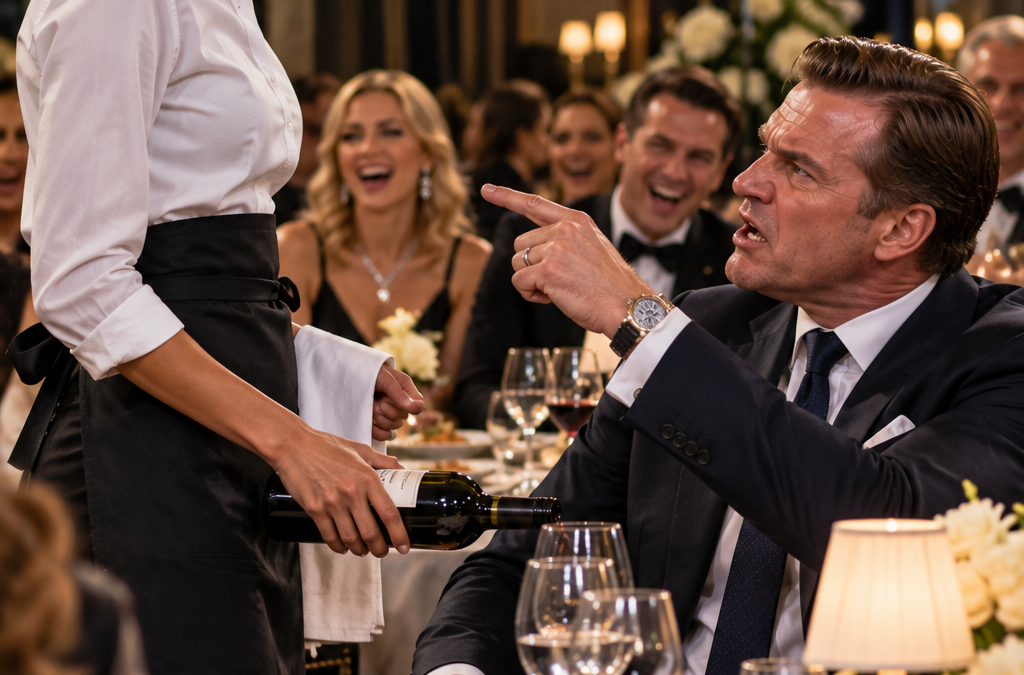
𝗙𝗨𝗟𝗟 𝗦𝗧𝗢𝗥𝗬
Dawson stared at me.
“You know what worries me about you?”
“A lot of things?”
“You’ve started believing you can’t be found.”
I smiled.
“No. I’ve started believing I’m tired of running.”
He didn’t like that answer.
Neither did I.
But it was true.
I rented a small apartment in Brooklyn.
No photographs.
No social media.
No family name on the mailbox.
I took a job at Bellini’s, an expensive Italian restaurant at Mulberry and Grand in Little Italy.
White tablecloths.
Low candlelight.
Wine bottles older than most of the staff.
Entrées that cost more than my first week’s groceries.
Bellini’s attracted finance people, tourists, lawyers, politicians, old neighborhood families, and men who didn’t put their business on tax returns.
The Ashton family belonged to the last category.
They didn’t legally own Bellini’s.
They didn’t legally own half the neighborhood.
But legal ownership and practical ownership are different things.
Restaurant owners paid.
Landlords paid.
Shopkeepers paid.
Everybody understood what happened if they didn’t.
Victor Ashton had inherited that shadow kingdom after Dominic went to prison.
He was thirty-eight.
Tall.
Always tailored.
Never visibly rushed.
Dominic had been loud and impulsive.
Victor preferred control.
He spoke quietly until quiet stopped working.
Then other people got hurt.
I recognized him immediately the first time he entered Bellini’s.
My pulse spiked.
My hand tightened around a wine bottle.
I looked down.
Breathed once.
Then twice.
When I looked up, I was Tanya again.
He didn’t recognize me.
Why would he?
The woman who infiltrated Dominic’s organization had worn another name, another wardrobe, another accent when necessary.
My photographs were sealed.
My role in the case had been buried under federal protection orders.
Victor had never seen Tiana Blackwell clearly enough to remember her.
To him, I was a waitress.
Black.
Quiet.
Disposable.
That assumption became the reason I survived him.
For nineteen months, I worked at Bellini’s.
Four in the afternoon until close.
Tie apron.
Polish glassware.
Check tables.
Smile.
Disappear.
I became very good at disappearing.
Elena Watts was the only person there who came close to becoming a real friend.
She was twenty-six and incapable of treating strangers as strangers.
She talked to taxi drivers.
Remembered customers’ birthdays.
Knew which bartender’s mother was recovering from surgery and which dishwasher secretly wanted to become a photographer.
One night after work, she looked at me across a bar and said:
“You’re weird.”
“Thank you.”
“No, seriously.”
She pointed her beer at me.
“No Instagram.”
“I don’t like it.”
“No Facebook.”
“Same.”
“No pictures of family.”
“Not everybody has family.”
“No exes.”
“That’s a blessing.”
“No embarrassing college story.”
“I didn’t go to college.”
She narrowed her eyes.
“No drunk tattoo.”
“No.”
“Nobody is this boring.”
I smiled.
“You underestimate me.”
She laughed.
Marco Sullivan, Bellini’s manager, never asked as many questions.
He noticed more.
The way I chose seats with walls behind me.
The way I scanned entrances.
The way I knew when two men at separate tables were watching each other before anybody else did.
The way my hands stayed steady during confrontation.
He once watched a customer scream inches from my face over a bottle of wine and asked afterward:
“You military?”
“No.”
“Police?”
“No.”
He studied me.
“Fine.”
That was Marco.
In Little Italy, surviving sometimes meant knowing when curiosity was expensive.
Every night after work, I went home and trained.
Krav Maga.
Close-quarters drills.
Footwork.
Wrist releases.
Elbows.
Knees.
Weapon disarms.
A heavy bag hung from a ceiling beam in my living room.
Not because I planned to fight anyone.
Because my body no longer understood what it meant not to prepare.
Undercover work had rewired me.
I slept light.
Counted exits automatically.
Noticed hands before faces.
Read shoulders.
Hips.
Distance.
You can leave the job.
Sometimes the job doesn’t leave you.
Victor began coming to Bellini’s regularly on Fridays.
Always the same corner booth.
Always the same group of men.
His table.
No reservation needed.
Nobody else sat there.
The first Friday I served him, there were six of them.
Victor.
Nikki, his loudest lieutenant.
Four others.
I carried menus to the booth.
“Good evening, gentlemen. Can I start you with—”
“Hold on.”
Victor lifted one finger.
He looked at me.
Then Marco.
“Marco.”
Marco paused behind the bar.
“When did you start hiring people off the street?”
The men laughed.
I kept my expression neutral.
“I’m your server tonight.”
Victor looked at me again.
“Our specials—”
“I didn’t ask for the specials.”
His smile disappeared.
“I asked why you’re standing here.”
The old Tiana inside me began calculating.
Distance.
Table edge.
Nikki’s dominant hand.
Victor’s right shoulder slightly forward.
Possible firearm beneath the jacket of the man nearest the wall.
Tanya smiled.
“Would you like a few minutes with the menu?”
Victor picked up a cloth napkin.
Held it over his nose.
“You people have a smell.”
Nikki laughed.
Victor continued.
“Wet concrete. Bus station. Government housing.”
The couple at the next table looked down.
That detail stayed with me.
Not Victor.
I already knew men like Victor existed.
The couple.
Ordinary people.
Well dressed.
Probably decent by their own definition.
They heard him.
Saw me.
Then decided their dinner mattered more.
“Would you like a moment to choose your wine?” I asked.
Victor stared.
“I’d like a waiter who doesn’t make me lose my appetite.”
He threw the menu.
It struck my chest.
Fell.
Nobody moved.
“Pick it up.”
I looked down.
Then bent.
Picked it up.
Straightened the pages.
“Bring me the Barolo. 2012.”
“Yes, sir.”
“Don’t touch the label.”
I waited.
“I don’t want grease on it.”
His men laughed again.
I said:
“Right away.”
“Smile.”
I looked at him.
“You’re lucky to be in this room.”
I smiled.
That smile cost more than the tip he eventually left.
In the kitchen, Elena grabbed my arm.
“What the hell was that?”
“Nothing.”
“That was not nothing.”
“I’m fine.”
“You should tell Marco.”
“Marco heard it.”
We both looked through the pass.
Marco was polishing the same glass he’d been holding during the exchange.
Elena’s face hardened.
“He should throw them out.”
“He can’t.”
“Yes, he can.”
“No.”
She knew what I meant.
Not legally.
Practically.
I opened the bottle.
My hands didn’t shake.
The second Friday, Victor came back.
Same booth.
More people.
Two women in designer dresses.
Another young man who filmed everything on his phone.
Victor saw me approaching.
“There she is.”
His smile widened.
“My favorite pet.”
Laughter.
The phone came up.
Red recording light.
I stopped at the table.
“Are you recording?”
Victor tilted his head.
“You asking me a question?”
“I’d prefer not to be filmed.”
“You don’t get preferences.”
He snapped his fingers.
“Bread.”
I brought bread.
Used tongs.
Set it down.
He shoved the basket back.
“No.”
“Is something wrong?”
“Your hands touched it.”
“I used tongs.”
“I saw your fingers near the basket.”
He leaned toward his guests.
“You never know with these people.”
The young man filming zoomed toward my face.
Victor said:
“Bring fresh bread.”
I lifted the basket.
“And wear gloves.”
The women laughed.
I went to the kitchen.
Elena stared at me when I pulled on latex gloves.
“No.”
“It’s fine.”
“It isn’t.”
“Elena.”
“You are not walking back out there wearing gloves because that racist piece of—”
“I said it’s fine.”
My tone stopped her.
She looked at me differently.
I softened.
“Please.”
I carried the replacement bread.
Victor inspected my gloves.
“Better.”
He looked around the table.
“See?”
Then at me.
“You can be trained.”
Nikki laughed so hard wine came through his nose.
I remember wondering how many people a man has to humiliate before laughter stops sounding like laughter and starts sounding like obedience.
The third Friday, Victor waited.
That was worse.
No insult when I arrived.
No comment during appetizers.
Nothing while I poured wine.
For almost an hour, I thought maybe he had grown bored.
Then he called me over during dinner.
“Stand there.”
He pointed to a spot beside the booth.
I looked at him.
“Sir?”
“There.”
I stood.
He raised his glass.
“Gentlemen, a toast.”
Conversation quieted.
“To diversity.”
His table laughed.
Victor gestured toward me.
“Bellini’s is catching up with modern America.”
More laughter.
“They’ve got themselves a real live one.”
My face stayed empty.
He turned.
“So tell me.”
I waited.
“Where are your people from?”
“Virginia.”
He rolled his eyes.
“No.”
“I was born in Virginia.”
“I mean originally.”
I knew exactly what he meant.
“Virginia.”
He smiled.
“Do they have restaurants where your people come from?”
Nobody spoke.
“Or is it just communal pots?”
A woman at another table looked toward us.
Then back down.
“Dirt floors?”
I said nothing.
Victor leaned back.
“I’m asking you a question.”
“I’ve answered it.”
He stared.
For a second, something cold passed across his face.
Then he waved me away.
“Get another bottle.”
I turned.
“And lose the gloves.”
I stopped.
“You look like you’re about to operate on my risotto.”
He laughed.
His friends followed.
Every Friday, Victor pushed farther.
Every Friday, I let him.
That wasn’t weakness.
At least, I told myself it wasn’t.
My identity existed because people had gone to prison to protect it.
My survival depended on remaining ordinary.
A waitress fighting a known organized-crime figure becomes memorable.
A Black waitress quietly absorbing his abuse becomes invisible.
That calculation disgusted me.
It also kept me alive.
The fourth Friday, Victor came in angry.
I knew before he sat down.
Men like him carry violence differently on bad days.
Jaw tighter.
Movements clipped.
Everybody around them watches for weather.
A shipment had apparently gone wrong.
Money missing.
Two men had been fired.
I heard one left with a broken jaw.
Victor drank quickly.
Then stared at me.
“You know what I hate?”
I said nothing.
“My brother is sitting in federal prison because of a rat.”
My pulse jumped.
Not visibly.
Inside.
“A nobody.”
He swirled his wine.
“Someone smiled at our table for over a year.”
My mouth went dry.
“Wore a wire.”
I had.
“Listened.”
I had.
“Pretended to be one of us.”
I had.
Victor’s eyes found mine.
“You know what that feels like?”
I forced my shoulders loose.
“No, sir.”
“Like finding a cockroach in your bed.”
He drank.
“You don’t just kill the bug.”
A small smile.
“You burn the sheets.”
I felt Tiana wake up.
Not Tanya.
Tiana.
Agent Blackwell.
Case officer.
The woman who had once sat six feet from Dominic Ashton with a transmitter taped beneath her clothes while he described a murder.
I kept my voice neutral.
“Would you like another bottle?”
Victor’s expression sharpened.
“What are you staring at?”
“Nothing.”
“Then stop standing there.”
Nikki reached from behind.
Pulled my apron string.
The knot came loose.
Fabric slipped.
The table exploded with laughter.
Victor looked delighted.
“She doesn’t even flinch.”
I retied it.
“Cold-blooded.”
He raised his glass.
“Maybe she’s a reptile.”
In the kitchen, Elena was crying.
That made me angrier than anything Victor had said.
“Why do you let him do this?”
I washed my hands.
“Because it doesn’t matter.”
“Stop saying that.”
I looked at her.
“It matters.”
“I know.”
“Then why?”
I lowered my voice.
“Because sometimes surviving something means choosing when it matters.”
She stared at me.
“And when is that?”
“One day.”
“That’s not an answer.”
“It has to be.”
She wiped her face.
“Sometimes you scare me.”
“Good.”
She blinked.
I regretted it.
“Elena—”
“No.”
She stepped back.
“Maybe that’s the first honest thing you’ve ever said.”
She left the kitchen.
I stood there for a long time.
That night, Victor arranged the fifth Friday.
Private buyout.
Twenty-three guests.
One instruction.
Make sure the Black girl is working.
Marco called me Wednesday.
“You don’t need to come.”
“I’ll be there.”
“You didn’t hear me.”
“I heard you.”
“He specifically requested you.”
“I know.”
“That’s why I’m telling you not to come.”
I looked around my Brooklyn apartment.
The blinds were closed.
My heavy bag hung silent.
“Schedule me.”
“Tanya.”
“Marco.”
He breathed out.
“Fine.”
After the call, I found Dawson’s number.
It sat on my phone screen.
One tap.
That’s all.
One tap and by sunrise I could have been somebody else.
Another apartment.
Another name.
Another grocery store.
Another set of lies.
I didn’t call.
Instead, I moved the coffee table against the wall.
Started training.
Palm strike.
Elbow.
Knee.
Frame.
Wrist release.
Angle.
Exit.
Again.
Again.
Again.
My body remembered every sequence.
Muscle memory is strange.
It can wait years without resentment.
I struck the heavy bag until my shoulders burned.
Then stood in the middle of my living room breathing hard.
Four years.
Four years of versions.
Agent.
Informant.
Ghost.
Waitress.
I was tired of disappearing every time somebody dangerous decided I shouldn’t exist.
Friday came.
Bellini’s closed to the public at eight.
Victor’s people filled the restaurant.
Music.
Champagne.
Women dressed for cameras.
Men dressed for power.
Tables rearranged into a horseshoe.
Only three employees stayed.
Marco.
A busboy.
Me.
Victor clapped when I entered.
“There she is.”
Laughter.
“The guest of honor.”
I scanned the room.
Two exits.
Kitchen.
Main door.
Rear service corridor.
Nikki at Victor’s right.
At least two visible weapons under jackets.
Potential knives in place settings.
Marco behind the bar.
One guest near the entrance looked uncomfortable.
I put on my apron.
Went to work.
Victor called me into the center of the room after the first round of drinks.
“Stand there.”
I did.
He raised his glass.
“Tonight we celebrate.”
The guests watched.
“Good company.”
He gestured toward me.
“And entertainment.”
Somebody laughed.
Victor circled me.
“This is my favorite waitress.”
I looked straight ahead.
“She doesn’t argue.”
Another step.
“Doesn’t cry.”
Another.
“She just takes it.”
He stopped behind me.
“Like a good little—”
A woman interrupted.
“Victor.”
He turned.
She looked uneasy.
“Maybe that’s enough.”
His smile vanished.
“Enough?”
She didn’t answer.
Victor looked around the room.
“This restaurant exists because I allow it.”
Then toward Marco.
“This block exists because families like mine keep order.”
Nobody challenged him.
He faced me again.
“Bark.”
I thought I misheard.
“What?”
“Bark.”
A few nervous laughs.
“Just once.”
He lifted a stack of cash.
“I’ll double your tip.”
I looked at him.
“No.”
The room quieted.
Victor lowered the money.
“What?”
“No.”
He stepped closer.
“Pride.”
He smiled.
“Your people love that word.”
I could feel something changing.
“Marches.”
Another step.
“Speeches.”
Another.
“Fists.”
He was less than a foot away now.
“But here you are.”
He glanced at my apron.
“Serving my dinner.”
I said nothing.
“On my street.”
Nothing.
“So let’s find out whether there’s anything behind those eyes.”
He leaned in.
“Say something.”
I knew the line had arrived.
Not because of the insult.
Because of the way he was standing.
The invitation.
He wanted resistance.
He had built the night around forcing it.
I spoke quietly.
“You should let me walk away.”
Victor blinked.
“What?”
“You should let me walk away.”
Five words.
No threat.
A warning.
The last one I intended to give.
He placed his glass down.
Slowly.
Then grabbed my apron and yanked me toward him.
I smelled whiskey.
Cologne.
Anger.
“You think you’re tough?”
His hand came up.
I saw it before it moved.
I could have stopped it.
That’s the part that stayed with me afterward.
I could have blocked the slap.
But blocking it would have exposed too much before I knew what came next.
So I took it.
His palm struck my face.
My head turned.
My lip split against a tooth.
The restaurant froze.
Victor leaned closer.
“Prove—”
I moved.
Left hand beneath his grip.
Rotate wrist.
Break thumb line.
His fingers opened.
Right elbow into solar plexus.
Controlled.
Enough to empty the lungs.
Left palm to nose.
Again controlled.
Pain.
Tears.
Loss of vision.
Leg sweep.
Victor hit marble.
Three seconds.
Maybe four.
Silverware rattled.
He tried to breathe.
Nikki charged.
Two hundred thirty pounds.
Too much forward commitment.
I stepped off line.
Caught wrist.
Turned hip.
Used momentum.
He crashed into the dessert cart.
Glass shattered.
Tiramisu went across the wall.
Second man from left.
Knife.
I saw the shoulder before the blade cleared.
Low kick to wrist.
Metal flew.
One step forward.
Elbow.
Jaw.
He dropped.
Third man started toward me.
Then stopped.
His eyes moved.
Victor on the floor.
Nikki buried in broken desserts.
Knife man unconscious.
Me.
Hands open.
Breathing normal.
He returned to his chair.
The other two stayed seated.
Silence.
Phones came up.
One.
Then another.
Six.
Ten.
Everybody had spent five Fridays watching humiliation.
Now suddenly they wanted evidence.
I looked down at Victor.
Blood ran from his nose.
He stared at me with something new.
Recognition without understanding.
He knew I wasn’t what he’d decided I was.
He just didn’t know what I actually was.
I untied my apron.
Folded it.
Placed it on the nearest table.
Marco stood behind the bar.
His mouth was open.
“I quit.”
I walked out.
Didn’t run.
Didn’t look back.
By midnight, the video was everywhere.
WAITRESS TAKEDOWN.
Millions of views.
News.
Reaction channels.
Combat breakdowns.
People slowing the footage frame by frame.
Somebody wrote:
That’s not restaurant training.
Correct.
I watched from my apartment.
Blinds closed.
Dawson called.
I didn’t answer.
Then Victor held a press conference.
Bandage over his nose.
Arm in a sling he didn’t need.
Lawyers beside him.
He said he’d been attacked without provocation.
Said he barely knew me.
Said the video circulating online lacked context.
His attorneys released an edited clip.
Started after the slap.
I watched the narrative turn.
It happened fast.
Hero waitress became violent waitress.
Self-defense became tactical assault.
Commentators asked why a waitress knew how to disable three men.
People called me a thug.
A weapon.
Dangerous.
I should have expected it.
Still hurt.
A blocked number called.
I answered.
“It’s Dawson.”
“I know.”
“We need to move you.”
“No.”
“Tanya.”
“No.”
“Your face is national.”
“I know.”
“We can have you out tonight.”
“And the charges?”
He went quiet.
“If I disappear now, Victor becomes the victim.”
“You’re not safe.”
“I’ve spent four years not safe.”
“That doesn’t make this smarter.”
“I am done running.”
“Your cover is dead.”
“Then Tanya gets to live.”
He didn’t understand.
Maybe I didn’t either.
I hung up.
The next morning, I turned myself in.
Mugshot.
Fingerprints.
Bail.
Fifty thousand dollars.
The irony would have been funny if I had been in the mood.
A lawyer arrived.
Denise Crawford.
Sharp navy suit.
Sharper eyes.
“I watched the complete video.”
I said nothing.
“You were struck first.”
“Yes.”
“Threatened?”
“Yes.”
“History of harassment?”
“Five Fridays.”
Her eyebrows lifted.
“Documented?”
“Restaurant cameras.”
A small smile.
“Good.”
She leaned forward.
“This is self-defense.”
“I know.”
“Then let’s make everybody else know.”
While I sat in court processing, Victor started investigating me.
Private investigator.
Rex Thornton.
Former NYPD.
He found what anybody competent would find.
Nothing.
No childhood.
No college.
No public employment history before two years earlier.
No relatives.
No photographs.
Tanya Brooks had appeared almost fully formed.
Then he found a fingerprint.
A mug in Bellini’s break room.
Some corrupt access through a private-security contact.
A sealed federal record opened.
Tiana Blackwell.
DEA.
Operation Nightfall.
Victor finally found his ghost.
When Thornton told him, Victor reportedly went silent for ten seconds.
Then said:
“She was pouring my wine.”
That detail spread later.
Not my badge.
Not Dominic.
My wine.
Because humiliation cuts narcissists deeper than danger.
I had watched him spend two years hunting me while he ordered me to wear gloves before touching bread.
By sunrise, my real identity had leaked.
Headlines changed again.
UNDERCOVER DEA AGENT BEHIND VIRAL RESTAURANT ATTACK.
People said the whole thing had been planned.
That I had provoked Victor.
That my training made self-defense impossible because I should have tolerated the assault differently.
My address leaked.
Someone painted RAT on my apartment door.
Red spray paint.
I stood in the hallway looking at the word.
Fourteen months inside Dominic’s circle.
Two years under another name.
And one word brought me closer to tears than almost anything before it.
Because I had tried so hard to become a person instead of an operation.
My phone buzzed.
Elena.
Was any of it real?
I stared at the message.
Then:
The friendship? The drinks? Me?
I typed:
Yes.
Deleted it.
Typed:
More real than you know.
Deleted.
Then nothing.
What explanation could repair lying about your entire existence?
Denise called.
“Trial in five days.”
“That’s fast.”
“Victor wants fast.”
“Why?”
“Because public opinion is turning against you.”
I sat on the edge of my bed.
The heavy bag had been taken down.
The room looked larger without it.
Emptier too.
“You ready?”
“No.”
“Good.”
I almost laughed.
“Good?”
“People who tell me they’re ready for criminal trial are either lying or idiots.”
I lay back.
“Denise?”
“Yes?”
“Do you believe me?”
She answered immediately.
“Yes.”
“Why?”
“Because I watched what happened before you fought back.”
That mattered.
More than I expected.
The courtroom was packed.
Press.
Sketch artists.
Spectators.
Two crowds outside.
One calling me a liar.
One holding signs about self-defense.
I entered through a side door.
Victor sat fifteen feet away.
Still wearing the sling.
Still performing injury.
I didn’t look at him.
His attorney, Harrison Cole, addressed the jury first.
He described me as a trained federal weapon.
Not woman.
Not waitress.
Weapon.
He talked about infiltration.
Combat training.
Deception.
Then said:
“My client never stood a chance.”
I felt something twist inside me.
Five Fridays.
Victor had never allowed me a chance.
But the second I possessed the capacity to defend myself, suddenly his cruelty became vulnerability.
Denise stood.
“An unarmed civilian.”
She repeated his phrase.
Then inserted a drive into the evidence system.
Bellini’s security footage.
Friday one.
Menu thrown into my chest.
Friday two.
Gloves.
Friday three.
Racial mockery.
Friday four.
My apron being pulled open.
Friday five.
Bark for me.
Then my warning.
You should let me walk away.
Then the grab.
The slap.
Blood.
My response.
Every angle.
Every minute.
I watched myself endure it.
That was harder than watching the fight.
I had forgotten how still I stood.
How often I swallowed.
How many times my eyes moved toward people who looked away.
Denise faced the jury.
“Five weeks.”
Her voice stayed calm.
“Five weeks this woman absorbed humiliation because leaving was not as simple for her as Mr. Ashton wants you to believe.”
Then:
“When he finally struck her, she stopped the threat.”
She pointed toward the screen.
“She did not chase anyone.”
True.
“She did not continue attacking Mr. Ashton after he fell.”
True.
“She did not pursue the men who remained seated.”
True.
“She neutralized the people advancing on her.”
True.
“And then she left.”
Dr. Angela Simmons testified next.
She had been dining at Bellini’s that night.
Professor of constitutional law.
She watched the slap.
The surrounding men.
My response.
Denise asked:
“In your opinion, was Ms. Brooks’s response proportional?”
“Yes.”
“Why?”
“She stopped when the threat stopped.”
That sentence carried more weight than all the televised analysis.
Then the case changed.
Rex Thornton had been intercepted by federal investigators.
He was facing serious charges for accessing sealed information.
He cooperated.
Turned over messages.
Payments.
Instructions.
One text mattered more than all the others.
Victor sent it at 1:47 in the morning after discovering my identity.
I don’t care how. Make her disappear permanently.
When Denise read it aloud, the courtroom erupted.
Victor stood.
“That’s not what I meant.”
The judge ordered him seated.
He kept talking.
“She destroyed my family.”
Denise waited.
Then faced the jury.
My family.
That was Victor’s obsession.
As though Dominic’s trafficking network had been a family business the rest of us had no right to interrupt.
As though the people poisoned by their drugs had no families.
As though landlords threatened by their collectors had no families.
As though I had no life that mattered.
Denise’s closing statement was short.
“Tanya Brooks is not a weapon.”
She looked toward me.
“She is a woman who survived being underestimated by men who believed power gave them permission.”
Then she looked toward Victor.
“Mr. Ashton spent five weeks trying to break her because he believed she could not stop him.”
Pause.
“When he discovered that belief was wrong, he tried to make her disappear.”
The jury deliberated two hours and fourteen minutes.
Not guilty.
Unanimous.
I heard the words.
Felt Denise squeeze my shoulder.
People behind me reacted.
I didn’t.
Relief doesn’t always feel like joy.
Sometimes it feels like your body finally remembering it is allowed to breathe.
Then the side doors opened.
Federal marshals entered.
They walked past me.
Toward Victor.
One marshal spoke.
“Victor Ashton, stand up.”
Victor looked at his lawyers.
Nobody moved.
“You are under arrest for drug trafficking, witness intimidation, and conspiracy to commit murder.”
The cuffs clicked.
That sound I remember.
Metal.
Simple.
Final.
As they led him past, Victor leaned toward me.
“This isn’t over.”
I met his eyes.
For five Fridays, he had looked at me and seen something less than human.
For two years before that, he had hunted a faceless enemy.
Now he finally knew both women were one person.
I said:
“It ended two years ago.”
He stopped.
“You just didn’t know it.”
The marshal pulled him forward.
The doors closed.
Denise touched my shoulder.
“It’s done.”
I stared at the empty doorway.
“No.”
“What?”
I looked down at my hands.
“Not yet.”
Victor’s federal case exposed everything.
His revived trafficking network.
Payments.
Threats.
Witness intimidation.
The kill order.
Nikki’s role.
Associates.
Properties.
Accounts.
Victor eventually received thirty-two years.
No parole.
Nikki got twelve.
Others took deals.
The Ashton network collapsed.
Again.
The neighborhood changed.
Marco told me the first week after the arrests was the first week in twenty years nobody came asking businesses for envelope money.
News organizations transformed me overnight.
The same television hosts who questioned whether I was dangerous now called me brave.
They wanted interviews.
Documentaries.
Panels.
I declined everything.
I had spent too much of my life becoming somebody other people could consume.
Agent.
Informant.
Waitress.
Viral woman.
Hero.
Villain.
Hero again.
I wanted to become boring.
I wanted coffee without surveillance.
A grocery store where nobody recognized me.
A friend who knew what kind of music I hated.
Three weeks after the trial, Elena came to my apartment.
I opened the door.
She looked at the faint outline of RAT still visible beneath the fresh paint.
Then at me.
“I’m sorry.”
“You don’t have to—”
“Yes.”
Her voice shook.
“I do.”
I stepped aside.
She came in.
We sat at the kitchen table.
For a while, neither of us knew where to begin.
Finally she said:
“Were you ever actually a waitress?”
I smiled slightly.
“Nineteen months says yes.”
“You know what I mean.”
“I do.”
She looked down.
“Were we friends?”
“Yes.”
“Why didn’t you answer me?”
“Because every answer sounded like another lie.”
She swallowed.
“You let me talk about my ex for two hours once.”
“I remember.”
“You knew how my mother takes her coffee.”
“Yes.”
“You came to the hospital when my sister had surgery.”
“Yes.”
“That was real?”
“All of it.”
She wiped her eyes.
“Then why didn’t you trust me?”
That one hurt.
“Because trusting people used to get them killed.”
She looked at me.
I continued.
“When I was undercover, knowing me was dangerous. Afterward, I forgot how to separate danger from closeness.”
Elena nodded.
Then:
“I should’ve trusted you when the story broke.”
“You had every reason to question me.”
“No.”
She shook her head.
“I had every reason to ask.”
Difference.
“But I accused.”
I looked at her.
“We both made choices.”
“Do you forgive me?”
I smiled sadly.
“Coffee first.”
She laughed through tears.
We talked for four hours.
Not about everything.
Some things remained sealed.
Some things were mine.
But it was the first conversation I’d had in years where I wasn’t measuring every sentence for operational risk.
Dawson arrived one Thursday.
No warning.
He placed a folder on my table.
“The Bureau wants you back.”
I stared.
“DEA?”
“Interagency supervisory position.”
“No undercover.”
“No.”
“Training?”
“Yes.”
I touched the folder.
Didn’t open it.
“Benefits?”
“Good.”
“Salary?”
“Better.”
“Office?”
“Yes.”
I laughed.
“What?”
“I don’t know if I know how to sit in an office.”
“You’d figure it out.”
I became quiet.
Then pushed the folder back.
“No.”
He looked disappointed.
“Why?”
“I spent fourteen months pretending to be someone Dominic trusted.”
I pointed toward the door.
“Then two years pretending Tanya Brooks had no past.”
I looked at him.
“I don’t know who I am when I stop pretending.”
“That’s exactly why you should come back.”
“No.”
I shook my head.
“That’s why I shouldn’t.”
He didn’t argue immediately.
I appreciated that.
“I’ve been a ghost almost four years, Phil.”
“Yes.”
“I’m done disappearing.”
He picked up the folder.
At the door, he turned.
“You were the best agent I ever ran.”
I looked away.
“Don’t.”
“I mean it.”
“Still don’t.”
“You stayed human.”
That made me look at him.
He continued.
“Most people can’t do what you did without letting the role eat something.”
“It ate plenty.”
“Not everything.”
He left.
I sat alone.
Then made a call.
Six weeks later, a community center in Bedford-Stuyvesant gave me a room twice a week.
Tuesday.
Thursday.
Free self-defense classes for women.
Especially women of color.
Especially service workers.
Women who had been told to smile.
To ignore.
To stay quiet.
To avoid making scenes.
The first class had fourteen women.
One nurse.
Two waitresses.
A college student.
A hotel housekeeper.
A teacher.
A woman who had recently left an abusive marriage.
They stood on cheap mats looking nervous.
I stood in front.
No badge.
No apron.
No false credentials.
Just Tanya.
One woman raised her hand.
“Are you really her?”
“Who?”
“The waitress from the video.”
I almost smiled.
“Yes.”
A few women whispered.
Another asked:
“Did you really work for the DEA?”
“Yes.”
Silence.
Then:
“Are you going to teach us what you did to that guy?”
“No.”
They looked disappointed.
I walked toward the center.
“I’m going to teach you everything that happens before that.”
I showed them stance.
Distance.
Voice.
Boundaries.
How to recognize when somebody was testing what they could get away with.
How to position themselves near exits.
How to break a wrist grip.
How to run.
Most importantly, how to understand that leaving wasn’t cowardice.
Fighting wasn’t victory.
Survival was the objective.
A younger woman named Keisha asked:
“What if people think I’m rude?”
“Let them.”
“What if it’s my boss?”
“Still let them.”
“What if I lose my job?”
I paused.
There were no clean answers.
“Sometimes protecting yourself costs something.”
I looked around.
“But believing you deserve abuse costs more.”
The room became quiet.
I understood then what I wanted the class to be.
Not combat.
Permission.
Permission to say no.
Permission to move.
Permission to make noise.
Permission to believe instinct before politeness.
Marco reserved a table at Bellini’s.
I didn’t ask him to.
A brass plate appeared.
TANYA’S TABLE — RESERVED.
Nobody used it.
One Friday, Elena convinced me to go back.
I stood outside Bellini’s for several minutes.
The front window reflected my face.
The last time I’d walked through those doors, I had been carrying an apron.
Elena came outside.
“You can leave.”
I looked at her.
“Seriously.”
She took my hand.
“We can go somewhere else.”
For a moment, I almost did.
Then I remembered my own words.
I was done giving other people geography inside my life.
I opened the door.
Marco saw me.
Stopped.
Then came around the bar.
“I owe you an apology.”
“Yes.”
He winced.
I hadn’t meant to make it easy.
“I should have stopped him.”
“Yes.”
“I was afraid.”
“I know.”
“He would’ve destroyed the restaurant.”
“Maybe.”
He looked at the floor.
“I chose the restaurant.”
I waited.
“I watched him humiliate you because I was afraid of losing this place.”
He looked around.
“My father started Bellini’s.”
“I know.”
“I kept telling myself twenty employees depended on it.”
“That was probably true.”
He frowned, not expecting sympathy.
“Doesn’t make it right.”
“No.”
He nodded.
“I wanted you to know I understand that now.”
I touched the brass plate.
“Why this?”
“Because this table used to be his.”
I looked toward the corner booth.
Different one.
Marco continued.
“I didn’t want his to be the only name the room remembered.”
I sat.
Elena joined me.
We ate pasta.
Nobody stared.
At least not much.
Halfway through dinner, a server accidentally dropped a wineglass.
It shattered.
My entire body tightened.
Heart kicked.
Hands ready.
The room blurred for half a second.
Then I breathed.
Elena noticed.
“You okay?”
“Yes.”
“Lie.”
I looked at the broken glass.
“Working on it.”
She nodded.
Didn’t push.
That became my life.
Working on it.
People like to tell survival stories backward.
They start with the victorious ending and treat everything before it like steps on a staircase.
That’s not how it feels while you’re climbing.
There are days after the courtroom when you still wake up at three in the morning because somebody in the hallway closed a door too hard.
There are days when a stranger recognizing you in a grocery store feels like a threat.
There are friendships you have to relearn because secrecy became muscle memory.
There are moments when being safe feels so unfamiliar your body rejects it.
I never returned to federal service.
I kept Tanya.
People sometimes asked why.
Tiana Blackwell was my real name.
Legally, originally, historically.
But real is a complicated word.
Tiana was born in Virginia.
Became an agent.
Entered Dominic Ashton’s organization.
Then disappeared.
Tanya learned how to live without a badge.
Tanya met Elena.
Tanya worked nineteen months at Bellini’s.
Tanya endured five Fridays.
Tanya finally said:
You should let me walk away.
That woman was real too.
Maybe more real than I had expected.
The classes grew.
Fourteen became forty.
Then a waiting list.
We added Saturday sessions.
A nonprofit helped us secure grants.
We brought in lawyers to teach workplace rights.
Therapists to talk about trauma.
Transit workers to discuss safety on trains.
Former domestic-violence advocates.
Not every problem could be solved with an elbow.
In fact, most couldn’t.
That mattered.
One evening, a woman named Rochelle stayed after class.
She worked at a hotel.
Housekeeping.
Mid-forties.
Two kids.
She waited until everybody left.
“Can I ask something?”
“Sure.”
“There is a man at work.”
I listened.
“Manager.”
I knew where the sentence was going before she finished.
“He touches my back.”
Her hands twisted together.
“Too low.”
I nodded.
“He corners me.”
“Have you reported it?”
She laughed bitterly.
“To who?”
“HR?”
“He is HR’s cousin.”
I understood.
“He hasn’t hit me.”
“You don’t need him to.”
“I keep thinking maybe I’m making too much of it.”
“Do you feel safe?”
“No.”
“Then you’re not making too much of it.”
Tears appeared.
“My daughter says quit.”
“Can you?”
“I need the insurance.”
There it was again.
The trap people ignore when they ask why someone doesn’t simply leave.
Rent.
Insurance.
Food.
Children.
Survival has math.
I helped connect her with an employment attorney working with our program.
She documented everything.
Weeks later, an investigation removed the manager after three other women came forward.
Rochelle hugged me.
“You saved my job.”
“No.”
I looked at her.
“You spoke.”
She smiled.
“I only spoke because someone finally told me I was allowed.”
That sentence stayed with me longer than the courtroom verdict.
Months later, the community center asked me to speak at a fundraiser.
I refused twice.
The director called a third time.
“You teach forty women every week.”
“That’s different.”
“How?”
“They came to learn.”
“So will the people at the fundraiser.”
“I don’t do speeches.”
“You testified in federal cases.”
“Under oath.”
“Pretend you’re under oath.”
I eventually agreed.
No cameras allowed.
That was my condition.
I stood in front of about a hundred people.
No notes.
For several seconds, I said nothing.
Then:
“The most important thing I did at Bellini’s wasn’t knocking Victor Ashton down.”
The room quieted.
“It was warning him.”
You should let me walk away.
“I gave him an exit.”
I paused.
“He chose not to take it.”
Then I looked around.
“Self-defense isn’t about becoming dangerous.”
“It’s about recognizing when someone else has decided your safety doesn’t matter.”
A woman in the front row wiped her eyes.
“And the hardest lesson I learned is this.”
I breathed.
“You don’t have to wait until someone hits you before you believe yourself.”
That was all.
No viral slogan.
No applause line planned.
People stood anyway.
I hated it.
Then accepted it.
Elena was waiting afterward.
“You’re terrible at accepting praise.”
“I know.”
“You looked like you wanted to crawl through the floor.”
“I did.”
She handed me water.
“Progress.”
Years earlier, Dominic Ashton had told his people that fear worked best when everyone watched one person suffer.
I remember that from undercover.
Public punishment.
One person bleeds.
Ten others learn obedience.
Victor understood the same principle instinctively.
That’s what the five Fridays were.
Not just racism.
Not just cruelty.
Performance.
He humiliated me so everybody else could see what happened when Victor Ashton decided a person was beneath him.
The audience mattered.
That was why those silent tables stayed with me.
Because power rarely operates alone.
It borrows comfort from witnesses.
The person who looks down at dinner.
The manager who protects the business.
The friend who says, “That’s just how he is.”
The employee who laughs because the boss laughed.
Nobody thinks of themselves as part of the violence.
But enough silence can make one cruel man feel like a king.
Victor lost that kingdom.
Dominic heard about his brother’s sentence from prison.
Some guard later told a reporter that Dominic barely spoke for days.
I never knew whether that was true.
I didn’t care enough to verify it.
Both Ashton brothers ended up incarcerated.
Both networks dismantled.
People sometimes called that justice.
Maybe.
For me, justice was smaller.
A Friday-night restaurant where nobody paid envelope money anymore.
Marco calling police when somebody threatened a dishwasher instead of looking away.
Elena sending me stupid memes at midnight because she no longer worried my phone was monitored.
Rochelle keeping her job.
A classroom full of women learning how to plant their feet.
That’s the kind of justice that interested me.
The quiet kind.
The kind that lasts after headlines stop.
Two years after Bellini’s, one of my students asked me:
“Do you ever regret not leaving before that last Friday?”
I thought about it.
If I had called Dawson Wednesday night, Victor might have remained free longer.
My cover would have survived.
My face would never have gone viral.
Nobody would have spray-painted my door.
Elena would never have discovered how much I’d hidden.
I would not have spent a night in jail.
I would not have sat at a defense table while strangers debated whether I was a human being or a weapon.
So the sensible answer should have been yes.
But I shook my head.
“No.”
She looked surprised.
“Why?”
“Because I was already disappearing.”
“What do you mean?”
I searched for the right words.
“Every time something dangerous happened, my solution was to become somebody else.”
New role.
New name.
New city if necessary.
“That works for operations.”
I looked around the class.
“It doesn’t work forever for a person.”
She nodded slowly.
“So fighting Victor fixed that?”
“No.”
I smiled.
“Choosing not to run did.”
There was a difference.
The fight lasted seconds.
The decision had taken years.
On Tuesday evenings now, I walk to the community center from the subway.
I still check reflections in windows.
Still notice exits.
Still know when somebody’s been behind me for more than two blocks.
Maybe that never leaves.
I buy coffee from the same bodega.
The owner knows my order.
Sometimes people recognize me.
Less often now.
That’s good.
Bellini’s still operates.
Marco says business improved once the Ashton pressure disappeared.
I go there occasionally.
Not every Friday.
Friday belongs to other things now.
Dinner with Elena.
Late classes.
Sometimes nothing.
Nothing is underrated.
I no longer own an apron.
My heavy bag hangs again in my apartment.
Not because I’m waiting for violence.
Because I like training.
There is a photograph beside it now.
The first self-defense class.
Fourteen women standing on cheap mats.
I’m in the middle.
Actually smiling.
No disguise.
No cover.
No coded signal.
Just me.
The first time I looked at that picture, I realized something.
Tiana Blackwell had spent years trying to become invisible enough to survive dangerous men.
Tanya Brooks spent years trying to become invisible enough to survive herself.
Neither could stay hidden forever.
One night after class, I was locking the center when a young woman from the new group stopped at the door.
“Ms. Brooks?”
“Tanya.”
“Tanya.”
She looked embarrassed.
“Can I ask you something?”
“Sure.”
“Were you scared when Victor slapped you?”
I thought about lying.
People prefer heroes who never feel fear.
“Yes.”
Her eyebrows lifted.
“Really?”
“Really.”
“But you looked so calm.”
“I was trained.”
“That’s different?”
“Very.”
I locked the cabinet.
“Courage isn’t the absence of fear.”
She smiled.
“I know that quote.”
“Then forget the quote.”
She laughed.
I continued.
“Fear is information.”
I pointed to my chest.
“Your body telling you something matters.”
“So what makes someone brave?”
I looked at the dark windows.
Outside, Brooklyn moved past.
People going home.
Buses braking.
Music from a car.
Life.
“Deciding what you do with the information.”
She nodded.
Then hesitated.
“What were you afraid of?”
That answer was harder.
Not Victor.
Not the men charging me.
Not even being killed.
“I was afraid I’d disappear again.”
She didn’t fully understand.
She didn’t need to.
I turned off the lights.
We stepped outside.
She headed toward the train.
I walked the other way.
For years, Victor Ashton believed the most dangerous thing about me was that he couldn’t find me.
He was wrong.
He found me every Friday.
He looked directly at me.
Spoke to me.
Insulted me.
Made me carry his food.
What destroyed him wasn’t that I was invisible.
It was that he was incapable of imagining someone like me could be more than the uniform he saw.
He spent three hundred thousand dollars searching for a federal ghost while ordering that same woman to wear gloves before touching his bread.
That arrogance protected me better than any disguise.
But I don’t think about that as victory anymore.
Because being underestimated isn’t power by itself.
Sometimes it is simply another form of being unseen.
And after years of being unseen, the thing I wanted most wasn’t revenge.
It was a life where I could walk into a room without pretending I had no history.
A life where a friend knew my real fears.
A life where my name didn’t belong to an operation.
A life where strength didn’t always have to mean preparing for violence.
I got some of that.
Not all.
Healing isn’t clean.
I still wake when somebody pounds on a neighbor’s door.
Still count strangers in elevators.
Still dislike sitting with my back exposed.
I still have days when I see RAT on a wall that has been repainted twice.
But I also laugh more.
Trust a little faster.
Teach.
Eat dinner without scanning every fork as a weapon.
Progress.
One evening, after the last class of the year, I stood alone in the training room.
The mats had been stacked.
Lights dim.
On the whiteboard, somebody had written:
THANK YOU, TANYA.
Under it, dozens of names.
Rochelle.
Keisha.
Maria.
Danielle.
Women who had come through the door carrying their own versions of silence.
I touched the marker writing.
Then sat on the edge of a mat.
Four years earlier, I had believed my greatest skill was disappearing.
I was wrong.
Disappearing had been survival.
Useful.
Necessary.
But survival is supposed to get you somewhere.
You’re not meant to build a home inside it.
My phone buzzed.
Elena.
Dinner?
I typed:
Yes.
She replied:
Bellini’s?
I looked at the message for a few seconds.
Then smiled.
Sure.
When I arrived, Marco was behind the bar.
He nodded toward the reserved table.
I shook my head.
“Not tonight.”
He looked confused.
“Where?”
I pointed toward a table near the front window.
Ordinary table.
People passing outside.
Back exposed to half the room.
Marco raised an eyebrow.
“You sure?”
“Yes.”
Elena arrived ten minutes later.
She noticed immediately.
“You’re sitting with your back to the door.”
“I know.”
“Who are you?”
“Don’t make it weird.”
She laughed.
We ordered pasta.
Cheap wine by Bellini’s standards.
Halfway through dinner, somebody at another table raised his voice.
My body reacted.
Then stopped.
I remained seated.
Elena saw.
Said nothing.
That was friendship.
Not pretending you didn’t notice.
Knowing when not to make someone explain.
Outside, people moved along Mulberry Street.
No one knew who I was.
No one cared.
And for the first time in years, anonymity didn’t feel like erasure.
It felt like peace.
I lifted my glass.
Elena touched hers against it.
“To boring.”
I smiled.
“To boring.”
The glasses clicked.
And this time, when I looked around the restaurant, I wasn’t counting exits.
I was simply there.
𝗧𝗛𝗘 𝗘𝗡𝗗
The Man Who Spent Two Years Hunting Me Made Me Serve His Dinner Every Friday Without Realizing Who I Was
For five straight Fridays, Victor Ashton made me stand beside his table while he mocked my skin, my clothes, my job, and every Black person he believed looked like me.
What made it almost unbearable was knowing that this man had already spent two years and more than three hundred thousand dollars trying to find the federal agent who destroyed his brother’s empire—and every Friday, that woman was the one pouring his wine.
My name was Tanya Brooks.
At least that was the name printed on my driver’s license.
The name on my lease.
The name Marco Sullivan wrote on the weekly schedule at Bellini’s.
The name Elena called when she needed somebody to cover a shift.
Two years earlier, I had been someone else.
Tiana Blackwell.
Special Agent Tiana Blackwell.
Drug Enforcement Administration.
Undercover Division.
I hadn’t said that name aloud in a long time.
Names become dangerous when enough people want the person attached to them dead.
For fourteen months, I lived inside Dominic Ashton’s narcotics network.
Not near it.
Inside it.
I ate at his tables.
Sat beside his lieutenants.
Watched cash change hands in back rooms.
Memorized routes, names, warehouses, drop points, shell corporations, phone numbers, plate numbers.
I laughed when men told jokes that made my stomach turn.
I poured drinks for people I knew had ordered beatings.
Once, I danced at a birthday party three hours after watching one of Dominic’s men threaten a teenager because his father owed twelve thousand dollars.
That is what undercover work does if you stay in it long enough.
It teaches your face to betray nothing.
Fear becomes posture.
Disgust becomes a smile.
And eventually, you stop knowing whether silence is discipline or damage.
Operation Nightfall ended on a Tuesday morning.
Federal teams hit six locations simultaneously.
Dominic was arrested before breakfast.
Fourteen of his people went down with him.
Warehouses were seized.
Accounts were frozen.
A drug pipeline that had moved narcotics along the Eastern Seaboard for years collapsed almost overnight.
Dominic got twenty-five years.
I disappeared before the indictment became public.
No press conference.
No commendation ceremony.
No handshake from a director.
The Marshals moved fast.
New documents.
New records.
New identity.
Tanya Brooks.
They offered relocation.
Montana.
Oregon.
Somewhere quiet.
Somewhere with fewer people who knew the Ashton name.
My former handler, Phil Dawson, looked at me as though I had lost my mind when I said I wanted to stay in New York.
“You’re asking to remain twelve blocks from territory you helped dismantle.”
“Exactly.”
“That is the opposite of relocation.”
“It’s hiding in plain sight.”
“Tiana—”
“Tanya.”
He stopped.
I wasn’t correcting him for paperwork.
I needed the distinction.
Tiana Blackwell was an agent.
She had a badge.
Training.
Backup.
A radio.
A gun.
A team watching through surveillance feeds.
Tanya Brooks had nothing but a social security number that had barely existed long enough to have a credit history.
Dawson leaned back.
“Dominic’s brother is still out there.”
“I know.”
“Victor is looking for whoever flipped the case.”
“I know.”
“He has money.”
“I know.”
“He has people.”
“I know.”
“And your solution is to live practically inside his neighborhood?”
“Nobody hunts for a ghost at his own dinner table.”
Dawson stared at me.
“You know what worries me about you?”
“A lot of things?”
“You’ve started believing you can’t be found.”
I smiled.
“No. I’ve started believing I’m tired of running.”
He didn’t like that answer.
Neither did I.
But it was true.
I rented a small apartment in Brooklyn.
No photographs.
No social media.
No family name on the mailbox.
I took a job at Bellini’s, an expensive Italian restaurant at Mulberry and Grand in Little Italy.
White tablecloths.
Low candlelight.
Wine bottles older than most of the staff.
Entrées that cost more than my first week’s groceries.
Bellini’s attracted finance people, tourists, lawyers, politicians, old neighborhood families, and men who didn’t put their business on tax returns.
The Ashton family belonged to the last category.
They didn’t legally own Bellini’s.
They didn’t legally own half the neighborhood.
But legal ownership and practical ownership are different things.
Restaurant owners paid.
Landlords paid.
Shopkeepers paid.
Everybody understood what happened if they didn’t.
Victor Ashton had inherited that shadow kingdom after Dominic went to prison.
He was thirty-eight.
Tall.
Always tailored.
Never visibly rushed.
Dominic had been loud and impulsive.
Victor preferred control.
He spoke quietly until quiet stopped working.
Then other people got hurt.
I recognized him immediately the first time he entered Bellini’s.
My pulse spiked.
My hand tightened around a wine bottle.
I looked down.
Breathed once.
Then twice.
When I looked up, I was Tanya again.
He didn’t recognize me.
Why would he?
The woman who infiltrated Dominic’s organization had worn another name, another wardrobe, another accent when necessary.
My photographs were sealed.
My role in the case had been buried under federal protection orders.
Victor had never seen Tiana Blackwell clearly enough to remember her.
To him, I was a waitress.
Black.
Quiet.
Disposable.
That assumption became the reason I survived him.
For nineteen months, I worked at Bellini’s.
Four in the afternoon until close.
Tie apron.
Polish glassware.
Check tables.
Smile.
Disappear.
I became very good at disappearing.
Elena Watts was the only person there who came close to becoming a real friend.
She was twenty-six and incapable of treating strangers as strangers.
She talked to taxi drivers.
Remembered customers’ birthdays.
Knew which bartender’s mother was recovering from surgery and which dishwasher secretly wanted to become a photographer.
One night after work, she looked at me across a bar and said:
“You’re weird.”
“Thank you.”
“No, seriously.”
She pointed her beer at me.
“No Instagram.”
“I don’t like it.”
“No Facebook.”
“Same.”
“No pictures of family.”
“Not everybody has family.”
“No exes.”
“That’s a blessing.”
“No embarrassing college story.”
“I didn’t go to college.”
She narrowed her eyes.
“No drunk tattoo.”
“No.”
“Nobody is this boring.”
I smiled.
“You underestimate me.”
She laughed.
Marco Sullivan, Bellini’s manager, never asked as many questions.
He noticed more.
The way I chose seats with walls behind me.
The way I scanned entrances.
The way I knew when two men at separate tables were watching each other before anybody else did.
The way my hands stayed steady during confrontation.
He once watched a customer scream inches from my face over a bottle of wine and asked afterward:
“You military?”
“No.”
“Police?”
“No.”
He studied me.
“Fine.”
That was Marco.
In Little Italy, surviving sometimes meant knowing when curiosity was expensive.
Every night after work, I went home and trained.
Krav Maga.
Close-quarters drills.
Footwork.
Wrist releases.
Elbows.
Knees.
Weapon disarms.
A heavy bag hung from a ceiling beam in my living room.
Not because I planned to fight anyone.
Because my body no longer understood what it meant not to prepare.
Undercover work had rewired me.
I slept light.
Counted exits automatically.
Noticed hands before faces.
Read shoulders.
Hips.
Distance.
You can leave the job.
Sometimes the job doesn’t leave you.
Victor began coming to Bellini’s regularly on Fridays.
Always the same corner booth.
Always the same group of men.
His table.
No reservation needed.
Nobody else sat there.
The first Friday I served him, there were six of them.
Victor.
Nikki, his loudest lieutenant.
Four others.
I carried menus to the booth.
“Good evening, gentlemen. Can I start you with—”
“Hold on.”
Victor lifted one finger.
He looked at me.
Then Marco.
“Marco.”
Marco paused behind the bar.
“When did you start hiring people off the street?”
The men laughed.
I kept my expression neutral.
“I’m your server tonight.”
Victor looked at me again.
“Our specials—”
“I didn’t ask for the specials.”
His smile disappeared.
“I asked why you’re standing here.”
The old Tiana inside me began calculating.
Distance.
Table edge.
Nikki’s dominant hand.
Victor’s right shoulder slightly forward.
Possible firearm beneath the jacket of the man nearest the wall.
Tanya smiled.
“Would you like a few minutes with the menu?”
Victor picked up a cloth napkin.
Held it over his nose.
“You people have a smell.”
Nikki laughed.
Victor continued.
“Wet concrete. Bus station. Government housing.”
The couple at the next table looked down.
That detail stayed with me.
Not Victor.
I already knew men like Victor existed.
The couple.
Ordinary people.
Well dressed.
Probably decent by their own definition.
They heard him.
Saw me.
Then decided their dinner mattered more.
“Would you like a moment to choose your wine?” I asked.
Victor stared.
“I’d like a waiter who doesn’t make me lose my appetite.”
He threw the menu.
It struck my chest.
Fell.
Nobody moved.
“Pick it up.”
I looked down.
Then bent.
Picked it up.
Straightened the pages.
“Bring me the Barolo. 2012.”
“Yes, sir.”
“Don’t touch the label.”
I waited.
“I don’t want grease on it.”
His men laughed again.
I said:
“Right away.”
“Smile.”
I looked at him.
“You’re lucky to be in this room.”
I smiled.
That smile cost more than the tip he eventually left.
In the kitchen, Elena grabbed my arm.
“What the hell was that?”
“Nothing.”
“That was not nothing.”
“I’m fine.”
“You should tell Marco.”
“Marco heard it.”
We both looked through the pass.
Marco was polishing the same glass he’d been holding during the exchange.
Elena’s face hardened.
“He should throw them out.”
“He can’t.”
“Yes, he can.”
“No.”
She knew what I meant.
Not legally.
Practically.
I opened the bottle.
My hands didn’t shake.
The second Friday, Victor came back.
Same booth.
More people.
Two women in designer dresses.
Another young man who filmed everything on his phone.
Victor saw me approaching.
“There she is.”
His smile widened.
“My favorite pet.”
Laughter.
The phone came up.
Red recording light.
I stopped at the table.
“Are you recording?”
Victor tilted his head.
“You asking me a question?”
“I’d prefer not to be filmed.”
“You don’t get preferences.”
He snapped his fingers.
“Bread.”
I brought bread.
Used tongs.
Set it down.
He shoved the basket back.
“No.”
“Is something wrong?”
“Your hands touched it.”
“I used tongs.”
“I saw your fingers near the basket.”
He leaned toward his guests.
“You never know with these people.”
The young man filming zoomed toward my face.
Victor said:
“Bring fresh bread.”
I lifted the basket.
“And wear gloves.”
The women laughed.
I went to the kitchen.
Elena stared at me when I pulled on latex gloves.
“No.”
“It’s fine.”
“It isn’t.”
“Elena.”
“You are not walking back out there wearing gloves because that racist piece of—”
“I said it’s fine.”
My tone stopped her.
She looked at me differently.
I softened.
“Please.”
I carried the replacement bread.
Victor inspected my gloves.
“Better.”
He looked around the table.
“See?”
Then at me.
“You can be trained.”
Nikki laughed so hard wine came through his nose.
I remember wondering how many people a man has to humiliate before laughter stops sounding like laughter and starts sounding like obedience.
The third Friday, Victor waited.
That was worse.
No insult when I arrived.
No comment during appetizers.
Nothing while I poured wine.
For almost an hour, I thought maybe he had grown bored.
Then he called me over during dinner.
“Stand there.”
He pointed to a spot beside the booth.
I looked at him.
“Sir?”
“There.”
I stood.
He raised his glass.
“Gentlemen, a toast.”
Conversation quieted.
“To diversity.”
His table laughed.
Victor gestured toward me.
“Bellini’s is catching up with modern America.”
More laughter.
“They’ve got themselves a real live one.”
My face stayed empty.
He turned.
“So tell me.”
I waited.
“Where are your people from?”
“Virginia.”
He rolled his eyes.
“No.”
“I was born in Virginia.”
“I mean originally.”
I knew exactly what he meant.
“Virginia.”
He smiled.
“Do they have restaurants where your people come from?”
Nobody spoke.
“Or is it just communal pots?”
A woman at another table looked toward us.
Then back down.
“Dirt floors?”
I said nothing.
Victor leaned back.
“I’m asking you a question.”
“I’ve answered it.”
He stared.
For a second, something cold passed across his face.
Then he waved me away.
“Get another bottle.”
I turned.
“And lose the gloves.”
I stopped.
“You look like you’re about to operate on my risotto.”
He laughed.
His friends followed.
Every Friday, Victor pushed farther.
Every Friday, I let him.
That wasn’t weakness.
At least, I told myself it wasn’t.
My identity existed because people had gone to prison to protect it.
My survival depended on remaining ordinary.
A waitress fighting a known organized-crime figure becomes memorable.
A Black waitress quietly absorbing his abuse becomes invisible.
That calculation disgusted me.
It also kept me alive.
The fourth Friday, Victor came in angry.
I knew before he sat down.
Men like him carry violence differently on bad days.
Jaw tighter.
Movements clipped.
Everybody around them watches for weather.
A shipment had apparently gone wrong.
Money missing.
Two men had been fired.
I heard one left with a broken jaw.
Victor drank quickly.
Then stared at me.
“You know what I hate?”
I said nothing.
“My brother is sitting in federal prison because of a rat.”
My pulse jumped.
Not visibly.
Inside.
“A nobody.”
He swirled his wine.
“Someone smiled at our table for over a year.”
My mouth went dry.
“Wore a wire.”
I had.
“Listened.”
I had.
“Pretended to be one of us.”
I had.
Victor’s eyes found mine.
“You know what that feels like?”
I forced my shoulders loose.
“No, sir.”
“Like finding a cockroach in your bed.”
He drank.
“You don’t just kill the bug.”
A small smile.
“You burn the sheets.”
I felt Tiana wake up.
Not Tanya.
Tiana.
Agent Blackwell.
Case officer.
The woman who had once sat six feet from Dominic Ashton with a transmitter taped beneath her clothes while he described a murder.
I kept my voice neutral.
“Would you like another bottle?”
Victor’s expression sharpened.
“What are you staring at?”
“Nothing.”
“Then stop standing there.”
Nikki reached from behind.
Pulled my apron string.
The knot came loose.
Fabric slipped.
The table exploded with laughter.
Victor looked delighted.
“She doesn’t even flinch.”
I retied it.
“Cold-blooded.”
He raised his glass.
“Maybe she’s a reptile.”
In the kitchen, Elena was crying.
That made me angrier than anything Victor had said.
“Why do you let him do this?”
I washed my hands.
“Because it doesn’t matter.”
“Stop saying that.”
I looked at her.
“It matters.”
“I know.”
“Then why?”
I lowered my voice.
“Because sometimes surviving something means choosing when it matters.”
She stared at me.
“And when is that?”
“One day.”
“That’s not an answer.”
“It has to be.”
She wiped her face.
“Sometimes you scare me.”
“Good.”
She blinked.
I regretted it.
“Elena—”
“No.”
She stepped back.
“Maybe that’s the first honest thing you’ve ever said.”
She left the kitchen.
I stood there for a long time.
That night, Victor arranged the fifth Friday.
Private buyout.
Twenty-three guests.
One instruction.
Make sure the Black girl is working.
Marco called me Wednesday.
“You don’t need to come.”
“I’ll be there.”
“You didn’t hear me.”
“I heard you.”
“He specifically requested you.”
“I know.”
“That’s why I’m telling you not to come.”
I looked around my Brooklyn apartment.
The blinds were closed.
My heavy bag hung silent.
“Schedule me.”
“Tanya.”
“Marco.”
He breathed out.
“Fine.”
After the call, I found Dawson’s number.
It sat on my phone screen.
One tap.
That’s all.
One tap and by sunrise I could have been somebody else.
Another apartment.
Another name.
Another grocery store.
Another set of lies.
I didn’t call.
Instead, I moved the coffee table against the wall.
Started training.
Palm strike.
Elbow.
Knee.
Frame.
Wrist release.
Angle.
Exit.
Again.
Again.
Again.
My body remembered every sequence.
Muscle memory is strange.
It can wait years without resentment.
I struck the heavy bag until my shoulders burned.
Then stood in the middle of my living room breathing hard.
Four years.
Four years of versions.
Agent.
Informant.
Ghost.
Waitress.
I was tired of disappearing every time somebody dangerous decided I shouldn’t exist.
Friday came.
Bellini’s closed to the public at eight.
Victor’s people filled the restaurant.
Music.
Champagne.
Women dressed for cameras.
Men dressed for power.
Tables rearranged into a horseshoe.
Only three employees stayed.
Marco.
A busboy.
Me.
Victor clapped when I entered.
“There she is.”
Laughter.
“The guest of honor.”
I scanned the room.
Two exits.
Kitchen.
Main door.
Rear service corridor.
Nikki at Victor’s right.
At least two visible weapons under jackets.
Potential knives in place settings.
Marco behind the bar.
One guest near the entrance looked uncomfortable.
I put on my apron.
Went to work.
Victor called me into the center of the room after the first round of drinks.
“Stand there.”
I did.
He raised his glass.
“Tonight we celebrate.”
The guests watched.
“Good company.”
He gestured toward me.
“And entertainment.”
Somebody laughed.
Victor circled me.
“This is my favorite waitress.”
I looked straight ahead.
“She doesn’t argue.”
Another step.
“Doesn’t cry.”
Another.
“She just takes it.”
He stopped behind me.
“Like a good little—”
A woman interrupted.
“Victor.”
He turned.
She looked uneasy.
“Maybe that’s enough.”
His smile vanished.
“Enough?”
She didn’t answer.
Victor looked around the room.
“This restaurant exists because I allow it.”
Then toward Marco.
“This block exists because families like mine keep order.”
Nobody challenged him.
He faced me again.
“Bark.”
I thought I misheard.
“What?”
“Bark.”
A few nervous laughs.
“Just once.”
He lifted a stack of cash.
“I’ll double your tip.”
I looked at him.
“No.”
The room quieted.
Victor lowered the money.
“What?”
“No.”
He stepped closer.
“Pride.”
He smiled.
“Your people love that word.”
I could feel something changing.
“Marches.”
Another step.
“Speeches.”
Another.
“Fists.”
He was less than a foot away now.
“But here you are.”
He glanced at my apron.
“Serving my dinner.”
I said nothing.
“On my street.”
Nothing.
“So let’s find out whether there’s anything behind those eyes.”
He leaned in.
“Say something.”
I knew the line had arrived.
Not because of the insult.
Because of the way he was standing.
The invitation.
He wanted resistance.
He had built the night around forcing it.
I spoke quietly.
“You should let me walk away.”
Victor blinked.
“What?”
“You should let me walk away.”
Five words.
No threat.
A warning.
The last one I intended to give.
He placed his glass down.
Slowly.
Then grabbed my apron and yanked me toward him.
I smelled whiskey.
Cologne.
Anger.
“You think you’re tough?”
His hand came up.
I saw it before it moved.
I could have stopped it.
That’s the part that stayed with me afterward.
I could have blocked the slap.
But blocking it would have exposed too much before I knew what came next.
So I took it.
His palm struck my face.
My head turned.
My lip split against a tooth.
The restaurant froze.
Victor leaned closer.
“Prove—”
I moved.
Left hand beneath his grip.
Rotate wrist.
Break thumb line.
His fingers opened.
Right elbow into solar plexus.
Controlled.
Enough to empty the lungs.
Left palm to nose.
Again controlled.
Pain.
Tears.
Loss of vision.
Leg sweep.
Victor hit marble.
Three seconds.
Maybe four.
Silverware rattled.
He tried to breathe.
Nikki charged.
Two hundred thirty pounds.
Too much forward commitment.
I stepped off line.
Caught wrist.
Turned hip.
Used momentum.
He crashed into the dessert cart.
Glass shattered.
Tiramisu went across the wall.
Second man from left.
Knife.
I saw the shoulder before the blade cleared.
Low kick to wrist.
Metal flew.
One step forward.
Elbow.
Jaw.
He dropped.
Third man started toward me.
Then stopped.
His eyes moved.
Victor on the floor.
Nikki buried in broken desserts.
Knife man unconscious.
Me.
Hands open.
Breathing normal.
He returned to his chair.
The other two stayed seated.
Silence.
Phones came up.
One.
Then another.
Six.
Ten.
Everybody had spent five Fridays watching humiliation.
Now suddenly they wanted evidence.
I looked down at Victor.
Blood ran from his nose.
He stared at me with something new.
Recognition without understanding.
He knew I wasn’t what he’d decided I was.
He just didn’t know what I actually was.
I untied my apron.
Folded it.
Placed it on the nearest table.
Marco stood behind the bar.
His mouth was open.
“I quit.”
I walked out.
Didn’t run.
Didn’t look back.
By midnight, the video was everywhere.
WAITRESS TAKEDOWN.
Millions of views.
News.
Reaction channels.
Combat breakdowns.
People slowing the footage frame by frame.
Somebody wrote:
That’s not restaurant training.
Correct.
I watched from my apartment.
Blinds closed.
Dawson called.
I didn’t answer.
Then Victor held a press conference.
Bandage over his nose.
Arm in a sling he didn’t need.
Lawyers beside him.
He said he’d been attacked without provocation.
Said he barely knew me.
Said the video circulating online lacked context.
His attorneys released an edited clip.
Started after the slap.
I watched the narrative turn.
It happened fast.
Hero waitress became violent waitress.
Self-defense became tactical assault.
Commentators asked why a waitress knew how to disable three men.
People called me a thug.
A weapon.
Dangerous.
I should have expected it.
Still hurt.
A blocked number called.
I answered.
“It’s Dawson.”
“I know.”
“We need to move you.”
“No.”
“Tanya.”
“No.”
“Your face is national.”
“I know.”
“We can have you out tonight.”
“And the charges?”
He went quiet.
“If I disappear now, Victor becomes the victim.”
“You’re not safe.”
“I’ve spent four years not safe.”
“That doesn’t make this smarter.”
“I am done running.”
“Your cover is dead.”
“Then Tanya gets to live.”
He didn’t understand.
Maybe I didn’t either.
I hung up.
The next morning, I turned myself in.
Mugshot.
Fingerprints.
Bail.
Fifty thousand dollars.
The irony would have been funny if I had been in the mood.
A lawyer arrived.
Denise Crawford.
Sharp navy suit.
Sharper eyes.
“I watched the complete video.”
I said nothing.
“You were struck first.”
“Yes.”
“Threatened?”
“Yes.”
“History of harassment?”
“Five Fridays.”
Her eyebrows lifted.
“Documented?”
“Restaurant cameras.”
A small smile.
“Good.”
She leaned forward.
“This is self-defense.”
“I know.”
“Then let’s make everybody else know.”
While I sat in court processing, Victor started investigating me.
Private investigator.
Rex Thornton.
Former NYPD.
He found what anybody competent would find.
Nothing.
No childhood.
No college.
No public employment history before two years earlier.
No relatives.
No photographs.
Tanya Brooks had appeared almost fully formed.
Then he found a fingerprint.
A mug in Bellini’s break room.
Some corrupt access through a private-security contact.
A sealed federal record opened.
Tiana Blackwell.
DEA.
Operation Nightfall.
Victor finally found his ghost.
When Thornton told him, Victor reportedly went silent for ten seconds.
Then said:
“She was pouring my wine.”
That detail spread later.
Not my badge.
Not Dominic.
My wine.
Because humiliation cuts narcissists deeper than danger.
I had watched him spend two years hunting me while he ordered me to wear gloves before touching bread.
By sunrise, my real identity had leaked.
Headlines changed again.
UNDERCOVER DEA AGENT BEHIND VIRAL RESTAURANT ATTACK.
People said the whole thing had been planned.
That I had provoked Victor.
That my training made self-defense impossible because I should have tolerated the assault differently.
My address leaked.
Someone painted RAT on my apartment door.
Red spray paint.
I stood in the hallway looking at the word.
Fourteen months inside Dominic’s circle.
Two years under another name.
And one word brought me closer to tears than almost anything before it.
Because I had tried so hard to become a person instead of an operation.
My phone buzzed.
Elena.
Was any of it real?
I stared at the message.
Then:
The friendship? The drinks? Me?
I typed:
Yes.
Deleted it.
Typed:
More real than you know.
Deleted.
Then nothing.
What explanation could repair lying about your entire existence?
Denise called.
“Trial in five days.”
“That’s fast.”
“Victor wants fast.”
“Why?”
“Because public opinion is turning against you.”
I sat on the edge of my bed.
The heavy bag had been taken down.
The room looked larger without it.
Emptier too.
“You ready?”
“No.”
“Good.”
I almost laughed.
“Good?”
“People who tell me they’re ready for criminal trial are either lying or idiots.”
I lay back.
“Denise?”
“Yes?”
“Do you believe me?”
She answered immediately.
“Yes.”
“Why?”
“Because I watched what happened before you fought back.”
That mattered.
More than I expected.
The courtroom was packed.
Press.
Sketch artists.
Spectators.
Two crowds outside.
One calling me a liar.
One holding signs about self-defense.
I entered through a side door.
Victor sat fifteen feet away.
Still wearing the sling.
Still performing injury.
I didn’t look at him.
His attorney, Harrison Cole, addressed the jury first.
He described me as a trained federal weapon.
Not woman.
Not waitress.
Weapon.
He talked about infiltration.
Combat training.
Deception.
Then said:
“My client never stood a chance.”
I felt something twist inside me.
Five Fridays.
Victor had never allowed me a chance.
But the second I possessed the capacity to defend myself, suddenly his cruelty became vulnerability.
Denise stood.
“An unarmed civilian.”
She repeated his phrase.
Then inserted a drive into the evidence system.
Bellini’s security footage.
Friday one.
Menu thrown into my chest.
Friday two.
Gloves.
Friday three.
Racial mockery.
Friday four.
My apron being pulled open.
Friday five.
Bark for me.
Then my warning.
You should let me walk away.
Then the grab.
The slap.
Blood.
My response.
Every angle.
Every minute.
I watched myself endure it.
That was harder than watching the fight.
I had forgotten how still I stood.
How often I swallowed.
How many times my eyes moved toward people who looked away.
Denise faced the jury.
“Five weeks.”
Her voice stayed calm.
“Five weeks this woman absorbed humiliation because leaving was not as simple for her as Mr. Ashton wants you to believe.”
Then:
“When he finally struck her, she stopped the threat.”
She pointed toward the screen.
“She did not chase anyone.”
True.
“She did not continue attacking Mr. Ashton after he fell.”
True.
“She did not pursue the men who remained seated.”
True.
“She neutralized the people advancing on her.”
True.
“And then she left.”
Dr. Angela Simmons testified next.
She had been dining at Bellini’s that night.
Professor of constitutional law.
She watched the slap.
The surrounding men.
My response.
Denise asked:
“In your opinion, was Ms. Brooks’s response proportional?”
“Yes.”
“Why?”
“She stopped when the threat stopped.”
That sentence carried more weight than all the televised analysis.
Then the case changed.
Rex Thornton had been intercepted by federal investigators.
He was facing serious charges for accessing sealed information.
He cooperated.
Turned over messages.
Payments.
Instructions.
One text mattered more than all the others.
Victor sent it at 1:47 in the morning after discovering my identity.
I don’t care how. Make her disappear permanently.
When Denise read it aloud, the courtroom erupted.
Victor stood.
“That’s not what I meant.”
The judge ordered him seated.
He kept talking.
“She destroyed my family.”
Denise waited.
Then faced the jury.
My family.
That was Victor’s obsession.
As though Dominic’s trafficking network had been a family business the rest of us had no right to interrupt.
As though the people poisoned by their drugs had no families.
As though landlords threatened by their collectors had no families.
As though I had no life that mattered.
Denise’s closing statement was short.
“Tanya Brooks is not a weapon.”
She looked toward me.
“She is a woman who survived being underestimated by men who believed power gave them permission.”
Then she looked toward Victor.
“Mr. Ashton spent five weeks trying to break her because he believed she could not stop him.”
Pause.
“When he discovered that belief was wrong, he tried to make her disappear.”
The jury deliberated two hours and fourteen minutes.
Not guilty.
Unanimous.
I heard the words.
Felt Denise squeeze my shoulder.
People behind me reacted.
I didn’t.
Relief doesn’t always feel like joy.
Sometimes it feels like your body finally remembering it is allowed to breathe.
Then the side doors opened.
Federal marshals entered.
They walked past me.
Toward Victor.
One marshal spoke.
“Victor Ashton, stand up.”
Victor looked at his lawyers.
Nobody moved.
“You are under arrest for drug trafficking, witness intimidation, and conspiracy to commit murder.”
The cuffs clicked.
That sound I remember.
Metal.
Simple.
Final.
As they led him past, Victor leaned toward me.
“This isn’t over.”
I met his eyes.
For five Fridays, he had looked at me and seen something less than human.
For two years before that, he had hunted a faceless enemy.
Now he finally knew both women were one person.
I said:
“It ended two years ago.”
He stopped.
“You just didn’t know it.”
The marshal pulled him forward.
The doors closed.
Denise touched my shoulder.
“It’s done.”
I stared at the empty doorway.
“No.”
“What?”
I looked down at my hands.
“Not yet.”
Victor’s federal case exposed everything.
His revived trafficking network.
Payments.
Threats.
Witness intimidation.
The kill order.
Nikki’s role.
Associates.
Properties.
Accounts.
Victor eventually received thirty-two years.
No parole.
Nikki got twelve.
Others took deals.
The Ashton network collapsed.
Again.
The neighborhood changed.
Marco told me the first week after the arrests was the first week in twenty years nobody came asking businesses for envelope money.
News organizations transformed me overnight.
The same television hosts who questioned whether I was dangerous now called me brave.
They wanted interviews.
Documentaries.
Panels.
I declined everything.
I had spent too much of my life becoming somebody other people could consume.
Agent.
Informant.
Waitress.
Viral woman.
Hero.
Villain.
Hero again.
I wanted to become boring.
I wanted coffee without surveillance.
A grocery store where nobody recognized me.
A friend who knew what kind of music I hated.
Three weeks after the trial, Elena came to my apartment.
I opened the door.
She looked at the faint outline of RAT still visible beneath the fresh paint.
Then at me.
“I’m sorry.”
“You don’t have to—”
“Yes.”
Her voice shook.
“I do.”
I stepped aside.
She came in.
We sat at the kitchen table.
For a while, neither of us knew where to begin.
Finally she said:
“Were you ever actually a waitress?”
I smiled slightly.
“Nineteen months says yes.”
“You know what I mean.”
“I do.”
She looked down.
“Were we friends?”
“Yes.”
“Why didn’t you answer me?”
“Because every answer sounded like another lie.”
She swallowed.
“You let me talk about my ex for two hours once.”
“I remember.”
“You knew how my mother takes her coffee.”
“Yes.”
“You came to the hospital when my sister had surgery.”
“Yes.”
“That was real?”
“All of it.”
She wiped her eyes.
“Then why didn’t you trust me?”
That one hurt.
“Because trusting people used to get them killed.”
She looked at me.
I continued.
“When I was undercover, knowing me was dangerous. Afterward, I forgot how to separate danger from closeness.”
Elena nodded.
Then:
“I should’ve trusted you when the story broke.”
“You had every reason to question me.”
“No.”
She shook her head.
“I had every reason to ask.”
Difference.
“But I accused.”
I looked at her.
“We both made choices.”
“Do you forgive me?”
I smiled sadly.
“Coffee first.”
She laughed through tears.
We talked for four hours.
Not about everything.
Some things remained sealed.
Some things were mine.
But it was the first conversation I’d had in years where I wasn’t measuring every sentence for operational risk.
Dawson arrived one Thursday.
No warning.
He placed a folder on my table.
“The Bureau wants you back.”
I stared.
“DEA?”
“Interagency supervisory position.”
“No undercover.”
“No.”
“Training?”
“Yes.”
I touched the folder.
Didn’t open it.
“Benefits?”
“Good.”
“Salary?”
“Better.”
“Office?”
“Yes.”
I laughed.
“What?”
“I don’t know if I know how to sit in an office.”
“You’d figure it out.”
I became quiet.
Then pushed the folder back.
“No.”
He looked disappointed.
“Why?”
“I spent fourteen months pretending to be someone Dominic trusted.”
I pointed toward the door.
“Then two years pretending Tanya Brooks had no past.”
I looked at him.
“I don’t know who I am when I stop pretending.”
“That’s exactly why you should come back.”
“No.”
I shook my head.
“That’s why I shouldn’t.”
He didn’t argue immediately.
I appreciated that.
“I’ve been a ghost almost four years, Phil.”
“Yes.”
“I’m done disappearing.”
He picked up the folder.
At the door, he turned.
“You were the best agent I ever ran.”
I looked away.
“Don’t.”
“I mean it.”
“Still don’t.”
“You stayed human.”
That made me look at him.
He continued.
“Most people can’t do what you did without letting the role eat something.”
“It ate plenty.”
“Not everything.”
He left.
I sat alone.
Then made a call.
Six weeks later, a community center in Bedford-Stuyvesant gave me a room twice a week.
Tuesday.
Thursday.
Free self-defense classes for women.
Especially women of color.
Especially service workers.
Women who had been told to smile.
To ignore.
To stay quiet.
To avoid making scenes.
The first class had fourteen women.
One nurse.
Two waitresses.
A college student.
A hotel housekeeper.
A teacher.
A woman who had recently left an abusive marriage.
They stood on cheap mats looking nervous.
I stood in front.
No badge.
No apron.
No false credentials.
Just Tanya.
One woman raised her hand.
“Are you really her?”
“Who?”
“The waitress from the video.”
I almost smiled.
“Yes.”
A few women whispered.
Another asked:
“Did you really work for the DEA?”
“Yes.”
Silence.
Then:
“Are you going to teach us what you did to that guy?”
“No.”
They looked disappointed.
I walked toward the center.
“I’m going to teach you everything that happens before that.”
I showed them stance.
Distance.
Voice.
Boundaries.
How to recognize when somebody was testing what they could get away with.
How to position themselves near exits.
How to break a wrist grip.
How to run.
Most importantly, how to understand that leaving wasn’t cowardice.
Fighting wasn’t victory.
Survival was the objective.
A younger woman named Keisha asked:
“What if people think I’m rude?”
“Let them.”
“What if it’s my boss?”
“Still let them.”
“What if I lose my job?”
I paused.
There were no clean answers.
“Sometimes protecting yourself costs something.”
I looked around.
“But believing you deserve abuse costs more.”
The room became quiet.
I understood then what I wanted the class to be.
Not combat.
Permission.
Permission to say no.
Permission to move.
Permission to make noise.
Permission to believe instinct before politeness.
Marco reserved a table at Bellini’s.
I didn’t ask him to.
A brass plate appeared.
TANYA’S TABLE — RESERVED.
Nobody used it.
One Friday, Elena convinced me to go back.
I stood outside Bellini’s for several minutes.
The front window reflected my face.
The last time I’d walked through those doors, I had been carrying an apron.
Elena came outside.
“You can leave.”
I looked at her.
“Seriously.”
She took my hand.
“We can go somewhere else.”
For a moment, I almost did.
Then I remembered my own words.
I was done giving other people geography inside my life.
I opened the door.
Marco saw me.
Stopped.
Then came around the bar.
“I owe you an apology.”
“Yes.”
He winced.
I hadn’t meant to make it easy.
“I should have stopped him.”
“Yes.”
“I was afraid.”
“I know.”
“He would’ve destroyed the restaurant.”
“Maybe.”
He looked at the floor.
“I chose the restaurant.”
I waited.
“I watched him humiliate you because I was afraid of losing this place.”
He looked around.
“My father started Bellini’s.”
“I know.”
“I kept telling myself twenty employees depended on it.”
“That was probably true.”
He frowned, not expecting sympathy.
“Doesn’t make it right.”
“No.”
He nodded.
“I wanted you to know I understand that now.”
I touched the brass plate.
“Why this?”
“Because this table used to be his.”
I looked toward the corner booth.
Different one.
Marco continued.
“I didn’t want his to be the only name the room remembered.”
I sat.
Elena joined me.
We ate pasta.
Nobody stared.
At least not much.
Halfway through dinner, a server accidentally dropped a wineglass.
It shattered.
My entire body tightened.
Heart kicked.
Hands ready.
The room blurred for half a second.
Then I breathed.
Elena noticed.
“You okay?”
“Yes.”
“Lie.”
I looked at the broken glass.
“Working on it.”
She nodded.
Didn’t push.
That became my life.
Working on it.
People like to tell survival stories backward.
They start with the victorious ending and treat everything before it like steps on a staircase.
That’s not how it feels while you’re climbing.
There are days after the courtroom when you still wake up at three in the morning because somebody in the hallway closed a door too hard.
There are days when a stranger recognizing you in a grocery store feels like a threat.
There are friendships you have to relearn because secrecy became muscle memory.
There are moments when being safe feels so unfamiliar your body rejects it.
I never returned to federal service.
I kept Tanya.
People sometimes asked why.
Tiana Blackwell was my real name.
Legally, originally, historically.
But real is a complicated word.
Tiana was born in Virginia.
Became an agent.
Entered Dominic Ashton’s organization.
Then disappeared.
Tanya learned how to live without a badge.
Tanya met Elena.
Tanya worked nineteen months at Bellini’s.
Tanya endured five Fridays.
Tanya finally said:
You should let me walk away.
That woman was real too.
Maybe more real than I had expected.
The classes grew.
Fourteen became forty.
Then a waiting list.
We added Saturday sessions.
A nonprofit helped us secure grants.
We brought in lawyers to teach workplace rights.
Therapists to talk about trauma.
Transit workers to discuss safety on trains.
Former domestic-violence advocates.
Not every problem could be solved with an elbow.
In fact, most couldn’t.
That mattered.
One evening, a woman named Rochelle stayed after class.
She worked at a hotel.
Housekeeping.
Mid-forties.
Two kids.
She waited until everybody left.
“Can I ask something?”
“Sure.”
“There is a man at work.”
I listened.
“Manager.”
I knew where the sentence was going before she finished.
“He touches my back.”
Her hands twisted together.
“Too low.”
I nodded.
“He corners me.”
“Have you reported it?”
She laughed bitterly.
“To who?”
“HR?”
“He is HR’s cousin.”
I understood.
“He hasn’t hit me.”
“You don’t need him to.”
“I keep thinking maybe I’m making too much of it.”
“Do you feel safe?”
“No.”
“Then you’re not making too much of it.”
Tears appeared.
“My daughter says quit.”
“Can you?”
“I need the insurance.”
There it was again.
The trap people ignore when they ask why someone doesn’t simply leave.
Rent.
Insurance.
Food.
Children.
Survival has math.
I helped connect her with an employment attorney working with our program.
She documented everything.
Weeks later, an investigation removed the manager after three other women came forward.
Rochelle hugged me.
“You saved my job.”
“No.”
I looked at her.
“You spoke.”
She smiled.
“I only spoke because someone finally told me I was allowed.”
That sentence stayed with me longer than the courtroom verdict.
Months later, the community center asked me to speak at a fundraiser.
I refused twice.
The director called a third time.
“You teach forty women every week.”
“That’s different.”
“How?”
“They came to learn.”
“So will the people at the fundraiser.”
“I don’t do speeches.”
“You testified in federal cases.”
“Under oath.”
“Pretend you’re under oath.”
I eventually agreed.
No cameras allowed.
That was my condition.
I stood in front of about a hundred people.
No notes.
For several seconds, I said nothing.
Then:
“The most important thing I did at Bellini’s wasn’t knocking Victor Ashton down.”
The room quieted.
“It was warning him.”
You should let me walk away.
“I gave him an exit.”
I paused.
“He chose not to take it.”
Then I looked around.
“Self-defense isn’t about becoming dangerous.”
“It’s about recognizing when someone else has decided your safety doesn’t matter.”
A woman in the front row wiped her eyes.
“And the hardest lesson I learned is this.”
I breathed.
“You don’t have to wait until someone hits you before you believe yourself.”
That was all.
No viral slogan.
No applause line planned.
People stood anyway.
I hated it.
Then accepted it.
Elena was waiting afterward.
“You’re terrible at accepting praise.”
“I know.”
“You looked like you wanted to crawl through the floor.”
“I did.”
She handed me water.
“Progress.”
Years earlier, Dominic Ashton had told his people that fear worked best when everyone watched one person suffer.
I remember that from undercover.
Public punishment.
One person bleeds.
Ten others learn obedience.
Victor understood the same principle instinctively.
That’s what the five Fridays were.
Not just racism.
Not just cruelty.
Performance.
He humiliated me so everybody else could see what happened when Victor Ashton decided a person was beneath him.
The audience mattered.
That was why those silent tables stayed with me.
Because power rarely operates alone.
It borrows comfort from witnesses.
The person who looks down at dinner.
The manager who protects the business.
The friend who says, “That’s just how he is.”
The employee who laughs because the boss laughed.
Nobody thinks of themselves as part of the violence.
But enough silence can make one cruel man feel like a king.
Victor lost that kingdom.
Dominic heard about his brother’s sentence from prison.
Some guard later told a reporter that Dominic barely spoke for days.
I never knew whether that was true.
I didn’t care enough to verify it.
Both Ashton brothers ended up incarcerated.
Both networks dismantled.
People sometimes called that justice.
Maybe.
For me, justice was smaller.
A Friday-night restaurant where nobody paid envelope money anymore.
Marco calling police when somebody threatened a dishwasher instead of looking away.
Elena sending me stupid memes at midnight because she no longer worried my phone was monitored.
Rochelle keeping her job.
A classroom full of women learning how to plant their feet.
That’s the kind of justice that interested me.
The quiet kind.
The kind that lasts after headlines stop.
Two years after Bellini’s, one of my students asked me:
“Do you ever regret not leaving before that last Friday?”
I thought about it.
If I had called Dawson Wednesday night, Victor might have remained free longer.
My cover would have survived.
My face would never have gone viral.
Nobody would have spray-painted my door.
Elena would never have discovered how much I’d hidden.
I would not have spent a night in jail.
I would not have sat at a defense table while strangers debated whether I was a human being or a weapon.
So the sensible answer should have been yes.
But I shook my head.
“No.”
She looked surprised.
“Why?”
“Because I was already disappearing.”
“What do you mean?”
I searched for the right words.
“Every time something dangerous happened, my solution was to become somebody else.”
New role.
New name.
New city if necessary.
“That works for operations.”
I looked around the class.
“It doesn’t work forever for a person.”
She nodded slowly.
“So fighting Victor fixed that?”
“No.”
I smiled.
“Choosing not to run did.”
There was a difference.
The fight lasted seconds.
The decision had taken years.
On Tuesday evenings now, I walk to the community center from the subway.
I still check reflections in windows.
Still notice exits.
Still know when somebody’s been behind me for more than two blocks.
Maybe that never leaves.
I buy coffee from the same bodega.
The owner knows my order.
Sometimes people recognize me.
Less often now.
That’s good.
Bellini’s still operates.
Marco says business improved once the Ashton pressure disappeared.
I go there occasionally.
Not every Friday.
Friday belongs to other things now.
Dinner with Elena.
Late classes.
Sometimes nothing.
Nothing is underrated.
I no longer own an apron.
My heavy bag hangs again in my apartment.
Not because I’m waiting for violence.
Because I like training.
There is a photograph beside it now.
The first self-defense class.
Fourteen women standing on cheap mats.
I’m in the middle.
Actually smiling.
No disguise.
No cover.
No coded signal.
Just me.
The first time I looked at that picture, I realized something.
Tiana Blackwell had spent years trying to become invisible enough to survive dangerous men.
Tanya Brooks spent years trying to become invisible enough to survive herself.
Neither could stay hidden forever.
One night after class, I was locking the center when a young woman from the new group stopped at the door.
“Ms. Brooks?”
“Tanya.”
“Tanya.”
She looked embarrassed.
“Can I ask you something?”
“Sure.”
“Were you scared when Victor slapped you?”
I thought about lying.
People prefer heroes who never feel fear.
“Yes.”
Her eyebrows lifted.
“Really?”
“Really.”
“But you looked so calm.”
“I was trained.”
“That’s different?”
“Very.”
I locked the cabinet.
“Courage isn’t the absence of fear.”
She smiled.
“I know that quote.”
“Then forget the quote.”
She laughed.
I continued.
“Fear is information.”
I pointed to my chest.
“Your body telling you something matters.”
“So what makes someone brave?”
I looked at the dark windows.
Outside, Brooklyn moved past.
People going home.
Buses braking.
Music from a car.
Life.
“Deciding what you do with the information.”
She nodded.
Then hesitated.
“What were you afraid of?”
That answer was harder.
Not Victor.
Not the men charging me.
Not even being killed.
“I was afraid I’d disappear again.”
She didn’t fully understand.
She didn’t need to.
I turned off the lights.
We stepped outside.
She headed toward the train.
I walked the other way.
For years, Victor Ashton believed the most dangerous thing about me was that he couldn’t find me.
He was wrong.
He found me every Friday.
He looked directly at me.
Spoke to me.
Insulted me.
Made me carry his food.
What destroyed him wasn’t that I was invisible.
It was that he was incapable of imagining someone like me could be more than the uniform he saw.
He spent three hundred thousand dollars searching for a federal ghost while ordering that same woman to wear gloves before touching his bread.
That arrogance protected me better than any disguise.
But I don’t think about that as victory anymore.
Because being underestimated isn’t power by itself.
Sometimes it is simply another form of being unseen.
And after years of being unseen, the thing I wanted most wasn’t revenge.
It was a life where I could walk into a room without pretending I had no history.
A life where a friend knew my real fears.
A life where my name didn’t belong to an operation.
A life where strength didn’t always have to mean preparing for violence.
I got some of that.
Not all.
Healing isn’t clean.
I still wake when somebody pounds on a neighbor’s door.
Still count strangers in elevators.
Still dislike sitting with my back exposed.
I still have days when I see RAT on a wall that has been repainted twice.
But I also laugh more.
Trust a little faster.
Teach.
Eat dinner without scanning every fork as a weapon.
Progress.
One evening, after the last class of the year, I stood alone in the training room.
The mats had been stacked.
Lights dim.
On the whiteboard, somebody had written:
THANK YOU, TANYA.
Under it, dozens of names.
Rochelle.
Keisha.
Maria.
Danielle.
Women who had come through the door carrying their own versions of silence.
I touched the marker writing.
Then sat on the edge of a mat.
Four years earlier, I had believed my greatest skill was disappearing.
I was wrong.
Disappearing had been survival.
Useful.
Necessary.
But survival is supposed to get you somewhere.
You’re not meant to build a home inside it.
My phone buzzed.
Elena.
Dinner?
I typed:
Yes.
She replied:
Bellini’s?
I looked at the message for a few seconds.
Then smiled.
Sure.
When I arrived, Marco was behind the bar.
He nodded toward the reserved table.
I shook my head.
“Not tonight.”
He looked confused.
“Where?”
I pointed toward a table near the front window.
Ordinary table.
People passing outside.
Back exposed to half the room.
Marco raised an eyebrow.
“You sure?”
“Yes.”
Elena arrived ten minutes later.
She noticed immediately.
“You’re sitting with your back to the door.”
“I know.”
“Who are you?”
“Don’t make it weird.”
She laughed.
We ordered pasta.
Cheap wine by Bellini’s standards.
Halfway through dinner, somebody at another table raised his voice.
My body reacted.
Then stopped.
I remained seated.
Elena saw.
Said nothing.
That was friendship.
Not pretending you didn’t notice.
Knowing when not to make someone explain.
Outside, people moved along Mulberry Street.
No one knew who I was.
No one cared.
And for the first time in years, anonymity didn’t feel like erasure.
It felt like peace.
I lifted my glass.
Elena touched hers against it.
“To boring.”
I smiled.
“To boring.”
The glasses clicked.
And this time, when I looked around the restaurant, I wasn’t counting exits.
I was simply there.








