𝗣𝗔𝗥𝗧 𝟮 The HOA Threatened to Take My House Over My Daughter’s $7 Garden Gnome, and Its President Was Determined to Make Me Lose Everything
𝗣𝗔𝗥𝗧 𝟮
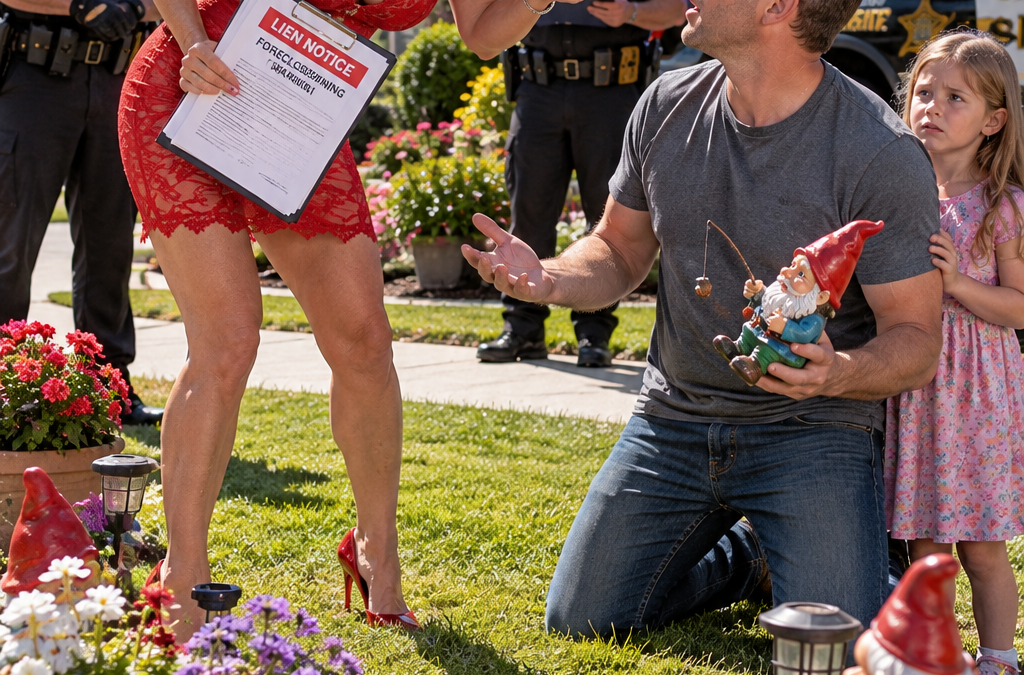
Diane cured me of that belief. We moved into Willow Creek Estates because it seemed like the perfect place to raise a family. The neighborhood had quiet streets lined with maple trees, tidy two-story houses, sidewalks where children could ride bicycles, and an elementary school close enough that our daughter could eventually walk there with friends. My wife loved the kitchen. Our daughter loved the backyard. I loved the fact that, after years of renting and saving, we finally had something of our own. The house wasn’t enormous. It had three bedrooms, a modest living room, and a garage that was always slightly too small for everything I wanted to put inside it. But it was ours. The mortgage payment was manageable as long as we watched our spending. We had enough room to build a future, and that was more than I’d dared to expect a few years earlier. I still remember the evening we moved in. Cardboard boxes were stacked in the hallway, our mattress was sitting directly on the bedroom floor, and our daughter fell asleep clutching a stuffed rabbit because we hadn’t found her pillow yet. My wife and I sat on the back steps eating takeout from paper cartons. She leaned against my shoulder and said, “Can you believe we actually did it?” I looked at the little patch of grass behind the house. “Ask me again after the first mortgage payment.” She laughed. I kissed the top of her head. For the first time in years, I felt like we weren’t just trying to survive from one bill to the next. We were building something. I didn’t know that one woman would soon decide our home was hers to threaten. Diane Puit had been president of the Willow Creek HOA long enough that people barely remembered anybody else holding the position. She was forty, blonde, strikingly attractive, and exceptionally conscious of the impression she made. She favored a fitted red lace dress with a revealing neckline, expensive heels, and immaculate makeup. For official meetings, she sometimes added a tailored blazer, as though putting a jacket over the dress made every demand she issued more authoritative. Even when she inspected lawns or delivered notices, she dressed as if she expected an audience. She knew how to smile when she wanted cooperation. She knew how to flirt when she wanted someone to overlook a question. And she knew exactly when to replace that smile with a cold stare. She carried a clipboard everywhere. I saw her with it at community meetings, beside other people’s mailboxes, and once while she stood inspecting the flowers outside the neighborhood entrance. It was practically an extension of her arm. People joked that Diane needed written approval before the sun could rise over Willow Creek. But they always lowered their voices when she approached. I met her during our first week in the neighborhood. She appeared on our porch late one afternoon with a folder of HOA regulations and a smile bright enough to look professionally rehearsed. “You must be James,” she said. “That’s me.” “Diane Puit. Association president.” She shook my hand, then glanced past me into the house. “Lovely property. We’re very particular about maintaining standards here.” “That’s one reason we bought it.” “Good.” She smiled again. “Some new homeowners have difficulty understanding that individual preferences must sometimes yield to community expectations.” I thought it was an odd warning to give someone who’d been in the neighborhood less than a week. But I nodded. “We don’t plan on causing any trouble.” “Wonderful.” She leaned slightly closer. “Then I’m sure we’ll get along beautifully.” That was the first time I noticed how effortlessly her expression could change. For one moment, she seemed warm and welcoming. The next, she looked like somebody calculating whether I would be easy to control. I dismissed the thought. I wish I hadn’t. The first violation letter arrived three weeks later. Our mailbox post, according to the notice, was painted an unapproved shade of white. Not blue. Not purple. Not bright orange. White. Apparently, it was the wrong white. I stood in the driveway holding the letter beside the mailbox, trying to detect the difference between what we had and whatever mysterious shade the association preferred. My wife came outside carrying a laundry basket. “What’s wrong?” I handed her the notice. She read it. Then she looked at the mailbox. “That’s white.” “Apparently not white enough.” She laughed. “So what do they want?” “Approved architectural white.” She examined the post again. “Is that a real color?” “At this point, I’m afraid to ask.” We bought a small can of paint and fixed it that weekend. I even photographed the result and submitted it to the association. Two days later, Diane emailed a brief acknowledgment. No apology. No thanks. Just confirmation that the correction had been accepted. I considered the matter closed. Then came the trash cans. Our garbage collection took place every Tuesday morning. HOA rules required residents to bring containers out of view by a specified time. One Tuesday, I arrived home late after being delayed at work. The cans were still beside the garage, visible from the street. Eleven minutes past the deadline. That was the time printed on Diane’s violation notice. Eleven minutes. The fine was fifty dollars. When I called to ask whether she’d consider waiving it, Diane sounded almost delighted. “James, rules only work when everyone follows them.” “I understand that, but we’re talking about eleven minutes.” “Eleven minutes is still a violation.” “I was at work.” “Then perhaps your wife could assist with household responsibilities.” I felt my jaw tighten. “My wife was taking care of our daughter.” “Well, these are arrangements every household must make.” I looked down at the fine. “This seems excessive.” “Consistency is important.” “Is there any flexibility?” “Not when someone challenges the association’s authority.” I stopped. “I wasn’t challenging your authority. I was asking about a fifty-dollar fine.” Her tone sharpened. “And I’ve given you the answer.” She hung up. I paid it. When my wife asked how the call had gone, I told her Diane was enjoying her little kingdom. “Just pay it and forget it,” I said. “It’s not worth fighting over.” That became my standard response. Another letter arrived because a flowerpot sat too close to the sidewalk. Another questioned the color of our porch light. Then there was a warning about a garden hose being visible from the street. Each notice had Diane’s elaborate signature at the bottom, complete with a tiny smiley face she drew beside her name. My wife started calling it the signature of doom. Whenever another envelope appeared, she’d hold it up and say, “The queen has spoken.” We laughed because the alternative was admitting how strange and intrusive it felt. And because, at that point, we still believed the letters were the worst things Diane could do. The first time I stopped laughing was because of Mr. Alvarez. He lived across the street in a one-story house with a small American flag beside the porch. He was an elderly veteran who used a wheelchair after years of struggling with his mobility. He was proud, stubborn, and the kind of neighbor who insisted on bringing our garbage cans up from the curb whenever he managed to get outside before us. I liked him immediately. Our daughter adored him. Sometimes she’d sit on the edge of his porch while he told her stories about places he’d seen when he was younger. He never talked much about his military service unless she asked, and even then he preferred telling her about the people he’d known rather than anything frightening. A few months after we moved in, his family arranged to have a wheelchair ramp installed at his front entrance. It was neat, professionally built, and painted to match the house. I remember standing across the street when it was finished, watching him roll down it without needing someone to support him. He looked happier than I’d ever seen him. “How’s the new ride?” I called. He grinned. “Best thing that’s happened to this old porch in twenty years.” Then Diane saw it. Three days later, Mr. Alvarez received a violation letter. Unauthorized exterior structure. A fine. A demand that the ramp be removed unless it met the association’s approval process. I found him sitting beside his front door with the notice trembling in his hands. “What’s going on?” I asked. He held it out. I read the first paragraph and felt heat rise in my chest. “They want you to remove the ramp?” He nodded. “Says I didn’t get permission.” “Did you tell them you need it?” “My daughter sent them the medical paperwork and the installation details.” “And?” He gave a helpless little shrug. “They still sent this.” I walked home furious. The ramp wasn’t decorative. It wasn’t an eyesore. It wasn’t somebody’s extravagant landscaping project. It was how a disabled man entered his own home. I called Diane. She answered with her usual smooth greeting. “Diane, it’s James. I want to ask about Mr. Alvarez’s ramp.” There was a pause. “That matter is confidential.” “He’s showed me the letter.” “Then he should understand that exterior modifications require approval.” “It’s a wheelchair ramp.” “I am aware.” “He needs it to get inside.” “And I’m sure we can accommodate his needs once the proper procedures are followed.” “Then why are you threatening him with fines?” Her tone became cold. “Because the installation was unauthorized.” I stared through my kitchen window toward his house. “You’re treating accessibility like a landscaping preference.” “James, don’t lecture me about association management.” “I’m asking you to show some decency.” There was silence. Then she said, “You’re developing a habit of involving yourself in matters that don’t concern you.” I looked at Mr. Alvarez’s house. “They concern me when they’re happening to my neighbors.” “Then perhaps you should be more concerned with keeping your own property compliant.” She ended the call. That evening, I went to the hardware store and bought a thick folder. I wasn’t sure what I planned to do with it. I just knew I couldn’t keep treating Diane’s notices as harmless entertainment. I put every letter inside. The mailbox warning. The trash-can fine. The porch-light notice. The flowerpot complaint. I saved the emails. I noted the dates. I made copies of the relevant HOA regulations. I also wrote down what Mr. Alvarez had told me and kept a copy of the ramp notice with his permission. At first, it felt excessive. Like I was turning a petty neighborhood annoyance into a legal investigation. But every time I questioned that decision, I pictured Mr. Alvarez sitting in his wheelchair holding a letter demanding that he remove the very structure that allowed him to reach his front door. Somebody needed to keep track. Two weeks later, Diane gave me another reason. Our daughter’s birthday had been the previous weekend. We hadn’t thrown an extravagant party. A few friends came over, there was a homemade cake, and my wife hung colorful decorations around the backyard. One of the gifts was a small plastic garden gnome. It cost seven dollars. Our daughter loved it immediately. The little figure had a red pointed hat, a white beard, and a fishing pole. Its face was permanently frozen in a ridiculous smile. She named him Captain Pickles. I asked why. She looked at me as though the answer were obvious. “Because he looks like Captain Pickles.” I decided not to argue with that. She wanted to put him in the front flowerbed, beside the little patch of yellow flowers she’d helped my wife plant. I told her she could. For the next several mornings, she’d wave at Captain Pickles before we left the house. Sometimes she’d straighten his hat. Once she brought him a tiny plastic cup from her toy kitchen because she thought he looked thirsty. It was silly. It was sweet. It made the house feel like a home. Then the violation arrived. Prohibited decorative clutter. Fine due within ten days. Additional penalties for failure to correct the condition. There was a photograph attached. Captain Pickles sat in the middle of our flowerbed like the most wanted criminal in Willow Creek Estates. I stared at the letter. Then I started laughing. My wife came over. “What now?” I showed her the photograph. She shook her head. “Oh, come on.” “Apparently our daughter is running an illegal gnome operation.” My wife tried not to laugh. “Don’t let Diane see the other toys.” But the laughter faded when our daughter wandered into the kitchen and asked what we were talking about. “Is Captain Pickles in trouble?” I looked at her. “No, sweetheart.” “Then why is his picture on that paper?” I hesitated. My wife answered gently. “Some people have very particular ideas about what belongs in a garden.” Our daughter frowned. “But he belongs with the flowers.” I looked down at the letter. For the first time, the fines felt different. They weren’t just annoying me. They were reaching into my daughter’s small, happy world and teaching her that someone outside our family could declare her harmless little gift unacceptable. “He’s staying for now,” I told her. Her face brightened. “Really?” “Really.” Then I put the letter into my folder. Later that afternoon, I walked around the neighborhood. I wasn’t looking for a fight. I wanted to understand whether the decorative rule was actually being enforced. It took less than fifteen minutes to find three other garden gnomes. One sat beside a fountain two streets over. Another stood beneath a rosebush near the neighborhood entrance. The third was displayed prominently beside a front walkway. All three were larger and more elaborate than Captain Pickles. And all three properties belonged to homeowners who were friends with Diane or associated with the board. I took photographs from the public sidewalk. Then I checked the regulation. The language was broad. Decorative clutter. Unsightly ornaments. Items inconsistent with community standards. It didn’t define garden gnomes specifically. It didn’t explain why one lawn ornament was unacceptable while an almost identical one was fine across the street. I sent Diane a polite email. I included the photographs. I asked whether the rule applied equally to all homeowners. Her response arrived that evening. “Each property is reviewed individually according to the association’s aesthetic standards.” I replied. “Could you explain what makes my daughter’s seven-dollar gnome a violation while the others are permitted?” She answered. “The board is not obligated to discuss other homeowners’ compliance matters with you.” I wrote again. “I’m not requesting anyone’s private information. I’m asking for the standard being applied.” Her final response was brief. “Your fine remains due.” I sat at the kitchen table staring at those four words. My wife placed a hand on my shoulder. “Don’t let her pull you into something that costs more than it’s worth.” I looked at Captain Pickles through the window. “I know.” But I was beginning to understand that the cost wasn’t seven dollars. Or fifty dollars. It was the ability of one person to decide the rules applied differently depending on whether she liked you. I paid the fine. I hated doing it. But I paid. Then I submitted a formal request for the association’s financial records under the applicable state law and the HOA’s governing documents. I wanted to see where the money was going. Every penalty came with administrative charges. Every new assessment seemed to arrive with vague explanations about maintenance or community improvements. And Diane had become unusually aggressive about collecting them. I didn’t yet suspect anything criminal. I thought that if the association knew someone was checking the finances, the board might start behaving more carefully. I was wrong. Diane denied the request. Her response cited board discretion and internal confidentiality. I read the governing documents again. The provisions on financial inspection didn’t give her blanket authority to refuse access simply because she found the request inconvenient. So I sent another request. I identified the specific categories of records I wanted. Budgets. Expense summaries. Special assessment approvals. Vendor payments. Board meeting minutes concerning significant financial decisions. I offered to inspect the records at a reasonable time instead of demanding they send me boxes of paperwork. Diane denied that request, too. This time, she added a personal remark. “Your repeated demands suggest an intention to interfere with normal association operations.” I called her. She answered after several rings. “James.” She said my name like it was an accusation. “I received your latest refusal.” “Then you know the board’s position.” “I’m entitled to inspect certain records.” “Not on your terms.” “Then tell me the terms.” She sighed. “You’re not a board member.” “I’m a homeowner paying association assessments.” “Which does not give you unrestricted authority to investigate every financial decision.” “I’m not asking for unrestricted authority. I’m asking for the records the governing documents say members can inspect.” Her voice became sharper. “You seem determined to create a conflict.” “No. I’m trying to understand where the money goes.” “Are you suggesting the board is mishandling association funds?” I paused. “I haven’t suggested anything. I’m asking to see the records.” She gave a humorless laugh. “Be careful, James. Accusations have consequences.” “So does refusing legitimate requests.” The line went quiet. Then she said, very softly, “You have a beautiful little family. You should spend more time appreciating what you have instead of looking for trouble.” I felt something cold move through me. “Leave my family out of this.” “I’m simply offering advice.” “Then keep it to yourself.” I hung up. My wife was standing in the doorway. She’d heard enough to understand. “What did she say?” I told her. She sat down slowly. “James, I don’t like this.” “Neither do I.” “No. I mean I really don’t like it. She’s not just sending fines anymore.” I looked at the folder on the table. “I know.” My wife reached for my hand. “We worked too hard for this house to spend our lives fighting over lawn decorations.” I squeezed her fingers. “I’m trying to make her stop.” She looked at me for a long moment. “Just promise me you’ll be careful.” I promised. At the time, I thought the worst Diane could do was keep increasing the fines. I had no idea how far she was willing to go. A month later, the penalties tripled overnight. There was no new violation. No fresh photograph. No warning about the lawn or mailbox. Just a statement announcing that our account had been assessed additional penalties for chronic noncompliance. I checked the dates. Some charges appeared to cover periods before the corresponding enforcement rule had supposedly taken effect. When I compared the new policy language with the HOA regulations I’d downloaded earlier, I found something even more disturbing. The rule had changed. A paragraph authorizing accelerated penalties for repeated decorative violations now appeared in the association’s updated policy document. The effective date had been placed in the past. But the earlier version I’d saved didn’t contain that paragraph. I stared at the two documents side by side. Same policy title. Same general format. Different language. I checked the file information and the dates of the association’s announcements. Nothing showed that the board had properly adopted the provision when Diane claimed it became effective. I couldn’t prove exactly who had inserted it. But I could prove it hadn’t appeared in the version available to homeowners at the time the fines supposedly accrued. I emailed Diane immediately. “Please provide the board resolution adopting this rule and the meeting minutes approving its effective date.” She replied the next morning. “The rule has been in effect for the relevant enforcement period.” That wasn’t an answer. I sent the earlier version. I asked again. She didn’t respond. Three days later, the lien threat arrived. Not a gentle reminder. Not a warning that a fine was overdue. A formal notice asserting a growing balance against our property and threatening further collection action that could lead to foreclosure. I remember reading the amount and feeling suddenly short of breath. The penalties had grown far beyond the cost of any alleged offense. The letter included references to administrative fees, escalating enforcement charges, collection expenses, and accumulated fines. There was no new misconduct. Just more money demanded because I had refused to accept Diane’s explanations. The notice warned that if the debt remained unresolved for ninety days, the association would pursue the legal remedies it claimed were available. Including foreclosure. I stood in the kitchen staring at the page. My wife was beside the sink. She saw my face. “What?” I handed her the letter. She read the first paragraph. Then the next. When she reached the foreclosure language, she sat down. “Can they really do this?” I wanted to say no. I wanted to laugh and tell her it was another empty threat. But I had no intention of lying to her. “I don’t know.” She looked toward the living room where our daughter was watching television. “James.” “I know.” “We cannot lose this house.” “We’re not going to.” “How do you know?” I had no answer. My wife looked back at the letter. “We still have the mortgage. We have savings, but not enough for a huge lawsuit.” “I know.” “What if we pay everything and this stops?” I rubbed my face. “Then she does it again.” “We don’t know that.” “Every time I’ve paid, she’s found something else.” My wife looked exhausted. “Maybe. But I don’t want our daughter dragged through this.” Neither did I. That was what made the situation unbearable. I could tolerate being insulted. I could tolerate spending evenings reading HOA bylaws instead of watching a movie. I could even tolerate paying a few unreasonable fines if it meant ending a stupid disagreement. But the thought of telling our daughter that we had to leave the only house she’d ever called ours because a woman didn’t like her garden gnome made me feel physically sick. That night, after our daughter went to bed, my wife and I sat at the dining table with our finances spread in front of us. Mortgage. Utilities. Insurance. Groceries. Savings. We calculated how much money we could afford to spend defending the house. The answer was not much. At one point, my wife whispered, “Maybe we should take the gnome inside.” I looked toward the front window. Captain Pickles was barely visible beneath the porch light. “I know it’s only plastic,” she said. “I know.” “It’s not worth losing everything.” I understood exactly what she meant. But the fines weren’t only about the gnome anymore. Diane had begun attaching penalties to a pattern of supposed disobedience. Removing the ornament wouldn’t erase what she’d already assessed. I explained that. My wife closed her eyes. “Then what do we do?” I looked at the folder beside me. It had grown thick enough that the metal fastener barely closed. “We stop trying to satisfy her,” I said. “We make her prove every claim.” Two days later, Diane called an emergency HOA meeting. I knew exactly why. She wanted to turn a private property dispute into a public demonstration of her authority. The notice described the meeting as a discussion of persistent homeowner noncompliance and the need to protect community standards. I attended with my folder. My wife wanted to come, but I asked her to stay home with our daughter. I didn’t want our little girl hearing somebody describe her birthday present as a threat to neighborhood order. When I reached the clubhouse, nearly every chair was occupied. A few neighbors nodded at me. Most looked away. Diane stood at the front behind a wooden podium. She wore a fitted red lace dress beneath a dark blazer, her blonde hair arranged perfectly around her shoulders. Her clipboard lay beside the microphone. She looked less like a volunteer HOA president than a person preparing to deliver a verdict. She began by discussing the importance of uniform enforcement. Then she spoke about residents who refused to respect association decisions. Her eyes found mine. “Unfortunately,” she said, “certain individuals have chosen confrontation over cooperation.” People shifted in their chairs. I stayed silent. “These individuals consume association resources, challenge established procedures, and threaten the quality of life that responsible homeowners have worked so hard to preserve.” She paused. “Some have even made repeated, unreasonable demands for access to internal records.” I raised my hand. She ignored it. “Such behavior creates unnecessary expense for the community.” I stood. “Diane, are you referring to my records request?” She gave a theatrical sigh. “James, please wait until the homeowner comment period.” “You’re discussing me in front of the room.” “I’m discussing a broader problem.” “Then why not name the specific rules involved?” Her smile disappeared. “Please sit down.” I remained standing. “You’ve threatened a lien against my house. I think the board should explain why.” A murmur moved through the room. Diane lifted her clipboard. “The association has taken appropriate steps in response to your chronic noncompliance.” “What new violation did I commit?” “James.” “What new violation?” Her expression hardened. “This is precisely the difficult and litigious attitude I’m talking about.” A few homeowners nodded. Others stared at the floor. I looked around the room. “Has anybody here actually seen the rule she says I’ve broken?” Nobody answered. Diane leaned toward the microphone. “Your continued disruption is unacceptable.” I opened my folder. “The earlier version of the HOA policy doesn’t contain the accelerated penalty provision you’re using against me.” She laughed sharply. “You’re not qualified to interpret governing documents.” “Then show me the board minutes approving the change.” “That information is not relevant to this discussion.” “It’s relevant when you’re threatening my home.” For a moment, I thought she might lose control. Instead, she smiled. The same polished smile she’d worn on my porch when we first moved in. “James, you have repeatedly demonstrated that you are unwilling to be a constructive member of this community.” I felt every eye in the room. Then she added, “There is a difference between owning a home and understanding the responsibilities that come with it.” Something inside me tightened. I’d worked years for that house. I’d paid every mortgage bill. I’d maintained the lawn, repaired the gutters, and spent weekends improving a property I was proud to own. And here was Diane telling a room full of people that I didn’t understand responsibility because I refused to let her invent fines. I wanted to shout. Instead, I asked one question. “If everything you’ve done is proper, why won’t you let me see the financial records?” The room went silent. Diane’s face changed. Not much. Just enough. Her smile froze. Her fingers tightened around the clipboard. Then she said, “This discussion is over.” She moved to the next agenda item. I sat down, furious. The meeting ended without a vote on my complaint. Without a review of the backdated rule. Without any meaningful explanation of the threatened lien. Outside, homeowners hurried to their cars. Nobody wanted to be seen standing beside me. One man I knew from the neighborhood gave me an apologetic look. “She’s pretty strict,” he murmured. “Strict isn’t the problem.” He glanced over his shoulder. “Look, I just don’t want trouble.” Then he walked away. I stood alone in the parking lot holding my folder. That hurt more than I expected. Because I understood his fear. I had a wife and daughter waiting at home. I knew what it felt like to worry about becoming Diane’s next target. But understanding why people stayed silent didn’t make that silence any easier to bear. The next week was miserable. Another letter arrived. Then another. Diane claimed I had failed to resolve the outstanding balance and warned that collection proceedings would continue. My wife began checking the mail before I got home, hoping to spare me another angry evening. Our daughter noticed the tension. One night, while I sat at the dining table sorting papers, she climbed onto the chair beside me. “Daddy?” “Yeah, sweetheart?” “Is Captain Pickles bad?” I looked at her. “Of course not.” “Then why is that lady mad at him?” I felt my throat tighten. “She’s not really mad at Captain Pickles.” “Is she mad at us?” I didn’t know how to explain power, resentment, and selective enforcement to a child. So I told her the only thing I was certain of. “We haven’t done anything wrong.” She thought about that. “Can he stay outside?” I looked toward the window. Captain Pickles was standing in the flowerbed. His stupid little smile hadn’t changed. “Yes.” She hugged me. I held her longer than usual. After she went to bed, I sat in the dark living room thinking about the ninety-day deadline. For the first time, I wondered whether Diane might actually win. Then something happened that changed the direction of the entire fight. My mail carrier pulled me aside. Her name was Renee. She’d been delivering mail in Willow Creek for years, and she was one of those people who remembered everyone’s name, knew which families had dogs, and could tell when somebody was home by the position of the curtains. I’d spoken with her dozens of times. Usually about the weather. Sometimes about delayed packages. Never about anything serious. That afternoon, I was bringing our garbage cans back from the curb when her delivery vehicle stopped near my mailbox. “James,” she called. I walked over. “Hey, Renee.” She looked down the street. Then she lowered her voice. “Can I ask you something?” “Sure.” “Have you been having problems receiving certified letters from your HOA?” I frowned. “Why?” “Have you?” I thought back over the previous months. There had been several occasions when Diane claimed appeal periods had expired before I’d even received the relevant notices. I assumed she’d mailed things late or miscalculated the dates. “Yeah,” I said slowly. “A few.” Renee’s face tightened. “That’s what I was afraid of.” I felt my pulse pick up. “What do you mean?” She glanced toward Diane’s end of the neighborhood. “I’ve noticed irregularities involving certified association mail. Some items have been subject to questionable forwarding or return instructions. The delivery records don’t match the timeline residents are being told.” I stared at her. “Are you saying somebody’s interfering with my mail?” “I’m saying there are discrepancies that need to be investigated.” “Who?” She hesitated. Then she said, “Diane has been involved in attempts to redirect association correspondence.” The words seemed too strange to process. “Redirect how?” “Requests and instructions affecting where notices go, how they’re returned, and whether residents receive them when they’re supposed to.” “Can she even do that?” “Not lawfully just because she’s HOA president.” I looked at the mailbox. For months, I’d been receiving warnings telling me I’d missed opportunities to appeal. Deadlines I didn’t remember being notified about. Charges that became final before I could challenge them. “What about the other residents?” I asked. Renee looked troubled. “You’re not the only one.” A car turned into the street. She lowered her voice further. “I can’t hand over protected postal records. And I don’t want you confronting her based only on what I’m saying. But you should speak to an attorney and report the irregularities to the proper postal investigators.” I swallowed. “Renee, why are you telling me?” She looked at my house. Then at the flowerbed. “Because I’ve watched families work hard for homes like these. And something about this isn’t right.” Her expression softened. “I’ve seen what those notices are doing to people.” I stood there with my hand resting on the mailbox. “Thank you.” She nodded. “Keep every envelope, James. Every tracking number. Every delivery date.” Then she climbed back into the vehicle and continued down the street. I watched her go. For several minutes, I didn’t move. The neighborhood looked exactly as it always did. Clean lawns. Quiet porches. Cars parked neatly in driveways. But the conflict I’d thought was about abusive fines had just become something much darker. If Diane had deliberately interfered with certified notices to make homeowners miss appeal deadlines, she wasn’t merely misusing an HOA rule. She was potentially manipulating the mail system to deny residents a fair chance to defend themselves. Depending on what investigators established, that could involve federal offenses. I went inside and opened my folder. For the first time, I examined the envelopes as carefully as the letters. Postmarks. Tracking labels. Dates of attempted delivery. Dates Diane claimed documents had been served. Appeal deadlines. A pattern began to emerge. Some notices bore dates that didn’t line up with when I’d received them. Others referred to deadlines that had nearly passed before delivery. One stated that a prior opportunity to appeal had expired, yet I couldn’t identify any earlier notice that had properly reached me. I wasn’t a postal investigator. I knew there might be innocent explanations for individual discrepancies. But the pattern was too troubling to ignore. That evening, I told my wife what Renee had said. She listened without interrupting. When I finished, she looked at the folder. “James, we need professional help.” I nodded. “I know.” “No more trying to reason with Diane.” “I know.” My wife reached across the table. “Promise me you won’t confront her.” I looked at her. For weeks, I’d imagined finally cornering Diane with evidence she couldn’t dismiss. But now I understood how reckless that would be. “I promise.” The next morning, I called a real estate attorney who specialized in HOA disputes. Her office was forty minutes away. I explained the situation briefly to her assistant and mentioned the lien threat, altered policy language, denied financial records, and possible interference with certified notices. They scheduled a consultation. I spent the evening organizing everything in chronological order. My wife helped. We spread papers across the dining table until there was barely room for dinner. She labeled folders. I sorted photographs. We matched notices with envelopes. We printed emails. We highlighted the clauses Diane had changed. At one point, my wife held up Captain Pickles’ original fine. “Seven dollars,” she said quietly. I looked at the little photograph attached. “Seven dollars.” She shook her head. “How did we get here?” I didn’t have an answer. But the question stayed with me all night. At the attorney’s office, I placed the entire file on her desk. She was a composed woman with silver-rimmed glasses and the patient expression of someone accustomed to hearing complicated stories from frightened clients. She asked me to begin at the beginning. I did. I told her about the mailbox. The trash cans. Mr. Alvarez’s wheelchair ramp. My daughter’s gnome. The different treatment of similar decorations. The financial records requests. The backdated policy provision. The escalating fines. The lien threat. Diane’s public accusations at the emergency meeting. And finally, Renee’s concerns about certified mail. The attorney listened. Occasionally, she stopped me to ask a specific question. “Do you have the earlier version of the policy?” “Yes.” “Did you preserve the original emails?” “All of them.” “Do you have the envelopes?” “Most of them.” “Did the association provide meeting minutes approving the increased penalties?” “No.” “Did it give a lawful basis for denying financial inspection?” “Only something about board discretion.” She made notes. Then she examined the fine statements. Her expression grew more serious. She compared the totals with the dates. She checked the board notices and special assessments. She read Diane’s two written denials of my financial records requests. Then she became very quiet. I sat across from her, trying not to fidget. Finally, I asked, “Is this bad?” She looked up. “James, this is a gold mine.” I blinked. “Excuse me?” “Not because what happened to you is good. It isn’t. But because you’ve preserved evidence most homeowners don’t have by the time they come to me.” She tapped the folder. “Your records let us compare what the association said, when it said it, and what it actually did.” I felt some of the tension leave my shoulders. “So you think we can challenge the lien?” “Yes. We can challenge the charges and the association’s claimed enforcement authority. We should also move quickly to protect the property from any foreclosure action.” I leaned forward. “What about the backdated rule?” “That needs examination. So does the failure to produce financial records.” She paused. “And the mail issue needs to be referred to the appropriate investigators. We won’t assume a crime occurred without evidence, but it cannot be ignored.” I nodded. Then she asked a question I hadn’t expected. “Have your association dues increased recently?” “Yes.” “Special assessments?” “Several.” “What were they for?” “Mostly landscaping, common-area improvements, and maintenance.” “Do you have the notices?” I handed them over. She studied the amounts. “Do you know who performs the landscaping work?” I named the company printed on the HOA communications. She wrote it down. “Has that contractor been working here long?” “As far as I know.” “Did the board ever provide competing bids?” “Not that I saw.” She made another note. I watched her. “Why?” She looked at the assessment notices again. “Because the finances may explain the enforcement behavior.” I frowned. “You think the fines are connected to the landscaping?” “I don’t know yet. But I want to examine who benefits from the association’s spending.” That sentence changed everything. Until then, I’d assumed Diane wanted obedience. Maybe she enjoyed power. Maybe she disliked anyone who questioned her. Maybe she was simply the kind of person who needed to control every detail of a neighborhood. But the attorney was asking something I hadn’t seriously considered. What if Diane’s obsession with fines wasn’t only about control? What if there was money behind it? Over the following days, the attorney reviewed the association’s available financial information, corporate filings, and records obtained through appropriate legal procedures. The more she examined, the more troubling the picture became. The association had approved repeated special assessments for landscaping and common-area improvements. The explanations were vague. The amounts were substantial. And several payments went to a landscaping contractor whose ownership wasn’t immediately obvious. At first glance, the company looked ordinary. A registered business. A mailing address. An officer listed on paperwork. Nothing that would make a homeowner suspicious while reading an annual HOA budget. But when the attorney traced the ownership through related entities and public business records, the structure became increasingly complicated. One company owned an interest in another. That entity was linked to a third. Behind those layers was a company registered under Diane’s maiden name. Three layers of business entities separated the association’s landscaping payments from the woman who controlled the board. I still remember the call. I was sitting in my truck outside a hardware store when the attorney reached me. “James, we’ve identified a significant potential conflict of interest.” My hand tightened around the phone. “What kind?” “The landscaping contractor receiving association money appears to be connected through several entities to Diane Puit.” I stared through the windshield. “Connected how?” “Through a business registered under her maiden name.” For a second, I couldn’t speak. Then I asked, “Are you telling me Diane owns the company?” “The records indicate a beneficial connection that requires formal investigation. We also have concerns about the approvals and disclosures.” I thought about all those assessments. All those notices. All those threats. “She was paying herself?” “That is one possibility supported by the financial trail. We need investigators to establish the full extent of the payments, authorizations, and personal benefit.” I leaned back against the seat. The parking lot suddenly seemed very far away. I’d spent months believing Diane was trying to force obedience because she enjoyed having authority. Now the picture was changing. If she could create violations, assess penalties, and influence how association funds were spent, then every new enforcement campaign could strengthen a system that benefited her. The gnome wasn’t the real issue. Neither was Mr. Alvarez’s ramp. The violations were mechanisms. The pressure encouraged people to pay quickly and ask few questions. The denied financial records helped keep them from seeing where the money went. And the questionable certified-mail practices could prevent timely appeals. I closed my eyes. “How much money are we talking about?” “Enough that this should be examined by law enforcement.” I sat silent. Then I asked, “What happens now?” “We preserve the evidence, protect your property through the appropriate legal filings, and submit the suspected financial misconduct for investigation.” I looked toward the store entrance. People were coming and going, carrying ordinary household supplies. A man loaded paint into his trunk. A woman pushed a cart full of flowerpots. I thought about how simple the world had looked when my biggest problem was choosing paint for our mailbox. “Do it,” I said. The attorney prepared a formal complaint for the state’s HOA oversight authority and submitted the relevant evidence to the county district attorney’s office. The mail concerns were separately referred for appropriate review. Our property dispute was now part of something much larger than one homeowner challenging an unreasonable fine. Investigators began examining the financial trail. Records were requested. Payments were traced. The relationship between Diane and the landscaping entities was scrutinized. I provided everything I had. The violation notices. The escalating penalties. The altered regulations. The financial requests. The denied appeals. The envelopes. The evidence of selective enforcement. Mr. Alvarez, with assistance from his family, supplied information about the ramp fine and his dealings with Diane. Other residents began sharing similar experiences. Some had paid penalties they didn’t understand. Others had been told their appeals were late before they knew a deadline existed. A few had questioned special assessments but received only vague responses from the board. I was stunned by how many people had suffered quietly. For months, I’d believed Diane was targeting me because I’d challenged her. Now I was seeing evidence of a broader pattern. It didn’t make my own situation less frightening. If anything, it made me angrier. Because I thought about all the people who didn’t have time to save documents. People who worked long hours. Older homeowners living on fixed incomes. Families who couldn’t afford an attorney. People like Mr. Alvarez, who simply wanted to get through his own front door. Diane had built her authority on the expectation that most of them would eventually pay rather than fight. One evening, my wife found me sitting at the dining table surrounded by records. “You’re doing it again,” she said. “Doing what?” “Trying to carry the whole neighborhood.” I looked up. She sat beside me. “James, you’ve already given the investigators what they need.” “I keep thinking there’s something else.” “Maybe there is. But you can’t solve everything tonight.” I rubbed my eyes. “I’m scared they’re going to let her get away with it.” My wife was quiet. Then she said, “I’m scared, too.” I looked at her. It was the first time she’d said it so plainly. She continued. “Every time the doorbell rings, I wonder if it’s another notice. Every time I see an envelope from the HOA, I feel sick. And I hate that our daughter notices.” I reached for her hand. “I’m sorry.” She shook her head. “I don’t want an apology. I want us to get through this.” I squeezed her fingers. “We will.” She looked at the stacks of paper. “Then remember we’re still here. We’re still a family. Diane doesn’t get to take every evening away from us.” That night, I closed the folder. We watched a movie with our daughter. Halfway through, she fell asleep leaning against me. I carried her upstairs. When I came back down, I paused at the front window. Captain Pickles was still in the flowerbed. The porch light caught his red hat. For the first time in weeks, I smiled at the sight. The smile didn’t last long. Because Diane was preparing her final move. Despite the complaints, despite the disputed penalties, despite the legal challenge, she pushed forward with the threatened foreclosure proceedings. She scheduled what she described in association communications as the final hearing that would allow the HOA to pursue enforcement against our house. Her emails became increasingly triumphant. “Your refusal to resolve this matter has left the association no alternative.” “Continued noncompliance will result in the enforcement of available legal remedies.” “The board intends to protect community standards without further delay.” Every message carried the same implication. Pay. Submit. Or lose your home. I forwarded them to my attorney. She assured me that the disputed charges and the association’s authority would be challenged in court. We prepared the evidence. We worked through the procedures. But no matter how confident she sounded, I couldn’t stop imagining the worst. What if the judge sided with the HOA? What if Diane’s manipulated records were accepted? What if the legal process took so long that the fees became unbearable? My wife tried to reassure me. I tried to reassure her. Neither of us slept much. The evening before the hearing, we sat in the kitchen after our daughter had gone to bed. The house was silent. My wife poured two cups of tea. Neither of us drank them. “What if we lose?” she asked. I looked at the table. “I don’t think we will.” “That’s not what I asked.” I took a breath. “Then we appeal. We keep fighting.” “With what money?” The question hurt because it was fair. I looked toward the refrigerator where our daughter’s drawings were held up with magnets. A picture of the house. Three stick figures. A dog we didn’t own. And a small red shape beside the flowers that I recognized as Captain Pickles. I swallowed. “I don’t know.” My wife reached across the table. “James, I love this house.” “I know.” “But I love you and our daughter more.” I looked at her. “If it comes down to choosing between the house and destroying ourselves trying to keep it, I need you to remember that.” I nodded. She wiped at her eyes. “I don’t want Diane to win. But I don’t want this to break us, either.” I moved my chair beside hers and held her. For a long time, neither of us spoke. The worst part of that night wasn’t fear of losing the property. It was recognizing how thoroughly Diane had invaded our lives. Our conversations had become about fines. Our evenings were spent organizing evidence. Our savings were tied to legal expenses. Our daughter had learned to associate an HOA letter with tension and silence. The house that had once symbolized security had become the center of our anxiety. And somewhere in Willow Creek, Diane was probably sleeping perfectly well. I thought about surrendering. Not because I believed she was right. Because I wanted my family to feel safe again. Then I remembered Mr. Alvarez’s ramp. The neighbors who’d missed appeal deadlines. The hidden landscaping payments. The forged-looking rules. The smiley face beside Diane’s signature. I couldn’t undo what had happened. But I could refuse to help her hide it. The next morning, I dressed in a clean shirt and dark jacket. My wife straightened my collar before I left. “You have everything?” I lifted the folder. “Every last page.” She looked into my eyes. “Whatever happens, come home to us.” “I will.” Our daughter came running into the hallway. “Are you going to tell the judge about Captain Pickles?” I crouched in front of her. “Yes, sweetheart.” “Tell him he’s a good gnome.” I smiled. “I’ll make sure he knows.” She hugged me. Then I walked out the door. The courthouse stood in the center of town, a gray stone building with high windows and heavy doors. I’d driven past it many times. I’d never expected to enter it because of a seven-dollar ornament. My attorney met me near the entrance. She looked calm. I wasn’t. “How are you feeling?” she asked. “Like I might throw up.” “That’s understandable.” “Do you think we’re ready?” “We’re prepared.” I wanted her to tell me we’d win. She didn’t. Instead, she reminded me to answer questions directly, avoid arguing with Diane, and let the documents speak for themselves. We walked inside. The hearing room was already filling. Several Willow Creek homeowners sat in the audience. Mr. Alvarez was there with a family member beside his wheelchair. When he saw me, he raised his hand. I went over. “You didn’t have to come.” He looked offended. “After what she did to you? Of course I did.” I smiled weakly. He took my hand. “Whatever happens today, son, don’t let that woman convince you that standing up for your family was wrong.” I nodded. Then I noticed something unusual. Two men in plain clothes stood near the back of the room. They weren’t talking to the homeowners. They weren’t carrying HOA folders. They watched the proceedings with the quiet attention of people who already knew why they were there. I assumed they were court staff or investigators. I didn’t think much more about them. There were also local news cameras positioned near the area permitted for recording. Word of the unusual foreclosure dispute had spread. A homeowner facing action over a garden ornament made an irresistible local story. Diane had never seemed to mind an audience. That morning was no exception. She arrived wearing her familiar red lace dress beneath an immaculate blazer. Her blonde hair was styled perfectly. Her makeup was flawless. Her clipboard rested under one arm. She walked into the room with the confidence of someone who believed the ending had already been written. Her eyes found me. She smiled. Not warmly. Not kindly. The smile was a reminder that she expected me to leave defeated. As she passed, she leaned toward me. “You could have avoided all of this, James.” I looked at her. “By paying fines you invented?” Her smile vanished. “By following the rules.” I held her gaze. “Then you shouldn’t be afraid of the records.” For a fraction of a second, something flickered in her expression. Then she laughed. “You’re still pretending this is some great conspiracy.” She straightened her blazer and walked toward the front. I sat beside my attorney. My hands were damp. I wiped them on my trousers. When the hearing began, Diane’s representatives presented the association’s position. They described repeated violations. Accumulated penalties. Missed appeal deadlines. Failure to cooperate. The supposed need to protect the neighborhood from homeowners who disregarded community standards. Then Diane was permitted to speak. She stepped forward with her clipboard. Her voice was polished. Confident. Practiced. “Willow Creek Estates has always maintained clear community expectations,” she began. “Those expectations protect property values and ensure that all residents are treated consistently.” I almost laughed. Consistently. Mr. Alvarez shifted in his wheelchair. Diane continued. “Unfortunately, certain homeowners believe the rules should not apply to them.” She looked directly at me. “Rather than accept responsibility, Mr. James has repeatedly challenged the association, disrupted meetings, and refused to resolve properly assessed penalties.” My attorney made a note. Diane lifted a page. “The issue before us is not the cost of any individual decorative item. It is the broader principle of compliance.” There it was. The same argument she’d used from the beginning. Make the actual violation sound insignificant. Then turn my refusal to accept unfair treatment into the real offense. She spoke about protecting community harmony. Respecting authority. Maintaining standards. Ensuring fairness. Every sentence sounded reasonable until you remembered what she’d done. I watched the judge. He listened. He made notes. He occasionally asked for clarification. Diane seemed encouraged. Her posture straightened. Her voice grew more forceful. “The association cannot function if every homeowner is permitted to disregard established procedures simply because they dislike a decision.” I looked down at my folder. Inside were six months of evidence showing that Diane herself had disregarded the procedures whenever they threatened her control. My attorney leaned toward me. “Stay calm.” I nodded. Diane continued. “Mr. James has been given every reasonable opportunity to comply. His refusal has left us with no choice but to pursue the remedies available under our governing documents.” She paused dramatically. Then she added, “This is not personal.” I felt my jaw tighten. Not personal. She had threatened my home. Humiliated me at a public meeting. Denied lawful records requests. Applied penalties under a rule that appeared to have been backdated. And now she was asking a court to help enforce those penalties. But none of it was personal. She turned slightly toward the news cameras. “Ultimately, we must protect the interests of the responsible majority.” That was when one of the plainclothes men moved. At first, I assumed he was leaving the room. Instead, he approached the front with another official. The proceedings paused. My attorney straightened. I looked at her. She seemed unsurprised. The official identified himself as an investigator working with the district attorney’s office. He requested permission to address the court regarding new developments directly affecting the association’s financial claims and the credibility of the records presented. Diane frowned. “This is highly irregular.” The judge told her to wait. The investigator stepped forward. He explained that the district attorney’s office had been conducting an investigation into the Willow Creek Estates Homeowners Association’s financial operations. The room became completely silent. I could hear the faint hum of the lights overhead. Diane’s expression tightened. “That has nothing to do with this homeowner’s violations,” she said. The judge instructed her not to interrupt. The investigator continued. The inquiry concerned special assessments, association expenditures, vendor relationships, and alleged diversion of HOA funds. He identified the landscaping contractor. Then the related business entities. Then the ownership connection to a company registered under Diane’s maiden name. I saw her hand move toward the edge of the podium. She gripped it. The investigator described evidence that association money had been routed through the landscaping contracts under circumstances raising serious allegations of embezzlement and related financial misconduct. The charges had been formally brought. The hearing room erupted in whispers. Someone behind me gasped. I turned just enough to see Mr. Alvarez staring forward, his mouth slightly open. Diane looked at the investigator. Then at the judge. Then toward her own representatives. “This is a misunderstanding,” she said. Her voice was noticeably thinner. The investigator continued presenting the relevant information for the record. Financial transactions. Undisclosed business relationships. Questionable approvals. Records that investigators believed had been manipulated or concealed. The room that Diane had entered expecting to control had become the place where her conduct was being examined in front of the very people she’d intimidated. She tried to interrupt again. “Those were legitimate landscaping expenses.” The judge told her to remain quiet. Diane’s cheeks flushed. “I never personally handled those payments.” The investigator continued. “All of this is being taken out of context.” Her voice rose. “You’re making ordinary business arrangements sound criminal!” The judge sharply instructed her to stop interrupting. For the first time since I’d known Diane, she looked genuinely frightened. Not offended. Not angry because somebody had questioned her authority. Frightened. The investigator explained that the alleged misconduct went beyond the foreclosure dispute and that the county was pursuing the matter separately. There were also unresolved concerns involving association notice procedures and possible interference with certified correspondence. Those concerns had been referred to the appropriate authorities for further examination. I thought of Renee. Her lowered voice beside the mailbox. The way she’d looked over her shoulder before telling me something was wrong. One ordinary person had noticed a pattern and refused to ignore it. That mattered more than I could have explained. Diane stepped back from the podium. Her clipboard slipped against its edge. A few papers scattered onto the floor. She didn’t bend to pick them up. The woman who’d threatened me over a decorative gnome now seemed unable to organize her own thoughts. “I have given six years to this community,” she said. Her voice trembled. “Six years. I’ve protected property values. I’ve enforced standards. I’ve done everything the board asked of me.” Nobody answered. Then she looked toward the homeowners. “Tell them.” Silence. “Tell them what I’ve done for this neighborhood.” A man in the second row lowered his eyes. A woman near the aisle folded her arms. Nobody stood up to defend her. I watched Diane realize it. All those years of controlling meetings. All the fines. The warnings. The neighbors afraid to disagree. She’d mistaken their silence for loyalty. Now, when she needed them, that same silence surrounded her. The investigator completed his statement. The court took account of the new information affecting the disputed association claims. The foreclosure action could not proceed as Diane had expected. Her carefully prepared narrative of chronic noncompliance had collapsed under the weight of questions about the very records used to support it. Diane looked toward me. For a moment, our eyes met. I expected hatred. There was some of that. But beneath it, I saw disbelief. She genuinely seemed unable to understand how a homeowner she’d dismissed as difficult had helped bring the investigation to this point. Then two deputies approached. They asked her to step outside so investigators could speak with her about the charges and related proceedings. Diane stared at them. “Now?” One of the deputies nodded. “Ma’am, we need you to come with us.” She looked toward her representatives. Then back at the deputies. “This is humiliating.” Neither deputy responded. She gathered the papers she could reach, clutching her clipboard against her chest. Her blazer had shifted. Her carefully arranged hair was no longer quite perfect. She looked less like the queen of Willow Creek and more like a frightened woman desperately searching for someone who would tell her she still controlled the room. As she passed my table, she stopped. “You planned this.” I looked up. “No, Diane.” Her eyes narrowed. “You wanted to ruin me.” I took a breath. “I wanted you to leave my family alone.” She stared at me. “You don’t understand what you’ve done.” I thought about our daughter asking whether Captain Pickles was bad. About my wife crying at the kitchen table. About Mr. Alvarez being threatened over a wheelchair ramp. About the neighbors who’d paid fines because they were too afraid to question them. Then I said, quietly, “I understand exactly why I kept the records.” She looked as if she wanted to say something else. But the deputy gently directed her toward the door. She walked out. Her heels clicked against the floor. And the room stayed silent until she was gone. I should tell you that I didn’t leap out of my chair. I didn’t cheer. I didn’t turn toward the cameras and deliver some triumphant speech. I sat completely still. My hands were shaking. My attorney placed a hand on my arm. “James.” I looked at her. She gave me a small nod. The immediate threat to our home had been stopped from advancing as Diane intended. The evidence against the association was now being addressed openly. And the criminal investigation into Diane’s conduct was no longer something she could dismiss as a personal complaint from one angry homeowner. I took a breath. Then another. For months, I’d imagined this moment. I’d imagined feeling powerful. Instead, I felt as though a weight I’d been carrying had finally become visible to everyone else. The room began to empty. I stayed seated for a while. Mr. Alvarez approached in his wheelchair. His eyes were wet. “You did good, son,” he said. I shook my head. “I just kept the paperwork.” He reached out and gripped my hand. “Sometimes that’s what courage looks like.” I looked away because I didn’t want him to see my eyes filling. Then my phone buzzed. A message from my wife. “How’s it going?” I stared at the screen. How could I explain everything that had happened in a few words? I typed, “The foreclosure isn’t going forward the way Diane wanted. The DA has brought charges. I’ll explain everything when I get home.” Three dots appeared. Then disappeared. Then appeared again. Finally, she replied. “Are we okay?” I looked around the room. At my attorney gathering the documents. At Mr. Alvarez talking quietly with another neighbor. At the empty podium where Diane had stood. I typed, “I think we’re finally going to be.” When I got home, my wife was waiting at the door. She didn’t ask for the full story immediately. She just wrapped her arms around me. I held her tightly. For a long time, neither of us spoke. Then she whispered, “You’re home.” “I’m home.” Our daughter came running from the living room. “Daddy!” I picked her up. “Hey, sweetheart.” “Did you tell the judge?” I smiled. “I did.” “About Captain Pickles?” “Yes.” She looked delighted. “Was he in trouble?” I kissed her forehead. “No. He wasn’t.” She hugged my neck. “Good.” That night, after we put her to bed, I told my wife everything. The investigator. The financial charges. Diane’s reaction. The deputies. The way the room had gone silent. My wife listened with one hand covering her mouth. When I finished, she shook her head. “All this time.” I nodded. “All this time.” “She was taking money from the neighborhood?” “That’s what the charges allege, and investigators have traced the company connections.” My wife looked toward the window. “And she almost took our house.” I took her hand. “She tried.” For the first time in months, my wife smiled without looking frightened. The legal consequences continued unfolding over the following weeks. Diane was removed from her leadership role. The remaining board members faced intense scrutiny over their approvals, oversight, and failure to challenge the association’s financial practices. Within a week, the existing HOA board structure was dissolved pending reorganization and proper oversight. Homeowners who’d once avoided the meetings began demanding records and accountability. The special assessments were reviewed. The questionable vendor arrangements were examined. Diane was formally indicted on charges arising from the alleged embezzlement scheme. The process of determining criminal guilt continued through the courts, but her ability to control the association had ended. Subsequent legal and regulatory action barred her from serving in HOA leadership positions statewide. For six years, Diane had made other people fear a letter with her name at the bottom. Now her name appeared in legal documents she couldn’t simply rewrite. And Willow Creek finally began changing. The association’s financial controls were reorganized. Homeowners demanded transparent budgets. Vendor relationships received closer scrutiny. Policies governing fines and appeals were reviewed. The selective enforcement that had defined Diane’s presidency was no longer treated as normal. Mr. Alvarez’s wheelchair ramp remained exactly where it belonged. He could enter and leave his home without having to prove to Diane that his disability deserved accommodation. One afternoon, I saw him rolling down the ramp while his daughter watched from the porch. He raised a hand. I waved back. That small sight meant almost as much to me as the legal documents clearing my own property. Eventually, the lien against our house was removed. The invalid penalties were reversed. The fines I’d paid under the improper enforcement campaign were refunded. I received written confirmation that the association was no longer pursuing the charges tied to Diane’s disputed violations. When the paperwork arrived, I opened it at the kitchen table. My wife sat across from me. I read the relevant paragraphs aloud. No outstanding lien. No foreclosure enforcement arising from the disputed balance. The penalties removed. The account corrected. For several seconds, my wife just stared at me. Then she began to cry. Not loudly. Not dramatically. She covered her face and let out the kind of broken little sob that comes when you’ve been forcing yourself to remain strong for too long. I moved beside her. She held the letter against her chest. “It’s over?” I looked at the document. Then at her. “The house is safe.” She wrapped her arms around me. We sat there holding each other while the evening sunlight came through the kitchen window. Our daughter wandered in a few minutes later. “Why are you crying, Mommy?” My wife wiped her cheeks. “Because we’re happy, sweetheart.” Our daughter considered that. Then she climbed onto my lap. “Can we have pancakes?” I laughed. My wife started laughing through her tears. And for the first time in what felt like forever, we spent the evening thinking about something other than Diane Puit. We made pancakes for dinner. Our daughter poured far too much syrup on hers. My wife didn’t care. Neither did I. The next morning, I went outside with my coffee. It was cool and quiet. A breeze moved through the trees. Somewhere down the street, a lawn mower started. The neighborhood looked much the same as it had the day we moved in. But it felt different. For months, I’d stepped onto my porch expecting another violation notice. Another threat. Another piece of paper telling me I wasn’t sufficiently obedient to a woman who believed her position gave her ownership over other people’s lives. Now the front door was clear. No notice. No envelope. No demand. I walked down the steps to the flowerbed. Captain Pickles stood between the yellow flowers. His red hat had faded slightly in the sun. The little fishing pole was still broken. His smile remained as ridiculous as ever. I crouched beside him. Seven dollars. That was what the ornament had cost. But defending his right to sit in our garden had cost months of anxiety, legal work, arguments, and fear. I thought about throwing him away after everything ended. Not because I hated him. Because I wondered whether looking at him would always remind me of the worst months of our lives. Then I remembered my daughter holding him on her birthday. Her bright little face. The way she’d named him Captain Pickles without hesitation. The way she’d asked whether he was bad. I reached down and straightened his hat. He wasn’t going anywhere. Carla wasn’t my neighbor in Willow Creek. I didn’t need somebody to tell me what the experience meant. I already knew. I had spent months learning that authority without accountability can become a weapon. A rule can be reasonable on paper and cruel in the hands of somebody determined to abuse it. A fine can be minor until it becomes part of a pattern designed to frighten people into obedience. And a neighborhood can look peaceful from the outside while people inside it are too afraid to question the person in charge. What troubled me most wasn’t only Diane’s alleged financial misconduct. It was how easily she’d made cruelty look like administration. She hadn’t needed to scream at Mr. Alvarez. She sent him a notice. She hadn’t needed to threaten my daughter directly. She fined her birthday present. She hadn’t needed to physically force us out of our home. She used penalties, deadlines, and the threat of foreclosure. Every demand arrived on official letterhead. Every letter claimed to protect community standards. Every threat carried her carefully drawn smiley face. For a long time, I had mistaken that presentation for legitimacy. I don’t anymore. But I also learned something about the people who finally stopped her. My attorney did her job. The investigators followed the evidence. The authorities took the financial allegations seriously. Mr. Alvarez spoke up when his experience became relevant. Other homeowners eventually shared their records. And Renee, an ordinary mail carrier who could have decided none of this was her problem, noticed that certified notices weren’t reaching people the way they should. She didn’t promise to save my house. She didn’t make a dramatic speech. She simply told me something was wrong and urged me to have it investigated. That conversation helped connect the missed deadlines to a pattern that deserved official scrutiny. I’ve thought about that many times. Because I used to believe big changes required powerful people. Now I know they often begin with ordinary people refusing to ignore something they know isn’t right. I still have the folder. It’s thicker now than it was when I bought it. The original mailbox warning is near the front. The trash-can fine follows. Then the photograph of Captain Pickles. The denied financial requests. The altered policy documents. The lien notice. The certified-mail records. The attorney’s correspondence. The filings connected to the investigation. And finally, the confirmation that the improper charges against our home were removed. Sometimes I open it and wonder how differently things might have gone if I’d thrown away the first letter. If I’d failed to save the older version of the HOA regulations. If Renee had stayed silent. If Mr. Alvarez had been too embarrassed to tell anyone about his ramp. If my wife hadn’t helped me organize the documents when I was exhausted. There were so many points at which the truth could have disappeared beneath another layer of paperwork. Diane had counted on that. She’d counted on homeowners being busy. On elderly residents being intimidated. On parents choosing to pay small fines rather than argue. On people trusting that a woman with a clipboard and an official title must have some legitimate reason for what she was doing. For a while, she was right. I paid. I laughed it off. I told myself it wasn’t worth the trouble. Then I watched her threaten a disabled veteran’s access to his own house. Then she went after my daughter’s gnome. Then she threatened to take my home. And somewhere along the way, I stopped being willing to look the other way. I’m not proud of everything I felt during those months. There were nights when I wanted to scream. Days when I resented neighbors for staying silent. Moments when I was so frightened of losing the house that I considered paying every ridiculous charge and apologizing just to make the pressure stop. I even wondered whether standing up to Diane made me selfish because my family was suffering alongside me. Those feelings were real. But so was the injustice. And I couldn’t protect my family by pretending the injustice didn’t exist. Our daughter is older now. She still remembers Captain Pickles. Sometimes she moves him a few inches to keep him out of the way when she waters the flowers. Sometimes she straightens his faded red hat. Once, after a heavy rainstorm, she brought him inside to dry because she didn’t want him to catch a cold. I didn’t have the heart to explain that plastic gnomes don’t get sick. Instead, I gave her a towel. My wife watched us from the kitchen doorway, smiling. That’s the life I wanted when we bought the house. Not an endless battle with an HOA president. Not a legal case. Not a local news story. Just ordinary mornings, ridiculous conversations with our daughter, and a place where our family could feel safe. Willow Creek still has rules. It still has an association. People still disagree about landscaping and maintenance budgets. But homeowners now ask questions without automatically being treated as enemies. Financial records are no longer discussed as though they’re private property belonging to the president. Appeal procedures matter. And the board has learned that a title is a responsibility, not a crown. I won’t pretend everything became perfect. No neighborhood ever is. But the fear that used to hang over Willow Creek has faded. People wave at one another again. Mr. Alvarez sits outside when the weather is warm. Parents let their children decorate small garden spaces without wondering whether an ornamental mushroom or plastic frog will result in a financial threat. And my wife no longer goes pale when she sees the mail carrier stop in front of our house. Every now and then, somebody asks whether I regret challenging Diane. I understand the question. The fight cost us months of peace. It frightened my wife. It took time away from our daughter. It forced me to learn more about HOA enforcement, property records, financial disclosures, and legal procedures than I ever wanted to know. But I always give the same answer. I regret not asking questions sooner. I regret paying those early fines because I assumed resistance would be inconvenient. I regret laughing when Mr. Alvarez first mentioned Diane’s behavior instead of understanding how much harm she could cause. But I don’t regret refusing to let her take our home. And I don’t regret keeping Captain Pickles in the flowerbed. One Saturday morning, I was sitting on the porch with my coffee when our daughter came outside. She was carrying the gnome. His little hat was covered with dirt. “Daddy?” “What’s up?” “Can you fix his fishing pole?” I looked at the broken plastic rod. “I can try.” She handed him over. “He’s been waiting a long time.” I laughed. “Yeah. I guess he has.” I went into the garage, found a little adhesive, and repaired the fishing pole as carefully as I could. Our daughter watched with complete seriousness. When I finished, she examined the repair. “Perfect.” I handed him back. She carried Captain Pickles to the flowerbed and placed him between the yellow flowers. Then she stepped back and smiled. “There. He’s home.” I stood beside her, looking at the little ornament. I thought about the lien notice that had once been taped to our front door. The ninety-day threat. The courtroom. Diane standing with her clipboard while investigators laid out the accusations against her. My wife crying when we learned our house was safe. And the long, exhausting road between those moments. Our daughter reached for my hand. “Come on, Daddy. Mommy’s making breakfast.” I looked at the house. At the open front door. At the flowers moving gently in the breeze. Then I looked down at Captain Pickles. He stood proudly in the garden, fishing pole repaired, red hat crooked, ridiculous grin unchanged. A seven-dollar piece of plastic. Nothing more. Except that he reminded me of something I never wanted to forget. A home is worth protecting not because it’s expensive or impressive, but because of the people and memories inside it. And when somebody tries to take that security away through intimidation and dishonesty, the answer isn’t always a louder voice or a bigger threat. Sometimes the answer is a folder. A date. A saved envelope. A question nobody wants to answer. And the determination to keep asking until the truth finally comes out. I squeezed my daughter’s hand and walked inside. Captain Pickles stayed exactly where he belonged. On our lawn. In front of our house. Where nobody needed Diane Puit’s permission to let him stand.








