𝗙𝗨𝗟𝗟 𝗦𝗧𝗢𝗥𝗬 The HOA Signed Away a $12 Million Easement Through My Family Ranch in a Meeting They Never Told Me About
𝗙𝗨𝗟𝗟 𝗦𝗧𝗢𝗥𝗬
Something in her voice told me pushing harder would get me nowhere.
I asked for her name, wrote it down, and ended the call.
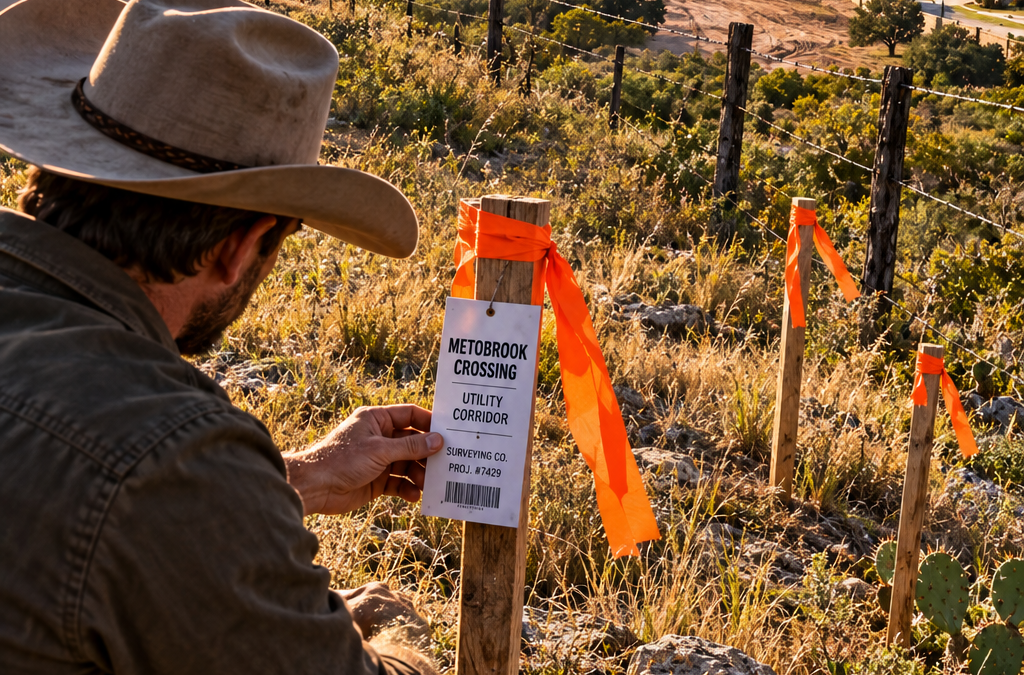
Then I stood alone on the ridge looking at three orange flags fluttering in grass my family had owned for decades.
My grandfather bought the first portion of that ranch in the 1970s.
He wasn’t wealthy.
He was barely comfortable.
He raised cattle, repaired equipment for neighbors, and took construction jobs during bad seasons.
My father added acreage years later.
By the time the property reached me, it totaled forty-three acres.
That number might not sound enormous to people who picture ranches stretching to the horizon.
To my family, it was everything.
Every acre had a story.
The lower pasture was where my father taught me to drive a tractor.
The creek was where I broke my wrist when I was eleven.
The western ridge was where my grandfather used to sit in the evening after checking cattle.
And near the north end of that ridge, beneath a line of old trees, were five small stone markers.
Horses.
Not people.
But family nonetheless.
My grandfather’s mare, Belle, was buried there.
So was my father’s gelding, Ranger.
Three others followed over the years.
We had always treated that corner of the property as untouchable.
Yet somebody had driven survey stakes within a few hundred feet of it without even knocking on my door.
I went home.
Then I did something I should have done years earlier.
I opened every HOA document I owned.
Most of the files were boring.
Budgets.
Insurance summaries.
Landscaping notices.
Meeting minutes.
Reserve studies.
I found nothing mentioning Metobrook Crossing.
So I emailed the association manager.
I requested all board minutes from the previous eighteen months.
All special session records.
All easement agreements.
All communications concerning Parcel 14.
All development agreements.
All legal opinions involving access across my property.
I expected resistance.
Instead, two days later, I received a digital folder containing hundreds of pages.
That should have reassured me.
It did not.
When an organization sends you hundreds of pages in response to a simple question, sometimes they are being transparent.
Sometimes they are hoping the answer disappears inside the volume.
I started reading.
Thursday night became Friday morning.
I sat at my kitchen table with coffee going cold beside me, highlighting anything that referred to land, access, utilities, boundary parcels, or outside developers.
At 1:17 in the morning, I found it.
Not in the regular board minutes.
In an addendum attached to a special session held eleven months earlier.
The meeting had lasted forty-three minutes.
Five board members were listed as present.
So was an attorney representing a development company I had never heard of.
There were only six action items.
The fifth contained one sentence.
“Approval granted for permanent utility and access easement across Parcel 14 in exchange for developer contribution to community reserve fund.”
I read it.
Then read it again.
Parcel 14.
My ranch.
I scrolled farther.
There was an attachment.
A legal description.
I knew enough land descriptions to recognize my western boundary.
The easement began near the HOA access road, crossed my ridge, followed approximately eleven hundred feet of my land, then connected to a large undeveloped tract west of me.
The next document was worse.
An agreement between the HOA and Metobrook Development Partners.
Compensation to the association:
$12 million.
I felt my stomach drop.
Twelve million dollars.
For a permanent utility and access easement across land the board did not own.
I kept reading.
The corridor would accommodate underground water lines.
Sewer.
Power.
Fiber.
Storm infrastructure.
A construction access road.
Then permanent service access after completion.
It was not temporary.
It was not a minor utility crossing.
It was a development artery.
And the HOA had sold it.
I searched for my name.
Nothing.
I searched for notice.
Nothing.
I searched for homeowner approval.
Nothing.
No letter.
No certified mail.
No invitation.
No request for consent.
No acknowledgment that Parcel 14 belonged to a private owner.
Five board members had gone into a private meeting with a developer’s attorney and emerged with a signed agreement giving someone else permanent rights across my ranch.
I pushed back from the table.
For several minutes I could not think clearly.
Anger would come later.
What I felt first was disbelief.
There is something deeply disorienting about reading a legal document describing your property as though you are not part of the equation.
Every line treated the corridor as settled.
Coordinates.
Access rights.
Utility rights.
Construction rights.
Maintenance rights.
Future assignment rights.
The document contemplated decades of activity through land where my grandfather’s cattle had grazed.
And my signature appeared nowhere.
By sunrise, disbelief had become something colder.
I called a land-use attorney.
Her name was Laura Medina.
A client of mine had used her during a boundary dispute several years earlier and spoke highly of her.
I called her office at eight.
By eleven, I was sitting across from her with a banker’s box containing deeds, HOA declarations, amendments, plats, the easement agreement, and sixty pages of highlighted board records.
Laura was in her early forties and had the habit of reading without speaking.
She worked through the agreement first.
Then the HOA declaration.
Then the deed to my property.
Then an old subdivision plat.
Finally she looked up.
“Who told you the HOA had authority to sign this?”
“No one.”
“Did you sign anything?”
“No.”
“Did the previous owner?”
“My father was the previous owner. No.”
“Did you receive payment?”
“No.”
“Were you notified?”
“No.”
She looked back at the documents.
“This is aggressive.”
“That sounds mild.”
She kept reading.
Then she said, “It may also be illegal.”
I leaned forward.
“Explain.”
She turned the declaration toward me.
The HOA was relying on a blanket easement provision in the community’s original governing documents.
That declaration dated to 1987.
At the time, a master developer controlled a much larger area around what eventually became the subdivision.
The declaration reserved broad rights to create roads, utilities, drainage, and infrastructure across property “within the subdivision.”
According to the Metobrook agreement, the current HOA claimed it had inherited those development-era powers.
Their argument was simple.
The original developer could create easements.
The HOA had become successor to certain rights.
Therefore the HOA could grant Metobrook access.
Laura tapped the page.
“This clause is what they’re relying on.”
“So they can sell rights across my ranch?”
“I didn’t say that.”
She pulled my deed forward.
“When did Parcel 14 become attached to this HOA?”
“1994.”
“Seven years after the declaration.”
“Yes.”
“How?”
“My father bought additional acreage from an adjoining owner. The residence was made subject to limited HOA covenants because access connected through the community.”
Laura nodded.
“But was the ranch parcel replatted into the subdivision?”
“I don’t think so.”
“That matters.”
She opened the county plat I had brought.
For nearly ten minutes she compared legal descriptions.
Then her expression changed.
Not dramatically.
But enough.
“There.”
She pointed to a boundary line.
“The 1987 declaration applies its blanket easement authority to property platted within the subdivision boundary.”
She moved her finger to my ranch parcel.
“This land wasn’t inside that boundary.”
“So?”
“So your father’s 1994 deed may have subjected the property to certain association obligations without giving the association the original developer’s infrastructure authority over the underlying fee title.”
I stared at her.
“Say that without the lawyer language.”
A slight smile crossed her face.
“The HOA may have charged you dues.”
She tapped the easement agreement.
“But that doesn’t mean it owned the right to sell this.”
Something loosened in my chest.
Not relief.
Not yet.
But a foothold.
Laura kept going.
“We need the complete title history.”
“I can get it.”
“We need every amendment.”
“I’ll get them.”
“We need the exact annexation instrument from 1994.”
“I’ll find it.”
“And I want to know whether Metobrook knew this was disputed.”
“How?”
“Attorney correspondence. Title reports. Due diligence. Board communications.”
“Will they give us that?”
She looked at me.
“Probably not willingly.”
I spent the next week living at the county recorder’s office, the planning department, and my kitchen table.
I pulled deed history back to 1974.
Every transfer.
Every parcel adjustment.
Every recorded plat.
Every declaration.
Every amendment.
Every easement touching the property.
The deeper I looked, the more obvious the problem became.
The ranch had never been platted into the original subdivision.
My father’s 1994 deed subjected the residence and certain access rights to HOA rules but preserved the ranch acreage as a separately described private parcel.
There was no document granting the HOA authority to create permanent third-party easements across it.
None.
Yet Metobrook had paid twelve million dollars for exactly that.
While Laura built the legal case, the developer moved forward.
At first it was more surveyors.
Then soil testing.
Then utility locators.
Then one Friday morning I heard diesel engines on the ridge.
I drove up and found a grading crew inside the corridor.
A bulldozer was pushing through brush.
An excavator sat behind it.
Two dump trucks waited near the access road.
I stopped my truck across the path.
A foreman approached.
He wore a hard hat and looked irritated before he reached me.
“You need to move your vehicle.”
“No.”
“We have permitted work here.”
“You’re on my property.”
“We have an easement.”
“No, you have a document signed by people who don’t own my land.”
His expression changed.
“Sir, I’m not discussing legal issues.”
“Good. Shut the equipment down.”
“I can’t do that.”
“Then call whoever can.”
He shook his head.
“We have a schedule.”
I looked past him.
The bulldozer blade had scraped through grass my family had maintained for decades.
The disturbed ground ran toward the ridge.
Toward the graves.
“How far are you grading?”
“Per the corridor plan.”
“How close does that plan come to the burial area?”
“I don’t know anything about a burial area.”
That sentence did something to me.
Not because the man was cruel.
He wasn’t.
He was doing a job.
But his ignorance represented the entire problem.
Nobody knew.
Nobody had bothered to know.
To Metobrook, the ridge was geometry.
A corridor.
A line between Point A and Point B.
To the HOA board, it was twelve million dollars.
To me, it was a place where I could still remember standing beside my father as we lowered Ranger into the ground.
I stepped closer to the foreman.
“You need to stop.”
He lowered his voice.
“I’m telling you we were given legal access.”
“And I’m telling you that access is being challenged.”
He radioed someone.
Twenty minutes later, a project manager arrived.
Then a sheriff’s deputy.
The deputy examined the paperwork, looked at me, and said what I already knew he would say.
“This is a civil matter.”
I hated those words.
Not because they were wrong.
Because civil disputes move at the speed of paper while bulldozers move at the speed of diesel.
The machines restarted.
I stood behind my fence and watched them work.
That afternoon, I called Laura.
“They’re grading.”
“I know.”
“How?”
“Metobrook’s counsel emailed me.”
“Can we stop them?”
“I’m preparing the injunction.”
“When?”
“As soon as I have the evidence clean enough that we don’t lose.”
“They’re on my land today.”
“I understand.”
“No, Laura, they’re cutting a road across the ridge.”
“I understand.”
Her voice remained steady.
“You want me to file fast, or you want me to file something that survives?”
I closed my eyes.
“Survives.”
“Then give me another few days.”
Those days were some of the longest of my life.
I became obsessed with documents.
I attended every HOA meeting.
I submitted public records requests to the county.
Permits.
Planning reviews.
Utility applications.
Transportation studies.
Engineering reports.
Anything connected to Metobrook Crossing.
The project was much larger than I had realized.
Dozens of new homes.
Retail pad sites.
Utility infrastructure.
Road improvements.
The western portion of the site was difficult to serve because hills and drainage features made alternate utility routes expensive.
My land was the shortcut.
Not merely a shortcut.
The key.
Without the corridor across Parcel 14, approximately sixty percent of Metobrook’s planned lots could not easily connect to water, sewer, and other infrastructure.
The developer had structured financing around that easement.
That explained twelve million dollars.
They weren’t paying for dirt.
They were paying for certainty.
And the HOA had sold them certainty it did not own.
Then I found something even more important.
In a packet from the county planning office, I located an early title review referencing the 1994 annexation.
One note flagged a question concerning whether the HOA’s blanket infrastructure authority extended to Parcel 14.
The issue had been raised months before the secret easement vote.
Someone had noticed.
I sent it to Laura.
She called ten minutes later.
“This is significant.”
“They knew?”
“Careful.”
“I’m looking at a document that says someone questioned their authority.”
“Yes. That does not prove every board member knew.”
“But their lawyers did?”
“It suggests the issue existed during due diligence.”
“So when they told themselves they had obvious authority—”
“They may have known it was not obvious.”
That changed my view of the whole thing.
Until then, part of me had entertained the possibility that the board had simply made a reckless legal mistake.
Maybe they misunderstood the declaration.
Maybe Metobrook’s attorneys gave them overly aggressive advice.
Maybe everyone moved too quickly.
But if authority over Parcel 14 had already been questioned, then their decision to sign anyway looked different.
I requested the HOA’s attorney correspondence concerning the easement approval.
The association denied part of the request based on attorney-client privilege.
That was expected.
But something else happened.
Two board members who had previously answered my questions suddenly became impossible to reach.
The association’s law firm stopped returning emails.
At meetings, the board president began reading from prepared statements.
“The association acted within its recorded authority.”
“The agreement benefits the entire community.”
“Pending litigation prevents further comment.”
I sat in the back row listening.
At one meeting, I stood during homeowner questions.
“Did the board receive any warning before signing the easement that Parcel 14 might fall outside the 1987 subdivision boundary?”
The president stared at me.
“Our counsel has advised us not to discuss privileged communications.”
“That wasn’t my question.”
“We cannot comment.”
“Did anyone warn you?”
A board member to his left shifted in his chair.
The president struck the table lightly with his gavel.
“Next question.”
People in the room started murmuring.
Most homeowners had not known about the twelve million dollars.
They certainly had not known it came from selling an easement across my ranch.
After the meeting, an elderly woman named Helen stopped me in the parking lot.
“I thought that money was a developer contribution.”
“That’s what the minutes call it.”
“For what?”
“My land.”
She frowned.
“You sold them an easement?”
“No.”
Her expression changed.
“They did?”
“Yes.”
“Without you?”
“Yes.”
She stared toward the clubhouse.
“That can’t be legal.”
I gave her the only answer I had.
“We’re about to find out.”
Laura filed the lawsuit the following Monday.
We did not merely sue the HOA.
We named Metobrook Development Partners directly.
That was deliberate.
The complaint asked the court to declare the easement void ab initio.
Laura explained the term to me the first time.
“It means we aren’t arguing that the easement became invalid later.”
She drew a line across a legal pad.
“We’re saying it was never valid at all.”
“From the moment they signed it.”
“Exactly.”
Because the HOA never possessed authority to convey those rights.
That distinction mattered.
If we were correct, Metobrook had not purchased a flawed easement.
It had purchased nothing.
We requested an emergency injunction stopping all use of the corridor until the ownership issue could be resolved.
Then I discovered the second crack.
The special HOA session.
I had been so focused on property authority that I almost overlooked procedure.
The board claimed the easement approval happened during a properly convened special meeting.
But the notice requirements did not match.
Under applicable state HOA rules and the association’s own bylaws, certain special sessions required notice to members and a properly documented quorum process.
There was no evidence that notice had been provided.
No mailed announcement.
No posting.
No general membership notice.
Nothing.
Five board members and a developer’s attorney had simply met.
The minutes were later inserted into the association records.
I sent everything to Laura.
She read it.
Then called another attorney in her office who handled community association law.
Two days later, they asked me to come in.
Laura placed two stacks of documents on the conference table.
“This is now two separate problems for them.”
She touched the first.
“Substantive authority. We believe the 1987 easement provision never applied to your parcel.”
Then the second.
“Procedural validity. We believe the board may have approved the transaction in a meeting that did not comply with required notice and quorum procedures.”
“So even if they had authority—”
“The vote itself may still be defective.”
“And if the vote had been proper—”
“They still may not have had authority to sell your property rights.”
I leaned back.
“One easement.”
“Two fatal defects.”
For the first time in weeks, I smiled.
Laura saw it.
“Don’t celebrate.”
“I’m not.”
“You are a little.”
“Maybe a little.”
She pointed at me.
“Until the judge signs the order, bulldozers are still bulldozers.”
She was right.
Metobrook continued working.
But the lawsuit changed the atmosphere.
Crews moved more cautiously.
The developer installed temporary fencing.
A representative photographed everything.
The HOA stopped speaking publicly except through counsel.
Then we learned Metobrook had scheduled a groundbreaking ceremony.
Three days after our injunction hearing.
There would be a ribbon cutting.
Local officials.
Photographers.
A press release.
A rendering of the new development.
I read the announcement at my kitchen table and almost admired the arrogance.
They were acting as though the lawsuit did not exist.
As though my property rights were an inconvenient administrative detail that would be resolved in their favor because too much money had already been committed for any other result to be acceptable.
Laura called me that evening.
“They want the judge to believe stopping construction would cause enormous financial harm.”
“They’re the ones who built financing around disputed land.”
“I agree.”
“They knew there was a title question.”
“We’ll argue that.”
“What do they say about the 1994 deed?”
“That the HOA inherited broad successor rights.”
“And your response?”
“That successor rights cannot exceed the rights granted by the underlying documents.”
I was silent.
Then I asked, “Do we win?”
Laura hated that question.
Attorneys do.
Anyone who promises a courtroom result is selling confidence instead of law.
She said, “We have strong facts.”
“That isn’t what I asked.”
“It’s the only honest answer.”
The hearing was held on a Wednesday morning.
I arrived early.
The courthouse smelled like polished wood and old paper.
Metobrook brought a team.
Two attorneys.
A company executive.
An engineer.
The HOA arrived with its president, two board members, association counsel, and the community manager.
I came with Laura, one associate, and a binder thick enough to injure someone.
The board members barely looked at me.
I remember thinking how strange that was.
Eleven months earlier, they had signed away rights across my land without including me in the room.
Now all of us were finally in the same room, and a judge was about to decide whether their signatures meant anything.
Metobrook argued first.
Their attorney was polished.
He described the project as economically important.
Dozens of homes.
Commercial opportunities.
Infrastructure investment.
Jobs.
Tax revenue.
He argued that the easement had been obtained in good faith from the HOA under recorded governing documents.
He emphasized the twelve-million-dollar payment.
He described construction delays as costly.
He suggested I had tolerated early survey activity before objecting.
Laura wrote something on a legal pad.
Then it was our turn.
She began with the deed.
Not emotion.
Not family history.
The deed.
She walked the judge through the 1987 declaration.
The original subdivision boundary.
The blanket easement language.
Then the 1994 instrument.
She placed the two plats side by side.
“Parcel 14,” she said, “was not within the property subject to this infrastructure reservation when the reservation was created.”
Metobrook’s attorney objected to her interpretation.
The judge let her continue.
Laura showed how my father’s later agreement subjected certain property interests to association obligations without transferring fee ownership or infrastructure authority to the HOA.
Then she reached the special meeting.
“No notice to the parcel owner.”
She held up the minutes.
“No membership notice reflected in the association’s production.”
Another page.
“No evidence of the required procedural steps for a special approval of this nature.”
Then came the title review.
“This issue was not invisible.”
She gave the judge the document identifying the concern over whether blanket easement authority extended to Parcel 14.
The judge read it carefully.
Metobrook’s attorney shifted.
The HOA president whispered something to counsel.
Then Laura said the sentence I had been waiting months to hear.
“Your Honor, the defendants did not purchase an easement from my client. They purchased a document from an entity that never owned the property right it purported to convey.”
The courtroom became completely still.
The other side argued that my interpretation threatened long-standing development rights.
Laura answered that long-standing rights still had boundaries.
They argued equity.
She answered with title.
They argued reliance.
She answered that reliance could not create ownership where none existed.
The judge asked several questions.
Most involved dates.
The date of the secret board session.
The date Metobrook began work.
The date of the title review.
At one point he looked toward the HOA attorney.
“Was the owner of Parcel 14 notified before this easement was granted?”
The attorney stood.
“Your Honor, the association’s position is that owner consent was not required under the declaration.”
“That was not my question.”
A pause.
“No.”
“Was the owner notified?”
“No, Your Honor.”
The judge looked down at the documents again.
That was the moment I first believed we might actually stop them.
He did not rule immediately.
We waited.
Twenty minutes.
Thirty.
Forty.
I sat beside Laura trying not to read meaning into every sound from the hallway.
The HOA president avoided my eyes.
One board member looked sick.
Finally, we were called back.
The judge granted the emergency injunction.
All grading within Parcel 14 was to stop.
All construction access through the disputed corridor was prohibited.
No additional utility work.
No heavy equipment.
No expansion of the existing disturbed area.
Effective immediately.
Pending resolution of the underlying property claims.
I heard the words.
But for several seconds, they did not feel real.
Then Laura touched my arm.
“We got it.”
I looked at her.
“That’s it?”
“For today.”
“They have to stop?”
“Yes.”
“This afternoon?”
“Yes.”
I closed my eyes.
The ridge came into my mind.
The horses.
The trees.
The bulldozer.
For weeks I had been watching other people behave as though my property rights existed only if convenient.
Now a court had finally drawn a line they could not drive through.
Outside the courthouse, reporters gathered around Metobrook’s attorney.
I kept walking.
The HOA president called my name.
I stopped.
He hurried toward me.
“This is going to hurt everybody.”
I looked at him.
“You should have thought about that before you sold something that didn’t belong to you.”
“The twelve million went into the community reserve.”
“I never authorized you to monetize my land for your reserve.”
“We believed we had the right.”
“You had documents raising doubts.”
His expression hardened.
“This project could have helped property values throughout the area.”
I stared at him.
“You still don’t understand.”
“What?”
“You keep talking about what my land could do for you.”
I pointed toward the courthouse.
“That is exactly why we’re here.”
The injunction reached the job site before I did.
When I drove up that afternoon, the machines were parked.
Engines off.
No graders moving.
No excavator bucket tearing into the ridge.
Workers were loading tools.
The same foreman I had confronted weeks earlier stood near a pickup.
He saw me.
I expected hostility.
Instead he gave a small nod.
“Court order came through.”
“I know.”
“We’re clearing out.”
“Thank you.”
He glanced toward the disturbed corridor.
“For what it’s worth, I didn’t know there was this much of a fight over ownership.”
“I know.”
He put his hands in his jacket pockets.
“We get told where we’re authorized to work.”
“I understand.”
Then he left.
I walked the corridor alone.
The damage was not catastrophic.
But it hurt to see.
Trees gone.
Earth scraped.
Grass buried.
Ruts from machines.
I reached the horse graves.
They were untouched.
The nearest grading stopped well short of them.
I stood there for a long time.
My grandfather had died years before.
So had my father.
But that afternoon, I felt as though I had spent months defending not only land but something they had entrusted to me without saying it aloud.
Some people inherit money.
Some inherit businesses.
Some inherit obligations.
I had inherited this ground.
And for the first time, I understood that ownership was not merely a legal privilege.
Sometimes it was a duty.
The injunction did not merely stop construction.
It attacked the structure of Metobrook’s financing.
The easement had been listed as secured access.
Lenders had relied on it.
Utility plans depended on it.
The county had reviewed portions of the project based on infrastructure crossing Parcel 14.
Without that corridor, the western part of the development no longer worked as designed.
Within days, meetings began.
Engineers reviewed alternatives.
Survey crews studied a northern route.
That route required crossing wetlands.
A southern route demanded expensive grading and additional land acquisition.
Another option involved pumping systems that substantially increased infrastructure costs.
None solved the problem quickly.
Then financing became an issue.
One of Metobrook’s loan commitments required confirmed legal access and utility feasibility before further funds could be released.
They no longer had confirmed access.
The twelve-million-dollar easement became functionally worthless.
Worse for the HOA, the money had already been recorded in their reserve planning.
Homeowners started asking questions.
Where had the twelve million gone?
How much had been spent?
Why had no one told residents that the payment was tied to rights across a privately owned ranch?
Why were association dues now paying attorneys to defend the transaction?
The emergency board meeting that followed was nothing like the meetings I had ignored for years.
The clubhouse overflowed.
People stood along the walls.
Others waited outside.
I sat near the back.
The board president tried to open with prepared remarks.
He got three sentences in before someone shouted, “Did you sell his land?”
The room erupted.
The president struck his gavel.
“Please maintain order.”
A man near the front stood.
“I asked a simple question.”
“Our attorney has advised—”
“Did you sell an easement across Parcel 14?”
The president looked toward counsel.
That was all the answer the room needed.
Another homeowner spoke.
“You took twelve million dollars?”
“It was a developer contribution.”
I stood then.
“No.”
The room quieted.
The president looked at me.
I held up the agreement.
“It was consideration for a permanent access and utility easement through my ranch.”
People turned toward one another.
I continued.
“The court has temporarily stopped use of the corridor because we presented evidence that the HOA may never have had legal authority to grant it.”
A woman called from the side.
“Were you paid?”
“No.”
“Did you agree?”
“No.”
“Did they tell you?”
“No.”
The anger in the room changed direction.
For months, some residents had treated my lawsuit as a fight between a stubborn ranch owner and community progress.
Now they were seeing the documents.
A homeowner named Daniel Price stood.
“If they can do that to his property, what exactly stops them from doing it to ours?”
No one on the board answered.
That question ended whatever support remained.
Within five weeks of the injunction, Metobrook formally withdrew its county application.
The official notice was only a few paragraphs.
“Changed infrastructure conditions.”
“Project feasibility concerns.”
“Reevaluation of site access.”
Corporate language.
But the meaning was simple.
The project could not move forward.
No easement.
No reliable utility corridor.
No financing structure.
No Metobrook Crossing.
Sixty percent of the planned lots lost their practical service route.
The retail pads disappeared with them.
The groundbreaking ceremony never happened.
The ribbon stayed in a box somewhere.
The mayor never gave the speech.
The press release was never issued.
A development that had existed for years in renderings, spreadsheets, engineering plans, and investor presentations died before the first house was built.
I felt no joy about that.
People sometimes assume I must have.
They hear twelve million dollars.
Secret HOA meeting.
Court injunction.
Failed development.
They imagine revenge.
But I never woke up wanting to kill a project.
I wanted one thing.
My land left under my control.
If Metobrook had approached me directly, maybe we would have talked.
Maybe I would have said no.
Maybe they could have proposed another route.
Maybe there was a price or design that protected the ridge.
I will never know.
They took that conversation away when they decided consent was unnecessary.
That was the unforgivable part.
Not development.
Entitlement.
Three HOA board members resigned within the month.
One stepped down quietly.
Another issued a letter claiming he had relied entirely on legal advice.
The third resigned during a meeting after homeowners demanded an independent review of the transaction.
The president held on slightly longer.
Then he left too.
The association hired new counsel.
A financial audit followed.
The twelve million became the subject of its own complicated dispute because Metobrook wanted the money returned after the easement failed.
The HOA had already allocated portions of it toward reserves and legal expenses.
I stayed out of that fight as much as possible.
It was not my money.
It had never been my money.
My lawsuit continued long enough to resolve the underlying title issue.
Eventually, the disputed easement was declared unenforceable against my parcel.
The record was corrected.
The corridor was removed.
Metobrook relinquished any claim of access through Parcel 14.
The HOA acknowledged in writing that future easements across my ranch required my consent unless supported by some independently valid recorded right.
When Laura handed me the final recorded document, I read every line.
Then I read it again.
“You trust it?” she asked.
“I trust paper more than I used to.”
She laughed.
“That sounds backward after what happened.”
“No.”
I folded the copy carefully.
“I learned that bad paper can cause damage.”
I looked at her.
“But good paper can stop a bulldozer.”
She smiled.
“That is unfortunately a fairly accurate summary of land law.”
Restoring the ridge took months.
I reseeded the disturbed ground.
Repaired fencing.
Replaced several trees.
The scars from grading remained visible for a while.
Rain softened them.
Grass returned.
By the following spring, most people driving past would never have known heavy equipment had been there.
I knew.
Land remembers differently when you know what to look for.
A slight depression.
A young tree where an older one used to stand.
A drainage pattern changed by six inches.
I noticed all of it.
One evening, nearly a year after I found the survey stakes, I drove up to the ridge.
The sun was dropping behind the undeveloped Metobrook tract.
Nothing had been built.
No houses.
No retail pads.
No utility corridor.
Just weeds, survey markers fading in the weather, and an abandoned construction entrance slowly being reclaimed by grass.
I walked toward the horse graves.
Belle.
Ranger.
Three others.
Their stones were exactly where they had always been.
I sat beside my grandfather’s mare’s marker.
For years, I had thought land ownership was simple.
You had a deed.
You paid taxes.
You maintained fences.
Everyone understood the boundaries.
But a boundary is only as strong as your willingness to defend it.
I had trusted the HOA because I assumed there were certain lines no board would cross.
I had believed that whatever arguments happened over budgets, landscaping, or neighborhood rules, nobody could simply sign away permanent rights through land they did not own.
I was wrong.
Or partly wrong.
They could sign.
They could vote.
They could stamp documents.
They could accept twelve million dollars.
They could send surveyors.
They could even put bulldozers on the ground.
What they could not do was make those actions lawful simply because they happened in a conference room.
That distinction mattered.
The board’s greatest mistake was not believing their legal theory.
It was believing nobody would inspect it.
They counted on complexity.
Old declarations.
Parcel numbers.
Addendums.
Quiet meeting minutes.
Thirty-year-old language.
Most people do not read documents like that.
I certainly had not.
Before this happened, I treated HOA paperwork the way most people treat software agreements.
Scroll.
Sign.
Forget.
Never again.
Now every notice gets read.
Every meeting packet gets opened.
Every recorded instrument touching my property gets reviewed.
Not because I became paranoid.
Because I finally understood how easily silence can be mistaken for surrender.
The community changed too.
New board members were elected.
Meetings became crowded for months.
Minutes were posted.
Large contracts received scrutiny.
Homeowners who once complained about people “making trouble” started requesting records themselves.
Helen, the elderly woman who approached me in the parking lot, was elected to the board.
The first time I saw her afterward, she laughed.
“Look what you did.”
“What did I do?”
“You made me join the HOA board.”
“That seems like an unusually harsh punishment.”
She smiled.
“Someone has to read the documents now.”
“Exactly.”
Then she became serious.
“We should have paid attention.”
“So should I.”
“No.”
She shook her head.
“They were elected to protect the community.”
“And I trusted that.”
“Yes.”
She looked toward the ridge.
“Trust isn’t supposed to mean giving people permission to hide things from you.”
I remembered that sentence.
The ranch remains forty-three acres.
No utility corridor cuts across the ridge.
No permanent service road runs beside the horse graves.
The western field still catches the evening sun.
I still mow the same fence line.
I still hear cattle from neighboring land some mornings.
From the house, I can see the master-planned community beyond the trees.
The HOA still exists.
I still pay dues.
Life continued.
But I no longer nod at board meetings without listening.
Sometimes the new board asks my opinion on boundary issues.
Usually I tell them the same thing.
“Read the deed.”
It sounds almost too simple.
But simplicity is what saved me.
Not outrage.
Not threats.
Not screaming at board members.
Dates.
Plat boundaries.
Recorded language.
The 1987 declaration.
The 1994 deed.
Meeting requirements.
One title review that raised the question they hoped would stay buried.
Paper trails.
That was enough.
People sometimes ask what I would say to the former board members if we were all placed in one room again.
For a long time, I thought I would tell them they almost destroyed my family’s land.
Or ask why they believed twelve million dollars gave them the right to ignore me.
But I don’t think I would say any of that now.
I would probably ask one question.
When did you decide I didn’t need to know?
Because that was where everything began.
Not with the bulldozers.
Not with Metobrook.
Not with twelve million dollars.
With a room.
Five board members.
A developer’s lawyer.
A closed door.
And the quiet assumption that the person who actually owned the land was the least important person in the transaction.
That assumption cost them the easement.
It cost Metobrook the development.
It cost several board members their positions.
And it nearly cost a community millions in legal and financial consequences.
All because nobody bothered to knock on one rancher’s door.
I stayed on the ridge until the sunlight disappeared.
Then I walked back toward my truck.
Halfway there, I stopped at the exact place where I had found the first orange stake.
There was no marker now.
No ribbon.
No project number.
The grass had grown back.
I could barely identify the spot.
I thought about how insignificant that stake had looked when I first saw it.
A piece of wood.
Orange plastic.
Something most people might have driven past without thinking twice.
Had I ignored it for another month, grading might have reached much farther.
Utilities might have been installed.
More money might have moved.
The argument that the project was too advanced to stop would have grown stronger.
Instead, I asked one question.
Why is that on my land?
That question changed everything.
My grandfather used to say a fence was not there because everybody wanted to cross it.
A fence existed so everybody understood where permission began.
I finally understood what he meant.
Property rights work the same way.
The line on a deed is not hostility.
It is clarity.
It says this is mine to protect, mine to use, mine to preserve, and mine to decide about.
Anyone is free to ask.
Nobody is entitled to skip the asking.
Today, if you drive past the old proposed Metobrook site, you will see an empty stretch of land beyond my western ridge.
Some surveying stakes remain farther out, bleached by sun and bent by winter wind.
The grand entrance shown in the development renderings was never built.
No line of luxury houses climbs the hill.
No retail center lights the road at night.
No underground utilities cross beneath my pasture.
From a distance, it looks like nothing happened there.
But I know better.
Something did happen.
A board tried to convert authority into ownership.
A developer treated uncertainty as permission.
And one rancher who had spent years ignoring HOA paperwork finally started reading.
They had lawyers.
I had a deed.
They had twelve million dollars.
I had forty-three acres with a title history going back decades.
They had a private meeting, a signed agreement, engineers, survey crews, financing, permits, and a groundbreaking ceremony already scheduled.
I had the truth written in old county records they assumed no one would bother to pull.
In the end, that was enough.
The ridge is still mine.
The horses are still buried where my family placed them.
The wind still moves through the same grass.
And whenever I cross that western pasture, I remember exactly how close I came to losing control of part of it without ever signing my name.
A board can hold a meeting without you.
It can cast votes without you.
It can write numbers in minutes and signatures on contracts.
It can call your property a corridor, an asset, a strategic connection, or anything else that makes the taking sound clean.
But none of those words change ownership.
A deed does not become meaningless because powerful people find it inconvenient.
And silence does not become consent simply because someone hoped you would never notice.
They sold an easement through my ranch without asking me.
They thought the paperwork was buried deeply enough that I would never understand what they had done.
They were wrong.
And every blade of grass growing across that quiet ridge is proof of it.
𝗧𝗛𝗘 𝗘𝗡𝗗
The HOA Signed Away a $12 Million Easement Through My Family Ranch in a Meeting They Never Told Me About
The first warning that someone had sold a piece of my ranch was three orange survey stakes hammered into the ridge where my grandfather used to run cattle and where three generations of my family had buried the horses we could never bring ourselves to send away. Nobody had called me, nobody had asked permission, and somewhere behind closed doors five people had apparently decided that forty-three acres of land carrying my family’s history was theirs to bargain with.
I found the stakes on a Tuesday morning.
There was nothing remarkable about the day before that.
The sun had just started clearing the tree line when I drove the old ranch truck toward the western pasture. I was checking fencing after a storm had come through the night before, snapping branches from the cottonwoods and washing gravel into the drainage ditch near the county road.
I had driven that route thousands of times.
Past the lower field.
Across the cattle guard my father welded himself.
Up the rise toward the western ridge.
That ridge had always been my favorite part of the property.
From the top, I could look east across nearly all forty-three acres and see the barn, the house, the old windmill, and, beyond the southern boundary, the roofs of a master-planned community that seemed to grow larger every year.
That community had a homeowners association.
Technically, because of the peculiar way the land around my property had been annexed and developed over the decades, my residence was subject to a limited set of association covenants.
For years, that arrangement had barely mattered.
I paid what I owed.
I kept my fence line maintained.
I ignored arguments about mailbox colors and holiday decorations.
When meeting notices came, I usually glanced at them and threw them into a drawer.
I knew some of the board members by name.
I waved when I passed them.
I had never considered them a threat.
That was my first mistake.
I stopped the truck when I saw orange plastic ribbon moving in the wind.
At first, I assumed a county crew had marked something near the drainage line.
Then I saw the second stake.
Then the third.
All three were inside my fence.
Not beside it.
Not on a public shoulder.
Inside my property.
I got out.
A narrow set of tire tracks ran through the grass from the direction of the HOA access road and ended beside the stakes.
One wooden marker had a small laminated tag stapled to it.
METOBROOK CROSSING — UTILITY CORRIDOR.
Below that was the name of a surveying company and a project number.
I read the tag twice.
Metobrook Crossing meant nothing to me.
I had never heard the name.
I pulled the stake from the ground, turned it over in my hand, then stopped myself from removing the others.
If someone had entered my property without permission, I wanted evidence exactly where they had left it.
I took photographs.
Close-ups.
Wide shots.
The tire tracks.
The fence opening.
The tag.
Then I called the surveying company.
A woman answered on the third ring.
I gave her the project number.
There was a pause.
Not a long one.
Maybe two seconds.
But it was the kind of pause you notice when the person on the other end knows something you do not.
“Where did you find the markers?” she asked.
“On my ranch.”
Another pause.
“What parcel?”
“Parcel fourteen.”
This time the silence lasted longer.
I could hear a keyboard clicking.
Then she said, “That’s part of the Metobrook Crossing utility and access corridor.”
“No,” I said. “It’s part of my property.”
“I understand.”
“Then why are your survey stakes on it?”
She hesitated.
“You’ll need to speak with your homeowners association.”
I stared across the ridge.
“My HOA?”
“Yes.”
“Why?”
“I really can’t discuss the client’s legal authorization.”
“Your company entered my land.”
“We were operating within the recorded project corridor.”
“Recorded where?”
“You’ll have to speak with the association.”
Something in her voice told me pushing harder would get me nowhere.
I asked for her name, wrote it down, and ended the call.
Then I stood alone on the ridge looking at three orange flags fluttering in grass my family had owned for decades.
My grandfather bought the first portion of that ranch in the 1970s.
He wasn’t wealthy.
He was barely comfortable.
He raised cattle, repaired equipment for neighbors, and took construction jobs during bad seasons.
My father added acreage years later.
By the time the property reached me, it totaled forty-three acres.
That number might not sound enormous to people who picture ranches stretching to the horizon.
To my family, it was everything.
Every acre had a story.
The lower pasture was where my father taught me to drive a tractor.
The creek was where I broke my wrist when I was eleven.
The western ridge was where my grandfather used to sit in the evening after checking cattle.
And near the north end of that ridge, beneath a line of old trees, were five small stone markers.
Horses.
Not people.
But family nonetheless.
My grandfather’s mare, Belle, was buried there.
So was my father’s gelding, Ranger.
Three others followed over the years.
We had always treated that corner of the property as untouchable.
Yet somebody had driven survey stakes within a few hundred feet of it without even knocking on my door.
I went home.
Then I did something I should have done years earlier.
I opened every HOA document I owned.
Most of the files were boring.
Budgets.
Insurance summaries.
Landscaping notices.
Meeting minutes.
Reserve studies.
I found nothing mentioning Metobrook Crossing.
So I emailed the association manager.
I requested all board minutes from the previous eighteen months.
All special session records.
All easement agreements.
All communications concerning Parcel 14.
All development agreements.
All legal opinions involving access across my property.
I expected resistance.
Instead, two days later, I received a digital folder containing hundreds of pages.
That should have reassured me.
It did not.
When an organization sends you hundreds of pages in response to a simple question, sometimes they are being transparent.
Sometimes they are hoping the answer disappears inside the volume.
I started reading.
Thursday night became Friday morning.
I sat at my kitchen table with coffee going cold beside me, highlighting anything that referred to land, access, utilities, boundary parcels, or outside developers.
At 1:17 in the morning, I found it.
Not in the regular board minutes.
In an addendum attached to a special session held eleven months earlier.
The meeting had lasted forty-three minutes.
Five board members were listed as present.
So was an attorney representing a development company I had never heard of.
There were only six action items.
The fifth contained one sentence.
“Approval granted for permanent utility and access easement across Parcel 14 in exchange for developer contribution to community reserve fund.”
I read it.
Then read it again.
Parcel 14.
My ranch.
I scrolled farther.
There was an attachment.
A legal description.
I knew enough land descriptions to recognize my western boundary.
The easement began near the HOA access road, crossed my ridge, followed approximately eleven hundred feet of my land, then connected to a large undeveloped tract west of me.
The next document was worse.
An agreement between the HOA and Metobrook Development Partners.
Compensation to the association:
$12 million.
I felt my stomach drop.
Twelve million dollars.
For a permanent utility and access easement across land the board did not own.
I kept reading.
The corridor would accommodate underground water lines.
Sewer.
Power.
Fiber.
Storm infrastructure.
A construction access road.
Then permanent service access after completion.
It was not temporary.
It was not a minor utility crossing.
It was a development artery.
And the HOA had sold it.
I searched for my name.
Nothing.
I searched for notice.
Nothing.
I searched for homeowner approval.
Nothing.
No letter.
No certified mail.
No invitation.
No request for consent.
No acknowledgment that Parcel 14 belonged to a private owner.
Five board members had gone into a private meeting with a developer’s attorney and emerged with a signed agreement giving someone else permanent rights across my ranch.
I pushed back from the table.
For several minutes I could not think clearly.
Anger would come later.
What I felt first was disbelief.
There is something deeply disorienting about reading a legal document describing your property as though you are not part of the equation.
Every line treated the corridor as settled.
Coordinates.
Access rights.
Utility rights.
Construction rights.
Maintenance rights.
Future assignment rights.
The document contemplated decades of activity through land where my grandfather’s cattle had grazed.
And my signature appeared nowhere.
By sunrise, disbelief had become something colder.
I called a land-use attorney.
Her name was Laura Medina.
A client of mine had used her during a boundary dispute several years earlier and spoke highly of her.
I called her office at eight.
By eleven, I was sitting across from her with a banker’s box containing deeds, HOA declarations, amendments, plats, the easement agreement, and sixty pages of highlighted board records.
Laura was in her early forties and had the habit of reading without speaking.
She worked through the agreement first.
Then the HOA declaration.
Then the deed to my property.
Then an old subdivision plat.
Finally she looked up.
“Who told you the HOA had authority to sign this?”
“No one.”
“Did you sign anything?”
“No.”
“Did the previous owner?”
“My father was the previous owner. No.”
“Did you receive payment?”
“No.”
“Were you notified?”
“No.”
She looked back at the documents.
“This is aggressive.”
“That sounds mild.”
She kept reading.
Then she said, “It may also be illegal.”
I leaned forward.
“Explain.”
She turned the declaration toward me.
The HOA was relying on a blanket easement provision in the community’s original governing documents.
That declaration dated to 1987.
At the time, a master developer controlled a much larger area around what eventually became the subdivision.
The declaration reserved broad rights to create roads, utilities, drainage, and infrastructure across property “within the subdivision.”
According to the Metobrook agreement, the current HOA claimed it had inherited those development-era powers.
Their argument was simple.
The original developer could create easements.
The HOA had become successor to certain rights.
Therefore the HOA could grant Metobrook access.
Laura tapped the page.
“This clause is what they’re relying on.”
“So they can sell rights across my ranch?”
“I didn’t say that.”
She pulled my deed forward.
“When did Parcel 14 become attached to this HOA?”
“1994.”
“Seven years after the declaration.”
“Yes.”
“How?”
“My father bought additional acreage from an adjoining owner. The residence was made subject to limited HOA covenants because access connected through the community.”
Laura nodded.
“But was the ranch parcel replatted into the subdivision?”
“I don’t think so.”
“That matters.”
She opened the county plat I had brought.
For nearly ten minutes she compared legal descriptions.
Then her expression changed.
Not dramatically.
But enough.
“There.”
She pointed to a boundary line.
“The 1987 declaration applies its blanket easement authority to property platted within the subdivision boundary.”
She moved her finger to my ranch parcel.
“This land wasn’t inside that boundary.”
“So?”
“So your father’s 1994 deed may have subjected the property to certain association obligations without giving the association the original developer’s infrastructure authority over the underlying fee title.”
I stared at her.
“Say that without the lawyer language.”
A slight smile crossed her face.
“The HOA may have charged you dues.”
She tapped the easement agreement.
“But that doesn’t mean it owned the right to sell this.”
Something loosened in my chest.
Not relief.
Not yet.
But a foothold.
Laura kept going.
“We need the complete title history.”
“I can get it.”
“We need every amendment.”
“I’ll get them.”
“We need the exact annexation instrument from 1994.”
“I’ll find it.”
“And I want to know whether Metobrook knew this was disputed.”
“How?”
“Attorney correspondence. Title reports. Due diligence. Board communications.”
“Will they give us that?”
She looked at me.
“Probably not willingly.”
I spent the next week living at the county recorder’s office, the planning department, and my kitchen table.
I pulled deed history back to 1974.
Every transfer.
Every parcel adjustment.
Every recorded plat.
Every declaration.
Every amendment.
Every easement touching the property.
The deeper I looked, the more obvious the problem became.
The ranch had never been platted into the original subdivision.
My father’s 1994 deed subjected the residence and certain access rights to HOA rules but preserved the ranch acreage as a separately described private parcel.
There was no document granting the HOA authority to create permanent third-party easements across it.
None.
Yet Metobrook had paid twelve million dollars for exactly that.
While Laura built the legal case, the developer moved forward.
At first it was more surveyors.
Then soil testing.
Then utility locators.
Then one Friday morning I heard diesel engines on the ridge.
I drove up and found a grading crew inside the corridor.
A bulldozer was pushing through brush.
An excavator sat behind it.
Two dump trucks waited near the access road.
I stopped my truck across the path.
A foreman approached.
He wore a hard hat and looked irritated before he reached me.
“You need to move your vehicle.”
“No.”
“We have permitted work here.”
“You’re on my property.”
“We have an easement.”
“No, you have a document signed by people who don’t own my land.”
His expression changed.
“Sir, I’m not discussing legal issues.”
“Good. Shut the equipment down.”
“I can’t do that.”
“Then call whoever can.”
He shook his head.
“We have a schedule.”
I looked past him.
The bulldozer blade had scraped through grass my family had maintained for decades.
The disturbed ground ran toward the ridge.
Toward the graves.
“How far are you grading?”
“Per the corridor plan.”
“How close does that plan come to the burial area?”
“I don’t know anything about a burial area.”
That sentence did something to me.
Not because the man was cruel.
He wasn’t.
He was doing a job.
But his ignorance represented the entire problem.
Nobody knew.
Nobody had bothered to know.
To Metobrook, the ridge was geometry.
A corridor.
A line between Point A and Point B.
To the HOA board, it was twelve million dollars.
To me, it was a place where I could still remember standing beside my father as we lowered Ranger into the ground.
I stepped closer to the foreman.
“You need to stop.”
He lowered his voice.
“I’m telling you we were given legal access.”
“And I’m telling you that access is being challenged.”
He radioed someone.
Twenty minutes later, a project manager arrived.
Then a sheriff’s deputy.
The deputy examined the paperwork, looked at me, and said what I already knew he would say.
“This is a civil matter.”
I hated those words.
Not because they were wrong.
Because civil disputes move at the speed of paper while bulldozers move at the speed of diesel.
The machines restarted.
I stood behind my fence and watched them work.
That afternoon, I called Laura.
“They’re grading.”
“I know.”
“How?”
“Metobrook’s counsel emailed me.”
“Can we stop them?”
“I’m preparing the injunction.”
“When?”
“As soon as I have the evidence clean enough that we don’t lose.”
“They’re on my land today.”
“I understand.”
“No, Laura, they’re cutting a road across the ridge.”
“I understand.”
Her voice remained steady.
“You want me to file fast, or you want me to file something that survives?”
I closed my eyes.
“Survives.”
“Then give me another few days.”
Those days were some of the longest of my life.
I became obsessed with documents.
I attended every HOA meeting.
I submitted public records requests to the county.
Permits.
Planning reviews.
Utility applications.
Transportation studies.
Engineering reports.
Anything connected to Metobrook Crossing.
The project was much larger than I had realized.
Dozens of new homes.
Retail pad sites.
Utility infrastructure.
Road improvements.
The western portion of the site was difficult to serve because hills and drainage features made alternate utility routes expensive.
My land was the shortcut.
Not merely a shortcut.
The key.
Without the corridor across Parcel 14, approximately sixty percent of Metobrook’s planned lots could not easily connect to water, sewer, and other infrastructure.
The developer had structured financing around that easement.
That explained twelve million dollars.
They weren’t paying for dirt.
They were paying for certainty.
And the HOA had sold them certainty it did not own.
Then I found something even more important.
In a packet from the county planning office, I located an early title review referencing the 1994 annexation.
One note flagged a question concerning whether the HOA’s blanket infrastructure authority extended to Parcel 14.
The issue had been raised months before the secret easement vote.
Someone had noticed.
I sent it to Laura.
She called ten minutes later.
“This is significant.”
“They knew?”
“Careful.”
“I’m looking at a document that says someone questioned their authority.”
“Yes. That does not prove every board member knew.”
“But their lawyers did?”
“It suggests the issue existed during due diligence.”
“So when they told themselves they had obvious authority—”
“They may have known it was not obvious.”
That changed my view of the whole thing.
Until then, part of me had entertained the possibility that the board had simply made a reckless legal mistake.
Maybe they misunderstood the declaration.
Maybe Metobrook’s attorneys gave them overly aggressive advice.
Maybe everyone moved too quickly.
But if authority over Parcel 14 had already been questioned, then their decision to sign anyway looked different.
I requested the HOA’s attorney correspondence concerning the easement approval.
The association denied part of the request based on attorney-client privilege.
That was expected.
But something else happened.
Two board members who had previously answered my questions suddenly became impossible to reach.
The association’s law firm stopped returning emails.
At meetings, the board president began reading from prepared statements.
“The association acted within its recorded authority.”
“The agreement benefits the entire community.”
“Pending litigation prevents further comment.”
I sat in the back row listening.
At one meeting, I stood during homeowner questions.
“Did the board receive any warning before signing the easement that Parcel 14 might fall outside the 1987 subdivision boundary?”
The president stared at me.
“Our counsel has advised us not to discuss privileged communications.”
“That wasn’t my question.”
“We cannot comment.”
“Did anyone warn you?”
A board member to his left shifted in his chair.
The president struck the table lightly with his gavel.
“Next question.”
People in the room started murmuring.
Most homeowners had not known about the twelve million dollars.
They certainly had not known it came from selling an easement across my ranch.
After the meeting, an elderly woman named Helen stopped me in the parking lot.
“I thought that money was a developer contribution.”
“That’s what the minutes call it.”
“For what?”
“My land.”
She frowned.
“You sold them an easement?”
“No.”
Her expression changed.
“They did?”
“Yes.”
“Without you?”
“Yes.”
She stared toward the clubhouse.
“That can’t be legal.”
I gave her the only answer I had.
“We’re about to find out.”
Laura filed the lawsuit the following Monday.
We did not merely sue the HOA.
We named Metobrook Development Partners directly.
That was deliberate.
The complaint asked the court to declare the easement void ab initio.
Laura explained the term to me the first time.
“It means we aren’t arguing that the easement became invalid later.”
She drew a line across a legal pad.
“We’re saying it was never valid at all.”
“From the moment they signed it.”
“Exactly.”
Because the HOA never possessed authority to convey those rights.
That distinction mattered.
If we were correct, Metobrook had not purchased a flawed easement.
It had purchased nothing.
We requested an emergency injunction stopping all use of the corridor until the ownership issue could be resolved.
Then I discovered the second crack.
The special HOA session.
I had been so focused on property authority that I almost overlooked procedure.
The board claimed the easement approval happened during a properly convened special meeting.
But the notice requirements did not match.
Under applicable state HOA rules and the association’s own bylaws, certain special sessions required notice to members and a properly documented quorum process.
There was no evidence that notice had been provided.
No mailed announcement.
No posting.
No general membership notice.
Nothing.
Five board members and a developer’s attorney had simply met.
The minutes were later inserted into the association records.
I sent everything to Laura.
She read it.
Then called another attorney in her office who handled community association law.
Two days later, they asked me to come in.
Laura placed two stacks of documents on the conference table.
“This is now two separate problems for them.”
She touched the first.
“Substantive authority. We believe the 1987 easement provision never applied to your parcel.”
Then the second.
“Procedural validity. We believe the board may have approved the transaction in a meeting that did not comply with required notice and quorum procedures.”
“So even if they had authority—”
“The vote itself may still be defective.”
“And if the vote had been proper—”
“They still may not have had authority to sell your property rights.”
I leaned back.
“One easement.”
“Two fatal defects.”
For the first time in weeks, I smiled.
Laura saw it.
“Don’t celebrate.”
“I’m not.”
“You are a little.”
“Maybe a little.”
She pointed at me.
“Until the judge signs the order, bulldozers are still bulldozers.”
She was right.
Metobrook continued working.
But the lawsuit changed the atmosphere.
Crews moved more cautiously.
The developer installed temporary fencing.
A representative photographed everything.
The HOA stopped speaking publicly except through counsel.
Then we learned Metobrook had scheduled a groundbreaking ceremony.
Three days after our injunction hearing.
There would be a ribbon cutting.
Local officials.
Photographers.
A press release.
A rendering of the new development.
I read the announcement at my kitchen table and almost admired the arrogance.
They were acting as though the lawsuit did not exist.
As though my property rights were an inconvenient administrative detail that would be resolved in their favor because too much money had already been committed for any other result to be acceptable.
Laura called me that evening.
“They want the judge to believe stopping construction would cause enormous financial harm.”
“They’re the ones who built financing around disputed land.”
“I agree.”
“They knew there was a title question.”
“We’ll argue that.”
“What do they say about the 1994 deed?”
“That the HOA inherited broad successor rights.”
“And your response?”
“That successor rights cannot exceed the rights granted by the underlying documents.”
I was silent.
Then I asked, “Do we win?”
Laura hated that question.
Attorneys do.
Anyone who promises a courtroom result is selling confidence instead of law.
She said, “We have strong facts.”
“That isn’t what I asked.”
“It’s the only honest answer.”
The hearing was held on a Wednesday morning.
I arrived early.
The courthouse smelled like polished wood and old paper.
Metobrook brought a team.
Two attorneys.
A company executive.
An engineer.
The HOA arrived with its president, two board members, association counsel, and the community manager.
I came with Laura, one associate, and a binder thick enough to injure someone.
The board members barely looked at me.
I remember thinking how strange that was.
Eleven months earlier, they had signed away rights across my land without including me in the room.
Now all of us were finally in the same room, and a judge was about to decide whether their signatures meant anything.
Metobrook argued first.
Their attorney was polished.
He described the project as economically important.
Dozens of homes.
Commercial opportunities.
Infrastructure investment.
Jobs.
Tax revenue.
He argued that the easement had been obtained in good faith from the HOA under recorded governing documents.
He emphasized the twelve-million-dollar payment.
He described construction delays as costly.
He suggested I had tolerated early survey activity before objecting.
Laura wrote something on a legal pad.
Then it was our turn.
She began with the deed.
Not emotion.
Not family history.
The deed.
She walked the judge through the 1987 declaration.
The original subdivision boundary.
The blanket easement language.
Then the 1994 instrument.
She placed the two plats side by side.
“Parcel 14,” she said, “was not within the property subject to this infrastructure reservation when the reservation was created.”
Metobrook’s attorney objected to her interpretation.
The judge let her continue.
Laura showed how my father’s later agreement subjected certain property interests to association obligations without transferring fee ownership or infrastructure authority to the HOA.
Then she reached the special meeting.
“No notice to the parcel owner.”
She held up the minutes.
“No membership notice reflected in the association’s production.”
Another page.
“No evidence of the required procedural steps for a special approval of this nature.”
Then came the title review.
“This issue was not invisible.”
She gave the judge the document identifying the concern over whether blanket easement authority extended to Parcel 14.
The judge read it carefully.
Metobrook’s attorney shifted.
The HOA president whispered something to counsel.
Then Laura said the sentence I had been waiting months to hear.
“Your Honor, the defendants did not purchase an easement from my client. They purchased a document from an entity that never owned the property right it purported to convey.”
The courtroom became completely still.
The other side argued that my interpretation threatened long-standing development rights.
Laura answered that long-standing rights still had boundaries.
They argued equity.
She answered with title.
They argued reliance.
She answered that reliance could not create ownership where none existed.
The judge asked several questions.
Most involved dates.
The date of the secret board session.
The date Metobrook began work.
The date of the title review.
At one point he looked toward the HOA attorney.
“Was the owner of Parcel 14 notified before this easement was granted?”
The attorney stood.
“Your Honor, the association’s position is that owner consent was not required under the declaration.”
“That was not my question.”
A pause.
“No.”
“Was the owner notified?”
“No, Your Honor.”
The judge looked down at the documents again.
That was the moment I first believed we might actually stop them.
He did not rule immediately.
We waited.
Twenty minutes.
Thirty.
Forty.
I sat beside Laura trying not to read meaning into every sound from the hallway.
The HOA president avoided my eyes.
One board member looked sick.
Finally, we were called back.
The judge granted the emergency injunction.
All grading within Parcel 14 was to stop.
All construction access through the disputed corridor was prohibited.
No additional utility work.
No heavy equipment.
No expansion of the existing disturbed area.
Effective immediately.
Pending resolution of the underlying property claims.
I heard the words.
But for several seconds, they did not feel real.
Then Laura touched my arm.
“We got it.”
I looked at her.
“That’s it?”
“For today.”
“They have to stop?”
“Yes.”
“This afternoon?”
“Yes.”
I closed my eyes.
The ridge came into my mind.
The horses.
The trees.
The bulldozer.
For weeks I had been watching other people behave as though my property rights existed only if convenient.
Now a court had finally drawn a line they could not drive through.
Outside the courthouse, reporters gathered around Metobrook’s attorney.
I kept walking.
The HOA president called my name.
I stopped.
He hurried toward me.
“This is going to hurt everybody.”
I looked at him.
“You should have thought about that before you sold something that didn’t belong to you.”
“The twelve million went into the community reserve.”
“I never authorized you to monetize my land for your reserve.”
“We believed we had the right.”
“You had documents raising doubts.”
His expression hardened.
“This project could have helped property values throughout the area.”
I stared at him.
“You still don’t understand.”
“What?”
“You keep talking about what my land could do for you.”
I pointed toward the courthouse.
“That is exactly why we’re here.”
The injunction reached the job site before I did.
When I drove up that afternoon, the machines were parked.
Engines off.
No graders moving.
No excavator bucket tearing into the ridge.
Workers were loading tools.
The same foreman I had confronted weeks earlier stood near a pickup.
He saw me.
I expected hostility.
Instead he gave a small nod.
“Court order came through.”
“I know.”
“We’re clearing out.”
“Thank you.”
He glanced toward the disturbed corridor.
“For what it’s worth, I didn’t know there was this much of a fight over ownership.”
“I know.”
He put his hands in his jacket pockets.
“We get told where we’re authorized to work.”
“I understand.”
Then he left.
I walked the corridor alone.
The damage was not catastrophic.
But it hurt to see.
Trees gone.
Earth scraped.
Grass buried.
Ruts from machines.
I reached the horse graves.
They were untouched.
The nearest grading stopped well short of them.
I stood there for a long time.
My grandfather had died years before.
So had my father.
But that afternoon, I felt as though I had spent months defending not only land but something they had entrusted to me without saying it aloud.
Some people inherit money.
Some inherit businesses.
Some inherit obligations.
I had inherited this ground.
And for the first time, I understood that ownership was not merely a legal privilege.
Sometimes it was a duty.
The injunction did not merely stop construction.
It attacked the structure of Metobrook’s financing.
The easement had been listed as secured access.
Lenders had relied on it.
Utility plans depended on it.
The county had reviewed portions of the project based on infrastructure crossing Parcel 14.
Without that corridor, the western part of the development no longer worked as designed.
Within days, meetings began.
Engineers reviewed alternatives.
Survey crews studied a northern route.
That route required crossing wetlands.
A southern route demanded expensive grading and additional land acquisition.
Another option involved pumping systems that substantially increased infrastructure costs.
None solved the problem quickly.
Then financing became an issue.
One of Metobrook’s loan commitments required confirmed legal access and utility feasibility before further funds could be released.
They no longer had confirmed access.
The twelve-million-dollar easement became functionally worthless.
Worse for the HOA, the money had already been recorded in their reserve planning.
Homeowners started asking questions.
Where had the twelve million gone?
How much had been spent?
Why had no one told residents that the payment was tied to rights across a privately owned ranch?
Why were association dues now paying attorneys to defend the transaction?
The emergency board meeting that followed was nothing like the meetings I had ignored for years.
The clubhouse overflowed.
People stood along the walls.
Others waited outside.
I sat near the back.
The board president tried to open with prepared remarks.
He got three sentences in before someone shouted, “Did you sell his land?”
The room erupted.
The president struck his gavel.
“Please maintain order.”
A man near the front stood.
“I asked a simple question.”
“Our attorney has advised—”
“Did you sell an easement across Parcel 14?”
The president looked toward counsel.
That was all the answer the room needed.
Another homeowner spoke.
“You took twelve million dollars?”
“It was a developer contribution.”
I stood then.
“No.”
The room quieted.
The president looked at me.
I held up the agreement.
“It was consideration for a permanent access and utility easement through my ranch.”
People turned toward one another.
I continued.
“The court has temporarily stopped use of the corridor because we presented evidence that the HOA may never have had legal authority to grant it.”
A woman called from the side.
“Were you paid?”
“No.”
“Did you agree?”
“No.”
“Did they tell you?”
“No.”
The anger in the room changed direction.
For months, some residents had treated my lawsuit as a fight between a stubborn ranch owner and community progress.
Now they were seeing the documents.
A homeowner named Daniel Price stood.
“If they can do that to his property, what exactly stops them from doing it to ours?”
No one on the board answered.
That question ended whatever support remained.
Within five weeks of the injunction, Metobrook formally withdrew its county application.
The official notice was only a few paragraphs.
“Changed infrastructure conditions.”
“Project feasibility concerns.”
“Reevaluation of site access.”
Corporate language.
But the meaning was simple.
The project could not move forward.
No easement.
No reliable utility corridor.
No financing structure.
No Metobrook Crossing.
Sixty percent of the planned lots lost their practical service route.
The retail pads disappeared with them.
The groundbreaking ceremony never happened.
The ribbon stayed in a box somewhere.
The mayor never gave the speech.
The press release was never issued.
A development that had existed for years in renderings, spreadsheets, engineering plans, and investor presentations died before the first house was built.
I felt no joy about that.
People sometimes assume I must have.
They hear twelve million dollars.
Secret HOA meeting.
Court injunction.
Failed development.
They imagine revenge.
But I never woke up wanting to kill a project.
I wanted one thing.
My land left under my control.
If Metobrook had approached me directly, maybe we would have talked.
Maybe I would have said no.
Maybe they could have proposed another route.
Maybe there was a price or design that protected the ridge.
I will never know.
They took that conversation away when they decided consent was unnecessary.
That was the unforgivable part.
Not development.
Entitlement.
Three HOA board members resigned within the month.
One stepped down quietly.
Another issued a letter claiming he had relied entirely on legal advice.
The third resigned during a meeting after homeowners demanded an independent review of the transaction.
The president held on slightly longer.
Then he left too.
The association hired new counsel.
A financial audit followed.
The twelve million became the subject of its own complicated dispute because Metobrook wanted the money returned after the easement failed.
The HOA had already allocated portions of it toward reserves and legal expenses.
I stayed out of that fight as much as possible.
It was not my money.
It had never been my money.
My lawsuit continued long enough to resolve the underlying title issue.
Eventually, the disputed easement was declared unenforceable against my parcel.
The record was corrected.
The corridor was removed.
Metobrook relinquished any claim of access through Parcel 14.
The HOA acknowledged in writing that future easements across my ranch required my consent unless supported by some independently valid recorded right.
When Laura handed me the final recorded document, I read every line.
Then I read it again.
“You trust it?” she asked.
“I trust paper more than I used to.”
She laughed.
“That sounds backward after what happened.”
“No.”
I folded the copy carefully.
“I learned that bad paper can cause damage.”
I looked at her.
“But good paper can stop a bulldozer.”
She smiled.
“That is unfortunately a fairly accurate summary of land law.”
Restoring the ridge took months.
I reseeded the disturbed ground.
Repaired fencing.
Replaced several trees.
The scars from grading remained visible for a while.
Rain softened them.
Grass returned.
By the following spring, most people driving past would never have known heavy equipment had been there.
I knew.
Land remembers differently when you know what to look for.
A slight depression.
A young tree where an older one used to stand.
A drainage pattern changed by six inches.
I noticed all of it.
One evening, nearly a year after I found the survey stakes, I drove up to the ridge.
The sun was dropping behind the undeveloped Metobrook tract.
Nothing had been built.
No houses.
No retail pads.
No utility corridor.
Just weeds, survey markers fading in the weather, and an abandoned construction entrance slowly being reclaimed by grass.
I walked toward the horse graves.
Belle.
Ranger.
Three others.
Their stones were exactly where they had always been.
I sat beside my grandfather’s mare’s marker.
For years, I had thought land ownership was simple.
You had a deed.
You paid taxes.
You maintained fences.
Everyone understood the boundaries.
But a boundary is only as strong as your willingness to defend it.
I had trusted the HOA because I assumed there were certain lines no board would cross.
I had believed that whatever arguments happened over budgets, landscaping, or neighborhood rules, nobody could simply sign away permanent rights through land they did not own.
I was wrong.
Or partly wrong.
They could sign.
They could vote.
They could stamp documents.
They could accept twelve million dollars.
They could send surveyors.
They could even put bulldozers on the ground.
What they could not do was make those actions lawful simply because they happened in a conference room.
That distinction mattered.
The board’s greatest mistake was not believing their legal theory.
It was believing nobody would inspect it.
They counted on complexity.
Old declarations.
Parcel numbers.
Addendums.
Quiet meeting minutes.
Thirty-year-old language.
Most people do not read documents like that.
I certainly had not.
Before this happened, I treated HOA paperwork the way most people treat software agreements.
Scroll.
Sign.
Forget.
Never again.
Now every notice gets read.
Every meeting packet gets opened.
Every recorded instrument touching my property gets reviewed.
Not because I became paranoid.
Because I finally understood how easily silence can be mistaken for surrender.
The community changed too.
New board members were elected.
Meetings became crowded for months.
Minutes were posted.
Large contracts received scrutiny.
Homeowners who once complained about people “making trouble” started requesting records themselves.
Helen, the elderly woman who approached me in the parking lot, was elected to the board.
The first time I saw her afterward, she laughed.
“Look what you did.”
“What did I do?”
“You made me join the HOA board.”
“That seems like an unusually harsh punishment.”
She smiled.
“Someone has to read the documents now.”
“Exactly.”
Then she became serious.
“We should have paid attention.”
“So should I.”
“No.”
She shook her head.
“They were elected to protect the community.”
“And I trusted that.”
“Yes.”
She looked toward the ridge.
“Trust isn’t supposed to mean giving people permission to hide things from you.”
I remembered that sentence.
The ranch remains forty-three acres.
No utility corridor cuts across the ridge.
No permanent service road runs beside the horse graves.
The western field still catches the evening sun.
I still mow the same fence line.
I still hear cattle from neighboring land some mornings.
From the house, I can see the master-planned community beyond the trees.
The HOA still exists.
I still pay dues.
Life continued.
But I no longer nod at board meetings without listening.
Sometimes the new board asks my opinion on boundary issues.
Usually I tell them the same thing.
“Read the deed.”
It sounds almost too simple.
But simplicity is what saved me.
Not outrage.
Not threats.
Not screaming at board members.
Dates.
Plat boundaries.
Recorded language.
The 1987 declaration.
The 1994 deed.
Meeting requirements.
One title review that raised the question they hoped would stay buried.
Paper trails.
That was enough.
People sometimes ask what I would say to the former board members if we were all placed in one room again.
For a long time, I thought I would tell them they almost destroyed my family’s land.
Or ask why they believed twelve million dollars gave them the right to ignore me.
But I don’t think I would say any of that now.
I would probably ask one question.
When did you decide I didn’t need to know?
Because that was where everything began.
Not with the bulldozers.
Not with Metobrook.
Not with twelve million dollars.
With a room.
Five board members.
A developer’s lawyer.
A closed door.
And the quiet assumption that the person who actually owned the land was the least important person in the transaction.
That assumption cost them the easement.
It cost Metobrook the development.
It cost several board members their positions.
And it nearly cost a community millions in legal and financial consequences.
All because nobody bothered to knock on one rancher’s door.
I stayed on the ridge until the sunlight disappeared.
Then I walked back toward my truck.
Halfway there, I stopped at the exact place where I had found the first orange stake.
There was no marker now.
No ribbon.
No project number.
The grass had grown back.
I could barely identify the spot.
I thought about how insignificant that stake had looked when I first saw it.
A piece of wood.
Orange plastic.
Something most people might have driven past without thinking twice.
Had I ignored it for another month, grading might have reached much farther.
Utilities might have been installed.
More money might have moved.
The argument that the project was too advanced to stop would have grown stronger.
Instead, I asked one question.
Why is that on my land?
That question changed everything.
My grandfather used to say a fence was not there because everybody wanted to cross it.
A fence existed so everybody understood where permission began.
I finally understood what he meant.
Property rights work the same way.
The line on a deed is not hostility.
It is clarity.
It says this is mine to protect, mine to use, mine to preserve, and mine to decide about.
Anyone is free to ask.
Nobody is entitled to skip the asking.
Today, if you drive past the old proposed Metobrook site, you will see an empty stretch of land beyond my western ridge.
Some surveying stakes remain farther out, bleached by sun and bent by winter wind.
The grand entrance shown in the development renderings was never built.
No line of luxury houses climbs the hill.
No retail center lights the road at night.
No underground utilities cross beneath my pasture.
From a distance, it looks like nothing happened there.
But I know better.
Something did happen.
A board tried to convert authority into ownership.
A developer treated uncertainty as permission.
And one rancher who had spent years ignoring HOA paperwork finally started reading.
They had lawyers.
I had a deed.
They had twelve million dollars.
I had forty-three acres with a title history going back decades.
They had a private meeting, a signed agreement, engineers, survey crews, financing, permits, and a groundbreaking ceremony already scheduled.
I had the truth written in old county records they assumed no one would bother to pull.
In the end, that was enough.
The ridge is still mine.
The horses are still buried where my family placed them.
The wind still moves through the same grass.
And whenever I cross that western pasture, I remember exactly how close I came to losing control of part of it without ever signing my name.
A board can hold a meeting without you.
It can cast votes without you.
It can write numbers in minutes and signatures on contracts.
It can call your property a corridor, an asset, a strategic connection, or anything else that makes the taking sound clean.
But none of those words change ownership.
A deed does not become meaningless because powerful people find it inconvenient.
And silence does not become consent simply because someone hoped you would never notice.
They sold an easement through my ranch without asking me.
They thought the paperwork was buried deeply enough that I would never understand what they had done.
They were wrong.
And every blade of grass growing across that quiet ridge is proof of it.