𝗙𝗨𝗟𝗟 𝗦𝗧𝗢𝗥𝗬 The HOA Put a $32,000 Lien on My House, but the Butcher They Picked Had Kept Every Receipt
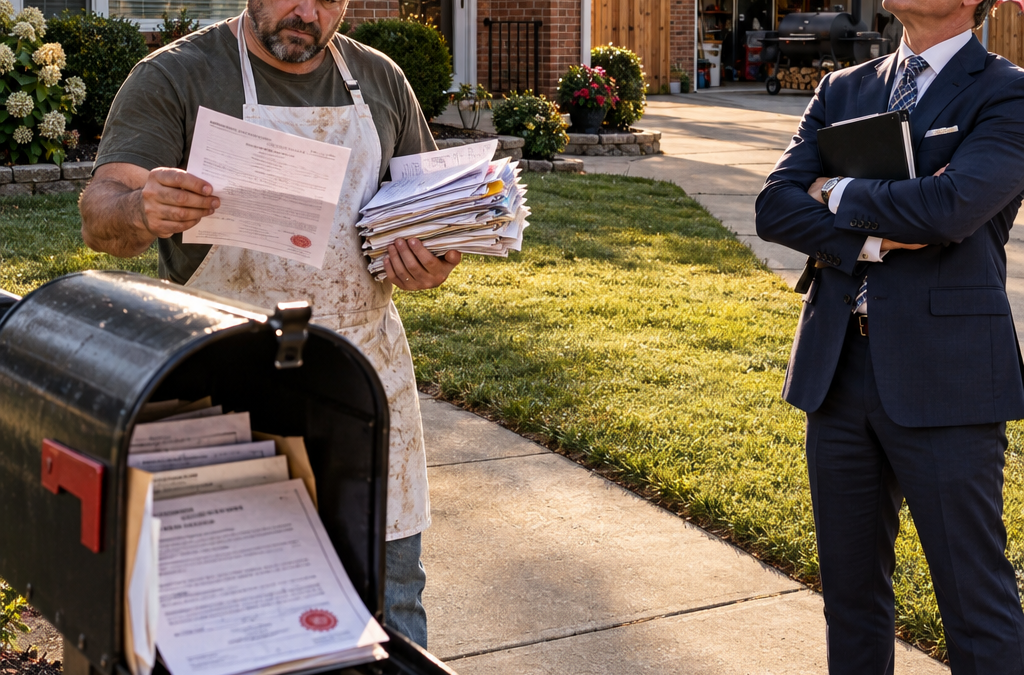
𝗙𝗨𝗟𝗟 𝗦𝗧𝗢𝗥𝗬
Meaning Diane.
Three days later, a violation notice arrived.
Fence setback violation.
Five hundred dollars.
I appealed.
Denied.
No explanation.
No hearing where anyone seriously looked at my documents. Just a short letter stating that the board had reviewed the issue and the fine stood.
Then came the bird feeder violation.
Two hundred dollars.
Apparently, I had placed it too close to the side property line.
Then trash cans visible before six in the evening.
Another hundred.
Then an administrative charge because I had “failed to respond timely” to a notice I never received.
I paid a few of the early fines just to keep peace.
The shop was busy. My meat supplier had raised prices twice. One of my walk-in coolers needed repair. I didn’t have time to spend every night reading HOA rules written by people with too much confidence and not enough sense.
So I paid.
And Diane took that as permission.
The day I understood it wasn’t just me, Ruth Kowalski knocked on my door.
Ruth lived four houses down, near the cul-de-sac. She was seventy-eight, widowed, and small enough that the wind looked like it could push her off the sidewalk. She always wore cardigans, even in June, and grew roses along her porch rail.
That afternoon, her face was pale.
“Thomas,” she said, voice trembling, “may I speak with you?”
I stepped aside. “Of course.”
She sat at my kitchen table with both hands wrapped around a glass of water.
For a moment, she couldn’t get the words out.
Then she pulled a folded letter from her purse.
Diane had threatened her with a lien.
The violation?
Her rose bushes bloomed outside the approved color palette.
I read the letter twice because the first time, my mind rejected it.
“Rose colors?”
Ruth nodded.
“She says they disrupt the approved exterior harmony.”
I looked at her.
“They’re roses.”
“I know.”
“How much does she say you owe?”
“With late fees, eight hundred and forty dollars.”
My hands tightened around the paper.
Ruth looked down at the table.
“I’m on a fixed income. I can’t keep doing this.”
That was the moment something shifted in me.
When Diane came for my grass, I called her petty.
When she came for my fence, I called her arrogant.
But when she came for Ruth’s roses, I understood she was something worse.
A predator.
That night, I started a folder.
Every letter. Every fine. Every envelope. Every date and time. I scanned everything, saved digital copies, and kept the originals in a file box under my desk at the shop.
I labeled it Diane.
It was supposed to be a joke.
It stopped feeling funny fast.
The pattern was too neat.
Diane was targeting specific houses.
Mine. Ruth’s. Three others near the cul-de-sac.
Not the whole neighborhood. Not every violation. Just a cluster.
That made no sense until I started asking the right question.
Why those houses?
I called my cousin Marisol.
Marisol worked as a paralegal in Cleveland and had the kind of brain that could read three pages of legal language and immediately find the one sentence someone hoped nobody noticed.
I told her about the fines.
She didn’t interrupt.
When I finished, she said, “Get me the HOA financial disclosures.”
“I can do that?”
“You’re a homeowner. You’re entitled to certain records. Don’t ask Diane nicely. Ask formally.”
“What am I looking for?”
“Money.”
“What kind of money?”
“The kind that explains why she cares about five specific houses.”
Marisol drafted the records request for me that night.
Budgets. Vendor payments. Contracts. Board minutes. Fine revenue reports. Financial disclosures. Special assessments. Reserve activity.
I sent it certified mail and by email.
Diane stalled for three weeks.
First, she said records were being compiled.
Then she claimed the request was overly broad.
Then the management company sent half a packet and called it complete.
Half the pages were “accidentally” missing.
That was not an accident.
Marisol called me as soon as she reviewed the documents.
“Thomas,” she said, “I found something.”
My stomach tightened.
“What?”
“A six-thousand-dollar payment to Castellano Property Services.”
“Castellano?”
“Yes.”
“Diane’s husband?”
“Bingo.”
I sat down in the back office of my shop, surrounded by invoices and butcher paper.
“What was the payment for?”
“Landscaping consultation and improvement planning.”
“We already have a landscaping company.”
“That’s not the best part.”
“There’s a best part?”
“The board voted to hire her husband’s company at roughly double market rate.”
I rubbed my forehead.
“Diane voted?”
“She chaired the meeting.”
“Of course she did.”
Marisol continued. “And the vote happened right after the HOA started issuing fines against the five houses near the cul-de-sac.”
I went quiet.
“What are you saying?”
“I’m saying you need to find out whether those houses are standing in the way of something.”
I thought of my house. Ruth’s. The three others.
All near the back curve of the subdivision.
Near a strip of wooded land developers had been eyeing for years.
Suddenly, the fines looked different.
They weren’t about rules.
They were pressure.
Pressure designed to make certain homeowners tired, scared, and financially cornered.
Pressure that could push people into selling cheaply.
And if Diane already knew which developer wanted the area, then the HOA wasn’t just annoying.
It was a weapon.
I felt sick.
This wasn’t a control freak enforcing petty standards.
This was calculated theft dressed up as community order.
That evening, I spread the folder across Ruth’s kitchen table.
She made tea neither of us drank.
I showed her the fines, the financial records, the payment to Diane’s husband, the timing.
Her hands trembled as she touched one of the pages.
“She’s been doing this for years, hasn’t she?”
“I don’t know.”
Ruth looked at me.
“Yes, you do.”
I didn’t answer.
Because she was right.
We quietly reached out to the other flagged homeowners.
At first, people were afraid.
Nobody wanted their name in a complaint. Nobody wanted Diane to know they were talking. Nobody wanted to become the next example in her newsletter.
But Ruth helped.
People trusted her.
Five homeowners became eight.
Eight became fourteen.
Every story had the same shape.
A small violation.
Then another.
Then fees.
Then threats.
Then appeals denied.
Then hints that selling might be easier.
One family had received a call from a developer’s broker two days after Diane threatened a lien.
Another had been approached about selling after repeated “maintenance violations.”
A retired couple said Diane had told them, “Some homeowners eventually realize Brook Haven is no longer the right fit.”
The phrase made my skin crawl.
The next open HOA meeting was packed.
Not obviously hostile at first. People in Brook Haven were polite even when furious. They brought folders in reusable tote bags and sat with tight mouths, waiting.
Diane stood at the podium wearing a navy blazer and her usual thin smile.
She announced new beautification fees with false radiant warmth.
“Brook Haven’s property values depend on consistent enforcement and shared investment,” she said.
I raised my hand.
Her eyes landed on me.
For a second, I saw irritation flash across her face.
“Yes, Thomas?”
I stood.
My heart was pounding, but my voice came out steady.
“Why did the board award a no-bid landscaping contract to your husband’s company, funded in part by resident fines?”
The room went dead silent.
Diane’s smile cracked.
Just for half a second.
The first real thing I had seen from her in six years of living under her rules.
Then her face hardened.
“That is slander.”
“It’s a question.”
“It is an accusation.”
“The records show the payment.”
Her hand tightened around the podium.
“I will see you in court for defamation, Thomas.”
A ripple of gasps ran through the room.
Ruth, seated beside me, whispered, “Well, at least she knows your name.”
I almost laughed.
Almost.
After the meeting, fourteen angry homeowners surrounded the board treasurer in the parking lot.
His name was Alan Mercer.
He was a thin, nervous man who always looked damp with anxiety. He had sat beside Diane for years, nodding through budgets and saying little.
That night, cornered by residents holding copies of their fines, Alan looked like a man watching the floor disappear beneath him.
“We need the real books,” Marisol told him over speakerphone from my pocket.
Alan looked at me sharply. “Who’s that?”
“My cousin.”
“She a lawyer?”
“Paralegal.”
He wiped his forehead.
“I can’t.”
Ruth stepped forward.
“You can.”
His eyes moved to her.
Diane had fined Ruth over roses. Everyone knew it now.
Alan swallowed.
“She’ll ruin me.”
“She’s already ruining people,” Ruth said.
For several seconds, no one spoke.
Then Alan looked toward the clubhouse doors, as though Diane might appear.
“She has old texts,” he said quietly.
“What texts?” I asked.
His voice dropped.
“Proof I falsified minutes for her once.”
A murmur moved through the group.
Alan closed his eyes.
“She told me it was harmless. Just correcting language after the meeting. Then she kept the texts. Any time I questioned something, she reminded me.”
“You helped her,” one homeowner snapped.
Alan flinched.
Ruth raised a hand.
“We can deal with that later. Right now, do you have records?”
He looked at her for a long time.
Then reached into his jacket and pulled out a small USB drive.
He placed it in my hand.
“Three years,” he whispered. “Ledgers. Invoices. Vendor lists. Emails. Everything she never wanted released.”
I closed my fingers around it.
That was the second twist.
Diane had not just bullied residents.
She had trapped her own board into silence.
Marisol and I reviewed the USB that night in the back office of my butcher shop.
The bell over the front door was locked. The lights over the display case were off. The only sound was the hum of the coolers and Marisol muttering curses under her breath over the phone as I shared files with her.
Forged repair invoices.
Phantom vendors.
Cash withdrawals disguised as reserve maintenance.
Duplicate payments.
Board approvals that did not match meeting attendance.
Payments to Diane’s husband’s landscaping company.
Payments to companies with addresses that led to mailbox stores.
The more we opened, the worse it got.
Marisol went quiet for a full minute.
“That bad?” I asked.
“Thomas, this is criminal.”
I leaned back in the chair.
The shop smelled faintly of bleach and smoked sausage.
“What do we do?”
“We file a formal complaint with the state HOA oversight division. We also preserve everything, make copies, and get an attorney involved if you haven’t already.”
“I thought you were my legal brain.”
“I’m your cousin with a paralegal certificate and good instincts. This needs more.”
She paused.
“And Thomas?”
“Yeah?”
“She’s going to hit back.”
Diane did.
Hard.
Two days later, I received another certified letter.
She had accelerated the foreclosure paperwork on my house, claiming an emergency board vote authorized immediate lien enforcement because I had engaged in “public defamation, harassment of board officers, and continued refusal to satisfy outstanding obligations.”
Nobody remembered attending that emergency vote.
Not Alan.
Not two other board members.
Not any homeowner who would have had notice.
It existed only in Diane’s paperwork.
Ruth called me that night.
Her voice was thin.
“She sent me one too.”
My chest tightened.
“A lien letter?”
“Yes. Not foreclosure yet. But it says if I don’t pay, they’ll proceed.”
I closed my eyes.
Diane was trying to scare everyone back into silence.
Ruth sighed.
“At least when we lose our houses, we’ll have matching cardboard boxes.”
I laughed despite myself.
It was a terrible joke.
A necessary one.
Fear can drown you if nobody throws humor into the water.
Marisol filed the formal complaint that same week.
She also tipped off a local news reporter she knew from a prior housing story.
I didn’t love that part.
I had spent my life avoiding attention. I cut meat for a living. I knew my customers by name. I did not want cameras at my house or reporters asking how close I was to losing it.
But Marisol was blunt.
“Diane thrives in silence. Put light on her.”
The reporter’s name was Kelly Marsh.
She showed up at the next HOA meeting with a camera crew and a stack of documents.
Diane tried charm.
She was good at charm when she had warning.
She wore a soft pink blazer and told the camera, “Brook Haven Estates is a close-knit community. This is simply a misunderstanding between neighbors.”
Her voice cracked on the word misunderstanding.
Kelly asked, “Is it true the HOA awarded payments to a company owned by your husband while issuing fines against homeowners facing lien threats?”
Diane blinked.
“The board follows all appropriate procedures.”
“Did you disclose the relationship?”
“That is a personnel and contracting matter.”
“Did homeowners vote on those payments?”
Diane’s smile went stiff.
“As I said, this is a misunderstanding.”
Behind the camera, Ruth muttered, “That woman wouldn’t know a misunderstanding if it fined her mailbox.”
By then, the story had legs.
The state auditor’s office announced a formal investigation into Brook Haven’s HOA finances.
Pending liens tied to disputed enforcement actions were frozen.
Including mine.
When James Porter, the real estate attorney Marisol recommended, called to tell me, I was standing behind the counter at my shop wrapping pork chops for Mrs. Donnelly from Sycamore Lane.
I set the phone down afterward and realized my hands were shaking.
Mrs. Donnelly leaned over the counter.
“Good news?”
“For now.”
She nodded toward the wrapped meat.
“Then add two more chops. We’ll celebrate.”
Word spread fast.
For the first time in weeks, I felt air reach my lungs.
Diane must have felt the walls closing.
That same week, she came to my butcher shop.
Uninvited.
At 4:30 in the afternoon, with customers waiting near the counter and two teenagers from the high school buying sandwich meat for a football fundraiser.
The bell over the door rang.
I looked up and saw Diane Castellano standing on the tile floor in a camel-colored coat, clutching her handbag like she wanted to hit someone with it.
The shop went quiet.
People knew.
By then, everybody knew.
“Thomas,” she said.
I wiped my hands and came around the counter.
“Diane.”
“We need to talk.”
“Then call my attorney.”
Her jaw tightened.
“This has gone far enough.”
“It has.”
“You are destroying this community.”
I looked around the shop.
Customers stood frozen, watching.
“The community was never in danger,” I said. “You were.”
Her face flushed.
“You have no idea what you’re doing.”
“I know exactly what I’m doing.”
“You think those people support you?” She gestured vaguely toward the neighborhood outside. “They’ll turn on you when their dues rise because of your crusade.”
“No,” I said. “They’ll ask where the money went.”
Her eyes narrowed.
For a second, the mask dropped.
There was no charm then. No community concern. No polished president.
Just fury.
“You should have paid your fines,” she said.
I stepped closer, lowering my voice.
“You should have stayed away from Ruth’s roses.”
The customers heard that.
Someone near the cooler gave a short, nervous laugh.
Diane turned sharply and stormed out.
The bell over the door rang behind her.
A long silence followed.
Then Mrs. Donnelly said, “I’ll take a pound of bacon too.”
The audit result came faster than anyone expected.
Maybe because the USB gave investigators a map.
Maybe because Alan cooperated fully after realizing Diane had left him no safe place to stand.
Maybe because the forged documents were sloppier than Diane believed.
The third twist came in the audit report.
Diane had forged three resident signatures on old board approvals.
One of them was tied to the fence letter she had denied.
The very approval I had shown her.
The report concluded that the original fence approval had been valid. Later documents claiming to reverse or question that approval contained forged signatures and fabricated board references.
That changed everything.
A civil dispute over fines became a criminal case.
Document fraud.
Embezzlement of HOA funds.
Fifty-one counts of financial misconduct.
When the police arrived at Diane’s house on a Thursday morning, half the neighborhood already knew something was coming.
People stood on porches in robes, sweaters, slippers, work uniforms.
Ruth stood beside me, one hand pressed against her chest.
Diane opened the door in a white blouse and black pants, looking irritated more than afraid.
Then she saw the officers.
Whatever they said to her, we couldn’t hear.
But we saw her face change.
For once, she did not argue loud enough for the whole street.
She was led out in handcuffs, silent.
No clipboard.
No ruler.
No smile.
Just Diane Castellano walking past the same lawns she had measured, the same mailboxes she had judged, the same neighbors she had frightened, with two officers guiding her toward a patrol car.
Ruth exhaled.
“Well,” she said, “I suppose her grass will be too tall by Monday.”
I laughed so hard I nearly cried.
The lien on my house was voided.
Ruth’s foreclosure threat vanished the same day.
Fourteen families received refunds with interest.
Some checks were small. A few hundred dollars. Some were thousands.
But the amount was not the point.
The point was that Diane had not been untouchable.
She had only seemed that way because everyone had been scared separately.
Months later, Diane pleaded guilty to avoid trial.
She forfeited her HOA role, her husband’s contract, and any future position on any HOA board in the state.
Alan received consequences too, though his cooperation mattered. He admitted what he had done and stood in front of the community to apologize.
Ruth accepted the apology.
I didn’t, not fully.
Maybe someday.
The next HOA election was the first real election Brook Haven had seen in years.
People nominated me.
I refused.
Then Ruth nominated me again.
I refused harder.
Then Marisol called and said, “Stop being dramatic and fix the thing.”
“I’m a butcher, not a board president.”
“Good. Maybe you’ll understand that rules are supposed to serve people, not slice them apart.”
I hated when she was right.
I ran.
No one ran against me.
The vote was unanimous.
At my first meeting as president, I stood at the same podium where Diane had threatened me with defamation.
The room was full.
Not fearful-full.
Present-full.
People brought coffee. Documents. Questions. Complaints. Suggestions. One man brought cookies.
Ruth sat in the front row with a flat of rose bushes beside her chair.
When we reached community landscaping, she raised her hand.
“Yes, Ruth,” I said.
“I move that the entrance garden be replanted with roses.”
A few people smiled.
“What color?” someone asked.
Ruth looked directly at me.
“Any color we want.”
The room applauded.
Motion passed.
The new board reviewed every rule.
Some stayed.
Some changed.
Some were deleted because nobody could explain why they existed in the first place.
We kept lawn maintenance rules but added fair notice and appeal procedures.
We kept mailbox standards but removed absurd fee escalations.
We prohibited board members and their relatives from receiving contracts without full disclosure, competitive bids, and homeowner review.
We required proper meeting notice.
Real minutes.
Transparent financial records.
And no unilateral fines by one person with a personal grudge.
Nobody measured fence lines with a ruler unless there was a real safety or boundary issue.
Nobody threatened foreclosure over roses.
Nobody pretended a clipboard made them royalty.
One evening, months after the guilty plea, I closed the shop early and walked home through Brook Haven.
The air smelled like fresh-cut grass and charcoal smoke.
Kids rode bikes near the cul-de-sac. A dog barked behind a fence. Ruth was in her yard, planting roses near the porch.
Red. Yellow. Pink. White. Purple.
Every color Diane would have hated.
I stopped at my gate and looked at my house.
The house my father helped me buy.
The fence still stood in the backyard.
The bird feeder hung from the maple tree.
The trash cans were tucked away because I actually did care about keeping the place decent.
But decent was different from afraid.
For months, Diane had made me feel like my home could be taken by paperwork I didn’t understand, votes I never attended, and fees invented by people who smiled while threatening me.
Now I understood something I wished I had known earlier.
A rule is not justice just because someone writes it down.
A fine is not valid just because it arrives on letterhead.
And a board president is not a queen just because neighbors are too tired to challenge her.
Justice did not come loud at first.
It came as a folder on my kitchen table.
A paralegal cousin saying, “Get me the disclosures.”
Ruth joking through fear.
Fourteen homeowners comparing letters.
A trembling treasurer handing me a USB drive in a parking lot.
A reporter asking one question Diane couldn’t charm her way around.
An auditor reading what she thought nobody would see.
But when justice finally came, it came complete.
The lien vanished.
The refunds arrived.
The contracts were canceled.
The forged signatures were exposed.
Diane was removed, charged, and barred from ever using an HOA board like a weapon again.
Brook Haven was ours again.
And the roses at the entrance bloomed in every color they pleased.
𝗧𝗛𝗘 𝗘𝗡𝗗
The HOA Put a $32,000 Lien on My House, but the Butcher They Picked Had Kept Every Receipt
The letter arrived on a Tuesday, and by Friday, my house had a lien on it.
Thirty-two thousand dollars I never owed, signed by a woman who thought fear was the same thing as authority.
My name is Thomas Reyes. I was forty-one years old, a butcher by trade, and I owned a small meat shop two blocks from my house in Brook Haven Estates, Ohio.
That shop was not fancy. It had white tile floors, a glass display case, two walk-in coolers, and a bell over the door that had been there since before I bought the place. Most mornings, I was there before sunrise, breaking down deliveries, sharpening knives, trimming cuts, and setting out trays before the first regular customer came in for ground chuck or pork shoulder.
My hands were always rough. My clothes usually smelled faintly of smoke, salt, and cold metal. I knew how to separate muscle from bone, how to keep an edge sharp, and how to work twelve hours on my feet without complaining.
What I did not know, at least not then, was how to protect my home from a woman with a clipboard and a grudge.
The house meant more to me than anyone in Brook Haven understood.
I bought it with money my father left me.
He had been a butcher too. Not the kind with a fancy shop or branded aprons. He worked the back rooms of grocery stores and local markets for thirty-eight years, coming home with sore wrists, aching knees, and tiny cuts across his fingers that he never mentioned.
When he died, he left behind a savings account I hadn’t known existed.
Not huge.
Not life-changing in the way lottery checks are life-changing.
But enough for a down payment.
I remember sitting in the bank parking lot after the estate settled, staring at the numbers through tears I was too embarrassed to wipe away. My father had gone without things his whole life. He wore boots until the soles cracked. Drove the same truck for nineteen years. Ate leftovers standing at the kitchen counter because he said sitting down made him sleepy.
And all that time, he had been saving.
For me.
The house in Brook Haven Estates became the place where I put that sacrifice.
It was a brick ranch with a wide front window, a detached garage, and a backyard big enough for a smoker, a vegetable bed, and a small patio table where I drank coffee after closing the shop. Nothing extravagant. Nothing someone would stop and photograph. But it was solid, paid on time, and mine.
Losing it was not an option.
Not to a bank.
Not to bad luck.
And definitely not to Diane Castellano.
Diane had been HOA president of Brook Haven Estates for six years running, unopposed every election.
People liked to say she was dedicated.
That was the safe word.
Dedicated.
The truth was, nobody dared run against her.
Brook Haven had thirty-one official community rules. Lawn height. Mailbox color. Trash timing. Fence setbacks. Exterior paint. Holiday decorations. Bird feeder placement. Driveway storage. Mulch tone. Approved tree species. The kind of rules people tolerated because they believed order protected property values.
Diane enforced them like a prison warden, not a neighbor.
She was in her late fifties, short, sharp-eyed, and always dressed like she was on her way to testify before Congress. Blazers in hard colors. Perfect lipstick. Hair pinned into place. Clipboard tucked against her ribs like a shield.
The first time she came to my house, she measured my grass with her own ruler.
I stood on the porch, wiping my hands on a dish towel, watching her kneel near my walkway in cream slacks and pointed shoes.
“Can I help you?” I asked.
She didn’t look up right away.
“One moment.”
She pressed the ruler into the grass, squinted, then wrote something on her clipboard.
When she finally turned toward me, she smiled as if she had caught a thief.
“Mr. Reyes, your lawn exceeds the approved height.”
I glanced at the grass.
It looked fine.
“How much over?”
“Half an inch.”
I stared at her.
“Half an inch?”
“Yes.”
“You measured that?”
“I did.”
I almost laughed.
Diane did not.
“Our standards exist for a reason,” she said. “Brook Haven is a high-quality community.”
“It’s grass.”
“It is noncompliant grass.”
That should have warned me.
Instead, I thought it was ridiculous enough to let go.
I mowed the lawn again that evening, even though it barely needed it. When the fifty-dollar ticket arrived two days later, I paid it.
I told myself peace was worth fifty dollars.
That was my first mistake.
Diane learned from that payment that I would rather avoid conflict than challenge nonsense.
Women like Diane do not stop when you comply.
They escalate.
Two weeks later, she came for my fence.
The fence had been installed three years before I bought the house. Six-foot privacy fence. Cedar boards. Proper posts. Clean line along the backyard. The previous board had approved it in writing, and the approval letter came with the closing documents.
Diane showed up one Saturday morning while I was cleaning the smoker on the patio.
“Your fence violates setback code,” she said.
I looked toward it.
“No, it doesn’t.”
Her eyebrows rose.
“That is not for you to decide.”
I went inside, pulled the old approval letter from my house file, and handed it to her.
“This was approved by the previous board.”
She took the paper between two fingers, like it was greasy.
Her eyes moved over it.
Then she handed it back.
“Policies change, Thomas. Try to keep up.”
I felt my jaw tighten.
“Approvals don’t disappear because you don’t like them.”
“That depends on whether the approval was valid.”
“It was valid when I bought the house.”
“That will be reviewed.”
“By who?”
“The board.”
Meaning Diane.
Three days later, a violation notice arrived.
Fence setback violation.
Five hundred dollars.
I appealed.
Denied.
No explanation.
No hearing where anyone seriously looked at my documents. Just a short letter stating that the board had reviewed the issue and the fine stood.
Then came the bird feeder violation.
Two hundred dollars.
Apparently, I had placed it too close to the side property line.
Then trash cans visible before six in the evening.
Another hundred.
Then an administrative charge because I had “failed to respond timely” to a notice I never received.
I paid a few of the early fines just to keep peace.
The shop was busy. My meat supplier had raised prices twice. One of my walk-in coolers needed repair. I didn’t have time to spend every night reading HOA rules written by people with too much confidence and not enough sense.
So I paid.
And Diane took that as permission.
The day I understood it wasn’t just me, Ruth Kowalski knocked on my door.
Ruth lived four houses down, near the cul-de-sac. She was seventy-eight, widowed, and small enough that the wind looked like it could push her off the sidewalk. She always wore cardigans, even in June, and grew roses along her porch rail.
That afternoon, her face was pale.
“Thomas,” she said, voice trembling, “may I speak with you?”
I stepped aside. “Of course.”
She sat at my kitchen table with both hands wrapped around a glass of water.
For a moment, she couldn’t get the words out.
Then she pulled a folded letter from her purse.
Diane had threatened her with a lien.
The violation?
Her rose bushes bloomed outside the approved color palette.
I read the letter twice because the first time, my mind rejected it.
“Rose colors?”
Ruth nodded.
“She says they disrupt the approved exterior harmony.”
I looked at her.
“They’re roses.”
“I know.”
“How much does she say you owe?”
“With late fees, eight hundred and forty dollars.”
My hands tightened around the paper.
Ruth looked down at the table.
“I’m on a fixed income. I can’t keep doing this.”
That was the moment something shifted in me.
When Diane came for my grass, I called her petty.
When she came for my fence, I called her arrogant.
But when she came for Ruth’s roses, I understood she was something worse.
A predator.
That night, I started a folder.
Every letter. Every fine. Every envelope. Every date and time. I scanned everything, saved digital copies, and kept the originals in a file box under my desk at the shop.
I labeled it Diane.
It was supposed to be a joke.
It stopped feeling funny fast.
The pattern was too neat.
Diane was targeting specific houses.
Mine. Ruth’s. Three others near the cul-de-sac.
Not the whole neighborhood. Not every violation. Just a cluster.
That made no sense until I started asking the right question.
Why those houses?
I called my cousin Marisol.
Marisol worked as a paralegal in Cleveland and had the kind of brain that could read three pages of legal language and immediately find the one sentence someone hoped nobody noticed.
I told her about the fines.
She didn’t interrupt.
When I finished, she said, “Get me the HOA financial disclosures.”
“I can do that?”
“You’re a homeowner. You’re entitled to certain records. Don’t ask Diane nicely. Ask formally.”
“What am I looking for?”
“Money.”
“What kind of money?”
“The kind that explains why she cares about five specific houses.”
Marisol drafted the records request for me that night.
Budgets. Vendor payments. Contracts. Board minutes. Fine revenue reports. Financial disclosures. Special assessments. Reserve activity.
I sent it certified mail and by email.
Diane stalled for three weeks.
First, she said records were being compiled.
Then she claimed the request was overly broad.
Then the management company sent half a packet and called it complete.
Half the pages were “accidentally” missing.
That was not an accident.
Marisol called me as soon as she reviewed the documents.
“Thomas,” she said, “I found something.”
My stomach tightened.
“What?”
“A six-thousand-dollar payment to Castellano Property Services.”
“Castellano?”
“Yes.”
“Diane’s husband?”
“Bingo.”
I sat down in the back office of my shop, surrounded by invoices and butcher paper.
“What was the payment for?”
“Landscaping consultation and improvement planning.”
“We already have a landscaping company.”
“That’s not the best part.”
“There’s a best part?”
“The board voted to hire her husband’s company at roughly double market rate.”
I rubbed my forehead.
“Diane voted?”
“She chaired the meeting.”
“Of course she did.”
Marisol continued. “And the vote happened right after the HOA started issuing fines against the five houses near the cul-de-sac.”
I went quiet.
“What are you saying?”
“I’m saying you need to find out whether those houses are standing in the way of something.”
I thought of my house. Ruth’s. The three others.
All near the back curve of the subdivision.
Near a strip of wooded land developers had been eyeing for years.
Suddenly, the fines looked different.
They weren’t about rules.
They were pressure.
Pressure designed to make certain homeowners tired, scared, and financially cornered.
Pressure that could push people into selling cheaply.
And if Diane already knew which developer wanted the area, then the HOA wasn’t just annoying.
It was a weapon.
I felt sick.
This wasn’t a control freak enforcing petty standards.
This was calculated theft dressed up as community order.
That evening, I spread the folder across Ruth’s kitchen table.
She made tea neither of us drank.
I showed her the fines, the financial records, the payment to Diane’s husband, the timing.
Her hands trembled as she touched one of the pages.
“She’s been doing this for years, hasn’t she?”
“I don’t know.”
Ruth looked at me.
“Yes, you do.”
I didn’t answer.
Because she was right.
We quietly reached out to the other flagged homeowners.
At first, people were afraid.
Nobody wanted their name in a complaint. Nobody wanted Diane to know they were talking. Nobody wanted to become the next example in her newsletter.
But Ruth helped.
People trusted her.
Five homeowners became eight.
Eight became fourteen.
Every story had the same shape.
A small violation.
Then another.
Then fees.
Then threats.
Then appeals denied.
Then hints that selling might be easier.
One family had received a call from a developer’s broker two days after Diane threatened a lien.
Another had been approached about selling after repeated “maintenance violations.”
A retired couple said Diane had told them, “Some homeowners eventually realize Brook Haven is no longer the right fit.”
The phrase made my skin crawl.
The next open HOA meeting was packed.
Not obviously hostile at first. People in Brook Haven were polite even when furious. They brought folders in reusable tote bags and sat with tight mouths, waiting.
Diane stood at the podium wearing a navy blazer and her usual thin smile.
She announced new beautification fees with false radiant warmth.
“Brook Haven’s property values depend on consistent enforcement and shared investment,” she said.
I raised my hand.
Her eyes landed on me.
For a second, I saw irritation flash across her face.
“Yes, Thomas?”
I stood.
My heart was pounding, but my voice came out steady.
“Why did the board award a no-bid landscaping contract to your husband’s company, funded in part by resident fines?”
The room went dead silent.
Diane’s smile cracked.
Just for half a second.
The first real thing I had seen from her in six years of living under her rules.
Then her face hardened.
“That is slander.”
“It’s a question.”
“It is an accusation.”
“The records show the payment.”
Her hand tightened around the podium.
“I will see you in court for defamation, Thomas.”
A ripple of gasps ran through the room.
Ruth, seated beside me, whispered, “Well, at least she knows your name.”
I almost laughed.
Almost.
After the meeting, fourteen angry homeowners surrounded the board treasurer in the parking lot.
His name was Alan Mercer.
He was a thin, nervous man who always looked damp with anxiety. He had sat beside Diane for years, nodding through budgets and saying little.
That night, cornered by residents holding copies of their fines, Alan looked like a man watching the floor disappear beneath him.
“We need the real books,” Marisol told him over speakerphone from my pocket.
Alan looked at me sharply. “Who’s that?”
“My cousin.”
“She a lawyer?”
“Paralegal.”
He wiped his forehead.
“I can’t.”
Ruth stepped forward.
“You can.”
His eyes moved to her.
Diane had fined Ruth over roses. Everyone knew it now.
Alan swallowed.
“She’ll ruin me.”
“She’s already ruining people,” Ruth said.
For several seconds, no one spoke.
Then Alan looked toward the clubhouse doors, as though Diane might appear.
“She has old texts,” he said quietly.
“What texts?” I asked.
His voice dropped.
“Proof I falsified minutes for her once.”
A murmur moved through the group.
Alan closed his eyes.
“She told me it was harmless. Just correcting language after the meeting. Then she kept the texts. Any time I questioned something, she reminded me.”
“You helped her,” one homeowner snapped.
Alan flinched.
Ruth raised a hand.
“We can deal with that later. Right now, do you have records?”
He looked at her for a long time.
Then reached into his jacket and pulled out a small USB drive.
He placed it in my hand.
“Three years,” he whispered. “Ledgers. Invoices. Vendor lists. Emails. Everything she never wanted released.”
I closed my fingers around it.
That was the second twist.
Diane had not just bullied residents.
She had trapped her own board into silence.
Marisol and I reviewed the USB that night in the back office of my butcher shop.
The bell over the front door was locked. The lights over the display case were off. The only sound was the hum of the coolers and Marisol muttering curses under her breath over the phone as I shared files with her.
Forged repair invoices.
Phantom vendors.
Cash withdrawals disguised as reserve maintenance.
Duplicate payments.
Board approvals that did not match meeting attendance.
Payments to Diane’s husband’s landscaping company.
Payments to companies with addresses that led to mailbox stores.
The more we opened, the worse it got.
Marisol went quiet for a full minute.
“That bad?” I asked.
“Thomas, this is criminal.”
I leaned back in the chair.
The shop smelled faintly of bleach and smoked sausage.
“What do we do?”
“We file a formal complaint with the state HOA oversight division. We also preserve everything, make copies, and get an attorney involved if you haven’t already.”
“I thought you were my legal brain.”
“I’m your cousin with a paralegal certificate and good instincts. This needs more.”
She paused.
“And Thomas?”
“Yeah?”
“She’s going to hit back.”
Diane did.
Hard.
Two days later, I received another certified letter.
She had accelerated the foreclosure paperwork on my house, claiming an emergency board vote authorized immediate lien enforcement because I had engaged in “public defamation, harassment of board officers, and continued refusal to satisfy outstanding obligations.”
Nobody remembered attending that emergency vote.
Not Alan.
Not two other board members.
Not any homeowner who would have had notice.
It existed only in Diane’s paperwork.
Ruth called me that night.
Her voice was thin.
“She sent me one too.”
My chest tightened.
“A lien letter?”
“Yes. Not foreclosure yet. But it says if I don’t pay, they’ll proceed.”
I closed my eyes.
Diane was trying to scare everyone back into silence.
Ruth sighed.
“At least when we lose our houses, we’ll have matching cardboard boxes.”
I laughed despite myself.
It was a terrible joke.
A necessary one.
Fear can drown you if nobody throws humor into the water.
Marisol filed the formal complaint that same week.
She also tipped off a local news reporter she knew from a prior housing story.
I didn’t love that part.
I had spent my life avoiding attention. I cut meat for a living. I knew my customers by name. I did not want cameras at my house or reporters asking how close I was to losing it.
But Marisol was blunt.
“Diane thrives in silence. Put light on her.”
The reporter’s name was Kelly Marsh.
She showed up at the next HOA meeting with a camera crew and a stack of documents.
Diane tried charm.
She was good at charm when she had warning.
She wore a soft pink blazer and told the camera, “Brook Haven Estates is a close-knit community. This is simply a misunderstanding between neighbors.”
Her voice cracked on the word misunderstanding.
Kelly asked, “Is it true the HOA awarded payments to a company owned by your husband while issuing fines against homeowners facing lien threats?”
Diane blinked.
“The board follows all appropriate procedures.”
“Did you disclose the relationship?”
“That is a personnel and contracting matter.”
“Did homeowners vote on those payments?”
Diane’s smile went stiff.
“As I said, this is a misunderstanding.”
Behind the camera, Ruth muttered, “That woman wouldn’t know a misunderstanding if it fined her mailbox.”
By then, the story had legs.
The state auditor’s office announced a formal investigation into Brook Haven’s HOA finances.
Pending liens tied to disputed enforcement actions were frozen.
Including mine.
When James Porter, the real estate attorney Marisol recommended, called to tell me, I was standing behind the counter at my shop wrapping pork chops for Mrs. Donnelly from Sycamore Lane.
I set the phone down afterward and realized my hands were shaking.
Mrs. Donnelly leaned over the counter.
“Good news?”
“For now.”
She nodded toward the wrapped meat.
“Then add two more chops. We’ll celebrate.”
Word spread fast.
For the first time in weeks, I felt air reach my lungs.
Diane must have felt the walls closing.
That same week, she came to my butcher shop.
Uninvited.
At 4:30 in the afternoon, with customers waiting near the counter and two teenagers from the high school buying sandwich meat for a football fundraiser.
The bell over the door rang.
I looked up and saw Diane Castellano standing on the tile floor in a camel-colored coat, clutching her handbag like she wanted to hit someone with it.
The shop went quiet.
People knew.
By then, everybody knew.
“Thomas,” she said.
I wiped my hands and came around the counter.
“Diane.”
“We need to talk.”
“Then call my attorney.”
Her jaw tightened.
“This has gone far enough.”
“It has.”
“You are destroying this community.”
I looked around the shop.
Customers stood frozen, watching.
“The community was never in danger,” I said. “You were.”
Her face flushed.
“You have no idea what you’re doing.”
“I know exactly what I’m doing.”
“You think those people support you?” She gestured vaguely toward the neighborhood outside. “They’ll turn on you when their dues rise because of your crusade.”
“No,” I said. “They’ll ask where the money went.”
Her eyes narrowed.
For a second, the mask dropped.
There was no charm then. No community concern. No polished president.
Just fury.
“You should have paid your fines,” she said.
I stepped closer, lowering my voice.
“You should have stayed away from Ruth’s roses.”
The customers heard that.
Someone near the cooler gave a short, nervous laugh.
Diane turned sharply and stormed out.
The bell over the door rang behind her.
A long silence followed.
Then Mrs. Donnelly said, “I’ll take a pound of bacon too.”
The audit result came faster than anyone expected.
Maybe because the USB gave investigators a map.
Maybe because Alan cooperated fully after realizing Diane had left him no safe place to stand.
Maybe because the forged documents were sloppier than Diane believed.
The third twist came in the audit report.
Diane had forged three resident signatures on old board approvals.
One of them was tied to the fence letter she had denied.
The very approval I had shown her.
The report concluded that the original fence approval had been valid. Later documents claiming to reverse or question that approval contained forged signatures and fabricated board references.
That changed everything.
A civil dispute over fines became a criminal case.
Document fraud.
Embezzlement of HOA funds.
Fifty-one counts of financial misconduct.
When the police arrived at Diane’s house on a Thursday morning, half the neighborhood already knew something was coming.
People stood on porches in robes, sweaters, slippers, work uniforms.
Ruth stood beside me, one hand pressed against her chest.
Diane opened the door in a white blouse and black pants, looking irritated more than afraid.
Then she saw the officers.
Whatever they said to her, we couldn’t hear.
But we saw her face change.
For once, she did not argue loud enough for the whole street.
She was led out in handcuffs, silent.
No clipboard.
No ruler.
No smile.
Just Diane Castellano walking past the same lawns she had measured, the same mailboxes she had judged, the same neighbors she had frightened, with two officers guiding her toward a patrol car.
Ruth exhaled.
“Well,” she said, “I suppose her grass will be too tall by Monday.”
I laughed so hard I nearly cried.
The lien on my house was voided.
Ruth’s foreclosure threat vanished the same day.
Fourteen families received refunds with interest.
Some checks were small. A few hundred dollars. Some were thousands.
But the amount was not the point.
The point was that Diane had not been untouchable.
She had only seemed that way because everyone had been scared separately.
Months later, Diane pleaded guilty to avoid trial.
She forfeited her HOA role, her husband’s contract, and any future position on any HOA board in the state.
Alan received consequences too, though his cooperation mattered. He admitted what he had done and stood in front of the community to apologize.
Ruth accepted the apology.
I didn’t, not fully.
Maybe someday.
The next HOA election was the first real election Brook Haven had seen in years.
People nominated me.
I refused.
Then Ruth nominated me again.
I refused harder.
Then Marisol called and said, “Stop being dramatic and fix the thing.”
“I’m a butcher, not a board president.”
“Good. Maybe you’ll understand that rules are supposed to serve people, not slice them apart.”
I hated when she was right.
I ran.
No one ran against me.
The vote was unanimous.
At my first meeting as president, I stood at the same podium where Diane had threatened me with defamation.
The room was full.
Not fearful-full.
Present-full.
People brought coffee. Documents. Questions. Complaints. Suggestions. One man brought cookies.
Ruth sat in the front row with a flat of rose bushes beside her chair.
When we reached community landscaping, she raised her hand.
“Yes, Ruth,” I said.
“I move that the entrance garden be replanted with roses.”
A few people smiled.
“What color?” someone asked.
Ruth looked directly at me.
“Any color we want.”
The room applauded.
Motion passed.
The new board reviewed every rule.
Some stayed.
Some changed.
Some were deleted because nobody could explain why they existed in the first place.
We kept lawn maintenance rules but added fair notice and appeal procedures.
We kept mailbox standards but removed absurd fee escalations.
We prohibited board members and their relatives from receiving contracts without full disclosure, competitive bids, and homeowner review.
We required proper meeting notice.
Real minutes.
Transparent financial records.
And no unilateral fines by one person with a personal grudge.
Nobody measured fence lines with a ruler unless there was a real safety or boundary issue.
Nobody threatened foreclosure over roses.
Nobody pretended a clipboard made them royalty.
One evening, months after the guilty plea, I closed the shop early and walked home through Brook Haven.
The air smelled like fresh-cut grass and charcoal smoke.
Kids rode bikes near the cul-de-sac. A dog barked behind a fence. Ruth was in her yard, planting roses near the porch.
Red. Yellow. Pink. White. Purple.
Every color Diane would have hated.
I stopped at my gate and looked at my house.
The house my father helped me buy.
The fence still stood in the backyard.
The bird feeder hung from the maple tree.
The trash cans were tucked away because I actually did care about keeping the place decent.
But decent was different from afraid.
For months, Diane had made me feel like my home could be taken by paperwork I didn’t understand, votes I never attended, and fees invented by people who smiled while threatening me.
Now I understood something I wished I had known earlier.
A rule is not justice just because someone writes it down.
A fine is not valid just because it arrives on letterhead.
And a board president is not a queen just because neighbors are too tired to challenge her.
Justice did not come loud at first.
It came as a folder on my kitchen table.
A paralegal cousin saying, “Get me the disclosures.”
Ruth joking through fear.
Fourteen homeowners comparing letters.
A trembling treasurer handing me a USB drive in a parking lot.
A reporter asking one question Diane couldn’t charm her way around.
An auditor reading what she thought nobody would see.
But when justice finally came, it came complete.
The lien vanished.
The refunds arrived.
The contracts were canceled.
The forged signatures were exposed.
Diane was removed, charged, and barred from ever using an HOA board like a weapon again.
Brook Haven was ours again.
And the roses at the entrance bloomed in every color they pleased.








