𝗙𝗨𝗟𝗟 𝗦𝗧𝗢𝗥𝗬 The HOA President Waved a Fake Badge at Me and Reached for My Car Keys Like She Actually Owned My Home
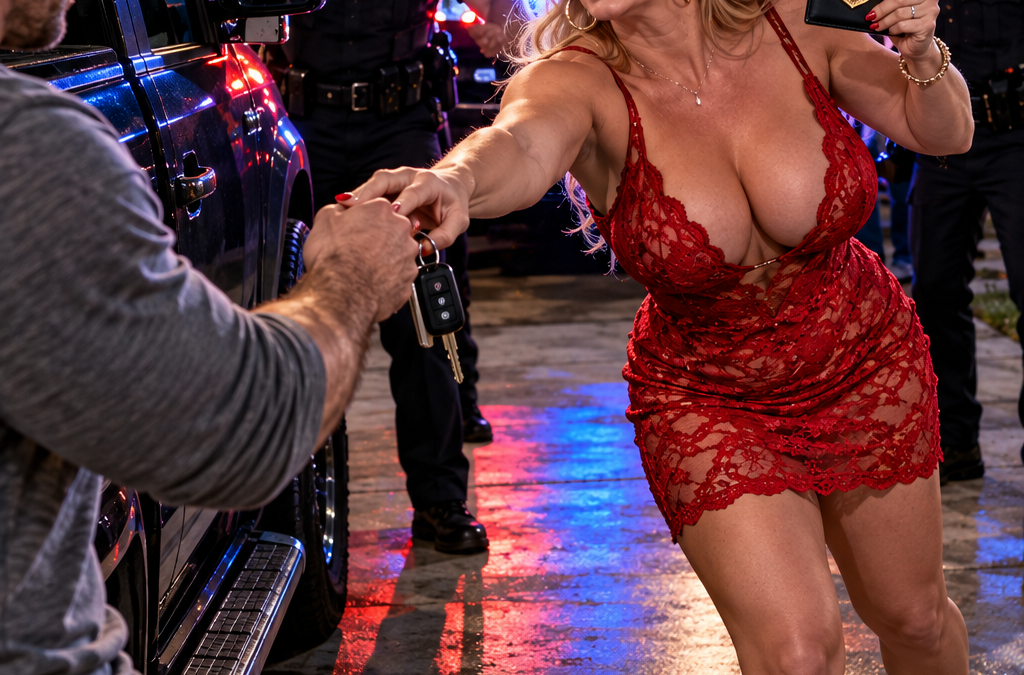
𝗙𝗨𝗟𝗟 𝗦𝗧𝗢𝗥𝗬
At first, I assumed that meant residents liked the way she handled things.
Then I met Dolores.
Dolores lived three houses down.
She was eighty-one, tiny, sharp-eyed, and stronger than she looked. She had a wind chime on her porch that made a soft metallic sound whenever the afternoon breeze picked up.
The first time she introduced herself, she noticed the violation letter in my hand.
Her expression changed immediately.
“Britney?”
I nodded.
“How’d you know?”
“She always starts small.”
“It’s tomatoes.”
Dolores gave me a sad smile.
“For me it was that.”
She pointed toward the wind chime.
“What happened?”
“Two hundred dollars.”
I stared at her.
“For a wind chime?”
“Disrupting neighborhood tranquility.”
I listened.
The chime barely made enough noise to compete with the birds.
“You paid it?”
“I fought the first one.”
Her voice dropped.
“Then another fine came.”
I looked toward her porch.
“What was the second one?”
“Mailbox flag.”
I almost smiled.
She didn’t.
That stopped me.
“Marcus, don’t underestimate her.”
“What is she going to do? Fine me into bankruptcy over tomatoes?”
Dolores looked away.
“People have lost more than money fighting Britney.”
I should have asked what she meant.
Instead, I convinced myself this was neighborhood folklore.
Every HOA had one person everybody hated.
Every neighborhood had stories.
I told myself I would keep my head down, pay whatever minor nuisance appeared, and avoid getting dragged into somebody else’s feud.
That plan lasted three weeks.
The tomato violation became a five-hundred-dollar penalty because, according to Britney, I had failed to respond within the mandatory fourteen-day period.
There was one problem.
I had never received the original notice she claimed had started the clock.
I called the HOA office.
Britney answered herself.
Her voice was smooth.
“Maple Ridge Homeowners Association. Britney Sorenson speaking.”
“Britney, this is Marcus. I have a five-hundred-dollar fine for tomatoes.”
A pause.
Then a little laugh.
“Oh, yes. The vegetation matter.”
“The letter says I ignored a previous notice.”
“You did.”
“I never received one.”
“Our records show it was mailed.”
“Do you have proof of delivery?”
“We are not required to hand-deliver every compliance notice.”
“That wasn’t my question.”
Her tone cooled.
“You had fourteen days to correct the violation.”
“How do I correct something I don’t know about?”
“Residents are responsible for knowing community standards.”
“Show me the standard prohibiting tomatoes.”
Another pause.
“You should have received the landscaping guidelines.”
“I did.”
“And?”
“Tomatoes aren’t prohibited.”
Her answer came immediately.
“Section 8 gives the board discretion regarding unapproved vegetation visible from adjacent property.”
“My backyard tomatoes?”
“Yes.”
“They’re behind a privacy fence.”
“That does not prevent them from being subject to community standards.”
I stared through the kitchen window at six harmless plants.
“What exactly do you want me to do?”
“Remove them and pay the fine.”
I should have refused.
Instead, I thought about Dolores.
I thought about the warning.
I thought about how stupid it seemed to hire a lawyer over tomato plants.
I paid.
That was my second mistake.
Because to Britney, payment wasn’t cooperation.
It was proof I could be pressured.
Two weeks later, another notice arrived.
My mailbox post was the wrong shade of white.
I walked outside carrying the letter and stared at the mailbox.
White.
Not ivory.
Not beige.
White.
Britney arrived that afternoon in person.
That was the first time I saw the red lace dress.
She came down the sidewalk in high heels with a clipboard tucked under one arm.
She was impossible not to notice.
Blonde hair.
Perfect makeup.
A fitted red dress with lace across the shoulders and a neckline so low it looked intentionally provocative.
She was beautiful.
And she knew exactly how to weaponize that beauty.
She smiled as she approached.
“Marcus.”
“Britney.”
She touched the mailbox post with one manicured finger.
“This is old standard white.”
I looked at the post.
“What does that mean?”
“The approved tone is Heritage White.”
“It looks white.”
“They’re different.”
“Where’s the amendment?”
Her smile became thinner.
“Excuse me?”
“The notice references a color amendment. I want to see it.”
“It’s pending board ratification.”
I stared at her.
“So it isn’t a rule yet.”
“It has been adopted operationally.”
“That’s not the same thing.”
She shifted her weight.
“Marcus, you’re new here.”
“I’m aware.”
“I’m trying to help you understand how Maple Ridge works.”
“I understand how rules work.”
She tilted her head.
“Do you?”
That smile bothered me more than open anger would have.
It was the smile of someone who had already decided the conversation did not matter.
“The amendment hasn’t been ratified,” I said.
“The board supports the change.”
“Then ratify it.”
“We will.”
“Until then, why am I being fined?”
Her expression went cold.
“Because I am giving you an opportunity to comply before penalties increase.”
There it was.
Not an explanation.
A threat.
I watched her walk away.
Red lace moving down the sidewalk.
Clipboard against her hip.
Neighbors suddenly finding reasons to go back inside.
That evening, I opened a folder on my computer.
I saved the tomato notice.
The mailbox letter.
The payment receipt.
Then I saved screenshots of every text and email Britney had sent.
Elena watched from the couch.
“You’re really making a file?”
“Yes.”
“It’s an HOA, Marcus.”
“I know.”
“Then pay the stupid mailbox thing and move on.”
I looked at her.
“It isn’t the money.”
“Then what is it?”
I didn’t know how to explain the feeling yet.
“It’s the way she does it.”
Elena sighed.
“You’re getting paranoid.”
“Maybe.”
She softened.
“I just don’t want this house becoming another source of stress.”
Neither did I.
I wanted quiet.
So I paid some of the smaller charges and told myself documentation was just insurance.
Then I began noticing a pattern.
Every resident getting hit hardest had questioned Britney at some point.
Dolores had once asked why the reserve fund was shrinking.
Two weeks later, the wind-chime fine arrived.
A man named Frank had questioned landscaping costs.
Suddenly, his trash-can placement became a recurring issue.
Another woman had complained about the board changing pool hours.
Her front-yard decorations were inspected three times in a month.
That wasn’t random.
I attended my first HOA meeting to observe.
Britney sat at the center of the board table like a judge.
Same red lace dress.
Same flawless appearance.
Same smile.
The board members around her barely spoke.
Whenever a homeowner raised a question, Britney answered first.
Whenever someone challenged her, she either cited a rule or promised to cite one later.
A resident asked about reserves.
Britney called the question premature.
Another asked about landscaping expenses.
Britney said vendor negotiations were confidential.
Then someone questioned enforcement consistency.
Britney smiled.
“Consistency begins with residents consistently complying.”
People stopped talking.
That was how she did it.
She never had to scream.
She made people feel foolish for asking.
After the meeting, she approached me.
“I noticed your fence.”
I looked at her.
“What about it?”
“Height.”
“What about the height?”
“It appears excessive.”
“My fence was already here when I bought the property.”
“Ownership transfer does not erase community obligations.”
“The county permit lists it as grandfathered.”
Her smile flickered.
“Might want to review your bylaws.”
“I will.”
I did.
The fence was six inches taller than the current standard.
It had also been installed years before that standard existed.
The county records clearly showed the permit.
The HOA’s filed documents contained grandfather protections.
I sent Britney everything.
Her response arrived the following morning.
Grandfather exemptions do not apply retroactively under the board’s current interpretation.
I read the sentence twice.
Then a third time.
It made no sense.
A grandfather clause existed precisely because new rules did not automatically invalidate properly existing structures.
Britney had simply invented an interpretation that let her punish me.
The fine jumped to eight hundred dollars.
Then came the lien threat.
That scared me.
I had heard people joke about HOA liens before.
I had never considered what one could actually do to a homeowner.
So I called Ray, an old friend who practiced law.
I sent him the letter.
He called me twenty minutes later.
“Don’t ignore this.”
My stomach tightened.
“How bad is it?”
“An HOA lien is real leverage.”
“Can they take the house?”
“Depending on the governing documents and state law, liens can create serious problems. Don’t panic, but don’t assume Britney is bluffing either.”
I sat at my kitchen table.
“So what do I do?”
“Document everything.”
“I already am.”
“Good. Now stop relying on the copy of the bylaws Britney gives you.”
“What do you mean?”
“Get the recorded governing documents directly from the county.”
That changed everything.
I obtained the official HOA filings.
Then I compared them line by line with the rules Britney kept citing.
The gap was enormous.
One violation relied on a rule that had never been ratified.
Another referenced language that did not exist in the filed documents.
The mailbox amendment was not valid.
The vehicle provision had been rewritten in a board memo but never formally adopted.
At least four of the rules Britney was enforcing against me had no legal foundation in Maple Ridge’s governing documents.
I sat at the kitchen table surrounded by paper.
Elena walked in.
“What happened?”
I slid the documents toward her.
“She’s making rules up.”
Elena frowned.
“All of them?”
“Not all. Enough.”
I pointed to the pages.
“She counts on nobody checking.”
For the first time, Elena looked worried rather than annoyed.
“What are you going to do?”
“Nothing.”
She blinked.
“Nothing?”
“Not yet.”
That was the smartest decision I made during the entire fight.
I kept attending meetings.
I smiled.
I paid a few minor fines when necessary to prevent immediate escalation.
And I kept collecting evidence.
Britney believed submission meant victory.
So I let her believe I was submitting.
Then she went after Dolores.
The foreclosure notice arrived on a Tuesday.
Dolores called me that evening.
Her voice was trembling.
“Marcus, could you come over?”
I found her sitting at her kitchen table with the letter spread in front of her.
Her hands shook so badly the paper rattled.
She looked smaller than I had ever seen her.
“What happened?”
She slid the notice toward me.
Britney had escalated her unpaid penalties and threatened foreclosure proceedings.
For a wind chime.
A mailbox flag.
And additional charges that had accumulated after Dolores questioned them.
“I don’t understand,” she whispered.
I sat beside her.
“I just wanted to fly the flag for Daniel.”
“Your grandson?”
She nodded.
“He’s in the Navy.”
Her eyes filled.
“She called the mailbox flag aggressive.”
I felt something in me harden.
Until then, Britney had been my problem.
A dishonest HOA president making my life difficult.
But Dolores was eighty-one.
She lived on a fixed income.
She didn’t have money for prolonged litigation.
She didn’t have the energy to spend every day studying bylaws.
And Britney knew it.
That was why she had chosen her.
I touched the foreclosure notice.
“You didn’t do anything wrong.”
Dolores looked at me.
“You don’t know that.”
“Yes, I do.”
“How?”
“Because I checked the actual rules.”
Her mouth trembled.
“I can’t lose this house.”
“You’re not losing it without a fight.”
That night, I emailed every neighbor I trusted.
One question.
Has Britney ever threatened you?
By morning, eleven households had responded.
Eleven.
Different fines.
Different properties.
Same pattern.
Sudden rule changes.
Threatening letters.
Lien warnings.
Selective enforcement.
I created a shared folder.
People uploaded screenshots, notices, photographs, emails, and recordings.
A neighbor named Tom had something especially valuable.
He had recorded a phone conversation in which Britney openly admitted that a rule was not officially adopted yet but told him she intended to enforce it anyway.
I listened twice.
Her voice was unmistakable.
Tom asked, “So this isn’t actually in the bylaws?”
Britney replied, “Not yet.”
“Then how are you fining me?”
“Because we know what the board is going to approve.”
That recording changed the case.
I contacted a real estate attorney named Patricia who specialized in HOA disputes.
I sent her the folder.
She called me the next day.
“This isn’t normal overreach.”
I gripped my phone.
“How bad?”
“It could involve fraud.”
She paused.
“And what Britney is doing to Dolores may raise elder-abuse issues depending on the full circumstances.”
That phrase hit me hard.
Elder abuse.
Suddenly, the wind chime did not sound ridiculous anymore.
It sounded predatory.
“What do we do?”
“Don’t confront Britney.”
I almost laughed.
“That’s your advice?”
“It’s very specific advice.”
Patricia’s voice was calm.
“Someone like this is most dangerous when she realizes she’s being investigated. Right now, she thinks she’s winning.”
“So let her keep fining us?”
“For the moment, document every action. Every violation. Every demand. Every retaliatory step.”
I looked at the folder.
“You want her to keep making mistakes.”
“Exactly.”
So I played along.
By the end of that month, I had documented thirty-one occasions where Britney or the board had violated, contradicted, or bypassed their own governing procedures.
But Dolores’s foreclosure clock was still running.
Documents alone were not enough.
I started a private neighborhood group chat.
Twenty-two of Maple Ridge’s thirty-two households joined within days.
The stories got worse.
Priya operated a licensed home daycare.
Britney had threatened to report her for unauthorized commercial activity simply because parents’ cars occasionally stopped near Britney’s driveway.
Frank showed me a text in which Britney offered to waive his fine if he supported her position on a contract vote.
I forwarded it to Patricia.
She called within an hour.
“That is serious.”
“Because she’s trading fines for votes?”
“Yes. It supports a pattern of using enforcement authority as leverage.”
Then I remembered something Britney had once bragged about at a board meeting.
The landscaping contract.
She had praised her brother-in-law’s company for “keeping spending inside the community family.”
At the time, nobody questioned it.
Now I did.
I obtained the available financial filings.
Sorenson Lawn Services had billed Maple Ridge approximately forty thousand dollars over three years.
No competing bids.
No meaningful oversight.
Payments came from the same reserve fund Britney repeatedly refused to explain.
I sat in Patricia’s office while she reviewed the records.
Finally, she leaned back.
“This isn’t a fence dispute anymore.”
“What is it?”
“Potential conflict-of-interest violations. Potential fraud.”
She tapped the payment list.
“And if these invoices were inflated or the services weren’t performed, this becomes much more serious.”
We requested a formal financial audit using the HOA’s own governing provisions.
Britney denied it in writing.
Her explanation claimed audits required board approval.
There was no such requirement.
Patricia smiled when I sent her the letter.
“Evidence number thirty-two.”
The bigger problem remained Dolores.
Thirty days stood between her and the next foreclosure stage.
Patricia filed an emergency motion challenging the process.
I sat beside Dolores in court.
She wore a blue sweater and kept twisting a tissue between her fingers.
When the judge granted a temporary stay, Dolores stared at Patricia.
“What does that mean?”
Patricia smiled.
“It means nobody is auctioning your house while we challenge these fines.”
Dolores covered her face.
She cried silently.
I looked away because I suddenly felt like I might cry too.
It was our first real victory.
Britney’s first real loss.
The next day, Britney appeared at Dolores’s front door.
I was across the street.
She wore the red dress and carried her clipboard.
Even from a distance, I could see the anger in her posture.
She demanded to know who had hired attorneys.
Dolores stood in the doorway.
For months, she had trembled whenever Britney’s name came up.
That afternoon, she simply said, “I don’t know what you’re talking about, Britney. Have a nice day.”
Then she closed the door.
The sound made me smile.
Britney did not.
Within hours, new violations began landing.
Twelve households in our private group received fines in one week.
Mine was an “excessive vehicle” violation for parking my truck overnight in my own driveway.
Frank got a landscaping violation.
Priya received another warning about her daycare.
The pattern was obvious.
Britney didn’t know exactly who was organizing against her.
So she attacked everyone she suspected.
Her paranoia was making her sloppy.
Then she did something brilliant in the worst possible way.
At a community meeting, she accused me publicly of harassing her.
She cried.
Actually cried.
Her voice trembled while she told the room that anonymous complaints and malicious rumors were destroying her reputation.
“I have devoted six years of my life to protecting this community,” she said, one hand pressed against her chest. “And now one bitter homeowner wants to turn neighbors against me.”
Half the room believed her.
That was what frightened me.
The performance was incredible.
I watched people who had complained privately about Britney suddenly look at me with suspicion.
She knew how to become the victim.
I realized she must have done this before.
So I started asking questions.
That led me to Harold.
Harold had served on the board two years earlier.
Then, suddenly, he resigned.
The official story was that he had mishandled financial matters.
Britney had suggested he was involved in suspicious vendor payments.
People stopped trusting him.
His business suffered.
He eventually withdrew from neighborhood life entirely.
He agreed to meet me at a diner outside Maple Ridge.
He arrived fifteen minutes late and sat with his back to the wall.
“What do you want?”
“The truth.”
He laughed bitterly.
“People said that two years ago.”
“I’m asking about Sorenson Lawn Services.”
His face changed.
He stared at me.
“How do you know about that?”
“I found the payments.”
Harold looked toward the window.
Then lowered his voice.
“That’s what started it.”
He had questioned the landscaping contract.
Soon afterward, emails appeared showing what looked like his approval of kickbacks from another vendor.
Britney used them to destroy his credibility.
Harold insisted they were fake.
“Can you prove it?”
He reached into a briefcase.
“I kept everything.”
He slid printed emails across the table.
Original messages.
Metadata.
Corresponding records.
Enough to show that the incriminating email trail Britney had circulated had been altered.
I stared at him.
“She framed you.”
Harold’s eyes hardened.
“She destroyed me.”
“Why didn’t you fight?”
“I tried.”
He laughed without humor.
“Nobody believed me.”
I thought about Britney crying at the HOA meeting.
“She’s doing the same thing to me.”
“I know.”
“Will you testify?”
Harold went quiet.
For a long moment, he stared at the table.
Then he nodded.
“Yes.”
Patricia nearly dropped her pen when I brought her the records.
“This changes everything.”
Harold’s evidence established history.
Britney wasn’t simply improvising now.
She had used accusations, forged communications, and public humiliation before.
Patricia filed a formal complaint with the state oversight authorities.
Britney knew nothing about Harold.
She kept escalating.
One night at eleven, my doorbell camera alerted me.
I opened the feed.
Britney was standing near my garage wearing the red lace dress beneath a coat, shining a flashlight across my garage door.
In her other hand, she held paint samples.
I watched in disbelief as she pressed different swatches against the door and muttered to herself.
The next morning, I received a faded-color violation.
I saved the footage.
Patricia called it one of the clearest examples of premeditated bad-faith enforcement we had.
Then Britney’s board started cracking.
Susan, one of the directors, contacted me secretly.
She was frightened.
“We didn’t know she was doing all of this.”
“You signed off on the fines.”
“She controls the agenda.”
“That doesn’t answer me.”
Susan looked ashamed.
“We rubber-stamped things.”
Then she showed me something worse.
Official meeting minutes.
Britney had published records claiming unanimous votes on actions that had never been voted on.
Susan still possessed handwritten notes from the actual meetings.
The two versions were dramatically different.
I called Patricia immediately.
Her reaction was blunt.
“Forging official association records moves this beyond governance misconduct.”
Another board member confirmed Susan’s account.
For the first time, Britney’s own inner circle was turning on her.
That was when she came after my job.
My manager called me into her office one afternoon.
A printed email lay on her desk.
It accused me of harassment, intimidation, and unstable behavior within my residential community.
My stomach dropped.
“Where did you get this?”
“Anonymous email.”
I read the wording.
I knew the style.
Britney.
I explained everything.
The HOA.
Dolores.
The lawsuit.
The financial records.
My manager listened without interrupting.
When I finished, she leaned back.
“This sounds insane.”
“It is.”
“Do you have documentation?”
“More than you want.”
She smiled slightly.
“Then your job is safe.”
Relief hit me so hard I nearly sagged into the chair.
Then anger followed.
Britney had moved from threatening my home to threatening my livelihood.
That attack gave Patricia enough to seek a restraining order.
A judge granted temporary relief preventing Britney from contacting me, my employer, or engaging in further retaliatory harassment.
She was served in her driveway.
She screamed loud enough that neighbors heard.
“This is a coordinated attack on my leadership!”
Leadership.
Even then, she thought that was what people were attacking.
Her title.
Not her conduct.
Then Patricia discovered something that stripped away another layer of protection.
The HOA’s liability coverage for board conduct had lapsed eighteen months earlier.
Britney had allowed it to expire.
That meant at least some decisions she had made could expose her personally rather than letting her hide entirely behind insurance protection.
When word of the restraining order spread, fifteen additional households came forward.
The master complaint became enormous.
Fraud.
Forged records.
Harassment.
Improper financial dealings.
Retaliation.
The treatment of Dolores.
Patricia forwarded the documentation to the attorney general’s consumer-protection division.
That step changed the atmosphere.
Until then, Britney could pretend everything was an internal neighborhood dispute.
Now outside authorities were looking.
She called an emergency meeting to “clear the air.”
Only six residents showed up.
Six out of thirty-two households.
I attended with Patricia’s approval.
Britney stood at the podium.
The red dress was still there.
The hair was perfect.
But her hands were trembling.
She talked about misunderstandings.
Disgruntled residents.
Personal vendettas.
I waited.
Then raised my hand.
She stared at me.
“What?”
I stood.
“One question.”
“This isn’t an interrogation.”
“Where did the forty thousand dollars in landscaping payments actually go?”
Silence.
Britney blinked.
I continued.
“Sorenson Lawn Services. No competitive bids. Reserve money. Forty thousand dollars.”
She opened her mouth.
“Vendor relationships are complicated.”
“Then explain them.”
“This meeting is not the appropriate forum.”
“It’s HOA money.”
“I said this is not appropriate.”
“Whose money paid the invoices?”
Her face flushed.
“Meeting adjourned.”
She walked out.
Someone had recorded the exchange.
By morning, the video was circulating online.
Local community pages shared it.
Comments poured in from homeowners who had dealt with similar HOA abuses elsewhere.
Then local news picked up the story.
For the first time, Britney could not control the audience.
The report showed Dolores’s foreclosure notice.
Then Susan’s handwritten meeting notes.
Then the published minutes Britney had allegedly altered.
I agreed to an interview only after Patricia approved what I could discuss.
I kept it simple.
“This isn’t about whether people like HOA rules. It’s about whether rules are real, whether they’re applied fairly, and whether homeowners’ money is being handled honestly.”
The story aired that weekend.
Britney’s reputation collapsed almost overnight.
Then an investigative reporter found something none of us knew.
Britney had been involved in a similar controversy at an HOA in Ohio.
Financial irregularities.
Board conflict.
A quiet departure.
She had moved states and rebuilt the same structure of control.
That revelation changed how investigators viewed everything.
This was no longer simply a woman who had become corrupt after years in power.
It looked like a repeatable pattern.
Then Britney’s husband filed for divorce.
His filings and later cooperation revealed another devastating detail.
He claimed he had not known about the kickback structure tied to Sorenson Lawn Services.
Investigators obtained bank records.
Money from questionable landscaping invoices had helped fund vacations, jewelry, and part of a lake-house down payment.
The financial trail was becoming impossible to dismiss as bookkeeping errors.
Britney still refused to resign.
Even as investigators requested interviews.
Even as Susan and another director openly turned against her.
Even as her husband left.
She held onto the title because without it, I think she had no idea who she was.
Finally, Susan and the remaining board members voted to suspend Britney’s authority.
For the first time in six years, she could not issue a violation.
Could not approve a contract.
Could not control the meeting agenda.
She went door to door afterward.
I watched through my window as she knocked on houses.
“Remember everything I did for this community,” she told one neighbor.
Nobody invited her inside.
Doors closed.
Lights went off.
People who had once lowered their heads when Britney approached now simply ignored her.
Dolores stood behind her living-room curtain watching.
When Britney walked away, Dolores smiled.
It was the first time I had seen her smile like that in months.
I should have known Britney would not accept silence.
Cornered people sometimes become cautious.
Britney became reckless.
One evening, she appeared at my house despite the restraining order.
She pounded on the door.
“Marcus!”
I activated my phone recording before opening it.
She stood on the porch in the red lace dress, breathing hard.
“You destroyed my life.”
“I didn’t tell you to come here.”
“I built this community!”
“You were suspended.”
“I made the rules everybody follows!”
“No. You made up half the rules.”
Her eyes widened.
“You think you’re clever?”
“I think you should leave.”
She reached for my phone.
“Stop recording me!”
I pulled back.
Her hand caught my arm.
“Britney, let go.”
She released me and stormed toward the driveway.
That was when she saw my truck.
The same truck she had fined under her invented excessive-vehicle rule.
Something in her face changed.
“You never paid that fine.”
“The fine is disputed.”
“No.”
She reached into her purse.
“This is HOA property now.”
She pulled out the laminated badge.
For a second, I genuinely thought it was a joke.
Then she held it up.
“I’m impounding the vehicle.”
I laughed.
Britney didn’t.
“You’re under arrest for violating community standards.”
I stared at her.
“Say that again.”
“You heard me.”
“Are you pretending to be a police officer?”
“I am a community enforcement officer.”
“No, you aren’t.”
“I have citizen’s-arrest authority.”
“Britney, leave my property.”
“Give me the keys.”
“No.”
She lunged.
I stepped back.
Neighbors began coming outside.
Frank appeared on his porch.
Susan emerged holding her phone.
Two houses down, another neighbor started recording.
Britney grabbed for the keys again.
“This vehicle is being seized.”
I moved away and dialed 911.
I kept my voice calm.
“There’s a woman on my property claiming to be law enforcement and trying to take my vehicle.”
Britney was too busy pulling on my truck’s door handle to notice.
She kept shouting about community arrest authority.
The police arrived within minutes.
Two patrol cars rolled onto the street.
Red and blue light washed across the houses.
The irony would have been funny if the situation hadn’t become so serious.
An officer approached.
Britney turned toward him with visible relief.
“Officer, thank God. This homeowner is refusing lawful HOA enforcement.”
The officer looked at her laminated badge.
Then at me.
Then at the neighbors holding phones.
“What’s going on?”
I raised my hands slightly.
“She came onto my property in violation of a restraining order, claimed she was arresting me, tried to take my keys, and says she is seizing my truck.”
Britney shoved the badge toward the officer.
“I’m the HOA enforcement authority.”
The officer took the card.
He studied it.
Then looked at her.
“Ma’am, are you impersonating a police officer right now?”
Silence.
Absolute silence.
It was the same silence that had followed my forty-thousand-dollar question at the emergency meeting.
Britney’s face changed.
“This is a community credential.”
“You told him he was under arrest?”
“I have authority to enforce community standards.”
“That wasn’t my question.”
She looked toward me.
“He’s twisting everything.”
Frank spoke from his porch.
“We recorded it.”
Susan lifted her phone.
“So did I.”
Britney’s confidence broke.
She started talking faster.
Explaining citizen’s arrest.
Explaining association security.
Explaining that my vehicle had unpaid penalties attached to it.
The officer raised one hand.
“Ma’am, stop.”
She kept talking.
“I said stop.”
She finally did.
Another officer spoke quietly over the radio.
Then approached Britney.
“Turn around.”
She stared at him.
“What?”
“Turn around, please.”
“You’re arresting me?”
“You’re being detained.”
“This is unconstitutional!”
“Hands behind your back.”
The click of the handcuffs cut through the night.
Nobody cheered.
That’s what I remember most.
After six years of fear, after all the fines and threats and forged documents, the neighborhood did not erupt.
People simply watched.
Britney screamed that we had conspired against her.
She demanded an attorney.
One officer answered calmly.
“You’ll have an opportunity to speak with counsel.”
Then, almost casually, he added that investigators were already aware of the HOA fraud allegations.
Britney went quiet.
For the first time, she looked genuinely afraid.
Dolores came onto her porch as the patrol car pulled away.
She didn’t smile.
She didn’t wave.
She simply nodded once.
A chapter closing.
By the following morning, video of Britney’s arrest was everywhere locally.
Three neighbors had captured different angles.
The story was almost impossible to believe.
An HOA president using a fake badge and claiming police authority while trying to seize a resident’s vehicle.
During booking, investigators uncovered prior incidents from Ohio.
Two earlier arrests.
One involved check fraud.
Another involved allegations that she had impersonated an official during a dispute.
The pattern was deeper than any of us imagined.
Within a week, Britney faced charges tied to impersonation, forged records, and financial fraud allegations arising from Maple Ridge.
Her bail was set high after authorities considered her history and previous relocation.
The board permanently removed her from leadership.
Sorenson Lawn Services was terminated.
Dolores’s fines were reversed.
The foreclosure action disappeared.
Her house was safe.
When Patricia called Dolores with the news, I was sitting beside her.
Dolores pressed the phone to her chest.
“Safe?”
Patricia’s voice came through faintly.
“Yes, ma’am.”
Dolores started crying.
I put my arm around her.
She whispered, “I thought I was going to die before they took this away from me.”
That sentence stayed with me.
Britney had spent years using the possibility of losing a home to terrify people.
For her, a lien notice was leverage.
For Dolores, it had been the possibility of losing the place where she had buried decades of memory.
The new interim board formed quickly.
Susan joined.
Harold was reinstated after the truth about his reputation became clear.
And somehow, I ended up serving too.
I didn’t want the position.
Patricia laughed when I told her.
“You spent six months proving the board needed honest people.”
“That doesn’t mean I want meetings every Tuesday.”
“Life is cruel.”
Our first decision was financial transparency.
Every major expenditure would be published.
Contracts would be documented.
Residents would no longer need to beg for basic financial information.
The process of discovery produced yet another piece of evidence against Britney.
The forged email pattern used against Harold matched the structure of communications she later tried to manufacture against me.
Same formatting.
Same language.
Names and dates changed.
The similarity tied the two incidents together.
She had reused her own method because she never expected anyone to compare victims.
Then investigators discovered that landscaping money wasn’t the only problem.
Britney had also been skimming the emergency reserve.
Nearly ninety thousand dollars had been diverted over time.
That fund was supposed to cover storm damage and infrastructure repairs.
For years, Maple Ridge had delayed drainage improvements because Britney insisted reserves were insufficient.
Now we knew why.
I remember standing in a board meeting when Patricia explained the number.
Ninety thousand.
People didn’t shout.
They looked devastated.
Frank stared at the table.
Susan began crying.
Dolores whispered, “All those years.”
The anger changed into grief.
Money could be replaced eventually.
Time could not.
Storm-drain repairs had been delayed.
People had lived with flooding risks.
Neighbors had sold homes because they were exhausted.
Harold had lost reputation and business.
Dolores had spent months believing she might become homeless.
Those years were gone.
But something unexpected happened after Britney disappeared from Maple Ridge.
We started becoming a neighborhood.
Real neighbors.
Not informants.
Not people watching one another for violations.
Neighbors.
Someone suggested a weekly potluck.
Britney had banned those years earlier in the common area, claiming vague liability concerns.
Dolores hosted the first one.
Her wind chime hung proudly from the porch.
Nobody measured it.
Nobody complained.
I brought burgers.
Frank brought potato salad.
Priya brought dessert.
Harold stood awkwardly near the driveway until Dolores pulled him into the group.
For the first time, I saw people laugh without looking over their shoulders.
Near the edge of Dolores’s yard was a small patch of dirt.
“What are you planting?” I asked.
She smiled.
“Tomatoes.”
I laughed so hard she started laughing too.
The trial did not come immediately.
There were motions.
Evidence hearings.
Plea negotiations.
Britney’s lawyer initially tried relying on some of the same “community enforcement” rules Britney had invented.
That strategy collapsed when the judge pointed out that several provisions had never been legally ratified.
The fake rules that had terrified homeowners inside Maple Ridge meant very little in a real courtroom.
Prosecutors had the arrest videos.
The fake badge.
The forged records.
Harold’s original emails.
Susan’s handwritten meeting notes.
Bank records from Britney’s ex-husband.
Financial documents tied to Sorenson Lawn Services.
Evidence involving the emergency reserve.
Britney’s attorney eventually advised her to negotiate.
The alternative risked far greater exposure at trial.
Weeks later, Elena and I sat in the courtroom when Britney entered.
No red lace dress.
No clipboard.
No theatrical smile.
She looked exhausted.
The plea and sentencing terms were read.
Eighteen months in county jail for the impersonation and forgery-related offenses.
Five years of probation connected to the financial fraud resolution.
Restitution approaching ninety thousand dollars to restore the HOA reserve fund.
And a permanent injunction preventing her from serving on another HOA board in the state.
Britney stood silently.
The woman who once interrupted anyone who challenged her had nothing to say.
When officers prepared to lead her away, she looked toward the gallery.
I could tell what she was searching for.
One sympathetic face.
One person who still believed her.
Her ex-husband wasn’t there for her.
None of her former board loyalists looked up.
Not one resident moved.
I expected to feel joy.
I didn’t.
I felt tired.
Deeply, completely tired.
Justice had arrived, but it had taken months of stress, attorneys, police reports, sleepless nights, financial fear, and people reliving some of the worst moments Britney had inflicted on them.
There was satisfaction.
But there was also a strange sadness.
She had been given authority to help maintain thirty-two homes.
That was all.
Thirty-two homes.
Some landscaping.
Some financial records.
A few community standards.
And somehow, she had turned that modest responsibility into a private dictatorship.
Outside the courthouse, Dolores hugged me.
She was crying.
“You saved my house.”
I shook my head.
“We all did.”
“No.”
She pulled back.
“You believed me when nobody else wanted to.”
I didn’t know what to say.
Her voice trembled.
“You gave this street its voice back.”
That mattered more than the sentence.
More than watching Britney leave in handcuffs.
More than any headline.
The new board rebuilt Maple Ridge’s governance from the ground up.
Term limits.
Mandatory audits.
Competitive bidding requirements.
Resident oversight committees.
Published financial statements.
Clear appeals procedures.
No invented rules.
No one-person control over enforcement.
Harold became treasurer.
For two years, people had whispered that he was corrupt.
Now he oversaw every dollar with almost obsessive transparency.
The recovered landscaping money helped fund repairs Britney had delayed.
Sidewalk improvements.
Storm-drain work.
A small community garden.
Dolores received one of the first garden plots.
She planted tomatoes.
Of course she did.
I framed my original tomato violation.
It hangs in my home office.
Elena thought I was joking when I did it.
“You’re seriously putting that on the wall?”
“Absolutely.”
“Why?”
I looked at the notice.
UNAPPROVED VEGETATION.
A ridiculous little phrase.
A five-hundred-dollar threat over six tomato plants.
“Because this is where everything started.”
Elena stood beside me.
“You could’ve just pulled the tomatoes.”
“I almost did.”
She smiled.
“You probably should’ve.”
I laughed.
“Maybe.”
Then I looked at the frame again.
“But the tomatoes weren’t really the problem.”
The problem was that Britney had learned no one checked.
No one questioned.
No one compared notes.
She counted on each homeowner believing they were alone.
Dolores thought the wind-chime problem belonged to Dolores.
Harold thought his destroyed reputation belonged to Harold.
Priya thought the daycare threats belonged to Priya.
I thought my tomatoes, mailbox, fence, and truck were my problems.
Britney’s power came from separating us.
Once we started talking, her system fell apart.
My employer never held the anonymous complaint against me.
Once the truth became public, my coworkers turned the whole thing into an ongoing joke.
Someone left a toy police badge on my desk one morning.
Another person put a tomato beside my keyboard.
I laughed.
For months, I hadn’t been able to laugh about any of it.
That felt good.
The neighborhood group chat survived too.
But now, instead of warnings about Britney’s patrols, it contained messages like:
Potluck Friday?
Who borrowed my ladder?
Dolores has too many tomatoes again.
Storm drain crew starts Monday. Move cars by 8.
Ordinary things.
Beautifully ordinary.
Britney’s house eventually went into foreclosure.
The same outcome she had nearly inflicted on Dolores.
When I heard, I felt no urge to celebrate.
There was irony in it.
Maybe even justice.
But I had learned something during the fight.
Justice and revenge were not the same.
I did not need Britney to suffer forever.
I needed her to stop hurting people.
I needed Dolores safe.
I needed Harold’s name cleared.
I needed our money accounted for.
I needed the rules to mean what they actually said.
I needed my home to feel like mine again.
One summer evening, about a year after everything ended, I walked past Dolores’s house.
The wind chime moved gently in the breeze.
She was kneeling beside the community garden with a basket.
“Marcus!”
I walked over.
She held up three tomatoes.
“Look.”
I laughed.
“Unauthorized vegetation.”
She pointed one at me.
“Don’t you dare.”
I raised my hands.
“Community standards, Dolores.”
She started laughing.
Then she became quiet.
“Do you ever think about her?”
“Britney?”
She nodded.
“Sometimes.”
“Me too.”
I sat on the edge of the garden bed.
Dolores looked toward her house.
“I wasted so much time being scared.”
I shook my head.
“You survived.”
“I know.”
She touched the wind chime hanging nearby.
“But I wish I had fought sooner.”
I thought about that.
“So do I.”
We sat quietly for a moment.
Then she looked at me.
“You know what frightened me most?”
“What?”
“It wasn’t the money.”
I waited.
“It was thinking she could do anything she wanted and nobody would believe me.”
I understood that feeling completely.
Britney’s strongest weapon had never been the bylaws.
It wasn’t the fines.
It wasn’t the fake badge.
It was isolation.
The belief that no one else would stand beside you.
That was why Harold stayed silent.
Why Dolores paid.
Why board members rubber-stamped decisions.
Why I paid the first tomato fine even though I knew it was absurd.
We thought resistance had to happen alone.
It didn’t.
A community can become dangerous when everyone watches everyone else.
But it can become powerful when people watch out for one another.
That difference saved Maple Ridge.
I still own the same house.
The crooked oak tree is still there.
I refused every suggestion to remove it.
My truck still sits in the driveway.
No one has tried to impound it lately.
The reserve reports arrive every quarter.
Anyone can read them.
The landscaping contract is competitively bid.
The storm drains finally work.
Harold is still treasurer and treats every reimbursement request like a federal investigation.
Susan stayed on the board long enough to help reform it, then stepped down voluntarily.
Priya still runs her licensed daycare.
Parents’ cars line the curb during pickup, and nobody threatens her.
Dolores still has the wind chime.
And the tomatoes.
Lots of tomatoes.
Sometimes Elena asks whether I regret how far the fight went.
She asked me again one night while we sat on the porch.
“You could’ve walked away.”
I nodded.
“We could have moved.”
“Did you ever want to?”
“All the time.”
That surprised her.
“Really?”
“Especially when she contacted my job.”
I looked toward the street.
“I thought maybe keeping the house wasn’t worth what she was doing to us.”
Elena took my hand.
“What changed?”
“Dolores.”
She smiled slightly.
“Of course.”
“I could sell and start over.”
I looked toward Dolores’s porch.
“She couldn’t.”
Elena squeezed my hand.
“And Harold?”
“Him too.”
“And the others?”
“All of them.”
For a while, neither of us spoke.
Then Elena said, “Your dad would’ve been proud of you.”
That hit me harder than she probably intended.
I looked at the crooked oak tree.
My father never lived to see the house.
Never sat on the porch.
Never saw the garden.
But his money helped me buy the place.
His lessons helped me keep it.
He had taught me to repair things instead of throwing them away.
For six months, Maple Ridge felt broken beyond repair.
It wasn’t.
The people living there simply needed to remember that the HOA belonged to them.
Not Britney.
That is what she never understood.
She believed authority meant ownership.
She believed the president’s chair belonged to whoever could intimidate everyone else into silence.
She believed a rule became real when she spoke it loudly enough.
She believed fear was respect.
And eventually, she believed her own fantasy so completely that she stood in my driveway waving a fake badge and telling me I was under arrest.
That was her final mistake.
Not because it was the worst thing she had done.
Financially, it wasn’t.
Harold’s destroyed reputation mattered more.
Dolores nearly losing her house mattered more.
The stolen reserve money mattered more.
But the fake badge exposed Britney in a way spreadsheets never could.
It showed everyone exactly what six years of unchecked power had done to her.
She no longer understood the difference between authority granted by law and authority created in her own imagination.
That night, when the real officer asked whether she was impersonating police, Britney went silent because for the first time she was standing before someone she could not fine.
Someone she could not threaten with a lien.
Someone she could not remove from an HOA meeting.
Someone who did not care about her red dress, her smile, her title, or her clipboard.
Reality had finally entered Maple Ridge.
And reality did not recognize Britney Sorenson as queen of anything.
Sometimes justice arrives dramatically.
Red and blue lights.
Handcuffs.
Courtrooms.
Sentencing.
Most of the time, it doesn’t.
For us, justice started with quieter things.
A public document downloaded from the county.
A voicemail saved instead of deleted.
A handwritten set of meeting notes Susan almost threw away.
An elderly woman trusting me with a foreclosure letter.
A disgraced former board member keeping original emails for two years because some part of him hoped the truth might matter eventually.
Twenty-two households deciding they were no longer going to whisper separately.
That was how Britney fell.
Not because I was smarter than her.
Not because Patricia had some magical legal trick.
Not because the police arrived at exactly the right moment.
Britney fell because her power depended on nobody comparing stories.
The moment we did, she was finished.
Today, when I walk through Maple Ridge, I still notice the small things.
The repaired sidewalks.
The storm drains.
Children riding bicycles.
Priya’s daycare parents waving from their cars.
Frank arguing with Harold about landscaping bids.
Dolores’s wind chime.
The community garden.
Tomatoes growing under the afternoon sun.
Nobody measures them.
Nobody sends letters.
Nobody calls them unauthorized vegetation.
Sometimes I stand beside Dolores’s garden and think about that first five-hundred-dollar fine.
It seemed enormous at the time.
Then the eight-hundred-dollar fence penalty seemed worse.
Then the lien threat.
Then Dolores’s foreclosure.
Then my job.
Then the forged records.
Then the stolen reserve money.
Then the fake badge.
Each time we thought Britney had reached the limit, she escalated.
Each time someone resisted, she made the cost higher.
That was how she kept people frightened.
She made surrender look cheaper than resistance.
For a while, it was.
Fighting cost us money.
Sleep.
Time.
Peace.
But surrender had a different cost.
It taught Britney that the next family would surrender too.
I keep the first tomato violation on my office wall because I never want to forget how something ridiculous can become dangerous when everyone decides it is easier not to challenge it.
Underneath the framed notice, I keep one photograph.
Not Britney in handcuffs.
Not the fake badge.
Not the courthouse.
A photograph of Dolores standing beside her garden.
She is smiling.
Behind her, the wind chime hangs from the porch.
In front of her, tomatoes grow in neat rows.
That is what winning looked like to me.
Not prison.
Not foreclosure.
Not humiliation.
A woman no longer afraid in her own home.
A neighborhood no longer controlled by one person’s anger.
A crooked oak tree still standing in my front yard.
My truck still in my driveway.
And a community that finally remembered that nobody gets to become a king simply because everyone else is too tired to tell them no.








