𝗙𝗨𝗟𝗟 𝗦𝗧𝗢𝗥𝗬 The HOA President Used a Key to Enter My Cabin While I Was Four Hours Away, Certain No One Would Ever Know
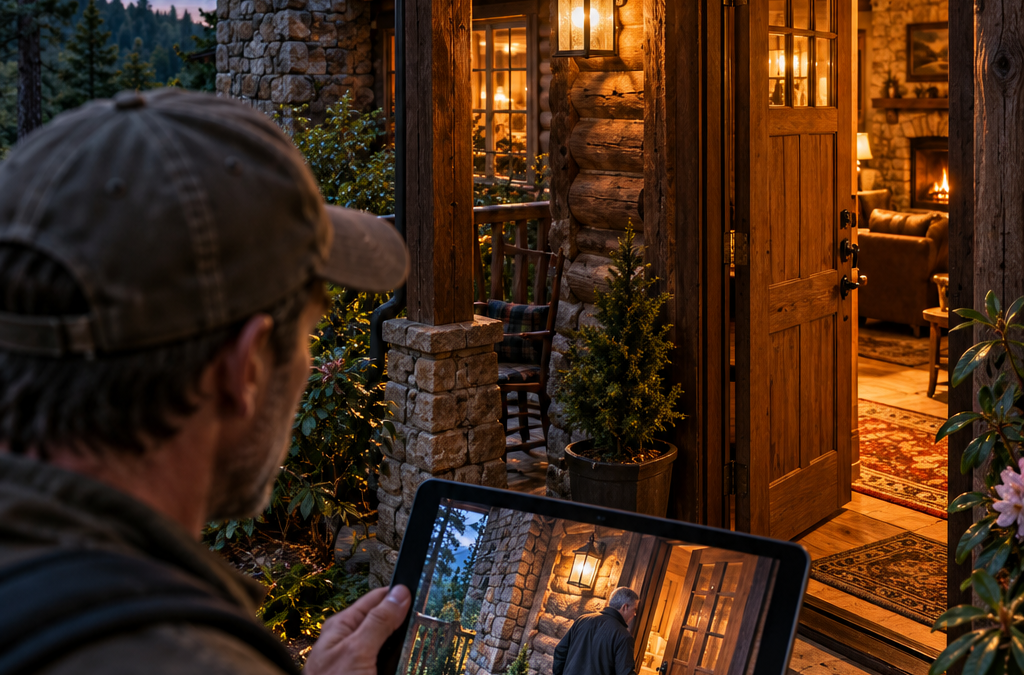
𝗙𝗨𝗟𝗟 𝗦𝗧𝗢𝗥𝗬
I stood on the porch reading it twice.
According to the notice, my grass exceeded Pinerest Ridge standards.
The problem was that most of my lot wasn’t grass.
It was woodland.
The small patch near the cabin had been cut four days earlier.
The letter cited Section 6.4 of the Pinerest Ridge covenants and threatened a fine if the violation wasn’t corrected within ten days.
I laughed.
Not because it was especially funny.
Because it seemed too ridiculous to take seriously.
I called my attorney.
Her name was Priya Shah.
Priya was one of those attorneys who could make a person feel foolish without ever changing her tone.
She listened while I read the notice.
When I finished, she asked, “Did your property move?”
“What?”
“Since closing. Did someone physically relocate your half acre inside the HOA?”
“No.”
“Then Section 6.4 still doesn’t apply.”
“I figured.”
“Photograph the notice. Keep the original.”
“You think I should respond?”
“Yes.”
“Why?”
“Because we establish the record early.”
That phrase became important later.
Establish the record.
Priya drafted a short response.
It wasn’t hostile.
It simply stated that my property was not a member of Pinerest Ridge, was not subject to the association’s covenants, and was outside its enforcement jurisdiction.
We attached the deed.
We attached the relevant plat.
I mailed it certified.
I assumed any competent board would receive that packet, realize somebody had made a mistake, and correct it.
Three weeks later, another notice arrived.
UNAPPROVED EXTERIOR STRUCTURE
The structure was my woodshed.
It had existed for at least fifteen years.
It appeared on the survey.
I sent the same response.
Deed.
Plat.
Certified mail.
A month after that:
IMPROPER TRASH RECEPTACLE PLACEMENT.
That one irritated me because my trash cans were stored behind the cabin where almost nobody could see them.
Priya and I sent another response.
Same documents.
Same explanation.
The notices continued.
Each one was addressed to me personally.
Each cited HOA rules.
Each ignored the fact that Douglas and the board had repeatedly received documentation establishing that I wasn’t in the HOA.
Finally, I called the association office.
A woman named Linda answered.
“How can I help you?”
“I’m calling about violation notices.”
She asked for my address.
I gave it.
There was a pause.
Then she said, “I’m sorry. I don’t see your lot number.”
“That’s because I don’t have one.”
Another pause.
“Are you a Pinerest Ridge homeowner?”
“No.”
“Then why are you receiving notices?”
“That’s what I’m trying to determine.”
She lowered her voice slightly.
“One moment.”
I waited.
When she returned, she sounded uncomfortable.
“Those were submitted directly through the president’s office.”
“Douglas?”
“Yes.”
“Does the system show that I’ve disputed them?”
“It does.”
“And does it show the documents I sent?”
“Yes.”
“So why are more notices being issued?”
“I really can’t answer that.”
“Who can?”
“Mr. Douglas.”
Of course.
Douglas came to my property again about two weeks later.
I was splitting kindling near the woodshed when I noticed movement along the tree line.
He stood just beyond a survey marker with a notebook in one hand.
Watching.
“Can I help you?” I called.
Douglas looked up.
“Routine observation.”
“Of my property?”
“Of conditions adjacent to Pinerest Ridge.”
I set the hatchet down.
“You’re photographing my cabin.”
“Only visible exterior conditions.”
“You know you’re standing next to my property line, right?”
“Yes.”
“Then stay on your side of it.”
His expression tightened.
“I have no intention of trespassing.”
“Good.”
He wrote something in the notebook.
I don’t know why that bothered me as much as it did.
Maybe because it felt theatrical.
As if he were documenting me.
Building a file.
Turning my own home into evidence in a case that shouldn’t have existed.
“What exactly are you writing?”
“Association business.”
“About property outside your association?”
He closed the notebook.
“Evan, you seem determined to create unnecessary conflict.”
I almost laughed.
“You’re standing at the edge of my land photographing my house after sending me violation notices for rules that don’t apply to me.”
“I’m trying to preserve community standards.”
“My property isn’t your community.”
“It affects our community.”
“That’s not the same thing.”
Douglas stared at me.
Then he said something I remembered later.
“People always think property ownership means they can do whatever they want.”
I wiped my hands on my jeans.
“No. I think property ownership means you can’t do whatever you want with my property.”
His jaw shifted.
He turned and walked away.
That evening, I called Priya.
“I’m installing cameras.”
She didn’t hesitate.
“Good.”
Six cameras went up the following weekend.
I didn’t hide them.
There was no reason to.
One above the front door.
One overlooking the back entrance.
One covering each side of the cabin.
One facing down the driveway.
The sixth was mounted under the porch roof with a wide view of the cabin front and most of the clearing.
All six were motion activated.
High definition.
Night vision.
Cloud backup.
The system sent alerts directly to my phone.
I also installed a small indoor camera in the living room.
That one wasn’t because of Douglas.
At least that’s what I told myself.
The living room camera pointed toward the front door and bookshelf.
It captured part of my desk and the filing cabinet beside it.
I wanted to know if someone entered when I wasn’t home.
After the installation, the property somehow felt different.
Safer.
But also sadder.
Before Douglas, I had never imagined needing cameras at the cabin.
The whole reason I had bought the place was to get away from the feeling of being watched.
Now I was watching because I no longer trusted the man living two hundred yards away to respect a boundary line drawn on a county map.
For three weeks, the cameras recorded nothing interesting.
Deer.
A raccoon that investigated my porch furniture at two in the morning.
A delivery driver.
Me forgetting my coffee in the truck.
Douglas didn’t return.
The notices temporarily stopped.
I began to think maybe the cameras had been enough.
Maybe he had noticed them.
Maybe Priya’s letters had finally convinced someone on the board to tell him to back off.
Then my sister invited me to visit for a long weekend.
She lived about four hours away.
I left Friday morning.
Before pulling out of the driveway, I did what I always did.
Checked the windows.
Turned off unnecessary lights.
Locked the back door.
Locked the front door.
Pulled the front handle twice.
That detail matters.
I have always done it.
Lock.
Pull.
Pull again.
My father had drilled it into us growing up.
If you’ve ever come home after a burglary, you develop certain habits.
My family had when I was fifteen.
The house had been ransacked.
Drawers emptied.
Cabinets opened.
My mother’s jewelry gone.
My father’s desk torn apart.
For years afterward, every time I left a house, I checked the lock twice.
Some habits survive long after the fear that created them.
Saturday afternoon, I was sitting in my sister’s living room while she prepared dinner.
Her two kids were arguing over a video game.
I remember the television being louder than necessary.
My phone vibrated.
FRONT PORCH MOTION DETECTED.
I barely looked at it.
Probably a deer.
Then another notification appeared.
FRONT DOOR ACTIVITY.
That got my attention.
I opened the app.
The video loaded.
Douglas stood on my porch.
Broad daylight.
Khaki pants.
Blue polo shirt.
He looked almost absurdly normal.
That was what made it frightening.
He wasn’t wearing gloves.
He wasn’t sneaking through the woods.
He wasn’t behaving like somebody who believed he was committing a crime.
He stood at my door with the confidence of a man checking a utility meter.
I leaned closer to the phone.
Douglas looked over his left shoulder.
Then his right.
My chest tightened.
People who believe they belong somewhere usually don’t check whether they’re being watched.
Then he reached into his jacket pocket.
His hand came out holding something metallic.
A key.
For a second, my mind refused to understand what I was seeing.
He inserted it into my front door.
Turned it.
Opened the door.
And walked inside.
I stood up so suddenly that my sister looked over from the kitchen.
“What happened?”
I couldn’t answer.
I switched feeds.
Indoor camera.
The screen changed.
Douglas entered my living room.
Closed the door behind him.
Stood still.
Looked around.
My hands began to shake.
There are forms of anger that feel hot.
This wasn’t one of them.
What I felt was closer to cold fear.
Not because Douglas was inside at that exact moment.
I was four hours away.
He couldn’t hurt me physically.
It was the realization that he had a key.
A key to my home.
How long had he had it?
Where had it come from?
Had he entered before?
Had he been inside while I slept?
That thought hit me so hard I had to sit down.
My sister walked over.
“Evan?”
I held up the phone.
“What am I looking at?”
“The HOA president.”
“What is he doing?”
“Breaking into my house.”
Douglas moved toward my desk.
He didn’t wander.
That was another detail Priya later emphasized.
He seemed to know what he wanted.
He opened one drawer.
Closed it.
Opened another.
Then he moved to the filing cabinet.
The cabinet where I kept closing records.
Deed.
Survey.
HOA correspondence.
Priya’s letters.
Property tax statements.
Douglas opened the top drawer.
Pulled out a folder.
My stomach turned.
He leafed through papers.
Then removed his phone.
He began taking pictures.
One document.
Then another.
He photographed my deed.
The recorded plat.
Priya’s certified letters.
Documents I had repeatedly sent the HOA precisely to prove Douglas had no authority over me.
My sister whispered, “Call the police.”
My thumb was already moving toward the dialer.
Then I stopped.
“Wait.”
“Why?”
“I need Priya.”
I called her.
She answered almost immediately.
“What’s wrong?”
“Douglas is inside my cabin.”
Silence.
“What?”
“I’m watching him on camera.”
“Are you there?”
“No. I’m at my sister’s.”
“Is anyone inside the house?”
“No.”
“Are you physically safe?”
“Yes.”
“Send me the live recording link if you can.”
I forwarded it.
For several seconds, neither of us spoke.
Then Priya said, very quietly, “I see him.”
“He has a key.”
“I see that.”
“He’s photographing my files.”
“I see that too.”
“I’m calling the sheriff.”
“No.”
I stared at the phone.
“What?”
“Not yet.”
“Priya, he’s inside my house.”
“I understand.”
“Then why would I not call the police?”
“Because you’re four hours away, nobody is in immediate danger, and he’s creating evidence faster than we could have asked for it.”
I stood again.
“He’s breaking into my house.”
“I know.”
Her voice stayed calm.
“Save everything. Download the footage locally. Do not rely only on the cloud backup.”
I looked at the screen.
Douglas had another folder open.
“Priya—”
“Evan, listen to me. If the situation changes, call law enforcement immediately. If anyone is in danger, call. But right now I want to know why he is there and what he intends to do with those documents.”
“What difference does that make?”
“A large one.”
I paced across my sister’s living room.
“So I just watch?”
“For now.”
“You understand how insane that sounds?”
“Completely.”
Douglas spent twenty-three minutes inside my cabin.
Twenty-three.
I know because I watched every second.
He photographed files.
Opened the desk.
Looked through a stack of mail.
At one point he stood near the fireplace and stared at the interior as if conducting an inspection.
Then he returned everything almost exactly where he found it.
Almost.
He closed the filing cabinet.
Walked to the front door.
Stepped outside.
Locked the door with the same key.
And left.
My sister had stopped cooking entirely.
Her children were upstairs by then.
She sat across from me.
“How did he get that key?”
“I don’t know.”
“You need to change the locks.”
“Immediately.”
“You need to come home.”
I looked at the recording.
“No.”
She stared at me.
“No?”
“If I drive back right now, he knows something happened.”
“Who cares?”
“I do.”
Priya called again ten minutes later.
“I’ve watched the footage.”
“And?”
“He may have just made the worst decision of his life.”
I didn’t feel victorious.
I felt violated.
“That doesn’t help much right now.”
“I know.”
“How did he get a key?”
“That’s one of the questions we’ll ask.”
“You really don’t want me contacting him?”
“Absolutely not.”
“The sheriff?”
“Not yet.”
“Why?”
“Because I want to see what he does next.”
I looked toward the window.
My sister’s backyard was full of afternoon sunlight.
Everything around me felt normal.
That somehow made the cabin footage worse.
“What are you expecting?”
Priya was quiet for a moment.
“Douglas didn’t enter randomly. He photographed the exact records proving he has no jurisdiction.”
“So?”
“So either he is trying to determine whether he’s missed something, or he’s preparing to manufacture justification.”
The word manufacture stayed with me.
I drove home Sunday.
Before entering the cabin, I photographed the front door.
Then the lock.
Then the entire interior.
I checked every room.
Nothing obvious was missing.
The filing cabinet looked normal.
But once you know somebody has been inside your home without permission, normal loses its meaning.
My coffee mug on the counter looked wrong.
The blanket on the couch looked wrong.
The hallway looked wrong.
I knew logically that Douglas probably hadn’t touched most of those things.
It didn’t matter.
Someone had crossed the threshold because he believed he had the right.
I changed every exterior lock that afternoon.
Then I installed deadbolts that could not be opened with any previous key.
I also added a lock to the filing cabinet.
That night, I barely slept.
Every sound pulled me awake.
Branches against the roof.
Heating system.
A vehicle on the road.
At two in the morning, I opened the camera app just to confirm nothing was moving outside.
I hated that Douglas had done that to the cabin.
The place had been my refuge.
Now my brain treated it like a crime scene.
Priya told me to wait.
So I waited.
Six days.
On Friday afternoon, an envelope arrived by certified mail.
Pinerest Ridge Homeowners Association letterhead.
Douglas’s signature at the bottom.
I read the first paragraph standing beside my mailbox.
Then I walked inside and sat down.
The letter informed me that a “scheduled community safety inspection” had identified multiple violations at my property.
Scheduled.
Safety inspection.
My property.
The document claimed authority under something called the “Pinerest Ridge Adjacent Property Safety and Preservation Authorization.”
I had never heard of it.
Neither had Priya.
Attached was a two-page document bearing the HOA logo.
It stated that HOA officers could conduct exterior and, where necessary, interior safety inspections on properties “within or immediately adjacent to the Pinerest Ridge community zone” where such properties could affect community health, safety, or values.
At the bottom was a signature line.
Douglas.
President.
There was no county recording number.
No homeowner approval.
No reference to an actual provision in the declaration giving the HOA authority over nonmembers.
Nothing.
I scanned the entire packet and sent it to Priya.
She called eleven minutes later.
I could hear paper moving in the background.
For several seconds, she didn’t speak.
Then she laughed.
Not loudly.
Just once.
“He handed us everything.”
“What exactly is this?”
“An impressive piece of office stationery.”
“So it’s fake.”
“I didn’t say counterfeit. I said it has no apparent legal authority.”
“He created it?”
“It certainly appears somebody created a policy document that attempts to grant the HOA power it doesn’t possess.”
“And he used that to justify entering my house.”
“That’s what the letter says.”
I sat back.
“Why would he put that in writing?”
“Because Douglas has spent so long operating without meaningful resistance that he no longer distinguishes between authority and confidence.”
“What happens now?”
“We stop waiting.”
Priya drafted a request for an emergency meeting of the full Pinerest Ridge board.
There were seven directors, including Douglas.
The letter stated that the matter involved potential unauthorized entry into a private dwelling, misuse of HOA authority, and possible creation of misleading governance documents.
We did not include the footage.
Priya insisted on that.
“Why not show them now?”
“Because I want Douglas in the room.”
“You think he won’t show up if he knows?”
“I think his attorney may advise him not to.”
“He doesn’t have an attorney.”
“He may after the meeting.”
The board responded within twenty-four hours.
Emergency meeting.
Tuesday.
Seven p.m.
Pinerest Ridge community room.
When I arrived with Priya, there were cars lining both sides of the clubhouse parking lot.
“What happened?” I asked.
“People talk,” she said.
“Did you tell anyone?”
“No.”
“Neither did I.”
She looked at the crowd.
“Douglas probably did.”
The meeting room held maybe sixty chairs.
Almost all were occupied.
People stood along the back wall.
I recognized some neighbors from Pinerest Ridge.
A few had waved to me before.
Most looked curious.
Some looked nervous.
Douglas sat at the center of the board table.
Blue blazer.
White shirt.
No tie.
His hands folded in front of him.
And there it was.
The smile.
The exact same controlled smile he’d worn on my porch the first weekend.
He looked directly at me.
“Mr. Mercer.”
I nodded.
“Douglas.”
His eyes moved toward Priya.
“And counsel, I assume.”
“Priya Shah.”
She didn’t offer her hand.
The vice president, Gloria Benton, called the meeting to order.
Gloria was a retired school administrator in her late sixties.
I had only met her once.
She had the steady expression of somebody who had spent thirty years waiting for people to stop making excuses.
She looked at Priya.
“You requested this meeting.”
“Yes.”
“You indicated the matter may involve legal exposure for the association.”
“It may.”
Douglas leaned toward his microphone.
“I think we should be cautious about dramatizing an ordinary compliance matter.”
Priya turned her head toward him.
“That is exactly what we’re here to determine.”
Douglas smiled.
“Very well.”
Priya began with the property boundary.
She distributed copies of my deed.
The recorded plat.
The HOA declaration.
The relevant annexation records.
She spoke slowly.
No theatrics.
“My client’s property is not within Pinerest Ridge.”
One board member looked at Douglas.
Priya continued.
“It has never been annexed into Pinerest Ridge.”
She placed another document on the table.
“It is not subject to Pinerest Ridge covenants.”
Another.
“My client has repeatedly notified the association of that fact.”
She distributed copies of my certified letters.
Dates.
Delivery confirmations.
Attachments.
“Despite receiving this information, association violation notices continued.”
Douglas raised a hand.
“We maintain community standards concerning peripheral properties.”
Priya looked at him.
“Please identify the recorded instrument granting you enforcement authority over Mr. Mercer’s parcel.”
Douglas leaned back.
“The situation is more nuanced than that.”
“Recorded instrument.”
“We have long-standing community practices.”
“Recorded instrument.”
He frowned.
“You’re oversimplifying.”
“I’m asking a title question.”
Gloria looked at Douglas.
“Do we have one?”
Douglas glanced toward another board member.
“No formal annexation document, if that’s what she’s asking.”
“That’s exactly what I’m asking,” Priya said.
A murmur moved through the room.
She continued.
“For approximately two years, Mr. Mercer received enforcement communications from an association with no contractual or recorded authority over him.”
Douglas interrupted.
“Those were advisory.”
Priya lifted one of the notices.
“This says, ‘Failure to remedy may result in fines and further enforcement.'”
Douglas said nothing.
“Is that advisory?”
He looked toward Gloria.
“This is becoming adversarial.”
Gloria answered, “I believe it became adversarial before tonight.”
Douglas’s smile disappeared.
Priya then lifted the document he had mailed me after entering the cabin.
“Now we come to the Pinerest Ridge Adjacent Property Safety and Preservation Authorization.”
A board member named Martin leaned forward.
“The what?”
Priya handed him a copy.
He read the title.
Then looked at Douglas.
“I’ve never seen this.”
Neither had Gloria.
Neither had the treasurer.
The secretary turned the pages twice.
“When was this adopted?”
Douglas shifted.
“It was an administrative safety policy.”
Gloria’s voice changed.
“By whom?”
“The president’s office has authority to implement reasonable safety procedures.”
“That’s not what I asked.”
Silence.
Gloria repeated, “When did the board adopt this?”
“It didn’t require a formal vote.”
“According to what section?”
Douglas looked irritated.
“I would have to review the bylaws.”
Priya spoke.
“More importantly, an HOA board cannot create jurisdiction over a nonmember’s private residence simply by typing a policy.”
Someone in the audience whispered, “Jesus.”
Douglas leaned forward.
“No one claimed ownership.”
Priya looked directly at him.
“Did you conduct what you described in writing as a scheduled safety inspection of my client’s cabin?”
Douglas paused.
“Yes.”
The room became completely still.
My pulse was pounding in my neck.
Priya asked, “Did Mr. Mercer give you permission to enter?”
“I acted pursuant to association authority.”
“That’s not an answer.”
“It is the relevant answer.”
“No. It’s not.”
Priya’s voice remained calm.
“Did Evan Mercer give you permission to enter his home?”
Douglas looked at me.
Then back at her.
“No.”
A murmur spread through the room.
Priya waited until it stopped.
“Did you possess a key?”
Douglas folded his hands.
“I had access.”
My stomach tightened.
“Where did you get it?” I asked.
Priya put one hand lightly on my arm.
Not yet.
Douglas ignored me.
Priya continued.
“Did you use that key to enter Mr. Mercer’s locked residence while he was away?”
Douglas’s face changed.
Only slightly.
“His residence was not damaged.”
“That isn’t what I asked.”
“I conducted a limited inspection.”
“Inside his home.”
“Yes.”
“Without permission.”
“I had administrative grounds.”
Priya looked toward Gloria.
“At this point, I’d like to show the board a video.”
Douglas sat very still.
I opened my laptop.
Connected the HDMI cable.
The projector hummed to life.
My desktop appeared on the wall.
I opened the first file.
Saturday.
2:14 p.m.
Douglas appeared on the porch.
Nobody spoke.
The footage showed him approach the door.
Pause.
Look left.
Look right.
Reach into his jacket.
The moment the key became visible, someone in the audience gasped.
Douglas’s chair creaked.
The key entered the lock.
The door opened.
Douglas walked inside.
I switched to the indoor camera.
There he was.
Standing in my living room.
He looked around.
Moved toward my desk.
Opened the filing cabinet.
Removed my property records.
One board member covered her mouth.
Douglas photographed the first document.
Then the second.
Then my attorney’s letters.
No one moved.
The only sound in the room was the projector fan.
I could hear it clearly.
That quiet mechanical hum.
For weeks afterward, whenever I heard a projector start, I thought about that room.
The footage continued.
Douglas replacing the documents.
Closing the cabinet.
Walking toward the door.
Leaving.
I stopped the video.
The screen froze on an empty living room.
Nobody said anything.
Five seconds.
Maybe ten.
It felt much longer.
Finally Gloria spoke.
Her voice was quiet.
“Douglas.”
He turned toward her.
“You need to leave this room.”
Douglas blinked.
“Excuse me?”
“You need to leave.”
“This is a board proceeding. I am the president.”
“Which is precisely why you need to leave.”
He sat straighter.
“I have an obligation to respond to these allegations.”
Gloria looked at the other directors.
Then back at him.
“You will have that opportunity. You will not preside over a meeting concerning your own conduct.”
“I did nothing for personal benefit.”
A man in the audience said, “You broke into his house.”
Douglas turned sharply.
“I did not break into anything. I used a key.”
That sentence changed the room.
I don’t think Douglas understood how it sounded until after he said it.
Gloria stared at him.
“You understand that using a key does not make unauthorized entry acceptable.”
“I had safety concerns.”
“What safety concerns?”
“Possible covenant violations.”
“There are no covenants on his property.”
“Visual conditions around his lot affect Pinerest Ridge.”
“So you entered his home?”
“I inspected documentation relevant to jurisdiction.”
Priya’s expression hardened.
“You entered his home to search for documents proving whether you had permission to enter his home?”
Several people murmured.
Douglas raised his voice.
“I was trying to resolve an ongoing dispute.”
“You already had the deed.”
“We needed independent verification.”
“You photographed the same deed my client had mailed your office repeatedly.”
Douglas looked toward me.
“You have turned a minor administrative issue into a spectacle.”
That was the first time I spoke directly to him during the meeting.
“A minor administrative issue?”
He turned toward me.
“You came into my house.”
“I did not take anything.”
“You went through my files.”
“For association purposes.”
“Those aren’t association files.”
“You live beside our community.”
“Beside.”
I stood.
Priya didn’t stop me.
“Not inside.”
Douglas stared at me.
“You’ve known that since the first day.”
He shook his head.
“You refused every attempt at cooperation.”
“Cooperation?”
My voice rose despite everything I had promised myself.
“You sent me fake violations. I sent you my deed. You sent another notice. I sent the plat. You came to my property and photographed the cabin. I told you to stay off my land.”
Douglas opened his mouth.
I kept going.
“Then you waited until I was four hours away, used a key I never gave you, entered my house, went through my filing cabinet, photographed private documents, and mailed me a letter claiming you had conducted a scheduled inspection.”
The room stayed silent.
“That’s not cooperation, Douglas.”
He looked around as if he expected someone to rescue him.
Nobody did.
Gloria repeated, “You need to leave the room.”
Douglas stood.
Slowly.
He gathered his papers.
Then he looked toward Priya.
“This association will defend its authority.”
Priya answered, “I sincerely hope you put that sentence in writing.”
Douglas stared at her.
She stared back.
He left.
The door closed behind him.
For several seconds, nobody moved.
Then Gloria leaned back in her chair.
She looked exhausted.
“I think we need executive discussion.”
Priya nodded.
“That’s appropriate.”
The board recessed.
People began whispering almost immediately.
I stepped outside.
My hands were shaking again.
Not from fear this time.
From everything.
The footage had existed on my phone for more than a week.
I had watched it repeatedly.
Yet seeing it projected twenty feet wide in a room full of people changed something.
Until then, part of me had still wondered whether I was overreacting.
That’s what repeated boundary violations can do.
They distort your sense of proportion.
Someone pushes once.
You object.
They push again.
You wonder whether you’re being difficult.
They tell you you’re unreasonable.
They call it a misunderstanding.
They wrap their behavior in official language until you begin questioning something that should have been obvious.
Your home is your home.
Your locked door means no.
A title doesn’t change that.
Priya came outside.
“You okay?”
“I don’t know.”
“Fair answer.”
I looked toward the parking lot.
“Did I sound angry?”
“You were angry.”
“That’s not what I asked.”
She smiled faintly.
“You stayed within the boundaries of human civilization.”
“Good.”
For the first time that evening, I laughed.
It didn’t last long.
“What happens now?”
“The board decides what to do with Douglas.”
“And after that?”
“We decide what we do with Douglas.”
About forty minutes later, we were called back inside.
Douglas had not returned.
His chair at the head of the table remained empty.
Gloria read a motion prepared during executive session.
Effective immediately, Douglas was suspended from all presidential authority and administrative access pending a full internal investigation.
He could not access enforcement records.
He could not represent the HOA in official matters.
He could not issue notices.
He could not enter association offices without another director present.
The board voted.
Six in favor.
None opposed.
Douglas’s own seat was empty.
The motion passed.
People began speaking at once.
Gloria raised her hand.
“We are not finished.”
The room quieted again.
She looked toward me.
“Mr. Mercer, on behalf of the board members present, I want to state clearly that this association does not claim authority to enter your home.”
I nodded.
“Thank you.”
“We also acknowledge the documents presented tonight raise serious questions about past enforcement practices.”
Priya said, “We’ll need that acknowledgment in writing.”
Gloria nodded.
“You’ll have it.”
Douglas resigned four days later.
Not merely as president.
From the board entirely.
His resignation letter, according to Gloria, described the controversy as “a disagreement over the scope of community safety responsibilities.”
He never apologized.
Not to me.
Not to the board.
Not publicly.
By then, apology had stopped mattering.
Priya and I went to the sheriff’s office the morning after the emergency meeting.
This time, we brought everything.
The original video files.
Cloud timestamps.
A copy of the certified letters proving Douglas knew I was outside the HOA.
The inspection letter he had sent afterward.
The purported authorization.
My statement.
Priya’s chronology.
I explained exactly what had happened.
The investigator watched the footage twice.
When it ended, he asked the question I had been asking since that Saturday.
“How did he get the key?”
“I don’t know.”
“Was there ever a spare outside?”
“No.”
“Previous owner?”
“Possibly, but I changed locks after buying the cabin.”
“Anyone from the HOA ever legitimately have access?”
“No.”
That detail eventually produced an answer.
Not immediately.
During the investigation, authorities learned that Douglas had convinced a local locksmith months earlier that he needed access to my property in connection with an HOA “safety matter.”
The exact mechanics of how he obtained or duplicated the key became part of the criminal case, and I never learned every technical detail.
What mattered was that I had never authorized it.
He knew that.
The locksmith had relied on Douglas’s representation of authority.
Douglas had created the appearance that his HOA title gave him rights he didn’t possess.
That pattern was becoming impossible to dismiss as a misunderstanding.
Priya filed the civil case shortly afterward.
Douglas personally was named.
So was the Pinerest Ridge HOA.
Our claims centered on the harassment campaign, unauthorized entry, misuse of association authority, the fabricated or misleading authorization document, and interference with my property rights.
I had mixed feelings about including the HOA.
Gloria had done the right thing once she saw the evidence.
Several board members clearly had no idea what Douglas had been doing.
Priya understood my hesitation.
“The organization is different from the individuals currently trying to fix it,” she said. “But Douglas used the organization, its letterhead, its systems, and his office to do this. That’s relevant.”
“I don’t want Gloria punished.”
“This isn’t about punishing Gloria.”
“Some homeowners are going to feel like they’re paying for it.”
“That’s why associations carry insurance.”
I sat across from her desk.
“Do you think they knew?”
“The board?”
“Yes.”
“Some may have known pieces.”
“Enough to stop him?”
“Maybe not.”
I looked down at the file.
“The notices went on for almost two years.”
“Which is exactly why governance matters.”
Within weeks, the HOA’s insurance carrier became involved.
That changed the tone dramatically.
The letters became professional.
Nobody used phrases like community cooperation anymore.
Nobody suggested my property might somehow fall under an undefined “community zone.”
The insurer’s attorneys asked for evidence.
Priya provided it.
Then they asked for settlement discussions.
Those negotiations lasted less than sixty days.
The amount is private.
I intend to keep it that way.
What I can say is that the settlement covered every attorney’s fee I had incurred, every security improvement I had made, additional costs associated with the dispute, and considerably more.
People sometimes assume the money was the satisfying part.
It wasn’t.
Money helped.
Of course it did.
But money couldn’t erase the twenty-three minutes Douglas spent inside my house.
It couldn’t restore the first night after I discovered he’d entered, when I woke at 2:13 a.m. because a tree branch scraped the roof and my first thought was that someone was walking downstairs.
It couldn’t give me back the version of the cabin that existed before I knew somebody had searched my belongings.
That took longer.
The criminal case moved more slowly.
Douglas was charged based on his unauthorized entry and related conduct.
His attorney initially fought several aspects of the case.
Eventually, Douglas accepted a plea agreement.
He avoided jail.
Part of me struggled with that.
I won’t pretend otherwise.
When you watch someone enter your home, open your filing cabinet, photograph your documents, and then manufacture an official explanation afterward, there is a part of you that wants a dramatic punishment.
A judge.
A courtroom.
Handcuffs.
Some visible moment when the person who made you feel powerless is finally made powerless himself.
Real life isn’t always structured that way.
Douglas received a criminal record.
He was placed under court restrictions.
Most importantly to me, a restraining order prohibited him from entering my property or approaching me.
Permanent distance mattered more than spectacle.
A few months later, I heard that Douglas had put his Pinerest Ridge house up for sale.
I didn’t go look at the sign.
I didn’t need to.
Gloria called me shortly after.
“He resigned from everything,” she said.
“Everything?”
“Architectural committee. Safety committee. Neighborhood planning committee.”
“I didn’t know we had that many committees.”
She laughed.
“You were fortunate not to belong.”
That was the first joke either of us had made about the HOA.
Then her voice softened.
“I owe you an apology.”
“For what?”
“We should have stopped him earlier.”
“You didn’t know about the cabin.”
“Not that. The pattern.”
I stayed quiet.
She continued.
“Douglas always had explanations. Someone complained, he’d say they were difficult. Someone challenged a violation, he’d say they misunderstood the covenants.”
“Sounds familiar.”
“We kept assuming individual disputes were individual disputes.”
She sighed.
“We didn’t compare them.”
That sentence stuck with me.
We didn’t compare them.
After Douglas’s suspension, homeowners began coming forward.
Not with stories as extreme as mine.
But enough to reveal a pattern.
He had photographed backyards without telling people.
Threatened fines that had never been approved.
Entered fenced side yards during alleged inspections.
Sent violation notices after personal disagreements.
Used enforcement selectively against residents who criticized him at meetings.
Most people had assumed their experience was isolated.
One woman had even apologized to Douglas after he convinced her she had been “hostile” when she asked why he was measuring her shed.
That was his real power.
Not the HOA presidency.
Not the polo shirt.
Not the letterhead.
Isolation.
If every person believes the problem is happening only to them, everyone questions themselves.
When the stories sit side by side, the pattern becomes obvious.
Pinerest Ridge changed its procedures after Douglas resigned.
No single board member could initiate certain categories of enforcement without review.
Property inspections had to be documented.
Board members had to identify themselves and state the legal basis before entering any limited-access area.
No board officer could represent HOA authority outside the recorded community boundary.
The association’s attorney conducted a training session on jurisdiction.
According to Gloria, the phrase “outside the boundary means outside the boundary” appeared on three separate slides.
I appreciated that.
I also had every lock on my cabin replaced again.
Not because it was necessary.
Because I needed the act.
I stood beside the locksmith while he removed the cylinder Douglas had opened.
The locksmith didn’t know the whole story.
He just worked quietly.
When he finished, he handed me the old lock.
“You want this?”
I looked at it.
For some reason, I did.
I kept it in a box in the garage for about six months.
Then one afternoon, I threw it away.
That surprised me.
I had thought I might keep it as evidence of what happened.
But evidence belongs to a dispute.
I didn’t want Douglas living in my cabin through objects after he’d been legally prevented from coming near it.
The cameras stayed.
All seven.
The six outside and the indoor camera.
At first, I checked them constantly.
Then less often.
Eventually, weeks passed without me opening the app except when a package arrived.
The cabin slowly became itself again.
There was no single moment.
No ceremony.
No dramatic realization.
I noticed it one winter evening almost a year later.
Snow had started falling around dusk.
Not much.
Just enough to dust the porch railing and soften the driveway.
I built a fire.
Made coffee.
Sat by the window reading.
At some point, I realized I hadn’t looked at the cameras all day.
More importantly, I hadn’t thought about Douglas.
Not once.
That was when I understood I had gotten my home back.
Not when the board suspended him.
Not when the lawsuit settled.
Not when the court entered the restraining order.
Those things mattered.
But home is partly a feeling.
Douglas had taken that feeling from me without permission.
For months, every time the floor creaked, I thought about him standing in the living room.
Every time I opened the filing cabinet, I pictured his hand reaching into it.
Every time I locked the front door, I wondered how he’d acquired the key.
Eventually, those thoughts faded.
The woods returned.
The quiet returned.
The cabin stopped being the place Douglas entered and became the place I had chosen before I knew his name.
I still pull the front door twice when I leave.
Lock.
Pull.
Pull again.
That habit isn’t going anywhere.
The difference is that now, when the handle doesn’t move, I believe the lock means something.
I think about the first day Douglas came to my porch sometimes.
The welcome packet.
The smile.
The way he told me property values did not stop at invisible lines.
He was right about one thing.
Lines can be invisible.
A property line is invisible until somebody surveys it.
Jurisdiction is invisible until somebody challenges it.
Privacy is invisible until somebody crosses it.
Consent is invisible until someone decides your refusal doesn’t matter.
Douglas had spent years treating invisible lines as if they didn’t exist whenever they interfered with what he wanted.
That was why my property frustrated him so much.
I had one thing he couldn’t tolerate.
A boundary he hadn’t created.
He tried notices first.
Then pressure.
Then observation.
When those failed, he crossed the line physically.
He entered my home because by that point he had convinced himself that resistance was merely another form of noncompliance.
That’s what frightened me most in hindsight.
Douglas didn’t enter my cabin looking nervous.
He didn’t rush.
He didn’t behave like a man who thought he was violating someone else’s home.
He behaved like an administrator.
He looked through my records with the calm concentration of someone reviewing paperwork in an office.
That certainty was more disturbing than anger would have been.
Anger burns.
Certainty justifies.
People can convince themselves to do extraordinary things once they decide their role makes them exempt from ordinary boundaries.
Douglas had a title.
He had a boardroom.
He had official stationery.
He had people who called him “President.”
Eventually, those things stopped being responsibilities in his mind.
They became permission.
Permission to decide whose grass was acceptable.
Permission to decide which structures belonged.
Permission to photograph homes.
Permission to interpret property lines.
Permission to make rules.
And eventually, permission to put a key into another man’s front door.
The cameras didn’t create the truth.
They simply prevented Douglas from rewriting it.
Without that footage, I know exactly how the story would have gone.
He would have called it an inspection.
I would have called it trespassing.
He would have produced his authorization letter.
I would have produced my deed.
He would have said I had misunderstood.
I would have said he had entered my home.
Then everybody would have been asked to decide which person sounded more credible.
A homeowner angry about an intrusion.
Or the polished HOA president in khakis and a polo shirt talking calmly about community safety.
That was what Priya understood immediately.
Douglas believed ambiguity protected him.
The video removed ambiguity.
It showed him looking over his shoulder.
It showed the key.
It showed the door opening.
It showed his feet crossing the threshold.
It showed his hands inside my filing cabinet.
It showed his phone photographing my documents.
There was nothing to reinterpret.
Nothing to soften.
Nothing to call a misunderstanding.
Twenty-three minutes of video did what two years of certified letters couldn’t.
It made everyone else see what I had been seeing all along.
Not a zealous HOA president.
Not an overenthusiastic volunteer.
A man who had mistaken borrowed authority for ownership over other people’s lives.
Douglas is gone now.
Pinerest Ridge is still there.
The stone sign remains at the entrance.
The landscaping still gets trimmed with almost military precision.
Every December, the residents put matching wreaths on the streetlights.
Sometimes I drive past the clubhouse and think about that meeting.
About Gloria sitting at the table.
About the projector humming.
About Douglas watching himself on the wall.
I don’t know what went through his mind.
Maybe disbelief.
Maybe anger.
Maybe humiliation.
Maybe, for the first time, the realization that being confident and being right were not the same thing.
I hope it was that.
Not because I need him to suffer.
I stopped needing anything from Douglas a long time ago.
But because people like him rarely change until they encounter a boundary that refuses to move.
Mine finally didn’t.
Two years of letters hadn’t stopped him.
Property records hadn’t stopped him.
An attorney hadn’t stopped him.
Common sense hadn’t stopped him.
The locked front door should have.
He opened it anyway.
That was the moment the dispute stopped being about an HOA.
And became something much simpler.
My house.
My privacy.
My line.
He crossed it.
I had spent months wondering whether documenting his behavior was excessive.
Whether six cameras were paranoid.
Whether I was allowing one difficult man to make me suspicious of everything around me.
Then a Saturday afternoon notification appeared on my phone.
I opened the app.
And there he was.
Standing at my front door.
Looking left.
Looking right.
Pulling out a key he was never supposed to have.
For twenty-three minutes, Douglas believed nobody was watching.
He was wrong.
And in the end, the same certainty that made him walk through my locked door was the certainty that finally exposed exactly who he had become.
𝗧𝗛𝗘 𝗘𝗡𝗗
The HOA President Used a Key to Enter My Cabin While I Was Four Hours Away, Certain No One Would Ever Know
The front door of my cabin was unlocked when I came home, and I knew with absolute certainty that I had locked it before I left.
Then I opened the security footage and watched the HOA president reach into his pocket, pull out a key to my house, and let himself inside as casually as if he had been paying the mortgage.
My name is Evan Mercer, and before all of this happened, I thought the worst thing a homeowners association could do was send irritating letters about grass height.
I was wrong.
Two years earlier, I had bought a small cabin on half an acre at the edge of Pinerest Ridge.
It wasn’t extravagant.
That was the point.
The cabin had one bedroom downstairs, a small loft above the living room, a stone fireplace that smoked a little if the wind came from the west, and a covered porch facing a slope thick with pine, cedar, and mountain laurel.
In the mornings, fog settled between the trees.
At night, there were no streetlights visible from the porch.
Sometimes I could sit outside for twenty minutes without hearing anything except insects, wind moving through branches, and the distant rush of water from a creek below the ridge.
After years of living in apartments where I knew when the neighbor above me dropped his shoes and when the couple next door argued, that silence felt almost expensive.
I wanted privacy.
More importantly, I wanted ownership to mean something.
That was why I paid such close attention to the HOA boundary before I bought the place.
Pinerest Ridge was a private residential development spread across the hill east of my lot.
Nice houses.
Landscaped entrances.
Stone signs.
Matching streetlights.
A clubhouse near the main entrance.
The sort of community where a committee probably had an opinion about the acceptable shade of beige.
My cabin sat next to it.
Not inside it.
That distinction mattered enough that I hired a real estate attorney before closing.
I wasn’t interested in discovering six months after moving in that somebody could fine me because my firewood was stacked incorrectly.
My attorney reviewed the deed.
The recorded plat.
The development map.
The HOA declaration.
The annexation records.
The covenants.
Everything.
Her conclusion was simple.
My property had never been annexed into Pinerest Ridge.
It was not subject to the HOA declaration.
I did not owe HOA dues.
The board had no enforcement authority over me.
The private roads inside Pinerest Ridge did not cross my land, and no reciprocal agreement gave the association control over my property.
In other words, my cabin was exactly what I wanted.
Mine.
I signed the closing documents believing I had eliminated the problem before it could exist.
Three days after I moved in, Douglas Mercer—not related to me despite sharing my last name—knocked on my door.
Douglas was president of the Pinerest Ridge Homeowners Association.
He was probably in his late fifties, though he carried himself like someone who expected people to assume he was younger.
Silver hair combed carefully back.
Khaki pants.
Expensive-looking loafers.
Polo shirt embroidered with the Pinerest Ridge crest.
He held a glossy folder in one hand.
I had been assembling a shelf when he arrived.
I opened the door with sawdust still on my shirt.
He smiled immediately.
“You must be Evan.”
“That’s me.”
“Douglas. HOA president.”
He extended his hand.
I shook it.
“Welcome to the neighborhood.”
“Thanks.”
He handed me the folder.
“Pinerest Ridge community packet. Rules, contact information, architectural guidelines, waste schedule. Most of it is straightforward.”
I looked at the folder.
Then at him.
“I appreciate it, but I’m not actually part of Pinerest Ridge.”
The smile stayed exactly where it was.
“You’re adjacent.”
“Correct.”
“Which means many of the same standards apply.”
I thought he might simply be confused.
“My attorney checked that before closing. My lot isn’t subject to the declaration.”
Douglas gave a small laugh.
“We hear that occasionally from properties around the perimeter.”
That sentence bothered me.
Not because of what it said.
Because of the confidence behind it.
I opened the folder.
The first page said WELCOME TO PINEREST RIDGE.
“I’ve got the recorded plat if you’d like to see it.”
“That won’t be necessary.”
“It might clear things up.”
Douglas’s smile grew slightly tighter.
“I’m very familiar with the development maps.”
“Then you know where the boundary is.”
For the first time, his eyes changed.
Barely.
But I noticed.
He glanced past me into the cabin.
Then back at my face.
“We like to maintain consistency around the perimeter. Property values don’t stop at an invisible line.”
“No, but HOA authority does.”
There was a pause.
A polite one.
The kind where two people are still smiling but the conversation has already become something else.
Douglas extended the folder again.
“Keep it anyway.”
“I really don’t need it.”
“You may find it useful.”
I handed it back.
“Probably not.”
He took the packet.
For the first time, his smile disappeared completely.
Then, just as quickly, it returned.
“Well. Welcome anyway.”
“Thanks.”
He walked away.
I watched him until he disappeared through the trees toward Pinerest Ridge.
At the time, I thought the interaction had been strange.
I didn’t understand yet that Douglas had just encountered something he hated.
A boundary.
For the next several weeks, nothing happened.
I unpacked.
Built shelves.
Repaired loose boards on the porch.
Replaced an old water heater.
I worked remotely three days a week and drove into town the other two.
On Saturdays, I usually bought groceries early and spent the rest of the day working around the property.
It was quiet.
Exactly what I had wanted.
Then the first HOA notice arrived.
It was taped to my front door.
NOTICE OF VIOLATION
Underneath, in bold letters:
LANDSCAPE MAINTENANCE – EXCESSIVE VEGETATION
I stood on the porch reading it twice.
According to the notice, my grass exceeded Pinerest Ridge standards.
The problem was that most of my lot wasn’t grass.
It was woodland.
The small patch near the cabin had been cut four days earlier.
The letter cited Section 6.4 of the Pinerest Ridge covenants and threatened a fine if the violation wasn’t corrected within ten days.
I laughed.
Not because it was especially funny.
Because it seemed too ridiculous to take seriously.
I called my attorney.
Her name was Priya Shah.
Priya was one of those attorneys who could make a person feel foolish without ever changing her tone.
She listened while I read the notice.
When I finished, she asked, “Did your property move?”
“What?”
“Since closing. Did someone physically relocate your half acre inside the HOA?”
“No.”
“Then Section 6.4 still doesn’t apply.”
“I figured.”
“Photograph the notice. Keep the original.”
“You think I should respond?”
“Yes.”
“Why?”
“Because we establish the record early.”
That phrase became important later.
Establish the record.
Priya drafted a short response.
It wasn’t hostile.
It simply stated that my property was not a member of Pinerest Ridge, was not subject to the association’s covenants, and was outside its enforcement jurisdiction.
We attached the deed.
We attached the relevant plat.
I mailed it certified.
I assumed any competent board would receive that packet, realize somebody had made a mistake, and correct it.
Three weeks later, another notice arrived.
UNAPPROVED EXTERIOR STRUCTURE
The structure was my woodshed.
It had existed for at least fifteen years.
It appeared on the survey.
I sent the same response.
Deed.
Plat.
Certified mail.
A month after that:
IMPROPER TRASH RECEPTACLE PLACEMENT.
That one irritated me because my trash cans were stored behind the cabin where almost nobody could see them.
Priya and I sent another response.
Same documents.
Same explanation.
The notices continued.
Each one was addressed to me personally.
Each cited HOA rules.
Each ignored the fact that Douglas and the board had repeatedly received documentation establishing that I wasn’t in the HOA.
Finally, I called the association office.
A woman named Linda answered.
“How can I help you?”
“I’m calling about violation notices.”
She asked for my address.
I gave it.
There was a pause.
Then she said, “I’m sorry. I don’t see your lot number.”
“That’s because I don’t have one.”
Another pause.
“Are you a Pinerest Ridge homeowner?”
“No.”
“Then why are you receiving notices?”
“That’s what I’m trying to determine.”
She lowered her voice slightly.
“One moment.”
I waited.
When she returned, she sounded uncomfortable.
“Those were submitted directly through the president’s office.”
“Douglas?”
“Yes.”
“Does the system show that I’ve disputed them?”
“It does.”
“And does it show the documents I sent?”
“Yes.”
“So why are more notices being issued?”
“I really can’t answer that.”
“Who can?”
“Mr. Douglas.”
Of course.
Douglas came to my property again about two weeks later.
I was splitting kindling near the woodshed when I noticed movement along the tree line.
He stood just beyond a survey marker with a notebook in one hand.
Watching.
“Can I help you?” I called.
Douglas looked up.
“Routine observation.”
“Of my property?”
“Of conditions adjacent to Pinerest Ridge.”
I set the hatchet down.
“You’re photographing my cabin.”
“Only visible exterior conditions.”
“You know you’re standing next to my property line, right?”
“Yes.”
“Then stay on your side of it.”
His expression tightened.
“I have no intention of trespassing.”
“Good.”
He wrote something in the notebook.
I don’t know why that bothered me as much as it did.
Maybe because it felt theatrical.
As if he were documenting me.
Building a file.
Turning my own home into evidence in a case that shouldn’t have existed.
“What exactly are you writing?”
“Association business.”
“About property outside your association?”
He closed the notebook.
“Evan, you seem determined to create unnecessary conflict.”
I almost laughed.
“You’re standing at the edge of my land photographing my house after sending me violation notices for rules that don’t apply to me.”
“I’m trying to preserve community standards.”
“My property isn’t your community.”
“It affects our community.”
“That’s not the same thing.”
Douglas stared at me.
Then he said something I remembered later.
“People always think property ownership means they can do whatever they want.”
I wiped my hands on my jeans.
“No. I think property ownership means you can’t do whatever you want with my property.”
His jaw shifted.
He turned and walked away.
That evening, I called Priya.
“I’m installing cameras.”
She didn’t hesitate.
“Good.”
Six cameras went up the following weekend.
I didn’t hide them.
There was no reason to.
One above the front door.
One overlooking the back entrance.
One covering each side of the cabin.
One facing down the driveway.
The sixth was mounted under the porch roof with a wide view of the cabin front and most of the clearing.
All six were motion activated.
High definition.
Night vision.
Cloud backup.
The system sent alerts directly to my phone.
I also installed a small indoor camera in the living room.
That one wasn’t because of Douglas.
At least that’s what I told myself.
The living room camera pointed toward the front door and bookshelf.
It captured part of my desk and the filing cabinet beside it.
I wanted to know if someone entered when I wasn’t home.
After the installation, the property somehow felt different.
Safer.
But also sadder.
Before Douglas, I had never imagined needing cameras at the cabin.
The whole reason I had bought the place was to get away from the feeling of being watched.
Now I was watching because I no longer trusted the man living two hundred yards away to respect a boundary line drawn on a county map.
For three weeks, the cameras recorded nothing interesting.
Deer.
A raccoon that investigated my porch furniture at two in the morning.
A delivery driver.
Me forgetting my coffee in the truck.
Douglas didn’t return.
The notices temporarily stopped.
I began to think maybe the cameras had been enough.
Maybe he had noticed them.
Maybe Priya’s letters had finally convinced someone on the board to tell him to back off.
Then my sister invited me to visit for a long weekend.
She lived about four hours away.
I left Friday morning.
Before pulling out of the driveway, I did what I always did.
Checked the windows.
Turned off unnecessary lights.
Locked the back door.
Locked the front door.
Pulled the front handle twice.
That detail matters.
I have always done it.
Lock.
Pull.
Pull again.
My father had drilled it into us growing up.
If you’ve ever come home after a burglary, you develop certain habits.
My family had when I was fifteen.
The house had been ransacked.
Drawers emptied.
Cabinets opened.
My mother’s jewelry gone.
My father’s desk torn apart.
For years afterward, every time I left a house, I checked the lock twice.
Some habits survive long after the fear that created them.
Saturday afternoon, I was sitting in my sister’s living room while she prepared dinner.
Her two kids were arguing over a video game.
I remember the television being louder than necessary.
My phone vibrated.
FRONT PORCH MOTION DETECTED.
I barely looked at it.
Probably a deer.
Then another notification appeared.
FRONT DOOR ACTIVITY.
That got my attention.
I opened the app.
The video loaded.
Douglas stood on my porch.
Broad daylight.
Khaki pants.
Blue polo shirt.
He looked almost absurdly normal.
That was what made it frightening.
He wasn’t wearing gloves.
He wasn’t sneaking through the woods.
He wasn’t behaving like somebody who believed he was committing a crime.
He stood at my door with the confidence of a man checking a utility meter.
I leaned closer to the phone.
Douglas looked over his left shoulder.
Then his right.
My chest tightened.
People who believe they belong somewhere usually don’t check whether they’re being watched.
Then he reached into his jacket pocket.
His hand came out holding something metallic.
A key.
For a second, my mind refused to understand what I was seeing.
He inserted it into my front door.
Turned it.
Opened the door.
And walked inside.
I stood up so suddenly that my sister looked over from the kitchen.
“What happened?”
I couldn’t answer.
I switched feeds.
Indoor camera.
The screen changed.
Douglas entered my living room.
Closed the door behind him.
Stood still.
Looked around.
My hands began to shake.
There are forms of anger that feel hot.
This wasn’t one of them.
What I felt was closer to cold fear.
Not because Douglas was inside at that exact moment.
I was four hours away.
He couldn’t hurt me physically.
It was the realization that he had a key.
A key to my home.
How long had he had it?
Where had it come from?
Had he entered before?
Had he been inside while I slept?
That thought hit me so hard I had to sit down.
My sister walked over.
“Evan?”
I held up the phone.
“What am I looking at?”
“The HOA president.”
“What is he doing?”
“Breaking into my house.”
Douglas moved toward my desk.
He didn’t wander.
That was another detail Priya later emphasized.
He seemed to know what he wanted.
He opened one drawer.
Closed it.
Opened another.
Then he moved to the filing cabinet.
The cabinet where I kept closing records.
Deed.
Survey.
HOA correspondence.
Priya’s letters.
Property tax statements.
Douglas opened the top drawer.
Pulled out a folder.
My stomach turned.
He leafed through papers.
Then removed his phone.
He began taking pictures.
One document.
Then another.
He photographed my deed.
The recorded plat.
Priya’s certified letters.
Documents I had repeatedly sent the HOA precisely to prove Douglas had no authority over me.
My sister whispered, “Call the police.”
My thumb was already moving toward the dialer.
Then I stopped.
“Wait.”
“Why?”
“I need Priya.”
I called her.
She answered almost immediately.
“What’s wrong?”
“Douglas is inside my cabin.”
Silence.
“What?”
“I’m watching him on camera.”
“Are you there?”
“No. I’m at my sister’s.”
“Is anyone inside the house?”
“No.”
“Are you physically safe?”
“Yes.”
“Send me the live recording link if you can.”
I forwarded it.
For several seconds, neither of us spoke.
Then Priya said, very quietly, “I see him.”
“He has a key.”
“I see that.”
“He’s photographing my files.”
“I see that too.”
“I’m calling the sheriff.”
“No.”
I stared at the phone.
“What?”
“Not yet.”
“Priya, he’s inside my house.”
“I understand.”
“Then why would I not call the police?”
“Because you’re four hours away, nobody is in immediate danger, and he’s creating evidence faster than we could have asked for it.”
I stood again.
“He’s breaking into my house.”
“I know.”
Her voice stayed calm.
“Save everything. Download the footage locally. Do not rely only on the cloud backup.”
I looked at the screen.
Douglas had another folder open.
“Priya—”
“Evan, listen to me. If the situation changes, call law enforcement immediately. If anyone is in danger, call. But right now I want to know why he is there and what he intends to do with those documents.”
“What difference does that make?”
“A large one.”
I paced across my sister’s living room.
“So I just watch?”
“For now.”
“You understand how insane that sounds?”
“Completely.”
Douglas spent twenty-three minutes inside my cabin.
Twenty-three.
I know because I watched every second.
He photographed files.
Opened the desk.
Looked through a stack of mail.
At one point he stood near the fireplace and stared at the interior as if conducting an inspection.
Then he returned everything almost exactly where he found it.
Almost.
He closed the filing cabinet.
Walked to the front door.
Stepped outside.
Locked the door with the same key.
And left.
My sister had stopped cooking entirely.
Her children were upstairs by then.
She sat across from me.
“How did he get that key?”
“I don’t know.”
“You need to change the locks.”
“Immediately.”
“You need to come home.”
I looked at the recording.
“No.”
She stared at me.
“No?”
“If I drive back right now, he knows something happened.”
“Who cares?”
“I do.”
Priya called again ten minutes later.
“I’ve watched the footage.”
“And?”
“He may have just made the worst decision of his life.”
I didn’t feel victorious.
I felt violated.
“That doesn’t help much right now.”
“I know.”
“How did he get a key?”
“That’s one of the questions we’ll ask.”
“You really don’t want me contacting him?”
“Absolutely not.”
“The sheriff?”
“Not yet.”
“Why?”
“Because I want to see what he does next.”
I looked toward the window.
My sister’s backyard was full of afternoon sunlight.
Everything around me felt normal.
That somehow made the cabin footage worse.
“What are you expecting?”
Priya was quiet for a moment.
“Douglas didn’t enter randomly. He photographed the exact records proving he has no jurisdiction.”
“So?”
“So either he is trying to determine whether he’s missed something, or he’s preparing to manufacture justification.”
The word manufacture stayed with me.
I drove home Sunday.
Before entering the cabin, I photographed the front door.
Then the lock.
Then the entire interior.
I checked every room.
Nothing obvious was missing.
The filing cabinet looked normal.
But once you know somebody has been inside your home without permission, normal loses its meaning.
My coffee mug on the counter looked wrong.
The blanket on the couch looked wrong.
The hallway looked wrong.
I knew logically that Douglas probably hadn’t touched most of those things.
It didn’t matter.
Someone had crossed the threshold because he believed he had the right.
I changed every exterior lock that afternoon.
Then I installed deadbolts that could not be opened with any previous key.
I also added a lock to the filing cabinet.
That night, I barely slept.
Every sound pulled me awake.
Branches against the roof.
Heating system.
A vehicle on the road.
At two in the morning, I opened the camera app just to confirm nothing was moving outside.
I hated that Douglas had done that to the cabin.
The place had been my refuge.
Now my brain treated it like a crime scene.
Priya told me to wait.
So I waited.
Six days.
On Friday afternoon, an envelope arrived by certified mail.
Pinerest Ridge Homeowners Association letterhead.
Douglas’s signature at the bottom.
I read the first paragraph standing beside my mailbox.
Then I walked inside and sat down.
The letter informed me that a “scheduled community safety inspection” had identified multiple violations at my property.
Scheduled.
Safety inspection.
My property.
The document claimed authority under something called the “Pinerest Ridge Adjacent Property Safety and Preservation Authorization.”
I had never heard of it.
Neither had Priya.
Attached was a two-page document bearing the HOA logo.
It stated that HOA officers could conduct exterior and, where necessary, interior safety inspections on properties “within or immediately adjacent to the Pinerest Ridge community zone” where such properties could affect community health, safety, or values.
At the bottom was a signature line.
Douglas.
President.
There was no county recording number.
No homeowner approval.
No reference to an actual provision in the declaration giving the HOA authority over nonmembers.
Nothing.
I scanned the entire packet and sent it to Priya.
She called eleven minutes later.
I could hear paper moving in the background.
For several seconds, she didn’t speak.
Then she laughed.
Not loudly.
Just once.
“He handed us everything.”
“What exactly is this?”
“An impressive piece of office stationery.”
“So it’s fake.”
“I didn’t say counterfeit. I said it has no apparent legal authority.”
“He created it?”
“It certainly appears somebody created a policy document that attempts to grant the HOA power it doesn’t possess.”
“And he used that to justify entering my house.”
“That’s what the letter says.”
I sat back.
“Why would he put that in writing?”
“Because Douglas has spent so long operating without meaningful resistance that he no longer distinguishes between authority and confidence.”
“What happens now?”
“We stop waiting.”
Priya drafted a request for an emergency meeting of the full Pinerest Ridge board.
There were seven directors, including Douglas.
The letter stated that the matter involved potential unauthorized entry into a private dwelling, misuse of HOA authority, and possible creation of misleading governance documents.
We did not include the footage.
Priya insisted on that.
“Why not show them now?”
“Because I want Douglas in the room.”
“You think he won’t show up if he knows?”
“I think his attorney may advise him not to.”
“He doesn’t have an attorney.”
“He may after the meeting.”
The board responded within twenty-four hours.
Emergency meeting.
Tuesday.
Seven p.m.
Pinerest Ridge community room.
When I arrived with Priya, there were cars lining both sides of the clubhouse parking lot.
“What happened?” I asked.
“People talk,” she said.
“Did you tell anyone?”
“No.”
“Neither did I.”
She looked at the crowd.
“Douglas probably did.”
The meeting room held maybe sixty chairs.
Almost all were occupied.
People stood along the back wall.
I recognized some neighbors from Pinerest Ridge.
A few had waved to me before.
Most looked curious.
Some looked nervous.
Douglas sat at the center of the board table.
Blue blazer.
White shirt.
No tie.
His hands folded in front of him.
And there it was.
The smile.
The exact same controlled smile he’d worn on my porch the first weekend.
He looked directly at me.
“Mr. Mercer.”
I nodded.
“Douglas.”
His eyes moved toward Priya.
“And counsel, I assume.”
“Priya Shah.”
She didn’t offer her hand.
The vice president, Gloria Benton, called the meeting to order.
Gloria was a retired school administrator in her late sixties.
I had only met her once.
She had the steady expression of somebody who had spent thirty years waiting for people to stop making excuses.
She looked at Priya.
“You requested this meeting.”
“Yes.”
“You indicated the matter may involve legal exposure for the association.”
“It may.”
Douglas leaned toward his microphone.
“I think we should be cautious about dramatizing an ordinary compliance matter.”
Priya turned her head toward him.
“That is exactly what we’re here to determine.”
Douglas smiled.
“Very well.”
Priya began with the property boundary.
She distributed copies of my deed.
The recorded plat.
The HOA declaration.
The relevant annexation records.
She spoke slowly.
No theatrics.
“My client’s property is not within Pinerest Ridge.”
One board member looked at Douglas.
Priya continued.
“It has never been annexed into Pinerest Ridge.”
She placed another document on the table.
“It is not subject to Pinerest Ridge covenants.”
Another.
“My client has repeatedly notified the association of that fact.”
She distributed copies of my certified letters.
Dates.
Delivery confirmations.
Attachments.
“Despite receiving this information, association violation notices continued.”
Douglas raised a hand.
“We maintain community standards concerning peripheral properties.”
Priya looked at him.
“Please identify the recorded instrument granting you enforcement authority over Mr. Mercer’s parcel.”
Douglas leaned back.
“The situation is more nuanced than that.”
“Recorded instrument.”
“We have long-standing community practices.”
“Recorded instrument.”
He frowned.
“You’re oversimplifying.”
“I’m asking a title question.”
Gloria looked at Douglas.
“Do we have one?”
Douglas glanced toward another board member.
“No formal annexation document, if that’s what she’s asking.”
“That’s exactly what I’m asking,” Priya said.
A murmur moved through the room.
She continued.
“For approximately two years, Mr. Mercer received enforcement communications from an association with no contractual or recorded authority over him.”
Douglas interrupted.
“Those were advisory.”
Priya lifted one of the notices.
“This says, ‘Failure to remedy may result in fines and further enforcement.'”
Douglas said nothing.
“Is that advisory?”
He looked toward Gloria.
“This is becoming adversarial.”
Gloria answered, “I believe it became adversarial before tonight.”
Douglas’s smile disappeared.
Priya then lifted the document he had mailed me after entering the cabin.
“Now we come to the Pinerest Ridge Adjacent Property Safety and Preservation Authorization.”
A board member named Martin leaned forward.
“The what?”
Priya handed him a copy.
He read the title.
Then looked at Douglas.
“I’ve never seen this.”
Neither had Gloria.
Neither had the treasurer.
The secretary turned the pages twice.
“When was this adopted?”
Douglas shifted.
“It was an administrative safety policy.”
Gloria’s voice changed.
“By whom?”
“The president’s office has authority to implement reasonable safety procedures.”
“That’s not what I asked.”
Silence.
Gloria repeated, “When did the board adopt this?”
“It didn’t require a formal vote.”
“According to what section?”
Douglas looked irritated.
“I would have to review the bylaws.”
Priya spoke.
“More importantly, an HOA board cannot create jurisdiction over a nonmember’s private residence simply by typing a policy.”
Someone in the audience whispered, “Jesus.”
Douglas leaned forward.
“No one claimed ownership.”
Priya looked directly at him.
“Did you conduct what you described in writing as a scheduled safety inspection of my client’s cabin?”
Douglas paused.
“Yes.”
The room became completely still.
My pulse was pounding in my neck.
Priya asked, “Did Mr. Mercer give you permission to enter?”
“I acted pursuant to association authority.”
“That’s not an answer.”
“It is the relevant answer.”
“No. It’s not.”
Priya’s voice remained calm.
“Did Evan Mercer give you permission to enter his home?”
Douglas looked at me.
Then back at her.
“No.”
A murmur spread through the room.
Priya waited until it stopped.
“Did you possess a key?”
Douglas folded his hands.
“I had access.”
My stomach tightened.
“Where did you get it?” I asked.
Priya put one hand lightly on my arm.
Not yet.
Douglas ignored me.
Priya continued.
“Did you use that key to enter Mr. Mercer’s locked residence while he was away?”
Douglas’s face changed.
Only slightly.
“His residence was not damaged.”
“That isn’t what I asked.”
“I conducted a limited inspection.”
“Inside his home.”
“Yes.”
“Without permission.”
“I had administrative grounds.”
Priya looked toward Gloria.
“At this point, I’d like to show the board a video.”
Douglas sat very still.
I opened my laptop.
Connected the HDMI cable.
The projector hummed to life.
My desktop appeared on the wall.
I opened the first file.
Saturday.
2:14 p.m.
Douglas appeared on the porch.
Nobody spoke.
The footage showed him approach the door.
Pause.
Look left.
Look right.
Reach into his jacket.
The moment the key became visible, someone in the audience gasped.
Douglas’s chair creaked.
The key entered the lock.
The door opened.
Douglas walked inside.
I switched to the indoor camera.
There he was.
Standing in my living room.
He looked around.
Moved toward my desk.
Opened the filing cabinet.
Removed my property records.
One board member covered her mouth.
Douglas photographed the first document.
Then the second.
Then my attorney’s letters.
No one moved.
The only sound in the room was the projector fan.
I could hear it clearly.
That quiet mechanical hum.
For weeks afterward, whenever I heard a projector start, I thought about that room.
The footage continued.
Douglas replacing the documents.
Closing the cabinet.
Walking toward the door.
Leaving.
I stopped the video.
The screen froze on an empty living room.
Nobody said anything.
Five seconds.
Maybe ten.
It felt much longer.
Finally Gloria spoke.
Her voice was quiet.
“Douglas.”
He turned toward her.
“You need to leave this room.”
Douglas blinked.
“Excuse me?”
“You need to leave.”
“This is a board proceeding. I am the president.”
“Which is precisely why you need to leave.”
He sat straighter.
“I have an obligation to respond to these allegations.”
Gloria looked at the other directors.
Then back at him.
“You will have that opportunity. You will not preside over a meeting concerning your own conduct.”
“I did nothing for personal benefit.”
A man in the audience said, “You broke into his house.”
Douglas turned sharply.
“I did not break into anything. I used a key.”
That sentence changed the room.
I don’t think Douglas understood how it sounded until after he said it.
Gloria stared at him.
“You understand that using a key does not make unauthorized entry acceptable.”
“I had safety concerns.”
“What safety concerns?”
“Possible covenant violations.”
“There are no covenants on his property.”
“Visual conditions around his lot affect Pinerest Ridge.”
“So you entered his home?”
“I inspected documentation relevant to jurisdiction.”
Priya’s expression hardened.
“You entered his home to search for documents proving whether you had permission to enter his home?”
Several people murmured.
Douglas raised his voice.
“I was trying to resolve an ongoing dispute.”
“You already had the deed.”
“We needed independent verification.”
“You photographed the same deed my client had mailed your office repeatedly.”
Douglas looked toward me.
“You have turned a minor administrative issue into a spectacle.”
That was the first time I spoke directly to him during the meeting.
“A minor administrative issue?”
He turned toward me.
“You came into my house.”
“I did not take anything.”
“You went through my files.”
“For association purposes.”
“Those aren’t association files.”
“You live beside our community.”
“Beside.”
I stood.
Priya didn’t stop me.
“Not inside.”
Douglas stared at me.
“You’ve known that since the first day.”
He shook his head.
“You refused every attempt at cooperation.”
“Cooperation?”
My voice rose despite everything I had promised myself.
“You sent me fake violations. I sent you my deed. You sent another notice. I sent the plat. You came to my property and photographed the cabin. I told you to stay off my land.”
Douglas opened his mouth.
I kept going.
“Then you waited until I was four hours away, used a key I never gave you, entered my house, went through my filing cabinet, photographed private documents, and mailed me a letter claiming you had conducted a scheduled inspection.”
The room stayed silent.
“That’s not cooperation, Douglas.”
He looked around as if he expected someone to rescue him.
Nobody did.
Gloria repeated, “You need to leave the room.”
Douglas stood.
Slowly.
He gathered his papers.
Then he looked toward Priya.
“This association will defend its authority.”
Priya answered, “I sincerely hope you put that sentence in writing.”
Douglas stared at her.
She stared back.
He left.
The door closed behind him.
For several seconds, nobody moved.
Then Gloria leaned back in her chair.
She looked exhausted.
“I think we need executive discussion.”
Priya nodded.
“That’s appropriate.”
The board recessed.
People began whispering almost immediately.
I stepped outside.
My hands were shaking again.
Not from fear this time.
From everything.
The footage had existed on my phone for more than a week.
I had watched it repeatedly.
Yet seeing it projected twenty feet wide in a room full of people changed something.
Until then, part of me had still wondered whether I was overreacting.
That’s what repeated boundary violations can do.
They distort your sense of proportion.
Someone pushes once.
You object.
They push again.
You wonder whether you’re being difficult.
They tell you you’re unreasonable.
They call it a misunderstanding.
They wrap their behavior in official language until you begin questioning something that should have been obvious.
Your home is your home.
Your locked door means no.
A title doesn’t change that.
Priya came outside.
“You okay?”
“I don’t know.”
“Fair answer.”
I looked toward the parking lot.
“Did I sound angry?”
“You were angry.”
“That’s not what I asked.”
She smiled faintly.
“You stayed within the boundaries of human civilization.”
“Good.”
For the first time that evening, I laughed.
It didn’t last long.
“What happens now?”
“The board decides what to do with Douglas.”
“And after that?”
“We decide what we do with Douglas.”
About forty minutes later, we were called back inside.
Douglas had not returned.
His chair at the head of the table remained empty.
Gloria read a motion prepared during executive session.
Effective immediately, Douglas was suspended from all presidential authority and administrative access pending a full internal investigation.
He could not access enforcement records.
He could not represent the HOA in official matters.
He could not issue notices.
He could not enter association offices without another director present.
The board voted.
Six in favor.
None opposed.
Douglas’s own seat was empty.
The motion passed.
People began speaking at once.
Gloria raised her hand.
“We are not finished.”
The room quieted again.
She looked toward me.
“Mr. Mercer, on behalf of the board members present, I want to state clearly that this association does not claim authority to enter your home.”
I nodded.
“Thank you.”
“We also acknowledge the documents presented tonight raise serious questions about past enforcement practices.”
Priya said, “We’ll need that acknowledgment in writing.”
Gloria nodded.
“You’ll have it.”
Douglas resigned four days later.
Not merely as president.
From the board entirely.
His resignation letter, according to Gloria, described the controversy as “a disagreement over the scope of community safety responsibilities.”
He never apologized.
Not to me.
Not to the board.
Not publicly.
By then, apology had stopped mattering.
Priya and I went to the sheriff’s office the morning after the emergency meeting.
This time, we brought everything.
The original video files.
Cloud timestamps.
A copy of the certified letters proving Douglas knew I was outside the HOA.
The inspection letter he had sent afterward.
The purported authorization.
My statement.
Priya’s chronology.
I explained exactly what had happened.
The investigator watched the footage twice.
When it ended, he asked the question I had been asking since that Saturday.
“How did he get the key?”
“I don’t know.”
“Was there ever a spare outside?”
“No.”
“Previous owner?”
“Possibly, but I changed locks after buying the cabin.”
“Anyone from the HOA ever legitimately have access?”
“No.”
That detail eventually produced an answer.
Not immediately.
During the investigation, authorities learned that Douglas had convinced a local locksmith months earlier that he needed access to my property in connection with an HOA “safety matter.”
The exact mechanics of how he obtained or duplicated the key became part of the criminal case, and I never learned every technical detail.
What mattered was that I had never authorized it.
He knew that.
The locksmith had relied on Douglas’s representation of authority.
Douglas had created the appearance that his HOA title gave him rights he didn’t possess.
That pattern was becoming impossible to dismiss as a misunderstanding.
Priya filed the civil case shortly afterward.
Douglas personally was named.
So was the Pinerest Ridge HOA.
Our claims centered on the harassment campaign, unauthorized entry, misuse of association authority, the fabricated or misleading authorization document, and interference with my property rights.
I had mixed feelings about including the HOA.
Gloria had done the right thing once she saw the evidence.
Several board members clearly had no idea what Douglas had been doing.
Priya understood my hesitation.
“The organization is different from the individuals currently trying to fix it,” she said. “But Douglas used the organization, its letterhead, its systems, and his office to do this. That’s relevant.”
“I don’t want Gloria punished.”
“This isn’t about punishing Gloria.”
“Some homeowners are going to feel like they’re paying for it.”
“That’s why associations carry insurance.”
I sat across from her desk.
“Do you think they knew?”
“The board?”
“Yes.”
“Some may have known pieces.”
“Enough to stop him?”
“Maybe not.”
I looked down at the file.
“The notices went on for almost two years.”
“Which is exactly why governance matters.”
Within weeks, the HOA’s insurance carrier became involved.
That changed the tone dramatically.
The letters became professional.
Nobody used phrases like community cooperation anymore.
Nobody suggested my property might somehow fall under an undefined “community zone.”
The insurer’s attorneys asked for evidence.
Priya provided it.
Then they asked for settlement discussions.
Those negotiations lasted less than sixty days.
The amount is private.
I intend to keep it that way.
What I can say is that the settlement covered every attorney’s fee I had incurred, every security improvement I had made, additional costs associated with the dispute, and considerably more.
People sometimes assume the money was the satisfying part.
It wasn’t.
Money helped.
Of course it did.
But money couldn’t erase the twenty-three minutes Douglas spent inside my house.
It couldn’t restore the first night after I discovered he’d entered, when I woke at 2:13 a.m. because a tree branch scraped the roof and my first thought was that someone was walking downstairs.
It couldn’t give me back the version of the cabin that existed before I knew somebody had searched my belongings.
That took longer.
The criminal case moved more slowly.
Douglas was charged based on his unauthorized entry and related conduct.
His attorney initially fought several aspects of the case.
Eventually, Douglas accepted a plea agreement.
He avoided jail.
Part of me struggled with that.
I won’t pretend otherwise.
When you watch someone enter your home, open your filing cabinet, photograph your documents, and then manufacture an official explanation afterward, there is a part of you that wants a dramatic punishment.
A judge.
A courtroom.
Handcuffs.
Some visible moment when the person who made you feel powerless is finally made powerless himself.
Real life isn’t always structured that way.
Douglas received a criminal record.
He was placed under court restrictions.
Most importantly to me, a restraining order prohibited him from entering my property or approaching me.
Permanent distance mattered more than spectacle.
A few months later, I heard that Douglas had put his Pinerest Ridge house up for sale.
I didn’t go look at the sign.
I didn’t need to.
Gloria called me shortly after.
“He resigned from everything,” she said.
“Everything?”
“Architectural committee. Safety committee. Neighborhood planning committee.”
“I didn’t know we had that many committees.”
She laughed.
“You were fortunate not to belong.”
That was the first joke either of us had made about the HOA.
Then her voice softened.
“I owe you an apology.”
“For what?”
“We should have stopped him earlier.”
“You didn’t know about the cabin.”
“Not that. The pattern.”
I stayed quiet.
She continued.
“Douglas always had explanations. Someone complained, he’d say they were difficult. Someone challenged a violation, he’d say they misunderstood the covenants.”
“Sounds familiar.”
“We kept assuming individual disputes were individual disputes.”
She sighed.
“We didn’t compare them.”
That sentence stuck with me.
We didn’t compare them.
After Douglas’s suspension, homeowners began coming forward.
Not with stories as extreme as mine.
But enough to reveal a pattern.
He had photographed backyards without telling people.
Threatened fines that had never been approved.
Entered fenced side yards during alleged inspections.
Sent violation notices after personal disagreements.
Used enforcement selectively against residents who criticized him at meetings.
Most people had assumed their experience was isolated.
One woman had even apologized to Douglas after he convinced her she had been “hostile” when she asked why he was measuring her shed.
That was his real power.
Not the HOA presidency.
Not the polo shirt.
Not the letterhead.
Isolation.
If every person believes the problem is happening only to them, everyone questions themselves.
When the stories sit side by side, the pattern becomes obvious.
Pinerest Ridge changed its procedures after Douglas resigned.
No single board member could initiate certain categories of enforcement without review.
Property inspections had to be documented.
Board members had to identify themselves and state the legal basis before entering any limited-access area.
No board officer could represent HOA authority outside the recorded community boundary.
The association’s attorney conducted a training session on jurisdiction.
According to Gloria, the phrase “outside the boundary means outside the boundary” appeared on three separate slides.
I appreciated that.
I also had every lock on my cabin replaced again.
Not because it was necessary.
Because I needed the act.
I stood beside the locksmith while he removed the cylinder Douglas had opened.
The locksmith didn’t know the whole story.
He just worked quietly.
When he finished, he handed me the old lock.
“You want this?”
I looked at it.
For some reason, I did.
I kept it in a box in the garage for about six months.
Then one afternoon, I threw it away.
That surprised me.
I had thought I might keep it as evidence of what happened.
But evidence belongs to a dispute.
I didn’t want Douglas living in my cabin through objects after he’d been legally prevented from coming near it.
The cameras stayed.
All seven.
The six outside and the indoor camera.
At first, I checked them constantly.
Then less often.
Eventually, weeks passed without me opening the app except when a package arrived.
The cabin slowly became itself again.
There was no single moment.
No ceremony.
No dramatic realization.
I noticed it one winter evening almost a year later.
Snow had started falling around dusk.
Not much.
Just enough to dust the porch railing and soften the driveway.
I built a fire.
Made coffee.
Sat by the window reading.
At some point, I realized I hadn’t looked at the cameras all day.
More importantly, I hadn’t thought about Douglas.
Not once.
That was when I understood I had gotten my home back.
Not when the board suspended him.
Not when the lawsuit settled.
Not when the court entered the restraining order.
Those things mattered.
But home is partly a feeling.
Douglas had taken that feeling from me without permission.
For months, every time the floor creaked, I thought about him standing in the living room.
Every time I opened the filing cabinet, I pictured his hand reaching into it.
Every time I locked the front door, I wondered how he’d acquired the key.
Eventually, those thoughts faded.
The woods returned.
The quiet returned.
The cabin stopped being the place Douglas entered and became the place I had chosen before I knew his name.
I still pull the front door twice when I leave.
Lock.
Pull.
Pull again.
That habit isn’t going anywhere.
The difference is that now, when the handle doesn’t move, I believe the lock means something.
I think about the first day Douglas came to my porch sometimes.
The welcome packet.
The smile.
The way he told me property values did not stop at invisible lines.
He was right about one thing.
Lines can be invisible.
A property line is invisible until somebody surveys it.
Jurisdiction is invisible until somebody challenges it.
Privacy is invisible until somebody crosses it.
Consent is invisible until someone decides your refusal doesn’t matter.
Douglas had spent years treating invisible lines as if they didn’t exist whenever they interfered with what he wanted.
That was why my property frustrated him so much.
I had one thing he couldn’t tolerate.
A boundary he hadn’t created.
He tried notices first.
Then pressure.
Then observation.
When those failed, he crossed the line physically.
He entered my home because by that point he had convinced himself that resistance was merely another form of noncompliance.
That’s what frightened me most in hindsight.
Douglas didn’t enter my cabin looking nervous.
He didn’t rush.
He didn’t behave like a man who thought he was violating someone else’s home.
He behaved like an administrator.
He looked through my records with the calm concentration of someone reviewing paperwork in an office.
That certainty was more disturbing than anger would have been.
Anger burns.
Certainty justifies.
People can convince themselves to do extraordinary things once they decide their role makes them exempt from ordinary boundaries.
Douglas had a title.
He had a boardroom.
He had official stationery.
He had people who called him “President.”
Eventually, those things stopped being responsibilities in his mind.
They became permission.
Permission to decide whose grass was acceptable.
Permission to decide which structures belonged.
Permission to photograph homes.
Permission to interpret property lines.
Permission to make rules.
And eventually, permission to put a key into another man’s front door.
The cameras didn’t create the truth.
They simply prevented Douglas from rewriting it.
Without that footage, I know exactly how the story would have gone.
He would have called it an inspection.
I would have called it trespassing.
He would have produced his authorization letter.
I would have produced my deed.
He would have said I had misunderstood.
I would have said he had entered my home.
Then everybody would have been asked to decide which person sounded more credible.
A homeowner angry about an intrusion.
Or the polished HOA president in khakis and a polo shirt talking calmly about community safety.
That was what Priya understood immediately.
Douglas believed ambiguity protected him.
The video removed ambiguity.
It showed him looking over his shoulder.
It showed the key.
It showed the door opening.
It showed his feet crossing the threshold.
It showed his hands inside my filing cabinet.
It showed his phone photographing my documents.
There was nothing to reinterpret.
Nothing to soften.
Nothing to call a misunderstanding.
Twenty-three minutes of video did what two years of certified letters couldn’t.
It made everyone else see what I had been seeing all along.
Not a zealous HOA president.
Not an overenthusiastic volunteer.
A man who had mistaken borrowed authority for ownership over other people’s lives.
Douglas is gone now.
Pinerest Ridge is still there.
The stone sign remains at the entrance.
The landscaping still gets trimmed with almost military precision.
Every December, the residents put matching wreaths on the streetlights.
Sometimes I drive past the clubhouse and think about that meeting.
About Gloria sitting at the table.
About the projector humming.
About Douglas watching himself on the wall.
I don’t know what went through his mind.
Maybe disbelief.
Maybe anger.
Maybe humiliation.
Maybe, for the first time, the realization that being confident and being right were not the same thing.
I hope it was that.
Not because I need him to suffer.
I stopped needing anything from Douglas a long time ago.
But because people like him rarely change until they encounter a boundary that refuses to move.
Mine finally didn’t.
Two years of letters hadn’t stopped him.
Property records hadn’t stopped him.
An attorney hadn’t stopped him.
Common sense hadn’t stopped him.
The locked front door should have.
He opened it anyway.
That was the moment the dispute stopped being about an HOA.
And became something much simpler.
My house.
My privacy.
My line.
He crossed it.
I had spent months wondering whether documenting his behavior was excessive.
Whether six cameras were paranoid.
Whether I was allowing one difficult man to make me suspicious of everything around me.
Then a Saturday afternoon notification appeared on my phone.
I opened the app.
And there he was.
Standing at my front door.
Looking left.
Looking right.
Pulling out a key he was never supposed to have.
For twenty-three minutes, Douglas believed nobody was watching.
He was wrong.
And in the end, the same certainty that made him walk through my locked door was the certainty that finally exposed exactly who he had become.








