𝗙𝗨𝗟𝗟 𝗦𝗧𝗢𝗥𝗬 The HOA President Tried to Seize My BMW in Front of a Police Officer, but She Had No Idea How Much I Already Knew About Her
𝗙𝗨𝗟𝗟 𝗦𝗧𝗢𝗥𝗬
I’d owned the property for less than twenty-four hours.
Half my furniture was still on a moving truck.
And this woman was measuring my grass.
“Well,” I said, “I guess I’ll add mowing to the unpacking schedule.”
“That would be advisable.”
She wrote something on her clipboard.
“I’m Deborah Finch. President of the Ashford Pines Homeowners Association.”
“Colton Reyes.”
“I know.”
Something about the way she said it bothered me.
Not welcoming.
Not friendly.
More like she’d already reviewed a file on me.
She looked past my shoulder toward the movers.
“Please make sure your moving truck doesn’t remain on the street longer than permitted.”
“We’ll be finished this afternoon.”
“And your trash containers must be concealed from street view.”
“They’re in the garage.”
“Good.”
She gave me another polished smile.
“We take community standards very seriously here, Mr. Reyes.”
I nodded.
“Then I guess I’ll fit right in.”
Her expression changed slightly.
Not enough for anyone else to notice.
But I noticed.
It was the look of someone who disliked having the final word taken away.
She walked back toward the sidewalk, her heels clicking against my driveway.
I watched her leave, shook my head, and went back to unloading furniture.
I thought that was the end of it.
Three days later, I found the first violation notice taped to my front door.
LAWN MAINTENANCE NONCOMPLIANCE.
The letter stated that my grass had exceeded the permitted height and warned that additional violations could result in monetary penalties.
I stood there holding the paper, stunned.
I’d already mowed the lawn the day after Deborah’s visit.
I had photographs from that afternoon because I’d sent pictures of the house to my brother.
The grass was neatly trimmed.
I emailed the HOA office and attached the photographs.
The reply came the following morning.
The violation had been documented before correction, so the warning would remain on my account.
I didn’t like it.
But I decided not to fight over something so small.
That decision became the first of many mistakes I made while trying to keep the peace.
The next letter arrived nine days later.
This time, it concerned my BMW.
According to Deborah, the vehicle had been parked at an unapproved angle in my driveway.
I read the notice twice.
My BMW was entirely on my property.
It wasn’t blocking the sidewalk.
It wasn’t hanging into the street.
It wasn’t obstructing anyone’s access.
It was simply parked slightly diagonally because I’d left room beside it to carry furniture into the garage.
The fine was seventy-five dollars.
I called the HOA number.
Deborah answered.
“Mr. Reyes,” she said, sounding almost delighted. “I was expecting you.”
“I just received a parking violation.”
“Yes.”
“My car is in my own driveway.”
“Which is still subject to community appearance standards.”
“Is there a specific rule about the angle of a vehicle?”
“There are rules governing proper residential parking.”
“That wasn’t my question.”
A pause.
Then her voice hardened.
“I suggest you familiarize yourself with the governing documents before challenging their enforcement.”
I leaned against the kitchen counter.
“I have read them.”
“Then you should know compliance isn’t optional.”
“And you should know a driveway is designed for parking.”
The silence lasted several seconds.
When she spoke again, the pleasant tone was gone.
“You’re new here, Mr. Reyes. I would advise against beginning your residency by becoming difficult.”
She hung up.
I stood there holding my phone.
For the first time, I wondered whether buying into Ashford Pines had been a mistake.
That evening, I met Priya.
She lived next door in a brick house with lavender bushes beside the walkway.
She was in her early fifties, with dark hair streaked with gray and the calm, careful manner of someone who had learned to observe before speaking.
I was bringing my trash bins inside when she approached.
“Deborah already found you, didn’t she?”
I laughed bitterly.
“Is it that obvious?”
Priya glanced toward the street.
Then lowered her voice.
“She has been HOA president for eleven years.”
“That’s a long time.”
“Long enough that most people don’t remember what this neighborhood was like before her.”
I looked at her.
“Is she always like this?”
Priya hesitated.
“Worse, if you argue.”
I told her about the grass and the parking fine.
She didn’t look surprised.
“Last year, she fined the Hendersons because their Christmas wreath stayed up four days after the holiday deadline.”
“Seriously?”
“She charged them another fee when they complained.”
I shook my head.
“Has nobody challenged her?”
“People have tried.”
“And?”
Priya gave me a tired smile.
“Nobody’s ever beaten her.”
There was no drama in her voice.
No exaggeration.
Just exhaustion.
That frightened me more than anger would have.
I thanked her for the warning.
Then I went inside and tried to convince myself this was nothing more than a difficult neighbor with too much free time.
I was wrong.
The next violation concerned my mailbox.
The association required a specific shade of navy blue.
My mailbox was dark blue, but apparently not the approved dark blue.
The letter gave me forty-eight hours to repaint it or face another fine.
I could have argued.
Instead, I went to the hardware store, matched the color code printed in the HOA guidelines, bought a small can of paint, and spent my Saturday afternoon repainting a perfectly functional mailbox.
I photographed the paint label.
I photographed the mailbox before and after.
I saved the receipt.
Then I emailed everything to the association.
Two days later, Deborah arrived.
Red lace dress.
High heels.
Clipboard.
She examined the mailbox as if it were evidence from a crime scene.
“This shade is incorrect.”
I stared at her.
“Excuse me?”
“It’s slightly too bright.”
“I bought the exact color listed in your guidelines.”
“Lighting can affect appearance.”
“The paint code is identical.”
She tilted her head.
“It doesn’t look identical to me.”
I felt something tighten in my chest.
“Deborah, I have the receipt.”
“I’m not questioning whether you purchased paint, Mr. Reyes.”
“Then what are you questioning?”
“Your willingness to follow instructions properly.”
I took a breath.
Slowly.
“You told me to repaint the mailbox. I did.”
“Not satisfactorily.”
“According to what standard?”
“My inspection.”
She wrote something on the clipboard.
Another fine.
I stood there as she walked away, my hands curled into fists.
I wanted to shout after her.
I wanted to tell her exactly what I thought of someone who could turn a mailbox into a personal power struggle.
But I remembered Priya’s warning.
If you argue, it gets worse.
So I said nothing.
Instead, I opened a folder on my computer.
I named it HOA Documentation.
Inside, I created separate folders for notices, photographs, emails, receipts, and recorded interactions.
Every violation went into that folder.
Every payment.
Every timestamp.
Every conversation I could legally document.
At first, it was simply a way to protect myself.
I didn’t know that folder would eventually become the most important thing I owned besides my house.
The next several weeks were miserable.
I began checking the front door every morning with a sense of dread.
Sometimes there was nothing.
Sometimes there was another notice.
A trash bin allegedly visible from the street.
A lawn edge that supposedly needed trimming.
A decorative item that Deborah claimed interfered with neighborhood uniformity.
I corrected everything.
And somehow, everything became another opportunity for punishment.
The strangest incident involved a garden gnome.
It was a small ceramic figure with a blue hat, a white beard, and a fishing pole.
My brother had given it to me as a housewarming gift.
He said every newly divorced man needed something ridiculous in the yard to remind him not to take life too seriously.
I placed it beside a flower bed near the porch.
It made me smile.
That was enough reason to keep it.
Deborah disagreed.
The violation notice described it as an unauthorized decorative structure.
I stared at those words for a full minute.
A structure.
It was fourteen inches tall.
I called her.
“It’s a garden gnome.”
“I’m aware.”
“It’s smaller than my dog.”
“Size doesn’t determine whether an exterior decoration requires approval.”
“Are you telling me I need architectural approval for a ceramic man holding a fishing pole?”
“I’m telling you that unapproved decorations are prohibited.”
I closed my eyes.
“Fine. I’ll remove it.”
“Thank you for your cooperation.”
I moved the gnome into the garage that evening.
The next morning, another notice arrived.
The fine had been processed.
I called again.
“Deborah, the gnome is gone.”
“Yes, I understand.”
“Then why am I being fined?”
“Because the violation occurred.”
“You gave me time to correct it.”
“The citation was already entered into the system.”
“So even if I comply, I still pay?”
“Correct.”
I felt my face grow hot.
“What exactly are you trying to accomplish here?”
“Community compliance.”
“No. This isn’t compliance. This is punishment.”
Her voice became icy.
“You are not in a position to tell me how this association operates.”
Then she hung up.
I stared at the silent phone.
That night, I put the gnome on a shelf in the garage.
Its painted smile seemed almost insulting.
I’d spent months telling myself Deborah was simply obsessive.
A controlling woman who loved rules because rules gave her power.
But something about the endless fines didn’t make sense.
They weren’t consistent.
They weren’t proportionate.
And they seemed to increase whenever she needed them most.
I discovered that by accident.
One evening, while organizing my paperwork, I placed all the violation notices in chronological order.
Then I compared the dates against the HOA meeting calendar.
I noticed a pattern.
Fines increased sharply before board elections.
Not just mine.
Priya had mentioned similar experiences among other residents.
The timing was strange.
Ashford Pines held annual board elections, and Deborah had remained president for eleven consecutive years.
The board sent regular newsletters celebrating financial stability and responsible management.
Yet every election season seemed to bring a wave of aggressive enforcement.
I started reading the financial summaries included with the HOA notices.
Most residents probably glanced at them and threw them away.
I had done the same until then.
Now I examined every line.
Late fees and enforcement charges were being directed into a special reserve fund.
The reserve fund itself wasn’t unusual.
Associations needed reserves for major repairs and unexpected expenses.
What caught my attention was the authorization structure.
According to the documents, Deborah had sole signature authority over certain expenditures from that account.
I sat at my kitchen table staring at the paragraph.
That didn’t automatically mean anything illegal was happening.
But it raised a question I couldn’t ignore.
Why was a woman who aggressively generated fines also the only person authorized to approve certain payments from the fund receiving them?
I emailed the association requesting detailed financial records.
I wanted transaction histories, vendor payments, reserve allocations, and supporting invoices.
Under the Texas HOA transparency provisions my attorney later explained to me, owners had rights to inspect various association records.
At the time, I didn’t know the precise legal requirements.
I simply knew I was entitled to ask where my money was going.
I expected Deborah to refuse.
Instead, an administrative assistant sent me a collection of spreadsheets and scanned statements.
The response was surprisingly quick.
Almost careless.
I downloaded every file and started reviewing them that night.
The first few spreadsheets were boring.
Landscaping maintenance.
Pool service.
Insurance premiums.
Common-area electricity.
Routine expenses that appeared consistent with a residential development.
Then I found a worksheet labeled Special Reserve Disbursements.
There were dozens of entries.
Some were small.
Some were several thousand dollars.
I sorted the payments by vendor.
One name appeared repeatedly.
Landscaping Consulting — D. Finch LLC.
I froze.
Finch.
I opened another tab.
There it was again.
And again.
The invoices used vague descriptions.
Community appearance consultation.
Landscape compliance evaluation.
Exterior aesthetics review.
Administrative landscape assessment.
Some payments were close together.
Several lacked meaningful supporting detail.
I searched the company name in the records I could access.
The business information connected it to Deborah Finch.
I leaned back in my chair.
For several minutes, I didn’t move.
I’d been picturing Deborah as an overbearing neighborhood dictator who enjoyed humiliating residents over meaningless infractions.
But the spreadsheets suggested something much more serious.
She wasn’t merely enforcing rules.
She appeared to be approving payments to a business associated with herself.
Using community money.
While fining homeowners for trivial violations.
My stomach tightened.
I thought about my seventy-five-dollar parking fine.
My mailbox.
The garden gnome.
All those small payments that seemed easier to surrender than dispute.
I thought about neighbors who might have paid hundreds or thousands simply because they were afraid of losing their homes.
I opened a new folder.
I named it EVIDENCE.
Then I copied every relevant document into it.
I made a spreadsheet linking payment dates, vendor names, invoice descriptions, and reserve-fund entries.
I highlighted discrepancies.
I saved copies of the original files without altering them.
I backed everything up.
I didn’t sleep much that night.
By morning, I understood that confronting Deborah directly would be a terrible mistake.
If she knew what I’d found, she might try to explain away the records, restrict access, or turn the board against me before I understood the full picture.
So I did something that felt almost impossible.
I smiled.
At the next HOA meeting, I sat in the second row and listened while Deborah spoke about financial discipline.
She stood near a projector screen in her familiar red lace dress, looking effortlessly confident.
“Maintaining standards requires accountability,” she told the room.
Several people nodded.
“Our property values depend on residents taking responsibility.”
I watched her gesture toward a slide displaying the association’s reserve balance.
My jaw tightened.
Behind those neat numbers were payments I couldn’t explain.
When she invited questions, I raised my hand.
“Could the board provide a more detailed breakdown of consulting expenses?”
Her eyes found mine immediately.
“Those expenses are part of normal operations.”
“I understand. I’m asking whether we can review the underlying contracts.”
Her smile stayed in place.
“Are you volunteering to assist with landscaping management, Mr. Reyes?”
A few residents laughed nervously.
“No. I’m asking about expenditures.”
“Then I suggest you submit your request through the proper administrative channel.”
“I did.”
The room went quiet.
For the first time, her smile faltered.
Then she recovered.
“Wonderful. I’m sure our office will assist you.”
She moved to the next agenda item without allowing another question.
I kept my expression neutral.
But I could feel her watching me for the remainder of the meeting.
When it ended, she approached.
“You seem unusually interested in our finances.”
“I’m a homeowner.”
“So are eighty-seven other people.”
“Then eighty-seven other people have the same right to ask questions.”
She stepped closer.
Her perfume was strong and sweet.
The flirtatious smile she used when she wanted something softened her face, but not her eyes.
“Colton, you’re an intelligent man. Surely you understand that causing unnecessary trouble isn’t the best way to make friends.”
I looked at her.
“I’m not trying to make trouble.”
“Good.”
“I’m trying to understand where our money goes.”
Her smile disappeared.
“Be careful.”
Two words.
Quietly spoken.
But there was no mistaking them.
I felt a cold sensation move down my spine.
“Is that a threat?”
She laughed.
“Don’t be dramatic.”
Then she walked away.
That was the first time I genuinely considered selling the house.
I had bought Ashford Pines because I wanted peace.
Instead, I was attending HOA meetings like a detective, cataloging suspicious transactions, and wondering how far a powerful neighbor might go to protect herself.
I could have paid the fines.
Ignored the records.
Let Deborah continue ruling the neighborhood.
I could have convinced myself that someone else would eventually challenge her.
That would have been easy.
And that was exactly what she’d been counting on.
The next escalation arrived in a certified envelope.
I signed for it at my front door.
The return address belonged to a collection firm acting on behalf of the HOA.
Inside was a formal notice asserting a lien claim and warning that continued nonpayment could lead to foreclosure proceedings.
The amount was three hundred forty dollars.
I read it once.
Then again.
$340.
That was the amount Deborah was using to threaten the house I’d purchased outright.
I stood in the kitchen with the letter shaking in my hands.
I knew a foreclosure couldn’t happen simply because someone mailed a threatening document.
There were legal requirements, notices, restrictions, and procedures.
But legal protections don’t necessarily comfort you when someone is actively trying to use a system you don’t fully understand against you.
I’d worked for years to buy that house.
I’d sacrificed vacations.
I’d saved instead of spending.
I’d endured the financial devastation of a divorce and rebuilt my life one careful decision at a time.
Now a woman who disliked being questioned was threatening everything I’d worked for.
I sat down at the kitchen table.
The letter lay in front of me.
Three hundred forty dollars.
I could pay it without difficulty.
That was what made the threat so effective.
Deborah wasn’t demanding an impossible amount.
She was demanding enough to hurt my pride but not enough to justify, in most people’s minds, the trouble of fighting.
She had created a choice between surrendering a small amount of money and risking something enormous.
I reached for my checkbook.
Then stopped.
If I paid without challenging the charges, what would happen next month?
Another fine?
Another administrative fee?
Another threat?
There would never be a final payment.
Only the next demand.
I pushed the checkbook away.
That evening, I called Priya.
She came over with a folder tucked beneath her arm.
When I showed her the letter, her expression changed.
“Oh, Colton.”
“You’ve seen one of these before?”
She didn’t answer immediately.
Instead, she opened her folder.
Inside were HOA notices.
Several years’ worth.
Some belonged to her.
Others had been shared by neighbors who were frightened and didn’t know what to do.
She took out three recent letters.
They were nearly identical to mine.
Same collection language.
Same aggressive warnings.
Three elderly homeowners had received lien threats that week.
One of them was Mr. Alvarez.
He lived four houses down, in a single-story home with a small rose garden.
I’d waved to him a few times but didn’t know him well.
Priya told me he was scheduled for hip replacement surgery within days.
“He can barely walk to his mailbox,” she said. “His daughter has been helping him with groceries.”
“What did Deborah fine him for?”
“Trash containers. Lawn maintenance. An exterior inspection fee.”
I stared at her.
“His hip is failing, and she’s fining him because he can’t carry his trash out?”
Priya nodded.
“He tried explaining the situation.”
“What did she say?”
“That medical difficulties don’t exempt residents from community standards.”
I looked down at the papers.
My anger changed shape.
Until that moment, I had been fighting for myself.
My inconvenience.
My money.
My home.
Now I was looking at elderly residents who might not have the energy, information, or resources to defend themselves.
People who could be frightened into paying whatever Deborah demanded.
I thought about Mr. Alvarez struggling to bring his trash cans inside while preparing for major surgery.
And I imagined Deborah standing in his driveway with her clipboard.
Measuring.
Judging.
Charging.
Something inside me hardened.
“I’m going to talk to him.”
Priya touched my arm.
“Colton, please be careful.”
“Why does everyone keep telling me that?”
“Because Deborah knows how to hurt people without appearing to.”
I looked at the notices again.
“She doesn’t get to do this forever.”
Priya’s eyes filled slightly.
“I hope you’re right.”
The next afternoon, I knocked on Mr. Alvarez’s door.
His daughter answered.
When I explained who I was, she invited me inside.
Mr. Alvarez sat in a recliner with his injured leg elevated.
He was seventy-nine years old, with thin silver hair and a weathered face that softened when he smiled.
He looked exhausted.
A walker stood beside his chair.
“I heard you’ve been having trouble with Deborah,” he said.
“Apparently, I’m not the only one.”
He gave a humorless chuckle.
“She told me I was damaging the character of the neighborhood.”
I sat across from him.
“What happened?”
He looked down at his hands.
“My wife loved this house.”
He paused.
“She planted the roses outside. Every one of them.”
His wife had died several years earlier.
He had stayed because the house was full of memories.
His voice trembled slightly as he continued.
“I told Deborah I was having surgery. I asked for a little time to make arrangements for the yard.”
“What did she say?”
“She told me the rules apply to everyone.”
He looked toward the window.
“I said I understood. I just needed two weeks.”
He swallowed.
“She fined me anyway.”
His daughter stood beside the kitchen doorway, her arms folded tightly.
“She also threatened collections,” she said. “Dad hasn’t slept properly since the letter arrived.”
Mr. Alvarez attempted a smile.
“I’ve survived worse things than a woman with a clipboard.”
But his hands were trembling.
I recognized that feeling.
The quiet humiliation of being threatened in your own home.
I leaned forward.
“Mr. Alvarez, I’m working with someone who may be able to help. Would you let me make a copy of your notices?”
His daughter looked uncertain.
“Will this make Deborah come after him harder?”
That question stopped me.
Because I couldn’t promise it wouldn’t.
I looked at Mr. Alvarez.
“I don’t know,” I admitted. “But I’m trying to find a way to challenge her without leaving you exposed.”
He studied me for a long moment.
Then reached toward the side table.
A stack of papers sat beneath his medication bottles.
“Take them,” he said.
“I don’t want her doing this to anyone else.”
I left his house carrying copies of the notices.
And an obligation I hadn’t expected.
That night, I finally contacted an attorney.
Her name was Farah Denton.
She specialized in real estate disputes and homeowners association litigation in the Austin area.
I found her through a referral from a former coworker.
Her office was on the second floor of a professional building with floor-to-ceiling windows and a conference room that smelled faintly of coffee.
I arrived carrying a binder thick enough to look ridiculous.
Farah was in her forties, direct and composed, with dark hair pulled into a low bun.
She listened without interrupting as I explained the fines, the mailbox, the garden gnome, the lien notice, and Deborah’s increasingly aggressive behavior.
Then I opened the financial records.
I showed her the special reserve account.
The payments.
The consulting invoices.
The business connected to Deborah.
Farah stopped taking notes.
She turned back several pages.
“Where did you get these?”
“From the HOA’s records response.”
“Did you alter anything?”
“No. I saved the original files.”
“Good.”
She examined the transaction dates.
Then looked up.
“Colton, how many other residents have received similar lien threats?”
“At least three that I know of.”
“And the president approves these payments?”
“According to the documents, she has sole signature authority over that category of reserve expenditures.”
Farah was quiet.
Long enough that I began to worry.
“Am I wasting your time?” I asked.
She looked directly at me.
“No.”
She turned the binder toward herself.
“This isn’t just harassment.”
I waited.
“These records raise the possibility of self-dealing and misappropriation of association funds.”
My mouth went dry.
“Embezzlement?”
“Potentially. But we need an independent examination before making accusations.”
I nodded.
She tapped the lien notice.
“And this changes the immediate priority. We have to protect your property while we pursue the financial questions.”
That was the first time in weeks I felt like someone understood what was happening.
Not merely that Deborah was unpleasant.
But that the entire situation had become dangerous.
Farah explained that the association’s authority came from its governing documents and applicable Texas law, not from whatever Deborah decided she wanted on a given morning.
The HOA could enforce legitimate covenants through lawful procedures.
It could not invent powers.
It could not automatically seize property.
And its financial records were not Deborah’s personal secrets.
We began preparing a formal challenge to the charges and lien threats.
Farah also helped organize a request for an independent audit, using the available Texas HOA records and transparency provisions to support our demands.
We submitted the financial concerns through the appropriate county and investigative channels, with supporting documents and a request that suspicious expenditures be reviewed.
Farah made one thing clear.
“We’re not going to announce that Deborah is guilty before anyone investigates.”
“I understand.”
“We’re going to document what the records show. We’re going to protect your rights. And we’re going to let the evidence do the work.”
I nodded.
Then asked the question that had been bothering me.
“What if she finds out?”
Farah leaned back.
“Assume she already suspects someone is looking.”
That night, I drove home feeling both relieved and frightened.
Having an attorney meant I wasn’t alone anymore.
But it also meant the dispute had crossed a line.
This was no longer about finding a compromise over fines.
There was a real possibility Deborah had been using the HOA to enrich herself.
And I was helping expose it.
I checked the rearview mirror twice on the way home.
I knew that was irrational.
But fear doesn’t always wait for a rational explanation.
For several days, nothing happened.
No new notices.
No emails.
No visits from Deborah.
The silence was almost worse.
I kept thinking she was preparing something.
At night, I reviewed the security camera footage from my porch.
During the day, I checked my mailbox.
Every unknown number on my phone made my stomach tighten.
Then, on a Thursday afternoon, I came home from the grocery store and found Deborah standing outside my garage.
She was wearing the same red lace dress, her blonde hair falling over one shoulder.
Her white luxury SUV was parked near the curb.
She held her clipboard against her chest.
When I stepped out of the BMW, she smiled.
“Colton. Perfect timing.”
I placed my grocery bags on the hood.
“What are you doing here?”
“Conducting an exterior compliance inspection.”
“On my property?”
“Yes.”
“Without an appointment?”
She laughed lightly.
“HOA inspections don’t always require an invitation.”
I looked at the garage.
One door was partially raised because I had been organizing storage shelves earlier that morning.
Deborah had positioned herself beside it.
“What exactly are you inspecting?”
“Your garage.”
I stared at her.
“That’s not an exterior inspection.”
“Your garage door was open. I noticed possible storage violations.”
“What storage violations?”
“I’ll need to look inside to determine that.”
I pulled out my phone.
Her eyes narrowed.
“What are you doing?”
“Recording our conversation.”
“That’s unnecessary.”
“I disagree.”
I started filming openly.
“Deborah Finch is standing in my driveway requesting access to my private garage without an appointment,” I said into the phone. “I’m asking her to identify the specific rule authorizing the inspection.”
Her smile vanished.
“Stop making this into a performance.”
“Then answer the question.”
She placed one hand on her hip.
“As president, I have responsibility for community standards.”
“That doesn’t answer it.”
“You are required to cooperate with reasonable inspections.”
“Of what? My parked car? My lawn? Or everything I own?”
“Don’t twist my words.”
I stepped toward the garage and lowered the door using the keypad.
She moved as though she intended to stop it.
“Excuse me!”
I kept my voice level.
“You’re not entering my garage.”
“You could be concealing violations.”
“Then send me a written notice identifying the rule you believe I’ve violated.”
Her face flushed.
“You’ve been nothing but trouble since you arrived.”
I felt weeks of frustration rise into my throat.
I could have shouted.
Instead, I looked directly at her.
“You don’t own this community, Deborah.”
She stared at me.
“You just act like the landlord of a kingdom that isn’t yours.”
For a second, neither of us moved.
Then she laughed.
A sharp, ugly sound.
“You think you’re clever.”
“No. I think I own my house.”
“You’d be surprised how quickly ownership can become complicated when fines remain unpaid.”
There it was.
The threat.
Delivered as casually as a weather forecast.
I tightened my grip on the phone.
“Are you referring to the lien notice?”
“I’m referring to consequences.”
“Then put your consequences in writing.”
She stepped closer.
“Maybe I should have your car removed.”
I blinked.
“My car?”
“Your BMW.”
“It’s in my driveway.”
“I’ve seen it parked near the curb.”
“Near the curb doesn’t mean illegally parked.”
“You are not authorized to obstruct community access.”
“Show me when I’ve obstructed anything.”
She glanced toward the BMW.
Then back at me.
“You’re becoming a serious problem, Colton.”
I lowered my voice.
“No, Deborah. I’m becoming someone who asks questions you don’t want to answer.”
For the first time, something like fear flickered across her face.
It disappeared almost immediately.
She lifted her chin.
“Don’t test me.”
Then she turned and walked toward her SUV.
I kept filming until she drove away.
When the vehicle disappeared around the corner, my hands began shaking.
Not from the confrontation itself.
From the realization that she had just threatened my property again.
She wasn’t backing down.
She was becoming more aggressive.
I sent the video to Farah.
Her response came within an hour.
Save the original recording. Do not engage her alone if she returns. Document everything.
I watched the video once more.
Deborah’s voice sounded colder on the recording than it had in person.
Especially when she mentioned ownership becoming complicated.
I imagined Mr. Alvarez hearing those words.
I imagined elderly homeowners sitting alone in their kitchens, frightened by letters they didn’t understand.
I decided I was finished being intimidated.
But I underestimated what Deborah was willing to do.
Two days later, she tried to take my car.
That Saturday morning began normally.
I woke just after seven, made coffee, and opened the kitchen blinds.
Sunlight fell across the oak tree in the front yard.
For a few peaceful minutes, Ashford Pines looked exactly like the neighborhood I’d thought I was buying into.
I planned to wash the BMW, pick up groceries, and spend the afternoon working on a bookshelf.
At approximately nine, Priya called.
Her voice was urgent.
“Colton, is your car outside?”
“Yes. Why?”
“Deborah was driving around with a tow truck.”
I straightened.
“What?”
“I saw them stop near the entrance. She was pointing toward your street.”
My stomach dropped.
I walked to the front window.
The BMW sat in my driveway.
Exactly where I’d left it.
For six months, I had parked in essentially the same place.
It wasn’t blocking the sidewalk.
It wasn’t sticking into the street.
There was no posted restriction.
No safety hazard.
No active violation notice authorizing removal.
Still, I remembered Deborah’s threat.
Maybe I should have your car removed.
I called Farah.
She answered on the third ring.
“I think Deborah is trying to tow my BMW.”
“Where is it?”
“In my driveway.”
“Do not surrender the keys or consent to a tow.”
“I’m not planning to.”
“Call the police non-emergency line. Explain that someone may attempt to remove your legally parked vehicle without authorization.”
I did.
The dispatcher listened carefully.
I explained the prior threats, the current dispute, and the possibility of an unauthorized tow.
The dispatcher told me an officer would be sent to assess the situation.
I gave the location and waited.
Within minutes, I heard a diesel engine.
A large tow truck turned onto my street.
Deborah’s white SUV followed close behind.
I stepped onto the porch.
My pulse was pounding.
The tow truck stopped in front of my property.
Deborah parked behind it.
Then she climbed out.
Red lace.
High heels.
Clipboard.
Her expression was one of absolute satisfaction.
She marched toward my driveway.
“Good morning, Colton.”
I said nothing.
The tow driver climbed out and examined the BMW.
“Which vehicle?” he asked.
Deborah pointed.
“That one.”
The driver glanced at the driveway.
“Ma’am, it’s on private property.”
“It’s an HOA violation.”
“Do you have authorization?”
“I am the authorization.”
He looked uncertain.
I walked toward them.
“Sir, I own that vehicle and this property. I do not authorize you to tow it.”
Deborah snapped her head toward me.
“You don’t get to decide that.”
“I absolutely get to decide whether I consent to someone removing my car.”
“Your consent isn’t required when you’re violating association regulations.”
I looked at the tow driver.
“Has she shown you a violation notice?”
He hesitated.
“Not yet.”
“Has she shown you a tow authorization that applies to my driveway?”
Deborah interrupted.
“This is ridiculous. I’m the president.”
The driver scratched the back of his neck.
“I need proper paperwork.”
“You have my instruction!”
He glanced at me again.
I could see he didn’t want to be involved in whatever was happening.
Neither did I.
But Deborah had deliberately brought the confrontation to my front door.
I took out my phone and began recording.
“This is my vehicle,” I said. “It’s parked within the boundaries of my property, and I am refusing any attempt to remove it without lawful authority.”
Deborah stepped in front of the camera.
“Stop filming me.”
“No.”
“You are harassing an association officer.”
“I’m standing in my own driveway.”
“Give me your keys.”
I stared at her.
“What?”
“Your keys. Now.”
I actually laughed.
Not because it was funny.
Because the demand was so outrageous that my brain struggled to process it.
“You cannot be serious.”
“If you won’t cooperate with the tow, I’ll have the vehicle moved myself.”
“By doing what?”
“Give me the keys, Colton.”
“No.”
Her face darkened.
“You have pushed me far enough.”
I stepped back.
“You don’t have authority to take my property.”
She held out her hand.
“I am not asking again.”
Across the street, Priya appeared on her porch.
She had her phone in her hand.
Other neighbors began looking out their windows.
I realized Deborah wasn’t embarrassed.
She was performing.
She wanted the entire street to watch her force me to surrender.
If I handed over the keys, she would have demonstrated that even the new homeowner who kept questioning her could be brought into line.
And if I refused, she intended to make an example of me.
I shook my head.
“No.”
She moved closer.
“You’re going to regret this.”
I heard a vehicle approaching behind us.
A marked Austin Police Department cruiser slowed near the tow truck.
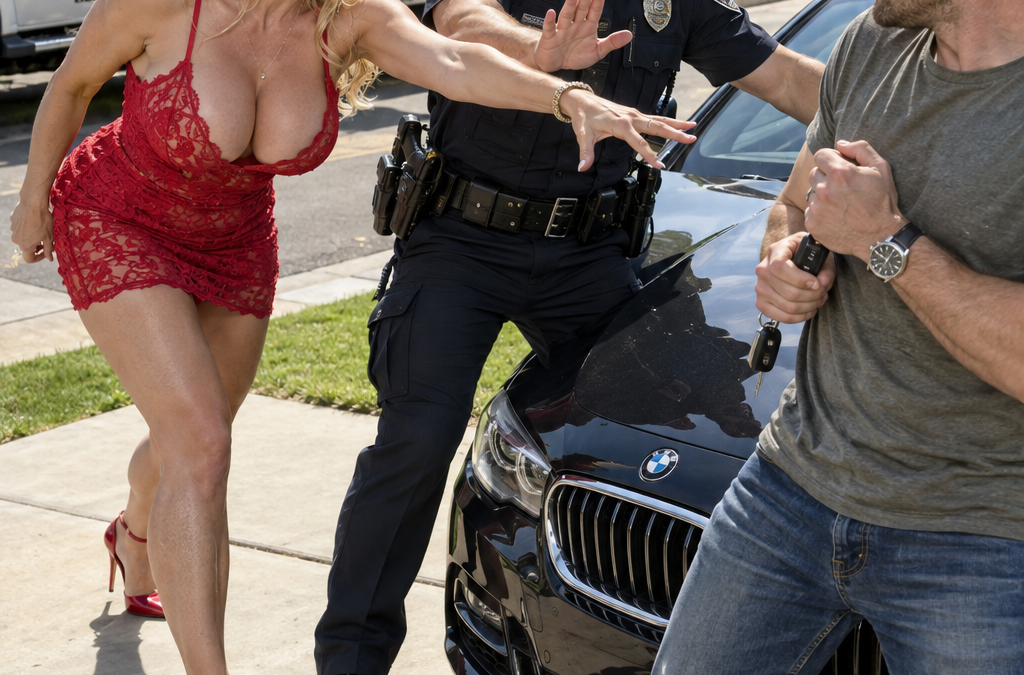
Relief hit me so hard my knees almost weakened.
The cruiser stopped.
An officer stepped out.
He was broad-shouldered, with closely cropped hair and the composed expression of someone accustomed to walking into disputes between angry people.
He looked from the tow truck to my BMW.
Then to Deborah.
“Morning. What’s going on?”
Deborah turned toward him immediately.
“Officer, thank goodness you’re here.”
Her voice changed completely.
Suddenly she was sweet, concerned, almost breathless.
She brushed her blonde hair back over one shoulder.
“This man is refusing to comply with lawful HOA enforcement.”
The officer looked at me.
“Sir?”
I pointed toward the BMW.
“I’m the homeowner. My vehicle is parked on my driveway. She called a tow truck without a valid violation notice, and now she’s demanding my keys.”
Deborah scoffed.
“He has accumulated multiple violations.”
“Ma’am,” the officer said, “I’m asking him what happened.”
Her mouth tightened.
I continued.
“She threatened to tow my car two days ago. I have the interaction recorded. I called the non-emergency line this morning because I believed she would follow through.”
The officer looked at the tow driver.
“Were you given documentation authorizing the tow?”
The driver shook his head.
“Not anything specific to this vehicle.”
Deborah threw up her hands.
“This is a private community!”
“Ma’am, please lower your voice.”
“You don’t understand. I’m responsible for enforcing the rules here.”
“Then we can discuss the rules. But nobody is moving this vehicle until we establish what authority exists.”
Deborah stared at him.
For years, she’d apparently been able to end disputes by declaring herself president.
Now someone was asking her to explain herself.
And she couldn’t stand it.
She turned back toward me.
“This could have been avoided if you’d simply complied.”
I held my keys at my side.
“You mean if I let you take my car?”
“Give me those.”
“No.”
She lunged.
Everything happened in seconds.
Her hand shot toward mine.
I instinctively pulled back.
Her fingers grabbed my jacket near the wrist, and she tried to wrench my hand toward her.
The officer reacted immediately.
“Ma’am! Step back!”
She ignored him.
“Give me the keys!”
“Deborah, let go!”
Her nails dug into my sleeve.
I stumbled sideways against the BMW.
The officer stepped between us and caught her arm.
“Back away. Now!”
She jerked against his grip.
“I have the authority!”
“No, ma’am. You do not have legal authority to seize private property.”
For a moment, the entire street seemed silent.
I could hear the tow truck engine.
A bird calling somewhere above the houses.
My own breathing.
Deborah stood with one hand raised, staring at the officer in disbelief.
Then she pointed at me.
“Arrest him!”
The officer didn’t move.
“He’s interfering with an official HOA enforcement action!”
“Ma’am, an HOA enforcement action is not a police seizure.”
“You’re taking his side!”
“I’m telling you to stop trying to take his keys.”
She looked genuinely stunned.
As though no man in uniform had ever told her no.
The officer spoke into his radio.
I couldn’t hear every word.
But I heard Deborah Finch’s name.
Then a pause.
The officer listened.
His expression changed.
Not dramatically.
Just enough that I noticed.
He looked at Deborah again.
“Ma’am, I need you to remain here.”
She folded her arms.
“This is outrageous.”
He stepped a short distance away, speaking quietly into the radio.
I stood beside my BMW with the keys clenched in my palm.
My hand was trembling.
I looked toward Priya.
She was still recording from across the street.
Other neighbors stood in their yards.
Nobody spoke.
The officer returned.
“Mrs. Finch, can you confirm your full name?”
Deborah frowned.
“Deborah Elaine Finch.”
He confirmed another identifying detail.
Then glanced toward his radio.
“Are you aware of an active financial fraud complaint concerning the Ashford Pines Homeowners Association?”
Her expression emptied.
For one second, the woman who had controlled our neighborhood for eleven years looked like someone who had stepped onto a floor and discovered it wasn’t there.
“What?”
“Are you aware of the complaint?”
She swallowed.
“I have no idea what you’re talking about.”
The officer’s tone remained professional.
“A complaint involving association financial records was referred for investigation earlier today.”
I felt my pulse quicken.
Earlier today.
Farah’s audit request.
The records.
The suspicious payments.
Something had moved faster than either of us expected.
Deborah glanced at me.
Then back at the officer.
“This man is making false accusations against me.”
“I haven’t accused you of anything here,” I said.
She pointed at me.
“You’ve been digging through private documents!”
The words came out before she seemed to realize what she’d said.
The officer looked at her.
“What documents?”
Deborah froze.
I said nothing.
She opened her mouth.
Closed it.
Then forced a laugh.
“Routine association paperwork. This man has been obsessed with discrediting me.”
The officer didn’t argue.
He simply returned to the immediate incident.
“Right now, we’re addressing the attempted removal of this vehicle and your attempt to take his keys.”
He asked the tow driver for the paperwork he’d received.
The driver produced a dispatch sheet.
Deborah watched, her breathing becoming faster.
The officer examined it.
Then asked another question.
“Who requested this tow?”
The driver pointed toward Deborah.
“She did.”
“Was there a valid authorization document attached?”
“No, sir.”
Deborah stepped forward.
“I told him I was the president!”
The officer raised a hand.
“Stay where you are.”
She stopped.
I could see her struggling to accept that the situation was no longer under her control.
The officer asked me whether I wanted the attempted taking of my keys documented as a complaint.
“Yes,” I said.
My voice sounded strange.
I cleared my throat.
“Yes. Absolutely.”
He noted what had happened.
After reviewing the available information and consulting with dispatch, he addressed the attempted taking of my property and the unauthorized tow request through formal citations and an incident report.
Deborah protested every step.
“This is absurd!”
“Ma’am, you need to stop interrupting.”
“I am a respected community leader!”
“You’re being instructed to cooperate.”
“I know people in this county!”
“That doesn’t change what happened here.”
Her voice rose higher.
“This man has been plotting against me!”
I looked at her.
For the first time since moving to Ashford Pines, I didn’t feel the urge to defend myself.
I didn’t need to.
The evidence was standing all around us.
The BMW in my driveway.
The tow truck without proper authorization.
The video recording.
The witnesses.
And Deborah’s own actions, witnessed by a uniformed officer.
The tow driver returned to his truck.
Before leaving, he approached me.
“Sorry about this, man.”
I nodded.
“Just don’t touch the car.”
“Wasn’t planning to.”
He climbed inside and drove away.
The sound of the diesel engine faded down the street.
Deborah watched him go.
Then she turned toward me.
Her makeup was still flawless.
Her red dress was still perfectly fitted.
But the confidence she’d worn like armor was beginning to crack.
“You think you’ve won?” she whispered.
I looked at her.
“No.”
She seemed almost encouraged.
Then I continued.
“I think this is the first time anyone has made you answer for what you’ve done.”
Her eyes flashed.
“You have no idea what you’re getting into.”
“Maybe not.”
I slipped the keys into my pocket.
“But I’m not giving you my house. I’m not giving you my car. And I’m not giving you another dollar just because you’re used to frightening people.”
For a moment, she looked as though she might lunge again.
The officer stepped closer.
“Mrs. Finch, we’re finished here. I suggest you leave.”
She stared at him.
Then at me.
Then at the neighbors watching from their lawns.
She had arrived expecting an audience for my humiliation.
Instead, she had become the center of attention for an entirely different reason.
She walked toward her SUV without another word.
Her heels clicked against the pavement.
For years, that sound had apparently made people disappear behind closed doors.
Now everyone watched her leave.
When the SUV turned the corner, I finally exhaled.
My hands were shaking so badly I had trouble stopping the recording.
Priya crossed the street.
“Colton.”
I looked at her.
She hugged me.
Hard.
I hadn’t expected it.
For several seconds, I just stood there.
Then I hugged her back.
“I thought she was going to take your car,” she whispered.
“So did I.”
Priya stepped away.
Her eyes were wet.
“I’ve lived here fourteen years. I’ve never seen anyone stand up to her like that.”
I glanced toward the street.
“I wasn’t trying to be brave.”
She smiled sadly.
“Most people aren’t.”
I went inside after the officer finished collecting information.
The house was quiet.
The coffee I’d made earlier had gone cold.
I stood at the kitchen counter and stared at the mug.
Then I looked down at my keys.
They seemed absurdly ordinary.
A black BMW key fob.
Two house keys.
A small metal keychain I’d owned for years.
But I couldn’t stop thinking about Deborah grabbing for them.
The casual certainty in her voice.
The belief that because she wanted something, I had to surrender it.
I sat at the table and called Farah.
She answered immediately.
“Colton?”
“Deborah tried to take my car.”
There was a pause.
“Are you safe?”
“Yes.”
“Tell me exactly what happened.”
I told her everything.
The tow truck.
The officer.
The attempt to seize my keys.
The financial fraud complaint.
When I mentioned the officer’s recognition of Deborah’s name, Farah went quiet.
Then she said, “That may be connected to the referral we submitted.”
“Already?”
“Financial complaints supported by documentary evidence can move quickly when the receiving authorities identify something they believe warrants investigation.”
I rubbed my forehead.
“Is she going to be arrested?”
“I can’t predict that. An investigation is not a conviction, and we need to let the process proceed.”
I understood.
But something else mattered more at that moment.
“She can’t keep doing this to people.”
Farah’s voice softened.
“Then we need the residents to understand what’s happening.”
I looked toward the front window.
Priya was talking to another neighbor.
Two houses down, someone had come outside holding an HOA letter.
For the first time, I sensed that the fear Deborah had spent years cultivating might be weakening.
Not because people had suddenly become fearless.
Because they’d seen someone refuse to surrender.
That afternoon, Farah helped me organize the new evidence.
The police incident report.
The tow dispatch information.
My video.
Priya’s recording.
The previous garage confrontation.
Every notice and email.
We added the documents to the financial materials already under review.
Then Farah advised me on how to inform other homeowners without making unsupported accusations.
I didn’t want a neighborhood witch hunt.
I wanted facts.
So I wrote a short message to the community group explaining that an incident involving an attempted tow had occurred, that police had responded, and that homeowners with concerns about HOA fines or financial records could contact the appropriate authorities or seek independent legal advice.
I didn’t call Deborah a thief.
I didn’t speculate about what investigators would find.
I simply told people that they had rights.
The response was immediate.
Within an hour, neighbors began contacting me privately.
Some had received fines they couldn’t explain.
Others had been threatened with liens.
Several described inspection notices that didn’t match the written HOA rules.
One woman told me she’d paid nearly eight hundred dollars in charges because she feared Deborah would interfere with the sale of her home.
A retired teacher admitted she had stopped inviting her grandchildren over because Deborah repeatedly complained about toys visible in the yard.
Another resident said his elderly mother had been terrified by collection letters even after she’d corrected every alleged violation.
I read message after message.
The pattern was unmistakable.
Different houses.
Different violations.
Different amounts.
Same fear.
Same woman.
I wasn’t the first person Deborah had targeted.
I was simply the first one who had collected enough evidence to keep pushing after she threatened to take everything.
That evening, Priya came over again.
She carried a notebook filled with names.
“I spoke to some neighbors,” she said.
I looked at the pages.
“How many?”
“Enough that we might finally be able to call for a special meeting.”
She sat across from me.
“People want her removed.”
I felt a surge of hope.
Then caution.
“Deborah has controlled the board for eleven years.”
“I know.”
“She’ll fight.”
“I know that too.”
Priya looked down at the notebook.
“But people are tired of being afraid in their own homes.”
I thought about Mr. Alvarez.
His trembling hands.
The way he’d spoken about his wife’s roses.
I nodded.
“Then we do it properly.”
Over the next several days, Ashford Pines changed.
Not visibly, at first.
The lawns remained trimmed.
The sidewalks stayed clean.
The same American flags moved in the afternoon breeze.
But beneath that ordinary appearance, conversations were happening that Deborah could no longer control.
Residents began comparing notices.
They discovered inconsistent fines.
Some had been charged for conditions that other homes were permitted to maintain.
Some had received escalating penalties without clear explanations.
Others had been pressured to pay fees quickly to avoid threatened legal action.
Priya worked with the homeowners to organize a lawful effort to remove Deborah through the association’s governing procedures.
Farah reviewed the relevant documents.
We were careful.
Every signature mattered.
Every notice mattered.
Every required step mattered.
After months of watching Deborah treat rules as weapons, I wasn’t going to give her an easy way to dismiss our challenge as improper.
Meanwhile, the financial investigation continued.
Investigators sought further records.
The consulting payments connected to D. Finch LLC came under scrutiny.
Questions emerged about the services supposedly provided, the approvals used, and the movement of association reserve money.
I wasn’t privy to every detail.
And Farah repeatedly reminded me not to assume that suspicious paperwork automatically established criminal guilt.
But the documentary trail was becoming difficult to ignore.
For years, Deborah had stood before residents and described herself as the guardian of their property values.
Now people were asking whether she had been using that position to direct community money toward her own business.
The contrast was devastating.
Still, she did not surrender quietly.
At the next HOA meeting, she appeared in her familiar red lace dress, standing at the front of the room with two board members beside her.
Her smile looked strained.
She began with a speech about unity.
“Recent events have created unnecessary division within our community,” she announced.
The room was full.
More homeowners attended than I’d ever seen before.
Chairs lined the walls.
People stood near the entrance.
Deborah continued.
“Certain individuals have chosen to attack the association rather than work constructively within its established processes.”
Her eyes moved toward me.
I sat beside Priya.
I didn’t look away.
“We cannot allow personal grievances to destroy what we’ve built.”
A woman near the back raised her hand.
Deborah ignored her.
“Our community has prospered because we maintain standards.”
Another hand rose.
Then another.
Finally, a man interrupted.
“What happened to the reserve money?”
The room went silent.
Deborah stiffened.
“Financial matters are being handled appropriately.”
“Then why aren’t we getting complete answers?”
“The board is reviewing all relevant concerns.”
Priya stood.
“Residents have requested a special meeting according to the bylaws.”
Deborah stared at her.
“Sit down, Priya.”
Priya remained standing.
“We have the required signatures.”
“You are out of order.”
“We followed the procedure.”
Deborah’s face flushed.
“This is not the time.”
“When is the time?” another resident asked.
“After you fine someone else for a mailbox?”
A few people murmured.
Deborah struck the table with her hand.
“Order!”
The room quieted.
But not because anyone looked frightened.
People were waiting for an answer.
I stood.
Deborah’s eyes narrowed immediately.
“Mr. Reyes, you have caused enough disruption.”
I kept my voice calm.
“I have one question.”
“You’ve already submitted your complaints.”
“This question is for the board.”
She folded her arms.
“Proceed.”
“Will the board support an independent review of the payments made to D. Finch LLC?”
A wave of whispers moved through the room.
Deborah’s expression hardened.
“Those payments are legitimate business expenses.”
“Then an independent review should establish that.”
“You have no right to publicly question my integrity.”
“I didn’t question your integrity.”
I glanced toward the residents.
“I asked whether the board would support a review of expenditures.”
One of the board members looked down at his papers.
The other shifted uncomfortably.
Deborah noticed.
She turned toward them.
“Gentlemen, we have already discussed this.”
The first board member cleared his throat.
“Deborah, I think perhaps we should consider the review.”
She stared at him.
“What?”
“We need to restore confidence.”
Her voice dropped.
“After everything I’ve done for this community?”
He didn’t answer.
That silence said more than any speech could have.
Deborah turned toward the room.
“You people have no idea how much work I’ve put into this place.”
No one challenged that she’d spent years running the association.
The question was what she had done with the authority.
I looked at her.
“Then let the records speak for themselves.”
She glared at me.
For a second, I saw the same expression she’d worn in my driveway when I refused to surrender the keys.
Pure disbelief.
The idea that someone could deny her demand still seemed unacceptable to her.
But this time, the whole room was refusing.
The meeting ended in disorder.
Residents demanded answers.
Board members argued.
Deborah accused people of disloyalty.
And the special meeting moved forward.
During the following week, I barely slept.
I knew we were close to removing her.
But I also understood the stakes had become much larger.
The allegations weren’t limited to petty fines or an attempted tow.
The investigation now concerned association funds.
Money paid by families.
Retirees.
People on fixed incomes.
People like Mr. Alvarez, who had spent their lives trying to hold on to a home.
I worried Deborah might find some procedural way to remain in power.
I worried the investigation could stall.
I worried about becoming the center of a lawsuit that consumed years of my life.
And occasionally, late at night, I wondered whether I should have just paid the three hundred forty dollars.
That thought embarrassed me.
But it was real.
Fighting for something doesn’t eliminate the desire for the fight to end.
Sometimes it makes that desire stronger.
One evening, I sat on the garage floor beside the shelf where I’d placed the garden gnome.
The ridiculous little figure smiled down at me.
I picked it up.
Its fishing pole had broken during the move.
I had never bothered fixing it.
I ran a thumb over the chipped paint and remembered the day my brother had given it to me.
A silly housewarming gift.
A reminder not to take everything so seriously.
Somehow, that harmless object had become part of a conflict that now involved attorneys, police, financial investigators, and half the neighborhood.
I thought about the person I had been when I moved into Ashford Pines.
Tired.
Divorced.
Desperate to avoid another confrontation.
I had mistaken silence for peace.
I had believed that if I was reasonable enough, polite enough, and cooperative enough, Deborah would eventually leave me alone.
But people who depend on intimidation don’t necessarily stop when you cooperate.
Sometimes cooperation simply teaches them that intimidation works.
I put the gnome back on the shelf.
Then I went inside and reviewed the special-meeting documents one last time.
The vote occurred less than two weeks after the incident in my driveway.
The clubhouse was packed.
People filled every chair.
Others stood along the walls.
Mr. Alvarez couldn’t attend because he was recovering from surgery.
But his daughter had arranged to participate through the procedures available to them.
I thought about him as I entered the room.
The night before, he’d called me from the hospital.
His voice sounded stronger than it had during my visit.
“Colton,” he’d said, “whatever happens, thank you.”
I hadn’t known what to say.
“You don’t need to thank me.”
“Yes,” he replied. “I do.”
He paused.
“I spent weeks afraid somebody would take my wife’s house away from me.”
My throat tightened.
“They’re not going to take it, Mr. Alvarez.”
“I hope not.”
Then he said something I carried into the clubhouse.
“But even if this doesn’t go our way, I’m glad somebody finally told her no.”
Deborah arrived shortly before the meeting began.
The familiar red dress.
The same heels.
The same perfectly arranged hair.
But something about her had changed.
Her smile no longer reached her eyes.
She looked at the crowded room as though she were counting enemies.
For eleven years, she had occupied the front of that clubhouse like a throne.
Now the residents were gathered to decide whether she should remain there.
The meeting followed the association’s required procedures.
There were objections.
Questions.
Disputes about how ballots and proxies should be handled.
Deborah challenged the legitimacy of the effort and argued that she was being targeted by a small group of hostile residents.
But the signatures had been verified.
The notices had been properly issued.
And the homeowners had a right to vote.
Priya spoke briefly.
She didn’t insult Deborah.
She didn’t speculate about the criminal investigation.
She simply described the need for transparent finances, consistent rule enforcement, and leadership accountable to the people paying the dues.
Then the votes were counted.
I stood near the wall, holding my breath.
The result was announced.
Deborah Finch had been removed from her leadership position.
For a moment, the room was silent.
Then people began applauding.
Not everyone.
Not all at once.
But enough.
A sound that spread from one side of the room to the other.
Priya covered her mouth with one hand.
An elderly woman began crying.
Someone behind me whispered, “It’s finally over.”
I didn’t join the applause immediately.
I was watching Deborah.
She stood completely still.
Her face was pale beneath her makeup.
Then she leaned toward the person conducting the meeting.
“This vote is illegitimate.”
The response was calm.
“The result has been recorded according to the association’s procedures.”
“You cannot remove me.”
“The homeowners have voted.”
“I built this community!”
A man near the front shook his head.
“No, Deborah. We live here.”
Her eyes swept across the room.
She looked for support.
Someone to defend her.
Someone to insist the residents had made a mistake.
A few people remained silent, but nobody stepped forward to restore her authority.
Finally, her gaze found me.
I could see the anger there.
The same anger she’d shown over the mailbox.
The garden gnome.
The records request.
The car keys.
Only now there was something else beneath it.
Powerlessness.
She had spent eleven years convincing people that their homes depended on her approval.
Now their votes had taken her approval away.
I didn’t smile.
I didn’t wave.
I simply met her gaze.
She looked away first.
The financial investigation continued after her removal.
Losing the presidency did not automatically resolve questions about the missing or improperly used funds.
Investigators examined records, invoices, bank transactions, and the business connected to Deborah.
Farah kept me informed about the parts of the proceedings relevant to my case.
More residents came forward.
Some described fines they believed had been improperly imposed.
Others questioned collection practices.
Eleven homeowners eventually joined civil actions seeking accountability for the damages and charges they said they had suffered.
I was one of them.
My claim concerned the improper enforcement actions, the threatened lien, and the attempted seizure of my vehicle.
I never imagined that buying a house would lead me into litigation.
I had wanted to choose paint colors and plant a garden.
Instead, I was giving statements and organizing evidence.
But I no longer felt the same helplessness.
Deborah was not the entire association anymore.
She was an individual whose conduct could be examined and challenged.
That difference changed everything.
The criminal investigation eventually led to embezzlement charges.
Deborah was indicted in connection with the association funds.
An indictment wasn’t a conviction, and I knew the legal process would continue.
But the charges confirmed that the questions we’d raised were serious enough to become a criminal case.
I remember sitting at my kitchen table when Farah told me.
I looked at the folder on my computer.
EVIDENCE.
Such a simple name.
I’d created it because I was tired of being fined for things I hadn’t done wrong.
Now it contained the records that had helped expose what investigators believed was a much larger financial scheme.
I closed the laptop.
For a long time, I sat without moving.
I expected to feel triumphant.
Instead, I felt exhausted.
There was satisfaction, certainly.
Relief.
Validation.
But also sadness.
Eleven years.
That was how long Deborah had held power.
I thought about how many residents might have spent those years feeling afraid.
How many had paid fines just to avoid confrontation.
How many had quietly accepted humiliation because fighting seemed pointless.
I wondered how much sooner the problem might have been uncovered if people hadn’t been isolated from one another.
That was perhaps the most disturbing thing about Deborah’s control.
She hadn’t needed to intimidate the entire neighborhood at once.
She had done it one household at a time.
One notice.
One fee.
One threat.
Each homeowner believed the conflict was theirs alone.
Once we began comparing experiences, her authority looked very different.
The new board suspended disputed enforcement actions for review and began correcting the association’s financial oversight procedures.
Reserve expenditures received closer scrutiny.
Records requests were handled more transparently.
No single officer could simply treat association money as an extension of personal authority.
The board also reviewed questionable fines and liens, including the charges against my property.
With Farah’s help, I secured confirmation that the disputed charges underlying the threatened lien would not be pursued against me and that the necessary corrections and releases would be handled.
The first time I received that confirmation in writing, I read it three times.
Not because it was complicated.
Because I needed to know it was real.
The house was safe from that particular threat.
My car was still in the driveway.
My keys were still in my pocket.
And Deborah was no longer HOA president.
A few days later, Mr. Alvarez returned home from surgery.
His daughter brought him back on a sunny afternoon.
I saw their car pull into the driveway and walked over to help carry a bag inside.
He moved slowly with his walker.
But he was smiling.
“Look at you,” I said. “Already back in action.”
“Don’t tell my doctor,” he replied.
His daughter laughed.
We helped him settle into his favorite chair.
The roses outside his window were beginning to bloom.
He watched them for a moment.
Then looked at me.
“Did they really vote her out?”
“Yes, sir.”
He shook his head.
“Eleven years.”
“Eleven years.”
He looked toward the window again.
“My wife always said that woman would eventually go too far.”
I smiled.
“Sounds like your wife knew people.”
“She did.”
His expression softened.
“She knew a lot of things.”
Later that afternoon, the neighborhood group chat began lighting up.
Someone had shared a news report about Deborah’s criminal charges.
Another resident posted a publicly released booking photograph from the case.
I opened the image.
For years, Deborah had presented herself as untouchable.
Perfect hair.
Perfect makeup.
Her red lace dress.
The confident smile of a woman who believed she could command anyone standing in front of her.
The booking photograph showed a very different moment.
No clipboard.
No carefully staged authority.
Just a woman facing consequences beyond the reach of her HOA title.
I stared at it briefly.
Then closed the message.
I didn’t forward it.
I didn’t add a joke.
I had no desire to spend the rest of my life celebrating someone else’s downfall.
What mattered was that she could no longer use the association to terrorize her neighbors.
Mr. Alvarez asked what everyone was discussing.
I told him.
He was quiet for a moment.
Then he shook his head.
“That’s a shame.”
His daughter looked surprised.
“Dad, after everything she did?”
He nodded.
“Still a shame.”
Then he added, “But I hope she never gets the chance to do it to anybody else.”
I understood exactly what he meant.
A person could deserve accountability without turning their suffering into entertainment.
I had spent months angry at Deborah.
There were days when I wanted her to experience every bit of fear she’d inflicted on me.
But watching Mr. Alvarez recover made me realize what I actually wanted.
Not revenge.
Peace.
A neighborhood where an elderly man could come home from surgery without fearing a lien notice.
Where a homeowner could paint a mailbox without being punished for the shade.
Where association dues paid for community expenses instead of disappearing into questionable consulting invoices.
Where asking a financial question wasn’t treated as an act of rebellion.
That was the victory worth having.
The next weekend, I finally repaired my garden gnome.
I found a small tube of adhesive in the garage and reattached its fishing pole.
Then I carried it outside.
The afternoon was warm.
A gentle breeze moved through the oak leaves.
I placed the little ceramic figure beside the flower bed, almost exactly where it had stood before Deborah ordered me to remove it.
This time, I checked the current rules first.
Not because I feared another punishment.
Because I had learned the difference between reasonable rules and arbitrary power.
The new board had clarified its exterior decoration standards.
The gnome was permitted.
I stepped back and looked at it.
The blue hat was slightly chipped.
The white beard had a faded spot near the chin.
But it still made me smile.
Priya appeared at the edge of her driveway.
“Is that the famous gnome?”
I laughed.
“The one and only.”
She crossed the lawn.
“I always liked him.”
“Deborah didn’t.”
“Deborah didn’t like anything she couldn’t control.”
We stood there for a moment.
Then Priya looked toward the street.
“It’s different now.”
I followed her gaze.
A man was washing his pickup truck.
Two children were riding bicycles.
Someone farther down the block was carrying patio furniture into the backyard.
Ordinary things.
Things that had once happened under the constant possibility of Deborah appearing with a clipboard.
Now the neighborhood seemed to breathe more easily.
“It is,” I said.
Priya smiled.
“You know, when you first moved in, I thought you’d last about six months.”
I looked at her.
“Why?”
“Because most people either surrendered or left.”
“And you thought I’d leave?”
“I thought you wanted a quiet life.”
I laughed softly.
“I did.”
She looked at my house.
“Well, maybe now you’ll get one.”
After she went home, I sat on the porch with a fresh cup of coffee.
My BMW was parked in the driveway, sunlight reflecting off the windshield.
It had been there for months without causing anyone the slightest inconvenience.
The keys rested safely in my pocket.
I thought back to the morning Deborah lunged for them.
Her face.
Her voice.
The officer stepping between us.
The realization that she genuinely believed her HOA title gave her the right to take whatever she wanted.
For a long time, I had believed that confrontation was something to avoid.
My divorce had left me tired of arguments.
Tired of explaining myself.
Tired of defending decisions that should have belonged to me.
When I moved into Ashford Pines, I promised myself I wouldn’t get dragged into another exhausting struggle.
I thought peace meant keeping my head down.
Paying the small fines.
Repainting the mailbox.
Removing the gnome.
Staying polite.
Not making enemies.
But Deborah had taught me something I never expected to learn from a homeowners association.
There are people who interpret your willingness to compromise as permission to keep taking.
You give them an inch, and they demand another.
You follow the rules, and they invent new ones.
You explain yourself, and they use your explanation as proof that they have the authority to judge you.
Eventually, you have to decide whether maintaining the appearance of peace is worth surrendering the thing peace is supposed to protect.
Your dignity.
Your security.
Your home.
I hadn’t wanted to fight Deborah Finch.
I hadn’t moved into Ashford Pines looking for a battle.
But once I saw what she was doing, especially to people like Mr. Alvarez, walking away would have meant accepting that fear was simply the price of living there.
And I couldn’t do that.
Not anymore.
The financial case would continue through the courts.
The civil actions would take time.
Not every resident would recover everything they’d lost.
Not every consequence would be neat or immediate.
But the central threat to our community had ended.
Deborah no longer controlled the board.
Her questionable financial dealings were under formal investigation and prosecution.
The homeowners who had once remained silent were now participating in decisions about their own neighborhood.
And I could finally stand in my driveway without wondering whether a woman in a red lace dress would appear to tell me I didn’t belong there.
As the evening sunlight moved across the lawn, I reached into my pocket and felt the keys.
For months, they had been a small symbol of everything Deborah wanted to control.
That day, they were just keys again.
I took another sip of coffee.
Across the street, Priya waved from her porch.
I waved back.
Then I leaned into my chair, listened to the breeze moving through the oak tree, and looked at the house I’d nearly been frightened out of defending.
It was still mine.
The BMW was still mine.
The ridiculous little garden gnome was back where it belonged.
And for the first time since moving to Ashford Pines, I didn’t feel like I was waiting for the next violation notice.
I felt like I was home.








