𝗙𝗨𝗟𝗟 𝗦𝗧𝗢𝗥𝗬 The HOA President Smashed My Security Camera Before Sunrise Because He Thought It Would Destroy the Evidence
𝗙𝗨𝗟𝗟 𝗦𝗧𝗢𝗥𝗬
I leaned against the fence.
“A target?”
“Someone new. Someone busy. Someone he thinks won’t fight too hard.”
“That sounds dramatic.”
“So does a grown man measuring grass before breakfast.”
I had no argument for that.
She nodded toward my front yard.
“This year, I think it’s you.”
I wanted to dismiss it.
But something in her tone stopped me.
“What happened to last year’s target?”
“The McAllisters. Retired couple. Karen fined them over porch furniture, driveway stains, flower colors, trash cans. They sold the house six months later.”
“Because of fines?”
“Because they were tired of being afraid of their mailbox.”
I looked toward my front door.
“Come on.”
“I’m serious.”
Denise lowered her voice.
“Keep every letter. Every photo. Every receipt. If Karen is starting with you, he won’t stop because you pay once.”
At the time, I thought she was overreacting.
Two weeks later, the mailbox letter arrived.
Unapproved Mailbox Color — Noncompliant Exterior Fixture. Fine: $75.
Apparently, my black mailbox violated a 2003 bylaw requiring oil-rubbed bronze fixtures on homes facing community roads.
I walked outside and stared at the mailbox.
It was black.
Simple. Clean. Mounted on a wooden post.
It had been there when I bought the house.
Three other houses on my street had black mailboxes.
One belonged to Karen Whitfield.
I noticed that for the first time.
His house sat two blocks away on the corner of Willow Bend and Creekview Lane. It was larger than mine, with pale stone trim, a manicured front lawn, and a black mailbox identical in color to mine.
I stood on the sidewalk in front of his house one evening after work, pretending to check a text message while looking at it.
Black.
Not bronze.
Not even close.
The same violation I had been fined for.
Except Karen’s mailbox had clearly never been fined.
That was the first crack.
Small, but visible.
I took a photograph from the public sidewalk, saved it with the date, and put it in a folder on my computer.
I named the folder Just In Case.
The third letter came twelve days later.
This one warned that continued noncompliance could lead to referral to the HOA attorney and collection action.
Over grass length and mailbox color.
I stood in my kitchen holding the letter while my coffee went cold.
Denise’s warning echoed in my head.
He picks a target every season.
That was when I stopped laughing.
I started documenting.
Every letter was scanned and saved.
Every envelope was photographed.
Every payment confirmation went into the folder.
I took pictures of my lawn after mowing, pictures of the mailbox, pictures of other mailboxes around the neighborhood that matched mine.
I created a spreadsheet with dates, descriptions, fines, and responses.
It felt ridiculous.
I was a grown man documenting grass.
But something in Karen’s tone told me he relied on people feeling ridiculous.
He wanted homeowners embarrassed, tired, and too busy to fight.
I decided I would not make it that easy.
Karen noticed.
The next time he came to my house, he didn’t leave a letter.
He showed up in person.
It was a Thursday evening. I had just gotten home from work and was tightening the screws on a new security camera mounted above my front porch.
The camera was small, black, and angled downward toward my own steps, front door, and a slice of driveway.
I installed it because packages had been going missing around the neighborhood, and because Karen’s constant “inspections” made me uncomfortable.
The device complied with HOA guidelines. I had checked.
It didn’t face a neighbor’s window.
It didn’t record anyone’s private yard.
It monitored my own porch.
I was connecting the app when Karen’s voice came from the driveway.
“That camera needs to come down.”
I looked over my shoulder.
He stood near my front walk wearing a white visor, mirrored sunglasses, and a pale green polo shirt tucked too tightly into his khakis.
His clipboard was already open.
“Good evening to you too,” I said.
He didn’t smile.
“Security cameras require review.”
“No, exterior structural additions require review. This is a removable porch camera.”
“It affects resident privacy.”
“It faces my porch.”
“It records community activity.”
“It records my front door.”
Karen stepped closer.
“You don’t get to interpret the rules however you like.”
I climbed down from the step ladder.
“Neither do you.”
That was the first time I said something that openly contradicted him.
His face tightened.
“You’re new here, Marcus.”
“I’m aware.”
“And you seem confused about how Willow Creek operates.”
“I read the rules.”
He laughed once, sharply.
“Facts don’t run this board.”
The line landed between us like something he hadn’t meant to say out loud.
I stared at him.
“What?”
He recovered quickly.
“I said attitude doesn’t run this board.”
“No, you didn’t.”
His jaw flexed.
“You should be careful.”
“About what?”
“About turning routine compliance into unnecessary conflict.”
I looked up at the camera.
“It stays.”
Karen removed his sunglasses slowly.
His eyes were cold.
“We’ll see.”
Then he turned and walked away.
I stood there for several seconds, hearing those words repeat in my head.
Facts don’t run this board.
I wrote them down that night.
Date. Time. Location. Witnesses: none.
I also saved the camera’s installation photo, the relevant HOA camera guideline, and the angle of the lens.
One week later, a certified letter arrived.
Total Outstanding Balance: $1,200.
It included grass fines, mailbox fines, administrative fees, alleged continuing violations, and a warning that unresolved balances could result in a lien against my property.
A lien.
Against my house.
I sat at my dining table and read the letter until the words blurred.
I had put almost every spare dollar I had into buying that home. The thought of a recorded claim against it over half an inch of grass and a mailbox color made my stomach drop.
But the fear didn’t last as long as Karen probably hoped.
Something else came after it.
Resolve.
I opened the Just In Case folder and renamed it.
HOA Evidence.
Then I started digging.
Willow Creek’s HOA maintained an online archive of meeting minutes. Most residents probably never read them. The files were badly organized, scanned sideways, and labeled with vague names like “Board Notes Final Revised 2.”
I spent three nights going through them.
At first, I found little more than boring maintenance notes.
Pool repairs.
Entrance landscaping.
Budget approvals.
Trash pickup contracts.
Then I noticed a section from the prior year involving a fence variance.
A homeowner had requested permission to build a side-yard fence two feet higher than the approved standard.
The variance was approved unanimously.
The homeowner’s name: Tyler Whitfield.
Karen’s son.
I sat up straighter.
The board vote summary listed the approval as unanimous.
But the attendance list showed only one board member present.
Karen.
No quorum.
No recorded abstention despite direct family interest.
One person.
One vote.
One rubber stamp.
The board wasn’t functioning like a board.
At least not in that document.
It was Karen approving his own son’s variance and calling it unanimous.
I printed everything.
Meeting notice.
Attendance page.
Variance approval.
Fence guideline.
Property record connecting Tyler Whitfield to Karen.
I also drove by Tyler’s house the next morning before work.
His fence stood tall, clean, and clearly beyond the standard height.
Approved.
Meanwhile, I had a lien threat over mailbox color.
I waited for the next resident meeting.
Karen held meetings in the clubhouse at the center of Willow Creek. The building had beige walls, a coffee station, folding chairs, and framed photographs of neighborhood events.
Usually, only eight or nine people attended.
That month, I counted seventeen.
I wasn’t sure whether they had heard about my dispute, or whether everyone simply had their own reason to watch Karen.
Denise sat beside me.
“You ready?” she whispered.
“No.”
“Good. That means you’re taking it seriously.”
Karen opened the meeting with his usual language about standards, values, and property protection.
He stood behind the folding table at the front of the room, visor absent this time but sunglasses hooked into his collar like a badge.
After routine updates, he asked for homeowner comments.
I stood.
“My name is Marcus Reyes. I have a question about variance approval procedures.”
Karen’s face changed almost imperceptibly.
“Go ahead.”
I held up the printouts.
“Last year, the board approved a fence-height variance for Tyler Whitfield.”
Karen’s expression hardened.
“That matter is closed.”
“I’m asking about process.”
“The process was followed.”
I looked at the page.
“The meeting minutes list only one board member present.”
A low murmur moved through the room.
Karen smiled.
It was practiced, camera-ready, and completely empty.
“You may be confused by the formatting.”
“I don’t think so.”
He tilted his head.
“Marcus, I suggest you read the bylaws more carefully before making public accusations.”
“I did.”
I placed copies on the table.
“The bylaws require a quorum for board action and recusal when a board member has a direct personal interest.”
The room went silent.
Not ordinary silence.
Dangerous silence.
The kind that comes when people realize someone has said out loud what everyone else has only whispered.
Karen’s smile remained fixed.
“You are misinterpreting internal procedure.”
“Then explain it.”
His eyes narrowed.
“This meeting is not a courtroom.”
“No. But you’re threatening legal action against my home over alleged violations while your own family received a variance approved by you alone.”
Denise inhaled sharply beside me.
Someone in the back whispered, “Finally.”
Karen’s face flushed.
“Mr. Reyes, you’re out of order.”
“I’m asking for clarification.”
“And I am telling you that you don’t understand the governing documents.”
He turned toward the room.
“Some residents confuse personal grievance with community business.”
I looked directly at him.
“And some presidents confuse community business with personal power.”
The room went dead quiet.
Karen stared at me.
For one second, the polished mask slipped.
It wasn’t anger exactly.
It was calculation.
He was deciding how much damage he could do to me later.
Then the smile returned.
“We’ll move on.”
I sat down.
My hands were shaking, but I kept my face calm.
Denise leaned close.
“You just put a crack in the wall.”
“No,” I whispered. “I just made myself a bigger target.”
Both were true.
The next morning, Karen sent another violation notice.
This one accused me of “hostile conduct toward board operations.”
There was no fine attached.
Just a warning.
I added it to the folder.
Then I filed a formal records request for five years of HOA financial statements, vendor payments, board approvals, conflict-of-interest disclosures, enforcement ledgers, and variance records.
I cited the applicable state disclosure requirements.
Karen did not respond.
Two weeks passed.
I sent a second request.
He replied through the HOA email account.
Records are currently being compiled.
Another two weeks passed.
I sent a third request.
This time, Karen claimed some records had been misplaced during a transition to digital storage.
That was when an anonymous email appeared in my inbox.
No message.
Just a file-sharing link.
The sender used an address I didn’t recognize.
The subject line read:
You didn’t get this from me.
Inside were digital copies of HOA financial statements, vendor reports, and reimbursement records.
I downloaded everything and saved a backup immediately.
Then I started reading.
At first, it was mostly ordinary.
Landscaping contracts.
Pool service invoices.
Insurance payments.
Utilities.
Then one vendor name appeared again and again.
Whitfield Landscape Solutions.
I leaned closer.
Payments for common-area maintenance.
Emergency shrub replacement.
Seasonal landscaping refresh.
Drainage cleanup.
Mulch replacement.
I searched public business records.
Whitfield Landscape Solutions was registered to an address connected to Karen’s personal residence.
The listed officer was Karen Whitfield.
I felt my pulse begin to pound.
The HOA president was approving payments from HOA dues to his own landscaping company, disguised as common-area maintenance.
Some payments might have been legitimate if disclosed and approved properly.
But the records I had showed no competitive bidding, no conflict disclosure, and no meaningful board approval.
At least not in the documents provided.
The amounts were not small either.
Thousands of dollars over multiple years.
My hands were actually shaking.
This wasn’t pettiness anymore.
This wasn’t a visor-wearing dictator obsessed with grass.
This looked like self-dealing.
Maybe worse.
I called Denise.
“Can you come over?”
She arrived ten minutes later.
I showed her the records.
She read silently for several minutes.
Then she looked up.
“Oh my God.”
“I need a lawyer.”
“Yes,” she said. “You do.”
The next morning, I called a real estate attorney named Priya Shah.
A coworker had used her in a property dispute and described her as “the kind of lawyer who smiles right before destroying someone’s argument.”
I brought her everything.
The fines.
The lien threat.
The mailbox photos.
Karen’s own mailbox.
The camera dispute.
The fence variance.
The financial records.
The payments to Whitfield Landscape Solutions.
Priya reviewed the documents in silence.
She was in her early forties, composed, precise, and brutally efficient with paperwork.
Every few pages, she placed a sticky note on something.
After nearly an hour, she leaned back.
“Finally.”
I blinked.
“Finally?”
“I’ve heard Karen Whitfield’s name before.”
“You have?”
“Three times. Different homeowners. None had enough documentation to justify formal action.”
I looked at the folders on her desk.
“And now?”
She tapped the financial records.
“Now we have something.”
I felt a strange mix of relief and anger.
“So I’m not the first.”
“No.”
“Denise told me he picks targets.”
“That appears consistent with what I’ve heard.”
Priya folded her hands.
“Marcus, we need to handle this carefully. Some of what you have shows selective enforcement. Some suggests improper governance. The vendor payments raise serious financial questions. But we need to avoid overclaiming before we verify the records.”
“What do we do first?”
“First, we stop the lien threat. Second, we organize affected homeowners. Third, we file a formal complaint with the state HOA oversight division and preserve the financial evidence.”
I nodded.
“And Karen?”
“He will escalate.”
The certainty in her voice bothered me.
“You sound sure.”
“People who have been misusing authority don’t become reasonable when the evidence appears. They panic.”
I thought of Karen’s face at the meeting.
That one-second mask slip.
“What should I do?”
“Do not speak with him alone. Do not physically confront him. Keep your camera running. Save everything.”
I almost laughed.
“He wants the camera gone.”
“I’m sure he does.”
Within two weeks, four households joined the legal effort.
Mine.
Denise’s.
A retired teacher named Marlene who had paid repeated fines over driveway stains.
And a young couple, the Nguyens, who had been threatened over a backyard shed that had already received prior approval.
One shared attorney.
One shared folder.
One growing set of records.
Suddenly, Karen wasn’t dealing with one irritated homeowner.
He was dealing with a documented pattern.
Priya filed the complaint.
It alleged selective enforcement, improper lien threats, failure to produce records, questionable self-dealing through vendor payments, and governance irregularities involving variance approvals.
Karen received notice.
For two days, nothing happened.
Then the fines stopped.
No letters.
No emails.
No new notices.
I should have felt relieved.
I didn’t.
Silence from Karen felt like the silence before a storm.
Denise felt it too.
“He’s planning something,” she said over the fence one evening.
“Maybe his attorney told him to shut up.”
She shook her head.
“Karen doesn’t shut up because someone tells him to.”
I looked toward my porch camera.
“Priya said to keep recording.”
“Good.”
The camera became a strange comfort.
Every time I came home, I saw its little status light above the porch.
It watched the front steps, the driveway, the place where Karen had stood arguing about privacy.
It wasn’t dramatic.
It wasn’t large.
But it meant that if someone came to my house, I wouldn’t have to rely only on my word.
That mattered more than ever.
At 5:52 a.m. on a Wednesday, my phone buzzed.
I was in the kitchen, pouring coffee.
The security app had sent a motion alert.
I opened the live feed.
The image showed my front porch in pale blue dawn light.
At first, I saw nothing.
Then Karen Whitfield walked into frame.
He wore a white visor, a dark windbreaker, khaki pants, and gloves.
In his hands was a long metal pole.
I stopped breathing.
The coffee mug was still in my left hand.
Steam rose toward my face.
Karen looked directly at the camera.
For a few seconds, he stood still.
Then he stepped closer.
His mouth moved.
The camera’s audio picked up his voice.
“No more evidence.”
He raised the pole.
I set the coffee down so fast it spilled across the counter.
“Karen, don’t,” I said uselessly to the phone.
He swung.
The pole cracked against the camera housing.
The image shook violently.
Plastic snapped.
The lens fractured into a spiderweb blur.
Karen swung again.
The audio caught the scrape of metal, the sharp impact, and his breathing.
Then he hissed, “Let’s see you record now.”
The video feed cut to static.
For three seconds, I just stood there.
Then I remembered.
Cloud storage.
The camera uploaded footage continuously.
Karen had not destroyed the evidence.
He had created the cleanest piece of evidence in the entire case.
I called Priya.
She answered groggily.
“Marcus?”
“He smashed the camera.”
A pause.
“What?”
“Karen. Six minutes ago. With a metal pole. I watched it live.”
“Are you safe?”
“Yes. I’m inside.”
“Is he still there?”
I checked through the side window.
Karen was walking down the driveway.
The metal pole rested against his shoulder like he had just finished yard work.
“He’s leaving.”
“Do not confront him.”
“I won’t.”
“Download the footage immediately. Save multiple copies. Send it to me. Then call the police nonemergency line and report property damage.”
I looked at the cracked camera hanging outside.
“He said no more evidence.”
Priya was silent for a moment.
Then she said, “He just gave us Exhibit A.”
I downloaded the video.
The file was crisp, timestamped, and painfully clear.
Karen’s face.
The pole.
The words.
The impact.
I saved it to my computer, an external drive, and cloud backup.
Then I called the police and filed a report.
An officer came to the house later that morning.
He examined the broken camera, watched the footage, and took my statement.
“Do you know this man?” he asked.
“Yes.”
“Relationship?”
“HOA president.”
The officer looked at the screen again.
“He’s the HOA president?”
“Yes.”
“And he came here at six in the morning to destroy your camera?”
“That’s what the video shows.”
He gave me a look that said he had seen many stupid decisions in his career, but this one had earned a place near the top.
“Do you know why?”
“He’s under investigation for HOA-related issues. My camera recorded my porch.”
The officer nodded slowly.
“We’ll document it.”
That afternoon, Priya called with a new detail.
“The pole matters.”
“What do you mean?”
“Denise spoke with someone on the maintenance committee. The pole appears to be from the HOA maintenance shed.”
I frowned.
“How would they know?”
“Because tools are logged out for common-area work.”
I sat up.
“Don’t tell me.”
“Logged out under Karen’s name this morning.”
I closed my eyes.
Motive.
Means.
Video.
Timestamp.
Tool record.
Karen hadn’t just destroyed private property.
He had used association property to do it.
A man under investigation for misusing HOA authority had taken an HOA maintenance tool, walked to my porch, and smashed the device collecting evidence against him.
Even I knew how bad that looked.
Priya amended our filings.
She included the footage, the police report, the damage estimate, and the maintenance shed log.
She also sent the material to the state oversight division and the county investigator already reviewing the financial allegations.
Karen had handed us exactly what we needed.
Proof that his retaliation wasn’t theoretical.
It was physical.
The emergency board meeting was called three days later.
The clubhouse was packed.
Not the usual twelve people.
Nearly sixty residents filled the chairs, lined the walls, and stood in the hallway.
Word of the video had spread.
So had the financial records.
Karen sat at the front table with the remaining board members.
He wore a navy blazer and no visor.
For once, the sunglasses were gone too.
His face was tense, and his mouth remained pressed into a hard line.
Priya sat beside me with her folder.
Denise sat on my other side.
“You okay?” she whispered.
“No.”
“Good. Means you’re human.”
Karen opened the meeting by calling for order.
His voice was controlled, but not as smooth as usual.
“As many of you know, certain accusations have been circulating concerning HOA governance.”
Someone from the back said, “You mean the video?”
A few people murmured.
Karen ignored it.
“I want to remind everyone that this association cannot function if residents engage in harassment, misinformation, and personal attacks against board leadership.”
Denise leaned toward me.
“He’s really trying it.”
Priya whispered, “Let him talk.”
Karen continued.
“Recent events have been misrepresented. Certain residents have weaponized partial documents—”
A board member named Alan Brooks interrupted.
“Karen, we need to address the camera.”
Karen turned slowly.
“That matter is being handled.”
Alan looked exhausted.
“By whom?”
Karen’s face tightened.
“The appropriate parties.”
Another board member, Linda Park, spoke.
“We’ve all seen the footage.”
The room went quiet.
Karen’s eyes flashed.
“That video lacks context.”
I couldn’t help myself.
“What context makes smashing my camera at six in the morning acceptable?”
The room erupted.
Karen struck the table with his palm.
“Order.”
But the word no longer worked like it used to.
People kept talking.
Linda raised her voice.
“Enough. Let him play it.”
Karen turned toward her.
“Absolutely not.”
Priya stood.
“My client is prepared to provide the footage to the board as part of this meeting.”
Karen’s jaw clenched.
“This is theatrics.”
Priya looked at him calmly.
“It is evidence.”
The room quieted again.
A projector was set up.
My hands were cold as Priya connected the file.
The screen at the front of the clubhouse lit up.
My porch appeared.
Dawn light.
Stillness.
Then Karen entered the frame with the pole.
A collective gasp moved through the room.
The audio played clearly.
“No more evidence.”
Then the swing.
The crack.
The second hit.
“Let’s see you record now.”
The video ended.
Nobody spoke.
Then someone said, “Play it again.”
Priya looked toward the board.
Linda nodded.
It played again.
This time, people watched Karen instead of the broken camera.
They saw the gloves.
The pole.
The deliberate movement.
The words.
When it ended, Karen looked smaller.
Not physically.
But the authority he had carried for years had drained from him.
Alan turned to him.
“Did you do this?”
Karen’s face reddened.
“I acted under extreme provocation.”
A woman in the audience laughed bitterly.
“From a camera?”
Karen pointed toward me.
“That camera was part of a campaign of harassment.”
“It faced my porch,” I said.
“You were using it to intimidate board leadership.”
“I was using it to see who came to my door.”
He leaned forward.
“You have been poisoning this community.”
Denise stood.
“No, Karen. You have.”
The room shifted toward her.
Denise held up a packet.
“This is the fence variance for your son. Approved unanimously with only you present.”
She placed it on the table.
Marlene stood next.
“These are my driveway stain fines. Three notices after I paid for professional cleaning.”
The Nguyens stood.
“This is our shed approval from 2021. You fined us anyway.”
Another neighbor held up a printout.
“These are payments from HOA dues to your landscaping company.”
Someone else read from a statement.
“Emergency common-area maintenance, $3,800.”
Another resident.
“Seasonal refresh, $2,450.”
Mr. Okafor, who had come with Denise, stood slowly.
His voice was quiet, but the room heard every word.
“I reviewed the available financial records. The payments to Whitfield Landscape Solutions require explanation, particularly in light of the lack of documented competitive bids and conflict disclosures.”
Karen pointed at him.
“You had no authority to review those records.”
Mr. Okafor adjusted his glasses.
“Homeowners have a right to understand how their dues are spent.”
Karen looked toward the board.
“This meeting has become a mob proceeding.”
Linda looked at him sadly.
“No, Karen. It has become a board meeting.”
That sentence landed harder than anyone expected.
For years, Karen had been the board.
He spoke. Others nodded.
He fined. Others remained silent.
He approved. Others signed later, if at all.
But that night, the board finally remembered it existed.
Alan stood.
“I move that Karen Whitfield be removed as HOA president pending investigation into property destruction, selective enforcement, improper variance approvals, and financial conflicts.”
Karen shot to his feet.
“You cannot do that.”
Linda said, “Second.”
Karen turned toward her.
“Linda.”
She didn’t look away.
“No.”
The vote began.
Alan: yes.
Linda: yes.
Board member Teresa: yes.
Board member Mark: yes.
Board member Harold: yes.
Every remaining board member voted to remove him.
Unanimous.
The same word Karen had used for his son’s fence.
Only this time, it was real.
Karen stood at the front of the room, breathing hard.
His hands curled into fists.
“You will regret this,” he said.
Alan answered quietly.
“I regret not doing it sooner.”
Karen gathered his papers and left the clubhouse.
Nobody followed.
Nobody apologized.
Nobody asked him to reconsider.
For the first time since I moved to Willow Creek, Karen Whitfield walked out of a room without taking the neighborhood with him.
The consequences came in layers.
First, the board formally suspended all enforcement actions connected to Karen’s disputed notices, including my grass and mailbox fines.
Then they turned over financial records to the county investigator.
The state oversight complaint moved forward.
Priya filed the civil suit on behalf of our group of homeowners, citing selective enforcement, improper lien threats, retaliation, property damage, and financial misconduct concerns.
The police report for the camera damage proceeded separately.
Karen attempted to downplay it.
His attorney argued that the matter was a neighborhood dispute blown out of proportion.
The video made that argument difficult.
So did the maintenance shed log showing the pole checked out under Karen’s name.
So did the audio.
“No more evidence.”
Those three words destroyed every claim that the swing had been accidental.
The small claims portion of my case moved faster than the broader financial inquiry.
The damaged camera system had cost far less than $5,000 on its own, but Priya included replacement costs, installation, related expenses, filing costs, and attorney time recoverable under the circumstances.
The court also considered the intentional nature of the damage.
Karen sat across the courtroom from me in a suit and no visor.
He looked older than fifty now.
Not frail.
Just stripped of the confident shine that had made him seem untouchable.
The judge watched the footage once.
Then again.
Karen’s attorney tried to suggest that the camera had been recording HOA-related activity in a way that made Karen feel harassed.
The judge asked one question.
“Was the camera mounted on Mr. Reyes’s property and facing his own porch?”
“Yes, Your Honor,” Karen’s attorney said.
“And did your client strike it with a pole?”
A pause.
“The video appears to show that.”
The judge looked unimpressed.
“It does more than appear to show it.”
I sat silently beside Priya.
My hands were folded tightly in my lap.
I had imagined that moment for months, but it didn’t feel triumphant.
It felt strange.
The man who had once threatened a lien against my house now had to answer for the object he had broken with his own hands.
No clipboard.
No board title.
No ability to declare the facts irrelevant.
Just evidence.
The judgment came down in my favor.
Karen was ordered to pay $5,000 in damages and associated costs tied to the willful destruction of property.
Five thousand dollars.
Six months earlier, he had sent me fines for grass and a mailbox.
Now he owed me money.
The irony was not lost on anyone.
Denise texted me after the ruling.
Karma files paperwork.
I laughed for the first time that day.
The broader HOA investigation continued.
County officials examined vendor payments to Whitfield Landscape Solutions.
They requested invoices, board approvals, contracts, and documentation showing what work had actually been performed.
Some payments appeared to correspond to common-area work.
Others were harder to explain.
Karen suddenly needed to produce records he had spent years telling everyone else were not their concern.
The new board cooperated with investigators.
Independent accountants reviewed the HOA books.
Residents received updates at open meetings.
It was messy, slow, and uncomfortable.
But it was real.
No more secret rubber stamps.
No more missing records.
No more one-man approvals.
The neighborhood had to confront what it had allowed Karen to become.
That was not easy.
Some residents were angry at him.
Others were angry at themselves.
A few wanted to pretend the whole thing had been exaggerated and move on.
But the majority wanted transparency.
They wanted to know how much money had gone to Karen’s company.
They wanted to know which fines had been valid.
They wanted to know why board members had failed to stop him sooner.
Those questions did not have quick answers.
But at least they were finally being asked.
My own life gradually quieted down.
The lien threat disappeared.
My fines were reversed.
The mailbox issue was dropped after the board realized half the neighborhood had similar mailboxes, including Karen.
The grass-height standard was rewritten with a warning period and clearer procedures.
Camera guidelines were clarified.
Homeowners were allowed to install security cameras facing their own property, as long as they did not intentionally invade a neighbor’s privacy.
A rule that should have been obvious now existed in writing because Karen had made obvious things difficult.
I replaced the camera the week after the court ruling.
The new one was slightly better than the old one.
Sharper lens.
Wider dynamic range.
Better night vision.
When I mounted it above the porch, Denise walked over with two cups of coffee.
“Need a security detail?” she asked.
“Only if Karen has another pole.”
She smiled.
“Too soon?”
“No. Perfect timing.”
We stood on the front walk looking up at the new camera.
It blinked once as it connected.
“Think it’ll catch anything interesting?” she asked.
“I hope not.”
And it didn’t.
Not another crime.
Not another early-morning attack.
Mostly delivery drivers, squirrels, neighbors walking dogs, and me forgetting packages on the porch.
It became what it should have been from the beginning.
A simple camera on a simple house.
Not a battlefield.
Months later, the clubhouse held another meeting.
This one was different.
No tension in the air.
No Karen at the front table.
No residents afraid to ask questions.
The new acting president, Linda Park, presented financial updates and explained the audit process.
Denise showed proposed reforms to variance approvals.
Mr. Okafor volunteered to join a temporary finance review committee.
I mostly sat in the back and listened.
At one point, Linda thanked the residents who had come forward with documents.
She didn’t name me directly, but several people turned to look.
I felt uncomfortable.
I hadn’t set out to save Willow Creek.
I had set out to stop a man from threatening my house over grass.
But sometimes a small fight opens a larger door.
After the meeting, a retired man named Paul approached me.
“I should have said something sooner,” he said.
I didn’t know what he meant.
He looked down.
“Karen fined my wife before she died. Said her garden flags were excessive. She loved those flags.”
I swallowed.
“I’m sorry.”
“I paid because she was sick and I didn’t want trouble.”
He looked toward the front of the clubhouse.
“He counted on that.”
I nodded.
“Yes. He did.”
That was the truth of Karen Whitfield.
He counted on people being tired.
Embarrassed.
Busy.
Grieving.
Sick.
New to the neighborhood.
Too polite.
Too broke.
Too overwhelmed.
He counted on everyone deciding it was easier to pay than fight.
For a long time, he was right.
Until he chose the wrong camera.
Or maybe the wrong group of neighbors.
Or maybe he simply pushed too far, too often, for too long.
Willow Creek was never perfect.
No neighborhood is.
But after Karen, it became more honest.
Rules still existed.
People still argued about landscaping.
There were still budget debates and irritated emails about pool hours.
But the difference was accountability.
A board vote had to be a board vote.
A variance had to be recorded properly.
A fine had to cite an actual rule.
A vendor payment had to have documentation.
And no president could tell a resident, “Facts don’t run this board,” without being reminded that facts were the only things that made board authority legitimate.
I kept the original cracked camera.
For a while, it sat in a cardboard box in my garage.
I meant to throw it away after the case ended, but every time I picked it up, I changed my mind.
One Saturday morning, I took it out and placed it on my workbench.
The lens was fractured.
The plastic housing had split where the pole struck it.
A small piece rattled inside when I moved it.
It looked pathetic.
But it had done its job.
It recorded the truth long enough to survive its own destruction.
I eventually wrote the date on a strip of masking tape and stuck it to the side.
Then I placed it on a shelf above my toolbox.
Not as a trophy.
As a reminder.
Documentation matters.
People like Karen thrive in gaps.
No witnesses.
No records.
No receipts.
No one willing to compare one rule to another.
He had built his power in those gaps.
The camera closed one.
The financial records closed another.
The meeting minutes closed a third.
By the time we were done, there was nowhere left for him to hide without leaving fingerprints.
A few months after the small claims judgment, I received the payment.
Five thousand dollars.
The check arrived in an envelope from Karen’s attorney.
I stood at my kitchen counter holding it, remembering the first fifty-dollar grass fine.
That fine had made me feel foolish.
The $1,200 lien threat had made me feel afraid.
The broken camera had made me furious.
The $5,000 check made me feel something quieter.
Confirmed.
Like the world had finally acknowledged that what happened was not normal, not acceptable, and not just neighborhood drama.
I deposited the money.
Then I used part of it to buy a better camera system, repair the porch trim, and replace some plants damaged when Karen swung the pole too close to the railing.
The rest I saved.
Denise insisted we celebrate.
She brought over tacos and two folding chairs.
We sat on my porch beneath the new camera, eating dinner while the sun went down.
“Think he’ll ever apologize?” she asked.
“No.”
“Think he understands what he did?”
I looked toward the street.
“I think he understands that it cost him.”
“That may be as close as we get.”
I smiled.
“Probably.”
She raised her drink.
“To receipts.”
I raised mine.
“To cloud storage.”
We laughed.
For once, the laughter didn’t feel nervous.
It felt free.
I still see Karen sometimes.
He hasn’t moved, at least not yet.
His house remains two blocks over, with the same black mailbox that started part of my case.
The visor is gone now.
So is the clipboard.
When he walks to his mailbox, he keeps his head down.
No measuring tape.
No slow patrols through the neighborhood.
No sudden appearances in driveways.
He looks like any other man living in a community he no longer controls.
That may be the most satisfying consequence of all.
Not the money.
Not even the removal vote.
The ordinary smallness of him afterward.
Power had made him seem larger than he was.
Once that power was gone, he was just a man who had made very bad decisions and left a record of them.
One evening, not long after the final audit update, I stood outside adjusting the porch light.
The new board had clarified approved bulb temperatures.
Mine complied.
I checked anyway out of habit.
Denise walked by with her dog.
“You know you don’t have to live like Karen’s still watching,” she said.
I looked at the bulb.
“I know.”
“Do you?”
I paused.
Then I climbed down from the step stool.
“Getting there.”
She nodded.
“That’s fair.”
Healing from an HOA tyrant sounds dramatic when you say it out loud.
But living under constant threat changes small habits.
You check the mailbox differently.
You tense when an unfamiliar car slows down.
You save receipts for things nobody should question.
You photograph your own lawn after mowing.
It takes time to stop expecting punishment for existing in your own house.
But slowly, Willow Creek became home again.
Not the illusion of peace I had bought into at the beginning.
A better kind.
Peace with knowledge behind it.
Peace with neighbors who talked to one another.
Peace with records, votes, transparency, and enough shared memory to recognize the warning signs if another Karen ever tried to rise.
One Saturday afternoon, I finally planted the raised garden beds in the backyard.
That had been my original plan when I moved in.
Tomatoes, peppers, basil, and a few herbs I would probably forget to water properly.
Denise came over to supervise because she didn’t trust my spacing.
“You’re a systems analyst,” she said. “You should understand layout.”
“I understand logistics software. Plants are emotional.”
She laughed.
While we worked, I looked toward the front of the house.
The porch camera was visible from the side yard.
Small. Quiet. Functional.
It had never caught another crime.
And I hoped it never would.
But if it had to, it would be ready.
The funny thing is, Karen had been right about one thing.
Evidence did change everything.
He just thought evidence was something he could destroy with a pole.
He forgot that evidence can multiply.
It can upload.
It can be copied.
It can sit in folders, spreadsheets, emails, minutes, logs, and financial statements.
It can wait patiently while powerful people insist they are untouchable.
And when the time comes, it can speak with more authority than any clipboard.
Six months after Karen broke the camera, I stood on my porch with a new cup of coffee, watching the sun rise over Willow Creek.
The street was quiet.
A delivery van moved slowly past.
A jogger waved.
Somewhere down the block, a garage door opened.
Nothing dramatic happened.
No pole.
No visor.
No threats.
Just morning.
My phone buzzed with a security notification.
Motion detected.
I opened it.
A squirrel had jumped onto the porch railing.
It stared directly into the camera as if challenging the system.
I laughed and saved the clip for Denise.
Then I looked at the cracked camera on the garage shelf through the open side door.
For a second, I remembered the sound of the pole striking plastic.
Karen’s voice.
“No more evidence.”
I smiled.
Because in the end, evidence was exactly what remained.
Every fine.
Every timestamp.
Every mailbox photo.
Every meeting minute.
Every payment to his company.
Every second of that 6:00 a.m. video.
Karen Whitfield had spent years teaching Willow Creek residents to fear paper.
Letters. Notices. Fines. Threats. Liens.
He forgot that paper could work both ways.
So could video.
So could law.
He smashed my camera because he thought that would end the story.
Instead, it became the moment the whole neighborhood finally saw him clearly.
He lost the board.
He lost in court.
He had to explain his company’s reimbursements to county investigators.
And he had to write me a $5,000 check for the camera he broke while trying to hide the truth.
As for me, I still live in the same house.
The grass is cut.
The mailbox is black.
The camera is mounted above the porch.
And every time I walk past it, I remember the lesson Karen Whitfield never learned.
Karma does not always arrive loudly.
Sometimes it uploads quietly to the cloud, saves itself in duplicate, and waits for the right courtroom to press play.
𝗧𝗛𝗘 𝗘𝗡𝗗
The HOA President Smashed My Security Camera Before Sunrise Because He Thought It Would Destroy the Evidence
The pole hit my front porch camera at six in the morning, and I watched the whole thing live with a coffee mug frozen in my hand. What the HOA president didn’t know was that every second had already been saved somewhere he could never touch.
My name is Marcus Reyes, and I bought my house in Willow Creek Estates because I believed quiet streets meant quiet lives.
That was my first mistake.
The neighborhood looked peaceful when I first toured it. Wide sidewalks curved beneath maple trees. Every lawn was edged neatly. Every mailbox stood at the same height. Children rode bikes in lazy circles near the cul-de-sac, and retirees walked small dogs beneath the afternoon shade.
It looked like the kind of place where nothing happened.
That was exactly what I wanted.
I was thirty-eight, divorced, working as a systems analyst for a logistics company, and tired of apartment noise. I had spent years listening to people stomp above me, argue through walls, and rev engines outside my window at midnight. When I finally had enough savings to buy a house, I wanted space, order, and a little privacy.
Willow Creek Estates promised all three.
The house itself was modest: two stories, beige siding, a narrow front porch, and a small backyard where I planned to build raised garden beds. It wasn’t flashy, but it was mine. After years of renting, that mattered more than I expected.
The real estate agent handed me a packet of HOA documents during closing.
“Mostly standard rules,” she said. “Lawn maintenance, mailbox style, exterior changes, things like that.”
I skimmed the packet that night.
Nothing seemed outrageous.
Keep the grass trimmed. Don’t park broken vehicles in the driveway. Get approval for fences, sheds, major exterior changes. Don’t paint the house purple. Don’t build a chicken coop in the front yard.
Fine.
I could live with rules.
I just didn’t know yet that Willow Creek’s real rules weren’t the ones printed in the handbook.
They were whatever Karen Whitfield decided they meant that morning.
I met Karen two weeks after moving in.
He was fifty years old, tall, lean, and polished in that stiff suburban way that made every movement feel rehearsed. He wore a white golf visor, mirrored sunglasses, a spotless polo shirt, and pressed khaki pants with a leather belt that matched his loafers.
Even at eight in the morning, he looked like he had dressed for a country club board meeting.
He carried a clipboard under one arm.
That clipboard would become familiar.
I was unloading mulch from my truck when he walked up my driveway without introducing himself.
“Marcus Reyes?”
I straightened.
“That’s me.”
He glanced at the mulch bags, then at my front flower bed.
“I’m Karen Whitfield, HOA president.”
I wiped my hands on my jeans and offered a polite nod.
“Nice to meet you.”
He didn’t offer his hand.
Instead, he tilted his clipboard toward my front yard.
“I see you’re making landscaping changes.”
“Just mulch,” I said. “The beds were bare.”
He pursed his lips.
“Mulch color?”
I looked down at the bag.
“Brown.”
“There are approved tones.”
“I checked the packet. It said natural brown was acceptable.”
He looked at me over the top of his sunglasses.
“Acceptable when applied properly.”
I waited for the joke.
There wasn’t one.
I said, “I’m spreading mulch in a flower bed.”
“And Willow Creek expects consistency.”
That was the first time he said it like that.
Willow Creek expects.
Not the HOA board.
Not the residents.
Not the rules.
Willow Creek.
As if the neighborhood itself had appointed him to speak in its voice.
“I’ll keep that in mind,” I said.
Karen inspected the rest of the yard, made a note on his clipboard, and turned to leave.
At the sidewalk, he paused.
“Welcome to the community.”
It sounded less like a greeting than a warning.
I shrugged it off.
Every neighborhood had one person who cared too much about rules. I figured Karen was bored, proud of his little title, and harmless if handled politely.
Three weeks later, the first violation letter slid under my door.
Lawn Height Violation — Grass Exceeds Approved Standard by Approximately Half an Inch. Fine: $50.
I stood in the hallway and read it twice.
Half an inch.
The letter included a photograph of my front lawn, timestamped at 7:14 a.m. The grass looked normal. A little uneven near the walkway, maybe, but hardly neglected.
I laughed.
Not because it was funny.
Because it seemed too absurd to deserve anger.
I paid the fine online, mowed the lawn that afternoon, and told myself the fifty dollars was the price of admission to a neighborhood that looked as nice as Willow Creek.
My next-door neighbor, Denise Holloway, didn’t laugh when I told her.
Denise was in her late forties, direct, observant, and usually found in her backyard tending tomato plants. We had become fence-line friends during my first month in the neighborhood.
When I mentioned the fine, she stopped tying a tomato stem and looked at me over the fence.
“Karen fined you already?”
“Grass half an inch too tall.”
She sighed.
“Of course.”
I smiled. “That common?”
“With Karen? Yes.”
“It’s fine. Fifty bucks. I’ll keep the mower busy.”
Denise didn’t smile back.
“Marcus, listen to me. He picks a target every season.”
I leaned against the fence.
“A target?”
“Someone new. Someone busy. Someone he thinks won’t fight too hard.”
“That sounds dramatic.”
“So does a grown man measuring grass before breakfast.”
I had no argument for that.
She nodded toward my front yard.
“This year, I think it’s you.”
I wanted to dismiss it.
But something in her tone stopped me.
“What happened to last year’s target?”
“The McAllisters. Retired couple. Karen fined them over porch furniture, driveway stains, flower colors, trash cans. They sold the house six months later.”
“Because of fines?”
“Because they were tired of being afraid of their mailbox.”
I looked toward my front door.
“Come on.”
“I’m serious.”
Denise lowered her voice.
“Keep every letter. Every photo. Every receipt. If Karen is starting with you, he won’t stop because you pay once.”
At the time, I thought she was overreacting.
Two weeks later, the mailbox letter arrived.
Unapproved Mailbox Color — Noncompliant Exterior Fixture. Fine: $75.
Apparently, my black mailbox violated a 2003 bylaw requiring oil-rubbed bronze fixtures on homes facing community roads.
I walked outside and stared at the mailbox.
It was black.
Simple. Clean. Mounted on a wooden post.
It had been there when I bought the house.
Three other houses on my street had black mailboxes.
One belonged to Karen Whitfield.
I noticed that for the first time.
His house sat two blocks away on the corner of Willow Bend and Creekview Lane. It was larger than mine, with pale stone trim, a manicured front lawn, and a black mailbox identical in color to mine.
I stood on the sidewalk in front of his house one evening after work, pretending to check a text message while looking at it.
Black.
Not bronze.
Not even close.
The same violation I had been fined for.
Except Karen’s mailbox had clearly never been fined.
That was the first crack.
Small, but visible.
I took a photograph from the public sidewalk, saved it with the date, and put it in a folder on my computer.
I named the folder Just In Case.
The third letter came twelve days later.
This one warned that continued noncompliance could lead to referral to the HOA attorney and collection action.
Over grass length and mailbox color.
I stood in my kitchen holding the letter while my coffee went cold.
Denise’s warning echoed in my head.
He picks a target every season.
That was when I stopped laughing.
I started documenting.
Every letter was scanned and saved.
Every envelope was photographed.
Every payment confirmation went into the folder.
I took pictures of my lawn after mowing, pictures of the mailbox, pictures of other mailboxes around the neighborhood that matched mine.
I created a spreadsheet with dates, descriptions, fines, and responses.
It felt ridiculous.
I was a grown man documenting grass.
But something in Karen’s tone told me he relied on people feeling ridiculous.
He wanted homeowners embarrassed, tired, and too busy to fight.
I decided I would not make it that easy.
Karen noticed.
The next time he came to my house, he didn’t leave a letter.
He showed up in person.
It was a Thursday evening. I had just gotten home from work and was tightening the screws on a new security camera mounted above my front porch.
The camera was small, black, and angled downward toward my own steps, front door, and a slice of driveway.
I installed it because packages had been going missing around the neighborhood, and because Karen’s constant “inspections” made me uncomfortable.
The device complied with HOA guidelines. I had checked.
It didn’t face a neighbor’s window.
It didn’t record anyone’s private yard.
It monitored my own porch.
I was connecting the app when Karen’s voice came from the driveway.
“That camera needs to come down.”
I looked over my shoulder.
He stood near my front walk wearing a white visor, mirrored sunglasses, and a pale green polo shirt tucked too tightly into his khakis.
His clipboard was already open.
“Good evening to you too,” I said.
He didn’t smile.
“Security cameras require review.”
“No, exterior structural additions require review. This is a removable porch camera.”
“It affects resident privacy.”
“It faces my porch.”
“It records community activity.”
“It records my front door.”
Karen stepped closer.
“You don’t get to interpret the rules however you like.”
I climbed down from the step ladder.
“Neither do you.”
That was the first time I said something that openly contradicted him.
His face tightened.
“You’re new here, Marcus.”
“I’m aware.”
“And you seem confused about how Willow Creek operates.”
“I read the rules.”
He laughed once, sharply.
“Facts don’t run this board.”
The line landed between us like something he hadn’t meant to say out loud.
I stared at him.
“What?”
He recovered quickly.
“I said attitude doesn’t run this board.”
“No, you didn’t.”
His jaw flexed.
“You should be careful.”
“About what?”
“About turning routine compliance into unnecessary conflict.”
I looked up at the camera.
“It stays.”
Karen removed his sunglasses slowly.
His eyes were cold.
“We’ll see.”
Then he turned and walked away.
I stood there for several seconds, hearing those words repeat in my head.
Facts don’t run this board.
I wrote them down that night.
Date. Time. Location. Witnesses: none.
I also saved the camera’s installation photo, the relevant HOA camera guideline, and the angle of the lens.
One week later, a certified letter arrived.
Total Outstanding Balance: $1,200.
It included grass fines, mailbox fines, administrative fees, alleged continuing violations, and a warning that unresolved balances could result in a lien against my property.
A lien.
Against my house.
I sat at my dining table and read the letter until the words blurred.
I had put almost every spare dollar I had into buying that home. The thought of a recorded claim against it over half an inch of grass and a mailbox color made my stomach drop.
But the fear didn’t last as long as Karen probably hoped.
Something else came after it.
Resolve.
I opened the Just In Case folder and renamed it.
HOA Evidence.
Then I started digging.
Willow Creek’s HOA maintained an online archive of meeting minutes. Most residents probably never read them. The files were badly organized, scanned sideways, and labeled with vague names like “Board Notes Final Revised 2.”
I spent three nights going through them.
At first, I found little more than boring maintenance notes.
Pool repairs.
Entrance landscaping.
Budget approvals.
Trash pickup contracts.
Then I noticed a section from the prior year involving a fence variance.
A homeowner had requested permission to build a side-yard fence two feet higher than the approved standard.
The variance was approved unanimously.
The homeowner’s name: Tyler Whitfield.
Karen’s son.
I sat up straighter.
The board vote summary listed the approval as unanimous.
But the attendance list showed only one board member present.
Karen.
No quorum.
No recorded abstention despite direct family interest.
One person.
One vote.
One rubber stamp.
The board wasn’t functioning like a board.
At least not in that document.
It was Karen approving his own son’s variance and calling it unanimous.
I printed everything.
Meeting notice.
Attendance page.
Variance approval.
Fence guideline.
Property record connecting Tyler Whitfield to Karen.
I also drove by Tyler’s house the next morning before work.
His fence stood tall, clean, and clearly beyond the standard height.
Approved.
Meanwhile, I had a lien threat over mailbox color.
I waited for the next resident meeting.
Karen held meetings in the clubhouse at the center of Willow Creek. The building had beige walls, a coffee station, folding chairs, and framed photographs of neighborhood events.
Usually, only eight or nine people attended.
That month, I counted seventeen.
I wasn’t sure whether they had heard about my dispute, or whether everyone simply had their own reason to watch Karen.
Denise sat beside me.
“You ready?” she whispered.
“No.”
“Good. That means you’re taking it seriously.”
Karen opened the meeting with his usual language about standards, values, and property protection.
He stood behind the folding table at the front of the room, visor absent this time but sunglasses hooked into his collar like a badge.
After routine updates, he asked for homeowner comments.
I stood.
“My name is Marcus Reyes. I have a question about variance approval procedures.”
Karen’s face changed almost imperceptibly.
“Go ahead.”
I held up the printouts.
“Last year, the board approved a fence-height variance for Tyler Whitfield.”
Karen’s expression hardened.
“That matter is closed.”
“I’m asking about process.”
“The process was followed.”
I looked at the page.
“The meeting minutes list only one board member present.”
A low murmur moved through the room.
Karen smiled.
It was practiced, camera-ready, and completely empty.
“You may be confused by the formatting.”
“I don’t think so.”
He tilted his head.
“Marcus, I suggest you read the bylaws more carefully before making public accusations.”
“I did.”
I placed copies on the table.
“The bylaws require a quorum for board action and recusal when a board member has a direct personal interest.”
The room went silent.
Not ordinary silence.
Dangerous silence.
The kind that comes when people realize someone has said out loud what everyone else has only whispered.
Karen’s smile remained fixed.
“You are misinterpreting internal procedure.”
“Then explain it.”
His eyes narrowed.
“This meeting is not a courtroom.”
“No. But you’re threatening legal action against my home over alleged violations while your own family received a variance approved by you alone.”
Denise inhaled sharply beside me.
Someone in the back whispered, “Finally.”
Karen’s face flushed.
“Mr. Reyes, you’re out of order.”
“I’m asking for clarification.”
“And I am telling you that you don’t understand the governing documents.”
He turned toward the room.
“Some residents confuse personal grievance with community business.”
I looked directly at him.
“And some presidents confuse community business with personal power.”
The room went dead quiet.
Karen stared at me.
For one second, the polished mask slipped.
It wasn’t anger exactly.
It was calculation.
He was deciding how much damage he could do to me later.
Then the smile returned.
“We’ll move on.”
I sat down.
My hands were shaking, but I kept my face calm.
Denise leaned close.
“You just put a crack in the wall.”
“No,” I whispered. “I just made myself a bigger target.”
Both were true.
The next morning, Karen sent another violation notice.
This one accused me of “hostile conduct toward board operations.”
There was no fine attached.
Just a warning.
I added it to the folder.
Then I filed a formal records request for five years of HOA financial statements, vendor payments, board approvals, conflict-of-interest disclosures, enforcement ledgers, and variance records.
I cited the applicable state disclosure requirements.
Karen did not respond.
Two weeks passed.
I sent a second request.
He replied through the HOA email account.
Records are currently being compiled.
Another two weeks passed.
I sent a third request.
This time, Karen claimed some records had been misplaced during a transition to digital storage.
That was when an anonymous email appeared in my inbox.
No message.
Just a file-sharing link.
The sender used an address I didn’t recognize.
The subject line read:
You didn’t get this from me.
Inside were digital copies of HOA financial statements, vendor reports, and reimbursement records.
I downloaded everything and saved a backup immediately.
Then I started reading.
At first, it was mostly ordinary.
Landscaping contracts.
Pool service invoices.
Insurance payments.
Utilities.
Then one vendor name appeared again and again.
Whitfield Landscape Solutions.
I leaned closer.
Payments for common-area maintenance.
Emergency shrub replacement.
Seasonal landscaping refresh.
Drainage cleanup.
Mulch replacement.
I searched public business records.
Whitfield Landscape Solutions was registered to an address connected to Karen’s personal residence.
The listed officer was Karen Whitfield.
I felt my pulse begin to pound.
The HOA president was approving payments from HOA dues to his own landscaping company, disguised as common-area maintenance.
Some payments might have been legitimate if disclosed and approved properly.
But the records I had showed no competitive bidding, no conflict disclosure, and no meaningful board approval.
At least not in the documents provided.
The amounts were not small either.
Thousands of dollars over multiple years.
My hands were actually shaking.
This wasn’t pettiness anymore.
This wasn’t a visor-wearing dictator obsessed with grass.
This looked like self-dealing.
Maybe worse.
I called Denise.
“Can you come over?”
She arrived ten minutes later.
I showed her the records.
She read silently for several minutes.
Then she looked up.
“Oh my God.”
“I need a lawyer.”
“Yes,” she said. “You do.”
The next morning, I called a real estate attorney named Priya Shah.
A coworker had used her in a property dispute and described her as “the kind of lawyer who smiles right before destroying someone’s argument.”
I brought her everything.
The fines.
The lien threat.
The mailbox photos.
Karen’s own mailbox.
The camera dispute.
The fence variance.
The financial records.
The payments to Whitfield Landscape Solutions.
Priya reviewed the documents in silence.
She was in her early forties, composed, precise, and brutally efficient with paperwork.
Every few pages, she placed a sticky note on something.
After nearly an hour, she leaned back.
“Finally.”
I blinked.
“Finally?”
“I’ve heard Karen Whitfield’s name before.”
“You have?”
“Three times. Different homeowners. None had enough documentation to justify formal action.”
I looked at the folders on her desk.
“And now?”
She tapped the financial records.
“Now we have something.”
I felt a strange mix of relief and anger.
“So I’m not the first.”
“No.”
“Denise told me he picks targets.”
“That appears consistent with what I’ve heard.”
Priya folded her hands.
“Marcus, we need to handle this carefully. Some of what you have shows selective enforcement. Some suggests improper governance. The vendor payments raise serious financial questions. But we need to avoid overclaiming before we verify the records.”
“What do we do first?”
“First, we stop the lien threat. Second, we organize affected homeowners. Third, we file a formal complaint with the state HOA oversight division and preserve the financial evidence.”
I nodded.
“And Karen?”
“He will escalate.”
The certainty in her voice bothered me.
“You sound sure.”
“People who have been misusing authority don’t become reasonable when the evidence appears. They panic.”
I thought of Karen’s face at the meeting.
That one-second mask slip.
“What should I do?”
“Do not speak with him alone. Do not physically confront him. Keep your camera running. Save everything.”
I almost laughed.
“He wants the camera gone.”
“I’m sure he does.”
Within two weeks, four households joined the legal effort.
Mine.
Denise’s.
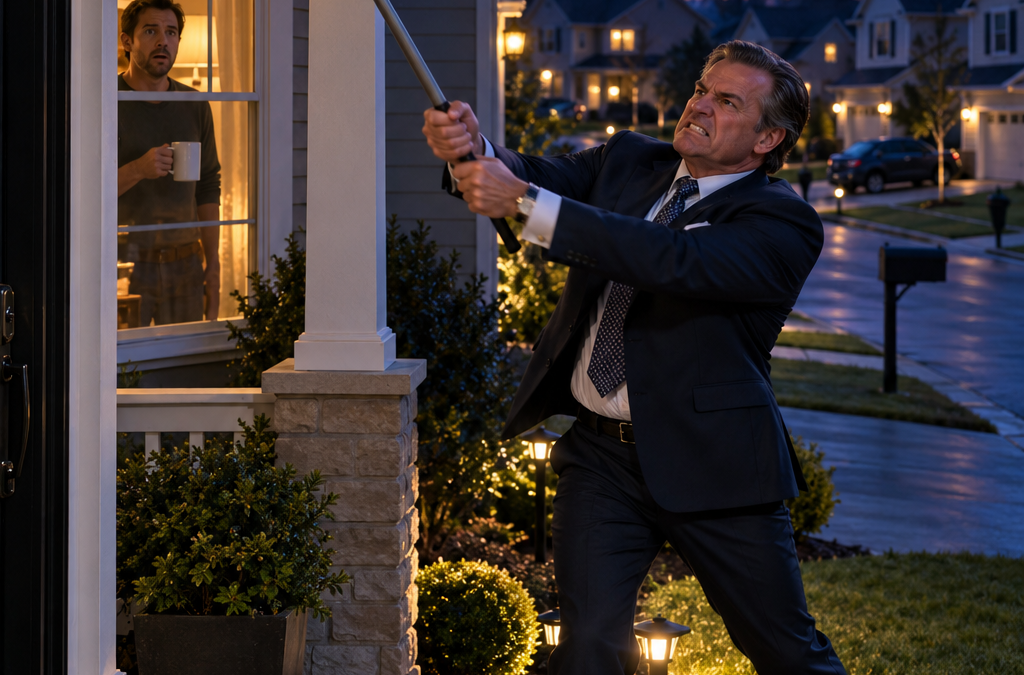
A retired teacher named Marlene who had paid repeated fines over driveway stains.
And a young couple, the Nguyens, who had been threatened over a backyard shed that had already received prior approval.
One shared attorney.
One shared folder.
One growing set of records.
Suddenly, Karen wasn’t dealing with one irritated homeowner.
He was dealing with a documented pattern.
Priya filed the complaint.
It alleged selective enforcement, improper lien threats, failure to produce records, questionable self-dealing through vendor payments, and governance irregularities involving variance approvals.
Karen received notice.
For two days, nothing happened.
Then the fines stopped.
No letters.
No emails.
No new notices.
I should have felt relieved.
I didn’t.
Silence from Karen felt like the silence before a storm.
Denise felt it too.
“He’s planning something,” she said over the fence one evening.
“Maybe his attorney told him to shut up.”
She shook her head.
“Karen doesn’t shut up because someone tells him to.”
I looked toward my porch camera.
“Priya said to keep recording.”
“Good.”
The camera became a strange comfort.
Every time I came home, I saw its little status light above the porch.
It watched the front steps, the driveway, the place where Karen had stood arguing about privacy.
It wasn’t dramatic.
It wasn’t large.
But it meant that if someone came to my house, I wouldn’t have to rely only on my word.
That mattered more than ever.
At 5:52 a.m. on a Wednesday, my phone buzzed.
I was in the kitchen, pouring coffee.
The security app had sent a motion alert.
I opened the live feed.
The image showed my front porch in pale blue dawn light.
At first, I saw nothing.
Then Karen Whitfield walked into frame.
He wore a white visor, a dark windbreaker, khaki pants, and gloves.
In his hands was a long metal pole.
I stopped breathing.
The coffee mug was still in my left hand.
Steam rose toward my face.
Karen looked directly at the camera.
For a few seconds, he stood still.
Then he stepped closer.
His mouth moved.
The camera’s audio picked up his voice.
“No more evidence.”
He raised the pole.
I set the coffee down so fast it spilled across the counter.
“Karen, don’t,” I said uselessly to the phone.
He swung.
The pole cracked against the camera housing.
The image shook violently.
Plastic snapped.
The lens fractured into a spiderweb blur.
Karen swung again.
The audio caught the scrape of metal, the sharp impact, and his breathing.
Then he hissed, “Let’s see you record now.”
The video feed cut to static.
For three seconds, I just stood there.
Then I remembered.
Cloud storage.
The camera uploaded footage continuously.
Karen had not destroyed the evidence.
He had created the cleanest piece of evidence in the entire case.
I called Priya.
She answered groggily.
“Marcus?”
“He smashed the camera.”
A pause.
“What?”
“Karen. Six minutes ago. With a metal pole. I watched it live.”
“Are you safe?”
“Yes. I’m inside.”
“Is he still there?”
I checked through the side window.
Karen was walking down the driveway.
The metal pole rested against his shoulder like he had just finished yard work.
“He’s leaving.”
“Do not confront him.”
“I won’t.”
“Download the footage immediately. Save multiple copies. Send it to me. Then call the police nonemergency line and report property damage.”
I looked at the cracked camera hanging outside.
“He said no more evidence.”
Priya was silent for a moment.
Then she said, “He just gave us Exhibit A.”
I downloaded the video.
The file was crisp, timestamped, and painfully clear.
Karen’s face.
The pole.
The words.
The impact.
I saved it to my computer, an external drive, and cloud backup.
Then I called the police and filed a report.
An officer came to the house later that morning.
He examined the broken camera, watched the footage, and took my statement.
“Do you know this man?” he asked.
“Yes.”
“Relationship?”
“HOA president.”
The officer looked at the screen again.
“He’s the HOA president?”
“Yes.”
“And he came here at six in the morning to destroy your camera?”
“That’s what the video shows.”
He gave me a look that said he had seen many stupid decisions in his career, but this one had earned a place near the top.
“Do you know why?”
“He’s under investigation for HOA-related issues. My camera recorded my porch.”
The officer nodded slowly.
“We’ll document it.”
That afternoon, Priya called with a new detail.
“The pole matters.”
“What do you mean?”
“Denise spoke with someone on the maintenance committee. The pole appears to be from the HOA maintenance shed.”
I frowned.
“How would they know?”
“Because tools are logged out for common-area work.”
I sat up.
“Don’t tell me.”
“Logged out under Karen’s name this morning.”
I closed my eyes.
Motive.
Means.
Video.
Timestamp.
Tool record.
Karen hadn’t just destroyed private property.
He had used association property to do it.
A man under investigation for misusing HOA authority had taken an HOA maintenance tool, walked to my porch, and smashed the device collecting evidence against him.
Even I knew how bad that looked.
Priya amended our filings.
She included the footage, the police report, the damage estimate, and the maintenance shed log.
She also sent the material to the state oversight division and the county investigator already reviewing the financial allegations.
Karen had handed us exactly what we needed.
Proof that his retaliation wasn’t theoretical.
It was physical.
The emergency board meeting was called three days later.
The clubhouse was packed.
Not the usual twelve people.
Nearly sixty residents filled the chairs, lined the walls, and stood in the hallway.
Word of the video had spread.
So had the financial records.
Karen sat at the front table with the remaining board members.
He wore a navy blazer and no visor.
For once, the sunglasses were gone too.
His face was tense, and his mouth remained pressed into a hard line.
Priya sat beside me with her folder.
Denise sat on my other side.
“You okay?” she whispered.
“No.”
“Good. Means you’re human.”
Karen opened the meeting by calling for order.
His voice was controlled, but not as smooth as usual.
“As many of you know, certain accusations have been circulating concerning HOA governance.”
Someone from the back said, “You mean the video?”
A few people murmured.
Karen ignored it.
“I want to remind everyone that this association cannot function if residents engage in harassment, misinformation, and personal attacks against board leadership.”
Denise leaned toward me.
“He’s really trying it.”
Priya whispered, “Let him talk.”
Karen continued.
“Recent events have been misrepresented. Certain residents have weaponized partial documents—”
A board member named Alan Brooks interrupted.
“Karen, we need to address the camera.”
Karen turned slowly.
“That matter is being handled.”
Alan looked exhausted.
“By whom?”
Karen’s face tightened.
“The appropriate parties.”
Another board member, Linda Park, spoke.
“We’ve all seen the footage.”
The room went quiet.
Karen’s eyes flashed.
“That video lacks context.”
I couldn’t help myself.
“What context makes smashing my camera at six in the morning acceptable?”
The room erupted.
Karen struck the table with his palm.
“Order.”
But the word no longer worked like it used to.
People kept talking.
Linda raised her voice.
“Enough. Let him play it.”
Karen turned toward her.
“Absolutely not.”
Priya stood.
“My client is prepared to provide the footage to the board as part of this meeting.”
Karen’s jaw clenched.
“This is theatrics.”
Priya looked at him calmly.
“It is evidence.”
The room quieted again.
A projector was set up.
My hands were cold as Priya connected the file.
The screen at the front of the clubhouse lit up.
My porch appeared.
Dawn light.
Stillness.
Then Karen entered the frame with the pole.
A collective gasp moved through the room.
The audio played clearly.
“No more evidence.”
Then the swing.
The crack.
The second hit.
“Let’s see you record now.”
The video ended.
Nobody spoke.
Then someone said, “Play it again.”
Priya looked toward the board.
Linda nodded.
It played again.
This time, people watched Karen instead of the broken camera.
They saw the gloves.
The pole.
The deliberate movement.
The words.
When it ended, Karen looked smaller.
Not physically.
But the authority he had carried for years had drained from him.
Alan turned to him.
“Did you do this?”
Karen’s face reddened.
“I acted under extreme provocation.”
A woman in the audience laughed bitterly.
“From a camera?”
Karen pointed toward me.
“That camera was part of a campaign of harassment.”
“It faced my porch,” I said.
“You were using it to intimidate board leadership.”
“I was using it to see who came to my door.”
He leaned forward.
“You have been poisoning this community.”
Denise stood.
“No, Karen. You have.”
The room shifted toward her.
Denise held up a packet.
“This is the fence variance for your son. Approved unanimously with only you present.”
She placed it on the table.
Marlene stood next.
“These are my driveway stain fines. Three notices after I paid for professional cleaning.”
The Nguyens stood.
“This is our shed approval from 2021. You fined us anyway.”
Another neighbor held up a printout.
“These are payments from HOA dues to your landscaping company.”
Someone else read from a statement.
“Emergency common-area maintenance, $3,800.”
Another resident.
“Seasonal refresh, $2,450.”
Mr. Okafor, who had come with Denise, stood slowly.
His voice was quiet, but the room heard every word.
“I reviewed the available financial records. The payments to Whitfield Landscape Solutions require explanation, particularly in light of the lack of documented competitive bids and conflict disclosures.”
Karen pointed at him.
“You had no authority to review those records.”
Mr. Okafor adjusted his glasses.
“Homeowners have a right to understand how their dues are spent.”
Karen looked toward the board.
“This meeting has become a mob proceeding.”
Linda looked at him sadly.
“No, Karen. It has become a board meeting.”
That sentence landed harder than anyone expected.
For years, Karen had been the board.
He spoke. Others nodded.
He fined. Others remained silent.
He approved. Others signed later, if at all.
But that night, the board finally remembered it existed.
Alan stood.
“I move that Karen Whitfield be removed as HOA president pending investigation into property destruction, selective enforcement, improper variance approvals, and financial conflicts.”
Karen shot to his feet.
“You cannot do that.”
Linda said, “Second.”
Karen turned toward her.
“Linda.”
She didn’t look away.
“No.”
The vote began.
Alan: yes.
Linda: yes.
Board member Teresa: yes.
Board member Mark: yes.
Board member Harold: yes.
Every remaining board member voted to remove him.
Unanimous.
The same word Karen had used for his son’s fence.
Only this time, it was real.
Karen stood at the front of the room, breathing hard.
His hands curled into fists.
“You will regret this,” he said.
Alan answered quietly.
“I regret not doing it sooner.”
Karen gathered his papers and left the clubhouse.
Nobody followed.
Nobody apologized.
Nobody asked him to reconsider.
For the first time since I moved to Willow Creek, Karen Whitfield walked out of a room without taking the neighborhood with him.
The consequences came in layers.
First, the board formally suspended all enforcement actions connected to Karen’s disputed notices, including my grass and mailbox fines.
Then they turned over financial records to the county investigator.
The state oversight complaint moved forward.
Priya filed the civil suit on behalf of our group of homeowners, citing selective enforcement, improper lien threats, retaliation, property damage, and financial misconduct concerns.
The police report for the camera damage proceeded separately.
Karen attempted to downplay it.
His attorney argued that the matter was a neighborhood dispute blown out of proportion.
The video made that argument difficult.
So did the maintenance shed log showing the pole checked out under Karen’s name.
So did the audio.
“No more evidence.”
Those three words destroyed every claim that the swing had been accidental.
The small claims portion of my case moved faster than the broader financial inquiry.
The damaged camera system had cost far less than $5,000 on its own, but Priya included replacement costs, installation, related expenses, filing costs, and attorney time recoverable under the circumstances.
The court also considered the intentional nature of the damage.
Karen sat across the courtroom from me in a suit and no visor.
He looked older than fifty now.
Not frail.
Just stripped of the confident shine that had made him seem untouchable.
The judge watched the footage once.
Then again.
Karen’s attorney tried to suggest that the camera had been recording HOA-related activity in a way that made Karen feel harassed.
The judge asked one question.
“Was the camera mounted on Mr. Reyes’s property and facing his own porch?”
“Yes, Your Honor,” Karen’s attorney said.
“And did your client strike it with a pole?”
A pause.
“The video appears to show that.”
The judge looked unimpressed.
“It does more than appear to show it.”
I sat silently beside Priya.
My hands were folded tightly in my lap.
I had imagined that moment for months, but it didn’t feel triumphant.
It felt strange.
The man who had once threatened a lien against my house now had to answer for the object he had broken with his own hands.
No clipboard.
No board title.
No ability to declare the facts irrelevant.
Just evidence.
The judgment came down in my favor.
Karen was ordered to pay $5,000 in damages and associated costs tied to the willful destruction of property.
Five thousand dollars.
Six months earlier, he had sent me fines for grass and a mailbox.
Now he owed me money.
The irony was not lost on anyone.
Denise texted me after the ruling.
Karma files paperwork.
I laughed for the first time that day.
The broader HOA investigation continued.
County officials examined vendor payments to Whitfield Landscape Solutions.
They requested invoices, board approvals, contracts, and documentation showing what work had actually been performed.
Some payments appeared to correspond to common-area work.
Others were harder to explain.
Karen suddenly needed to produce records he had spent years telling everyone else were not their concern.
The new board cooperated with investigators.
Independent accountants reviewed the HOA books.
Residents received updates at open meetings.
It was messy, slow, and uncomfortable.
But it was real.
No more secret rubber stamps.
No more missing records.
No more one-man approvals.
The neighborhood had to confront what it had allowed Karen to become.
That was not easy.
Some residents were angry at him.
Others were angry at themselves.
A few wanted to pretend the whole thing had been exaggerated and move on.
But the majority wanted transparency.
They wanted to know how much money had gone to Karen’s company.
They wanted to know which fines had been valid.
They wanted to know why board members had failed to stop him sooner.
Those questions did not have quick answers.
But at least they were finally being asked.
My own life gradually quieted down.
The lien threat disappeared.
My fines were reversed.
The mailbox issue was dropped after the board realized half the neighborhood had similar mailboxes, including Karen.
The grass-height standard was rewritten with a warning period and clearer procedures.
Camera guidelines were clarified.
Homeowners were allowed to install security cameras facing their own property, as long as they did not intentionally invade a neighbor’s privacy.
A rule that should have been obvious now existed in writing because Karen had made obvious things difficult.
I replaced the camera the week after the court ruling.
The new one was slightly better than the old one.
Sharper lens.
Wider dynamic range.
Better night vision.
When I mounted it above the porch, Denise walked over with two cups of coffee.
“Need a security detail?” she asked.
“Only if Karen has another pole.”
She smiled.
“Too soon?”
“No. Perfect timing.”
We stood on the front walk looking up at the new camera.
It blinked once as it connected.
“Think it’ll catch anything interesting?” she asked.
“I hope not.”
And it didn’t.
Not another crime.
Not another early-morning attack.
Mostly delivery drivers, squirrels, neighbors walking dogs, and me forgetting packages on the porch.
It became what it should have been from the beginning.
A simple camera on a simple house.
Not a battlefield.
Months later, the clubhouse held another meeting.
This one was different.
No tension in the air.
No Karen at the front table.
No residents afraid to ask questions.
The new acting president, Linda Park, presented financial updates and explained the audit process.
Denise showed proposed reforms to variance approvals.
Mr. Okafor volunteered to join a temporary finance review committee.
I mostly sat in the back and listened.
At one point, Linda thanked the residents who had come forward with documents.
She didn’t name me directly, but several people turned to look.
I felt uncomfortable.
I hadn’t set out to save Willow Creek.
I had set out to stop a man from threatening my house over grass.
But sometimes a small fight opens a larger door.
After the meeting, a retired man named Paul approached me.
“I should have said something sooner,” he said.
I didn’t know what he meant.
He looked down.
“Karen fined my wife before she died. Said her garden flags were excessive. She loved those flags.”
I swallowed.
“I’m sorry.”
“I paid because she was sick and I didn’t want trouble.”
He looked toward the front of the clubhouse.
“He counted on that.”
I nodded.
“Yes. He did.”
That was the truth of Karen Whitfield.
He counted on people being tired.
Embarrassed.
Busy.
Grieving.
Sick.
New to the neighborhood.
Too polite.
Too broke.
Too overwhelmed.
He counted on everyone deciding it was easier to pay than fight.
For a long time, he was right.
Until he chose the wrong camera.
Or maybe the wrong group of neighbors.
Or maybe he simply pushed too far, too often, for too long.
Willow Creek was never perfect.
No neighborhood is.
But after Karen, it became more honest.
Rules still existed.
People still argued about landscaping.
There were still budget debates and irritated emails about pool hours.
But the difference was accountability.
A board vote had to be a board vote.
A variance had to be recorded properly.
A fine had to cite an actual rule.
A vendor payment had to have documentation.
And no president could tell a resident, “Facts don’t run this board,” without being reminded that facts were the only things that made board authority legitimate.
I kept the original cracked camera.
For a while, it sat in a cardboard box in my garage.
I meant to throw it away after the case ended, but every time I picked it up, I changed my mind.
One Saturday morning, I took it out and placed it on my workbench.
The lens was fractured.
The plastic housing had split where the pole struck it.
A small piece rattled inside when I moved it.
It looked pathetic.
But it had done its job.
It recorded the truth long enough to survive its own destruction.
I eventually wrote the date on a strip of masking tape and stuck it to the side.
Then I placed it on a shelf above my toolbox.
Not as a trophy.
As a reminder.
Documentation matters.
People like Karen thrive in gaps.
No witnesses.
No records.
No receipts.
No one willing to compare one rule to another.
He had built his power in those gaps.
The camera closed one.
The financial records closed another.
The meeting minutes closed a third.
By the time we were done, there was nowhere left for him to hide without leaving fingerprints.
A few months after the small claims judgment, I received the payment.
Five thousand dollars.
The check arrived in an envelope from Karen’s attorney.
I stood at my kitchen counter holding it, remembering the first fifty-dollar grass fine.
That fine had made me feel foolish.
The $1,200 lien threat had made me feel afraid.
The broken camera had made me furious.
The $5,000 check made me feel something quieter.
Confirmed.
Like the world had finally acknowledged that what happened was not normal, not acceptable, and not just neighborhood drama.
I deposited the money.
Then I used part of it to buy a better camera system, repair the porch trim, and replace some plants damaged when Karen swung the pole too close to the railing.
The rest I saved.
Denise insisted we celebrate.
She brought over tacos and two folding chairs.
We sat on my porch beneath the new camera, eating dinner while the sun went down.
“Think he’ll ever apologize?” she asked.
“No.”
“Think he understands what he did?”
I looked toward the street.
“I think he understands that it cost him.”
“That may be as close as we get.”
I smiled.
“Probably.”
She raised her drink.
“To receipts.”
I raised mine.
“To cloud storage.”
We laughed.
For once, the laughter didn’t feel nervous.
It felt free.
I still see Karen sometimes.
He hasn’t moved, at least not yet.
His house remains two blocks over, with the same black mailbox that started part of my case.
The visor is gone now.
So is the clipboard.
When he walks to his mailbox, he keeps his head down.
No measuring tape.
No slow patrols through the neighborhood.
No sudden appearances in driveways.
He looks like any other man living in a community he no longer controls.
That may be the most satisfying consequence of all.
Not the money.
Not even the removal vote.
The ordinary smallness of him afterward.
Power had made him seem larger than he was.
Once that power was gone, he was just a man who had made very bad decisions and left a record of them.
One evening, not long after the final audit update, I stood outside adjusting the porch light.
The new board had clarified approved bulb temperatures.
Mine complied.
I checked anyway out of habit.
Denise walked by with her dog.
“You know you don’t have to live like Karen’s still watching,” she said.
I looked at the bulb.
“I know.”
“Do you?”
I paused.
Then I climbed down from the step stool.
“Getting there.”
She nodded.
“That’s fair.”
Healing from an HOA tyrant sounds dramatic when you say it out loud.
But living under constant threat changes small habits.
You check the mailbox differently.
You tense when an unfamiliar car slows down.
You save receipts for things nobody should question.
You photograph your own lawn after mowing.
It takes time to stop expecting punishment for existing in your own house.
But slowly, Willow Creek became home again.
Not the illusion of peace I had bought into at the beginning.
A better kind.
Peace with knowledge behind it.
Peace with neighbors who talked to one another.
Peace with records, votes, transparency, and enough shared memory to recognize the warning signs if another Karen ever tried to rise.
One Saturday afternoon, I finally planted the raised garden beds in the backyard.
That had been my original plan when I moved in.
Tomatoes, peppers, basil, and a few herbs I would probably forget to water properly.
Denise came over to supervise because she didn’t trust my spacing.
“You’re a systems analyst,” she said. “You should understand layout.”
“I understand logistics software. Plants are emotional.”
She laughed.
While we worked, I looked toward the front of the house.
The porch camera was visible from the side yard.
Small. Quiet. Functional.
It had never caught another crime.
And I hoped it never would.
But if it had to, it would be ready.
The funny thing is, Karen had been right about one thing.
Evidence did change everything.
He just thought evidence was something he could destroy with a pole.
He forgot that evidence can multiply.
It can upload.
It can be copied.
It can sit in folders, spreadsheets, emails, minutes, logs, and financial statements.
It can wait patiently while powerful people insist they are untouchable.
And when the time comes, it can speak with more authority than any clipboard.
Six months after Karen broke the camera, I stood on my porch with a new cup of coffee, watching the sun rise over Willow Creek.
The street was quiet.
A delivery van moved slowly past.
A jogger waved.
Somewhere down the block, a garage door opened.
Nothing dramatic happened.
No pole.
No visor.
No threats.
Just morning.
My phone buzzed with a security notification.
Motion detected.
I opened it.
A squirrel had jumped onto the porch railing.
It stared directly into the camera as if challenging the system.
I laughed and saved the clip for Denise.
Then I looked at the cracked camera on the garage shelf through the open side door.
For a second, I remembered the sound of the pole striking plastic.
Karen’s voice.
“No more evidence.”
I smiled.
Because in the end, evidence was exactly what remained.
Every fine.
Every timestamp.
Every mailbox photo.
Every meeting minute.
Every payment to his company.
Every second of that 6:00 a.m. video.
Karen Whitfield had spent years teaching Willow Creek residents to fear paper.
Letters. Notices. Fines. Threats. Liens.
He forgot that paper could work both ways.
So could video.
So could law.
He smashed my camera because he thought that would end the story.
Instead, it became the moment the whole neighborhood finally saw him clearly.
He lost the board.
He lost in court.
He had to explain his company’s reimbursements to county investigators.
And he had to write me a $5,000 check for the camera he broke while trying to hide the truth.
As for me, I still live in the same house.
The grass is cut.
The mailbox is black.
The camera is mounted above the porch.
And every time I walk past it, I remember the lesson Karen Whitfield never learned.
Karma does not always arrive loudly.
Sometimes it uploads quietly to the cloud, saves itself in duplicate, and waits for the right courtroom to press play.








