𝗙𝗨𝗟𝗟 𝗦𝗧𝗢𝗥𝗬 The HOA President Put a $10,000 Lien on My Grandfather’s Texas Farm and Gave Me 30 Days to Save It
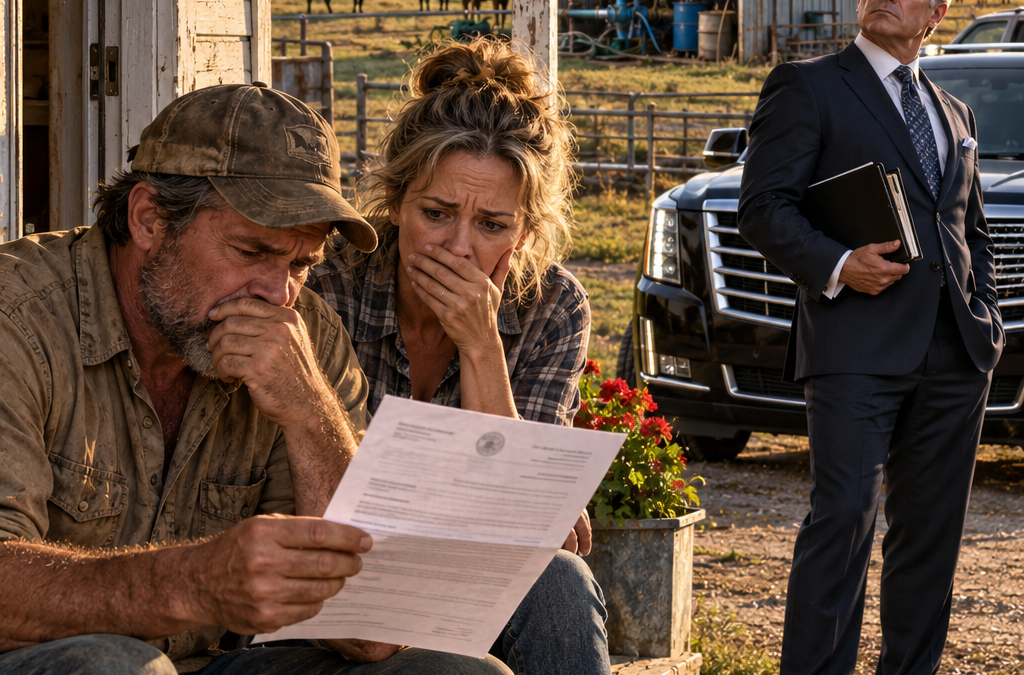
𝗙𝗨𝗟𝗟 𝗦𝗧𝗢𝗥𝗬
He smiled as though I had told a charming story about the old days.
“History is important, Edwards. But it doesn’t excuse noncompliance.”
I stared at him.
“The farm was grandfathered before the subdivision was developed. The recorded agricultural exemptions and property documents are clear.”
His expression hardened.
“That’s your interpretation.”
“No. That’s what the records say.”
He stepped closer.
“The neighborhood has standards. Everyone is expected to follow them.”
“Everyone inside the area those standards legally cover.”
He tilted his head.
“You’re trying to be difficult.”
“I’m trying to understand why you’re photographing my tank.”
“Because it violates Section Twelve.”
I crossed my arms.
“Dane, my grandfather put that tank there forty years ago. It meets the farm’s operating requirements. It isn’t leaking. It’s properly maintained. And it sits on land that was never placed under your association’s ordinary residential appearance restrictions.”
He looked at the tank again.
Then at me.
“You’re going to remove it.”
I almost laughed.
“No, I’m not.”
His eyes narrowed.
“Excuse me?”
“I’m not removing a working agricultural tank because somebody in a neighboring subdivision doesn’t like looking at it.”
His jaw tightened.
“You need to be careful how you speak to an association officer.”
I took a slow breath.
“You’re standing on my farm.”
He looked offended.
“I have a responsibility to protect community standards.”
“And I have a responsibility to maintain my agricultural property.”
For several seconds, we stared at each other.
Then he raised his phone and took another photograph.
“Consider this your verbal warning.”
I shook my head.
“Consider this my request that you leave.”
His lips compressed.
He straightened his silk tie.
Then he walked back to his SUV.
Before climbing in, he turned.
“You’ll receive formal notice.”
I watched him drive away, dust rising behind his expensive vehicle.
Then I looked at the tank.
It stood exactly as it had that morning.
Quiet.
Functional.
Unremarkable.
I honestly believed the confrontation was over.
I was wrong.
By Friday, the first violation notice was taped to my mailbox.
Not mailed.
Not handed to me.
Taped prominently to the outside where anyone driving past could read it.
At the top was the HOA seal.
Beneath it, in bold lettering:
SECTION 12 — UNAUTHORIZED UNSIGHTLY AGRICULTURAL STRUCTURE.
The notice demanded removal of the fertilizer tank.
Failure to comply would result in a penalty of two hundred dollars per day.
I stared at the page.
Two hundred dollars.
Every day.
For a tank my grandfather had installed when Dane Foster was still a child.
I went inside and pulled out the recorded property documents.
The farm’s legal description was unchanged.
The subdivision’s governing documents were in another folder from when the surrounding development was created.
There were limited arrangements concerning certain shared boundary matters, but nothing giving the HOA sweeping aesthetic control over working agricultural structures on my grandfather’s preexisting farm.
The agricultural exclusion had been expressly preserved.
I read it again.
Then I called the management office.
A secretary named Elaine answered.
“I’m calling about a violation notice,” I said.
She asked for my property information.
After several moments of typing, she found the entry.
“Yes, Mr. Edwards. The board has identified a noncompliant structure.”
“The structure is exempt.”
She hesitated.
“Mr. Foster reviewed the violation.”
“Did he review the recorded exemption?”
“I’m not sure.”
“Then I’d like a copy of whatever document supposedly gives your board authority over that tank.”
“I can submit a request.”
“Please do.”
I ended the call.
That evening, my wife read the notice over dinner.
“Two hundred dollars a day?”
“That’s what it says.”
“Can they do that?”
“They can print whatever they want on paper. That doesn’t make it enforceable.”
She looked concerned.
“Maybe we should have somebody review it.”
“I already checked the records.”
She studied my face.
“You’re angry.”
“A little.”
“Just don’t let this become a war.”
I reached across the table and squeezed her hand.
“It won’t.”
I believed that.
At the time.
The next week, another notice arrived.
Fourteen hundred dollars in alleged accumulated penalties.
A week later, the balance increased again.
Every envelope included language warning about continued noncompliance and additional enforcement action.
I called the office twice more.
Requested the applicable rule.
Explained the agricultural exemption.
Asked for a board hearing.
Nothing changed.
Instead, Dane began mentioning my property in the association newsletter.
The first reference was indirect.
The board is currently addressing an ongoing agricultural eyesore near the community boundary.
The second was not.
It identified my surname and described me as a property owner refusing to comply with reasonable neighborhood standards.
The newsletter was delivered to hundreds of houses.
I found out when Patrick Henson, who lived near the subdivision entrance, stopped beside my gate one afternoon.
“Edwards, what did you do to make Foster so mad?”
I looked at him.
“What?”
He held up the newsletter.
“He’s got your name all over this thing.”
I took it.
There it was.
My name.
My farm.
My supposedly offensive tank.
Presented as an example of why strict HOA leadership was necessary.
I felt my face grow hot.
“He printed this?”
Patrick nodded.
“Everybody got one.”
I looked down at the page.
Dane had taken a dispute over his authority and turned it into a public accusation against me.
He wanted the neighbors to see me as the problem.
He wanted embarrassment to do what his notices hadn’t accomplished.
Patrick scratched his chin.
“That tank’s been there forever, hasn’t it?”
“Forty years.”
He laughed without humor.
“Foster moved here about eight years ago.”
“Apparently that makes him an expert on the farm.”
Patrick looked toward the subdivision.
“Be careful. He does this to people.”
“What do you mean?”
He hesitated.
Then lowered his voice.
“My wife and I paid six hundred dollars in landscaping fines last year. Every time we challenged one, another arrived. Eventually, we paid just to make him stop.”
I stared at him.
“Did you appeal?”
“Twice.”
“What happened?”
“Foster chaired the hearing both times.”
That conversation stayed with me.
I had thought I was dealing with a single unreasonable demand.
Now I began wondering how many other families had quietly surrendered because fighting cost more than paying.
I started documenting everything.
Every letter.
Every envelope.
Every fine.
Every newsletter.
I took dated photographs of the tank from multiple angles, showing its condition, location, containment, maintenance access, and distance from the subdivision.
I copied the agricultural property records.
I created a timeline of Dane’s visits and communications.
Then I placed everything in a thick folder.
Across the front, I wrote two words.
KAREN FILES.
It was partly a joke.
Partly a way to keep from losing my temper.
But the folder quickly became the most important thing on my desk.
Over the following weeks, I learned more about Dane’s enforcement habits.
His own backyard contained a large decorative shed that appeared to violate three of the restrictions he’d used against other residents.
It was too close to one boundary under the HOA’s stated standards.
Its exterior finish didn’t match the approved palette.
And an unapproved extension projected beyond the structure’s original footprint.
I photographed what could be seen lawfully from the street and compared it with the same provisions cited against neighbors.
No violation notice appeared against him.
Meanwhile, an elderly homeowner named Mrs. Alvarez told me she’d been fined for a storage bench on her patio.
Another neighbor had been penalized because her decorative fence was an inch taller than the approved height.
A retired couple had paid hundreds of dollars over garden edging Dane considered inappropriate.
The pattern wasn’t subtle.
People who cooperated with him received flexibility.
People who questioned him received penalties.
And people who challenged him openly found themselves under constant scrutiny.
One afternoon, Mrs. Alvarez came to the farm with a small container of homemade tamales.
She had lived in Willowbrook Meadows since shortly after the subdivision opened.
She was in her seventies, with silver hair and hands that showed the wear of a lifetime of work.
We sat on the porch while she told me what she’d experienced.
“That man likes people afraid of him,” she said.
I nodded.
“That’s becoming obvious.”
She looked toward the road.
“When my husband was alive, Foster didn’t bother us much. After he passed, I started getting notices.”
“For what?”
“Flowers too close to the sidewalk. A patio chair visible from the street. One time he said my garden hose was improperly stored.”
I shook my head.
“A garden hose?”
She nodded.
“Forty dollars.”
I looked down at my coffee.
Then she leaned closer.
“There’s something else.”
I waited.
“People say he’s been using association money for his own landscaping.”
I looked up.
“Who says that?”
“A few people who noticed the reserve account getting smaller.”
“Do they have proof?”
She shook her head.
“Not that I’ve seen.”
“Then we need to be careful.”
“I know.”
Her expression grew serious.
“But I’ve seen his backyard. New stone walkways. Expensive rose beds. A whole new irrigation system.”
“That doesn’t prove he used HOA money.”
“No,” she said. “It doesn’t.”
She looked at me.
“But I wouldn’t be surprised.”
I didn’t add the rumor to my formal complaints as a fact.
I wrote down what she’d told me and kept it separate from verified evidence.
At that point, I still believed the main problem was selective enforcement.
I had no idea how much more serious the financial questions would become.
By the end of the second month, the alleged fines had passed three thousand dollars.
I prepared a formal appeal.
Not a two-sentence complaint.
A complete package.
I cited the recorded agricultural exemption, the farm’s preexisting use, the legal description, and the absence of authority for the HOA’s aesthetic demand.
I included photographs, maintenance records, and the original documentation establishing the property’s status before Willowbrook Meadows was formed.
I delivered the appeal to the association office and asked for confirmation of receipt.
Elaine stamped it.
I watched the clock as I walked back to my truck.
Twelve minutes later, my phone buzzed.
An email.
APPEAL DENIED.
The message came from Dane Foster.
It contained no analysis of the documents.
No explanation of the agricultural exemption.
No discussion of the tank’s history.
Just a declaration that the board’s enforcement decision remained valid and the penalties would continue.
I stared at the screen.
Twelve minutes.
He had supposedly reviewed more than thirty pages of records, photographs, and legal descriptions in twelve minutes.
I called Elaine.
“Did the board hold a meeting?”
She sounded uncomfortable.
“Mr. Foster reviewed your submission.”
“Did anybody else review it?”
“I’m not authorized to discuss the internal process.”
“Then how could it be a board decision?”
She sighed.
“Mr. Edwards, I don’t know what else to tell you.”
I thanked her.
Hung up.
And placed the rejection in the Karen Files.
That evening, my wife found me at the kitchen table surrounded by papers.
“How bad?”
“Three thousand and growing.”
She sat across from me.
“Maybe we should stop trying to handle this ourselves.”
I rubbed my face.
“I thought the appeal would settle it.”
“You thought showing him the rules would make him follow them.”
I looked at her.
She wasn’t criticizing me.
She was stating something I’d been too stubborn to accept.
Dane wasn’t misunderstanding the rules.
He was using them selectively because he believed he could.
I nodded slowly.
“You’re right.”
A few days later, another letter arrived.
This one threatened a lien if I failed to pay the disputed balance and comply with the tank-removal demand.
That word changed everything.
Lien.
An HOA fine was irritating.
A threatened claim against the farm’s title was something else entirely.
I called the county assessor’s office and asked where I could obtain official confirmation of the property’s agricultural status and the relevant recorded restrictions.
The employee directed me to the appropriate property records and agricultural-use documentation.
I submitted a written request.
Several days later, I received the response.
The county records confirmed the farm’s longstanding agricultural classification and the historical exclusion applicable to its existing working agricultural structures. The recorded documents did not place the tank under the ordinary aesthetic authority Dane was asserting.
The assessor’s office wasn’t issuing a court judgment about the entire HOA dispute.
But the written confirmation strongly supported the position I’d been making from the beginning.
I held that letter in my hands for a long time.
Then I placed it in the folder.
I thought Dane might finally listen if the evidence came from an official county office.
At the next HOA meeting, I intended to give him one last opportunity to correct the problem.
The clubhouse was crowded that Thursday evening.
Willowbrook Meadows had one of those oversized community buildings designed to make ordinary board meetings look like corporate events.
Polished floors.
Leather chairs.
Framed photographs of landscaped entrances.
A long conference table beneath expensive lighting.
Dane sat at the head, wearing a charcoal suit, a pale blue silk tie, and a white pocket square.
His hair was perfectly slicked back.
A heavy watch rested beside his leather portfolio.
He looked more like a luxury hotel executive than a man who spent his free time harassing farmers over storage tanks.
I sat near the middle of the room.
When public comments began, I stood.
“My name is Edwards. I own the agricultural property along the western boundary.”
Dane looked at me.
His expression changed immediately.
“Yes. We’re familiar with your ongoing noncompliance.”
I held up the county letter.
“I’m here to provide written confirmation of the agricultural exemption.”
He leaned back.
“We’ve already reviewed your claims.”
“You rejected my appeal twelve minutes after I submitted it.”
Several people turned toward him.
His smile tightened.
“The board is efficient.”
I placed the letter on the table.
“The county records confirm that the tank falls within the farm’s established agricultural status and that your residential aesthetic restrictions don’t apply to it.”
He didn’t touch the document.
Instead, he folded his arms.
“Mr. Edwards, you’re attempting to intimidate this board with outside correspondence.”
I stared at him.
“Intimidate?”
“Yes.”
“I’m asking you to review a public record.”
He raised his voice.
“You’re challenging our authority in front of the entire community.”
I looked around the room.
People were watching.
Some seemed uncomfortable.
Others appeared curious.
I kept my voice even.
“Your authority has limits. That’s not intimidation. That’s how recorded property restrictions work.”
Dane’s face reddened.
“Do not lecture me about governance.”
“I’m not lecturing you.”
“Then sit down.”
I took a breath.
“Will you read the letter?”
He slapped one palm against the table.
“This behavior is exactly why enforcement is necessary!”
Several people flinched.
I stood still.
Dane pointed toward me.
“You’re disrupting an official meeting. You’re attempting to pressure board members. And you’re refusing to respect this community’s standards.”
I could feel my heartbeat pounding.
But I didn’t raise my voice.
“I brought evidence. That’s all.”
He turned toward Elaine.
“Please record that Mr. Edwards became confrontational during the hearing.”
I stared at him.
“That’s not what happened.”
He leaned toward the microphone.
“Let the minutes reflect that the board was subjected to aggressive behavior.”
The room became quiet.
I looked toward the other directors.
Nobody challenged him.
One woman stared down at her papers.
Another shifted uncomfortably.
I realized then that Dane didn’t simply control the board through confidence.
He controlled it through fear.
The meeting minutes could become another weapon.
If I argued, he’d call me threatening.
If I stayed silent, he’d say I had no evidence.
He had created a situation where every response seemed to strengthen his story.
I picked up the county letter.
“Please include this in the meeting record.”
Dane looked at me with open contempt.
“Your comments are concluded.”
I returned to my seat.
The meeting continued.
But I barely heard another word.
I kept thinking about the board members who had watched him distort the exchange without speaking up.
When I left, Mrs. Alvarez caught me near the parking lot.
“You didn’t shout.”
I looked at her.
“I know.”
“I was sitting right behind you. You never raised your voice.”
I gave a tired smile.
“Then perhaps you’ll remember that if anyone asks.”
She took my hand.
“I will.”
I drove home feeling defeated.
I’d spent weeks gathering records.
I’d obtained written county confirmation.
I’d followed the HOA’s appeal procedure.
I’d attended the meeting respectfully.
And Dane had turned the entire thing into another accusation.
For the first time, I wondered whether any amount of documentation would be enough.
That night, someone slipped an envelope beneath my front door.
There was no return address.
No note.
Just several folded pages.
I discovered it shortly before ten, after my wife had gone upstairs.
At first, I assumed it was another HOA notice.
Then I opened it.
The pages were copies of bank statements and association accounting records.
Across one sheet, several transactions had been highlighted.
LANDSCAPING CONSULTANT — D. FOSTER.
The amounts varied.
The dates stretched backward.
Month after month.
Quarter after quarter.
For nearly two years.
I sat down slowly.
The records appeared to show repeated withdrawals and reimbursements from the HOA reserve account associated with a landscaping consultant identified as D. Foster.
I turned the pages.
There were payments far larger than the ordinary landscaping charges I remembered from the association budget.
Some entries were supported by vague descriptions.
Others contained references to consultant services without obvious project details.
I checked the account balances.
Then I checked the transaction dates again.
My hands began to shake.
Not because the documents conclusively proved a crime.
They didn’t.
I had no idea who had supplied them, whether they were complete, or what invoices might explain the payments.
But they raised serious questions.
Dane had spent months threatening me over a tank he had no authority to regulate.
Meanwhile, records that appeared to come from the association’s own bank showed substantial reserve funds flowing through transactions connected to his name.
I spread the statements across the kitchen table.
The same table where my grandfather had once sat calculating cattle feed expenses.
The same table where my wife and I had reviewed our farm budget during drought years.
I thought about Mrs. Alvarez.
Her whispered concerns.
The expensive landscaping behind Dane’s house.
The board members who had looked away when I challenged him.
And the fines imposed on ordinary residents who were too frightened to fight.
For the first time, I wondered whether the harassment was protecting something much larger than one man’s pride.
I didn’t sleep much that night.
In the morning, I contacted a lawyer.
His name was Thomas Callahan.
He practiced real estate litigation and had extensive experience with HOA disputes.
I brought him the Karen Files.
The folder was so thick that he raised an eyebrow when I placed it on his desk.
“How long has this been going on?”
“Almost six months.”
He opened the first section.
“Start at the beginning.”
I told him everything.
The tank.
Dane’s first inspection.
The invented Section Twelve violation.
The two-hundred-dollar daily penalties.
The selective enforcement.
The appeal rejected in twelve minutes.
The county letter.
The meeting where Dane accused me of intimidating the board.
Then I showed him the anonymous bank statements.
Thomas examined them carefully.
He didn’t smile.
He didn’t make a dramatic declaration.
He compared dates, descriptions, and amounts.
Then he looked at me.
“Where did these come from?”
“Somebody slipped them under my door.”
“Do you know who?”
“No.”
“Have you altered them?”
“No.”
He nodded.
“Good. Preserve the originals exactly as received.”
I leaned forward.
“What do they mean?”
“They raise serious concerns about association funds. But we need authenticated bank records, invoices, approvals, and other evidence before drawing final conclusions.”
I nodded.
“Could this be embezzlement?”
“If someone intentionally diverted association money for personal use, potentially. Depending on the amounts and applicable law, the consequences could be very serious.”
I stared at the statements.
“How serious?”
“Criminal charges. Restitution. Possibly imprisonment if the evidence establishes the relevant offenses.”
I sat back.
The room felt suddenly smaller.
I had come to him because somebody was threatening my farm over a fertilizer tank.
Now I was hearing that the same man’s financial conduct might require a criminal investigation.
Thomas closed the folder.
“We need to separate the issues. Your property rights are one matter. The association’s finances are another. We’ll handle both properly.”
I nodded.
“What about the lien threat?”
He opened the county letter.
“The agricultural exemption appears important. I want to verify the recorded documents myself, then address the association’s authority to impose these charges.”
“Can we stop him?”
“We can pursue relief if he acts unlawfully.”
He paused.
“But don’t confront him over the bank statements. Let the appropriate process establish what they are.”
I agreed.
For the first time in months, I felt there might be a way through the situation.
Then Dane acted before we could finish preparing our response.
Two days later, the county clerk’s office contacted me regarding a recording inquiry connected to my property.
I had previously asked to be informed of any unexpected filings affecting the farm, and the clerk’s representative confirmed that a lien instrument had been presented for recording.
The HOA claimed more than nine thousand dollars in accumulated violations and associated charges.
By the time its latest fees were included, the demand was ten thousand dollars.
The clerk explained that the office’s recording function did not decide whether the underlying debt was legally valid.
That question would have to be challenged through the proper process.
But the document was real.
The claim against my property was real.
And the accompanying HOA demand warned of foreclosure proceedings if the matter wasn’t resolved within thirty days.
That was the letter I’d been holding at my kitchen counter.
The one that made my wife sit down.
The one that finally forced me to imagine losing everything my grandfather had built.
I called Thomas immediately.
He asked me to send the lien instrument and every accompanying notice.
Then he said, “Don’t pay it just because they’re threatening you.”
I looked out toward the pasture.
“Can they take the farm?”
“A recorded lien can create a serious title problem, but recording a claim doesn’t establish that the debt is valid or make foreclosure automatic. We need to act promptly.”
“How promptly?”
“Immediately.”
I ended the call.
For several minutes, I sat staring at the wall.
Then I walked outside.
The evening sun was settling over the southern pasture.
The fertilizer tank stood beside the irrigation shed.
Behind it, the old barn cast a long shadow across the gravel.
I walked past the equipment and stopped near the fence my grandfather had built.
The wood was weathered.
Several posts leaned slightly.
But it was still standing.
I remembered helping him replace those posts after a summer storm when I was fourteen.
He’d been sixty-three then, stubborn as an old mule, still determined to lift heavy timbers without admitting he needed help.
“Don’t rush the holes,” he’d told me. “A fence only stays straight if the posts have something solid beneath them.”
I had complained that we were taking too long.
He’d laughed.
“Son, doing it right is usually cheaper than doing it twice.”
I stood there listening to the cattle moving through the grass.
Three generations had survived drought, falling cattle prices, equipment failures, and years when the bank account barely covered repairs.
Now a man who had never worked the land was threatening to take it because he disliked the appearance of a tank.
I felt anger.
Then fear.
Then something worse.
The terrible temptation to make the entire problem disappear by paying him.
My wife found me near the fence.
She stood beside me for a while without speaking.
Then she said, “What if we just pay it?”
I looked at her.
She was staring toward the farmhouse.
“We could use part of our savings. Take care of the balance. Get the lien removed. Maybe he’ll leave us alone.”
I understood why she was asking.
Ten thousand dollars would hurt us badly.
But losing the farm would destroy us.
I took her hand.
“He won’t stop.”
She looked at me.
“You don’t know that.”
“I do.”
“Edwards—”
“He fined me when I tried to comply. He fined me when I appealed. He threatened the property after the county confirmed the exemption. Now he’s filed a lien.”
I looked toward the tank.
“If we pay him this time, what happens when he decides the barn is ugly? Or the cattle fence? Or the irrigation equipment?”
She wiped at her eyes.
“I’m scared.”
I pulled her toward me.
“So am I.”
For a long time, we stood together beside the fence.
Then she whispered, “I can’t lose this place.”
I held her tighter.
“Neither can I.”
She looked up.
“What are we going to do?”
I thought about the Karen Files.
The county records.
The bank statements.
The neighbors who had quietly told me their stories.
Then I remembered my grandfather standing in that same field, telling me that a man needed solid ground beneath him.
I squeezed her hand.
“We’re going to fight it the right way.”
She nodded slowly.
“Even if it gets ugly?”
I looked toward the farmhouse.
“It already has.”
The next morning, I formally retained Thomas Callahan to represent me.
This time, there would be no more informal appeals that Dane could reject in twelve minutes.
No more arguing in a clubhouse while someone manipulated the meeting minutes.
No more paying invented fines in the hope that obedience would buy peace.
We would take the recorded documents to court.
And we would make the association prove every claim it had made against my land.
Thomas began by verifying the documents Dane had ignored for months.
He ordered certified copies of the recorded deed, the agricultural exclusions, the subdivision declaration, and every amendment affecting the boundary between the farm and Willowbrook Meadows.
He also reviewed the lien instrument to identify precisely what the HOA claimed I owed.
For two days, I waited while he worked.
Those were some of the longest days of my life.
Every time the phone rang, I expected more bad news.
Every time a truck slowed near the farm entrance, I found myself looking out the window.
I knew foreclosure didn’t happen merely because an HOA mailed a threatening notice. Thomas had explained that clearly.
But the lien was a cloud over my title, and the man who filed it had already demonstrated that he was willing to push beyond what the governing documents authorized.
On Wednesday afternoon, Thomas called.
“I’ve finished verifying the recorded property restrictions.”
I sat down at the kitchen table.
“And?”
“The agricultural exclusion is clear. The ordinary aesthetic provision Dane relied on does not extend to your grandfathered fertilizer tank.”
I closed my eyes.
“Then he had no right to fine me?”
“Based on these records, the association has no authority to impose those particular penalties. We’re challenging the entire assessment.”
I looked toward the window.
“What about the lien?”
“We’re asking the court to declare it invalid and order the appropriate release. We’re also seeking relief for the improper enforcement and documented harassment.”
For a moment, I couldn’t speak.
Thomas continued.
“Wilsonbrook’s president doesn’t get to expand his association’s jurisdiction merely by insisting that he can.”
I almost smiled.
It was the simplest description of everything Dane had done.
He had looked at my farm, decided the tank offended him, and behaved as though his opinion were a legally binding property restriction.
Thomas filed the civil action challenging the lien and the HOA’s enforcement conduct.
At the same time, he submitted the suspicious financial records and supporting concerns to the county’s appropriate investigative authorities.
He was careful to distinguish what we could prove from what we suspected.
The bank statements appeared authentic, but their anonymous origin meant they needed independent verification.
The landscaping payments raised serious questions, but the investigators would have to establish where the money went and whether the expenditures were properly authorized.
I respected that caution.
After months of dealing with Dane’s invented accusations, I wanted every claim we made to withstand scrutiny.
The legal filing also contained a request for urgent relief concerning the lien.
The court scheduled an expedited hearing.
That should have brought some comfort.
Instead, it seemed to make Dane angrier.
Two days after he received the civil papers, another HOA newsletter appeared.
This time, he accused an unnamed agricultural landowner of attempting to undermine community governance through costly litigation.
He warned that the association’s legal expenses could affect future assessments.
Then he made an appeal to neighborhood loyalty.
Residents, he wrote, should support the board against individuals who placed private interests above the collective good.
I read the statement in silence.
Dane had threatened my land, imposed unsupported penalties, and filed a disputed lien.
Now he was telling the neighbors that defending myself was an attack on them.
I placed the newsletter in the Karen Files.
But something different happened this time.
The neighborhood didn’t respond with the obedience he expected.
Patrick called me that evening.
“You see the newsletter?”
“Unfortunately.”
“He put out an interesting message.”
“That’s one way to describe it.”
Patrick hesitated.
“Listen, a few of us have been talking.”
“About what?”
“Foster.”
I sat up.
“What about him?”
“People are tired of this. The fines. The threats. The way he treats anybody who disagrees.”
I didn’t interrupt.
“Mrs. Alvarez told us what happened at the meeting. Others have stories too.”
I looked at the folder on my desk.
“How many?”
“Five families so far, besides you. Maybe more.”
My pulse quickened.
“What kind of stories?”
“One couple was fined for a storage shed that had been approved years earlier. Another family paid hundreds over landscaping rules that weren’t in the declaration. Mrs. Dalton has letters showing Foster threatened collection action after she asked about association expenses.”
I took a breath.
“Would they be willing to speak with my attorney?”
“That’s what I’m calling about.”
The following weekend, five families came to the farm.
We gathered around the old dining table.
Mrs. Alvarez brought a stack of notices tied with a rubber band.
Patrick carried his correspondence in a folder.
The Daltons had payment receipts and dated photographs.
Two other households brought copies of violation letters and hearing decisions.
I watched the documents accumulate.
The amounts varied.
A hundred dollars here.
Four hundred there.
Seven hundred for an alleged landscaping violation.
Another six hundred attached to a shed dispute.
No single family’s experience looked extraordinary when viewed alone.
Together, they told a much more disturbing story.
Dane repeatedly cited restrictions without producing the supporting provisions.
Appeals were denied without meaningful review.
Some homeowners were warned that further objections could result in increased enforcement.
And several residents had paid simply because they were afraid of liens, collection letters, or public embarrassment.
Mrs. Dalton looked down at the notice in front of her.
“My husband had heart surgery last year,” she said quietly. “I wasn’t going to spend those months fighting over a flower bed.”
Nobody answered.
She continued.
“So I paid the six hundred dollars. It was easier.”
Mrs. Alvarez reached across the table and touched her hand.
Patrick shook his head.
“That’s how he gets everyone. He makes paying seem cheaper than arguing.”
I looked around the table.
Six months earlier, I’d felt like the only person in the neighborhood willing to challenge Dane Foster.
Now I was sitting with families who had carried their own frustration and fear in silence.
I realized how carefully he’d isolated people.
He treated every dispute as a private failure.
Every homeowner thought they were the only one having trouble.
And because nobody compared records, nobody recognized how often the same tactics were being used.
I didn’t ask the neighbors to attack him.
I didn’t ask them to exaggerate.
I asked them to speak with Thomas and describe their experiences accurately.
They agreed.
An additional resident who had witnessed my confrontation at the board meeting also came forward.
Thomas arranged for six sworn witness statements concerning Dane’s enforcement practices, the disputed proceedings, and the pressure residents had experienced.
Those statements weren’t identical.
They shouldn’t have been.
Each described what the witness personally knew.
But together, they supported a pattern of selective enforcement and intimidation.
When Thomas reviewed the collection, he sat back in his chair.
“These accounts give the court important context.”
I looked at the files.
“Enough to stop him?”
“They support your claims. And the financial investigation may reveal additional issues.”
I leaned forward.
“What happens next?”
He looked at me.
“An emergency HOA meeting has been announced.”
I frowned.
“Dane called another one?”
“Yes. Apparently he intends to address the allegations publicly.”
I exhaled.
“He’s going to turn it into another performance.”
Thomas closed the folder.
“Then this time, we make sure the records are available to everyone.”
The meeting was scheduled for Friday evening.
The week leading up to it was miserable.
Dane’s supporters spread rumors that I intended to bankrupt the HOA.
Someone claimed I was demanding ownership of community property.
Another person said I’d threatened to shut down utilities along the subdivision boundary.
None of it was true.
I had never demanded money from the homeowners.
I hadn’t threatened their homes.
I hadn’t interfered with any infrastructure.
I wanted an invalid lien removed from my farm and the association’s financial records examined.
But Dane had spent years teaching people to fear the consequences of opposing him.
And fear travels faster than a certified deed.
On Thursday, I received an offer through the HOA’s legal representative.
If I withdrew the lawsuit and agreed to certain conditions concerning the tank, the association would consider waiving a substantial portion of the claimed penalties.
I read the proposal twice.
It did not acknowledge the agricultural exclusion.
It did not guarantee immediate release of the lien without further obligations.
And it required me to abandon claims arising from the enforcement dispute.
I sent it to Thomas.
He called within an hour.
“This isn’t a satisfactory resolution.”
“I know.”
“How do you want to respond?”
I looked toward the pasture.
The tank stood beside the irrigation shed, catching the last light of the afternoon.
For forty years, it had been part of the farm’s operation.
Dane had turned it into a symbol of his authority simply because I refused to remove it.
“Tell them I’m not signing.”
Thomas was quiet.
Then he said, “All right.”
I looked at my grandfather’s photograph on the mantel.
“And tell them I’m bringing the records to the meeting.”
Friday evening arrived under a heavy Texas sky.
Thunderclouds gathered beyond the western fields.
My wife stood beside me as I buttoned my clean work shirt.
“You don’t have to go alone,” she said.
I looked at her.
“You sure?”
She nodded.
“This is our farm.”
I took her hand.
For months, she’d watched me wrestle with anger, uncertainty, and fear.
She’d tried to remain calm while notices arrived and penalties accumulated.
She’d asked whether paying might save us from something worse.
But now she was standing beside me, prepared to face the people threatening everything we’d built.
I kissed her forehead.
“Then we’re going together.”
The Willowbrook clubhouse parking lot was almost full when we arrived.
People stood in small groups near the entrance.
Some looked curious.
Others angry.
Several nodded when they saw me.
Patrick approached first.
“Got a good crowd tonight.”
I looked toward the building.
“Looks that way.”
He lowered his voice.
“People want answers.”
“So do I.”
Thomas arrived carrying two document cases.
He wore a simple dark suit and carried himself with the quiet confidence of someone who didn’t need expensive accessories to establish authority.
We walked inside together.
The room was packed.
Every chair was occupied.
Additional residents stood along the walls.
At the front, Dane Foster sat beneath the HOA seal.
He wore a perfectly tailored black suit, white shirt, and burgundy tie.
His silver-streaked hair shone beneath the overhead lights.
His gold watch rested prominently beside a leather portfolio.
Everything about his appearance said he expected to win.
He saw me enter.
His expression tightened.
Then he smiled.
The same polished, condescending smile he’d given me beside the fertilizer tank six months earlier.
He thought he knew how this would go.
He would speak first.
Control the agenda.
Accuse me of disrupting the community.
And convince enough people that supporting him was easier than asking questions.
But he hadn’t seen the files Thomas was carrying.
The meeting began at seven.
Dane tapped the microphone.
“Good evening, everyone. Thank you for attending this important emergency session.”
His voice was smooth.
Professional.
Almost reassuring.
“As many of you know, our association has recently been subjected to unfounded allegations and unnecessary legal challenges.”
A few people shifted in their chairs.
Dane continued.
“Certain individuals have attempted to avoid legitimate obligations while portraying responsible enforcement as harassment.”
I felt my wife’s hand tighten around mine.
He looked directly toward us.
“These attacks threaten the financial stability and reputation of Willowbrook Meadows.”
Patrick stood.
“Then show us the records.”
The room quieted.
Dane frowned.
“Mr. Henson, you’ll have an opportunity to speak.”
Patrick remained standing.
“We’ve been asking for months.”
“Sit down.”
Patrick looked at him.
“No.”
Several people murmured.
Dane’s face hardened.
“This meeting will follow proper procedure.”
Thomas stood.
“Then let’s begin with the documents supporting the association’s authority.”
Dane looked at him.
“And you are?”
“Thomas Callahan. Counsel for Mr. Edwards.”
His smile disappeared.
“This is a private association meeting.”
“My client is entitled to challenge the claims made against his property. We have materials relevant to the matters you’ve placed on tonight’s agenda.”
Dane glanced toward the other directors.
One of them nodded for Thomas to continue.
That was the first sign something had changed.
Normally, the board waited for Dane to tell them what to do.
Tonight, at least one member was willing to make a decision without his permission.
Thomas approached the table.
He placed the certified property records beside the HOA’s governing documents.
Then he set down the county confirmation.
“Let’s begin with the agricultural parcel.”
Dane folded his arms.
“We’ve already addressed that.”
“No,” Thomas said calmly. “You’ve issued penalties. That’s not the same as establishing jurisdiction.”
He opened the recorded documents.
“The farm existed before the subdivision. Its applicable agricultural rights and exclusions were preserved in the property records.”
He pointed to the relevant provisions.
“The ordinary residential aesthetic restriction being cited against the fertilizer tank does not apply to this structure.”
A man near the front leaned forward.
“Then why was he fined?”
Thomas looked at the documents.
“That’s one of the questions the association needs to answer.”
Dane tapped the table.
“The tank creates an obvious visual nuisance.”
Thomas turned toward him.
“Your personal opinion of the tank’s appearance doesn’t expand the association’s legal authority.”
A murmur moved through the room.
Dane’s face reddened.
“I don’t appreciate your characterization.”
Thomas continued.
“The association imposed two-hundred-dollar daily penalties. Those charges increased despite documented objections. The president rejected a substantial appeal twelve minutes after submission, and the association subsequently recorded a lien demanding ten thousand dollars.”
Several residents gasped.
Dane leaned toward the microphone.
“Mr. Edwards refused to cooperate.”
My wife stood before I could stop her.
“He cooperated for six months!”
The room fell silent.
She looked directly at Dane.
“He answered your letters. He brought you documents. He followed the appeal process. He went to your meetings. And every time he tried to explain that our farm was exempt, you punished him for asking questions.”
Her voice trembled.
“You threatened the place where we’ve built our entire life.”
I watched her struggle to remain composed.
Then she said something that struck harder than any legal argument.
“You treated our home like something you could take away just to win.”
Dane looked uncomfortable.
He adjusted his tie.
“Ma’am, nobody wants to take your home.”
She pointed at the lien notice.
“Then why did you send us this?”
He didn’t answer.
Thomas gently asked her to sit.
Then he opened the next folder.
“The property dispute is not the only matter requiring attention.”
Dane’s expression changed.
Thomas placed the financial summaries on the table.
“We requested three years of association financial records. The production was incomplete, and several transactions require explanation.”
Dane straightened.
“Those records are confidential.”
“These are association expenditures relevant to homeowners’ financial oversight rights.”
Thomas indicated a highlighted entry.
“Eighteen thousand dollars was paid under a landscaping-consultant description. Additional records reflect payments over approximately two years involving the same identified recipient.”
A woman near the front leaned forward.
“Who received the money?”
Thomas answered carefully.
“The documents identify D. Foster. We have asked for the underlying contracts, invoices, approvals, and related-party disclosures.”
The room went quiet.
Someone whispered, “Foster?”
Dane rose.
“This is outrageous.”
Thomas looked at him.
“Then please explain the payments.”
“They were legitimate association expenses.”
“Where are the supporting approvals?”
“The board handled them.”
One director looked up sharply.
“No, we didn’t.”
Every head turned.
She was a middle-aged woman named Carol Whitfield, the board treasurer.
For years, she’d sat beside Dane during meetings without openly challenging him.
Now her hands were trembling.
Dane stared at her.
“Carol, this is not the appropriate time.”
She swallowed.
“I asked you about those landscaping payments months ago.”
His expression went cold.
“We discussed that.”
“You told me the expenses had already been approved.”
“They had.”
“Then why couldn’t you show me the minutes?”
The room became completely still.
Dane’s voice sharpened.
“Carol, sit down.”
She didn’t.
Instead, she looked toward the other residents.
“I questioned the withdrawals because the descriptions were vague and the amounts were increasing. Mr. Foster told me I was undermining the board and warned that making a public issue of the finances would destroy the association’s reputation.”
Dane struck the table.
“That’s a lie.”
Carol flinched.
But she kept speaking.
“He pressured me to accept explanations without the supporting records. I should have insisted. I didn’t.”
Her voice broke.
“I’m sorry.”
I watched the room absorb her words.
For months, I’d wondered why the other directors had remained silent.
Now I understood at least part of the answer.
Dane hadn’t simply intimidated homeowners.
He’d intimidated members of his own board.
He’d turned their fear of conflict into permission to keep operating without scrutiny.
Thomas placed the six sworn witness statements beside the financial records.
“These residents have provided documented accounts of enforcement decisions, disputed penalties, and conduct they personally observed.”
Patrick raised his hand.
“Mine’s in there.”
Mrs. Alvarez stood.
“So is mine.”
Others nodded.
The room began filling with angry conversation.
A man near the back laughed bitterly.
“Guess Foster’s rose garden really was blooming with our money.”
Several people laughed.
Not because the situation was funny.
Because the absurdity of it had finally become undeniable.
Residents had been fined over grass, fences, sheds, and garden ornaments while serious questions surrounded payments connected to the president’s own family and personal interests.
Dane raised his voice.
“Those statements are false!”
Thomas remained calm.
“They’ll be evaluated through the appropriate proceedings.”
“Those bank documents are fabricated!”
His voice cracked.
“Somebody created them to destroy me!”
Thomas looked at him.
“The authenticity and purpose of the transactions are being examined by investigators. The appropriate institutions can verify their own records.”
For the first time, Dane seemed genuinely frightened.
His polished smile had disappeared.
His forehead shone beneath the lights.
He glanced toward the exit.
Then toward the other board members.
No one was defending him.
A county attorney’s representative who had attended in connection with the formal financial complaint rose from the side of the room.
He identified himself and explained that the relevant financial allegations were under official review.
He did not declare Dane guilty.
He did not announce an arrest.
Instead, he addressed the association’s obligation to preserve records.
“The original accounting documents, banking information, approval records, contracts, and relevant communications must be preserved. Formal requests and compulsory legal process will be used as authorized to obtain and secure the necessary evidence.”
Dane stared at him.
“You have no right to take over this association.”
The representative remained composed.
“The investigation will proceed according to law, Mr. Foster.”
Dane looked around.
He seemed to search for someone who would reassure him that he was still in control.
Nobody did.
Then he grabbed his portfolio.
“This meeting is over.”
He turned toward the exit.
Two neighbors who had been standing in the rear aisle stepped forward in surprise, briefly crowding the doorway.
They were among the homeowners he’d repeatedly fined.
One of them said, “You’re going to answer for this, Dane.”
For one tense moment, the room felt close to breaking apart.
I stood immediately.
“Let him through.”
The county representative also directed everyone to keep the exit clear.
The men stepped aside.
I wasn’t going to let the night become a physical confrontation.
Dane had spent six months trying to portray me as dangerous.
I wouldn’t help him manufacture evidence for that story.
He stood near the doorway, gripping his portfolio.
Then he turned back toward the room.
His voice had lost its smooth certainty.
“You people have no idea what it takes to run a community.”
Mrs. Alvarez stood.
“We know what it takes to pay for one.”
A murmur of agreement spread through the crowd.
She looked directly at him.
“And we’ve spent years paying for decisions you wouldn’t explain.”
Dane said nothing.
For the first time since I’d met him, his expensive clothes and polished appearance offered him no protection.
The documents were on the table.
The witnesses were in the room.
The county had been notified.
And the people he’d frightened into silence were finally speaking for themselves.
He left without another word.
I watched the door close behind him.
Then I looked down at the Karen Files.
Six months of sleepless nights had led to this moment.
But the most powerful thing in the room hadn’t been my anger.
It had been the evidence.
The next several days passed in a blur.
The emergency court hearing concerning my farm was held promptly.
Thomas presented the recorded agricultural exclusion, the HOA’s governing documents, the history of the penalties, and the disputed lien instrument.
The association’s representatives argued that Dane had acted under community enforcement authority.
But they could not identify a valid provision extending the cited residential appearance restrictions to my grandfathered fertilizer tank.
The court examined the actual records.
Not Dane’s speeches.
Not the newsletter accusations.
Not his personal opinion about how a farm should look.
The recorded documents.
The governing restrictions.
The basis for the penalties.
And the lien that had been filed against my property.
Within the following week, the court granted relief invalidating the disputed lien and directing the necessary steps to clear it from my farm’s title.
The agricultural exclusion was upheld as applied to the tank.
The HOA’s claimed authority to impose those aesthetic penalties failed.
When Thomas called with the decision, I was standing beside the irrigation shed.
“Edwards?”
“Yes?”
“The court ruled in our favor on the lien.”
I stopped moving.
“What?”
“The lien has been declared invalid. We’re arranging the recorded release and confirming the title records are cleared.”
I stared toward the tank.
For several seconds, I couldn’t speak.
Thomas continued explaining the order, but his words seemed distant.
The thing I’d been afraid of for months was finally being lifted from my land.
“Edwards? You still there?”
I swallowed.
“Yeah.”
“You understand what this means?”
I looked toward the farmhouse.
My wife was standing on the porch.
“Yes.”
My voice cracked.
“It means we still have the farm.”
Thomas was quiet for a moment.
Then he said, “You never lost ownership of it. Now the improper lien claim is being removed.”
I thanked him.
Ended the call.
And stood beside the tank with the phone in my hand.
I thought I would cheer.
Maybe laugh.
Maybe throw my hat into the air like something out of an old Western.
Instead, I sat down on the edge of the concrete containment wall and covered my face.
I hadn’t realized how much fear I’d been carrying until I finally felt some of it leave.
My wife came down from the porch.
“Edwards?”
I looked up.
She saw my expression.
“What happened?”
I held out the phone.
“The lien.”
Her face went pale.
“What about it?”
“It’s gone.”
She stared at me.
Then she covered her mouth.
“Are you serious?”
I nodded.
“The court ruled against it. The tank’s exemption was upheld.”
She rushed forward and wrapped her arms around me.
For a long time, we stood together beside that ugly old steel tank.
Crying.
Laughing.
Holding each other as though we’d just come home after being lost for months.
The tank was still standing.
The farm was still ours.
And Dane Foster had finally encountered a decision he couldn’t override with a clipboard.
The financial investigation continued.
Unlike the lien dispute, it required a broader examination of banking records, vendor transactions, invoices, approvals, and the people involved.
Investigators obtained authenticated financial documentation through the proper process.
They compared the HOA’s reserve account withdrawals with legitimate expenditures.
They examined payments described as landscaping consulting.
They reviewed evidence concerning Dane’s personal landscaping arrangements and the involvement of people connected to him.
The pattern proved more serious than an unexplained bookkeeping entry.
Over a period of approximately two years, investigators identified financial activity they alleged involved the unauthorized diversion of association funds for private benefit.
The evidence was referred for prosecution.
Dane Foster was formally charged with embezzlement-related offenses under the applicable law.
The charges carried the possibility of restitution and imprisonment if he was convicted.
His guilt would be determined through the criminal justice process, not by a neighborhood meeting.
But he could no longer dismiss the allegations as the complaints of one angry farmer.
The association had its own reckoning.
An emergency board vote removed Dane from his leadership position under the procedures available to the association.
An independent financial review was ordered.
The board examined the penalties he had imposed and the authority supposedly supporting them.
Many of the fines were reversed.
Refunds were issued to residents who had paid charges the association could not lawfully justify.
Mrs. Alvarez received money back.
Patrick and his wife received a refund.
The Daltons had disputed assessments canceled.
Other families who had remained silent for years began requesting reviews of their accounts.
The total refunds reached thousands of dollars.
For the first time in a long time, Willowbrook Meadows’ meetings weren’t dominated by one man threatening people into obedience.
Residents asked questions.
Board members had to answer them.
Financial decisions were documented.
Conflicts of interest were examined rather than dismissed.
And proposed rules were checked against the association’s actual authority before being enforced.
It wasn’t perfect.
Communities rarely become perfect simply because one abusive leader loses power.
Some residents were still angry.
Some wanted more accountability.
Others were embarrassed that they’d supported Dane for so long.
But the atmosphere changed.
People no longer had to whisper about fines or wait until the president left the room before asking questions.
They could bring documents to a meeting without being accused of intimidation.
They could request records without automatically becoming targets.
And they understood that a homeowners association was supposed to serve a community, not operate as the personal kingdom of whoever held the president’s title.
A month after the lien was cleared, Mrs. Alvarez stopped by the farm.
She brought another container of tamales.
This time, she was smiling.
“They sent my refund.”
I laughed.
“Good.”
“Three hundred and eighty dollars.”
She shook her head.
“I never thought I’d see that money again.”
I invited her onto the porch.
We sat in the afternoon shade while cattle grazed beyond the fence.
After a while, she looked toward the irrigation shed.
“All this because of that tank.”
I followed her gaze.
The old steel cylinder stood in the sunlight.
Its paint was faded.
The concrete around it was stained from years of ordinary farm use.
It wasn’t beautiful.
It wasn’t supposed to be.
“It’s strange,” I said. “I’ve looked at that thing almost every day for years without thinking much about it.”
She smiled.
“And Foster couldn’t stop thinking about it.”
I nodded.
“He wanted it gone because I told him he had no right to order me around.”
Mrs. Alvarez looked down at her hands.
“You know what frightened me most about him?”
“What?”
“He made everyone feel alone.”
I turned toward her.
She continued.
“When he fined me, I thought I’d done something wrong. I didn’t know other people were getting the same treatment.”
She looked toward the subdivision.
“Everybody was embarrassed. Nobody wanted neighbors knowing they were in trouble with the HOA.”
I thought about the newsletter bearing my name.
The public accusations.
The way Dane had turned administrative notices into humiliation.
“That was part of how he controlled people,” I said.
She nodded.
“Exactly.”
For a while, we sat quietly.
Then she smiled.
“But he didn’t count on everybody comparing notes.”
I laughed softly.
“No. He didn’t.”
She finished her coffee and stood.
Before leaving, she touched my arm.
“Your grandfather would be proud of you.”
The words caught me off guard.
I looked toward the barn.
“I hope so.”
“He built this place, didn’t he?”
“Most of it.”
She nodded.
“Then you protected something worth protecting.”
I watched her drive away.
Afterward, I walked toward the old barn.
The afternoon sun was sinking lower.
I passed the cattle pens, the equipment shed, and the fence line where my grandfather had once taught me how to straighten posts.
I stopped beside the fertilizer tank.
For six months, that piece of equipment had stood at the center of everything.
The violation notices.
The accumulating penalties.
The public embarrassment.
The threatened foreclosure.
The arguments with my wife when fear made both of us say things we didn’t mean.
The nights I lay awake imagining someone taking the land because I couldn’t afford to keep fighting.
All of it had begun because Dane Foster looked at a forty-year-old tank and decided his authority should matter more than my property rights.
I rested one hand against the steel.
The surface was warm from the sun.
I thought about my grandfather.
He’d bought this land with money saved from years of work that most people wouldn’t have tolerated for a month.
He’d cleared brush with worn-out equipment.
Built fences in hundred-degree heat.
Repaired the farmhouse whenever he could afford lumber.
And kept the ranch alive during droughts that drove other families off their properties.
I remembered being a boy, watching him come home exhausted after working from before sunrise.
Sometimes he’d sit on the porch without speaking.
His boots would be covered in dust.
His hands would be cracked.
But he’d look across the pasture with the quiet satisfaction of a man who knew what he’d spent his life building.
He used to tell me, “Land isn’t just what you stand on, son. It’s what you stand for when somebody tries to move you.”
I hadn’t understood those words when I was young.
Now I did.
Defending the farm hadn’t been about proving I was tougher than Dane.
There were nights when I wasn’t tough at all.
Nights when I was frightened.
Angry.
Exhausted.
Tempted to surrender.
There were mornings when the mail arrived and I couldn’t bring myself to open it immediately.
And there were moments when paying the money seemed like the only way to protect my wife from another sleepless night.
But each time, I returned to the documents.
The deed.
The agricultural exclusion.
The county records.
The evidence that didn’t change when Dane raised his voice.
Those records had protected the farm when his threats made everything feel uncertain.
And they had provided the foundation for an independent court to recognize what had been true from the beginning.
The tank belonged there.
The HOA’s aesthetic restriction didn’t apply.
The fines were unsupported.
And the lien should never have been filed.
I looked across the pasture.
The setting sun had turned the grass gold.
Beyond the irrigation shed, the cattle moved slowly toward the water trough.
The old barn stood against the horizon, weathered but sturdy.
Everything looked almost exactly as it had before Dane arrived with his clipboard.
But I wasn’t the same man who had stood beside the tank that first Tuesday morning.
Back then, I believed an obvious legal exemption would be enough to make an unreasonable person listen.
I believed that if I explained myself politely, the problem would disappear.
Now I understood something more difficult.
Some people don’t abuse authority because they misunderstand its limits.
They abuse it because they believe nobody will force them to respect those limits.
Dane had built his power on the assumption that everyone would eventually give in.
A farmer would pay to protect his land.
A widow would pay to avoid humiliation.
A family would pay rather than risk a collection notice.
A board member would remain silent rather than challenge the president.
He had counted on each person feeling too isolated to fight.
What he hadn’t anticipated was what would happen when we stopped fighting separately.
Mrs. Alvarez had told the truth.
Patrick had shared his records.
The Daltons had produced their payment notices.
Other families had come forward.
Carol Whitfield had finally admitted how the financial questions were being suppressed.
Thomas had organized the evidence.
The court had examined the property records.
And investigators had followed the financial trail.
No single one of us had accomplished everything.
Together, we’d exposed what Dane spent years trying to hide.
I thought about the night of the emergency meeting.
His perfect suit.
His polished shoes.
His confident smile.
The moment Thomas laid the financial records on the table.
The way Dane’s face changed when Carol stood.
And the silence that followed when the county representative explained that the association’s records would be examined through formal legal process.
That was the moment his authority truly began to collapse.
Not when he shouted.
Not when someone laughed about his rose garden.
Not even when he tried to leave.
It collapsed when the people he’d intimidated realized they were allowed to ask questions and demand evidence.
I walked back toward the farmhouse.
My wife was standing on the porch.
She held two glasses of iced tea.
“Everything all right?” she asked.
I climbed the steps.
“Yeah.”
She handed me a glass.
“You’re smiling.”
I looked toward the tank.
“Just thinking.”
“About Foster?”
“A little.”
She followed my gaze.
“He’s probably wishing he’d left that thing alone.”
I laughed.
“Probably.”
We sat together on the porch swing.
The sun slipped lower.
The air smelled of dry grass and warm earth.
For a while, neither of us spoke.
Then she rested her head against my shoulder.
“I was really scared we’d lose this place.”
I looked at her.
“So was I.”
She took my hand.
“I know you didn’t want to pay him.”
“No.”
“But I understand why now.”
I looked toward the western fence.
“If we’d paid, maybe the lien would’ve gone away. Maybe he’d have left us alone for a while.”
I paused.
“But the next person he targeted would’ve faced the same thing.”
She nodded.
“And nobody would’ve known about the money.”
“Maybe not.”
We watched the last sunlight settle across the fields.
I had once thought justice would arrive in some dramatic confrontation.
A furious argument.
A public humiliation.
A moment when Dane finally admitted that he was wrong.
But he never gave me that satisfying confession.
He didn’t come to the farm and apologize.
He didn’t stand in front of the neighbors and explain every lie.
He didn’t suddenly become a humble man.
The outcome was more ordinary.
A judge examined the records.
The improper lien was cleared.
The agricultural exemption was upheld.
Residents received refunds.
The board removed the man who had abused its authority.
And the criminal justice process began addressing the financial allegations.
Those results didn’t require Dane’s permission.
They didn’t require him to become a better person.
They required evidence, procedure, and people willing to stand behind what they knew.
I looked down at my hands.
There was still dirt beneath one fingernail.
The same kind of dirt I’d carried home from the pasture since I was a boy.
My grandfather had spent his life working this soil.
My father had continued that work.
And I intended to keep the farm operating for as long as I could.
Nobody in an expensive suit was going to decide that our history could be erased by an invented violation notice.
I finished my tea and stood.
Before going inside, I looked toward the tank one last time.
It was still there.
Forty years old.
Functional.
Maintained.
Exactly where my grandfather had installed it.
Dane Foster had called it an eyesore.
He had fined me two hundred dollars a day.
Threatened me with collection action.
Publicly embarrassed me.
Ignored the county records.
Filed a ten-thousand-dollar lien.
And tried to make me believe the only way to keep my grandfather’s land was to surrender to him.
But he had overlooked one thing.
A homeowners association can enforce only the authority it lawfully possesses.
It cannot create jurisdiction by shouting louder.
It cannot make an agricultural exemption disappear with a newsletter.
And it cannot turn a baseless fine into legitimate ownership of somebody else’s farm merely by filing paperwork.
For six months, Dane had believed he controlled the outcome because he controlled the notices.
In the end, the records told a different story.
The land stayed in my family.
The tank stayed beside the irrigation shed.
The neighbors got their money back.
And the man who had spent years treating Willowbrook Meadows like his private kingdom was finally forced to answer to authorities he couldn’t intimidate.
I switched off the porch light and followed my wife inside.
Behind us, the farm settled into the quiet of another Texas evening.
The same land my grandfather had built with his own hands.
The same fields that had survived three generations of droughts.
The same old tank that had never needed Dane Foster’s approval.
And for the first time in six months, I went to bed without wondering whether another HOA letter would threaten everything we owned.
Because I’d learned that defending what belongs to you doesn’t always require a louder voice or a harder fist.
Sometimes it requires the patience to preserve the evidence, the courage to stand beside people who’ve been frightened into silence, and the determination to make someone prove the authority they’ve been pretending to possess.
Dane Foster had tried to turn my grandfather’s farm into another property he could control, but the deed had never given him that power.








