𝗙𝗨𝗟𝗟 𝗦𝗧𝗢𝗥𝗬 The HOA President Ordered Me to Move My Private Plane—Then Drove Her SUV Straight Into It When I Refused
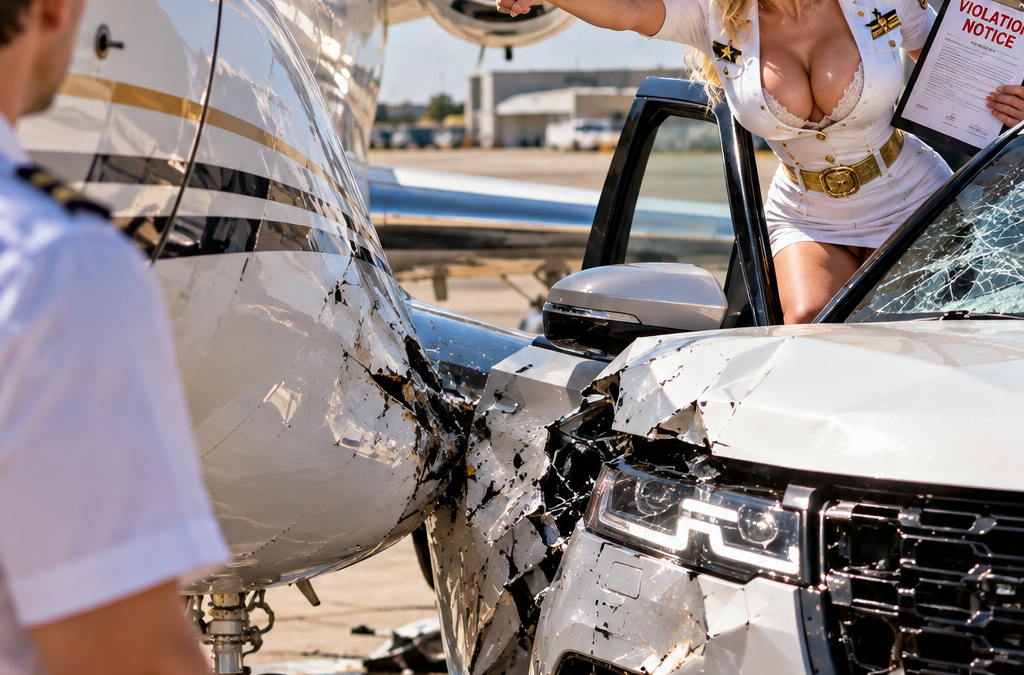
𝗙𝗨𝗟𝗟 𝗦𝗧𝗢𝗥𝗬
One of the mechanics looked away to hide a smile.
Victoria noticed.
Her cheeks flushed.
That was when I should have understood how badly this was about to escalate.
But the argument hadn’t started that morning.
It had begun three months earlier.
Silver Oaks sat beside Hawthorne Municipal Airpark, a small privately managed airport outside the city.
The neighborhood hadn’t originally been marketed as an aviation community, but several roads backed onto airport-owned land, and over the years a handful of residents had leased hangar or apron space directly from Hawthorne.
I was one of them.
My house stood three streets inside Silver Oaks.
My aircraft lived at Hawthorne.
The two properties happened to be near each other.
That was the entire relationship.
Victoria wanted more.
She’d spent years trying to convince homeowners that the strip of aviation property along Silver Oaks belonged functionally to the HOA.
Not legally.
Functionally.
Victoria loved words like that.
“Community interest.”
“Historic usage.”
“Shared necessity.”
“Protective jurisdiction.”
Terms that sounded official until somebody asked where they appeared in an actual recorded document.
My first encounter with her over the airport happened when she sent me an HOA notice claiming my aircraft created an “unauthorized visual obstruction visible from community property.”
I called her.
“What exactly am I obstructing?”
“The view corridor.”
“What view corridor?”
“The western community sightline.”
I looked out my window.
There was no western community sightline.
There were houses, trees, a fence, and an airport.
“Victoria, the aircraft is parked outside Silver Oaks.”
“It is visible from Silver Oaks.”
“So is the sky.”
She didn’t appreciate that.
A fifty-dollar administrative warning appeared two days later.
I disputed it in writing.
Victoria denied my appeal herself.
That became the first page in the file I eventually started keeping on her.
The second incident involved noise.
She claimed my engine start at 8:15 one Saturday morning violated HOA quiet hours.
Again, the aircraft wasn’t on HOA property.
Again, airport operations were governed by airport rules.
Again, she didn’t care.
She emailed me:
Your technical location does not exempt you from obligations affecting the quality of life of Silver Oaks homeowners.
I responded:
Please provide the section of the Silver Oaks covenants granting authority over aircraft operations at Hawthorne Municipal Airpark.
No answer.
Instead, she sent me a warning about my garbage containers.
That was Victoria’s favorite tactic.
If she couldn’t win one argument, she’d remind you she controlled another part of your life.
A few weeks later, she appeared at an HOA meeting with a proposed “airport adjacency policy.”
I attended because my name appeared three times in the draft.
The rule would supposedly allow the HOA to impose restrictions on any Silver Oaks resident using nearby aviation facilities if their activity was “reasonably perceivable” within the neighborhood.
I read the language twice.
Then raised my hand.
Victoria ignored me.
I kept it raised.
Finally, she said, “Daniel.”
“This policy claims authority over private property the HOA doesn’t own.”
“It regulates homeowner conduct.”
“At a separate airport?”
“Where that conduct affects Silver Oaks.”
“So if I drive downtown and somebody in Silver Oaks sees my car, are you regulating that too?”
Several residents laughed.
Victoria’s eyes hardened.
“This isn’t a comedy club.”
“No. It’s supposedly a board meeting.”
“You seem determined to antagonize this board.”
“I’m asking what legal authority supports this.”
She closed the folder.
“We don’t need to litigate every sentence.”
“That’s convenient.”
“Enough.”
She moved to the next agenda item.
After the meeting, an older board member named Howard caught me outside.
“Be careful with her.”
I looked at him.
“Why does everybody say that?”
He glanced toward the clubhouse door.
“Because Victoria doesn’t like being embarrassed.”
“I didn’t embarrass her.”
“You contradicted her in front of people.”
“That’s not the same thing.”
“To Victoria, it is.”
He walked away before I could ask more.
From that moment forward, the pressure increased.
A violation for a garden light supposedly aimed too high.
A warning about a work vehicle parked overnight.
A complaint that my mailbox numbers were “insufficiently reflective.”
Then a notice alleging I had used “HOA-controlled aviation access” without permission.
That finally got my attention.
I requested the property records.
The airport manager, Tom Brennan, had worked at Hawthorne for nearly twenty years.
Tom was the kind of man who could identify an aircraft by engine sound before it appeared over the trees.
He pulled up the airport parcel map.
“This is you.”
He pointed.
My apron lease was outlined clearly.
“That’s Silver Oaks.”
Another boundary.
“And this strip?”
“Airport.”
“The HOA says it’s theirs.”
Tom laughed.
“They’ve been saying that since Victoria became president.”
“Why?”
“Because she wants a second vehicle connection from the neighborhood onto airport service property.”
“Can they get one?”
“Not without an easement or airport agreement.”
“Do they have either?”
“No.”
I leaned back.
“So every letter she’s sent me about airport access…”
“Is HOA theater.”
That phrase stayed with me.
HOA theater.
Victoria wasn’t enforcing ownership.
She was performing ownership until people stopped questioning it.
I asked Tom for certified copies of the relevant lease documents and parcel maps.
He printed them.
“Keep these.”
“Planning to.”
“Victoria doesn’t give up easily.”
“I’ve noticed.”
Tom smiled.
“Then you’ll fit in here.”
I should have gone straight to an attorney.
Instead, I thought documentation would be enough.
I underestimated how much Victoria valued control over being correct.
Two weeks before the collision, she cornered me near the airport fence.
“You need to stop telling people the association doesn’t own that area.”
I stared at her.
“It doesn’t.”
“You’re undermining negotiations.”
“What negotiations?”
“That’s confidential.”
“Then don’t involve my airplane.”
She stepped closer.
The red lace dress showed beneath her blazer, and her expensive perfume carried even in the heat.
“You are creating unnecessary hostility.”
“By reading a map?”
“By refusing to cooperate.”
“What does cooperation mean?”
“Move your aircraft farther east.”
“That’s not my lease position.”
“Then change the lease.”
“No.”
Her eyes narrowed.
“Your arrogance is becoming expensive.”
“Is that another threat?”
“It’s advice.”
She smiled.
“People in Silver Oaks who choose conflict tend to discover how many rules they’re violating.”
I understood exactly what she meant.
The next morning, I received four HOA notices.
Four.
Landscaping.
Mailbox.
Driveway staining.
And a claim that my home security camera was angled improperly.
I photographed everything.
Filed appeals.
Saved copies.
And finally called an attorney.
Her name was Priya Shah.
Yes, another HOA case had led me to someone who specialized in exactly this kind of governance abuse.
Priya listened while I explained the airport dispute.
Then she asked the most important question.
“Does the HOA own the apron?”
“No.”
“Lease it?”
“No.”
“Hold an easement?”
“Not according to the airport.”
“Then why does she think she can order you off it?”
“Because nobody’s stopped her.”
Priya went quiet.
“That answer worries me.”
“Why?”
“People who are used to bluffing successfully eventually do something reckless when bluffing stops working.”
I remember that sentence because exactly thirteen days later, Victoria drove an SUV into my aircraft.
The morning started normally.
Clear sky.
Light wind.
Temperature already climbing.
I arrived at Hawthorne shortly after seven.
I liked early inspections.
Airport quiet.
Metal cool.
No rush.
I walked around the aircraft slowly.
Checked tires.
Surfaces.
Fluid indications.
Cowlings.
Propeller.
Panels.
No visible issues.
Tyler, the line technician, was fueling a twin farther down the ramp.
One of the mechanics waved.
I climbed onto the wing briefly to inspect a seal, then stepped back down.
That’s when I saw Victoria.
Marching toward me.
I knew before she spoke.
“Move it.”
No hello.
No explanation.
“Victoria.”
“You were formally advised.”
“About what?”
“This apron.”
She pointed toward the aircraft.
“You are obstructing HOA property.”
I almost couldn’t believe we were repeating the argument.
“This is airport property.”
“No.”
“Yes.”
“I have board confirmation.”
“Your board doesn’t determine airport boundaries.”
“Do not speak to me like I’m stupid.”
“I didn’t.”
Her mouth tightened.
“You implied it.”
“I said you’re wrong.”
She looked around.
People were watching.
That mattered.
Victoria raised her voice.
“You have been exploiting a loophole for months.”
“What loophole?”
“Your lease.”
I stared at her.
“A lease isn’t a loophole.”
“You leased space that historically served neighborhood access.”
“Historically served doesn’t mean HOA ownership.”
“I don’t care what your little airport map says.”
That caught my attention.
“You’ve seen the map.”
“I’ve seen many documents.”
“And?”
“The HOA’s rights predate your lease.”
“Then show the easement.”
“You don’t get to demand documents from me.”
“You’re demanding I move an airplane.”
She pointed toward the taxi lane.
“Move it there.”
I laughed in disbelief.
“Absolutely not.”
“Now.”
“That would obstruct airport operations.”
“I said move it.”
“No.”
Her face reddened.
Then she did something I hadn’t expected.
She stepped closer to the aircraft and placed her palm against the fuselage.
“Remove this thing from my community.”
I moved between her and the aircraft.
“Don’t touch it.”
That changed her expression.
“Your aircraft?”
“Yes.”
“On my property?”
“No.”
She stepped toward me.
“I am done asking.”
I looked toward the airport office.
“Perfect. Let’s get Tom.”
“I don’t need Tom.”
“Then this conversation is over.”
I turned away.
Victoria stood there for several seconds.
Then she said:
“You think I can’t make you move?”
I looked back.
“I think you shouldn’t try.”
Her lips pressed into a thin line.
She walked toward her SUV.
A large black luxury vehicle parked near the edge of the access lane.
For a moment, relief washed through me.
I assumed she was leaving.
Tyler glanced toward me.
“That went well.”
I shook my head.
“She’ll send six fines by lunch.”
One mechanic laughed.
Victoria climbed into the SUV.
The engine started.
I turned back toward the aircraft.
Then Tyler shouted.
“Daniel!”
I looked.
The SUV wasn’t heading toward the exit.
It was turning toward us.
Slowly at first.
I stepped away from the plane.
Victoria accelerated.
For one strange second, my brain tried to invent a harmless explanation.
Maybe she was turning around.
Maybe she was trying to drive behind the aircraft.
Then the nose of the SUV aligned directly with my parking area.
“Victoria!”
I raised both arms.
“STOP!”
The engine revved.
She kept coming.
“STOP THE CAR!”
People started moving.
Tyler ran sideways.
One mechanic jumped back toward the hangar.
I moved away from the wing.
The SUV closed the distance.
Twenty yards.
Fifteen.
Ten.
I could see Victoria through the windshield.
Both hands on the wheel.
Face rigid.
Eyes forward.
This wasn’t somebody accidentally drifting.
She was driving directly toward my aircraft after I had told her to stop.
“VICTORIA!”
The impact sounded like a metal building collapsing.
The SUV struck the side area of the aircraft with tremendous force.
The plane lurched.
The landing assembly twisted under load.
The fuselage shifted violently.
Equipment inside the nearby maintenance hangar rattled from the impact.
Somebody yelled.
Then silence.
Absolute silence.
The SUV’s horn gave one short accidental blast.
Steam or fluid hissed somewhere near the vehicle.
For a few seconds, nobody moved.
I couldn’t process what I was looking at.
My aircraft.
The machine I’d inspected less than five minutes earlier.
Now displaced.
Damaged.
One side visibly crushed and scraped where a three-ton SUV had collided with it.
Victoria sat behind the wheel.
Her face was white.
I ran toward the aircraft, then stopped myself.
Don’t touch anything.
Don’t move anything.
Document.
Training took over.
I pulled out my phone.
“Nobody move the vehicle.”
Victoria opened the SUV door.
“This was an accident.”
Tyler stared at her.
“What the hell was that?”
“I was trying to clear the apron.”
“You drove into an airplane.”
Victoria climbed out.
Her hands were shaking.
“It shouldn’t have been there.”
I looked at her.
For a moment, I had no words.
Then anger hit.
Hard.
“You were warned.”
She looked at me.
“You were blocking access.”
“I told you to stop.”
“You stepped in front of me.”
“No, I stepped away from my aircraft because you were driving at it.”
“This would never have happened if you’d moved it.”
I stared at her.
Even now.
Even standing beside the wreckage she’d caused.
She was blaming me.
One of the mechanics swore under his breath.
I called Tom.
“Get down here now.”
“What’s wrong?”
“Victoria hit my aircraft with her SUV.”
Silence.
“What?”
“Don’t move anything. Bring cameras. Bring the property map. Bring security.”
Tom arrived within minutes.
His face changed the instant he saw the scene.
“Oh, my God.”
Victoria immediately approached him.
“Tom, thank goodness. Daniel created an obstruction and I was attempting to—”
Tom held up one hand.
“Stop.”
She froze.
“Nobody gives me a statement until we’ve documented this.”
Airport staff photographed everything.
The aircraft.
SUV.
Tire marks.
Relative positions.
Boundary markings.
Damage.
Debris.
I photographed too.
Victoria paced.
“This is excessive.”
Tom looked at her.
“A vehicle struck an aircraft.”
“I barely touched it.”
One mechanic turned around slowly.
“Barely?”
Victoria ignored him.
“The plane shouldn’t have been parked there.”
Tom looked toward me.
“Daniel, lease documents?”
“In my flight bag.”
I retrieved them.
Tom brought up the digital property map on a tablet.
Then a printed survey.
He laid it across a cart.
“Here.”
He pointed.
“Aircraft lease boundary.”
Then the painted apron position.
“My aircraft is inside it.”
“Completely.”
Victoria stepped over.
“That’s not the HOA map.”
Tom looked at her.
“Because this is the airport map.”
“The HOA has historic access rights.”
“Show me a recorded easement.”
“I don’t carry legal documents in my purse.”
Tom’s tone became colder.
“I’ve asked your board for one three times.”
Victoria blinked.
I looked at him.
“You never told me that.”
“Didn’t think I needed to.”
He turned back to Victoria.
“You have never produced one.”
She folded her arms.
“That doesn’t mean one doesn’t exist.”
Tom looked at the damaged aircraft.
“No. But you driving across private aviation property doesn’t make one appear.”
Victoria’s expression hardened.
“Be careful, Tom.”
He stared at her.
“Are you threatening the airport manager after driving into an aircraft?”
For the first time, she didn’t answer.
The aircraft was moved carefully into the maintenance hangar once investigators and insurers approved the scene documentation.
That process hurt to watch.
Airplanes aren’t cars.
You don’t simply look at the dent, replace a panel, and move on.
Loads transfer through structures.
Landing components can suffer damage that isn’t visible.
Systems can shift.
Connections can deform.
A collision that looks localized can create hidden problems that make the entire aircraft unsafe.
The maintenance team began the inspection.
Hours became days.
The first report was bad.
The second was worse.
Exterior damage.
Structural deformation.
Landing components.
Control-related systems requiring inspection or replacement.
Internal mounting points.
Specialized components.
The aircraft couldn’t legally or safely fly until everything had been examined, repaired, replaced, tested, and signed off.
I stood inside the hangar with the lead technician, Mark.
“Tell me the number.”
“Too early.”
“Estimate.”
He exhaled.
“You’re not going to like it.”
“I haven’t liked much this week.”
“The visible damage isn’t the expensive part.”
“What is?”
“Everything we have to prove isn’t damaged.”
That was aviation.
Certainty costs money.
The preliminary estimate crossed one million.
Then one and a half.
Replacement components added more.
Specialized structural work.
Inspection labor.
Transportation.
Downtime.
Loss of use.
Engineering review.
Eventually, the preliminary claim reached $2.8 million.
I stared at the figure.
Two point eight million dollars.
Victoria had spent months treating airport property like another flowerbed she could fine into submission.
Now her tantrum had created a claim larger than the annual budget of some small airports.
My insurance specialist, Andrew, sat across from me in the conference room.
“Who’s paying this?”
“That’s what responsibility determination is for.”
“There’s video.”
“Good.”
“Airport map.”
“Good.”
“Lease.”
“Good.”
“Witnesses.”
“Very good.”
He closed the file.
“The cleaner the evidence, the less room anyone has to rewrite what happened.”
That sentence mattered.
Because rewriting what happened was exactly what Victoria tried next.
At the first formal meeting, Victoria arrived with two HOA representatives, an attorney, and the same expression she’d worn during board hearings.
Controlled.
Superior.
Wronged.
My insurer sat opposite them.
Airport management.
My attorney.
Maintenance representatives.
The photographs were placed on screen.
Victoria spoke first.
“I want the record to reflect that Mr. Mercer repeatedly refused lawful instructions to clear an access route.”
Priya looked at me.
Don’t interrupt.
Victoria continued.
“The incident occurred while I was attempting to remove an obstruction.”
The airport’s attorney asked:
“By driving your SUV toward the aircraft?”
Victoria stiffened.
“I was repositioning the vehicle.”
“Into the aircraft?”
“The aircraft was not where it should have been.”
Tom slid the map forward.
“Yes, it was.”
Victoria looked at him.
“Your map conflicts with ours.”
“Your HOA map is not a recorded airport parcel survey.”
“Our legal rights are broader than title lines.”
Priya spoke for the first time.
“That’s an interesting sentence.”
Victoria glared at her.
Priya continued.
“Do you have an easement?”
Victoria’s attorney intervened.
“We’re not here to litigate underlying property rights.”
Priya nodded.
“Then we’re here to determine why your client drove onto property she cannot establish belongs to her and hit a lawfully parked aircraft.”
Silence.
Victoria’s face reddened.
“I didn’t intentionally hit anything.”
Priya didn’t react.
“The cameras will help with that.”
For the first time, Victoria looked uncertain.
“What cameras?”
Tom almost smiled.
“Hawthorne has full apron coverage.”
Her expression changed.
Just slightly.
Enough.
The first security angle showed the entire ramp.
My aircraft.
My inspection.
Victoria approaching.
The argument.
Her walking to the SUV.
The vehicle turning.
Then accelerating toward the plane.
The second angle was closer.
It captured me stepping away.
Both arms raised.
My mouth visibly shouting.
The SUV continued.
Then impact.
Nobody spoke after the footage ended.
Victoria stared at the screen.
Her attorney leaned toward her.
She whispered something.
He didn’t answer.
Andrew replayed the last fifteen seconds.
My warning.
Her continued movement.
The strike.
Again.
No confusion.
No ambiguity.
No argument about whether the aircraft had somehow appeared in front of her.
Victoria had been warned.
The aircraft wasn’t moving.
She was.
The property records made the rest painfully simple.
Lease authorized.
Parking position authorized.
Airport boundary confirmed.
No HOA ownership.
No recorded easement produced.
No authority to order relocation.
Victoria’s explanation collapsed one document at a time.
But she still couldn’t admit it.
“I was trying to prevent continued obstruction.”
Priya looked directly at her.
“By causing a multimillion-dollar aviation loss?”
Victoria snapped.
“It would not have happened if Daniel had simply cooperated.”
That was when I spoke.
“No.”
Everyone looked at me.
I had stayed quiet for almost the entire meeting.
But I was done hearing that word.
Cooperated.
Victoria had used it for months.
Cooperate meant obey.
Cooperate meant stop asking.
Cooperate meant accept whatever boundary she drew.
“No, Victoria.”
Her eyes narrowed.
“You don’t get to call obedience cooperation after this.”
She leaned back.
“I told you to move the aircraft.”
“You had no authority.”
“I believed I did.”
“You were shown records.”
“They were disputed.”
“By you.”
“The HOA—”
“The HOA doesn’t own the airport.”
She stared at me.
I continued.
“You threatened me with fines because I challenged you.”
“That’s defamatory.”
“You issued four notices the morning after I refused your airport demand.”
Her attorney shifted.
Priya didn’t stop me.
“You told me I was becoming expensive.”
“I don’t remember that.”
“I do.”
“You’ve always been confrontational.”
I almost laughed.
“Victoria, you drove an SUV into a stationary airplane.”
Her face flashed with anger.
“Because you refused to move it!”
The room froze.
Her attorney closed his eyes.
Priya looked down at her notes.
Tom stared at Victoria.
Andrew stopped writing.
Victoria realized what she’d just said.
She tried to recover.
“That’s not what I meant.”
Nobody rescued her.
The statement entered the record.
The insurance process continued.
Technical reviews.
Damage reports.
Video analysis.
Vehicle coverage.
Liability discussions.
Weeks of paperwork.
Weeks without my aircraft.
I rented when necessary.
Canceled trips when I could.
Rearranged projects.
Every inconvenience became another reminder that all of this had begun because Victoria couldn’t tolerate being told that the HOA didn’t own something.
Then the news reached the Silver Oaks board.
I wasn’t there when they first learned the amount.
Howard called me afterward.
“Daniel.”
“What’s wrong?”
“Nothing. I just thought you should know.”
“Know what?”
“They were told the claim amount.”
I waited.
“Two point eight.”
“That’s the preliminary number.”
“Victoria told us it was a minor parking accident.”
I laughed once.
“Of course she did.”
“She said your insurer was exaggerating.”
“Has the board seen the footage?”
“Not yet.”
“You should.”
A special HOA meeting was scheduled.
I attended.
For once, Victoria didn’t sit at the center of the table with her usual confidence.
She sat stiffly beside the association attorney.
Residents filled the room.
Rumors had spread.
Some people believed she’d accidentally bumped the plane.
Others had heard millions.
Most had no idea why the HOA was involved at all.
Howard opened the meeting.
“The board has been advised of an incident involving President Hale and a vehicle collision at Hawthorne Municipal Airpark.”
Victoria interrupted.
“This is not association business.”
Howard looked at her.
“You invoked HOA authority during the incident.”
“I was acting to protect association access.”
“Which the airport says we don’t have.”
Victoria’s jaw tightened.
“That matter remains disputed.”
A board member named Linda asked:
“Do we have a recorded easement?”
Victoria looked at the attorney.
The attorney answered carefully.
“None has been located.”
The room erupted in whispers.
I sat quietly.
Howard continued.
“The resulting aviation claim is approximately $2.8 million.”
Someone in the back actually said:
“WHAT?”
Victoria raised her voice.
“That number is absurd.”
I stood.
“Would you like the maintenance report?”
She turned toward me.
“This is exactly what I’m talking about. Daniel has been trying to embarrass this association for months.”
I stared at her.
“Nobody made you drive the SUV.”
“You refused a lawful instruction.”
“Show everyone the law.”
She slammed a hand on the table.
“I am not putting privileged HOA property records on display for your entertainment.”
Linda looked at her.
“Victoria, if there’s an easement, why hasn’t the board seen it?”
Victoria hesitated.
Howard looked toward the attorney.
The attorney said nothing.
That silence told the room everything.
The control Victoria had held for years began cracking visibly.
Residents started asking questions.
Had she used HOA authority at the airport without board authorization?
Had the board voted to confront me?
Had association counsel approved the demand?
Were HOA insurance policies exposed?
Would dues increase?
Could homeowners be financially affected by something Victoria did personally?
She tried to command the room.
“One at a time!”
Nobody listened.
“THIS MEETING WILL COME TO ORDER!”
Questions kept coming.
Howard finally raised his voice.
“Victoria, sit down.”
She stared at him.
Nobody had told her that in six years.
He repeated it.
“Sit down.”
Slowly, she did.
The association’s attorney explained that the responsibility process was still underway and that the board needed to avoid speculation.
But the political damage inside Silver Oaks had already happened.
Residents who had spent years treating Victoria’s word like law had watched her authority fail against something she couldn’t manipulate.
Airport records.
Security footage.
A multimillion-dollar claim.
You couldn’t fine those into silence.
The insurers eventually completed their responsibility determination.
The $2.8 million claim was connected to the vehicle and the person operating it.
Not the airplane.
Not the airport.
Not some imaginary HOA apron right.
The vehicle.
And Victoria.
I received the formal notice from Andrew.
I read it twice.
Then leaned back in my chair.
For months, Victoria had tried to teach me that resistance had consequences.
Now consequence had become a number attached to her own actions.
Two point eight million dollars.
Not because I retaliated.
Not because I manipulated the process.
Because she drove an SUV into an aircraft after being warned to stop.
Simple cause.
Simple evidence.
Enormous result.
Repairs took weeks.
Then more weeks.
Aircraft work isn’t finished when something looks good.
Systems were checked.
Components replaced.
Structures inspected.
Alignment verified.
Maintenance records updated.
Work signed.
More inspections.
More paperwork.
I visited the hangar whenever I could.
Some days, the aircraft looked worse because panels had been removed for access.
Then slowly, it started becoming itself again.
New components.
Restored surfaces.
Completed structural work.
The mechanics were meticulous.
Mark caught me inspecting one repair line.
“You’re doing my job.”
“I’m an engineer.”
“Worse.”
I smiled.
“How does she look?”
He wiped his hands.
“Expensive.”
“That’s not what I asked.”
He grinned.
“She’ll fly.”
That was the first time I’d heard those words since the collision.
She’ll fly.
I didn’t realize how badly I needed them.
Two days before the final return-to-service signoff, Victoria appeared at the airport.
No clipboard.
No blazer.
No red dress.
Jeans.
Plain sweater.
Hair tied back.
For a moment, I barely recognized her.
She stopped several feet away.
“Daniel.”
I turned.
“Victoria.”
She looked toward the aircraft.
“It looks repaired.”
“Almost.”
There was a long silence.
The old Victoria would have filled it.
Explained.
Blamed.
Lectured.
This Victoria seemed to struggle with words.
“I didn’t think…”
She stopped.
I waited.
“I didn’t think the damage would be that severe.”
I almost couldn’t believe that was what she’d chosen to say.
“That’s your concern?”
She looked at me.
“No.”
“Because the amount wasn’t the problem.”
“I know.”
“You could have hurt someone.”
Her face tightened.
“I know.”
“Tyler was standing near the wing.”
“I know.”
“I was standing near the aircraft.”
“I know.”
“You kept driving.”
She looked away.
For several seconds, neither of us spoke.
Then she said:
“I was angry.”
I nodded.
“Obviously.”
“You embarrassed me.”
There it was.
Finally.
The truth underneath everything.
Not property.
Not HOA access.
Not community safety.
Embarrassment.
“I corrected you.”
“In front of people.”
“You were wrong.”
“You didn’t have to make me look foolish.”
I stared at her.
“Victoria, you made yourself look foolish.”
She flinched.
“I spent years keeping Silver Oaks under control.”
“That’s the problem.”
“You don’t understand what it’s like dealing with two hundred homeowners who all think they’re exceptions.”
“I understand exactly what it’s like dealing with one person who thinks she’s the exception.”
She looked at the concrete.
I expected anger.
It didn’t come.
“I shouldn’t have driven toward the plane.”
“No.”
“I shouldn’t have been there.”
“No.”
“I thought you’d move.”
That sentence hit me.
“Because everyone always does.”
She looked up.
I could see it in her face.
Yes.
That’s exactly what she’d expected.
Not that she was right.
That I would surrender.
Victoria had spent years learning that escalation worked.
Send a fine.
People pay.
Threaten a lien.
People comply.
Humiliate someone publicly.
They stop challenging.
Delay approval.
They apologize.
She had pushed hundreds of small boundaries and been rewarded with obedience.
The airport was simply the first place where the boundary didn’t move when she pushed.
“Victoria.”
She waited.
“You didn’t hit my airplane because you misunderstood a map.”
Her eyes narrowed slightly.
“You hit it because I told you no.”
She said nothing.
“And you thought the world would move before you had to.”
Still nothing.
Finally, she whispered:
“I was wrong.”
I don’t know whether that was an apology.
It was as close as Victoria Hale had probably come in years.
I nodded.
“Yes.”
Then I walked back toward the hangar.
I didn’t need more.
I didn’t want revenge.
I wanted my aircraft back.
The final inspection happened on a clear morning.
I arrived before sunrise.
For the first time since the collision, the aircraft sat outside under open sky.
Restored.
Clean.
Ready.
I walked around slowly.
Tire.
Wing.
Control surfaces.
Panels.
Propeller.
Fuselage.
Every movement felt familiar.
Comforting.
Ordinary.
Ordinary had become precious.
Tom stood near the office with coffee.
“Big day.”
“Hopefully boring.”
He laughed.
“Boring flights are the best flights.”
Tyler walked past.
“Try not to let any SUVs near it.”
“New checklist item.”
He grinned.
I climbed inside.
Sat in the seat.
For a moment, I didn’t start anything.
I just rested my hands on the controls.
Weeks of lawyers.
Adjusters.
Meetings.
Photos.
Repair estimates.
Property maps.
Security footage.
All because one woman thought authority meant reality would adjust itself around her anger.
I thought about that first confrontation.
Move it.
No.
That was really the entire story.
Victoria believed “no” was an act of aggression because she’d spent years surrounding herself with people who didn’t dare use the word.
The engine started smoothly.
Systems came alive.
Everything checked normally.
I taxied slowly.
The same apron passed beneath me.
The painted boundary remained exactly where it had always been.
It had never belonged to Victoria.
It hadn’t moved.
The paperwork hadn’t changed.
The land hadn’t changed.
Only people’s willingness to challenge her claim had changed.
I stopped before the taxiway and completed another check.
All good.
Tower cleared me.
I advanced the power.
The aircraft rolled.
Acceleration pressed me back into the seat.
Then the wheels left the runway.
Hawthorne dropped beneath me.
Silver Oaks appeared beyond the airport fence.
Neat roofs.
Curving streets.
Tiny houses.
From altitude, the entire neighborhood looked peaceful.
You couldn’t see an HOA boundary from the sky.
You couldn’t see Victoria’s clipboard.
You couldn’t see the meeting room where people had spent years afraid to disagree.
You could only see lines humans had drawn and then decided mattered.
Some lines matter.
Runway markings.
Property records.
Lease boundaries.
Safety limits.
Others exist only because someone powerful keeps insisting they do.
Victoria spent years confusing the two.
That confusion eventually cost millions.
The flight was uneventful.
Exactly what I wanted.
After landing later that afternoon, I taxied back toward my assigned parking position.
My assigned position.
I smiled at the phrase.
Nobody was waiting with a clipboard.
Nobody demanded that I move.
Nobody threatened fines.
Tom waved from the office.
Tyler was refueling another aircraft.
Mark stood outside the hangar talking to a mechanic.
Normal airport life.
I shut down.
The propeller slowed.
Silence returned.
I climbed out and placed one hand against the fuselage.
Months earlier, Victoria had touched that same aircraft while telling me to remove it from “her” community.
Now the aircraft was back.
The map was unchanged.
The lease was unchanged.
The only thing that had changed was Victoria.
The HOA board stripped several of her unilateral enforcement powers after the incident.
New procedures required board approval before anyone claimed property rights outside established association boundaries.
Legal counsel had to review easement disputes.
No single board officer could threaten enforcement based on undocumented ownership.
Howard later told me the reforms passed with almost no opposition.
“Funny what a two-point-eight-million-dollar lesson does for governance.”
“Expensive training program.”
He laughed.
“Very.”
Some of the homeowners who’d once avoided challenging Victoria started reopening older disputes.
Not every complaint was valid.
Not every fine was wrong.
But people started asking questions.
Show me the rule.
Show me the map.
Show me the vote.
Three simple demands that made Victoria’s style of leadership much harder.
She remained in Silver Oaks for a while, but she wasn’t the same unchecked president.
The board stopped rubber-stamping her decisions.
Residents stopped treating disagreement as dangerous.
Even her tone changed.
She still disliked me.
I was comfortable with that.
Peace doesn’t require everybody to like you.
Sometimes it only requires them to respect the boundary.
I kept every document from the case.
Lease.
Parcel map.
Photographs.
Maintenance reports.
Insurance letters.
Repair estimates.
Still frames from the security footage.
There’s one image I look at occasionally.
Victoria’s SUV roughly ten yards from my aircraft.
My arms are raised.
She’s still moving forward.
It’s the last moment before a bad decision becomes irreversible.
I think that image explains power better than any HOA rulebook ever could.
There was still time.
She could have stopped.
Pressed the brake.
Backed away.
Asked Tom to settle the boundary.
Called an attorney.
Gone home.
Done literally anything else.
Instead, she kept driving because stopping would have meant admitting she couldn’t force me to obey.
That’s what unchecked authority does to some people.
It makes backing down feel more humiliating than being wrong.
Then being wrong becomes dangerous.
People have asked whether I sued Victoria personally.
Whether I wanted her ruined.
Whether I stood in the board meeting and demanded she resign.
No.
The proper insurance and legal processes determined financial responsibility.
That was enough for me.
I didn’t need to turn into her.
I didn’t need to use every available mechanism simply because I could.
What I wanted was restoration.
Aircraft repaired.
Lease respected.
Safety acknowledged.
Boundary recognized.
Life returned.
That’s what I got.
The aircraft still flies.
I still perform the same methodical inspection before every trip.
Walkaround.
Surfaces.
Tires.
Panels.
Systems.
No shortcuts.
Sometimes, when I reach the side that absorbed the impact, I pause.
Not because I doubt the repair.
The maintenance work was excellent.
I pause because I remember standing on that apron shouting for Victoria to stop.
I remember watching the SUV continue.
And I remember the helpless second before impact when I understood that her need to win mattered more to her than property, money, or safety.
Then I finish the checklist.
Because you don’t stay trapped in the moment somebody else lost control.
You verify.
You repair.
You move forward.
Silver Oaks eventually became quieter.
Not because the HOA disappeared.
It didn’t.
There are still dues.
Meetings.
Landscaping rules.
Pool regulations.
People complaining about garbage cans.
What disappeared was the illusion that Victoria’s interpretation was automatically law.
And that changed everything.
The most satisfying part wasn’t the $2.8 million determination.
It wasn’t watching board members stare at the video.
It wasn’t seeing Victoria unable to explain the map.
It was something smaller.
Several months later, I parked at Hawthorne after a short business flight.
A new Silver Oaks homeowner was standing near the fence with Howard.
He pointed toward my aircraft.
“Is that the plane?”
Howard laughed.
“That’s the plane.”
The new guy looked at me.
“I heard the story.”
“I’m sorry.”
He smiled.
“No. It’s useful.”
“How?”
“First thing Howard told me when I joined the HOA.”
I looked at Howard.
He shrugged.
“What did he tell you?”
The man answered.
“Never claim ownership of something until you’ve checked the map.”
I laughed.
That was good advice.
Not just for airport aprons.
For power.
For authority.
For almost everything.
Victoria believed repetition made a claim true.
She said the apron belonged to the HOA often enough that eventually even she seemed to believe it.
But confidence doesn’t change recorded boundaries.
A clipboard doesn’t create an easement.
A board title doesn’t transfer land.
And anger doesn’t make a stationary airplane responsible for being hit by a moving SUV.
Evidence has a strange way of stripping power down to facts.
Where was the plane?
Inside my assigned area.
Where was the SUV?
Moving toward it.
Did I warn the driver?
Twice.
Was there video?
Two angles.
Who owned the apron?
The airport.
Who had authority to park the aircraft there?
I did.
Once those questions had answers, Victoria’s performance stopped mattering.
That’s why documentation mattered.
That’s why Tom photographing the collision mattered.
Why the lease mattered.
Why security cameras mattered.
Why maintenance reports mattered.
Why I didn’t scream, threaten, or try to physically stop Victoria after the impact.
Because facts age better than anger.
Victoria had spent years relying on people reacting emotionally.
She’d provoke them.
They’d yell.
Then she would point to the yelling and call them unreasonable.
At the airport, she didn’t get that advantage.
She got maps.
Footage.
Witnesses.
Measurements.
Invoices.
And a $2.8 million repair claim attached to the consequences of one completely unnecessary act.
I sometimes wonder what would have happened if I’d moved the aircraft that morning.
Probably nothing dramatic.
Victoria would have won another tiny battle.
The HOA would have treated the apron as community territory.
Next month she’d demand more.
Maybe another parking area.
Maybe access to the hangars.
Maybe restrictions on operating times.
That’s how control expands.
Not always through some grand takeover.
Through small concessions nobody thinks are worth fighting.
Move the plane.
Change the mailbox.
Remove the camera.
Pay the fine.
Stop asking questions.
Most individual demands are easier to accept than challenge.
Eventually, nobody remembers which authority was real and which one was simply never questioned.
I’m glad I asked for the map.
I’m glad I kept my lease.
I’m glad Tom had cameras.
And I’m glad I stepped away instead of letting Victoria’s recklessness turn an expensive property collision into something much worse.
Because when I think back on that morning, the money isn’t what scares me.
Aircraft can be repaired.
Insurance claims can be processed.
Components can be replaced.
Two point eight million dollars is an enormous number.
But it’s still money.
What couldn’t have been repaired was Tyler being pinned between the aircraft and a vehicle.
Or me.
Or one of the mechanics.
Victoria’s need to prove control came frighteningly close to turning an HOA argument into a tragedy.
That is the part I never joke about.
Weeks after the aircraft returned to service, I saw Victoria again.
This time at the Silver Oaks community pool.
She was sitting alone at a table.
No clipboard.
No audience.
She watched me walk past.
For a second, I expected her to say something.
She didn’t.
I almost felt sorry for her.
Almost.
Then I remembered the SUV.
Sympathy is easier when somebody’s bad decisions didn’t nearly injure people.
I nodded once.
She looked away.
That was enough.
No victory speech.
No public humiliation.
No need to explain that she’d lost.
We both knew.
She had spent years teaching people in Silver Oaks that authority meant never backing down.
The airport taught her the opposite.
Real authority survives documentation.
Real property rights survive maps.
Real safety rules survive scrutiny.
Only fake power needs everybody to stop asking questions.
I still fly early whenever I can.
There’s something about sunrise from a cockpit that resets perspective.
The ground becomes quiet.
Arguments become small.
Neighborhood borders disappear.
You see roads, lakes, roofs, fields, airports.
No clipboards.
No violation letters.
No self-appointed kingdoms.
Just geography.
The morning after everything finally settled, I climbed through five thousand feet and looked back toward Hawthorne.
Sunlight caught the hangar roofs.
My repaired aircraft flew perfectly.
Smooth controls.
Stable indications.
Nothing abnormal.
I thought about Victoria demanding that I move it.
Then about the repair crew rebuilding what her anger damaged.
And about how absurd the entire thing was.
An HOA president had created a multimillion-dollar aviation claim because she couldn’t tolerate being corrected about a property line.
There wasn’t some brilliant hidden conspiracy.
No elaborate twist.
No mystery.
Just unchecked arrogance colliding with physical reality.
Literally.
That’s the lesson I kept.
You don’t always defeat unreasonable people by being louder.
Sometimes you simply keep the documents.
Stand on the correct side of the line.
And refuse to move when someone who has no authority orders you to.
Victoria thought my aircraft was the obstruction.
She was wrong.
The real obstruction was her belief that every space she wanted automatically belonged to her.
The plane got repaired.
The airport remained exactly where it had always been.
The property line never moved an inch.
And neither did the truth.
𝗧𝗛𝗘 𝗘𝗡𝗗
The HOA President Ordered Me to Move My Private Plane—Then Drove Her SUV Straight Into It When I Refused
I had just finished the morning inspection of my private aircraft when I saw Victoria Hale marching across the airport apron toward me like she owned the concrete beneath her heels.
Even from fifty yards away, I knew there was going to be trouble.
Victoria never walked anywhere casually.
She advanced.
Clipboard clamped beneath one arm. Phone in the other hand. Sunglasses pushed into her blonde hair. A fitted red lace dress visible beneath a cream blazer completely inappropriate for an airport ramp at seven in the morning.
She was forty, beautiful, polished, and completely aware of how easily charm could be turned into intimidation.
For six years, she’d run the Silver Oaks Homeowners Association that bordered the airport property like a woman ruling a private kingdom.
People didn’t simply disagree with Victoria.
They learned what happened when they did.
Sudden violation notices.
Parking complaints.
Architectural reviews that mysteriously took months.
Anonymous noise complaints.
Fines arriving faster than residents could appeal them.
I’d stayed out of her way for almost two years.
That morning, she decided that wasn’t enough.
She stopped beside the wing of my aircraft and pointed toward it.
“You need to move this.”
I looked at her.
“Good morning to you too.”
“I’m not joking, Daniel.”
Neither was I.
My name is Daniel Mercer.
I’m forty-five years old, a commercial real-estate developer by profession and a private pilot because flying is the one thing in my life that makes the rest of the noise disappear.
The aircraft behind me was more than an expensive machine.
I’d spent years saving for it.
Years renting.
Years logging hours in aircraft that belonged to flight schools, clubs, clients, and friends.
Then I’d finally bought my own.
A six-seat turboprop with enough range to move between projects without living inside commercial terminals.
It wasn’t a toy.
I used it for work.
I used it to visit family.
I maintained it obsessively because aviation doesn’t reward carelessness.
Every checklist mattered.
Every logbook entry mattered.
Every torque value mattered.
And where the airplane was parked mattered too.
That morning, it sat exactly where it had been authorized to sit.
Inside my assigned aviation lease area.
Behind a marked boundary.
On property controlled by the privately operated airport.
Victoria pointed at the plane again.
“Move it immediately.”
I closed the inspection panel I’d been checking.
“Why?”
“You’re blocking HOA access.”
“No, I’m not.”
Her jaw tightened.
“Excuse me?”
“You’re standing on airport property, Victoria.”
“This area serves Silver Oaks.”
“The road near the perimeter serves Silver Oaks. This apron doesn’t.”
She gave me a slow smile.
The kind she used whenever she wanted somebody to understand that resistance would be punished.
“Daniel, don’t turn this into another one of your technical arguments.”
I almost laughed.
“An airport property boundary isn’t technical when there’s an airplane sitting on one side of it.”
“We have maintenance rights here.”
“No, you don’t.”
“The HOA has used this route for years.”
“Using something and owning it aren’t the same thing.”
Her sunglasses came down over her eyes.
That should have been my warning.
Victoria had two moods when challenged.
The first was sweet.
The second was dangerous.
She walked closer.
“You have thirty minutes.”
“For what?”
“To move the aircraft.”
“Where?”
“I don’t care.”
“That’s the problem.”
She folded her arms.
“No, the problem is that you think because you own an airplane, ordinary rules don’t apply to you.”
I looked toward the painted apron markings beneath the landing gear.
“This isn’t an HOA rule.”
“Everything affecting Silver Oaks is HOA business.”
“No.”
She leaned forward.
“Do you really want me to make this unpleasant?”
There it was.
The sentence residents in Silver Oaks knew too well.
Not an argument.
A threat disguised as concern.
I kept my voice calm.
“Victoria, airport records identify this as my assigned parking position. If you believe there’s an easement, bring the document to airport management.”
“I don’t need your permission to enforce association property rights.”
“You need property rights first.”
For a moment, she simply stared at me.
Then she laughed.
Coldly.
“You pilots are all the same.”
“Meaning?”
“You think expensive equipment makes you important.”
“I think recorded leases make boundaries.”
Her face changed.
The smile disappeared.
“Move the plane.”
“No.”
That one word hit her harder than any insult could have.
Victoria Hale wasn’t accustomed to hearing no.
Especially not in public.
Two mechanics were working near the maintenance hangar.
The airport line technician, Tyler, was fueling another aircraft nearby.
The airport manager’s assistant had stepped outside the office.
People could see us.
Victoria knew it.
Her entire identity depended on looking like the person in control.
“You are deliberately obstructing an HOA-controlled zone,” she said loudly.
“That isn’t true.”
“I have photographs.”
“Photographs don’t create ownership.”
“I have board records.”
“Then show them to the airport manager.”
“You don’t tell me what to do.”
“I just did.”
One of the mechanics looked away to hide a smile.
Victoria noticed.
Her cheeks flushed.
That was when I should have understood how badly this was about to escalate.
But the argument hadn’t started that morning.
It had begun three months earlier.
Silver Oaks sat beside Hawthorne Municipal Airpark, a small privately managed airport outside the city.
The neighborhood hadn’t originally been marketed as an aviation community, but several roads backed onto airport-owned land, and over the years a handful of residents had leased hangar or apron space directly from Hawthorne.
I was one of them.
My house stood three streets inside Silver Oaks.
My aircraft lived at Hawthorne.
The two properties happened to be near each other.
That was the entire relationship.
Victoria wanted more.
She’d spent years trying to convince homeowners that the strip of aviation property along Silver Oaks belonged functionally to the HOA.
Not legally.
Functionally.
Victoria loved words like that.
“Community interest.”
“Historic usage.”
“Shared necessity.”
“Protective jurisdiction.”
Terms that sounded official until somebody asked where they appeared in an actual recorded document.
My first encounter with her over the airport happened when she sent me an HOA notice claiming my aircraft created an “unauthorized visual obstruction visible from community property.”
I called her.
“What exactly am I obstructing?”
“The view corridor.”
“What view corridor?”
“The western community sightline.”
I looked out my window.
There was no western community sightline.
There were houses, trees, a fence, and an airport.
“Victoria, the aircraft is parked outside Silver Oaks.”
“It is visible from Silver Oaks.”
“So is the sky.”
She didn’t appreciate that.
A fifty-dollar administrative warning appeared two days later.
I disputed it in writing.
Victoria denied my appeal herself.
That became the first page in the file I eventually started keeping on her.
The second incident involved noise.
She claimed my engine start at 8:15 one Saturday morning violated HOA quiet hours.
Again, the aircraft wasn’t on HOA property.
Again, airport operations were governed by airport rules.
Again, she didn’t care.
She emailed me:
Your technical location does not exempt you from obligations affecting the quality of life of Silver Oaks homeowners.
I responded:
Please provide the section of the Silver Oaks covenants granting authority over aircraft operations at Hawthorne Municipal Airpark.
No answer.
Instead, she sent me a warning about my garbage containers.
That was Victoria’s favorite tactic.
If she couldn’t win one argument, she’d remind you she controlled another part of your life.
A few weeks later, she appeared at an HOA meeting with a proposed “airport adjacency policy.”
I attended because my name appeared three times in the draft.
The rule would supposedly allow the HOA to impose restrictions on any Silver Oaks resident using nearby aviation facilities if their activity was “reasonably perceivable” within the neighborhood.
I read the language twice.
Then raised my hand.
Victoria ignored me.
I kept it raised.
Finally, she said, “Daniel.”
“This policy claims authority over private property the HOA doesn’t own.”
“It regulates homeowner conduct.”
“At a separate airport?”
“Where that conduct affects Silver Oaks.”
“So if I drive downtown and somebody in Silver Oaks sees my car, are you regulating that too?”
Several residents laughed.
Victoria’s eyes hardened.
“This isn’t a comedy club.”
“No. It’s supposedly a board meeting.”
“You seem determined to antagonize this board.”
“I’m asking what legal authority supports this.”
She closed the folder.
“We don’t need to litigate every sentence.”
“That’s convenient.”
“Enough.”
She moved to the next agenda item.
After the meeting, an older board member named Howard caught me outside.
“Be careful with her.”
I looked at him.
“Why does everybody say that?”
He glanced toward the clubhouse door.
“Because Victoria doesn’t like being embarrassed.”
“I didn’t embarrass her.”
“You contradicted her in front of people.”
“That’s not the same thing.”
“To Victoria, it is.”
He walked away before I could ask more.
From that moment forward, the pressure increased.
A violation for a garden light supposedly aimed too high.
A warning about a work vehicle parked overnight.
A complaint that my mailbox numbers were “insufficiently reflective.”
Then a notice alleging I had used “HOA-controlled aviation access” without permission.
That finally got my attention.
I requested the property records.
The airport manager, Tom Brennan, had worked at Hawthorne for nearly twenty years.
Tom was the kind of man who could identify an aircraft by engine sound before it appeared over the trees.
He pulled up the airport parcel map.
“This is you.”
He pointed.
My apron lease was outlined clearly.
“That’s Silver Oaks.”
Another boundary.
“And this strip?”
“Airport.”
“The HOA says it’s theirs.”
Tom laughed.
“They’ve been saying that since Victoria became president.”
“Why?”
“Because she wants a second vehicle connection from the neighborhood onto airport service property.”
“Can they get one?”
“Not without an easement or airport agreement.”
“Do they have either?”
“No.”
I leaned back.
“So every letter she’s sent me about airport access…”
“Is HOA theater.”
That phrase stayed with me.
HOA theater.
Victoria wasn’t enforcing ownership.
She was performing ownership until people stopped questioning it.
I asked Tom for certified copies of the relevant lease documents and parcel maps.
He printed them.
“Keep these.”
“Planning to.”
“Victoria doesn’t give up easily.”
“I’ve noticed.”
Tom smiled.
“Then you’ll fit in here.”
I should have gone straight to an attorney.
Instead, I thought documentation would be enough.
I underestimated how much Victoria valued control over being correct.
Two weeks before the collision, she cornered me near the airport fence.
“You need to stop telling people the association doesn’t own that area.”
I stared at her.
“It doesn’t.”
“You’re undermining negotiations.”
“What negotiations?”
“That’s confidential.”
“Then don’t involve my airplane.”
She stepped closer.
The red lace dress showed beneath her blazer, and her expensive perfume carried even in the heat.
“You are creating unnecessary hostility.”
“By reading a map?”
“By refusing to cooperate.”
“What does cooperation mean?”
“Move your aircraft farther east.”
“That’s not my lease position.”
“Then change the lease.”
“No.”
Her eyes narrowed.
“Your arrogance is becoming expensive.”
“Is that another threat?”
“It’s advice.”
She smiled.
“People in Silver Oaks who choose conflict tend to discover how many rules they’re violating.”
I understood exactly what she meant.
The next morning, I received four HOA notices.
Four.
Landscaping.
Mailbox.
Driveway staining.
And a claim that my home security camera was angled improperly.
I photographed everything.
Filed appeals.
Saved copies.
And finally called an attorney.
Her name was Priya Shah.
Yes, another HOA case had led me to someone who specialized in exactly this kind of governance abuse.
Priya listened while I explained the airport dispute.
Then she asked the most important question.
“Does the HOA own the apron?”
“No.”
“Lease it?”
“No.”
“Hold an easement?”
“Not according to the airport.”
“Then why does she think she can order you off it?”
“Because nobody’s stopped her.”
Priya went quiet.
“That answer worries me.”
“Why?”
“People who are used to bluffing successfully eventually do something reckless when bluffing stops working.”
I remember that sentence because exactly thirteen days later, Victoria drove an SUV into my aircraft.
The morning started normally.
Clear sky.
Light wind.
Temperature already climbing.
I arrived at Hawthorne shortly after seven.
I liked early inspections.
Airport quiet.
Metal cool.
No rush.
I walked around the aircraft slowly.
Checked tires.
Surfaces.
Fluid indications.
Cowlings.
Propeller.
Panels.
No visible issues.
Tyler, the line technician, was fueling a twin farther down the ramp.
One of the mechanics waved.
I climbed onto the wing briefly to inspect a seal, then stepped back down.
That’s when I saw Victoria.
Marching toward me.
I knew before she spoke.
“Move it.”
No hello.
No explanation.
“Victoria.”
“You were formally advised.”
“About what?”
“This apron.”
She pointed toward the aircraft.
“You are obstructing HOA property.”
I almost couldn’t believe we were repeating the argument.
“This is airport property.”
“No.”
“Yes.”
“I have board confirmation.”
“Your board doesn’t determine airport boundaries.”
“Do not speak to me like I’m stupid.”
“I didn’t.”
Her mouth tightened.
“You implied it.”
“I said you’re wrong.”
She looked around.
People were watching.
That mattered.
Victoria raised her voice.
“You have been exploiting a loophole for months.”
“What loophole?”
“Your lease.”
I stared at her.
“A lease isn’t a loophole.”
“You leased space that historically served neighborhood access.”
“Historically served doesn’t mean HOA ownership.”
“I don’t care what your little airport map says.”
That caught my attention.
“You’ve seen the map.”
“I’ve seen many documents.”
“And?”
“The HOA’s rights predate your lease.”
“Then show the easement.”
“You don’t get to demand documents from me.”
“You’re demanding I move an airplane.”
She pointed toward the taxi lane.
“Move it there.”
I laughed in disbelief.
“Absolutely not.”
“Now.”
“That would obstruct airport operations.”
“I said move it.”
“No.”
Her face reddened.
Then she did something I hadn’t expected.
She stepped closer to the aircraft and placed her palm against the fuselage.
“Remove this thing from my community.”
I moved between her and the aircraft.
“Don’t touch it.”
That changed her expression.
“Your aircraft?”
“Yes.”
“On my property?”
“No.”
She stepped toward me.
“I am done asking.”
I looked toward the airport office.
“Perfect. Let’s get Tom.”
“I don’t need Tom.”
“Then this conversation is over.”
I turned away.
Victoria stood there for several seconds.
Then she said:
“You think I can’t make you move?”
I looked back.
“I think you shouldn’t try.”
Her lips pressed into a thin line.
She walked toward her SUV.
A large black luxury vehicle parked near the edge of the access lane.
For a moment, relief washed through me.
I assumed she was leaving.
Tyler glanced toward me.
“That went well.”
I shook my head.
“She’ll send six fines by lunch.”
One mechanic laughed.
Victoria climbed into the SUV.
The engine started.
I turned back toward the aircraft.
Then Tyler shouted.
“Daniel!”
I looked.
The SUV wasn’t heading toward the exit.
It was turning toward us.
Slowly at first.
I stepped away from the plane.
Victoria accelerated.
For one strange second, my brain tried to invent a harmless explanation.
Maybe she was turning around.
Maybe she was trying to drive behind the aircraft.
Then the nose of the SUV aligned directly with my parking area.
“Victoria!”
I raised both arms.
“STOP!”
The engine revved.
She kept coming.
“STOP THE CAR!”
People started moving.
Tyler ran sideways.
One mechanic jumped back toward the hangar.
I moved away from the wing.
The SUV closed the distance.
Twenty yards.
Fifteen.
Ten.
I could see Victoria through the windshield.
Both hands on the wheel.
Face rigid.
Eyes forward.
This wasn’t somebody accidentally drifting.
She was driving directly toward my aircraft after I had told her to stop.
“VICTORIA!”
The impact sounded like a metal building collapsing.
The SUV struck the side area of the aircraft with tremendous force.
The plane lurched.
The landing assembly twisted under load.
The fuselage shifted violently.
Equipment inside the nearby maintenance hangar rattled from the impact.
Somebody yelled.
Then silence.
Absolute silence.
The SUV’s horn gave one short accidental blast.
Steam or fluid hissed somewhere near the vehicle.
For a few seconds, nobody moved.
I couldn’t process what I was looking at.
My aircraft.
The machine I’d inspected less than five minutes earlier.
Now displaced.
Damaged.
One side visibly crushed and scraped where a three-ton SUV had collided with it.
Victoria sat behind the wheel.
Her face was white.
I ran toward the aircraft, then stopped myself.
Don’t touch anything.
Don’t move anything.
Document.
Training took over.
I pulled out my phone.
“Nobody move the vehicle.”
Victoria opened the SUV door.
“This was an accident.”
Tyler stared at her.
“What the hell was that?”
“I was trying to clear the apron.”
“You drove into an airplane.”
Victoria climbed out.
Her hands were shaking.
“It shouldn’t have been there.”
I looked at her.
For a moment, I had no words.
Then anger hit.
Hard.
“You were warned.”
She looked at me.
“You were blocking access.”
“I told you to stop.”
“You stepped in front of me.”
“No, I stepped away from my aircraft because you were driving at it.”
“This would never have happened if you’d moved it.”
I stared at her.
Even now.
Even standing beside the wreckage she’d caused.
She was blaming me.
One of the mechanics swore under his breath.
I called Tom.
“Get down here now.”
“What’s wrong?”
“Victoria hit my aircraft with her SUV.”
Silence.
“What?”
“Don’t move anything. Bring cameras. Bring the property map. Bring security.”
Tom arrived within minutes.
His face changed the instant he saw the scene.
“Oh, my God.”
Victoria immediately approached him.
“Tom, thank goodness. Daniel created an obstruction and I was attempting to—”
Tom held up one hand.
“Stop.”
She froze.
“Nobody gives me a statement until we’ve documented this.”
Airport staff photographed everything.
The aircraft.
SUV.
Tire marks.
Relative positions.
Boundary markings.
Damage.
Debris.
I photographed too.
Victoria paced.
“This is excessive.”
Tom looked at her.
“A vehicle struck an aircraft.”
“I barely touched it.”
One mechanic turned around slowly.
“Barely?”
Victoria ignored him.
“The plane shouldn’t have been parked there.”
Tom looked toward me.
“Daniel, lease documents?”
“In my flight bag.”
I retrieved them.
Tom brought up the digital property map on a tablet.
Then a printed survey.
He laid it across a cart.
“Here.”
He pointed.
“Aircraft lease boundary.”
Then the painted apron position.
“My aircraft is inside it.”
“Completely.”
Victoria stepped over.
“That’s not the HOA map.”
Tom looked at her.
“Because this is the airport map.”
“The HOA has historic access rights.”
“Show me a recorded easement.”
“I don’t carry legal documents in my purse.”
Tom’s tone became colder.
“I’ve asked your board for one three times.”
Victoria blinked.
I looked at him.
“You never told me that.”
“Didn’t think I needed to.”
He turned back to Victoria.
“You have never produced one.”
She folded her arms.
“That doesn’t mean one doesn’t exist.”
Tom looked at the damaged aircraft.
“No. But you driving across private aviation property doesn’t make one appear.”
Victoria’s expression hardened.
“Be careful, Tom.”
He stared at her.
“Are you threatening the airport manager after driving into an aircraft?”
For the first time, she didn’t answer.
The aircraft was moved carefully into the maintenance hangar once investigators and insurers approved the scene documentation.
That process hurt to watch.
Airplanes aren’t cars.
You don’t simply look at the dent, replace a panel, and move on.
Loads transfer through structures.
Landing components can suffer damage that isn’t visible.
Systems can shift.
Connections can deform.
A collision that looks localized can create hidden problems that make the entire aircraft unsafe.
The maintenance team began the inspection.
Hours became days.
The first report was bad.
The second was worse.
Exterior damage.
Structural deformation.
Landing components.
Control-related systems requiring inspection or replacement.
Internal mounting points.
Specialized components.
The aircraft couldn’t legally or safely fly until everything had been examined, repaired, replaced, tested, and signed off.
I stood inside the hangar with the lead technician, Mark.
“Tell me the number.”
“Too early.”
“Estimate.”
He exhaled.
“You’re not going to like it.”
“I haven’t liked much this week.”
“The visible damage isn’t the expensive part.”
“What is?”
“Everything we have to prove isn’t damaged.”
That was aviation.
Certainty costs money.
The preliminary estimate crossed one million.
Then one and a half.
Replacement components added more.
Specialized structural work.
Inspection labor.
Transportation.
Downtime.
Loss of use.
Engineering review.
Eventually, the preliminary claim reached $2.8 million.
I stared at the figure.
Two point eight million dollars.
Victoria had spent months treating airport property like another flowerbed she could fine into submission.
Now her tantrum had created a claim larger than the annual budget of some small airports.
My insurance specialist, Andrew, sat across from me in the conference room.
“Who’s paying this?”
“That’s what responsibility determination is for.”
“There’s video.”
“Good.”
“Airport map.”
“Good.”
“Lease.”
“Good.”
“Witnesses.”
“Very good.”
He closed the file.
“The cleaner the evidence, the less room anyone has to rewrite what happened.”
That sentence mattered.
Because rewriting what happened was exactly what Victoria tried next.
At the first formal meeting, Victoria arrived with two HOA representatives, an attorney, and the same expression she’d worn during board hearings.
Controlled.
Superior.
Wronged.
My insurer sat opposite them.
Airport management.
My attorney.
Maintenance representatives.
The photographs were placed on screen.
Victoria spoke first.
“I want the record to reflect that Mr. Mercer repeatedly refused lawful instructions to clear an access route.”
Priya looked at me.
Don’t interrupt.
Victoria continued.
“The incident occurred while I was attempting to remove an obstruction.”
The airport’s attorney asked:
“By driving your SUV toward the aircraft?”
Victoria stiffened.
“I was repositioning the vehicle.”
“Into the aircraft?”
“The aircraft was not where it should have been.”
Tom slid the map forward.
“Yes, it was.”
Victoria looked at him.
“Your map conflicts with ours.”
“Your HOA map is not a recorded airport parcel survey.”
“Our legal rights are broader than title lines.”
Priya spoke for the first time.
“That’s an interesting sentence.”
Victoria glared at her.
Priya continued.
“Do you have an easement?”
Victoria’s attorney intervened.
“We’re not here to litigate underlying property rights.”
Priya nodded.
“Then we’re here to determine why your client drove onto property she cannot establish belongs to her and hit a lawfully parked aircraft.”
Silence.
Victoria’s face reddened.
“I didn’t intentionally hit anything.”
Priya didn’t react.
“The cameras will help with that.”
For the first time, Victoria looked uncertain.
“What cameras?”
Tom almost smiled.
“Hawthorne has full apron coverage.”
Her expression changed.
Just slightly.
Enough.
The first security angle showed the entire ramp.
My aircraft.
My inspection.
Victoria approaching.
The argument.
Her walking to the SUV.
The vehicle turning.
Then accelerating toward the plane.
The second angle was closer.
It captured me stepping away.
Both arms raised.
My mouth visibly shouting.
The SUV continued.
Then impact.
Nobody spoke after the footage ended.
Victoria stared at the screen.
Her attorney leaned toward her.
She whispered something.
He didn’t answer.
Andrew replayed the last fifteen seconds.
My warning.
Her continued movement.
The strike.
Again.
No confusion.
No ambiguity.
No argument about whether the aircraft had somehow appeared in front of her.
Victoria had been warned.
The aircraft wasn’t moving.
She was.
The property records made the rest painfully simple.
Lease authorized.
Parking position authorized.
Airport boundary confirmed.
No HOA ownership.
No recorded easement produced.
No authority to order relocation.
Victoria’s explanation collapsed one document at a time.
But she still couldn’t admit it.
“I was trying to prevent continued obstruction.”
Priya looked directly at her.
“By causing a multimillion-dollar aviation loss?”
Victoria snapped.
“It would not have happened if Daniel had simply cooperated.”
That was when I spoke.
“No.”
Everyone looked at me.
I had stayed quiet for almost the entire meeting.
But I was done hearing that word.
Cooperated.
Victoria had used it for months.
Cooperate meant obey.
Cooperate meant stop asking.
Cooperate meant accept whatever boundary she drew.
“No, Victoria.”
Her eyes narrowed.
“You don’t get to call obedience cooperation after this.”
She leaned back.
“I told you to move the aircraft.”
“You had no authority.”
“I believed I did.”
“You were shown records.”
“They were disputed.”
“By you.”
“The HOA—”
“The HOA doesn’t own the airport.”
She stared at me.
I continued.
“You threatened me with fines because I challenged you.”
“That’s defamatory.”
“You issued four notices the morning after I refused your airport demand.”
Her attorney shifted.
Priya didn’t stop me.
“You told me I was becoming expensive.”
“I don’t remember that.”
“I do.”
“You’ve always been confrontational.”
I almost laughed.
“Victoria, you drove an SUV into a stationary airplane.”
Her face flashed with anger.
“Because you refused to move it!”
The room froze.
Her attorney closed his eyes.
Priya looked down at her notes.
Tom stared at Victoria.
Andrew stopped writing.
Victoria realized what she’d just said.
She tried to recover.
“That’s not what I meant.”
Nobody rescued her.
The statement entered the record.
The insurance process continued.
Technical reviews.
Damage reports.
Video analysis.
Vehicle coverage.
Liability discussions.
Weeks of paperwork.
Weeks without my aircraft.
I rented when necessary.
Canceled trips when I could.
Rearranged projects.
Every inconvenience became another reminder that all of this had begun because Victoria couldn’t tolerate being told that the HOA didn’t own something.
Then the news reached the Silver Oaks board.
I wasn’t there when they first learned the amount.
Howard called me afterward.
“Daniel.”
“What’s wrong?”
“Nothing. I just thought you should know.”
“Know what?”
“They were told the claim amount.”
I waited.
“Two point eight.”
“That’s the preliminary number.”
“Victoria told us it was a minor parking accident.”
I laughed once.
“Of course she did.”
“She said your insurer was exaggerating.”
“Has the board seen the footage?”
“Not yet.”
“You should.”
A special HOA meeting was scheduled.
I attended.
For once, Victoria didn’t sit at the center of the table with her usual confidence.
She sat stiffly beside the association attorney.
Residents filled the room.
Rumors had spread.
Some people believed she’d accidentally bumped the plane.
Others had heard millions.
Most had no idea why the HOA was involved at all.
Howard opened the meeting.
“The board has been advised of an incident involving President Hale and a vehicle collision at Hawthorne Municipal Airpark.”
Victoria interrupted.
“This is not association business.”
Howard looked at her.
“You invoked HOA authority during the incident.”
“I was acting to protect association access.”
“Which the airport says we don’t have.”
Victoria’s jaw tightened.
“That matter remains disputed.”
A board member named Linda asked:
“Do we have a recorded easement?”
Victoria looked at the attorney.
The attorney answered carefully.
“None has been located.”
The room erupted in whispers.
I sat quietly.
Howard continued.
“The resulting aviation claim is approximately $2.8 million.”
Someone in the back actually said:
“WHAT?”
Victoria raised her voice.
“That number is absurd.”
I stood.
“Would you like the maintenance report?”
She turned toward me.
“This is exactly what I’m talking about. Daniel has been trying to embarrass this association for months.”
I stared at her.
“Nobody made you drive the SUV.”
“You refused a lawful instruction.”
“Show everyone the law.”
She slammed a hand on the table.
“I am not putting privileged HOA property records on display for your entertainment.”
Linda looked at her.
“Victoria, if there’s an easement, why hasn’t the board seen it?”
Victoria hesitated.
Howard looked toward the attorney.
The attorney said nothing.
That silence told the room everything.
The control Victoria had held for years began cracking visibly.
Residents started asking questions.
Had she used HOA authority at the airport without board authorization?
Had the board voted to confront me?
Had association counsel approved the demand?
Were HOA insurance policies exposed?
Would dues increase?
Could homeowners be financially affected by something Victoria did personally?
She tried to command the room.
“One at a time!”
Nobody listened.
“THIS MEETING WILL COME TO ORDER!”
Questions kept coming.
Howard finally raised his voice.
“Victoria, sit down.”
She stared at him.
Nobody had told her that in six years.
He repeated it.
“Sit down.”
Slowly, she did.
The association’s attorney explained that the responsibility process was still underway and that the board needed to avoid speculation.
But the political damage inside Silver Oaks had already happened.
Residents who had spent years treating Victoria’s word like law had watched her authority fail against something she couldn’t manipulate.
Airport records.
Security footage.
A multimillion-dollar claim.
You couldn’t fine those into silence.
The insurers eventually completed their responsibility determination.
The $2.8 million claim was connected to the vehicle and the person operating it.
Not the airplane.
Not the airport.
Not some imaginary HOA apron right.
The vehicle.
And Victoria.
I received the formal notice from Andrew.
I read it twice.
Then leaned back in my chair.
For months, Victoria had tried to teach me that resistance had consequences.
Now consequence had become a number attached to her own actions.
Two point eight million dollars.
Not because I retaliated.
Not because I manipulated the process.
Because she drove an SUV into an aircraft after being warned to stop.
Simple cause.
Simple evidence.
Enormous result.
Repairs took weeks.
Then more weeks.
Aircraft work isn’t finished when something looks good.
Systems were checked.
Components replaced.
Structures inspected.
Alignment verified.
Maintenance records updated.
Work signed.
More inspections.
More paperwork.
I visited the hangar whenever I could.
Some days, the aircraft looked worse because panels had been removed for access.
Then slowly, it started becoming itself again.
New components.
Restored surfaces.
Completed structural work.
The mechanics were meticulous.
Mark caught me inspecting one repair line.
“You’re doing my job.”
“I’m an engineer.”
“Worse.”
I smiled.
“How does she look?”
He wiped his hands.
“Expensive.”
“That’s not what I asked.”
He grinned.
“She’ll fly.”
That was the first time I’d heard those words since the collision.
She’ll fly.
I didn’t realize how badly I needed them.
Two days before the final return-to-service signoff, Victoria appeared at the airport.
No clipboard.
No blazer.
No red dress.
Jeans.
Plain sweater.
Hair tied back.
For a moment, I barely recognized her.
She stopped several feet away.
“Daniel.”
I turned.
“Victoria.”
She looked toward the aircraft.
“It looks repaired.”
“Almost.”
There was a long silence.
The old Victoria would have filled it.
Explained.
Blamed.
Lectured.
This Victoria seemed to struggle with words.
“I didn’t think…”
She stopped.
I waited.
“I didn’t think the damage would be that severe.”
I almost couldn’t believe that was what she’d chosen to say.
“That’s your concern?”
She looked at me.
“No.”
“Because the amount wasn’t the problem.”
“I know.”
“You could have hurt someone.”
Her face tightened.
“I know.”
“Tyler was standing near the wing.”
“I know.”
“I was standing near the aircraft.”
“I know.”
“You kept driving.”
She looked away.
For several seconds, neither of us spoke.
Then she said:
“I was angry.”
I nodded.
“Obviously.”
“You embarrassed me.”
There it was.
Finally.
The truth underneath everything.
Not property.
Not HOA access.
Not community safety.
Embarrassment.
“I corrected you.”
“In front of people.”
“You were wrong.”
“You didn’t have to make me look foolish.”
I stared at her.
“Victoria, you made yourself look foolish.”
She flinched.
“I spent years keeping Silver Oaks under control.”
“That’s the problem.”
“You don’t understand what it’s like dealing with two hundred homeowners who all think they’re exceptions.”
“I understand exactly what it’s like dealing with one person who thinks she’s the exception.”
She looked at the concrete.
I expected anger.
It didn’t come.
“I shouldn’t have driven toward the plane.”
“No.”
“I shouldn’t have been there.”
“No.”
“I thought you’d move.”
That sentence hit me.
“Because everyone always does.”
She looked up.
I could see it in her face.
Yes.
That’s exactly what she’d expected.
Not that she was right.
That I would surrender.
Victoria had spent years learning that escalation worked.
Send a fine.
People pay.
Threaten a lien.
People comply.
Humiliate someone publicly.
They stop challenging.
Delay approval.
They apologize.
She had pushed hundreds of small boundaries and been rewarded with obedience.
The airport was simply the first place where the boundary didn’t move when she pushed.
“Victoria.”
She waited.
“You didn’t hit my airplane because you misunderstood a map.”
Her eyes narrowed slightly.
“You hit it because I told you no.”
She said nothing.
“And you thought the world would move before you had to.”
Still nothing.
Finally, she whispered:
“I was wrong.”
I don’t know whether that was an apology.
It was as close as Victoria Hale had probably come in years.
I nodded.
“Yes.”
Then I walked back toward the hangar.
I didn’t need more.
I didn’t want revenge.
I wanted my aircraft back.
The final inspection happened on a clear morning.
I arrived before sunrise.
For the first time since the collision, the aircraft sat outside under open sky.
Restored.
Clean.
Ready.
I walked around slowly.
Tire.
Wing.
Control surfaces.
Panels.
Propeller.
Fuselage.
Every movement felt familiar.
Comforting.
Ordinary.
Ordinary had become precious.
Tom stood near the office with coffee.
“Big day.”
“Hopefully boring.”
He laughed.
“Boring flights are the best flights.”
Tyler walked past.
“Try not to let any SUVs near it.”
“New checklist item.”
He grinned.
I climbed inside.
Sat in the seat.
For a moment, I didn’t start anything.
I just rested my hands on the controls.
Weeks of lawyers.
Adjusters.
Meetings.
Photos.
Repair estimates.
Property maps.
Security footage.
All because one woman thought authority meant reality would adjust itself around her anger.
I thought about that first confrontation.
Move it.
No.
That was really the entire story.
Victoria believed “no” was an act of aggression because she’d spent years surrounding herself with people who didn’t dare use the word.
The engine started smoothly.
Systems came alive.
Everything checked normally.
I taxied slowly.
The same apron passed beneath me.
The painted boundary remained exactly where it had always been.
It had never belonged to Victoria.
It hadn’t moved.
The paperwork hadn’t changed.
The land hadn’t changed.
Only people’s willingness to challenge her claim had changed.
I stopped before the taxiway and completed another check.
All good.
Tower cleared me.
I advanced the power.
The aircraft rolled.
Acceleration pressed me back into the seat.
Then the wheels left the runway.
Hawthorne dropped beneath me.
Silver Oaks appeared beyond the airport fence.
Neat roofs.
Curving streets.
Tiny houses.
From altitude, the entire neighborhood looked peaceful.
You couldn’t see an HOA boundary from the sky.
You couldn’t see Victoria’s clipboard.
You couldn’t see the meeting room where people had spent years afraid to disagree.
You could only see lines humans had drawn and then decided mattered.
Some lines matter.
Runway markings.
Property records.
Lease boundaries.
Safety limits.
Others exist only because someone powerful keeps insisting they do.
Victoria spent years confusing the two.
That confusion eventually cost millions.
The flight was uneventful.
Exactly what I wanted.
After landing later that afternoon, I taxied back toward my assigned parking position.
My assigned position.
I smiled at the phrase.
Nobody was waiting with a clipboard.
Nobody demanded that I move.
Nobody threatened fines.
Tom waved from the office.
Tyler was refueling another aircraft.
Mark stood outside the hangar talking to a mechanic.
Normal airport life.
I shut down.
The propeller slowed.
Silence returned.
I climbed out and placed one hand against the fuselage.
Months earlier, Victoria had touched that same aircraft while telling me to remove it from “her” community.
Now the aircraft was back.
The map was unchanged.
The lease was unchanged.
The only thing that had changed was Victoria.
The HOA board stripped several of her unilateral enforcement powers after the incident.
New procedures required board approval before anyone claimed property rights outside established association boundaries.
Legal counsel had to review easement disputes.
No single board officer could threaten enforcement based on undocumented ownership.
Howard later told me the reforms passed with almost no opposition.
“Funny what a two-point-eight-million-dollar lesson does for governance.”
“Expensive training program.”
He laughed.
“Very.”
Some of the homeowners who’d once avoided challenging Victoria started reopening older disputes.
Not every complaint was valid.
Not every fine was wrong.
But people started asking questions.
Show me the rule.
Show me the map.
Show me the vote.
Three simple demands that made Victoria’s style of leadership much harder.
She remained in Silver Oaks for a while, but she wasn’t the same unchecked president.
The board stopped rubber-stamping her decisions.
Residents stopped treating disagreement as dangerous.
Even her tone changed.
She still disliked me.
I was comfortable with that.
Peace doesn’t require everybody to like you.
Sometimes it only requires them to respect the boundary.
I kept every document from the case.
Lease.
Parcel map.
Photographs.
Maintenance reports.
Insurance letters.
Repair estimates.
Still frames from the security footage.
There’s one image I look at occasionally.
Victoria’s SUV roughly ten yards from my aircraft.
My arms are raised.
She’s still moving forward.
It’s the last moment before a bad decision becomes irreversible.
I think that image explains power better than any HOA rulebook ever could.
There was still time.
She could have stopped.
Pressed the brake.
Backed away.
Asked Tom to settle the boundary.
Called an attorney.
Gone home.
Done literally anything else.
Instead, she kept driving because stopping would have meant admitting she couldn’t force me to obey.
That’s what unchecked authority does to some people.
It makes backing down feel more humiliating than being wrong.
Then being wrong becomes dangerous.
People have asked whether I sued Victoria personally.
Whether I wanted her ruined.
Whether I stood in the board meeting and demanded she resign.
No.
The proper insurance and legal processes determined financial responsibility.
That was enough for me.
I didn’t need to turn into her.
I didn’t need to use every available mechanism simply because I could.
What I wanted was restoration.
Aircraft repaired.
Lease respected.
Safety acknowledged.
Boundary recognized.
Life returned.
That’s what I got.
The aircraft still flies.
I still perform the same methodical inspection before every trip.
Walkaround.
Surfaces.
Tires.
Panels.
Systems.
No shortcuts.
Sometimes, when I reach the side that absorbed the impact, I pause.
Not because I doubt the repair.
The maintenance work was excellent.
I pause because I remember standing on that apron shouting for Victoria to stop.
I remember watching the SUV continue.
And I remember the helpless second before impact when I understood that her need to win mattered more to her than property, money, or safety.
Then I finish the checklist.
Because you don’t stay trapped in the moment somebody else lost control.
You verify.
You repair.
You move forward.
Silver Oaks eventually became quieter.
Not because the HOA disappeared.
It didn’t.
There are still dues.
Meetings.
Landscaping rules.
Pool regulations.
People complaining about garbage cans.
What disappeared was the illusion that Victoria’s interpretation was automatically law.
And that changed everything.
The most satisfying part wasn’t the $2.8 million determination.
It wasn’t watching board members stare at the video.
It wasn’t seeing Victoria unable to explain the map.
It was something smaller.
Several months later, I parked at Hawthorne after a short business flight.
A new Silver Oaks homeowner was standing near the fence with Howard.
He pointed toward my aircraft.
“Is that the plane?”
Howard laughed.
“That’s the plane.”
The new guy looked at me.
“I heard the story.”
“I’m sorry.”
He smiled.
“No. It’s useful.”
“How?”
“First thing Howard told me when I joined the HOA.”
I looked at Howard.
He shrugged.
“What did he tell you?”
The man answered.
“Never claim ownership of something until you’ve checked the map.”
I laughed.
That was good advice.
Not just for airport aprons.
For power.
For authority.
For almost everything.
Victoria believed repetition made a claim true.
She said the apron belonged to the HOA often enough that eventually even she seemed to believe it.
But confidence doesn’t change recorded boundaries.
A clipboard doesn’t create an easement.
A board title doesn’t transfer land.
And anger doesn’t make a stationary airplane responsible for being hit by a moving SUV.
Evidence has a strange way of stripping power down to facts.
Where was the plane?
Inside my assigned area.
Where was the SUV?
Moving toward it.
Did I warn the driver?
Twice.
Was there video?
Two angles.
Who owned the apron?
The airport.
Who had authority to park the aircraft there?
I did.
Once those questions had answers, Victoria’s performance stopped mattering.
That’s why documentation mattered.
That’s why Tom photographing the collision mattered.
Why the lease mattered.
Why security cameras mattered.
Why maintenance reports mattered.
Why I didn’t scream, threaten, or try to physically stop Victoria after the impact.
Because facts age better than anger.
Victoria had spent years relying on people reacting emotionally.
She’d provoke them.
They’d yell.
Then she would point to the yelling and call them unreasonable.
At the airport, she didn’t get that advantage.
She got maps.
Footage.
Witnesses.
Measurements.
Invoices.
And a $2.8 million repair claim attached to the consequences of one completely unnecessary act.
I sometimes wonder what would have happened if I’d moved the aircraft that morning.
Probably nothing dramatic.
Victoria would have won another tiny battle.
The HOA would have treated the apron as community territory.
Next month she’d demand more.
Maybe another parking area.
Maybe access to the hangars.
Maybe restrictions on operating times.
That’s how control expands.
Not always through some grand takeover.
Through small concessions nobody thinks are worth fighting.
Move the plane.
Change the mailbox.
Remove the camera.
Pay the fine.
Stop asking questions.
Most individual demands are easier to accept than challenge.
Eventually, nobody remembers which authority was real and which one was simply never questioned.
I’m glad I asked for the map.
I’m glad I kept my lease.
I’m glad Tom had cameras.
And I’m glad I stepped away instead of letting Victoria’s recklessness turn an expensive property collision into something much worse.
Because when I think back on that morning, the money isn’t what scares me.
Aircraft can be repaired.
Insurance claims can be processed.
Components can be replaced.
Two point eight million dollars is an enormous number.
But it’s still money.
What couldn’t have been repaired was Tyler being pinned between the aircraft and a vehicle.
Or me.
Or one of the mechanics.
Victoria’s need to prove control came frighteningly close to turning an HOA argument into a tragedy.
That is the part I never joke about.
Weeks after the aircraft returned to service, I saw Victoria again.
This time at the Silver Oaks community pool.
She was sitting alone at a table.
No clipboard.
No audience.
She watched me walk past.
For a second, I expected her to say something.
She didn’t.
I almost felt sorry for her.
Almost.
Then I remembered the SUV.
Sympathy is easier when somebody’s bad decisions didn’t nearly injure people.
I nodded once.
She looked away.
That was enough.
No victory speech.
No public humiliation.
No need to explain that she’d lost.
We both knew.
She had spent years teaching people in Silver Oaks that authority meant never backing down.
The airport taught her the opposite.
Real authority survives documentation.
Real property rights survive maps.
Real safety rules survive scrutiny.
Only fake power needs everybody to stop asking questions.
I still fly early whenever I can.
There’s something about sunrise from a cockpit that resets perspective.
The ground becomes quiet.
Arguments become small.
Neighborhood borders disappear.
You see roads, lakes, roofs, fields, airports.
No clipboards.
No violation letters.
No self-appointed kingdoms.
Just geography.
The morning after everything finally settled, I climbed through five thousand feet and looked back toward Hawthorne.
Sunlight caught the hangar roofs.
My repaired aircraft flew perfectly.
Smooth controls.
Stable indications.
Nothing abnormal.
I thought about Victoria demanding that I move it.
Then about the repair crew rebuilding what her anger damaged.
And about how absurd the entire thing was.
An HOA president had created a multimillion-dollar aviation claim because she couldn’t tolerate being corrected about a property line.
There wasn’t some brilliant hidden conspiracy.
No elaborate twist.
No mystery.
Just unchecked arrogance colliding with physical reality.
Literally.
That’s the lesson I kept.
You don’t always defeat unreasonable people by being louder.
Sometimes you simply keep the documents.
Stand on the correct side of the line.
And refuse to move when someone who has no authority orders you to.
Victoria thought my aircraft was the obstruction.
She was wrong.
The real obstruction was her belief that every space she wanted automatically belonged to her.
The plane got repaired.
The airport remained exactly where it had always been.
The property line never moved an inch.
And neither did the truth.








