𝗙𝗨𝗟𝗟 𝗦𝗧𝗢𝗥𝗬 The HOA President Had a Master Key to My Front Door, and She Was Certain I Couldn’t Stop Her From Using It
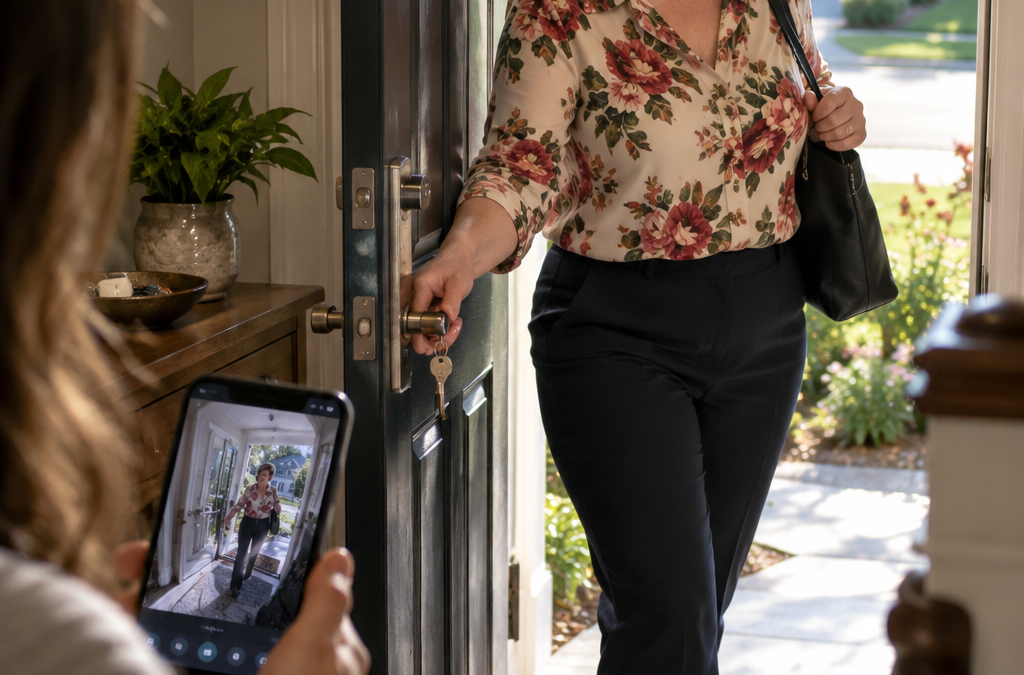
𝗙𝗨𝗟𝗟 𝗦𝗧𝗢𝗥𝗬
She hadn’t behaved like someone committing a trespass.
She had behaved like someone who believed she had every right to be there.
That frightened me more than anger would have.
That evening, I pulled out every HOA document I owned.
Bylaws.
Declaration.
Community rules.
Inspection policy.
Amendments.
Management notices.
I read all of it.
There were provisions allowing exterior inspections.
The HOA could inspect visible maintenance issues.
It could require owners to correct certain exterior problems.
There were procedures for emergency access related to shared systems.
There were notice provisions.
There were maintenance clauses.
What I did not find was a sentence that said Linda could unlock my private front door on a Saturday afternoon because she wanted to inspect something.
I read everything again.
Still nothing.
I printed the relevant pages.
Then I printed the pages around them so nobody could accuse me of quoting sections without context.
I put them into a folder.
That folder became important later.
The following morning, I called a locksmith.
I explained that an HOA representative apparently possessed a master key.
He asked a reasonable question.
“Do you want the exterior lock changed?”
“Yes.”
“But you’re in an HOA?”
“Yes.”
“Any requirement that management retain emergency access?”
“That’s what I’m confirming.”
I didn’t want to accidentally violate a legitimate emergency-access provision.
So I changed the interior locking arrangement in a way that gave me more control while I continued sorting out exactly what keys the association had and why.
I also installed a camera facing the front door.
Clear view of the porch.
Door.
Entryway.
Timestamped recording.
Motion alert to my phone.
I had never wanted cameras before.
I wasn’t interested in watching neighbors walk dogs.
But Linda had changed the calculation.
Evidence is useful when someone believes her interpretation of authority is enough to settle an argument.
I sent the HOA a written notice.
Simple.
Professional.
No insults.
No accusations beyond what had happened.
It stated that an HOA representative had entered my home without my permission.
It stated that future inspections must follow the association’s written notice procedures.
It requested written clarification of any claimed authority to access the interior of my home without owner consent.
I sent it by email.
Then by certified mail.
I wanted a record.
Linda appeared the next morning.
She didn’t knock.
At least not initially.
She stood across the sidewalk staring at the camera.
Then pointed toward it when I stepped outside.
“What is that?”
“A camera.”
“I know it’s a camera.”
“Then we’re doing well.”
“You’re recording the common area.”
“I’m recording my front door.”
“The sidewalk may be visible.”
“Yes.”
“Residents have privacy rights.”
“So do I.”
She frowned.
“This is because of yesterday?”
“Yes.”
“That’s excessive.”
“You unlocked my house.”
“I conducted an inspection.”
“Without permission.”
“The association has a master key for a reason.”
“What reason?”
“Access.”
I held up the folder.
“I read the bylaws.”
She looked at it but didn’t ask to see it.
“Then you know the HOA can inspect.”
“Exterior inspections with notice.”
“That isn’t the only authority.”
“Good. Show me the rest.”
She folded her arms.
“We’ve already discussed this.”
“No. You keep telling me what you believe. I’m asking where it’s written.”
“You can’t simply change locks and block association access.”
“If you believe that, put it in writing.”
She stared at me.
“What?”
“Send me a letter saying the HOA claims the right to override my lock and enter my home without permission.”
Her confidence shifted.
Just slightly.
“I don’t need to put every conversation in writing.”
“I do.”
“Why?”
“Because you’ve already entered once.”
Her eyes moved to the camera.
“Are you trying to threaten me?”
“No.”
“I’m documenting my door.”
“That camera creates a hostile environment.”
“Linda, the camera wasn’t here before you used a key to enter my house.”
She said nothing.
I continued.
“If the HOA has the authority you claim, document it.”
She looked at me for another few seconds.
Then walked away.
No letter came.
That told me something.
For several weeks, nothing happened.
No inspection request.
No confrontation.
No surprise entry.
I started believing the camera had done what I wanted.
Not caught anyone.
Prevented anyone from trying.
That was fine with me.
I didn’t want evidence.
I wanted privacy.
Then came Saturday.
I remember the morning because it was unusually quiet.
I had coffee in the kitchen.
Did some work around the house.
Nothing important.
My son Ethan had called the night before.
He was visiting relatives nearby and planned to stop over.
He had a ceremony later that day.
He had served in the Marines and still had his dress uniform with him because of the event.
We hadn’t planned anything dramatic.
He was coming to see his father.
That was all.
Around midmorning, I was in the back part of the house when I heard it.
Metal turning.
Front lock.
For half a second, I assumed Ethan.
Then my phone vibrated.
FRONT DOOR MOTION.
I opened the camera feed.
Linda.
She was standing inside my entryway.
Clipboard in hand.
Again.
No emergency.
No call.
No written notice.
No permission.
The second entry made the first one impossible to dismiss as misunderstanding.
She had been warned.
Directly.
She had received written notice.
The camera was visible.
And she had still used whatever key she possessed to enter.
My first instinct was to walk straight into the hallway and demand she leave.
I didn’t.
I stopped.
That may have been the most important decision I made.
Anger would have given Linda another argument.
Documentation gave her none.
I saved the recording.
Checked the timestamp.
Took a screenshot.
Made sure the video was uploading correctly.
Then I walked toward the front of the house.
Linda heard me.
“Oh.”
She sounded almost disappointed that I was home.
“What are you doing?”
“Follow-up inspection.”
“For what?”
She looked at the clipboard.
“Entry condition and access compliance.”
I stared at her.
“Access compliance?”
“Yes.”
“You unlocked my door to inspect whether you can unlock my door?”
She didn’t appreciate that.
“Don’t be ridiculous.”
“I’m trying very hard not to be.”
I pointed toward the porch.
“Outside.”
“I have documentation to complete.”
“Outside.”
She hesitated.
Then walked onto the porch.
I closed the door behind her.
Not slammed.
Closed.
Locked.
Then I called Ethan.
He answered immediately.
“Hey, Dad.”
“Where are you?”
“About twenty minutes away.”
“Linda entered the house again.”
There was a pause.
“The HOA woman?”
“Yes.”
“Using the key?”
“Yes.”
“You okay?”
“I’m fine.”
“Did she touch anything?”
“Not that I saw.”
“I’m coming.”
“You don’t have to rush.”
“I’m coming.”
There was no threat in his voice.
No dramatic promise.
Just certainty.
My son wanted to know his father was all right.
That was enough.
I didn’t tell Linda Ethan was coming.
There was no reason.
After the second entry, Linda disappeared for about half an hour.
I assumed she had gone home or to contact another board member.
Ethan arrived before she returned.
He came through the front door carrying a garment bag.
I told him exactly what happened.
Then showed him the recording.
He watched quietly.
Once.
Then again.
“She really just walked in.”
“Yes.”
“After you told them in writing not to.”
“Yes.”
“Do you have the letter?”
I handed him the folder.
He read the relevant bylaws.
Notice requirements.
Exterior inspection language.
Emergency access.
He nodded.
“Good.”
“What?”
“Keep all of this together.”
“I plan to.”
“Don’t argue with her about anything you don’t need to argue about.”
“I’ve learned.”
He looked at me.
“You angry?”
“Very.”
He nodded.
“Good reason.”
Then his expression softened.
“But you’re okay?”
“I’m okay.”
He hugged me.
Maybe that sounds like a small thing.
It wasn’t.
Getting older changes the direction of care.
For years, I had been the one checking whether Ethan was safe.
Making sure he came home.
Teaching him about locks.
Strangers.
Responsibility.
Then suddenly my son was standing in my hallway asking whether someone had frightened me inside my own home.
That realization hurt more than I expected.
“I’m fine,” I said again.
“I know.”
He picked up the garment bag.
“I need to change before the ceremony.”
“Go ahead.”
He used the guest room.
About ten minutes later, Linda returned.
This time she knocked.
That difference was almost insulting.
I opened the door but stayed in the doorway.
She stood on the porch holding her clipboard.
“I need your inspection records.”
“No.”
Her eyebrows lifted.
“Excuse me?”
“You can request whatever records you’re legally entitled to through the proper process.”
“I am following the process.”
“No, you aren’t.”
“I need documentation regarding the lock alteration and entry access.”
“My locks are not your personal records.”
“The HOA requires documentation when owners interfere with inspection access.”
“Show me the rule.”
She exhaled loudly.
“We are not doing this again.”
“We apparently are.”
She stepped closer.
I did not move.
“The association has access rights.”
“Then put them in writing.”
“I don’t need your permission to enforce HOA rules.”
“You need my permission to walk through my front door unless you have some lawful exception.”
Her voice sharpened.
“The HOA owns this house too.”
That sentence shocked me more than anything she’d said before.
“No.”
“The association has a legal interest.”
“That is not ownership.”
“It’s community property subject to association authority.”
“No.”
She pointed at the door.
“This property exists under HOA governance.”
“The HOA does not own my living room.”
“You are deliberately misunderstanding me.”
“I’m understanding you exactly.”
She stepped toward the threshold.
Then the door behind me opened.
Ethan came out.
Marine dress uniform.
Perfectly composed.
The effect on Linda was immediate.
She stopped talking.
I remember thinking how strange it was.
Nothing about the law had changed.
Nothing about the bylaws had changed.
The video had not changed.
Yet the sight of a Marine dress uniform instantly altered the confidence of a woman who had spent weeks acting as though authority was something you could wear.
Ethan didn’t exploit that.
That mattered to me.
He didn’t mention rank.
Didn’t claim military jurisdiction.
Didn’t tell her he could “make a call.”
He simply stepped beside me.
“Ma’am.”
Linda looked at him.
“Who are you?”
“I’m Ethan.”
He glanced at me.
“His son.”
That was it.
Not Marine.
Not veteran.
Not special authority.
His son.
Linda looked from the uniform to me.
“This is HOA business.”
Ethan nodded.
“Okay.”
That answer unsettled her.
He didn’t challenge her title.
Didn’t compete.
He simply asked:
“Why were you inside my father’s house this morning?”
Linda tightened her grip on the clipboard.
“I conducted an authorized inspection.”
“Written authorization?”
“I’m an HOA representative.”
Ethan’s voice remained even.
“That’s not what I asked.”
She looked at the clipboard.
“HOA rules authorize inspection.”
“Inside?”
“When necessary.”
“With notice?”
Linda’s eyes moved toward me.
I said nothing.
Ethan asked:
“Did you provide written notice before today?”
“I don’t need to explain HOA procedures to you.”
“That’s fair.”
Again, she seemed thrown off.
He continued.
“I’m not on the board.”
“No.”
“I’m not asking you to explain anything you don’t want to explain.”
Then he looked at me.
“Dad, show her the video.”
I opened the recording.
Timestamp.
Linda arriving.
Unlocking the door.
Entering.
Clipboard.
No knock visible.
No one inviting her.
No ambiguity.
I turned the screen toward her.
Linda watched several seconds.
Then said:
“I never denied entering.”
“Good,” I said.
“So we agree on what happened.”
“I was carrying out an inspection.”
“Show me the inspection notice.”
“I’ve already explained—”
“No.”
I kept my voice low.
“You’ve explained what you believe you’re allowed to do.”
I opened the folder.
“I’m asking for the written authority.”
She flipped several pages on her clipboard.
Nothing.
Then she made the mistake that ended the argument.
“The association issued master keys for exactly this reason.”
“What reason?”
“Because homeowners can’t refuse inspections.”
I looked at Ethan.
He looked at me.
I took out a pen.
“Say that again.”
Linda frowned.
“What?”
“I want to write your exact wording.”
“Don’t be absurd.”
I had already started.
I wrote:
Linda stated that the HOA master key exists because homeowners have no right to refuse an inspection.
Then I wrote the date and time.
Ethan said quietly:
“Dad, save every piece of this.”
“I will.”
Linda looked furious.
“You’re both trying to turn routine HOA procedure into something sinister.”
“No.”
I closed the folder.
“I’m trying to determine whether what you call routine procedure is actually authorized.”
“If you continue obstructing inspection access, the board will deal with it.”
“Then have the board write to me.”
She turned.
Before walking down the steps, she looked back.
“Your son being in uniform doesn’t intimidate me.”
Ethan answered before I could.
“It shouldn’t.”
Linda stopped.
“I’m here because he’s my father.”
Nothing else.
She walked away.
That answer mattered deeply to me.
Ethan could have made the moment about himself.
He didn’t.
The uniform didn’t become a threat.
It didn’t need to.
His presence simply reminded me I wasn’t standing there alone.
After Linda left, I called the property management company.
Until then, most of my dealings had been directly with the HOA board.
I wanted someone outside Linda’s immediate circle reviewing the situation.
I requested an official investigation.
The manager on duty asked what happened.
I explained.
Then said:
“I have video.”
His tone changed.
“You have her entering the residence?”
“Yes.”
“With a key?”
“Yes.”
“Today?”
“Today.”
He asked me to email the recording.
I did.
He watched it while we were still on the phone.
There was a long pause.
Then:
“Mr. —”
He stopped.
“Has this happened before?”
“Yes.”
“When?”
I gave him the date.
“Did you report it?”
“I notified the HOA in writing afterward.”
“Do you have that notice?”
“Yes.”
“Send that too.”
I did.
He asked:
“Is she still on the property?”
“No.”
“I’m coming over.”
He arrived later that afternoon.
I won’t pretend that made me feel triumphant.
By then, I was tired.
The entire day had been consumed by something that should never have happened.
All because one woman believed a master key meant authority.
The manager sat at my dining table.
Ethan remained nearby but said very little.
We reviewed the bylaws.
Exterior inspections.
Notice provisions.
Emergency entry.
The manager read the sections carefully.
Then asked:
“Did Linda identify an emergency?”
“No.”
“Shared-system failure?”
“No.”
“Water leak?”
“No.”
“Gas?”
“No.”
“Any safety concern?”
“No.”
“Did the board issue written inspection notice?”
“No.”
He leaned back.
“This clause doesn’t authorize routine unannounced interior entry.”
“That’s what I read.”
He looked at Ethan.
Then back at me.
“The association may have emergency-access mechanisms depending on the property configuration and governing documents, but that’s very different from an individual board member deciding to walk inside.”
“Exactly.”
We called Linda.
The manager asked her to come over.
She arrived twenty minutes later.
And for the first time since the whole thing began, I watched Linda answer questions from someone she couldn’t dismiss as a difficult homeowner.
The manager began simply.
“Why did you enter this residence?”
“Inspection.”
“What inspection?”
“Access compliance.”
“Who authorized it?”
“The HOA.”
“Who specifically?”
She hesitated.
“The board’s standing policy.”
“Show me.”
She flipped through her clipboard.
Nothing.
The manager continued.
“Where is the owner notice?”
“It was a routine inspection.”
“That doesn’t answer me.”
Linda looked at me.
“This is being blown completely out of proportion.”
The manager said:
“Did you use a master key?”
“Yes.”
“Who issued it?”
“The HOA maintains keys.”
“Who authorized you personally to use it at this address today?”
Silence.
“Linda?”
“I understood that homeowners could not obstruct board inspections.”
“Where did you get that understanding?”
“It’s always been the procedure.”
There it was again.
Always.
Everyone knows.
Routine.
Words used when paperwork is missing.
The manager opened the bylaws.
“Article language requires notice except under specific emergency circumstances.”
“This was a compliance issue.”
“It was not an emergency.”
“No.”
“Then notice was required.”
Linda shifted.
“The homeowner had changed access.”
“He changed his locks after you entered without permission.”
Her face reddened.
“He interfered with the master-key system.”
The manager looked at me.
“Did the HOA direct you in writing not to change the lock?”
“No.”
He looked at Linda.
“Did you?”
“No.”
“Did counsel?”
“No.”
“Did property management?”
“No.”
“Then why did you tell him the HOA could override his lock?”
Linda’s eyes narrowed.
“I never said it exactly like that.”
I pulled out my notes.
“Would you like to see what I wrote after our conversation?”
She didn’t answer.
Then she noticed Ethan again.
“Why is he even part of this meeting?”
Ethan spoke calmly.
“I’m not.”
She frowned.
“You’re sitting here.”
“Because this is my father’s house.”
“He isn’t an HOA member.”
“Correct.”
“I’m not representing him legally.”
“Then this has nothing to do with you.”
Ethan nodded.
“Legally? Probably not.”
He looked at me.
“I’m here because he’s my dad.”
That was all.
The manager didn’t need Ethan’s uniform.
He didn’t need military experience.
He needed the bylaws.
The footage.
The written notice.
That distinction became important later.
Linda tried once more.
“I was acting in good faith.”
The property manager replied:
“Good faith doesn’t create access authority.”
Silence.
He continued.
“If the documents require notice, you give notice.”
Linda looked down.
“And if there’s an emergency?”
“Then you follow emergency procedure.”
“I believed inspection rights were broader.”
“Then that belief needs to be corrected.”
She didn’t like that.
But there was nowhere left for the argument to go.
The HOA board scheduled an emergency meeting for that evening.
I was invited.
So was the property manager.
Ethan had his ceremony.
He should have left earlier.
I told him to go.
He hesitated.
“You sure?”
“Yes.”
“I can stay.”
“No.”
“This is more important.”
“No, it isn’t.”
He looked at me.
“You’re sure?”
“I have the video.”
He smiled.
“Good answer.”
Then he changed into the rest of what he needed for the ceremony, checked his uniform once in the hallway mirror, and hugged me before leaving.
“Call me after.”
“I will.”
“And Dad?”
“Yeah?”
“Don’t let them turn this into a debate about whether you were polite enough.”
I laughed.
“I raised you badly.”
“No. You raised me to save receipts.”
Then he left.
The board meeting started at seven.
For once, Linda wasn’t controlling the room.
The property manager presented the footage.
Not me.
That was better.
No emotion.
No long accusation.
Just:
Time.
Date.
Door.
Key.
Entry.
The board members watched Linda unlock my home and step inside.
Nobody could claim there had been confusion over whether entry occurred.
Then the manager presented my written notice from weeks earlier.
I had explicitly told the HOA that future inspections required proper notice and consent consistent with the governing documents.
Then the relevant bylaw.
Notice required.
Emergency exception limited.
No blanket personal inspection authority.
One board member asked Linda:
“Why did you go back?”
She answered:
“Because he changed the lock.”
“Why did that require entering the house?”
“To verify access.”
Another board member frowned.
“You entered because you wanted to make sure you could still enter?”
Linda looked annoyed.
“That’s an oversimplification.”
It wasn’t.
The board president asked:
“Did you believe the master key gave you authority to enter any residence?”
“When inspection was necessary.”
“Who decided necessity?”
“The inspection representative.”
“You.”
“In this case.”
“So yes.”
Linda became defensive.
“Someone has to enforce the rules.”
The president looked at the property manager.
“Does the board actually have this authority?”
He answered carefully.
“Not under the inspection clause being cited here.”
That sentence ended it.
The board voted that night to suspend Linda’s inspection privileges while the matter was reviewed.
Not remove her from the entire HOA.
Not publicly humiliate her.
Not pretend every action she had ever taken was invalid.
They addressed the specific problem.
That seemed right.
Then they addressed the keys.
That mattered even more.
The association had accumulated old emergency keys through previous management practices.
Nobody could clearly explain how many existed.
Who had copies.
Which homes they opened.
Why certain board volunteers had been allowed to carry them.
The property manager looked increasingly unhappy as the discussion continued.
A key-control review was ordered immediately.
Private-residence access was restricted.
Routine board inspections would not involve interior entry without required notice and consent.
Emergency access would be controlled through formal management procedures rather than individual volunteers keeping broad master access.
My front door would no longer be treated like an HOA office entrance.
I went home exhausted.
Ethan called after his ceremony.
“What happened?”
“She’s suspended from inspections.”
“Good.”
“They’re changing the key procedures.”
“Better.”
“No dramatic arrest.”
He laughed.
“Were you expecting one?”
“No.”
“Good.”
I sat in the dark living room.
Only a lamp beside the chair was on.
Then I said something I hadn’t planned to say.
“Thank you for coming.”
“Of course.”
“No.”
I looked toward the front door.
“Really.”
He understood.
His voice softened.
“You’re my dad.”
That was enough.
A few days later, Linda returned.
I saw her through the front window.
This time, she stayed on the sidewalk.
That detail mattered.
She didn’t walk up to the door until I opened it.
“Can we talk?”
“From there.”
She nodded.
Fair.
“I’m sorry.”
I waited.
She looked uncomfortable.
“I misunderstood the scope of the HOA’s inspection authority.”
That sounded partly written by someone else.
Still, she said it.
“I shouldn’t have entered your house.”
“No.”
“I believed the master key gave the board broader access.”
“I know.”
She looked toward the camera.
“I thought you were trying to embarrass me.”
“The camera?”
“All of it.”
“I was trying to keep you out of my house.”
She nodded.
“I understand that now.”
I believed she did.
Not necessarily because her philosophy had transformed.
Because there were now consequences and written rules she couldn’t interpret around.
Sometimes that’s enough.
“I won’t enter again.”
“Good.”
She hesitated.
Then said:
“I really did think I was doing my job.”
“I believe you.”
She seemed surprised.
“Then—”
“Linda.”
I stepped onto the porch.
“Believing you’re doing your job doesn’t give you authority you don’t have.”
She looked down.
“I know.”
That was the most genuine thing she said.
She left.
On foot.
From the sidewalk.
No clipboard.
A week later, every homeowner received a formal notice from the HOA.
ACCESS AND INSPECTION PROCEDURE UPDATE.
It clarified exterior inspections.
Interior access.
Notice.
Consent.
Emergency exceptions.
Key custody.
No surprise entries.
No vague suggestion that being part of an HOA meant a board member could treat your private home like common property.
I read the notice twice.
Then put it in the folder.
Not because I expected another problem.
Because records matter.
The camera stayed.
So did the improved lock.
For the first few weeks, every time my phone sent a motion alert, I checked it immediately.
Delivery driver.
Neighbor.
Bird.
Ethan once stood directly in front of the camera making a ridiculous face until I called him.
“You’re forty years old.”
“Still your son.”
“Unfortunately.”
He laughed.
Then came inside using the key I had actually given him.
That distinction made me smile.
Permission.
That’s what the entire fight had been about.
Not locks.
Not cameras.
Not Marine uniforms.
Permission.
Linda thought HOA membership reduced permission to an inconvenience.
I disagreed.
The bylaws agreed with me.
Months later, the whole incident became less sharp.
That’s what happens after boundaries are restored.
The house felt like mine again.
I stopped listening for the lock every time I heard footsteps outside.
The camera became something I mostly ignored.
Linda remained involved with the association, but she no longer conducted inspections at private homes.
When we saw each other, we were civil.
She nodded.
I nodded.
No friendship.
No ongoing war.
That suited me.
One afternoon, I was sitting on the porch when another neighbor stopped.
“I heard you’re the reason they changed the key policy.”
“Apparently.”
“I didn’t even know board members had keys.”
“Neither did I.”
He stared at my door.
“That’s creepy.”
“Yes.”
“Did the Marine scare her?”
I knew exactly how the neighborhood version of the story had mutated.
“No.”
“Come on.”
“He stood beside me.”
“In uniform.”
“He had a ceremony.”
“But she backed down.”
“Because the documents proved she was wrong.”
The neighbor smiled.
“Uniform probably helped.”
Maybe visually.
Human beings react to symbols.
That’s obvious.
Linda was comfortable when she believed she was the only authority on the porch.
Then Ethan stepped out wearing a uniform associated with discipline and service, and for one second, her confidence collapsed.
But I refused to let that become the lesson.
Ethan didn’t order her off the property.
Didn’t claim military authority.
Didn’t intimidate.
He asked whether she had written permission.
That’s all.
The question mattered more than the uniform.
Who authorized you?
Show me.
Where is it written?
Those questions had been the entire dispute from the beginning.
Linda’s answer was always some version of:
Everyone knows.
We’ve always done this.
The HOA needs access.
None of those are documents.
None are consent.
None are law.
I learned something uncomfortable through the experience.
Most abuses of small authority don’t begin with someone thinking:
I am going to violate another person’s rights today.
They often begin with:
This is how we do things.
Then nobody asks why.
A master key exists.
Someone uses it once.
Nobody complains.
Then twice.
Eventually the key stops feeling like emergency equipment and starts feeling like permission.
That’s dangerous.
Not because everybody carrying the key is malicious.
Because convenience slowly rewrites boundaries if nobody stops it.
Linda wasn’t breaking into houses to steal jewelry.
She wasn’t looking for money.
In her mind, that probably proved she wasn’t doing anything seriously wrong.
But privacy isn’t protected only from thieves.
A person doesn’t have to intend harm to cross a line.
I sometimes think about what would have happened if I hadn’t installed the camera.
The second entry still would have happened.
I would have said she entered.
She would have said it was an authorized inspection.
The board might have believed whichever person sounded more certain.
Maybe they’d call it a misunderstanding.
Maybe I’d be told to cooperate.
Maybe the policy would never change.
The camera eliminated that problem.
It didn’t argue.
Didn’t exaggerate.
Didn’t get angry.
Linda used the key.
Door opened.
Linda entered.
Timestamp.
That was it.
Good evidence is strangely calming.
Once you have it, you don’t need to shout as much.
The folder did the same thing.
Every bylaw.
Every notice.
Every email.
When people asked what happened, I didn’t need to say:
Trust me.
I could say:
Read this.
That lesson stayed with Ethan too.
Several months after the incident, he came over for dinner.
We were talking about something completely unrelated when he noticed the folder still on the shelf.
“You kept it?”
“Of course.”
“Everything?”
“Everything.”
He laughed.
“I’ve created a monster.”
“You told me to save everything.”
“I didn’t think you’d preserve it like the Constitution.”
“You Marine types believe in documentation.”
“That’s not what Marines are famous for.”
We laughed.
Then he became serious.
“You know what bothered me?”
“What?”
“She made you doubt whether your own door was actually yours to control.”
I thought about that.
He was right.
After the first entry, I had gone straight to the bylaws.
Why?
Because a woman with a clipboard and a master key had acted so confident that part of me wondered whether I had missed something fundamental.
Maybe the HOA really did have broad interior access.
Maybe I had signed something years earlier.
Maybe homeownership in an HOA worked differently than I understood.
It didn’t.
But confidence can make reasonable people second-guess obvious boundaries.
“That’s why I read everything,” I said.
Ethan nodded.
“And?”
“And she was wrong.”
“You sound disappointed.”
“No.”
I looked toward the front door.
“I just don’t like how easy it was for her to make me wonder.”
He understood that too.
A year later, the association replaced its management company.
The new company reviewed all access procedures from scratch.
Physical master keys to private residences were largely eliminated except where legally and contractually necessary for specific managed systems, and those were placed under controlled custody.
Board volunteers did not carry them.
Inspection notices became standardized.
Date.
Purpose.
Scope.
Contact information.
Interior access required an actual basis.
Emergency entry had to be documented afterward.
Boring rules.
Good rules.
Nobody wrote:
Because Linda walked into Mr. ___’s house twice.
They didn’t need to.
Policies work best when they’re written for everybody, not as punishment for one person.
The first inspection notice I received under the new system almost made me laugh.
Dear Homeowner,
A scheduled exterior inspection of the rear drainage outlet will occur Thursday between 10:00 a.m. and noon. No interior access is requested or required.
Clear.
Simple.
I didn’t object.
I even unlocked the side gate so the inspector could reach the drainage area.
That’s the point people sometimes miss.
I wasn’t against inspections.
I wasn’t against the HOA.
I was against somebody deciding that because an inspection might be useful, consent became unnecessary.
A functioning community depends on access sometimes.
Plumbers need access.
Firefighters may need access.
Utility workers may need access.
HOA contractors occasionally need access.
There are systems for that.
Notice.
Appointments.
Emergency procedures.
Keys controlled by accountable people.
The solution is not one board member carrying a master key and deciding for herself when your home becomes available.
One Sunday morning, Ethan and I sat on the porch drinking coffee.
He wasn’t in uniform.
Jeans.
Old sweatshirt.
He looked more like the boy who used to leave tools in my garage than the Marine who had stepped through the door that day.
He pointed toward the camera.
“Still recording?”
“Yes.”
“You ever watch it?”
“Mostly delivery people.”
“Exciting.”
“Very.”
He smiled.
Then asked:
“If Linda had apologized the first time, would you have put it up?”
“Probably not.”
“Really?”
“I didn’t want a camera.”
“You like it now.”
“I tolerate it.”
He nodded.
“She created the thing she complained about.”
“Pretty much.”
We sat quietly.
Then I said:
“You know the uniform wasn’t what changed things.”
He laughed.
“I know.”
“People tell the story like you scared her.”
“Did I?”
“You know you did a little.”
“I stood there.”
“Exactly.”
He smiled.
“But I didn’t want that to be why.”
“It wasn’t.”
I looked at him.
“The video changed things.”
“Good.”
“The bylaws changed things.”
“Better.”
“The manager asking the right questions changed things.”
He nodded.
Then he said:
“But I was still glad to be there.”
That hit me harder than he intended.
“I’m glad you were too.”
There are moments when your children become adults without announcing it.
Not birthdays.
Not graduations.
Not uniforms.
Just a moment when you realize the person standing beside you isn’t someone you’re protecting anymore.
They’re protecting you too.
Not because you’re helpless.
Because that’s what family does.
Linda unintentionally gave me one of those moments.
I would have preferred another way.
But I won’t forget it.
The strangest thing is that my house didn’t physically change much afterward.
Same front door.
Same porch.
Same hallway.
Same walls.
If you walked past, nothing about it told you someone had once believed an HOA master key gave her the right to enter.
But I changed the way I thought about boundaries.
Before Linda, a boundary was something I assumed sensible people understood.
After Linda, I realized boundaries sometimes need documentation.
Not because the boundary becomes more legitimate.
Because documentation keeps someone else’s confidence from rewriting it.
I don’t frame the bylaws.
I don’t show visitors the footage.
The video is stored in more than one place, but I haven’t watched it in a long time.
I don’t need to.
The issue is finished.
My front door is a front door again.
Not evidence.
Not an argument.
Not an inspection access point.
Just the entrance to my home.
Linda eventually stopped serving on the board.
Not immediately.
Months later.
I don’t know whether our incident had anything to do with it.
I never asked.
By then, I wasn’t interested in what happened to her position.
The policy had changed.
That’s what mattered.
A new homeowner moved into the neighborhood later and asked me something interesting.
He had heard pieces of the story.
“Did you ever think about suing?”
I told him the truth.
“Not seriously.”
“Why not?”
“I wanted her to stop entering.”
“That’s it?”
“That’s enough.”
He seemed disappointed.
People enjoy large endings.
Courtrooms.
Damages.
Public humiliation.
I understand why.
But not every violation needs to become a war.
Once the HOA acknowledged the rule, changed access procedures, suspended Linda’s inspection role, and ensured the key issue was corrected, I had what I needed.
Privacy restored.
That was the victory, if you want to call it one.
There was another reason.
I didn’t want to spend the next year letting Linda occupy more of my life.
Anger can become another kind of unauthorized entry.
You think you’re punishing the other person by staying furious.
Mostly, you’re letting them keep a room in your head.
I’d already had enough unwanted visitors.
So I moved on.
The folder stayed.
The lesson stayed.
The resentment didn’t need to.
If I had to reduce everything to one moment, it wouldn’t be Ethan stepping onto the porch in dress uniform.
It wouldn’t be Linda’s face changing.
It wouldn’t even be the emergency board meeting.
It would be the first night.
Me alone at the dining table.
HOA documents spread everywhere.
Reading page after page because someone else had been confident enough to make me question whether I controlled access to my own home.
That was when I learned something I wish I had understood earlier.
Whenever somebody claims authority over something important to you, asking them to show you the authority isn’t disrespect.
It’s responsibility.
Where is it written?
Who approved it?
What does it actually allow?
What limits apply?
If the authority is legitimate, those questions should be easy.
If asking those questions makes someone angry, ask more carefully.
Linda’s entire argument depended on nobody separating possession of a key from permission to use it.
She had the key.
That was true.
She was an HOA representative.
Also true.
The HOA had inspection powers.
True again.
Then came the leap.
Therefore, she could enter my house whenever she decided an inspection was needed.
That part wasn’t true.
The details mattered.
They usually do.
A master key is not a deed.
A clipboard is not consent.
An inspection clause is not unlimited access.
An HOA’s interest in maintaining standards does not turn a private living room into a common area.
And a homeowner asking to see the rule isn’t being difficult.
Sometimes he’s the only person making sure the rule hasn’t become whatever the most confident person says it is.
Linda thought unlocking my door would prove she had power over my home.
Instead, the second entry forced everyone to look at the documents she had been invoking without reading carefully enough.
Once they did, the outcome wasn’t complicated.
Notice meant notice.
Consent meant consent.
Emergency meant emergency.
Private meant private.
Ethan didn’t need to raise his voice.
I didn’t need to threaten anyone.
The property manager didn’t need a speech.
The video showed what happened.
The bylaws showed what should have happened.
Everything else followed from the difference.
And that is why, even now, when I hear the front lock turn, I still notice it.
Not fear.
Just awareness.
Most of the time it’s Ethan.
Sometimes another family member.
Always someone with a key I chose to give them.
That’s the part Linda never understood until the end.
Having a key can open a door.
Only permission gives you the right to walk through it.
𝗧𝗛𝗘 𝗘𝗡𝗗
The HOA President Had a Master Key to My Front Door, and She Was Certain I Couldn’t Stop Her From Using It
The first time Linda unlocked my front door and stepped into my house without permission, I convinced myself there had to be some misunderstanding because no reasonable person could believe an HOA badge gave her the right to walk into someone else’s home.
The second time I watched her do it live through my security camera, I stopped asking whether she understood the boundary and started making sure nobody could deny she had crossed it.
I had lived in that house long enough to know every sound it made.
The slight knock in the plumbing when the washing machine stopped filling.
The click from the hallway vent when the furnace came on.
The dull creak in the floor outside the guest bedroom.
And the particular metallic sound my front-door lock made when someone turned a key from outside.
That last sound had always meant something familiar.
My son arriving.
A family member checking on me.
Me coming home with groceries and fumbling with the lock.
It had never meant a stranger was letting herself inside.
Until Linda.
The neighborhood itself was quiet.
That was why I had stayed.
The houses weren’t enormous, but they were well maintained. Mature trees shaded the sidewalks. Most people waved when they saw each other. The HOA had existed longer than I’d lived there, and for the most part, I had no problem with it.
They handled landscaping in common areas.
Maintained the entrance sign.
Dealt with drainage issues.
Sent reminders about exterior repairs.
Sometimes the rules were annoying.
That’s true of almost every HOA.
But for years, the inconvenience was minor.
Then Linda joined the board.
Eventually, she became the person who seemed to handle nearly every inspection issue.
I don’t remember anyone formally announcing that she had acquired more authority.
It simply happened.
A letter would arrive.
Linda’s name would be at the bottom.
Someone would ask a question at a meeting.
Linda answered before anyone else.
A homeowner wanted clarification about a fence.
Linda interpreted the rule.
There were other board members, but Linda behaved as if the HOA operated through her.
She liked the word inspection.
Exterior inspection.
Compliance inspection.
Follow-up inspection.
Maintenance inspection.
She could make looking at someone’s gutter sound like a federal procedure.
At first, none of that concerned me.
My home was ordinary.
I kept the lawn cut.
The paint wasn’t peeling.
My trash cans stayed behind the side fence.
I didn’t have a boat in the driveway or a shed painted some forbidden color.
I wasn’t trying to fight the board.
Then one afternoon I came home and noticed something that bothered me immediately.
The front door wasn’t closed quite right.
Not open.
Just resting against the frame without fully catching.
I stopped on the porch.
I knew I had locked it.
I always locked it.
Not because I lived in fear.
Because locking a door is one of those habits you stop thinking about after doing it for decades.
I pushed it open.
“Hello?”
Nothing.
The house looked normal.
Television off.
Kitchen empty.
Nothing moved.
Nothing missing.
For a moment I wondered whether I had somehow forgotten to lock it.
Then Linda stepped out from the hallway.
Inside my house.
Holding a clipboard.
I stared at her.
She smiled as though finding an HOA board member standing in your hallway was perfectly ordinary.
“Oh, you’re back.”
I didn’t answer immediately.
My mind was trying to fit the scene into something reasonable.
“Linda.”
“Yes?”
“What are you doing in my house?”
“I’m checking the utility access area.”
She said it casually.
As if that settled everything.
“What utility access area?”
“The board received a question about interior shutoff locations in several units.”
“My house isn’t a unit.”
“You know what I mean.”
“No.”
I put my keys down.
“What I mean is, how did you get inside?”
She lifted one hand.
“Master key.”
I thought she was joking.
“You have a key to my house?”
“The association maintains emergency access.”
“Emergency?”
“Yes.”
“What emergency is happening right now?”
She sighed.
“There doesn’t have to be an emergency every time we inspect something.”
I could feel the anger rising.
Not explosive.
Cold.
The kind that comes when something feels deeply wrong before you’ve even sorted out exactly why.
“You unlocked my front door.”
“Correct.”
“Without calling.”
“I knocked.”
“I wasn’t home.”
“Exactly.”
That answer stunned me.
“Exactly?”
“If you had been home, you could’ve let me in.”
I stared at her.
“And because I wasn’t, you decided to unlock my house yourself.”
“We needed access.”
“No.”
She blinked.
“No?”
“You wanted access.”
Her expression changed.
“The HOA has inspection obligations.”
“Outside.”
“Not exclusively.”
“Show me.”
She looked irritated.
“Show you what?”
“The rule that allows you to unlock my front door whenever you want.”
“Everyone knows the rules.”
“No.”
I pointed toward the door.
“Everyone knows knocking. Everyone knows asking permission. I’m asking about the rule that says you get to ignore both.”
Linda closed her clipboard.
“You’re becoming unnecessarily confrontational.”
I almost laughed.
“You are standing inside my house.”
“And I’m leaving.”
“Good.”
She walked toward me.
When she reached the front door, I stepped aside.
Before she left, I said:
“Linda.”
She turned.
“Do not use that key again.”
She gave me a small smile.
Not apologetic.
More like I was being dramatic.
“If an inspection is required, the HOA needs access.”
“No.”
“I don’t think you understand how association property works.”
“I understand how my front door works.”
“You own the interior subject to HOA regulations.”
“That’s very different from the HOA owning my house.”
“I didn’t say it owned your house.”
“Then don’t enter it again without my permission.”
She shrugged.
“We’ll see what the board says.”
Then she walked away.
I stood in the doorway watching her.
For the first time since I’d moved there, my own house felt slightly wrong.
Nothing had been stolen.
Nothing had been damaged.
That almost made the intrusion harder to explain.
If someone breaks a window, you know you’ve been burglarized.
If somebody kicks in your door, the violation is obvious.
But Linda had used a key.
Quietly.
Officially.
Clipboard in hand.
She hadn’t behaved like someone committing a trespass.
She had behaved like someone who believed she had every right to be there.
That frightened me more than anger would have.
That evening, I pulled out every HOA document I owned.
Bylaws.
Declaration.
Community rules.
Inspection policy.
Amendments.
Management notices.
I read all of it.
There were provisions allowing exterior inspections.
The HOA could inspect visible maintenance issues.
It could require owners to correct certain exterior problems.
There were procedures for emergency access related to shared systems.
There were notice provisions.
There were maintenance clauses.
What I did not find was a sentence that said Linda could unlock my private front door on a Saturday afternoon because she wanted to inspect something.
I read everything again.
Still nothing.
I printed the relevant pages.
Then I printed the pages around them so nobody could accuse me of quoting sections without context.
I put them into a folder.
That folder became important later.
The following morning, I called a locksmith.
I explained that an HOA representative apparently possessed a master key.
He asked a reasonable question.
“Do you want the exterior lock changed?”
“Yes.”
“But you’re in an HOA?”
“Yes.”
“Any requirement that management retain emergency access?”
“That’s what I’m confirming.”
I didn’t want to accidentally violate a legitimate emergency-access provision.
So I changed the interior locking arrangement in a way that gave me more control while I continued sorting out exactly what keys the association had and why.
I also installed a camera facing the front door.
Clear view of the porch.
Door.
Entryway.
Timestamped recording.
Motion alert to my phone.
I had never wanted cameras before.
I wasn’t interested in watching neighbors walk dogs.
But Linda had changed the calculation.
Evidence is useful when someone believes her interpretation of authority is enough to settle an argument.
I sent the HOA a written notice.
Simple.
Professional.
No insults.
No accusations beyond what had happened.
It stated that an HOA representative had entered my home without my permission.
It stated that future inspections must follow the association’s written notice procedures.
It requested written clarification of any claimed authority to access the interior of my home without owner consent.
I sent it by email.
Then by certified mail.
I wanted a record.
Linda appeared the next morning.
She didn’t knock.
At least not initially.
She stood across the sidewalk staring at the camera.
Then pointed toward it when I stepped outside.
“What is that?”
“A camera.”
“I know it’s a camera.”
“Then we’re doing well.”
“You’re recording the common area.”
“I’m recording my front door.”
“The sidewalk may be visible.”
“Yes.”
“Residents have privacy rights.”
“So do I.”
She frowned.
“This is because of yesterday?”
“Yes.”
“That’s excessive.”
“You unlocked my house.”
“I conducted an inspection.”
“Without permission.”
“The association has a master key for a reason.”
“What reason?”
“Access.”
I held up the folder.
“I read the bylaws.”
She looked at it but didn’t ask to see it.
“Then you know the HOA can inspect.”
“Exterior inspections with notice.”
“That isn’t the only authority.”
“Good. Show me the rest.”
She folded her arms.
“We’ve already discussed this.”
“No. You keep telling me what you believe. I’m asking where it’s written.”
“You can’t simply change locks and block association access.”
“If you believe that, put it in writing.”
She stared at me.
“What?”
“Send me a letter saying the HOA claims the right to override my lock and enter my home without permission.”
Her confidence shifted.
Just slightly.
“I don’t need to put every conversation in writing.”
“I do.”
“Why?”
“Because you’ve already entered once.”
Her eyes moved to the camera.
“Are you trying to threaten me?”
“No.”
“I’m documenting my door.”
“That camera creates a hostile environment.”
“Linda, the camera wasn’t here before you used a key to enter my house.”
She said nothing.
I continued.
“If the HOA has the authority you claim, document it.”
She looked at me for another few seconds.
Then walked away.
No letter came.
That told me something.
For several weeks, nothing happened.
No inspection request.
No confrontation.
No surprise entry.
I started believing the camera had done what I wanted.
Not caught anyone.
Prevented anyone from trying.
That was fine with me.
I didn’t want evidence.
I wanted privacy.
Then came Saturday.
I remember the morning because it was unusually quiet.
I had coffee in the kitchen.
Did some work around the house.
Nothing important.
My son Ethan had called the night before.
He was visiting relatives nearby and planned to stop over.
He had a ceremony later that day.
He had served in the Marines and still had his dress uniform with him because of the event.
We hadn’t planned anything dramatic.
He was coming to see his father.
That was all.
Around midmorning, I was in the back part of the house when I heard it.
Metal turning.
Front lock.
For half a second, I assumed Ethan.
Then my phone vibrated.
FRONT DOOR MOTION.
I opened the camera feed.
Linda.
She was standing inside my entryway.
Clipboard in hand.
Again.
No emergency.
No call.
No written notice.
No permission.
The second entry made the first one impossible to dismiss as misunderstanding.
She had been warned.
Directly.
She had received written notice.
The camera was visible.
And she had still used whatever key she possessed to enter.
My first instinct was to walk straight into the hallway and demand she leave.
I didn’t.
I stopped.
That may have been the most important decision I made.
Anger would have given Linda another argument.
Documentation gave her none.
I saved the recording.
Checked the timestamp.
Took a screenshot.
Made sure the video was uploading correctly.
Then I walked toward the front of the house.
Linda heard me.
“Oh.”
She sounded almost disappointed that I was home.
“What are you doing?”
“Follow-up inspection.”
“For what?”
She looked at the clipboard.
“Entry condition and access compliance.”
I stared at her.
“Access compliance?”
“Yes.”
“You unlocked my door to inspect whether you can unlock my door?”
She didn’t appreciate that.
“Don’t be ridiculous.”
“I’m trying very hard not to be.”
I pointed toward the porch.
“Outside.”
“I have documentation to complete.”
“Outside.”
She hesitated.
Then walked onto the porch.
I closed the door behind her.
Not slammed.
Closed.
Locked.
Then I called Ethan.
He answered immediately.
“Hey, Dad.”
“Where are you?”
“About twenty minutes away.”
“Linda entered the house again.”
There was a pause.
“The HOA woman?”
“Yes.”
“Using the key?”
“Yes.”
“You okay?”
“I’m fine.”
“Did she touch anything?”
“Not that I saw.”
“I’m coming.”
“You don’t have to rush.”
“I’m coming.”
There was no threat in his voice.
No dramatic promise.
Just certainty.
My son wanted to know his father was all right.
That was enough.
I didn’t tell Linda Ethan was coming.
There was no reason.
After the second entry, Linda disappeared for about half an hour.
I assumed she had gone home or to contact another board member.
Ethan arrived before she returned.
He came through the front door carrying a garment bag.
I told him exactly what happened.
Then showed him the recording.
He watched quietly.
Once.
Then again.
“She really just walked in.”
“Yes.”
“After you told them in writing not to.”
“Yes.”
“Do you have the letter?”
I handed him the folder.
He read the relevant bylaws.
Notice requirements.
Exterior inspection language.
Emergency access.
He nodded.
“Good.”
“What?”
“Keep all of this together.”
“I plan to.”
“Don’t argue with her about anything you don’t need to argue about.”
“I’ve learned.”
He looked at me.
“You angry?”
“Very.”
He nodded.
“Good reason.”
Then his expression softened.
“But you’re okay?”
“I’m okay.”
He hugged me.
Maybe that sounds like a small thing.
It wasn’t.
Getting older changes the direction of care.
For years, I had been the one checking whether Ethan was safe.
Making sure he came home.
Teaching him about locks.
Strangers.
Responsibility.
Then suddenly my son was standing in my hallway asking whether someone had frightened me inside my own home.
That realization hurt more than I expected.
“I’m fine,” I said again.
“I know.”
He picked up the garment bag.
“I need to change before the ceremony.”
“Go ahead.”
He used the guest room.
About ten minutes later, Linda returned.
This time she knocked.
That difference was almost insulting.
I opened the door but stayed in the doorway.
She stood on the porch holding her clipboard.
“I need your inspection records.”
“No.”
Her eyebrows lifted.
“Excuse me?”
“You can request whatever records you’re legally entitled to through the proper process.”
“I am following the process.”
“No, you aren’t.”
“I need documentation regarding the lock alteration and entry access.”
“My locks are not your personal records.”
“The HOA requires documentation when owners interfere with inspection access.”
“Show me the rule.”
She exhaled loudly.
“We are not doing this again.”
“We apparently are.”
She stepped closer.
I did not move.
“The association has access rights.”
“Then put them in writing.”
“I don’t need your permission to enforce HOA rules.”
“You need my permission to walk through my front door unless you have some lawful exception.”
Her voice sharpened.
“The HOA owns this house too.”
That sentence shocked me more than anything she’d said before.
“No.”
“The association has a legal interest.”
“That is not ownership.”
“It’s community property subject to association authority.”
“No.”
She pointed at the door.
“This property exists under HOA governance.”
“The HOA does not own my living room.”
“You are deliberately misunderstanding me.”
“I’m understanding you exactly.”
She stepped toward the threshold.
Then the door behind me opened.
Ethan came out.
Marine dress uniform.
Perfectly composed.
The effect on Linda was immediate.
She stopped talking.
I remember thinking how strange it was.
Nothing about the law had changed.
Nothing about the bylaws had changed.
The video had not changed.
Yet the sight of a Marine dress uniform instantly altered the confidence of a woman who had spent weeks acting as though authority was something you could wear.
Ethan didn’t exploit that.
That mattered to me.
He didn’t mention rank.
Didn’t claim military jurisdiction.
Didn’t tell her he could “make a call.”
He simply stepped beside me.
“Ma’am.”
Linda looked at him.
“Who are you?”
“I’m Ethan.”
He glanced at me.
“His son.”
That was it.
Not Marine.
Not veteran.
Not special authority.
His son.
Linda looked from the uniform to me.
“This is HOA business.”
Ethan nodded.
“Okay.”
That answer unsettled her.
He didn’t challenge her title.
Didn’t compete.
He simply asked:
“Why were you inside my father’s house this morning?”
Linda tightened her grip on the clipboard.
“I conducted an authorized inspection.”
“Written authorization?”
“I’m an HOA representative.”
Ethan’s voice remained even.
“That’s not what I asked.”
She looked at the clipboard.
“HOA rules authorize inspection.”
“Inside?”
“When necessary.”
“With notice?”
Linda’s eyes moved toward me.
I said nothing.
Ethan asked:
“Did you provide written notice before today?”
“I don’t need to explain HOA procedures to you.”
“That’s fair.”
Again, she seemed thrown off.
He continued.
“I’m not on the board.”
“No.”
“I’m not asking you to explain anything you don’t want to explain.”
Then he looked at me.
“Dad, show her the video.”
I opened the recording.
Timestamp.
Linda arriving.
Unlocking the door.
Entering.
Clipboard.
No knock visible.
No one inviting her.
No ambiguity.
I turned the screen toward her.
Linda watched several seconds.
Then said:
“I never denied entering.”
“Good,” I said.
“So we agree on what happened.”
“I was carrying out an inspection.”
“Show me the inspection notice.”
“I’ve already explained—”
“No.”
I kept my voice low.
“You’ve explained what you believe you’re allowed to do.”
I opened the folder.
“I’m asking for the written authority.”
She flipped several pages on her clipboard.
Nothing.
Then she made the mistake that ended the argument.
“The association issued master keys for exactly this reason.”
“What reason?”
“Because homeowners can’t refuse inspections.”
I looked at Ethan.
He looked at me.
I took out a pen.
“Say that again.”
Linda frowned.
“What?”
“I want to write your exact wording.”
“Don’t be absurd.”
I had already started.
I wrote:
Linda stated that the HOA master key exists because homeowners have no right to refuse an inspection.
Then I wrote the date and time.
Ethan said quietly:
“Dad, save every piece of this.”
“I will.”
Linda looked furious.
“You’re both trying to turn routine HOA procedure into something sinister.”
“No.”
I closed the folder.
“I’m trying to determine whether what you call routine procedure is actually authorized.”
“If you continue obstructing inspection access, the board will deal with it.”
“Then have the board write to me.”
She turned.
Before walking down the steps, she looked back.
“Your son being in uniform doesn’t intimidate me.”
Ethan answered before I could.
“It shouldn’t.”
Linda stopped.
“I’m here because he’s my father.”
Nothing else.
She walked away.
That answer mattered deeply to me.
Ethan could have made the moment about himself.
He didn’t.
The uniform didn’t become a threat.
It didn’t need to.
His presence simply reminded me I wasn’t standing there alone.
After Linda left, I called the property management company.
Until then, most of my dealings had been directly with the HOA board.
I wanted someone outside Linda’s immediate circle reviewing the situation.
I requested an official investigation.
The manager on duty asked what happened.
I explained.
Then said:
“I have video.”
His tone changed.
“You have her entering the residence?”
“Yes.”
“With a key?”
“Yes.”
“Today?”
“Today.”
He asked me to email the recording.
I did.
He watched it while we were still on the phone.
There was a long pause.
Then:
“Mr. —”
He stopped.
“Has this happened before?”
“Yes.”
“When?”
I gave him the date.
“Did you report it?”
“I notified the HOA in writing afterward.”
“Do you have that notice?”
“Yes.”
“Send that too.”
I did.
He asked:
“Is she still on the property?”
“No.”
“I’m coming over.”
He arrived later that afternoon.
I won’t pretend that made me feel triumphant.
By then, I was tired.
The entire day had been consumed by something that should never have happened.
All because one woman believed a master key meant authority.
The manager sat at my dining table.
Ethan remained nearby but said very little.
We reviewed the bylaws.
Exterior inspections.
Notice provisions.
Emergency entry.
The manager read the sections carefully.
Then asked:
“Did Linda identify an emergency?”
“No.”
“Shared-system failure?”
“No.”
“Water leak?”
“No.”
“Gas?”
“No.”
“Any safety concern?”
“No.”
“Did the board issue written inspection notice?”
“No.”
He leaned back.
“This clause doesn’t authorize routine unannounced interior entry.”
“That’s what I read.”
He looked at Ethan.
Then back at me.
“The association may have emergency-access mechanisms depending on the property configuration and governing documents, but that’s very different from an individual board member deciding to walk inside.”
“Exactly.”
We called Linda.
The manager asked her to come over.
She arrived twenty minutes later.
And for the first time since the whole thing began, I watched Linda answer questions from someone she couldn’t dismiss as a difficult homeowner.
The manager began simply.
“Why did you enter this residence?”
“Inspection.”
“What inspection?”
“Access compliance.”
“Who authorized it?”
“The HOA.”
“Who specifically?”
She hesitated.
“The board’s standing policy.”
“Show me.”
She flipped through her clipboard.
Nothing.
The manager continued.
“Where is the owner notice?”
“It was a routine inspection.”
“That doesn’t answer me.”
Linda looked at me.
“This is being blown completely out of proportion.”
The manager said:
“Did you use a master key?”
“Yes.”
“Who issued it?”
“The HOA maintains keys.”
“Who authorized you personally to use it at this address today?”
Silence.
“Linda?”
“I understood that homeowners could not obstruct board inspections.”
“Where did you get that understanding?”
“It’s always been the procedure.”
There it was again.
Always.
Everyone knows.
Routine.
Words used when paperwork is missing.
The manager opened the bylaws.
“Article language requires notice except under specific emergency circumstances.”
“This was a compliance issue.”
“It was not an emergency.”
“No.”
“Then notice was required.”
Linda shifted.
“The homeowner had changed access.”
“He changed his locks after you entered without permission.”
Her face reddened.
“He interfered with the master-key system.”
The manager looked at me.
“Did the HOA direct you in writing not to change the lock?”
“No.”
He looked at Linda.
“Did you?”
“No.”
“Did counsel?”
“No.”
“Did property management?”
“No.”
“Then why did you tell him the HOA could override his lock?”
Linda’s eyes narrowed.
“I never said it exactly like that.”
I pulled out my notes.
“Would you like to see what I wrote after our conversation?”
She didn’t answer.
Then she noticed Ethan again.
“Why is he even part of this meeting?”
Ethan spoke calmly.
“I’m not.”
She frowned.
“You’re sitting here.”
“Because this is my father’s house.”
“He isn’t an HOA member.”
“Correct.”
“I’m not representing him legally.”
“Then this has nothing to do with you.”
Ethan nodded.
“Legally? Probably not.”
He looked at me.
“I’m here because he’s my dad.”
That was all.
The manager didn’t need Ethan’s uniform.
He didn’t need military experience.
He needed the bylaws.
The footage.
The written notice.
That distinction became important later.
Linda tried once more.
“I was acting in good faith.”
The property manager replied:
“Good faith doesn’t create access authority.”
Silence.
He continued.
“If the documents require notice, you give notice.”
Linda looked down.
“And if there’s an emergency?”
“Then you follow emergency procedure.”
“I believed inspection rights were broader.”
“Then that belief needs to be corrected.”
She didn’t like that.
But there was nowhere left for the argument to go.
The HOA board scheduled an emergency meeting for that evening.
I was invited.
So was the property manager.
Ethan had his ceremony.
He should have left earlier.
I told him to go.
He hesitated.
“You sure?”
“Yes.”
“I can stay.”
“No.”
“This is more important.”
“No, it isn’t.”
He looked at me.
“You’re sure?”
“I have the video.”
He smiled.
“Good answer.”
Then he changed into the rest of what he needed for the ceremony, checked his uniform once in the hallway mirror, and hugged me before leaving.
“Call me after.”
“I will.”
“And Dad?”
“Yeah?”
“Don’t let them turn this into a debate about whether you were polite enough.”
I laughed.
“I raised you badly.”
“No. You raised me to save receipts.”
Then he left.
The board meeting started at seven.
For once, Linda wasn’t controlling the room.
The property manager presented the footage.
Not me.
That was better.
No emotion.
No long accusation.
Just:
Time.
Date.
Door.
Key.
Entry.
The board members watched Linda unlock my home and step inside.
Nobody could claim there had been confusion over whether entry occurred.
Then the manager presented my written notice from weeks earlier.
I had explicitly told the HOA that future inspections required proper notice and consent consistent with the governing documents.
Then the relevant bylaw.
Notice required.
Emergency exception limited.
No blanket personal inspection authority.
One board member asked Linda:
“Why did you go back?”
She answered:
“Because he changed the lock.”
“Why did that require entering the house?”
“To verify access.”
Another board member frowned.
“You entered because you wanted to make sure you could still enter?”
Linda looked annoyed.
“That’s an oversimplification.”
It wasn’t.
The board president asked:
“Did you believe the master key gave you authority to enter any residence?”
“When inspection was necessary.”
“Who decided necessity?”
“The inspection representative.”
“You.”
“In this case.”
“So yes.”
Linda became defensive.
“Someone has to enforce the rules.”
The president looked at the property manager.
“Does the board actually have this authority?”
He answered carefully.
“Not under the inspection clause being cited here.”
That sentence ended it.
The board voted that night to suspend Linda’s inspection privileges while the matter was reviewed.
Not remove her from the entire HOA.
Not publicly humiliate her.
Not pretend every action she had ever taken was invalid.
They addressed the specific problem.
That seemed right.
Then they addressed the keys.
That mattered even more.
The association had accumulated old emergency keys through previous management practices.
Nobody could clearly explain how many existed.
Who had copies.
Which homes they opened.
Why certain board volunteers had been allowed to carry them.
The property manager looked increasingly unhappy as the discussion continued.
A key-control review was ordered immediately.
Private-residence access was restricted.
Routine board inspections would not involve interior entry without required notice and consent.
Emergency access would be controlled through formal management procedures rather than individual volunteers keeping broad master access.
My front door would no longer be treated like an HOA office entrance.
I went home exhausted.
Ethan called after his ceremony.
“What happened?”
“She’s suspended from inspections.”
“Good.”
“They’re changing the key procedures.”
“Better.”
“No dramatic arrest.”
He laughed.
“Were you expecting one?”
“No.”
“Good.”
I sat in the dark living room.
Only a lamp beside the chair was on.
Then I said something I hadn’t planned to say.
“Thank you for coming.”
“Of course.”
“No.”
I looked toward the front door.
“Really.”
He understood.
His voice softened.
“You’re my dad.”
That was enough.
A few days later, Linda returned.
I saw her through the front window.
This time, she stayed on the sidewalk.
That detail mattered.
She didn’t walk up to the door until I opened it.
“Can we talk?”
“From there.”
She nodded.
Fair.
“I’m sorry.”
I waited.
She looked uncomfortable.
“I misunderstood the scope of the HOA’s inspection authority.”
That sounded partly written by someone else.
Still, she said it.
“I shouldn’t have entered your house.”
“No.”
“I believed the master key gave the board broader access.”
“I know.”
She looked toward the camera.
“I thought you were trying to embarrass me.”
“The camera?”
“All of it.”
“I was trying to keep you out of my house.”
She nodded.
“I understand that now.”
I believed she did.
Not necessarily because her philosophy had transformed.
Because there were now consequences and written rules she couldn’t interpret around.
Sometimes that’s enough.
“I won’t enter again.”
“Good.”
She hesitated.
Then said:
“I really did think I was doing my job.”
“I believe you.”
She seemed surprised.
“Then—”
“Linda.”
I stepped onto the porch.
“Believing you’re doing your job doesn’t give you authority you don’t have.”
She looked down.
“I know.”
That was the most genuine thing she said.
She left.
On foot.
From the sidewalk.
No clipboard.
A week later, every homeowner received a formal notice from the HOA.
ACCESS AND INSPECTION PROCEDURE UPDATE.
It clarified exterior inspections.
Interior access.
Notice.
Consent.
Emergency exceptions.
Key custody.
No surprise entries.
No vague suggestion that being part of an HOA meant a board member could treat your private home like common property.
I read the notice twice.
Then put it in the folder.
Not because I expected another problem.
Because records matter.
The camera stayed.
So did the improved lock.
For the first few weeks, every time my phone sent a motion alert, I checked it immediately.
Delivery driver.
Neighbor.
Bird.
Ethan once stood directly in front of the camera making a ridiculous face until I called him.
“You’re forty years old.”
“Still your son.”
“Unfortunately.”
He laughed.
Then came inside using the key I had actually given him.
That distinction made me smile.
Permission.
That’s what the entire fight had been about.
Not locks.
Not cameras.
Not Marine uniforms.
Permission.
Linda thought HOA membership reduced permission to an inconvenience.
I disagreed.
The bylaws agreed with me.
Months later, the whole incident became less sharp.
That’s what happens after boundaries are restored.
The house felt like mine again.
I stopped listening for the lock every time I heard footsteps outside.
The camera became something I mostly ignored.
Linda remained involved with the association, but she no longer conducted inspections at private homes.
When we saw each other, we were civil.
She nodded.
I nodded.
No friendship.
No ongoing war.
That suited me.
One afternoon, I was sitting on the porch when another neighbor stopped.
“I heard you’re the reason they changed the key policy.”
“Apparently.”
“I didn’t even know board members had keys.”
“Neither did I.”
He stared at my door.
“That’s creepy.”
“Yes.”
“Did the Marine scare her?”
I knew exactly how the neighborhood version of the story had mutated.
“No.”
“Come on.”
“He stood beside me.”
“In uniform.”
“He had a ceremony.”
“But she backed down.”
“Because the documents proved she was wrong.”
The neighbor smiled.
“Uniform probably helped.”
Maybe visually.
Human beings react to symbols.
That’s obvious.
Linda was comfortable when she believed she was the only authority on the porch.
Then Ethan stepped out wearing a uniform associated with discipline and service, and for one second, her confidence collapsed.
But I refused to let that become the lesson.
Ethan didn’t order her off the property.
Didn’t claim military authority.
Didn’t intimidate.
He asked whether she had written permission.
That’s all.
The question mattered more than the uniform.
Who authorized you?
Show me.
Where is it written?
Those questions had been the entire dispute from the beginning.
Linda’s answer was always some version of:
Everyone knows.
We’ve always done this.
The HOA needs access.
None of those are documents.
None are consent.
None are law.
I learned something uncomfortable through the experience.
Most abuses of small authority don’t begin with someone thinking:
I am going to violate another person’s rights today.
They often begin with:
This is how we do things.
Then nobody asks why.
A master key exists.
Someone uses it once.
Nobody complains.
Then twice.
Eventually the key stops feeling like emergency equipment and starts feeling like permission.
That’s dangerous.
Not because everybody carrying the key is malicious.
Because convenience slowly rewrites boundaries if nobody stops it.
Linda wasn’t breaking into houses to steal jewelry.
She wasn’t looking for money.
In her mind, that probably proved she wasn’t doing anything seriously wrong.
But privacy isn’t protected only from thieves.
A person doesn’t have to intend harm to cross a line.
I sometimes think about what would have happened if I hadn’t installed the camera.
The second entry still would have happened.
I would have said she entered.
She would have said it was an authorized inspection.
The board might have believed whichever person sounded more certain.
Maybe they’d call it a misunderstanding.
Maybe I’d be told to cooperate.
Maybe the policy would never change.
The camera eliminated that problem.
It didn’t argue.
Didn’t exaggerate.
Didn’t get angry.
Linda used the key.
Door opened.
Linda entered.
Timestamp.
That was it.
Good evidence is strangely calming.
Once you have it, you don’t need to shout as much.
The folder did the same thing.
Every bylaw.
Every notice.
Every email.
When people asked what happened, I didn’t need to say:
Trust me.
I could say:
Read this.
That lesson stayed with Ethan too.
Several months after the incident, he came over for dinner.
We were talking about something completely unrelated when he noticed the folder still on the shelf.
“You kept it?”
“Of course.”
“Everything?”
“Everything.”
He laughed.
“I’ve created a monster.”
“You told me to save everything.”
“I didn’t think you’d preserve it like the Constitution.”
“You Marine types believe in documentation.”
“That’s not what Marines are famous for.”
We laughed.
Then he became serious.
“You know what bothered me?”
“What?”
“She made you doubt whether your own door was actually yours to control.”
I thought about that.
He was right.
After the first entry, I had gone straight to the bylaws.
Why?
Because a woman with a clipboard and a master key had acted so confident that part of me wondered whether I had missed something fundamental.
Maybe the HOA really did have broad interior access.
Maybe I had signed something years earlier.
Maybe homeownership in an HOA worked differently than I understood.
It didn’t.
But confidence can make reasonable people second-guess obvious boundaries.
“That’s why I read everything,” I said.
Ethan nodded.
“And?”
“And she was wrong.”
“You sound disappointed.”
“No.”
I looked toward the front door.
“I just don’t like how easy it was for her to make me wonder.”
He understood that too.
A year later, the association replaced its management company.
The new company reviewed all access procedures from scratch.
Physical master keys to private residences were largely eliminated except where legally and contractually necessary for specific managed systems, and those were placed under controlled custody.
Board volunteers did not carry them.
Inspection notices became standardized.
Date.
Purpose.
Scope.
Contact information.
Interior access required an actual basis.
Emergency entry had to be documented afterward.
Boring rules.
Good rules.
Nobody wrote:
Because Linda walked into Mr. ___’s house twice.
They didn’t need to.
Policies work best when they’re written for everybody, not as punishment for one person.
The first inspection notice I received under the new system almost made me laugh.
Dear Homeowner,
A scheduled exterior inspection of the rear drainage outlet will occur Thursday between 10:00 a.m. and noon. No interior access is requested or required.
Clear.
Simple.
I didn’t object.
I even unlocked the side gate so the inspector could reach the drainage area.
That’s the point people sometimes miss.
I wasn’t against inspections.
I wasn’t against the HOA.
I was against somebody deciding that because an inspection might be useful, consent became unnecessary.
A functioning community depends on access sometimes.
Plumbers need access.
Firefighters may need access.
Utility workers may need access.
HOA contractors occasionally need access.
There are systems for that.
Notice.
Appointments.
Emergency procedures.
Keys controlled by accountable people.
The solution is not one board member carrying a master key and deciding for herself when your home becomes available.
One Sunday morning, Ethan and I sat on the porch drinking coffee.
He wasn’t in uniform.
Jeans.
Old sweatshirt.
He looked more like the boy who used to leave tools in my garage than the Marine who had stepped through the door that day.
He pointed toward the camera.
“Still recording?”
“Yes.”
“You ever watch it?”
“Mostly delivery people.”
“Exciting.”
“Very.”
He smiled.
Then asked:
“If Linda had apologized the first time, would you have put it up?”
“Probably not.”
“Really?”
“I didn’t want a camera.”
“You like it now.”
“I tolerate it.”
He nodded.
“She created the thing she complained about.”
“Pretty much.”
We sat quietly.
Then I said:
“You know the uniform wasn’t what changed things.”
He laughed.
“I know.”
“People tell the story like you scared her.”
“Did I?”
“You know you did a little.”
“I stood there.”
“Exactly.”
He smiled.
“But I didn’t want that to be why.”
“It wasn’t.”
I looked at him.
“The video changed things.”
“Good.”
“The bylaws changed things.”
“Better.”
“The manager asking the right questions changed things.”
He nodded.
Then he said:
“But I was still glad to be there.”
That hit me harder than he intended.
“I’m glad you were too.”
There are moments when your children become adults without announcing it.
Not birthdays.
Not graduations.
Not uniforms.
Just a moment when you realize the person standing beside you isn’t someone you’re protecting anymore.
They’re protecting you too.
Not because you’re helpless.
Because that’s what family does.
Linda unintentionally gave me one of those moments.
I would have preferred another way.
But I won’t forget it.
The strangest thing is that my house didn’t physically change much afterward.
Same front door.
Same porch.
Same hallway.
Same walls.
If you walked past, nothing about it told you someone had once believed an HOA master key gave her the right to enter.
But I changed the way I thought about boundaries.
Before Linda, a boundary was something I assumed sensible people understood.
After Linda, I realized boundaries sometimes need documentation.
Not because the boundary becomes more legitimate.
Because documentation keeps someone else’s confidence from rewriting it.
I don’t frame the bylaws.
I don’t show visitors the footage.
The video is stored in more than one place, but I haven’t watched it in a long time.
I don’t need to.
The issue is finished.
My front door is a front door again.
Not evidence.
Not an argument.
Not an inspection access point.
Just the entrance to my home.
Linda eventually stopped serving on the board.
Not immediately.
Months later.
I don’t know whether our incident had anything to do with it.
I never asked.
By then, I wasn’t interested in what happened to her position.
The policy had changed.
That’s what mattered.
A new homeowner moved into the neighborhood later and asked me something interesting.
He had heard pieces of the story.
“Did you ever think about suing?”
I told him the truth.
“Not seriously.”
“Why not?”
“I wanted her to stop entering.”
“That’s it?”
“That’s enough.”
He seemed disappointed.
People enjoy large endings.
Courtrooms.
Damages.
Public humiliation.
I understand why.
But not every violation needs to become a war.
Once the HOA acknowledged the rule, changed access procedures, suspended Linda’s inspection role, and ensured the key issue was corrected, I had what I needed.
Privacy restored.
That was the victory, if you want to call it one.
There was another reason.
I didn’t want to spend the next year letting Linda occupy more of my life.
Anger can become another kind of unauthorized entry.
You think you’re punishing the other person by staying furious.
Mostly, you’re letting them keep a room in your head.
I’d already had enough unwanted visitors.
So I moved on.
The folder stayed.
The lesson stayed.
The resentment didn’t need to.
If I had to reduce everything to one moment, it wouldn’t be Ethan stepping onto the porch in dress uniform.
It wouldn’t be Linda’s face changing.
It wouldn’t even be the emergency board meeting.
It would be the first night.
Me alone at the dining table.
HOA documents spread everywhere.
Reading page after page because someone else had been confident enough to make me question whether I controlled access to my own home.
That was when I learned something I wish I had understood earlier.
Whenever somebody claims authority over something important to you, asking them to show you the authority isn’t disrespect.
It’s responsibility.
Where is it written?
Who approved it?
What does it actually allow?
What limits apply?
If the authority is legitimate, those questions should be easy.
If asking those questions makes someone angry, ask more carefully.
Linda’s entire argument depended on nobody separating possession of a key from permission to use it.
She had the key.
That was true.
She was an HOA representative.
Also true.
The HOA had inspection powers.
True again.
Then came the leap.
Therefore, she could enter my house whenever she decided an inspection was needed.
That part wasn’t true.
The details mattered.
They usually do.
A master key is not a deed.
A clipboard is not consent.
An inspection clause is not unlimited access.
An HOA’s interest in maintaining standards does not turn a private living room into a common area.
And a homeowner asking to see the rule isn’t being difficult.
Sometimes he’s the only person making sure the rule hasn’t become whatever the most confident person says it is.
Linda thought unlocking my door would prove she had power over my home.
Instead, the second entry forced everyone to look at the documents she had been invoking without reading carefully enough.
Once they did, the outcome wasn’t complicated.
Notice meant notice.
Consent meant consent.
Emergency meant emergency.
Private meant private.
Ethan didn’t need to raise his voice.
I didn’t need to threaten anyone.
The property manager didn’t need a speech.
The video showed what happened.
The bylaws showed what should have happened.
Everything else followed from the difference.
And that is why, even now, when I hear the front lock turn, I still notice it.
Not fear.
Just awareness.
Most of the time it’s Ethan.
Sometimes another family member.
Always someone with a key I chose to give them.
That’s the part Linda never understood until the end.
Having a key can open a door.
Only permission gives you the right to walk through it.








