𝗙𝗨𝗟𝗟 𝗦𝗧𝗢𝗥𝗬 The HOA President Demanded $500 for My Private Road and Threatened to Have Police Take Control of It
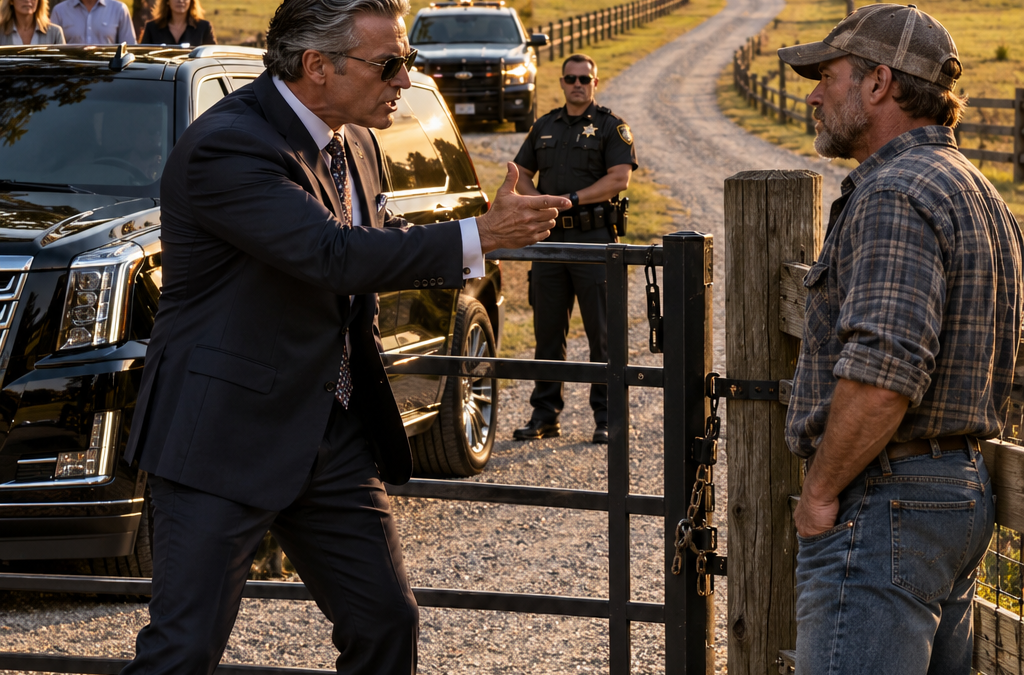
𝗙𝗨𝗟𝗟 𝗦𝗧𝗢𝗥𝗬
The contractor compacted the base, completed the drainage work, and laid the final surface.
When everything was finished, I walked the entire length of it.
The pavement curved gently through the trees.
Rainwater had somewhere to go.
There was enough room for my equipment.
And I could finally drive between the house, workshop, and eastern field without fighting mud or taking unnecessary detours.
I remember standing near the ridge that afternoon, looking down at the finished road.
It felt like the first real improvement I’d made to the property.
Something useful.
Something permanent.
Something that belonged entirely to me.
I paid the contractor, filed the final paperwork, and went back to my ordinary routine.
For the first few weeks, everything was exactly as I’d hoped.
I used the road to carry equipment between the workshop and the eastern field.
Delivery trucks could reach the shed without turning around in the yard.
Maintenance became easier.
Even simple things, like checking the far fence after a storm, took less time.
I didn’t think about Cedarbrook Estates.
I didn’t think about its homeowners association.
I certainly didn’t think a neighborhood president would decide my new road was somehow his responsibility.
Then, one Tuesday afternoon, a black SUV pulled up outside my main gate.
I was repairing a section of fence near the workshop when I heard the engine.
The vehicle was a large luxury model with tinted windows and polished chrome trim.
It stopped just outside the gate.
The driver’s door opened.
A man climbed out wearing a light gray suit, white shirt, and dark blue tie.
He stood for a moment, inspecting the property.
Then he looked toward me.
“Are you the owner?”
I set down my hammer.
“Yes.”
He walked toward the gate.
“I’m Karen, president of the Cedarbrook Estates Homeowners Association.”
I nodded.
“Afternoon.”
He didn’t return the greeting.
Instead, he pointed toward the private road.
“We need to discuss your recent construction.”
I glanced behind me.
“The road?”
“Obviously.”
Something about the way he said it irritated me.
But I kept my voice level.
“What about it?”
He adjusted his jacket.
“Your new road is interfering with our community’s traffic pattern.”
I looked toward the road.
There were no vehicles on it.
No intersections inside the subdivision.
No traffic signals.
Just pavement crossing my own land.
“How?”
Karen frowned.
“Excuse me?”
“How is my road interfering with your traffic pattern?”
He gave me a thin smile.
“Traffic management is more complicated than most property owners realize.”
I waited.
He continued.
“Your road approaches our community access area. That creates an impact on neighborhood circulation.”
I looked toward the southeastern boundary.
The road came near the subdivision’s access area, but it didn’t cross into the HOA’s property.
I had deliberately kept it inside my boundary.
“Karen, the road is private.”
“That doesn’t eliminate its impact.”
“Impact on what?”
“Community infrastructure.”
I leaned against the fence.
“I’m not sure what you’re asking.”
He opened a black leather folder.
Inside were neatly arranged documents, several highlighted pages, and a printed invoice.
He removed the invoice and held it toward me.
“The association has assessed a five-hundred-dollar road-impact charge.”
I stared at him.
“A what?”
“Road-impact charge.”
“For my road?”
“Correct.”
I looked at the paper.
The Cedarbrook Estates logo appeared at the top.
Beneath it was a description of the assessment.
PRIVATE ROAD IMPACT — $500.
Payment requested within fifteen days.
I looked up.
“You’re charging me five hundred dollars because I built a road on my property?”
Karen’s expression remained perfectly composed.
“Because your construction affects the community access system.”
“It doesn’t connect to your private streets.”
“It exists near our access corridor.”
“Near it?”
“Yes.”
I handed the invoice back.
“Then I think you’ve made a mistake.”
His smile disappeared.
“This isn’t a mistake.”
“Where in my deed does it say I owe your HOA money?”
He looked irritated.
“These matters are governed by community policy.”
“I’m not part of your community.”
“Your property borders Cedarbrook.”
“That doesn’t make me a member.”
Karen straightened.
“Everyone in the neighborhood understands the road-impact policy.”
I looked at him.
“Everyone except the person you’re trying to charge.”
He didn’t appreciate that.
His jaw tightened.
“You’re making this unnecessarily difficult.”
“No. I’m asking a simple question.”
I pointed toward the paper.
“What agreement gives your HOA the authority to charge me five hundred dollars for a private road?”
Karen glanced at his folder.
“The policy was adopted by the board.”
“When?”
“During our infrastructure review.”
“Did I sign it?”
“No.”
“Did the previous owner?”
“That’s not relevant.”
“It seems pretty relevant to me.”
He took a small step closer.
“Listen carefully. Cedarbrook has spent considerable money developing and maintaining its access infrastructure. Your road benefits from its proximity to that system.”
I stared at him.
“Proximity isn’t a service.”
“That’s a simplistic interpretation.”
“Then explain what service you’re providing.”
He looked toward the pavement.
“Integration.”
“Integration with what?”
“Our transportation network.”
I almost laughed.
There were no cars on the road.
It didn’t carry traffic through the neighborhood.
I had built it so I could move equipment across my own property.
“Karen, if your association paid for some improvement that legally benefited my land, show me the agreement. I’ll read it.”
He closed his folder sharply.
“I shouldn’t have to educate you about basic community responsibilities.”
I felt my patience thinning.
“And I shouldn’t have to pay a bill from an organization I never joined.”
He stared at me.
For a few seconds, neither of us spoke.
Then he smiled again.
It was the kind of smile a man gives when he wants you to know the conversation isn’t over.
“You’ll receive further correspondence.”
“That’s fine.”
“And I’d advise you not to ignore it.”
I looked directly at him.
“I’d advise you to bring some actual documentation next time.”
His face reddened.
He turned without another word, walked to his SUV, and drove away.
I watched the black vehicle disappear down the county road.
Then I looked at the invoice he’d left clipped to my gate.
Five hundred dollars.
For a road I owned.
I shook my head and went back to repairing the fence.
At that point, I still believed the problem could be resolved with a few documents.
I thought Karen had misunderstood the property boundary.
Maybe he relied on an outdated map.
Maybe the HOA assumed the old farm track was part of a community access arrangement.
Surely once I showed him the deed, the issue would disappear.
That assumption was my first serious mistake.
Two days later, I received a second notice.
This one was more aggressive.
It said the five-hundred-dollar charge remained outstanding.
It warned that failure to pay could result in additional compliance proceedings.
It also stated that the private road was considered part of Cedarbrook’s “extended transportation influence area.”
I read those words several times.
Extended transportation influence area.
It sounded important.
It also sounded suspiciously like something invented during a board meeting.
I searched the notice for a deed reference.
There wasn’t one.
No easement number.
No recorded agreement.
No legal description explaining why the HOA had authority over my land.
Just policy language and another payment deadline.
I could have ignored it.
But I had spent too much money on the road to let a neighboring association create a cloud of uncertainty around it.
So I went back to the documents.
I pulled out my property deed.
The recorded survey.
The county parcel map.
The construction plans.
The contractor’s invoices.
The approval paperwork related to the work.
I spread everything across my dining room table.
Then I checked the boundaries again.
The deed showed my property’s legal description.
The survey showed the boundary markers.
The construction plans showed the road’s route.
The county map showed the adjoining subdivision.
Every document told the same basic story.
The pavement sat on my land.
Not Cedarbrook’s.
Not some shared parcel.
Not a community road.
Mine.
Still, I wanted independent confirmation.
A property owner saying his own documents support him isn’t always enough to end an argument.
And Karen had already demonstrated that he could turn ordinary facts into something complicated if doing so helped him maintain control.
I called a licensed surveyor.
His name was Daniel Foster.
He had worked in the county for more than twenty years and was familiar with the developments surrounding my property.
When I explained the dispute, he sighed.
“Let me guess. The HOA says your private road is somehow theirs.”
“Close. They say I owe them five hundred dollars because the road affects their transportation system.”
Daniel was quiet for a moment.
“Transportation system?”
“Those are their words.”
He chuckled once.
“Well, I can tell you where your road is. Whether somebody has a separate legal right to use it is another question.”
“That’s exactly what I need.”
We arranged a site visit.
Daniel arrived the following Monday with surveying equipment, field notes, and copies of the recorded plats.
He walked the road with me.
We examined the western entrance first.
Then the middle section near the workshop.
Finally, we reached the southeastern portion nearest Cedarbrook Estates.
Daniel studied the existing markers.
He took measurements.
Checked coordinates.
Compared the road alignment against the recorded boundary.
He worked carefully and didn’t rush his conclusions.
At one point, he stopped near a line of trees and pointed toward the neighborhood.
“That’s their access road.”
I nodded.
“And this is yours.”
“Right.”
He looked toward the section where the two systems approached each other.
“Are residents using this route?”
I hesitated.
“I’ve seen a few vehicles.”
“How often?”
“More than I’d like.”
He lowered his equipment.
“That might be important.”
I frowned.
“What do you mean?”
“If the HOA is treating your land as an access corridor, we need to distinguish physical use from legal rights. A road can be privately owned and still be subject to an easement. The survey tells us where the boundary is. It doesn’t automatically answer every question about access.”
I nodded.
“Then I want both questions answered.”
“Good.”
We continued measuring.
By the end of the day, Daniel had verified the relevant corners and completed the fieldwork necessary for his updated survey.
A few days later, he called me.
“The road is entirely within your property boundary.”
I sat straighter.
“Every part?”
“Every part we surveyed. The pavement doesn’t cross into the HOA parcel.”
I closed my eyes for a moment.
“That’s good to hear.”
“But there’s something else I want you to look at.”
He asked me to meet him at his office.
When I arrived, he spread a large map across the conference table.
My property was outlined clearly.
The private road curved through it.
Cedarbrook Estates sat outside the southern boundary.
Then Daniel placed another document beside it.
It was a copy of a community planning map.
I recognized the Cedarbrook logo.
He pointed toward a shaded strip near my road.
“See this?”
I leaned closer.
The shaded area extended from the neighborhood’s internal access road toward my property.
It followed part of the old farm track.
Then it overlapped a section of my newly paved road.
The label read:
COMMUNITY ACCESS CORRIDOR.
I stared at the words.
“What is that?”
Daniel looked at me.
“That’s what I was hoping you could tell me.”
I shook my head.
“I’ve never agreed to any community access corridor.”
He nodded.
“That’s why we’re checking the recorded documents.”
I studied the map.
My stomach tightened.
The HOA wasn’t merely complaining about my road.
Its planning documents were treating part of my property as though it were available for neighborhood use.
“Who prepared this?”
“It appears to be from the association’s planning materials.”
“Is it recorded as an easement?”
“I haven’t found that evidence in the survey records. Your attorney should have a complete title search done before you decide how to handle access.”
I looked at him.
“But the road is mine?”
“The land beneath it is within your boundary, yes.”
“And the HOA’s map doesn’t change that.”
“Not by itself.”
I sat back.
I could feel anger building.
When Karen demanded five hundred dollars, I’d assumed he was trying to collect an improper fee.
Now I was beginning to suspect the fee was only part of the problem.
The association had been treating a route across my property as community access.
And Karen apparently believed that because residents benefited from it, he had the right to charge me for its existence.
I looked at Daniel.
“How long has this map been around?”
“I can’t tell from this copy.”
I studied the shaded corridor again.
“Can you make me a certified survey showing the road and boundary?”
“Absolutely.”
“And include the relevant monuments?”
“Yes.”
I nodded.
“Then let’s do it.”
When I drove home, I didn’t feel relieved anymore.
I felt exposed.
I’d purchased the property because I wanted privacy.
Now I was discovering that an organization next door had apparently incorporated part of my land into its own plans without asking.
That evening, I parked near the southeastern section and watched the road.
For almost an hour, nothing happened.
Then a silver SUV appeared near the neighborhood-side approach.
It turned onto the paved route across my property.
The driver didn’t stop.
Didn’t slow down.
Didn’t ask permission.
He simply drove through as though the road belonged to everyone.
A few minutes later, another vehicle followed.
Then a delivery van.
I watched the taillights disappear toward the county-road entrance.
I had built a private internal road.
Somehow, it had become a shortcut.
And the HOA president wanted me to pay him five hundred dollars for the privilege of providing it.
I couldn’t sleep that night.
Every set of headlights outside made me look toward the window.
I kept thinking about what could happen if the traffic continued.
A delivery driver might take a turn too fast.
A car might strike one of my parked machines.
Someone might get hurt on land I owned.
And I would be the one answering questions about why strangers were driving through my property.
By midnight, I’d made a decision.
I was going to handle it in writing.
Not through arguments at the gate.
Not through threats.
Not through some emotional confrontation that Karen could twist into a complaint about an unstable property owner.
I would create a record.
The next morning, I prepared a formal response.
I attached copies of the deed, survey, and relevant maps.
I disputed the five-hundred-dollar demand.
I explained that the road had been constructed entirely within my private property.
And I requested that Cedarbrook Estates stop representing any section of the road as community-owned or publicly available access unless it could produce a legally valid recorded document establishing that right.
I also asked the HOA to clarify whether it believed an easement existed.
If it did, I wanted the recording information.
If it didn’t, I expected the association to stop directing or encouraging residents to use my private road.
I kept the tone professional.
That took more effort than I expected.
There were several sentences I wanted to write that had no place in a formal notice.
But I wanted a solution.
Not a shouting match.
I sent the letter by a method that documented delivery.
Then I waited.
Three days passed.
No answer.
Five days.
Nothing.
On the sixth day, I saw Karen’s black SUV moving slowly along the neighborhood access road.
He stopped near the section of my property marked as the supposed community corridor.
I walked toward the boundary.
Karen lowered his window.
“I received your letter.”
“Good.”
His expression was cold.
“Very formal.”
“I thought that would make everything clear.”
He gave me a contemptuous smile.
“You’re trying to turn a routine community assessment into a legal confrontation.”
I looked at him.
“Your HOA has a map labeling part of my property as community access.”
“Because it functions as community access.”
“Who gave you permission?”
He looked irritated.
“Michael, we’ve discussed this.”
“No. We’ve discussed your preferences. I asked for legal authority.”
He leaned toward the open window.
“The community has come to rely on that route.”
“That doesn’t make it yours.”
“People use it every day.”
“Because you’re treating it like a neighborhood road.”
Karen’s expression hardened.
“You’re being deliberately uncooperative.”
I folded my arms.
“I gave you a chance to show me the easement.”
“And we’re reviewing the relevant documents.”
“Then send them.”
“I don’t respond well to ultimatums.”
I looked at the black SUV.
Then at his polished hands resting on the steering wheel.
“Karen, I’m not asking you to respond well. I’m asking you to respond correctly.”
His eyes narrowed.
For a moment, I thought he might get out.
Instead, he smiled.
It was the same thin smile he’d worn when demanding the fee.
“Maybe somebody with actual authority needs to explain how community infrastructure works.”
My stomach tightened.
“What does that mean?”
He raised the window.
Then he drove away.
Twenty minutes later, a police cruiser turned onto my property.
I stood beside the workshop and watched it approach.
My first reaction wasn’t anger.
It was disbelief.
Karen had actually called the police.
Over a five-hundred-dollar charge and a road that my surveyor had confirmed sat entirely on my land.
The cruiser stopped near the western entrance.
An officer stepped out.
He was a middle-aged man with a calm expression and the weary posture of someone who had spent the day answering unnecessary calls.
“Are you the property owner?”
“Yes.”
“I’m Officer Bennett. We received a complaint about a roadway access dispute.”
I nodded.
“That would be the HOA.”
He glanced at the private road.
“Probably. The caller says you’re obstructing a community road.”
I looked toward the pavement.
“Do you see an obstruction?”
Bennett followed my gaze.
The road was open.
No barriers.
No parked equipment.
No gate across it.
Nothing blocking traffic.
He looked back at me.
“That’s one of the things I’m trying to understand.”
I took a breath.
“Officer, this is my private road. I built it. It’s entirely on my property. The HOA wants five hundred dollars and claims residents have a right to use it.”
Bennett nodded slowly.
“Do you have documentation?”
“Yes.”
“Good.”
I walked into the workshop and retrieved the folder I’d prepared.
By the time I returned, Karen’s black SUV had arrived.
He climbed out wearing a dark suit and carrying his leather binder.
He walked directly toward the officer.
“Thank goodness.”
Bennett turned.
“Sir?”
“I’m Karen, president of Cedarbrook Estates.”
“All right.”
“This individual is interfering with an established community transportation route.”
I stared at him.
“Karen, the road isn’t blocked.”
He ignored me.
“The association has received repeated complaints about access uncertainty.”
Bennett raised one hand.
“Let’s slow down.”
Karen stopped.
“Is there a physical obstruction on the road?”
“Not yet.”
The officer frowned.
“Not yet?”
“Michael has threatened to prevent community access.”
I stepped forward.
“I sent a letter asking the HOA to stop treating my property as its road.”
Karen pointed toward me.
“Exactly.”
Bennett looked between us.
Then he asked Karen, “Do you have documents showing this road is owned by the HOA or subject to an access easement?”
Karen opened his binder.
“Our governing documents establish transportation standards.”
“That isn’t what I asked.”
“The road connects with our community access area.”
“Does the association own this section?”
Karen hesitated.
“It’s part of the larger access network.”
Bennett looked at me.
“What have you got?”
I handed him the survey.
He unfolded it across the hood of his cruiser.
Then I showed him the deed and county parcel map.
He studied the lines carefully.
I pointed to the road.
“This is the entire route.”
“All right.”
“And this is the property boundary.”
He leaned closer.
“The surveyor signed this?”
“Yes. Licensed surveyor. Updated after the HOA sent the first bill.”
Bennett nodded.
He looked at Karen.
“Do you have a recorded document contradicting this boundary or establishing an easement?”
Karen flipped through his binder.
Several pages.
Then several more.
His movements became increasingly impatient.
Finally, he produced the community planning map.
“This shows the access corridor.”
Bennett examined it.
“Who prepared this?”
“Our planning committee.”
“Is it a recorded easement?”
“It’s an approved HOA map.”
“Approved by whom?”
“The board.”
Bennett looked at him for a long moment.
“Sir, an HOA board approving a map doesn’t necessarily create a property right across someone else’s land.”
Karen’s face reddened.
“Are you saying our planning committee has no authority?”
“I’m saying I can’t determine ownership or easement rights from an internal planning map.”
Karen stared at him.
“But residents are using this road.”
Bennett nodded.
“That may be relevant to a civil access claim, depending on the facts. It isn’t something I’m going to adjudicate here.”
I felt my shoulders loosen slightly.
The officer wasn’t declaring me the winner.
He was doing something more important.
He was refusing to let Karen turn a property dispute into an automatic police enforcement action.
Karen adjusted his tie.
“Officer, we have a legitimate community need.”
“Then your attorney can address it through the proper process.”
“And the five-hundred-dollar assessment?”
Bennett looked puzzled.
“What assessment?”
I almost laughed.
Karen explained the road-impact charge.
The officer listened.
Then he said, “Whether that fee is enforceable is a civil matter. I can’t order Michael to pay an HOA invoice.”
Karen’s jaw tightened.
“Then what exactly are you going to do?”
Bennett kept his voice calm.
“I’m going to document the complaint and advise both parties to resolve the ownership and access issues through the appropriate legal channels.”
Karen looked furious.
“This road is essential to the neighborhood.”
The officer glanced toward the subdivision.
“Then I suggest the association have its lawyer establish what rights it actually possesses.”
He handed my documents back.
“Michael, don’t block any established public right-of-way or recorded easement. If you intend to restrict access, get legal advice first.”
I nodded.
“That’s exactly what I plan to do.”
Bennett turned toward Karen.
“And don’t assume that calling the police makes a private association’s claim enforceable.”
For several seconds, nobody spoke.
Then Karen closed his binder.
“This is extremely disappointing.”
Bennett said nothing.
Karen turned toward me.
“You’ve made a very serious mistake.”
I met his eyes.
“No, Karen. I think the mistake was assuming I wouldn’t check the paperwork.”
His face tightened.
He walked back to his SUV.
The officer finished taking notes and left a short time later.
I stood beside the workshop watching the cruiser disappear.
I should have felt relieved.
Instead, I felt exhausted.
Every reasonable step I’d taken had made Karen more aggressive.
When I asked about the five-hundred-dollar fee, he sent another demand.
When I obtained a survey, he claimed the road was part of the community transportation system.
When I sent a formal notice, he called the police.
And each time, the argument moved farther away from anything written in my deed.
I realized I couldn’t handle the situation with letters alone.
Not anymore.
The following morning, I contacted a property attorney.
His name was Samuel Brooks.
He was in his early fifties, with dark hair beginning to gray at the temples and a habit of listening without interrupting.
His office wasn’t impressive.
A narrow waiting room.
Bookshelves filled with legal references.
A conference table covered in orderly stacks of files.
But within ten minutes of meeting him, I knew he understood the problem.
I placed the documents on his desk.
“The HOA wants five hundred dollars because I built this road.”
Samuel raised an eyebrow.
“On your land?”
“According to my survey.”
“And residents are using it?”
“Yes.”
“With your permission?”
“Not explicitly.”
He nodded.
“All right. Let’s separate three questions.”
He held up one finger.
“Who owns the land?”
A second.
“Does anyone else possess a lawful right of access?”
A third.
“And does the HOA have any enforceable basis for charging you this fee?”
I leaned forward.
“That’s what I’ve been trying to get Karen to answer.”
Samuel opened the survey.
“Then we’ll answer it with documents.”
He examined the deed.
The original plat.
The construction records.
The HOA notices.
The police incident report.
And the surveyor’s updated boundary confirmation.
For nearly an hour, he asked questions.
When had the road been built?
How long had residents been using it?
What had existed before the construction?
Had the former owner ever granted permission?
Was there a gate?
Were there utility easements?
Could emergency services access the subdivision through another route?
Had the HOA ever maintained my road?
I answered as carefully as I could.
Sometimes the answer was simple.
Sometimes I had to admit I didn’t know.
Samuel didn’t seem bothered by that.
He wrote down what needed verification.
Finally, he leaned back.
“The survey gives us a strong ownership position.”
I exhaled.
“But ownership alone doesn’t end every access question. We need a thorough search of the recorded easements and agreements.”
“How long will that take?”
“We’ll move promptly, but I want it done correctly.”
I nodded.
“Good.”
He looked at the HOA invoice.
“As for this five-hundred-dollar charge, I haven’t seen any agreement making you responsible for it.”
“Neither have I.”
“That doesn’t mean we stop investigating. It means we make them identify their legal basis.”
I leaned back.
“What would you do in my position?”
Samuel studied me for a moment.
“I’d stop arguing with Karen at the gate.”
I smiled weakly.
“That would be nice.”
“I’d communicate in writing. Document the unauthorized traffic. Preserve the survey. Verify every possible access right. And only then decide whether the road can be restricted.”
I looked toward the window.
“I built that road because I wanted privacy.”
“I understand.”
“Now I have strangers driving through it every day.”
Samuel nodded.
“Then we need to determine whether they’re entitled to do that.”
For the next several weeks, the legal review continued.
Samuel examined recorded deeds, subdivision plats, easement instruments, access agreements, and the historical property records.
Daniel provided survey materials.
The county records office supplied copies of older filings.
We checked the documents associated with Cedarbrook’s development.
And we looked specifically for any grant that would allow the HOA or its residents to use the newly paved road.
There were utility easements along parts of the surrounding area.
There were recorded access rights serving certain properties elsewhere.
There were drainage agreements and maintenance obligations connected to the subdivision’s infrastructure.
But nothing we found established a blanket HOA right to send neighborhood traffic across my private road.
The old farm track hadn’t been a public road.
It had served the property itself.
The new pavement didn’t transform it into community property.
Samuel also examined the period and circumstances of neighborhood use.
The newly built road had only recently become convenient for through traffic.
We found no supporting record showing that the HOA possessed an enforceable access right over it.
When Samuel called with the conclusion, I was standing beside the workshop.
“The recorded documents support your position,” he said.
I closed my eyes.
“Meaning?”
“Your property contains the road. We haven’t found an easement or agreement giving the HOA the general right it claims.”
“And the five hundred dollars?”
“They still haven’t identified an enforceable basis for collecting it from you.”
I breathed out slowly.
“So what happens now?”
“We give them one final formal opportunity to resolve this without litigation.”
The letter Samuel prepared was firmer than mine.
It stated that the road was private property.
It enclosed the relevant boundary confirmation.
It explained that the recorded documents did not establish the HOA access rights Karen had claimed.
It disputed the road-impact charge.
And it demanded that the association stop representing the road as community property.
Samuel also addressed the unauthorized use.
He made clear that continued access could not simply be assumed.
The HOA was given notice and a reasonable opportunity to arrange a lawful alternative.
We weren’t going to surprise residents with an immediate closure.
We weren’t going to block emergency services.
We weren’t going to interfere with public roads.
The point was to establish the boundary and give the neighborhood time to correct its access arrangements.
Samuel sent the notice to the association and its legal representative.
I received confirmation that it had been delivered.
Then we waited.
For several days, I hoped Karen might finally listen.
He had been given the survey.
The recorded documents.
A police officer’s explanation.
And now a formal attorney’s letter.
Surely at some point, even he would recognize that the HOA could not simply claim a private road because its residents found it convenient.
Instead, the traffic increased.
At first, I thought I was imagining it.
Then I began keeping records.
Vehicles used the road early in the morning.
Others came through during the afternoon.
Delivery drivers treated it as a shortcut.
Residents drove across the property on their way toward the county road.
A few slowed when they saw me.
Most didn’t.
One afternoon, I was backing a trailer out of the workshop area when a car came around the curve much faster than I expected.
I stopped immediately.
The driver braked hard.
The tires made a sharp sound against the pavement.
For a second, we sat facing each other.
Then the driver rolled down his window.
“You need to watch where you’re backing.”
I stared at him.
“You’re on my private road.”
He frowned.
“This is the neighborhood access road.”
“No. It’s my property.”
He looked irritated.
“That’s not what the HOA told us.”
My stomach tightened.
“What did they tell you?”
“That the route was part of the community access system.”
I felt anger rise so quickly that I had to grip the steering wheel.
“Who told you that?”
“The association.”
I stepped out of the truck.
“Listen. I built this road. I own the land under it. There is no recorded HOA access agreement that we’ve found.”
The driver looked uncertain.
“Then why is everybody using it?”
“That’s what I’ve been asking.”
He glanced toward the neighborhood.
Then back at me.
“Well, somebody needs to straighten that out.”
“I agree.”
He rolled up his window, backed carefully, and turned around.
I stood beside the trailer watching him leave.
My hands were shaking.
Not from the argument.
From what almost happened.
If I’d backed another few feet, he could have struck the trailer.
If I’d been walking behind it, I might not have had time to move.
The road had been built to make my property safer and easier to manage.
Now unfamiliar drivers were treating it as a neighborhood shortcut.
And the HOA president was encouraging the confusion.
That evening, I called Samuel.
I told him about the near collision.
He listened quietly.
Then he asked whether anyone had been injured.
“No.”
“Any damage?”
“No.”
“Good. Write down the date, time, vehicle description, and what the driver said.”
“I already did.”
“Excellent.”
I looked toward the private road.
“Samuel, I can’t keep doing this.”
“I understand.”
“I spent months planning that road. I checked the boundaries. I hired professionals. I paid for the entire thing. And now I have strangers telling me I’m blocking their shortcut when I try to move my own equipment.”
He was silent for a moment.
Then he said, “We need to move toward a lawful closure.”
I looked down.
“I’ve been thinking about that.”
“It has to be handled carefully.”
“I know.”
“We’ll verify that the road isn’t burdened by any enforceable access right, confirm the applicable county requirements, and provide proper notice. We also need to make sure closing it won’t obstruct emergency access or trap anyone without a lawful outlet.”
I rubbed my forehead.
“Can we actually do that?”
“Based on the records so far, it appears possible. But we’ll complete the process before anyone installs a barrier.”
I nodded.
“All right.”
Then I asked the question I’d been avoiding.
“What if Karen calls the police again?”
Samuel’s voice remained calm.
“Then we show the officer the documents. The same way you did before.”
I looked toward the workshop.
“And if Karen takes me to court?”
“Then we respond there. But we don’t surrender a property right merely because someone threatens to challenge it.”
That night, I sat at my dining room table and reviewed the records again.
I thought about how the dispute had begun.
Five hundred dollars.
That was it.
A demand for five hundred dollars from a man who claimed my road affected his neighborhood.
If I’d simply paid, maybe the first confrontation would have disappeared.
Maybe Karen would have smiled, accepted the money, and left me alone.
For a while.
But paying would have done nothing to resolve the underlying problem.
The HOA would still have treated the road as community access.
Residents would still have driven across it.
Karen would still have believed he could decide how I used my property.
And the next demand might not have been five hundred dollars.
It might have been a gate code.
A permanent access agreement.
A maintenance contribution.
Or a demand to keep the road open forever.
I realized that what frightened me wasn’t the amount of the fee.
It was the idea of being forced to ask permission to use something I had built entirely on land I owned.
I’d purchased the property to escape that kind of interference.
Now it was happening at my own front gate.
A few days later, Samuel completed the final legal review.
We also coordinated with the county offices responsible for road access and applicable permitting.
The review confirmed that the proposed gate location was inside my boundary and would not block a county-maintained road or a documented public right-of-way.
The access arrangements were checked for safety.
The subdivision had other lawful connections to the public road network.
Closing my private shortcut would be inconvenient for some residents.
It would not leave their homes inaccessible.
That distinction mattered.
I didn’t want to trap anyone.
I didn’t want an ambulance delayed because I was angry.
I didn’t want to create a dangerous situation just to prove a point.
I wanted to stop unauthorized traffic across my property.
Nothing more.
Samuel provided the final written notice.
It identified the closure date.
It explained the legal basis for restricting private access.
It gave the HOA time to notify residents.
And it stated that the association should arrange any alternative access through property it controlled or routes it had lawful authority to use.
The notice was delivered.
The deadline passed.
The traffic continued.
Karen never produced the easement he’d claimed must exist.
He never withdrew the five-hundred-dollar demand in writing.
He never acknowledged that the road belonged to me.
Instead, I received another letter accusing me of undermining community welfare.
It claimed that restricting the road would inconvenience homeowners and damage the neighborhood’s transportation efficiency.
I forwarded it to Samuel.
His response was short.
“They still haven’t identified a legal right of access.”
That was the moment I stopped expecting cooperation.
I hired a professional gate installer.
We reviewed the survey and selected a location entirely inside my property boundary.
The gate would be strong enough to prevent unauthorized vehicles from entering but positioned and configured in accordance with the applicable safety requirements.
It would be clearly marked.
There would be no confusing barricades scattered across the pavement.
No trench.
No concrete wall.
No damaged road.
Just a proper private entrance.
I scheduled the work.
The night before installation, I barely slept.
I kept imagining Karen arriving with another folder.
Another invoice.
Another police officer.
I worried that the crew might be confronted.
I worried that somebody would try to drive through the work area.
I worried that months of careful preparation could be undone by one reckless decision.
But I also knew the situation couldn’t continue.
I’d tried conversation.
Documentation.
An independent survey.
A written dispute.
Police mediation.
Legal counsel.
A formal notice.
And a reasonable period for the HOA to arrange an alternative.
Every attempt to resolve the conflict had been met with more pressure or silence.
The road remained private.
The unauthorized traffic remained real.
And the only person paying the price for the confusion was me.
The following morning, I woke before sunrise.
I made coffee, checked the weather, and walked down to the planned gate location.
The pavement was still damp from overnight rain.
Mist hung low among the trees.
The property was quiet.
For a few minutes, I stood beside the road remembering how proud I’d felt when the contractor finished building it.
Back then, I’d imagined years of peaceful use.
Driving equipment between fields.
Taking my truck to the workshop.
Walking along the pavement in the evening without looking over my shoulder.
I hadn’t imagined needing attorneys and police reports just to establish that strangers couldn’t turn my property into a shortcut.
At eight o’clock, the installation crew arrived.
Two trucks pulled into the entrance.
A trailer carried steel gate components, posts, hardware, and tools.
The crew supervisor climbed out and shook my hand.
“Morning.”
“Morning.”
He looked toward the road.
“This the location?”
“Yes.”
I handed him the surveyed placement information.
“Everything stays inside the property boundary.”
He nodded.
“We’ve reviewed the plan.”
“Good.”
I glanced toward the neighborhood access area.
“And if anybody starts arguing, let me handle it.”
He gave me a tired smile.
“Wouldn’t be the first time.”
The workers began unloading equipment.
They marked the post locations.
Checked measurements.
Confirmed alignment.
Then started installing the supports.
I stayed nearby.
Not to supervise every bolt.
Because I wanted to see the work done correctly.
There was no excitement.
No dramatic confrontation.
No crowd gathering.
Just professionals doing the job they’d been hired to do.
By late morning, the gate structure was in place.
It looked exactly as I’d hoped.
Solid.
Simple.
Clearly private.
The signs were visible from the approach.
PRIVATE ROAD.
NO UNAUTHORIZED VEHICLE ACCESS.
The mechanism operated smoothly.
The gate could be opened for authorized use and secured when necessary.
I stood beside it and felt something I hadn’t experienced in months.
Relief.
The road was still there.
The pavement hadn’t moved.
The trees hadn’t changed.
The workshop sat beyond the curve exactly where it always had.
But the entrance finally reflected the legal boundary.
People could no longer assume that because the road was convenient, they were entitled to use it.
Then I heard an engine accelerating from the neighborhood side.
A black SUV appeared around the bend.
I recognized it before it stopped.
Karen.
He pulled up near the gate and braked sharply.
For several seconds, he remained behind the wheel.
Then the door opened.
He stepped out wearing a dark charcoal suit despite the warm weather.
His hair was perfectly arranged.
His shoes were polished.
But his expression was anything but controlled.
He stared at the gate.
Then at the signs.
Then at the workers packing their tools.
“What is this?”
I stood on my side of the entrance.
“It’s a gate.”
His face reddened.
“I can see that.”
“Then what are you asking?”
He took several quick steps toward me.
“You cannot close this road.”
I kept my voice calm.
“It’s private property.”
“This is a community access route.”
“No, Karen. It’s a private road your residents have been using without an established right.”
He pointed at the gate.
“Remove it.”
“No.”
His expression hardened.
“I am not asking.”
“Neither am I.”
He stared at me.
I could see the moment my refusal landed.
Karen was used to people backing down when he raised his voice.
Used to residents apologizing when he cited a rule.
Used to contractors changing plans when he threatened compliance action.
But this wasn’t a neighborhood meeting.
It was my property.
And the gate had been installed after months of legal review.
He stepped closer.
“Do you have any idea how disruptive this is going to be?”
“I’ve given your HOA written notice.”
“That notice was unacceptable.”
“Your attorney received it.”
“You are deliberately cutting off community access.”
“I’m restricting access to my private road.”
He gestured angrily toward the neighborhood.
“Residents have been using this route.”
“I know.”
“People depend on it.”
“Then your HOA should have arranged lawful access when my attorney gave you the opportunity.”
Karen shook his head.
“You think you can simply put up a gate and ignore the consequences?”
“No.”
I pointed toward the sign.
“I considered the consequences. That’s why I hired an attorney, commissioned a survey, checked the recorded easements, coordinated with the county, and provided notice before installing anything.”
He looked momentarily unsettled.
Then his anger returned.
“You’re hiding behind paperwork.”
I stared at him.
“Paperwork?”
“Yes.”
“Karen, paperwork is how property rights are documented.”
He sneered.
“Property rights aren’t the only consideration.”
“They’re a pretty important one when you’re trying to use somebody else’s land.”
He turned toward the gate.
For one terrible second, I thought he might try to open it himself.
I moved closer.
“Don’t touch it.”
He stopped.
His eyes flashed.
“Are you threatening me?”
“No. I’m telling you not to interfere with private property.”
He looked toward the workers.
“You men need to remove this immediately.”
The crew supervisor shook his head.
“We completed the job we were contracted to perform.”
“Who authorized you?”
“The property owner.”
Karen pointed toward me.
“He doesn’t have authority to block community infrastructure.”
The supervisor looked at the gate.
Then at the survey stakes.
“I’m not getting involved in a legal dispute, sir.”
Karen’s jaw clenched.
He pulled out his phone.
“Fine.”
I watched him unlock the screen.
“Karen, don’t do this again.”
He ignored me.
He dialed.
Then he turned slightly away.
“Yes, I need police assistance. A property owner has installed a barrier across an essential neighborhood access route.”
I closed my eyes briefly.
Of course.
Another police call.
Another attempt to make someone with a badge do what his own documents couldn’t justify.
Karen continued.
“The HOA has already advised him that this route serves our community. He has ignored the warnings and erected a gate.”
I looked at the workers.
The supervisor gave me a sympathetic glance.
I shook my head.
“Just finish packing.”
Karen raised his voice.
“Yes, the road is currently blocked to community traffic. I need an officer here.”
He ended the call.
Then he looked at me with a familiar, triumphant expression.
“You’ve gone too far this time.”
I took a slow breath.
“That’s what you said when I refused the five hundred dollars.”
His eyes narrowed.
“This is different.”
“You’re right.”
I looked at the gate.
“This time I have an attorney’s letter, a completed survey, county coordination records, and proof that your association received notice.”
His expression shifted.
For a fraction of a second, uncertainty broke through his anger.
Then he straightened his jacket.
“The police will decide.”
I shook my head.
“No, Karen. The police will review the situation. Property rights aren’t decided by whoever calls first.”
He turned away.
I stood beside the gate, listening to the workers secure the last tools on their trailer.
My heart was pounding.
I hated that.
I hated that Karen could still make my pulse race after I’d done everything possible to resolve the dispute properly.
I knew the road was mine.
I knew the gate was within my boundary.
I knew the attorney had reviewed the access issues.
But there was always that small fear.
What if somebody misunderstood?
What if an officer ordered the gate opened just to end the argument?
What if months of work were pushed aside because Karen sounded confident and I sounded exhausted?
I forced myself to stay calm.
The crew finished packing.
I thanked them.
The supervisor looked toward Karen.
“You going to be all right?”
“I think so.”
He nodded.
“The gate’s installed exactly where the plan shows.”
“Thank you.”
They left.
Now it was just Karen and me.
Separated by a gate he insisted shouldn’t exist.
For several minutes, neither of us spoke.
Then he said something that made me understand the dispute more clearly than all his previous letters.
“You know what your problem is, Michael?”
I looked at him.
“What?”
“You don’t understand that private decisions can affect an entire community.”
I considered that.
Then I nodded.
“You’re right about one thing.”
He looked surprised.
“Private decisions can affect other people.”
His expression softened slightly.
“But that doesn’t mean other people get to control every private decision.”
His eyes hardened again.
“You benefit from living beside Cedarbrook.”
I looked toward the neighborhood.
“Do I?”
“Property values. Road improvements. Community investment.”
I shook my head.
“I bought this land because it wasn’t part of Cedarbrook.”
He stared at me.
“I didn’t ask you to maintain my road. I didn’t ask you to build my gate. I didn’t ask your HOA to manage my property. I paid for all of it.”
Karen stepped closer.
“And yet the neighborhood depends on this connection.”
“Then the neighborhood needs a connection it actually has the right to use.”
His face tightened.
“That will cost money.”
I nodded.
“Probably.”
“Significant money.”
“Maybe.”
He looked furious.
“You have no idea what you’re asking.”
I held his gaze.
“Karen, you’re the one who asked me to pay five hundred dollars for a road I built myself.”
He said nothing.
“You wanted me to subsidize your convenience. You wanted your residents to cross my property without permission. And every time I asked for a legal basis, you changed the argument.”
I pointed toward the gate.
“This is where that stops.”
A police cruiser appeared around the bend.
Karen immediately stepped away from the entrance.
He straightened his tie.
Smoothed his jacket.
And arranged his expression into the professional mask I’d seen the first day we met.
The cruiser stopped.
The driver’s door opened.
Officer Bennett stepped out.
I recognized him immediately.
So did Karen.
For the first time that morning, the HOA president’s confidence visibly faltered.
Bennett looked at me.
Then at Karen.
Then at the new gate.
He sighed.
“Let me guess.”
I almost smiled.
“Morning, Officer.”
“Michael.”
Karen hurried forward.
“Officer Bennett, thank goodness. You’ve arrived at a very serious moment.”
Bennett looked at the gate.
“I can see something’s changed.”
Karen pointed toward it.
“Michael has obstructed an established community access route.”
Bennett folded his arms.
“Is this the same private road we discussed before?”
Karen hesitated.
“It’s the road serving our community.”
Bennett looked at me.
“Michael?”
“Same road. Same property.”
He nodded toward the gate.
“New gate.”
“Yes.”
“Did you get legal advice before installing it?”
I held up the folder.
“Attorney reviewed the title and easement records. Licensed surveyor confirmed the boundary. We checked the applicable county requirements and emergency access issues. The HOA received formal notice.”
Bennett looked toward Karen.
“Did the association receive that notice?”
Karen’s expression tightened.
“We received correspondence.”
“Was it the notice Michael’s talking about?”
“Yes, but we disputed its conclusions.”
“Did you obtain a court order?”
Karen hesitated.
“No.”
“Did you produce a recorded easement?”
“We maintain that the road serves the community.”
Bennett nodded slowly.
“That’s not the same question.”
Karen’s face flushed.
The officer turned toward me.
“May I see the documents?”
“Of course.”
I unfolded the current survey across the hood of his cruiser.
The property boundary was marked clearly.
The road was shown within it.
The gate’s location was identified.
I provided the relevant county correspondence and the attorney’s notice.
Bennett read through the documents carefully.
He didn’t rush.
He asked where the nearest public road was.
I showed him.
He asked whether subdivision residents had another lawful route out.
I identified the existing entrances.
He looked at the gate configuration and the surrounding area.
Then he turned toward Karen.
“Do you have any document showing this gate blocks a public road or a recorded right-of-way?”
Karen opened his binder.
I could almost predict what came next.
The community map.
The transportation policy.
The board resolution.
The fee schedule.
He placed them on the cruiser hood one by one.
Bennett examined them.
Then he looked up.
“These are HOA documents.”
Karen nodded eagerly.
“Correct.”
“They show the association considers the route important.”
“Exactly.”
“But I still don’t see a recorded easement or other legal authority granting the HOA access across Michael’s property.”
Karen’s mouth tightened.
“Our legal position is that community reliance creates rights.”
Bennett shook his head slightly.
“That is a civil legal argument. I’m not ruling on it at the roadside.”
He looked toward the gate.
“Based on what you’ve presented today, I don’t have grounds to order Michael to remove this gate.”
Karen stared at him.
“Excuse me?”
“I can’t compel a private property owner to reopen a road simply because the neighboring HOA wants it open.”
“But residents use it.”
“That doesn’t automatically prove a legal right.”
“The association has maintained that access is essential.”
“Then your association needs to establish that right through the proper legal process.”
Karen’s voice rose.
“Are you seriously telling me the entire neighborhood has to change its traffic pattern because this man decided to put up a gate?”
Bennett held his gaze.
“I’m telling you I have no lawful basis to order the gate removed.”
Karen looked toward me.
His expression was almost unrecognizable.
Gone was the smooth confidence.
The controlled smile.
The polished manner.
In their place was raw frustration.
“You’ve manipulated this entire situation.”
I stared at him.
“By building a road on my own land?”
“You knew we needed access.”
“I knew you were using it.”
“You deliberately waited until residents became dependent.”
I shook my head.
“Karen, I gave your association notice and time to arrange an alternative.”
He ignored me.
Bennett stepped forward.
“That’s enough.”
Karen turned.
“Officer—”
“No. I’ve reviewed the documents you brought. I’ve reviewed Michael’s survey and notice materials. You have a civil disagreement over claimed access rights. I’m not ordering a gate removed without a lawful basis.”
Karen’s hands were shaking.
“Then what am I supposed to tell the residents?”
Bennett looked at him.
“Tell them to use roads they’re legally entitled to use while the association resolves the access question.”
The silence afterward was extraordinary.
Karen stood beside the cruiser, staring at the gate.
He had called the police expecting someone to force me to remove it.
Instead, the officer had refused to turn his HOA complaint into an order against my property.
For the second time.
And now the road was closed.
Bennett handed the documents back.
“Michael, keep all this paperwork available. If a court later determines an access right exists, you’ll need to comply with that ruling. But I see no basis for police action against this gate today.”
I nodded.
“Understood.”
He turned toward Karen.
“If the HOA believes it has an enforceable right, have its attorney pursue the appropriate remedy.”
Karen didn’t answer.
Bennett looked between us.
“And both of you need to keep this civil.”
I nodded.
Karen stared at the pavement.
The officer returned to his cruiser.
A moment later, the engine started.
He drove away.
I watched until the vehicle disappeared beyond the trees.
Then I turned back toward the gate.
It was still standing.
Exactly where the survey said it belonged.
Karen looked at it for a long time.
Then he asked, quietly, “You’re really going to leave it closed?”
I looked at him.
“To unauthorized traffic, yes.”
He shook his head.
“You’re making life harder for everyone.”
“Not everyone.”
“For our residents.”
I nodded.
“I understand the shortcut was convenient.”
“Convenient?”
His voice sharpened.
“It saved people time.”
“And it crossed my property.”
He looked at me.
For a moment, neither of us spoke.
Then I said, “Karen, if your residents need another access route, your association can plan one through property it owns or has permission to use.”
His jaw tightened.
“That will be expensive.”
“Then the HOA should budget for it.”
He stared at me.
The words seemed to strike harder than I expected.
For months, he’d treated my road as a free solution to his neighborhood’s access problem.
Now the cost of solving that problem was being returned to the organization responsible for it.
And he hated that.
Finally, he closed his binder.
“This isn’t the end.”
I looked toward the gate.
“Maybe not. But the road isn’t reopening without a lawful reason.”
He walked to his SUV.
This time, he didn’t threaten me.
Didn’t wave another invoice.
Didn’t demand that I pay.
He climbed inside, slammed the door, and drove away.
I stood beside the gate until the dust settled.
Then I locked it.
The sound of the latch engaging was small.
Almost insignificant.
But to me, it marked the end of months of being told that my property was somehow subject to somebody else’s permission.
I walked back toward the workshop.
The road was quiet.
No unfamiliar engines.
No delivery vehicles using the shortcut.
No cars appearing unexpectedly around the bend.
For the first time since the HOA began treating the route as community access, I could hear the wind moving through the trees.
I stopped near the curve where the car had nearly hit my trailer.
The pavement was empty.
I stood there for a while.
Then I turned toward the house.
There was still work to do.
And I finally felt comfortable doing it.
The days after the gate installation were quieter than I’d expected.
I thought Karen might send another notice immediately.
Or threaten court action.
Or return with the entire HOA board.
Instead, I received a letter from Samuel confirming that the association’s attorney had acknowledged the closure notice and requested copies of several recorded documents.
Samuel sent the relevant information.
The HOA continued reviewing its position.
Meanwhile, residents began using the subdivision’s existing lawful road connections.
Some complained.
I heard about that from a neighbor who lived outside Cedarbrook and occasionally stopped by my workshop.
He shook his head when I told him what happened.
“People got used to the shortcut.”
“I know.”
“Now they have to drive around.”
“On roads built for them.”
He nodded.
“Seems reasonable.”
I looked toward the gate.
“Apparently not to everyone.”
He laughed.
“People get attached to convenience.”
That was true.
But convenience was not the same as ownership.
And it certainly wasn’t the same as permission.
Within several weeks, I learned that the county and Cedarbrook representatives had begun discussing a legitimate alternative access plan.
The proposed route would use land and road connections available to the community without crossing my private property.
It wasn’t as direct.
It required engineering.
It required money.
And it required the HOA to confront costs it had apparently hoped to avoid.
But it was lawful.
That was the difference.
Karen had spent months insisting that my road was essential to Cedarbrook.
Now the association was planning access through land it actually had the right to use.
I didn’t attend their meetings.
I wasn’t a member.
I didn’t need to vote on their project.
And I had no interest in telling them how to manage their own property.
I simply wanted them to stop managing mine.
One afternoon, Samuel called with another update.
“The HOA has stopped pursuing the five-hundred-dollar assessment.”
I leaned back in my chair.
“Did they withdraw it?”
“They’ve confirmed they’re not seeking payment from you. We’re preserving that correspondence.”
I looked toward the road.
“About time.”
Samuel gave a small chuckle.
“Sometimes people need to discover that a demand isn’t enforceable before they stop making it.”
“Do they still claim access?”
“They haven’t established a legal basis for reopening your road. Their current focus appears to be the alternative route.”
I closed my eyes.
For months, I’d been waiting to hear something like that.
No more payment demands.
No more police calls.
No more claims that a community map automatically controlled my land.
I thanked him.
Then I sat quietly for a moment.
It was strange how relief sometimes arrived.
There was no dramatic celebration.
No loud announcement.
No crowd cheering.
Just a phone call telling me that a bill I never should have received was no longer being pursued.
And a road I had paid to build was finally being treated as private.
Later that week, I drove the entire length of the property.
I started near the western entrance.
Passed the workshop.
Followed the road through the hardwood trees.
Climbed the ridge.
Then descended toward the eastern field.
The pavement was clean.
The drainage worked.
The surface had held up well through the recent rain.
It was exactly the improvement I’d wanted when I purchased the property.
At the far end, I stopped and stepped out.
The afternoon sunlight filtered through the trees.
Birds called from the ridge.
Somewhere in the distance, a tractor was working a neighboring field.
I looked back along the road.
For the first time in months, I wasn’t thinking about Karen.
Or his binder.
Or the five-hundred-dollar invoice.
Or the police officers who had been called to settle an argument they had no authority to decide.
I was thinking about what I wanted to do next.
Repair the workshop roof.
Clear brush along the eastern fence.
Improve the drainage near the lower field.
Maybe build a small shelter beside the ridge where I could sit in the evening and watch the sunset.
Ordinary plans.
My plans.
That was what I’d wanted all along.
I hadn’t bought the property to fight a homeowners association.
I hadn’t built the road to challenge anybody’s authority.
I hadn’t installed the gate because I enjoyed keeping people out.
I did those things because I wanted my land to remain mine.
There was a difference.
And it mattered.
A few days later, I saw Karen one last time.
I was checking the gate mechanism when his black SUV slowed on the neighborhood side.
He stopped near the boundary.
For several seconds, he remained inside.
Then he lowered the window.
“Michael.”
I looked over.
“Karen.”
His appearance was as immaculate as ever.
Dark jacket.
Perfectly styled hair.
Gold watch.
Expensive sunglasses.
But his voice had lost some of its usual arrogance.
“I understand you’ve heard about the alternative route.”
“Yes.”
He nodded.
“The county is reviewing the plan.”
“That’s good.”
“It will cost the association a considerable amount.”
I didn’t answer.
He looked toward the gate.
“All this over five hundred dollars.”
I stared at him.
Then I slowly shook my head.
“No, Karen.”
He frowned.
“What?”
“This was never really about five hundred dollars.”
His jaw tightened.
“Then what was it about?”
I stepped closer to the fence.
“You came to my property and demanded money for a road you didn’t own.”
He looked away.
“When I asked for proof, you gave me an HOA policy.”
I continued.
“When I showed you the survey, you claimed the road was part of your community transportation system.”
He remained silent.
“When I sent a formal notice, you called the police.”
His face tightened.
“And when I gave your association time to arrange lawful access, you ignored the notice and kept letting people use my road.”
Karen looked toward the pavement.
I pointed to the gate.
“This didn’t happen because I refused to pay five hundred dollars.”
I paused.
“It happened because you couldn’t accept that the boundary mattered.”
He stared at me.
For a long moment, I thought he might argue.
Then he looked toward the trees beyond the road.
“The neighborhood was used to the access.”
“I know.”
“It made things easier.”
“I know that too.”
He turned back.
“Then why couldn’t you just let it continue?”
I considered the question.
Not because I didn’t know the answer.
Because I wanted him to understand it.
“Karen, when I first bought this land, I thought I’d finally found a place where I could live without someone else deciding what I was allowed to do every day.”
He watched me.
“I checked the property boundaries before building. I hired qualified professionals. I paid for the road myself.”
I gestured toward the pavement.
“Then you showed up and told me I owed your association money.”
He shifted uncomfortably.
“That was a community assessment.”
“No. It was a demand unsupported by any agreement you could show me.”
His expression tightened.
I continued.
“And when I questioned it, you started acting as though my refusal was an attack on the neighborhood.”
I lowered my voice.
“I wasn’t attacking Cedarbrook, Karen. I was protecting my property.”
He looked at the gate again.
For a moment, he seemed older than fifty.
Not weak.
Just tired.
Perhaps he was beginning to understand the difference between governing something and controlling everything around it.
Or perhaps he was simply disappointed that intimidation hadn’t worked.
I couldn’t know.
Finally, he said, “I suppose the new road plan will solve the access problem.”
“It should.”
He nodded.
Then he glanced toward my property.
“You’re keeping the gate?”
“Yes.”
He looked at me.
“Even after the alternative route is built?”
“Yes.”
He gave a small, humorless smile.
“You’re a stubborn man.”
I thought about that.
Then I shrugged.
“Maybe.”
He started to raise his window.
I added, “But I spent a lot of money building this road. I think I’m entitled to decide who uses it.”
Karen paused.
He looked at me one final time.
Then he said quietly, “I understand.”
He drove away.
I watched his SUV disappear beyond the trees.
I didn’t know whether he truly understood.
And by then, I no longer needed him to.
The legal records were clear.
The gate stood inside my boundary.
The HOA was pursuing a lawful alternative.
And the five-hundred-dollar demand had disappeared.
That was enough.
Several months after the first confrontation, I found myself standing near the same gate on a quiet Sunday morning.
The air was cool.
Sunlight moved slowly across the pavement.
A light breeze stirred the leaves along the roadside.
The gate was closed.
The signs were clean and clearly visible.
There were no unfamiliar vehicles waiting to enter.
No angry HOA president demanding payment.
No police cruiser parked beside the workshop.
Just the road.
The trees.
And the kind of silence I’d imagined when I first bought the property.
I unlocked the gate, drove through, and secured it behind me.
Then I followed the road toward the eastern field.
The tires made a soft sound against the pavement.
The road curved exactly where the engineers had planned it.
Past the workshop.
Around the wooded slope.
Across the gentle rise.
And down toward the field.
It hadn’t moved.
It hadn’t changed ownership.
It hadn’t become community property because residents found it useful.
The only thing that had changed was the boundary between permission and assumption.
I stopped at the ridge and switched off the engine.
For a while, I sat looking across the land.
I thought about the first day Karen arrived.
His perfect suit.
His polished shoes.
The black folder.
The five-hundred-dollar invoice.
How confidently he’d told me that everyone in the neighborhood understood the rule.
At the time, his certainty had almost made me wonder whether I’d missed something.
That’s one of the most dangerous parts of dealing with someone who mistakes confidence for authority.
They don’t always need to prove they’re right.
Sometimes they just need to make you doubt yourself long enough to comply.
Karen had counted on that.
He had expected me to pay because five hundred dollars seemed cheaper than a dispute.
He had expected me to accept the HOA’s community map because it looked official.
He had expected the police to pressure me into cooperation because he was president of an association with an expensive name and a thick binder of rules.
And when those things failed, he expected inconvenience to force me to reopen my private road.
But I’d kept asking the same questions.
Where was the agreement?
Where was the easement?
Where was the recorded authority?
Every time the conversation returned to those questions, Karen’s position became weaker.
And mine became clearer.
Not because I shouted.
Not because I threatened him.
Because I checked.
I hired professionals.
I documented the facts.
I took legal advice.
I provided proper notice.
And when the time came to close the road, I did it without cutting corners.
That mattered to me.
I didn’t want to become another person who believed being angry gave him the right to ignore the law.
Karen had already shown me what that looked like.
I wanted something better.
I wanted the freedom to use my property without taking anybody else’s rights away.
I looked down the road.
The gate was barely visible through the trees.
Beyond it lay Cedarbrook Estates.
The neighborhood still existed.
Its residents still had homes.
Its streets still connected to the public road network.
And the association was working through the expense of building a route it could legally use.
Nothing terrible had happened because they could no longer drive across my land.
They simply had to respect the boundary.
I stepped out of the truck.
The air smelled of pine needles and damp earth.
I walked a few yards along the edge of the field, then stopped and looked back.
The road stretched quietly through the property.
I remembered how proud I’d felt when the contractor first finished it.
That pride had disappeared during the months of arguments, replaced by frustration, anxiety, and the constant feeling that someone was trying to take control of something I’d worked hard to create.
Now the pride was returning.
Not because I’d defeated Karen.
Because I hadn’t surrendered the reason I bought the land in the first place.
Space.
Privacy.
And the ability to make lawful decisions about my own property.
I drove back toward the house as the sun climbed higher.
At the workshop, I stopped to unload a few tools.
Then I walked to the porch with a cup of coffee.
The morning was quiet enough that I could hear birds moving through the trees beyond the driveway.
I sat down and looked toward the road.
There were no unfamiliar headlights.
No angry voices.
No official-looking notices waiting on the gate.
Just a stretch of pavement I’d built to make my life easier.
For months, Karen had treated that road as though it were something the HOA could charge for, control, and give away to its residents.
He had sent demands.
Changed his arguments.
Called the police twice.
And tried to make his association’s convenience more important than the documented boundaries of my land.
In the end, the documents spoke clearly.
The road was private.
The HOA had failed to establish the access rights it claimed.
The five-hundred-dollar charge had no demonstrated basis against me.
And the gate remained where it had been lawfully installed.
The neighborhood would have to solve its access problem using land and roads it actually had the right to use.
I took another sip of coffee.
Then I looked toward the workshop.
There was a roof panel I needed to replace before the next storm.
A few branches needed cutting near the eastern fence.
And I still wanted to clear a small patch of ground near the ridge.
For once, those were the only problems on my mind.
The dispute had started with a man demanding five hundred dollars because he believed his HOA could dictate what happened on my private road.
It ended with a legal boundary he could no longer ignore, a gate he couldn’t order removed, and an alternative access route his own community would have to arrange.
I hadn’t moved the road.
I hadn’t taken anything from Cedarbrook.
I hadn’t asked for money or special treatment.
I had simply refused to let someone turn my property into his neighborhood’s shortcut without a lawful right.
That afternoon, I finished my coffee, stood up, and walked toward the workshop.
The sun was warm.
The air was still.
And for the first time in months, the only vehicles using my private road were the ones I had invited.
That was all I’d ever wanted.








