𝗙𝗨𝗟𝗟 𝗦𝗧𝗢𝗥𝗬 The HOA President Cut the Lock Off My Private Farm Gate—Then the Officers Asked Me One Question She Never Expected
𝗙𝗨𝗟𝗟 𝗦𝗧𝗢𝗥𝗬
The closest thing we had to a relationship was geography.
They were my neighbors.
Nothing more.
When I bought the land, that was precisely what I wanted.
I had spent most of my adult life working in places where privacy was a luxury.
The farm was the one place where I could leave that world at the gate.
Most of the people nearby knew I worked for the federal government.
Almost nobody knew details.
That was intentional.
My work didn’t make me special inside the neighborhood.
And I didn’t want it to.
At home, I was simply Mark.
I mended fences.
Maintained pasture.
Kept a small cattle herd.
Worked on equipment.
Drank coffee on the porch.
That was enough.
Then Karen became HOA president.
The problems started small.
They always do.
A letter arrived complaining that my pasture fencing was “visually inconsistent with surrounding community aesthetics.”
I called the HOA office because I assumed they’d mailed it to the wrong address.
Karen answered.
“Whitmore.”
“Hi, this is Mark Bennett. I received a violation notice.”
“Yes.”
“My farm isn’t in your HOA.”
“We’re aware you’re adjacent.”
“Then why am I receiving a violation?”
“Your fencing is visible from several HOA homes.”
I paused.
“And?”
“It affects their views.”
“That doesn’t put my fence under your rules.”
“The board has an obligation to protect community appearance.”
“Inside the community.”
“External properties can still create nuisances.”
“My fence is a nuisance?”
“Visually.”
I looked out the window at four strands of well-maintained ranch fencing.
“Karen, I’m not changing agricultural fencing because somebody in your neighborhood doesn’t like seeing a farm.”
Her voice cooled.
“That attitude isn’t going to help.”
“What attitude?”
“Hostility.”
I almost laughed.
“No hostility. Just no.”
She hung up.
A week later, another notice arrived.
Then another.
Farm equipment visible from HOA property.
Hay storage visible from a walking trail.
“Excessive agricultural activity” near the eastern boundary.
That last one was my favorite.
It was a farm.
Agricultural activity was the point.
I sent a certified response.
The farm lay outside the HOA.
The board had no enforcement jurisdiction.
Please cease sending violation notices.
Karen responded personally.
Your refusal to cooperate does not eliminate the community impact of your property.
I framed that sentence mentally.
It captured everything wrong with Karen.
She believed impact created authority.
If she could see it, hear it, smell it, or imagine that it affected her residents, she believed she had the right to control it.
At first, I ignored her.
Then she started sending people.
One afternoon, two board members stood outside my gate photographing barns.
Another day, a landscaping committee volunteer measured the roadside fence from county property.
I didn’t object.
They could look from public land.
They couldn’t enter.
I installed a heavier lock.
That apparently offended Karen personally.
At the next HOA meeting, which I attended after receiving yet another “courtesy notice,” she looked at me from the head table.
Same red lace dress.
Same polished blonde hair.
Same carefully rehearsed smile.
“Mr. Bennett has chosen to install an obstructive lock at his property entrance.”
I raised my hand.
“My private gate.”
Karen ignored that.
“This prevents routine inspection.”
“Because there is no routine inspection.”
“Your property affects the association.”
“You’ve said that.”
“Then you understand.”
“No.”
A few residents laughed.
Karen’s face tightened.
I continued.
“You keep saying the HOA has inspection authority. Show me where.”
She tapped a binder.
“Section 8 permits exterior compliance inspections.”
“Of HOA lots.”
“Of properties affecting association standards.”
“Read the actual language.”
She stared at me.
I had already read it.
So had my attorney.
Section 8 allowed board representatives to inspect association lots under specific circumstances.
My farm wasn’t one.
Karen changed direction.
“We have received complaints.”
“Complaints don’t transfer property rights.”
“Mr. Bennett, nobody is trying to take your property.”
“Then stay off it.”
The room went quiet.
Karen leaned toward the microphone.
“You seem very confident.”
“I read my deed.”
The meeting moved on.
Two weeks later, I found a typed notice zip-tied to my gate.
SURPRISE COMPLIANCE INSPECTION — BOARD AUTHORIZED.
No date.
No time.
No legal basis.
I removed it and saved it.
Three days later, Karen appeared.
That was the morning everything changed.
I was near the machine shed when I saw the vehicles.
Karen’s SUV first.
A second vehicle behind her.
Then a small utility truck.
She stepped out with three representatives.
One carried a camera.
Another carried a measuring wheel.
The third had a clipboard.
Karen called through the gate.
“Mark.”
I walked over.
“What do you want?”
“We’re conducting the property inspection.”
“No.”
Her smile disappeared.
“This isn’t optional.”
“Yes, it is.”
“The board provided notice.”
“A notice doesn’t create a right to enter.”
“You were informed.”
“And I informed you in writing that you’re not allowed on the farm.”
She stepped closer to the gate.
“You are deliberately obstructing HOA enforcement.”
“On property outside your HOA.”
“We’re done having this argument.”
“I agree.”
I pointed toward the road.
“Leave.”
Karen stared at me.
Then she walked back to her SUV.
For a moment, I thought she’d actually listened.
Instead, she opened the cargo area and pulled out heavy bolt cutters.
I remember thinking she wouldn’t actually do it.
Not because I trusted Karen.
Because even she had to understand the difference between sending a ridiculous letter and physically cutting a lock.
She carried the bolt cutters toward me.
“Karen.”
She stopped.
“This is private property.”
“We have inspection authority.”
“No, you don’t.”
“You’re denying access.”
“Yes.”
Her expression hardened.
“Then you’re forcing me to remove the obstruction.”
“The lock is not an obstruction.”
“It prevents authorized entry.”
“It’s a lock.”
She positioned the cutters around the chain.
I took out my phone.
“I’m recording.”
“Record whatever you like.”
“I’m telling you explicitly that you do not have permission to cut that lock or enter this property.”
Karen looked directly at the camera.
“We are entering under HOA authority.”
“Show me the rule.”
“I don’t need to debate bylaws at a gate.”
“You’re about to cut the gate lock.”
She squeezed the handles.
The chain resisted.
Karen repositioned.
One of the men behind her shifted nervously.
“Karen, maybe we should—”
“Stay out of it.”
She squeezed again.
Metal snapped.
The lock dropped.
That sound ended the argument.
Not legally.
Psychologically.
Until then, Karen could pretend there was confusion.
Maybe she genuinely misunderstood jurisdiction.
Maybe she believed some clause extended farther than it did.
But cutting the lock after I explicitly denied access changed the character of what was happening.
She pushed the gate open.
“Let’s go.”
They entered.
I didn’t touch the gate.
I didn’t touch her.
I documented.
Karen walked first.
Her heels were completely unsuited to the gravel, but pride apparently provided traction.
She stopped beside the equipment shed.
“Photograph this.”
The photographer obeyed.
“Why?” I asked.
She turned.
“Unscreened equipment.”
“This is a farm.”
“Community visibility standards still apply.”
“No.”
She pointed toward an old tractor.
“Why is that stored here?”
I almost laughed.
“Because that’s where I store the tractor.”
“It can be seen from the eastern development.”
“So can the mountains.”
“Don’t be childish.”
“You broke onto a farm to question a tractor.”
She ignored me.
They moved toward the pasture fence.
Karen inspected posts.
Looked at the barn.
Pointed toward a stack of hay bales.
“This needs documentation.”
I kept filming.
The more I refused to argue, the more confident she became.
She mistook restraint for defeat.
That was useful.
One representative finally asked, “Mark, do you have an approved site plan?”
I looked at him.
“Approved by whom?”
“The HOA.”
“No.”
Karen cut in.
“That’s another violation.”
I smiled.
“Write it down.”
She frowned.
“You think this is funny?”
“No.”
“Then why are you smiling?”
“Because every minute you’re here is being recorded.”
That unsettled her again.
She looked toward my phone.
“You can’t intimidate us with a camera.”
“I’m not trying to.”
I checked the time.
The dispatcher had said units were coming.
Karen continued directing people.
“Measure that fence.”
“Photograph the south barn.”
“Get the equipment serial numbers.”
That one stopped me.
“Don’t touch machinery.”
Karen turned.
“Nobody’s touching anything.”
“Good.”
She looked toward the representatives.
“Record identifying information only.”
One man approached the tractor.
I raised my voice.
“Do not climb onto it.”
He stopped.
Karen rolled her eyes.
“This is exactly the obstruction we’ve been dealing with.”
“You are standing on my land because you cut my lock.”
“The HOA has rules.”
I looked at her.
“So does the law.”
She smiled.
“Is that a threat?”
“No.”
I slipped my phone back into my pocket, still recording.
“Just an observation.”
Then I heard sirens in the distance.
Not loud.
Just enough.
Karen didn’t notice immediately.
One of her representatives did.
He looked toward the gate.
“Are those coming here?”
Karen waved him off.
“Probably something on the county road.”
They got louder.
A sheriff’s SUV turned into the driveway.
Then another.
A marked patrol car stopped outside the gate.
Karen stopped talking.
That was the first time I’d seen her truly surprised.
“Three units?”
One of the men whispered.
I didn’t answer.
A deputy stepped out.
Another followed.
The first officer looked at the open gate.
Then the broken chain and lock on the ground.
Then at the group standing inside.
“Who’s the property owner?”
“I am.”
I raised my hand.
Karen immediately stepped forward.
“Officer, I’m Karen Whitmore, president of the Briar Ridge Homeowners Association. We’re conducting an authorized inspection.”
The deputy looked at her.
“Did you cut that lock?”
Karen paused.
“We removed an obstruction to lawful access.”
“That wasn’t my question.”
She smiled.
The charm came out.
Softer voice.
Slight tilt of the head.
“Yes, I physically removed it, but only because the owner was refusing an authorized HOA inspection.”
The deputy looked toward me.
“Sir, did you give them permission to enter?”
“No.”
“Did you tell them not to?”
“Repeatedly.”
Karen interrupted.
“He’s deliberately mischaracterizing this.”
The deputy held up one hand.
“Ma’am, I’ll get your statement.”
Her smile disappeared.
He turned to me.
“Do you have identification?”
“Yes.”
I reached slowly toward my pocket.
“Wallet.”
He nodded.
I handed him my driver’s license.
Then, after a moment, I added my federal credentials.
He opened them.
His expression changed.
Not fear.
Not awe.
Recognition.
He looked up.
“You’re federal?”
“FBI.”
Karen stopped breathing for about half a second.
I saw it.
So did everyone else.
The deputy looked back at the credentials.
“Active special agent?”
“Yes.”
Karen whispered, “What?”
I took the credentials back.
That was the first time she had learned exactly what I did.
I hadn’t hidden it for tactical reasons.
I simply never considered my occupation relevant to a property dispute.
It became relevant now only because the deputy was confirming identity.
Karen stared at me.
“You never said you were FBI.”
I looked at her.
“You never asked.”
Her face went pale.
Then anger returned quickly.
“This is intimidation.”
The deputy turned toward her.
“His occupation doesn’t change the property question.”
I appreciated that.
Exactly right.
Being FBI didn’t magically create more property rights.
My deed created those.
The broken lock mattered because it was my gate, not because of my badge.
The deputy continued.
“What authority did you have to cut the lock?”
Karen recovered enough to open her folder.
“The HOA has broad inspection powers.”
“Show me.”
She began flipping pages.
I watched.
One page.
Two.
Four.
Seven.
Nothing.
The deputy waited.
Karen finally handed him a section.
He read it.
“This says association lots.”
“This property impacts association lots.”
“It doesn’t say that here.”
“You have to understand how our covenants operate.”
The deputy looked at her.
“I’m trying.”
That answer almost made me smile.
She pointed toward me.
“He’s been refusing inspections for months.”
“Is his property in your HOA?”
“It sits directly adjacent.”
“That wasn’t my question.”
Silence.
The second deputy walked toward the gate.
He photographed the broken lock.
The cut chain.
Tool marks.
Then he photographed Karen’s bolt cutters still lying near the entrance.
The first deputy asked me, “Do you have documentation showing property boundaries?”
“Yes.”
“Can you provide it?”
I walked toward my truck.
Karen called after me.
“You’re really going to turn a misunderstanding into a criminal matter?”
I stopped.
Turned.
“I told you four times not to cut the lock.”
“You knew we had inspection authority.”
“No.”
“You knew we believed we did.”
“That isn’t the same thing.”
She looked toward the deputies.
“This is absurd.”
I retrieved a binder from the truck.
Deed.
Survey.
County parcel map.
Title documents.
I handed them over.
The deputy reviewed the map.
“This entire area?”
“Yes.”
“The HOA boundary?”
I pointed.
“East of the recorded line.”
He compared it.
“So the gate is entirely on your parcel?”
“Yes.”
Karen stepped closer.
“The community has an interest in that frontage.”
He looked at her.
“Interest isn’t ownership.”
That shut her up for several seconds.
Then came the video.
The deputy asked whether my recording captured the lock being cut.
“Yes.”
I opened it.
We stood beside the patrol vehicle while the footage played.
Karen’s voice came through clearly.
We’re conducting the property inspection.
Mine.
No.
Hers.
This isn’t optional.
Mine.
Show me the rule.
Then the moment with the bolt cutters.
My warning.
I’m telling you explicitly that you do not have permission to cut that lock or enter this property.
Karen looking directly at the phone.
We are entering under HOA authority.
Metal snapped.
Nobody spoke while the video continued.
When it ended, the deputy handed the phone back.
Karen immediately started explaining.
“There is context missing.”
I looked at her.
“It starts before you arrived.”
“I’m not talking to you.”
The deputy said, “What context changes the fact that you were told not to enter?”
Karen turned toward him.
“The HOA believed it had legal authority.”
“Based on?”
“Our governing documents.”
“Which document?”
She started flipping pages again.
The longer she searched, the weaker she looked.
One of the HOA representatives finally spoke.
“I thought Karen had written authorization.”
Everyone turned.
Karen’s head snapped toward him.
“Paul.”
He swallowed.
“You told us the owner had been served.”
“He was.”
“Served isn’t consent,” the deputy said.
Paul looked miserable.
“I didn’t know she was going to cut the lock.”
Karen glared.
“You knew this was an enforcement inspection.”
“I knew we were inspecting.”
“Then stop pretending.”
The deputy raised his hand.
“Everybody needs to stop talking over each other.”
He separated witnesses.
Statements were taken individually.
That mattered.
Karen couldn’t coordinate answers.
Susan, another representative, admitted she’d asked whether they actually had permission.
Paul confirmed Karen had brought the bolt cutters herself.
Another board volunteer said he believed the inspection had already been legally approved by counsel.
It hadn’t.
The officers contacted the HOA’s management company.
Nobody there could produce an entry authorization.
Then the HOA’s attorney was called.
He hadn’t approved forced access either.
By then, Karen’s explanation had changed.
At first, she’d said the HOA had direct inspection authority.
Then she claimed the gate was obstructing access to an area subject to community oversight.
Then she suggested she’d believed the farm might be partially annexed.
Then she said the inspection was only observational.
The video contradicted each new version.
The deputy finally looked at Karen.
“Ms. Whitmore, you need to leave the property.”
Her eyes widened.
“We haven’t completed the inspection.”
“You’re done.”
“You don’t have jurisdiction over HOA enforcement.”
“I have jurisdiction over what I’m responding to.”
She looked toward me.
“This is because he’s FBI.”
The deputy’s expression hardened.
“No, ma’am.”
He pointed toward the broken lock.
“This is because that gate was locked, the owner told you not to enter, and we don’t have documentation showing you were legally entitled to force entry.”
Karen’s face turned red.
“You’re taking his side.”
“We’re documenting facts.”
“I want your supervisor.”
“He’s on the way if you want to speak with him.”
For once, Karen had no quick answer.
She looked toward her group.
“Pack up.”
Nobody needed convincing.
They moved toward the gate.
The same gate Karen had entered like a conqueror twenty minutes earlier.
Now she had to walk back through it under the eyes of law enforcement.
I didn’t smile.
Didn’t make a comment.
Didn’t need to.
The image said enough.
Karen reached the broken chain and stopped.
Then looked back at me.
“This isn’t over.”
The deputy heard her.
“Ma’am.”
She turned.
“What?”
“I strongly recommend you stop addressing the property owner right now.”
Her jaw tightened.
She walked away.
After the HOA vehicles left, the officers finished documenting the scene.
The supervising deputy arrived.
He reviewed my video.
Property records.
Statements.
The broken lock.
The bolt cutters.
I answered every question.
Professionally.
Factually.
No embellishment.
My FBI credentials came up only to establish identity.
I made it clear I was not asking for special treatment.
“This is my private property issue.”
The supervisor nodded.
“Understood.”
I appreciated that too.
The incident was referred through the normal local process.
I didn’t use my position to direct anything.
Didn’t call federal contacts.
Didn’t turn a neighborhood trespass dispute into something it wasn’t.
My badge wasn’t the point.
Karen’s mistake was not trespassing on an FBI agent’s farm.
Her mistake was trespassing on anyone’s farm.
That distinction mattered to me.
When everyone left, I stood at the gate.
The afternoon had gone quiet.
The broken lock lay beside my boot.
I picked it up.
The shackle had been crushed unevenly.
Deep marks from the bolt cutters scarred the metal.
I had owned that lock six years.
Karen destroyed it in less than thirty seconds because she couldn’t accept that a gate might actually mean no.
I installed a temporary replacement.
Closed the gate.
Locked it.
Then went back to work.
Cattle still needed water.
A hydraulic line on the tractor still needed replacement.
The farm didn’t care about Karen’s humiliation.
That evening, my supervisor called.
Word had reached the office because local law enforcement verified my credentials.
“You okay?”
“Fine.”
“I heard somebody cut into your property.”
“HOA president.”
Silence.
Then laughter.
I laughed too.
“I wish I were joking.”
“Do we need to do anything?”
“No.”
“Work-related threat?”
“No indication.”
“Keep us informed if that changes.”
“I will.”
That was it.
No black SUVs.
No federal raid.
No dramatic intervention.
Exactly as it should have been.
The next development came from the HOA itself.
Their attorney sent me a letter forty-eight hours later.
Not Karen.
The attorney.
He stated that the association was reviewing the incident and that no further inspections would occur pending legal review.
I forwarded it to my property attorney, Rachel Bennett.
She called.
“This is the sound of someone discovering liability.”
“You think?”
“They went from Karen cutting locks to counsel writing letters in forty-eight hours.”
“What should I do?”
“Nothing.”
I laughed.
“You lawyers love that answer.”
“Because clients love making evidence worse.”
I saved every document.
The HOA board held an emergency meeting three days later.
I wasn’t invited.
Susan called me afterward.
Susan had been one of the representatives at the farm.
She sounded exhausted.
“I owe you an apology.”
“You already gave the deputies your statement.”
“That’s not the same.”
I waited.
“We never voted to authorize forced entry.”
“I assumed that.”
“Karen told us legal had cleared the inspection.”
“They hadn’t.”
“I know.”
“What did she tell the board?”
Susan hesitated.
“That the lock was an unreasonable obstruction.”
I laughed.
“To private property?”
“Yes.”
“And?”
“She said you escalated the situation by calling law enforcement.”
“Did anyone agree?”
“Not after the video.”
That interested me.
“You watched it?”
“The attorney had a copy through the incident documentation.”
“Good.”
Susan sighed.
“We reviewed the actual inspection provision.”
“And?”
“You were right.”
“I know.”
“The provision only applies to association lots.”
“I know.”
“I understand you’re angry.”
“I am.”
“I’m sorry.”
I let silence sit.
Then I said, “Thank you.”
The board formally suspended Karen’s independent enforcement authority pending further review.
She was still president.
Technically.
But she could no longer authorize site inspections, contractor entries, or property enforcement without board approval and counsel review.
For Karen, that was probably worse than removal.
She still had the title.
None of the power she valued.
The legal consequences moved more slowly.
They usually do.
The broken lock and forced entry were documented as potential trespass and property-damage matters under applicable local law.
I gave a statement.
So did every witness.
Karen hired counsel.
Nobody marched her directly from my farm to jail because real legal processes rarely work like television.
That was fine with me.
I wanted accountability.
Not theater.
My attorney also sent the HOA a civil demand covering the damaged lock, security expenses, and a formal acknowledgment that the farm was outside association inspection authority.
The amount of the lock itself was almost laughably small.
What mattered was the principle.
I had repeatedly said no.
Karen had responded by physically destroying the barrier separating my land from hers.
The HOA’s insurer got involved.
Then the board became very interested in settling the matter cleanly.
I agreed to mediation.
Karen attended.
She walked into the conference room wearing the red lace dress.
Of course she did.
Her attorney sat beside her.
Rachel sat beside me.
The HOA’s insurance counsel occupied the far end.
For the first hour, Karen barely looked at me.
Then the mediator asked her to explain why she believed she could cut the lock.
Karen launched into the same argument.
Community impact.
Inspection authority.
My history of noncooperation.
My “hostile attitude.”
The mediator listened.
Then asked one question.
“Was Mr. Bennett’s parcel legally part of the HOA?”
Karen paused.
“No.”
“Did the governing documents expressly grant inspection rights over his farm?”
“Not expressly.”
“Did he grant permission?”
“No.”
“Did he tell you not to enter?”
Her jaw tightened.
“Yes.”
“Did you cut the lock anyway?”
Silence.
Her attorney leaned toward her.
Karen stared at the table.
“Yes.”
That was the entire case in five answers.
The HOA settled.
They reimbursed the property damage.
Paid for upgraded gate security.
Covered a portion of legal fees.
More importantly, the settlement included a written statement that Riverbend Farm was outside HOA jurisdiction and that no board officer, employee, contractor, or representative could enter without explicit permission or lawful authority.
I had that language framed.
Not because I needed it to know I owned the farm.
Because apparently somebody else needed the reminder.
Karen faced internal consequences too.
The board investigation found she had misrepresented counsel’s position before the inspection.
She had told board members that forced access had been approved.
It had not.
She also failed to document the alleged complaints that supposedly justified the surprise inspection.
Several complaints existed.
None authorized entry.
Some weren’t even about my farm.
One concerned cattle noise.
Another complained about a tractor visible from the subdivision walking path.
One homeowner had complained about “industrial-looking fencing.”
That was apparently enough for Karen to convince herself she could become a private property inspector.
Residents were not pleased.
At the next annual meeting, turnout was enormous.
I went because Rachel encouraged me to hear the board report.
Karen sat at the front.
Red lace dress beneath a black jacket.
For the first time, she looked nervous.
The board attorney summarized the investigation.
No forced-entry authority.
No counsel approval.
No emergency condition.
No lawful inspection order.
Unauthorized destruction of the lock.
Unauthorized entry.
Potential exposure created for the association.
Karen asked to respond.
Of course she did.
She stood.
“I acted to protect this community.”
A man near the back said, “By breaking into a farm?”
Murmurs spread.
Karen gripped the podium.
“Mr. Bennett spent months refusing reasonable cooperation.”
I stood.
She saw me.
Her face hardened.
I didn’t raise my voice.
“My cooperation was never required.”
“This is exactly the arrogance I’ve dealt with.”
“No.”
I looked around the room.
“This is the problem.”
Then back at her.
“You still think saying no to you is arrogance.”
The room went quiet.
Karen stared.
I continued.
“The gate was locked.”
“You were obstructing an inspection.”
“The farm isn’t part of your HOA.”
“It affects our properties.”
“Then look at it from your side of the fence.”
A few residents laughed.
Karen’s cheeks reddened.
“I made a judgment call.”
“You brought bolt cutters.”
That killed the laughter.
I didn’t need to say anything else.
The board election happened that evening.
Karen lost.
Not narrowly.
The final vote wasn’t even close.
Susan became president.
Her first official action was to adopt a written boundary and access policy.
No HOA representative could enter nonassociation property without written permission, a valid easement, or lawful government authority.
Someone joked that the policy should be called the Bolt Cutter Rule.
Susan didn’t laugh.
I did.
Karen walked past me after the meeting.
No clipboard.
No entourage.
She stopped.
“You enjoyed this.”
I looked at her.
“No.”
She scoffed.
“Please.”
“I enjoyed getting my property back under control.”
“You humiliated me.”
“You cut the lock.”
“You could have handled it privately.”
“I told you privately not to enter.”
She looked away.
For a second, the anger disappeared.
She looked tired.
Then she said something I didn’t expect.
“I really thought the HOA had authority.”
I studied her.
“I know.”
She looked back.
“That doesn’t matter to you?”
“It matters.”
She seemed surprised.
“But believing you have authority doesn’t create it.”
Her expression tightened again.
“So that’s it?”
“That’s it.”
She walked away.
I never had another serious problem with her.
She stayed in the neighborhood for about another year, then sold her house.
I heard she moved several counties away.
I didn’t ask where.
My farm returned to what I wanted it to be.
Quiet.
The upgraded gate was stronger than the old one.
Security cameras covered the entrance.
Not because I expected another HOA raid.
Because once somebody cuts your lock in broad daylight while insisting they have the right, you become less casual about security.
Most days, I barely thought about Karen.
Then something small would remind me.
The scar on the gate where the old chain had hung.
A board newsletter.
An HOA vehicle passing on the county road.
A pair of bolt cutters in my workshop.
The strangest reminder came from my job.
A younger agent heard the story through office gossip and asked me one day, “Is it true some HOA lady broke into your farm and then found out you’re FBI?”
I sighed.
“That’s the simplified version.”
He laughed.
“What’d she do when you showed the badge?”
“She got quiet.”
“I bet.”
I looked at him.
“That’s not the lesson.”
He stopped smiling.
“What is?”
“She shouldn’t have cut the lock even if I stocked shelves at a grocery store.”
He nodded.
“Right.”
“My job didn’t make the farm more private.”
That mattered enough for me to keep repeating.
People loved the twist.
HOA president breaks into FBI agent’s farm.
It’s a good story.
But if that’s all someone takes from it, they miss the point.
Karen didn’t make a mistake because she chose the wrong victim.
She made a mistake because she believed the victim’s identity determined whether boundaries deserved respect.
Private property belongs to its owner whether that owner is an FBI agent, mechanic, teacher, nurse, retiree, truck driver, or someone with no impressive title at all.
The gate meant the same thing before I showed my credentials.
No entry without permission.
The law didn’t suddenly become real when Karen learned what I did.
It had been real while she was holding the bolt cutters.
Months later, I invited Susan to the farm.
She called first.
That still made me smile.
“Can I come through the gate?”
“See how easy that is?”
She laughed.
“I’ve learned.”
She drove in.
We walked along the eastern pasture.
From the fence, Riverbend Estates—or Briar Ridge, depending on which sign you were looking at—was visible across the road.
Perfect lawns.
Matching roofs.
Decorative streetlights.
Susan stopped beside the pasture.
“You know, most people actually like having the farm here.”
“That’s funny.”
“Why?”
“Karen made it sound like I’m destroying your property values.”
Susan shrugged.
“She made a lot of things sound different than they were.”
We watched cattle move across the field.
After a while, she said, “I keep thinking about that morning.”
“So do I.”
“If the police hadn’t come?”
“I would’ve waited.”
“You wouldn’t have physically stopped her?”
“No.”
She looked at me.
“Really?”
“I told her no. Recorded her. Called authorities.”
“But she was on your land.”
“Exactly.”
I kicked at the dirt.
“Getting into a fight would’ve made everything harder.”
Susan nodded.
“She expected you to explode.”
“I know.”
“She told us beforehand you were aggressive.”
That made me laugh.
“She wanted proof.”
“And you didn’t give it to her.”
“No.”
That was another lesson I kept.
Karen had built a narrative before she arrived.
Difficult ranch owner.
Hostile outsider.
Uncooperative neighbor.
She likely expected me to shout.
Grab the cutters.
Push someone.
Threaten people.
Then she could point to my reaction and say she had been right all along.
Instead, I documented.
That video mattered more than anything I could have said in anger.
It captured sequence.
Warning.
Refusal.
Action.
Entry.
No interpretation needed.
Karen’s own words convicted her credibility long before any legal process reached a conclusion.
The camera didn’t care that she was attractive.
Didn’t care about her title.
Didn’t care that she wore expensive clothes or delivered orders confidently.
It recorded facts.
That’s why she hated it.
People like Karen thrive in ambiguity.
They tell one version to one person and another version somewhere else.
Documentation removes room.
That morning, my phone turned an argument into a timeline.
The officers didn’t have to decide who seemed more convincing.
They could watch.
That changed everything.
A year after the incident, I replaced the gate entirely.
Not because it was damaged beyond repair.
I wanted a wider entrance for farm equipment.
The new gate was heavier steel with an electronic access system.
The installer asked whether I wanted an HOA emergency access code.
I stared at him.
He didn’t know the story.
“No.”
“County emergency?”
“Yes.”
“Fire?”
“Yes.”
“Utility?”
“Yes.”
“HOA?”
I smiled.
“Definitely not.”
He shrugged.
“Your gate.”
Exactly.
My gate.
Two words Karen had struggled to understand.
On the anniversary of the incident, I found the old broken lock in a drawer.
I turned it over in my hand.
Deep cutter marks scarred the shackle.
One side was bent.
For something that had caused so much trouble, it looked insignificant.
A twenty-dollar lock.
That was what turned a petty HOA argument into a legal disaster.
Not because the lock was valuable.
Because breaking it required a decision.
Karen had reached a boundary.
Physical.
Visible.
Locked.
I had verbally reinforced it.
She knew she did not have consent.
And she chose to cross anyway.
Everything afterward followed from that choice.
The police response.
The video.
The board investigation.
The settlement.
Her election loss.
None of it happened because I was clever.
It happened because Karen finally made her assumptions concrete.
Before the lock, she could hide behind letters.
Interpretations.
Complaints.
“Community impact.”
“Inspection rights.”
After the lock, there was a broken piece of metal lying in dirt.
Sometimes accountability begins with something that simple.
The farm is peaceful now.
I wake early.
Check cattle.
Work on fences.
Drink coffee.
My federal credentials stay where they belong unless I’m working.
Most neighbors still don’t know much about my cases.
That’s fine.
The HOA stays on its side.
I stay on mine.
Susan occasionally sends notices about road work or community events.
Nothing more.
No inspection demands.
No photographs from inside the gate.
No strangers with clipboards walking through pasture.
No bolt cutters.
That’s how neighbors should work.
Respect the line.
If you need something, ask.
If the answer is no, determine whether you actually have lawful authority before deciding no doesn’t apply to you.
Karen learned that lesson in the most embarrassing way possible.
She arrived at my farm convinced that an HOA presidency gave her a key to every gate she could see.
When there wasn’t a key, she brought bolt cutters.
A few minutes later, she stood beside a broken lock explaining to sheriff’s deputies why she believed a private association had the power to force entry onto land it didn’t govern.
Then they asked who owned the property.
I showed them my identification.
Karen discovered I was an active FBI special agent.
Her expression changed instantly.
But my answer to her had never changed.
Before the badge.
After the badge.
Before the deputies.
After the deputies.
Before she cut the lock.
After she lost the presidency.
The answer was always the same.
This is private property.
You do not have permission.
And no title printed beneath your name gives you the right to pretend otherwise.
𝗧𝗛𝗘 𝗘𝗡𝗗
The HOA President Cut the Lock Off My Private Farm Gate—Then the Officers Asked Me One Question She Never Expected
The sound of bolt cutters crushing through my gate lock was louder than I expected.
Metal snapped.
The chain dropped against the steel gate.
And Karen Whitmore smiled like she had just proven something.
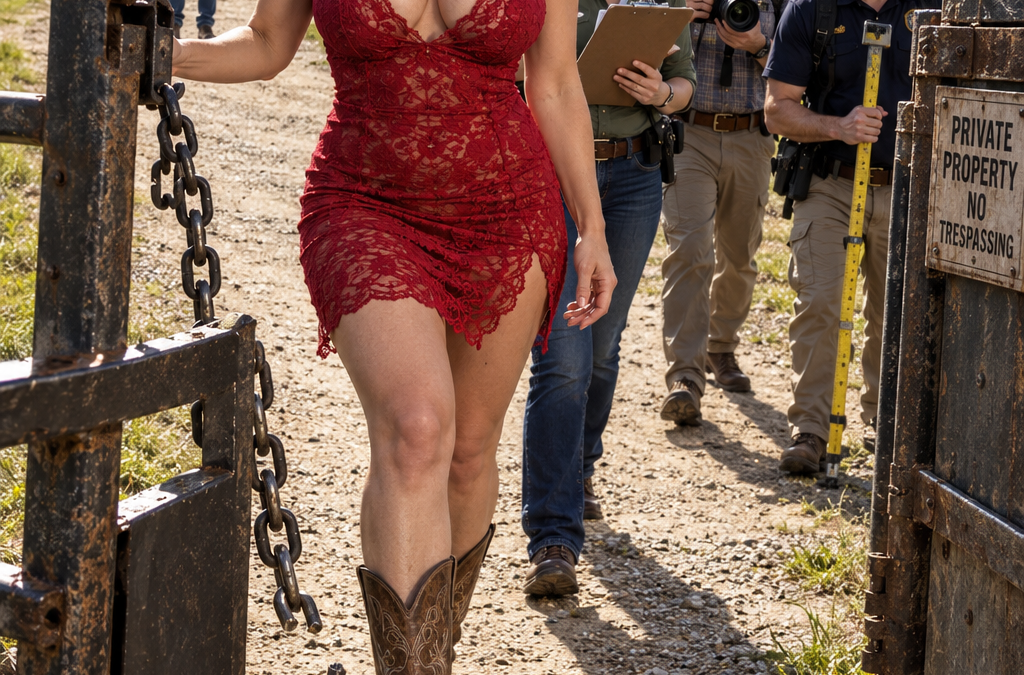
I stood twenty feet away with my phone recording while the president of the neighboring homeowners association pushed open the private entrance to my farm and walked through as if she owned the place.
Behind her came three other people carrying clipboards, cameras, and measuring equipment.
None of them had permission to be there.
None of them had a warrant.
None of them had an easement granting inspection rights.
And not one of them knew what I did for a living.
Karen stopped just inside the gate and turned toward me.
“Now that you’ve finished being difficult, we can conduct the inspection.”
I stared at the broken lock lying in the dirt.
Then back at her.
“You just cut a lock off private property.”
She lifted one shoulder.
“You refused reasonable access.”
“That doesn’t create access.”
“The HOA has inspection authority.”
“Show me.”
Her lips tightened.
I’d asked the same question four times already.
Every time, she answered with more confidence and less evidence.
Karen was forty years old, blonde, strikingly beautiful, and absolutely convinced that appearance and authority were almost interchangeable.
She wore the same red lace dress I had seen at every HOA confrontation since moving onto the farm two years earlier.
Tight at the waist.
Low-cut.
Revealing enough to draw attention to her large chest.
Completely impractical for gravel roads, pastures, and cattle fencing.
Karen didn’t care.
She dressed to dominate a room before she spoke.
Around certain men, she became flirtatious, softening her voice and leaning close.
Around anyone who challenged her, the softness disappeared.
That morning, she wasn’t flirting.
She was furious.
I’d told her no.
Karen Whitmore did not handle that word well.
She turned toward the people behind her.
“Start with the south fencing. Then photograph the equipment shed.”
One of the men hesitated.
“Mrs. Whitmore, are we definitely cleared to be inside?”
Karen didn’t even look at him.
“Yes.”
I raised my phone slightly.
“Could you say that again?”
She looked at me.
“You’re recording?”
“I started before you cut the lock.”
For the first time, her expression changed.
Only slightly.
Then arrogance returned.
“Good.”
She smiled.
“Then you’ll have a record that we acted under HOA authority.”
I almost admired the confidence.
Almost.
My name is Mark Bennett.
And despite what Karen believed, I wasn’t the kind of man who panicked when somebody tried to intimidate me.
That didn’t mean I never got angry.
I did.
Standing there looking at my destroyed lock, I was furious.
But I’d spent enough years in situations where emotion could make things worse to understand something Karen didn’t.
The person who loses control first often loses the advantage.
So I didn’t touch her.
Didn’t block her physically.
Didn’t threaten anyone.
I simply kept recording.
Then I stepped away from the gate and made one phone call.
Karen watched me.
“Calling your lawyer again?”
I didn’t answer.
The dispatcher picked up.
I gave the location.
Explained that multiple people had entered fenced private property after cutting a lock despite being explicitly told they did not have permission.
I gave a description.
Explained that the individuals were still on site.
The dispatcher asked whether anyone had weapons.
“Not that I’ve seen.”
“Any threats?”
“Not physical threats.”
“Are you in immediate danger?”
“No.”
“Stay separated from them. Units are being sent.”
“Understood.”
I ended the call.
Karen laughed.
“You called the police over an inspection?”
“I reported what happened.”
“You’re wasting their time.”
“Maybe.”
I slipped my phone into my shirt pocket with the camera still running.
“We’ll let them decide.”
She shook her head as though I were a stubborn child.
Then she turned toward the farm.
“Continue.”
Her people did.
That was the moment I understood how deeply Karen believed her own authority.
The farm covered just over two hundred acres on the rural edge of the county.
The HOA development sat to the east.
Nice homes.
Clean streets.
Stone entrance.
Manicured common areas.
My property predated the subdivision by decades.
The farm had its own entrance off a county road.
Its own water.
Its own electrical service.
Its own fences.
Its own deed.
Its own recorded boundaries.
There was no HOA membership.
No declaration binding my property.
No shared gate.
No common road.
The closest thing we had to a relationship was geography.
They were my neighbors.
Nothing more.
When I bought the land, that was precisely what I wanted.
I had spent most of my adult life working in places where privacy was a luxury.
The farm was the one place where I could leave that world at the gate.
Most of the people nearby knew I worked for the federal government.
Almost nobody knew details.
That was intentional.
My work didn’t make me special inside the neighborhood.
And I didn’t want it to.
At home, I was simply Mark.
I mended fences.
Maintained pasture.
Kept a small cattle herd.
Worked on equipment.
Drank coffee on the porch.
That was enough.
Then Karen became HOA president.
The problems started small.
They always do.
A letter arrived complaining that my pasture fencing was “visually inconsistent with surrounding community aesthetics.”
I called the HOA office because I assumed they’d mailed it to the wrong address.
Karen answered.
“Whitmore.”
“Hi, this is Mark Bennett. I received a violation notice.”
“Yes.”
“My farm isn’t in your HOA.”
“We’re aware you’re adjacent.”
“Then why am I receiving a violation?”
“Your fencing is visible from several HOA homes.”
I paused.
“And?”
“It affects their views.”
“That doesn’t put my fence under your rules.”
“The board has an obligation to protect community appearance.”
“Inside the community.”
“External properties can still create nuisances.”
“My fence is a nuisance?”
“Visually.”
I looked out the window at four strands of well-maintained ranch fencing.
“Karen, I’m not changing agricultural fencing because somebody in your neighborhood doesn’t like seeing a farm.”
Her voice cooled.
“That attitude isn’t going to help.”
“What attitude?”
“Hostility.”
I almost laughed.
“No hostility. Just no.”
She hung up.
A week later, another notice arrived.
Then another.
Farm equipment visible from HOA property.
Hay storage visible from a walking trail.
“Excessive agricultural activity” near the eastern boundary.
That last one was my favorite.
It was a farm.
Agricultural activity was the point.
I sent a certified response.
The farm lay outside the HOA.
The board had no enforcement jurisdiction.
Please cease sending violation notices.
Karen responded personally.
Your refusal to cooperate does not eliminate the community impact of your property.
I framed that sentence mentally.
It captured everything wrong with Karen.
She believed impact created authority.
If she could see it, hear it, smell it, or imagine that it affected her residents, she believed she had the right to control it.
At first, I ignored her.
Then she started sending people.
One afternoon, two board members stood outside my gate photographing barns.
Another day, a landscaping committee volunteer measured the roadside fence from county property.
I didn’t object.
They could look from public land.
They couldn’t enter.
I installed a heavier lock.
That apparently offended Karen personally.
At the next HOA meeting, which I attended after receiving yet another “courtesy notice,” she looked at me from the head table.
Same red lace dress.
Same polished blonde hair.
Same carefully rehearsed smile.
“Mr. Bennett has chosen to install an obstructive lock at his property entrance.”
I raised my hand.
“My private gate.”
Karen ignored that.
“This prevents routine inspection.”
“Because there is no routine inspection.”
“Your property affects the association.”
“You’ve said that.”
“Then you understand.”
“No.”
A few residents laughed.
Karen’s face tightened.
I continued.
“You keep saying the HOA has inspection authority. Show me where.”
She tapped a binder.
“Section 8 permits exterior compliance inspections.”
“Of HOA lots.”
“Of properties affecting association standards.”
“Read the actual language.”
She stared at me.
I had already read it.
So had my attorney.
Section 8 allowed board representatives to inspect association lots under specific circumstances.
My farm wasn’t one.
Karen changed direction.
“We have received complaints.”
“Complaints don’t transfer property rights.”
“Mr. Bennett, nobody is trying to take your property.”
“Then stay off it.”
The room went quiet.
Karen leaned toward the microphone.
“You seem very confident.”
“I read my deed.”
The meeting moved on.
Two weeks later, I found a typed notice zip-tied to my gate.
SURPRISE COMPLIANCE INSPECTION — BOARD AUTHORIZED.
No date.
No time.
No legal basis.
I removed it and saved it.
Three days later, Karen appeared.
That was the morning everything changed.
I was near the machine shed when I saw the vehicles.
Karen’s SUV first.
A second vehicle behind her.
Then a small utility truck.
She stepped out with three representatives.
One carried a camera.
Another carried a measuring wheel.
The third had a clipboard.
Karen called through the gate.
“Mark.”
I walked over.
“What do you want?”
“We’re conducting the property inspection.”
“No.”
Her smile disappeared.
“This isn’t optional.”
“Yes, it is.”
“The board provided notice.”
“A notice doesn’t create a right to enter.”
“You were informed.”
“And I informed you in writing that you’re not allowed on the farm.”
She stepped closer to the gate.
“You are deliberately obstructing HOA enforcement.”
“On property outside your HOA.”
“We’re done having this argument.”
“I agree.”
I pointed toward the road.
“Leave.”
Karen stared at me.
Then she walked back to her SUV.
For a moment, I thought she’d actually listened.
Instead, she opened the cargo area and pulled out heavy bolt cutters.
I remember thinking she wouldn’t actually do it.
Not because I trusted Karen.
Because even she had to understand the difference between sending a ridiculous letter and physically cutting a lock.
She carried the bolt cutters toward me.
“Karen.”
She stopped.
“This is private property.”
“We have inspection authority.”
“No, you don’t.”
“You’re denying access.”
“Yes.”
Her expression hardened.
“Then you’re forcing me to remove the obstruction.”
“The lock is not an obstruction.”
“It prevents authorized entry.”
“It’s a lock.”
She positioned the cutters around the chain.
I took out my phone.
“I’m recording.”
“Record whatever you like.”
“I’m telling you explicitly that you do not have permission to cut that lock or enter this property.”
Karen looked directly at the camera.
“We are entering under HOA authority.”
“Show me the rule.”
“I don’t need to debate bylaws at a gate.”
“You’re about to cut the gate lock.”
She squeezed the handles.
The chain resisted.
Karen repositioned.
One of the men behind her shifted nervously.
“Karen, maybe we should—”
“Stay out of it.”
She squeezed again.
Metal snapped.
The lock dropped.
That sound ended the argument.
Not legally.
Psychologically.
Until then, Karen could pretend there was confusion.
Maybe she genuinely misunderstood jurisdiction.
Maybe she believed some clause extended farther than it did.
But cutting the lock after I explicitly denied access changed the character of what was happening.
She pushed the gate open.
“Let’s go.”
They entered.
I didn’t touch the gate.
I didn’t touch her.
I documented.
Karen walked first.
Her heels were completely unsuited to the gravel, but pride apparently provided traction.
She stopped beside the equipment shed.
“Photograph this.”
The photographer obeyed.
“Why?” I asked.
She turned.
“Unscreened equipment.”
“This is a farm.”
“Community visibility standards still apply.”
“No.”
She pointed toward an old tractor.
“Why is that stored here?”
I almost laughed.
“Because that’s where I store the tractor.”
“It can be seen from the eastern development.”
“So can the mountains.”
“Don’t be childish.”
“You broke onto a farm to question a tractor.”
She ignored me.
They moved toward the pasture fence.
Karen inspected posts.
Looked at the barn.
Pointed toward a stack of hay bales.
“This needs documentation.”
I kept filming.
The more I refused to argue, the more confident she became.
She mistook restraint for defeat.
That was useful.
One representative finally asked, “Mark, do you have an approved site plan?”
I looked at him.
“Approved by whom?”
“The HOA.”
“No.”
Karen cut in.
“That’s another violation.”
I smiled.
“Write it down.”
She frowned.
“You think this is funny?”
“No.”
“Then why are you smiling?”
“Because every minute you’re here is being recorded.”
That unsettled her again.
She looked toward my phone.
“You can’t intimidate us with a camera.”
“I’m not trying to.”
I checked the time.
The dispatcher had said units were coming.
Karen continued directing people.
“Measure that fence.”
“Photograph the south barn.”
“Get the equipment serial numbers.”
That one stopped me.
“Don’t touch machinery.”
Karen turned.
“Nobody’s touching anything.”
“Good.”
She looked toward the representatives.
“Record identifying information only.”
One man approached the tractor.
I raised my voice.
“Do not climb onto it.”
He stopped.
Karen rolled her eyes.
“This is exactly the obstruction we’ve been dealing with.”
“You are standing on my land because you cut my lock.”
“The HOA has rules.”
I looked at her.
“So does the law.”
She smiled.
“Is that a threat?”
“No.”
I slipped my phone back into my pocket, still recording.
“Just an observation.”
Then I heard sirens in the distance.
Not loud.
Just enough.
Karen didn’t notice immediately.
One of her representatives did.
He looked toward the gate.
“Are those coming here?”
Karen waved him off.
“Probably something on the county road.”
They got louder.
A sheriff’s SUV turned into the driveway.
Then another.
A marked patrol car stopped outside the gate.
Karen stopped talking.
That was the first time I’d seen her truly surprised.
“Three units?”
One of the men whispered.
I didn’t answer.
A deputy stepped out.
Another followed.
The first officer looked at the open gate.
Then the broken chain and lock on the ground.
Then at the group standing inside.
“Who’s the property owner?”
“I am.”
I raised my hand.
Karen immediately stepped forward.
“Officer, I’m Karen Whitmore, president of the Briar Ridge Homeowners Association. We’re conducting an authorized inspection.”
The deputy looked at her.
“Did you cut that lock?”
Karen paused.
“We removed an obstruction to lawful access.”
“That wasn’t my question.”
She smiled.
The charm came out.
Softer voice.
Slight tilt of the head.
“Yes, I physically removed it, but only because the owner was refusing an authorized HOA inspection.”
The deputy looked toward me.
“Sir, did you give them permission to enter?”
“No.”
“Did you tell them not to?”
“Repeatedly.”
Karen interrupted.
“He’s deliberately mischaracterizing this.”
The deputy held up one hand.
“Ma’am, I’ll get your statement.”
Her smile disappeared.
He turned to me.
“Do you have identification?”
“Yes.”
I reached slowly toward my pocket.
“Wallet.”
He nodded.
I handed him my driver’s license.
Then, after a moment, I added my federal credentials.
He opened them.
His expression changed.
Not fear.
Not awe.
Recognition.
He looked up.
“You’re federal?”
“FBI.”
Karen stopped breathing for about half a second.
I saw it.
So did everyone else.
The deputy looked back at the credentials.
“Active special agent?”
“Yes.”
Karen whispered, “What?”
I took the credentials back.
That was the first time she had learned exactly what I did.
I hadn’t hidden it for tactical reasons.
I simply never considered my occupation relevant to a property dispute.
It became relevant now only because the deputy was confirming identity.
Karen stared at me.
“You never said you were FBI.”
I looked at her.
“You never asked.”
Her face went pale.
Then anger returned quickly.
“This is intimidation.”
The deputy turned toward her.
“His occupation doesn’t change the property question.”
I appreciated that.
Exactly right.
Being FBI didn’t magically create more property rights.
My deed created those.
The broken lock mattered because it was my gate, not because of my badge.
The deputy continued.
“What authority did you have to cut the lock?”
Karen recovered enough to open her folder.
“The HOA has broad inspection powers.”
“Show me.”
She began flipping pages.
I watched.
One page.
Two.
Four.
Seven.
Nothing.
The deputy waited.
Karen finally handed him a section.
He read it.
“This says association lots.”
“This property impacts association lots.”
“It doesn’t say that here.”
“You have to understand how our covenants operate.”
The deputy looked at her.
“I’m trying.”
That answer almost made me smile.
She pointed toward me.
“He’s been refusing inspections for months.”
“Is his property in your HOA?”
“It sits directly adjacent.”
“That wasn’t my question.”
Silence.
The second deputy walked toward the gate.
He photographed the broken lock.
The cut chain.
Tool marks.
Then he photographed Karen’s bolt cutters still lying near the entrance.
The first deputy asked me, “Do you have documentation showing property boundaries?”
“Yes.”
“Can you provide it?”
I walked toward my truck.
Karen called after me.
“You’re really going to turn a misunderstanding into a criminal matter?”
I stopped.
Turned.
“I told you four times not to cut the lock.”
“You knew we had inspection authority.”
“No.”
“You knew we believed we did.”
“That isn’t the same thing.”
She looked toward the deputies.
“This is absurd.”
I retrieved a binder from the truck.
Deed.
Survey.
County parcel map.
Title documents.
I handed them over.
The deputy reviewed the map.
“This entire area?”
“Yes.”
“The HOA boundary?”
I pointed.
“East of the recorded line.”
He compared it.
“So the gate is entirely on your parcel?”
“Yes.”
Karen stepped closer.
“The community has an interest in that frontage.”
He looked at her.
“Interest isn’t ownership.”
That shut her up for several seconds.
Then came the video.
The deputy asked whether my recording captured the lock being cut.
“Yes.”
I opened it.
We stood beside the patrol vehicle while the footage played.
Karen’s voice came through clearly.
We’re conducting the property inspection.
Mine.
No.
Hers.
This isn’t optional.
Mine.
Show me the rule.
Then the moment with the bolt cutters.
My warning.
I’m telling you explicitly that you do not have permission to cut that lock or enter this property.
Karen looking directly at the phone.
We are entering under HOA authority.
Metal snapped.
Nobody spoke while the video continued.
When it ended, the deputy handed the phone back.
Karen immediately started explaining.
“There is context missing.”
I looked at her.
“It starts before you arrived.”
“I’m not talking to you.”
The deputy said, “What context changes the fact that you were told not to enter?”
Karen turned toward him.
“The HOA believed it had legal authority.”
“Based on?”
“Our governing documents.”
“Which document?”
She started flipping pages again.
The longer she searched, the weaker she looked.
One of the HOA representatives finally spoke.
“I thought Karen had written authorization.”
Everyone turned.
Karen’s head snapped toward him.
“Paul.”
He swallowed.
“You told us the owner had been served.”
“He was.”
“Served isn’t consent,” the deputy said.
Paul looked miserable.
“I didn’t know she was going to cut the lock.”
Karen glared.
“You knew this was an enforcement inspection.”
“I knew we were inspecting.”
“Then stop pretending.”
The deputy raised his hand.
“Everybody needs to stop talking over each other.”
He separated witnesses.
Statements were taken individually.
That mattered.
Karen couldn’t coordinate answers.
Susan, another representative, admitted she’d asked whether they actually had permission.
Paul confirmed Karen had brought the bolt cutters herself.
Another board volunteer said he believed the inspection had already been legally approved by counsel.
It hadn’t.
The officers contacted the HOA’s management company.
Nobody there could produce an entry authorization.
Then the HOA’s attorney was called.
He hadn’t approved forced access either.
By then, Karen’s explanation had changed.
At first, she’d said the HOA had direct inspection authority.
Then she claimed the gate was obstructing access to an area subject to community oversight.
Then she suggested she’d believed the farm might be partially annexed.
Then she said the inspection was only observational.
The video contradicted each new version.
The deputy finally looked at Karen.
“Ms. Whitmore, you need to leave the property.”
Her eyes widened.
“We haven’t completed the inspection.”
“You’re done.”
“You don’t have jurisdiction over HOA enforcement.”
“I have jurisdiction over what I’m responding to.”
She looked toward me.
“This is because he’s FBI.”
The deputy’s expression hardened.
“No, ma’am.”
He pointed toward the broken lock.
“This is because that gate was locked, the owner told you not to enter, and we don’t have documentation showing you were legally entitled to force entry.”
Karen’s face turned red.
“You’re taking his side.”
“We’re documenting facts.”
“I want your supervisor.”
“He’s on the way if you want to speak with him.”
For once, Karen had no quick answer.
She looked toward her group.
“Pack up.”
Nobody needed convincing.
They moved toward the gate.
The same gate Karen had entered like a conqueror twenty minutes earlier.
Now she had to walk back through it under the eyes of law enforcement.
I didn’t smile.
Didn’t make a comment.
Didn’t need to.
The image said enough.
Karen reached the broken chain and stopped.
Then looked back at me.
“This isn’t over.”
The deputy heard her.
“Ma’am.”
She turned.
“What?”
“I strongly recommend you stop addressing the property owner right now.”
Her jaw tightened.
She walked away.
After the HOA vehicles left, the officers finished documenting the scene.
The supervising deputy arrived.
He reviewed my video.
Property records.
Statements.
The broken lock.
The bolt cutters.
I answered every question.
Professionally.
Factually.
No embellishment.
My FBI credentials came up only to establish identity.
I made it clear I was not asking for special treatment.
“This is my private property issue.”
The supervisor nodded.
“Understood.”
I appreciated that too.
The incident was referred through the normal local process.
I didn’t use my position to direct anything.
Didn’t call federal contacts.
Didn’t turn a neighborhood trespass dispute into something it wasn’t.
My badge wasn’t the point.
Karen’s mistake was not trespassing on an FBI agent’s farm.
Her mistake was trespassing on anyone’s farm.
That distinction mattered to me.
When everyone left, I stood at the gate.
The afternoon had gone quiet.
The broken lock lay beside my boot.
I picked it up.
The shackle had been crushed unevenly.
Deep marks from the bolt cutters scarred the metal.
I had owned that lock six years.
Karen destroyed it in less than thirty seconds because she couldn’t accept that a gate might actually mean no.
I installed a temporary replacement.
Closed the gate.
Locked it.
Then went back to work.
Cattle still needed water.
A hydraulic line on the tractor still needed replacement.
The farm didn’t care about Karen’s humiliation.
That evening, my supervisor called.
Word had reached the office because local law enforcement verified my credentials.
“You okay?”
“Fine.”
“I heard somebody cut into your property.”
“HOA president.”
Silence.
Then laughter.
I laughed too.
“I wish I were joking.”
“Do we need to do anything?”
“No.”
“Work-related threat?”
“No indication.”
“Keep us informed if that changes.”
“I will.”
That was it.
No black SUVs.
No federal raid.
No dramatic intervention.
Exactly as it should have been.
The next development came from the HOA itself.
Their attorney sent me a letter forty-eight hours later.
Not Karen.
The attorney.
He stated that the association was reviewing the incident and that no further inspections would occur pending legal review.
I forwarded it to my property attorney, Rachel Bennett.
She called.
“This is the sound of someone discovering liability.”
“You think?”
“They went from Karen cutting locks to counsel writing letters in forty-eight hours.”
“What should I do?”
“Nothing.”
I laughed.
“You lawyers love that answer.”
“Because clients love making evidence worse.”
I saved every document.
The HOA board held an emergency meeting three days later.
I wasn’t invited.
Susan called me afterward.
Susan had been one of the representatives at the farm.
She sounded exhausted.
“I owe you an apology.”
“You already gave the deputies your statement.”
“That’s not the same.”
I waited.
“We never voted to authorize forced entry.”
“I assumed that.”
“Karen told us legal had cleared the inspection.”
“They hadn’t.”
“I know.”
“What did she tell the board?”
Susan hesitated.
“That the lock was an unreasonable obstruction.”
I laughed.
“To private property?”
“Yes.”
“And?”
“She said you escalated the situation by calling law enforcement.”
“Did anyone agree?”
“Not after the video.”
That interested me.
“You watched it?”
“The attorney had a copy through the incident documentation.”
“Good.”
Susan sighed.
“We reviewed the actual inspection provision.”
“And?”
“You were right.”
“I know.”
“The provision only applies to association lots.”
“I know.”
“I understand you’re angry.”
“I am.”
“I’m sorry.”
I let silence sit.
Then I said, “Thank you.”
The board formally suspended Karen’s independent enforcement authority pending further review.
She was still president.
Technically.
But she could no longer authorize site inspections, contractor entries, or property enforcement without board approval and counsel review.
For Karen, that was probably worse than removal.
She still had the title.
None of the power she valued.
The legal consequences moved more slowly.
They usually do.
The broken lock and forced entry were documented as potential trespass and property-damage matters under applicable local law.
I gave a statement.
So did every witness.
Karen hired counsel.
Nobody marched her directly from my farm to jail because real legal processes rarely work like television.
That was fine with me.
I wanted accountability.
Not theater.
My attorney also sent the HOA a civil demand covering the damaged lock, security expenses, and a formal acknowledgment that the farm was outside association inspection authority.
The amount of the lock itself was almost laughably small.
What mattered was the principle.
I had repeatedly said no.
Karen had responded by physically destroying the barrier separating my land from hers.
The HOA’s insurer got involved.
Then the board became very interested in settling the matter cleanly.
I agreed to mediation.
Karen attended.
She walked into the conference room wearing the red lace dress.
Of course she did.
Her attorney sat beside her.
Rachel sat beside me.
The HOA’s insurance counsel occupied the far end.
For the first hour, Karen barely looked at me.
Then the mediator asked her to explain why she believed she could cut the lock.
Karen launched into the same argument.
Community impact.
Inspection authority.
My history of noncooperation.
My “hostile attitude.”
The mediator listened.
Then asked one question.
“Was Mr. Bennett’s parcel legally part of the HOA?”
Karen paused.
“No.”
“Did the governing documents expressly grant inspection rights over his farm?”
“Not expressly.”
“Did he grant permission?”
“No.”
“Did he tell you not to enter?”
Her jaw tightened.
“Yes.”
“Did you cut the lock anyway?”
Silence.
Her attorney leaned toward her.
Karen stared at the table.
“Yes.”
That was the entire case in five answers.
The HOA settled.
They reimbursed the property damage.
Paid for upgraded gate security.
Covered a portion of legal fees.
More importantly, the settlement included a written statement that Riverbend Farm was outside HOA jurisdiction and that no board officer, employee, contractor, or representative could enter without explicit permission or lawful authority.
I had that language framed.
Not because I needed it to know I owned the farm.
Because apparently somebody else needed the reminder.
Karen faced internal consequences too.
The board investigation found she had misrepresented counsel’s position before the inspection.
She had told board members that forced access had been approved.
It had not.
She also failed to document the alleged complaints that supposedly justified the surprise inspection.
Several complaints existed.
None authorized entry.
Some weren’t even about my farm.
One concerned cattle noise.
Another complained about a tractor visible from the subdivision walking path.
One homeowner had complained about “industrial-looking fencing.”
That was apparently enough for Karen to convince herself she could become a private property inspector.
Residents were not pleased.
At the next annual meeting, turnout was enormous.
I went because Rachel encouraged me to hear the board report.
Karen sat at the front.
Red lace dress beneath a black jacket.
For the first time, she looked nervous.
The board attorney summarized the investigation.
No forced-entry authority.
No counsel approval.
No emergency condition.
No lawful inspection order.
Unauthorized destruction of the lock.
Unauthorized entry.
Potential exposure created for the association.
Karen asked to respond.
Of course she did.
She stood.
“I acted to protect this community.”
A man near the back said, “By breaking into a farm?”
Murmurs spread.
Karen gripped the podium.
“Mr. Bennett spent months refusing reasonable cooperation.”
I stood.
She saw me.
Her face hardened.
I didn’t raise my voice.
“My cooperation was never required.”
“This is exactly the arrogance I’ve dealt with.”
“No.”
I looked around the room.
“This is the problem.”
Then back at her.
“You still think saying no to you is arrogance.”
The room went quiet.
Karen stared.
I continued.
“The gate was locked.”
“You were obstructing an inspection.”
“The farm isn’t part of your HOA.”
“It affects our properties.”
“Then look at it from your side of the fence.”
A few residents laughed.
Karen’s cheeks reddened.
“I made a judgment call.”
“You brought bolt cutters.”
That killed the laughter.
I didn’t need to say anything else.
The board election happened that evening.
Karen lost.
Not narrowly.
The final vote wasn’t even close.
Susan became president.
Her first official action was to adopt a written boundary and access policy.
No HOA representative could enter nonassociation property without written permission, a valid easement, or lawful government authority.
Someone joked that the policy should be called the Bolt Cutter Rule.
Susan didn’t laugh.
I did.
Karen walked past me after the meeting.
No clipboard.
No entourage.
She stopped.
“You enjoyed this.”
I looked at her.
“No.”
She scoffed.
“Please.”
“I enjoyed getting my property back under control.”
“You humiliated me.”
“You cut the lock.”
“You could have handled it privately.”
“I told you privately not to enter.”
She looked away.
For a second, the anger disappeared.
She looked tired.
Then she said something I didn’t expect.
“I really thought the HOA had authority.”
I studied her.
“I know.”
She looked back.
“That doesn’t matter to you?”
“It matters.”
She seemed surprised.
“But believing you have authority doesn’t create it.”
Her expression tightened again.
“So that’s it?”
“That’s it.”
She walked away.
I never had another serious problem with her.
She stayed in the neighborhood for about another year, then sold her house.
I heard she moved several counties away.
I didn’t ask where.
My farm returned to what I wanted it to be.
Quiet.
The upgraded gate was stronger than the old one.
Security cameras covered the entrance.
Not because I expected another HOA raid.
Because once somebody cuts your lock in broad daylight while insisting they have the right, you become less casual about security.
Most days, I barely thought about Karen.
Then something small would remind me.
The scar on the gate where the old chain had hung.
A board newsletter.
An HOA vehicle passing on the county road.
A pair of bolt cutters in my workshop.
The strangest reminder came from my job.
A younger agent heard the story through office gossip and asked me one day, “Is it true some HOA lady broke into your farm and then found out you’re FBI?”
I sighed.
“That’s the simplified version.”
He laughed.
“What’d she do when you showed the badge?”
“She got quiet.”
“I bet.”
I looked at him.
“That’s not the lesson.”
He stopped smiling.
“What is?”
“She shouldn’t have cut the lock even if I stocked shelves at a grocery store.”
He nodded.
“Right.”
“My job didn’t make the farm more private.”
That mattered enough for me to keep repeating.
People loved the twist.
HOA president breaks into FBI agent’s farm.
It’s a good story.
But if that’s all someone takes from it, they miss the point.
Karen didn’t make a mistake because she chose the wrong victim.
She made a mistake because she believed the victim’s identity determined whether boundaries deserved respect.
Private property belongs to its owner whether that owner is an FBI agent, mechanic, teacher, nurse, retiree, truck driver, or someone with no impressive title at all.
The gate meant the same thing before I showed my credentials.
No entry without permission.
The law didn’t suddenly become real when Karen learned what I did.
It had been real while she was holding the bolt cutters.
Months later, I invited Susan to the farm.
She called first.
That still made me smile.
“Can I come through the gate?”
“See how easy that is?”
She laughed.
“I’ve learned.”
She drove in.
We walked along the eastern pasture.
From the fence, Riverbend Estates—or Briar Ridge, depending on which sign you were looking at—was visible across the road.
Perfect lawns.
Matching roofs.
Decorative streetlights.
Susan stopped beside the pasture.
“You know, most people actually like having the farm here.”
“That’s funny.”
“Why?”
“Karen made it sound like I’m destroying your property values.”
Susan shrugged.
“She made a lot of things sound different than they were.”
We watched cattle move across the field.
After a while, she said, “I keep thinking about that morning.”
“So do I.”
“If the police hadn’t come?”
“I would’ve waited.”
“You wouldn’t have physically stopped her?”
“No.”
She looked at me.
“Really?”
“I told her no. Recorded her. Called authorities.”
“But she was on your land.”
“Exactly.”
I kicked at the dirt.
“Getting into a fight would’ve made everything harder.”
Susan nodded.
“She expected you to explode.”
“I know.”
“She told us beforehand you were aggressive.”
That made me laugh.
“She wanted proof.”
“And you didn’t give it to her.”
“No.”
That was another lesson I kept.
Karen had built a narrative before she arrived.
Difficult ranch owner.
Hostile outsider.
Uncooperative neighbor.
She likely expected me to shout.
Grab the cutters.
Push someone.
Threaten people.
Then she could point to my reaction and say she had been right all along.
Instead, I documented.
That video mattered more than anything I could have said in anger.
It captured sequence.
Warning.
Refusal.
Action.
Entry.
No interpretation needed.
Karen’s own words convicted her credibility long before any legal process reached a conclusion.
The camera didn’t care that she was attractive.
Didn’t care about her title.
Didn’t care that she wore expensive clothes or delivered orders confidently.
It recorded facts.
That’s why she hated it.
People like Karen thrive in ambiguity.
They tell one version to one person and another version somewhere else.
Documentation removes room.
That morning, my phone turned an argument into a timeline.
The officers didn’t have to decide who seemed more convincing.
They could watch.
That changed everything.
A year after the incident, I replaced the gate entirely.
Not because it was damaged beyond repair.
I wanted a wider entrance for farm equipment.
The new gate was heavier steel with an electronic access system.
The installer asked whether I wanted an HOA emergency access code.
I stared at him.
He didn’t know the story.
“No.”
“County emergency?”
“Yes.”
“Fire?”
“Yes.”
“Utility?”
“Yes.”
“HOA?”
I smiled.
“Definitely not.”
He shrugged.
“Your gate.”
Exactly.
My gate.
Two words Karen had struggled to understand.
On the anniversary of the incident, I found the old broken lock in a drawer.
I turned it over in my hand.
Deep cutter marks scarred the shackle.
One side was bent.
For something that had caused so much trouble, it looked insignificant.
A twenty-dollar lock.
That was what turned a petty HOA argument into a legal disaster.
Not because the lock was valuable.
Because breaking it required a decision.
Karen had reached a boundary.
Physical.
Visible.
Locked.
I had verbally reinforced it.
She knew she did not have consent.
And she chose to cross anyway.
Everything afterward followed from that choice.
The police response.
The video.
The board investigation.
The settlement.
Her election loss.
None of it happened because I was clever.
It happened because Karen finally made her assumptions concrete.
Before the lock, she could hide behind letters.
Interpretations.
Complaints.
“Community impact.”
“Inspection rights.”
After the lock, there was a broken piece of metal lying in dirt.
Sometimes accountability begins with something that simple.
The farm is peaceful now.
I wake early.
Check cattle.
Work on fences.
Drink coffee.
My federal credentials stay where they belong unless I’m working.
Most neighbors still don’t know much about my cases.
That’s fine.
The HOA stays on its side.
I stay on mine.
Susan occasionally sends notices about road work or community events.
Nothing more.
No inspection demands.
No photographs from inside the gate.
No strangers with clipboards walking through pasture.
No bolt cutters.
That’s how neighbors should work.
Respect the line.
If you need something, ask.
If the answer is no, determine whether you actually have lawful authority before deciding no doesn’t apply to you.
Karen learned that lesson in the most embarrassing way possible.
She arrived at my farm convinced that an HOA presidency gave her a key to every gate she could see.
When there wasn’t a key, she brought bolt cutters.
A few minutes later, she stood beside a broken lock explaining to sheriff’s deputies why she believed a private association had the power to force entry onto land it didn’t govern.
Then they asked who owned the property.
I showed them my identification.
Karen discovered I was an active FBI special agent.
Her expression changed instantly.
But my answer to her had never changed.
Before the badge.
After the badge.
Before the deputies.
After the deputies.
Before she cut the lock.
After she lost the presidency.
The answer was always the same.
This is private property.
You do not have permission.
And no title printed beneath your name gives you the right to pretend otherwise.








