𝗣𝗔𝗥𝗧 𝟮 The HOA President Claimed She’d Bought My Family’s Private Road—Then Sent Construction Crews to Take It Before I Could Stop Her
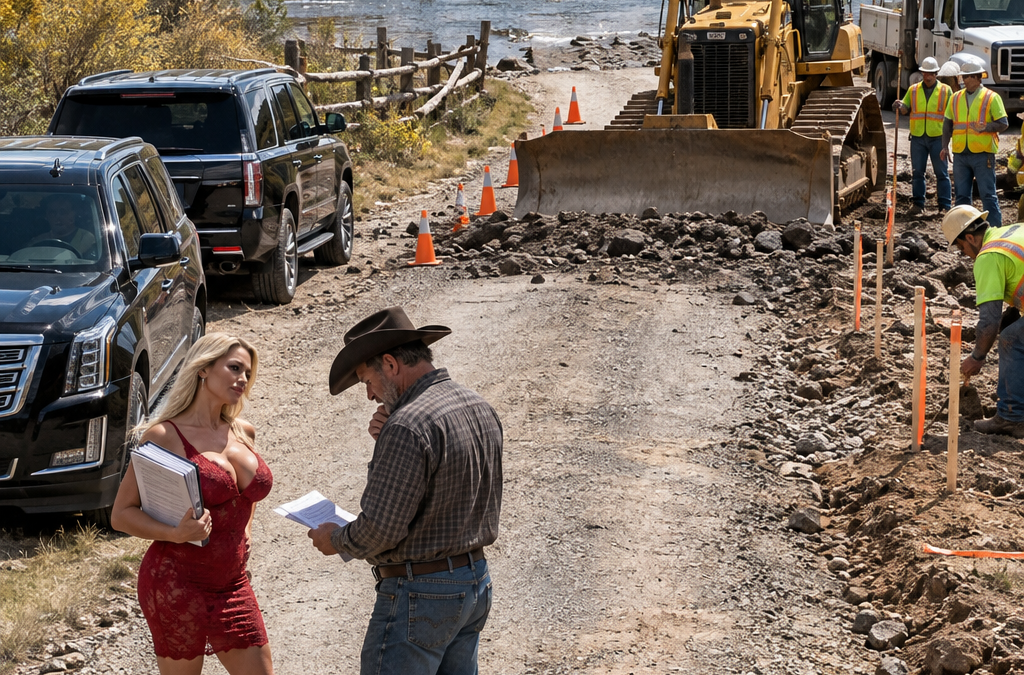
𝗣𝗔𝗥𝗧 𝟮
She waved one hand.
“Access permits. Shared use. HOA scheduling.”
I stared at her.
“You’re suggesting I ask your board for permission to drive to my own back pasture?”
She gave an irritated sigh.
“You’re making it sound unreasonable.”
“Because it is unreasonable.”
Her smile disappeared.
I continued.
“The road is too narrow for neighborhood traffic and ranch equipment to share safely without major changes. It was built for agricultural access, not hundreds of luxury SUVs.”
“Then we’ll widen it.”
“On whose land?”
“The land required for the project.”
“Which is mine.”
Karen folded her arms.
“Nathan, you need to understand that progress requires compromise.”
I looked at her.
“Compromise means both sides agree.”
She tilted her head.
“Then perhaps you should consider what happens when one property owner obstructs a major community improvement.”
I leaned back in my chair.
“Are you threatening me?”
“I’m explaining that Crestview Heights has considerable financial resources.”
“Good. Then it can afford to build a road on land it actually owns.”
Her face reddened.
She gathered her drawings.
“You’ll regret being this stubborn.”
I stood.
“Karen, I’m not selling the road.”
She paused at the door.
“We’ll see.”
For months afterward, I heard rumors about the second entrance project.
An HOA newsletter described it as a major infrastructure improvement.
Residents discussed it at community events.
Contractors apparently began preparing preliminary estimates.
At one point, a neighbor showed me a promotional rendering of the new entrance.
My road had been given a fancy new name.
Crestview Parkway.
I stared at the image.
It showed stone pillars standing near my grandfather’s original gate.
Decorative streetlights lined the gravel lane.
And a security checkpoint occupied the place where I normally parked my cattle trailer.
I felt sick.
The entire project had been designed as though my property had already been acquired.
I sent the HOA a formal letter explaining that I had not agreed to sell, lease, or grant an easement over the road.
I included references to my recorded deed and property survey.
I requested confirmation that no construction would begin without my written consent.
The HOA replied with a vague statement that all necessary property arrangements were being handled through its legal representatives.
I contacted Karen directly.
She refused to discuss the matter.
Eventually, she stopped returning my calls.
Then came the morning she arrived with the thick folder and claimed the road had been sold.
After she left, I went straight to my ranch office.
The building stood beside the main barn, a weathered structure with wooden siding and a metal roof.
Inside, my father’s old desk still occupied the corner near the window.
A large filing cabinet held decades of property documents.
I opened the cabinet and pulled out our original deed, later ownership records, surveys, and easement documentation.
I spread them across the desk.
The legal description was clear.
The private road lay entirely within the ranch boundaries.
There was no recorded transfer to Crestview Heights.
No sale agreement I’d executed.
No grant of ownership.
No access easement giving the HOA authority to convert the road into a subdivision entrance.
I examined the documents until late that evening.
Then I returned to the description Karen had shown me.
I had photographed the page before handing it back.
I enlarged the image on my computer.
The more closely I studied it, the more suspicious it looked.
The parcel references did not follow the road’s actual route.
The western boundary was wrong.
The northern reference point appeared to identify land belonging to a completely different section of the development.
And the measurements didn’t match the physical road.
I wasn’t a licensed surveyor.
I knew better than to pretend I could resolve a boundary dispute from memory alone.
But I had lived on that land long enough to recognize when something didn’t make sense.
I called an independent surveyor.
Her name was Miriam Bell.
She was a licensed professional who had worked throughout the county for more than twenty years.
I explained the situation.
She listened without interrupting.
Then she asked one question.
“Do you have the recorded deed and previous survey?”
“Yes.”
“Good. I’ll need those.”
I told her construction was scheduled to begin the next morning.
Her voice became serious.
“Document everything. Don’t alter the boundary markers. And don’t let anyone pressure you into accepting a map before the recorded descriptions are checked.”
I thanked her.
After we hung up, I stood beside the office window.
Outside, the sun was disappearing behind the western ridge.
My private road stretched toward the northern pasture.
I could see the familiar curve near the cottonwood tree.
The old fence posts.
The shallow ditch my father had spent years keeping clear.
Everything looked exactly as it always had.
But for the first time in my life, I felt uncertain about whether someone would try to take it away before I could stop them.
I barely slept that night.
Every time I closed my eyes, I pictured heavy equipment tearing through the road.
I imagined contractors removing my grandfather’s old gate.
I imagined being told I needed an HOA permit to move cattle into the back pasture.
And I kept thinking about Karen’s expression when she’d said the paperwork was already filed.
She hadn’t sounded like someone making an offer.
She’d sounded like someone announcing a victory.
At six-thirty the next morning, I heard engines.
Not one.
Several.
I stepped onto the porch.
Two dump trucks were turning into my road.
Behind them came a grader, a utility pickup, and a flatbed trailer carrying construction equipment.
My stomach dropped.
Karen had kept her promise.
I pulled on my boots and drove toward the road.
By the time I reached the entrance, workers were unloading traffic cones and metal barricades.
One man was marking the edge of the gravel with bright orange paint.
Another was placing survey-style stakes along the shoulder.
A large sign lay beside the contractor’s truck.
CRESTVIEW HEIGHTS — SECONDARY COMMUNITY ENTRANCE.
I stared at it.
They had already named the road.
They had already ordered the signs.
They were preparing to convert my family’s private entrance into an HOA-controlled access route.
And they hadn’t even bothered to ask whether the sale was real.
I parked my pickup across the road and climbed out.
“Stop the work!”
Several workers turned.
The man holding the paint sprayer lowered his equipment.
A supervisor in a yellow safety vest approached.
“Can I help you?”
“Who authorized construction here?”
He looked confused.
“Crestview Heights HOA.”
“This is private property.”
He glanced toward the road.
“We have a work order.”
“From whom?”
“The association.”
I pointed toward the grader.
“Shut that machine down.”
The supervisor hesitated.
“Sir, we’re under contract.”
“And you’re standing on land I own.”
He looked toward his clipboard.
“According to the documents we received, the HOA purchased the road.”
I felt my jaw tighten.
“Those documents are being disputed.”
The supervisor glanced at the workers.
A few had stopped unloading equipment.
Others stood beside the trucks, watching.
He lowered his voice.
“Look, I don’t want any trouble. We’re just here to prepare the surface.”
“Preparing the surface means changing my road.”
“That’s what the project requires.”
I pointed toward the northern bend.
“That road serves my cattle pastures. You start widening it, moving drainage, or changing the grade, and you can damage an access route my family has maintained for generations.”
He looked uncomfortable.
“Sir, I need to call the project manager.”
“Do that.”
He stepped away.
I took out my phone and began recording.
The trucks.
The equipment.
The construction sign.
The newly placed stakes.
The workers.
Every section of the road where activity had begun.
I knew Karen would later claim the work was harmless.
So I wanted a complete record of what was happening.
After several minutes, the supervisor returned.
“The HOA says we’re authorized to proceed.”
I stared at him.
“Who did you speak to?”
“Mrs. Whitmore.”
Of course.
“Did she provide a deed?”
He hesitated.
“She said the paperwork had been filed.”
I looked toward the grader.
“That’s not the same as verifying ownership.”
He sighed.
“Sir, I’m not a property attorney.”
“Neither am I. But I know when somebody is digging on my land without my permission.”
The supervisor shifted his weight.
“I can pause the work while we clarify the situation, but I need written direction from the project office.”
“Then get it.”
He nodded reluctantly.
The grader’s engine went quiet.
For the moment, the workers stopped.
But the trucks remained.
The construction sign remained.
And I knew that pause wouldn’t last unless I could produce something stronger than my word against Karen’s.
That afternoon, Miriam Bell arrived with a survey truck and a case full of measuring equipment.
She was in her late forties, with short dark hair, weathered boots, and the calm expression of someone who had spent years resolving disputes caused by people who misunderstood property lines.
I handed her the deed, the previous survey, and photographs of Karen’s document.
She examined them carefully.
Then she looked toward the road.
“Let’s establish the actual boundary before we discuss what anyone thinks they purchased.”
I nodded.
“That’s exactly what I need.”
She began working.
For hours, Miriam and her assistant measured the road and surrounding property.
They located recorded monuments.
Checked coordinates.
Compared parcel descriptions.
Verified the road’s position against the ranch boundary.
And followed the property line toward Crestview Heights.
I watched them move from one marker to another.
Every measurement seemed to take forever.
The construction crews had left for the day, but their equipment remained parked near the entrance.
A temporary HOA sign stood beside the road.
Seeing it there made my blood boil.
My grandfather had built that road.
My father had kept it passable through floods and winter storms.
And now an association that hadn’t existed when either man began ranching was treating it as purchased property.
At one point, I walked toward Miriam.
“How’s it looking?”
She studied the instrument.
“Let me finish before I give you an answer.”
Her tone wasn’t unfriendly.
Just precise.
I respected that.
She wasn’t going to tell me what I wanted to hear.
She was going to tell me what the measurements proved.
Late in the afternoon, she called me over to her truck.
“Nathan, sit down for a minute.”
My stomach tightened.
I sat on the open tailgate.
She spread a preliminary drawing across a portable work surface.
Then pointed toward the road.
“This is your ranch boundary.”
I leaned closer.
She traced the line.
“This is the private road.”
My heart began pounding.
She looked up.
“The entire road is inside your property.”
I exhaled slowly.
“All of it?”
“All of it.”
I looked at the drawing again.
She continued.
“The HOA parcel they’re relying on ends several hundred feet away from the road.”
I stared at her.
“Several hundred feet?”
She nodded.
“The description they’ve provided doesn’t match the road they claim to have purchased.”
I felt a surge of relief.
Then anger.
Because it was exactly what I’d suspected.
Karen’s document didn’t merely contain a minor drafting error.
It described land that didn’t correspond to the property she was trying to take.
Miriam pointed toward another section.
“There’s something else.”
I looked at her.
“The parcel described in that document doesn’t appear to be property the HOA owned or controlled either.”
I stared at the drawing.
“So their document describes land they didn’t own, and they’re trying to use it to claim a road they also don’t own.”
“That’s what the records and measurements indicate.”
For several seconds, I said nothing.
Then I rubbed both hands over my face.
I had spent the previous night wondering whether my family could lose access to the back half of the ranch.
Now a licensed surveyor had confirmed the road was entirely mine.
But the relief came with another realization.
Karen had already sent construction crews.
If I hadn’t been there that morning, they might have begun changing the road before anyone questioned the paperwork.
Miriam looked at me.
“Keep the road as it is. Preserve the photographs. I’ll prepare the formal survey documentation.”
I nodded.
“Thank you.”
She looked toward the parked equipment.
“And Nathan?”
“Yes?”
“Get your attorney involved.”
I followed her gaze.
The grader stood beside the road like a threat that hadn’t gone away.
“I intend to.”
The next morning, Karen returned.
She arrived in her white SUV shortly after nine, wearing the same tight red lace dress beneath a cream-colored jacket.
Her blonde hair was perfectly styled.
A pair of oversized sunglasses rested on her head.
She climbed out carrying her familiar leather folder.
I was standing beside Miriam’s survey markers when Karen approached.
“Well,” she said brightly, “I hope you’ve finished your little protest.”
I looked at her.
“Karen, your claimed boundaries are wrong.”
Her smile tightened.
“Excuse me?”
“I hired an independent licensed surveyor.”
She laughed.
“Of course you did.”
I held out the survey drawing.
“It shows the entire road inside my ranch.”
She glanced at the paper.
Then waved it away.
“That’s your survey.”
“It’s based on the recorded property boundaries.”
“Our attorney has already verified the sale.”
“Then your attorney verified the wrong property.”
Her eyes narrowed.
“Nathan, this is becoming tiresome.”
I pointed toward the nearest marker.
“The HOA’s claimed parcel stops several hundred feet short of this road.”
She folded her arms.
“That’s not what our records show.”
“Then your records are wrong.”
She stepped closer.
“Do you understand how much money this project represents?”
I stared at her.
“Do you understand that none of that money buys land I never agreed to sell?”
Her expression became vicious.
“You’re deliberately interfering with HOA construction.”
“I’m protecting my property.”
“No. You’re obstructing a legally approved project.”
I took a breath.
“Karen, you have no deed transferring this road from me to the association.”
She smiled coldly.
“We have everything we need.”
“Then show it.”
“Our attorney will.”
“Good.”
She leaned toward me.
“And when he does, I expect you to stop this childish behavior.”
I looked at her.
“What happens if I don’t?”
Her smile widened.
“We sue you.”
I didn’t answer.
She continued.
“Not for a few thousand dollars, Nathan. For construction delays, contractual losses, and interference with a major development project.”
I felt my stomach tighten.
She knew exactly what she was doing.
The HOA had far more money available for litigation than most individual landowners.
Karen was counting on the threat of a lawsuit to make me surrender.
She wanted me to imagine legal bills piling up while contractors waited.
She wanted me afraid of losing the ranch in a fight I couldn’t afford.
But I looked down at the survey.
Then toward the road.
And I remembered my father’s hands repairing the creek crossing after a spring flood.
I remembered the winters we spent clearing fallen trees.
I remembered riding beside my grandfather in an old tractor, learning every turn in that gravel lane.
I wasn’t going to give Karen the road simply because she could hire more lawyers than I could.
“Then file your lawsuit,” I said.
Her smile disappeared.
“What?”
“If you believe you own the road, prove it in court.”
She stared at me.
“You have no idea what you’re inviting.”
I held her gaze.
“Neither do you.”
Karen’s expression tightened.
Then she reached into her handbag and pulled out her phone.
She made a call.
I could hear only her side of the conversation.
“Yes. Nathan is refusing to cooperate again.”
She paused.
“No, the survey didn’t change anything.”
Another pause.
“Bring the transfer document. Today.”
She ended the call and looked at me.
“Our attorney will be here this afternoon.”
“Good.”
She pointed toward the construction equipment.
“And the project isn’t going away.”
I looked at the graders.
“Neither am I.”
For several seconds, we stared at each other.
Then she turned and marched toward her SUV.
Before leaving, she looked back.
“You could have made this easy.”
I watched her.
“You could have asked permission.”
Her face reddened.
Then she drove away.
The HOA attorney arrived shortly after three.
His name was Richard Alden.
He was a tall man in his early sixties, wearing an expensive charcoal suit and carrying a black leather briefcase.
Karen arrived with him.
This time, she looked almost cheerful.
Her red lace dress was visible beneath her jacket, and she walked toward me with the confidence of someone who believed a professional had arrived to finish the argument.
Richard introduced himself.
“Mr. Cole, I’m counsel for Crestview Heights Homeowners Association.”
I shook his hand.
“Nathan Cole.”
He opened his briefcase.
“I understand there’s been some confusion concerning the road acquisition.”
I looked toward Karen.
“That’s one way to describe it.”
She rolled her eyes.
Richard continued.
“The association has completed a lawful property transaction. The transfer was prepared and submitted for recording. We have documentation supporting the acquisition.”
I folded my arms.
“I never sold the road.”
He gave me a practiced smile.
“I understand that’s your position.”
“It’s not a position. It’s a fact.”
Karen made an impatient sound.
Richard removed a document from the briefcase.
“This is the transfer instrument.”
He handed it to me.
The paper looked more official than the one Karen had shown me.
It contained a formal heading, legal language, dates, a property description, and what appeared to be recording information.
Near the bottom was a signature.
I began reading.
The description was still problematic.
It referred to land that didn’t match the private road.
But something else caught my attention.
A name appeared above the signature line.
Mine.
Nathan Cole.
I stared at the signature.
For several seconds, the world seemed to go quiet.
I barely heard the wind moving through the grass.
I barely noticed the construction equipment parked nearby.
All I could see was the handwriting at the bottom of that document.
Someone had signed my name.
And it wasn’t me.
I looked up.
“Who signed this?”
Richard pointed toward the signature.
“Mr. Cole, your signature appears at the bottom.”
I stared at him.
“That’s not what I asked.”
Karen laughed.
“Honestly, Nathan, it’s right there.”
I ignored her.
“Richard, who physically signed this document?”
His expression tightened.
“The instrument was provided to our office as an executed transfer.”
“By whom?”
“The association’s representatives.”
I felt my pulse quicken.
“Did you watch me sign it?”
“No.”
“Did your office verify the signature directly with me?”
He hesitated.
“The transaction documentation was reviewed through the appropriate channels.”
I held up the paper.
“I never signed this.”
Karen’s smile disappeared.
“Oh, here we go.”
I looked at her.
“This is not my signature.”
She folded her arms.
“Are you seriously going to pretend you don’t recognize your own handwriting?”
I stared at her.
“Karen, I know how I sign my name.”
Richard stepped forward.
“Mr. Cole, the document appears to have been properly executed and recorded.”
“Then somebody submitted a document with a signature I didn’t make.”
His expression became more serious.
“That’s a significant allegation.”
“I understand.”
Karen gave a sharp laugh.
“Now he’s accusing the HOA of forgery.”
I turned toward her.
“I’m saying that isn’t my signature. I don’t know who wrote it.”
She stepped closer.
“You are desperate to stop this project.”
“And you’re desperate to take land that doesn’t belong to you.”
Her face reddened.
Richard raised one hand.
“Let’s remain professional.”
I looked back at him.
“Give me a minute.”
I walked into my office.
My hands were shaking.
Not from fear alone.
From anger.
Someone had apparently created or submitted a document pretending I had agreed to sell part of my family’s ranch.
A disagreement over access was one thing.
An inaccurate survey was another.
But seeing my name written at the bottom of a property transfer I had never authorized felt like a violation far more personal than Karen’s threats.
It was as though someone had reached into my life and tried to erase my voice from a decision that belonged to me.
I opened the filing cabinet.
Pulled out my driver’s license.
Then retrieved several older property documents bearing my genuine signature.
I returned outside and spread them across the hood of my pickup.
“Look.”
Richard leaned forward.
Karen stood beside him.
I pointed toward my driver’s license.
“That’s my signature.”
Then toward a property document.
“And that’s mine.”
Then another.
“And that’s mine.”
Finally, I placed the alleged transfer beside them.
“This is not.”
The difference was obvious.
My normal signature used a distinctive slant and a connected final stroke I’d written almost the same way for decades.
The signature on the alleged sale document was stiff, carefully formed, and missing that familiar movement.
It looked like someone had tried to imitate my handwriting without understanding how I actually wrote.
Richard studied the documents.
His expression changed slightly.
Karen leaned closer.
Then quickly straightened.
“Signatures change over time.”
I looked at her.
“Not into somebody else’s handwriting.”
She folded her arms.
“Our attorney says it’s valid.”
Richard looked uncomfortable.
“I said the document was presented as an executed transfer.”
Karen turned toward him.
“Richard.”
He glanced at her.
She gave him a warning look.
I noticed.
And I suddenly understood that Karen wasn’t interested in determining whether the document was genuine.
She needed Richard to keep insisting it was valid.
Because if the signature failed, her entire claim to the road failed with it.
I looked at him.
“Do you have the original signed authorization?”
He hesitated.
“We have the recorded instrument.”
“Do you have the original document I supposedly signed?”
“I would need to confirm what originals are held in the transaction file.”
“Then confirm it.”
Karen stepped forward.
“Enough!”
I turned toward her.
She pointed at me.
“You’ve had every opportunity to cooperate. You’ve delayed construction, harassed contractors, hired your own surveyor, and now you’re trying to challenge a completed sale because you don’t like the result.”
I felt my anger rise.
“Karen, I never sold you anything.”
She leaned closer.
“The board has already invested too much money to let one stubborn rancher destroy this project.”
I looked at her.
“Then the board should have made sure it actually owned the road.”
Her face twisted.
“You are going to regret this.”
Richard closed his briefcase.
“Mr. Cole, if you continue preventing construction, the association may seek judicial relief.”
I nodded.
“Then we’ll see each other in court.”
Karen laughed.
“Finally. Something sensible.”
I looked at her.
“No, Karen. Sensible would have been checking the deed before you sent heavy equipment onto my property.”
She glared at me.
Richard gathered the disputed papers.
I stopped him.
“I want a copy of that instrument.”
He hesitated.
Then handed me one.
I looked at the signature again.
The more I studied it, the angrier I became.
I had spent my whole life protecting my family’s land.
And now someone was using my own name to try to take it.
After they left, I sat alone in the ranch office.
The disputed transfer lay on my desk.
Beside it were the original deed, Miriam’s survey, and the photographs of the construction equipment.
I stared at the papers for nearly an hour.
Then I called my attorney.
Her name was Elena Price.
She had handled several agricultural property matters for me over the years.
Elena was calm, meticulous, and unimpressed by threats.
When I explained what had happened, she asked me to send everything.
The deed.
The survey.
The purported transfer.
The signature comparisons.
The HOA correspondence.
And photographs of the construction crews.
I emailed the documents while we spoke.
Several minutes passed.
Then Elena said, “Nathan, are you absolutely certain you never signed any transfer or authorized anyone to execute one on your behalf?”
I looked at the document.
“Absolutely.”
“Never signed a sale agreement?”
“No.”
“Never granted a power of attorney allowing someone else to transfer the road?”
“No.”
“Never accepted payment for it?”
“Not a penny.”
She became quiet.
Then she said, “We need to act immediately.”
My stomach tightened.
“How bad is it?”
“There are multiple problems. The legal description doesn’t match the road. Your survey places the road entirely inside your property. And you’re denying the signature on the transfer.”
I rubbed my forehead.
“Karen says construction resumes tomorrow.”
“Then we need emergency judicial relief before they alter the property.”
I looked through the window.
The road disappeared around the northern bend.
“What does that involve?”
“An emergency court filing challenging the purported sale and asking the judge to stop any further interference while the ownership issue is reviewed.”
I stared at the desk.
“Can we get it done?”
“We have strong documentation. But I won’t promise an outcome before the court reviews it.”
I appreciated that.
Elena never promised victories.
She promised careful work.
And at that moment, careful work was exactly what I needed.
We spent the rest of the afternoon preparing the evidence.
She asked detailed questions.
When had Karen first approached me?
What had she claimed?
Had I ever negotiated a price?
Did I know where the purchase money supposedly went?
Had I received any closing documents?
Had anyone requested my signature?
Had I ever met with an escrow officer or notary regarding the sale?
My answers were consistent.
I had never agreed to sell.
Never received payment.
Never authorized a transfer.
Never attended a closing.
And never signed the document Karen claimed proved ownership.
Elena reviewed Miriam’s survey.
Then she said something that made my chest tighten.
“Nathan, the boundary problem alone is substantial. But the signature issue changes the seriousness of the matter.”
I looked at the paper.
“Someone put my name on a deed.”
“Someone submitted a document purporting to convey your property. We need to establish its origin and validity. Don’t assume we know who created it yet.”
I nodded.
She continued.
“But we’re not going to let the HOA rely on that document to take possession while these questions remain unresolved.”
That night, I walked the road one more time.
The construction equipment was still parked near the entrance.
Orange cones lined the shoulder.
A temporary sign announced the future HOA roadway.
Seeing it there felt like an insult.
I stopped beside the old cottonwood tree.
Its thick trunk leaned slightly toward the road.
My grandfather had once tied his horse there while repairing the fence.
When I was a boy, I’d carved my initials into a fallen branch beneath it.
I remembered my father teaching me how to drive our old pickup along that narrow track.
“Easy on the turns, Nate,” he’d say. “Know where your wheels are.”
I had laughed back then.
Now I stood in the darkness wondering how close I had come to losing the road entirely.
The possibility frightened me more than I wanted to admit.
If Karen succeeded, I might lose direct access to hundreds of acres.
I could face gates, permits, traffic restrictions, and constant interference from an HOA that viewed my ranch as an inconvenience.
The consequences would affect cattle movement, maintenance, emergency access, and the basic operation of the property.
I imagined having to explain to my father that I’d allowed someone to take the road he had spent his life maintaining.
The thought made my throat tighten.
Then I reminded myself of the survey.
The deed.
The signature.
The facts.
Karen had money.
She had attorneys.
She had an entire board supporting the project.
But she didn’t have something more important.
My consent.
The following morning, Elena filed the emergency action.
The filing challenged the purported transfer and sought immediate protection of the private road.
It included the original deed, independent survey, signature comparison, and evidence of the construction activity.
The court directed the parties to appear for an expedited hearing.
When Elena called to tell me, I was standing beside the main gate.
“Bring your originals,” she said.
“I will.”
“And Nathan?”
“Yes?”
“Do not let Karen provoke you into doing something reckless before the hearing.”
I looked toward the construction vehicles.
“She’s trying.”
“I know. Let the documents speak.”
I took a breath.
“All right.”
After we hung up, I stood watching the road.
The construction workers had returned to the area.
They were waiting for instructions.
The supervisor approached me.
“Mr. Cole, we understand there’s a court dispute now.”
“Yes.”
He looked uncomfortable.
“The HOA still says the project is authorized.”
I nodded.
“And I’m challenging that.”
He glanced toward the equipment.
“I don’t want my crew caught in the middle of this.”
“Neither do I.”
He sighed.
“We’ll wait for direction.”
I appreciated that.
The workers weren’t my enemies.
Most of them were simply doing a job.
They had been given paperwork and told the land was legally available.
The real problem was the people who supplied that information.
And the woman who kept insisting that a board vote could replace a legitimate property transfer.
The morning of the hearing, I woke before dawn.
I made coffee but barely touched it.
The original deed and survey lay inside a document case on the kitchen table.
Beside them was the purported transfer bearing the signature I had never made.
I looked at the papers for a long time.
Then I put on a clean button-down shirt, dark jeans, and a jacket.
I didn’t wear a suit.
I wasn’t trying to impress anyone.
I wanted the judge to see me as exactly what I was.
A rancher defending land his family had owned for generations.
When I reached the courthouse, Elena was waiting near the entrance.
She took one look at my face.
“Did you sleep?”
“Not much.”
She nodded.
“That’s understandable.”
I looked toward the courtroom doors.
“Think Karen will come?”
Elena gave me a small smile.
“She’s a named party in a case involving a major HOA project. I would expect her to be here.”
She was right.
Karen arrived several minutes later.
Her white SUV stopped near the courthouse entrance.
She stepped out wearing her fitted red lace dress beneath a tailored coat, her blonde hair styled perfectly around her shoulders.
Her expensive heels clicked against the pavement.
Richard Alden walked beside her carrying a thick legal briefcase.
Two HOA board members followed.
Karen saw me.
Then smiled.
It was the same smile she’d worn when she told me the road had already been sold.
She approached.
“Nathan.”
I said nothing.
She glanced at my document case.
“Still carrying around those old family papers?”
Elena stepped slightly closer to me.
Karen looked at her.
“And you must be his attorney.”
Elena nodded.
“Elena Price.”
Karen smiled.
“Well, Elena, I hope your client understands how much money he’s going to waste fighting a completed transaction.”
Elena remained calm.
“That’s for the court to determine.”
Karen’s smile tightened.
“Our attorney is extremely confident.”
“Then I’m sure he’ll be comfortable explaining the documents.”
Richard cleared his throat.
“Karen, we should go inside.”
She ignored him.
Instead, she stepped closer to me.
“You could still avoid this embarrassment.”
I stared at her.
“By surrendering my road?”
“By accepting reality.”
I looked toward the courthouse doors.
“That’s why we’re here.”
Her eyes narrowed.
For a moment, I expected another threat.
Then she laughed.
“Fine. Enjoy your little performance.”
She turned and walked inside.
I watched her go.
Elena leaned toward me.
“Don’t respond to anything she says unless you’re asked a question.”
I nodded.
“Understood.”
We entered the courtroom.
It was smaller than I’d expected.
Wooden benches lined the back.
A large state seal hung behind the judge’s bench.
The room smelled faintly of polished wood and paper.
I sat beside Elena at the plaintiff’s table.
Karen sat across from us with Richard and the HOA representatives.
She looked completely relaxed.
She whispered something to one board member and smiled.
Then she glanced toward me.
I knew what she believed.
She thought the official-looking transfer document would settle everything.
She thought the HOA’s money and lawyers would overwhelm my objections.
She thought a judge would see an expensive development project on one side and an aging rancher with family paperwork on the other.
And choose the money.
The courtroom doors opened.
“All rise.”
Judge Margaret Bennett entered.
She was a woman in her early sixties with silver-streaked hair and a calm, serious expression.
She took her seat.
We sat down.
The clerk called the case.
Elena stood and introduced our emergency challenge.
Richard stood for the HOA.
Judge Bennett reviewed the submitted materials before looking up.
“Mr. Cole is challenging the validity of a purported transfer involving a private access road.”
Elena nodded.
“Yes, Your Honor.”
“And the association contends the road was lawfully acquired?”
Richard stood.
“That’s correct.”
The judge looked down at the paperwork.
“Let’s begin with the property description.”
My pulse quickened.
Elena presented the original deed.
The judge examined it carefully.
Then she looked at the independent survey.
She asked Miriam to explain the measurements and the relationship between the recorded boundaries and the disputed roadway.
Miriam stood and spoke clearly.
She described the survey monuments.
The parcel boundaries.
The road’s location.
And the discrepancy between the HOA’s claimed parcel and the actual road.
The judge followed along with a copy of the drawing.
“You’re saying the entire roadway lies inside Mr. Cole’s recorded property boundary?”
“Yes, Your Honor.”
“And the HOA’s claimed parcel ends elsewhere?”
“Several hundred feet away.”
The judge looked toward Richard.
“Do you dispute those measurements?”
Richard shifted in his chair.
“We rely on the association’s acquisition documents.”
Judge Bennett raised one eyebrow.
“That wasn’t my question.”
He hesitated.
“We have not submitted an independent survey contradicting Ms. Bell’s findings.”
The judge made a note.
I looked toward Karen.
Her smile had faded slightly.
But she still sat upright, her hands folded neatly on the table.
Richard continued.
“The association relied on its existing development records when preparing the transaction.”
Judge Bennett turned toward him.
“Existing development records?”
“Yes, Your Honor.”
“Are those records a deed?”
“Not directly.”
“Are they a recorded survey establishing ownership of this road?”
He hesitated.
“No, Your Honor.”
The judge looked down at the documents.
“Then we need to understand exactly what property the association believed it was purchasing.”
Elena placed the HOA’s transfer instrument into evidence.
Judge Bennett studied it for several moments.
She compared the legal description with my original deed and the survey.
Then she looked up.
“Mr. Alden, the property description in your instrument does not appear to correspond to the roadway shown on the survey.”
Richard stood.
“Your Honor, there may have been discrepancies in the original development mapping.”
The judge looked at him.
“Discrepancies?”
“Yes.”
She pointed toward the survey.
“This isn’t a matter of a fence being six inches out of position. The descriptions identify materially different areas.”
Richard shifted.
“The association believed the roadway fell within the acquired parcel.”
“Belief does not establish title.”
Karen moved sharply in her chair.
Richard glanced toward her.
The judge continued.
“Who was the seller?”
Richard looked down.
“The instrument identifies Mr. Cole as the transferring party.”
Judge Bennett turned toward Elena.
“And your client denies executing it?”
“Categorically, Your Honor.”
The judge looked at me.
“Mr. Cole, please stand.”
I rose.
She studied me for a moment.
“Did you agree to sell this road to Crestview Heights Homeowners Association?”
“No, Your Honor.”
“Did you authorize anyone to execute a transfer on your behalf?”
“No.”
“Did you receive any purchase consideration?”
“Not a dollar.”
“Did you sign this document?”
She held up the disputed instrument.
I looked directly at her.
“No, Your Honor.”
The courtroom became very quiet.
Judge Bennett nodded.
“You may sit.”
I lowered myself into the chair.
My heart was hammering.
Karen leaned toward Richard and whispered something urgently.
He shook his head slightly.
The judge noticed.
“Mr. Alden, let’s examine the execution of this instrument.”
Richard stood.
“Yes, Your Honor.”
“Where did the original authorization come from?”
He looked down at his notes.
“The association provided the executed documentation through its existing records.”
The judge remained silent for a moment.
Then she repeated the question.
“Who obtained Mr. Cole’s signature?”
Richard hesitated.
“I don’t have firsthand knowledge of that process.”
Karen shifted again.
Judge Bennett looked at him steadily.
“Do you have an original authorization signed by Mr. Cole?”
He opened his folder.
Turned several pages.
Then looked toward Karen.
My stomach tightened.
I watched him search.
He opened another section of the briefcase.
Removed several papers.
Checked them.
Finally, he looked up.
“Your Honor, I do not have a separate original authorization bearing Mr. Cole’s verified signature.”
The courtroom fell silent.
Not the ordinary silence of people listening.
A deeper silence.
The kind that follows a statement everyone recognizes as important.
I looked toward Karen.
Her face had changed.
She was no longer smiling.
Her fingers gripped the edge of the table.
Judge Bennett leaned forward slightly.
“Mr. Alden, your client claims to have purchased an access road from a man who denies selling it. The property description does not match the road. And you cannot identify the source of the owner’s purported authorization.”
Richard swallowed.
“We relied on the association’s existing records.”
The judge’s expression hardened.
“Do those records establish that the association owned the property before this transaction?”
“No, Your Honor.”
“Do they establish that Mr. Cole agreed to sell it?”
Richard hesitated.
“They contain the transfer instrument.”
“That’s the document being challenged.”
He said nothing.
Judge Bennett continued.
“What independent verification was performed before the association represented that the sale was completed?”
Richard looked down.
“I would need to review the transaction file in greater detail.”
The judge paused.
Then said, “You are here seeking to defend the validity of a property transfer. The underlying authorization is not a minor administrative detail.”
Karen suddenly leaned toward Richard.
He whispered something back.
She shook her head violently.
Judge Bennett looked toward them.
“Mrs. Whitmore, do you wish to address the court through counsel?”
Karen froze.
Then stood.
“Your Honor, I believe there’s been a terrible misunderstanding.”
Elena looked at me briefly.
I kept my eyes on the judge.
Karen continued.
“The HOA has been working on this project for months. We’ve invested enormous resources. Hundreds of homeowners are expecting a second entrance.”
Judge Bennett listened.
Karen’s confidence began returning.
“The road is essential to community safety and traffic management. We’ve followed the advice of our attorney, and Mr. Cole has been deliberately obstructing progress.”
The judge waited until she finished.
Then asked one question.
“Mrs. Whitmore, did Mr. Cole agree to sell you his road?”
Karen hesitated.
“The association was informed the transaction had been completed.”
“Did you personally obtain his agreement?”
“No, but—”
“Did you witness him sign the transfer?”
“No.”
“Did you receive written authorization from him?”
Karen glanced toward Richard.
“I relied on the paperwork.”
Judge Bennett folded her hands.
“Mrs. Whitmore, that paperwork is the very thing being challenged.”
Karen’s face reddened.
She tried again.
“The board approved the purchase.”
“The board’s approval does not establish that the seller consented.”
“But we’ve already committed substantial money!”
The judge looked at her.
“Then the association had a substantial obligation to verify what it was purchasing.”
Karen sat down abruptly.
I stared at the tabletop.
For months, she’d treated every question I asked as an act of rebellion.
Now a judge was asking the same questions.
And Karen still couldn’t answer them.
Elena stood again.
She presented my genuine signature samples.
The driver’s license.
Older recorded property documents.
And other examples of my handwriting.
Judge Bennett examined them alongside the purported transfer.
She didn’t announce that the signature was forged.
She didn’t pretend visual comparison alone could identify who had written it.
But she acknowledged the discrepancy and the absence of evidence establishing that I had authorized the transaction.
Elena then returned to the survey.
“Your Honor, regardless of who prepared the disputed signature, the property description does not convey the road the HOA is attempting to occupy.”
She pointed toward the recorded boundary.
“My client’s deed places the entire road inside his ranch.”
Then toward Miriam’s survey.
“The independent measurements confirm that boundary.”
Finally, she pointed toward the construction photographs.
“And despite that, the HOA sent heavy equipment onto his property and began preparing a new entrance.”
Judge Bennett examined the photographs.
The graders.
The dump trucks.
The temporary sign.
The freshly placed stakes.
She looked toward Richard.
“Did your client authorize this construction?”
Richard nodded.
“Yes, Your Honor.”
“Before verifying the discrepancy in the legal descriptions?”
He hesitated.
“The association believed the acquisition was complete.”
The judge looked at him steadily.
“Belief seems to be doing a great deal of work in this transaction.”
Nobody laughed.
Nobody moved.
I glanced toward Karen.
Her cheeks were bright red.
She was staring straight ahead, her lips pressed tightly together.
Then Judge Bennett turned to a different section of the file.
“There’s another matter I want clarified.”
Richard looked up.
“The purported purchase consideration.”
Something in his expression changed.
The judge continued.
“Where did the money go?”
I felt my stomach tighten.
Money?
Until that moment, I’d been so focused on the road and the signature that I hadn’t fully considered the financial side of the supposed sale.
Karen had repeatedly claimed the purchase was complete.
But I hadn’t received anything.
Not a check.
Not a transfer.
Not even a formal purchase offer.
Judge Bennett looked directly at Richard.
“How much money was allocated to this transaction?”
Richard opened another document.
“Three million four hundred thousand dollars, Your Honor.”
I froze.
Three point four million.
Karen looked down.
Elena turned slightly toward me.
I could see the surprise in her expression too.
Judge Bennett continued.
“And where is that money now?”
Richard cleared his throat.
“It has been placed into a controlled transaction fund pending completion of the associated property arrangements.”
The judge studied him.
“Who controls the fund?”
Richard hesitated.
“The account is administered through the transaction structure arranged for the HOA.”
“Has any money been distributed to Mr. Cole?”
“No, Your Honor.”
I felt a strange surge of anger.
The HOA had supposedly purchased my road for $3.4 million.
It had prepared documents bearing a signature I never made.
It had sent construction crews onto my property.
And the purchase money was sitting in a fund I hadn’t authorized and had never received payment from.
The judge looked down at the documents again.
“Was Mr. Cole informed of the establishment of this fund?”
Richard glanced toward Elena.
“Not to my knowledge.”
“Did he participate in the transaction?”
“No evidence of direct participation has been presented.”
“Did he authorize anyone to receive or control the purchase proceeds on his behalf?”
Richard was silent.
Judge Bennett waited.
Finally, he said, “We have not produced such an authorization.”
The courtroom seemed to shrink around me.
I looked toward Karen.
Her face had gone pale.
For the first time since this dispute began, she looked genuinely frightened.
Not angry.
Not insulted.
Afraid.
Judge Bennett placed the document on her desk.
“Then we have a substantial sum of money associated with a disputed property transaction, no verified authorization from the purported seller, and a legal description that does not establish the claimed transfer.”
Richard stood very still.
The judge continued.
“The court will not permit those funds to be moved while the validity and disposition of the transaction remain under review.”
Karen suddenly leaned toward her attorney.
“What?”
Her whisper was loud enough for me to hear.
Richard raised one hand slightly.
She ignored him.
“Richard, what does she mean?”
He didn’t answer.
Judge Bennett looked toward them.
“Mrs. Whitmore, please allow your counsel to address the court.”
Karen stared at the judge.
Then at Richard.
“The money can’t be frozen. We need that fund for the entrance project.”
The judge’s expression hardened.
“That is precisely why the court must preserve it.”
Karen opened her mouth.
Then closed it.
Judge Bennett continued.
“Three million four hundred thousand dollars will remain subject to the court’s restrictions while the issues surrounding this purported sale are resolved.”
I watched Karen’s hands begin trembling.
For months, she had boasted about the HOA’s financial power.
She’d threatened to bury me in legal expenses.
She’d insisted that the board had already invested too much to stop construction.
Now the same money she’d used as a weapon had become a major problem for her.
The judge wasn’t impressed by the size of the fund.
She wanted to know where it came from, who controlled it, and why a transaction involving my property had proceeded without verified authorization.
Karen stared at the documents.
Her carefully maintained confidence was gone.
Richard looked exhausted.
He attempted to argue that the association had relied in good faith on its development records and that any defects should be addressed through corrective documentation.
Judge Bennett listened.
Then shook her head.
“Corrective documentation cannot substitute for a property owner’s consent to a transfer he never authorized.”
Richard lowered his eyes.
The judge continued reviewing the evidence.
She considered the original deed.
The independent survey.
The disputed transfer.
The signature samples.
The absence of a verified authorization.
And the construction activity already undertaken by the HOA.
Then she asked one final question.
“Mr. Alden, is there any evidence before this court establishing that Mr. Cole knowingly agreed to sell the road at issue?”
Richard stood.
For several seconds, he said nothing.
Then he answered quietly.
“No, Your Honor.”
I closed my eyes.
Those three words carried more weight than every threat Karen had made during the previous year.
No.
There was no evidence I had agreed.
No evidence I had authorized the transfer.
No deed establishing that the HOA owned my road.
No independent survey supporting its claim.
And no legitimate basis presented for the construction crews to be working there.
The judge looked down at her notes.
Then she delivered her ruling.
The purported sale could not stand on the evidence before the court.
The disputed transfer was declared invalid.
The private road remained part of my property.
The HOA had no established ownership right allowing it to convert the road into a community entrance.
And construction activity on the disputed roadway was to stop.
I sat motionless.
For a moment, I couldn’t process what I was hearing.
I had spent days imagining the worst.
The road blocked.
The cattle trapped behind new gates.
The ranch divided by a neighborhood access project I had never approved.
And now a judge was stating clearly that the road remained mine.
Elena placed a hand on my arm.
“Nathan.”
I looked at her.
She nodded.
“We got the ruling.”
I swallowed.
My throat felt tight.
Across the courtroom, Karen sat rigidly beside Richard.
Her face was almost colorless.
She was staring at the judge as though she expected the ruling to change if she waited long enough.
Then she abruptly stood.
“This can’t be happening.”
Richard touched her arm.
“Karen, sit down.”
She pulled away.
“Three million four hundred thousand dollars is frozen, and he’s keeping the road?”
Judge Bennett looked at her.
“Mrs. Whitmore, sit down.”
Karen froze.
The courtroom fell silent.
The judge continued.
“The court has ruled on the validity of the disputed transfer. The restrictions on the transaction funds remain in place pending proper resolution of the financial issues.”
Karen stared at her.
“But the residents paid for that road!”
I felt a surge of anger.
I had paid for that road too.
Not with a check from a development account.
With generations of labor.
With years of maintenance.
With weekends spent repairing washed-out sections after storms.
With my father’s aching back and my grandfather’s worn-out hands.
Judge Bennett’s voice remained calm.
“Mrs. Whitmore, spending money in connection with property does not establish ownership of property you have not lawfully acquired.”
Karen looked as though she’d been struck.
She sat down.
For the remainder of the hearing, she barely moved.
The judge clarified the orders concerning the roadway.
The HOA was required to cease construction activity and remove its unauthorized presence from the private road.
The temporary signs and project materials would have to be cleared.
The recorded property boundaries remained controlling.
And the disputed funds would remain preserved under the court’s restrictions.
The question of who had created or submitted the unauthorized signature was not resolved by speculation in that courtroom.
I didn’t need it to be.
The judge had already determined that the purported transfer could not take my road away.
That was the issue I had come to court to resolve.
When the hearing ended, I remained seated for several seconds.
Elena began gathering the documents.
I looked at the original deed lying on the table.
The paper was old.
The edges were worn.
The legal language was dry and complicated.
But it had survived everything Karen threw at it.
The false ownership claim.
The threatening letters.
The construction crews.
The disputed transfer.
And the pressure of a multimillion-dollar HOA project.
My grandfather had once told me that the value of a deed wasn’t in the paper.
It was in the truth the paper preserved.
I finally understood exactly what he meant.
Outside the courtroom, Karen was waiting near the hallway.
Richard stood beside her.
She looked furious.
Her red lace dress was still immaculate, but her usual confidence had disappeared.
When she saw me, she stepped forward.
“You’ve destroyed this project.”
I stopped.
Elena remained beside me.
I looked at Karen.
“No. I protected my road.”
She shook her head.
“You have no idea what this is going to cost the association.”
I took a breath.
“Then you should have considered that before claiming you’d purchased something I never agreed to sell.”
Her eyes flashed.
“The board relied on the paperwork!”
“Paperwork that didn’t describe my road and carried a signature I never made.”
She looked away.
I continued.
“You had every opportunity to stop. I told you the boundaries were wrong. I showed you the survey. I asked who signed the transfer. You threatened to sue me instead.”
Her lips tightened.
“You embarrassed me.”
I stared at her.
For a moment, I genuinely couldn’t believe those were the words she’d chosen.
Embarrassed.
That was what mattered to her.
Not the road.
Not the legal problems.
Not the $3.4 million sitting under court restrictions.
Her embarrassment.
I stepped closer.
“Karen, you tried to take the only direct road to half my ranch.”
She said nothing.
“You sent graders and dump trucks onto land my family has owned for generations.”
Her face hardened.
“You could have negotiated.”
“I told you I wasn’t selling.”
“You could have been reasonable.”
I felt my voice grow colder.
“Reasonable would have been accepting no.”
She stared at me.
I continued.
“Reasonable would have been checking the legal description before claiming ownership. Reasonable would have been verifying the signature before telling people the sale was complete.”
Her eyes narrowed.
“You think you’re better than everyone in Crestview Heights.”
I shook my head.
“No. I think I own my road.”
Richard stepped forward.
“Mrs. Whitmore, we should leave.”
Karen ignored him.
She looked directly at me.
“You’re going to regret making an enemy of this association.”
Elena spoke before I could.
“Mrs. Whitmore, the court has issued its ruling. Any further dispute should go through counsel.”
Karen turned toward her.
For a moment, she seemed ready to explode.
Then she looked around the courthouse hallway.
Other people were watching.
Her attorney was watching.
The board members were watching.
And for once, Karen appeared to understand that another public outburst would accomplish nothing.
She adjusted her coat.
Lifted her chin.
Then turned and walked away.
I watched her disappear around the corner.
Elena exhaled.
“Well.”
I looked at her.
“Well.”
She smiled faintly.
“You can go home, Nathan.”
I swallowed.
“To my ranch.”
“To your ranch.”
“And my road.”
She nodded.
“Your road.”
I didn’t realize how much I needed to hear those words until that moment.
The next morning, the construction equipment began leaving.
I drove down to the road shortly after sunrise.
The first flatbed was already being loaded.
Workers secured a piece of machinery with heavy chains.
A dump truck idled near the entrance.
The same supervisor I’d confronted days earlier approached me.
“Mr. Cole.”
“Morning.”
He looked toward the road.
“We received the court order.”
I nodded.
“Good.”
“We’re clearing everything out.”
I glanced toward the temporary HOA sign.
“And that?”
He followed my gaze.
“Coming down.”
For a moment, neither of us spoke.
Then he said, “I’m sorry about all this.”
I looked at him.
“You were working from the information you were given.”
He nodded.
“Still. We should have been sure.”
I appreciated that.
The workers weren’t the people who had created the disputed transfer.
They hadn’t decided to claim the road.
They had simply been sent to carry out a project that should never have begun.
I watched as two workers lifted the large Crestview Heights sign from its supports.
They carried it toward the truck.
The lettering caught the morning sun.
SECONDARY COMMUNITY ENTRANCE.
I felt a strange wave of satisfaction as the sign disappeared into the trailer.
Not because I enjoyed seeing other people lose money.
Because the sign had been an announcement that my family’s road no longer belonged to us.
And now it was being removed.
The orange cones followed.
Then the temporary barricades.
The portable equipment.
The survey-style stakes the construction crew had placed to mark the proposed entrance.
Piece by piece, the HOA’s project disappeared from my road.
But Miriam’s original survey markers remained.
They stood exactly where the recorded boundary placed them.
The legal line had never moved.
Only Karen’s story about it had changed.
By afternoon, the last truck was gone.
The gravel road looked almost ordinary again.
There were some areas where the workers had disturbed the surface, and I arranged to have those sections properly restored.
But the road itself was still there.
The familiar bends.
The creek crossing.
The cottonwood tree.
The old turnout near the ridge.
Nothing had been converted into an HOA entrance.
No decorative stone columns stood beside the gate.
No security booth occupied my cattle trailer’s parking area.
And no one was demanding that I apply for permission to drive to my own back pasture.
I stood beside the road for a long time.
Then I walked toward the original wooden gate.
My grandfather had built its first version decades earlier.
My father had replaced some of the boards.
I’d repaired the hinges more times than I could count.
The wood was weathered.
The metal latch was scratched.
It wasn’t attractive by Karen’s standards.
But it worked.
And it belonged there.
I rested one hand against it.
For the first time since Karen showed me the supposed sale document, I felt the tension in my chest begin to disappear.
The road was safe.
The legal challenge had succeeded.
The construction crews were gone.
And the HOA couldn’t simply wave a document bearing my name and pretend that settled ownership.
The $3.4 million remained under the court’s restrictions while the financial consequences of the failed transaction were addressed.
I hadn’t received that money.
I hadn’t requested it.
And I wasn’t going to pretend it represented a purchase I’d never agreed to.
Whatever accounting and legal questions remained for the HOA and its transaction administrators, they no longer gave anyone a right to enter my road.
The property ruling was clear.
That distinction mattered.
I didn’t want to become part of Crestview Heights’ financial drama.
I wanted the association to respect the recorded boundary and leave my ranch alone.
For several days, life returned to normal.
I repaired a fence near the northern pasture.
Checked the water troughs.
Moved cattle between grazing areas.
And drove the road without seeing construction vehicles parked beside it.
Every ordinary trip felt different.
I found myself slowing near the cottonwood tree.
Looking toward the creek crossing.
Noticing the old fence posts.
Things I’d passed thousands of times without thinking about them.
After almost losing the road, I noticed everything.
One evening, I drove to the northern ridge and parked where my father used to stop.
The sun was low.
The pasture glowed gold beneath the fading light.
Cattle moved slowly near the tree line.
I stepped out and leaned against the hood.
For a moment, I imagined my father standing beside me.
He would have been furious about the attempted sale.
He would have shaken his head at the bad property description.
And when he saw the signature that wasn’t mine, he probably would have said something unprintable.
But he would have understood why I fought.
Because the road wasn’t just gravel and dirt.
It was access.
It was independence.
It was the ability to keep operating the ranch the way my family had for generations.
And it was proof that someone else couldn’t simply decide our work belonged to them.
A week later, Karen returned.
It was late afternoon.
I was working near the ranch entrance when I saw her white SUV slow beside the gate.
For a moment, my stomach tightened.
I wondered whether another confrontation was coming.
Another letter.
Another threat.
Another attempt to explain why a judge had misunderstood the HOA’s plans.
But Karen didn’t drive through the gate.
She parked on the roadside.
Then stepped out.
She wore the same fitted red lace dress beneath a white jacket.
Her blonde hair moved in the light breeze.
Her expensive heels touched the gravel carefully as she walked toward the entrance.
I watched her.
She stopped beside the gate.
Looked down the road.
Then slowly turned her head toward the northern hills.
For several seconds, she said nothing.
Neither did I.
The road lay quiet between us.
No construction trucks.
No workers.
No HOA signs.
No decorative entrance.
Just the gravel lane my family had built and maintained.
Karen looked toward the old cottonwood tree.
Then toward the fence line.
I wondered whether she was seeing the road differently now.
Not as a convenient shortcut for luxury homeowners.
Not as a project on a glossy development map.
But as something that had existed long before her HOA.
Something people had worked to build.
Something they had a right to keep.
She glanced toward me.
For a moment, our eyes met.
I expected anger.
Maybe another insult.
Maybe another declaration that Crestview Heights would eventually get what it wanted.
Instead, she looked away.
Her face was tight.
The confidence she usually wore like armor was gone.
She stood there a little longer, looking at the road she’d tried to sell.
Then she turned around.
Walked back to her SUV.
Climbed inside.
And drove away.
She never said a word.
I watched her disappear down the county road.
Then I looked at the gate.
The silence felt better than any apology I could have forced out of her.
Because I didn’t need Karen to admit the obvious.
The deed had established it.
The survey had confirmed it.
The judge had ruled on it.
And the road was still mine.
That evening, I drove the entire length of the private road.
I started at the old entrance.
Passed the cattle fence.
Crossed the shallow creek.
Rounded the bend beside the cottonwood tree.
Then continued toward the northern ridge.
The gravel crunched beneath my tires.
The late sunlight filtered through the pines.
A hawk circled above the pasture.
Everything felt familiar.
But there was something different about the drive.
For months, Karen had made me feel as though I had to defend every inch of something my family had already earned the right to keep.
She’d arrived with expensive lawyers, glossy drawings, threatening letters, and a document bearing a signature I never wrote.
She’d treated my refusal to sell as an obstacle to be crushed.
She’d threatened to sue me.
She’d sent construction crews before the ownership dispute was resolved.
And she’d confidently marched into court believing a multimillion-dollar transaction would make the judge overlook the missing authorization.
But the truth hadn’t changed.
My grandfather built that road.
My father maintained it.
I inherited the responsibility of protecting it.
And none of those facts disappeared because an HOA board wanted a more convenient entrance.
At the top of the ridge, I stopped the truck.
The ranch spread out beneath me.
The lower pastures.
The barns.
The creek.
The old farmhouse.
And the private road winding through the property like a pale ribbon.
I climbed out and stood beside the truck.
For a long time, I watched the sun disappear behind the mountains.
Then I took out my phone and looked at a photograph of my grandfather.
He was standing beside the road when it was little more than a rough track through the hills.
His sleeves were rolled up.
His face was covered in dust.
And he was smiling like a man who had spent the day building something important.
I remembered the stories my father told about those early years.
How the road washed out during a spring storm.
How my grandfather spent days repairing it.
How he worked through the summer to make the creek crossing stable enough for heavy loads.
How proud he was when the first cattle truck finally made it all the way to the back pasture.
That road had never been a luxury.
It was work.
It was necessity.
It was the foundation of a family business.
Karen had looked at the same stretch of gravel and seen an opportunity to increase property values.
She had believed the HOA’s desire for a second entrance outweighed everything that came before it.
But wanting something doesn’t make it yours.
Paying an attorney doesn’t make it yours.
Filing defective paperwork doesn’t make it yours.
And depositing millions of dollars into a transaction fund doesn’t make it yours when the rightful owner never agreed to sell.
I slipped my phone back into my pocket.
Then I looked toward the distant rooftops of Crestview Heights.
Maybe one day the association would build its second entrance.
Maybe it would purchase land from a willing seller.
Maybe it would work with the county on a lawful alternative.
That was its business.
But it would not build that entrance through my ranch by pretending my signature appeared on a sale I never authorized.
And it would not take my family’s road simply because Karen Whitmore had decided the community deserved it.
I got back into the truck.
Started the engine.
And drove slowly down the road toward home.
As I passed the cottonwood tree, I remembered something my father had told me when I was a teenager.
We’d spent an entire afternoon repairing a washout near the creek.
I had complained about the work.
Asked why we couldn’t just let someone else maintain the road.
My father had looked at me and smiled.
“Because, Nate, the day you stop taking responsibility for what belongs to you is the day somebody else starts deciding what happens to it.”
I hadn’t understood the full meaning then.
I did now.
Karen’s entire scheme had depended on one assumption.
That I would be too frightened, too confused, or too overwhelmed by the HOA’s money to challenge her paperwork.
She believed a thick folder and an expensive lawyer could make me surrender.
She believed the construction trucks would create a situation I couldn’t reverse.
And she believed that once the road looked like HOA property, everyone would eventually accept that it was.
But she hadn’t counted on one thing.
I knew where the boundary was.
I knew I had never signed away my land.
And I was willing to force the issue into a courtroom where every claim would have to survive actual scrutiny.
The old deed survived.
The independent survey survived.
The truth about the signature survived.
Karen’s story didn’t.
By the time I reached the ranch house, the sun had almost disappeared.
I parked beside the barn and turned off the engine.
For a moment, I remained behind the wheel.
Then I looked back toward the road.
The gate was still there.
The property markers were still there.
The road curved into the hills exactly as it had for generations.
And the land beyond it was still part of my ranch.
I finally understood what my grandfather had meant when he said land wasn’t something you merely possessed.
It was something you protected for the people who came after you.
Karen had tried to sell a road she didn’t own.
She’d tried to force me off it with fake authority, expensive paperwork, and the threat of financial ruin.
But when a judge asked who had actually authorized the sale, the entire transaction collapsed.
And when Karen returned one final time, there was nothing left for her to demand.
She stood beside the gate.
Looked at the road.
And walked away.
I stepped out of my truck and looked toward the northern pasture.
The evening was quiet.
The cattle were settling beneath the trees.
The road was empty.
And for the first time since this nightmare began, I could look across my family’s land without wondering whether someone else’s construction equipment would be waiting there in the morning.
My grandfather’s road had survived floods, harsh winters, and decades of hard use.
Now it had survived an HOA president who believed she could purchase it without the owner’s signature.
The court had put the property back beyond dispute.
The construction crews were gone.
The HOA signs had disappeared.
And the original boundary markers still stood where they always had.
I walked toward the farmhouse.
Behind me, the old private road stretched quietly into the hills.
Still open to my cattle.
Still carrying my equipment.
Still connecting the two halves of the ranch.
Still ours.
And no amount of money, legal intimidation, or fabricated paperwork had changed that.








