𝗙𝗨𝗟𝗟 𝗦𝗧𝗢𝗥𝗬 The HOA President Came to Evict Me From My Lake Cabin With a Folder Full of Rules She Had Never Compared to My Deed
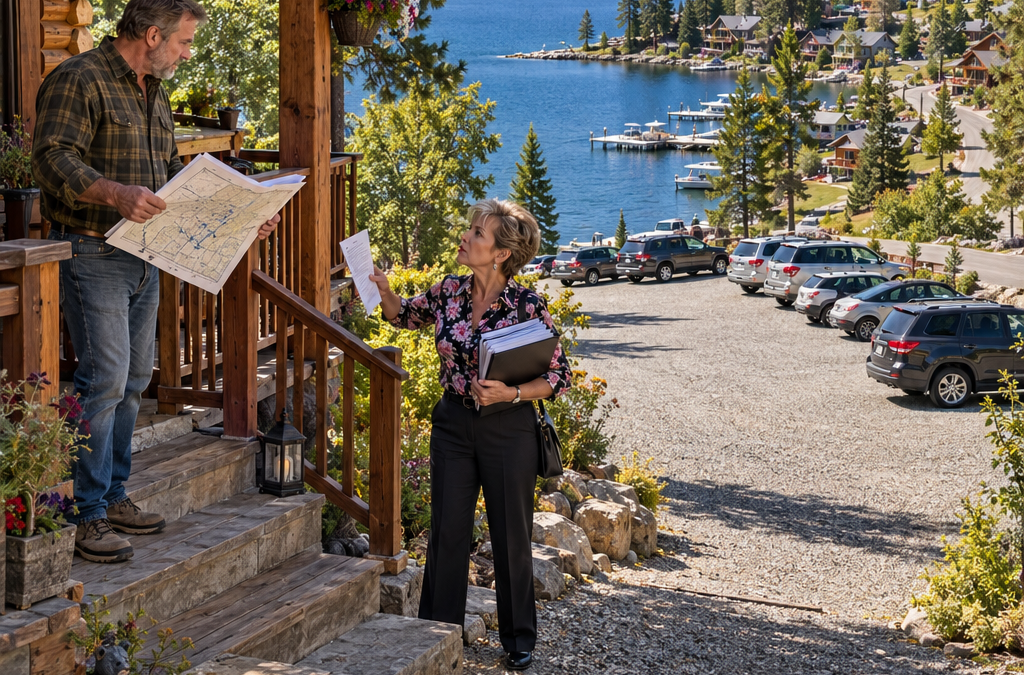
𝗙𝗨𝗟𝗟 𝗦𝗧𝗢𝗥𝗬
That had happened before I bought the cabin.
The previous owner had apparently allowed it informally.
I continued allowing it because it didn’t bother me.
People parked.
Walked toward the lakeside path.
Sometimes launched kayaks nearby.
Nobody damaged anything.
Nobody acted entitled.
I never charged a fee.
Never put up a gate.
Why would I?
A person can own something and still choose to share access.
That was how I saw it.
Permission.
Not surrender.
That distinction became the center of everything that happened later.
The first sign of trouble came in spring.
A letter arrived in my mailbox.
HOA letterhead.
I almost threw it away.
The letter reminded “community residents” that all exterior structures near the lake required architectural approval.
I had recently repaired part of my dock railing.
Nothing structural.
Three boards.
New screws.
A coat of weather seal.
I called the management number.
A woman answered.
I explained that I wasn’t a member.
She asked for my address.
I gave it.
Long pause.
Then:
“According to our community map, you’re within the lakeside management area.”
“Your map is wrong.”
Another pause.
“Would you like to submit a boundary clarification request?”
“No.”
“I’m sorry?”
“I’m not requesting clarification from your HOA about land your HOA doesn’t own.”
Her voice became slightly colder.
“Then I can note that you declined to cooperate.”
“Please note that I declined to apply HOA rules to non-HOA property.”
That ended the call.
I didn’t think much more about it.
Then another letter came.
This one referenced vegetation near my shoreline.
Then another about dock appearance.
Still no fine.
Still no direct threat.
Mostly annoying.
I responded once in writing.
Short.
I stated that my property was privately owned outside association jurisdiction and that any future assertion of authority should be supported by a recorded deed, covenant, easement, or other legal instrument.
I included no insults.
No argument.
No invitation to debate.
For nearly two months, I heard nothing.
Then Karen arrived.
It was a Tuesday afternoon.
I remember because Tuesdays were usually the quietest day of my week.
The weather was clear.
The lake almost flat.
I had been outside repairing a loose section of porch trim.
Sometime after two, an SUV turned off the road.
White.
HOA logo on the door.
It rolled slowly down the gravel area and stopped near my cabin.
A woman stepped out.
Mid-fifties, maybe.
Sunglasses.
Pressed khaki pants.
Navy jacket despite the warm weather.
Thick folder under one arm.
She didn’t look around.
Didn’t admire the water.
Didn’t introduce herself like someone coming to meet a neighbor.
She walked directly toward me.
“Are you the owner?”
I set down the screwdriver.
“Yes.”
“I’m Karen Miller, HOA president.”
She held out a business card.
I took it.
Not because I needed it.
Because refusing a business card creates unnecessary theater.
She opened the folder.
“I’m here regarding your continued occupancy and unauthorized use of community lakefront property.”
For a second, I honestly thought I had misunderstood her.
“My occupancy?”
“Yes.”
“Of my cabin?”
“Correct.”
I stared at her.
She pulled out a document.
Three pages.
HOA logo.
Bold heading.
NOTICE TO VACATE / UNAUTHORIZED OCCUPANCY.
I read the first paragraph.
Then looked at her.
“You’re ordering me to leave?”
Karen didn’t hesitate.
“This parcel falls within the community’s lakeside boundary.”
“No, it doesn’t.”
“It does.”
“Based on what?”
“Our association records.”
I nearly laughed.
Not because it was funny.
Because the confidence was so disproportionate to the claim.
“I own this cabin.”
“The HOA has authority over the property.”
“I own the land under it.”
“We understand that there may be a historical title discrepancy.”
I looked at her.
“Historical title discrepancy?”
“Yes.”
“There isn’t one.”
She flipped another page.
“Our records indicate that this lakefront zone has been treated as common community property for decades.”
“Used by some residents?”
“Controlled by the HOA.”
“No.”
“Mr.—”
I held up a hand.
“Don’t tell me what your records indicate. Show me what gives you title.”
Her expression changed.
Barely.
A small hardening around the mouth.
“Association ownership is established through longstanding community use and the boundary adopted by the board.”
“A board cannot vote itself somebody else’s deed.”
“You don’t understand how community property works.”
That sentence almost made me smile.
“I understand how my deed works.”
She exhaled.
“I didn’t come here to argue.”
“You came here to evict me.”
“We’re asking you to vacate voluntarily before legal action becomes necessary.”
“From my own cabin.”
“From property under HOA jurisdiction.”
I walked toward the front door.
Karen followed.
“Where are you going?”
“To get the deed.”
“You can submit documents through the management office.”
“No.”
She stopped.
I turned.
“You drove here with an eviction notice. You’re going to look at the property record before you leave.”
She crossed her arms.
“I’m familiar with the property record.”
“Good. This will be quick.”
Inside, I kept the important documents in a fireproof box.
Original purchase paperwork.
Title insurance.
Survey.
Deed.
A few older maps I had inherited from the previous owner.
I brought the folder outside.
Karen stood near the porch railing, looking toward the lake.
When I returned, she pointed at the water.
“That lake has always been community access.”
“Access isn’t ownership.”
“The residents maintain it.”
“No. They maintain the public path farther south.”
“We maintain shoreline improvements.”
“Not here.”
She opened her mouth.
I placed the survey on the porch table.
Large sheet.
Stamped.
Recorded.
Legal description.
Boundary lines in thick black ink.
“This is the original recorded survey attached to my deed.”
She barely looked.
“Our map is newer.”
“Newer doesn’t mean legal.”
I unfolded it fully.
“Here’s the cabin.”
I pointed.
“Here’s the dock.”
Another point.
“Here’s the shoreline.”
Then the water boundary.
“And this.”
She leaned closer.
I traced the parcel line.
The property included the cove.
Then continued north.
Across the gravel area.
Toward the road.
Karen’s eyes followed my finger.
She looked up.
I knew the moment she understood.
Not the cabin.
The parking lot.
The wide gravel area that dozens of residents used during summer.
It looked like community parking because everyone treated it that way.
But according to my survey, most of it fell inside my parcel.
I pointed again.
“That’s your community parking area.”
She corrected me automatically.
“The lakeside parking area.”
“On my land.”
“No.”
“Look at the line.”
She did.
“The current community map shows a different boundary.”
“Is that map recorded?”
“The board adopted it.”
“Is it recorded?”
Silence.
“Karen.”
“The association has used that parking area for years.”
“I know.”
“So there are established rights.”
“Maybe access rights.”
“Exactly.”
“Maybe. If documented.”
She looked relieved too early.
“Then you understand.”
“No.”
I tapped the survey.
“An easement, if one exists, gives use rights. It doesn’t transfer ownership.”
Her face tightened.
“We’ll need counsel to review this.”
“Good.”
She gathered her folder.
“Until then, this notice remains in effect.”
I stared at her.
“No.”
“You can’t unilaterally reject an HOA notice.”
“I can reject anything your HOA has no authority to issue.”
“I’m not going to stand here and be spoken to disrespectfully.”
“I haven’t raised my voice.”
“You are refusing to cooperate.”
“With an unlawful eviction.”
“You keep using inflammatory language.”
I picked up the notice.
“What would you call a document titled Notice to Vacate?”
She reached for it.
I held it.
“This is mine now.”
“It was served to you, yes.”
“Good.”
I folded it carefully.
Karen watched.
Then said:
“If you refuse to comply, we’ll involve law enforcement.”
“Please do.”
That stopped her.
Maybe she expected fear.
“Excuse me?”
“Call the sheriff.”
“You want me to?”
“Absolutely.”
She pulled out her phone.
People sometimes become trapped by the confidence they’ve already displayed.
Backing down feels like losing.
So they escalate.
Karen stepped away and made the call.
She told the dispatcher there was a property dispute involving someone occupying HOA-controlled land.
She used the phrase refusing to vacate.
I stood on my porch looking at the lake while she spoke.
Oddly calm.
Not because I enjoyed conflict.
Because I had the deed.
That matters.
Certainty based on evidence feels different from confidence based on assumption.
One doesn’t need performance.
Twenty minutes later, a sheriff’s SUV arrived.
Deputy Harris.
I knew his face from town but didn’t know him personally.
He got out slowly.
Looked at Karen.
Looked at me.
Looked at the cabin.
“Afternoon.”
Karen moved first.
“Deputy, thank you. This gentleman is refusing to comply with an HOA property notice.”
Harris held up a hand.
“Let’s start with names.”
We gave them.
“Who owns the cabin?”
“I do,” I said.
Karen answered at the same time.
“The HOA controls the parcel.”
Harris looked between us.
“Okay.”
Karen handed him her folder.
“These are the association boundary documents.”
He read the top sheet.
Then another.
“These are HOA maps?”
“Yes.”
“County-recorded?”
“They’re official association records.”
He looked at her.
“That’s not what I asked.”
Her expression shifted.
“Some derive from older county plats.”
“Do you have the deed?”
“The HOA’s counsel maintains title documentation.”
Harris looked at me.
“You?”
I handed him my deed.
Then the recorded survey.
He stepped toward the hood of his SUV and spread them out.
No one spoke for a while.
That’s another thing people underestimate.
Real disputes often turn on quiet reading.
Not speeches.
Harris traced the legal description.
Checked parcel number.
Survey stamp.
Looked at the cabin.
Then the map again.
He asked:
“How long have you owned this?”
“Years.”
“Title ever challenged?”
“No.”
“Any recorded HOA covenant?”
“None.”
“Any membership agreement?”
“No.”
Karen said:
“The community boundary was amended later.”
Harris looked up.
“Recorded where?”
“The HOA’s records.”
He went back to the deed.
Then his finger reached the gravel parking area.
“What’s this?”
“My property.”
Karen said:
“Community parking.”
I said:
“Used as community parking.”
Harris looked at the survey.
Then at the gravel lot.
Then back at Karen.
“According to this, most of that parking area is inside his parcel.”
“No.”
She stepped closer.
“That cannot be right.”
He moved the document so she could see.
Karen stared.
“The community has always maintained that area.”
“Do you have a recorded ownership document?”
“No, because it’s part of the shared lakefront.”
“Where’s the instrument establishing shared lakefront?”
“Our board records.”
Harris sighed.
Not dramatically.
The sigh of someone who had realized this was not going to be solved by authority alone.
“Ms. Miller, I can’t remove a person from property when he’s showing me a recorded deed indicating he owns it.”
“You’re taking his side.”
“I’m reading documents.”
“The HOA has used this land for decades.”
“That may create a civil access question.”
She nodded quickly.
“Exactly.”
“But that’s not the same as saying he doesn’t own the cabin.”
Her face hardened.
“So you’re refusing to enforce community property rights?”
“I’m telling you ownership disputes are civil unless there’s clear evidence someone is unlawfully occupying property.”
“He is.”
“Your document doesn’t establish that.”
I said nothing.
Didn’t need to.
Karen looked at me.
“You planned this.”
That surprised me.
“Planned what?”
“Using the parking lot issue as leverage.”
“I didn’t invite you here.”
“You knew residents used it.”
“Of course.”
“And never objected.”
“Because I allowed it.”
“Then it’s established common access.”
“Maybe access. Not ownership.”
She hated that distinction.
But it was the whole case.
Harris asked whether we could all meet with county records and the HOA’s attorney before anyone took further action.
I agreed.
Karen resisted.
Then agreed because she had no better option.
Before leaving, Harris handed my deed back.
“Don’t move boundaries or block access until this is reviewed.”
“Fine.”
Karen looked almost relieved.
Then he turned to her.
“And no attempt to remove him or enter the cabin without a court order.”
Her relief disappeared.
“Understood?”
She nodded.
The sheriff left.
Karen stood beside her SUV.
For the first time since arriving, she looked uncertain.
I thought she might apologize.
Instead she said:
“This isn’t over.”
“I know.”
“We’ll meet tonight.”
“Tonight?”
“Emergency HOA meeting.”
“Good.”
“You should attend.”
“I’m not a member.”
“This concerns your property.”
“Then I’ll attend.”
She got in the vehicle and left.
I stood alone again.
Lake quiet.
Notice to vacate in my hand.
It had been less than an hour.
Yet my home felt different.
Not unsafe.
But invaded.
There is something deeply unsettling about someone arriving with official-looking paper and telling you that your understanding of your own home is wrong.
For years, I had never questioned the cabin.
It was mine in the most ordinary way.
Taxes paid.
Deed recorded.
Repairs made.
Morning coffee.
Mail delivered.
Then suddenly a stranger had stood on the porch and said:
Leave.
That word echoes.
Even when you know it’s baseless.
I spent the next few hours reviewing every page I owned.
Deed.
Survey.
Title policy.
Prior conveyances.
Old maps.
There it was.
Again and again.
Same boundary.
Same parcel.
No HOA ownership.
No annexation.
No transfer.
There was, however, one historical note concerning access.
The previous owner had granted informal permission for nearby residents to park in the gravel area during community lake events.
Informal.
Not an easement.
Not recorded.
That explained the tradition.
People used it.
Then people forgot why they were allowed to use it.
Permission became habit.
Habit became assumption.
Assumption became:
We own this.
That progression is dangerous.
At seven that evening, I walked into the community clubhouse.
I had been inside only once before.
Wood-paneled walls.
Bulletin boards.
Coffee urn.
Rows of folding chairs.
More people showed up than I expected.
Word had spread.
Karen sat at the front table with three board members.
A management representative sat beside her.
The sheriff was not there.
No reason for him to be.
This was now documentation.
Not enforcement.
Residents whispered as I entered.
Some recognized me.
Most knew me only as the cabin owner down near the lake.
Karen called the meeting to order.
She began carefully.
“An ownership discrepancy has been identified involving lakeside parcel boundaries.”
Ownership discrepancy.
Interesting phrase.
Not:
I tried to evict a homeowner from land I hadn’t researched.
She continued.
“Historically, the association has treated the cabin parcel, shoreline access, and lakeside parking area as part of the common-use zone.”
A man in the second row raised his hand.
“Historically meaning what?”
Karen frowned.
“What?”
“Since when?”
The management representative started flipping pages.
Karen said:
“Since before the current board.”
Another resident asked:
“Who owns the cabin?”
I answered.
“I do.”
Karen said:
“That’s under review.”
I held up the deed.
“No. Ownership isn’t under review. HOA authority is.”
The room shifted.
That sentence clarified the issue better than anything else.
Karen had framed the uncertainty around me.
Was I truly entitled to the property?
The documents framed uncertainty around her.
What authority did the HOA actually possess?
A woman near the aisle said:
“Can we see the map?”
I had brought copies.
So had Karen.
Mine was the recorded survey.
Hers was the HOA community map.
We placed both on a table.
People gathered.
The differences were obvious.
The HOA map shaded the lakeside area broadly as COMMUNITY ACCESS.
No parcel numbers.
No recording references.
No legal description.
My survey showed exact boundaries.
One resident asked:
“Who made the HOA map?”
Karen said:
“It has been used for years.”
“That’s not what I asked.”
The same weakness.
Tradition instead of origin.
Another board member, a man named Harold, leaned over the survey.
“The parking lot is inside his line.”
“Most of it,” I said.
He looked at Karen.
“Did you know this?”
Karen hesitated.
“I knew there was an overlap question.”
“No.”
Harold shook his head.
“You told us the lot was HOA property.”
“It has always functioned as community parking.”
“Function isn’t ownership.”
I almost smiled.
People were learning fast.
One by one, residents studied the map.
Some looked angry.
Some embarrassed.
A few defensive.
One man said:
“My family has parked there for fifteen years.”
“I know.”
“So you’re saying we’ve been trespassing?”
“No.”
That surprised him.
“I’ve never objected to residents parking there.”
“But it’s yours.”
“Yes.”
“Why didn’t you say anything?”
“Because it wasn’t a problem.”
“Until now?”
“Until your HOA tried to evict me.”
The room went quiet.
That was the truth.
I didn’t care that people parked.
I cared that permission had been mistaken for ownership and then weaponized against me.
Karen finally spoke.
“We acted according to the information available.”
I looked at her.
“You never checked the original deed.”
Silence.
“Did you?”
She looked toward the management representative.
Then at the board.
Finally:
“No.”
There it was.
Not fraud.
Not conspiracy.
Not some elaborate secret.
An assumption.
A dangerous one.
She had inherited a community map.
Residents parked in one place.
The HOA maintained gravel occasionally.
Events used the lakeside.
Therefore she concluded the HOA controlled everything nearby.
Then she carried that conclusion all the way to an eviction notice.
Harold leaned back.
“You served a notice without checking title?”
Karen became defensive.
“I relied on association records.”
“That’s not title.”
“I understand that now.”
A woman in the back said:
“Do we have a right to keep using the parking lot?”
Everyone looked at me.
That was the real question.
Not whether Karen was embarrassed.
Not whether the board had made a mistake.
Residents needed access.
The upper parking area was small.
Steep in winter.
Farther from the lake.
The gravel area on my property was the practical solution.
I could have blocked it.
Legally, at least initially, I probably could have restricted access and forced the HOA to prove any right it claimed.
Part of me wanted to.
Not because residents had done anything wrong.
Because Karen had shown up at my home telling me to leave.
Anger creates a simple fantasy.
You take everything back.
You lock the gate.
You make the other side feel dependence.
You watch them realize how much they need what they tried to take.
The fantasy lasted maybe thirty seconds.
Then I looked around the room.
Families.
Retirees.
People who had parked there for years because someone before them had.
They hadn’t issued the notice.
They hadn’t researched title badly.
Punishing them would turn property rights into a weapon.
That wasn’t what I wanted.
So I said:
“We can make an agreement.”
Karen looked up.
“What kind?”
“Written access.”
Harold asked:
“Permanent easement?”
“Not necessarily.”
I had thought about this all afternoon.
“I’ll allow community residents to continue using the gravel parking area under a written license agreement.”
Someone asked:
“What’s the difference?”
“Ownership stays mine. The HOA acknowledges the boundary. Residents receive defined permission to park during agreed hours and community events.”
“What about the lake?”
“No HOA claim.”
“The path?”
“We identify exactly which path is public or shared and which shoreline remains private.”
“The dock?”
“Private.”
Someone laughed softly.
“Fair.”
Karen asked:
“And in exchange?”
“Respect the deed.”
She frowned.
“That’s it?”
“No notices against my cabin. No HOA inspections. No claims to my dock or cove. No events on my land without written permission. No assertion that informal access equals ownership.”
Harold nodded.
“Reasonable.”
Karen didn’t answer.
I continued.
“The parking agreement should also say residents are guests on private property for that purpose.”
A woman said:
“That sounds threatening.”
“No.”
I looked at her.
“It makes the relationship clear.”
She thought.
Then nodded.
That’s all I wanted.
Clarity.
Ambiguity had created the conflict.
Not because the deed was ambiguous.
Because conduct was.
People used the parking lot.
I never objected.
The HOA occasionally spread fresh gravel.
I never objected.
Community maps shaded the area casually.
I never noticed.
Over years, nobody remembered where permission ended and ownership began.
A written agreement would stop that.
The board voted to authorize drafting one.
Not an ownership vote.
Not an annexation.
An access agreement.
Karen abstained.
I noticed.
Didn’t comment.
The next week, attorneys reviewed everything.
Mine.
The HOA’s.
County records.
Historical deeds.
No one found a document giving the HOA title to my cabin parcel.
No one found a valid transfer of the lake cove.
No one found an annexation binding my property into the association.
The parking area remained inside my deed.
The only uncertainty concerned whether decades of use might support some limited access argument.
Instead of spending thousands fighting over that possibility, we negotiated.
The final agreement was simple.
My property remained private.
The HOA acknowledged that in writing.
Residents could use a defined portion of the gravel area for parking.
No commercial use.
No storage.
No construction.
No overnight vehicle storage without permission.
No lake events on my parcel.
No use of the dock.
No right to expand access beyond the designated area.
The HOA would contribute reasonable gravel maintenance because its residents benefited from use.
Permission could not be interpreted as ownership.
Most importantly, nothing in the agreement subjected my property to HOA rules.
I read every page.
So did Karen.
Twice.
At the signing meeting, she sat across from me.
No eviction folder.
No sunglasses.
No SUV outside with the HOA logo visible through the window.
Just paperwork.
She pointed at one clause.
“This says the association acknowledges no ownership interest in the cabin, shoreline, or water area described in Exhibit A.”
“Correct.”
“That’s broad.”
“It’s accurate.”
“What if future records show something different?”
“Then future owners can deal with actual records.”
She looked at me.
“You don’t trust us.”
“I trust documents.”
That wasn’t meant as an insult.
She took it like one.
Eventually she signed.
Harold signed for the board too.
I signed as owner.
The next morning, workers installed a new sign near the gravel area.
Not huge.
Not hostile.
PRIVATE PROPERTY
AUTHORIZED COMMUNITY PARKING BY AGREEMENT
LAKEFRONT, CABIN, AND DOCK REMAIN PRIVATE
I stood there while they set the posts.
Karen came by.
Read it.
Said nothing.
Residents began using the lot normally.
Nothing collapsed.
No one was confused.
No one seemed offended once the arrangement was clear.
That’s when I realized how unnecessary the whole fight had been.
The community never needed to own my land.
They needed predictable access to part of it.
Those are completely different things.
The HOA had tried to solve an access need by convincing itself it possessed ownership.
That shortcut nearly destroyed a relationship that could have been handled with three pages and two signatures years earlier.
For the first time in weeks, I slept well.
Then Karen returned.
It was a few days later.
Same white HOA SUV.
But she parked near the road rather than beside the cabin.
That detail told me something before she reached the porch.
She was trying.
I was sitting outside with coffee.
She walked up without the thick folder.
Only one thin envelope.
“Morning.”
“Morning.”
“Can we talk?”
I gestured toward the other chair.
She sat.
For a while, neither of us said anything.
The lake was calm.
A fishing boat moved far across the water.
Eventually Karen said:
“I handled this badly.”
That was not the sentence I expected.
I put down the mug.
“Yes.”
She gave me a tired smile.
“I suppose I deserved that.”
“I wasn’t trying to be cruel.”
“I know.”
She looked toward the parking area.
“I really believed it belonged to the community.”
“I know.”
“Every map in the HOA office showed it that way.”
“Did any map have a recording number?”
“No.”
“That’s the problem.”
She nodded.
“I should’ve checked.”
“Before an eviction notice?”
“Yes.”
That word seemed difficult for her.
I respected it more because of that.
“I thought you were taking advantage of old paperwork.”
I frowned.
“What do you mean?”
“The cabin always felt separate. Nobody attended meetings from here. Residents used the parking and shoreline. The board maintained some of the gravel. I assumed whoever owned this parcel had simply ignored community obligations for years.”
“You could’ve asked me.”
“I should have.”
“Instead you told me to leave.”
She looked embarrassed.
“Yes.”
“Why?”
Karen thought for a long time.
“I think I wanted certainty.”
That answer surprised me.
“About what?”
“Everything.”
She looked toward the mountains.
“HOA problems never stop. Someone wants a fence. Someone hates a neighbor’s dog. Someone doesn’t pay dues. Someone complains about parking. You spend years making decisions, and eventually you start thinking everything needs an answer immediately.”
I listened.
“When the management office told me your cabin sat inside the community map, I treated that as the answer.”
“Even when I said otherwise.”
“Especially then.”
“Why especially?”
“Because I thought you were challenging the board.”
There it was.
Power.
Not criminal.
Not necessarily malicious.
Human.
A challenge to an assumption began feeling like a challenge to authority.
Once that happened, the objective became defending the board instead of checking whether the board was right.
Karen continued.
“Calling the sheriff was stupid.”
“Yes.”
She laughed once.
“You’re enjoying this.”
“A little.”
“Fair.”
Then she handed me the envelope.
It contained a board letter.
Formal acknowledgment of my property’s non-HOA status and apology for the notice to vacate.
No dramatic language.
No legal admission beyond what the agreement already established.
But clear.
I read it.
“Thank you.”
“I wanted you to have something separate from the parking agreement.”
“Why?”
“So nobody later says the eviction issue was never corrected.”
That impressed me.
Paper fixing paper.
The right way.
I put it beside my coffee.
“Mistakes happen.”
Karen looked at me.
“I did more than make a mistake.”
“Yes.”
“I came to your house and ordered you out.”
“Yes.”
“I called law enforcement.”
“Yes.”
She sighed.
“You really aren’t going to make this easier.”
“You don’t need me to.”
She thought about that.
Then nodded.
No forced absolution.
No pretending what happened was smaller than it was.
We could move forward without rewriting the past.
That became the pattern afterward.
Karen remained HOA president for another year.
She changed.
Not completely.
People don’t transform into different personalities because of one boundary dispute.
She was still strict.
Still liked rules.
Still carried a folder to meetings.
But residents told me she started asking a new question whenever property came up.
“Is it recorded?”
Sometimes people laughed.
I didn’t.
That’s a good question.
The management office updated its maps.
My parcel was marked clearly.
PRIVATE NON-HOA PROPERTY.
The parking area was shaded differently.
AUTHORIZED ACCESS BY AGREEMENT.
The lake cove wasn’t labeled community water anymore.
No one sent me landscaping notices.
No one asked to inspect the dock.
If the HOA wanted to organize shoreline cleanup nearby, Karen emailed first.
The first time that happened, her message began:
Requesting permission.
I smiled when I read it.
I said yes.
Residents came Saturday morning.
Collected trash.
Stayed off the dock.
Left by noon.
Perfect.
Permission doesn’t weaken ownership.
If anything, clarity makes generosity easier.
Before the dispute, I let people use the parking area casually because I assumed everyone understood it was mine.
Afterward, I allowed the same use through a document because now everyone actually did understand.
That made the relationship better.
Not colder.
There were fewer arguments.
Fewer assumptions.
A new resident once parked beyond the designated line near my storage shed.
Another resident corrected him before I even noticed.
“That’s private past here.”
Simple.
No HOA officer.
No fine.
No sheriff.
Just knowledge.
One summer afternoon, Harold stopped while I was fixing the dock ladder.
“Funny thing.”
“What?”
“Parking works better now.”
I laughed.
“Why?”
“People know where it actually is.”
He pointed toward the sign.
“No one parks across the fire lane anymore because the agreement map made us measure everything.”
“So Karen’s eviction improved parking.”
“Don’t tell her that.”
“I won’t.”
He sat on the dock edge.
“Would you ever join?”
“The HOA?”
“Yeah.”
“No.”
“Had to ask.”
“You really didn’t.”
He laughed.
Then became serious.
“Some people thought you’d close the lot.”
“I considered it.”
“I don’t blame you.”
“I would’ve punished everyone for one board mistake.”
“Karen would say board decision.”
“It was her notice.”
“Fair.”
I looked toward the parking area.
Cars lined up neatly.
Families unloading coolers.
A father helping a little girl carry a yellow kayak.
“That wasn’t what I wanted.”
Harold nodded.
“That’s why people respect you now.”
I looked at him.
“I don’t need residents to respect me.”
“Maybe not.”
He shrugged.
“But it’s easier than having them scared of you.”
That sentence reminded me of Karen.
Authority built on fear is fragile.
It requires constant reinforcement.
Letters.
Fines.
Threats.
Enforcement.
Property rights built on actual boundaries don’t require that kind of performance.
The deed existed whether anyone liked me or not.
That gave me room to be reasonable.
I didn’t need to dominate the relationship because the document already defined it.
Years passed.
The sign weathered.
We replaced it once.
Same wording.
Karen eventually left the board voluntarily.
At her final meeting, she joked:
“Before I approve anything, somebody make sure it’s recorded.”
People laughed.
I was standing near the back.
She saw me.
Raised an eyebrow.
I raised my coffee cup.
That was enough.
The new president asked me to review the parking agreement with the board once a year.
Not renegotiate.
Review.
Make sure everyone remembered why it existed.
I attended those meetings because the relationship mattered.
I still never joined.
At one meeting, a younger board member asked:
“Why doesn’t the HOA just buy the parking parcel?”
I said:
“Because I’m not selling it.”
He looked surprised.
“Even for market value?”
“No.”
“Why?”
I thought about it.
The gravel itself wasn’t sentimental.
But once you carve land away piece by piece, the shape of home changes.
“The parking area belongs to the same parcel as my cabin.”
“So?”
“So I like owning the parcel.”
He laughed awkwardly.
“Fair enough.”
The president moved on.
No one voted.
No one declared it community property.
No one told me refusing was unfair.
That was progress.
The cabin remained my home.
Every morning, the lake still met me outside the window.
Mountains still caught early light.
The dock still needed repairs more often than I wanted.
Nothing important changed.
Except my relationship with the paperwork.
Before Karen, I knew my deed.
After Karen, I understood why knowing wasn’t enough.
I started keeping certified copies.
One in the house.
One in a safe-deposit box.
Digital scans.
Survey laminated for field reference.
Maybe excessive.
Maybe not.
When somebody has stood on your porch with an eviction notice for your own home, redundancy becomes comforting.
I also learned something uncomfortable.
I had contributed to the confusion.
Not legally.
Emotionally.
I let community residents use my parking area for years without putting the arrangement in writing.
I assumed everyone understood.
They didn’t.
The HOA spread gravel once or twice.
I never objected.
Residents called it “the community lot.”
I heard them and didn’t correct them because the phrase felt harmless.
Harmless language became institutional memory.
Institutional memory became a map.
A map became claimed authority.
Then one day that authority became an eviction notice.
That doesn’t make Karen’s action justified.
But it taught me that boundaries left unspoken are sometimes rewritten by habit.
Since then, I don’t rely on people remembering permission correctly.
If someone uses my land regularly, we document it.
Not because I distrust everyone.
Because memory changes.
Boards change.
Owners change.
Someone who was there at the beginning moves away.
The next person sees only repeated behavior and assumes there must be a legal right behind it.
Sometimes there is.
Sometimes there isn’t.
Paper keeps generosity from becoming future conflict.
That lesson applied far beyond the HOA.
A neighbor once asked to store his boat trailer near my shed for winter.
Before Karen, I would’ve said:
“Sure.”
After Karen, I said:
“Sure. Let’s write down that it’s temporary.”
He laughed.
“You serious?”
“Very.”
We signed one page.
No fee.
No complication.
The following spring, he removed it.
Still friends.
Nobody felt mistrusted.
Sometimes clarity is kindness.
The most important conversation happened years later.
A new family moved into the HOA.
Young couple.
Two children.
They used the parking area often.
One evening, the husband knocked on my door.
“Are you the guy who owns the lake?”
I laughed.
“Part of the cove.”
“Sorry. That’s what people say.”
“What do you need?”
“My son wants to fish from the dock.”
I looked toward the boy waiting near their car.
Maybe ten.
Holding a small rod.
The HOA agreement did not include dock access.
He knew that.
“Your dock is private, right?”
“Yes.”
“So I wanted to ask.”
That word.
Ask.
Something so simple.
“Sure.”
His face brightened.
“Really?”
“Stay with him. No hooks left on the boards.”
“Absolutely.”
They fished for two hours.
Caught nothing.
The boy loved it.
That evening, I sat on the porch thinking about Karen’s first visit.
She didn’t ask.
She ordered.
That’s why the same property produced conflict with one person and trust with another.
Ownership wasn’t the obstacle.
Entitlement was.
The lake is still quiet most mornings.
That’s what I wanted all along.
Not victory.
Not control over the HOA.
Not revenge.
Quiet.
There are mornings when mist sits low on the water and the parking area is empty.
No cars.
No meetings.
No signs except the small boundary marker near the road.
I make coffee.
Walk to the dock.
Sit.
Sometimes I think about the day Deputy Harris spread my deed across the hood of his SUV.
Karen standing beside him.
Confidence draining from her face as the lines became clear.
People love the satisfying part of that story.
The HOA president tried to take my cabin.
Then discovered the parking lot was mine.
There is a kind of poetic justice in it.
But that isn’t the part I value most.
The part that matters came later.
I had leverage.
Real leverage.
I could have closed the lot.
Made residents walk from the upper road.
Forced the HOA into litigation.
Demanded money.
Used their dependence as punishment.
I didn’t.
Because property rights mean the right to decide.
Not the obligation to retaliate.
I chose access.
On clear terms.
They chose acknowledgment.
On clear terms.
That solution lasted longer than anger would have.
Maybe that’s why Karen eventually apologized.
Not because I defeated her.
Because once the conflict stopped being about who could dominate whom, the mistake became easier to see.
She had never checked.
She assumed.
Then acted.
That’s it.
No criminal conspiracy.
No forged deed.
No secret financial scheme.
Just one person holding enough organizational authority that her assumption became an official document before anyone asked whether the assumption was true.
That is more common than people realize.
And sometimes more dangerous because nobody thinks they’re doing anything extraordinary.
Karen probably believed she was enforcing community rights.
The management office probably believed its map.
Residents believed the parking lot belonged to the HOA because they’d always parked there.
Everyone had a story.
The county record had a boundary.
Stories moved.
The boundary didn’t.
That is why I still tell people the same thing when property disputes come up.
Start with the deed.
Not the neighbor’s memory.
Not the HOA map.
Not the old fence.
Not the sign.
Not what people have always called something.
The deed.
Then the survey.
Then recorded easements.
Then agreements.
After that, you can talk about fairness.
But you need facts first.
Karen came to my porch carrying a thick folder.
I had a thinner one.
Hers contained policies.
Mine contained ownership.
There is a difference.
An HOA can regulate property legally subject to its covenants.
It can manage common assets.
Collect dues.
Maintain roads.
Set community standards.
Those powers are real.
But they begin somewhere.
They end somewhere.
And the boundary isn’t determined by whoever speaks with the most confidence.
Years after everything happened, I found the original Notice to Vacate while cleaning the fireproof box.
I unfolded it.
The paper had yellowed slightly at the edge.
My name.
Cabin address.
Demand to leave.
HOA logo.
Deadline.
For a moment, the anger returned.
Not much.
Just enough to remember.
Then I laughed.
I considered throwing it away.
Didn’t.
I put it behind the recorded access agreement.
That seemed appropriate.
First document:
Assumption.
Second document:
Clarity.
That’s the whole story in paper.
Karen told me to leave because she thought the community owned everything around the lake.
The survey showed otherwise.
The sheriff didn’t save me.
He read.
The board didn’t surrender because I threatened them.
Residents looked at the map.
The parking lot wasn’t a weapon.
It was proof that everyone had been operating on an assumption nobody had verified.
Once we corrected the assumption, there was room for a reasonable agreement.
That is how the conflict ended.
Not with somebody losing a home.
Not with an HOA collapsing.
Not with police leading Karen away.
With signatures.
A map.
A sign.
Permission clearly defined.
Sometimes people expect bigger endings.
They want the person who was wrong to lose everything.
They want humiliation.
They want revenge.
Real peace is often less dramatic.
Nobody tried to evict me again.
Residents kept parking.
The HOA stayed out of my cabin.
Karen admitted she had handled it badly.
The lake became quiet.
That was enough.
One evening not long ago, I sat at the end of the dock while the sun disappeared behind the mountains.
The water turned orange near the horizon.
Then purple.
A few cars remained in the gravel lot.
Families were packing up.
Someone waved.
I waved back.
Nobody was trespassing.
Nobody was claiming ownership.
They were using the property because I had given permission through an agreement everyone understood.
There is a strange freedom in that.
I didn’t have to guard the boundary constantly once everyone knew where it was.
That’s what strong boundaries do.
They don’t isolate people.
They make relationships possible without confusion.
Eventually the parking lot emptied.
The last car pulled away.
Silence returned.
I looked back toward the cabin.
Lights warm behind the windows.
My porch.
My dock.
My shoreline.
My home.
For years, I had thought ownership meant having a deed locked in a box.
Karen taught me otherwise.
Ownership also means understanding what the deed says well enough to stand still when somebody arrives with official paper and tells you a different story.
You don’t need to shout.
You don’t need to bluff.
You don’t even need to win the argument on the porch.
You need the facts.
That afternoon, Karen had a board title, an HOA vehicle, a thick folder, and enough confidence to call the sheriff.
I had a recorded deed and an old survey.
Only one of us had bothered to check where the line actually ran.
And once everybody finally looked at it, the answer was simple.
The cabin was mine.
The lakefront was mine.
The parking lot was mine.
And because it was mine, I was free to choose something Karen never thought to ask for in the first place.
Permission.
𝗧𝗛𝗘 𝗘𝗡𝗗
The HOA President Came to Evict Me From My Lake Cabin With a Folder Full of Rules She Had Never Compared to My Deed
Karen stood on my porch with an eviction notice in one hand and told me, with complete confidence, that my cabin sat inside property controlled by her HOA.
What she did not understand was that the same survey proving she had no claim over my home also showed that the parking lot her entire lakeside community depended on was sitting inside my property line.
I had lived in that cabin long enough to know the lake by sound.
There was the light movement of water against the dock before sunrise.
The hollow slap beneath the boards when wind came down from the mountains.
The deeper sound during storms, when the lake turned dark and restless and pushed against the shoreline like it wanted another few feet of land.
Most mornings, I woke before my alarm.
Not because I had somewhere urgent to be.
Because the light coming through my bedroom window was better than any alarm clock I had ever owned.
Mountains in the distance.
Lake below.
Pine trees along the eastern ridge.
In winter, the far peaks carried snow.
In summer, mist sometimes floated just above the water until the sun burned through it.
I never got tired of that view.
The cabin wasn’t large.
Two bedrooms.
Stone fireplace.
Covered porch.
Old wood floors that creaked near the kitchen no matter how many times I tried to fix them.
The dock was newer than the house.
I rebuilt it myself three years after buying the property.
The first dock had been half rotten, and one corner sank whenever two people stood on it at once.
I replaced every board.
Every piling.
Every bolt.
That mattered to me.
Almost everything around the cabin did.
I had spent years turning the place from a neglected lake property into a home.
Not a vacation house.
Not an investment.
Home.
I knew every boundary because when I bought the land, the boundaries were part of the reason I bought it.
The parcel was unusual.
The cabin sat on a broad piece of lakefront property that wrapped around a shallow cove.
My land included the cabin, the shoreline, the dock, a wooded strip on the north side, and a wide gravel area near the road that had been used for parking long before I arrived.
The lake itself was also included within the private parcel boundary in a way most people didn’t expect.
Not the entire body of water, obviously.
But the cove and water area within the surveyed private tract were part of the property rights described in the deed.
The original survey was old.
Very old.
The lines had been established decades before the nearby lakeside community existed.
That community came later.
At first, it was just a handful of cabins and seasonal homes farther down the road.
Then more houses were built.
Then roads improved.
Then somebody organized an HOA.
Over time, the community became polished.
Uniform signs.
Shared landscaping.
Private road maintenance.
A little clubhouse.
Rules.
Committees.
Board meetings.
I never joined.
That wasn’t an act of rebellion.
I simply didn’t need to.
My parcel had existed before the community.
My deed contained no HOA declaration.
No covenant incorporating the cabin into the association.
No recorded document giving the HOA control over my home, dock, shoreline, or lake rights.
The first time an HOA representative asked me whether I wanted to join voluntarily, I declined.
Politely.
That was years earlier.
Nothing dramatic came of it.
For a long time, the relationship remained simple.
They had their community.
I had my property.
Residents sometimes used the gravel parking area near the road when the community lot farther uphill filled up.
That had happened before I bought the cabin.
The previous owner had apparently allowed it informally.
I continued allowing it because it didn’t bother me.
People parked.
Walked toward the lakeside path.
Sometimes launched kayaks nearby.
Nobody damaged anything.
Nobody acted entitled.
I never charged a fee.
Never put up a gate.
Why would I?
A person can own something and still choose to share access.
That was how I saw it.
Permission.
Not surrender.
That distinction became the center of everything that happened later.
The first sign of trouble came in spring.
A letter arrived in my mailbox.
HOA letterhead.
I almost threw it away.
The letter reminded “community residents” that all exterior structures near the lake required architectural approval.
I had recently repaired part of my dock railing.
Nothing structural.
Three boards.
New screws.
A coat of weather seal.
I called the management number.
A woman answered.
I explained that I wasn’t a member.
She asked for my address.
I gave it.
Long pause.
Then:
“According to our community map, you’re within the lakeside management area.”
“Your map is wrong.”
Another pause.
“Would you like to submit a boundary clarification request?”
“No.”
“I’m sorry?”
“I’m not requesting clarification from your HOA about land your HOA doesn’t own.”
Her voice became slightly colder.
“Then I can note that you declined to cooperate.”
“Please note that I declined to apply HOA rules to non-HOA property.”
That ended the call.
I didn’t think much more about it.
Then another letter came.
This one referenced vegetation near my shoreline.
Then another about dock appearance.
Still no fine.
Still no direct threat.
Mostly annoying.
I responded once in writing.
Short.
I stated that my property was privately owned outside association jurisdiction and that any future assertion of authority should be supported by a recorded deed, covenant, easement, or other legal instrument.
I included no insults.
No argument.
No invitation to debate.
For nearly two months, I heard nothing.
Then Karen arrived.
It was a Tuesday afternoon.
I remember because Tuesdays were usually the quietest day of my week.
The weather was clear.
The lake almost flat.
I had been outside repairing a loose section of porch trim.
Sometime after two, an SUV turned off the road.
White.
HOA logo on the door.
It rolled slowly down the gravel area and stopped near my cabin.
A woman stepped out.
Mid-fifties, maybe.
Sunglasses.
Pressed khaki pants.
Navy jacket despite the warm weather.
Thick folder under one arm.
She didn’t look around.
Didn’t admire the water.
Didn’t introduce herself like someone coming to meet a neighbor.
She walked directly toward me.
“Are you the owner?”
I set down the screwdriver.
“Yes.”
“I’m Karen Miller, HOA president.”
She held out a business card.
I took it.
Not because I needed it.
Because refusing a business card creates unnecessary theater.
She opened the folder.
“I’m here regarding your continued occupancy and unauthorized use of community lakefront property.”
For a second, I honestly thought I had misunderstood her.
“My occupancy?”
“Yes.”
“Of my cabin?”
“Correct.”
I stared at her.
She pulled out a document.
Three pages.
HOA logo.
Bold heading.
NOTICE TO VACATE / UNAUTHORIZED OCCUPANCY.
I read the first paragraph.
Then looked at her.
“You’re ordering me to leave?”
Karen didn’t hesitate.
“This parcel falls within the community’s lakeside boundary.”
“No, it doesn’t.”
“It does.”
“Based on what?”
“Our association records.”
I nearly laughed.
Not because it was funny.
Because the confidence was so disproportionate to the claim.
“I own this cabin.”
“The HOA has authority over the property.”
“I own the land under it.”
“We understand that there may be a historical title discrepancy.”
I looked at her.
“Historical title discrepancy?”
“Yes.”
“There isn’t one.”
She flipped another page.
“Our records indicate that this lakefront zone has been treated as common community property for decades.”
“Used by some residents?”
“Controlled by the HOA.”
“No.”
“Mr.—”
I held up a hand.
“Don’t tell me what your records indicate. Show me what gives you title.”
Her expression changed.
Barely.
A small hardening around the mouth.
“Association ownership is established through longstanding community use and the boundary adopted by the board.”
“A board cannot vote itself somebody else’s deed.”
“You don’t understand how community property works.”
That sentence almost made me smile.
“I understand how my deed works.”
She exhaled.
“I didn’t come here to argue.”
“You came here to evict me.”
“We’re asking you to vacate voluntarily before legal action becomes necessary.”
“From my own cabin.”
“From property under HOA jurisdiction.”
I walked toward the front door.
Karen followed.
“Where are you going?”
“To get the deed.”
“You can submit documents through the management office.”
“No.”
She stopped.
I turned.
“You drove here with an eviction notice. You’re going to look at the property record before you leave.”
She crossed her arms.
“I’m familiar with the property record.”
“Good. This will be quick.”
Inside, I kept the important documents in a fireproof box.
Original purchase paperwork.
Title insurance.
Survey.
Deed.
A few older maps I had inherited from the previous owner.
I brought the folder outside.
Karen stood near the porch railing, looking toward the lake.
When I returned, she pointed at the water.
“That lake has always been community access.”
“Access isn’t ownership.”
“The residents maintain it.”
“No. They maintain the public path farther south.”
“We maintain shoreline improvements.”
“Not here.”
She opened her mouth.
I placed the survey on the porch table.
Large sheet.
Stamped.
Recorded.
Legal description.
Boundary lines in thick black ink.
“This is the original recorded survey attached to my deed.”
She barely looked.
“Our map is newer.”
“Newer doesn’t mean legal.”
I unfolded it fully.
“Here’s the cabin.”
I pointed.
“Here’s the dock.”
Another point.
“Here’s the shoreline.”
Then the water boundary.
“And this.”
She leaned closer.
I traced the parcel line.
The property included the cove.
Then continued north.
Across the gravel area.
Toward the road.
Karen’s eyes followed my finger.
She looked up.
I knew the moment she understood.
Not the cabin.
The parking lot.
The wide gravel area that dozens of residents used during summer.
It looked like community parking because everyone treated it that way.
But according to my survey, most of it fell inside my parcel.
I pointed again.
“That’s your community parking area.”
She corrected me automatically.
“The lakeside parking area.”
“On my land.”
“No.”
“Look at the line.”
She did.
“The current community map shows a different boundary.”
“Is that map recorded?”
“The board adopted it.”
“Is it recorded?”
Silence.
“Karen.”
“The association has used that parking area for years.”
“I know.”
“So there are established rights.”
“Maybe access rights.”
“Exactly.”
“Maybe. If documented.”
She looked relieved too early.
“Then you understand.”
“No.”
I tapped the survey.
“An easement, if one exists, gives use rights. It doesn’t transfer ownership.”
Her face tightened.
“We’ll need counsel to review this.”
“Good.”
She gathered her folder.
“Until then, this notice remains in effect.”
I stared at her.
“No.”
“You can’t unilaterally reject an HOA notice.”
“I can reject anything your HOA has no authority to issue.”
“I’m not going to stand here and be spoken to disrespectfully.”
“I haven’t raised my voice.”
“You are refusing to cooperate.”
“With an unlawful eviction.”
“You keep using inflammatory language.”
I picked up the notice.
“What would you call a document titled Notice to Vacate?”
She reached for it.
I held it.
“This is mine now.”
“It was served to you, yes.”
“Good.”
I folded it carefully.
Karen watched.
Then said:
“If you refuse to comply, we’ll involve law enforcement.”
“Please do.”
That stopped her.
Maybe she expected fear.
“Excuse me?”
“Call the sheriff.”
“You want me to?”
“Absolutely.”
She pulled out her phone.
People sometimes become trapped by the confidence they’ve already displayed.
Backing down feels like losing.
So they escalate.
Karen stepped away and made the call.
She told the dispatcher there was a property dispute involving someone occupying HOA-controlled land.
She used the phrase refusing to vacate.
I stood on my porch looking at the lake while she spoke.
Oddly calm.
Not because I enjoyed conflict.
Because I had the deed.
That matters.
Certainty based on evidence feels different from confidence based on assumption.
One doesn’t need performance.
Twenty minutes later, a sheriff’s SUV arrived.
Deputy Harris.
I knew his face from town but didn’t know him personally.
He got out slowly.
Looked at Karen.
Looked at me.
Looked at the cabin.
“Afternoon.”
Karen moved first.
“Deputy, thank you. This gentleman is refusing to comply with an HOA property notice.”
Harris held up a hand.
“Let’s start with names.”
We gave them.
“Who owns the cabin?”
“I do,” I said.
Karen answered at the same time.
“The HOA controls the parcel.”
Harris looked between us.
“Okay.”
Karen handed him her folder.
“These are the association boundary documents.”
He read the top sheet.
Then another.
“These are HOA maps?”
“Yes.”
“County-recorded?”
“They’re official association records.”
He looked at her.
“That’s not what I asked.”
Her expression shifted.
“Some derive from older county plats.”
“Do you have the deed?”
“The HOA’s counsel maintains title documentation.”
Harris looked at me.
“You?”
I handed him my deed.
Then the recorded survey.
He stepped toward the hood of his SUV and spread them out.
No one spoke for a while.
That’s another thing people underestimate.
Real disputes often turn on quiet reading.
Not speeches.
Harris traced the legal description.
Checked parcel number.
Survey stamp.
Looked at the cabin.
Then the map again.
He asked:
“How long have you owned this?”
“Years.”
“Title ever challenged?”
“No.”
“Any recorded HOA covenant?”
“None.”
“Any membership agreement?”
“No.”
Karen said:
“The community boundary was amended later.”
Harris looked up.
“Recorded where?”
“The HOA’s records.”
He went back to the deed.
Then his finger reached the gravel parking area.
“What’s this?”
“My property.”
Karen said:
“Community parking.”
I said:
“Used as community parking.”
Harris looked at the survey.
Then at the gravel lot.
Then back at Karen.
“According to this, most of that parking area is inside his parcel.”
“No.”
She stepped closer.
“That cannot be right.”
He moved the document so she could see.
Karen stared.
“The community has always maintained that area.”
“Do you have a recorded ownership document?”
“No, because it’s part of the shared lakefront.”
“Where’s the instrument establishing shared lakefront?”
“Our board records.”
Harris sighed.
Not dramatically.
The sigh of someone who had realized this was not going to be solved by authority alone.
“Ms. Miller, I can’t remove a person from property when he’s showing me a recorded deed indicating he owns it.”
“You’re taking his side.”
“I’m reading documents.”
“The HOA has used this land for decades.”
“That may create a civil access question.”
She nodded quickly.
“Exactly.”
“But that’s not the same as saying he doesn’t own the cabin.”
Her face hardened.
“So you’re refusing to enforce community property rights?”
“I’m telling you ownership disputes are civil unless there’s clear evidence someone is unlawfully occupying property.”
“He is.”
“Your document doesn’t establish that.”
I said nothing.
Didn’t need to.
Karen looked at me.
“You planned this.”
That surprised me.
“Planned what?”
“Using the parking lot issue as leverage.”
“I didn’t invite you here.”
“You knew residents used it.”
“Of course.”
“And never objected.”
“Because I allowed it.”
“Then it’s established common access.”
“Maybe access. Not ownership.”
She hated that distinction.
But it was the whole case.
Harris asked whether we could all meet with county records and the HOA’s attorney before anyone took further action.
I agreed.
Karen resisted.
Then agreed because she had no better option.
Before leaving, Harris handed my deed back.
“Don’t move boundaries or block access until this is reviewed.”
“Fine.”
Karen looked almost relieved.
Then he turned to her.
“And no attempt to remove him or enter the cabin without a court order.”
Her relief disappeared.
“Understood?”
She nodded.
The sheriff left.
Karen stood beside her SUV.
For the first time since arriving, she looked uncertain.
I thought she might apologize.
Instead she said:
“This isn’t over.”
“I know.”
“We’ll meet tonight.”
“Tonight?”
“Emergency HOA meeting.”
“Good.”
“You should attend.”
“I’m not a member.”
“This concerns your property.”
“Then I’ll attend.”
She got in the vehicle and left.
I stood alone again.
Lake quiet.
Notice to vacate in my hand.
It had been less than an hour.
Yet my home felt different.
Not unsafe.
But invaded.
There is something deeply unsettling about someone arriving with official-looking paper and telling you that your understanding of your own home is wrong.
For years, I had never questioned the cabin.
It was mine in the most ordinary way.
Taxes paid.
Deed recorded.
Repairs made.
Morning coffee.
Mail delivered.
Then suddenly a stranger had stood on the porch and said:
Leave.
That word echoes.
Even when you know it’s baseless.
I spent the next few hours reviewing every page I owned.
Deed.
Survey.
Title policy.
Prior conveyances.
Old maps.
There it was.
Again and again.
Same boundary.
Same parcel.
No HOA ownership.
No annexation.
No transfer.
There was, however, one historical note concerning access.
The previous owner had granted informal permission for nearby residents to park in the gravel area during community lake events.
Informal.
Not an easement.
Not recorded.
That explained the tradition.
People used it.
Then people forgot why they were allowed to use it.
Permission became habit.
Habit became assumption.
Assumption became:
We own this.
That progression is dangerous.
At seven that evening, I walked into the community clubhouse.
I had been inside only once before.
Wood-paneled walls.
Bulletin boards.
Coffee urn.
Rows of folding chairs.
More people showed up than I expected.
Word had spread.
Karen sat at the front table with three board members.
A management representative sat beside her.
The sheriff was not there.
No reason for him to be.
This was now documentation.
Not enforcement.
Residents whispered as I entered.
Some recognized me.
Most knew me only as the cabin owner down near the lake.
Karen called the meeting to order.
She began carefully.
“An ownership discrepancy has been identified involving lakeside parcel boundaries.”
Ownership discrepancy.
Interesting phrase.
Not:
I tried to evict a homeowner from land I hadn’t researched.
She continued.
“Historically, the association has treated the cabin parcel, shoreline access, and lakeside parking area as part of the common-use zone.”
A man in the second row raised his hand.
“Historically meaning what?”
Karen frowned.
“What?”
“Since when?”
The management representative started flipping pages.
Karen said:
“Since before the current board.”
Another resident asked:
“Who owns the cabin?”
I answered.
“I do.”
Karen said:
“That’s under review.”
I held up the deed.
“No. Ownership isn’t under review. HOA authority is.”
The room shifted.
That sentence clarified the issue better than anything else.
Karen had framed the uncertainty around me.
Was I truly entitled to the property?
The documents framed uncertainty around her.
What authority did the HOA actually possess?
A woman near the aisle said:
“Can we see the map?”
I had brought copies.
So had Karen.
Mine was the recorded survey.
Hers was the HOA community map.
We placed both on a table.
People gathered.
The differences were obvious.
The HOA map shaded the lakeside area broadly as COMMUNITY ACCESS.
No parcel numbers.
No recording references.
No legal description.
My survey showed exact boundaries.
One resident asked:
“Who made the HOA map?”
Karen said:
“It has been used for years.”
“That’s not what I asked.”
The same weakness.
Tradition instead of origin.
Another board member, a man named Harold, leaned over the survey.
“The parking lot is inside his line.”
“Most of it,” I said.
He looked at Karen.
“Did you know this?”
Karen hesitated.
“I knew there was an overlap question.”
“No.”
Harold shook his head.
“You told us the lot was HOA property.”
“It has always functioned as community parking.”
“Function isn’t ownership.”
I almost smiled.
People were learning fast.
One by one, residents studied the map.
Some looked angry.
Some embarrassed.
A few defensive.
One man said:
“My family has parked there for fifteen years.”
“I know.”
“So you’re saying we’ve been trespassing?”
“No.”
That surprised him.
“I’ve never objected to residents parking there.”
“But it’s yours.”
“Yes.”
“Why didn’t you say anything?”
“Because it wasn’t a problem.”
“Until now?”
“Until your HOA tried to evict me.”
The room went quiet.
That was the truth.
I didn’t care that people parked.
I cared that permission had been mistaken for ownership and then weaponized against me.
Karen finally spoke.
“We acted according to the information available.”
I looked at her.
“You never checked the original deed.”
Silence.
“Did you?”
She looked toward the management representative.
Then at the board.
Finally:
“No.”
There it was.
Not fraud.
Not conspiracy.
Not some elaborate secret.
An assumption.
A dangerous one.
She had inherited a community map.
Residents parked in one place.
The HOA maintained gravel occasionally.
Events used the lakeside.
Therefore she concluded the HOA controlled everything nearby.
Then she carried that conclusion all the way to an eviction notice.
Harold leaned back.
“You served a notice without checking title?”
Karen became defensive.
“I relied on association records.”
“That’s not title.”
“I understand that now.”
A woman in the back said:
“Do we have a right to keep using the parking lot?”
Everyone looked at me.
That was the real question.
Not whether Karen was embarrassed.
Not whether the board had made a mistake.
Residents needed access.
The upper parking area was small.
Steep in winter.
Farther from the lake.
The gravel area on my property was the practical solution.
I could have blocked it.
Legally, at least initially, I probably could have restricted access and forced the HOA to prove any right it claimed.
Part of me wanted to.
Not because residents had done anything wrong.
Because Karen had shown up at my home telling me to leave.
Anger creates a simple fantasy.
You take everything back.
You lock the gate.
You make the other side feel dependence.
You watch them realize how much they need what they tried to take.
The fantasy lasted maybe thirty seconds.
Then I looked around the room.
Families.
Retirees.
People who had parked there for years because someone before them had.
They hadn’t issued the notice.
They hadn’t researched title badly.
Punishing them would turn property rights into a weapon.
That wasn’t what I wanted.
So I said:
“We can make an agreement.”
Karen looked up.
“What kind?”
“Written access.”
Harold asked:
“Permanent easement?”
“Not necessarily.”
I had thought about this all afternoon.
“I’ll allow community residents to continue using the gravel parking area under a written license agreement.”
Someone asked:
“What’s the difference?”
“Ownership stays mine. The HOA acknowledges the boundary. Residents receive defined permission to park during agreed hours and community events.”
“What about the lake?”
“No HOA claim.”
“The path?”
“We identify exactly which path is public or shared and which shoreline remains private.”
“The dock?”
“Private.”
Someone laughed softly.
“Fair.”
Karen asked:
“And in exchange?”
“Respect the deed.”
She frowned.
“That’s it?”
“No notices against my cabin. No HOA inspections. No claims to my dock or cove. No events on my land without written permission. No assertion that informal access equals ownership.”
Harold nodded.
“Reasonable.”
Karen didn’t answer.
I continued.
“The parking agreement should also say residents are guests on private property for that purpose.”
A woman said:
“That sounds threatening.”
“No.”
I looked at her.
“It makes the relationship clear.”
She thought.
Then nodded.
That’s all I wanted.
Clarity.
Ambiguity had created the conflict.
Not because the deed was ambiguous.
Because conduct was.
People used the parking lot.
I never objected.
The HOA occasionally spread fresh gravel.
I never objected.
Community maps shaded the area casually.
I never noticed.
Over years, nobody remembered where permission ended and ownership began.
A written agreement would stop that.
The board voted to authorize drafting one.
Not an ownership vote.
Not an annexation.
An access agreement.
Karen abstained.
I noticed.
Didn’t comment.
The next week, attorneys reviewed everything.
Mine.
The HOA’s.
County records.
Historical deeds.
No one found a document giving the HOA title to my cabin parcel.
No one found a valid transfer of the lake cove.
No one found an annexation binding my property into the association.
The parking area remained inside my deed.
The only uncertainty concerned whether decades of use might support some limited access argument.
Instead of spending thousands fighting over that possibility, we negotiated.
The final agreement was simple.
My property remained private.
The HOA acknowledged that in writing.
Residents could use a defined portion of the gravel area for parking.
No commercial use.
No storage.
No construction.
No overnight vehicle storage without permission.
No lake events on my parcel.
No use of the dock.
No right to expand access beyond the designated area.
The HOA would contribute reasonable gravel maintenance because its residents benefited from use.
Permission could not be interpreted as ownership.
Most importantly, nothing in the agreement subjected my property to HOA rules.
I read every page.
So did Karen.
Twice.
At the signing meeting, she sat across from me.
No eviction folder.
No sunglasses.
No SUV outside with the HOA logo visible through the window.
Just paperwork.
She pointed at one clause.
“This says the association acknowledges no ownership interest in the cabin, shoreline, or water area described in Exhibit A.”
“Correct.”
“That’s broad.”
“It’s accurate.”
“What if future records show something different?”
“Then future owners can deal with actual records.”
She looked at me.
“You don’t trust us.”
“I trust documents.”
That wasn’t meant as an insult.
She took it like one.
Eventually she signed.
Harold signed for the board too.
I signed as owner.
The next morning, workers installed a new sign near the gravel area.
Not huge.
Not hostile.
PRIVATE PROPERTY
AUTHORIZED COMMUNITY PARKING BY AGREEMENT
LAKEFRONT, CABIN, AND DOCK REMAIN PRIVATE
I stood there while they set the posts.
Karen came by.
Read it.
Said nothing.
Residents began using the lot normally.
Nothing collapsed.
No one was confused.
No one seemed offended once the arrangement was clear.
That’s when I realized how unnecessary the whole fight had been.
The community never needed to own my land.
They needed predictable access to part of it.
Those are completely different things.
The HOA had tried to solve an access need by convincing itself it possessed ownership.
That shortcut nearly destroyed a relationship that could have been handled with three pages and two signatures years earlier.
For the first time in weeks, I slept well.
Then Karen returned.
It was a few days later.
Same white HOA SUV.
But she parked near the road rather than beside the cabin.
That detail told me something before she reached the porch.
She was trying.
I was sitting outside with coffee.
She walked up without the thick folder.
Only one thin envelope.
“Morning.”
“Morning.”
“Can we talk?”
I gestured toward the other chair.
She sat.
For a while, neither of us said anything.
The lake was calm.
A fishing boat moved far across the water.
Eventually Karen said:
“I handled this badly.”
That was not the sentence I expected.
I put down the mug.
“Yes.”
She gave me a tired smile.
“I suppose I deserved that.”
“I wasn’t trying to be cruel.”
“I know.”
She looked toward the parking area.
“I really believed it belonged to the community.”
“I know.”
“Every map in the HOA office showed it that way.”
“Did any map have a recording number?”
“No.”
“That’s the problem.”
She nodded.
“I should’ve checked.”
“Before an eviction notice?”
“Yes.”
That word seemed difficult for her.
I respected it more because of that.
“I thought you were taking advantage of old paperwork.”
I frowned.
“What do you mean?”
“The cabin always felt separate. Nobody attended meetings from here. Residents used the parking and shoreline. The board maintained some of the gravel. I assumed whoever owned this parcel had simply ignored community obligations for years.”
“You could’ve asked me.”
“I should have.”
“Instead you told me to leave.”
She looked embarrassed.
“Yes.”
“Why?”
Karen thought for a long time.
“I think I wanted certainty.”
That answer surprised me.
“About what?”
“Everything.”
She looked toward the mountains.
“HOA problems never stop. Someone wants a fence. Someone hates a neighbor’s dog. Someone doesn’t pay dues. Someone complains about parking. You spend years making decisions, and eventually you start thinking everything needs an answer immediately.”
I listened.
“When the management office told me your cabin sat inside the community map, I treated that as the answer.”
“Even when I said otherwise.”
“Especially then.”
“Why especially?”
“Because I thought you were challenging the board.”
There it was.
Power.
Not criminal.
Not necessarily malicious.
Human.
A challenge to an assumption began feeling like a challenge to authority.
Once that happened, the objective became defending the board instead of checking whether the board was right.
Karen continued.
“Calling the sheriff was stupid.”
“Yes.”
She laughed once.
“You’re enjoying this.”
“A little.”
“Fair.”
Then she handed me the envelope.
It contained a board letter.
Formal acknowledgment of my property’s non-HOA status and apology for the notice to vacate.
No dramatic language.
No legal admission beyond what the agreement already established.
But clear.
I read it.
“Thank you.”
“I wanted you to have something separate from the parking agreement.”
“Why?”
“So nobody later says the eviction issue was never corrected.”
That impressed me.
Paper fixing paper.
The right way.
I put it beside my coffee.
“Mistakes happen.”
Karen looked at me.
“I did more than make a mistake.”
“Yes.”
“I came to your house and ordered you out.”
“Yes.”
“I called law enforcement.”
“Yes.”
She sighed.
“You really aren’t going to make this easier.”
“You don’t need me to.”
She thought about that.
Then nodded.
No forced absolution.
No pretending what happened was smaller than it was.
We could move forward without rewriting the past.
That became the pattern afterward.
Karen remained HOA president for another year.
She changed.
Not completely.
People don’t transform into different personalities because of one boundary dispute.
She was still strict.
Still liked rules.
Still carried a folder to meetings.
But residents told me she started asking a new question whenever property came up.
“Is it recorded?”
Sometimes people laughed.
I didn’t.
That’s a good question.
The management office updated its maps.
My parcel was marked clearly.
PRIVATE NON-HOA PROPERTY.
The parking area was shaded differently.
AUTHORIZED ACCESS BY AGREEMENT.
The lake cove wasn’t labeled community water anymore.
No one sent me landscaping notices.
No one asked to inspect the dock.
If the HOA wanted to organize shoreline cleanup nearby, Karen emailed first.
The first time that happened, her message began:
Requesting permission.
I smiled when I read it.
I said yes.
Residents came Saturday morning.
Collected trash.
Stayed off the dock.
Left by noon.
Perfect.
Permission doesn’t weaken ownership.
If anything, clarity makes generosity easier.
Before the dispute, I let people use the parking area casually because I assumed everyone understood it was mine.
Afterward, I allowed the same use through a document because now everyone actually did understand.
That made the relationship better.
Not colder.
There were fewer arguments.
Fewer assumptions.
A new resident once parked beyond the designated line near my storage shed.
Another resident corrected him before I even noticed.
“That’s private past here.”
Simple.
No HOA officer.
No fine.
No sheriff.
Just knowledge.
One summer afternoon, Harold stopped while I was fixing the dock ladder.
“Funny thing.”
“What?”
“Parking works better now.”
I laughed.
“Why?”
“People know where it actually is.”
He pointed toward the sign.
“No one parks across the fire lane anymore because the agreement map made us measure everything.”
“So Karen’s eviction improved parking.”
“Don’t tell her that.”
“I won’t.”
He sat on the dock edge.
“Would you ever join?”
“The HOA?”
“Yeah.”
“No.”
“Had to ask.”
“You really didn’t.”
He laughed.
Then became serious.
“Some people thought you’d close the lot.”
“I considered it.”
“I don’t blame you.”
“I would’ve punished everyone for one board mistake.”
“Karen would say board decision.”
“It was her notice.”
“Fair.”
I looked toward the parking area.
Cars lined up neatly.
Families unloading coolers.
A father helping a little girl carry a yellow kayak.
“That wasn’t what I wanted.”
Harold nodded.
“That’s why people respect you now.”
I looked at him.
“I don’t need residents to respect me.”
“Maybe not.”
He shrugged.
“But it’s easier than having them scared of you.”
That sentence reminded me of Karen.
Authority built on fear is fragile.
It requires constant reinforcement.
Letters.
Fines.
Threats.
Enforcement.
Property rights built on actual boundaries don’t require that kind of performance.
The deed existed whether anyone liked me or not.
That gave me room to be reasonable.
I didn’t need to dominate the relationship because the document already defined it.
Years passed.
The sign weathered.
We replaced it once.
Same wording.
Karen eventually left the board voluntarily.
At her final meeting, she joked:
“Before I approve anything, somebody make sure it’s recorded.”
People laughed.
I was standing near the back.
She saw me.
Raised an eyebrow.
I raised my coffee cup.
That was enough.
The new president asked me to review the parking agreement with the board once a year.
Not renegotiate.
Review.
Make sure everyone remembered why it existed.
I attended those meetings because the relationship mattered.
I still never joined.
At one meeting, a younger board member asked:
“Why doesn’t the HOA just buy the parking parcel?”
I said:
“Because I’m not selling it.”
He looked surprised.
“Even for market value?”
“No.”
“Why?”
I thought about it.
The gravel itself wasn’t sentimental.
But once you carve land away piece by piece, the shape of home changes.
“The parking area belongs to the same parcel as my cabin.”
“So?”
“So I like owning the parcel.”
He laughed awkwardly.
“Fair enough.”
The president moved on.
No one voted.
No one declared it community property.
No one told me refusing was unfair.
That was progress.
The cabin remained my home.
Every morning, the lake still met me outside the window.
Mountains still caught early light.
The dock still needed repairs more often than I wanted.
Nothing important changed.
Except my relationship with the paperwork.
Before Karen, I knew my deed.
After Karen, I understood why knowing wasn’t enough.
I started keeping certified copies.
One in the house.
One in a safe-deposit box.
Digital scans.
Survey laminated for field reference.
Maybe excessive.
Maybe not.
When somebody has stood on your porch with an eviction notice for your own home, redundancy becomes comforting.
I also learned something uncomfortable.
I had contributed to the confusion.
Not legally.
Emotionally.
I let community residents use my parking area for years without putting the arrangement in writing.
I assumed everyone understood.
They didn’t.
The HOA spread gravel once or twice.
I never objected.
Residents called it “the community lot.”
I heard them and didn’t correct them because the phrase felt harmless.
Harmless language became institutional memory.
Institutional memory became a map.
A map became claimed authority.
Then one day that authority became an eviction notice.
That doesn’t make Karen’s action justified.
But it taught me that boundaries left unspoken are sometimes rewritten by habit.
Since then, I don’t rely on people remembering permission correctly.
If someone uses my land regularly, we document it.
Not because I distrust everyone.
Because memory changes.
Boards change.
Owners change.
Someone who was there at the beginning moves away.
The next person sees only repeated behavior and assumes there must be a legal right behind it.
Sometimes there is.
Sometimes there isn’t.
Paper keeps generosity from becoming future conflict.
That lesson applied far beyond the HOA.
A neighbor once asked to store his boat trailer near my shed for winter.
Before Karen, I would’ve said:
“Sure.”
After Karen, I said:
“Sure. Let’s write down that it’s temporary.”
He laughed.
“You serious?”
“Very.”
We signed one page.
No fee.
No complication.
The following spring, he removed it.
Still friends.
Nobody felt mistrusted.
Sometimes clarity is kindness.
The most important conversation happened years later.
A new family moved into the HOA.
Young couple.
Two children.
They used the parking area often.
One evening, the husband knocked on my door.
“Are you the guy who owns the lake?”
I laughed.
“Part of the cove.”
“Sorry. That’s what people say.”
“What do you need?”
“My son wants to fish from the dock.”
I looked toward the boy waiting near their car.
Maybe ten.
Holding a small rod.
The HOA agreement did not include dock access.
He knew that.
“Your dock is private, right?”
“Yes.”
“So I wanted to ask.”
That word.
Ask.
Something so simple.
“Sure.”
His face brightened.
“Really?”
“Stay with him. No hooks left on the boards.”
“Absolutely.”
They fished for two hours.
Caught nothing.
The boy loved it.
That evening, I sat on the porch thinking about Karen’s first visit.
She didn’t ask.
She ordered.
That’s why the same property produced conflict with one person and trust with another.
Ownership wasn’t the obstacle.
Entitlement was.
The lake is still quiet most mornings.
That’s what I wanted all along.
Not victory.
Not control over the HOA.
Not revenge.
Quiet.
There are mornings when mist sits low on the water and the parking area is empty.
No cars.
No meetings.
No signs except the small boundary marker near the road.
I make coffee.
Walk to the dock.
Sit.
Sometimes I think about the day Deputy Harris spread my deed across the hood of his SUV.
Karen standing beside him.
Confidence draining from her face as the lines became clear.
People love the satisfying part of that story.
The HOA president tried to take my cabin.
Then discovered the parking lot was mine.
There is a kind of poetic justice in it.
But that isn’t the part I value most.
The part that matters came later.
I had leverage.
Real leverage.
I could have closed the lot.
Made residents walk from the upper road.
Forced the HOA into litigation.
Demanded money.
Used their dependence as punishment.
I didn’t.
Because property rights mean the right to decide.
Not the obligation to retaliate.
I chose access.
On clear terms.
They chose acknowledgment.
On clear terms.
That solution lasted longer than anger would have.
Maybe that’s why Karen eventually apologized.
Not because I defeated her.
Because once the conflict stopped being about who could dominate whom, the mistake became easier to see.
She had never checked.
She assumed.
Then acted.
That’s it.
No criminal conspiracy.
No forged deed.
No secret financial scheme.
Just one person holding enough organizational authority that her assumption became an official document before anyone asked whether the assumption was true.
That is more common than people realize.
And sometimes more dangerous because nobody thinks they’re doing anything extraordinary.
Karen probably believed she was enforcing community rights.
The management office probably believed its map.
Residents believed the parking lot belonged to the HOA because they’d always parked there.
Everyone had a story.
The county record had a boundary.
Stories moved.
The boundary didn’t.
That is why I still tell people the same thing when property disputes come up.
Start with the deed.
Not the neighbor’s memory.
Not the HOA map.
Not the old fence.
Not the sign.
Not what people have always called something.
The deed.
Then the survey.
Then recorded easements.
Then agreements.
After that, you can talk about fairness.
But you need facts first.
Karen came to my porch carrying a thick folder.
I had a thinner one.
Hers contained policies.
Mine contained ownership.
There is a difference.
An HOA can regulate property legally subject to its covenants.
It can manage common assets.
Collect dues.
Maintain roads.
Set community standards.
Those powers are real.
But they begin somewhere.
They end somewhere.
And the boundary isn’t determined by whoever speaks with the most confidence.
Years after everything happened, I found the original Notice to Vacate while cleaning the fireproof box.
I unfolded it.
The paper had yellowed slightly at the edge.
My name.
Cabin address.
Demand to leave.
HOA logo.
Deadline.
For a moment, the anger returned.
Not much.
Just enough to remember.
Then I laughed.
I considered throwing it away.
Didn’t.
I put it behind the recorded access agreement.
That seemed appropriate.
First document:
Assumption.
Second document:
Clarity.
That’s the whole story in paper.
Karen told me to leave because she thought the community owned everything around the lake.
The survey showed otherwise.
The sheriff didn’t save me.
He read.
The board didn’t surrender because I threatened them.
Residents looked at the map.
The parking lot wasn’t a weapon.
It was proof that everyone had been operating on an assumption nobody had verified.
Once we corrected the assumption, there was room for a reasonable agreement.
That is how the conflict ended.
Not with somebody losing a home.
Not with an HOA collapsing.
Not with police leading Karen away.
With signatures.
A map.
A sign.
Permission clearly defined.
Sometimes people expect bigger endings.
They want the person who was wrong to lose everything.
They want humiliation.
They want revenge.
Real peace is often less dramatic.
Nobody tried to evict me again.
Residents kept parking.
The HOA stayed out of my cabin.
Karen admitted she had handled it badly.
The lake became quiet.
That was enough.
One evening not long ago, I sat at the end of the dock while the sun disappeared behind the mountains.
The water turned orange near the horizon.
Then purple.
A few cars remained in the gravel lot.
Families were packing up.
Someone waved.
I waved back.
Nobody was trespassing.
Nobody was claiming ownership.
They were using the property because I had given permission through an agreement everyone understood.
There is a strange freedom in that.
I didn’t have to guard the boundary constantly once everyone knew where it was.
That’s what strong boundaries do.
They don’t isolate people.
They make relationships possible without confusion.
Eventually the parking lot emptied.
The last car pulled away.
Silence returned.
I looked back toward the cabin.
Lights warm behind the windows.
My porch.
My dock.
My shoreline.
My home.
For years, I had thought ownership meant having a deed locked in a box.
Karen taught me otherwise.
Ownership also means understanding what the deed says well enough to stand still when somebody arrives with official paper and tells you a different story.
You don’t need to shout.
You don’t need to bluff.
You don’t even need to win the argument on the porch.
You need the facts.
That afternoon, Karen had a board title, an HOA vehicle, a thick folder, and enough confidence to call the sheriff.
I had a recorded deed and an old survey.
Only one of us had bothered to check where the line actually ran.
And once everybody finally looked at it, the answer was simple.
The cabin was mine.
The lakefront was mine.
The parking lot was mine.
And because it was mine, I was free to choose something Karen never thought to ask for in the first place.
Permission.








