𝗙𝗨𝗟𝗟 𝗦𝗧𝗢𝗥𝗬 The Fighter Offered Me $25,000 to Humiliate Me in Front of 800 People Without Ever Asking Why I Hadn’t Thrown a Punch in Nine Years
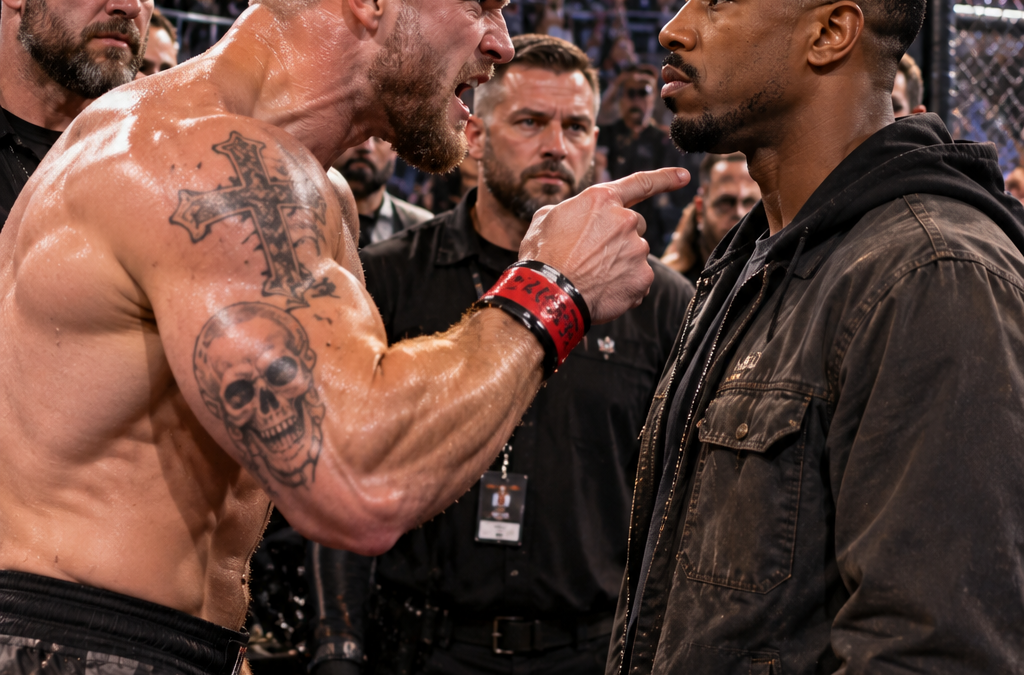
𝗙𝗨𝗟𝗟 𝗦𝗧𝗢𝗥𝗬
I was standing behind my produce table.
Hat low.
Hands muddy.
Bryce saw the video.
Saw my size.
Saw my skin.
Saw a farmer who barely looked at the camera.
And apparently decided I would be perfect.
I knew none of that when the county fair came around again.
I was selling tomatoes, sweet corn, beans, and jars of my mother’s peach preserves.
Kids ran between hay bales.
Country music played too loudly beside the livestock tents.
The air smelled like fried catfish, diesel, and dust.
Ordinary Colton County Saturday.
Until I heard a man shouting through a microphone.
“Five thousand dollars!”
People moved toward the food trucks.
I kept arranging tomatoes.
“Anybody lasts sixty seconds, they walk away with five grand!”
I finally looked.
Bryce stood on a temporary stage.
Banner behind him.
HOLDEN COMBAT CHALLENGE.
Six students around him.
Two cameras.
He wore gym clothes that looked more expensive than my entire produce stand.
“Who’s got the guts?”
Nobody volunteered.
Bryce scanned the crowd.
His eyes landed on me.
I knew immediately.
Not exactly what he wanted.
Just that look.
The same look men sometimes get when they choose somebody weaker for a joke.
He jumped off the stage.
Camera followed.
Walked directly toward my table.
He picked up one of my tomatoes.
Didn’t ask.
Tossed it.
Caught it.
“Look what we got here.”
I kept working.
“Big strong farm boy.”
I said nothing.
“You could use five grand, couldn’t you?”
“No.”
He smiled.
“No?”
“Not interested.”
He slapped a stack of cash onto my tomatoes.
Five thousand dollars.
I stared at it.
The tax notice flashed through my mind.
Five thousand would have bought time.
Not enough.
But time mattered.
Bryce noticed me looking.
“That’s right.”
He pushed the money closer.
“Sixty seconds.”
I shook my head.
“No, thank you.”
His smile changed.
He leaned closer.
The camera was still recording.
Then he lowered his voice so only I could hear.
“You people never had much spine.”
My hand stopped over a basket of beans.
I looked at him.
He grinned.
Then turned toward the camera.
“Guess nobody in Colton County is man enough.”
He walked past me.
On the way, he shoved my shoulder.
Not hard enough to hurt.
Hard enough to get the reaction he wanted.
I didn’t move.
He had expected a stumble.
I saw that.
A small flicker in his eyes.
Then he recovered.
Laughed.
Walked away.
The video went online that night.
SCARRED FARMER RUNS FROM $5,000 CHALLENGE.
Hundreds of thousands of views.
I found out because my nephew Jaylen showed me.
He was ten.
My sister’s boy.
He came to the farm most weekends.
“Uncle Andre.”
He held out his phone.
“You’re famous.”
“I hope not.”
He played the video.
Bryce’s editing made it look worse than the moment felt.
He cut out my refusal.
Cut out the quiet exchange.
Kept the shove.
Added slow motion of me standing there.
Music underneath.
Comments rolled by.
Coward.
All size, no fight.
Typical farm boy.
Big man scared.
Then the racial comments.
Jaylen tried to take the phone away.
I stopped him.
“It’s okay.”
“It’s not.”
“No.”
I looked at him.
“It isn’t.”
At the grocery store, teenagers recognized me.
At the gas station, a man I had known ten years laughed.
“Saw you on the internet, Quinn.”
I pumped fuel.
“Rough look.”
I nodded.
He waited for me to defend myself.
I didn’t.
That irritated him more than an argument would have.
Bryce’s followers increased.
That should have been the end of it.
It wasn’t.
Two weeks later, his black pickup came straight onto my property.
Four students.
Two cameras.
Bryce got out already filming himself.
“And here we are.”
He spun the phone toward my farm.
“The famous Quinn property.”
I was repairing a fence post near the road.
Bryce smiled.
“Home of Colton County’s fastest runner.”
His students laughed.
I put down my hammer.
“You’re trespassing.”
“This?”
He looked around.
“You call this property?”
I stared at him.
He pointed the camera toward the house.
“County’s going to take it anyway.”
That hit harder than I wanted him to know.
He knew about the taxes.
Of course he did.
Small county.
Nothing stays private.
Bryce walked closer.
“Heard you can’t pay your bills.”
I said nothing.
“Maybe if your kind worked harder—”
“I work every day.”
Bryce laughed.
“You call this work?”
He kicked over a bucket of fence nails.
They scattered into the dirt.
“My dog works harder.”
I crouched.
Started picking up nails.
One by one.
Bryce stared down at me.
He wanted anger.
I gave him nothing.
Then he pulled another stack of money from his pocket.
“Ten thousand.”
He waved it.
“Feeling brave yet?”
“Please leave.”
“Please.”
He mimicked my voice.
“Yes, sir. No, sir.”
His students laughed.
Then my mother stepped outside.
She still had her reading glasses on.
“Get off my son’s property.”
Bryce turned.
“Well.”
He smiled.
“Now I see where he gets the attitude.”
“I said leave.”
One of his students moved toward the porch filming her.
My mother lifted a hand.
“Get that phone out of my face.”
She swatted at it.
The student pushed her arm away.
Hard.
She stumbled backward.
Hit the porch railing.
Something happened inside me.
Not anger.
Something older.
Cold.
The distance between us was about fifteen feet.
One second I was beside the fence.
The next my hand was around the student’s wrist.
I turned.
Applied pressure.
His knees folded.
Phone dropped.
He gasped.
I stopped before damage.
Released.
Stepped away.
The boy stared at his own hand like it had betrayed him.
Everybody became quiet.
Bryce looked at me.
For the first time, the expression on his face wasn’t amusement.
It was calculation.
I walked to my mother.
“You all right?”
She nodded.
Her eyes were on me.
Not the student.
Me.
I knew what she was thinking.
The promise.
Bryce recovered.
“Lucky grab.”
I looked at him.
“Leave.”
He left.
That night, according to what I later learned, Bryce watched the footage frame by frame.
The wrist capture.
Turn.
Control.
Release.
His student’s knees collapsing before he understood why.
Bryce paused it.
Could have asked himself the obvious question.
Where did a soybean farmer learn that?
Instead, he chose the answer his ego preferred.
Luck.
The county’s next notice arrived three days later.
Thirty days.
$24,800.
Then auction.
I sat on the porch with the letter.
Soybeans stretched toward the tree line.
My father had died in those fields.
Not literally.
But little pieces of him had.
His back.
Knees.
Hands.
He would come in after sunset with dirt packed into every line of his fingers.
“Land doesn’t love you back,” he told me once.
“Then why keep it?”
“Because some things aren’t about whether they love you.”
I didn’t understand then.
I did now.
My mother came outside carrying two coffees.
She sat.
For a long time, neither of us spoke.
Then she said:
“Your daddy kept this land with his back.”
I stared ahead.
“You can keep it with what God gave you.”
I turned.
“You know what you’re saying?”
“I know what I made you promise.”
My scar tightened when I flexed my hand.
“And I know why.”
She looked toward the road.
“That boy isn’t stopping.”
“I can ignore him.”
“Can you ignore the county?”
That was the problem.
The next morning Jaylen came home from school crying.
He sat on my porch with his backpack still on.
I crouched in front of him.
“What happened?”
He wiped his face.
“Kids showed the video.”
I waited.
“One said you’re scared.”
I nodded.
“That’s okay.”
“No.”
His chin trembled.
“His daddy said our family’s nothing but dirt.”
I felt something inside me shift.
“Jaylen.”
He looked at me.
“Are we nothing?”
I took my time.
Children remember answers like that forever.
“No.”
“You sure?”
“Yes.”
“How?”
“Because people don’t get to decide what you are just because they can talk louder.”
He looked down.
I lifted his chin.
“We are not nothing.”
That night Bryce uploaded another video.
Twenty-five thousand dollars.
My name in the title.
He stood inside Holden Combat Academy with his black belt over one shoulder.
“Open challenge to Andre Quinn.”
He smiled at the camera.
“Twenty-five grand.”
Enough to save the farm.
“And if the farm boy somehow beats me, I’ll close my gym.”
He laughed.
“Because we know how this ends.”
Then the phrase.
“Same way it always ends with his kind.”
I watched once.
Turned off the phone.
Then looked at Jaylen asleep on my couch.
The tax notice sat on the table.
$24,800.
Bryce had chosen his number well.
Maybe deliberately.
The next morning I drove twenty miles east.
Chrome letters above the gym.
Red Charger parked sideways across two spaces.
I walked inside.
Conversations stopped.
Bryce sat on a bench.
Saw me.
Grinned.
“Well, well—”
“I’ll take it.”
He blinked.
“What?”
“The fight.”
His smile grew.
Cameras appeared.
I could see excitement spreading across the room.
Bryce stood.
“You serious?”
“Yes.”
“Twenty-five thousand.”
“I heard you.”
“Don’t cry when this ends badly.”
I looked at him.
“Set the date.”
Then I left.
I drove home.
Went straight to the storage shed.
The trunk sat behind feed sacks and rusted tools.
Dust covered the lid.
Nine years.
I unlocked it.
Dog tags.
Patch.
Training notebooks.
Photographs.
At the bottom, wrapped in cloth, my old gloves.
I picked them up.
Memory has weight.
People say the past is behind you.
That isn’t true.
Sometimes the past is sitting in a metal box waiting for your hand.
I put on the gloves.
They still fit.
That night, I hung a heavy bag from a beam in the barn.
Duke watched.
I hit it once.
The sound cracked through the barn.
Duke ran outside.
“Sorry.”
I hit it again.
Then again.
Feet moving.
Hands remembering.
Hips turning.
Breathing settling into an old rhythm.
I wasn’t learning.
I was waking something.
For twelve years, the United States Navy had been my life.
Most of that record was not something I discussed.
Special warfare.
Close-quarters instruction.
Training rooms without windows.
Names not printed on doors.
Missions my mother learned about only after they were finished.
I had been good at it.
Too good.
That was part of why I left.
The scar on my arm came during a night I still didn’t dream about if I could help it.
When I came home, I wanted soil.
Weather.
Things that grew instead of bled.
But muscle has memory.
Two weeks of training brought it back.
Pastor Elton Moore stopped by one evening.
He stood in the barn doorway watching me work.
I noticed him after maybe a minute.
“You need something, Pastor?”
He shook his head.
“So you decided.”
“Yes.”
He watched my feet.
Then sighed.
“Lord have mercy.”
“On me?”
“No.”
He looked toward the road.
“On Bryce Holden.”
Fight night came fast.
Colton County Arena was really a converted livestock barn.
Blue mat over concrete.
Temporary lights.
Folding chairs.
Eight hundred people packed inside.
Trucks filled the surrounding fields.
Bryce had promoted it like a championship.
Countdown videos.
Radio interviews.
Posters.
CAN THE FARMER LAST 60 SECONDS?
Bryce arrived in a black SUV.
Music.
Entourage.
Custom black uniform with gold lettering.
Belt over his shoulder.
The crowd roared.
He took the microphone.
“Tonight you’re about to see the fastest twenty-five grand I ever made.”
A glass case sat beside the mat.
Cash stacked inside.
Bryce pointed toward it.
“When I’m done, maybe I’ll buy Quinn’s farm and turn it into a parking lot.”
Laughter.
Then I entered.
Side door.
No music.
No team.
Jeans cut below the knees.
Plain white shirt.
Bare feet.
Why barefoot?
Because I wanted traction.
And because boots were work.
This was something else.
The laughter started almost immediately.
Bryce grabbed the microphone.
“There he is!”
He pointed.
“Straight out of the soybean field.”
I stepped onto the mat.
Waited.
The referee was a retired gym teacher named Dale.
He looked nervous.
“Clean fight.”
I nodded.
“Submission or tap ends it.”
Bryce bounced on his feet.
“Born ready.”
Dale looked at me.
“Ready?”
“Yes.”
“Fight.”
Bryce exploded forward.
Spinning kick.
Fast.
Flashy.
Designed for video.
I moved a few inches.
It missed.
The crowd reacted.
Bryce reset.
Jab.
Cross.
I slipped both.
Roundhouse.
I ducked.
I did not attack.
That frustrated everyone.
“HIT HIM!”
Somebody shouted.
Bryce smiled.
“Come on, farm boy.”
I watched his hips.
Hands lie.
Shoulders lie.
Eyes definitely lie.
Hips tell you where the body is going.
Another combination.
I moved.
No counter.
Thirty seconds.
Bryce started showboating.
Winked toward his cameraman.
He expected me to survive sixty seconds.
That was the bet.
But the money depended on winning.
And I had learned long ago that tired men make mistakes.
Bryce was not tired yet.
He was impatient.
That was better.
Around the one-minute mark, he charged with a flying knee.
Big movement.
Commitment forward.
I stepped aside.
Then I finally moved toward him.
One step.
Wrist.
Neck.
Clinch.
The change in his face was immediate.
Bryce had spent years controlling distance.
He did not like being controlled.
He tried to pull away.
Couldn’t.
Tried a knee.
Blocked.
Twisted.
I shifted my hips.
Took him down.
Not hard.
I had no interest in hurting him more than necessary.
The crowd went silent.
I controlled his body.
Applied a choke.
No striking.
No unnecessary pressure.
He fought the grip.
Panic came quickly.
His hand slapped the mat.
Tap.
I released immediately.
Rolled away.
Stood.
The whole exchange after I initiated had taken seconds.
Bryce lay on his back.
His belt had come loose.
His uniform twisted.
He stared at the ceiling.
I extended my hand.
He slapped it away.
Fine.
I walked to the glass case.
Collected the $25,000.
From his corner, somebody shouted a racial slur.
Hard.
Clear.
I kept walking.
Outside, gravel pressed into my bare feet.
I carried the money toward my truck.
No celebration.
No speech.
No victory lap.
I thought it was over.
I should have known better.
The video reached millions.
People wanted to know who I was.
They slowed down my movements.
Former fighters analyzed the takedown.
Veterans posted guesses.
People started saying I had to be trained.
Bryce could not survive being laughed at.
Three days later, I found a certified letter in my mailbox.
Fourteen pages.
Civil lawsuit.
Aggravated assault.
Serious bodily injury.
Damages demanded:
$200,000.
I read it at the mailbox.
Then again at the kitchen table.
My mother sat across from me.
“Two hundred thousand.”
“You don’t have two hundred thousand.”
“I barely have two hundred dollars.”
“That’s the point.”
She tapped the paperwork.
“He doesn’t want your money.”
I looked at her.
“He wants you broken.”
The lawsuit was only the beginning.
Bryce went on television wearing a sling.
He described the fight as a friendly exhibition.
Said I used military techniques.
Said he feared for his life.
He made his voice shake at the right moments.
Then he asked the question that spread everywhere.
“Who is Andre Quinn really?”
Reporters started digging.
My Navy record showed honorable discharge.
Twelve years.
Nothing useful about units.
That made people more suspicious.
Headlines appeared.
MYSTERY FARMER OR TRAINED FIGHTER?
DANGEROUS VETERAN ATTACKS LOCAL GYM OWNER.
The court froze the $25,000 pending litigation.
That was the money I needed.
Gone.
The county did not care.
Taxes remained due.
Auction notice posted.
Forty-five days.
The produce stand slowed because reporters kept parking beside it.
Customers disappeared.
Even church divided.
Some people defended me.
Others whispered.
A woman told Pastor Moore:
“A man who can do that without emotion scares me.”
Pastor told me later what he thought.
“You showed more restraint in those few seconds than most men show in a lifetime.”
I appreciated it.
The internet was worse.
Traitor.
Liar.
Animal.
Dangerous Black man.
Racial slurs everywhere.
I made the mistake of reading comments at two in the morning.
My coffee went cold.
Jaylen came the next afternoon.
Sat beside me.
“Uncle Andre?”
“Yeah?”
“You won.”
“Yes.”
“Then why are we still losing?”
That question stayed in me.
Because he was right.
The farm was still headed toward auction.
Soybeans were yellowing from lack of fertilizer.
My bank account was nearly empty.
The cash sat in evidence.
Bryce had lawyers.
Television.
Followers.
I had an eighty-acre farm dying beneath me.
I could put a trained fighter unconscious in seconds.
Couldn’t save my father’s dirt.
That was probably the lowest I felt.
Then Tamara Collins drove up.
Silver Honda.
Cracked windshield.
Press credential clipped to the visor.
She found me splitting wood.
“Mr. Quinn.”
I kept working.
“If you’re here about the fight, I have nothing.”
“I’m not.”
That made me stop.
She was in her thirties.
Sharp eyes.
Notebook under one arm.
“Then why are you here?”
“Bryce Holden has done this before.”
I set down the log.
“How many times?”
“At least four lawsuits.”
She stepped closer.
“Same structure.”
Challenge.
Public humiliation.
Money.
Then litigation.
“Against who?”
“Black and Hispanic men.”
I said nothing.
“People without resources.”
Wind moved through the soybeans.
Tamara continued.
“Two settled because they couldn’t afford to fight.”
“Why?”
“Because the lawsuit is part of the business.”
I looked at her.
“He gets content either way.”
She nodded.
“If he wins the fight, he posts the knockout. If he loses or gets embarrassed, he sues.”
“That makes no sense.”
“It does if the target is poor.”
She opened a folder.
“Fear settles cases.”
I stared at the papers.
“Why me?”
“You’re the first person who beat him badly enough to threaten the brand.”
“I didn’t beat him badly.”
“You made him look helpless.”
That was different.
“And you’re the first one still refusing to settle.”
I looked at the farm.
“I’m not trying to be a symbol.”
“I don’t need you to.”
“What do you need?”
“Don’t settle.”
“That’s it?”
“I can bring evidence.”
I studied her.
“Why do you care?”
Her expression changed.
“I’ve been tracking him eight months.”
She tucked the folder beneath her arm.
“People like Bryce count on everybody being too ashamed or too poor to make the pattern visible.”
She looked directly at me.
“Let me make it visible.”
I picked up another piece of wood.
Split it.
“All right.”
The trial came three weeks later.
Colton County Superior Court.
Courtroom B.
Fluorescent lights.
Wood paneling.
Everything echoing.
Bryce arrived wearing a charcoal suit and a fresh sling.
He moved slowly.
Very slowly.
His attorney was Gavin Wells.
Older.
Expensive.
Gold cufflinks.
My attorney was Sarah Winters.
Public defender.
Two years out of law school.
Seventeen active cases.
She had been staying up until midnight working on mine.
I trusted her more than any lawyer with gold cufflinks.
My mother sat in the front row.
Pastor Moore behind her.
Tamara farther back with a laptop.
Judge Patricia Dawson entered at nine.
Sixty.
Glasses on a chain.
Expression suggesting she had already had enough nonsense before breakfast.
Wells stood.
He described me as a trained military operator who had concealed my background to attack an unsuspecting civilian.
Photographs of Bryce’s bruises.
Medical reports.
Claims of nerve damage.
Psychological trauma.
Unable to work.
Unable to train.
Bryce took the stand.
He performed beautifully.
Voice shaking.
Long pauses.
“I thought he was going to kill me.”
A woman in the gallery gasped.
“I tapped, but he held on.”
My jaw tightened.
Lie.
Video showed immediate release.
Sarah stood.
“Your Honor, defense requests permission to introduce supplemental evidence.”
Wells objected.
Judge Dawson looked over her glasses.
“Let’s see it.”
Tamara opened the laptop.
The first video was from the county fair.
Unedited.
Different angle.
Bryce approaching me.
Bryce touching me.
Bryce shoving me.
Me refusing.
Never threatening.
Second exhibit:
Prior lawsuits.
Same structure.
Cash challenge.
Fight.
Injury claim.
Minority defendant.
Financial settlement.
Third:
Video depositions.
Former Holden students.
One man described being pressured to exaggerate injuries.
Another said Bryce deliberately chose people with limited legal resources.
The third man looked directly into the camera.
“He told us to find guys who looked tough but wouldn’t have money to fight back.”
He paused.
Then said Bryce had used race as part of that selection.
The courtroom erupted.
Judge Dawson hit the gavel.
Bryce’s face changed.
Then came the last recording.
Security footage from Holden Combat Academy.
Morning after our fight.
Timestamp visible.
7:14 a.m.
Bryce walked into frame.
No sling.
No limp.
Both arms functioning.
He hit the heavy bag.
Left hand.
Right hand.
Full combinations.
Rolled his shoulder.
Laughed.
Drank a protein shake.
The courtroom became silent.
Wells leaned toward Bryce.
Whispered.
Bryce went pale.
Judge Dawson replayed the clip.
Then removed her glasses.
“Mr. Holden.”
Bryce swallowed.
“Your Honor—”
“Do not.”
She turned toward me.
“Mr. Quinn.”
“Yes, ma’am.”
“Do you have formal combat training?”
My mother closed her eyes.
I knew the moment had arrived.
The one I had avoided nine years.
I looked at Judge Dawson.
“Yes.”
The room went still.
“I served twelve years in the United States Navy.”
Nobody moved.
“Special warfare.”
My voice sounded strange in that courtroom.
“I later served as a close-quarters combat instructor.”
The judge listened.
“I was honorably discharged nine years ago.”
Wells stood.
“So you admit—”
Judge Dawson looked at him.
“Sit down.”
He sat.
I continued.
“I promised my mother I wouldn’t use what I was trained to do after I came home.”
My mother pressed a tissue to her face.
“I kept that promise.”
I looked at Bryce.
“When he humiliated me at the fair.”
Pause.
“When he came onto my property.”
“When his people pushed my mother.”
I swallowed.
“When he called me things I will not repeat here.”
The scar on my arm felt tight.
“I kept it.”
Judge Dawson asked:
“Why did you accept the fight?”
That answer hurt.
“To save my farm.”
The room was quiet.
“The prize was twenty-five thousand.”
My voice cracked despite myself.
“My property taxes were twenty-four thousand eight hundred.”
I looked down for a second.
“My father worked that land until he died.”
I breathed.
“That money was going to keep his name on the deed.”
The gallery disappeared around me.
“I didn’t want attention.”
Another breath.
“I didn’t want revenge.”
I looked at the judge.
“I wanted my father’s farm.”
Nobody typed.
Nobody whispered.
Judge Dawson looked at the evidence.
Then at Bryce.
His sling had slipped halfway off his shoulder.
“All civil claims against Mr. Quinn are dismissed.”
My mother’s breath broke.
Judge Dawson continued.
“I am referring evidence concerning Mr. Holden to the district attorney for investigation of possible perjury, fraud, and predatory litigation.”
Bryce stood.
The sling slid completely off.
Landed on the floor.
Nobody missed it.
He didn’t pick it up.
He walked out.
I remained seated.
My mother reached over the railing.
Placed her hand on my shoulder.
I covered it with mine.
And for what felt like the first time in weeks, I exhaled.
Outside, cameras waited.
I avoided most of them.
Didn’t matter.
Someone had streamed the hearing.
The clip that spread wasn’t Bryce’s sling.
Wasn’t the fight.
It was me saying:
“I wanted my father’s farm.”
Seven seconds.
That was enough.
People who had been calling me dangerous started asking how to help.
A local credit union called my mother.
First Heritage Federal.
Emergency agricultural loan.
Two percent interest.
Enough to cover back taxes.
Fertilizer.
Tractor repairs I had postponed two years.
I almost refused.
My mother stared at me.
“You want to lose this farm because you’re too proud to accept a fair loan?”
“That isn’t what I said.”
“That’s what your face said.”
I signed.
Three days later, the court released the $25,000.
I deposited it.
Paid the remaining taxes.
The county auction notice came down.
I stood beside the telephone pole watching the clerk pull the paper free.
She stamped my file.
PAID IN FULL.
Three generations.
Still ours.
I walked into the soybean field alone that evening.
Dirt beneath my boots.
Sun low.
I crouched.
Ran soil through my fingers.
“Still here, Dad.”
That was all I said.
Bryce’s life collapsed in pieces.
The athletic commission suspended his coaching credentials.
The gym closed.
Former students spoke publicly.
The district attorney opened an investigation.
Other men he had targeted filed claims together.
His red Charger appeared at a used-car lot.
The social media accounts disappeared.
People expected me to enjoy it.
I didn’t.
Not really.
I understood consequences.
But revenge had never been the reason I stepped onto that mat.
I had gotten what I wanted.
The farm.
Peace.
My mother safe.
Jaylen able to go to school without wondering if the Quinn name meant cowardice.
What surprised everyone was what I did next.
I cleaned the barn.
Moved hay.
Swept the floor.
Hung the heavy bag properly.
Borrowed wrestling mats from the church recreation center.
Then printed flyers.
Nothing fancy.
GROUND AND GUARD.
FREE COMMUNITY SELF-DEFENSE.
SATURDAYS, 9:00 A.M.
QUINN FARM.
ALL AGES.
Underneath, I wrote:
FIRST LESSON: HOW TO WALK AWAY.
SECOND LESSON: WHAT TO DO WHEN YOU CAN’T.
Nine people came the first Saturday.
Twenty-two the next.
By the fourth week, cars lined the road.
Not reporters.
Families.
Teenagers.
Women who worked night shifts.
Older people.
Kids.
I taught awareness first.
Distance.
Boundaries.
Running.
Calling for help.
Using your voice.
Fighting came last.
That surprised some people.
One teenager asked:
“Aren’t you supposed to teach us how to win?”
I looked at him.
“The first win is getting home.”
He frowned.
“What if somebody calls you scared?”
“Let them.”
“What if they laugh?”
“Let them.”
“That doesn’t bother you?”
I smiled.
“It used to.”
Jaylen trained too.
His first jab was awful.
He leaned forward.
Feet crossed.
Nearly fell.
After class one evening, he sat on the barn floor breathing hard.
“Uncle Andre?”
“Yeah?”
“Were you scared before Bryce?”
“Yes.”
He looked surprised.
“Really?”
“Every day.”
“But you knew you could beat him.”
“That doesn’t mean you aren’t afraid.”
He thought about that.
“Then what makes you brave?”
I sat beside him.
“Fear tells you something matters.”
He listened.
“Courage is deciding what matters more.”
He looked toward the field.
“The farm?”
“The farm.”
“Grandma?”
“Yes.”
“Me?”
I smiled.
“You too.”
He leaned into my shoulder.
Outside, soybean leaves caught the last orange light.
Healthy again.
Green.
The county eventually passed a rule restricting organized cash-bet fight challenges on public property.
People called it the Quinn Rule.
I thought that was embarrassing.
My mother loved it.
She cut the newspaper article out and taped it to her refrigerator.
“You know I hate this.”
“That’s why it’s staying.”
“Mom.”
“Go fix a fence.”
So I did.
Months later, Tamara came back.
No camera.
Just coffee.
We sat on the porch.
“You ever regret it?” she asked.
“The fight?”
“Breaking the promise.”
I looked toward my mother’s cottage.
“Sometimes.”
“Even after everything?”
“My mother didn’t ask me to stop fighting because she thought fighting was evil.”
Tamara waited.
“She asked because she watched what that life did to me.”
I touched the scar on my arm.
“I spent years learning how fast a person can become a threat.”
I looked at my hands.
“Farm life taught me the opposite.”
“What?”
“How slow something can grow.”
She smiled faintly.
“That sounds like something for an article.”
“Don’t.”
She laughed.
“No promises.”
That night, after she left, I opened the steel trunk again.
For years, I had treated it like a grave.
Something buried.
Untouchable.
I took out the dog tags.
Training logs.
The gloves.
Then I brought them into the house.
My mother was drinking tea.
She saw what I carried.
Her face became serious.
“What are you doing?”
“I don’t know.”
I sat across from her.
“For nine years I thought the only way to keep my promise was to pretend none of this happened.”
She looked at the dog tags.
“Maybe that wasn’t what you needed.”
“I thought it was what you wanted.”
She sighed.
“I wanted my son home.”
“I was home.”
“Your body was.”
That hurt because it was true.
She reached across.
Touched the tags.
“You don’t have to become him again.”
“The man I was?”
She shook her head.
“No.”
Then touched my chest.
“You just have to stop being ashamed he existed.”
I looked down.
That was harder than fighting Bryce.
Harder than court.
Harder than admitting my record publicly.
Because the truth was, I had spent nine years believing peace required erasing part of myself.
It didn’t.
Restraint wasn’t the absence of strength.
It was strength with a direction.
I began using pieces of that old training in the barn.
Not the worst of it.
Never that.
Discipline.
Awareness.
Breathing.
Control under stress.
How to protect somebody without losing yourself.
The lessons I wished somebody had taught me before the Navy taught me how to hurt.
The program grew.
Pastor Moore helped get grants.
The credit union sponsored mats.
Tamara wrote an article despite my objections.
She titled it:
THE FARMER WHO TEACHES PEOPLE TO WALK AWAY.
I hated the title.
Jaylen thought it was “kind of cool.”
My mother framed it.
Traitors.
One Saturday, a man drove three counties to attend.
Older.
Black.
Quiet.
After class, he waited until everybody left.
“I fought Bryce.”
I looked at him.
“Before you.”
I knew immediately.
One of the previous cases.
He stared at the floor.
“I settled.”
“You did what you needed to.”
“I gave him money.”
“You survived.”
“He made me feel like a coward.”
I shook my head.
“No.”
“He beat me.”
“That’s not the same as cowardice.”
He looked up.
“I wish I had fought the case.”
“You had a lawyer?”
“No.”
“Money?”
“No.”
“Family depending on you?”
“Yes.”
“Then you made the decision you could make.”
His eyes filled.
I continued.
“What Bryce did depended on men blaming themselves afterward.”
He wiped his face.
“That ends with him.”
He nodded.
We shook hands.
That conversation taught me more than the fight had.
Bryce was never powerful because he could kick.
He was powerful because he understood shame.
He knew poor men often carry humiliation quietly.
He knew Black and brown men are told from childhood that showing pain makes us weak.
So he built a business around provoking us, recording us, then controlling the story afterward.
The best thing we did wasn’t knocking him down.
It was making the pattern visible.
Once people could see it, the entire system stopped working.
That mattered.
Because people like to tell stories about one good man defeating one bad man.
Life is rarely that simple.
I didn’t save the farm alone.
My mother pushed me when I had given up.
Tamara found the evidence.
Sarah stood in court with shaking hands and kept going.
Pastor Moore defended me when his congregation split.
A credit union took a risk.
Former students told the truth.
Previous victims came forward.
Even the referee’s video mattered.
Strength is not always one man standing alone.
Sometimes strength is people finally deciding not to leave somebody alone.
A year after the fight, the soybeans came in better than they had in five seasons.
Rain cooperated.
Fertilizer went down on time.
The tractor ran because I finally repaired the transmission.
We paid the taxes early.
My mother made me keep the receipt.
“Why?”
“Because I enjoy looking at things marked paid.”
She pinned it to the refrigerator beside the Quinn Rule article.
I shook my head.
“You know normal people use refrigerators for family pictures.”
“You want normal, buy your own refrigerator.”
Fair enough.
Jaylen got taller.
Started helping after school.
He still trained.
Still terrible at keeping his left hand up.
“Guard.”
“I know.”
“Then do it.”
“You sound like Grandma.”
“That’s the worst thing anybody’s ever said to me.”
She shouted from the porch.
“I heard that!”
Jaylen laughed.
I did too.
That was something else that returned.
Laughter.
For years after leaving the Navy, I didn’t laugh much.
Not because I was unhappy.
Because part of me stayed alert even at home.
The farm softened that.
So did the children coming into the barn every Saturday.
So did teaching.
One morning, a little girl about nine came with her mother.
Very quiet.
Wouldn’t look at anyone.
I taught her how to stand balanced.
How to say “Back away” loudly.
She whispered it.
“Again.”
“Back away.”
“Louder.”
“Back away!”
The whole barn heard her.
She startled herself.
Then smiled.
That smile stayed with me longer than the applause after Bryce tapped.
People still recognized me sometimes.
Gas station.
Hardware store.
County fair.
“Hey, you’re that farmer.”
I’d nod.
Some wanted pictures.
Usually I refused.
Some asked if the eleven-second finish was real.
“Yes.”
Some asked if Bryce ever apologized.
“No.”
Didn’t matter.
I eventually returned to the county fair.
Same produce stand.
Tomatoes.
Corn.
Beans.
Mom’s preserves.
A teenager walked past and whispered to his friend:
“That’s him.”
I heard.
Kept stacking vegetables.
Then a man stopped at the table.
He had laughed in the original video.
I recognized him.
He looked uncomfortable.
“Mr. Quinn.”
“Andre’s fine.”
He rubbed the back of his neck.
“I was here that year.”
“I know.”
“I laughed.”
“Yes.”
He winced.
“You remember?”
“I remember most things.”
“I’m sorry.”
I looked at him.
He seemed sincere.
So I nodded.
“Thank you.”
He bought tomatoes.
Paid more than I asked.
I gave the extra back.
“I don’t need charity.”
He smiled awkwardly.
“I figured.”
That day, no cameras followed me.
No challenge stage.
No stack of cash.
Just farmers and families.
Exactly how I wanted it.
Later, Bryce’s case moved through the courts.
I followed very little of it.
Tamara occasionally gave me updates.
Fraud allegations.
Perjury.
Civil claims.
Licensing problems.
Former students cooperating.
I never attended his hearings.
One reporter asked whether I wanted him in prison.
“I want the court to do its job.”
“You don’t have an opinion?”
“I have plenty.”
“Then why not say them?”
“Because my opinion isn’t evidence.”
He looked disappointed.
Reporters usually are when you refuse to give them a dramatic quote.
The only time I spoke publicly at length was for a local veterans program.
They wanted me to talk about transitioning from military life.
I almost declined.
Then my mother said:
“You keep telling kids not to be ashamed of what they survived.”
I looked at her.
“So?”
“So stop being a hypocrite.”
That woman never wasted words.
I went.
About fifty people in a community hall.
Veterans.
Families.
Counselors.
I told them the truth.
That coming home had not felt like relief at first.
That silence followed me.
That I missed structure and hated myself for missing it.
That farming probably saved me because crops do not care what rank you were.
They need water.
Sun.
Work.
You cannot intimidate soybean plants.
You cannot order rain.
You adapt.
One veteran asked:
“Did fighting that guy trigger anything?”
I thought carefully.
“Yes.”
“What did you do?”
“Talked to somebody.”
My mother sat in the back row.
She nodded.
Nine years earlier, I would never have admitted that.
Now I understood there was no strength in pretending pain didn’t exist.
Maybe that was the biggest thing Bryce accidentally gave me.
Not fame.
Not money.
Not vindication.
He forced open a part of my past I had sealed away.
And when it opened, I discovered it did not have to control me.
I could use what was useful.
Leave what wasn’t.
The scar on my arm stopped being something I lied about.
When Mrs. Dalton eventually asked me again, years after the fight, she pointed.
“That really fence wire?”
I looked at her.
“No, ma’am.”
She waited.
“Navy.”
She nodded.
“You going to tell me more?”
“No, ma’am.”
“Good.”
Then rang up my coffee.
That was Colton.
People changed slowly.
But sometimes they changed.
On the anniversary of my father’s death, I walked the property line before sunrise.
Duke was old by then.
Moved slower.
Still followed.
I stopped beside the oak tree near the north field.
Dad used to rest there.
I sat.
The land stretched around me.
Eighty acres.
Not enormous by Georgia standards.
But every acre carried somebody.
My grandfather.
Father.
Mother.
Me.
Maybe Jaylen someday.
Maybe not.
I had finally learned land is not valuable because you possess it.
It is valuable because of what you remember there.
That was why I fought.
Not pride.
Not Bryce.
Memory.
A name on a deed can look like ink.
Until it belongs to someone dead.
Then it becomes responsibility.
I touched the soil.
Thought about that first $5,000 challenge.
I could have accepted.
Would have won.
Maybe everything would have ended differently.
But I wasn’t ready.
And I had promised my mother.
People later called my refusal cowardice.
Then called my eventual acceptance courage.
Neither word was entirely correct.
At the fair, I was strong enough to walk away.
At the end, I was desperate enough to fight.
Both things can be true.
That is something people misunderstand about strength.
They imagine strength always moving forward.
Sometimes strength is stopping.
Sometimes surrendering.
Sometimes leaving.
Sometimes saying no even when people laugh.
And sometimes, when every other door is closed, strength is stepping onto the mat.
The important thing is knowing why.
Bryce fought because people were watching.
I fought because the county was going to auction my father’s farm.
He needed applause.
I needed $24,800.
That difference mattered more than any black belt.
Years later, Jaylen asked me something while we were repairing the south fence.
“Uncle Andre?”
“Yeah?”
“What if Bryce had beaten you?”
I stopped hammering.
Nobody had asked me that.
“I don’t know.”
“You ever think about it?”
“Yes.”
“Were you sure you’d win?”
I looked at him.
“No.”
He frowned.
“But you were a SEAL.”
“That doesn’t make anybody unbeatable.”
“He was just some gym guy.”
“Never disrespect an opponent.”
Jaylen nodded.
I continued.
“You prepare. You understand risk. Then you accept that nothing is guaranteed.”
He thought about that.
“So you could’ve lost everything.”
“Yes.”
“Why do it?”
I looked across the field.
Because sometimes every option is bad.
Adults rarely tell children that.
We like lessons neat.
Do the right thing and good things happen.
Work hard and you succeed.
Stand up to bullies and they stop.
Not always.
Sometimes you make the best decision available and hope it is enough.
“I did it because I had run out of choices I could live with.”
Jaylen nodded slowly.
Then handed me another nail.
That was enough.
I still teach Saturday mornings.
First lesson never changes.
Walk away.
Second lesson never changes either.
If you cannot walk away, protect yourself and get home.
I do not teach children to prove toughness.
I teach them that pride is a terrible reason to fight.
There are better reasons.
Protecting someone.
Escaping danger.
Getting home.
Maybe saving eighty acres your father died loving.
But never applause.
Never comments.
Never because a man like Bryce Holden calls you afraid.
If I had fought him the first time he insulted me, he would have won even if I knocked him down.
He wanted control over my reaction.
I denied him.
When I finally stepped onto that mat, the decision belonged to me.
That is the part I am proud of.
Not eleven seconds.
Not millions of views.
Not people chanting my name.
Control.
My mother understood that better than anyone.
One evening, years after everything settled, she sat beside me on the porch.
Sun going down.
Duke asleep between us.
She looked at my scar.
“You still think you broke your promise?”
I considered it.
“No.”
She smiled.
“Good.”
“I thought you would.”
“I did.”
I turned.
“What changed?”
She looked toward the fields.
“You came home afterward.”
I waited.
“The old Andre would have needed to win.”
She looked at me.
“You needed to save the farm.”
That was the difference.
“You stopped when he tapped.”
“Yes.”
“You walked out.”
“Yes.”
“No speech.”
“No.”
“No revenge.”
“No.”
She nodded.
“Then that man I was afraid would come home never did.”
I looked at my hands.
“You sure?”
She covered one with hers.
“Yes.”
The soybean leaves moved in the wind.
Somewhere far down the road, a truck passed.
The farm remained.
That was all I had ever wanted.
If you saw the viral clip, you probably remember the ending.
Bryce attacking.
Me moving.
The takedown.
The tap.
Eleven seconds.
But that clip never showed the most important part.
It did not show nine years of silence.
It did not show my mother sitting at the kitchen table asking me to become somebody else after war.
It did not show my father’s hands bleeding into Georgia soil.
It did not show Jaylen crying because somebody at school told him our family was nothing.
It did not show the county letter.
Or the empty bank account.
Or the nights I stared at soybean fields wondering whether I was going to be the Quinn who lost them.
People saw eleven seconds and called it strength.
They were looking at the wrong part.
Strength was the years before.
Knowing what my hands could do and choosing not to use them.
Standing still when Bryce shoved me at the fair.
Picking up nails while he laughed.
Walking away when strangers online called me a coward.
Holding my temper when my mother was disrespected.
Trying every legal, ordinary, peaceful way I knew to keep the land.
The fight was not proof that I was strong.
It was what happened after every other form of strength had already been tested.
That is why I never kept the viral videos.
Never framed newspaper covers.
Never displayed the $25,000 check.
What I framed was the county receipt.
PAID IN FULL.
It hangs inside the farmhouse near my father’s picture.
People sometimes laugh when they see it.
“A tax receipt?”
“Yes.”
“Why frame that?”
Because it says more about me than any fight ever could.
It says the farm survived.
It says my father’s name stayed on the deed.
It says Bryce Holden did not get to decide how my story ended.
And every morning at 4:30, I still wake without an alarm.
Same fields.
Same red clay.
Same work.
The world moved on from the video.
The internet found another man to cheer, another man to hate, another argument to consume.
That is what the internet does.
Soybeans do not care.
They need water.
Sunlight.
Time.
So I walk the rows.
Duke, when he was still able, followed behind me.
Jaylen sometimes joins before school.
My mother watches from her porch.
And when the sun comes over the fields, there are mornings when the light hits the leaves just right and I can almost see my father standing at the far end.
Hands on his hips.
Checking whether I kept the rows straight.
I imagine telling him everything.
The taxes.
The fight.
Court.
The program.
I imagine he would listen.
Probably shake his head when I got to the part about fighting barefoot.
Then he would ask the only question he ever cared about.
“You keep the land?”
And I would tell him yes.
That is the ending that matters.
Not that Bryce went down.
Not that millions of people finally learned my name.
The farm stayed standing.
My mother could wake every morning knowing the house behind mine was still hers.
Jaylen could look at that field and know our family was never nothing.
And I could finally understand that the part of myself I spent nine years hiding was never the thing I needed to fear.
Power was never the danger.
Losing control of why I used it was.
Bryce never understood that.
He thought strength was something you performed.
Something you filmed.
Something measured by how quickly another man hit the floor.
My father knew better.
My mother knew better.
Eventually, so did I.
Real strength is being capable of destruction and choosing restraint.
It is carrying fear without letting fear choose for you.
It is knowing when to leave.
Knowing when to stay.
Knowing what is worth fighting for.
And, most important of all, knowing what is not.
I did not step onto that mat because Bryce Holden called me a coward.
I stepped onto it because there were eighty acres of Georgia soil behind me carrying three generations of my family.
He thought he was fighting a barefoot farmer.
He was.
That was the part he never understood.
Being a farmer had never made me weak.
It was what taught me, after everything else I had lived through, exactly what was worth protecting.








