𝗙𝗨𝗟𝗟 𝗦𝗧𝗢𝗥𝗬 My Husband Threw Me Barefoot Into the Rain and Swore I Would Crawl Back to Him
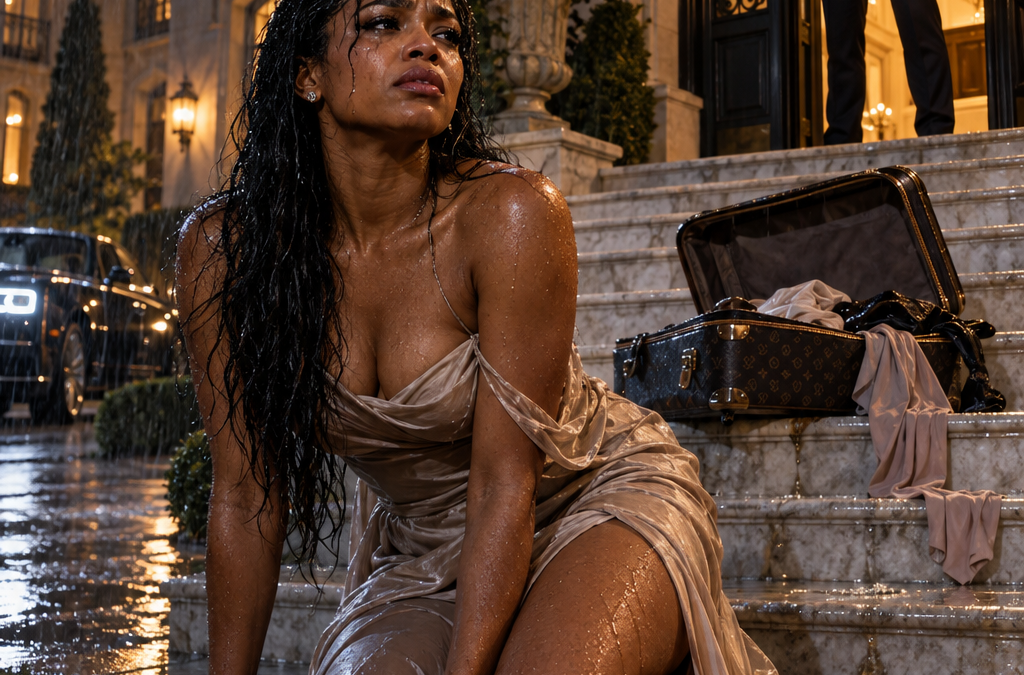
𝗙𝗨𝗟𝗟 𝗦𝗧𝗢𝗥𝗬
I knew his instincts.
I had watched them develop.
So I authorized an investigation.
Caroline Sutton was a licensed private investigator.
Her placement inside Wilson Capital took months.
Her assignment took years.
Document everything.
So when Bradley started sleeping with her, I already knew who she was.
That didn’t make watching it painless.
People sometimes assume knowledge removes pain.
It doesn’t.
If anything, there is a specific kind of humiliation in watching your husband betray you with someone you hired to prove he was capable of betrayal.
But I stayed focused.
Caroline recorded conversations.
Copied transaction logs.
Photographed documents.
Tracked unauthorized trades.
Stored emails.
Cataloged racial comments.
Recorded him after hours when alcohol loosened the part of his mouth that daylight disciplined.
I waited.
Then, on a Tuesday afternoon, Wilson Capital Partners received a white envelope bearing the SEC seal.
Preliminary inquiry.
Three words appeared repeatedly.
By six that evening, Bradley had drunk half a bottle of Woodford Reserve at the country club.
By eight, he was behind the wheel of a Rolls-Royce Cullinan, swerving through Buckhead.
By nine, he came home searching for someone to punish.
I was drying dishes when the front door slammed.
The chandelier in the foyer shook.
A vase shattered.
I put the towel down.
“Bradley?”
Nothing.
His shoes dragged across the marble.
He went directly to his study.
I heard his briefcase strike something hard.
Then glass broke.
When I reached the doorway, our framed wedding photograph lay shattered on the carpet.
Bradley poured bourbon.
His hand wasn’t steady.
“What happened?”
He turned.
I had seen him angry before.
This wasn’t anger.
It was blame looking for a body.
“You.”
I stayed where I was.
“What?”
“You happened.”
He laughed.
Not because anything was funny.
“The SEC is investigating my firm.”
He pointed at himself.
“My firm.”
“What did the letter say?”
“Don’t.”
“Don’t what?”
“Don’t stand there pretending you understand.”
“Bradley, you’re drunk.”
His face changed.
“Ever since I married you, everything has gone wrong.”
The words came slowly.
Designed to wound.
“You’re a curse.”
He stepped closer.
“A black cloud hanging over my entire life.”
He smiled at the phrase.
He knew what he had done with it.
The cruelty was intentional.
I looked at him for a moment.
“Sit down. We’ll talk when you’re sober.”
“Don’t tell me what to do in my house.”
He slammed the glass on the desk.
It shattered.
Bourbon ran across tax documents.
“Your house?”
He stared at me.
I had said it too softly for him to catch the meaning.
“I should have listened to my mother.”
I said nothing.
“She warned me.”
“About what?”
“Don’t do this.”
“About what, Bradley?”
He looked directly into my eyes.
“She said people like you never know their place.”
There it was.
Eight years.
All the silence.
All the compromises.
Everything beneath the jokes.
Finally said plainly.
The grandfather clock in the hallway ticked once.
Twice.
Three times.
Bradley opened his desk drawer.
He pulled out a manila folder and threw it at my feet.
Pages scattered.
“Page fourteen.”
I didn’t bend down.
“Clause 9B.”
The prenup.
A slow understanding came over me.
Not concern.
Recognition.
Bradley had finally read one page beyond the first four.
“You leave with what you came with,” he said.
His smile returned.
“Which was nothing.”
I looked at the papers.
“No house.”
He counted on his fingers.
“No cars.”
“Bradley—”
“No accounts.”
He stepped closer.
“No lifestyle.”
His breath smelled of whiskey.
“I made you.”
I almost laughed.
He mistook my expression.
“Every dress upstairs? Me.”
Wrong.
“Every meal?”
Wrong.
“This house?”
Very wrong.
“Eight years, Olivia. I gave you a life.”
His face was inches from mine.
“Without me, you’re just another girl from nowhere pretending she belongs someplace she never did.”
I looked at him.
“Are you finished?”
That broke whatever control remained.
My calm had always made him furious because calm denied him the power of reaction.
He reached for my necklace.
My grandmother’s silver locket.
The only piece of jewelry from my family I wore every day.
I stepped backward.
Too late.
He yanked.
The chain snapped.
Pain cut across my neck.
I touched the skin.
Blood.
Bradley held the locket.
For one second, even drunk, he seemed to understand he had crossed a line.
Then pride made the decision for him.
He tossed the locket into his desk drawer.
Locked it.
Put the key in his pocket.
“Mine now too.”
I stared at the drawer.
Something inside me became absolutely still.
He pulled out his phone.
Tapped a contact.
Speaker.
Edward Miller answered.
Bradley’s divorce lawyer.
“Edward.”
“Bradley?”
“It’s time.”
A pause.
Then Edward’s voice turned professional.
“Already drafted.”
Bradley smiled at me.
“File tomorrow. Everything.”
“Asset freeze included?”
“Yes.”
“Good.”
Bradley looked directly at me.
“Burn her.”
I never forgot those words.
Edward replied, “She won’t touch a cent.”
Bradley ended the call.
Then he walked upstairs.
I followed because I wanted to see how far he would go.
He opened my closet.
Started ripping dresses from hangers.
Dior.
Valentino.
Chanel.
He threw them in a pile.
“You don’t get these.”
I leaned against the doorway.
“I bought every one.”
He ignored me.
He pulled an old suitcase from the top shelf.
Threw in faded T-shirts.
Jeans.
A pair of worn flats.
Nothing formal.
Nothing valuable.
Nothing he thought could help me.
Then he dragged the suitcase into the hallway.
At the staircase, Caroline appeared.
Silk robe.
Bare legs.
Blonde hair loose around her shoulders.
She leaned against the banister.
A faint smile touched her mouth.
Even though I knew why she was there, seeing her in my home dressed like that cut deeper than I expected.
Bradley looked up at her.
“Perfect timing.”
He dragged the suitcase down the marble stairs.
Caroline’s eyes met mine.
Only briefly.
Then she looked away.
She had a role to maintain.
Bradley opened the front door.
Rain had stopped recently.
The lawn shone beneath the porch lights.
He threw the suitcase.
It bounced down two marble steps and landed in wet grass.
My purse followed.
Then my phone.
The phone struck a decorative stone.
The screen cracked.
“One bag.”
Bradley leaned against the doorframe.
“That’s more than you deserve.”
I stepped onto the porch.
Barefoot.
“You don’t even get the Rolls.”
He pointed toward the street.
“You can walk.”
His mouth curled.
“Or crawl.”
Porch lights were turning on.
Neighbors had heard us.
A woman across the street stood at her window with one hand over her mouth.
An older man watched from behind a curtain.
Three houses down, a college kid raised his phone.
I saw the red recording light.
Bradley didn’t.
“Go,” he said.
I stepped onto the grass.
Cold water soaked my feet.
Caroline stood behind him on the staircase.
Bradley crossed his arms.
“What? No begging?”
I bent down and picked up my purse.
Then the suitcase.
“No.”
“You’ll be back.”
He laughed.
“They always come back.”
I looked up at the man I had once loved.
Not the man standing there.
The other one.
The young wealth manager who crossed a ballroom because I looked lonely.
The man who walked me to an old Honda without caring what anyone thought.
The man who said he saw me.
For one terrible second, I wanted him back.
Then I understood that person wasn’t trapped inside Bradley waiting to return.
Bradley had killed him decision by decision.
I straightened.
“Remember tonight.”
His smile vanished slightly.
“What?”
“Remember exactly what you said.”
“Why?”
I lifted the suitcase.
“Because I will.”
Then I walked away.
No coat.
No shoes.
No phone.
Bradley watched from the doorway until darkness swallowed me at the end of the street.
One block later, a black Cadillac Escalade waited beneath a streetlight.
Headlights off.
The driver stepped out immediately.
Dark suit.
Professional.
He opened the rear door.
“Mrs. Wilson?”
I stopped.
He corrected himself.
“Ms. Owens.”
I handed him the suitcase.
Then I got into the car.
The door closed.
Softly.
After a night full of slammed doors and shattered glass, that small click almost undid me.
We drove away.
Buckhead slid beyond the tinted windows.
I sat with my bare feet against cool carpet and finally cried.
Not for the mansion.
The dresses.
The cars.
The prenup.
The money.
I cried because I remembered Bradley at the Four Seasons.
I remembered him saying I just see you.
And the worst part was that I believed he had meant it.
Once.
Maybe for years.
He hadn’t always been cruel.
That would have been easier.
He had learned cruelty.
Chosen it.
Rewarded it.
Practiced it until it felt natural.
I cried for the man I married.
And for myself.
For every time I mistook patience for hope.
Then I wiped my face.
Straightened against the leather seat.
Picked up the car phone.
My mother answered on the second ring.
“Olivia?”
“Mom.”
She heard something in my voice.
“What happened?”
“It’s time.”
No hesitation.
“I’ll call Margaret.”
“We move tonight.”
“I already said I’m calling Margaret.”
Despite everything, I laughed.
My mother, Eleanor Owens, had never needed much information before becoming dangerous on my behalf.
The next seventy-two hours were designed to break me.
Bradley’s lawyers moved quickly.
By noon the following day, a courier delivered forty-three pages to my suite at the St. Regis Atlanta.
Divorce petition.
Emergency motions.
Asset freeze request.
Bradley demanded the mansion.
Both vehicles.
Joint accounts.
Several accounts that weren’t joint.
The filing described me as financially dependent.
No independent income.
No meaningful assets.
No professional standing.
I read that section twice.
Then I handed it to Margaret.
She laughed.
“This may be the most expensive factual error I’ve ever seen.”
The next filing wasn’t funny.
Edward had secured an emergency inventory order on a storage unit tied to my name.
Movers entered while we were reviewing documents.
That storage unit contained childhood photo albums.
My mother’s recipe cards.
My father’s original deli business license from 1986.
Private papers.
Family history.
They photographed everything and submitted it into the marital-property record.
That violation hurt more than losing access to a bank account ever could.
Bradley was rummaging through my dead father’s life trying to identify things he could take.
At 2:14 that morning, the hotel phone rang.
I answered.
Bradley.
“You awake?”
His voice was thick.
“Obviously.”
“Caroline redecorated your closet.”
I closed my eyes.
“Looks better.”
Silence.
“You know what your problem is, Liv?”
I said nothing.
“You actually thought you belonged in that house.”
I almost told him the house belonged to me.
Instead I listened.
“In my world.”
His words slurred.
“With my people.”
Then he laughed.
“You never belonged.”
I hung up.
He called four more times.
The next day he posted photographs with Caroline.
Brunch.
Champagne.
Matching sunglasses.
New chapter. Better energy.
Then came a society blog item suggesting I had exaggerated my background to marry into wealth.
That almost impressed me.
Bradley’s attorneys sent cease-and-desist letters to mutual friends.
People disappeared.
A woman who had met me every Tuesday for coffee for three years texted:
I’m sorry.
Then blocked me.
I was removed temporarily from a nonprofit board after Bradley complained that I had misrepresented my credentials.
The executive director sounded embarrassed.
But she still removed me.
That was the remarkable thing about social cowardice.
People didn’t need to believe Bradley.
They only needed to fear inconvenience more than they valued loyalty.
For three days, doors closed.
Bradley thought the silence meant his strategy was working.
He didn’t understand that silence had always been where I did my best work.
Late one night, I opened old messages from him.
Made it home and you had dinner waiting. I don’t deserve you.
Miss you already.
How did I get this lucky?
I read them all.
Every loving word.
Every version of the man who had once made me happy.
Then I deleted the thread.
Not because those years had been fake.
Because they were over.
I called Margaret.
“I’m done grieving.”
“I was wondering when you’d say that.”
“What do we have?”
Two days later, I sat at the head of the mahogany table inside the Owens family estate in Sandy Springs.
My mother sat to my right.
Margaret stood beside a projection screen.
Four attorneys.
A forensic accountant.
Caroline Sutton.
No silk robe now.
Dark suit.
Hair tied back.
Professional.
Focused.
Margaret changed slides.
“Wilson Capital Partners.”
A corporate structure appeared.
“Forty-two percent ownership belongs to Vesper Trust.”
I knew this.
The others knew this.
But hearing it aloud still brought a strange satisfaction.
“Bradley believes Vesper Trust is a passive institutional investor.”
Margaret turned.
“It is actually a wholly owned Owens Holdings subsidiary.”
My mother adjusted her glasses.
“So forty-two percent of Bradley’s company belongs to Olivia.”
“Correct.”
Next slide.
“His 2019 startup capital.”
Eight hundred fifty thousand dollars.
Bradley thought it came from an outside investor.
It had come from another Owens entity.
Structured as a recallable loan.
Interest.
Acceleration clause.
Default penalties.
Margaret tapped the screen.
“If Owens Holdings recalls it, Wilson Capital’s liquidity fails.”
Mom asked the question that mattered.
“And the SEC?”
Margaret looked at Caroline.
Caroline answered.
“The whistleblower submission was mine.”
The room went still.
For four years, Caroline had collected evidence.
Three hundred twelve audio recordings.
Eighty-six photographs.
Four hard drives.
Internal email chains.
Client instructions.
Transaction records.
A handwritten incident log.
Every racial slur.
Every fraudulent move.
Every confession Bradley made when he believed he was speaking privately to a woman who admired him.
Caroline placed a flash drive on the table.
“Last Tuesday, after Olivia left, he called three friends.”
She looked at me.
“I recorded it.”
Margaret played the audio.
Bradley’s voice filled the room.
He was laughing.
Said he hoped I ended up homeless.
Then:
She can sleep on the street for all I care. That’s where people like her belong.
My mother closed her eyes.
When the recording ended, nobody spoke.
Finally she asked, “When do we move?”
“Three weeks,” I said.
Mom looked at me.
“Three?”
“Let him keep filing.”
“Olivia—”
“Let him celebrate.”
Margaret understood immediately.
“The more statements he makes, the more evidence he gives us.”
“Exactly.”
I looked at Caroline.
“Stay close to him.”
She nodded.
Bradley believed Caroline had chosen him.
That belief made him reckless.
He told her everything.
Three weeks of arrogance would produce more evidence than three months of subpoenas.
Margaret sat.
“We counterfile at the hearing.”
“Everything?”
“Everything.”
“Prenup enforcement.”
“Yes.”
“Vesper Trust disclosure.”
“Yes.”
“Loan recall.”
“Yes.”
“Caroline.”
“Yes.”
I nodded.
“One more thing.”
Margaret waited.
“I want the Phantom.”
My mother smiled before Margaret understood.
“The black one?”
“Dad’s.”
The Rolls-Royce Phantom my father bought in 2015 had remained in climate-controlled storage since his death.
I rarely even looked at it.
It wasn’t my style.
But this wasn’t about style.
Bradley had stood in a doorway and told me to walk or crawl.
“I want him to watch me arrive.”
Mom leaned back.
“Theodore would absolutely approve.”
For three weeks, I disappeared.
Bradley did not.
He posted.
Partied.
Bragged.
Told people I had no legal strategy.
Said his lawyers were going to leave me with nothing.
Caroline stayed beside him.
Every day, another recording arrived.
Every night, Margaret’s team added another document.
By the third week, Bradley wasn’t preparing for a divorce hearing.
He was unknowingly preparing evidence for federal prosecutors.
Tuesday morning arrived gray and cold.
Fulton County Family Court.
News vans already lined the curb.
Bradley arrived first.
White Rolls-Royce Cullinan.
Tom Ford suit.
Gold cuff links.
Caroline on his arm.
Edward Miller behind them.
According to Caroline, Bradley looked at the reporters and smiled.
“They heard this is going to be ugly.”
He believed they were there to watch him destroy me.
At 9:28, my father’s Phantom turned onto the street.
Long.
Black.
Almost silent.
The chauffeur stopped directly outside the courthouse.
He opened the rear door.
I stepped out.
Dove-gray Brunello Cucinelli suit.
Grandmother’s pearls.
Hair pulled back.
No visible jewelry beyond that because Bradley still possessed my locket.
A second SUV stopped behind us.
Margaret exited.
Then four attorneys.
Reporters surged.
One shouted:
“Ms. Owens! Will Owens Holdings be making a statement today?”
I heard someone inhale sharply.
Bradley.
I turned.
Our eyes met across the courthouse steps.
He looked at the Phantom.
Then the attorneys.
Then me.
Then back at the reporters.
Owens Holdings.
Owens.
My maiden name.
He finally connected two dots that had sat directly in front of him for eight years.
His face lost color.
I didn’t smile.
I walked inside.
Judge Harrison Brooks called our case.
Bradley sat beside Edward.
Caroline sat behind them.
Her role wasn’t finished yet.
Margaret rose.
“Your Honor, before the petitioner’s motions are addressed, respondent has several disclosures and counterfilings.”
She placed a thick folder on the bench.
Bradley whispered something to Edward.
Edward shook his head.
Margaret began.
“The prenuptial agreement cited repeatedly in Mr. Wilson’s filings was drafted by counsel representing Owens Holdings on behalf of my client.”
Edward stopped writing.
“Mr. Wilson signed the agreement voluntarily.”
Bradley stared.
“We direct the court to Clause 14D.”
Edward opened the prenup.
Started turning pages quickly.
His face changed.
Margaret read.
If Bradley initiated dissolution under specified circumstances, a full capital-origin audit would trigger.
Any investment funds sourced through Vesper entities became immediately reviewable.
Certain obligations accelerated.
Penalties applied.
The eight hundred fifty thousand dollars financing his company?
Recallable.
Immediately.
Bradley’s lips moved.
“No.”
Margaret continued.
“The residence at 412 Whitfield Lane is not Mr. Wilson’s property.”
Bradley looked up.
“It is owned by Owens Holdings Real Estate Trust III.”
He turned toward me.
I looked straight ahead.
“My client has remained beneficial owner throughout the marriage.”
The judge reviewed the document.
Margaret continued.
“The Rolls-Royce Cullinan currently used by petitioner is leased through an Owens Holdings affiliated dealership.”
Bradley’s breathing changed.
“That lease terminates at five o’clock this afternoon.”
A few people in the gallery murmured.
“Additionally, petitioner’s country club membership was paid through a discretionary account controlled by respondent.”
Margaret paused.
“It was terminated this morning.”
Edward leaned toward Bradley.
I couldn’t hear the words.
I didn’t need to.
Then Margaret said, “My client would like to make an identity disclosure relevant to the asset issues before the court.”
I stood.
The room became quiet.
“My full legal name is Olivia Margaret Owens.”
Bradley stared at me.
“I am chair and majority shareholder of Owens Holdings.”
Someone behind me gasped.
“The company was founded by my father, Theodore Owens, in 1986.”
Bradley’s mouth opened.
“The current estimated net asset value is approximately three-point-two billion dollars.”
The gallery erupted.
Judge Brooks used his gavel.
“Order.”
Edward put his pen down.
Slowly.
I watched the moment understanding reached Bradley.
The house.
His startup money.
The trust.
The country club.
The vehicles.
The wife he had called financially dependent.
For eight years, Bradley believed he had elevated me into his world.
He had been living inside mine.
Margaret waited until the room settled.
Then she turned.
“There is another disclosure.”
Caroline stood.
Bradley looked at her.
His face changed again.
Margaret said, “Ms. Caroline Sutton is a licensed private investigator retained by respondent’s counsel in June 2022.”
Nothing moved.
I watched Bradley try to understand the sentence.
“No.”
Caroline removed her hand from the table.
“Bradley.”
“No.”
“Every transaction, conversation, and material financial event I observed was documented pursuant to lawful investigative instructions.”
He looked at me.
Then her.
Then me.
“You slept with me.”
Caroline’s expression didn’t change.
“You made that decision.”
His face twisted.
“You—”
Margaret interrupted.
“Mr. Wilson, I advise you not to continue.”
Caroline slid a flash drive across the table.
“Three hundred twelve recordings.”
Bradley looked physically ill.
“Eighty-six photographs.”
His hands began shaking.
“Complete copies of relevant internal communications.”
He whispered, “You bitch.”
Judge Brooks immediately said, “Mr. Wilson.”
Bradley didn’t hear him.
He stared at Caroline.
“You set me up.”
Caroline shook her head.
“I documented you.”
That distinction mattered.
Before Bradley could answer, the courtroom doors opened.
Two men in dark suits entered.
Federal agents.
I knew they were coming.
Margaret knew.
Caroline knew.
Bradley didn’t.
The warrant had been signed forty-eight hours earlier.
The agents had coordinated with our team to minimize flight risk.
They spoke briefly with the bailiff.
Bradley watched them.
I watched the moment he understood they were there for him.
He stood so quickly his chair screeched backward.
“Liv.”
I looked forward.
“Olivia.”
I didn’t respond.
“Sweetheart.”
Three weeks earlier, I had been trash.
Now I was sweetheart.
“There’s been a misunderstanding.”
Margaret lifted one hand.
“Mr. Wilson, do not address my client.”
Bradley ignored her.
“Baby, I was angry.”
I folded my hands in my lap.
“I didn’t mean any of it.”
Silence.
“You know me.”
That finally made me look at him.
And maybe something in my face told him the truth.
Yes.
I knew him.
That was why we were there.
He turned toward Edward.
“Do something.”
Edward stared at the agents.
“Object.”
“Bradley—”
“File something.”
Edward closed his briefcase.
“You failed to disclose material facts to me.”
“What?”
“Vesper Trust. Owens Holdings. The loan.”
“You didn’t ask.”
Edward actually blinked.
“I cannot represent you in federal criminal proceedings.”
“You can’t leave.”
“I can.”
Bradley looked toward Judge Brooks.
“Your Honor, she set me up.”
Judge Brooks lowered his glasses.
“Ignorance of contracts you personally signed is not a legal defense.”
“But—”
“Sit down.”
Bradley’s legs trembled.
Before he could move, the agents approached.
“Bradley James Wilson.”
The taller agent spoke clearly.
“You are under arrest on federal charges including wire fraud, tax evasion, and securities violations.”
Bradley’s face emptied.
The agent continued reading his rights.
Then handcuffs closed around his wrists.
The click was remarkably small.
After everything.
All the lawyers.
Money.
Threats.
Bourbon glasses.
Doors slammed.
Suitcases thrown.
One quiet metallic click ended the performance.
Bradley looked at Caroline.
She didn’t smile.
Four years of evidence had led there.
She didn’t need to celebrate.
The agents guided him toward the door.
He passed Edward.
Reporters.
Strangers.
People already typing.
Outside, the white Cullinan still waited at the curb.
Except now a flatbed tow truck was backing toward it.
The dealership’s repossession order had activated that morning.
Across the street, my father’s black Phantom stood untouched.
Bradley stopped walking.
For a few seconds, he stared at both cars.
A reporter shouted:
“Mr. Wilson, anything to say to your wife?”
He looked toward me.
His lips parted.
Nothing came out.
Then the agents put him into a federal sedan.
The door shut.
They drove away.
Inside the courtroom, the hearing was adjourned.
I remained seated after everyone else began moving.
Bradley’s chair was still slightly overturned.
The prenup lay open to Clause 14D.
Three weeks earlier, he had thrown pages of that same agreement at my feet.
Now he had finally read it.
Too late.
Outside, my driver opened the Phantom.
I sat inside.
The door closed softly.
Margaret climbed into the SUV behind us.
Before the car moved, I reached into my jacket pocket.
My grandmother’s locket.
Returned by court order that morning.
The chain had been repaired.
I held it in my palm.
For the first time since Bradley ripped it away, I felt my breathing slow completely.
I didn’t smile.
Didn’t cry.
I simply closed my hand around it.
The story broke before Bradley reached federal custody.
Atlanta media first.
Then Bloomberg.
Then Reuters.
Buckhead wealth manager arrested during divorce hearing as wife reveals billion-dollar family empire.
The headlines became more dramatic with every outlet.
But the story that truly caught fire came from somewhere else.
The college student three houses down.
The one who had recorded Bradley throwing me out.
He uploaded fourteen seconds.
Bradley in the doorway.
Me barefoot on the lawn.
The suitcase in wet grass.
His voice telling me I would crawl back.
Millions watched.
Then tens of millions.
People stitched the video.
Reposted it.
Quoted it.
Women began telling their own stories beneath it.
Being underestimated.
Financially controlled.
Humiliated.
Thrown out.
Told they were nothing without the person hurting them.
The video became larger than Bradley and me.
I almost hated that.
Private pain becoming public entertainment can feel like losing ownership of it.
But then I read messages from women who said watching me walk away made them call a lawyer.
One woman said she left a financially abusive marriage after eleven years.
Another opened a bank account in her own name.
Another contacted a shelter.
That changed how I saw the video.
Bradley’s world collapsed rapidly.
Country club membership gone.
Charity boards removed him.
Friends distanced themselves.
Men who had laughed beside him on Saturday appeared on television Monday claiming they had always found his behavior troubling.
Helen Wilson stopped taking his calls after reporters reached her garden club.
Wilson Capital Partners filed for Chapter 11 within nine days.
Clients withdrew funds.
Investors sued.
A former employee filed another complaint.
Edward Miller came under review by the Georgia State Bar over the emergency asset search and other aggressive tactics used during the divorce.
The disciplinary panel later called portions of his conduct an abuse of legal process.
What fascinated me was how quickly Bradley’s support vanished.
He had spent years building relationships around status.
The moment status disappeared, so did the relationships.
Four months later, his federal trial began.
United States v. Bradley James Wilson.
Fourteen counts of wire fraud.
Six securities-fraud counts.
Two tax-evasion counts.
One obstruction count.
I attended.
Not every day.
Enough.
Caroline testified for three days.
She was clinical.
No drama.
No satisfaction.
Dates.
Amounts.
Emails.
Transactions.
Recordings.
Bradley’s own voice did most of the prosecution’s work.
On the second day, they played one recording I had never heard before.
Late night.
Bradley speaking to a friend.
Drinking.
Laughing.
“You know the best part?”
His voice filled the courtroom.
“She thinks I actually loved her.”
My stomach tightened.
“Maybe I did for five minutes.”
Laughter.
“But mostly she was convenient.”
I didn’t move.
“A nice face to bring to parties. Made me look progressive.”
More laughter.
“Now she’s gone and I don’t have to pretend.”
I stared at the floor.
I had known what Bradley became.
Hearing him describe our marriage as a prop was different.
My mother reached across the bench and took my hand.
I let her.
The defense argued entrapment.
They portrayed me as a billionaire wife who had engineered my husband’s destruction.
The prosecution answered with something brutally simple.
They played the video of Bradley throwing me onto the lawn.
Then the recording where he said people like me belonged on the street.
Then financial records showing every illegal transaction had been initiated by Bradley himself.
Caroline hadn’t created the crimes.
She had recorded them.
I hadn’t forced him to become racist.
Fraudulent.
Cruel.
I had only stopped protecting him from the consequences.
The jury deliberated six hours.
Guilty.
Every count.
At sentencing, Bradley wore an orange jumpsuit.
No Tom Ford.
No gold cuff links.
Hands restrained.
Judge Brooks wasn’t presiding over the federal case, but the sentencing judge’s words were no less direct.
“Mr. Wilson was given extraordinary privilege.”
The courtroom stayed silent.
“He used that privilege to deceive clients, violate federal law, exploit employees, and inflict deliberate harm on people he believed lacked the power to resist him.”
Eleven years.
Twelve-point-six million dollars restitution.
Lifetime ban from the securities industry.
Bradley didn’t look at me.
I was grateful.
Our divorce concluded that same week.
I retained everything I had brought into the marriage.
Which, despite Bradley’s eight years of assumptions, was nearly everything he believed was his.
The Buckhead mansion remained with the Owens Trust.
Investment capital was recalled.
Contractual penalties under Clause 14D totaled twelve-point-six million dollars.
Pure coincidence.
Same number as the federal restitution.
Margaret found that deeply amusing.
Then she asked me what she should do with the few belongings Bradley still legitimately owned.
Dress shirts.
Two pairs of shoes.
Documents.
Several photographs.
I looked at the list.
“One suitcase.”
Margaret stared at me.
“Olivia.”
“One.”
She started smiling.
“You’ve been waiting to say this.”
“Three months.”
She packed his belongings.
One bag.
Delivered to the federal holding facility.
A typed note attached.
One bag.
That’s more than you deserve.
His own sentence.
Returned.
I gave one interview.
Only one.
The journalist was a Black woman I had known since college.
We sat in a quiet studio without an audience.
She asked about the money.
The investigation.
Caroline.
The courthouse.
Then she asked the question I had avoided asking myself.
“Do you hate Bradley?”
I looked down at my hands.
For a long time, I didn’t answer.
“No.”
She waited.
“I hate what he became.”
My throat tightened.
“But I don’t hate the man he was when I met him.”
“Why not?”
“Because he wasn’t always a monster.”
I exhaled.
“And that’s harder.”
She leaned forward slightly.
“Why?”
“Because if someone is cruel from the beginning, you leave knowing exactly what you escaped.”
I looked toward the darkened studio floor.
“But Bradley had every opportunity to remain good.”
I thought about the Honda.
The flowers on Tuesdays.
Lake Lanier.
“I watched him choose something else.”
The interview went quiet.
“He chose cowardice when his mother insulted me.”
“He chose approval when his friends made racist jokes.”
“He chose arrogance when money gave him power.”
“He chose betrayal.”
“He chose fraud.”
“And eventually he chose hatred because hatred made him feel superior.”
I looked back at the journalist.
“So no. I don’t hate him.”
I paused.
“But I mourn the person he decided not to be.”
That answer traveled farther than anything I expected.
But another part of the interview mattered more to me.
I announced the Theodore Owens Legal Defense Fund.
Twenty-six million dollars.
Dedicated to providing free legal representation to Black women trapped in abusive marriages, financial manipulation, coercive control, and legal intimidation.
My father had taught me that money sitting still was only a number.
Money used with purpose became leverage.
Bradley had tried to use the law as a weapon against someone he believed couldn’t afford to defend herself.
I had resources.
Most women in that position don’t.
I wanted to change that.
Caroline eventually left investigative contract work and opened Sutton & Associates.
Her specialty became protecting women in high-net-worth divorce litigation.
Her business cards carried four words.
We document everything.
Six months after the courthouse hearing, three hundred guests gathered at the Atlanta History Center.
The Theodore Owens Legal Defense Fund held its inaugural gala.
The room glowed beneath amber lights.
Lawyers.
Journalists.
Philanthropists.
Community leaders.
Women our first round of funding had already helped.
I wore emerald green.
My mother walked beside me.
No husband.
No need to explain my presence.
At the podium, I looked out over the room.
For once, nobody introduced me through my relationship to somebody else.
Not Bradley’s wife.
Not Theodore Owens’s daughter.
Just Olivia Owens.
I began with my father.
“Theodore Owens opened a deli in southwest Atlanta in 1986.”
A photograph appeared behind me.
Dad in a white apron.
Flour on his hands.
Huge smile.
“He had forty-two hundred dollars.”
A few people laughed softly.
“He worked two jobs.”
I looked at Mom.
“He slept approximately four hours a night and claimed he needed only three.”
She smiled through tears.
“People told him the deli would fail.”
I paused.
“Then they told him the second location would fail.”
“Then real estate.”
“Then investment.”
“Then every room he entered where somebody decided before he spoke that a Black man with flour still under his fingernails didn’t belong.”
The room was silent.
“My father always said the same thing.”
I looked at his photograph.
“The loudest people in the room are usually trying to convince themselves of something.”
Then I smiled.
“The quiet ones already know.”
People stood.
Three hundred of them.
Applause filled the room.
I looked at Mom.
She wiped her eyes and kept clapping.
Later, after the speeches and donations and handshakes, I stepped onto the balcony alone.
Atlanta stretched below me.
Glass towers.
Headlights.
Night air carrying magnolia from the garden.
Mom joined me.
She didn’t speak immediately.
She never rushed silence either.
Maybe I inherited that from her.
Eventually I said, “I keep remembering the first time Bradley held my hand.”
“I know.”
“Is that stupid?”
Mom looked at me.
“No.”
“I should hate those memories.”
“Why?”
“Because of how it ended.”
She shook her head.
“Something doesn’t become fake because it didn’t last.”
I looked over the city.
“I loved him.”
“I know.”
“He loved me.”
“For a while.”
I swallowed.
“Does that make me foolish?”
Mom reached for my hand.
“No, baby.”
She squeezed it.
“It makes you human.”
I laughed quietly.
Then she added:
“But I also remember the last day he deserved to hold your hand.”
That made me laugh harder.
We stood there together.
No revenge speech.
No rage.
Just two women looking at the city.
Below us, the Phantom waited at the curb.
I touched the locket around my neck.
The repaired chain rested warm against my skin.
Inside was a photograph of Dad standing outside his original deli.
White apron.
Flour on his shirt.
Entire future still invisible.
I opened it.
“Good night, Daddy.”
Later, driving home along Peachtree Street, I leaned my head against the window.
City lights slid across the glass.
For the first time in months, I didn’t think about Bradley.
Not the handcuffs.
Not the courtroom.
Not prison.
Not the suitcase.
I thought about myself before him.
Twenty-eight.
Black dress.
Standing behind a charity table.
Comfortable enough with who I was that I didn’t need anybody in that ballroom to know what I owned.
I had spent eight years becoming smaller in ways I didn’t recognize until I stopped.
I learned to lower my voice at Wilson family dinners.
To avoid correcting Bradley in public.
To let his friends assume I knew less.
To let neighbors think the mansion came from him.
To allow people to define me because correcting them seemed exhausting.
The strange thing was that when I finally walked away, I didn’t become someone new.
I became more clearly who I had been before.
That was the part Bradley never understood.
He believed he had created me because he judged worth by whatever he could see.
House.
Car.
Clothes.
Club membership.
Surname.
He couldn’t imagine value existing quietly.
So when I refused to explain myself, he mistook silence for emptiness.
When I tolerated him, he mistook patience for dependence.
When I watched, he mistook observation for ignorance.
When I prepared, he mistook restraint for weakness.
And when he threw me onto the lawn with one suitcase and told me no one was coming to save me, he believed he had finally revealed the balance of power between us.
He was wrong.
Not because I had billions.
The money made the legal battle easier.
It gave me tools many women never receive.
I will never pretend otherwise.
But money wasn’t the thing that defeated Bradley.
Bradley defeated Bradley.
Every recording contained his voice.
Every fraudulent transaction carried his authorization.
Every racist statement came from his mouth.
Every contract he failed to read carried his signature.
Every person he betrayed eventually had evidence.
I only stopped standing between him and the consequences.
That distinction mattered to me.
Years later, people would still ask about the Phantom.
They loved that part.
The black Rolls-Royce pulling up.
Bradley watching.
The billionaire reveal.
It made the story satisfying.
But when I remembered that morning, the car was almost irrelevant.
What I remembered was his face when the reporter called me Ms. Owens.
Not because he suddenly realized I was rich.
Because for the first time in eight years, he realized there were parts of me he had never bothered to learn.
He had been married to me.
Slept beside me.
Shared meals with me.
Held my hand.
And still believed he knew my worth only because he believed he had purchased it.
That was his real failure.
Not losing the mansion.
Not losing the firm.
Not the prison sentence.
He had stood beside another human being for eight years and never developed enough humility to understand that he might not know everything about her.
Some nights, I still remembered him at thirty-three.
The Four Seasons.
The Honda.
That smile.
“I just see you.”
For a long time, those memories made me angry.
Then they made me sad.
Eventually they became what they were.
Memories.
Nothing more.
I stopped asking when exactly he became the man who stood in that doorway.
There wasn’t one moment.
That was the answer.
People rarely become cruel in one dramatic transformation.
It happens in permissions.
The joke you don’t challenge.
The insult you excuse.
The lie that works.
The first person you humiliate without consequence.
The first financial line you cross and survive.
The friend who laughs when you say something ugly.
The spouse who forgives you because she still remembers who you used to be.
Then one day, you look into a room and discover everyone who once restrained the worst parts of you has either disappeared or learned to stay quiet.
By then, the voice left is your own.
Bradley listened to his for too long.
I finally stopped listening.
Theodore Owens Legal Defense Fund eventually represented women whose names the public would never know.
That suited me.
Not every victory needed cameras.
A teacher whose husband hid every bank statement.
A nurse whose spouse threatened to take her children if she left.
A woman married to a wealthy businessman who used litigation to drain her savings.
Another whose immigration status had been used against her for years.
We paid attorneys.
Forensic accountants.
Emergency housing.
Child-care expenses during court proceedings.
Therapy.
Whatever kept a person from returning to danger simply because danger was financially easier.
Those cases taught me more than Bradley ever did.
I had been thrown out barefoot, but a car waited one block away.
A legal team answered my call.
My mother had a safe home.
My father had built resources I could activate overnight.
Most people experiencing what I experienced don’t have that.
The fund became the only part of the entire story I considered a true victory.
Bradley’s conviction was accountability.
My divorce was freedom.
The fund was purpose.
There was a difference.
One evening almost a year after the gala, I walked past Dad’s photograph in the Owens Holdings office.
He was standing outside that deli again.
Flour on his shirt.
Smiling at whoever held the camera.
I stopped.
For years, I had believed the greatest thing he left me was the company.
I was wrong.
He had left me something harder to quantify.
He never begged a room to believe he belonged there.
He worked.
Observed.
Prepared.
Then when the moment arrived, he acted.
I touched the frame.
“The quiet ones already know.”
I finally understood what he meant.
Quiet isn’t surrender.
It isn’t fear.
It isn’t always weakness.
Sometimes quiet is the sound of somebody gathering information.
Sometimes it is grief.
Sometimes dignity.
Sometimes preparation.
And sometimes it is simply the moment before a person who has underestimated you discovers that you were never waiting for permission from them at all.
That night Bradley threw my suitcase into the rain, he told me to remember it.
I did.
But probably not for the reason he expected.
I remembered the cold grass beneath my feet.
The cut on my neck.
The neighbor’s porch lights.
The suitcase lying face down.
His arms crossed in the doorway.
Caroline behind him.
The certainty in his voice when he said I would return.
Most of all, I remembered myself picking up the bag.
No shoes.
No coat.
No idea whether my heart was breaking or simply becoming honest.
I walked away without telling him who I was.
I could have.
One sentence would have changed his face.
You don’t own this house, Bradley.
Or:
Your company exists because my family funded it.
Or:
Caroline works for me.
Or simply:
You have absolutely no idea who you’re throwing out.
I said none of them.
Because that night wasn’t about proving my value to him.
If eight years hadn’t taught him to see me as human, three billion dollars shouldn’t have been required to finish the lesson.
So I let him believe exactly what he wanted to believe.
Then I walked into the darkness.
Three weeks later, he finally learned what he had thrown away.
By then, it no longer belonged to him to understand.








