𝗙𝗨𝗟𝗟 𝗦𝗧𝗢𝗥𝗬 My HOA President Threatened to Foreclose on My Ohio Home While Someone Kept Moving My Security Camera at 2 A.M.
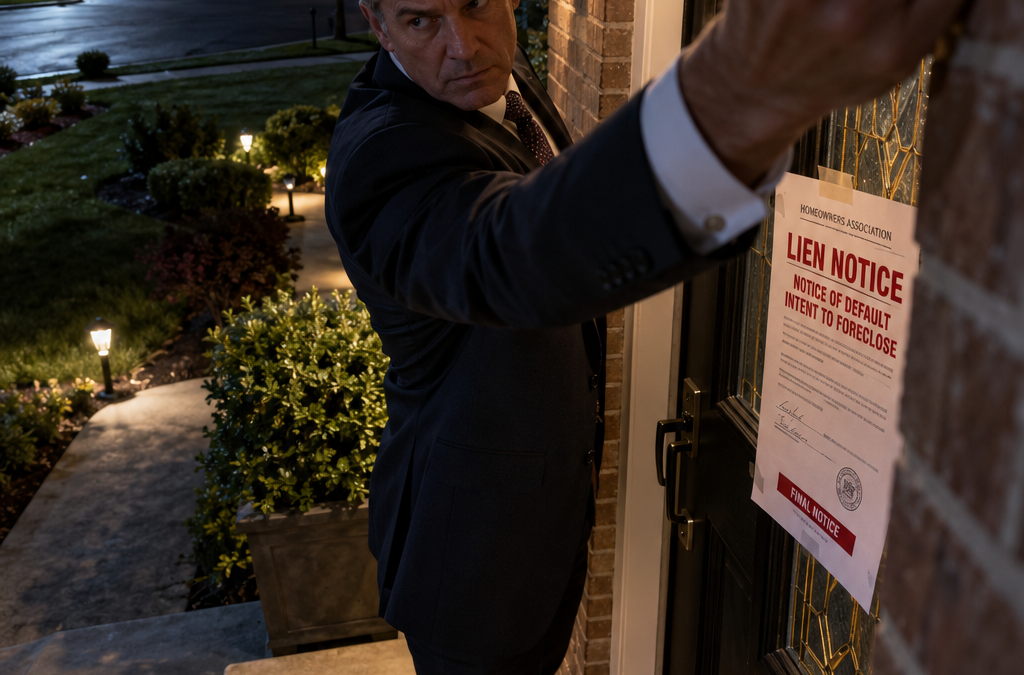
𝗙𝗨𝗟𝗟 𝗦𝗧𝗢𝗥𝗬
Then Deborah Whitfield became HOA president.
The difference was immediate.
Deborah was fifty years old, tall, meticulously groomed, and obsessed with maintaining the appearance of a successful executive.
He had glossy dark hair combed into a precise side part, a perfectly maintained complexion, and a smile that looked as though he’d practiced it in front of a mirror.
He wore tailored jackets to meetings that most people attended in jeans.
His shirts were expensive.
His shoes were polished.
He favored pearl-gray silk ties and pale, pearl-like cufflinks that caught the clubhouse lights whenever he gestured.
And he loved his gavel.
The wooden gavel wasn’t necessary for most of the HOA’s business.
But Deborah treated it like the symbol of an important judicial appointment.
He tapped it to begin meetings.
He tapped it when somebody interrupted.
He tapped it whenever a homeowner asked a question he didn’t want to answer.
Watching him preside over a room of tired suburban residents, I sometimes wondered whether he genuinely understood the difference between being elected HOA president and being appointed to a federal court.
His manner suggested he didn’t.
Deborah believed rules should be obeyed because he announced them.
He treated questions as insults.
He spoke about Brook Haven as though it belonged to him personally.
And he seemed to regard any homeowner who disagreed with him as a threat to the entire community.
His first target was my garden gnome collection.
The letter arrived just after I had finished mowing the front lawn.
UNAPPROVED EXTERIOR DECORATIVE DISPLAY.
The notice claimed the gnomes were an eyesore and could lower property values.
I stood outside reading it beside the flower bed.
The fishing gnome stared back at me.
Six years.
Those little figures had been in the same garden for six years before Deborah took office.
The previous HOA board had apparently tolerated them without complaint.
Nobody had suggested that the neighborhood’s property values were collapsing because a painted ceramic man held a fishing rod beside my porch.
I considered calling the association.
Then I looked at the small fine attached to the notice.
I was exhausted from work.
I didn’t want to spend my evening arguing about lawn ornaments.
So I paid it.
I moved the gnomes to the backyard.
And I told myself the situation was over.
It wasn’t.
A few days later, my neighbor received a violation notice because his mailbox post looked too rustic.
I learned about it while taking out the trash.
Gary Bennett lived two houses down.
He was a friendly man in his fifties who had a habit of making jokes at the worst possible moments.
When I saw him standing beside his mailbox with a piece of paper in his hand, I stopped.
“Everything okay?”
He looked at me.
“Apparently my mailbox is bringing down civilization.”
I laughed.
“What?”
He held up the notice.
“Rustic appearance.”
I examined the wooden post.
It was sturdy, neatly painted, and completely ordinary.
“What’s wrong with it?”
“According to Deborah, it lacks architectural consistency.”
I looked toward the post again.
“It’s a mailbox.”
Gary nodded solemnly.
“That’s what I thought. Turns out it’s a threat to the American way of life.”
We laughed.
At the time, we didn’t understand how quickly those little jokes would stop being funny.
My next fine concerned a wind chime.
It hung beside the front porch, a small collection of metal tubes that made a soft sound whenever the breeze moved through them.
I had owned it for years.
It wasn’t especially loud.
But Deborah claimed it violated neighborhood aesthetic standards.
Then came the trash-can fine.
Fifty dollars because my containers had supposedly remained outside four minutes beyond a 7:00 a.m. deadline.
Four minutes.
I was working an early shift that morning.
I had set the containers out properly and brought them back as soon as I returned.
I didn’t even know how Deborah had calculated the exact time.
When I asked for the inspection record, the HOA office sent a brief response stating that the president’s observations were considered sufficient.
Then came the grass violation.
Seventy-five dollars.
According to the notice, my lawn exceeded the permitted height by half an inch.
I walked outside with a ruler.
Measured several patches.
Checked the mower settings.
Nothing suggested the lawn had been neglected.
It looked better than some of the grass along the association’s own common areas.
But I had already learned what happened when people challenged Deborah.
He smiled.
He cited a rule.
He insisted the board had authority.
And if the resident continued questioning him, another notice seemed to appear.
So I paid the first few small fines.
Not because I agreed with them.
Because after twelve hours of electrical work, I didn’t have much energy left for another fight.
I wanted to eat dinner without thinking about my mailbox.
I wanted to sit on the porch without wondering whether the wind chime was illegal.
I wanted to feel like a homeowner.
Instead, I began feeling like a man who needed permission to exist in his own front yard.
Deborah seemed to enjoy the effect.
One Saturday afternoon, I was checking a loose porch outlet when his black luxury SUV rolled slowly around the cul-de-sac.
He stopped in front of my house.
The driver’s window lowered.
“Frank.”
I looked up.
“Afternoon, Deborah.”
He glanced toward my lawn.
“I see you’ve been making an effort.”
I rested my screwdriver on the porch railing.
“An effort?”
“With your exterior compliance.”
I looked at him.
“I’ve been maintaining the place since I moved in.”
He smiled.
“Of course. But we’ve had some issues.”
“I’ve noticed.”
He leaned slightly toward the window.
“Brook Haven has standards, Frank. We don’t make exceptions because somebody finds those standards inconvenient.”
I felt irritation rise.
“I’m not asking for an exception.”
“Then we shouldn’t have any trouble going forward.”
He started raising the window.
I spoke before it closed.
“Can I ask you something?”
He paused.
“Briefly.”
“How were the gnomes acceptable for six years before you took office?”
His smile disappeared.
“Standards evolve.”
“And the mailbox down the street?”
“Not your concern.”
“The trash cans?”
His eyes narrowed.
“Frank, are you questioning my enforcement decisions?”
“I’m asking how the rules are being applied.”
He adjusted his cufflink.
“That’s exactly the kind of attitude that creates problems.”
I stared at him.
He smiled again.
“Have a pleasant weekend.”
The window closed.
He drove away.
I remained on the porch, watching the SUV disappear.
I hadn’t raised my voice.
I hadn’t insulted him.
I’d asked a perfectly reasonable question.
But the warning was unmistakable.
Deborah didn’t want explanations.
He wanted obedience.
The fines began arriving more frequently after that.
Almost every week.
Sometimes two notices arrived within days of each other.
One concerned shrub height.
Another cited inconsistent landscaping.
Another alleged that my trash containers were visible from the street.
Several referred vaguely to exterior appearance without identifying a specific problem.
I began taking photographs.
My front yard.
The porch.
The flower beds.
The trash-can storage area.
The mailbox.
I created a folder on my laptop and saved every violation notice.
Then I began keeping a handwritten log of the inspection dates.
The more carefully I documented everything, the less the fines made sense.
Some violations referred to conditions that weren’t visible in the photographs.
Others cited dates when I had already corrected the supposed problem.
Several lacked any supporting photograph or inspection detail.
At first, I thought the HOA was simply incompetent.
Perhaps Deborah had overwhelmed the office with unnecessary enforcement.
Perhaps the new board didn’t understand its own software.
Perhaps the notices were being generated automatically.
Those explanations were irritating, but they seemed possible.
Then my security camera started behaving strangely.
The camera was mounted beneath the porch roof.
It covered the front entrance, driveway, and part of the lawn.
I’d installed it shortly after moving in.
As an electrician, I enjoyed setting up my own equipment.
I knew how to check power supplies, network connections, and basic recording systems.
I had also installed a separate secondary camera beneath the side eave.
That camera had its own cloud storage account and covered a wider angle, including part of the front porch.
I considered it a backup.
If the main camera lost power or failed, the second unit would continue recording independently.
For weeks, everything worked normally.
Then one evening, I opened the main camera feed and noticed the timestamp jumping backward.
The recording appeared to skip several minutes.
Then it resumed.
I frowned.
I checked the device settings.
Nothing obvious was wrong.
I restarted the application.
The feed looked normal again.
I dismissed it as a software bug.
That was my first mistake.
Two nights later, it happened again.
Then once more.
Sometimes the camera showed a view that seemed slightly different from the one I remembered.
The driveway occupied less of the frame.
Part of the flower bed disappeared from view.
I assumed the mounting bracket had loosened.
I planned to inspect it on my next day off.
But work became busy.
One emergency repair stretched into another.
I spent two days helping resolve an electrical failure at a commercial facility several hours away.
By the time I returned, I was too tired to do anything but shower and sleep.
Meanwhile, the HOA notices kept arriving.
I didn’t yet understand that the camera problems and the violation notices were connected.
That connection became impossible to ignore when the first serious lien threat arrived.
It claimed I had committed chronic unpaid violations.
Some were familiar.
Others weren’t.
I opened my records and began comparing dates.
One alleged landscaping violation occurred on a day I had been working outside Ohio.
Another cited an exterior condition I had never seen and for which the association had never sent a warning.
A third referred to a supposed inspection during a period when my work records confirmed I had been away.
Being absent didn’t automatically prove a yard couldn’t have been inspected.
I understood that.
But the HOA was accusing me of particular conditions while providing no reliable evidence those conditions had existed.
And several descriptions contradicted photographs I had taken before leaving.
I placed my work schedule beside the violation list.
Then I checked my phone photographs.
Then the main security camera recordings.
That’s when I noticed something strange.
The missing footage corresponded with some of the dates Deborah had cited.
I sat back.
For several seconds, I simply stared at the screen.
Then I opened the secondary camera account.
The backup system had been recording continuously.
Its files were stored separately from the porch unit.
Deborah knew about the visible front camera.
I doubted he knew about the second one.
I selected the relevant dates.
Then I began reviewing the overnight footage.
At first, nothing appeared unusual.
Passing headlights.
A neighborhood cat.
Wind moving the branches near the driveway.
Then I reached a recording timestamped 2:14 a.m.
A dark figure entered the frame.
I leaned closer.
The person approached my porch slowly, keeping close to the wall.
He wore a raincoat.
His hands were covered by dark gloves.
On his feet were what looked like soft house slippers.
I felt my stomach tighten.
The figure stopped beneath the main camera.
Then he reached upward.
One gloved hand gripped the housing.
The other adjusted the mounting bracket.
The camera shifted.
I stared.
He was deliberately changing the angle.
Not repairing it.
Not checking it.
Moving it away from the part of the yard it had previously covered.
I paused the recording.
Then continued.
The figure crouched beside the porch.
He appeared to inspect the camera’s position.
Then he looked toward the street.
For one careless second, moonlight caught his face.
I recognized him immediately.
Deborah Whitfield.
I nearly dropped my coffee mug.
I sat motionless in front of the laptop.
Then I replayed the clip.
The same figure.
The same gloves.
The same glossy dark hair, slightly flattened beneath the raincoat hood.
The same distinctive face.
The HOA president.
At 2:14 in the morning.
On my porch.
Tampering with my security camera.
I felt a cold sensation spread through my chest.
Why?
Why would Deborah Whitfield sneak onto my property in the middle of the night to move a camera?
Why would a man who claimed to care about neighborhood security deliberately interfere with a homeowner’s surveillance system?
I checked another night.
The backup footage showed him approaching again.
This time, he adjusted the housing for only a few seconds before disappearing.
I compared the recordings with the main camera feed.
The timing disturbances followed those late-night visits.
I couldn’t prove from the images alone exactly what had caused the clock discrepancies.
But I could prove something more important.
Deborah had repeatedly entered my property without permission and physically altered the position of my security equipment.
I opened the oldest recording again.
Watched his gloved hand reach toward the camera.
Watched him rotate it.
Watched him look toward the moonlight.
The president of Brook Haven Estates was sneaking around my porch while I slept.
And he had been doing it during the same period he was issuing questionable fines.
I sat there until the coffee grew cold.
My first impulse was to call him.
The second was to march down the street and demand an explanation.
But I stopped myself.
Deborah had spent months making unsupported accusations against me.
If I confronted him without preparing carefully, he would deny everything.
He would claim he had been conducting a safety inspection.
He would argue that the camera had been positioned incorrectly.
He would invent a rule.
Or worse, he might attempt to destroy other evidence.
I needed the recordings preserved.
I downloaded copies from the independent cloud account.
I saved the original files.
I documented the timestamps, the visible movements, and the changes in camera position.
Then I backed everything up in another secure location.
I checked the secondary camera’s access permissions.
Changed the relevant passwords.
And made certain Deborah couldn’t reach the recordings by interfering with the porch unit.
I didn’t tell him what I’d found.
Not yet.
For the first time since the dispute began, I had evidence he didn’t know existed.
And I wasn’t going to waste it on another shouting match.
The following week, the HOA announced a meeting about enforcement and delinquent accounts.
Deborah called it an opportunity for residents to understand their responsibilities.
I knew my name would come up.
I went anyway.
The clubhouse was crowded.
Deborah sat at the front table wearing a dark charcoal jacket and a pearl-gray tie.
His hair looked freshly styled.
The gavel rested beside his right hand.
He appeared entirely confident.
He spoke about community standards, financial accountability, and the importance of consistent enforcement.
I sat beside Gary.
Every few minutes, Deborah lifted the gavel, tapped it against the table, and waited for the room to become quiet.
Gary leaned toward me.
“He’s basically doing yoga for that gavel.”
I looked at him.
“What?”
Gary whispered, “Look at him. He stretches his whole arm every time he uses it.”
I tried not to laugh.
Deborah raised the gavel again.
Gary murmured, “There he goes. Full upper-body workout.”
I covered my mouth.
For a few seconds, the absurdity broke through the anxiety.
Then Deborah announced the next agenda item.
“Final notice concerning persistent noncompliance.”
His eyes moved toward me.
The room grew quieter.
He began describing homeowners who refused to follow established standards.
He talked about chronic unpaid fines.
He referred to the possibility of lien enforcement.
Then he said my name.
“Frank has been given repeated opportunities to resolve his violations.”
Several neighbors turned toward me.
I remained still.
Deborah smiled.
“Unfortunately, some residents believe community rules are optional.”
I looked at him.
I knew that at two fourteen in the morning, this same man had been standing beneath my porch camera with gloved hands.
I knew he had moved the housing.
I knew he had entered my property without permission.
But I also knew the meeting wasn’t the right moment to reveal everything.
Not yet.
Deborah continued.
“If final payment is not received, the association will proceed with the necessary lien action.”
He pronounced the words slowly.
Almost savoring them.
Then he looked directly at me.
“Do you understand, Frank?”
I nodded.
“I understand what you’re saying.”
He seemed pleased.
“Good.”
I kept my expression neutral.
He apparently mistook that for surrender.
For the remainder of the meeting, Deborah spoke with renewed confidence.
He believed the financial pressure had finally worked.
He believed I was frightened enough to stop questioning him.
He had no idea that his midnight visits were preserved on a camera he hadn’t noticed.
But something about the whole situation still bothered me.
Even with the surveillance footage, I couldn’t fully explain the fines.
Deborah could have issued arbitrary penalties without sneaking onto my porch.
He could have relied on fabricated inspection reports.
Why risk being seen tampering with a camera?
There had to be a reason he wanted the front of my house less visible.
And I wanted to understand it before taking the next step.
That question led me into the HOA’s financial records.
I began reviewing the association’s annual disclosures and records available through the applicable Ohio corporate and community-association procedures.
I requested additional financial materials that homeowners were entitled to inspect.
I wanted to know how the association was using fine revenue.
I wanted to know which contractors had been paid.
And I wanted to understand whether Deborah’s enforcement campaign served some financial purpose beyond intimidating residents.
At first, the documents looked ordinary.
Landscaping expenses.
Maintenance invoices.
Administrative costs.
Insurance.
Repairs.
Then I noticed a series of payments to a landscaping company I didn’t recognize.
The amounts were substantial.
And the descriptions were vague.
Landscape maintenance enhancement.
Exterior compliance remediation.
Community grounds services.
The company had received repeated payments during the same period Deborah had dramatically increased enforcement.
I searched the business name through the available corporate filings.
The registered information led to an address that didn’t resemble a landscaping operation.
Then I found the ownership connection.
The company belonged to Deborah’s nephew.
I stared at the screen.
I checked the record again.
The names matched the family relationship I knew from neighborhood events.
The company appeared to have little visible business activity beyond the association’s contracts.
I began comparing invoice dates with the HOA’s violation notices.
Several payments appeared shortly after large batches of fines had been assessed.
The descriptions referred to maintenance and compliance work, but the association records didn’t consistently identify where the supposed services had been performed.
I checked the community landscaping.
Nothing about the grounds suggested the scale of work reflected by the invoices.
My chest tightened.
I opened another document.
Then another.
The pattern grew more disturbing.
Deborah had been approving or influencing payments to a company controlled by a family member.
The records raised questions about whether actual services had been provided, whether conflicts of interest had been disclosed, and whether the association had paid inflated or unjustified amounts.
I didn’t have enough evidence to declare a crime.
But I had enough to understand that the fines might not be merely about control.
They could be part of a financial scheme.
That thought changed everything.
I looked toward the window.
My porch camera hung beneath the roofline.
For weeks, I had assumed Deborah wanted it moved because he disliked being recorded.
Now another possibility made brutal sense.
If he was manufacturing violations, he didn’t want reliable footage disproving his claims.
If he was using those violations to justify additional enforcement or maintenance spending, my recordings could expose the pattern.
And if he believed the visible camera was the only system protecting my property, moving it would make his activities harder to document.
I leaned back slowly.
The garden gnomes.
The wind chime.
The grass fines.
The strange inspection dates.
The camera tampering.
The contractor invoices.
The apparent family connection.
What had felt like a series of random acts of petty tyranny was beginning to look connected.
Deborah wasn’t simply a perfectionist obsessed with neighborhood appearance.
He appeared to be using the enforcement process to create financial pressure while association money flowed toward a contractor linked to his own family.
I felt sick.
For three months, I had been exhausted, frustrated, and afraid of losing my home.
I had wondered whether I was somehow failing to understand the rules.
I had measured grass after twelve-hour shifts.
I had moved decorations.
I had paid penalties just to avoid trouble.
And all the while, the man issuing those fines may have been benefiting from the system he controlled.
I closed the laptop.
Then opened it again.
I needed professional help.
That week, I contacted a real estate attorney.
Her name was Priya Shah.
She specialized in property disputes and homeowners association matters.
When I entered her office carrying a thick folder and a laptop, she raised one eyebrow.
“That’s a lot of paperwork.”
I gave a tired smile.
“Three months’ worth.”
She motioned toward the chair.
“Start at the beginning.”
So I told her.
The house.
The gnomes.
Deborah’s election.
The fines.
The disputed inspection dates.
The lien notice.
The camera problems.
Then I showed her the backup footage.
Priya watched silently.
On the screen, Deborah approached the porch at 2:14 a.m.
He reached toward the camera.
Rotated the housing.
Then looked directly toward the secondary lens for one brief second.
Priya paused the video.
“Is that the HOA president?”
“Yes.”
“Did you authorize him to enter your property?”
“No.”
“Did he notify you of any inspection?”
“No.”
She looked at the image again.
“And you have the original recording?”
“Preserved in the cloud, along with backups.”
She nodded.
“Good.”
Then I opened the financial records.
I showed her the contractor invoices and the business filings connecting the company to Deborah’s nephew.
Her expression became more serious.
“Frank, these raise substantial questions.”
I nodded.
“That’s what I thought.”
“But we need to separate what we can prove from what we suspect.”
“I understand.”
She examined the documents.
“We can document the camera interference. We can document the fine notices and the inconsistencies in the inspection records. We can establish the company ownership information. The invoices raise concerns about conflicts of interest and possible misuse of association funds.”
She paused.
“But determining whether there’s fraud or a kickback scheme requires additional evidence.”
I took a breath.
“Then how do we get it?”
“Through lawful records requests, preservation demands, and, if necessary, litigation.”
I looked at the lien notice.
“Can he really foreclose on my house over this?”
Priya took the document.
“An HOA’s lien and collection rights depend on the applicable law, recorded governing documents, and the nature of the charges. A president can’t create a valid debt merely by writing an amount on letterhead.”
She pointed to the listed charges.
“We need the association to establish the authority and process supporting these fines.”
I nodded.
“And the camera?”
“Preserve everything. Don’t confront him alone. Let the evidence speak.”
I felt my shoulders loosen slightly.
For weeks, I had been trying to solve the problem by myself.
Now someone who understood the legal process was helping me examine it properly.
I wasn’t expecting a miracle.
I knew the dispute could become expensive and exhausting.
But I finally had a plan.
Priya and I prepared the records.
We organized every violation notice.
Compared dates against photographs and work schedules.
Preserved both camera systems’ footage.
Documented the nighttime entries.
And compiled the landscaping invoices with the corporate filings showing the family connection.
We also identified the records needed to determine whether the HOA had properly authorized the contractor payments.
I contacted a local investigative reporter during the same week.
She had covered municipal spending disputes and nonprofit financial issues before.
I explained that I had evidence of potentially improper HOA enforcement and suspicious payments to a company linked to the association president.
She listened carefully.
Then she asked for the documents.
I provided copies of the records that could appropriately be shared.
The footage.
The public business filings.
The invoices available through the association’s disclosures.
The violation notices.
She didn’t immediately publish a story.
Instead, she began checking the information independently.
That was exactly what I wanted.
I wasn’t trying to start a rumor campaign.
I wanted the facts verified.
The reporter contacted other homeowners.
Several described receiving questionable fines.
Others said they had repeatedly asked the association for explanations of maintenance spending without receiving clear answers.
One resident remembered a landscaping project that had been announced but never seemed to take place.
Another recalled Deborah personally recommending his nephew’s company.
Every new detail gave us another reason to request the original financial records.
Meanwhile, Deborah continued behaving as though I had surrendered.
His SUV rolled past my house twice that week.
He inspected my lawn.
He sent another reminder about outstanding penalties.
Then he announced that the board would proceed with collection action unless the balance was resolved.
I responded through Priya.
No angry emails.
No personal insults.
No threats.
Just documented objections and requests for the legal basis of the charges.
Then the association received certified mail.
Priya’s office sent a formal notice concerning the disputed lien, selective enforcement, harassment, and suspected financial misconduct.
The notice identified the legal claims we intended to pursue and demanded preservation of the relevant records.
It also made clear that we were prepared to seek judicial relief if the association refused to correct the disputed enforcement action.
I knew when Deborah received it.
Gary called me.
“Frank, I think your lawyer’s letter reached him.”
I looked up from my desk.
“What happened?”
“His SUV’s been parked in front of the clubhouse for twenty minutes.”
“That’s not unusual.”
“He’s pacing.”
I smiled faintly.
Gary continued.
“He’s holding a certified envelope and talking into his phone like it personally insulted him.”
I looked at the folder beside me.
For months, Deborah had used official-looking mail to frighten me.
Now he had received a document requiring him to answer specific questions about his own conduct.
I didn’t feel sorry for him.
But I didn’t celebrate either.
The situation had become too serious for that.
He was still the HOA president.
He still controlled access to records and influence over board decisions.
And if the financial allegations were true, he had much more to lose than an argument over lawn decorations.
The emergency meeting was announced two days later.
Deborah described it as a necessary response to misinformation circulating within the community.
He insisted that the association’s financial practices were sound.
He accused unnamed residents of attempting to undermine neighborhood stability.
And he promised that the board would address the matter openly.
I read the announcement and felt my stomach tighten.
Part of me wanted to avoid the meeting.
I was tired.
I had worked another twelve-hour shift.
The threat against my house remained unresolved.
And I had no desire to stand in a crowded clubhouse while Deborah tried to make me look like a dishonest troublemaker.
But Priya had a different view.
“The board needs to see the evidence,” she said.
I looked at the laptop.
“The video?”
“Yes.”
“And the invoices?”
“Yes.”
I took a breath.
“He’s going to deny everything.”
“Then we’ll give him the opportunity to explain the records.”
I looked at her.
“You’re remarkably calm about this.”
She gave a small smile.
“Calm doesn’t mean the facts aren’t serious.”
The night of the emergency meeting arrived under heavy clouds.
A summer storm was moving toward Brook Haven.
The air was humid.
The trees barely moved.
I parked near the clubhouse and sat for a moment with my hands resting on the steering wheel.
My laptop bag lay on the passenger seat.
Inside were copies of the recordings, the financial documents, and the violation records.
I thought about the house I’d purchased three months earlier.
The quiet cul-de-sac.
The garden gnomes.
The wind chime.
How quickly all of it had become a source of anxiety.
I thought about the eight-thousand-dollar notice.
The word lien printed in heavy black letters.
Then I thought about Deborah standing beneath my porch camera at 2:14 in the morning.
Gloved hands.
Raincoat.
Slippers.
Carefully turning the lens away from the yard.
I picked up the laptop bag.
Then I went inside.
The clubhouse was packed.
Homeowners filled nearly every chair.
Others stood along the walls.
Gary was near the back.
He spotted me and nodded.
“Frank.”
I walked toward him.
“Evening.”
He looked at the bag.
“Please tell me you’ve got something better than a grass ruler in there.”
I gave a tight smile.
“Much better.”
He leaned closer.
“Good. Because His Royal Gavelness is in rare form tonight.”
I looked toward the front table.
Deborah sat in the president’s chair.
He wore a dark navy suit with pearl-gray cufflinks.
His hair was immaculate.
His posture was rigid.
The gavel rested directly in front of him.
He was smiling at people as they entered.
But the smile looked strained.
His eyes kept moving toward the door.
Then he saw Priya.
The smile disappeared.
For one brief second, his expression showed genuine alarm.
Then he recovered.
He straightened his tie.
Adjusted his cufflinks.
And lifted the gavel.
“Let’s begin.”
The meeting started with a prepared statement.
Deborah spoke about the importance of community unity.
He said the HOA had been subjected to unfair accusations.
He described recent enforcement complaints as misunderstandings.
He suggested that certain homeowners were deliberately creating conflict.
I sat quietly.
Priya took notes.
Deborah continued.
“Our association has always operated with integrity.”
Several residents shifted in their chairs.
He tapped the gavel.
“We cannot allow isolated disputes to undermine years of responsible leadership.”
I looked toward Gary.
He raised his eyebrows.
I nearly smiled.
Deborah went on.
“Some residents seem determined to avoid their obligations while questioning the hard work of those who maintain this community.”
His eyes moved toward me.
There it was.
The familiar tactic.
Turn the person asking questions into the problem.
Portray enforcement as sacrifice.
Portray resistance as selfishness.
For three months, he’d used that strategy against me.
Tonight, he was using it against the entire room.
When Deborah finally opened the floor for discussion, Priya stood.
“Mr. Whitfield, I’d like to address several documents relevant to my client’s account and the association’s financial records.”
Deborah’s expression hardened.
“This is an HOA meeting, not a courtroom.”
Priya nodded.
“Correct. And the board is responsible for reviewing evidence affecting its members and its financial obligations.”
He adjusted his watch.
“I understand you represent Frank.”
“I do.”
“We’ve already explained that his account is delinquent.”
“Then the board should have no objection to examining the evidence supporting that claim.”
The room became quieter.
Deborah glanced toward the other directors.
One board member spoke.
“I think we should hear it.”
Another nodded.
Deborah’s jaw tightened.
“Very well.”
Priya looked toward me.
I stood.
My legs felt unsteady.
I carried the laptop to the front of the room.
A projector was available for board presentations.
With the meeting’s permission, we connected the computer.
The screen lit up.
I placed the first document on display.
The eight-thousand-dollar lien notice.
A murmur moved through the room.
Several homeowners leaned forward.
I began speaking.
“My name is Frank. I’m forty-four years old. I’m an electrician, and I moved into Brook Haven three months ago.”
I looked toward the audience.
“I bought my house because I wanted a quiet place to live. Since Deborah became president, I’ve received repeated violation notices concerning ordinary features of my property.”
I displayed the garden gnome notice.
Then the wind chime citation.
Then the trash-can fine.
Then the lawn-height penalty.
“I paid some of these charges because I wanted to avoid conflict.”
Deborah interrupted.
“Which confirms that you acknowledged the violations.”
Priya turned toward him.
“Payment does not necessarily establish that a charge was valid, especially where the homeowner disputes the basis and procedure.”
Deborah frowned.
I continued.
“Eventually, the fines became more frequent. Some notices cited dates when I was away at work. Others described conditions contradicted by photographs and security recordings.”
I displayed the relevant records.
The room remained quiet.
Then I opened a photograph of the main porch camera.
“This is the security camera installed at my house.”
Deborah shifted slightly.
I watched him.
He glanced at the screen.
Then looked down at his papers.
I continued.
“For several weeks, the camera angle kept changing. The timestamped feed also showed unexplained irregularities.”
A board member frowned.
“What does that have to do with the fines?”
“I wanted to know the same thing.”
I looked toward Priya.
She nodded.
I opened the video file.
The projector screen went dark for a moment.
Then the nighttime recording appeared.
The timestamp was visible.
2:14 A.M.
The image showed my front porch.
A figure entered from the side of the frame.
Raincoat.
Slippers.
Dark gloves.
I heard someone whisper.
The figure stopped beneath the porch camera.
Then raised both hands.
He gripped the housing.
And began turning it.
A sharp gasp came from the front row.
The person on the screen crouched.
Looked toward the street.
Then turned his face into the moonlight.
Deborah Whitfield.
The room erupted.
Not in shouting.
At first, it was a wave of disbelief.
Gasps.
Whispers.
Chairs creaking as people leaned forward.
Someone said, “That’s Deborah.”
Another voice answered, “What is he doing?”
I let the recording continue.
The figure adjusted the camera once more.
Then moved away.
The clip ended.
For several seconds, nobody spoke.
Deborah stared at the screen.
His face had gone pale.
He opened his mouth.
Then closed it.
I looked toward him.
“That was recorded by a second camera with independent cloud storage.”
He blinked.
“A second camera?”
“Yes.”
The words seemed to hit him harder than the video itself.
He had known about the visible porch unit.
He had apparently believed moving it would prevent the activity from being recorded.
But the backup camera had captured him.
Every movement.
Every adjustment.
And the moment his face turned toward the moonlight.
Deborah stood abruptly.
“This is completely out of context.”
I remained still.
He pointed toward the screen.
“I was conducting a security inspection.”
The room erupted again.
Gary muttered loudly enough for several people to hear, “In slippers?”
A few nervous laughs escaped.
Deborah’s face reddened.
He struck the table with his gavel.
“Order!”
Nobody paid much attention.
He tried again.
“That camera installation raised concerns about neighborhood surveillance.”
Priya looked at him.
“Did the association notify Frank of an inspection at two fourteen in the morning?”
Deborah hesitated.
“Not every safety matter requires advance notice.”
“Did he give you permission to enter his property?”
“I was acting in my official capacity.”
“Did you have any legal authorization to alter his camera?”
He stared at her.
“This is a gross misrepresentation.”
Priya’s voice remained steady.
“Then please explain what authority allowed you to enter his property and physically move his security equipment.”
Deborah looked toward the board.
No one answered for him.
I felt my heartbeat pounding.
For weeks, I had imagined confronting him.
I had pictured myself shouting.
Demanding explanations.
Telling him exactly how much fear he’d caused.
But now, standing in front of the entire neighborhood, I found I didn’t need to shout.
The evidence was doing what anger never could.
It made denial difficult.
I opened another file.
“This is the original camera view before the adjustment.”
The screen showed my driveway and lawn.
Then I displayed the view afterward.
Part of the yard was no longer visible.
“This is how the field of view changed.”
A board member leaned forward.
“Was the camera moved more than once?”
“Yes.”
I displayed the additional timestamps.
Several nights.
Similar activity.
The same person approaching the equipment.
The same type of interference.
Deborah looked toward the exit.
For one brief moment, I thought he might walk out.
Then Priya opened the financial folder.
“And there’s another matter the board needs to examine.”
She placed the landscaping invoices on the table.
Copies were passed among the directors.
The projector displayed a summary of the payments.
“These invoices were submitted by a company receiving substantial payments for landscaping and compliance-related services.”
Deborah’s expression changed again.
He looked at the document.
Then at Priya.
She continued.
“The company is linked through corporate filings to a member of Mr. Whitfield’s family.”
A murmur moved through the room.
A woman near the front asked, “What family member?”
Priya answered.
“His nephew.”
Deborah stood straighter.
“There’s nothing improper about hiring a qualified contractor.”
Priya nodded.
“A family connection alone does not establish wrongdoing. The questions concern disclosure, authorization, the services invoiced, and whether association funds were used appropriately.”
She displayed the payment dates.
Then the descriptions.
Then the available information concerning the company’s operations.
Several board members began examining the copies more closely.
One pointed toward an invoice.
“I don’t remember approving this.”
Another said, “Neither do I.”
Deborah’s voice grew sharper.
“These are routine maintenance expenditures.”
The board member looked up.
“Then where was the work performed?”
Deborah hesitated.
“Throughout the community.”
“Where specifically?”
“Various locations.”
“Do we have completion reports?”
Deborah looked irritated.
“The landscaping committee handled those details.”
Another director spoke.
“I’m on the landscaping committee.”
The room went quiet.
He held up the invoice.
“I’ve never seen this.”
Deborah’s expression tightened.
Priya continued.
“We are requesting a complete independent review. The available records raise concerns about possible self-dealing, inaccurate invoices, and payments that may not correspond to documented services.”
She paused.
“These matters require proper investigation. But they should not be dismissed as ordinary bookkeeping without verification.”
I looked around the room.
Neighbors who had previously ignored HOA meetings were now studying financial records with visible concern.
A man near the back raised his hand.
“Are you saying our dues were paying Deborah’s nephew?”
Priya answered carefully.
“The records show payments to a company linked to his nephew. Whether those payments were justified is one of the matters requiring independent examination.”
Deborah slammed his palm against the table.
“This is outrageous!”
The gavel jumped slightly.
He pointed toward me.
“This man has spent months refusing to follow our rules, and now he’s trying to destroy my reputation!”
My chest tightened.
For a moment, every sleepless night came rushing back.
The fines.
The threats.
The eight-thousand-dollar demand.
The fear of losing the house.
The camera moving in the dark.
I looked directly at him.
“Deborah, I didn’t make you come onto my porch at two fourteen in the morning.”
He stared at me.
“I didn’t put your hands on that camera.”
His face reddened.
“I didn’t create those invoices.”
He looked away.
“And I didn’t force you to threaten my home.”
The room became still.
I took a breath.
For months, I’d tried to be reasonable.
I had paid the first fines.
I had moved the garden gnomes.
I had removed the wind chime.
I had measured my grass.
I had taken photographs after twelve-hour shifts.
I had done everything I could to avoid becoming the neighborhood troublemaker.
But the threats kept coming.
I looked toward the homeowners.
“Most of you know what it’s like to work hard for your home.”
Several people nodded.
“I bought mine because I wanted somewhere safe to come back to after spending twelve hours fixing electrical systems.”
I swallowed.
“I didn’t expect to spend my evenings wondering whether my lawn was going to cost me my mortgage.”
Deborah shifted impatiently.
I continued.
“I didn’t expect to receive fines for things I hadn’t been warned about. I didn’t expect the HOA president to threaten foreclosure while refusing to explain the charges.”
My voice tightened.
“And I certainly didn’t expect to discover him moving my security camera in the middle of the night.”
I looked at Deborah.
“Do you know what it’s like to open your mailbox and feel afraid?”
He didn’t answer.
“To come home exhausted and wonder what new penalty somebody has invented?”
Silence.
“To start taking photographs of your own front yard because you don’t trust the person who is supposed to represent your community?”
I paused.
“I didn’t want a fight. I wanted to live in my house.”
The room was completely quiet.
Then I looked down at the documents.
“And now I want the truth about the money.”
For the first time, Deborah had no immediate response.
He stood behind the table with his jaw clenched.
His expensive jacket was still perfectly fitted.
His hair was still immaculate.
His cufflinks still gleamed.
But his authority was unraveling in front of everyone.
And the harder he tried to hold it together, the more obvious it became that he had lost control.
One board member stood.
“We need an independent financial review.”
Another nodded.
“Agreed.”
A third looked toward Deborah.
“We also need to address the president’s conduct.”
Deborah lifted the gavel.
“This meeting is not authorized to remove me based on unverified allegations.”
A director seated beside him spoke.
“Deborah, the video shows you tampering with a homeowner’s camera.”
He turned sharply.
“I’ve explained that.”
“No,” the director replied. “You’ve called it a safety inspection. You haven’t shown any authority to do it.”
Another board member raised the invoice.
“And we have payments that need to be explained.”
Deborah looked from one director to another.
For the first time, his colleagues weren’t waiting for his permission to speak.
They were questioning him.
I watched the change happen.
The man who had treated the board like an extension of himself was suddenly facing directors who understood they had independent responsibilities.
One of them made a motion.
Deborah should be removed from his leadership position.
The motion also called for action under the association’s governing procedures to bar him from future board service and begin an independent financial investigation.
Deborah stared at the director.
“You can’t seriously be considering this.”
The director looked at him.
“We have to protect the association.”
“I am the association!”
The words came out before he could stop them.
The room fell silent.
Deborah looked around.
I could see the realization strike him.
He had said aloud what his behavior had suggested for months.
He believed Brook Haven belonged to him.
The director shook his head.
“No, Deborah.”
His voice was quiet but firm.
“The association belongs to its members.”
The vote proceeded.
Directors spoke one by one.
Some were angry.
Others looked stunned.
A few admitted they had trusted Deborah too much and reviewed too little.
But the evidence on the projector remained impossible to ignore.
The camera footage.
The questionable fines.
The contractor invoices.
The family connection.
The unexplained approvals.
Within the hour, Deborah was removed.
The board took the necessary action to prohibit him from serving again under the association’s procedures.
I watched him stand beside his chair.
For a moment, he seemed unable to move.
Then he reached for the gavel.
The director beside him placed a hand on the table.
“Leave it.”
Deborah froze.
The wooden gavel sat between them.
The same object he had used to silence homeowners, end questions, and remind people that he believed himself in charge.
Slowly, he withdrew his hand.
He gathered his papers.
Straightened his jacket.
Adjusted his cufflinks.
Then walked toward the door.
Nobody stopped him.
Nobody applauded.
Nobody shouted insults.
The room was too serious for that.
Residents were beginning to understand how much damage had been done beneath the appearance of orderly governance.
Deborah reached the exit.
He turned once.
His eyes found mine.
I expected another threat.
Instead, he looked away.
Then he left.
The clubhouse door closed behind him.
For several seconds, the only sound was the hum of the projector.
I looked toward Priya.
She closed the folder.
Then she nodded once.
The emergency meeting wasn’t the end of the legal process.
But it was the end of Deborah’s control over Brook Haven Estates.
The remaining board members began discussing immediate steps.
An independent review of the association’s finances.
Preservation of records.
Suspension of disputed collection actions.
A review of the enforcement policies Deborah had used.
And a proper process for homeowners to challenge questionable fines.
Several residents spoke.
One woman described paying penalties she couldn’t afford because she was terrified of receiving a lien notice.
A man said he’d stopped putting decorations on his porch because he didn’t want to become Deborah’s next target.
Gary stood near the back.
He looked toward me.
Then toward the empty president’s chair.
“I’d like one thing entered into the minutes,” he said.
The board member nodded.
“What is it?”
Gary pointed toward the table.
“I move that whoever becomes president next should not be allowed to bring a personal courtroom gavel.”
For a moment, nobody reacted.
Then laughter spread through the room.
Real laughter.
Exhausted.
Relieved.
The kind that comes when people realize they can finally speak without expecting punishment.
Even I laughed.
It was the first time in months that laughter had felt natural inside the Brook Haven clubhouse.
After the meeting, several neighbors approached me.
Some thanked me.
Others apologized for not speaking up earlier.
A few admitted they had received questionable fines but paid them because they believed Deborah had the authority to do whatever he threatened.
I understood them.
I’d done the same thing.
The first small penalties had seemed easier to pay than fight.
But each payment had encouraged Deborah to demand more.
As I left, Gary caught up with me in the parking lot.
“Frank.”
I turned.
He was smiling.
“I don’t think he’ll be bringing that gavel back.”
I shook my head.
“Let’s hope not.”
Gary looked toward the clubhouse.
“That video was something else.”
I nodded.
“Yeah.”
“Slippers, Frank. The man was sneaking around your porch in slippers.”
I laughed.
Then my smile faded.
Gary noticed.
“You okay?”
I considered the question.
For three months, I’d been tired.
Angry.
Afraid.
I had spent nights reviewing camera recordings and days wondering whether the next letter would threaten my house.
Now Deborah had been removed.
But the financial investigation was only beginning.
And the lien issue still needed to be formally resolved.
“I’m getting there,” I said.
Gary nodded.
“Well, you’re not doing it alone anymore.”
That mattered.
More than I had expected.
For weeks, I’d felt like one exhausted electrician fighting a man who controlled an entire association.
Now the board had seen the evidence.
The neighbors understood the pattern.
And an attorney was handling the legal dispute.
I could finally begin breathing again.
In the weeks that followed, the new HOA leadership moved quickly.
The disputed enforcement accounts were reviewed.
The board examined the authority behind fines Deborah had approved.
It investigated the lien notices and the supporting documentation.
The financial review focused on the landscaping payments and the company connected to Deborah’s nephew.
The local investigative reporter continued verifying the records.
When her reporting was published, it described the documented concerns and the independent investigation without treating every allegation as a proven crime.
That distinction mattered to me.
I wanted the truth.
I didn’t want the same kind of careless accusation that had nearly destroyed my home.
County prosecutors opened a fraud investigation into the suspicious contractor payments.
The questions concerning Deborah’s involvement and the nephew’s company were placed before the appropriate authorities.
Deborah retained legal representation.
The investigation continued.
I didn’t pretend that removal from the HOA board automatically proved every financial allegation.
But the evidence was finally being evaluated by people with the authority and responsibility to investigate it.
That was what I had wanted from the beginning.
The collection dispute over my property was resolved separately.
Priya obtained the necessary documentation correcting my HOA account.
The alleged eight-thousand-dollar balance was withdrawn.
The lien action was released.
The fines improperly assessed against me were refunded.
I still remember the day she called to confirm it.
I was standing inside an electrical room at work, finishing a repair report.
My phone vibrated.
I stepped into a quiet corridor and answered.
“Frank.”
“Hi, Priya.”
“The association has completed the corrections.”
I leaned against the wall.
“Meaning?”
“The disputed lien has been released, the improper charges have been removed, and your refund has been processed.”
For a moment, I couldn’t speak.
I looked down at my work boots.
Dust covered the toes.
My hands were rough from years of handling tools and wire.
I had spent months worrying that everything those hands had earned might be placed at risk because somebody had decided to invent violations.
Now the threat was gone.
“Frank?”
“I’m here.”
“You okay?”
I swallowed.
“Yeah.”
Then I laughed softly.
“I think I am.”
She paused.
“I’m glad.”
I closed my eyes.
“Thank you.”
“Keep the records,” she said. “The criminal investigation is separate, and you may still be asked for information.”
“I will.”
“But your HOA collection dispute is resolved.”
I took a long breath.
Then I looked toward the electrical panels waiting for inspection.
For the first time in months, I could return to work without feeling that a letter from Brook Haven might be waiting to destroy my evening.
When I got home that night, I didn’t go straight to the mailbox.
That was the first thing I noticed.
For weeks, I’d developed a habit of checking it the moment I pulled into the driveway.
Not because I expected anything good.
Because I was afraid of what might be inside.
That evening, I parked in the garage.
Took off my boots.
Washed my hands.
And made dinner.
Only afterward did I remember the mail.
I walked outside.
The evening was warm.
The cul-de-sac was quiet.
I opened the mailbox.
A grocery advertisement.
A utility statement.
A flyer for a local hardware store.
Nothing from Deborah.
Nothing threatening foreclosure.
Nothing accusing me of having grass half an inch too tall.
I stood there holding the ordinary envelopes.
Then I laughed.
It seemed like such a small thing.
But opening the mailbox without fear felt like getting part of my life back.
The neighborhood changed gradually after Deborah’s removal.
The new board reviewed its enforcement procedures.
Homeowners received clearer information about the rules and how violations could be challenged.
Financial reports became easier to examine.
Contractor payments required more careful oversight.
Residents who had previously avoided HOA meetings began attending.
People asked questions.
The board answered them.
Sometimes those answers were imperfect.
Sometimes residents disagreed.
But the atmosphere was different.
Nobody acted as though asking for documentation was an act of rebellion.
Gary told me one afternoon that he’d attended a meeting where the board spent fifteen minutes discussing whether a damaged common-area fence should be repaired or replaced.
“Fifteen minutes,” he said, sounding amazed.
I looked at him.
“What’s wrong with that?”
“Nothing. That’s the beautiful part. They discussed the fence, voted, and went home.”
I smiled.
“No speeches about the collapse of civilization?”
“No.”
“No gavel?”
“Not even a tiny one.”
We laughed.
It was strange how quickly ordinary neighborhood business began feeling like a luxury.
For three months, Deborah had made everything personal.
Every disagreement became defiance.
Every question became disrespect.
Every homeowner who resisted became a problem to be punished.
Now the board was simply managing a neighborhood.
That was all most of us had ever wanted.
I still saw Deborah occasionally.
He hadn’t moved away.
His house remained on the far side of Brook Haven.
The black SUV still sat in his driveway.
The landscaping was still immaculate.
He still wore expensive clothes, even when walking to the mailbox.
But he no longer approached residents carrying a clipboard.
He no longer inspected my lawn.
He no longer sent notices threatening my property.
Sometimes, when I passed his house, I saw him standing on the porch.
His hair was still perfectly combed.
His shoes still polished.
But something about his posture had changed.
He no longer looked like a man certain that every neighbor would obey him.
He looked like a man who understood that people were watching his actions more carefully now.
I didn’t confront him.
I didn’t shout across the street.
I didn’t make jokes about the camera footage when he was nearby.
I had no interest in turning the rest of my life into an argument with Deborah Whitfield.
The legal process could deal with the unresolved financial allegations.
The HOA had already removed him.
My lien was gone.
My money had been returned.
I had a home to enjoy.
That was enough.
One Saturday morning, I went into the garage and found the box containing my garden gnomes.
I hadn’t opened it in weeks.
The fishing gnome sat on top.
His painted red hat was chipped.
The little fishing rod had been repaired once before.
I picked him up.
Then I looked toward the front yard.
The new board had clarified the decorative-item policy, and the display was allowed.
I carried the gnome outside.
Placed him beside the flower bed.
Then added the others.
The mushroom gnome.
The lantern carrier.
The little fellow with the crooked blue hat.
I stepped back.
They looked ridiculous.
Completely ridiculous.
And I smiled.
Six years they’d stood in that garden before Deborah became president.
Then he had decided they were a threat to property values.
Now they were back.
Nothing about the neighborhood had collapsed.
The houses were still standing.
The lawns were still green.
Property owners were still maintaining their homes.
The only thing missing was the constant anxiety Deborah had created.
I sat on the porch with a cup of coffee.
Gary walked past a few minutes later.
He stopped when he saw the gnomes.
“Well, would you look at that.”
I smiled.
“They’re back.”
Gary studied the fishing gnome.
“Think Deborah’s going to survive?”
I laughed.
“I hope so.”
He nodded toward the little figures.
“That one’s my favorite.”
“The fisherman?”
“Yeah. Looks like he’s got more common sense than our former president.”
We laughed.
Then Gary leaned against the porch railing.
“How’s the second camera?”
I glanced toward the side eave.
“Still running.”
He smiled.
“Good.”
I looked toward the main camera.
After the incident, I had repaired the mounting hardware and restored its original angle.
I checked the system regularly.
Both cameras were working properly.
Their recordings were stored securely.
I no longer watched the feeds obsessively.
There was no reason to.
But I kept the second camera operating.
Not because I expected Deborah to return.
Because the experience had taught me the value of reliable documentation.
I’d spent my professional life dealing with electrical systems.
I knew that when something failed, the best approach was to establish what actually happened.
Not what somebody insisted happened.
Not what a supervisor preferred to believe.
What the evidence showed.
A voltage reading.
A fault log.
A damaged connection.
A timestamp.
A clear recording.
Those details mattered.
They could mean the difference between an accurate diagnosis and a dangerous assumption.
The same principle had protected my house.
Deborah had relied on confidence.
He had expected his title to make his claims believable.
He had assumed residents would accept violation notices without demanding proof.
And he had believed moving one camera would leave him free to control what could be seen.
He hadn’t understood that there was another recording system.
One he couldn’t reach.
One he didn’t know existed.
The footage hadn’t needed dramatic commentary.
It had simply shown him entering my property at two fourteen in the morning and altering my security equipment.
The invoices had done the same thing for the financial questions.
They showed payments that demanded explanation.
The business records showed a family connection.
The board’s review and the later investigation could then address what those facts meant.
Deborah had spent months turning ordinary homeowner questions into personal battles.
But once the records were examined, his anger no longer mattered.
I looked toward the street.
A neighbor was walking a dog.
Another was washing his car.
A young couple stood beside their driveway talking about a weekend project.
Nobody looked frightened.
Nobody was whispering about the latest HOA inspection.
The neighborhood finally felt like the place I’d imagined when I bought the house.
Gary eventually continued his walk.
I remained on the porch.
The air smelled of freshly cut grass.
A breeze moved through the trees.
The wind chime I had once been fined for hung near the front door again, permitted under the clarified rules.
Its metal tubes made a faint, pleasant sound.
I listened.
For three months, that small noise had been treated like an offense.
Now it was simply part of my home.
I thought about the Tuesday when the eight-thousand-dollar notice arrived.
How my hands had shaken.
How I’d stood in the kitchen wondering whether a man I barely knew could destroy everything I’d worked for.
I remembered the sleepless nights.
The inspections.
The camera glitches.
The feeling of being watched.
The shock of seeing Deborah’s face illuminated by moonlight.
Then the emergency meeting.
The projector.
The gasp that moved through the room.
The invoices.
The board vote.
And the quiet moment when Priya told me the lien had been released.
None of it had been easy.
There were days when I wanted to sell the house and leave Brook Haven behind.
Days when the anxiety followed me to work.
Days when I was so tired after a twelve-hour shift that the idea of opening another HOA envelope made me feel physically sick.
I wasn’t fearless.
I had been afraid.
But fear hadn’t changed the facts.
My yard was maintained.
The violations were questionable.
The camera had been tampered with.
The invoices raised serious concerns.
And the threats against my house needed a lawful basis that Deborah couldn’t simply invent.
I thought about how close I’d come to believing his version of events.
At first, I paid the fines because it seemed easier.
Then I moved the decorations.
Then I stopped questioning his inspections.
Each compromise was small.
But together, they had begun teaching me that my home was a place where another man could decide what I was allowed to enjoy.
That wasn’t the life I’d worked for.
I was forty-four years old.
I had spent decades earning my living with tools in my hands.
I knew what it meant to work until my shoulders ached.
I knew what it meant to save money instead of spending it.
I knew what it meant to come home exhausted and still find the energy to maintain a house because it was yours.
Deborah had tried to reduce all of that to a line on an HOA account statement.
Eight thousand dollars.
Chronic violations.
Lien enforcement.
As though the home I’d earned was simply another object he could use to demonstrate authority.
He was wrong.
Not because I had more power than he did.
Not because I shouted louder.
And not because I knew somebody important.
He was wrong because his claims didn’t survive scrutiny.
The documents told a different story.
The recordings told a different story.
And eventually, the entire neighborhood was willing to examine that story for itself.
I finished my coffee.
Then I stood and walked toward the flower bed.
The gnomes sat among the plants.
The little fisherman tilted slightly to one side.
I straightened him.
Then I looked up toward the porch cameras.
The original unit covered the driveway and front yard.
The second camera remained beneath the side eave.
Quiet.
Unobtrusive.
Recording what actually happened.
I smiled faintly.
Deborah had thought he could control the neighborhood by controlling its story.
He could issue a fine.
Invent a violation.
Move a camera.
Threaten a lien.
And expect everyone to accept his explanation.
But one thing he’d never been able to control was the evidence he didn’t know existed.
I walked back toward the porch.
The wind chime moved softly above me.
The cul-de-sac was peaceful.
My garden gnomes were back where they belonged.
The lien was gone.
The fines had been refunded.
And the criminal investigation into the suspicious financial payments was in the hands of the proper authorities.
For the first time since moving into Brook Haven Estates, I didn’t feel the need to check my camera feed before sitting down.
I simply sat.
Listened to the wind.
And enjoyed the house I’d worked so hard to own.
The second camera kept recording.
But I no longer watched the clock waiting for 2:14 a.m.
There was nothing left I needed Deborah Whitfield to explain before I could finally feel at home.








