𝗙𝗨𝗟𝗟 𝗦𝗧𝗢𝗥𝗬 My Ex Turned Her Wedding Toast Into a Public Humiliation—and My Mother Was Sitting Beside Me
𝗣𝗔𝗥𝗧 𝟮
She almost smiled.
The ceremony began at four.
White chairs covered the south lawn.
A string quartet played under a canopy near the magnolias.
Mom and I sat in the second-to-last row, partially blocked by a stone column.
No one explicitly directed us there.
Sometimes nobody needs to.
Clarissa appeared at the top of the aisle wearing a white Vera Wang gown with a cathedral-length veil.
For one brief second, looking at her reminded me of the girl I’d known at twenty.
Then she saw me.
Her eyes held mine for barely a moment.
Her mouth curved.
Not a smile.
Something closer to satisfaction.
Then she continued down the aisle on her father’s arm.
Tyler waited at the altar.
He looked genuinely nervous.
Genuinely happy.
That mattered to me.
He deserved a good day.
The officiant spoke.
Rings were exchanged.
Then came the vows.
Tyler went first.
His words were simple.
Partnership.
Trust.
Growing old together.
He talked about building a life with someone, not displaying one.
I believed him.
Clarissa took the microphone next.
She began sweetly.
She thanked her parents.
Her friends.
Tyler.
Then she said, “I spent my twenties learning what love isn’t.”
Her eyes moved briefly toward my row.
My shoulders tightened.
“I kissed frogs,” she continued. “I wasted years on men who couldn’t even buy me dinner, let alone build me a future.”
A few people laughed.
Mom’s hand settled gently on my knee.
I stared toward the altar.
Clarissa smiled at Tyler.
“But God is faithful. He removes the wrong people so the right one can find you.”
More laughter.
More applause.
It was subtle enough that anyone unfamiliar with our history could dismiss it.
I couldn’t.
Neither could Mom.
The ceremony ended.
Clarissa and Tyler walked back up the aisle as guests tossed flower petals.
When she reached our row, she glanced at me.
Smirked.
Kept walking.
I clapped.
Mom did not.
Cocktail hour was held on a garden terrace.
White lanterns hung from oak branches.
A jazz trio played near the bar.
Waiters moved between guests with champagne and shrimp cocktail.
Mom went to the restroom.
I stood near the edge of the terrace with a glass of water.
That’s where Clarissa found me.
She didn’t come alone.
Four bridesmaids surrounded her in sage-green dresses, champagne glasses in hand.
One of them already had her phone out.
Clarissa stopped directly in front of me.
“Oh, Byron.”
She tilted her head.
“I honestly didn’t think you’d show up.”
“I was invited.”
“That’s so brave.”
Her bridesmaids exchanged smiles.
I ignored them.
“It was a beautiful ceremony.”
She turned toward the women.
“Ladies, this is Byron.”
A pause.
“My college ex.”
One bridesmaid looked me up and down.
Tall blonde.
Champagne flute held like a microphone.
“He’s cute.”
Then she looked at my shoes.
“But he looks like he took the bus.”
The women laughed.
Clarissa covered her mouth with one hand as though she couldn’t help herself.
I watched her.
There was a time when that laughter would have torn me apart.
At twenty-one, I wanted her approval because I mistook being loved for being validated.
At thirty-two, I knew the difference.
“So,” she said, “what are you doing now?”
“I work in finance.”
Clarissa’s eyebrows rose.
“Finance?”
“Yes.”
She exchanged a glance with her maid of honor.
“Like at a bank branch?”
The blonde laughed.
“Teller?”
More laughter.
Rachel Moore, Clarissa’s maid of honor, pointed her phone directly at me.
Recording.
I looked at the lens.
Then back at Clarissa.
“Something like that.”
She patted my shoulder.
Not affectionately.
Like you touch someone you’re trying to make feel small.
“Good for you, Byron.”
Her voice dripped sympathy.
“Honestly. Good for you.”
Then she walked away.
Her bridesmaids followed.
One turned back and mouthed yikes to another.
I took a drink of water.
My hand stayed steady.
Only my thumb betrayed me.
I pressed it against the glass until my knuckle went white.
Ten minutes later, Greg found me at the bar.
His tie was already loose.
Bourbon in hand.
Face flushed.
“Byron.”
“Mr. Davis.”
“Got to be honest with you.”
I turned slightly toward him.
“I was surprised to see your name on the guest list.”
“Tyler invited me.”
Greg snorted.
“Tyler’s a good kid.”
He took a drink.
“Probably felt sorry for you.”
I said nothing.
He moved closer.
“You do look a little lost.”
“I know where I am.”
Greg chuckled.
“Listen, son. Free advice.”
He gestured toward the terrace.
“Enjoy the open bar. Get some cake. But don’t stay too long.”
His eyes moved over me again.
“This isn’t exactly your crowd.”
There are moments when a man isn’t speaking in code anymore.
That was one.
“I appreciate the advice.”
He laughed.
“‘Mr. Davis.’ You’ve still got manners.”
Then he reached out and pinched my jacket lapel between his fingers.
“That a JCPenney number?”
He laughed loudly.
Several guests looked over.
One woman immediately looked away when I met her eyes.
Greg slapped my shoulder.
Hard.
“Take care of yourself, son.”
Then he walked off.
I set my water glass down.
A circle of condensation formed beneath it.
For a moment, I stared at that little wet ring and thought about leaving.
Not because I was embarrassed.
Because I had nothing to prove.
Clarissa and Greg had shown me exactly what they thought of me.
Staying wouldn’t change them.
Then I thought about Tyler.
He had invited me sincerely.
And Mom had taken three weeks picking her dress.
So I straightened my tie and went back inside.
Dinner made the situation worse.
When we returned to table twelve, most of our tablemates had moved.
Their place cards remained.
Their chairs were empty.
A married couple originally seated with us had squeezed themselves into table six.
A red-haired woman had moved to table nine.
An older man sat at the far end of our table alone.
Mom came back.
She counted the chairs.
Then the people.
“Where did everybody go?”
“Doesn’t matter.”
“It does matter.”
“Not tonight.”
She sat.
Her hands trembled slightly as she placed her clutch beside the plate.
“They moved because of us.”
I didn’t answer.
The kitchen door swung open behind me.
It struck my chair.
“Sorry, man,” a waiter muttered.
Two minutes later, it happened again.
Cold kitchen air hit my neck.
Industrial soap.
Dinner rolls.
Metal carts.
The third time the door bumped me, Mom leaned toward me.
“We can leave.”
“No.”
“Baby.”
“I’m okay.”
“I’m not asking if you’re okay.”
She looked across the room at Clarissa.
“I’m asking why we owe these people another minute.”
I covered her hand with mine.
“We’re staying.”
“For what?”
I looked toward Tyler.
“For him.”
Dinner arrived.
Most of the room received filet mignon.
Roasted asparagus.
Truffle mashed potatoes.
Warm bread.
Wine.
Table twelve received chicken.
Dry chicken breast.
Steamed broccoli.
Instant mashed potatoes.
No bread.
No wine service.
Mom looked at my plate.
Then hers.
She didn’t say anything.
I ate.
She didn’t.
Soon the older man left too.
Seven empty chairs.
Just my mother and me.
Two people sitting alone at a table designed for eight, beside a kitchen door that kept hitting my chair.
Then the master of ceremonies stepped onto the stage.
He tapped the microphone.
“Ladies and gentlemen, the bride would like to say a few words.”
Applause filled the ballroom.
Clarissa stood.
She smoothed her dress and lifted a champagne flute.
The chandeliers caught the diamonds in her earrings.
She looked perfectly at home standing above everyone.
“I want to thank every single person in this room for being here tonight.”
More applause.
She thanked her parents.
Her bridesmaids.
Then she raised her glass toward Greg.
“Daddy, you showed me what a real man looks like.”
Greg stood and bowed dramatically.
Guests cheered.
I felt Mom shift beside me.
Clarissa continued.
“And now I want to get a little personal.”
Something in her voice changed.
She looked across the ballroom.
Toward me.
“I spent most of my twenties making mistakes.”
A few laughs.
“Big mistakes.”
Her smile widened.
“I dated men with loud mouths and empty pockets.”
More laughter.
I felt every head turning without needing to look.
“Men who promised me the whole world over ten-cent ramen in a cockroach apartment.”
This time, the laughter had direction.
Clarissa knew it.
She enjoyed it.
“I remember sitting in this tiny apartment in college. Roaches in the sink. Electricity getting shut off every other month. Water barely warm.”
None of that was entirely accurate.
Truth wasn’t the point anymore.
Performance was.
“And this guy would tell me he was going to be somebody.”
She shook her head slowly.
“Rich someday.”
People laughed.
“Change the world.”
More laughter.
“And I believed him.”
She paused.
“Can you imagine?”
A voice near table four shouted something I couldn’t hear.
Guests laughed harder.
Mom stared straight ahead.
Clarissa looked directly at me.
“And tonight I looked across this room and saw that exact same guy.”
My jaw tightened.
“Same cheap suit.”
A laugh exploded from the front tables.
“Same empty promises.”
More.
“Same sad little dreams.”
The room became very still.
Clarissa waited.
She understood timing.
Then she said, “And you know what I realized?”
She lifted her glass.
“Some people never change.”
A pause.
“Some people are still eating ramen.”
Two hundred people seemed to erupt at once.
Maybe it wasn’t everyone.
Memory turns crowds into a single organism.
But it sounded like everyone.
Laughter rolled across the ballroom.
Hands slapped tables.
Someone whistled.
Phones turned toward me.
I placed my fork down.
Slowly.
My hands rested flat on the table.
I looked at Mom.
Her lower lip trembled.
Then a tear rolled down her cheek.
That changed everything.
Insults aimed at me were old territory.
I’d been underestimated in classrooms, offices, elevators, hotel lobbies, conference rooms.
I’d built Pinnacle while investors asked whether I was really the founder.
I’d sat across from men who assumed I was junior staff until somebody introduced me.
I’d learned not to donate my anger to people who hadn’t earned it.
But my mother had done nothing.
She had spent thirty years teaching children.
She had worked extra tutoring sessions to help me stay in school.
She had skipped things she wanted so I could have textbooks, train fare, interview clothes.
And now she was crying because a room full of adults had decided humiliating her son was entertainment.
Clarissa wasn’t finished.
She raised the champagne flute higher.
“To Byron.”
Cheers.
“My sweet, broke, hopeless, pathetic ex-boyfriend.”
Someone shouted.
Someone clapped.
“Thank you for teaching me exactly what I didn’t want in a man.”
Mom’s second tear fell.
“Thank you for being rock bottom so I could reach for the stars.”
Clarissa tilted the glass toward me.
“To settling down and never settling again.”
The ballroom exploded.
Applause.
Whistles.
Laughter.
Rachel stood near the head table with her phone aimed at my face.
I looked at Mom.
Her hands were shaking.
She reached for a napkin and knocked over her water.
The glass tipped.
Ice spilled.
Water spread across our tablecloth.
Nobody came to help.
No waiter.
No guest.
Nobody.
Then Greg stood.
He had drunk enough that his face was almost purple.
His tie hung loose around his neck.
He cupped his hands around his mouth.
“Hey, Byron!”
The laughter softened.
“Don’t worry, son!”
He pointed toward the door.
“Greyhound station’s two miles east. You can still catch the nine o’clock bus back to whatever hole you crawled out of.”
More laughter.
A man near table five raised his bourbon.
“Somebody call him an Uber!”
A woman’s voice answered.
“Economy option!”
Another voice.
“Pool ride!”
Each joke gave permission for another.
Cruelty becomes remarkably efficient once a crowd learns there is no penalty for participating.
I looked toward Tyler.
He wasn’t laughing.
His jaw was tight.
He leaned toward Clarissa and said something.
She waved him away.
That’s what I noticed.
She waved away her husband at her own wedding because the room was giving her something she valued more in that moment.
Power.
I scanned the guests.
Some were openly laughing.
Some recorded.
Others looked uncomfortable.
A woman near table eight had her hand over her mouth.
But she remained seated.
Nobody stood.
Nobody said enough.
Then Mom closed her eyes.
Her lips moved.
She was praying.
That was the moment my patience ended.
Not dramatically.
I didn’t stand.
I didn’t yell.
Anger would’ve made me exactly the spectacle they wanted.
Instead, I felt something inside me become cold and precise.
I reached into my jacket beneath the table.
Opened my phone.
Typed four words.
Proceed as discussed. Monday.
Then sent it.
I put the phone away.
Took a clean napkin.
Gently wiped my mother’s cheek.
“It’s almost over, Mom.”
She opened her eyes.
“What do you mean?”
“Trust me.”
I straightened my tie.
And waited.
Clarissa was still smiling when Tyler pushed his chair backward.
The legs scraped sharply across the floor.
That sound cut through the laughter better than shouting would have.
He stood.
Reached for the microphone.
The MC looked confused.
“Tyler, did you—”
“I’ve got it.”
Clarissa touched his arm.
“Babe?”
He didn’t look at her.
The room quieted.
Slowly.
Table by table.
Tyler brought the microphone to his mouth.
“I had an announcement planned for later.”
Clarissa’s smile faded.
“I was going to wait until after the cake.”
He glanced at her.
“But after what just happened, I think now is better.”
I watched him.
He turned toward my table.
“Most of you know I work for Ridgeline Freight.”
People nodded.
“I’ve been there eleven years.”
He swallowed.
“For the past fourteen months, Ridgeline has been in confidential acquisition negotiations.”
The room became attentive in a different way.
“A three-hundred-million-dollar transaction that protects approximately two thousand jobs across six states.”
Clarissa looked at Tyler.
Confused.
“The deal is scheduled to close Monday morning.”
Greg stopped smiling.
Tyler extended one arm.
Toward me.
“I’d like to introduce the man who made that deal possible.”
Nobody moved.
“The founder and CEO of Pinnacle Capital Group.”
Silence.
“Byron Bennett.”
You could hear the air-conditioning system.
Tyler kept his hand pointed toward table twelve.
“My boss, effective Monday morning.”
The room inhaled.
That’s the only way I can describe it.
Two hundred people seemed to breathe in at the same time.
Then whispers broke loose.
“Pinnacle?”
“That’s him?”
“Are you serious?”
“Pinnacle Capital?”
A chair scraped.
James Caldwell, Ridgeline’s sitting CEO, stood from table three.
He buttoned his jacket.
“Tyler is correct.”
Every phone swung toward him.
“Pinnacle Capital is acquiring Ridgeline.”
He looked across the room at me.
“Mr. Bennett will become the most consequential shareholder and executive authority connected to this company when the transaction closes.”
Clarissa’s champagne glass slipped from her fingers.
It rolled across the linen.
Dropped.
Shattered on the marble.
The sound was tiny.
It felt enormous.
Her face emptied of color.
“What?”
Tyler didn’t answer.
Clarissa looked at her bridesmaids.
Nobody met her eyes.
She looked toward Greg.
His bourbon glass was tilted in his hand.
Liquor spilled across his tablecloth.
Then Clarissa’s knees gave out.
She collapsed beside the head table.
Her veil twisted beneath her.
One heel caught a chair.
People screamed.
Bridesmaids rushed forward.
Somebody called for a doctor.
Somebody brought water.
Phones remained raised.
Of course they did.
Rachel’s never stopped recording.
I stood.
Not quickly.
I buttoned my jacket.
The jacket Greg had called a JCPenney suit had been cut specifically for me by a Manhattan tailor.
Tom Ford.
Hand-finished.
I hadn’t told anybody because it didn’t matter.
That was the entire point.
Greg had looked at me and seen cheap because he needed me to be cheap.
Clarissa had looked at me and seen failure because she needed my life to justify her decision eight years earlier.
The suit had never been the issue.
The man inside it was.
Tyler looked at me from the stage.
I nodded once.
“Tyler.”
My voice carried because nobody else was talking.
“I came tonight as your friend.”
He swallowed.
“That hasn’t changed.”
His eyes were wet.
“Thank you.”
I turned toward the guests.
I could have humiliated them.
For a moment, every person who had laughed was waiting to see whether I would.
I didn’t.
“I don’t need anyone here to feel sorry for me.”
No one moved.
“I never did.”
I reached for Mom’s hand.
She stood.
Straightened her lavender dress.
Lifted her chin.
I put her arm through mine.
We walked toward the exit.
Nobody laughed now.
Every step of Mom’s heels echoed against the marble.
At the door, I stopped.
Looked back.
Clarissa was on the floor surrounded by bridesmaids.
Broken glass nearby.
Greg frozen.
Guests silent.
Two hundred people suddenly fascinated by their plates.
“Enjoy the rest of your evening.”
Then Mom and I left.
Outside, I heard someone running after us.
“Byron!”
Greg.
I kept walking.
A black Escalade pulled toward the valet stand.
My driver had been waiting nearby.
Greg reached us as I opened the rear door for Mom.
“Byron, wait.”
Mom got inside.
Greg was breathing hard.
Sweat had soaked through his collar.
“Listen.”
I closed Mom’s door.
“It was a joke.”
I looked at him.
“You know how weddings are. People drink. They get carried away.”
I said nothing.
“Nobody meant anything.”
Still nothing.
He moved closer.
“Let’s talk man to man.”
That phrase almost made me laugh.
An hour earlier, he’d been perfectly comfortable talking to me like I was beneath him.
Now he wanted equality.
“I’m sure we can work something out.”
I looked at him.
Not angrily.
There was nothing left to discuss.
I got into the Escalade.
The door closed.
As we pulled away, Greg remained in the parking lot watching the taillights.
Mom sat beside me in silence.
After several minutes, she touched my sleeve.
“Are you okay?”
“Are you?”
She stared out the window.
“I’ve been in classrooms full of cruel children.”
She paused.
“I’ve never seen that many grown ones.”
I exhaled.
“I’m sorry I kept us there.”
Mom turned toward me.
“No.”
“Mom—”
“You didn’t do anything.”
“I should’ve left earlier.”
“You stayed because you were trying to honor your friend.”
She squeezed my hand.
“Don’t take responsibility for somebody else’s lack of character.”
Then she leaned back.
“Still.”
I looked at her.
“That girl is a fool.”
I laughed for the first time all night.
Back at the country club, Clarissa regained consciousness on the ballroom floor.
I learned the details later because Rachel’s recording captured almost everything.
The first thing Clarissa asked Tyler was, “Tell me that wasn’t real.”
“It was real.”
“Why didn’t you tell me?”
Tyler stared at her.
“I did.”
She looked confused.
“I told you three times not to give that toast.”
“That’s not what I mean.”
“I told you last week when you rehearsed it. I told you this morning. I told you ten minutes before you stood up.”
His voice rose.
“You wouldn’t listen.”
Clarissa started crying.
Tyler continued.
“That man holds my career in his hands.”
She wiped her face.
“Three hundred million dollars. Two thousand jobs. My future.”
Then he stopped.
“Our future.”
Their first argument as a married couple happened in front of the bridal party, caterers, guests, and Rachel’s phone.
Greg’s panic began in the parking lot.
Clarissa’s began when she realized the camera was still recording.
Rachel posted the footage at 11:47 that night.
The full clip.
Clarissa’s toast.
The laughter.
Greg’s Greyhound joke.
Tyler’s announcement.
Clarissa fainting.
Mom and me leaving.
By midnight, the video had hundreds of thousands of views.
By two in the morning, millions.
By sunrise, I couldn’t open my phone without seeing my own face.
I shut it off.
The internet could argue without me.
Monday morning, the Ridgeline acquisition was supposed to close.
It didn’t.
At 7:30, my general counsel called.
“We can proceed.”
“I know.”
“But?”
I looked through my office window at Washington waking below me.
Pinnacle’s board had already reviewed the footage.
Not merely the personal insults.
The racial undertones.
The comments about belonging.
The room’s behavior.
The wedding had nothing legally to do with Ridgeline.
Tyler wasn’t responsible for Clarissa’s actions.
But he was a senior executive at the company we were acquiring, and Ridgeline leadership had been represented heavily among those guests.
Several had laughed.
Some had participated.
That raised questions.
“Put the transaction under review.”
My counsel went quiet.
“For how long?”
“Ninety days.”
“Byron, the market will react.”
“I know.”
“Ridgeline may lose value.”
“I know.”
“People could interpret this as retaliation.”
“Then make the reason clear.”
I turned from the window.
“We are not acquiring a company until we understand its culture.”
That afternoon, Pinnacle issued a three-sentence internal memo to Ridgeline.
Transaction under review.
Not canceled.
Not approved.
Frozen.
Tyler was called into James Caldwell’s office at 8:15.
He wasn’t fired.
Instead, Ridgeline eventually reassigned him from senior vice president to a regional logistics position outside Charlotte.
Same salary.
Less authority.
His leadership biography disappeared from the corporate website.
It wasn’t clean punishment.
It was worse in some ways.
He had to walk into an office every day knowing people saw him as the groom whose wedding nearly destroyed a three-hundred-million-dollar acquisition.
I didn’t order his reassignment.
That decision belonged to Caldwell and Ridgeline’s board.
But I didn’t interfere.
Tyler had tried to stop Clarissa.
He had ultimately defended me.
He had also waited too long.
Consequences are rarely simple.
The rest came in waves.
Ridgeline’s stock fell eleven percent after Pinnacle formally announced its ninety-day review.
By the end of the week, eighteen percent.
Investors demanded explanations.
Board members called emergency meetings.
James Caldwell held a press conference.
He used phrases like “deeply inappropriate.”
“Not reflective of our values.”
“Zero tolerance.”
When a reporter asked whether Tyler would be terminated, Caldwell paused.
Four seconds.
Then said personnel matters were internal.
People interpreted the silence themselves.
Clarissa’s professional collapse was faster.
She worked in public relations.
A boutique Charlotte firm called Sterling & Associates.
The Tuesday after the wedding, they terminated her contract.
Their public statement was one sentence.
They wished her well.
Corporate language for goodbye.
Clarissa posted an apology video.
I watched only once.
Cream-colored couch.
Soft lighting.
No makeup.
Hair pulled back.
She said she had been drinking.
She said it was a joke.
She said the joke went too far.
She said she wasn’t racist.
She said she was sorry.
She said she hoped I could forgive her.
What she didn’t say mattered more.
She didn’t say why humiliating a broke ex-boyfriend would’ve been acceptable if I had actually been broke.
She didn’t say why my worth changed only after Tyler revealed my position.
She apologized for the consequences.
Whether she understood the act itself, I couldn’t tell.
The internet wasn’t generous.
People replayed her apology beside the wedding video.
One comment spread everywhere.
You didn’t cry when you were laughing at him.
I didn’t celebrate that.
Public destruction can become another form of the same cruelty people claim to condemn.
But I also didn’t defend her.
Some things have to be survived by the person who created them.
Greg suffered too.
Within two weeks, several commercial real estate clients severed ties.
Two deals worth roughly eight hundred thousand dollars collapsed.
An Uptown Charlotte project he’d spent two years assembling lost its lead investor.
The Charlotte Observer ran a story tying his name directly to the wedding.
Former associates anonymously called him a liability.
He stopped going to the country club.
Stopped appearing at networking events.
Stopped answering unfamiliar calls.
A man who had built much of his identity around being recognized in rooms began avoiding rooms altogether.
As for me, attention came whether I wanted it or not.
Business publications requested interviews.
Profiles appeared.
Black founder.
Private equity leader.
CEO who walked out with dignity.
Photographs from Rachel’s video spread everywhere.
The image that seemed to travel farthest showed Mom holding my arm as we left.
Lavender dress.
Silver earrings.
Head high.
Someone created shirts from her silhouette.
The phrase beneath it read:
HOLD YOUR HEAD HIGH, BABY.
The seller donated the proceeds to a literacy charity in Southeast D.C.
Mom was furious they hadn’t asked permission.
Then she found out the charity amount.
“Well,” she said, “they can sell a few more.”
I gave one interview.
One.
The journalist asked whether Clarissa had motivated my success.
“No.”
That answer seemed to surprise her.
“I didn’t build Pinnacle to prove something to someone who left me.”
“Then why did you build it?”
“Because I believed in what I could create.”
She asked about my mother.
I smiled.
“My mother taught me to stay when things are hard.”
I paused.
“And leave when they’re disrespectful.”
“What did you feel that night?”
I thought about the question.
“Disappointment.”
“Not anger?”
“No.”
“In Clarissa?”
I shook my head.
“In the room.”
That quote spread farther than I expected.
People printed it on mugs.
I found that ridiculous.
Mom ordered three.
Ninety days after the wedding, Pinnacle’s acquisition review ended.
We completed the Ridgeline transaction.
But not under the original framework.
We added governance requirements.
Independent reporting channels.
Management accountability standards.
A portion of annual profits went toward scholarships, mentorship initiatives, and companywide anti-bias training.
I personally funded part of the effort.
Not because a training seminar magically fixes prejudice.
It doesn’t.
But organizations communicate priorities by what they measure, fund, reward, and punish.
Culture isn’t a slogan on a website.
It’s what happens when somebody makes a joke and the room decides whether to laugh.
Tyler remained with Ridgeline under the new structure.
Smaller role.
Less authority.
He accepted without argument.
Six months later, a letter arrived at my office.
Handwritten.
Two pages.
From Tyler.
No excuses.
No blame.
He apologized for bringing me into a room where I had been treated that way.
He apologized for not stopping Clarissa sooner.
He acknowledged that whispering to her from the head table wasn’t enough once the humiliation became public.
He wrote that he’d learned silence could become participation long before someone intended it to.
I read the letter twice.
Then I framed it.
Not as a trophy.
As evidence.
People can change when they stop defending the person they were.
Clarissa and Tyler’s marriage was already visibly strained six weeks after the wedding.
I never asked Tyler for details.
It wasn’t my business.
Eventually Clarissa left Charlotte.
She moved to a smaller city in Virginia and tried rebuilding a marketing career under her maiden name.
She deleted her social accounts.
Changed her hair.
Kept a lower profile.
The internet made that difficult.
Search results don’t forget because a person wants them to.
Whether she changed internally, I don’t know.
Maybe.
I hope so.
Hatred requires too much energy to maintain, and I wasn’t interested in carrying her forever.
Greg retired earlier than he’d planned.
He sold two properties at a loss.
The last I heard, he spent much of his time at a lake house a couple of hours north of Charlotte.
I sometimes wondered whether he thought about that night.
Not about my company.
Not about the money.
About the moment he pinched my lapel and laughed.
Would he have regretted it if Pinnacle hadn’t existed?
That question mattered more to me than any apology he could have offered.
Pinnacle crossed three billion dollars in managed assets the following year.
Black Enterprise put me on its cover.
Howard invited me to speak at commencement.
I never mentioned Clarissa’s wedding in the speech.
There were better things to tell young people.
I talked about uncertainty.
About building when nobody sees the result yet.
About the dangerous human temptation to confuse current circumstances with permanent identity.
Then I created the Denise Bennett Scholarship Fund.
Full tuition for first-generation students from Southeast Washington.
The application didn’t ask only for perfect grades or standardized test scores.
I added one question:
What obstacle did you overcome that nobody saw?
Fourteen students received scholarships in the first class.
Mom insisted on handing every acceptance letter to the recipients herself.
She wore the same lavender dress.
I noticed immediately.
“You did that on purpose.”
She adjusted one silver earring.
“Did what?”
“The dress.”
She smiled.
“I like this dress.”
“You have seventeen dresses.”
“I like this one.”
At the ceremony, one student started crying while Mom handed her the letter.
Mom took both of the girl’s hands.
“Head high, baby.”
The girl nodded.
“No matter what room you walk into.”
I looked away for a second because my eyes had started burning.
Later that evening, Mom and I sat alone after everyone left.
She folded programs into a neat stack.
“I’ve been thinking about the wedding.”
I groaned.
“Why?”
“Because everybody tells the story wrong.”
“How?”
“They say you shocked that room because you were rich.”
I leaned back.
“What do you think happened?”
Mom gave me the look she used to give students who asked questions they already knew the answer to.
“You would’ve been the same man if those people had been right about the money.”
I said nothing.
“If you’d been broke, she still would’ve been wrong.”
Mom stacked another program.
“If your suit really came from JCPenney, Greg still would’ve been wrong.”
She looked at me.
“If you’d taken a Greyhound home, you still would’ve deserved respect.”
There it was.
The part that had bothered me since that night.
The reveal made a satisfying story.
Poor-looking Black ex-boyfriend gets mocked.
Surprise.
He’s wealthy.
Powerful.
Important.
The room regrets laughing.
But that wasn’t the truth I wanted attached to my life.
Because it suggested the room’s mistake was failing to recognize a rich man.
It wasn’t.
Their mistake was believing a man’s bank account determined whether cruelty toward him was acceptable.
If I’d been an unemployed former classmate in a fifty-dollar suit, Clarissa’s toast would’ve been just as ugly.
My mother’s tears would’ve mattered just as much.
Greg’s humiliation would’ve been just as cruel.
The only difference was that wealth forced them to recognize a dignity they should have recognized without it.
I thought about Mom’s words for a long time.
Then I smiled.
“That’s why the scholarship has your name.”
She rolled her eyes.
“Don’t start.”
“I mean it.”
“I know.”
She reached across the table.
“Head high.”
I took her hand.
“Always.”
Years earlier, Clarissa had told me she needed somebody who could give her the life she deserved.
For a long time, I had carried those words like a challenge.
Then success changed their meaning.
I eventually understood that the life a person deserves isn’t determined by what somebody else can provide.
It’s built from choices.
How you treat people when they can do nothing for you.
How you behave when the room rewards cruelty.
Whether you protect someone being humiliated or simply enjoy not being the target.
That wedding taught me more about wealth than any transaction I ever closed.
Greg had money.
Clarissa had status.
Their guests wore expensive clothes.
Belmont Country Club had marble floors, crystal chandeliers, white-gloved valets, and bottles of wine worth more than some families spend on groceries in a month.
Yet the richest thing in that room walked beside me through the exit wearing lavender.
My mother.
A retired teacher from Southeast D.C.
The woman who had taught me as a child that people reveal themselves most clearly when they believe there will be no consequences.
That night, almost everyone in the ballroom believed there would be none.
They thought I was powerless.
That’s why the laughter came so easily.
Years later, I don’t remember Clarissa’s exact expression when Tyler said my name.
I don’t remember every joke.
I don’t remember which guests later tried to contact me through LinkedIn or which people suddenly claimed they hadn’t been laughing.
What I remember is my mother’s hand in mine.
I remember the kitchen door hitting my chair.
I remember seven empty seats.
I remember wiping one tear from her cheek.
And I remember the sound of her heels as we walked across that ballroom.
Steady.
Measured.
Unashamed.
No applause.
No shouting.
No revenge speech.
Just a woman and her son leaving a room that had proven it didn’t deserve them.
That is how I remember the night Clarissa Davis married Tyler Anderson.
Not as the night everyone learned I was rich.
As the night I finally understood that some rooms become smaller the moment you realize you no longer need their approval.
And when I walked through those country club doors with my mother holding my arm, I didn’t feel like the broke college kid Clarissa had abandoned eight years earlier.
I didn’t feel like the CEO of Pinnacle Capital either.
I was simply Byron Bennett.
The same man before the microphone.
The same man after it.
And for the first time that entire night, that was enough.
𝗧𝗛𝗘 𝗘𝗡𝗗
My Ex Turned Her Wedding Toast Into a Public Humiliation—and My Mother Was Sitting Beside Me
The first time Clarissa laughed at my suit, I could ignore it; the first time her father suggested I didn’t belong among their guests, I could ignore that too. But when two hundred people joined in while my mother sat beside me fighting back tears, I stopped wondering how much disrespect I could endure and started deciding what I was willing to do next.
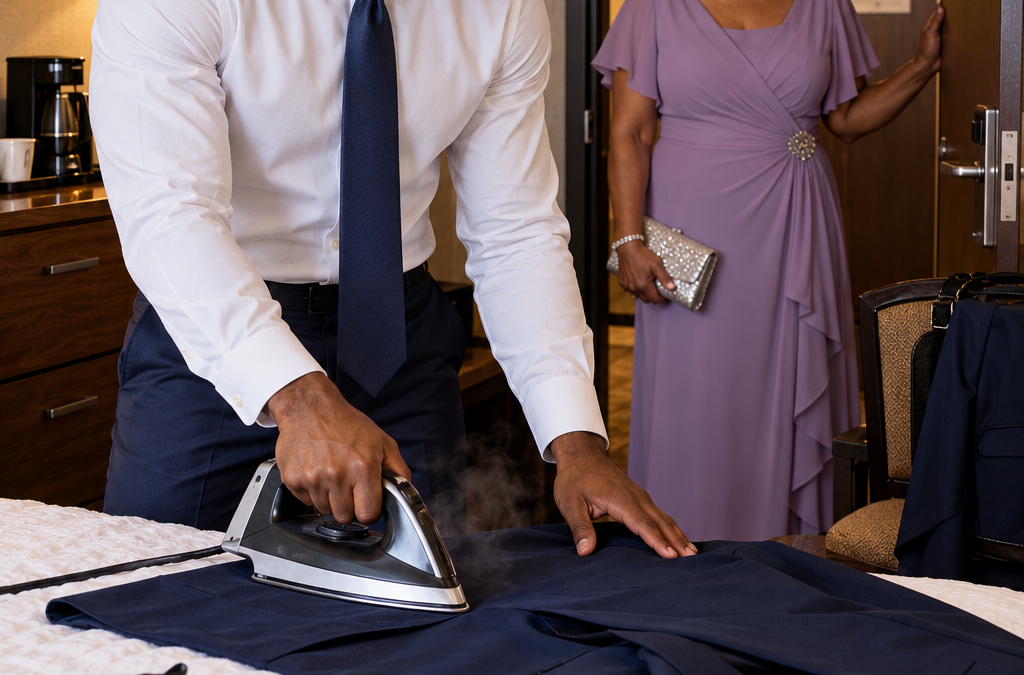
Six hours before the wedding reception fell apart, I stood in a Hampton Inn room just off Interstate 85 outside Charlotte, North Carolina, ironing a navy suit on the corner of the bed.
Steam hissed against the fabric.
The room wasn’t luxurious.
Thin walls. Beige carpet. A television bolted above a dresser. A coffee maker that had somehow managed to make water taste burnt.
It suited me fine.
My phone buzzed on the nightstand.
Then again.
Then a third time.
The first notification was from one of my board members.
The second was a Bloomberg alert about an acquisition in our sector.
The third was a text from my executive assistant.
Monday closing confirmed. All parties signed.
I looked at the message for maybe two seconds before locking the phone.
Monday could wait.
That Saturday was personal.
I hadn’t seen Clarissa Davis in eight years.
We had dated for almost two years at Howard University.
Back then, she was brilliant, ambitious, beautiful, and absolutely certain she was meant for more than the life she had grown up around.
I liked that about her.
At least at first.
I was from Southeast Washington, D.C., and had arrived at Howard with more ambition than money. I worked whenever I could. I tutored. I took internships nobody else wanted because they didn’t pay enough. I lived in apartments where the heat worked when it felt like it and where three people sometimes split grocery money until Friday.
Clarissa hated uncertainty.
She wanted a clear future.
A clean one.
A wealthy one.
I couldn’t give her that at twenty-one.
What I could give her was a promise that I was building toward something.
One night junior year, she decided that wasn’t enough.
She didn’t break up with me face-to-face.
She sent a text.
You’re a nice guy, Byron, but nice doesn’t pay rent. I need someone who can give me the life I deserve.
I read it three times.
Then I put my phone down and went back to studying.
That was the last direct thing Clarissa said to me for eight years.
Until her wedding.
I finished ironing my jacket and hung it over the chair.
My suit was simple.
Dark navy.
No obvious label.
My tie was dark blue without a pattern.
No diamond watch.
No loud cuff links.
Nothing designed to make strangers understand my net worth before they knew my name.
That was deliberate.
I had never enjoyed wearing success like a costume.
Maybe because I’d spent too many years around people who confused expensive things with important people.
My phone buzzed again.
I ignored it.
I wasn’t going to Clarissa’s wedding to make a statement.
I hadn’t even been invited by Clarissa.
Her groom, Tyler Anderson, invited me.
Tyler was a senior vice president at Ridgeline Freight, a midsize logistics company headquartered in Charlotte.
He was competent, thoughtful, and unusually straightforward for an executive in the middle of a major acquisition.
For fourteen months, my firm, Pinnacle Capital Group, had been negotiating to acquire Ridgeline in a deal worth roughly three hundred million dollars.
The transaction was scheduled to close Monday morning.
As founder and CEO of Pinnacle, I would become Tyler’s boss.
Clarissa apparently knew none of that.
Tyler had invited me because he respected me.
I accepted because I respected him.
That was all.
At least, that was what I told myself.
A knock came at the hotel door.
My mother was ready.
Denise Bennett was sixty-three, a retired schoolteacher from D.C., and still the only person alive who could straighten my tie without asking permission.
She wore a lavender dress she had spent three weeks choosing.
Silver earrings caught the light when she stepped into my room.
She looked at me.
Then at the suit.
Then back at me.
“Handsome.”
“Thanks, Mom.”
“Too serious.”
“It’s a wedding.”
“Exactly. You’re supposed to look like you’re happy somebody made a bad financial decision.”
I laughed.
She smiled, but it didn’t last.
“You sure about this?”
I knew what she meant.
“Yes.”
“That girl broke your heart.”
“That was a long time ago.”
“Pain doesn’t own a calendar.”
I reached for my jacket.
“I’m not going there for Clarissa.”
“I know.”
Mom stepped closer.
“That’s not what I’m asking.”
I waited.
She fixed my tie.
“You don’t run from your past, baby.”
Her eyes met mine.
“You walk right through it. Head high.”
I smiled.
“Yes, ma’am.”
Belmont Country Club sat west of Charlotte on forty manicured acres bordered by magnolia trees and low stone walls.
White-gloved valets opened car doors beneath a wide entrance canopy.
Women stepped out in designer dresses.
Men adjusted watches that could have paid tuition for a semester.
I pulled up in a rented sedan.
Not my usual SUV.
Not a driver.
Not because I was hiding anything.
I simply hadn’t come to perform.
Mom looked out the window.
“Fancy place.”
“You deserve fancy.”
“I deserved not to raise a son who talks like that.”
I grinned.
A valet opened her door.
Humidity hit us the moment we stepped outside.
Fresh-cut grass mixed with perfume and cigar smoke drifting from a patio near the entrance.
I glanced around.
Maybe two hundred guests.
I counted fewer than half a dozen Black faces.
That wasn’t automatically a problem.
But you notice certain things when you’ve spent your whole life entering rooms where you’re statistically unexpected.
You notice who looks twice.
You notice who smiles naturally.
You notice who studies your shoes before offering a hand.
Mom slipped her arm through mine.
We went inside.
Clarissa’s father stood near the entrance greeting guests.
Greg Davis.
I’d met him twice during college.
He knew exactly who I was.
The first time we’d met, he had asked me what my father did before he asked what I studied.
When he learned my mother was a schoolteacher and my father had been mostly absent, his enthusiasm disappeared.
Eight years hadn’t changed his face much.
A little heavier.
A little grayer.
Still loud.
Still shaking hands like he might run for office.
When Mom and I approached, his smile stiffened.
He looked at me from shoes to collar.
Then at my mother.
“And you are?”
I nearly admired the performance.
“Byron Bennett.”
I held out my hand.
“Friend of the groom.”
He didn’t take it.
“Right.”
A pause.
“Tables are inside.”
That was our welcome.
Mom stayed silent until Greg turned away.
Then she leaned toward me.
“He remembers you.”
“I know.”
“Mm-hmm.”
That sound meant she had already formed an opinion and was saving it for later.
A hostess guided us through the ballroom.
Tables one through eleven filled the center of the space beneath enormous chandeliers.
Table twelve sat near the rear wall.
Beside the kitchen.
Not near the kitchen.
Beside it.
A swinging service door was less than three feet from my chair.
Every time it opened, fluorescent kitchen light spilled across the carpet.
Our flower arrangement looked like somebody had assembled it from whatever remained after decorating the other tables.
Mom stared at the wilted roses.
Then at the room.
“They put us by the kitchen.”
“I noticed.”
“You want me to make a scene now or after dessert?”
“After dessert.”
She almost smiled.
The ceremony began at four.
White chairs covered the south lawn.
A string quartet played under a canopy near the magnolias.
Mom and I sat in the second-to-last row, partially blocked by a stone column.
No one explicitly directed us there.
Sometimes nobody needs to.
Clarissa appeared at the top of the aisle wearing a white Vera Wang gown with a cathedral-length veil.
For one brief second, looking at her reminded me of the girl I’d known at twenty.
Then she saw me.
Her eyes held mine for barely a moment.
Her mouth curved.
Not a smile.
Something closer to satisfaction.
Then she continued down the aisle on her father’s arm.
Tyler waited at the altar.
He looked genuinely nervous.
Genuinely happy.
That mattered to me.
He deserved a good day.
The officiant spoke.
Rings were exchanged.
Then came the vows.
Tyler went first.
His words were simple.
Partnership.
Trust.
Growing old together.
He talked about building a life with someone, not displaying one.
I believed him.
Clarissa took the microphone next.
She began sweetly.
She thanked her parents.
Her friends.
Tyler.
Then she said, “I spent my twenties learning what love isn’t.”
Her eyes moved briefly toward my row.
My shoulders tightened.
“I kissed frogs,” she continued. “I wasted years on men who couldn’t even buy me dinner, let alone build me a future.”
A few people laughed.
Mom’s hand settled gently on my knee.
I stared toward the altar.
Clarissa smiled at Tyler.
“But God is faithful. He removes the wrong people so the right one can find you.”
More laughter.
More applause.
It was subtle enough that anyone unfamiliar with our history could dismiss it.
I couldn’t.
Neither could Mom.
The ceremony ended.
Clarissa and Tyler walked back up the aisle as guests tossed flower petals.
When she reached our row, she glanced at me.
Smirked.
Kept walking.
I clapped.
Mom did not.
Cocktail hour was held on a garden terrace.
White lanterns hung from oak branches.
A jazz trio played near the bar.
Waiters moved between guests with champagne and shrimp cocktail.
Mom went to the restroom.
I stood near the edge of the terrace with a glass of water.
That’s where Clarissa found me.
She didn’t come alone.
Four bridesmaids surrounded her in sage-green dresses, champagne glasses in hand.
One of them already had her phone out.
Clarissa stopped directly in front of me.
“Oh, Byron.”
She tilted her head.
“I honestly didn’t think you’d show up.”
“I was invited.”
“That’s so brave.”
Her bridesmaids exchanged smiles.
I ignored them.
“It was a beautiful ceremony.”
She turned toward the women.
“Ladies, this is Byron.”
A pause.
“My college ex.”
One bridesmaid looked me up and down.
Tall blonde.
Champagne flute held like a microphone.
“He’s cute.”
Then she looked at my shoes.
“But he looks like he took the bus.”
The women laughed.
Clarissa covered her mouth with one hand as though she couldn’t help herself.
I watched her.
There was a time when that laughter would have torn me apart.
At twenty-one, I wanted her approval because I mistook being loved for being validated.
At thirty-two, I knew the difference.
“So,” she said, “what are you doing now?”
“I work in finance.”
Clarissa’s eyebrows rose.
“Finance?”
“Yes.”
She exchanged a glance with her maid of honor.
“Like at a bank branch?”
The blonde laughed.
“Teller?”
More laughter.
Rachel Moore, Clarissa’s maid of honor, pointed her phone directly at me.
Recording.
I looked at the lens.
Then back at Clarissa.
“Something like that.”
She patted my shoulder.
Not affectionately.
Like you touch someone you’re trying to make feel small.
“Good for you, Byron.”
Her voice dripped sympathy.
“Honestly. Good for you.”
Then she walked away.
Her bridesmaids followed.
One turned back and mouthed yikes to another.
I took a drink of water.
My hand stayed steady.
Only my thumb betrayed me.
I pressed it against the glass until my knuckle went white.
Ten minutes later, Greg found me at the bar.
His tie was already loose.
Bourbon in hand.
Face flushed.
“Byron.”
“Mr. Davis.”
“Got to be honest with you.”
I turned slightly toward him.
“I was surprised to see your name on the guest list.”
“Tyler invited me.”
Greg snorted.
“Tyler’s a good kid.”
He took a drink.
“Probably felt sorry for you.”
I said nothing.
He moved closer.
“You do look a little lost.”
“I know where I am.”
Greg chuckled.
“Listen, son. Free advice.”
He gestured toward the terrace.
“Enjoy the open bar. Get some cake. But don’t stay too long.”
His eyes moved over me again.
“This isn’t exactly your crowd.”
There are moments when a man isn’t speaking in code anymore.
That was one.
“I appreciate the advice.”
He laughed.
“‘Mr. Davis.’ You’ve still got manners.”
Then he reached out and pinched my jacket lapel between his fingers.
“That a JCPenney number?”
He laughed loudly.
Several guests looked over.
One woman immediately looked away when I met her eyes.
Greg slapped my shoulder.
Hard.
“Take care of yourself, son.”
Then he walked off.
I set my water glass down.
A circle of condensation formed beneath it.
For a moment, I stared at that little wet ring and thought about leaving.
Not because I was embarrassed.
Because I had nothing to prove.
Clarissa and Greg had shown me exactly what they thought of me.
Staying wouldn’t change them.
Then I thought about Tyler.
He had invited me sincerely.
And Mom had taken three weeks picking her dress.
So I straightened my tie and went back inside.
Dinner made the situation worse.
When we returned to table twelve, most of our tablemates had moved.
Their place cards remained.
Their chairs were empty.
A married couple originally seated with us had squeezed themselves into table six.
A red-haired woman had moved to table nine.
An older man sat at the far end of our table alone.
Mom came back.
She counted the chairs.
Then the people.
“Where did everybody go?”
“Doesn’t matter.”
“It does matter.”
“Not tonight.”
She sat.
Her hands trembled slightly as she placed her clutch beside the plate.
“They moved because of us.”
I didn’t answer.
The kitchen door swung open behind me.
It struck my chair.
“Sorry, man,” a waiter muttered.
Two minutes later, it happened again.
Cold kitchen air hit my neck.
Industrial soap.
Dinner rolls.
Metal carts.
The third time the door bumped me, Mom leaned toward me.
“We can leave.”
“No.”
“Baby.”
“I’m okay.”
“I’m not asking if you’re okay.”
She looked across the room at Clarissa.
“I’m asking why we owe these people another minute.”
I covered her hand with mine.
“We’re staying.”
“For what?”
I looked toward Tyler.
“For him.”
Dinner arrived.
Most of the room received filet mignon.
Roasted asparagus.
Truffle mashed potatoes.
Warm bread.
Wine.
Table twelve received chicken.
Dry chicken breast.
Steamed broccoli.
Instant mashed potatoes.
No bread.
No wine service.
Mom looked at my plate.
Then hers.
She didn’t say anything.
I ate.
She didn’t.
Soon the older man left too.
Seven empty chairs.
Just my mother and me.
Two people sitting alone at a table designed for eight, beside a kitchen door that kept hitting my chair.
Then the master of ceremonies stepped onto the stage.
He tapped the microphone.
“Ladies and gentlemen, the bride would like to say a few words.”
Applause filled the ballroom.
Clarissa stood.
She smoothed her dress and lifted a champagne flute.
The chandeliers caught the diamonds in her earrings.
She looked perfectly at home standing above everyone.
“I want to thank every single person in this room for being here tonight.”
More applause.
She thanked her parents.
Her bridesmaids.
Then she raised her glass toward Greg.
“Daddy, you showed me what a real man looks like.”
Greg stood and bowed dramatically.
Guests cheered.
I felt Mom shift beside me.
Clarissa continued.
“And now I want to get a little personal.”
Something in her voice changed.
She looked across the ballroom.
Toward me.
“I spent most of my twenties making mistakes.”
A few laughs.
“Big mistakes.”
Her smile widened.
“I dated men with loud mouths and empty pockets.”
More laughter.
I felt every head turning without needing to look.
“Men who promised me the whole world over ten-cent ramen in a cockroach apartment.”
This time, the laughter had direction.
Clarissa knew it.
She enjoyed it.
“I remember sitting in this tiny apartment in college. Roaches in the sink. Electricity getting shut off every other month. Water barely warm.”
None of that was entirely accurate.
Truth wasn’t the point anymore.
Performance was.
“And this guy would tell me he was going to be somebody.”
She shook her head slowly.
“Rich someday.”
People laughed.
“Change the world.”
More laughter.
“And I believed him.”
She paused.
“Can you imagine?”
A voice near table four shouted something I couldn’t hear.
Guests laughed harder.
Mom stared straight ahead.
Clarissa looked directly at me.
“And tonight I looked across this room and saw that exact same guy.”
My jaw tightened.
“Same cheap suit.”
A laugh exploded from the front tables.
“Same empty promises.”
More.
“Same sad little dreams.”
The room became very still.
Clarissa waited.
She understood timing.
Then she said, “And you know what I realized?”
She lifted her glass.
“Some people never change.”
A pause.
“Some people are still eating ramen.”
Two hundred people seemed to erupt at once.
Maybe it wasn’t everyone.
Memory turns crowds into a single organism.
But it sounded like everyone.
Laughter rolled across the ballroom.
Hands slapped tables.
Someone whistled.
Phones turned toward me.
I placed my fork down.
Slowly.
My hands rested flat on the table.
I looked at Mom.
Her lower lip trembled.
Then a tear rolled down her cheek.
That changed everything.
Insults aimed at me were old territory.
I’d been underestimated in classrooms, offices, elevators, hotel lobbies, conference rooms.
I’d built Pinnacle while investors asked whether I was really the founder.
I’d sat across from men who assumed I was junior staff until somebody introduced me.
I’d learned not to donate my anger to people who hadn’t earned it.
But my mother had done nothing.
She had spent thirty years teaching children.
She had worked extra tutoring sessions to help me stay in school.
She had skipped things she wanted so I could have textbooks, train fare, interview clothes.
And now she was crying because a room full of adults had decided humiliating her son was entertainment.
Clarissa wasn’t finished.
She raised the champagne flute higher.
“To Byron.”
Cheers.
“My sweet, broke, hopeless, pathetic ex-boyfriend.”
Someone shouted.
Someone clapped.
“Thank you for teaching me exactly what I didn’t want in a man.”
Mom’s second tear fell.
“Thank you for being rock bottom so I could reach for the stars.”
Clarissa tilted the glass toward me.
“To settling down and never settling again.”
The ballroom exploded.
Applause.
Whistles.
Laughter.
Rachel stood near the head table with her phone aimed at my face.
I looked at Mom.
Her hands were shaking.
She reached for a napkin and knocked over her water.
The glass tipped.
Ice spilled.
Water spread across our tablecloth.
Nobody came to help.
No waiter.
No guest.
Nobody.
Then Greg stood.
He had drunk enough that his face was almost purple.
His tie hung loose around his neck.
He cupped his hands around his mouth.
“Hey, Byron!”
The laughter softened.
“Don’t worry, son!”
He pointed toward the door.
“Greyhound station’s two miles east. You can still catch the nine o’clock bus back to whatever hole you crawled out of.”
More laughter.
A man near table five raised his bourbon.
“Somebody call him an Uber!”
A woman’s voice answered.
“Economy option!”
Another voice.
“Pool ride!”
Each joke gave permission for another.
Cruelty becomes remarkably efficient once a crowd learns there is no penalty for participating.
I looked toward Tyler.
He wasn’t laughing.
His jaw was tight.
He leaned toward Clarissa and said something.
She waved him away.
That’s what I noticed.
She waved away her husband at her own wedding because the room was giving her something she valued more in that moment.
Power.
I scanned the guests.
Some were openly laughing.
Some recorded.
Others looked uncomfortable.
A woman near table eight had her hand over her mouth.
But she remained seated.
Nobody stood.
Nobody said enough.
Then Mom closed her eyes.
Her lips moved.
She was praying.
That was the moment my patience ended.
Not dramatically.
I didn’t stand.
I didn’t yell.
Anger would’ve made me exactly the spectacle they wanted.
Instead, I felt something inside me become cold and precise.
I reached into my jacket beneath the table.
Opened my phone.
Typed four words.
Proceed as discussed. Monday.
Then sent it.
I put the phone away.
Took a clean napkin.
Gently wiped my mother’s cheek.
“It’s almost over, Mom.”
She opened her eyes.
“What do you mean?”
“Trust me.”
I straightened my tie.
And waited.
Clarissa was still smiling when Tyler pushed his chair backward.
The legs scraped sharply across the floor.
That sound cut through the laughter better than shouting would have.
He stood.
Reached for the microphone.
The MC looked confused.
“Tyler, did you—”
“I’ve got it.”
Clarissa touched his arm.
“Babe?”
He didn’t look at her.
The room quieted.
Slowly.
Table by table.
Tyler brought the microphone to his mouth.
“I had an announcement planned for later.”
Clarissa’s smile faded.
“I was going to wait until after the cake.”
He glanced at her.
“But after what just happened, I think now is better.”
I watched him.
He turned toward my table.
“Most of you know I work for Ridgeline Freight.”
People nodded.
“I’ve been there eleven years.”
He swallowed.
“For the past fourteen months, Ridgeline has been in confidential acquisition negotiations.”
The room became attentive in a different way.
“A three-hundred-million-dollar transaction that protects approximately two thousand jobs across six states.”
Clarissa looked at Tyler.
Confused.
“The deal is scheduled to close Monday morning.”
Greg stopped smiling.
Tyler extended one arm.
Toward me.
“I’d like to introduce the man who made that deal possible.”
Nobody moved.
“The founder and CEO of Pinnacle Capital Group.”
Silence.
“Byron Bennett.”
You could hear the air-conditioning system.
Tyler kept his hand pointed toward table twelve.
“My boss, effective Monday morning.”
The room inhaled.
That’s the only way I can describe it.
Two hundred people seemed to breathe in at the same time.
Then whispers broke loose.
“Pinnacle?”
“That’s him?”
“Are you serious?”
“Pinnacle Capital?”
A chair scraped.
James Caldwell, Ridgeline’s sitting CEO, stood from table three.
He buttoned his jacket.
“Tyler is correct.”
Every phone swung toward him.
“Pinnacle Capital is acquiring Ridgeline.”
He looked across the room at me.
“Mr. Bennett will become the most consequential shareholder and executive authority connected to this company when the transaction closes.”
Clarissa’s champagne glass slipped from her fingers.
It rolled across the linen.
Dropped.
Shattered on the marble.
The sound was tiny.
It felt enormous.
Her face emptied of color.
“What?”
Tyler didn’t answer.
Clarissa looked at her bridesmaids.
Nobody met her eyes.
She looked toward Greg.
His bourbon glass was tilted in his hand.
Liquor spilled across his tablecloth.
Then Clarissa’s knees gave out.
She collapsed beside the head table.
Her veil twisted beneath her.
One heel caught a chair.
People screamed.
Bridesmaids rushed forward.
Somebody called for a doctor.
Somebody brought water.
Phones remained raised.
Of course they did.
Rachel’s never stopped recording.
I stood.
Not quickly.
I buttoned my jacket.
The jacket Greg had called a JCPenney suit had been cut specifically for me by a Manhattan tailor.
Tom Ford.
Hand-finished.
I hadn’t told anybody because it didn’t matter.
That was the entire point.
Greg had looked at me and seen cheap because he needed me to be cheap.
Clarissa had looked at me and seen failure because she needed my life to justify her decision eight years earlier.
The suit had never been the issue.
The man inside it was.
Tyler looked at me from the stage.
I nodded once.
“Tyler.”
My voice carried because nobody else was talking.
“I came tonight as your friend.”
He swallowed.
“That hasn’t changed.”
His eyes were wet.
“Thank you.”
I turned toward the guests.
I could have humiliated them.
For a moment, every person who had laughed was waiting to see whether I would.
I didn’t.
“I don’t need anyone here to feel sorry for me.”
No one moved.
“I never did.”
I reached for Mom’s hand.
She stood.
Straightened her lavender dress.
Lifted her chin.
I put her arm through mine.
We walked toward the exit.
Nobody laughed now.
Every step of Mom’s heels echoed against the marble.
At the door, I stopped.
Looked back.
Clarissa was on the floor surrounded by bridesmaids.
Broken glass nearby.
Greg frozen.
Guests silent.
Two hundred people suddenly fascinated by their plates.
“Enjoy the rest of your evening.”
Then Mom and I left.
Outside, I heard someone running after us.
“Byron!”
Greg.
I kept walking.
A black Escalade pulled toward the valet stand.
My driver had been waiting nearby.
Greg reached us as I opened the rear door for Mom.
“Byron, wait.”
Mom got inside.
Greg was breathing hard.
Sweat had soaked through his collar.
“Listen.”
I closed Mom’s door.
“It was a joke.”
I looked at him.
“You know how weddings are. People drink. They get carried away.”
I said nothing.
“Nobody meant anything.”
Still nothing.
He moved closer.
“Let’s talk man to man.”
That phrase almost made me laugh.
An hour earlier, he’d been perfectly comfortable talking to me like I was beneath him.
Now he wanted equality.
“I’m sure we can work something out.”
I looked at him.
Not angrily.
There was nothing left to discuss.
I got into the Escalade.
The door closed.
As we pulled away, Greg remained in the parking lot watching the taillights.
Mom sat beside me in silence.
After several minutes, she touched my sleeve.
“Are you okay?”
“Are you?”
She stared out the window.
“I’ve been in classrooms full of cruel children.”
She paused.
“I’ve never seen that many grown ones.”
I exhaled.
“I’m sorry I kept us there.”
Mom turned toward me.
“No.”
“Mom—”
“You didn’t do anything.”
“I should’ve left earlier.”
“You stayed because you were trying to honor your friend.”
She squeezed my hand.
“Don’t take responsibility for somebody else’s lack of character.”
Then she leaned back.
“Still.”
I looked at her.
“That girl is a fool.”
I laughed for the first time all night.
Back at the country club, Clarissa regained consciousness on the ballroom floor.
I learned the details later because Rachel’s recording captured almost everything.
The first thing Clarissa asked Tyler was, “Tell me that wasn’t real.”
“It was real.”
“Why didn’t you tell me?”
Tyler stared at her.
“I did.”
She looked confused.
“I told you three times not to give that toast.”
“That’s not what I mean.”
“I told you last week when you rehearsed it. I told you this morning. I told you ten minutes before you stood up.”
His voice rose.
“You wouldn’t listen.”
Clarissa started crying.
Tyler continued.
“That man holds my career in his hands.”
She wiped her face.
“Three hundred million dollars. Two thousand jobs. My future.”
Then he stopped.
“Our future.”
Their first argument as a married couple happened in front of the bridal party, caterers, guests, and Rachel’s phone.
Greg’s panic began in the parking lot.
Clarissa’s began when she realized the camera was still recording.
Rachel posted the footage at 11:47 that night.
The full clip.
Clarissa’s toast.
The laughter.
Greg’s Greyhound joke.
Tyler’s announcement.
Clarissa fainting.
Mom and me leaving.
By midnight, the video had hundreds of thousands of views.
By two in the morning, millions.
By sunrise, I couldn’t open my phone without seeing my own face.
I shut it off.
The internet could argue without me.
Monday morning, the Ridgeline acquisition was supposed to close.
It didn’t.
At 7:30, my general counsel called.
“We can proceed.”
“I know.”
“But?”
I looked through my office window at Washington waking below me.
Pinnacle’s board had already reviewed the footage.
Not merely the personal insults.
The racial undertones.
The comments about belonging.
The room’s behavior.
The wedding had nothing legally to do with Ridgeline.
Tyler wasn’t responsible for Clarissa’s actions.
But he was a senior executive at the company we were acquiring, and Ridgeline leadership had been represented heavily among those guests.
Several had laughed.
Some had participated.
That raised questions.
“Put the transaction under review.”
My counsel went quiet.
“For how long?”
“Ninety days.”
“Byron, the market will react.”
“I know.”
“Ridgeline may lose value.”
“I know.”
“People could interpret this as retaliation.”
“Then make the reason clear.”
I turned from the window.
“We are not acquiring a company until we understand its culture.”
That afternoon, Pinnacle issued a three-sentence internal memo to Ridgeline.
Transaction under review.
Not canceled.
Not approved.
Frozen.
Tyler was called into James Caldwell’s office at 8:15.
He wasn’t fired.
Instead, Ridgeline eventually reassigned him from senior vice president to a regional logistics position outside Charlotte.
Same salary.
Less authority.
His leadership biography disappeared from the corporate website.
It wasn’t clean punishment.
It was worse in some ways.
He had to walk into an office every day knowing people saw him as the groom whose wedding nearly destroyed a three-hundred-million-dollar acquisition.
I didn’t order his reassignment.
That decision belonged to Caldwell and Ridgeline’s board.
But I didn’t interfere.
Tyler had tried to stop Clarissa.
He had ultimately defended me.
He had also waited too long.
Consequences are rarely simple.
The rest came in waves.
Ridgeline’s stock fell eleven percent after Pinnacle formally announced its ninety-day review.
By the end of the week, eighteen percent.
Investors demanded explanations.
Board members called emergency meetings.
James Caldwell held a press conference.
He used phrases like “deeply inappropriate.”
“Not reflective of our values.”
“Zero tolerance.”
When a reporter asked whether Tyler would be terminated, Caldwell paused.
Four seconds.
Then said personnel matters were internal.
People interpreted the silence themselves.
Clarissa’s professional collapse was faster.
She worked in public relations.
A boutique Charlotte firm called Sterling & Associates.
The Tuesday after the wedding, they terminated her contract.
Their public statement was one sentence.
They wished her well.
Corporate language for goodbye.
Clarissa posted an apology video.
I watched only once.
Cream-colored couch.
Soft lighting.
No makeup.
Hair pulled back.
She said she had been drinking.
She said it was a joke.
She said the joke went too far.
She said she wasn’t racist.
She said she was sorry.
She said she hoped I could forgive her.
What she didn’t say mattered more.
She didn’t say why humiliating a broke ex-boyfriend would’ve been acceptable if I had actually been broke.
She didn’t say why my worth changed only after Tyler revealed my position.
She apologized for the consequences.
Whether she understood the act itself, I couldn’t tell.
The internet wasn’t generous.
People replayed her apology beside the wedding video.
One comment spread everywhere.
You didn’t cry when you were laughing at him.
I didn’t celebrate that.
Public destruction can become another form of the same cruelty people claim to condemn.
But I also didn’t defend her.
Some things have to be survived by the person who created them.
Greg suffered too.
Within two weeks, several commercial real estate clients severed ties.
Two deals worth roughly eight hundred thousand dollars collapsed.
An Uptown Charlotte project he’d spent two years assembling lost its lead investor.
The Charlotte Observer ran a story tying his name directly to the wedding.
Former associates anonymously called him a liability.
He stopped going to the country club.
Stopped appearing at networking events.
Stopped answering unfamiliar calls.
A man who had built much of his identity around being recognized in rooms began avoiding rooms altogether.
As for me, attention came whether I wanted it or not.
Business publications requested interviews.
Profiles appeared.
Black founder.
Private equity leader.
CEO who walked out with dignity.
Photographs from Rachel’s video spread everywhere.
The image that seemed to travel farthest showed Mom holding my arm as we left.
Lavender dress.
Silver earrings.
Head high.
Someone created shirts from her silhouette.
The phrase beneath it read:
HOLD YOUR HEAD HIGH, BABY.
The seller donated the proceeds to a literacy charity in Southeast D.C.
Mom was furious they hadn’t asked permission.
Then she found out the charity amount.
“Well,” she said, “they can sell a few more.”
I gave one interview.
One.
The journalist asked whether Clarissa had motivated my success.
“No.”
That answer seemed to surprise her.
“I didn’t build Pinnacle to prove something to someone who left me.”
“Then why did you build it?”
“Because I believed in what I could create.”
She asked about my mother.
I smiled.
“My mother taught me to stay when things are hard.”
I paused.
“And leave when they’re disrespectful.”
“What did you feel that night?”
I thought about the question.
“Disappointment.”
“Not anger?”
“No.”
“In Clarissa?”
I shook my head.
“In the room.”
That quote spread farther than I expected.
People printed it on mugs.
I found that ridiculous.
Mom ordered three.
Ninety days after the wedding, Pinnacle’s acquisition review ended.
We completed the Ridgeline transaction.
But not under the original framework.
We added governance requirements.
Independent reporting channels.
Management accountability standards.
A portion of annual profits went toward scholarships, mentorship initiatives, and companywide anti-bias training.
I personally funded part of the effort.
Not because a training seminar magically fixes prejudice.
It doesn’t.
But organizations communicate priorities by what they measure, fund, reward, and punish.
Culture isn’t a slogan on a website.
It’s what happens when somebody makes a joke and the room decides whether to laugh.
Tyler remained with Ridgeline under the new structure.
Smaller role.
Less authority.
He accepted without argument.
Six months later, a letter arrived at my office.
Handwritten.
Two pages.
From Tyler.
No excuses.
No blame.
He apologized for bringing me into a room where I had been treated that way.
He apologized for not stopping Clarissa sooner.
He acknowledged that whispering to her from the head table wasn’t enough once the humiliation became public.
He wrote that he’d learned silence could become participation long before someone intended it to.
I read the letter twice.
Then I framed it.
Not as a trophy.
As evidence.
People can change when they stop defending the person they were.
Clarissa and Tyler’s marriage was already visibly strained six weeks after the wedding.
I never asked Tyler for details.
It wasn’t my business.
Eventually Clarissa left Charlotte.
She moved to a smaller city in Virginia and tried rebuilding a marketing career under her maiden name.
She deleted her social accounts.
Changed her hair.
Kept a lower profile.
The internet made that difficult.
Search results don’t forget because a person wants them to.
Whether she changed internally, I don’t know.
Maybe.
I hope so.
Hatred requires too much energy to maintain, and I wasn’t interested in carrying her forever.
Greg retired earlier than he’d planned.
He sold two properties at a loss.
The last I heard, he spent much of his time at a lake house a couple of hours north of Charlotte.
I sometimes wondered whether he thought about that night.
Not about my company.
Not about the money.
About the moment he pinched my lapel and laughed.
Would he have regretted it if Pinnacle hadn’t existed?
That question mattered more to me than any apology he could have offered.
Pinnacle crossed three billion dollars in managed assets the following year.
Black Enterprise put me on its cover.
Howard invited me to speak at commencement.
I never mentioned Clarissa’s wedding in the speech.
There were better things to tell young people.
I talked about uncertainty.
About building when nobody sees the result yet.
About the dangerous human temptation to confuse current circumstances with permanent identity.
Then I created the Denise Bennett Scholarship Fund.
Full tuition for first-generation students from Southeast Washington.
The application didn’t ask only for perfect grades or standardized test scores.
I added one question:
What obstacle did you overcome that nobody saw?
Fourteen students received scholarships in the first class.
Mom insisted on handing every acceptance letter to the recipients herself.
She wore the same lavender dress.
I noticed immediately.
“You did that on purpose.”
She adjusted one silver earring.
“Did what?”
“The dress.”
She smiled.
“I like this dress.”
“You have seventeen dresses.”
“I like this one.”
At the ceremony, one student started crying while Mom handed her the letter.
Mom took both of the girl’s hands.
“Head high, baby.”
The girl nodded.
“No matter what room you walk into.”
I looked away for a second because my eyes had started burning.
Later that evening, Mom and I sat alone after everyone left.
She folded programs into a neat stack.
“I’ve been thinking about the wedding.”
I groaned.
“Why?”
“Because everybody tells the story wrong.”
“How?”
“They say you shocked that room because you were rich.”
I leaned back.
“What do you think happened?”
Mom gave me the look she used to give students who asked questions they already knew the answer to.
“You would’ve been the same man if those people had been right about the money.”
I said nothing.
“If you’d been broke, she still would’ve been wrong.”
Mom stacked another program.
“If your suit really came from JCPenney, Greg still would’ve been wrong.”
She looked at me.
“If you’d taken a Greyhound home, you still would’ve deserved respect.”
There it was.
The part that had bothered me since that night.
The reveal made a satisfying story.
Poor-looking Black ex-boyfriend gets mocked.
Surprise.
He’s wealthy.
Powerful.
Important.
The room regrets laughing.
But that wasn’t the truth I wanted attached to my life.
Because it suggested the room’s mistake was failing to recognize a rich man.
It wasn’t.
Their mistake was believing a man’s bank account determined whether cruelty toward him was acceptable.
If I’d been an unemployed former classmate in a fifty-dollar suit, Clarissa’s toast would’ve been just as ugly.
My mother’s tears would’ve mattered just as much.
Greg’s humiliation would’ve been just as cruel.
The only difference was that wealth forced them to recognize a dignity they should have recognized without it.
I thought about Mom’s words for a long time.
Then I smiled.
“That’s why the scholarship has your name.”
She rolled her eyes.
“Don’t start.”
“I mean it.”
“I know.”
She reached across the table.
“Head high.”
I took her hand.
“Always.”
Years earlier, Clarissa had told me she needed somebody who could give her the life she deserved.
For a long time, I had carried those words like a challenge.
Then success changed their meaning.
I eventually understood that the life a person deserves isn’t determined by what somebody else can provide.
It’s built from choices.
How you treat people when they can do nothing for you.
How you behave when the room rewards cruelty.
Whether you protect someone being humiliated or simply enjoy not being the target.
That wedding taught me more about wealth than any transaction I ever closed.
Greg had money.
Clarissa had status.
Their guests wore expensive clothes.
Belmont Country Club had marble floors, crystal chandeliers, white-gloved valets, and bottles of wine worth more than some families spend on groceries in a month.
Yet the richest thing in that room walked beside me through the exit wearing lavender.
My mother.
A retired teacher from Southeast D.C.
The woman who had taught me as a child that people reveal themselves most clearly when they believe there will be no consequences.
That night, almost everyone in the ballroom believed there would be none.
They thought I was powerless.
That’s why the laughter came so easily.
Years later, I don’t remember Clarissa’s exact expression when Tyler said my name.
I don’t remember every joke.
I don’t remember which guests later tried to contact me through LinkedIn or which people suddenly claimed they hadn’t been laughing.
What I remember is my mother’s hand in mine.
I remember the kitchen door hitting my chair.
I remember seven empty seats.
I remember wiping one tear from her cheek.
And I remember the sound of her heels as we walked across that ballroom.
Steady.
Measured.
Unashamed.
No applause.
No shouting.
No revenge speech.
Just a woman and her son leaving a room that had proven it didn’t deserve them.
That is how I remember the night Clarissa Davis married Tyler Anderson.
Not as the night everyone learned I was rich.
As the night I finally understood that some rooms become smaller the moment you realize you no longer need their approval.
And when I walked through those country club doors with my mother holding my arm, I didn’t feel like the broke college kid Clarissa had abandoned eight years earlier.
I didn’t feel like the CEO of Pinnacle Capital either.
I was simply Byron Bennett.
The same man before the microphone.
The same man after it.
And for the first time that entire night, that was enough.








