𝗙𝗨𝗟𝗟 𝗦𝗧𝗢𝗥𝗬 My Ex Invited Me to Sing at His Wedding Because He Thought 300 Guests Would Finally Prove I Was Nothing
𝗙𝗨𝗟𝗟 𝗦𝗧𝗢𝗥𝗬
They only knew what Garrett had told them.
Poor.
Black.
Harlem.
Ex-girlfriend.
Failure.
Garrett stepped backward.
“Go ahead, Blair.”
I closed my eyes.
And I remembered my grandmother telling me the first rule she ever taught me about singing.
Your throat can lie, baby.
Your belly tells the truth.
So I breathed.
And I told the truth.
I had lived with Eleanor Thompson in the same apartment on 137th Street for all twenty-four years of my life.
Two bedrooms.
One unreliable radiator.
Thin walls.
A kitchen window that rattled whenever the subway rolled somewhere beneath the neighborhood.
The apartment had never been beautiful, but it had always been home.
My grandmother raised me.
She never talked much about the sacrifices involved.
She simply made them.
When I was six, she would wake before sunrise on Sundays and iron her best dress on the kitchen table.
Then she would pin a silk flower behind her ear.
Always a flower.
Sometimes white.
Sometimes purple.
Sometimes red.
I once asked why.
She looked at me through the mirror and said, “Because the Lord gave us color, baby. No sense dressing like He didn’t.”
Then she would take my hand and walk with me four blocks to Calvary Baptist Church.
As Eleanor got older, our roles changed.
By the time I was twenty, I held her arm whenever the sidewalk cracked.
By twenty-four, I slowed my steps so she wouldn’t have to ask.
But we still made that walk whenever her lungs allowed it.
Calvary was where I learned to sing.
I was six when Eleanor first put me on a wooden step stool behind the choir rail because I was too short for the congregation to see me.
I remember gripping the wood with my toes inside my little white shoes.
I was terrified.
Eleanor stood beside the piano and whispered, “Breathe low.”
I whispered back, “I can’t.”
“You can.”
“Everybody’s looking.”
“They’re supposed to. You’re singing.”
I shook my head.
Then she walked over, knelt despite the pain already beginning in her knees, and pressed two fingers lightly against my stomach.
“From here.”
I stared at her.
“Not your throat. Your throat gets scared. Your belly doesn’t.”
I sang.
By the time I was sixteen, Pastor Wallace sometimes stopped rehearsals after I opened my mouth.
The first time he did it, I thought I had made a mistake.
He stood in the aisle staring at me.
“What?”
I asked.
He shook his head.
“Nothing.”
“Was I flat?”
“No.”
“Too loud?”
“No.”
“Then why did you stop?”
Pastor Wallace smiled.
“Because sometimes when God sends you something worth hearing, Blair, you stop pretending you have something more important to do.”
Everyone laughed.
I did too.
But I never forgot it.
Music was the one place in my life where poverty could not follow me.
Rent could be late.
Electricity could be shut off.
My shoes could wear through.
I could spend four hours cleaning office floors before sunrise and another eight waiting tables afterward.
But when I sang, none of that controlled the sound coming out of me.
Unfortunately, singing did not pay Eleanor’s prescription bill.
Talent is romantic when someone else is paying the rent.
For us, it was a luxury.
I never had formal vocal training.
I never recorded a professional demo.
I never attended expensive programs.
There was always another bill.
Always another medication.
Always another reason two hundred dollars belonged somewhere more urgent than inside a music school.
So I sang at church.
At home.
While cleaning.
While washing dishes.
Sometimes Eleanor would sit at the kitchen table while I sang into a wooden spoon.
“You’re going to be heard one day,” she told me.
I laughed.
“By who? Mrs. Alvarez upstairs?”
“Whoever needs to hear you.”
That was enough for her.
For a long time, I convinced myself it was enough for me too.
Then I met Garrett Holloway.
It happened in a thrift store on Frederick Douglass Boulevard.
I had found a nearly untouched vinyl copy of Miles Davis’s Kind of Blue in the dollar bin.
I thought the price sticker had to be wrong.
I was turning it over when a voice behind me said, “You’ve got to be kidding.”
I looked around.
A tall white man in an expensive-looking coat was staring at the record.
“You want something?” I asked.
“I’ve been looking for that pressing for three years.”
I hugged the record to my chest.
“You should’ve gotten here earlier.”
He laughed.
That was how it started.
We stood beside the record bins for almost forty minutes arguing about jazz.
Miles Davis.
John Coltrane.
Thelonious Monk.
Then Stevie Wonder.
Garrett believed Innervisions was Stevie Wonder’s best album.
I told him anybody who said that in front of me had clearly never listened properly to Songs in the Key of Life.
He looked offended.
“You’re wrong.”
“I’m definitely not.”
“Objectively wrong.”
“Then objectively leave me alone.”
He laughed again.
Before I left, he asked for my number.
I gave it to him.
He didn’t tell me his last name mattered.
He didn’t tell me his family had old money.
He didn’t tell me his father’s investment firm controlled tens of millions of dollars.
He said he worked in finance.
Technically, that was true.
Garrett came to Harlem for our first date.
We ate at a diner.
He wore jeans.
He complained about the coffee.
I told him to stop acting spoiled.
He smiled.
For twelve months, I thought I knew him.
We walked through Central Park.
We spent entire evenings listening to records.
We argued about movies.
He met Eleanor briefly twice, always charming, always respectful.
He never came to Calvary Baptist.
I never sang for him.
That part of me belonged to Eleanor.
To the church.
To something older than the relationship.
Garrett never asked enough questions to discover it.
Maybe that should have warned me.
I thought he loved me.
Maybe, for a while, he did.
Then Patricia Holloway invited me to dinner.
Garrett’s mother.
He sounded excited when he told me.
“She wants to meet you.”
“Is that good?”
“It’s very good.”
I bought a dress I could not afford.
Eleanor helped me fix my hair.
Before I left, she studied me.
“You nervous?”
“A little.”
“You’re beautiful.”
“That’s grandmother bias.”
“That’s grandmother fact.”
I arrived fifteen minutes early at the Holloway estate in Greenwich carrying flowers.
The house looked like something from another century.
Stone walls.
Long driveway.
Huge windows.
Grounds maintained so perfectly they barely looked real.
Garrett had called it “a small family dinner.”
There were forty-two people in the dining room.
Every one of them was white.
Conversation lowered when I entered.
Not stopped.
Lowered.
There’s a difference.
Stopped conversation means surprise.
Lowered conversation means appraisal.
Patricia Holloway stood at the far end of the room.
She looked me up and down.
“So.”
Her smile never reached her eyes.
“This is the girl.”
The girl.
Not Blair.
I handed her the flowers.
“These are for you.”
She accepted them without looking.
Dinner began.
Eleven minutes later, I understood exactly why I had been invited.
Patricia did not ask questions.
She conducted an examination.
“Where did you say you live?”
“Harlem.”
“What street?”
I told her.
She knew enough about Manhattan to understand what the address meant.
“And what exactly do you do?”
“I work.”
“At?”
“An office-cleaning company mornings. Restaurant work some evenings.”
Her expression barely changed.
“And your parents?”
“My grandmother raised me.”
“Why?”
I looked at Garrett.
He was three seats away.
His eyes remained on his plate.
“My parents weren’t in a position to.”
Patricia nodded as though confirming something.
“And your grandmother’s health?”
I froze.
Garrett had told her.
“She has some medical issues.”
“I understand there’s significant debt.”
Silence gathered around the table.
I looked at Garrett again.
He did nothing.
Patricia lifted her wineglass.
“You understand, Blair, families like ours have to be careful.”
“Careful about what?”
“Intentions.”
I understood.
“You think I want his money.”
“I think money changes how people perceive affection.”
I pushed my chair back.
Garrett finally looked up.
“Blair.”
I stared at him.
“You going to say something?”
His lips parted.
Nothing came.
That silence ended us long before the relationship officially ended.
I left.
The flowers I had brought remained untouched on a table near the entrance.
Garrett called the next morning.
I did not answer.
He texted.
Then again.
At first, he apologized for his mother.
Then his friends began talking.
I learned about that later.
They laughed at him.
The rich boy dating a broke Black girl from Harlem.
They treated me like an embarrassing phase.
Garrett could have defended me.
Instead, he absorbed their contempt.
Within weeks, his messages became shorter.
Colder.
He stopped coming uptown.
Then one night, I received six words.
You were never worth the trouble.
After that, he blocked my number.
I cried for weeks.
Eleanor never criticized him.
She simply sat beside me.
Eventually, heartbreak became another expense I could no longer afford.
I went back to work.
A year passed.
Then Garrett called me while I was mopping the floor of a dental office on Lexington Avenue.
His name appeared on my phone.
I stared at it through four rings.
Then I answered.
“What?”
“Blair.”
His voice had changed.
Polished.
Distant.
“How are you?”
“What do you want?”
He laughed softly.
“I’m getting married.”
I stopped mopping.
“Congratulations.”
“Victoria Ashford.”
The name meant nothing to me.
He waited, apparently expecting a reaction.
I gave him none.
“Good for you.”
“I want you there.”
I thought I had misheard him.
“What?”
“At the wedding.”
“Why?”
“I want you to sing.”
I almost laughed.
“You have never heard me sing.”
“I’ve heard you hum.”
“That’s not the same thing.”
“It doesn’t matter. We just need somebody for one song.”
We.
The word irritated me.
“No.”
“I’ll pay you five hundred.”
“No.”
“How’s Eleanor?”
My grip tightened around the mop.
“What about her?”
“Still needs surgery?”
I became cold.
Garrett continued.
“I heard the insurance situation is bad.”
“How do you know that?”
“People talk.”
“Who?”
“It doesn’t matter.”
“It matters to me.”
He ignored that.
“Five hundred upfront. Five hundred after you perform.”
I said nothing.
“One thousand dollars for one song.”
I leaned against the wall.
A thousand dollars.
It would not solve Eleanor’s medical problems.
But it would cover prescriptions.
Transportation.
Part of a specialist bill.
Maybe give us room to breathe.
“You can’t afford to say no, Blair.”
That sentence told me everything.
This was not about music.
He wanted me there because he wanted to see what had happened to me.
He wanted Victoria to see.
His mother.
His friends.
All the people who had convinced him I was beneath him.
He wanted proof.
Look.
She is still cleaning offices.
Look.
I escaped.
Look how far above her I climbed.
My humiliation was part of the wedding entertainment.
“When?”
“Saturday. Three o’clock. St. Augustine’s in Greenwich.”
He paused.
“I was going to send a car.”
Another pause.
“Actually, you can make your own way there.”
Then he hung up.
I stood alone beneath fluorescent lights holding a mop.
For a long time, I felt nothing.
Then something hardened inside me.
Not anger.
Not exactly.
Resolve.
I didn’t tell Eleanor until Thursday.
She found me sitting on the fire escape staring at my phone.
“He called,” I said.
“Who?”
“Garrett.”
Her face changed.
“What did that boy want?”
“He’s getting married.”
Eleanor’s eyebrows rose.
“To sense, I hope.”
Despite everything, I laughed.
“He wants me to sing.”
Her humor vanished.
“At his wedding?”
“Yes.”
“No.”
“I already agreed.”
“Blair.”
“He’s paying me.”
“I don’t care.”
“I do.”
She looked at me.
I looked toward the prescription bottles visible on the kitchen counter.
Eleanor followed my eyes.
“Oh, no.”
“Grandma.”
“Absolutely not.”
“It’s one song.”
“You are not letting that boy buy your dignity because my knees hurt.”
“I’m not.”
“You are.”
“No.”
She stared at me.
Then I said, “I’m going because of you.”
Her eyes flashed.
“That’s exactly what I mean.”
“And because of me.”
She became quiet.
I continued.
“I let that family make me feel ashamed once.”
Eleanor listened.
“I walked out of their house feeling like my life was something dirty.”
I swallowed.
“I’m not doing that again.”
That night, after she went to bed, I opened an old notebook.
Its spine was cracked.
Water stain across the cover.
Inside were lyrics and melodies I had written over the years.
Garrett had asked for a simple pop ballad.
Something harmless.
Background music.
I turned to the last page.
A hymn Eleanor taught me when I was seven.
We sang it every Easter.
That was the song I chose.
Saturday morning, Eleanor pinned one of her silk flowers behind my ear.
Then she removed it.
“No.”
I laughed.
“What?”
“That one’s mine.”
She pressed a small black clip into my hand.
“Use this.”
I pinned my hair back.
I wore the only black dress I owned.
Secondhand.
Originally bought for a neighbor’s funeral.
Flat shoes.
No jewelry.
At 7:14, I boarded Metro-North from Harlem–125th Street.
I watched the city change outside the window.
Brick buildings gave way to larger houses.
Graffiti disappeared.
Lawns widened.
Fences became gates.
By the time I reached Greenwich, even the silence seemed expensive.
St. Augustine’s sat on acres of manicured grounds.
Bentleys.
Range Rovers.
Black cars lined the lot.
A string quartet played near the entrance.
I looked down at my shoes.
For one moment, I nearly turned around.
Then I pictured Eleanor gripping the kitchen table to stand.
I kept walking.
The church was enormous.
Stone columns.
Vaulted ceiling.
White roses everywhere.
Three hundred guests.
Nobody greeted me.
A woman looked at my dress.
Whispered to her husband.
He smiled.
I recognized that smile.
It was the same one Patricia Holloway had worn.
Then Garrett appeared.
Custom navy suit.
Perfect hair.
Perfect confidence.
“Blair.”
He looked me over.
“You made it.”
“I said I would.”
His eyes dropped to my shoes.
“You look comfortable.”
Before I answered, Victoria approached.
Beautiful.
Elegant.
Cold.
Garrett gestured toward me.
“This is Blair.”
Victoria tilted her head.
“I thought she’d be taller.”
They laughed.
I didn’t.
At three o’clock, the ceremony began.
I sat near the side.
Watched vows exchanged between two people whose marriage had nothing to do with me.
When the minister pronounced them husband and wife, I prepared to leave.
Then Garrett took the microphone.
“I have a special surprise.”
My stomach dropped.
“My ex-girlfriend Blair is here.”
Heads turned toward me.
“She’s agreed to sing.”
Then he smiled.
“I always told her it was probably the only thing she was good at.”
The congregation laughed.
I stared at him.
He had not planned merely to have me sing.
He had planned this.
The introduction.
The laughter.
The spectacle.
My walk toward the altar felt endless.
I thought about leaving.
I almost did.
Then Garrett said quietly as I passed him, “Smile. You’re getting paid.”
That decided it.
I reached the altar.
Turned.
Three hundred faces.
Garrett leaned against the front pew.
Victoria beside him.
I raised the microphone.
My hand shook.
Then I closed my eyes.
Breathe low.
Not your throat.
Your throat gets scared.
Your belly doesn’t.
The first note came out softly.
Almost a whisper.
St. Augustine’s had been built more than a century earlier, back when architects understood that churches were supposed to carry sound.
My voice traveled.
I felt it leave me and return from the stone.
I opened my eyes.
Garrett was no longer smiling.
I continued.
The second phrase came stronger.
Deeper.
I didn’t sing at Garrett.
I didn’t sing at Victoria.
I sang to Eleanor.
I sang to the little girl standing on a wooden stool at Calvary.
I sang to every morning I had cleaned office floors before anyone arrived.
Every medical bill.
Every insult at Patricia Holloway’s table.
Every night I wondered whether my life had become small because I was small or because nobody had ever given me enough room.
My voice rose.
The room changed.
People stopped shifting in their seats.
Stopped whispering.
A woman in the second row pressed her hand over her mouth.
A man farther back closed his eyes.
Garrett stared at me.
And I realized something.
He had genuinely never known.
In twelve months together, he had never once discovered this part of me.
Not because I had deliberately hidden it.
Because he had never been curious enough to ask.
That realization hurt more than his laughter.
I sang harder.
In the fifth pew sat a gray-haired man wearing thick glasses and a charcoal suit.
I noticed him because he was holding his phone up.
Recording me.
I had no idea who he was.
His name was Neil Chambers.
I would learn later that he had founded Chambers Records.
That he had worked in music for thirty years.
That he had signed Grammy winners.
That his opinion could open doors I had never even stood close enough to knock on.
At that moment, he was simply a stranger recording.
Garrett moved.
I saw him crossing toward the sound technician.
He bent down.
Whispered something.
The technician looked uncertain.
Garrett leaned closer.
Then my microphone died.
My voice disappeared from the speakers in the middle of a note.
Silence slammed into the church.
I opened my eyes.
Tapped the microphone.
Nothing.
Murmuring began.
Victoria smiled.
Garrett returned to his seat.
“That’s enough entertainment,” Victoria said.
People nearby laughed nervously.
I stared at the microphone.
I understood.
Garrett had wanted me to sing only as long as I remained under his control.
The second the room stopped laughing at me, he took the sound away.
I could have left.
Maybe the old Blair would have.
The woman who walked out of Patricia Holloway’s dinner trying not to cry.
The woman who read six cruel words from Garrett and wondered what she had done wrong.
But I remembered Eleanor.
Your belly tells the truth.
So I placed the microphone on the altar.
And kept singing.
No amplification.
No electronics.
No permission.
Just me.
The first unamplified note rose toward the stone ceiling.
Something happened.
The room became part of my voice.
The arches carried it.
The marble returned it.
The wooden pews seemed to vibrate beneath the people sitting there.
This was how I had always sung.
In Calvary when the heater broke.
In Eleanor’s kitchen.
In empty offices before sunrise.
Without technology.
Without anyone important listening.
My eyes closed.
I sang.
I forgot Garrett.
Forgot the wedding.
Forgot the money.
For those minutes, there was only the song.
When I opened my eyes again, Neil Chambers was standing.
His hand was pressed against his chest.
Then a woman stood.
Then her husband.
People began rising row by row.
Three hundred people.
Standing.
At Garrett’s wedding.
For me.
I saw Garrett’s hand tighten around the pew.
He hissed something at a guest.
Nobody listened.
Victoria was staring at him now.
Not me.
Him.
I sang the final verse.
The last note climbed higher than I had planned.
Then I let it go.
It hung beneath the vaulted ceiling.
Faded.
Silence.
Three seconds.
Maybe four.
Then applause exploded.
Not polite applause.
Thunder.
People were shouting.
Some were crying.
I stood there shaking.
Neil Chambers walked down the aisle.
He stopped in front of me and held out his hand.
“Neil Chambers.”
I shook it.
“Blair.”
“I know.”
He reached into his jacket.
“Thirty years.”
I didn’t understand.
“In music,” he said. “Thirty years.”
He handed me a cream-colored business card.
“I have heard thousands of singers.”
He looked directly at me.
“I have never heard what I just heard.”
My throat tightened.
“Call me Monday.”
I stared at the card.
“Monday?”
“Not Tuesday.”
Behind him, dozens of phones were raised.
I looked at Garrett.
His tie was crooked.
His face pale.
His wedding had been built to show everyone how far above me he had climbed.
Instead, he had handed me a stage.
The first video was online before my train reached Harlem.
I did not know.
My phone was in my bag.
I spent most of the ride staring out the window.
When I reached our apartment, Eleanor was awake.
She looked at me.
“Well?”
I handed her Garrett’s check.
“One thousand.”
She frowned.
“That’s not what I asked.”
I took Neil’s card from my bag.
Then I sat beside her.
“I sang.”
Her expression softened.
“Your song?”
I nodded.
“Good.”
“That’s all you’re going to say?”
“What else?”
“Three hundred people stood up.”
Eleanor smiled.
“I’ve been telling you for eighteen years.”
I laughed.
Then I cried.
By midnight, millions of people had seen the video.
I woke Sunday morning to hundreds of messages.
Old classmates.
Strangers.
Coworkers.
Journalists.
People asking if I was “the wedding singer.”
Someone created a hashtag demanding people “let Blair sing.”
Clips showed Garrett mocking me.
The microphone cutting.
Me setting it down.
Then the sound of my voice continuing without it.
Nine million views in twenty-four hours.
I couldn’t understand the number.
Nine million people had heard something that, until that weekend, barely a few hundred people at Calvary Baptist had ever known existed.
Monday morning, I went to work.
Of course I did.
Virality did not cancel my shift.
I was mopping the dental office when my phone rang.
Morning show.
I declined.
Podcast.
Declined.
Newspaper.
I didn’t answer.
Then Eleanor called.
“Baby.”
“What?”
“CNN called me.”
I sat down on the floor and laughed until my stomach hurt.
At two o’clock, Neil Chambers called.
“I said Monday.”
“I remember.”
“We want to sign you.”
I stopped breathing.
“What?”
“Full album.”
He listed words I barely understood.
Distribution.
Tour support.
Marketing.
Recording budget.
I sat against the wall holding the phone.
“Mr. Chambers.”
“Neil.”
“Why?”
Silence.
Then he said, “Because I know what I heard.”
I told him Garrett’s family had influence.
Neil laughed softly.
“Patricia Holloway already called me.”
My stomach dropped.
“What?”
“She suggested signing you would create complications.”
I closed my eyes.
“She mentioned investments. Friends. Business relationships.”
“What did you say?”
“I told her I don’t let bullies choose my artists.”
I smiled despite myself.
Then Neil’s voice became serious.
“I sign voices, Blair. Not pedigrees.”
The contract arrived Wednesday.
Eleanor and I read every page at the kitchen table.
She wore dollar-store reading glasses and held a yellow highlighter.
“You understand this?”
“No.”
“Then don’t sign it.”
“I have a lawyer looking too.”
“Good.”
She pointed at one clause.
“What’s recoupable expenses?”
“I’m not sure.”
“Then write that down.”
We treated the contract like one of the hymns she taught me as a child.
Line by line.
No rushing.
I signed Thursday.
Chambers Records announced me Friday.
My life changed.
Not overnight.
That is what people misunderstand.
The internet changed overnight.
My life changed through work.
Studio sessions.
Vocal coaching.
Songwriting.
Interviews.
Rehearsals.
Learning how contracts functioned.
Learning how to stand beneath lights without becoming someone else.
Neil never tried to turn me into the woman Garrett’s guests might have respected.
That mattered.
My first album was called First Note.
Neil named it.
“One note,” he told me during a late-night recording session. “That’s all it took.”
Eleven months after the wedding, the album debuted at number three.
Then climbed to number one.
The tour sold out in minutes.
Forty-two cities.
Twelve countries.
Madison Square Garden.
Television.
Award shows.
Every stage frightened me at first.
Then I would remember the wooden stool at Calvary.
If I could sing there, I could sing anywhere.
The first thing I did with real money was schedule Eleanor’s surgery.
Both knees.
When she woke after the second operation, I sat beside the hospital bed.
She opened one eye.
“How much?”
“Grandma.”
“How much?”
“It’s handled.”
“Blair.”
“It’s paid.”
She stared at me.
“All of it?”
“All of it.”
Her mouth trembled.
Then she turned her face toward the window.
I pretended not to see her cry.
Garrett’s life changed too.
I heard pieces through other people because I never contacted him.
Victoria began watching the wedding video after the attention spread.
Not me.
Garrett.
She saw his expression when I sang.
The way his face changed.
Then she found our old messages on his iPad.
A year of conversations.
The early ones.
The affectionate ones.
And the final sentence.
You were never worth the trouble.
Apparently Victoria understood something about Garrett that I had needed years to accept.
He had not stopped caring.
He had become ashamed of caring.
That was worse.
He had let his mother and his friends convince him that loving me lowered his status.
Instead of defending the woman he claimed to love, he punished me for making him vulnerable to their judgment.
Eight weeks after their wedding, Victoria filed for divorce.
Irreconcilable differences.
The marriage ended four months later.
I felt no satisfaction when I heard.
Just recognition.
Garrett had never learned to stand beside someone when standing beside them cost him social approval.
Eventually, Victoria understood she could be next.
The wedding video followed him everywhere.
Dates recognized him.
Friends distanced themselves.
People who had laughed inside St. Augustine’s suddenly acted as though they had always found his behavior disgusting.
That was predictable.
Courage becomes very fashionable once there is no risk involved.
Even Holloway Capital Partners suffered.
The company had depended heavily on reputation.
Clients began leaving.
One pension fund moved tens of millions.
Then another client.
Then another.
Nobody officially said it was because of the video.
They used business language.
Strategic reallocation.
Reputational review.
Changes in alignment.
But everybody understood.
Patricia Holloway blamed Garrett.
That part almost made me sad.
Almost.
She had created the environment that taught him weakness was preferable to embarrassment.
Then when his weakness became expensive, she blamed him for learning the lesson too well.
Years earlier, at her dining table, Garrett had sat three seats away while she humiliated me.
Now, during an emergency company meeting, he reportedly sat three seats away from her while she humiliated him.
He kept his eyes on the table.
He said nothing.
Exactly as he had done for me.
That was Garrett’s real tragedy.
Not losing me.
Not losing Victoria.
Not losing clients.
It was that silence had become his entire character.
When something difficult happened, he disappeared inside himself.
When someone he loved needed courage, he offered silence.
When his mother demanded obedience, silence.
When his friends mocked me, silence.
When consequences finally arrived, silence.
I stopped thinking about him.
My own work became bigger.
And I knew I wanted something beyond records.
One Sunday morning in March, I returned to Calvary Baptist.
Eleanor sat in the front pew.
New knees.
Silk flower behind her ear.
Pastor Wallace had kept the old wooden step stool.
“I told you to throw this thing away,” I said.
He grinned.
“You told me no such thing.”
“I’m twenty-five now.”
“And?”
“I don’t need a stool.”
“No.”
He placed it beside the choir rail.
“But somebody does.”
That morning, cameras lined the back wall.
Not because I was performing a concert.
Because we were announcing the First Note Foundation.
I put one million dollars from my first major earnings into it.
The purpose was simple.
Give children like me what money had kept out of reach.
Voice lessons.
Studio access.
Mentorship.
Music programs.
Scholarships.
No child should have to decide between developing a gift and helping keep the electricity on.
The first scholarship went to Olivia Wells.
Nine years old.
Bed-Stuy.
Her family could not afford choir fees, so she sang during lunch at school.
She stood beside me holding the certificate with both hands.
A reporter asked how she felt.
Olivia looked into the camera.
“I feel like somebody finally listened.”
I turned away.
Because suddenly I was six again.
Standing on that stool.
Eleanor kneeling beside me.
Breathe low.
The foundation expanded.
Fourteen cities within months.
Teachers volunteered.
Studios donated time.
Artists contributed money.
What began as a viral argument became something tangible.
Something that existed after people stopped sharing the wedding clip.
That mattered to me more than the charts.
I still sang at Calvary whenever I was home.
The congregation got larger.
Visitors came hoping to see me.
I tried not to let that change what the church meant.
On Sundays, I was not Blair Thompson, recording artist.
I was Eleanor’s granddaughter.
I pinned a silk flower behind my ear.
We walked four blocks.
Even after her knees healed, I still held her arm over cracked pavement.
One morning she laughed.
“Baby, these knees cost more than a car. I can walk.”
“I know.”
“Then why are you holding me?”
“Habit.”
She looked at me.
“No.”
I smiled.
“No?”
“Love.”
She was right.
Some things begin as necessity.
Then they become sacred.
Years earlier, Garrett’s mother had reduced my life to an address, income, and medical debt.
Now my closet held clothes I had never imagined owning.
My bank account contained numbers that once would have looked like printing errors.
But the important changes were smaller.
Eleanor no longer hid bills.
I no longer calculated whether we could afford a prescription before buying groceries.
I could walk into the studio and make music without wondering whether I should instead be working another cleaning shift.
And I could fund children who might otherwise spend their lives believing talent belonged only to people who could afford access to it.
The biggest performance of my early career came at the Kennedy Center.
Two thousand two hundred seats.
Every one filled.
Eleanor flew for the first time in her life.
I offered first class.
She refused.
“Grandma, why?”
“Baby, I need a seat and a window. What exactly are they doing up front? Flying faster?”
I laughed.
She sat in the front row that night.
Silk flower.
Straight back.
New knees.
Before I walked onstage, I stood alone behind the curtain.
Someone adjusted my dress.
Black.
Not secondhand anymore.
But I had chosen black deliberately.
A reminder.
Not of Garrett.
Of myself.
The woman who walked into St. Augustine’s wearing a used black dress had believed she needed one thousand dollars badly enough to let someone try to humiliate her.
I did not hate that woman.
I loved her.
She was tired.
She was scared.
She was trying to care for the person who had raised her.
And when they cut her microphone, she kept singing.
I wanted to remember her forever.
The lights dimmed.
My name was announced.
I walked onto the stage.
Applause rolled through the hall.
Then the lights lowered until only one spotlight remained.
I found Eleanor in the front row.
Our eyes met.
She gave me the same small nod she had given me when I was six years old.
Breathe.
I leaned toward the microphone.
“This song is for anyone who was ever made to believe they were too poor, too ordinary, too different, or too inconvenient to matter.”
The room became quiet.
I smiled.
Then I sang.
The first note left me.
And for one instant, every stage disappeared.
I was back in Eleanor’s kitchen.
Tea cooling on the table.
A little girl listening to her grandmother explain something she would spend years learning to understand.
Your throat lies.
Your belly tells the truth.
So I told the truth.
I sang about being unseen.
About loving people who were too weak to love you publicly.
About the cruelty of rooms where money is confused with worth.
About the dignity of work nobody applauds.
About women like Eleanor who build children with bare hands and never see their names in newspapers.
I sang for every person who had ever been invited into a room only to be reminded they were not considered equal to the people inside it.
The Kennedy Center disappeared into the song.
When the final note ended, I looked at Eleanor.
She was crying.
Not quietly.
Hands pressed together beneath her chin.
I smiled at her.
Somewhere during those years, I heard Garrett sometimes watched my performances.
I never verified it.
I did not need to.
Maybe he watched that night.
Maybe he sat alone inside the large Greenwich house he had kept after his divorce.
Maybe the screen illuminated a room built for a life that never happened.
Maybe he heard my voice and remembered the thrift store.
The record in my hand.
The diner.
Central Park.
All the opportunities he had to know me before deciding other people’s opinions mattered more.
If he did, I hope he finally understood something.
He had not discovered my value at his wedding.
Neither had Neil Chambers.
Neither had the three hundred guests who stood.
They had discovered something that already existed.
That distinction mattered.
Garrett did not lose an extraordinary woman because I became extraordinary after him.
He lost me because I had been myself all along and he chose not to see it.
For years, I thought the most important moment of my life was when Neil Chambers handed me his card.
It wasn’t.
It wasn’t the record contract either.
Or the number-one album.
Or Madison Square Garden.
Or the Kennedy Center.
The important moment happened seconds before any of that became possible.
I was standing inside St. Augustine’s holding a dead microphone.
Garrett had cut the sound.
Victoria was smiling.
Three hundred people were waiting to see what I would do.
That was the moment.
I could have lowered my head.
Walked away.
Taken the thousand dollars.
Gone home.
Nobody would have blamed me.
Instead, I put the microphone down.
And opened my mouth.
That decision belonged entirely to me.
No label gave it to me.
No rich man financed it.
No viral audience created it.
No executive discovered it.
Garrett could control the microphone.
He could control the invitation.
He could control the wedding.
He could control the money he promised me.
But he could not control what Eleanor had planted inside me years before he knew my name.
My voice did not begin in Greenwich.
It began in Harlem.
In a small kitchen.
In a struggling church.
Inside a little girl standing on a wooden step stool while her grandmother reminded her where truth comes from.
Years later, the First Note Foundation placed another child on that same stool.
Her name was Olivia.
She had grown more confident by then.
Voice lessons had changed her technique, but not the sweetness underneath it.
Before she sang during a foundation anniversary service, she looked at me nervously.
“What if I mess up?”
I crouched beside her.
For a second, I heard Eleanor’s voice coming out of my own mouth.
“Breathe from your belly.”
Olivia frowned.
“Why?”
“Because your throat gets scared.”
She smiled.
“And my belly doesn’t?”
I looked toward Eleanor.
She was sitting in her usual pew, watching us.
“No,” I said. “Your belly tells the truth.”
Olivia sang.
And the church went quiet.
I stood beside Eleanor afterward.
She slipped her hand into mine.
“You finally understand,” she said.
“What?”
“What I was teaching you.”
I looked at her.
“You thought it was singing.”
“It wasn’t?”
She shook her head.
“No, baby.”
Then she looked toward Olivia.
“It was never just singing.”
I understood.
A voice is not only sound.
It is the part of you that remains yours when somebody else controls the room.
Money can close doors.
Families can decide you do not belong.
People can laugh before you speak.
A man can invite you somewhere because he expects you to leave smaller than you arrived.
He can even switch off the microphone.
But there are things other people only control if you surrender them.
That Saturday in Greenwich, Garrett thought he was putting me onstage to demonstrate my place.
He believed the difference between us was that he had money and I didn’t.
That he belonged inside that church and I was lucky to be admitted.
That his name gave him the authority to define mine.
For a while, I believed people like him could do that.
I don’t anymore.
When I think about St. Augustine’s now, I do not remember the laughter first.
I remember the silence after my first note.
I remember Garrett’s expression changing.
I remember the microphone dying.
Then I remember discovering that I never needed it.
That is the memory I kept.
Not revenge.
Not his divorce.
Not his company losing clients.
Not the society people who eventually stopped taking his calls.
Those were consequences.
They belonged to Garrett.
My life belonged to me.
The girl from Harlem.
The cleaning woman.
The waitress.
The granddaughter with medical bills folded beneath a telephone directory.
The woman in secondhand shoes walking through a church full of people who had already decided what she was worth.
She was never useless.
She was never beneath them.
She was never the embarrassment.
She simply had not been heard yet.
And once I finally stopped waiting for permission to be heard, no one was ever able to silence me again.
𝗧𝗛𝗘 𝗘𝗡𝗗
My Ex Invited Me to Sing at His Wedding Because He Thought 300 Guests Would Finally Prove I Was Nothing
Garrett Holloway put a microphone in my hand because he wanted three hundred people to watch me break.
What he never understood was that my voice had survived poverty, grief, humiliation, and twenty-four years of being overlooked long before he ever decided to make me the entertainment at his wedding.
“Sing, Blair.”
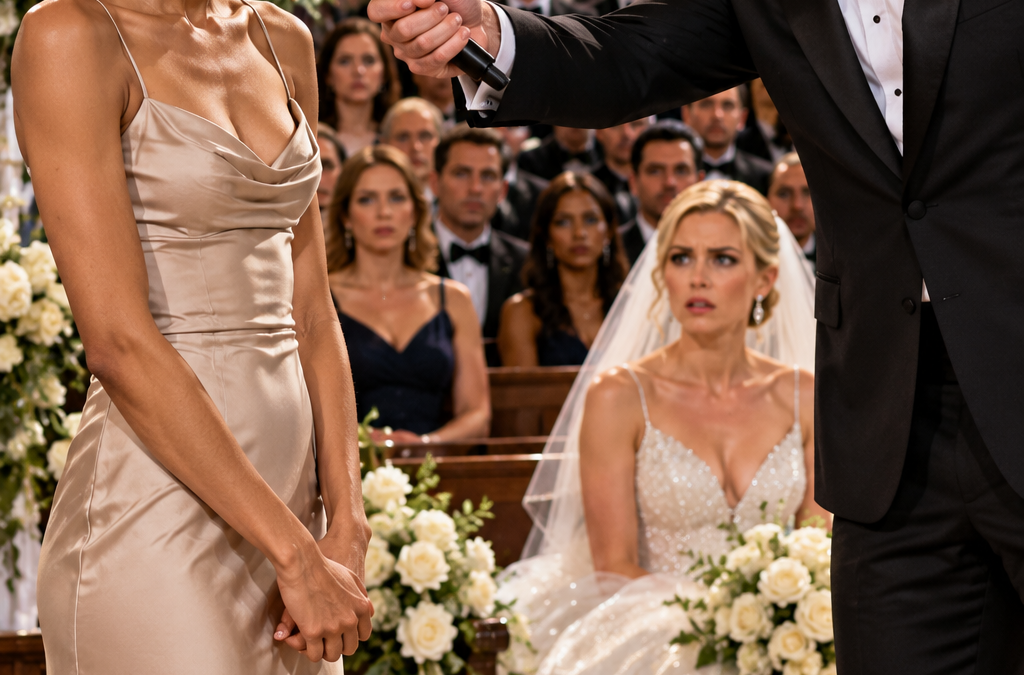
Garrett held the microphone out toward me like he was handing a servant an order.
I stood several feet from the altar of St. Augustine’s Church in Greenwich, Connecticut, surrounded by white roses, stained glass, polished oak, and three hundred people wearing enough money to fund my grandmother’s medical care for the rest of her life.
Garrett smiled.
Not the smile I remembered from when we were together.
This one was colder.
Satisfied.
“Even you can be useful tonight.”
A few people near the front laughed.
My hand remained at my side.
“I’m not singing.”
His expression hardened.
Behind him, his new wife, Victoria Ashford Holloway, watched from the front pew in a wedding gown that probably cost more than everything my grandmother and I owned combined.
Garrett leaned closer.
“How’s Eleanor?”
The sound of my grandmother’s name made my stomach tighten.
He knew exactly where to press.
“Still waiting on surgery?”
I stared at him.
He lowered his voice.
“I know why you came. You need the money.”
I could feel people watching us.
Garrett lifted the microphone again.
“Sing, and I’ll double your fee.”
I said nothing.
“Or don’t.”
He smiled.
“And go home knowing your pride mattered more than your grandmother’s health.”
My chest hurt.
I thought about Eleanor trying to stand from the kitchen chair.
The quick breath she took whenever pain caught her knees.
The pill bottles lined beside the sink.
The medical bills hidden beneath an old telephone directory because she thought I didn’t know they were there.
Garrett had once told me he loved me.
Now he was using a sick seventy-six-year-old woman to make me obey him in front of his wedding guests.
“All right,” I said.
His smile widened.
“I’ll sing.”
Garrett grabbed my wrist and guided me toward the altar with theatrical enthusiasm.
Then he turned toward the congregation.
“Ladies and gentlemen.”
His voice carried easily through the church.
“I’d like you to meet Blair Thompson.”
He paused.
“My ex-girlfriend.”
A few people laughed.
He enjoyed that.
“She’s had a difficult time since we broke up.”
More laughter.
I looked at the floor.
Garrett continued.
“But I figured even a useless girl from Harlem should get one chance to entertain people who know what real success looks like.”
That time the laughter was louder.
Then he said something about me being his “ugly little mistake.”
I stopped hearing the exact words after that.
My fingers tightened around the microphone.
I looked out at three hundred faces.
Some amused.
Some uncomfortable.
Most indifferent.
Nobody knew me.
Nobody knew where I came from.
Nobody knew about Eleanor.
Nobody knew that I had spent years singing in a church four blocks from our apartment while working jobs that left my hands smelling like bleach and cheap coffee.
They only knew what Garrett had told them.
Poor.
Black.
Harlem.
Ex-girlfriend.
Failure.
Garrett stepped backward.
“Go ahead, Blair.”
I closed my eyes.
And I remembered my grandmother telling me the first rule she ever taught me about singing.
Your throat can lie, baby.
Your belly tells the truth.
So I breathed.
And I told the truth.
I had lived with Eleanor Thompson in the same apartment on 137th Street for all twenty-four years of my life.
Two bedrooms.
One unreliable radiator.
Thin walls.
A kitchen window that rattled whenever the subway rolled somewhere beneath the neighborhood.
The apartment had never been beautiful, but it had always been home.
My grandmother raised me.
She never talked much about the sacrifices involved.
She simply made them.
When I was six, she would wake before sunrise on Sundays and iron her best dress on the kitchen table.
Then she would pin a silk flower behind her ear.
Always a flower.
Sometimes white.
Sometimes purple.
Sometimes red.
I once asked why.
She looked at me through the mirror and said, “Because the Lord gave us color, baby. No sense dressing like He didn’t.”
Then she would take my hand and walk with me four blocks to Calvary Baptist Church.
As Eleanor got older, our roles changed.
By the time I was twenty, I held her arm whenever the sidewalk cracked.
By twenty-four, I slowed my steps so she wouldn’t have to ask.
But we still made that walk whenever her lungs allowed it.
Calvary was where I learned to sing.
I was six when Eleanor first put me on a wooden step stool behind the choir rail because I was too short for the congregation to see me.
I remember gripping the wood with my toes inside my little white shoes.
I was terrified.
Eleanor stood beside the piano and whispered, “Breathe low.”
I whispered back, “I can’t.”
“You can.”
“Everybody’s looking.”
“They’re supposed to. You’re singing.”
I shook my head.
Then she walked over, knelt despite the pain already beginning in her knees, and pressed two fingers lightly against my stomach.
“From here.”
I stared at her.
“Not your throat. Your throat gets scared. Your belly doesn’t.”
I sang.
By the time I was sixteen, Pastor Wallace sometimes stopped rehearsals after I opened my mouth.
The first time he did it, I thought I had made a mistake.
He stood in the aisle staring at me.
“What?”
I asked.
He shook his head.
“Nothing.”
“Was I flat?”
“No.”
“Too loud?”
“No.”
“Then why did you stop?”
Pastor Wallace smiled.
“Because sometimes when God sends you something worth hearing, Blair, you stop pretending you have something more important to do.”
Everyone laughed.
I did too.
But I never forgot it.
Music was the one place in my life where poverty could not follow me.
Rent could be late.
Electricity could be shut off.
My shoes could wear through.
I could spend four hours cleaning office floors before sunrise and another eight waiting tables afterward.
But when I sang, none of that controlled the sound coming out of me.
Unfortunately, singing did not pay Eleanor’s prescription bill.
Talent is romantic when someone else is paying the rent.
For us, it was a luxury.
I never had formal vocal training.
I never recorded a professional demo.
I never attended expensive programs.
There was always another bill.
Always another medication.
Always another reason two hundred dollars belonged somewhere more urgent than inside a music school.
So I sang at church.
At home.
While cleaning.
While washing dishes.
Sometimes Eleanor would sit at the kitchen table while I sang into a wooden spoon.
“You’re going to be heard one day,” she told me.
I laughed.
“By who? Mrs. Alvarez upstairs?”
“Whoever needs to hear you.”
That was enough for her.
For a long time, I convinced myself it was enough for me too.
Then I met Garrett Holloway.
It happened in a thrift store on Frederick Douglass Boulevard.
I had found a nearly untouched vinyl copy of Miles Davis’s Kind of Blue in the dollar bin.
I thought the price sticker had to be wrong.
I was turning it over when a voice behind me said, “You’ve got to be kidding.”
I looked around.
A tall white man in an expensive-looking coat was staring at the record.
“You want something?” I asked.
“I’ve been looking for that pressing for three years.”
I hugged the record to my chest.
“You should’ve gotten here earlier.”
He laughed.
That was how it started.
We stood beside the record bins for almost forty minutes arguing about jazz.
Miles Davis.
John Coltrane.
Thelonious Monk.
Then Stevie Wonder.
Garrett believed Innervisions was Stevie Wonder’s best album.
I told him anybody who said that in front of me had clearly never listened properly to Songs in the Key of Life.
He looked offended.
“You’re wrong.”
“I’m definitely not.”
“Objectively wrong.”
“Then objectively leave me alone.”
He laughed again.
Before I left, he asked for my number.
I gave it to him.
He didn’t tell me his last name mattered.
He didn’t tell me his family had old money.
He didn’t tell me his father’s investment firm controlled tens of millions of dollars.
He said he worked in finance.
Technically, that was true.
Garrett came to Harlem for our first date.
We ate at a diner.
He wore jeans.
He complained about the coffee.
I told him to stop acting spoiled.
He smiled.
For twelve months, I thought I knew him.
We walked through Central Park.
We spent entire evenings listening to records.
We argued about movies.
He met Eleanor briefly twice, always charming, always respectful.
He never came to Calvary Baptist.
I never sang for him.
That part of me belonged to Eleanor.
To the church.
To something older than the relationship.
Garrett never asked enough questions to discover it.
Maybe that should have warned me.
I thought he loved me.
Maybe, for a while, he did.
Then Patricia Holloway invited me to dinner.
Garrett’s mother.
He sounded excited when he told me.
“She wants to meet you.”
“Is that good?”
“It’s very good.”
I bought a dress I could not afford.
Eleanor helped me fix my hair.
Before I left, she studied me.
“You nervous?”
“A little.”
“You’re beautiful.”
“That’s grandmother bias.”
“That’s grandmother fact.”
I arrived fifteen minutes early at the Holloway estate in Greenwich carrying flowers.
The house looked like something from another century.
Stone walls.
Long driveway.
Huge windows.
Grounds maintained so perfectly they barely looked real.
Garrett had called it “a small family dinner.”
There were forty-two people in the dining room.
Every one of them was white.
Conversation lowered when I entered.
Not stopped.
Lowered.
There’s a difference.
Stopped conversation means surprise.
Lowered conversation means appraisal.
Patricia Holloway stood at the far end of the room.
She looked me up and down.
“So.”
Her smile never reached her eyes.
“This is the girl.”
The girl.
Not Blair.
I handed her the flowers.
“These are for you.”
She accepted them without looking.
Dinner began.
Eleven minutes later, I understood exactly why I had been invited.
Patricia did not ask questions.
She conducted an examination.
“Where did you say you live?”
“Harlem.”
“What street?”
I told her.
She knew enough about Manhattan to understand what the address meant.
“And what exactly do you do?”
“I work.”
“At?”
“An office-cleaning company mornings. Restaurant work some evenings.”
Her expression barely changed.
“And your parents?”
“My grandmother raised me.”
“Why?”
I looked at Garrett.
He was three seats away.
His eyes remained on his plate.
“My parents weren’t in a position to.”
Patricia nodded as though confirming something.
“And your grandmother’s health?”
I froze.
Garrett had told her.
“She has some medical issues.”
“I understand there’s significant debt.”
Silence gathered around the table.
I looked at Garrett again.
He did nothing.
Patricia lifted her wineglass.
“You understand, Blair, families like ours have to be careful.”
“Careful about what?”
“Intentions.”
I understood.
“You think I want his money.”
“I think money changes how people perceive affection.”
I pushed my chair back.
Garrett finally looked up.
“Blair.”
I stared at him.
“You going to say something?”
His lips parted.
Nothing came.
That silence ended us long before the relationship officially ended.
I left.
The flowers I had brought remained untouched on a table near the entrance.
Garrett called the next morning.
I did not answer.
He texted.
Then again.
At first, he apologized for his mother.
Then his friends began talking.
I learned about that later.
They laughed at him.
The rich boy dating a broke Black girl from Harlem.
They treated me like an embarrassing phase.
Garrett could have defended me.
Instead, he absorbed their contempt.
Within weeks, his messages became shorter.
Colder.
He stopped coming uptown.
Then one night, I received six words.
You were never worth the trouble.
After that, he blocked my number.
I cried for weeks.
Eleanor never criticized him.
She simply sat beside me.
Eventually, heartbreak became another expense I could no longer afford.
I went back to work.
A year passed.
Then Garrett called me while I was mopping the floor of a dental office on Lexington Avenue.
His name appeared on my phone.
I stared at it through four rings.
Then I answered.
“What?”
“Blair.”
His voice had changed.
Polished.
Distant.
“How are you?”
“What do you want?”
He laughed softly.
“I’m getting married.”
I stopped mopping.
“Congratulations.”
“Victoria Ashford.”
The name meant nothing to me.
He waited, apparently expecting a reaction.
I gave him none.
“Good for you.”
“I want you there.”
I thought I had misheard him.
“What?”
“At the wedding.”
“Why?”
“I want you to sing.”
I almost laughed.
“You have never heard me sing.”
“I’ve heard you hum.”
“That’s not the same thing.”
“It doesn’t matter. We just need somebody for one song.”
We.
The word irritated me.
“No.”
“I’ll pay you five hundred.”
“No.”
“How’s Eleanor?”
My grip tightened around the mop.
“What about her?”
“Still needs surgery?”
I became cold.
Garrett continued.
“I heard the insurance situation is bad.”
“How do you know that?”
“People talk.”
“Who?”
“It doesn’t matter.”
“It matters to me.”
He ignored that.
“Five hundred upfront. Five hundred after you perform.”
I said nothing.
“One thousand dollars for one song.”
I leaned against the wall.
A thousand dollars.
It would not solve Eleanor’s medical problems.
But it would cover prescriptions.
Transportation.
Part of a specialist bill.
Maybe give us room to breathe.
“You can’t afford to say no, Blair.”
That sentence told me everything.
This was not about music.
He wanted me there because he wanted to see what had happened to me.
He wanted Victoria to see.
His mother.
His friends.
All the people who had convinced him I was beneath him.
He wanted proof.
Look.
She is still cleaning offices.
Look.
I escaped.
Look how far above her I climbed.
My humiliation was part of the wedding entertainment.
“When?”
“Saturday. Three o’clock. St. Augustine’s in Greenwich.”
He paused.
“I was going to send a car.”
Another pause.
“Actually, you can make your own way there.”
Then he hung up.
I stood alone beneath fluorescent lights holding a mop.
For a long time, I felt nothing.
Then something hardened inside me.
Not anger.
Not exactly.
Resolve.
I didn’t tell Eleanor until Thursday.
She found me sitting on the fire escape staring at my phone.
“He called,” I said.
“Who?”
“Garrett.”
Her face changed.
“What did that boy want?”
“He’s getting married.”
Eleanor’s eyebrows rose.
“To sense, I hope.”
Despite everything, I laughed.
“He wants me to sing.”
Her humor vanished.
“At his wedding?”
“Yes.”
“No.”
“I already agreed.”
“Blair.”
“He’s paying me.”
“I don’t care.”
“I do.”
She looked at me.
I looked toward the prescription bottles visible on the kitchen counter.
Eleanor followed my eyes.
“Oh, no.”
“Grandma.”
“Absolutely not.”
“It’s one song.”
“You are not letting that boy buy your dignity because my knees hurt.”
“I’m not.”
“You are.”
“No.”
She stared at me.
Then I said, “I’m going because of you.”
Her eyes flashed.
“That’s exactly what I mean.”
“And because of me.”
She became quiet.
I continued.
“I let that family make me feel ashamed once.”
Eleanor listened.
“I walked out of their house feeling like my life was something dirty.”
I swallowed.
“I’m not doing that again.”
That night, after she went to bed, I opened an old notebook.
Its spine was cracked.
Water stain across the cover.
Inside were lyrics and melodies I had written over the years.
Garrett had asked for a simple pop ballad.
Something harmless.
Background music.
I turned to the last page.
A hymn Eleanor taught me when I was seven.
We sang it every Easter.
That was the song I chose.
Saturday morning, Eleanor pinned one of her silk flowers behind my ear.
Then she removed it.
“No.”
I laughed.
“What?”
“That one’s mine.”
She pressed a small black clip into my hand.
“Use this.”
I pinned my hair back.
I wore the only black dress I owned.
Secondhand.
Originally bought for a neighbor’s funeral.
Flat shoes.
No jewelry.
At 7:14, I boarded Metro-North from Harlem–125th Street.
I watched the city change outside the window.
Brick buildings gave way to larger houses.
Graffiti disappeared.
Lawns widened.
Fences became gates.
By the time I reached Greenwich, even the silence seemed expensive.
St. Augustine’s sat on acres of manicured grounds.
Bentleys.
Range Rovers.
Black cars lined the lot.
A string quartet played near the entrance.
I looked down at my shoes.
For one moment, I nearly turned around.
Then I pictured Eleanor gripping the kitchen table to stand.
I kept walking.
The church was enormous.
Stone columns.
Vaulted ceiling.
White roses everywhere.
Three hundred guests.
Nobody greeted me.
A woman looked at my dress.
Whispered to her husband.
He smiled.
I recognized that smile.
It was the same one Patricia Holloway had worn.
Then Garrett appeared.
Custom navy suit.
Perfect hair.
Perfect confidence.
“Blair.”
He looked me over.
“You made it.”
“I said I would.”
His eyes dropped to my shoes.
“You look comfortable.”
Before I answered, Victoria approached.
Beautiful.
Elegant.
Cold.
Garrett gestured toward me.
“This is Blair.”
Victoria tilted her head.
“I thought she’d be taller.”
They laughed.
I didn’t.
At three o’clock, the ceremony began.
I sat near the side.
Watched vows exchanged between two people whose marriage had nothing to do with me.
When the minister pronounced them husband and wife, I prepared to leave.
Then Garrett took the microphone.
“I have a special surprise.”
My stomach dropped.
“My ex-girlfriend Blair is here.”
Heads turned toward me.
“She’s agreed to sing.”
Then he smiled.
“I always told her it was probably the only thing she was good at.”
The congregation laughed.
I stared at him.
He had not planned merely to have me sing.
He had planned this.
The introduction.
The laughter.
The spectacle.
My walk toward the altar felt endless.
I thought about leaving.
I almost did.
Then Garrett said quietly as I passed him, “Smile. You’re getting paid.”
That decided it.
I reached the altar.
Turned.
Three hundred faces.
Garrett leaned against the front pew.
Victoria beside him.
I raised the microphone.
My hand shook.
Then I closed my eyes.
Breathe low.
Not your throat.
Your throat gets scared.
Your belly doesn’t.
The first note came out softly.
Almost a whisper.
St. Augustine’s had been built more than a century earlier, back when architects understood that churches were supposed to carry sound.
My voice traveled.
I felt it leave me and return from the stone.
I opened my eyes.
Garrett was no longer smiling.
I continued.
The second phrase came stronger.
Deeper.
I didn’t sing at Garrett.
I didn’t sing at Victoria.
I sang to Eleanor.
I sang to the little girl standing on a wooden stool at Calvary.
I sang to every morning I had cleaned office floors before anyone arrived.
Every medical bill.
Every insult at Patricia Holloway’s table.
Every night I wondered whether my life had become small because I was small or because nobody had ever given me enough room.
My voice rose.
The room changed.
People stopped shifting in their seats.
Stopped whispering.
A woman in the second row pressed her hand over her mouth.
A man farther back closed his eyes.
Garrett stared at me.
And I realized something.
He had genuinely never known.
In twelve months together, he had never once discovered this part of me.
Not because I had deliberately hidden it.
Because he had never been curious enough to ask.
That realization hurt more than his laughter.
I sang harder.
In the fifth pew sat a gray-haired man wearing thick glasses and a charcoal suit.
I noticed him because he was holding his phone up.
Recording me.
I had no idea who he was.
His name was Neil Chambers.
I would learn later that he had founded Chambers Records.
That he had worked in music for thirty years.
That he had signed Grammy winners.
That his opinion could open doors I had never even stood close enough to knock on.
At that moment, he was simply a stranger recording.
Garrett moved.
I saw him crossing toward the sound technician.
He bent down.
Whispered something.
The technician looked uncertain.
Garrett leaned closer.
Then my microphone died.
My voice disappeared from the speakers in the middle of a note.
Silence slammed into the church.
I opened my eyes.
Tapped the microphone.
Nothing.
Murmuring began.
Victoria smiled.
Garrett returned to his seat.
“That’s enough entertainment,” Victoria said.
People nearby laughed nervously.
I stared at the microphone.
I understood.
Garrett had wanted me to sing only as long as I remained under his control.
The second the room stopped laughing at me, he took the sound away.
I could have left.
Maybe the old Blair would have.
The woman who walked out of Patricia Holloway’s dinner trying not to cry.
The woman who read six cruel words from Garrett and wondered what she had done wrong.
But I remembered Eleanor.
Your belly tells the truth.
So I placed the microphone on the altar.
And kept singing.
No amplification.
No electronics.
No permission.
Just me.
The first unamplified note rose toward the stone ceiling.
Something happened.
The room became part of my voice.
The arches carried it.
The marble returned it.
The wooden pews seemed to vibrate beneath the people sitting there.
This was how I had always sung.
In Calvary when the heater broke.
In Eleanor’s kitchen.
In empty offices before sunrise.
Without technology.
Without anyone important listening.
My eyes closed.
I sang.
I forgot Garrett.
Forgot the wedding.
Forgot the money.
For those minutes, there was only the song.
When I opened my eyes again, Neil Chambers was standing.
His hand was pressed against his chest.
Then a woman stood.
Then her husband.
People began rising row by row.
Three hundred people.
Standing.
At Garrett’s wedding.
For me.
I saw Garrett’s hand tighten around the pew.
He hissed something at a guest.
Nobody listened.
Victoria was staring at him now.
Not me.
Him.
I sang the final verse.
The last note climbed higher than I had planned.
Then I let it go.
It hung beneath the vaulted ceiling.
Faded.
Silence.
Three seconds.
Maybe four.
Then applause exploded.
Not polite applause.
Thunder.
People were shouting.
Some were crying.
I stood there shaking.
Neil Chambers walked down the aisle.
He stopped in front of me and held out his hand.
“Neil Chambers.”
I shook it.
“Blair.”
“I know.”
He reached into his jacket.
“Thirty years.”
I didn’t understand.
“In music,” he said. “Thirty years.”
He handed me a cream-colored business card.
“I have heard thousands of singers.”
He looked directly at me.
“I have never heard what I just heard.”
My throat tightened.
“Call me Monday.”
I stared at the card.
“Monday?”
“Not Tuesday.”
Behind him, dozens of phones were raised.
I looked at Garrett.
His tie was crooked.
His face pale.
His wedding had been built to show everyone how far above me he had climbed.
Instead, he had handed me a stage.
The first video was online before my train reached Harlem.
I did not know.
My phone was in my bag.
I spent most of the ride staring out the window.
When I reached our apartment, Eleanor was awake.
She looked at me.
“Well?”
I handed her Garrett’s check.
“One thousand.”
She frowned.
“That’s not what I asked.”
I took Neil’s card from my bag.
Then I sat beside her.
“I sang.”
Her expression softened.
“Your song?”
I nodded.
“Good.”
“That’s all you’re going to say?”
“What else?”
“Three hundred people stood up.”
Eleanor smiled.
“I’ve been telling you for eighteen years.”
I laughed.
Then I cried.
By midnight, millions of people had seen the video.
I woke Sunday morning to hundreds of messages.
Old classmates.
Strangers.
Coworkers.
Journalists.
People asking if I was “the wedding singer.”
Someone created a hashtag demanding people “let Blair sing.”
Clips showed Garrett mocking me.
The microphone cutting.
Me setting it down.
Then the sound of my voice continuing without it.
Nine million views in twenty-four hours.
I couldn’t understand the number.
Nine million people had heard something that, until that weekend, barely a few hundred people at Calvary Baptist had ever known existed.
Monday morning, I went to work.
Of course I did.
Virality did not cancel my shift.
I was mopping the dental office when my phone rang.
Morning show.
I declined.
Podcast.
Declined.
Newspaper.
I didn’t answer.
Then Eleanor called.
“Baby.”
“What?”
“CNN called me.”
I sat down on the floor and laughed until my stomach hurt.
At two o’clock, Neil Chambers called.
“I said Monday.”
“I remember.”
“We want to sign you.”
I stopped breathing.
“What?”
“Full album.”
He listed words I barely understood.
Distribution.
Tour support.
Marketing.
Recording budget.
I sat against the wall holding the phone.
“Mr. Chambers.”
“Neil.”
“Why?”
Silence.
Then he said, “Because I know what I heard.”
I told him Garrett’s family had influence.
Neil laughed softly.
“Patricia Holloway already called me.”
My stomach dropped.
“What?”
“She suggested signing you would create complications.”
I closed my eyes.
“She mentioned investments. Friends. Business relationships.”
“What did you say?”
“I told her I don’t let bullies choose my artists.”
I smiled despite myself.
Then Neil’s voice became serious.
“I sign voices, Blair. Not pedigrees.”
The contract arrived Wednesday.
Eleanor and I read every page at the kitchen table.
She wore dollar-store reading glasses and held a yellow highlighter.
“You understand this?”
“No.”
“Then don’t sign it.”
“I have a lawyer looking too.”
“Good.”
She pointed at one clause.
“What’s recoupable expenses?”
“I’m not sure.”
“Then write that down.”
We treated the contract like one of the hymns she taught me as a child.
Line by line.
No rushing.
I signed Thursday.
Chambers Records announced me Friday.
My life changed.
Not overnight.
That is what people misunderstand.
The internet changed overnight.
My life changed through work.
Studio sessions.
Vocal coaching.
Songwriting.
Interviews.
Rehearsals.
Learning how contracts functioned.
Learning how to stand beneath lights without becoming someone else.
Neil never tried to turn me into the woman Garrett’s guests might have respected.
That mattered.
My first album was called First Note.
Neil named it.
“One note,” he told me during a late-night recording session. “That’s all it took.”
Eleven months after the wedding, the album debuted at number three.
Then climbed to number one.
The tour sold out in minutes.
Forty-two cities.
Twelve countries.
Madison Square Garden.
Television.
Award shows.
Every stage frightened me at first.
Then I would remember the wooden stool at Calvary.
If I could sing there, I could sing anywhere.
The first thing I did with real money was schedule Eleanor’s surgery.
Both knees.
When she woke after the second operation, I sat beside the hospital bed.
She opened one eye.
“How much?”
“Grandma.”
“How much?”
“It’s handled.”
“Blair.”
“It’s paid.”
She stared at me.
“All of it?”
“All of it.”
Her mouth trembled.
Then she turned her face toward the window.
I pretended not to see her cry.
Garrett’s life changed too.
I heard pieces through other people because I never contacted him.
Victoria began watching the wedding video after the attention spread.
Not me.
Garrett.
She saw his expression when I sang.
The way his face changed.
Then she found our old messages on his iPad.
A year of conversations.
The early ones.
The affectionate ones.
And the final sentence.
You were never worth the trouble.
Apparently Victoria understood something about Garrett that I had needed years to accept.
He had not stopped caring.
He had become ashamed of caring.
That was worse.
He had let his mother and his friends convince him that loving me lowered his status.
Instead of defending the woman he claimed to love, he punished me for making him vulnerable to their judgment.
Eight weeks after their wedding, Victoria filed for divorce.
Irreconcilable differences.
The marriage ended four months later.
I felt no satisfaction when I heard.
Just recognition.
Garrett had never learned to stand beside someone when standing beside them cost him social approval.
Eventually, Victoria understood she could be next.
The wedding video followed him everywhere.
Dates recognized him.
Friends distanced themselves.
People who had laughed inside St. Augustine’s suddenly acted as though they had always found his behavior disgusting.
That was predictable.
Courage becomes very fashionable once there is no risk involved.
Even Holloway Capital Partners suffered.
The company had depended heavily on reputation.
Clients began leaving.
One pension fund moved tens of millions.
Then another client.
Then another.
Nobody officially said it was because of the video.
They used business language.
Strategic reallocation.
Reputational review.
Changes in alignment.
But everybody understood.
Patricia Holloway blamed Garrett.
That part almost made me sad.
Almost.
She had created the environment that taught him weakness was preferable to embarrassment.
Then when his weakness became expensive, she blamed him for learning the lesson too well.
Years earlier, at her dining table, Garrett had sat three seats away while she humiliated me.
Now, during an emergency company meeting, he reportedly sat three seats away from her while she humiliated him.
He kept his eyes on the table.
He said nothing.
Exactly as he had done for me.
That was Garrett’s real tragedy.
Not losing me.
Not losing Victoria.
Not losing clients.
It was that silence had become his entire character.
When something difficult happened, he disappeared inside himself.
When someone he loved needed courage, he offered silence.
When his mother demanded obedience, silence.
When his friends mocked me, silence.
When consequences finally arrived, silence.
I stopped thinking about him.
My own work became bigger.
And I knew I wanted something beyond records.
One Sunday morning in March, I returned to Calvary Baptist.
Eleanor sat in the front pew.
New knees.
Silk flower behind her ear.
Pastor Wallace had kept the old wooden step stool.
“I told you to throw this thing away,” I said.
He grinned.
“You told me no such thing.”
“I’m twenty-five now.”
“And?”
“I don’t need a stool.”
“No.”
He placed it beside the choir rail.
“But somebody does.”
That morning, cameras lined the back wall.
Not because I was performing a concert.
Because we were announcing the First Note Foundation.
I put one million dollars from my first major earnings into it.
The purpose was simple.
Give children like me what money had kept out of reach.
Voice lessons.
Studio access.
Mentorship.
Music programs.
Scholarships.
No child should have to decide between developing a gift and helping keep the electricity on.
The first scholarship went to Olivia Wells.
Nine years old.
Bed-Stuy.
Her family could not afford choir fees, so she sang during lunch at school.
She stood beside me holding the certificate with both hands.
A reporter asked how she felt.
Olivia looked into the camera.
“I feel like somebody finally listened.”
I turned away.
Because suddenly I was six again.
Standing on that stool.
Eleanor kneeling beside me.
Breathe low.
The foundation expanded.
Fourteen cities within months.
Teachers volunteered.
Studios donated time.
Artists contributed money.
What began as a viral argument became something tangible.
Something that existed after people stopped sharing the wedding clip.
That mattered to me more than the charts.
I still sang at Calvary whenever I was home.
The congregation got larger.
Visitors came hoping to see me.
I tried not to let that change what the church meant.
On Sundays, I was not Blair Thompson, recording artist.
I was Eleanor’s granddaughter.
I pinned a silk flower behind my ear.
We walked four blocks.
Even after her knees healed, I still held her arm over cracked pavement.
One morning she laughed.
“Baby, these knees cost more than a car. I can walk.”
“I know.”
“Then why are you holding me?”
“Habit.”
She looked at me.
“No.”
I smiled.
“No?”
“Love.”
She was right.
Some things begin as necessity.
Then they become sacred.
Years earlier, Garrett’s mother had reduced my life to an address, income, and medical debt.
Now my closet held clothes I had never imagined owning.
My bank account contained numbers that once would have looked like printing errors.
But the important changes were smaller.
Eleanor no longer hid bills.
I no longer calculated whether we could afford a prescription before buying groceries.
I could walk into the studio and make music without wondering whether I should instead be working another cleaning shift.
And I could fund children who might otherwise spend their lives believing talent belonged only to people who could afford access to it.
The biggest performance of my early career came at the Kennedy Center.
Two thousand two hundred seats.
Every one filled.
Eleanor flew for the first time in her life.
I offered first class.
She refused.
“Grandma, why?”
“Baby, I need a seat and a window. What exactly are they doing up front? Flying faster?”
I laughed.
She sat in the front row that night.
Silk flower.
Straight back.
New knees.
Before I walked onstage, I stood alone behind the curtain.
Someone adjusted my dress.
Black.
Not secondhand anymore.
But I had chosen black deliberately.
A reminder.
Not of Garrett.
Of myself.
The woman who walked into St. Augustine’s wearing a used black dress had believed she needed one thousand dollars badly enough to let someone try to humiliate her.
I did not hate that woman.
I loved her.
She was tired.
She was scared.
She was trying to care for the person who had raised her.
And when they cut her microphone, she kept singing.
I wanted to remember her forever.
The lights dimmed.
My name was announced.
I walked onto the stage.
Applause rolled through the hall.
Then the lights lowered until only one spotlight remained.
I found Eleanor in the front row.
Our eyes met.
She gave me the same small nod she had given me when I was six years old.
Breathe.
I leaned toward the microphone.
“This song is for anyone who was ever made to believe they were too poor, too ordinary, too different, or too inconvenient to matter.”
The room became quiet.
I smiled.
Then I sang.
The first note left me.
And for one instant, every stage disappeared.
I was back in Eleanor’s kitchen.
Tea cooling on the table.
A little girl listening to her grandmother explain something she would spend years learning to understand.
Your throat lies.
Your belly tells the truth.
So I told the truth.
I sang about being unseen.
About loving people who were too weak to love you publicly.
About the cruelty of rooms where money is confused with worth.
About the dignity of work nobody applauds.
About women like Eleanor who build children with bare hands and never see their names in newspapers.
I sang for every person who had ever been invited into a room only to be reminded they were not considered equal to the people inside it.
The Kennedy Center disappeared into the song.
When the final note ended, I looked at Eleanor.
She was crying.
Not quietly.
Hands pressed together beneath her chin.
I smiled at her.
Somewhere during those years, I heard Garrett sometimes watched my performances.
I never verified it.
I did not need to.
Maybe he watched that night.
Maybe he sat alone inside the large Greenwich house he had kept after his divorce.
Maybe the screen illuminated a room built for a life that never happened.
Maybe he heard my voice and remembered the thrift store.
The record in my hand.
The diner.
Central Park.
All the opportunities he had to know me before deciding other people’s opinions mattered more.
If he did, I hope he finally understood something.
He had not discovered my value at his wedding.
Neither had Neil Chambers.
Neither had the three hundred guests who stood.
They had discovered something that already existed.
That distinction mattered.
Garrett did not lose an extraordinary woman because I became extraordinary after him.
He lost me because I had been myself all along and he chose not to see it.
For years, I thought the most important moment of my life was when Neil Chambers handed me his card.
It wasn’t.
It wasn’t the record contract either.
Or the number-one album.
Or Madison Square Garden.
Or the Kennedy Center.
The important moment happened seconds before any of that became possible.
I was standing inside St. Augustine’s holding a dead microphone.
Garrett had cut the sound.
Victoria was smiling.
Three hundred people were waiting to see what I would do.
That was the moment.
I could have lowered my head.
Walked away.
Taken the thousand dollars.
Gone home.
Nobody would have blamed me.
Instead, I put the microphone down.
And opened my mouth.
That decision belonged entirely to me.
No label gave it to me.
No rich man financed it.
No viral audience created it.
No executive discovered it.
Garrett could control the microphone.
He could control the invitation.
He could control the wedding.
He could control the money he promised me.
But he could not control what Eleanor had planted inside me years before he knew my name.
My voice did not begin in Greenwich.
It began in Harlem.
In a small kitchen.
In a struggling church.
Inside a little girl standing on a wooden step stool while her grandmother reminded her where truth comes from.
Years later, the First Note Foundation placed another child on that same stool.
Her name was Olivia.
She had grown more confident by then.
Voice lessons had changed her technique, but not the sweetness underneath it.
Before she sang during a foundation anniversary service, she looked at me nervously.
“What if I mess up?”
I crouched beside her.
For a second, I heard Eleanor’s voice coming out of my own mouth.
“Breathe from your belly.”
Olivia frowned.
“Why?”
“Because your throat gets scared.”
She smiled.
“And my belly doesn’t?”
I looked toward Eleanor.
She was sitting in her usual pew, watching us.
“No,” I said. “Your belly tells the truth.”
Olivia sang.
And the church went quiet.
I stood beside Eleanor afterward.
She slipped her hand into mine.
“You finally understand,” she said.
“What?”
“What I was teaching you.”
I looked at her.
“You thought it was singing.”
“It wasn’t?”
She shook her head.
“No, baby.”
Then she looked toward Olivia.
“It was never just singing.”
I understood.
A voice is not only sound.
It is the part of you that remains yours when somebody else controls the room.
Money can close doors.
Families can decide you do not belong.
People can laugh before you speak.
A man can invite you somewhere because he expects you to leave smaller than you arrived.
He can even switch off the microphone.
But there are things other people only control if you surrender them.
That Saturday in Greenwich, Garrett thought he was putting me onstage to demonstrate my place.
He believed the difference between us was that he had money and I didn’t.
That he belonged inside that church and I was lucky to be admitted.
That his name gave him the authority to define mine.
For a while, I believed people like him could do that.
I don’t anymore.
When I think about St. Augustine’s now, I do not remember the laughter first.
I remember the silence after my first note.
I remember Garrett’s expression changing.
I remember the microphone dying.
Then I remember discovering that I never needed it.
That is the memory I kept.
Not revenge.
Not his divorce.
Not his company losing clients.
Not the society people who eventually stopped taking his calls.
Those were consequences.
They belonged to Garrett.
My life belonged to me.
The girl from Harlem.
The cleaning woman.
The waitress.
The granddaughter with medical bills folded beneath a telephone directory.
The woman in secondhand shoes walking through a church full of people who had already decided what she was worth.
She was never useless.
She was never beneath them.
She was never the embarrassment.
She simply had not been heard yet.
And once I finally stopped waiting for permission to be heard, no one was ever able to silence me again.








