𝗙𝗨𝗟𝗟 𝗦𝗧𝗢𝗥𝗬 My Boss Called Me a Cockroach and Ordered Security to Drag Me Away From the Elevator—He Had No Idea Why I Refused to Leave
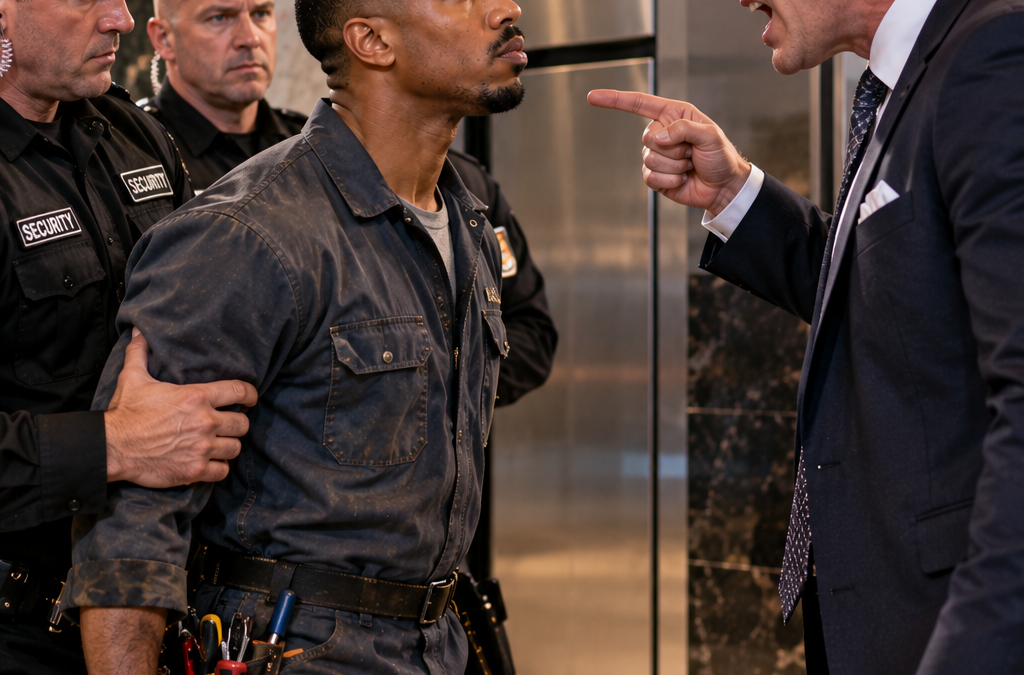
𝗣𝗔𝗥𝗧 𝟮
The HVAC system on the twelfth floor went down during a heat wave.
Server-room temperature climbed over a hundred degrees.
Bradley called outside contractors.
One quoted three days.
Another wanted fifteen thousand dollars before starting.
The servers wouldn’t survive.
I knew the unit.
Carrier 50XC.
Dual compressor.
The problem was not the compressor.
I had listened to the short cycling while doing rounds.
Failed expansion valve.
Cheap repair.
I told Bradley.
“I’ve worked on this model.”
He laughed.
“I wouldn’t trust you to fix a faucet.”
“It’s an expansion valve.”
“Go clean the parking garage.”
So I did.
Until Bradley left.
Then I went to the twelfth floor.
Opened the access panel.
Confirmed the fault.
Found a compatible valve in basement inventory.
Replaced it.
Recalibrated the thermostat.
Ninety minutes.
Forty dollars.
Monday morning, the system was running perfectly.
Bradley told the executive team he had coordinated an emergency weekend repair.
Someone from operations sent him a commendation email.
I saw it because it was printed and taped beside the office door.
Craig found me in the basement that night.
“That was you.”
I kept sorting tools.
“What?”
“HVAC.”
I shrugged.
“He took credit.”
“Doesn’t matter.”
“It matters.”
I looked at him.
“I have nineteen months before I qualify for tuition reimbursement.”
Craig frowned.
“So?”
“So I need to recertify my engineering credentials.”
He stared.
“What engineering credentials?”
That was when I realized I had never told him.
“Mechanical.”
His eyebrows rose.
“Degree?”
“Yes.”
“Where?”
“Wayne State.”
“You’re serious?”
“Yes.”
He stood there in silence.
“I need the reimbursement,” I continued. “I need benefits for Lily. Nineteen months. I can survive Bradley for nineteen months.”
Craig leaned against the locker.
“What if he fires you before then?”
“Then I find another way.”
I closed the toolbox.
“I always do.”
The truth was, I had been finding another way most of my life.
My father taught me that.
Raymond Owens ran a one-bay garage on the east side of Detroit.
Cinderblock walls.
Tin roof.
Hand-painted sign:
OWENS & SON
WE FIX WHAT OTHERS WON’T
I was the son.
Had been since I was five.
My earliest clear memory is standing on an overturned milk crate while Dad leaned over an old Ford pickup.
“Hand here.”
He pressed my palm against the carburetor.
“What do you feel?”
“Hot.”
He laughed.
“Besides hot.”
I concentrated.
“Shaking.”
“What kind?”
“I don’t know.”
“You will.”
He tapped the engine.
“Machines talk.”
I looked at him.
“They don’t.”
“They do.”
He smiled.
“You’re just too loud to hear them.”
By twelve, I could rebuild transmissions.
By fifteen, I rewired electrical systems for neighbors who couldn’t afford dealership prices.
Dad rarely charged full rate.
Sometimes people paid in cash.
Sometimes groceries.
Sometimes favors.
Sometimes not at all.
I asked him once why.
He was elbow-deep in a diesel engine.
“We don’t fix things for money.”
“That sounds bad for business.”
He grinned.
“We fix things because broken is wrong.”
I never forgot that.
“Somebody needs this car to go to work. Pick up a kid. Get to a hospital.”
He looked at me.
“Money keeps the lights on. That’s all.”
I carried that sentence for the rest of my life.
Cass Technical High School.
Top of my class.
Full scholarship to Wayne State.
Mechanical engineering.
Graduated summa cum laude.
My father sat in the third row in the only suit he owned.
Brown.
Left sleeve patched with thread that didn’t quite match.
When my name was called, he cried exactly once.
Wiped his face.
Never mentioned it.
OmniLift Systems hired me straight out of college.
Within three years, I was a lead engineer in the commercial division.
Elevator systems became my specialty.
High-speed towers.
Safety circuits.
Relay architecture.
Emergency braking systems.
I helped design part of the Series 9 control platform.
Two patents carried my name.
For seven years, I had a career.
Then eleven months took almost everything.
Dad died first.
Lung cancer.
March diagnosis.
Gone by July.
I flew to Detroit.
Buried him beside my mother.
Cleaned out the garage alone.
I kept the sign.
It ended up wrapped in a moving blanket inside my apartment closet.
Five months later, my wife Denise collapsed at work.
Brain aneurysm.
Thirty-one years old.
No warning.
She never woke up.
Lily was four.
For two months she asked when her mother was coming back.
Every night I gave the same answer.
“Mama’s somewhere safe.”
Then I held her.
“And I’m right here.”
I took emergency leave.
Then extended leave.
Then more.
I missed deadlines.
Meetings.
A restructuring review.
When the layoff letter arrived, it sounded polite enough to make me hate it.
POSITION ELIMINATED DUE TO ORGANIZATIONAL CHANGES.
Seven years reduced to a sentence.
I had savings.
Not enough.
Lily needed health coverage immediately.
Sterling Tower was hiring maintenance workers.
Fourteen dollars an hour.
Benefits on day one.
I accepted that afternoon.
Temporary.
That was what I told myself.
Nineteen months.
Recertify.
Return to engineering.
Every night after work, after Lily was asleep, I studied.
Old manuals.
Updated codes.
Schematics.
Certification problems.
I kept my mind alive even while Bradley worked hard to convince everyone around me I didn’t have one.
Then came that Thursday.
Around 9:40 p.m., I was restripping part of the lobby floor.
The tower was quiet.
Most employees had gone home.
Executives sometimes stayed late upstairs.
A few security officers were doing rounds.
Then I heard it.
A low metallic groan.
Unit 3.
Express elevator.
I stopped.
Waited.
There.
Again.
I walked to the shaft door.
Placed my palm flat against the steel.
Vibration irregular.
Motor cycling unevenly.
Then a secondary hum underneath.
Electrical.
Relay board.
My stomach tightened.
I knew that sound.
Six years earlier, I had heard almost the same pattern on a Series 9 unit in Detroit.
Cable-lock failure followed.
Two people trapped nine hours.
Quarter-million-dollar repair.
I walked straight to operations.
Bradley sat with his feet on the desk watching basketball on his phone.
“Mr. Tate.”
No response.
“Unit 3 needs to be shut down.”
He looked up slowly.
“What?”
“Relay fault.”
His eyes narrowed.
“Excuse me?”
“Motor’s cycling unevenly.”
I stepped closer.
“There’s a secondary current fluctuation. I recommend taking the elevator offline and inspecting the relay board.”
Bradley stared.
Then smiled.
Not pleasantly.
“How many times?”
“Sir—”
“How many times do I have to tell you?”
He put down his phone.
“You don’t touch elevators.”
“I didn’t.”
“You don’t diagnose elevators.”
“I listened to—”
“You don’t breathe near elevators.”
He stood.
“OmniLift has the service contract.”
“I know.”
“Then why are you standing here pretending you know their equipment?”
I almost laughed.
Instead, I said:
“Because I do.”
His expression hardened.
“If that relay fails under load—”
“Are you deaf?”
I stopped.
“Or stupid?”
He came around the desk.
“Finish the lobby.”
“Sir—”
“And if I find you near that shaft again, I’ll write you up.”
He leaned close.
“So fast your daughter won’t have a daddy with a job by sunrise.”
That did it.
Not enough to make me fight.
Enough to make me remember exactly who he was.
“Understood.”
I walked out.
At 9:47 p.m., Victoria Sterling entered Unit 3 on the thirty-eighth floor.
I didn’t know that yet.
I barely knew Victoria Sterling at all.
Everybody knew the name.
CEO.
Founder’s daughter.
Chairwoman in everything but title.
The woman whose signature appeared at the bottom of corporate memos.
I had seen her maybe twice from a distance.
She was forty-one.
Controlled.
Private.
Known for staying late.
That night, her insulin kit sat on her office desk beside half a cup of tea.
She stepped into Unit 3 carrying her briefcase.
Doors closed.
The elevator descended.
Then stopped.
Lights dimmed.
Emergency call failed.
Thirty-one floors above ground, she was trapped.
The first radio call came at 9:51.
Security guard Torres found the elevator indicator frozen.
“Unit 3 stuck between thirty and thirty-one.”
I heard the transmission.
Then:
“Possible passenger inside.”
I already knew.
The relay had failed.
Lobby changed quickly.
Security.
Facilities.
Bradley.
Torres checked badge logs.
“One passenger.”
Bradley asked:
“Who?”
Torres looked at the tablet.
Then his face changed.
“Victoria Sterling.”
Bradley went pale.
He called OmniLift.
Emergency technician minimum forty-five minutes.
Full team longer.
Fire department dispatched.
High-rise extraction possible.
Three to four hours if the cabin was misaligned.
Bradley paced.
Shouted useless instructions.
I stood near the service corridor.
Then stepped forward.
“Mr. Tate.”
He turned.
“I know what failed.”
He stared at me.
“Relay board.”
I pointed toward the shaft.
“The same fault I reported.”
People looked between us.
“I can bypass the lockdown and manually realign the cabin.”
Bradley started laughing.
“You.”
Nobody else laughed at first.
Then someone nervously joined.
“The janitor.”
“I need twenty minutes.”
He looked around the lobby as if I had just offered to perform brain surgery.
“The mop guy wants to repair a two-million-dollar elevator.”
“Sir.”
I kept my voice steady.
“She’s diabetic.”
Bradley stopped smiling slightly.
“I’ve seen her medical emergency notes in the building safety system.”
That was true.
Maintenance staff had limited access to emergency-response profiles for executives after hours.
“If her blood sugar is already low, three hours is too long.”
Bradley came closer.
“You listen to me.”
I did.
“You are a maintenance worker.”
“Yes.”
“You push a mop.”
Sometimes.
“You unclog toilets.”
Sometimes.
“You are not an engineer.”
That one almost made me smile.
“You are not certified.”
At that moment, technically, he was right.
My active certification had lapsed after years away.
“And you are not putting those greasy hands inside a machine worth more than every paycheck you’ve earned here.”
The lobby became very quiet.
Bradley lowered his voice.
“I know guys like you.”
I stared at him.
“You see somebody important trapped in there and think this is your chance.”
“My chance for what?”
“To play hero.”
He smiled.
“Then sue when something goes wrong.”
I felt something cold move through me.
“That’s how your people operate.”
Nobody laughed now.
“Always looking for the angle.”
He pointed toward me.
“Always looking for the handout.”
Torres looked away.
Another security guard stared at the floor.
Bradley kept going.
“If she gets hurt because some janitor who can barely read decides he’s an engineer—”
“I am an engineer.”
He stepped closer.
“No.”
His voice dropped.
“You are whatever I tell this building you are.”
That sentence stayed with me.
Maybe because it captured everything.
His authority.
His contempt.
His belief that a title could rewrite another man’s life.
Then Bradley turned toward security.
“Nobody lets him near the shaft.”
He pointed at me.
“One step past this line, drag him outside.”
I stayed where I was.
At 10:03, firefighters arrived.
Chief Henderson took command.
Gray at the temples.
Thirty years of rescue experience.
He assessed the elevator system quickly.
Then looked at Bradley.
“Control board’s gone.”
Bradley nodded like that helped.
“We can attempt a winch extraction.”
Henderson continued.
“But the cabin is sitting between floors at an angle.”
My stomach tightened.
Exactly what I feared.
“Cable-shear risk if we pull wrong.”
Bradley said:
“OmniLift is coming.”
“How long?”
“Maybe an hour.”
Henderson looked unimpressed.
“Does anybody here know this elevator model?”
Silence.
Then Torres spoke.
“The maintenance guy.”
Bradley snapped toward him.
Torres kept going.
“He says he worked for OmniLift.”
Henderson turned toward me.
“You.”
I stepped forward.
“Name?”
“Emmett Owens.”
“You worked for OmniLift?”
“Six years lead engineer, commercial systems.”
Bradley laughed once.
I ignored him.
“I helped design the Series 9 controls in this tower.”
Henderson studied me.
“Codes?”
“Yes.”
“Manual override?”
“Yes.”
“Brake-release protocol?”
“Yes.”
“Can you reach her?”
“Yes.”
“How long?”
“Twenty minutes.”
Bradley shoved himself between us.
“No.”
Henderson looked at him.
“This man is not qualified.”
Bradley pointed toward my jumpsuit.
“He is a janitor.”
I said nothing.
Henderson’s face hardened.
“Mr. Tate.”
Bradley kept talking.
“He has no current authorization—”
“Mr. Tate.”
This time Bradley stopped.
“There is a woman trapped thirty-one floors up who may be entering diabetic shock.”
Henderson’s voice stayed low.
“My team cannot safely move that cabin without risking a cable failure.”
He looked at me.
“This man says he designed the system.”
Then back at Bradley.
“I am not asking permission.”
The lobby became silent.
“I am informing you.”
Henderson turned.
“What do you need, Owens?”
“Access to the thirty-first-floor shaft room.”
“Done.”
“Clear the hoistway.”
“Done.”
“Keep all power routed exactly where I tell you.”
He nodded.
“Go.”
I picked up my toolbox.
Walked past Bradley.
Past the guards.
Past the people who had heard fourteen months of insults and said nothing.
I didn’t look at any of them.
The stairwell felt endless.
Thirty-one floors with tools.
By the time I reached the shaft room, my shirt under the jumpsuit was soaked.
The door opened.
Hot air rolled out.
Burned insulation.
Heated oil.
Metal.
The smell told me most of the story before the panel did.
I knelt.
Opened the control cabinet.
Model:
O-S42000.
Series 9.
Forty-two-floor configuration.
My configuration.
I stared at it.
For one strange second, the years folded together.
I could see a younger version of myself at OmniLift.
Conference room.
Whiteboard.
Coffee going cold.
Four engineers arguing about emergency redundancy.
My own name had been on the drawings.
Now I was kneeling in a gray maintenance jumpsuit saving someone from the machine I helped build.
Life is cruel that way sometimes.
Then I smelled burnt silicon.
Relay failure.
Exactly as I had told Bradley.
I keyed the radio.
“Chief.”
“Go ahead.”
“Confirmed relay-board failure.”
Bradley would hear that below.
I didn’t care.
“Three contacts fused.”
“Can you fix it?”
“Temporarily.”
I opened my toolbox.
R4.
Door interlock.
R7.
Position encoder.
R11.
Brake-release authorization.
I remembered the board layout without needing the schematic.
Some knowledge gets written deeper than paper.
I tested every contact.
Nine good.
Three fused.
Exactly.
I stripped insulated wire.
Measured.
Built bridge connections.
Emergency field technique.
Not in public service manuals.
Only internal training.
I connected R4.
Then R7.
Then R11.
The control panel hummed.
One green light flickered alive.
My radio crackled.
“Status?”
“Relay bypass established.”
I heard voices below.
Then Henderson.
“Next?”
“Software lockdown.”
The onboard system displayed:
ERR-7734
LOCKDOWN ENGAGED
UNAUTHORIZED MOVEMENT DETECTED
I knew that too.
Firmware 3.2.1.
Bug.
Hardware failure combined with certain cabin loads could trap the system in a protection loop.
OmniLift had issued a patch.
Sterling Tower apparently never installed it.
I did not have the patch.
I didn’t need it.
During Series 9 development, four engineers built a root-level maintenance mode.
Not documented for normal technicians.
Twelve-digit access sequence.
Only four people knew it when I left OmniLift.
I was one.
I placed my fingers on the keypad.
For half a second, I worried I had forgotten.
Then muscle memory answered.
Twelve digits.
Screen blinked.
Black.
Then:
MAINTENANCE MODE
DIRECT CONTROL ENABLED
The brakes released with a deep mechanical clunk.
The vibration traveled through the floor.
I breathed out.
“Chief.”
“Yes.”
“Firmware bypassed.”
Silence.
Then:
“Copy.”
“One final alignment.”
I moved toward the manual crank assembly.
Most technicians never knew the panel existed.
One full rotation.
One-eighth inch.
The cabin sat approximately two and a quarter inches below level.
Eighteen rotations.
No more.
No less.
If I overshot, secondary lock could engage.
Then we would be waiting hours.
I gripped the crank.
Steel warm beneath my hands.
The weight of six thousand pounds sat through the reduction gears.
I started.
“One.”
Turn.
“Two.”
Resistance.
“Three.”
Dad’s garage came back to me.
Machine talking through my palms.
“Four.”
“Five.”
“Six.”
Sweat ran into my eyes.
“Seven.”
“Eight.”
“Emmett.”
A voice.
Faint.
Not radio.
From the cabin.
A weak pounding against steel.
Then a woman’s breath.
Shallow.
I stopped.
“Ms. Sterling?”
Nothing.
I leaned toward the shaft.
“My name is Emmett Owens.”
Still nothing.
“I’m getting you out.”
I returned to the crank.
“Nine.”
“Ten.”
“Eleven.”
Resistance increased.
Magnetic alignment sensors.
“Twelve.”
My forearms burned.
“Thirteen.”
“Fourteen.”
Then I heard her breathing again.
Fast.
Unsteady.
She was conscious.
Barely.
“Fifteen.”
“Sixteen.”
I slowed.
“Seventeen.”
The crank pushed back.
I closed my eyes.
Felt the tension.
That was something Dad taught me long before engineering school.
The difference between forcing a machine and understanding it.
“Eighteen.”
Click.
Clean.
Alignment light turned green.
I keyed the radio.
“Cabin aligned.”
Henderson answered immediately.
“Floor?”
“Thirty-one.”
“Door status?”
“Ready for manual release.”
He gave the order.
A firefighter pulled the lever.
Doors opened.
Light poured into the cabin.
Victoria Sterling was sitting against the rear wall.
Her blouse soaked with sweat.
Face pale.
Hands shaking.
Eyes open but unfocused.
I stepped forward carefully.
“Ms. Sterling.”
Her gaze moved toward me.
“You’re safe.”
Her lips moved.
No sound.
I looked at the firefighters.
“She needs glucose.”
One ran.
Torres happened to have a granola bar.
I knelt beside Victoria.
Didn’t pull her.
Didn’t rush.
“Small bites.”
Her fingers struggled with the wrapper.
I helped guide it.
“There you go.”
She chewed slowly.
Her focus started returning.
The corridor filled with footsteps.
Paramedics.
Henderson.
Then Bradley.
He had climbed thirty-one flights.
Tie crooked.
Face red.
Everything about him stripped down.
He saw Victoria.
“Thank God.”
He pushed forward.
“I coordinated—”
Henderson stepped between us.
“No.”
Bradley froze.
“What?”
“Let’s be absolutely clear.”
Everyone stopped.
“This elevator failed because a known fault was ignored.”
Bradley looked toward me.
Henderson continued.
“Your maintenance employee reported abnormal operation hours before failure.”
Victoria looked up.
“You ignored him.”
Bradley opened his mouth.
“I—”
“You then prevented the only qualified person in this building from responding.”
Silence.
“You threatened his employment.”
Bradley’s face changed.
“You ordered security to remove him.”
The paramedics stopped long enough to listen.
Henderson pointed toward the open cabinet.
“This man bypassed a fused relay system.”
Then the diagnostic display.
“Overrode locked firmware using internal engineering access.”
Then the crank.
“Manually aligned a six-thousand-pound elevator cabin to floor level.”
Henderson looked directly at Victoria.
“My extraction estimate was three to four hours.”
Then at me.
“He did it in under twenty minutes.”
Victoria stared.
Henderson finished:
“If you are alive right now, it is because Emmett Owens was here.”
No one spoke.
Victoria looked at me.
Gray jumpsuit.
Grease beneath my fingernails.
Sweat running down my forehead.
The same uniform Bradley said proved who I was.
Then she placed her hand over mine.
“Thank you.”
Two words.
Nothing dramatic.
But something in my chest shifted.
I nodded.
“Just doing what I know.”
Paramedics moved in.
Checked glucose.
Started treatment.
Prepared the stretcher.
Before they wheeled her away, Victoria looked at me again.
“Who are you?”
“Emmett Owens.”
“No.”
Her voice was weak.
But sharp.
“Who are you really?”
I almost laughed.
Because for fourteen months, nobody in Sterling Tower had cared enough to ask.
The next afternoon, Victoria called Human Resources.
“Pull Emmett Owens’s file.”
That was what she told me later.
The maintenance file was thin.
Name.
Start date.
Rate.
Emergency contact.
Nothing interesting.
Then she requested my application.
Resume.
Education.
Employment verification.
Wayne State University.
Mechanical engineering.
Summa cum laude.
OmniLift Systems.
Lead engineer.
Commercial division.
Two patents.
Series 9 co-designer.
The exact elevator platform installed in Sterling Tower.
At two that afternoon, my phone rang.
I was sitting beside Lily helping with fractions.
STERLING INDUSTRIES EXECUTIVE OFFICE.
I answered.
“Hello?”
“Mr. Owens?”
“Yes.”
“This is Victoria Sterling.”
I stood automatically.
Lily looked up.
“You don’t have to stand,” Victoria said.
I smiled.
“Habit.”
“I’d like you to come to the tower tomorrow.”
My stomach tightened.
“Of course.”
“Nine.”
“Yes, ma’am.”
Then she added:
“Front entrance.”
I said nothing.
“Not the service door.”
The next morning, Craig lent me a navy tie.
I wore gray slacks.
White shirt.
Shined shoes.
At 8:45 I entered Sterling Tower through the main doors for the first time as something other than night staff.
Nobody stopped me.
Victoria met me on thirty-eight.
Executive conference room.
City spread behind the glass.
She gestured toward a chair.
I sat.
A folder waited on the table.
She slid it toward me.
DIRECTOR OF ENGINEERING AND BUILDING SAFETY.
I looked up.
“Ms. Sterling.”
“Keep reading.”
Salary.
Benefits.
Full tuition reimbursement.
Certification support.
Pension credit for the fourteen months I had already worked.
“I don’t understand.”
“Yes, you do.”
“I’m not currently certified.”
“We’ll pay for reinstatement.”
I looked at the numbers.
“This is—”
“Not charity.”
Her voice hardened slightly.
“I am not rewarding you for saving me.”
I met her eyes.
“I am correcting something that never should have happened.”
I looked back at the folder.
“You have skills this company desperately needs.”
Silence.
Then I thought of Lily.
“My daughter gets out of school at 3:15.”
Victoria smiled.
“We’ll make it work.”
That almost broke me more than the salary.
Not the title.
Not the office.
The idea that my life outside the building mattered.
I signed.
The investigation into Bradley started Monday.
Victoria refused to let internal HR handle it.
Outside labor-compliance firm.
Independent.
Nine days later, the report came back.
Forty-three pages.
Bradley had ignored fourteen maintenance reports I submitted over six months.
Seven involved elevator concerns.
Three referenced Unit 3.
One, eleven days before the failure, described irregular relay behavior.
Bradley marked it reviewed.
System logs showed he kept the report open four seconds.
Four seconds.
The lobby footage was worse.
Everything recorded.
Every word.
Janitor.
Greasy.
Your people.
Handout.
Drag him out.
Then the timeline.
My warning at 7:50.
Elevator failure at 9:47.
No inspection.
No OmniLift call.
No shutdown.
Nothing.
Bradley had watched basketball.
Victoria read the report.
Called legal counsel.
Eleven minutes later, the decision was made.
Bradley Tate was terminated.
Gross negligence.
Failure to act on safety reports.
Racial harassment.
Professional licensing board notified.
Building-operations certification reviewed.
He cleaned out his office Wednesday.
Security escorted him through the lobby.
The same lobby where he had once told guards to drag me outside.
He did not look toward the elevator.
He did not look at me.
I watched from the engineering office above.
I expected satisfaction.
Mostly, I felt tired.
People think justice always feels like victory.
Sometimes it feels like finally being allowed to put down something heavy.
Three employees caught laughing or encouraging Bradley received formal discipline.
Two transferred.
One resigned.
Craig came to see me two weeks later.
He stood in my doorway.
Hands in pockets.
“I should’ve said something.”
I waited.
“Before.”
He looked embarrassed.
“I knew.”
“I know.”
“I watched him do it.”
“Yes.”
“I was scared of losing my job.”
“I know.”
He swallowed.
“That doesn’t make it right.”
“No.”
He looked down.
“I’m sorry.”
I thought about the coffee.
Every night.
Black.
No sugar.
Quiet kindness from a man too afraid to be brave publicly.
That did not erase his silence.
But people are more complicated than their worst failure.
“Sit down.”
He looked up.
“What?”
“I need an electrician.”
Craig blinked.
“Someone I can trust.”
“You sure?”
“No.”
He laughed.
First time I had heard him do it around me.
Then he sat.
Craig joined my team.
The building changed.
Slowly.
Not because of one memo.
Not because executives suddenly discovered justice.
Because stories travel.
People learned who I had been.
What Bradley had done.
What had been ignored.
Maintenance workers were given full access to the employee cafeteria.
Restroom restrictions disappeared.
Incident reporting moved outside direct supervisor control.
Elevator safety review became mandatory.
We installed the firmware patch across every Series 9 unit.
Unit 3 stayed offline until we rebuilt the relay system.
When it returned to service, I rode it alone from the lobby to thirty-eight.
No problems.
Smooth.
Silent.
At floor thirty-one, I remembered Victoria sitting pale against the wall.
At thirty-eight, I remembered myself fourteen months earlier standing at the service entrance with a mop bucket.
Same building.
Different altitude.
But titles were never the biggest change.
Lily was.
The first time she visited my new office, she stood in the doorway staring.
“You work here?”
“Yes.”
“All this?”
“Mostly.”
She ran toward the windows.
We were thirty-two floors above our apartment’s highest point of reference.
Cars looked like toys.
The river caught sunlight.
Lily pressed both palms against the glass.
“Daddy!”
“Yeah?”
“We’re really high!”
“So I noticed.”
She turned.
“You fix elevators now?”
“Among other things.”
She thought carefully.
Then smiled.
“My dad fixes buildings.”
I liked that better than director.
Six months passed.
Victoria and I began having working lunches.
At first, strictly business.
Safety reports.
Capital budgets.
Infrastructure replacement.
Then conversations drifted.
Children.
Loss.
Food.
Music.
Detroit.
Chicago.
She asked about Denise one evening.
We were the last two people in a conference room.
I told her.
Brain aneurysm.
Thirty-one.
Victoria was quiet.
“I’m sorry.”
“Thank you.”
“How long?”
“Three years.”
She nodded.
“I lost my husband five years ago.”
I hadn’t known.
“Cancer.”
That changed the room.
Grief recognizes grief.
There is a kind of language between people who have stood beside hospital beds waiting for machines to tell them something they already know.
No advice needed.
No empty reassurance.
Just recognition.
Work lunches became coffee.
Coffee became evenings when both of us stayed too late.
Then one Saturday, someone knocked on my apartment door.
Lily reached it first.
I was in the kitchen.
“Daddy!”
“What?”
“There’s a lady.”
I walked out.
Victoria Sterling stood in the hallway holding takeout bags.
No executive suit.
No assistants.
Jeans.
Dark sweater.
Nervous smile.
Lily looked up at her.
“Are you my dad’s friend?”
Victoria glanced at me.
Then crouched so they were eye level.
“I’d like to be.”
Lily considered this very seriously.
“You brought food?”
“Yes.”
“What kind?”
“Chinese.”
Lily opened the door wider.
“You can come in.”
Apparently my daughter handled corporate admissions differently than Sterling Tower.
That night was the beginning.
Nothing dramatic.
No instant love.
No cinematic promise.
Just dinner.
Lily explaining why fractions were a conspiracy.
Victoria laughing.
Me realizing it had been years since another adult woman sat at my table without grief standing between us.
Months later, Victoria came across the hand-painted sign from Dad’s garage.
It was still wrapped in the closet.
OWENS & SON.
WE FIX WHAT OTHERS WON’T.
She ran her fingers over the old paint.
“Your father made this?”
“Yes.”
“You should hang it.”
“Where?”
She looked at me.
“Your office.”
I laughed.
“No.”
“Why?”
“Because Sterling Industries already has enough branding.”
She smiled.
“Then somewhere else.”
Eventually, we hung it inside the engineering workshop.
Not the executive office.
Where the people fixing things could see it.
One afternoon, Lily visited and read it.
“Grandpa wrote that?”
“Painted it.”
“What does it mean?”
I looked at the sign.
Then remembered the elevator.
The grease trap.
The HVAC system.
My father elbow-deep in an engine.
“It means if something is broken and you know how to help, you help.”
“Even if people are mean?”
That question surprised me.
I crouched.
“Especially then.”
“Why?”
“Because if you only do the right thing for people who are nice to you, you’re not really doing the right thing.”
She thought about that.
“That sounds hard.”
“It is.”
“Did you want to let the elevator lady stay stuck because her company was mean?”
I smiled despite myself.
“No.”
“Not even a little?”
I laughed.
“Maybe for half a second.”
She giggled.
Then became serious.
“But you helped.”
“Yes.”
“Because broken is wrong?”
I stared at her.
My father’s exact words.
Words I had said around her without realizing they had landed.
“Yes.”
“Broken is wrong.”
Years later, that became the sentence I remembered most.
Not Bradley’s insults.
Not Victoria’s job offer.
Not the title.
Broken is wrong.
Systems can break.
Machines.
Companies.
People.
Silence can become a broken system too.
That was something Craig taught me.
He had never insulted me.
Never laughed.
Never participated.
He had also never stopped Bradley.
For months I told myself that made him innocent.
Craig knew better.
One afternoon after we had worked together nearly a year, he brought it up again.
“I still think about that night.”
I looked up from a schematic.
“Why?”
“Because I almost let fear make me useless.”
“That’s harsh.”
“It’s accurate.”
He sat opposite me.
“I kept telling myself I was being practical.”
“You had kids.”
“I still do.”
“Mortgage.”
“Still have that too.”
I smiled.
He didn’t.
“But there’s always going to be a reason to stay quiet.”
I waited.
“At some point, you decide what kind of man the excuse is protecting.”
That stayed with me.
When I became responsible for engineering staff, I built policies that did not require people to risk everything just to report abuse or danger.
Anonymous safety escalation.
Independent review.
No supervisor able to close a technical report without documented response.
Emergency stop authority available to certified personnel regardless of rank.
Those policies mattered more to me than punishing Bradley.
Because firing one cruel man is easy.
Building a system where another cruel man cannot do the same thing is harder.
Victoria understood that.
So did I.
A year after the elevator incident, Sterling Tower held an employee safety conference.
Victoria asked me to speak.
I refused.
She asked again.
I refused.
Then Lily found out.
“You should.”
“Why?”
“You talk all the time.”
“At home.”
“You tell me what to do.”
“That’s parenting.”
“Same thing.”
So I spoke.
Hundreds of employees in the ballroom.
Executives.
Maintenance workers.
Security.
Facilities.
Accounting.
People from every floor.
I stood behind the podium and looked around.
A year earlier, most of them would have walked past me pushing a floor machine.
Now they were waiting for me to say something profound.
I didn’t.
I told them about my father.
The garage.
The milk crate.
The engine.
Every machine talks.
You just have to learn to listen.
Then I said:
“Buildings talk too.”
People looked confused.
“Not literally.”
A few laughed.
“But every broken process leaves a signal.”
I looked across the room.
“An ignored maintenance report is a signal.”
“An employee repeatedly humiliated is a signal.”
“A technician afraid to challenge a supervisor is a signal.”
“A safety problem everybody notices but nobody owns is a signal.”
I paused.
“Unit 3 did not fail because one relay burned out.”
The room stayed quiet.
“It failed because people stopped listening long before the elevator stopped moving.”
Victoria sat in the front row.
Craig beside her.
Lily next to Mrs. Patterson.
I continued.
“The most dangerous failure in that building was not electrical.”
“It was human.”
Nobody applauded immediately.
Good.
I didn’t want applause.
I wanted them to hear it.
Then I stepped away.
That night, Lily asked:
“Were you nervous?”
“Terrified.”
“You didn’t look scared.”
“Most people don’t.”
She nodded.
Then asked:
“Is Miss Victoria your girlfriend?”
I nearly dropped my coffee.
“Where did that come from?”
“She likes you.”
“Lily.”
“You like her.”
I rubbed my forehead.
“Go brush your teeth.”
“That means yes.”
Children are ruthless.
Victoria and I took our time.
Both of us had loved people we lost.
Neither wanted to treat grief like something to be replaced.
Denise remained part of my life.
Her photograph stayed in the apartment.
I told Victoria stories.
She listened.
Never competed with a dead woman.
That mattered.
Lily slowly stopped calling her “the elevator lady.”
Then “Miss Victoria.”
Eventually just Victoria.
One evening, months later, we sat near the river.
Sterling Tower rose behind us.
Forty-two floors catching sunset.
Victoria looked up.
“Do you hate that building?”
I thought.
“No.”
“Really?”
“It gave me the worst job I ever had.”
She laughed softly.
“And almost killed me.”
“Also true.”
“And?”
I looked at the tower.
“It also reminded me who I was.”
She turned toward me.
“I thought I was waiting nineteen months to become an engineer again.”
I shook my head.
“I never stopped being one.”
Victoria smiled.
“That sounds obvious now.”
“It wasn’t.”
Bradley had spent fourteen months telling me what my uniform meant.
Eventually, part of me listened.
That was the most dangerous thing he ever did.
Not the insults.
Not the threats.
He almost convinced me my circumstances were my identity.
But skill doesn’t disappear because nobody respects it.
Knowledge doesn’t vanish because your badge says maintenance.
Dignity doesn’t shrink because somebody puts you in a basement.
A machine certainly doesn’t care.
That was one thing Dad had gotten exactly right.
Machines do not care about race.
Job titles.
Money.
Office floors.
They respond to competence.
But people are not machines.
People bring prejudice into systems.
And sometimes the person who understands the system best is standing right in front of everyone holding a mop.
Two years after the rescue, Lily and I returned to Detroit.
I took her to the old neighborhood.
Dad’s garage had been sold.
The building still stood.
Different sign.
Different owner.
I parked across the street.
Lily looked through the windshield.
“That was Grandpa’s?”
“Yes.”
“It’s small.”
I smiled.
“It felt enormous when I was your age.”
We sat there.
Then she asked:
“Can we go in?”
I hesitated.
Finally, yes.
The new owner was a mechanic named Luis.
When I explained who I was, his face changed.
“Raymond’s boy?”
I laughed.
Nobody had called me that in decades.
“You knew him?”
“Everybody knew Raymond.”
He shook my hand.
“Man could fix anything.”
He let us walk around.
The old floor stains were still visible beneath newer ones.
I found the corner where my milk crate used to sit.
For a second, Dad was there again.
Hand on the engine.
Listen.
Luis looked at Lily.
“Your grandpa was special.”
She smiled proudly.
“My dad fixes buildings.”
Luis looked at me.
I laughed.
“That’s what she tells people.”
“It’s true.”
On the drive back to Chicago, Lily slept most of the way.
I kept thinking about the path between that garage and Sterling Tower.
Milk crate.
University.
Engineering.
Loss.
Maintenance.
Basement.
Elevator.
Director.
None of it was straight.
Life rarely is.
People look at success afterward and try to make a clean line through it.
There wasn’t one.
There were detours.
Grief.
Humiliation.
Bad luck.
Choices made because a child needed health insurance.
A job taken because pride does not pay for inhalers.
And there was one night when the difference between staying invisible and stepping forward was a woman trapped in a machine.
I didn’t save Victoria because she was a CEO.
At first, I didn’t know she was.
I saved her because someone was inside.
Broken is wrong.
That was enough.
Years later, I still carry tools.
My office has a desk now.
Computer.
Windows.
Title on the door.
But I keep a toolbox beside the cabinet.
Sometimes a technician calls with a problem.
I go.
Victoria jokes that directors are not supposed to crawl beneath equipment.
I tell her:
“Then give me a different title.”
She stopped trying.
Bradley Tate eventually disappeared from my life completely.
I heard once that he found work outside Chicago.
Smaller building.
Different state.
I never looked him up.
I didn’t need to know whether he suffered.
Punishment was never the ending I cared about.
The better ending was Craig becoming chief electrical supervisor.
Maintenance workers receiving technical training.
Safety reports being respected.
Lily growing up seeing her father’s engineering degree on the wall instead of buried inside a drawer.
Victoria learning the names of the night staff.
Me learning that beginning again does not mean betraying what came before.
One Saturday morning, Victoria stood in my kitchen while Lily made pancakes badly.
Flour everywhere.
Smoke alarm almost involved.
Victoria laughed so hard she had to sit down.
I looked at them.
For years after Denise died, I believed some doors only closed once.
That family was one of them.
I was wrong.
A new beginning does not erase the old life.
It grows beside it.
Denise remained Lily’s mother.
Always.
Victoria became something else.
Not replacement.
Addition.
That distinction saved all of us.
That night, after Lily went to bed, Victoria leaned against the counter.
“You’re staring.”
“Sorry.”
“At what?”
I looked toward the hallway.
“Nothing.”
She smiled.
“That’s not true.”
“No.”
I took a breath.
“I just didn’t think I would have this again.”
Her expression softened.
“What?”
I looked around our little kitchen.
Noise.
Dishes.
Someone else’s coat on the chair.
A second coffee cup.
“People.”
Victoria reached for my hand.
I let her.
Sometimes the thing you think died with one chapter of your life is only waiting for you to become brave enough to turn the page.
I used to believe the most important moment of that night was when the elevator doors opened.
It wasn’t.
It came earlier.
The moment Bradley pointed toward security and said:
“If he steps past this line, drag him out.”
I stood there.
Toolbox at my feet.
Years of knowledge inside my head.
Woman trapped above us.
And I had to decide which voice mattered more.
Bradley’s.
Or my own.
For fourteen months, I had obeyed.
Not because I believed him.
Because Lily needed me employed.
Because bills are real.
Because dignity does not pay rent.
People sometimes tell stories about standing up to bullies as if courage is easy.
It isn’t.
Sometimes courage has health insurance attached.
Sometimes it has a child waiting at home.
Sometimes the bully signs your time sheet.
Silence can be survival.
I know that.
I lived it.
But there comes a point when silence changes from protection into participation.
If Henderson had not arrived when he did, I don’t know what I would have done.
I like to imagine I would have crossed Bradley’s line anyway.
Maybe I would have.
Maybe security would have stopped me.
Maybe Victoria would have died.
That possibility still bothers me.
Because competence without authority can become useless.
That is why the systems we built afterward mattered.
Nobody at Sterling now needs a director’s permission to stop equipment they reasonably believe is unsafe.
No maintenance worker needs to risk termination to escalate a life-safety concern.
If we learned only that Emmett Owens was secretly an engineer, we learned the wrong lesson.
The lesson was that Bradley should have listened even if I had not been.
A maintenance worker reporting an abnormal sound deserved an inspection.
A Black employee deserved dignity whether or not he held patents.
A janitor deserved respect even if he had never attended college.
My resume did not make Bradley’s racism wrong.
It was already wrong.
My skill only exposed how costly his prejudice could become.
That distinction matters to me.
Because there are millions of people working in uniforms other people use as shorthand.
Cleaner.
Driver.
Dishwasher.
Security guard.
Home health aide.
Warehouse worker.
Maintenance.
People look at clothing and decide intelligence.
Look at income and decide ambition.
Look at skin and decide danger.
Look at an accent and decide education.
Sometimes those assumptions become cruel.
Sometimes they become deadly.
Unit 3 almost became deadly.
Not because a relay board failed.
Machines fail.
That is why engineers build redundancy.
The danger came when a man heard a warning from someone he believed was beneath him and decided the person’s identity mattered more than the information.
Prejudice is dangerous because it makes people stupid while convincing them they are superior.
Bradley heard exactly what was wrong.
He simply could not imagine I was the person capable of knowing it.
Victoria once asked me what I thought about when I was turning the crank.
Eighteen rotations.
Two and a quarter inches.
Six thousand pounds.
Her life inside.
I told her the truth.
“My dad.”
“What did you remember?”
“His hands.”
She waited.
“He used to say machines talk.”
Victoria smiled.
“Did the elevator talk?”
“Yes.”
“What did it say?”
I looked at her.
“That everybody else needed to shut up.”
She laughed.
Dad would have liked that answer.
I still visit his grave when I get back to Detroit.
I tell him about Lily.
About Sterling.
About Victoria.
About Craig.
About the engineering program we created for maintenance employees who want to move into technical careers.
The first year, six people enrolled.
The second year, nineteen.
Sterling pays tuition.
Certification.
Books.
Paid study hours.
I named the program after Raymond Owens.
Victoria surprised me with that.
I argued.
She won.
The plaque reads:
THE RAYMOND OWENS TECHNICAL ADVANCEMENT PROGRAM
WE FIX WHAT OTHERS WON’T.
The first graduation nearly destroyed me.
Eight employees completed engineering or advanced technical certification.
One had started as a janitor.
One as security.
One in food service.
A woman named Elena had cleaned executive offices for nine years while taking community-college classes at night.
When she crossed the stage to receive her building-systems certification, her children screamed from the audience.
I had to look away.
Afterward, she hugged me.
“You know why I applied?”
I shook my head.
“Because I heard what happened to you.”
She held the certificate.
“And I thought maybe what I know counts too.”
That was when I understood what Dad’s sign had really become.
We fix what others won’t.
Not just machines.
Sometimes chances.
Sometimes systems.
Sometimes the story a person has been forced to believe about themselves.
When I come through Sterling Tower now, the lobby looks almost the same.
Marble.
Glass.
Security desk.
Elevator bank.
Unit 3 has new controls.
Updated relays.
Current firmware.
I still sometimes place my hand against its door.
Old habit.
Feel the vibration.
Healthy.
Steady.
Lily caught me doing it once.
She was older then.
“Is it talking?”
I smiled.
“Always.”
“What’s it saying?”
“That everything’s fine.”
She nodded.
Then looked toward the elevators.
“Do you ever think about that night?”
“Sometimes.”
“Were you scared?”
“Yes.”
“Of the elevator?”
“No.”
She looked confused.
“Then what?”
“Losing my job.”
She laughed.
“That’s boring.”
“It was terrifying.”
“You could’ve gotten another job.”
I smiled.
“That’s easy to say when you’re not seven and need inhalers.”
She grew quiet.
Then took my hand.
“I’m glad you did it.”
“So am I.”
We rode Unit 3 upward.
The doors closed.
Numbers climbed.
For half a second, I saw the shaft room again.
Burnt relays.
Hot metal.
Victoria on the floor.
Then the elevator continued.
Doors opened.
Victoria was waiting.
She smiled at Lily.
“Lunch?”
Lily walked past me.
“Yes, but Dad’s paying.”
Victoria laughed.
“I’m the CEO.”
“Exactly.”
I followed them out.
And before the doors closed behind me, I looked once more at the stainless steel.
People sometimes call what happened that night a miracle.
It wasn’t.
Nothing supernatural happened.
A relay failed.
An engineer recognized it.
A firefighter made the correct decision.
A trained crew assisted.
A woman survived.
The extraordinary part was not the rescue.
It was how close prejudice came to stopping it.
That is the part I never forget.
And it is why, whenever somebody in my department brings me a concern, I listen before I look at their title.
Because I know what it feels like to stand in front of a broken system with the answer in your hands while someone with more authority decides you cannot possibly understand what you’re seeing.
My father spent his life repairing what other people gave up on.
Cars.
Engines.
Sometimes people.
He never had money.
Never had a title anyone outside the neighborhood cared about.
But he taught me the rule that ended up shaping every important decision I ever made.
Broken is wrong.
If you can help, help.
Not because the person trapped inside owns the company.
Not because saving them might earn you a promotion.
Not because somebody will finally discover who you really are.
Help because they need you.
That night, Bradley Tate called me a cockroach.
A janitor.
An animal.
He thought my uniform told him everything.
It didn’t.
But if I had only been a janitor, he still would have been wrong.
That is the lesson I carried forward.
The engineer inside me did not make me worthy of respect.
I had been worthy before anyone opened my résumé.
Before Victoria knew my patents.
Before Henderson trusted me with the shaft.
Before Sterling put my name on an office.
Before anyone stopped calling me maintenance and started calling me director.
The job changed.
The title changed.
My salary changed.
My life changed.
My worth didn’t.
That had been there all along.
The world had simply taken a very long time to learn how to listen.








