After My Heart Attack, I Realized the Most Important Changes Were Hiding in Foods I Had Walked Past for Years
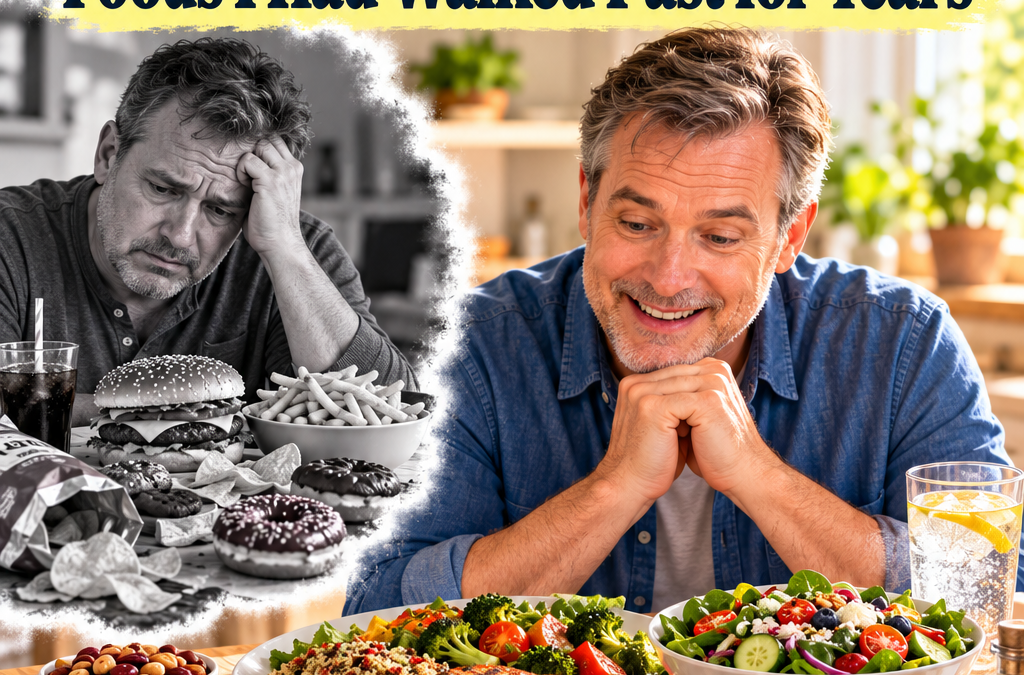
FULL
After a heart attack, I found that mornings could be difficult.
The first few weeks, I woke up remembering what had happened before I even opened my eyes.
There is something unsettling about realizing your heart—something you never consciously commanded—had suddenly become the center of every decision.
Is this chest sensation normal?
Am I tired because I’m recovering?
Is my pulse too fast?
Can I exercise?
What can I eat?
Will this happen again?
That anxiety can follow you into the kitchen.
Preparing oatmeal became almost ritualistic for me.
Water.
Oats.
Cinnamon.
Fruit.
Walnuts.
Nothing dramatic.
But the routine reminded me that recovery was made from ordinary decisions.
I did not have to solve the rest of my life that morning.
I only had to make breakfast.
Oatmeal is still carbohydrate
I also learned not to confuse “heart healthy” with “unlimited.”
Portion size still matters.
Calories still matter.
Someone who also has diabetes or prediabetes may need to pay particular attention to carbohydrate quantity and blood-glucose response.
A half-cup of dry oats can fit into a meal very differently from a giant bowl made with several servings.
I learned to stop using healthy labels as permission to stop paying attention.
A useful food still belongs inside an overall pattern.
An easy American breakfast
If I wanted to make this meal for someone who had never thought much about heart-healthy eating, I would keep it familiar.
Warm oatmeal with blueberries, cinnamon, and walnuts.
Plain Greek yogurt on the side.
Coffee without turning it into a dessert.
Maybe a piece of whole fruit if needed.
Nothing strange.
Nothing that looks like hospital food.
That mattered to me because one of my deepest fears after the heart attack was that ordinary life had ended.
A breakfast like this reminded me that ordinary life was still there.
I was simply learning to build it differently.
2. Salmon
The second food I began eating more intentionally was salmon.
I had always liked salmon.
The problem was what I ate instead of it most of the time.
Burgers.
Sausage.
Pepperoni pizza.
Processed deli meat.
Fatty cuts of beef.
Fried food.
Salmon was the meal I ordered occasionally when I wanted to feel responsible.
After my heart attack, it became something I planned for.
The American Heart Association recommends regularly eating fish and seafood and specifically recommends about two servings of fish per week, particularly fatty fish. Salmon is one of the fatty fish that provides omega-3 fatty acids.
What interested me wasn’t just what salmon contained.
It was what salmon could replace.
That became one of the biggest lessons of heart-healthy eating.
Food decisions don’t happen in isolation.
If I eat fish for dinner, I may not eat a large fatty steak that night.
If I eat beans for lunch, I may not eat processed meat.
If I eat oatmeal for breakfast, I may not eat sausage and biscuits.
Sometimes the benefit comes from what I add.
Sometimes it comes from what the healthier food pushes off the plate.
Why salmon fits a heart-conscious meal
Salmon provides protein and is rich in omega-3 fatty acids.
Unlike many fatty processed meats, fish can fit naturally into dietary patterns that emphasize unsaturated fats and leaner protein sources.
That is part of why heart-health guidance encourages fish, legumes, nuts, and other healthier protein choices while limiting processed meats and foods high in saturated fat.
But salmon can also be ruined by preparation.
That surprised me.
I used to order salmon at restaurants and automatically assume I had made the healthier choice.
Then I started noticing descriptions.
Brown sugar glazed.
Honey bourbon.
Maple glaze.
Cream sauce.
Deep fried.
Covered in butter.
Salmon may still be underneath all of that.
But preparation changes the meal.
Now I try to let the fish taste like fish.
How I prepare salmon
My easiest version starts with a salmon fillet.
I use lemon, garlic, black pepper, paprika, and herbs.
A small amount of olive oil goes over the fish.
Then I bake it.
The exact cooking time depends on the thickness of the fillet, so I rely on safe cooking temperature and doneness rather than assuming every piece of fish cooks identically.
The result is moist, flavorful, and simple.
I don’t need a heavy cream sauce.
I don’t need half a stick of butter.
I don’t need a sugary glaze.
Lemon does a remarkable amount of work.
So does garlic.
What goes beside the salmon matters
One mistake I made for years was thinking about the protein and ignoring everything around it.
I could order grilled salmon and feel virtuous while eating an enormous pile of fries beside it.
Now I look at the whole plate.
If salmon occupies one portion, I might fill a large portion of the remaining plate with vegetables.
Broccoli.
Asparagus.
Green beans.
Brussels sprouts.
Roasted cauliflower.
A large green salad.
Then I may add a smaller portion of a whole grain, beans, or sweet potato depending on the rest of the meal.
That looks dramatically different from the dinners I used to eat.
And yet it still looks like dinner.
My lemon-garlic salmon dinner
One of the easiest combinations I use is salmon with roasted broccoli and a small portion of beans or quinoa.
I season the salmon with lemon, garlic, paprika, and black pepper.
I toss broccoli with a modest amount of olive oil and roast it until the edges brown.
Then I add either black beans, lentils, quinoa, or another high-fiber side.
The plate has color.
It has texture.
It smells good.
It is filling.
And I don’t finish dinner feeling as though I have eaten something designed only for a patient.
I feel like myself.
That became important during recovery.
The emotional part of changing protein
Red and processed meats had been tied to some of my favorite routines.
Weekend bacon.
Cookouts.
Hot dogs at ball games.
Steak dinners.
Pepperoni pizza.
Food is never just nutrients.
It is memory.
Family.
Habit.
Celebration.
That makes change harder than somebody handing you a brochure and saying, “Eat healthier.”
I didn’t want to spend the rest of my life afraid of every food I had ever loved.
So I stopped thinking in absolute terms.
I didn’t tell myself:
“You can never eat another burger.”
I asked:
“How often was the burger replacing something better?”
That felt different.
Could salmon become normal instead of special?
Could beans become lunch?
Could walnuts replace chips sometimes?
Could vegetables occupy more space on the plate?
Those changes felt possible.
Canned and frozen salmon count too
Fresh salmon can be expensive.
That is real.
A heart-healthy diet that requires expensive fresh fish several times a week is not practical for every family.
So I also learned to use frozen salmon.
Frozen fillets can be convenient and often cost less.
Canned salmon can work in salads or patties prepared without excessive salt or saturated fat.
The nutritional strategy matters more than making every meal look like a restaurant photograph.
The sodium problem
After my heart attack, I became much more aware of sodium.
A lot of sodium does not come from the salt shaker.
It comes from packaged and restaurant foods.
Sauces.
Processed meats.
Soups.
Frozen meals.
Fast food.
Some canned products.
Heart-healthy eating guidance emphasizes limiting sodium, particularly because blood pressure is such an important cardiovascular risk factor. NHLBI’s DASH approach also emphasizes fruits, vegetables, whole grains, beans, fish, nuts, low-fat dairy, and healthier oils while reducing sodium and foods high in saturated fat.
That means when I prepare salmon, I try to get flavor from herbs, citrus, garlic, pepper, vinegar, and spices rather than assuming salt has to do everything.
My food did not become tasteless.
My palate adjusted.
What salmon taught me
Salmon taught me that heart-healthy eating is often about substitution rather than deprivation.
I could stare at everything I thought I was losing.
Or I could build meals around foods I actually enjoyed.
Salmon gave me an easy place to start.
3. Beans
If salmon taught me about substitution, beans taught me about simplicity.
Beans had always been around.
Black beans in burritos.
Kidney beans in chili.
Pinto beans beside barbecue.
Chickpeas in salads.
Navy beans in soup.
I had eaten them my entire life without considering them particularly important.
After my heart attack, I started seeing them differently.
Current cardiovascular nutrition guidance gives particular emphasis to plant-based protein sources such as legumes—including beans, peas, and lentils—and also recommends foods rich in fiber while reducing reliance on heavily processed meats and other foods high in saturated fat.
Beans fit that idea almost perfectly.
They are familiar.
They are inexpensive.
They contain fiber.
They contain plant protein.
And they can replace foods that I probably should not have been eating as frequently as I was.
Beans changed chili for me
Chili was one of the first comfort foods I refused to give up.
Fortunately, I didn’t have to.
My old version was heavy on fatty ground beef.
Then cheese.
Then sour cream.
Then salty crackers.
Sometimes I barely noticed the beans.
My newer version shifts the balance.
I might use lean ground turkey or even make it primarily from beans.
Black beans.
Kidney beans.
Tomatoes.
Onion.
Bell pepper.
Garlic.
Cumin.
Chili powder.
Smoked paprika.
Maybe jalapeño.
The pot still smells like chili.
It still feels like cold-weather comfort food.
But the nutritional structure changes.
My turkey-and-bean chili
I begin by browning a modest amount of lean ground turkey.
Then I add chopped onion, garlic, and bell pepper.
After the vegetables soften, I add tomatoes, black beans, and kidney beans.
I season with cumin, chili powder, smoked paprika, pepper, and whatever other spices I want.
Then I let the entire pot simmer.
Instead of piling shredded full-fat cheese and sour cream on top, I might use a small spoonful of plain Greek yogurt, chopped cilantro, green onions, or avocado.
I still recognize the meal.
That’s the point.
Why fiber became so important to me
Before my heart attack, I thought of fiber mostly as something related to digestion.
I didn’t think of it when I thought about heart health.
That changed.
Whole grains, legumes, fruits, vegetables, nuts, and seeds bring fiber into the diet, and heart-health guidance consistently places these foods at the center of recommended dietary patterns.
Instead of obsessing over one isolated nutrient, I began looking at what happened when my diet became naturally richer in these foods.
Breakfast became oatmeal and berries more often.
Lunch sometimes became bean soup instead of processed deli meat.
Dinner contained vegetables and legumes more often.
Snacks shifted toward fruit and nuts.
The pattern changed.
That was much more powerful than buying a product with the word “heart” printed on the package.
My simple bean bowl
On busy days, one of the easiest lunches I can make starts with black beans.
I add romaine or mixed greens.
Tomato.
Bell pepper.
Cucumber.
A little avocado.
Sometimes grilled chicken.
Sometimes no meat at all.
Lime juice.
A low-sodium salsa if I have one.
Maybe a small amount of brown rice or quinoa.
It takes almost no culinary skill.
If I use canned beans, I look for lower-sodium options when available and rinse them.
That makes the meal practical.
I don’t need to soak dried beans every time I want lunch.
Bean soup
Soup became another useful meal, although I learned to watch sodium carefully.
Restaurant soups and canned soups can contain substantial sodium.
At home, I can control it much more easily.
I make soup with beans, tomatoes, carrots, celery, onions, garlic, spinach or kale, herbs, and lower-sodium broth.
Sometimes I add chicken.
Sometimes I keep it completely plant-based.
A large bowl feels comforting.
It also allows vegetables and beans to do most of the work.
Replacing processed meat
One of the changes that surprised me most was how often processed meat had been showing up in my life.
Bacon at breakfast.
Ham sandwich at lunch.
Pepperoni at dinner.
Sausage on weekends.
Hot dogs at cookouts.
I never thought of those meals as connected because they happened at different times.
But they were part of the same pattern.
Current heart-health recommendations encourage healthier protein sources and minimizing processed meats.
Beans gave me something practical to put in that space.
Not every meal needs meat.
That was new for me.
Eating beans doesn’t mean becoming vegetarian
I did not become vegetarian.
I didn’t need to.
I still eat fish.
I sometimes eat poultry.
There may still be occasions when I eat red meat.
But beans allowed me to make plant-based meals normal rather than unusual.
That reduced my dependence on meat without requiring me to turn eating into an identity crisis.
Portions still matter
Beans are nutrient-dense, but more is not automatically better.
They contain calories and carbohydrates.
Someone with diabetes may need to consider the carbohydrate content of the meal.
Someone with kidney disease may need individualized advice about potassium, phosphorus, protein, or other nutrients.
That is why post-heart-attack nutrition should still be personalized.
My cardiologist’s plan may not be identical to somebody else’s.
My medications may differ.
My kidney function may differ.
My blood pressure may differ.
My calorie needs may differ.
A general heart-healthy pattern provides direction.
Medical care determines the details.
What beans taught me
Beans taught me that some of the most useful heart-conscious foods are also some of the least glamorous.
They don’t need advertising.
They don’t need to be expensive.
They don’t need a celebrity endorsement.
Sometimes a pot of beans is simply a very good dinner.
4. Berries
The fourth food changed the way I thought about sweetness.
After my heart attack, one of my first irrational thoughts was that I could never enjoy anything sweet again.
That wasn’t what my medical team told me.
It was what fear told me.
Fear is very good at turning reasonable changes into absolute rules.
No dessert ever again.
No restaurant again.
No birthday cake.
No pleasure.
That kind of thinking can make recovery emotionally exhausting.
Then I started paying more attention to fruit.
Heart-healthy dietary patterns consistently emphasize fruits and vegetables.
For me, berries became one of the easiest ways to bring natural sweetness back into meals.
Blueberries.
Strawberries.
Raspberries.
Blackberries.
They were familiar.
Easy to buy fresh or frozen.
Easy to add to other foods.
And they made plain foods taste more interesting.
My relationship with dessert changed
Before my heart attack, dessert usually meant something highly processed or very rich.
Ice cream.
Cookies.
Brownies.
Cake.
Pie.
Sometimes all I really wanted was something sweet after dinner.
But I had trained myself to answer that craving with large, calorie-dense desserts.
Berries gave me another option.
Not a fake dessert.
Not a punishment dessert.
Just a different one.
Strawberries with plain Greek yogurt.
Blueberries with a few walnuts.
Raspberries stirred into oatmeal.
Blackberries with cottage cheese.
Sometimes the simplest food was enough.
My Greek-yogurt berry bowl
I use plain Greek yogurt as the base.
Then I add strawberries or blueberries.
A little cinnamon.
A small amount of chopped walnuts.
Sometimes chia seeds.
The yogurt provides protein.
The fruit provides sweetness.
The walnuts provide crunch and unsaturated fats.
It takes two minutes.
That became especially useful in the evening when I was most likely to reach automatically for cookies.
Whole fruit versus fruit juice
This was another lesson I had largely ignored before.
Whole fruit and fruit juice are not the same experience.
When I eat berries, I chew them.
I get their fiber and structure.
They take time to eat.
With juice, it is much easier to consume a large amount of fruit-derived sugar very quickly without much satiety.
That’s one reason I generally prefer whole fruit.
The same idea applies to products that appear fruit-based but contain a lot of added sugar.
Sweetened cranberry products.
Jam.
Jelly.
Fruit syrup.
Fruit snacks.
Sweetened dried fruit.
A strawberry-flavored product does not automatically have the nutritional profile of strawberries.
Frozen berries saved me money
Fresh berries can be expensive, especially out of season.
Frozen unsweetened berries solved that problem.
I keep a bag in the freezer.
They work in oatmeal.
Greek yogurt.
Smoothies.
Sometimes I heat them briefly until they release their juices and spoon them over oatmeal.
No syrup required.
The key for me is reading the ingredient list.
I want berries.
Not berries plus syrup plus added sugar.
Smoothies can fool me
Smoothies sound healthy.
Sometimes they are.
Sometimes they are enormous liquid desserts.
I can put orange juice, banana, mango, sweetened yogurt, honey, and several servings of fruit into one blender and drink the entire thing before my body has much time to register fullness.
So I became more intentional.
If I make a smoothie, I might use unsweetened milk, plain Greek yogurt, a measured portion of berries, ice, and perhaps chia seeds or spinach.
I don’t automatically add fruit juice, honey, flavored yogurt, and sweetened protein powder on top.
Again, the goal isn’t fear.
It’s awareness.
Berries and breakfast
One of the easiest changes I made was replacing the sugar I used to add to oatmeal with berries.
The first few times, I still wanted more sweetness.
Then my palate changed.
Foods that once tasted normal started tasting extremely sweet when I tried them again.
That surprised me.
Taste isn’t fixed.
Habits train it.
What berries taught me emotionally
Berries reminded me that recovery didn’t require removing pleasure from food.
That sounds minor until you’ve had a heart attack.
After a major medical event, your world can become dominated by warnings.
Don’t overdo activity.
Take your medications.
Watch your blood pressure.
Attend appointments.
Pay attention to symptoms.
Change your diet.
Stop smoking.
Manage stress.
Every instruction is important, but together they can make life feel like one long list of danger.
Food was one area where I could rebuild something positive.
Instead of thinking only about what I could no longer eat as often, I started finding foods I genuinely enjoyed.
Berries helped.
5. Walnuts
The fifth food is almost embarrassingly simple.
Walnuts.
Before my heart attack, nuts were something I ate without much thought.
Usually salted.
Sometimes coated in sugar.
Sometimes mixed with chocolate.
Sometimes sitting beside me in a giant container while I ate directly from it.
I never thought about serving size.
Then I started learning about unsaturated fats.
Heart-healthy dietary guidance emphasizes nuts, seeds, legumes, fish, and liquid plant oils as healthier sources of fats and protein, while limiting saturated fat. Walnuts are also a plant source of the omega-3 fatty acid ALA.
That made walnuts a useful addition.
But it also taught me another important lesson.
Heart-healthy foods can still be calorie-dense.
Why walnuts fit
Walnuts provide unsaturated fats, plant protein, fiber, and other nutrients.
They fit easily into meals without requiring cooking.
I can put them on oatmeal.
Greek yogurt.
Salads.
Roasted vegetables.
Or eat a small portion as a snack.
That’s useful because the food I need most often isn’t the perfect dinner.
It is the food available at 3:30 in the afternoon when I’m hungry enough to make a bad decision.
If the options are a vending-machine pastry or a portion of walnuts and an apple, planning matters.
Portion size changed everything
The problem with nuts is that it is extremely easy for me to keep eating them.
One handful becomes two.
Then three.
Then I realize I’ve been eating from the bag for twenty minutes.
So I stopped eating directly from the container.
I portion them.
About an ounce—a small handful—is a common practical serving size for nuts.
Then the container goes away.
That simple rule works better for me than relying on willpower while holding the entire bag.
Choosing unsalted walnuts
Before the heart attack, I loved heavily salted nuts.
I still like them.
But because sodium became something I was actively trying to reduce, I started buying unsalted or lightly salted walnuts more often.
At first, they tasted boring.
Then I began adding them to other foods.
On oatmeal with cinnamon and blueberries, I didn’t miss the salt.
In a salad with apple slices, the walnuts added enough flavor and texture.
My palate adapted.
My apple-walnut salad
One simple lunch or dinner side uses leafy greens, sliced apple, walnuts, cucumber, and a homemade dressing made from olive oil, vinegar, mustard, and herbs.
Sometimes I add salmon or grilled chicken.
Sometimes I add chickpeas.
The walnuts make the salad feel substantial.
This was important for me because I had previously thought salad meant iceberg lettuce drowned in creamy dressing beside a burger.
Once I learned how to make salads with different textures, they became actual meals.
Walnuts in oatmeal
This may be the easiest use of all.
A tablespoon or two of chopped walnuts can change oatmeal completely.
Soft oats.
Sweet berries.
Crunchy walnuts.
Cinnamon.
The texture keeps the meal from becoming monotonous.
That sounds like a culinary detail.
But sustainability often depends on details.
The flavored-nut trap
Just as oatmeal can turn into dessert, nuts can too.
Honey-roasted nuts.
Candied walnuts.
Chocolate-covered almonds.
Maple pecans.
Yogurt-coated nuts.
They may still contain nuts, but now I am eating a very different product.
That doesn’t mean I will never eat them.
It means I don’t treat them as nutritionally identical to plain walnuts.
What walnuts replaced
This may have been their greatest benefit in my routine.
Before, when I wanted something crunchy, I usually reached for chips.
Now sometimes I reach for a measured portion of walnuts.
Not always.
Sometimes I still want chips.
But “sometimes” is very different from “automatically.”
That became one of the themes of my recovery.
I didn’t need every choice to be perfect.
I needed my default choices to improve.
What My Plate Started Looking Like
The most important change did not come from any one of these five foods.
It came from the structure around them.
I started building meals around vegetables, fruits, whole grains, legumes, nuts, fish, and other minimally processed foods more often, which aligns with current cardiovascular dietary guidance.
That meant dinner stopped being mostly meat plus a small side vegetable.
Vegetables began taking up much more space.
Protein portions became more reasonable.
Whole grains or beans replaced refined starch more often.
Sauces became lighter.
Salt stopped being the only seasoning I trusted.
A typical dinner
One dinner might be baked salmon with roasted broccoli, black beans, and a salad.
Another might be turkey-and-bean chili with vegetables.
Another might be grilled chicken with roasted vegetables and quinoa.
Another might be lentil soup with whole-grain toast.
The meals are not identical.
The pattern is.
Breakfast
Breakfast might be oatmeal with blueberries and walnuts.
Another day might be plain Greek yogurt with berries, oats, and nuts.
I stopped believing breakfast had to contain bacon or sausage to feel complete.
Lunch
Lunch became one of the biggest improvements.
Instead of processed deli meat every day, I started rotating options.
Bean soup.
Leftover salmon salad.
Chickpea bowl.
Chicken and vegetables.
Whole-grain wrap with vegetables and lean protein.
Leftover chili.
The meals were not complicated.
They were planned.
That was the difference.
What I Began Eating Less Often
Learning what to eat was only half the change.
I also had to look honestly at the foods that had become too common in my life.
Processed meats.
Fast food.
Fried foods.
Large portions of fatty red meat.
Highly processed snacks.
Sugar-sweetened beverages.
Foods with a lot of sodium.
Foods high in saturated fat.
Desserts that had quietly become daily rather than occasional.
Current AHA guidance emphasizes minimizing added sugars, sodium, ultraprocessed foods, and foods high in saturated fat while emphasizing minimally processed plant foods and healthier protein sources.
The word that helped me most was not “never.”
It was “less.”
Less often.
Smaller portion.
Better alternative.
Different default.
That made the changes sustainable.
Salt Became More Complicated Than I Expected
I used to think reducing sodium simply meant not shaking salt over dinner.
Then I started reading labels.
Bread had sodium.
Soup had sodium.
Deli meat had a lot.
Pizza had a lot.
Restaurant food had a lot.
Sauces had sodium.
Frozen meals could contain startling amounts.
NHLBI notes that heart-healthy eating involves limiting sodium, and a clinician may recommend a specific sodium target depending on a person’s health situation.
So I stopped relying only on the salt shaker as my measure.
I started comparing labels.
I bought lower-sodium beans and broth when practical.
I rinsed canned beans.
I used lemon.
Vinegar.
Garlic.
Black pepper.
Paprika.
Cumin.
Dill.
Rosemary.
Thyme.
Chili.
Herbs became more important.
Flavor did not disappear.
It became more complicated.
In a good way.
Saturated Fat Became Something I Could Actually See
“Saturated fat” used to sound like a chemistry term.
Then I started recognizing where much of it was showing up in my routine.
Fatty cuts of meat.
Processed meats.
Butter.
Full-fat dairy.
Creamy sauces.
Certain baked goods.
Fried fast food.
Large amounts of cheese.
I did not eliminate every source.
I shifted proportions.
Olive oil became more common than butter in cooking.
Fish appeared more often.
Beans appeared more often.
Nuts appeared more often.
Vegetables became central rather than decorative.
That is exactly why an overall dietary pattern matters more than obsessing over a single food.
I Learned That “Heart Healthy” on the Package Means Very Little to Me Until I Read the Label
After my heart attack, grocery stores suddenly seemed full of products trying to talk to me.
Heart smart.
Natural.
Whole grain.
Low fat.
Protein packed.
Multigrain.
Made with real fruit.
Those phrases can be useful marketing.
They are not enough information.
I turn the package around.
I look at sodium.
Saturated fat.
Added sugars.
Fiber.
Serving size.
Ingredients.
A cereal can advertise whole grains while still being extremely sweet.
A soup can contain vegetables and enormous sodium.
A granola bar can contain oats and still function like candy.
A yogurt can have fruit on the label and significant added sugar inside.
I stopped shopping from the front of the package.
Eating Out Became a Skill
Restaurants scared me at first.
I thought eating heart-consciously meant I could never enjoy a restaurant again.
Eventually, I learned to make reasonable choices without turning dinner into a medical examination.
Grilled fish rather than fried.
Vegetables rather than fries sometimes.
Sauce on the side.
Less processed meat.
Smaller portions.
Take half home.
Choose water or an unsweetened drink more often.
I don’t interrogate every waiter about every molecule.
I simply try to keep the same pattern I use at home.
Heart-health guidance applies regardless of whether food is prepared at home or purchased elsewhere.
That was reassuring.
There isn’t one diet for my kitchen and another for the rest of the world.
A Full Day of Eating Can Still Look Completely Normal
If I put everything together, an ordinary day might begin with oatmeal cooked with cinnamon, topped with blueberries and walnuts.
Lunch might be black-bean and grilled-chicken salad with tomatoes, peppers, avocado, and a simple olive-oil-and-vinegar dressing.
A snack might be plain Greek yogurt with strawberries.
Dinner might be baked salmon, roasted vegetables, and a small serving of quinoa or beans.
If I want something after dinner, I might have berries.
Another day would look completely different.
The important part is not memorizing one menu.
It is learning the pattern.
Recovery Is Bigger Than Food
This became one of the most important things I had to accept.
I wanted food to give me certainty.
If I eat perfectly, will I never have another heart attack?
Medicine does not give me that promise.
Diet is one part of secondary prevention.
After a heart attack, following prescribed medication, attending follow-up care, participating in cardiac rehabilitation when recommended, increasing physical activity as medically appropriate, avoiding tobacco, managing stress, and controlling risk factors are all part of recovery.
I could not replace my medications with salmon.
I could not replace cardiac rehab with oatmeal.
I could not eat enough walnuts to make medical follow-up unnecessary.
That is not how heart disease works.
Once I accepted that, food actually became less frightening.
It did not have to carry the entire burden of keeping me alive.
It simply had to become one part of a better system.
Cardiac Rehabilitation Changed How I Thought About Recovery
One of the most useful ideas I learned was that recovery should not be improvised.
Cardiac rehabilitation exists precisely because recovering from a heart attack involves more than being discharged from a hospital and hoping for the best.
The CDC specifically identifies cardiac rehabilitation as something patients can discuss with their health care team after a heart attack.
For me, that concept was reassuring.
Professionals could help determine what physical activity was appropriate.
Diet could be discussed in the context of my actual medical condition.
Medications could be monitored.
Questions could be answered.
Recovery became a process instead of a guessing game.
I Stopped Searching for a Miracle
Immediately after my heart attack, I was vulnerable to promises.
Reverse heart disease instantly.
Clean your arteries.
Flush cholesterol.
One food doctors don’t want you to know about.
A supplement that supposedly makes medication unnecessary.
Those messages become incredibly attractive when someone is frightened.
I understand why.
After a heart attack, certainty is intoxicating.
But I learned to become skeptical of dramatic claims.
Real cardiovascular risk reduction is usually less exciting.
Take the medication.
Show up for appointments.
Move safely and consistently when cleared.
Don’t smoke.
Work on blood pressure.
Improve cholesterol management.
Sleep.
Manage diabetes if present.
Build a sustainable dietary pattern.
Repeat.
Nothing about that makes a viral miracle headline.
It is still the approach I trust.
My Relationship With Food Became Less Fearful
This may have been the biggest transformation.
At first, every meal felt like a test.
Is this safe?
Is that safe?
Did this cause my heart attack?
Am I damaging my arteries right now?
That kind of fear can become exhausting.
Eventually, I stopped judging my health one meal at a time.
I started looking at weeks.
Months.
Patterns.
If oatmeal became my breakfast four mornings out of seven, that mattered.
If fish appeared regularly instead of rarely, that mattered.
If beans replaced processed meat in several meals, that mattered.
If berries replaced dessert sometimes, that mattered.
If walnuts replaced chips sometimes, that mattered.
My health wasn’t decided by one dinner.
It was shaped by repetition.
The Five Foods I Keep Coming Back To
When people ask what changed most in my kitchen after my heart attack, I don’t give them a complicated answer.
I tell them about five familiar foods.
Oatmeal
I use oatmeal because it gives me a simple whole-grain breakfast and a natural place to add berries, walnuts, and seeds.
I usually choose old-fashioned or steel-cut oats.
I cook them with water or unsweetened milk.
I flavor them with cinnamon and fruit.
I limit large amounts of brown sugar, syrup, butter, and sweetened toppings.
Salmon
I use salmon because it provides protein and omega-3 fatty acids and gives me a familiar way to eat fish regularly. The American Heart Association recommends two servings of fish per week, particularly fatty fish.
I bake or grill it with lemon, garlic, pepper, herbs, and a modest amount of olive oil.
I pair it with vegetables and beans, quinoa, or another whole-food side.
I try not to turn it into a sugary or heavily fried meal.
Beans
I use black beans, kidney beans, chickpeas, lentils, and other legumes because they provide fiber and plant protein.
I put them in chili, soup, salads, taco bowls, and side dishes.
If I buy canned beans, I often choose lower-sodium versions and rinse them.
I use them to reduce how often processed or fatty meats dominate my meals.
Berries
I use blueberries, strawberries, raspberries, and blackberries because they make it easier to enjoy fruit and natural sweetness.
I add them to oatmeal.
Greek yogurt.
Cottage cheese.
Sometimes salads.
I generally prefer whole or unsweetened frozen berries over juice, syrup-packed products, or heavily sweetened fruit preparations.
Walnuts
I use walnuts because they provide unsaturated fats, plant protein, fiber, and ALA omega-3 fatty acids.
I add a small portion to oatmeal, yogurt, or salads.
I usually choose unsalted varieties.
And I portion them rather than eating directly from the bag because nuts are calorie-dense and very easy to overeat.
What I Would Tell Someone Sitting Where I Once Sat
If someone had just come home after a heart attack and asked me what to eat, I would not hand them a list of forbidden foods.
I would tell them to start by listening to their medical team.
I would tell them that if they are being given individualized instructions because of heart failure, kidney disease, diabetes, blood-pressure problems, medication interactions, swallowing issues, or another medical condition, those instructions take priority over a general article like this.
Then I would tell them not to underestimate ordinary food.
Oatmeal.
Salmon.
Beans.
Berries.
Walnuts.
Vegetables.
Whole grains.
Healthy oils.
Fruit.
They do not look dramatic.
That is part of their strength.
They can become normal.
And normal is what lasts.
The Dinner That Finally Made Me Feel Normal Again
I remember one evening several weeks into recovery.
I had been thinking about my heart almost constantly.
Every sensation.
Every heartbeat.
Every medication.
Every appointment.
That night I made salmon.
Nothing elaborate.
Lemon.
Garlic.
Pepper.
A little olive oil.
I roasted broccoli beside it.
I heated black beans.
My wife put strawberries in a bowl afterward.
We sat at the table.
And for maybe twenty minutes, I forgot that I was a heart-attack patient.
I was just a man eating dinner with his family.
That moment mattered more than I expected.
Recovery isn’t only about preventing death.
It is about returning to life.
Food became part of that return.
Not because it cured me.
Because it gave structure to the choices I still had.
The Lesson I Finally Understood
Before my heart attack, I thought heart disease was something that happened suddenly.
One terrible moment.
One blocked artery.
One ambulance ride.
One hospital.
Afterward, I began understanding how much of cardiovascular health is built over time.
That frightened me at first.
Then it empowered me.
Because time moves forward too.
The habits that had accumulated over years didn’t have to remain unchanged.
Breakfast tomorrow could be different.
Dinner tonight could be different.
The grocery cart could be different.
Not perfect.
Different.
That’s why I keep coming back to these five foods.
Not because oatmeal is medicine.
Not because salmon guarantees anything.
Not because beans clean arteries.
Not because berries erase cholesterol.
Not because walnuts can protect me from every future event.
They matter because they make a better pattern easier to build.
A warm bowl of oatmeal makes whole grains normal.
Salmon makes fish normal.
Beans make plant protein normal.
Berries make fruit-based sweetness normal.
Walnuts make unsaturated-fat snacks normal.
And once those choices become ordinary, I don’t have to fight myself at every meal.
That may be the most important nutritional change I made after my heart attack.
I stopped trying to eat like a terrified patient.
I started learning how to eat like someone who intended to take care of his heart for the rest of his life.
There is no single perfect meal that can guarantee I will never have another heart attack.
There is no grocery item powerful enough to replace the treatment my doctors prescribed.
But every day still gives me choices.
I can choose more whole foods.
More vegetables.
More fruit.
More whole grains.
More beans.
More fish.
More nuts.
Less sodium.
Less added sugar.
Less saturated fat.
Less dependence on heavily processed food.
And then I can make those choices again tomorrow.
A heart attack forced me to think about mortality in a way I never wanted to.
But recovery taught me something else.
Taking care of my heart did not mean spending the rest of my life staring backward at the day it nearly failed me.
It meant building routines that gave me a better way to move forward.
For me, some of those routines began with five remarkably ordinary foods sitting in an ordinary American grocery store.
I had walked past them for years.
Now I understand what they can contribute.
Not a cure.
Not a guarantee.
Something far more realistic.
A better foundation for the life I still have.








