𝗙𝗨𝗟𝗟 𝗦𝗧𝗢𝗥𝗬 A Superstar Dragged Me Out of a Cleaning Hallway, Put a Microphone in My Hand, and Told Five Hundred People to Watch Me Fail
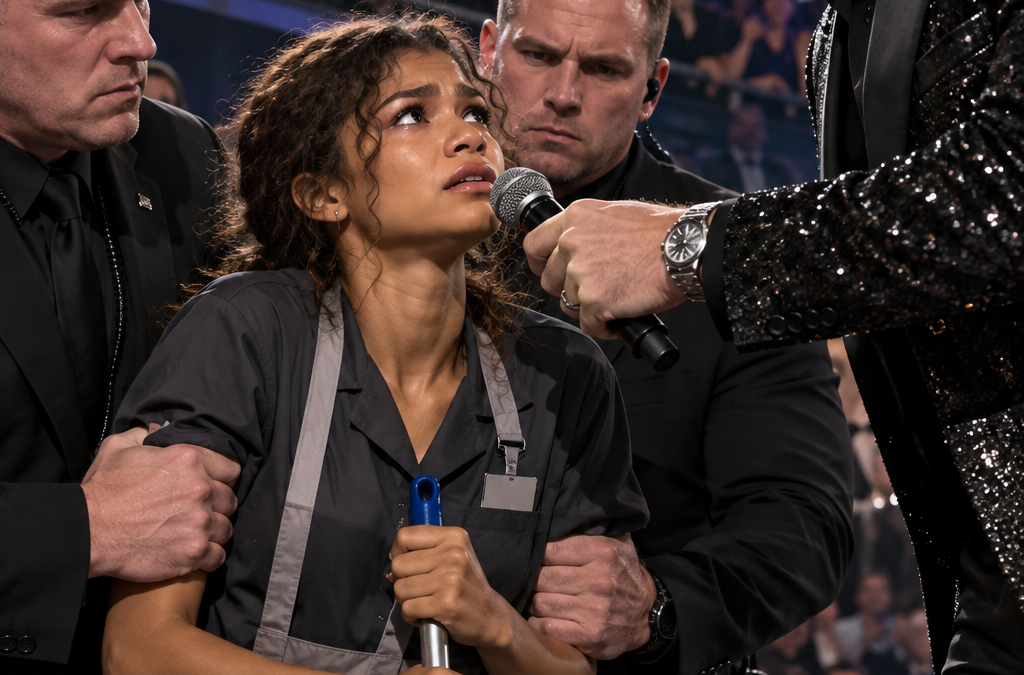
𝗙𝗨𝗟𝗟 𝗦𝗧𝗢𝗥𝗬
The first time I did it, I felt guilty.
I wasn’t supposed to.
I knew that.
But the hall was empty.
I stood at center stage and looked out at two thousand vacant seats.
My heart started pounding harder than if they had been full.
I sang one note.
Just one.
It went farther than I expected.
Out over the orchestra level.
Up toward the balcony.
Back toward me.
So I sang another.
After that, it became a secret.
Not every night.
Most nights.
I sang gospel.
Soul.
Old hymns Ruth had taught me.
Sometimes songs from artists who had performed there earlier that evening.
Sometimes things I made up.
Melodies without words.
The kind that arrived after midnight when I was too tired to be embarrassed by myself.
I never used a microphone.
I didn’t need one.
What I didn’t know was that I wasn’t actually alone.
Eddie Collins, the overnight sound engineer, had been listening.
He was in his late forties, quiet, always wore the same baseball cap, usually carried a coffee mug that smelled burnt from ten feet away.
We barely spoke.
“Morning.”
“Night.”
“Need the floor?”
“No.”
That was about it.
I had no idea he had heard me more than a hundred times.
I definitely didn’t know he had recorded me once.
That recording sat untouched on his hard drive for eight months.
I didn’t learn about any of it until after Garrett Dawson came to Harrington.
Everybody knew Garrett Dawson.
You couldn’t avoid him.
Billboards.
Streaming ads.
Late-night television.
Award shows.
Forty million followers.
Songs playing from grocery-store speakers.
Six platinum records.
Two sold-out international tours.
He had the kind of face entertainment companies spend millions teaching people to recognize.
I wasn’t a fan.
That didn’t mean I thought he was bad.
I just didn’t think much about him.
Ruth didn’t either.
The first time he appeared on television while she was sitting in her chair, she listened for fifteen seconds and said, “Too clean.”
“What?”
“The voice.”
“He’s a professional singer.”
She looked at me.
“So?”
I laughed.
“You think everybody’s fake.”
“No. Just people who sound afraid of being human.”
That was Ruth.
Garrett booked Harrington for a private VIP concert.
Five hundred guests.
Label executives.
Influencers.
Actors.
Producers.
Journalists.
People who paid more for one night than I made in months.
Our manager gathered the custodial team before the shift.
He looked directly at me.
“Backstage only tonight.”
I nodded.
“You do not enter the main hall once doors open.”
“Okay.”
“You stay invisible.”
That word stuck with me.
Invisible.
I’d gotten very good at that.
Thirty minutes before showtime, I was kneeling in a backstage corridor scrubbing a black mark from the baseboard.
Garrett’s entourage moved past every few minutes.
Stylists.
Assistants.
Photographers.
Security.
One woman carried nothing but sparkling water on a silver tray.
I had earbuds in.
They weren’t playing anything.
The battery was dead.
I wore them because people were less likely to talk to me if they thought I couldn’t hear.
The hallway became quiet.
I kept scrubbing.
Then I started humming.
I didn’t decide to.
I rarely did.
It was one of Ruth’s old hymns.
The melody rose naturally.
I sang a little louder.
A line.
Then another.
For a few seconds I forgot where I was.
Then somebody said, “What the hell is that?”
I stopped.
Garrett Dawson stood at the end of the hallway.
His manager, Phil Bradshaw, was behind him.
Two assistants hovered nearby.
I pulled out my earbuds.
Garrett stared at me.
Not smiling.
Something moved across his face.
I wouldn’t understand it until later.
Recognition.
Not recognition of me.
Recognition of what he had heard.
He knew voices.
Maybe better than anyone.
He knew exactly what mine was.
Then his expression changed.
The celebrity smile appeared.
“The mop girl thinks she’s Whitney Houston.”
His assistants laughed.
I looked back down.
“I’m sorry.”
I reached toward my bucket.
He walked closer.
“No, no.”
I froze.
“Don’t stop because of me.”
He crouched.
His cologne was so strong it almost made my eyes water.
“Sing.”
I shook my head.
“I was just working.”
“Sing for me.”
“I’m okay.”
His smile hardened.
“Right here.”
He looked at the floor beneath me.
“Where you belong.”
One of the assistants laughed again.
My hand tightened around the scrub brush.
I wanted to say something.
I didn’t.
Garrett stood.
He looked at Phil.
“Keep her around tonight.”
Phil frowned slightly.
“For what?”
“I’ve got an idea.”
Then Garrett walked away.
Phil looked at me.
“Don’t leave the building.”
“I wasn’t planning to.”
He followed Garrett.
I sat there for several seconds after they disappeared.
Something about the conversation made my skin feel cold.
I told myself I was imagining it.
The concert started at eight.
I stayed backstage.
From the service corridors, I could hear the crowd screaming.
The bass traveled through concrete.
Garrett’s voice followed.
At first I didn’t pay attention.
Then I stopped wiping a counter.
Something sounded wrong.
Not bad.
Wrong.
I had cleaned Harrington during hundreds of performances.
Opera singers.
Rock bands.
Broadway tours.
Country singers.
People who sounded better live than recorded.
People who sounded worse.
Real voices behaved in certain ways.
They moved differently through walls.
There was texture.
Air.
Tiny changes from one phrase to the next.
Breathing.
Garrett’s voice didn’t have any of that.
It was perfect.
Too perfect.
Every note landed exactly like the recording.
Every run.
Every high note.
Every breath.
I walked closer to the wall.
Listened.
And I understood.
He wasn’t singing live.
Not really.
The revelation surprised me less than I expected.
Mostly I felt sad.
Then a backstage door flew open.
Phil entered with two security guards.
He pointed at me.
“You.”
My stomach dropped.
“What?”
“Come on.”
“Where?”
He didn’t answer.
One guard took my arm.
I pulled back.
“I didn’t do anything.”
Phil’s expression stayed blank.
“I didn’t ask.”
The second guard took my other arm.
My cleaning cart rolled sideways and hit the wall.
“Wait.”
They started moving me down the corridor.
“Where are we going?”
Nothing.
Past dressing rooms.
Past equipment cases.
Past catering.
Then toward stage left.
I heard the crowd without walls between us.
Louder.
Nearer.
My chest tightened.
“Please.”
Phil opened the curtain.
Light exploded across my face.
Five hundred people.
Five hundred faces.
Five hundred phones.
I stopped so suddenly one guard nearly lost his grip.
“No.”
Phil pushed from behind.
I looked for somewhere to disappear.
There wasn’t anywhere.
Garrett stood at center stage.
He was smiling.
“Here she is.”
The crowd laughed before I’d even reached him.
I couldn’t understand why.
Then someone shouted, “Is that the janitor?”
More laughter.
I looked down at my uniform.
Gray work shirt.
Black pants.
Shoes stained with cleaning chemicals.
I suddenly saw myself through their eyes.
Garrett raised one hand.
“Everybody, I found tonight’s hidden talent.”
He pointed at me.
“This girl was singing in my hallway while cleaning.”
My hallway.
As though the building belonged to him.
He walked toward me.
“I told her if she thinks she’s a singer, we should give her an audience.”
“I never said that.”
The words escaped before I could stop them.
The laughter changed.
Garrett turned.
“What?”
“I never said I was a singer.”
His eyes sharpened.
Then he smiled again.
“Well, you were singing.”
“I was working.”
“Did I say you could talk?”
The room laughed.
My face burned.
A woman in the front covered her mouth while giggling.
A man lifted his champagne glass toward Garrett.
I could feel tears gathering.
I hated myself for that.
Not because tears were weakness.
Because I didn’t want him to see them.
Garrett took a microphone from a stand.
“Let’s make this interesting.”
He looked toward the sound booth.
“Track nine.”
A murmur moved through the audience.
I didn’t know what that meant.
At least not immediately.
Then I heard the piano introduction.
I knew the song.
Everybody who sang seriously knew it.
A huge ballad.
Four-octave range.
Long phrases.
An exposed bridge.
One final sustained note so high and difficult that most professionals lowered the key when performing it live.
I’d sung it alone.
Never for anyone.
Ruth had made me practice it because she said difficult songs exposed bad breathing.
Garrett held the microphone toward me.
“You know this?”
I nodded.
“Good.”
He looked at the audience.
“She’s going to sing the entire thing.”
More laughter.
“No backing vocals.”
He looked back at me.
“No help.”
I said nothing.
“And when you fail…”
He pointed toward the side of the stage.
“You’re going to get your mop.”
A few people cheered.
“Then clean this stage on your knees while everybody watches.”
My stomach turned.
A woman somewhere whispered, “That’s cruel.”
Her date kept filming.
Garrett pressed the microphone into my hand.
It felt heavier than any microphone should.
He stepped away.
I looked toward the wings.
The guards were still there.
Phil too.
I could run.
I remember thinking that very clearly.
Drop the microphone.
Go through the curtain.
Get my bag.
Leave.
I could be home before midnight.
Ruth would never need to know.
Nobody in that room knew my name.
They would forget me by breakfast.
The introduction continued.
Eight bars.
Then six.
My hands shook.
The audience waited.
Some smiling.
Some uncomfortable.
Some already looking at their phones.
Four bars.
I closed my eyes.
Suddenly I wasn’t nineteen.
I was five.
Barefoot on a kitchen stool.
Ruth behind me.
“Don’t sing from my throat.”
Two bars.
“Find yours.”
I inhaled.
Opened my eyes.
And began.
The first note was smaller than I wanted.
My mouth was dry.
My breath trembled.
Somebody near the front laughed softly.
Garrett smiled.
For half a second, fear came rushing back.
Then I heard Ruth again.
Not in my head this time.
In my body.
The second phrase came easier.
I lowered my shoulders.
Opened my ribs.
Stopped looking at faces.
By the third line, the room disappeared.
That was something singing had always done for me.
At two in the morning, I could forget I was the cleaning girl.
That night, somehow, I forgot there were five hundred people waiting for me to break.
I wasn’t singing to them.
I wasn’t singing to Garrett.
I wasn’t singing for a job.
I sang because the song was there.
And because I knew it.
The room became quieter.
I could feel that even with my eyes half closed.
The laughter stopped.
The phones remained lifted.
But nobody spoke.
The melody climbed.
So did I.
A low register first.
Then the middle.
Then the bridge.
The song demanded more air.
I gave it more.
It demanded power.
I stopped being afraid of sounding powerful.
One note opened into another.
Then another.
The hall began giving my voice back to me.
I knew that acoustic response.
I’d heard it alone a hundred nights.
Except now there were bodies in the seats.
Sound behaved differently.
Warmer.
Closer.
Alive.
I reached the final climb.
Somebody gasped.
I didn’t know who.
Garrett was somewhere to my left.
I didn’t look.
The high note was coming.
The one everybody talked about.
The one singers feared.
Ruth had never let me fear notes.
She hated when I called one high.
“High compared to what?”
“Other notes.”
“Then don’t climb to it.”
“What?”
“Put it where your voice already knows how to find it.”
That was how she talked.
Half music lesson.
Half riddle.
I took the breath.
Then I sang it.
No pushing.
No screaming.
I let it come forward.
The sound lifted through the hall.
I could feel vibration under my sternum.
In my face.
Behind my eyes.
For a few seconds, there was no stage.
No Garrett.
No uniform.
No laughter.
Only sound.
I held the note.
Then released it into the final phrase.
When the song ended, I opened my eyes.
Nobody moved.
One second.
Two.
Three.
I thought I had done something wrong.
Then a woman in the second row stood.
The same woman who had said the situation was cruel.
She was crying.
She started clapping.
Then somebody behind her stood.
Then another.
The balcony rose.
Suddenly the entire room was on its feet.
The sound hit me harder than the humiliation had.
Five hundred people screaming.
Applauding.
Stomping.
I just stood there.
I didn’t bow.
Didn’t smile.
I didn’t know how.
I’d never been applauded like that.
My entire life, singing had ended in silence.
Ruth smiling.
An empty hall.
That was all.
Now strangers were shouting.
Garrett was staring at me.
His smile was gone.
That was the first time I really looked at him.
Not Garrett Dawson the celebrity.
Just a man.
A frightened one.
He moved toward me quickly and took the microphone out of my hand.
“How about that?”
His voice boomed through the speakers.
Bright.
Artificial.
“Unexpected entertainment from our hardworking staff.”
He wrapped an arm around my shoulders.
I stiffened.
“Let’s give her a hand.”
The crowd kept shouting.
Someone from the balcony yelled, “Another song!”
Then another voice.
“Let her sing!”
More.
“One more!”
The words turned into a chant.
One more.
One more.
One more.
Garrett’s jaw tightened.
He turned his back to the audience.
His eyes found Phil in the wings.
I didn’t need to know them to understand the look.
Fix it.
Garrett faced the room again.
“She’s got work tomorrow.”
Silence.
He forced a laugh.
“Floors don’t clean themselves.”
Nobody laughed.
Not one person.
A minute earlier, they had laughed because he had given them permission.
Now the permission was gone.
Two guards took my arms.
Again.
“What?”
“Come with us.”
“I didn’t—”
“Move.”
They dragged me behind the curtain.
The crowd was still chanting.
Then the curtain closed.
The sound became muffled.
Phil was waiting.
He held out his hand.
“Badge.”
I stared.
“What?”
“Employee badge.”
“I don’t understand.”
“You violated event protocol.”
“But Garrett brought me out there.”
“Badge.”
“He made me sing.”
Phil’s eyes hardened.
“I don’t care.”
I felt something inside me go numb.
“You dragged me out there.”
“Your final paycheck will be mailed.”
My hands shook as I unclipped my badge.
Two years.
That little plastic card had let me enter the building where I had spent more nights than almost anywhere else.
I put it in his palm.
He shoved it into his jacket.
“Don’t come back.”
I looked toward the stage.
Garrett had started singing again.
Or whatever he was doing.
Perfect notes traveled through the wall.
The concert continued.
As though I had never existed.
A guard walked me toward the service door.
I stopped near my locker.
“My phone.”
“Come back tomorrow for personal property.”
“They said I can’t come back.”
“Then management will send it.”
He opened the door.
Rain had started.
I stepped outside.
The door locked behind me.
The bus wasn’t coming for twenty-seven minutes.
I started walking.
By the time I reached home, I was soaked.
Ruth was sitting beside the window.
She always waited when I worked late.
The moment she saw me, she stood.
I tried to speak.
Nothing came out.
She opened her arms.
That was all it took.
I collapsed against her.
For several minutes, I cried so hard I couldn’t breathe.
She didn’t ask what happened.
Didn’t tell me to calm down.
Didn’t tell me everything would be fine.
She just held me.
Eventually she whispered, “They hurt you?”
I nodded.
“What happened?”
“They made me sing.”
She pulled back.
“Who?”
I told her.
Not well.
Pieces.
The hallway.
Garrett.
The crowd.
The microphone.
The song.
Getting fired.
When I finished, Ruth looked at me for a long time.
Then she said, “How’d you sing?”
I almost laughed.
“Grandma.”
“I’m serious.”
“I don’t know.”
“You know.”
I looked away.
“They stood up.”
Ruth’s expression changed.
“All of them?”
“Most.”
“Baby.”
“I’m fired.”
“That ain’t what I asked.”
I wiped my face.
“I sang good.”
She nodded.
“There you go.”
“You don’t understand.”
“Oh, I understand plenty.”
She touched my cheek.
“They put you on a stage to make you small.”
Her eyes hardened.
“And you sang anyway.”
I didn’t know that while Ruth was holding me, hundreds of videos were already spreading online.
I didn’t know my name was being searched.
I didn’t know people were identifying me through staff records.
My phone was still in the Harrington locker.
I slept on the couch because I didn’t want Ruth to hear me crying again.
When I woke late the next morning, our neighbor was pounding on the door.
Ruth answered.
A few seconds later, she came back into the room looking irritated.
“What’s wrong?”
“Apparently the whole world wants to talk to you.”
I sat up.
“What?”
Our neighbor pushed her phone into my hand.
There I was.
Onstage.
Uniform.
Microphone.
Twenty-three million views.
I stared.
The number didn’t make sense.
Comments moved faster than I could read.
WHO IS SHE?
This is REAL singing.
He tried to embarrass her and accidentally exposed himself.
Somebody find this girl.
Then other comments.
Fake.
Staged.
Pitch correction.
Publicity stunt.
She knew exactly what she was doing.
I scrolled.
That was the mistake.
At first, praise frightened me.
Then the cruelty found me.
People examined my face.
My clothes.
My body.
My job.
Cleaning girl.
Janitor.
Nobody.
Fraud.
Attention seeker.
One comment said I probably planned the entire thing because “girls like that will do anything to get discovered.”
I didn’t know what “girls like that” meant.
I knew exactly what it meant.
Ruth took the phone away.
“Enough.”
“But—”
“Enough.”
By afternoon, reporters were outside.
I stayed inside.
Garrett’s team released a statement.
They called me an unauthorized temporary custodial contractor.
Said I had disrupted a private performance.
Said legal action was being considered.
I read it three times.
Temporary custodial contractor.
Not Tiana.
Not even employee.
Something disposable.
The next day, Garrett appeared on a podcast.
The neighbor showed us part of it before Ruth turned it off.
He laughed.
Said he felt sorry for me.
Then said, “She’s a cleaner. She cleans toilets.”
The host laughed too.
Garrett continued.
“You can’t mop your way to a Grammy.”
That sentence hurt more than I expected.
Not because I wanted a Grammy.
I didn’t even want fame.
It hurt because he said cleaner like it meant less human.
Like the work I had done erased whatever else I was capable of.
I locked myself in the bathroom.
Ruth knocked.
“Open the door.”
“I’m okay.”
“No, you aren’t.”
“Grandma.”
“Open it.”
I did.
She took my face in both hands.
“They took your job.”
I started crying.
“They took your badge.”
I nodded.
“They can say anything about you they want.”
“People believe him.”
“Some do.”
“They’re saying I cheated.”
She tightened her grip gently.
“Listen.”
I looked at her.
“They cannot take your voice.”
I closed my eyes.
“Not Garrett Dawson. Not his lawyers. Not a million strangers.”
She pressed her forehead against mine.
“It was yours when nobody heard it.”
Her voice softened.
“It will still be yours if everybody stops listening tomorrow.”
That saved me.
Not completely.
But enough.
Three days later, our neighbor’s phone rang.
She answered, then handed it to me.
A man’s voice said, “Tiana?”
“Yes.”
“My name’s Eddie Collins.”
I knew the name.
“The sound engineer?”
“Night shift.”
I sat straighter.
“Okay.”
“You don’t really know me.”
“No.”
“But I’ve heard you.”
My stomach tightened.
“What?”
“I’ve heard you sing after hours.”
Silence.
“For how long?”
“Almost two years.”
I stood up.
“You were listening?”
“I’m sorry.”
I didn’t know whether to feel embarrassed or angry.
Then he said, “I recorded you once.”
“What?”
“One night. I shouldn’t have.”
I closed my eyes.
“Eddie—”
“I never shared it. I swear.”
“Then why are you telling me?”
“Because I need to tell you something about the concert.”
I waited.
“The microphone Garrett gave you was dead.”
“What?”
“It wasn’t routed to the house.”
My skin went cold.
“He gave you a dead mic?”
“Yes.”
“Then how…”
“I turned it on.”
I sat down.
Eddie continued.
“I saw what they were doing. I patched you into the main system.”
I couldn’t speak.
“And I recorded the raw feed.”
“What does that mean?”
“It means I have exactly what came through that microphone. No pitch correction. No processing. No effects.”
He paused.
“I can prove you were singing live.”
I started crying again.
Not dramatically.
Tears simply came.
“Eddie.”
“Yeah?”
“Why?”
He was quiet for a moment.
“Because I’ve listened to you sing for two years to an empty room.”
His voice changed.
“And I wasn’t going to let them tell the world it wasn’t real when I knew better.”
That was the first time I felt like the ground under me might actually stop moving.
Eddie connected me with a local podcast called Unrehearsed.
I said no.
Ruth said yes.
“You want me to go sing again after all this?”
“Yes.”
“I’m not ready.”
“You’ll never feel ready if you wait for the fear to leave.”
“I don’t want millions of people watching.”
“Then don’t sing to millions.”
She pointed at me.
“Sing to one microphone.”
So I did.
The studio was tiny.
No audience.
No lights.
Just a host who had spent years as a session musician.
Eddie came with us.
Ruth sat beside me.
We talked.
Then the host asked, “Would you sing something?”
“No track?”
“Nothing.”
I looked at Ruth.
She nodded.
I closed my eyes.
And sang.
A cappella.
One verse.
One chorus.
No spectacle.
No humiliation.
No Garrett.
The episode went online that afternoon.
By dinner, millions had heard it.
The argument about whether my voice was real began collapsing.
But the story was becoming bigger than me.
A journalist named Clare Sanderson had spent two years investigating Garrett’s performances.
Former engineers had talked anonymously.
There were rumors of heavy correction.
Playback.
Studio manipulation.
But rumors weren’t proof.
Then somebody inside Garrett’s own team gave Clare the raw recording masters.
I knew none of this while it happened.
I was trying to figure out rent.
Trying to find another cleaning job.
Trying to make Ruth take her medication at the proper time.
Then Clare’s article came out.
Fourteen pages.
Audio analysis.
Studio files.
Internal communication.
Former engineers.
Layer after layer of pitch correction.
Garrett’s recorded voice had been manipulated so heavily that, according to the article, the finished tracks barely resembled the original performances.
The story exploded.
Suddenly the conversation wasn’t only about me.
It was about him.
People found old concert clips.
Microphone failures.
Strange backing tracks.
Moments where his mouth and the vocal didn’t match perfectly.
He had built an image on perfection.
Now every piece of that perfection was being dissected.
I didn’t enjoy watching it.
People assumed I did.
The truth was stranger.
Part of me was angry enough to want him exposed.
Part of me remembered what it felt like when five hundred strangers laughed at me and didn’t want another human being to experience something similar, even him.
Ruth said, “Consequences ain’t revenge.”
I looked at her.
“What?”
“Don’t confuse them.”
She returned to her crossword.
“If you burn somebody’s house down because they insulted you, that’s revenge.”
She filled in a word.
“If the house falls because he built it on sand, that’s consequences.”
The Nashville Music Awards happened three weeks later.
Thirty-eight million viewers.
I had no intention of attending.
Then Wallace Peyton called.
I’d heard the name.
Everybody in music had.
Producer.
Label founder.
Half a century in the industry.
He asked to meet.
I refused.
He asked again.
Ruth answered the second call.
“She’ll come.”
I stared at her.
She covered the phone.
“You going.”
At the meeting, Wallace didn’t offer me a contract.
Not immediately.
He asked me to sing.
Then he listened.
Really listened.
When I finished, he said, “I want you at the awards.”
“No.”
He smiled.
“I expected that.”
“I don’t want to stand in front of people again.”
“Understandable.”
“Then why ask?”
“Because they’re changing the live performance category.”
I frowned.
He explained.
Garrett was nominated.
After Clare’s article, the Academy wanted a live demonstration.
No backing tracks.
No correction.
No processing.
Garrett would sing.
So would I.
“The same song?” I asked.
“Yes.”
My stomach twisted.
The song from Harrington.
“No.”
Wallace nodded.
“Then don’t.”
I looked at him.
“No pressure?”
“No.”
“You’re serious?”
“Completely.”
He leaned back.
“Tiana, if you never sing publicly again, your voice remains your voice.”
That sounded like Ruth.
Then he added, “But if the reason you say no is because Garrett Dawson taught you to fear a stage, you might want to think carefully about whether you’re letting him keep something that belongs to you.”
I hated him slightly for being right.
On the night of the awards, I stood backstage wearing a simple dark dress Ruth had chosen.
She sat in the audience.
Eddie stood near the sound booth.
My hands were cold.
Garrett arrived through a side entrance.
We didn’t speak.
I saw him once across the corridor.
He looked older than he had weeks earlier.
The arrogance wasn’t gone.
But it was damaged.
His category came early.
The host walked onstage.
The audience already knew about the controversy.
You could feel it.
Garrett’s name was announced.
He walked toward the podium.
Then the host stopped him.
“Before this award is presented, the Academy has requested a live performance from both featured vocalists.”
Silence.
“No backing vocals.”
Garrett froze.
“No pitch correction.”
His face changed.
“No processing.”
The host looked at him.
“Just the voice.”
I watched from the wings.
The band began.
Garrett took the microphone.
For a moment, I felt sorry for him.
Then he sang.
The first line wasn’t terrible.
That was important.
The man wasn’t completely unable to sing.
His natural voice simply wasn’t the thing the world had been sold.
The second phrase tightened.
A note cracked.
Small.
Almost invisible.
Then he reached the climb.
His shoulders lifted.
His neck strained.
The sound flattened.
He pushed.
The note broke.
I closed my eyes.
When I opened them, Garrett had lowered the microphone.
He didn’t finish the song.
The room stayed silent.
Then the host said my name.
I walked out.
Every step toward center stage brought back Harrington.
The laughter.
My uniform.
The guards.
The microphone shoved into my hand.
For one second, I nearly stopped.
Then I saw Ruth.
Front section.
Hands folded.
She looked at me and mouthed the words she’d been telling me since I was five.
Find yours.
I took the microphone.
The band began again.
Same song.
Same structure.
Same impossible climb.
But this time nobody was laughing.
That almost made it harder.
Expectation can be its own kind of cruelty.
I stopped thinking about expectation.
I sang to Ruth.
Then to the empty Harrington.
Then to that five-year-old girl standing on a kitchen stool.
The song opened.
My fear went somewhere else.
I reached the final note.
Let it come.
Held it.
Released.
Silence followed.
Four seconds.
Then the room rose.
I could hear applause.
But I looked only at Ruth.
She was crying.
Smiling.
Her hands pressed together beneath her chin.
Garrett stood offstage.
His hand covered his mouth.
His eyes were red.
We looked at one another.
For the first time, I didn’t feel afraid of him.
I didn’t feel triumphant either.
I felt free.
Wallace Peyton walked toward the stage.
He took my hand.
Then leaned toward a microphone.
“Welcome to Peyton Records, Tiana.”
The crowd exploded.
I looked at him.
“What?”
He laughed.
“You can still say no.”
Ruth shouted from the audience.
“She ain’t saying no.”
Everybody laughed.
Including me.
Garrett’s career collapsed quickly after that.
His label dropped him.
His tour was canceled.
Sponsors disappeared.
The manipulation revealed in the studio files became impossible to explain away.
But what damaged him most wasn’t that technology had been used.
Technology exists everywhere in music.
It was the deception.
The years of selling technical perfection as raw live ability.
And then the cruelty.
People might have forgiven a singer for insecurity.
They had a harder time forgiving a wealthy superstar who had dragged a nineteen-year-old cleaner onto a stage hoping she would fail so he could feel powerful again.
Phil disappeared from the industry.
I never heard from him.
Garrett gave one final television interview.
I watched about two minutes.
He said pressure had made him make decisions he regretted.
He said the industry rewarded perfection.
He said he had lost himself.
He never said my name.
I turned it off.
I didn’t need him to say it anymore.
A week after the awards, Wallace met me at a diner.
Not an office.
Eddie had told him I hated formal meetings.
Wallace placed a contract on the table.
I didn’t touch it.
“I don’t want to be famous.”
He nodded.
“I believe you.”
“I mean it.”
“I know.”
“I don’t want people following me.”
“Reasonable.”
“I don’t want to spend my life pretending I’m happy because somebody bought a ticket.”
“Good.”
I stared at him.
“You’re not very good at selling this.”
“I’m not selling fame.”
He pushed the contract slightly closer.
“I’m offering you the opportunity to record.”
“Why?”
“Because you have a voice people should hear.”
I looked at Ruth.
She carried the same purse she’d carried for years.
She opened it.
Pulled out a pen.
Old.
Blue plastic.
The pen she’d used to write hymn lyrics in the margins of her Bible.
She placed it beside the contract.
“No pressure,” she said.
I laughed.
“You brought a pen.”
“Preparation ain’t pressure.”
Eddie sat two booths away pretending not to watch.
I read every page.
Asked questions.
Wallace answered them.
Then I signed.
My first request was that we record the album at Harrington.
Wallace stared at me.
“The hall?”
“Yes.”
“After what happened?”
“Because of what happened.”
I needed that building to become mine again.
Not legally.
Emotionally.
For two years, I had cleaned its floors.
For hundreds of nights, I had sung to its empty seats.
Then one night, it became the place where someone tried to humiliate me.
I didn’t want that to be the final memory.
Eddie became my sound engineer.
Officially.
The first time I walked into Harrington for the recording sessions, I entered through the front doors.
I stopped immediately inside.
The brass handles were behind me.
For two years, I’d polished those handles and never used them.
Eddie looked back.
“You good?”
“Yeah.”
I touched the door.
“Just weird.”
Ruth sat in the front row during every recording session.
Her lungs were worse by then.
Some days she needed oxygen.
She refused to stay home.
Between takes I’d look out and see her eyes closed.
Sometimes her lips moved.
Prayer.
Sometimes she smiled.
She never told me how to sing anymore.
She didn’t have to.
The album debuted at number one.
That fact felt less real to me than hearing one of my songs on the radio for the first time.
I was in a grocery store.
Frozen-food aisle.
A speaker overhead crackled.
Then my voice came out.
I stopped pushing the cart.
The woman beside me thought something was wrong.
“You okay?”
I started laughing.
“Yeah.”
She stared.
“That’s you.”
I nodded.
She screamed louder than anyone at Harrington had.
I nearly dropped a bag of peas.
But fame wasn’t the part that changed me most.
Six months after the concert, Harrington opened a public rehearsal room.
Free.
No label required.
No professional résumé.
No audition.
A place for musicians who had nowhere else to practice.
There was a plaque beside the door.
THE TIANA INGRAM ROOM.
Below it were Ruth’s words.
DON’T YOU EVER LET NOBODY STEAL IT.
The first time I saw the plaque, I turned toward her.
“You approved that?”
She smiled.
“Maybe.”
“Grandma.”
“Looks good.”
I cried.
So did Eddie.
He claimed something was in his eye.
Nobody believed him.
I also asked Harrington to do something else.
Pay the custodial staff more.
Not a publicity raise.
A real one.
And move their break room out of the basement.
People laughed when I insisted their names be listed in concert programs.
I didn’t.
Nobody performs alone.
Somebody rigged the lights.
Somebody tuned the piano.
Somebody cleaned the dressing room.
Somebody fixed the seat.
Somebody stayed after midnight restoring the room for tomorrow.
I knew what it felt like to be one of the people everybody depended on and almost nobody saw.
I wanted them seen.
Months later, I returned to Harrington late at night.
No event.
No press.
No Wallace.
No Eddie.
No cameras.
I asked security if I could have the hall for ten minutes.
The guard smiled.
“Take twenty.”
I entered through the front.
The building was almost dark.
I walked down the aisle.
The chandelier hung motionless above the balcony.
I climbed the stage steps.
Center stage.
Same spot.
I could still remember Garrett standing six feet away.
The audience laughing.
My hands shaking.
For a moment, the memory was so vivid I could smell his cologne.
Then it faded.
I closed my eyes.
And sang.
Not the difficult song.
Not the one from the awards.
Ruth’s hymn.
The first one.
The song she’d sung while washing dishes.
The melody I had hummed in the hallway the night Garrett heard me.
No microphone.
No accompaniment.
My voice crossed the empty seats.
Rose into the balcony.
Came back.
Exactly as it had before anyone knew my name.
That was when I understood something fame had almost confused.
Garrett hadn’t given me a voice.
The audience hadn’t given me one.
Wallace hadn’t.
The internet hadn’t.
Even Ruth hadn’t.
She had taught me to find it.
But it had always been mine.
I finished the hymn.
The final note disappeared into the room.
No applause followed.
I smiled.
I think that surprised me.
Months earlier, five hundred people standing had felt impossible.
Now the silence felt better.
Because I no longer needed the room to tell me whether what I carried was real.
I sat at the edge of the stage.
After a while, Ruth’s words returned.
Don’t you ever let nobody steal it.
As a child, I thought she meant my singing.
Now I knew she meant something larger.
People will try to tell you what your work makes you.
What your clothes make you.
What your address makes you.
They will confuse your position with your worth.
They will see a uniform and decide they know the person wearing it.
Garrett looked at my cleaning shirt and saw somebody safe to humiliate.
Phil looked at my badge and saw something disposable.
Five hundred people looked at my mop and laughed before they’d heard a sound.
The strange thing was that I had been doing something similar to myself.
I had spent years believing talent didn’t matter because talent didn’t pay rent.
I believed the world had already decided where people like me belonged.
Kitchen stools.
Service entrances.
Empty stages after midnight.
I thought wanting more was dangerous.
Then one cruel man shoved a microphone into my hand because he believed failure was guaranteed.
He didn’t discover my voice.
He forced me into the moment when I finally stopped hiding from it.
That doesn’t make what he did a gift.
Cruelty doesn’t become kindness because somebody survives it.
I would never thank Garrett for humiliating me.
I would never pretend the pain had been necessary.
There were kinder ways I could have been seen.
There should have been.
But once it happened, I had a choice about what came next.
I could let that stage remain the place where I had been dragged beneath a spotlight in a cleaning uniform.
Or I could return to it on my own terms.
So I did.
Again.
And again.
Years later, when people asked about the night everything changed, they usually wanted to hear about the impossible note.
Or Garrett’s face.
Or the five hundred people standing.
Those weren’t the details I remembered most.
I remembered walking home in the rain.
I remembered Ruth waiting beside the window.
I remembered Eddie saying he had turned on my microphone because he knew what they were trying to do.
I remembered one woman in the audience standing first.
Before everybody else.
Before it was safe to applaud me.
Before the room had decided I mattered.
That first person mattered.
So did Pamela—no, that was another life, another story. In mine, it was Eddie in the booth, Ruth at the window, and one unknown woman rising from her chair before the crowd followed.
People talk about courage as if it always belongs to the person holding the microphone.
Sometimes courage belongs to the person who turns the microphone on.
Sometimes it belongs to the person who stands first.
Sometimes it belongs to an old woman with damaged lungs telling a frightened girl to open the bathroom door.
Ruth lived long enough to hear my first album.
That mattered more to me than every chart position combined.
One evening, I found her sitting near the apartment window listening to the final track.
It was the hymn.
Her hymn.
I had recorded it in one take.
No elaborate arrangement.
Just piano and my voice.
She listened until the last note ended.
Then she said, “Too clean.”
I stared at her.
She kept a straight face for about two seconds.
Then laughed.
“That’s not funny.”
“It is from here.”
“You’ve been waiting years to say that.”
“Absolutely.”
I sat beside her.
She took my hand.
“You happy?”
I thought before answering.
“Sometimes.”
“Good.”
“Only sometimes?”
“Happy all the time is for fools and advertisements.”
I smiled.
She squeezed my hand.
“You still singing when nobody’s listening?”
“Yeah.”
“Then you’re all right.”
She was right.
I still do.
Sometimes after rehearsals, when everyone leaves, I ask for a few minutes alone.
I turn off the monitors.
No microphone.
No recording.
I sing into the empty room.
Because that’s where I met myself.
Long before an audience did.
Long before anybody wrote my name on a contract.
Long before Garrett Dawson dragged me under a spotlight believing the world would laugh when I opened my mouth.
He had looked at me and seen a cleaning girl.
Nothing more.
I had looked at myself and, in some ways, seen the same limitation.
That was the part I eventually had to forgive myself for.
I had confused being overlooked with being ordinary.
They aren’t the same.
There are extraordinary people everywhere nobody thinks to look.
Behind counters.
Driving buses.
Cleaning offices.
Stocking shelves overnight.
Caring for children who aren’t theirs.
Cooking food they can’t afford to order.
Working two jobs and carrying instruments they haven’t touched in months because rent comes first.
Some of them will be discovered.
Most won’t.
That doesn’t make what they carry less real.
I know that now.
I knew it completely one quiet night when I returned to Harrington after everyone had gone.
I stood beneath the chandelier.
No phone cameras.
No awards.
No famous producer waiting in the wings.
No man trying to make me fail.
I sang Ruth’s song.
When I finished, the hall gave my own voice back to me.
I looked over the empty seats.
Then I smiled.
At nineteen, I had thought the greatest moment of my life would be hearing five hundred people stand and applaud.
I was wrong.
The greatest moment came later.
It was standing alone in the same room, hearing nothing after the final note, and realizing silence no longer made me invisible.
𝗧𝗛𝗘 𝗘𝗡𝗗
A Superstar Dragged Me Out of a Cleaning Hallway, Put a Microphone in My Hand, and Told Five Hundred People to Watch Me Fail
Two security guards pulled me beneath the spotlight while five hundred people laughed, and Garrett Dawson shoved a microphone against my chest as if he were handing me the weapon he expected me to use against myself.
My knees were shaking so badly I could barely stand, but when he ordered me to sing the one song he had never dared perform live, I heard my grandmother’s voice inside my head and realized there was only one thing in that room he could never take from me.
My name is Tiana Ingram.
I was nineteen years old when a man with six platinum records decided it would be funny to humiliate the cleaning girl in front of five hundred people.
Before that night, almost nobody knew my name.
That had never bothered me.
Being unseen was something I had learned early.
My grandmother, Ruth, and I lived in a one-bedroom apartment on the east side of Nashville where the radiator made more noise than the television and one window never closed properly when it rained.
Some weeks we ate rice and gravy.
Some weeks we skipped the gravy.
Ruth never called us poor.
She said poor was a word people used when they wanted you to confuse what was in your bank account with what was inside you.
She had been a gospel singer before her lungs began failing.
Not famous.
Not the kind of singer who traveled with buses and managers.
She sang in churches.
Small ones.
Wooden pews.
Old carpet.
Hand fans printed with funeral-home advertisements.
Congregations where people didn’t clap because someone hit a technically difficult note.
They clapped because something inside them had moved.
When I was little, people used to tell me that Ruth could stop a church service with one note.
By the time I was old enough to remember her singing clearly, emphysema had already begun stealing pieces of her breath.
She could still sing softly around the apartment.
But the long notes disappeared.
Then the high ones.
Eventually she stopped singing in church altogether.
She never stopped teaching me.
I was five the first time she stood me on a kitchen stool and asked me to match a note.
She hummed.
I copied her.
She shook her head.
“Don’t copy me.”
I frowned.
“You told me to.”
“I told you to sing the note.”
“That’s the same thing.”
“No, baby.”
She tapped two fingers against the center of my chest.
“Don’t sing from my throat. Find yours.”
I didn’t understand.
She made me do it again.
And again.
And again.
Years later, I realized that was how Ruth taught everything.
Never by telling me exactly where to place my tongue or how to shape a vowel.
She taught me to listen.
To breathe.
To feel when a note was sitting wrong in my body.
“Music knows when you’re lying,” she used to say.
I would roll my eyes.
“Music doesn’t know anything.”
“Oh, it knows.”
“How?”
“Sing badly on purpose.”
I’d do it.
She’d wince.
“See?”
I would laugh.
That kitchen became my first stage.
A table missing one chair.
A refrigerator covered with overdue notices and grocery coupons.
A stove that clicked three times before the flame caught.
Ruth humming from across the room.
Me standing barefoot on cracked linoleum.
By the time I was twelve, I could sing things I didn’t know were supposed to be difficult.
By fourteen, I could hear a melody once and reproduce it.
By sixteen, I could build harmonies in my head before anybody had shown me what harmony was on paper.
None of that paid rent.
That was the problem.
Talent sounds romantic when somebody else is paying the bills.
My grandmother’s medication cost money.
Electricity cost money.
Food cost money.
By seventeen, school had become something I attended around everything else.
Then Ruth had a hospital stay we couldn’t afford.
I left.
I told myself it was temporary.
It wasn’t.
At eighteen, I started cleaning at Harrington Concert Hall.
If you love music, there are crueler places to mop floors.
Harrington was one of those buildings people spoke about with reverence.
Old stone exterior.
Brass doors.
Red velvet seats.
Balconies curving around the main hall.
A crystal chandelier hanging above everything like frozen rain.
Legends had performed there.
Names I had listened to on cracked speakers in our apartment.
People whose voices Ruth made me study.
My job began after they left.
The stars came through the front doors.
I came through the service entrance.
They arrived under lights.
I arrived when half the lights had been switched off.
They stood beneath applause.
I emptied their trash cans.
And I didn’t hate it.
That surprises people when they hear what happened later.
But I didn’t.
The work was honest.
The building was beautiful when it was empty.
At two in the morning, Harrington felt less like a concert hall and more like a cathedral that had forgotten the congregation.
I loved those hours.
Nobody cared what I wore.
Nobody asked what I planned to do with my life.
Nobody told me talent needed connections.
Nobody looked at the girl pushing the mop cart and tried to calculate what she was worth.
After the final security sweep, I would sometimes leave my cart near the wings and walk onto the stage.
The first time I did it, I felt guilty.
I wasn’t supposed to.
I knew that.
But the hall was empty.
I stood at center stage and looked out at two thousand vacant seats.
My heart started pounding harder than if they had been full.
I sang one note.
Just one.
It went farther than I expected.
Out over the orchestra level.
Up toward the balcony.
Back toward me.
So I sang another.
After that, it became a secret.
Not every night.
Most nights.
I sang gospel.
Soul.
Old hymns Ruth had taught me.
Sometimes songs from artists who had performed there earlier that evening.
Sometimes things I made up.
Melodies without words.
The kind that arrived after midnight when I was too tired to be embarrassed by myself.
I never used a microphone.
I didn’t need one.
What I didn’t know was that I wasn’t actually alone.
Eddie Collins, the overnight sound engineer, had been listening.
He was in his late forties, quiet, always wore the same baseball cap, usually carried a coffee mug that smelled burnt from ten feet away.
We barely spoke.
“Morning.”
“Night.”
“Need the floor?”
“No.”
That was about it.
I had no idea he had heard me more than a hundred times.
I definitely didn’t know he had recorded me once.
That recording sat untouched on his hard drive for eight months.
I didn’t learn about any of it until after Garrett Dawson came to Harrington.
Everybody knew Garrett Dawson.
You couldn’t avoid him.
Billboards.
Streaming ads.
Late-night television.
Award shows.
Forty million followers.
Songs playing from grocery-store speakers.
Six platinum records.
Two sold-out international tours.
He had the kind of face entertainment companies spend millions teaching people to recognize.
I wasn’t a fan.
That didn’t mean I thought he was bad.
I just didn’t think much about him.
Ruth didn’t either.
The first time he appeared on television while she was sitting in her chair, she listened for fifteen seconds and said, “Too clean.”
“What?”
“The voice.”
“He’s a professional singer.”
She looked at me.
“So?”
I laughed.
“You think everybody’s fake.”
“No. Just people who sound afraid of being human.”
That was Ruth.
Garrett booked Harrington for a private VIP concert.
Five hundred guests.
Label executives.
Influencers.
Actors.
Producers.
Journalists.
People who paid more for one night than I made in months.
Our manager gathered the custodial team before the shift.
He looked directly at me.
“Backstage only tonight.”
I nodded.
“You do not enter the main hall once doors open.”
“Okay.”
“You stay invisible.”
That word stuck with me.
Invisible.
I’d gotten very good at that.
Thirty minutes before showtime, I was kneeling in a backstage corridor scrubbing a black mark from the baseboard.
Garrett’s entourage moved past every few minutes.
Stylists.
Assistants.
Photographers.
Security.
One woman carried nothing but sparkling water on a silver tray.
I had earbuds in.
They weren’t playing anything.
The battery was dead.
I wore them because people were less likely to talk to me if they thought I couldn’t hear.
The hallway became quiet.
I kept scrubbing.
Then I started humming.
I didn’t decide to.
I rarely did.
It was one of Ruth’s old hymns.
The melody rose naturally.
I sang a little louder.
A line.
Then another.
For a few seconds I forgot where I was.
Then somebody said, “What the hell is that?”
I stopped.
Garrett Dawson stood at the end of the hallway.
His manager, Phil Bradshaw, was behind him.
Two assistants hovered nearby.
I pulled out my earbuds.
Garrett stared at me.
Not smiling.
Something moved across his face.
I wouldn’t understand it until later.
Recognition.
Not recognition of me.
Recognition of what he had heard.
He knew voices.
Maybe better than anyone.
He knew exactly what mine was.
Then his expression changed.
The celebrity smile appeared.
“The mop girl thinks she’s Whitney Houston.”
His assistants laughed.
I looked back down.
“I’m sorry.”
I reached toward my bucket.
He walked closer.
“No, no.”
I froze.
“Don’t stop because of me.”
He crouched.
His cologne was so strong it almost made my eyes water.
“Sing.”
I shook my head.
“I was just working.”
“Sing for me.”
“I’m okay.”
His smile hardened.
“Right here.”
He looked at the floor beneath me.
“Where you belong.”
One of the assistants laughed again.
My hand tightened around the scrub brush.
I wanted to say something.
I didn’t.
Garrett stood.
He looked at Phil.
“Keep her around tonight.”
Phil frowned slightly.
“For what?”
“I’ve got an idea.”
Then Garrett walked away.
Phil looked at me.
“Don’t leave the building.”
“I wasn’t planning to.”
He followed Garrett.
I sat there for several seconds after they disappeared.
Something about the conversation made my skin feel cold.
I told myself I was imagining it.
The concert started at eight.
I stayed backstage.
From the service corridors, I could hear the crowd screaming.
The bass traveled through concrete.
Garrett’s voice followed.
At first I didn’t pay attention.
Then I stopped wiping a counter.
Something sounded wrong.
Not bad.
Wrong.
I had cleaned Harrington during hundreds of performances.
Opera singers.
Rock bands.
Broadway tours.
Country singers.
People who sounded better live than recorded.
People who sounded worse.
Real voices behaved in certain ways.
They moved differently through walls.
There was texture.
Air.
Tiny changes from one phrase to the next.
Breathing.
Garrett’s voice didn’t have any of that.
It was perfect.
Too perfect.
Every note landed exactly like the recording.
Every run.
Every high note.
Every breath.
I walked closer to the wall.
Listened.
And I understood.
He wasn’t singing live.
Not really.
The revelation surprised me less than I expected.
Mostly I felt sad.
Then a backstage door flew open.
Phil entered with two security guards.
He pointed at me.
“You.”
My stomach dropped.
“What?”
“Come on.”
“Where?”
He didn’t answer.
One guard took my arm.
I pulled back.
“I didn’t do anything.”
Phil’s expression stayed blank.
“I didn’t ask.”
The second guard took my other arm.
My cleaning cart rolled sideways and hit the wall.
“Wait.”
They started moving me down the corridor.
“Where are we going?”
Nothing.
Past dressing rooms.
Past equipment cases.
Past catering.
Then toward stage left.
I heard the crowd without walls between us.
Louder.
Nearer.
My chest tightened.
“Please.”
Phil opened the curtain.
Light exploded across my face.
Five hundred people.
Five hundred faces.
Five hundred phones.
I stopped so suddenly one guard nearly lost his grip.
“No.”
Phil pushed from behind.
I looked for somewhere to disappear.
There wasn’t anywhere.
Garrett stood at center stage.
He was smiling.
“Here she is.”
The crowd laughed before I’d even reached him.
I couldn’t understand why.
Then someone shouted, “Is that the janitor?”
More laughter.
I looked down at my uniform.
Gray work shirt.
Black pants.
Shoes stained with cleaning chemicals.
I suddenly saw myself through their eyes.
Garrett raised one hand.
“Everybody, I found tonight’s hidden talent.”
He pointed at me.
“This girl was singing in my hallway while cleaning.”
My hallway.
As though the building belonged to him.
He walked toward me.
“I told her if she thinks she’s a singer, we should give her an audience.”
“I never said that.”
The words escaped before I could stop them.
The laughter changed.
Garrett turned.
“What?”
“I never said I was a singer.”
His eyes sharpened.
Then he smiled again.
“Well, you were singing.”
“I was working.”
“Did I say you could talk?”
The room laughed.
My face burned.
A woman in the front covered her mouth while giggling.
A man lifted his champagne glass toward Garrett.
I could feel tears gathering.
I hated myself for that.
Not because tears were weakness.
Because I didn’t want him to see them.
Garrett took a microphone from a stand.
“Let’s make this interesting.”
He looked toward the sound booth.
“Track nine.”
A murmur moved through the audience.
I didn’t know what that meant.
At least not immediately.
Then I heard the piano introduction.
I knew the song.
Everybody who sang seriously knew it.
A huge ballad.
Four-octave range.
Long phrases.
An exposed bridge.
One final sustained note so high and difficult that most professionals lowered the key when performing it live.
I’d sung it alone.
Never for anyone.
Ruth had made me practice it because she said difficult songs exposed bad breathing.
Garrett held the microphone toward me.
“You know this?”
I nodded.
“Good.”
He looked at the audience.
“She’s going to sing the entire thing.”
More laughter.
“No backing vocals.”
He looked back at me.
“No help.”
I said nothing.
“And when you fail…”
He pointed toward the side of the stage.
“You’re going to get your mop.”
A few people cheered.
“Then clean this stage on your knees while everybody watches.”
My stomach turned.
A woman somewhere whispered, “That’s cruel.”
Her date kept filming.
Garrett pressed the microphone into my hand.
It felt heavier than any microphone should.
He stepped away.
I looked toward the wings.
The guards were still there.
Phil too.
I could run.
I remember thinking that very clearly.
Drop the microphone.
Go through the curtain.
Get my bag.
Leave.
I could be home before midnight.
Ruth would never need to know.
Nobody in that room knew my name.
They would forget me by breakfast.
The introduction continued.
Eight bars.
Then six.
My hands shook.
The audience waited.
Some smiling.
Some uncomfortable.
Some already looking at their phones.
Four bars.
I closed my eyes.
Suddenly I wasn’t nineteen.
I was five.
Barefoot on a kitchen stool.
Ruth behind me.
“Don’t sing from my throat.”
Two bars.
“Find yours.”
I inhaled.
Opened my eyes.
And began.
The first note was smaller than I wanted.
My mouth was dry.
My breath trembled.
Somebody near the front laughed softly.
Garrett smiled.
For half a second, fear came rushing back.
Then I heard Ruth again.
Not in my head this time.
In my body.
The second phrase came easier.
I lowered my shoulders.
Opened my ribs.
Stopped looking at faces.
By the third line, the room disappeared.
That was something singing had always done for me.
At two in the morning, I could forget I was the cleaning girl.
That night, somehow, I forgot there were five hundred people waiting for me to break.
I wasn’t singing to them.
I wasn’t singing to Garrett.
I wasn’t singing for a job.
I sang because the song was there.
And because I knew it.
The room became quieter.
I could feel that even with my eyes half closed.
The laughter stopped.
The phones remained lifted.
But nobody spoke.
The melody climbed.
So did I.
A low register first.
Then the middle.
Then the bridge.
The song demanded more air.
I gave it more.
It demanded power.
I stopped being afraid of sounding powerful.
One note opened into another.
Then another.
The hall began giving my voice back to me.
I knew that acoustic response.
I’d heard it alone a hundred nights.
Except now there were bodies in the seats.
Sound behaved differently.
Warmer.
Closer.
Alive.
I reached the final climb.
Somebody gasped.
I didn’t know who.
Garrett was somewhere to my left.
I didn’t look.
The high note was coming.
The one everybody talked about.
The one singers feared.
Ruth had never let me fear notes.
She hated when I called one high.
“High compared to what?”
“Other notes.”
“Then don’t climb to it.”
“What?”
“Put it where your voice already knows how to find it.”
That was how she talked.
Half music lesson.
Half riddle.
I took the breath.
Then I sang it.
No pushing.
No screaming.
I let it come forward.
The sound lifted through the hall.
I could feel vibration under my sternum.
In my face.
Behind my eyes.
For a few seconds, there was no stage.
No Garrett.
No uniform.
No laughter.
Only sound.
I held the note.
Then released it into the final phrase.
When the song ended, I opened my eyes.
Nobody moved.
One second.
Two.
Three.
I thought I had done something wrong.
Then a woman in the second row stood.
The same woman who had said the situation was cruel.
She was crying.
She started clapping.
Then somebody behind her stood.
Then another.
The balcony rose.
Suddenly the entire room was on its feet.
The sound hit me harder than the humiliation had.
Five hundred people screaming.
Applauding.
Stomping.
I just stood there.
I didn’t bow.
Didn’t smile.
I didn’t know how.
I’d never been applauded like that.
My entire life, singing had ended in silence.
Ruth smiling.
An empty hall.
That was all.
Now strangers were shouting.
Garrett was staring at me.
His smile was gone.
That was the first time I really looked at him.
Not Garrett Dawson the celebrity.
Just a man.
A frightened one.
He moved toward me quickly and took the microphone out of my hand.
“How about that?”
His voice boomed through the speakers.
Bright.
Artificial.
“Unexpected entertainment from our hardworking staff.”
He wrapped an arm around my shoulders.
I stiffened.
“Let’s give her a hand.”
The crowd kept shouting.
Someone from the balcony yelled, “Another song!”
Then another voice.
“Let her sing!”
More.
“One more!”
The words turned into a chant.
One more.
One more.
One more.
Garrett’s jaw tightened.
He turned his back to the audience.
His eyes found Phil in the wings.
I didn’t need to know them to understand the look.
Fix it.
Garrett faced the room again.
“She’s got work tomorrow.”
Silence.
He forced a laugh.
“Floors don’t clean themselves.”
Nobody laughed.
Not one person.
A minute earlier, they had laughed because he had given them permission.
Now the permission was gone.
Two guards took my arms.
Again.
“What?”
“Come with us.”
“I didn’t—”
“Move.”
They dragged me behind the curtain.
The crowd was still chanting.
Then the curtain closed.
The sound became muffled.
Phil was waiting.
He held out his hand.
“Badge.”
I stared.
“What?”
“Employee badge.”
“I don’t understand.”
“You violated event protocol.”
“But Garrett brought me out there.”
“Badge.”
“He made me sing.”
Phil’s eyes hardened.
“I don’t care.”
I felt something inside me go numb.
“You dragged me out there.”
“Your final paycheck will be mailed.”
My hands shook as I unclipped my badge.
Two years.
That little plastic card had let me enter the building where I had spent more nights than almost anywhere else.
I put it in his palm.
He shoved it into his jacket.
“Don’t come back.”
I looked toward the stage.
Garrett had started singing again.
Or whatever he was doing.
Perfect notes traveled through the wall.
The concert continued.
As though I had never existed.
A guard walked me toward the service door.
I stopped near my locker.
“My phone.”
“Come back tomorrow for personal property.”
“They said I can’t come back.”
“Then management will send it.”
He opened the door.
Rain had started.
I stepped outside.
The door locked behind me.
The bus wasn’t coming for twenty-seven minutes.
I started walking.
By the time I reached home, I was soaked.
Ruth was sitting beside the window.
She always waited when I worked late.
The moment she saw me, she stood.
I tried to speak.
Nothing came out.
She opened her arms.
That was all it took.
I collapsed against her.
For several minutes, I cried so hard I couldn’t breathe.
She didn’t ask what happened.
Didn’t tell me to calm down.
Didn’t tell me everything would be fine.
She just held me.
Eventually she whispered, “They hurt you?”
I nodded.
“What happened?”
“They made me sing.”
She pulled back.
“Who?”
I told her.
Not well.
Pieces.
The hallway.
Garrett.
The crowd.
The microphone.
The song.
Getting fired.
When I finished, Ruth looked at me for a long time.
Then she said, “How’d you sing?”
I almost laughed.
“Grandma.”
“I’m serious.”
“I don’t know.”
“You know.”
I looked away.
“They stood up.”
Ruth’s expression changed.
“All of them?”
“Most.”
“Baby.”
“I’m fired.”
“That ain’t what I asked.”
I wiped my face.
“I sang good.”
She nodded.
“There you go.”
“You don’t understand.”
“Oh, I understand plenty.”
She touched my cheek.
“They put you on a stage to make you small.”
Her eyes hardened.
“And you sang anyway.”
I didn’t know that while Ruth was holding me, hundreds of videos were already spreading online.
I didn’t know my name was being searched.
I didn’t know people were identifying me through staff records.
My phone was still in the Harrington locker.
I slept on the couch because I didn’t want Ruth to hear me crying again.
When I woke late the next morning, our neighbor was pounding on the door.
Ruth answered.
A few seconds later, she came back into the room looking irritated.
“What’s wrong?”
“Apparently the whole world wants to talk to you.”
I sat up.
“What?”
Our neighbor pushed her phone into my hand.
There I was.
Onstage.
Uniform.
Microphone.
Twenty-three million views.
I stared.
The number didn’t make sense.
Comments moved faster than I could read.
WHO IS SHE?
This is REAL singing.
He tried to embarrass her and accidentally exposed himself.
Somebody find this girl.
Then other comments.
Fake.
Staged.
Pitch correction.
Publicity stunt.
She knew exactly what she was doing.
I scrolled.
That was the mistake.
At first, praise frightened me.
Then the cruelty found me.
People examined my face.
My clothes.
My body.
My job.
Cleaning girl.
Janitor.
Nobody.
Fraud.
Attention seeker.
One comment said I probably planned the entire thing because “girls like that will do anything to get discovered.”
I didn’t know what “girls like that” meant.
I knew exactly what it meant.
Ruth took the phone away.
“Enough.”
“But—”
“Enough.”
By afternoon, reporters were outside.
I stayed inside.
Garrett’s team released a statement.
They called me an unauthorized temporary custodial contractor.
Said I had disrupted a private performance.
Said legal action was being considered.
I read it three times.
Temporary custodial contractor.
Not Tiana.
Not even employee.
Something disposable.
The next day, Garrett appeared on a podcast.
The neighbor showed us part of it before Ruth turned it off.
He laughed.
Said he felt sorry for me.
Then said, “She’s a cleaner. She cleans toilets.”
The host laughed too.
Garrett continued.
“You can’t mop your way to a Grammy.”
That sentence hurt more than I expected.
Not because I wanted a Grammy.
I didn’t even want fame.
It hurt because he said cleaner like it meant less human.
Like the work I had done erased whatever else I was capable of.
I locked myself in the bathroom.
Ruth knocked.
“Open the door.”
“I’m okay.”
“No, you aren’t.”
“Grandma.”
“Open it.”
I did.
She took my face in both hands.
“They took your job.”
I started crying.
“They took your badge.”
I nodded.
“They can say anything about you they want.”
“People believe him.”
“Some do.”
“They’re saying I cheated.”
She tightened her grip gently.
“Listen.”
I looked at her.
“They cannot take your voice.”
I closed my eyes.
“Not Garrett Dawson. Not his lawyers. Not a million strangers.”
She pressed her forehead against mine.
“It was yours when nobody heard it.”
Her voice softened.
“It will still be yours if everybody stops listening tomorrow.”
That saved me.
Not completely.
But enough.
Three days later, our neighbor’s phone rang.
She answered, then handed it to me.
A man’s voice said, “Tiana?”
“Yes.”
“My name’s Eddie Collins.”
I knew the name.
“The sound engineer?”
“Night shift.”
I sat straighter.
“Okay.”
“You don’t really know me.”
“No.”
“But I’ve heard you.”
My stomach tightened.
“What?”
“I’ve heard you sing after hours.”
Silence.
“For how long?”
“Almost two years.”
I stood up.
“You were listening?”
“I’m sorry.”
I didn’t know whether to feel embarrassed or angry.
Then he said, “I recorded you once.”
“What?”
“One night. I shouldn’t have.”
I closed my eyes.
“Eddie—”
“I never shared it. I swear.”
“Then why are you telling me?”
“Because I need to tell you something about the concert.”
I waited.
“The microphone Garrett gave you was dead.”
“What?”
“It wasn’t routed to the house.”
My skin went cold.
“He gave you a dead mic?”
“Yes.”
“Then how…”
“I turned it on.”
I sat down.
Eddie continued.
“I saw what they were doing. I patched you into the main system.”
I couldn’t speak.
“And I recorded the raw feed.”
“What does that mean?”
“It means I have exactly what came through that microphone. No pitch correction. No processing. No effects.”
He paused.
“I can prove you were singing live.”
I started crying again.
Not dramatically.
Tears simply came.
“Eddie.”
“Yeah?”
“Why?”
He was quiet for a moment.
“Because I’ve listened to you sing for two years to an empty room.”
His voice changed.
“And I wasn’t going to let them tell the world it wasn’t real when I knew better.”
That was the first time I felt like the ground under me might actually stop moving.
Eddie connected me with a local podcast called Unrehearsed.
I said no.
Ruth said yes.
“You want me to go sing again after all this?”
“Yes.”
“I’m not ready.”
“You’ll never feel ready if you wait for the fear to leave.”
“I don’t want millions of people watching.”
“Then don’t sing to millions.”
She pointed at me.
“Sing to one microphone.”
So I did.
The studio was tiny.
No audience.
No lights.
Just a host who had spent years as a session musician.
Eddie came with us.
Ruth sat beside me.
We talked.
Then the host asked, “Would you sing something?”
“No track?”
“Nothing.”
I looked at Ruth.
She nodded.
I closed my eyes.
And sang.
A cappella.
One verse.
One chorus.
No spectacle.
No humiliation.
No Garrett.
The episode went online that afternoon.
By dinner, millions had heard it.
The argument about whether my voice was real began collapsing.
But the story was becoming bigger than me.
A journalist named Clare Sanderson had spent two years investigating Garrett’s performances.
Former engineers had talked anonymously.
There were rumors of heavy correction.
Playback.
Studio manipulation.
But rumors weren’t proof.
Then somebody inside Garrett’s own team gave Clare the raw recording masters.
I knew none of this while it happened.
I was trying to figure out rent.
Trying to find another cleaning job.
Trying to make Ruth take her medication at the proper time.
Then Clare’s article came out.
Fourteen pages.
Audio analysis.
Studio files.
Internal communication.
Former engineers.
Layer after layer of pitch correction.
Garrett’s recorded voice had been manipulated so heavily that, according to the article, the finished tracks barely resembled the original performances.
The story exploded.
Suddenly the conversation wasn’t only about me.
It was about him.
People found old concert clips.
Microphone failures.
Strange backing tracks.
Moments where his mouth and the vocal didn’t match perfectly.
He had built an image on perfection.
Now every piece of that perfection was being dissected.
I didn’t enjoy watching it.
People assumed I did.
The truth was stranger.
Part of me was angry enough to want him exposed.
Part of me remembered what it felt like when five hundred strangers laughed at me and didn’t want another human being to experience something similar, even him.
Ruth said, “Consequences ain’t revenge.”
I looked at her.
“What?”
“Don’t confuse them.”
She returned to her crossword.
“If you burn somebody’s house down because they insulted you, that’s revenge.”
She filled in a word.
“If the house falls because he built it on sand, that’s consequences.”
The Nashville Music Awards happened three weeks later.
Thirty-eight million viewers.
I had no intention of attending.
Then Wallace Peyton called.
I’d heard the name.
Everybody in music had.
Producer.
Label founder.
Half a century in the industry.
He asked to meet.
I refused.
He asked again.
Ruth answered the second call.
“She’ll come.”
I stared at her.
She covered the phone.
“You going.”
At the meeting, Wallace didn’t offer me a contract.
Not immediately.
He asked me to sing.
Then he listened.
Really listened.
When I finished, he said, “I want you at the awards.”
“No.”
He smiled.
“I expected that.”
“I don’t want to stand in front of people again.”
“Understandable.”
“Then why ask?”
“Because they’re changing the live performance category.”
I frowned.
He explained.
Garrett was nominated.
After Clare’s article, the Academy wanted a live demonstration.
No backing tracks.
No correction.
No processing.
Garrett would sing.
So would I.
“The same song?” I asked.
“Yes.”
My stomach twisted.
The song from Harrington.
“No.”
Wallace nodded.
“Then don’t.”
I looked at him.
“No pressure?”
“No.”
“You’re serious?”
“Completely.”
He leaned back.
“Tiana, if you never sing publicly again, your voice remains your voice.”
That sounded like Ruth.
Then he added, “But if the reason you say no is because Garrett Dawson taught you to fear a stage, you might want to think carefully about whether you’re letting him keep something that belongs to you.”
I hated him slightly for being right.
On the night of the awards, I stood backstage wearing a simple dark dress Ruth had chosen.
She sat in the audience.
Eddie stood near the sound booth.
My hands were cold.
Garrett arrived through a side entrance.
We didn’t speak.
I saw him once across the corridor.
He looked older than he had weeks earlier.
The arrogance wasn’t gone.
But it was damaged.
His category came early.
The host walked onstage.
The audience already knew about the controversy.
You could feel it.
Garrett’s name was announced.
He walked toward the podium.
Then the host stopped him.
“Before this award is presented, the Academy has requested a live performance from both featured vocalists.”
Silence.
“No backing vocals.”
Garrett froze.
“No pitch correction.”
His face changed.
“No processing.”
The host looked at him.
“Just the voice.”
I watched from the wings.
The band began.
Garrett took the microphone.
For a moment, I felt sorry for him.
Then he sang.
The first line wasn’t terrible.
That was important.
The man wasn’t completely unable to sing.
His natural voice simply wasn’t the thing the world had been sold.
The second phrase tightened.
A note cracked.
Small.
Almost invisible.
Then he reached the climb.
His shoulders lifted.
His neck strained.
The sound flattened.
He pushed.
The note broke.
I closed my eyes.
When I opened them, Garrett had lowered the microphone.
He didn’t finish the song.
The room stayed silent.
Then the host said my name.
I walked out.
Every step toward center stage brought back Harrington.
The laughter.
My uniform.
The guards.
The microphone shoved into my hand.
For one second, I nearly stopped.
Then I saw Ruth.
Front section.
Hands folded.
She looked at me and mouthed the words she’d been telling me since I was five.
Find yours.
I took the microphone.
The band began again.
Same song.
Same structure.
Same impossible climb.
But this time nobody was laughing.
That almost made it harder.
Expectation can be its own kind of cruelty.
I stopped thinking about expectation.
I sang to Ruth.
Then to the empty Harrington.
Then to that five-year-old girl standing on a kitchen stool.
The song opened.
My fear went somewhere else.
I reached the final note.
Let it come.
Held it.
Released.
Silence followed.
Four seconds.
Then the room rose.
I could hear applause.
But I looked only at Ruth.
She was crying.
Smiling.
Her hands pressed together beneath her chin.
Garrett stood offstage.
His hand covered his mouth.
His eyes were red.
We looked at one another.
For the first time, I didn’t feel afraid of him.
I didn’t feel triumphant either.
I felt free.
Wallace Peyton walked toward the stage.
He took my hand.
Then leaned toward a microphone.
“Welcome to Peyton Records, Tiana.”
The crowd exploded.
I looked at him.
“What?”
He laughed.
“You can still say no.”
Ruth shouted from the audience.
“She ain’t saying no.”
Everybody laughed.
Including me.
Garrett’s career collapsed quickly after that.
His label dropped him.
His tour was canceled.
Sponsors disappeared.
The manipulation revealed in the studio files became impossible to explain away.
But what damaged him most wasn’t that technology had been used.
Technology exists everywhere in music.
It was the deception.
The years of selling technical perfection as raw live ability.
And then the cruelty.
People might have forgiven a singer for insecurity.
They had a harder time forgiving a wealthy superstar who had dragged a nineteen-year-old cleaner onto a stage hoping she would fail so he could feel powerful again.
Phil disappeared from the industry.
I never heard from him.
Garrett gave one final television interview.
I watched about two minutes.
He said pressure had made him make decisions he regretted.
He said the industry rewarded perfection.
He said he had lost himself.
He never said my name.
I turned it off.
I didn’t need him to say it anymore.
A week after the awards, Wallace met me at a diner.
Not an office.
Eddie had told him I hated formal meetings.
Wallace placed a contract on the table.
I didn’t touch it.
“I don’t want to be famous.”
He nodded.
“I believe you.”
“I mean it.”
“I know.”
“I don’t want people following me.”
“Reasonable.”
“I don’t want to spend my life pretending I’m happy because somebody bought a ticket.”
“Good.”
I stared at him.
“You’re not very good at selling this.”
“I’m not selling fame.”
He pushed the contract slightly closer.
“I’m offering you the opportunity to record.”
“Why?”
“Because you have a voice people should hear.”
I looked at Ruth.
She carried the same purse she’d carried for years.
She opened it.
Pulled out a pen.
Old.
Blue plastic.
The pen she’d used to write hymn lyrics in the margins of her Bible.
She placed it beside the contract.
“No pressure,” she said.
I laughed.
“You brought a pen.”
“Preparation ain’t pressure.”
Eddie sat two booths away pretending not to watch.
I read every page.
Asked questions.
Wallace answered them.
Then I signed.
My first request was that we record the album at Harrington.
Wallace stared at me.
“The hall?”
“Yes.”
“After what happened?”
“Because of what happened.”
I needed that building to become mine again.
Not legally.
Emotionally.
For two years, I had cleaned its floors.
For hundreds of nights, I had sung to its empty seats.
Then one night, it became the place where someone tried to humiliate me.
I didn’t want that to be the final memory.
Eddie became my sound engineer.
Officially.
The first time I walked into Harrington for the recording sessions, I entered through the front doors.
I stopped immediately inside.
The brass handles were behind me.
For two years, I’d polished those handles and never used them.
Eddie looked back.
“You good?”
“Yeah.”
I touched the door.
“Just weird.”
Ruth sat in the front row during every recording session.
Her lungs were worse by then.
Some days she needed oxygen.
She refused to stay home.
Between takes I’d look out and see her eyes closed.
Sometimes her lips moved.
Prayer.
Sometimes she smiled.
She never told me how to sing anymore.
She didn’t have to.
The album debuted at number one.
That fact felt less real to me than hearing one of my songs on the radio for the first time.
I was in a grocery store.
Frozen-food aisle.
A speaker overhead crackled.
Then my voice came out.
I stopped pushing the cart.
The woman beside me thought something was wrong.
“You okay?”
I started laughing.
“Yeah.”
She stared.
“That’s you.”
I nodded.
She screamed louder than anyone at Harrington had.
I nearly dropped a bag of peas.
But fame wasn’t the part that changed me most.
Six months after the concert, Harrington opened a public rehearsal room.
Free.
No label required.
No professional résumé.
No audition.
A place for musicians who had nowhere else to practice.
There was a plaque beside the door.
THE TIANA INGRAM ROOM.
Below it were Ruth’s words.
DON’T YOU EVER LET NOBODY STEAL IT.
The first time I saw the plaque, I turned toward her.
“You approved that?”
She smiled.
“Maybe.”
“Grandma.”
“Looks good.”
I cried.
So did Eddie.
He claimed something was in his eye.
Nobody believed him.
I also asked Harrington to do something else.
Pay the custodial staff more.
Not a publicity raise.
A real one.
And move their break room out of the basement.
People laughed when I insisted their names be listed in concert programs.
I didn’t.
Nobody performs alone.
Somebody rigged the lights.
Somebody tuned the piano.
Somebody cleaned the dressing room.
Somebody fixed the seat.
Somebody stayed after midnight restoring the room for tomorrow.
I knew what it felt like to be one of the people everybody depended on and almost nobody saw.
I wanted them seen.
Months later, I returned to Harrington late at night.
No event.
No press.
No Wallace.
No Eddie.
No cameras.
I asked security if I could have the hall for ten minutes.
The guard smiled.
“Take twenty.”
I entered through the front.
The building was almost dark.
I walked down the aisle.
The chandelier hung motionless above the balcony.
I climbed the stage steps.
Center stage.
Same spot.
I could still remember Garrett standing six feet away.
The audience laughing.
My hands shaking.
For a moment, the memory was so vivid I could smell his cologne.
Then it faded.
I closed my eyes.
And sang.
Not the difficult song.
Not the one from the awards.
Ruth’s hymn.
The first one.
The song she’d sung while washing dishes.
The melody I had hummed in the hallway the night Garrett heard me.
No microphone.
No accompaniment.
My voice crossed the empty seats.
Rose into the balcony.
Came back.
Exactly as it had before anyone knew my name.
That was when I understood something fame had almost confused.
Garrett hadn’t given me a voice.
The audience hadn’t given me one.
Wallace hadn’t.
The internet hadn’t.
Even Ruth hadn’t.
She had taught me to find it.
But it had always been mine.
I finished the hymn.
The final note disappeared into the room.
No applause followed.
I smiled.
I think that surprised me.
Months earlier, five hundred people standing had felt impossible.
Now the silence felt better.
Because I no longer needed the room to tell me whether what I carried was real.
I sat at the edge of the stage.
After a while, Ruth’s words returned.
Don’t you ever let nobody steal it.
As a child, I thought she meant my singing.
Now I knew she meant something larger.
People will try to tell you what your work makes you.
What your clothes make you.
What your address makes you.
They will confuse your position with your worth.
They will see a uniform and decide they know the person wearing it.
Garrett looked at my cleaning shirt and saw somebody safe to humiliate.
Phil looked at my badge and saw something disposable.
Five hundred people looked at my mop and laughed before they’d heard a sound.
The strange thing was that I had been doing something similar to myself.
I had spent years believing talent didn’t matter because talent didn’t pay rent.
I believed the world had already decided where people like me belonged.
Kitchen stools.
Service entrances.
Empty stages after midnight.
I thought wanting more was dangerous.
Then one cruel man shoved a microphone into my hand because he believed failure was guaranteed.
He didn’t discover my voice.
He forced me into the moment when I finally stopped hiding from it.
That doesn’t make what he did a gift.
Cruelty doesn’t become kindness because somebody survives it.
I would never thank Garrett for humiliating me.
I would never pretend the pain had been necessary.
There were kinder ways I could have been seen.
There should have been.
But once it happened, I had a choice about what came next.
I could let that stage remain the place where I had been dragged beneath a spotlight in a cleaning uniform.
Or I could return to it on my own terms.
So I did.
Again.
And again.
Years later, when people asked about the night everything changed, they usually wanted to hear about the impossible note.
Or Garrett’s face.
Or the five hundred people standing.
Those weren’t the details I remembered most.
I remembered walking home in the rain.
I remembered Ruth waiting beside the window.
I remembered Eddie saying he had turned on my microphone because he knew what they were trying to do.
I remembered one woman in the audience standing first.
Before everybody else.
Before it was safe to applaud me.
Before the room had decided I mattered.
That first person mattered.
So did Pamela—no, that was another life, another story. In mine, it was Eddie in the booth, Ruth at the window, and one unknown woman rising from her chair before the crowd followed.
People talk about courage as if it always belongs to the person holding the microphone.
Sometimes courage belongs to the person who turns the microphone on.
Sometimes it belongs to the person who stands first.
Sometimes it belongs to an old woman with damaged lungs telling a frightened girl to open the bathroom door.
Ruth lived long enough to hear my first album.
That mattered more to me than every chart position combined.
One evening, I found her sitting near the apartment window listening to the final track.
It was the hymn.
Her hymn.
I had recorded it in one take.
No elaborate arrangement.
Just piano and my voice.
She listened until the last note ended.
Then she said, “Too clean.”
I stared at her.
She kept a straight face for about two seconds.
Then laughed.
“That’s not funny.”
“It is from here.”
“You’ve been waiting years to say that.”
“Absolutely.”
I sat beside her.
She took my hand.
“You happy?”
I thought before answering.
“Sometimes.”
“Good.”
“Only sometimes?”
“Happy all the time is for fools and advertisements.”
I smiled.
She squeezed my hand.
“You still singing when nobody’s listening?”
“Yeah.”
“Then you’re all right.”
She was right.
I still do.
Sometimes after rehearsals, when everyone leaves, I ask for a few minutes alone.
I turn off the monitors.
No microphone.
No recording.
I sing into the empty room.
Because that’s where I met myself.
Long before an audience did.
Long before anybody wrote my name on a contract.
Long before Garrett Dawson dragged me under a spotlight believing the world would laugh when I opened my mouth.
He had looked at me and seen a cleaning girl.
Nothing more.
I had looked at myself and, in some ways, seen the same limitation.
That was the part I eventually had to forgive myself for.
I had confused being overlooked with being ordinary.
They aren’t the same.
There are extraordinary people everywhere nobody thinks to look.
Behind counters.
Driving buses.
Cleaning offices.
Stocking shelves overnight.
Caring for children who aren’t theirs.
Cooking food they can’t afford to order.
Working two jobs and carrying instruments they haven’t touched in months because rent comes first.
Some of them will be discovered.
Most won’t.
That doesn’t make what they carry less real.
I know that now.
I knew it completely one quiet night when I returned to Harrington after everyone had gone.
I stood beneath the chandelier.
No phone cameras.
No awards.
No famous producer waiting in the wings.
No man trying to make me fail.
I sang Ruth’s song.
When I finished, the hall gave my own voice back to me.
I looked over the empty seats.
Then I smiled.
At nineteen, I had thought the greatest moment of my life would be hearing five hundred people stand and applaud.
I was wrong.
The greatest moment came later.
It was standing alone in the same room, hearing nothing after the final note, and realizing silence no longer made me invisible.








