𝗙𝗨𝗟𝗟 𝗦𝗧𝗢𝗥𝗬 A Defense Billionaire Called Me the Help at a Pentagon Gala and Ordered Security to Remove Me From the Room
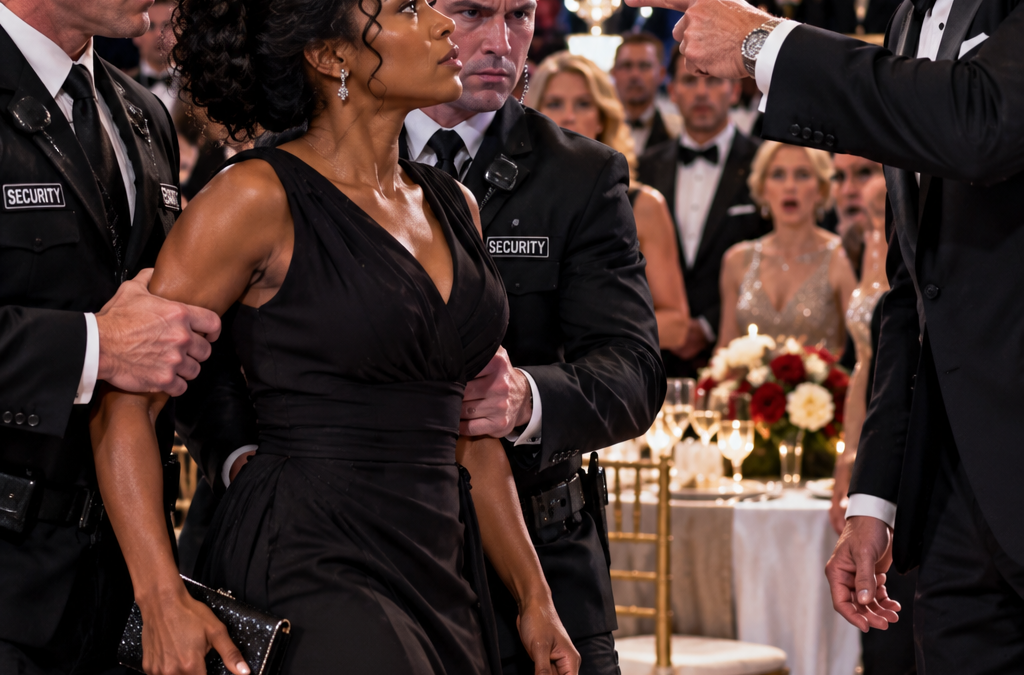
𝗙𝗨𝗟𝗟 𝗦𝗧𝗢𝗥𝗬
They didn’t whisper.
That mattered.
Whispers can be cowardice.
Loud insults are entitlement.
I had heard versions of those remarks for most of my life.
At West Point briefings.
At contractor meetings.
At congressional offices.
On deployment.
In conference rooms where men assumed I was somebody’s aide until I began speaking.
The words change.
The premise doesn’t.
You are here by mistake.
You are here because standards were lowered.
You are here because someone gave you something you did not earn.
I learned long ago not to spend myself answering every insult.
Then Colton joined them.
They welcomed him immediately.
“Colton!”
He accepted a bourbon.
One man said something about his upcoming speech.
Colton straightened his cuff links.
“Somebody has to remind these people who funds their wars.”
They laughed.
My grip tightened slightly around the glass.
Then he saw me.
His expression changed.
Not curiosity.
Annoyance.
Like discovering a stain on a tablecloth.
He stepped closer.
“Excuse me.”
I looked at him.
“This section is for invited guests.”
“I know.”
“Not staff.”
“I’m a guest.”
He stared.
Then looked at his friends.
“Boys.”
He smiled.
“She says she’s a guest.”
The men laughed.
One nearly choked on his drink.
“Guests here write seven-figure checks.”
Another added, “What’d you bring, sweetheart? Bus fare?”
I did not answer.
Colton looked at my badge.
Plain white.
No VIP stripe.
That appeared to satisfy something in him.
He moved closer.
“Let me give you some advice.”
“I didn’t ask for any.”
That made one man whistle softly.
Colton’s eyes narrowed.
I had broken the role he expected.
He recovered quickly.
“When you walk into a room that wasn’t built for you, everyone can tell.”
I looked at him.
“Can they?”
“Oh, yes.”
His eyes moved over my dress.
Shoes.
Badge.
Everything except my face.
“Wrong place. Wrong person.”
He smiled.
“So finish your little glass of water and go back to whatever little life you came from before somebody decides you’re trespassing.”
I felt the old heat behind my ribs.
Not fear.
Recognition.
I thought of my first command assignment.
A colonel who spent three months calling me by the name of the only other Black woman in the unit.
I thought of the contractor who once asked me to bring coffee during a weapons briefing I had written.
I thought of walking into a hospital room after a convoy attack and having a physician ask where the soldier’s actual commanding officer was.
There are humiliations you forget.
Others accumulate into architecture.
“Thank you for your advice,” I said.
Colton blinked.
That calm bothered him more than anger would have.
“Smart girl.”
I was fifty-four.
He turned away.
“Stay where you belong.”
I could have ended it there.
A business card.
One sentence.
My title.
His face would have changed instantly.
That was exactly why I didn’t.
I wanted to know how far he would go if he believed there was no consequence.
Twenty minutes later, the official gala photograph was organized near the Grand Staircase.
The photograph would appear on the Department of Defense website.
Annual report.
Press material.
The PR coordinator moved people into position.
Generals in front.
Senior civilians.
Members of Congress.
Major contractors.
A young aide quietly gestured toward me.
“Ma’am, back row please.”
I joined.
No argument.
Colton noticed.
He walked toward the photographer.
“Stop.”
The photographer lowered the camera.
“Sir?”
Colton pointed at me.
“Get her out.”
The room quieted around that small pocket of confrontation.
The photographer looked confused.
“She’s on the—”
“I don’t care.”
Colton’s voice grew louder.
“This is an official Department of Defense photograph.”
He pointed again.
“It represents the finest of American defense.”
Then:
“Look at her.”
My chest tightened.
“Does that look like the finest of anything?”
Nobody answered him.
Nobody defended me either.
A young PR coordinator approached.
Her face was red.
I could see shame in her eyes.
“Ma’am.”
She could barely speak.
“They’d like to adjust the arrangement.”
I looked at her.
Not Colton.
She didn’t make this choice.
“Of course.”
I stepped out.
The camera flash exploded.
Everybody smiled.
That moment hurt more than I expected.
Not being removed.
The photograph meant nothing to me.
What hurt was the silence.
Generals I knew.
People who had sat in meetings while I argued defense policy.
Senior officials who had not recognized me in a plain dress or perhaps had seen what was happening and decided a gala wasn’t the place for conflict.
Four hundred people.
Not one said:
Leave her.
After the photograph, I headed toward the restroom near the VIP lounge.
Pamela Davis stepped into my path.
“Oh.”
She smiled.
“No, honey.”
I stopped.
“This area is for VIP guests.”
“I need the restroom.”
She looked at my badge.
“General admission.”
Then looked at me.
“General.”
She repeated it slowly.
“People.”
There was pleasure in her voice.
“The restroom downstairs near the loading area should be more comfortable for you.”
“I’m already here.”
Pamela leaned closer.
Champagne on her breath.
Perfume heavy enough to taste.
“I don’t know who got you invited.”
I waited.
“Maybe somebody felt sorry for you.”
She smiled.
“Maybe this is part of some outreach program.”
Her voice lowered.
“But this world?”
She gestured toward the ballroom.
“These people?”
Then at herself.
“This life?”
She shook her head.
“It’s not yours.”
I stared at her.
“It never will be.”
A waiter passed.
Pamela grabbed a dirty napkin from his tray.
Pressed it into my hand.
“Here.”
I looked down.
“Since you’re standing around, make yourself useful.”
Then:
“Table nine needs clearing.”
For several seconds, I studied the napkin.
Something strange happened inside me.
The humiliation became so complete that it passed through anger and came out somewhere colder.
I folded the napkin.
Once.
Twice.
Precisely.
The way I had folded casualty flags.
Placed it on a nearby table.
Then looked at Pamela.
She smiled.
I walked away.
Behind me she said loudly:
“I swear, they multiply every year.”
Her friends laughed.
The lights dimmed soon after.
Colton took the stage.
The ballroom applauded.
I stood near the back.
He gripped the microphone.
“Ladies and gentlemen.”
Smile.
Confidence.
“Welcome to the greatest gathering of defense leadership in the world.”
Applause.
“Tonight we celebrate the men—and I do mean the men—who built the most powerful military machine humanity has ever seen.”
Some women shifted.
A Black colonel near the wall tightened his jaw.
Colton continued.
“Visionaries.”
Applause.
“Strategists.”
More.
“Dealmakers.”
His voice grew stronger with every response.
“People who understand that power isn’t given.”
Pause.
“It’s taken.”
Glasses lifted.
“And held by people who deserve to hold it.”
My hand tightened around my water.
Then he changed direction.
“You know, Washington has become obsessed with one word.”
He smiled.
“Diversity.”
Scattered laughter.
“We are told to broaden the tent.”
Pause.
“Sometimes that seems to mean lowering the bar.”
The silence changed.
Not everybody agreed.
Enough did.
“Excellence doesn’t come from checking boxes.”
He scanned the room.
“It comes from standards.”
Applause.
“High standards.”
He looked toward the back.
Toward me.
“The standards that built this country.”
My stomach turned.
He raised his champagne.
“To the people in this room who earned their seats.”
Hundreds of glasses rose.
“Not the ones who were handed one because somebody felt guilty.”
Crystal clinked.
I didn’t lift my glass.
I thought of Arlington Cemetery.
Rows.
Perfect rows.
Young men and women who had never asked what color the person beside them was before pulling them from burning vehicles.
I thought of soldiers who had bled beneath equipment manufactured by the men drinking champagne around me.
And I thought:
You have no idea what your words are revealing.
After the speech, people moved onto the terrace.
Cigars.
Bourbon.
Warm Washington night.
I stepped outside because I needed air.
I found a quiet section near a stone column.
Then heard Colton.
He was fifteen feet away.
Two associates with him.
He hadn’t seen me.
“Did you see that woman?”
One man laughed.
“The one from the bar?”
“Cheap black dress?”
“Yeah.”
Colton exhaled cigar smoke.
“Exactly.”
“How’d she get in?”
“Quota.”
They laughed.
“They hand invitations out like food stamps now.”
I closed my eyes.
Then Colton said:
“That’s not what bothers me.”
I opened them.
“What bothers me is the idea that putting someone like that in the room changes anything.”
One associate laughed.
Colton continued.
“You can put a dog in a suit.”
My breathing stopped.
“Doesn’t make it a person.”
The men laughed again.
I stepped into the light.
My heels struck stone once.
All three turned.
One associate immediately looked away.
The other extinguished his cigar.
Colton’s face flickered.
Fear.
Maybe.
Only a second.
Then arrogance returned.
“Eavesdropping?”
“You were loud.”
His eyes narrowed.
The associates began edging toward the doors.
Colton stayed.
“Listen carefully.”
He came closer.
“I don’t know your name.”
He pointed the cigar toward my face.
“I don’t care about your name.”
The burning tip glowed inches away.
“But I know exactly what you are.”
I looked at the cigar.
Then him.
“A nobody.”
His voice softened.
“Who wandered into a room full of somebodies.”
I said nothing.
“You’re out of your depth.”
He leaned closer.
“I’m giving you one last chance to go home.”
The threat was no longer subtle.
“Because if I have to deal with you again tonight, it won’t be with words.”
For the first time, I considered ending it.
Not because he frightened me.
Because there are moments when allowing a person to continue becomes dangerous.
Then I thought of the compliance review my office had already discussed concerning contractor culture.
Ironclad had drawn minor questions for months.
Nothing actionable.
A few procurement anomalies.
Anonymous workplace complaints.
I wanted to know whether Colton’s behavior was personal ugliness or evidence of something structural.
“Understood,” I said.
I went inside.
He found security.
Of course he did.
A young contracted guard approached me near the east corridor.
His face already contained an apology.
“Ma’am.”
“Yes?”
“I need to verify your identification.”
“Why?”
He hesitated.
“Concern was raised about your credentials.”
I looked beyond him.
Colton stood watching.
Arms crossed.
I took out my Virginia license.
Handed it over.
The guard radioed.
Waited.
Response came quickly.
“Verified guest.”
He looked relieved.
He turned toward Colton.
“She’s cleared.”
Colton stepped closer.
“Move her to the lobby.”
The guard froze.
“Sir, she has authorization.”
“I don’t care.”
“You asked me to verify—”
“And now I’m asking you to escort her out.”
The guard swallowed.
“There’s no security basis.”
Colton’s voice lowered.
“Do you like your job?”
I watched the guard’s shoulders change.
“Sir.”
“One call.”
Colton raised a finger.
“One.”
He looked toward me.
“And both of you are out.”
The guard looked at me.
I saw shame.
Fear.
Mortgage, perhaps.
Children.
Career.
All the invisible things people carry into moral decisions.
“It’s all right,” I told him.
He frowned.
“Ma’am—”
“I’ll walk.”
He stayed two steps behind me.
I walked down the marble corridor.
Guests turned.
Whispered.
One senator’s wife said:
“I knew she wasn’t supposed to be here.”
I heard.
A retired general stared at the floor.
An assistant secretary I had briefed two weeks earlier looked directly at me and failed to recognize me.
Or chose not to.
That almost made me laugh.
Four hundred powerful people.
Nobody stopped us.
Power does not produce courage automatically.
Sometimes it produces more to lose.
The lobby was cold.
Fluorescent.
Two plastic chairs.
A room designed for people who had been removed from somewhere better.
The guard gestured.
“I’m sorry.”
I sat.
He looked miserable.
“I’ll get this sorted.”
“Take your time.”
He left.
I crossed my ankles.
Folded my hands.
The building hummed around me.
For the first time that evening, I allowed myself to feel angry.
Not theatrical anger.
Not the kind that needs noise.
The deep exhaustion of being treated as an exception in places you helped build.
I took out my phone.
Typed one message.
Ready.
Sent it to Brooks.
Then put the phone away.
General Harold Brooks was already in the air.
The helicopter wasn’t being dispatched because I had been insulted.
That matters.
The National Security Council had called an emergency session for 0600 hours regarding an overseas threat escalation.
Brooks was scheduled to collect me directly from the gala.
The timing was coincidence.
A spectacular coincidence.
Still, when the first vibration moved through the lobby floor, I knew exactly what it was.
Rotor blades.
Deep.
Rhythmic.
Closer.
In the ballroom, glasses began vibrating.
Chandeliers trembled.
Conversations stopped.
The sound grew.
A UH-60 Black Hawk descended toward the south lawn.
Floodlights snapped on.
The manicured grass turned white.
People spilled toward the terrace.
Rotors drove air against trees.
Napkins flew.
Hair lifted.
Ties whipped.
The aircraft settled.
Doors opened.
Twelve soldiers in dress blues exited.
White gloves.
Perfect formation.
Six per side.
They formed a corridor.
A red carpet was secured between them.
I heard later that Colton asked:
“Who the hell is coming, the President?”
Then General Brooks stepped from the aircraft.
Four stars.
Ribbons across his chest.
Army Chief of Staff.
He crossed the lawn.
People moved aside.
Generals.
Senators.
Contractors.
Colton.
Brooks entered the building.
He did not stop for anyone.
He walked down the marble corridor.
Toward me.
I stood before he reached the lobby.
Old reflex.
He stopped three feet away.
Straightened.
Saluted.
Crisp.
Formal.
I returned it.
Muscle memory.
Twenty-six years stored in one movement.
Brooks lowered his hand.
His voice carried.
“Good evening, Deputy Secretary Turner.”
Silence.
People had gathered behind him.
Dozens.
Then more.
I saw Colton near the back.
His mouth opened.
Nothing came out.
Brooks continued.
“The President sends his regards and requests your presence in the Situation Room at zero-six-hundred.”
Pause.
“National security matter.”
Nobody moved.
Deputy Secretary Turner.
The title traveled through the crowd.
I watched recognition arrive.
Some knew immediately.
Others needed seconds.
Wanda Turner.
Deputy Secretary of Defense.
Second-ranking civilian official in the Department.
Nine months in office.
Former Army logistics command.
Combat deployments.
Procurement reform.
They had heard the name.
They had simply never connected it to the Black woman in the clearance-rack dress.
Brooks turned toward the crowd.
His jaw tightened when he saw where I had been seated.
“For anyone unfamiliar with Deputy Secretary Turner—”
His voice sharpened.
“She oversees this department’s acquisition portfolio, personnel policy, and active contract compliance.”
Colton’s champagne glass began shaking.
“She is also the senior civilian authority present in this building tonight.”
Brooks looked directly toward him.
That was when Colton tried to move.
Slowly.
One step.
Then another.
“Deputy Secretary.”
His voice cracked.
I waited.
He swallowed.
“There’s been a terrible misunderstanding.”
I raised one hand.
He stopped.
“You had every idea who I was.”
He blinked.
“What?”
“You knew I was a guest.”
“No, I—”
“My credentials were verified.”
His mouth closed.
“You knew I had authorization.”
Silence.
“You simply did not believe it should matter because you had already decided what I was.”
He looked around.
The audience that had empowered him all evening was no longer laughing.
“You called me the help.”
His face tightened.
“You removed me from the official photograph.”
Sweat appeared along his forehead.
“You told me to crawl back to the life I came from.”
I took one step closer.
“You pointed a lit cigar at my face and threatened me.”
Pamela pushed through the crowd.
“Deputy Secretary Turner.”
Her smile had returned.
A desperate version.
“Oh my goodness.”
She reached for my hand.
“If I had known—”
I looked at it.
She stopped.
“If you had known what?”
Pamela’s smile froze.
“My title?”
She said nothing.
“Would you have allowed me to use the restroom?”
Her face went pale.
“Would the dress have looked different?”
No answer.
“Would I suddenly smell acceptable?”
Her eyes dropped.
“You put a dirty napkin in my hand.”
She swallowed.
“Told me to clear your table.”
“I was joking.”
“No.”
I shook my head.
“You were comfortable.”
That silenced her.
Then I asked:
“Are those things you only do to people you believe cannot punish you?”
Pamela’s hand fell.
Colton tried again.
“If we could discuss this privately.”
“There is nothing private about tonight.”
I looked at the corridor.
The witnesses.
Phones were recording now.
“You humiliated me publicly.”
My voice stayed calm.
“The consequences will be handled professionally.”
I turned toward my aide.
Major Evelyn Price had been at the gala all evening.
Plain dress.
Tablet.
Nobody had paid attention to her either.
She stepped forward.
“Major.”
“Ma’am.”
“Initiate full compliance review on all active Ironclad Defense Systems contracts.”
Colton moved.
“What?”
“Every deliverable.”
Price began typing.
“Invoice.”
“Deputy Secretary—”
“Quality certification.”
Colton’s voice rose.
“You can’t do that because of a personal dispute.”
I looked at him.
“I’m not.”
He hesitated.
“Our office already has open procurement concerns.”
That was true.
Small.
Preliminary.
Now there was more than enough justification for deeper review of corporate culture and executive controls.
“Tonight merely answered questions about whether executive conduct warrants expanding the scope.”
His face changed.
“The contracts are worth $2.8 billion.”
“Then you should welcome verification.”
He stared.
I turned toward federal security.
“Mr. and Mrs. Davis’s temporary facility access is revoked pending review.”
Two agents approached.
Colton looked stunned.
“You can’t remove me.”
I met his eyes.
“You spent the last three hours explaining who belongs in this building.”
Silence.
“Now you’ll follow the rules.”
Pamela grabbed his arm.
Security escorted them toward the exit.
Earlier, people had looked away as I walked that corridor.
This time everyone watched.
Nobody said goodbye.
The only sound was footsteps.
And the distant Black Hawk.
I left for the Situation Room that night.
There was no triumphant dinner.
No champagne.
No speech.
National security doesn’t wait for personal catharsis.
By midnight, I was in briefing rooms.
Maps.
Satellite feeds.
Threat assessments.
The gala became something that had happened in another lifetime.
Then the video went online.
Somebody had recorded nearly everything.
Colton at the bar.
The photograph.
Pamela and the napkin.
The terrace threat.
Security escort.
Brooks’s arrival.
The footage exploded.
Millions of views.
The clip people replayed most was Pamela pressing the dirty napkin into my hand.
Not the helicopter.
Not the salute.
The napkin.
I understood why.
The helicopter was dramatic.
The napkin was familiar.
People knew that cruelty.
The casual kind.
The kind delivered with a smile by someone absolutely certain you cannot hurt them back.
A hashtag spread.
I refused to repeat it in interviews.
The Department had work to do.
Ironclad’s compliance review began three days later.
At first, it was exactly what I had ordered.
Invoices.
Delivery certifications.
Subcontractor records.
Testing.
Quality assurance.
Then auditors found discrepancies.
One.
Then another.
Overbilling.
Equipment billed but not delivered.
Material substitutions.
Inspection reports that appeared identical across separate manufacturing batches.
Signatures from inspectors who denied signing them.
The further investigators went, the worse it became.
Ironclad had been cheating the Department of Defense for years.
Millions.
Then tens of millions.
The workplace records revealed another pattern.
Minority-owned subcontractors excluded.
Bid evaluations manipulated.
Internal email language.
Keep the vendor list clean.
One message from Colton himself.
I read it twice.
There are phrases people believe become harmless if they remain coded.
They don’t.
Then investigators reached the body-armor contract.
$340 million.
Ballistic plates for deployed Army units.
Specification required Level IV ceramic systems capable of defeating rifle rounds under specified test conditions.
Ironclad had substituted cheaper composites.
Lab reports showed cracking.
Failure under high-velocity impact.
Those reports had been buried.
I remember sitting alone in my office when the inspector general brought me the preliminary findings.
I read the page.
Then again.
“How many units?”
He gave me the number.
My stomach dropped.
“Deployed?”
“Yes.”
“How long?”
He answered.
I stood.
Walked to the window.
The Pentagon parking lots stretched below.
People moving.
Cars.
Ordinary afternoon.
Somewhere overseas, soldiers had worn those plates trusting that the government had checked them.
Trust is invisible.
Until somebody sells it.
Three engineers had raised concerns years earlier.
All gone.
One fired for “performance issues.”
Another resigned after threats to his clearance.
The third had kept copies.
He came forward once the Ironclad investigation became public.
Emails.
Lab results.
Internal directives.
Evidence.
That was when the case moved beyond administrative compliance.
Criminal investigators entered.
Congress announced hearings.
Senator Diane Wilson chaired the Armed Services Committee session.
She played portions of the gala footage.
Then held up one of Ironclad’s defective plates.
“This,” she said, “was sold to American soldiers.”
She dropped it.
The plate cracked.
The sound echoed through the hearing room.
I didn’t feel satisfaction.
The gala had ceased mattering to me by then.
Colton’s words were ugly.
His fraud was lethal.
Four months later, his federal trial began in Alexandria.
I attended only one day.
The day Corporal Ellis Moore testified.
Twenty-four years old.
Georgia.
Young daughter.
He wore dress uniform.
His left arm barely moved.
An Ironclad plate had shattered during a firefight.
The round penetrated.
Shrapnel severed tendons in his shoulder.
Permanent damage.
He sat facing the jury.
Colton sat fifteen feet away.
Ellis said:
“He didn’t just cheat the government.”
His voice was steady.
“He almost killed me.”
Nobody moved.
“I won’t ever pick my daughter up with both arms again.”
One juror wiped her face.
Ellis looked directly at Colton.
“And men like him never think about people like me after the invoice clears.”
That was the sentence I remembered.
The jury returned guilty verdicts.
Contract fraud.
Conspiracy.
False claims.
Wire fraud.
Procurement violations.
Eighteen years in federal prison.
Massive restitution.
Ironclad debarred from government contracting.
Assets frozen pending civil actions.
Pamela’s social world disappeared with astonishing speed.
Boards removed her.
Clubs distanced themselves.
Friends vanished.
That wasn’t my work.
That was Washington.
A city famous for confusing proximity with loyalty.
When the proximity disappeared, so did the loyalty.
I focused on the system.
Ironclad had survived because multiple protections failed.
Audits too predictable.
Whistleblowers too vulnerable.
Procurement reviews too siloed.
Corporate workplace-conduct histories treated as separate from contract-risk analysis.
We changed that.
Expanded random integrity audits.
Strengthened whistleblower protections.
Required major contractors to disclose documented discrimination complaints and retaliation findings.
Created cross-checks between quality-control failures and executive compensation incentives.
People began calling the package the Turner Protocol.
I disliked that.
Policy should not become autobiography.
Still, the name stuck.
Six weeks later, my alarm went off at 4:30.
Same apartment.
Same darkness.
Same Bishop limping toward the bed.
Same coffee.
Same chipped mug.
I made the bed.
Hospital corners.
Ironed my blouse.
Took the Metro.
Blue Line.
Carried my heels.
Three blocks.
The world had changed.
My apartment hadn’t.
That was comforting.
Inside the Pentagon, people looked at me differently.
Some fear.
Some admiration.
Some embarrassment.
I disliked all three.
A staff sergeant held a door.
“Good morning, ma’am.”
“Morning.”
An analyst smiled.
I returned it.
Near the elevator, a three-star general stopped me.
He had been at the gala.
I remembered exactly where.
Near the photograph.
He had said nothing.
For a moment, neither of us spoke.
Then he said:
“It won’t happen again.”
I looked at him.
“Why?”
He seemed surprised.
“Ma’am?”
“Why won’t it happen again?”
His jaw tightened.
“Because I should’ve spoken.”
I waited.
“And next time I will.”
That was better.
I nodded.
Then continued.
Near the east corridor, a young lieutenant stepped into my path.
Black woman.
Twenty-six maybe.
Uniform perfect.
Hands behind her back.
“Nervous?” I asked.
She blinked.
“Ma’am?”
“You’re holding your shoulders like you’re about to brief Congress.”
That made her smile despite herself.
Then she became serious.
“I wanted to tell you something.”
“Go ahead.”
“I saw the video.”
I waited.
“Everyone did.”
Her voice tightened.
“What happened afterward mattered.”
“Which part?”
“The reforms.”
She swallowed.
“But also…”
She looked at me directly.
“Watching you stand there.”
Silence.
“I’ve spent my whole career wondering whether somebody like me really has a place in rooms like this.”
That sentence hurt.
Because I understood it.
More than she knew.
She continued.
“And when General Brooks saluted you…”
Her eyes filled slightly.
“It made me think maybe I could belong here too.”
I looked at her for a long moment.
Then said:
“You always did.”
Her jaw tightened.
I could see her fighting emotion.
“Ma’am.”
“You didn’t need my title to make space for you.”
She nodded.
Then saluted.
Not necessary in that hallway.
I returned it anyway.
She walked away.
Her shoulders were higher.
I watched until she turned the corner.
Then continued to my office.
For weeks after the gala, reporters kept asking whether I regretted not revealing myself sooner.
I always thought that question missed everything.
If I had introduced myself to Colton immediately, he would have apologized.
Of course.
Pamela would have found me a better restroom.
The photographer would have moved a general to make space.
The bartender would have smiled.
I would have learned nothing.
More importantly, neither would anyone else.
Their behavior became unacceptable to them only after my title appeared.
That was the problem.
I was not worthy of dignity because I was Deputy Secretary of Defense.
I had been worthy at the bar.
Before Colton knew my name.
Before General Brooks landed.
Before anyone saluted.
If I had truly been a cleaner, the words would have been just as ugly.
If I had arrived by bus because it was the only transportation I could afford instead of because I liked the Metro, I would have deserved the same restroom.
If the dress had actually come from Goodwill, Pamela still had no right to push a filthy napkin into my hand.
If I had no authority over one dollar of Colton’s contracts, threatening me with a cigar would still have been wrong.
That became the lesson I cared about.
Not the reversal.
Not watching Colton’s face change.
The fourteen minutes before the helicopter.
Because that was when everyone believed there would be no consequence.
That’s when character shows.
Colton’s.
Pamela’s.
The men who laughed.
The people who stared at their shoes.
The guard who obeyed despite knowing better.
Mine too.
Silence gave me information that night.
But I also understood afterward that silence has limits.
I had spent much of my career believing composure was the highest form of strength.
Sometimes it is.
Sometimes strength is interrupting.
Saying stop.
Refusing to let somebody else walk alone down a marble corridor.
I thought about that guard often.
The young man Colton forced to escort me out.
He requested a meeting months later.
I agreed.
He came into my office visibly terrified.
“Sit.”
He sat.
“Why are you here?”
“To apologize.”
“Go ahead.”
He swallowed.
“I knew you were cleared.”
“Yes.”
“I knew he had no security reason.”
“Yes.”
“I still escorted you.”
“Yes.”
His face tightened.
“I was scared of losing the job.”
I nodded.
“My mother lives with me.”
I waited.
“I’m helping pay for my sister’s school.”
His eyes dropped.
“I kept telling myself it wasn’t my decision.”
That was the important part.
“And now?”
He looked up.
“It was.”
I leaned back.
“What will you do differently?”
“Refuse.”
“Even if you’re fired?”
He hesitated.
Good.
An honest hesitation.
“I don’t know.”
I nodded.
“Better answer.”
He seemed confused.
“Courage sounds easy after the danger ends.”
I folded my hands.
“Don’t promise me heroism.”
He waited.
“Promise me you’ll recognize the choice next time.”
He nodded slowly.
“I can do that.”
“Good.”
He stood.
Before leaving, he said:
“Ma’am?”
“Yes?”
“I didn’t recognize you that night.”
“I know.”
“I think that’s why I feel worse.”
I understood.
“It should be.”
He left.
Colton entered prison months later.
I never visited.
Never wrote.
Never wanted revenge.
People sometimes assume accountability is revenge because consequence feels personal to the person receiving it.
It isn’t.
His sentence was not for insulting me.
It was for fraud.
Conspiracy.
Endangering soldiers.
The gala simply opened a door inspectors should have opened years earlier.
That’s the part that stayed with me.
Colton had built an entire company around the assumption that important people would never inspect closely.
He understood hierarchy.
He knew exactly whom to flatter.
Generals.
Senators.
Executives.
Anyone whose signature mattered.
What he failed to understand was that systems are often protected by people he considered beneath notice.
Engineers.
Inspectors.
Junior officers.
Subcontractors.
Administrative staff.
Whistleblowers.
The people whose names rarely appear in headlines.
Three engineers had tried to expose his armor.
Their warnings were buried.
That bothered me more than anything he said to me.
The gala had given me fourteen minutes of humiliation.
Those engineers lived with years of knowing soldiers could die because nobody listened.
So we changed the whistleblower system.
Anonymous reporting.
External channels.
Legal protection.
Financial safeguards.
No contractor could retaliate against an employee who raised a verified safety concern without triggering automatic review.
Was it perfect?
No.
Nothing involving institutions ever is.
But the next engineer would have somewhere else to go.
That mattered.
I kept the black dress.
Of course I did.
The first time I wore it again was six months later.
A much smaller dinner.
Veterans’ medical research fundraiser.
My aide saw it hanging in my office.
“You’re wearing that?”
“Why not?”
She stared.
“You know why.”
I looked at the dress.
“It’s comfortable.”
She laughed.
“You’re impossible.”
“Frequently.”
At the dinner, nobody mistook me for staff.
By then my face had been on television for months.
That made me strangely sad.
I had lost the ability to know who people were before they knew who I was.
Recognition became another uniform.
One I couldn’t take off.
That night, a waiter approached with water.
“Deputy Secretary.”
Perfect smile.
“Still, no ice?”
I paused.
“How did you know?”
He looked horrified.
“Your staff briefed us.”
Of course.
I smiled.
“Thank you.”
Then I thought about the bartender at the gala who had pushed the glass toward me without looking.
I wondered which interaction was more honest.
Probably the first.
Years in military service taught me that information sometimes arrives through discomfort.
You don’t have to enjoy it.
You just have to use it.
I eventually retired from public service.
Not immediately.
There was work left.
There is always work left.
On my final day, I entered the Pentagon through the same east corridor.
By then, the young lieutenant who once stopped me had become a major.
She saw me.
“Ma’am.”
“Major.”
“I heard you’re abandoning us.”
“That’s one interpretation.”
“What’s the other?”
“Bishop wants me home.”
She laughed.
Then her face softened.
“Can I ask you something?”
“Always.”
“Do you think it actually changed?”
I knew what she meant.
The building.
Culture.
Who belonged.
I looked down the corridor.
People moving past.
Young officers.
Civilians.
Contractors.
Different races.
Different backgrounds.
Some greeting one another.
Some staring at phones.
Ordinary government morning.
“Some of it.”
She seemed disappointed.
“Only some?”
“Real change is disappointing.”
She frowned.
“It doesn’t arrive like a Black Hawk.”
That made her smile.
“It arrives in hiring panels.”
I continued walking.
“Complaint systems.”
A few more steps.
“Who gets invited into meetings.”
“Who gets interrupted.”
“Who gets believed.”
We stopped near the elevator.
“Who gets called by their name.”
She nodded.
“That’s slower.”
“Much.”
“Less dramatic.”
“Always.”
The elevator arrived.
Before I entered, she saluted.
I returned it.
That evening, I went home.
Same apartment.
Bishop much older.
More gray around his muzzle.
Same flag.
Same photographs.
I made coffee even though it was too late for coffee.
Sat near the window.
Washington lights beyond the glass.
I thought about Colton.
Not often.
But sometimes.
I wondered whether he remembered the moment at the bar.
Before the helicopter.
Before the investigation.
Before prison.
The second when I said:
I’m a guest.
And he chose not to believe me.
People often describe prejudice as ignorance.
Sometimes it is.
But ignorance suggests absence of information.
Colton had information.
Badge.
Verified invitation.
My words.
The photographer’s list.
Security confirmation.
He ignored every piece because none fit the conclusion he had already reached.
That is something more dangerous than ignorance.
Certainty.
The certainty that you can understand another human being from skin, clothing, accent, neighborhood, title, or the absence of one.
Certainty prevents curiosity.
Curiosity might have saved him.
Not from the investigation.
The fraud would have surfaced eventually.
At least I hope it would.
But curiosity might have saved him from becoming the man on that video.
All he had to do was ask:
Who are you?
Instead, he told me.
That’s what prejudice does.
It tells people who they are before allowing them to answer.
I spent much of my life being told.
Too quiet.
Too Black.
Too female.
Too military.
Not political enough.
Too political.
Too hard.
Too calm.
An affirmative-action officer.
A diversity appointment.
A symbol.
A threat.
A guest who couldn’t possibly be a guest.
Eventually you learn the most useful answer is not always argument.
Sometimes it is simply continuing forward until reality catches up with the story they invented.
But I no longer believe everyone should have to prove people wrong that way.
Dignity should not depend on an impressive reveal.
Nobody should need four stars walking toward them down a corridor before a room regrets its cruelty.
I think about the woman cleaning that same ballroom after midnight.
Someone actually did have to clear table nine.
Someone collected the dirty napkin Pamela put in my hand.
Someone mopped champagne from the floor after Colton was removed.
I never learned her name.
That bothers me.
Because if she had stood at the bar in my dress that evening, would anyone have defended her?
No helicopter would come.
No general would salute.
No compliance review would begin because she had been humiliated.
That is the test.
Not how people treat the secretly powerful.
How they treat the person who cannot change their life.
My grandmother used to tell me character was what remained when there was no audience.
The gala taught me something slightly different.
Character is also what appears when you believe the audience agrees with you.
Colton became louder because people laughed.
Pamela became crueler because nobody stopped her.
The contractors went further because one another gave permission.
The crowd stayed silent because everybody else stayed silent first.
Cruelty has momentum.
So does courage.
One voice can change the direction of a room.
There was no voice that evening.
Not until the rotors came.
I wish there had been.
Years later, when people asked what I remembered most clearly, they expected me to say the helicopter.
Or Brooks’s salute.
Or Colton’s face when he learned my title.
I remembered the photograph.
Standing in the back row.
The PR coordinator walking toward me.
Ashamed.
Whispering that I needed to step aside.
And then the flash.
Everybody smiling.
A perfect official photograph.
Except for what was missing.
That’s how institutions often present themselves.
The photograph shows the ideal.
The hallway shows the truth.
My work after that night was about bringing those two closer together.
Not perfectly.
Never perfectly.
But closer.
On my last morning in office, I arrived early.
4:30 wakeup.
Bed.
Coffee.
Bishop.
Metro.
I was at the Pentagon before most of my staff.
The east corridor was quiet.
I stopped near the plastic chairs where I had waited that night.
They had been replaced.
Better seating now.
Nobody could tell me why.
I laughed softly.
Then I sat.
Just for a minute.
No cameras.
No generals.
No one watching.
I closed my eyes.
I could still hear Colton.
You don’t belong here.
Pamela.
This world was never for you.
The guard.
I’m sorry.
Brooks.
Good evening, Deputy Secretary Turner.
All of it layered together.
Then I opened my eyes.
A young civilian employee walked past carrying coffee and folders.
Black woman.
Maybe twenty-three.
She slowed.
“Ma’am?”
“Good morning.”
She looked nervous.
“Good morning.”
Then smiled.
And continued.
No revelation.
No dramatic moment.
Just two people in a hallway where both belonged.
That was enough for me.
I stood.
Straightened my jacket.
And walked toward my office for the final time.
Same pace I had used the night security escorted me out.
The difference was never in the way I walked.
It was in what the building had finally learned to see.
𝗧𝗛𝗘 𝗘𝗡𝗗
A Defense Billionaire Called Me the Help at a Pentagon Gala and Ordered Security to Remove Me From the Room
By the time security escorted me down the marble corridor, four hundred of the most powerful people in Washington had watched me be mocked, excluded, threatened, and treated like I had wandered into a room where someone like me could never belong.
I said almost nothing, because I had spent twenty-six years learning that silence was not always surrender—and because a helicopter was already crossing the night sky toward the Pentagon.
At 4:30 that morning, Arlington was still dark.
I sat on the edge of my bed with both feet flat on the floor and my hands resting on my knees.
I had done that every morning for more years than I could count.
Wake.
Sit.
Breathe.
Listen.
The world is different before people begin making noise in it.
No phones ringing.
No television.
No staff briefing me about threats, budgets, contracts, congressional hearings, or people who suddenly considered themselves experts on war because they had spent fifteen minutes reading a report somebody else prepared.
Just silence.
My apartment was on the third floor of an old brick building.
Nothing impressive.
One bedroom.
Narrow kitchen.
Clean curtains.
A radiator that hissed in winter.
On the wall across from my bed hung a shadow box containing a folded American flag.
Beside it were photographs.
Me at twenty-six in dusty fatigues.
Me standing beside soldiers in Kuwait.
Me in Afghanistan with goggles pushed up on my helmet and sand covering everything except the whites of my eyes.
Another photograph showed six of us outside a forward operating base.
Three of those people were dead now.
People sometimes asked why I kept living there.
By then, I could afford almost any address I wanted.
My answer was simple.
It was home.
I made my bed.
Hospital corners.
My hands still did them automatically.
The military teaches your body things your mind eventually stops thinking about.
Then coffee.
Black.
No sugar.
No cream.
Same chipped white mug I’d owned for fourteen years.
Bishop limped out of the hallway.
He was a three-legged rescue mutt with one bad eye, a torn ear, and the personality of a retired drill sergeant who believed everyone else existed to inconvenience him.
“Morning, old man.”
His tail moved.
What remained of it, anyway.
I scratched behind his ear.
He leaned against my shin.
On the back of my bedroom door hung the dress I planned to wear that evening.
Black.
Simple.
Clearance rack.
I had bought it two years earlier because it fit well, didn’t wrinkle easily, and didn’t require me to think about fashion.
I ironed it anyway.
My phone buzzed.
One message.
BROOKS.
See you tonight, Commander.
I read it.
Didn’t respond.
General Harold Brooks had known me too long to require one.
At seven that evening, the Pentagon’s Grand Hall looked like someone had tried to prove patriotism could be purchased by the square foot.
Crystal chandeliers.
White linens.
Red roses.
Small American flags at every table.
Gold light reflected across polished marble.
Four hundred invited guests.
Generals.
Senators.
Defense contractors.
Ambassadors.
Lobbyists.
Spouses.
People wearing medals earned under fire beside people wearing watches worth more than a junior enlisted soldier’s annual salary.
The Armed Forces Appreciation Gala was supposed to honor service.
Over the years, it had become something else too.
Networking.
Contracts.
Photographs.
Influence.
Everybody smiling just slightly harder at whoever might control next year’s budget.
I knew that world intimately.
I simply did not dress like I belonged to it.
That was intentional.
I took the Metro.
Blue Line.
Carried my heels in a canvas bag.
Walked three blocks in flats.
No government vehicle.
No visible security.
No aide beside me.
I had spent months trying to reduce the spectacle around my office.
When the President nominated me as Deputy Secretary of Defense nine months earlier, half of Washington wanted profiles about my life.
The other half wanted to know which faction I represented.
I represented neither.
I had served long enough to understand that publicity makes people perform around you.
I wanted to see rooms before they knew who was watching.
That night, my name had intentionally been placed on the general guest list without VIP notation.
It was a small experiment.
I didn’t expect much from it.
Maybe slower service.
Maybe a confused event coordinator.
I certainly didn’t expect Colton Davis.
At the entrance, a young staffer studied me.
Then my dress.
Then me again.
“Name?”
“Wanda Turner.”
She scrolled.
Nothing.
Scrolled again.
Her brow tightened.
I waited.
“There.”
Her voice suggested she was surprised.
“Wanda Turner.”
“That’s me.”
She handed me a standard badge.
No gold ribbon.
No VIP marker.
No escort.
“Ballroom is through there.”
“Thank you.”
I clipped the badge to my dress.
Then walked inside.
Nobody noticed.
That suited me.
I had spent most of my career learning that invisibility can provide information rank never will.
When people know your title, they curate themselves.
When they think you are irrelevant, they become honest.
I found the bar along the far wall.
Not the VIP station.
The regular one.
“Water, please.”
The bartender slid me a glass.
No greeting.
No smile.
Not rude enough to complain about.
Just dismissive enough to register.
I carried the water toward a standing table near the back.
From there, I could see almost the entire room.
Senators leaning toward defense executives.
Generals discussing deployments.
Spouses comparing bracelets.
Staff circulating with trays.
And near the center stood Colton Davis.
I knew exactly who he was.
Everyone did.
CEO of Ironclad Defense Systems.
Billions in active Department of Defense contracts.
Drones.
Missile guidance.
Body armor.
Tactical communications.
Vehicle systems.
If American troops carried it, drove it, launched it, wore it, or depended on it, Ironclad probably had an invoice attached somewhere.
Colton was fifty-eight.
Silver hair.
Deep tan.
Custom tuxedo.
He moved through the gala with the confidence of a man who had spent enough money in Washington that people had stopped correcting him.
Generals laughed too hard at his jokes.
Senators touched his arm when speaking.
You could see the ecosystem.
Money doesn’t officially outrank stars.
Sometimes a room behaves as though it does.
His wife Pamela stayed close.
Blond.
Thin.
Diamonds bright enough to catch light from across the hall.
Her eyes constantly moved over other women.
Assessing.
Ranking.
Dismissing.
I had barely been standing there five minutes when four men at the next table noticed me.
Contractors.
You could tell.
They had a particular kind of confidence.
No uniforms.
No elected office.
Still perfectly certain the building belonged to them.
One nudged another.
“Look.”
I kept my eyes forward.
“By the bar.”
Another turned.
“What is she doing here?”
They laughed.
“Cleaning crew?”
“Not in that dress.”
“Goodwill donation.”
I lifted my water.
Drank.
The tallest one had a red face from bourbon.
“Charity invite.”
Someone else said, “Diversity quota.”
More laughter.
They didn’t whisper.
That mattered.
Whispers can be cowardice.
Loud insults are entitlement.
I had heard versions of those remarks for most of my life.
At West Point briefings.
At contractor meetings.
At congressional offices.
On deployment.
In conference rooms where men assumed I was somebody’s aide until I began speaking.
The words change.
The premise doesn’t.
You are here by mistake.
You are here because standards were lowered.
You are here because someone gave you something you did not earn.
I learned long ago not to spend myself answering every insult.
Then Colton joined them.
They welcomed him immediately.
“Colton!”
He accepted a bourbon.
One man said something about his upcoming speech.
Colton straightened his cuff links.
“Somebody has to remind these people who funds their wars.”
They laughed.
My grip tightened slightly around the glass.
Then he saw me.
His expression changed.
Not curiosity.
Annoyance.
Like discovering a stain on a tablecloth.
He stepped closer.
“Excuse me.”
I looked at him.
“This section is for invited guests.”
“I know.”
“Not staff.”
“I’m a guest.”
He stared.
Then looked at his friends.
“Boys.”
He smiled.
“She says she’s a guest.”
The men laughed.
One nearly choked on his drink.
“Guests here write seven-figure checks.”
Another added, “What’d you bring, sweetheart? Bus fare?”
I did not answer.
Colton looked at my badge.
Plain white.
No VIP stripe.
That appeared to satisfy something in him.
He moved closer.
“Let me give you some advice.”
“I didn’t ask for any.”
That made one man whistle softly.
Colton’s eyes narrowed.
I had broken the role he expected.
He recovered quickly.
“When you walk into a room that wasn’t built for you, everyone can tell.”
I looked at him.
“Can they?”
“Oh, yes.”
His eyes moved over my dress.
Shoes.
Badge.
Everything except my face.
“Wrong place. Wrong person.”
He smiled.
“So finish your little glass of water and go back to whatever little life you came from before somebody decides you’re trespassing.”
I felt the old heat behind my ribs.
Not fear.
Recognition.
I thought of my first command assignment.
A colonel who spent three months calling me by the name of the only other Black woman in the unit.
I thought of the contractor who once asked me to bring coffee during a weapons briefing I had written.
I thought of walking into a hospital room after a convoy attack and having a physician ask where the soldier’s actual commanding officer was.
There are humiliations you forget.
Others accumulate into architecture.
“Thank you for your advice,” I said.
Colton blinked.
That calm bothered him more than anger would have.
“Smart girl.”
I was fifty-four.
He turned away.
“Stay where you belong.”
I could have ended it there.
A business card.
One sentence.
My title.
His face would have changed instantly.
That was exactly why I didn’t.
I wanted to know how far he would go if he believed there was no consequence.
Twenty minutes later, the official gala photograph was organized near the Grand Staircase.
The photograph would appear on the Department of Defense website.
Annual report.
Press material.
The PR coordinator moved people into position.
Generals in front.
Senior civilians.
Members of Congress.
Major contractors.
A young aide quietly gestured toward me.
“Ma’am, back row please.”
I joined.
No argument.
Colton noticed.
He walked toward the photographer.
“Stop.”
The photographer lowered the camera.
“Sir?”
Colton pointed at me.
“Get her out.”
The room quieted around that small pocket of confrontation.
The photographer looked confused.
“She’s on the—”
“I don’t care.”
Colton’s voice grew louder.
“This is an official Department of Defense photograph.”
He pointed again.
“It represents the finest of American defense.”
Then:
“Look at her.”
My chest tightened.
“Does that look like the finest of anything?”
Nobody answered him.
Nobody defended me either.
A young PR coordinator approached.
Her face was red.
I could see shame in her eyes.
“Ma’am.”
She could barely speak.
“They’d like to adjust the arrangement.”
I looked at her.
Not Colton.
She didn’t make this choice.
“Of course.”
I stepped out.
The camera flash exploded.
Everybody smiled.
That moment hurt more than I expected.
Not being removed.
The photograph meant nothing to me.
What hurt was the silence.
Generals I knew.
People who had sat in meetings while I argued defense policy.
Senior officials who had not recognized me in a plain dress or perhaps had seen what was happening and decided a gala wasn’t the place for conflict.
Four hundred people.
Not one said:
Leave her.
After the photograph, I headed toward the restroom near the VIP lounge.
Pamela Davis stepped into my path.
“Oh.”
She smiled.
“No, honey.”
I stopped.
“This area is for VIP guests.”
“I need the restroom.”
She looked at my badge.
“General admission.”
Then looked at me.
“General.”
She repeated it slowly.
“People.”
There was pleasure in her voice.
“The restroom downstairs near the loading area should be more comfortable for you.”
“I’m already here.”
Pamela leaned closer.
Champagne on her breath.
Perfume heavy enough to taste.
“I don’t know who got you invited.”
I waited.
“Maybe somebody felt sorry for you.”
She smiled.
“Maybe this is part of some outreach program.”
Her voice lowered.
“But this world?”
She gestured toward the ballroom.
“These people?”
Then at herself.
“This life?”
She shook her head.
“It’s not yours.”
I stared at her.
“It never will be.”
A waiter passed.
Pamela grabbed a dirty napkin from his tray.
Pressed it into my hand.
“Here.”
I looked down.
“Since you’re standing around, make yourself useful.”
Then:
“Table nine needs clearing.”
For several seconds, I studied the napkin.
Something strange happened inside me.
The humiliation became so complete that it passed through anger and came out somewhere colder.
I folded the napkin.
Once.
Twice.
Precisely.
The way I had folded casualty flags.
Placed it on a nearby table.
Then looked at Pamela.
She smiled.
I walked away.
Behind me she said loudly:
“I swear, they multiply every year.”
Her friends laughed.
The lights dimmed soon after.
Colton took the stage.
The ballroom applauded.
I stood near the back.
He gripped the microphone.
“Ladies and gentlemen.”
Smile.
Confidence.
“Welcome to the greatest gathering of defense leadership in the world.”
Applause.
“Tonight we celebrate the men—and I do mean the men—who built the most powerful military machine humanity has ever seen.”
Some women shifted.
A Black colonel near the wall tightened his jaw.
Colton continued.
“Visionaries.”
Applause.
“Strategists.”
More.
“Dealmakers.”
His voice grew stronger with every response.
“People who understand that power isn’t given.”
Pause.
“It’s taken.”
Glasses lifted.
“And held by people who deserve to hold it.”
My hand tightened around my water.
Then he changed direction.
“You know, Washington has become obsessed with one word.”
He smiled.
“Diversity.”
Scattered laughter.
“We are told to broaden the tent.”
Pause.
“Sometimes that seems to mean lowering the bar.”
The silence changed.
Not everybody agreed.
Enough did.
“Excellence doesn’t come from checking boxes.”
He scanned the room.
“It comes from standards.”
Applause.
“High standards.”
He looked toward the back.
Toward me.
“The standards that built this country.”
My stomach turned.
He raised his champagne.
“To the people in this room who earned their seats.”
Hundreds of glasses rose.
“Not the ones who were handed one because somebody felt guilty.”
Crystal clinked.
I didn’t lift my glass.
I thought of Arlington Cemetery.
Rows.
Perfect rows.
Young men and women who had never asked what color the person beside them was before pulling them from burning vehicles.
I thought of soldiers who had bled beneath equipment manufactured by the men drinking champagne around me.
And I thought:
You have no idea what your words are revealing.
After the speech, people moved onto the terrace.
Cigars.
Bourbon.
Warm Washington night.
I stepped outside because I needed air.
I found a quiet section near a stone column.
Then heard Colton.
He was fifteen feet away.
Two associates with him.
He hadn’t seen me.
“Did you see that woman?”
One man laughed.
“The one from the bar?”
“Cheap black dress?”
“Yeah.”
Colton exhaled cigar smoke.
“Exactly.”
“How’d she get in?”
“Quota.”
They laughed.
“They hand invitations out like food stamps now.”
I closed my eyes.
Then Colton said:
“That’s not what bothers me.”
I opened them.
“What bothers me is the idea that putting someone like that in the room changes anything.”
One associate laughed.
Colton continued.
“You can put a dog in a suit.”
My breathing stopped.
“Doesn’t make it a person.”
The men laughed again.
I stepped into the light.
My heels struck stone once.
All three turned.
One associate immediately looked away.
The other extinguished his cigar.
Colton’s face flickered.
Fear.
Maybe.
Only a second.
Then arrogance returned.
“Eavesdropping?”
“You were loud.”
His eyes narrowed.
The associates began edging toward the doors.
Colton stayed.
“Listen carefully.”
He came closer.
“I don’t know your name.”
He pointed the cigar toward my face.
“I don’t care about your name.”
The burning tip glowed inches away.
“But I know exactly what you are.”
I looked at the cigar.
Then him.
“A nobody.”
His voice softened.
“Who wandered into a room full of somebodies.”
I said nothing.
“You’re out of your depth.”
He leaned closer.
“I’m giving you one last chance to go home.”
The threat was no longer subtle.
“Because if I have to deal with you again tonight, it won’t be with words.”
For the first time, I considered ending it.
Not because he frightened me.
Because there are moments when allowing a person to continue becomes dangerous.
Then I thought of the compliance review my office had already discussed concerning contractor culture.
Ironclad had drawn minor questions for months.
Nothing actionable.
A few procurement anomalies.
Anonymous workplace complaints.
I wanted to know whether Colton’s behavior was personal ugliness or evidence of something structural.
“Understood,” I said.
I went inside.
He found security.
Of course he did.
A young contracted guard approached me near the east corridor.
His face already contained an apology.
“Ma’am.”
“Yes?”
“I need to verify your identification.”
“Why?”
He hesitated.
“Concern was raised about your credentials.”
I looked beyond him.
Colton stood watching.
Arms crossed.
I took out my Virginia license.
Handed it over.
The guard radioed.
Waited.
Response came quickly.
“Verified guest.”
He looked relieved.
He turned toward Colton.
“She’s cleared.”
Colton stepped closer.
“Move her to the lobby.”
The guard froze.
“Sir, she has authorization.”
“I don’t care.”
“You asked me to verify—”
“And now I’m asking you to escort her out.”
The guard swallowed.
“There’s no security basis.”
Colton’s voice lowered.
“Do you like your job?”
I watched the guard’s shoulders change.
“Sir.”
“One call.”
Colton raised a finger.
“One.”
He looked toward me.
“And both of you are out.”
The guard looked at me.
I saw shame.
Fear.
Mortgage, perhaps.
Children.
Career.
All the invisible things people carry into moral decisions.
“It’s all right,” I told him.
He frowned.
“Ma’am—”
“I’ll walk.”
He stayed two steps behind me.
I walked down the marble corridor.
Guests turned.
Whispered.
One senator’s wife said:
“I knew she wasn’t supposed to be here.”
I heard.
A retired general stared at the floor.
An assistant secretary I had briefed two weeks earlier looked directly at me and failed to recognize me.
Or chose not to.
That almost made me laugh.
Four hundred powerful people.
Nobody stopped us.
Power does not produce courage automatically.
Sometimes it produces more to lose.
The lobby was cold.
Fluorescent.
Two plastic chairs.
A room designed for people who had been removed from somewhere better.
The guard gestured.
“I’m sorry.”
I sat.
He looked miserable.
“I’ll get this sorted.”
“Take your time.”
He left.
I crossed my ankles.
Folded my hands.
The building hummed around me.
For the first time that evening, I allowed myself to feel angry.
Not theatrical anger.
Not the kind that needs noise.
The deep exhaustion of being treated as an exception in places you helped build.
I took out my phone.
Typed one message.
Ready.
Sent it to Brooks.
Then put the phone away.
General Harold Brooks was already in the air.
The helicopter wasn’t being dispatched because I had been insulted.
That matters.
The National Security Council had called an emergency session for 0600 hours regarding an overseas threat escalation.
Brooks was scheduled to collect me directly from the gala.
The timing was coincidence.
A spectacular coincidence.
Still, when the first vibration moved through the lobby floor, I knew exactly what it was.
Rotor blades.
Deep.
Rhythmic.
Closer.
In the ballroom, glasses began vibrating.
Chandeliers trembled.
Conversations stopped.
The sound grew.
A UH-60 Black Hawk descended toward the south lawn.
Floodlights snapped on.
The manicured grass turned white.
People spilled toward the terrace.
Rotors drove air against trees.
Napkins flew.
Hair lifted.
Ties whipped.
The aircraft settled.
Doors opened.
Twelve soldiers in dress blues exited.
White gloves.
Perfect formation.
Six per side.
They formed a corridor.
A red carpet was secured between them.
I heard later that Colton asked:
“Who the hell is coming, the President?”
Then General Brooks stepped from the aircraft.
Four stars.
Ribbons across his chest.
Army Chief of Staff.
He crossed the lawn.
People moved aside.
Generals.
Senators.
Contractors.
Colton.
Brooks entered the building.
He did not stop for anyone.
He walked down the marble corridor.
Toward me.
I stood before he reached the lobby.
Old reflex.
He stopped three feet away.
Straightened.
Saluted.
Crisp.
Formal.
I returned it.
Muscle memory.
Twenty-six years stored in one movement.
Brooks lowered his hand.
His voice carried.
“Good evening, Deputy Secretary Turner.”
Silence.
People had gathered behind him.
Dozens.
Then more.
I saw Colton near the back.
His mouth opened.
Nothing came out.
Brooks continued.
“The President sends his regards and requests your presence in the Situation Room at zero-six-hundred.”
Pause.
“National security matter.”
Nobody moved.
Deputy Secretary Turner.
The title traveled through the crowd.
I watched recognition arrive.
Some knew immediately.
Others needed seconds.
Wanda Turner.
Deputy Secretary of Defense.
Second-ranking civilian official in the Department.
Nine months in office.
Former Army logistics command.
Combat deployments.
Procurement reform.
They had heard the name.
They had simply never connected it to the Black woman in the clearance-rack dress.
Brooks turned toward the crowd.
His jaw tightened when he saw where I had been seated.
“For anyone unfamiliar with Deputy Secretary Turner—”
His voice sharpened.
“She oversees this department’s acquisition portfolio, personnel policy, and active contract compliance.”
Colton’s champagne glass began shaking.
“She is also the senior civilian authority present in this building tonight.”
Brooks looked directly toward him.
That was when Colton tried to move.
Slowly.
One step.
Then another.
“Deputy Secretary.”
His voice cracked.
I waited.
He swallowed.
“There’s been a terrible misunderstanding.”
I raised one hand.
He stopped.
“You had every idea who I was.”
He blinked.
“What?”
“You knew I was a guest.”
“No, I—”
“My credentials were verified.”
His mouth closed.
“You knew I had authorization.”
Silence.
“You simply did not believe it should matter because you had already decided what I was.”
He looked around.
The audience that had empowered him all evening was no longer laughing.
“You called me the help.”
His face tightened.
“You removed me from the official photograph.”
Sweat appeared along his forehead.
“You told me to crawl back to the life I came from.”
I took one step closer.
“You pointed a lit cigar at my face and threatened me.”
Pamela pushed through the crowd.
“Deputy Secretary Turner.”
Her smile had returned.
A desperate version.
“Oh my goodness.”
She reached for my hand.
“If I had known—”
I looked at it.
She stopped.
“If you had known what?”
Pamela’s smile froze.
“My title?”
She said nothing.
“Would you have allowed me to use the restroom?”
Her face went pale.
“Would the dress have looked different?”
No answer.
“Would I suddenly smell acceptable?”
Her eyes dropped.
“You put a dirty napkin in my hand.”
She swallowed.
“Told me to clear your table.”
“I was joking.”
“No.”
I shook my head.
“You were comfortable.”
That silenced her.
Then I asked:
“Are those things you only do to people you believe cannot punish you?”
Pamela’s hand fell.
Colton tried again.
“If we could discuss this privately.”
“There is nothing private about tonight.”
I looked at the corridor.
The witnesses.
Phones were recording now.
“You humiliated me publicly.”
My voice stayed calm.
“The consequences will be handled professionally.”
I turned toward my aide.
Major Evelyn Price had been at the gala all evening.
Plain dress.
Tablet.
Nobody had paid attention to her either.
She stepped forward.
“Major.”
“Ma’am.”
“Initiate full compliance review on all active Ironclad Defense Systems contracts.”
Colton moved.
“What?”
“Every deliverable.”
Price began typing.
“Invoice.”
“Deputy Secretary—”
“Quality certification.”
Colton’s voice rose.
“You can’t do that because of a personal dispute.”
I looked at him.
“I’m not.”
He hesitated.
“Our office already has open procurement concerns.”
That was true.
Small.
Preliminary.
Now there was more than enough justification for deeper review of corporate culture and executive controls.
“Tonight merely answered questions about whether executive conduct warrants expanding the scope.”
His face changed.
“The contracts are worth $2.8 billion.”
“Then you should welcome verification.”
He stared.
I turned toward federal security.
“Mr. and Mrs. Davis’s temporary facility access is revoked pending review.”
Two agents approached.
Colton looked stunned.
“You can’t remove me.”
I met his eyes.
“You spent the last three hours explaining who belongs in this building.”
Silence.
“Now you’ll follow the rules.”
Pamela grabbed his arm.
Security escorted them toward the exit.
Earlier, people had looked away as I walked that corridor.
This time everyone watched.
Nobody said goodbye.
The only sound was footsteps.
And the distant Black Hawk.
I left for the Situation Room that night.
There was no triumphant dinner.
No champagne.
No speech.
National security doesn’t wait for personal catharsis.
By midnight, I was in briefing rooms.
Maps.
Satellite feeds.
Threat assessments.
The gala became something that had happened in another lifetime.
Then the video went online.
Somebody had recorded nearly everything.
Colton at the bar.
The photograph.
Pamela and the napkin.
The terrace threat.
Security escort.
Brooks’s arrival.
The footage exploded.
Millions of views.
The clip people replayed most was Pamela pressing the dirty napkin into my hand.
Not the helicopter.
Not the salute.
The napkin.
I understood why.
The helicopter was dramatic.
The napkin was familiar.
People knew that cruelty.
The casual kind.
The kind delivered with a smile by someone absolutely certain you cannot hurt them back.
A hashtag spread.
I refused to repeat it in interviews.
The Department had work to do.
Ironclad’s compliance review began three days later.
At first, it was exactly what I had ordered.
Invoices.
Delivery certifications.
Subcontractor records.
Testing.
Quality assurance.
Then auditors found discrepancies.
One.
Then another.
Overbilling.
Equipment billed but not delivered.
Material substitutions.
Inspection reports that appeared identical across separate manufacturing batches.
Signatures from inspectors who denied signing them.
The further investigators went, the worse it became.
Ironclad had been cheating the Department of Defense for years.
Millions.
Then tens of millions.
The workplace records revealed another pattern.
Minority-owned subcontractors excluded.
Bid evaluations manipulated.
Internal email language.
Keep the vendor list clean.
One message from Colton himself.
I read it twice.
There are phrases people believe become harmless if they remain coded.
They don’t.
Then investigators reached the body-armor contract.
$340 million.
Ballistic plates for deployed Army units.
Specification required Level IV ceramic systems capable of defeating rifle rounds under specified test conditions.
Ironclad had substituted cheaper composites.
Lab reports showed cracking.
Failure under high-velocity impact.
Those reports had been buried.
I remember sitting alone in my office when the inspector general brought me the preliminary findings.
I read the page.
Then again.
“How many units?”
He gave me the number.
My stomach dropped.
“Deployed?”
“Yes.”
“How long?”
He answered.
I stood.
Walked to the window.
The Pentagon parking lots stretched below.
People moving.
Cars.
Ordinary afternoon.
Somewhere overseas, soldiers had worn those plates trusting that the government had checked them.
Trust is invisible.
Until somebody sells it.
Three engineers had raised concerns years earlier.
All gone.
One fired for “performance issues.”
Another resigned after threats to his clearance.
The third had kept copies.
He came forward once the Ironclad investigation became public.
Emails.
Lab results.
Internal directives.
Evidence.
That was when the case moved beyond administrative compliance.
Criminal investigators entered.
Congress announced hearings.
Senator Diane Wilson chaired the Armed Services Committee session.
She played portions of the gala footage.
Then held up one of Ironclad’s defective plates.
“This,” she said, “was sold to American soldiers.”
She dropped it.
The plate cracked.
The sound echoed through the hearing room.
I didn’t feel satisfaction.
The gala had ceased mattering to me by then.
Colton’s words were ugly.
His fraud was lethal.
Four months later, his federal trial began in Alexandria.
I attended only one day.
The day Corporal Ellis Moore testified.
Twenty-four years old.
Georgia.
Young daughter.
He wore dress uniform.
His left arm barely moved.
An Ironclad plate had shattered during a firefight.
The round penetrated.
Shrapnel severed tendons in his shoulder.
Permanent damage.
He sat facing the jury.
Colton sat fifteen feet away.
Ellis said:
“He didn’t just cheat the government.”
His voice was steady.
“He almost killed me.”
Nobody moved.
“I won’t ever pick my daughter up with both arms again.”
One juror wiped her face.
Ellis looked directly at Colton.
“And men like him never think about people like me after the invoice clears.”
That was the sentence I remembered.
The jury returned guilty verdicts.
Contract fraud.
Conspiracy.
False claims.
Wire fraud.
Procurement violations.
Eighteen years in federal prison.
Massive restitution.
Ironclad debarred from government contracting.
Assets frozen pending civil actions.
Pamela’s social world disappeared with astonishing speed.
Boards removed her.
Clubs distanced themselves.
Friends vanished.
That wasn’t my work.
That was Washington.
A city famous for confusing proximity with loyalty.
When the proximity disappeared, so did the loyalty.
I focused on the system.
Ironclad had survived because multiple protections failed.
Audits too predictable.
Whistleblowers too vulnerable.
Procurement reviews too siloed.
Corporate workplace-conduct histories treated as separate from contract-risk analysis.
We changed that.
Expanded random integrity audits.
Strengthened whistleblower protections.
Required major contractors to disclose documented discrimination complaints and retaliation findings.
Created cross-checks between quality-control failures and executive compensation incentives.
People began calling the package the Turner Protocol.
I disliked that.
Policy should not become autobiography.
Still, the name stuck.
Six weeks later, my alarm went off at 4:30.
Same apartment.
Same darkness.
Same Bishop limping toward the bed.
Same coffee.
Same chipped mug.
I made the bed.
Hospital corners.
Ironed my blouse.
Took the Metro.
Blue Line.
Carried my heels.
Three blocks.
The world had changed.
My apartment hadn’t.
That was comforting.
Inside the Pentagon, people looked at me differently.
Some fear.
Some admiration.
Some embarrassment.
I disliked all three.
A staff sergeant held a door.
“Good morning, ma’am.”
“Morning.”
An analyst smiled.
I returned it.
Near the elevator, a three-star general stopped me.
He had been at the gala.
I remembered exactly where.
Near the photograph.
He had said nothing.
For a moment, neither of us spoke.
Then he said:
“It won’t happen again.”
I looked at him.
“Why?”
He seemed surprised.
“Ma’am?”
“Why won’t it happen again?”
His jaw tightened.
“Because I should’ve spoken.”
I waited.
“And next time I will.”
That was better.
I nodded.
Then continued.
Near the east corridor, a young lieutenant stepped into my path.
Black woman.
Twenty-six maybe.
Uniform perfect.
Hands behind her back.
“Nervous?” I asked.
She blinked.
“Ma’am?”
“You’re holding your shoulders like you’re about to brief Congress.”
That made her smile despite herself.
Then she became serious.
“I wanted to tell you something.”
“Go ahead.”
“I saw the video.”
I waited.
“Everyone did.”
Her voice tightened.
“What happened afterward mattered.”
“Which part?”
“The reforms.”
She swallowed.
“But also…”
She looked at me directly.
“Watching you stand there.”
Silence.
“I’ve spent my whole career wondering whether somebody like me really has a place in rooms like this.”
That sentence hurt.
Because I understood it.
More than she knew.
She continued.
“And when General Brooks saluted you…”
Her eyes filled slightly.
“It made me think maybe I could belong here too.”
I looked at her for a long moment.
Then said:
“You always did.”
Her jaw tightened.
I could see her fighting emotion.
“Ma’am.”
“You didn’t need my title to make space for you.”
She nodded.
Then saluted.
Not necessary in that hallway.
I returned it anyway.
She walked away.
Her shoulders were higher.
I watched until she turned the corner.
Then continued to my office.
For weeks after the gala, reporters kept asking whether I regretted not revealing myself sooner.
I always thought that question missed everything.
If I had introduced myself to Colton immediately, he would have apologized.
Of course.
Pamela would have found me a better restroom.
The photographer would have moved a general to make space.
The bartender would have smiled.
I would have learned nothing.
More importantly, neither would anyone else.
Their behavior became unacceptable to them only after my title appeared.
That was the problem.
I was not worthy of dignity because I was Deputy Secretary of Defense.
I had been worthy at the bar.
Before Colton knew my name.
Before General Brooks landed.
Before anyone saluted.
If I had truly been a cleaner, the words would have been just as ugly.
If I had arrived by bus because it was the only transportation I could afford instead of because I liked the Metro, I would have deserved the same restroom.
If the dress had actually come from Goodwill, Pamela still had no right to push a filthy napkin into my hand.
If I had no authority over one dollar of Colton’s contracts, threatening me with a cigar would still have been wrong.
That became the lesson I cared about.
Not the reversal.
Not watching Colton’s face change.
The fourteen minutes before the helicopter.
Because that was when everyone believed there would be no consequence.
That’s when character shows.
Colton’s.
Pamela’s.
The men who laughed.
The people who stared at their shoes.
The guard who obeyed despite knowing better.
Mine too.
Silence gave me information that night.
But I also understood afterward that silence has limits.
I had spent much of my career believing composure was the highest form of strength.
Sometimes it is.
Sometimes strength is interrupting.
Saying stop.
Refusing to let somebody else walk alone down a marble corridor.
I thought about that guard often.
The young man Colton forced to escort me out.
He requested a meeting months later.
I agreed.
He came into my office visibly terrified.
“Sit.”
He sat.
“Why are you here?”
“To apologize.”
“Go ahead.”
He swallowed.
“I knew you were cleared.”
“Yes.”
“I knew he had no security reason.”
“Yes.”
“I still escorted you.”
“Yes.”
His face tightened.
“I was scared of losing the job.”
I nodded.
“My mother lives with me.”
I waited.
“I’m helping pay for my sister’s school.”
His eyes dropped.
“I kept telling myself it wasn’t my decision.”
That was the important part.
“And now?”
He looked up.
“It was.”
I leaned back.
“What will you do differently?”
“Refuse.”
“Even if you’re fired?”
He hesitated.
Good.
An honest hesitation.
“I don’t know.”
I nodded.
“Better answer.”
He seemed confused.
“Courage sounds easy after the danger ends.”
I folded my hands.
“Don’t promise me heroism.”
He waited.
“Promise me you’ll recognize the choice next time.”
He nodded slowly.
“I can do that.”
“Good.”
He stood.
Before leaving, he said:
“Ma’am?”
“Yes?”
“I didn’t recognize you that night.”
“I know.”
“I think that’s why I feel worse.”
I understood.
“It should be.”
He left.
Colton entered prison months later.
I never visited.
Never wrote.
Never wanted revenge.
People sometimes assume accountability is revenge because consequence feels personal to the person receiving it.
It isn’t.
His sentence was not for insulting me.
It was for fraud.
Conspiracy.
Endangering soldiers.
The gala simply opened a door inspectors should have opened years earlier.
That’s the part that stayed with me.
Colton had built an entire company around the assumption that important people would never inspect closely.
He understood hierarchy.
He knew exactly whom to flatter.
Generals.
Senators.
Executives.
Anyone whose signature mattered.
What he failed to understand was that systems are often protected by people he considered beneath notice.
Engineers.
Inspectors.
Junior officers.
Subcontractors.
Administrative staff.
Whistleblowers.
The people whose names rarely appear in headlines.
Three engineers had tried to expose his armor.
Their warnings were buried.
That bothered me more than anything he said to me.
The gala had given me fourteen minutes of humiliation.
Those engineers lived with years of knowing soldiers could die because nobody listened.
So we changed the whistleblower system.
Anonymous reporting.
External channels.
Legal protection.
Financial safeguards.
No contractor could retaliate against an employee who raised a verified safety concern without triggering automatic review.
Was it perfect?
No.
Nothing involving institutions ever is.
But the next engineer would have somewhere else to go.
That mattered.
I kept the black dress.
Of course I did.
The first time I wore it again was six months later.
A much smaller dinner.
Veterans’ medical research fundraiser.
My aide saw it hanging in my office.
“You’re wearing that?”
“Why not?”
She stared.
“You know why.”
I looked at the dress.
“It’s comfortable.”
She laughed.
“You’re impossible.”
“Frequently.”
At the dinner, nobody mistook me for staff.
By then my face had been on television for months.
That made me strangely sad.
I had lost the ability to know who people were before they knew who I was.
Recognition became another uniform.
One I couldn’t take off.
That night, a waiter approached with water.
“Deputy Secretary.”
Perfect smile.
“Still, no ice?”
I paused.
“How did you know?”
He looked horrified.
“Your staff briefed us.”
Of course.
I smiled.
“Thank you.”
Then I thought about the bartender at the gala who had pushed the glass toward me without looking.
I wondered which interaction was more honest.
Probably the first.
Years in military service taught me that information sometimes arrives through discomfort.
You don’t have to enjoy it.
You just have to use it.
I eventually retired from public service.
Not immediately.
There was work left.
There is always work left.
On my final day, I entered the Pentagon through the same east corridor.
By then, the young lieutenant who once stopped me had become a major.
She saw me.
“Ma’am.”
“Major.”
“I heard you’re abandoning us.”
“That’s one interpretation.”
“What’s the other?”
“Bishop wants me home.”
She laughed.
Then her face softened.
“Can I ask you something?”
“Always.”
“Do you think it actually changed?”
I knew what she meant.
The building.
Culture.
Who belonged.
I looked down the corridor.
People moving past.
Young officers.
Civilians.
Contractors.
Different races.
Different backgrounds.
Some greeting one another.
Some staring at phones.
Ordinary government morning.
“Some of it.”
She seemed disappointed.
“Only some?”
“Real change is disappointing.”
She frowned.
“It doesn’t arrive like a Black Hawk.”
That made her smile.
“It arrives in hiring panels.”
I continued walking.
“Complaint systems.”
A few more steps.
“Who gets invited into meetings.”
“Who gets interrupted.”
“Who gets believed.”
We stopped near the elevator.
“Who gets called by their name.”
She nodded.
“That’s slower.”
“Much.”
“Less dramatic.”
“Always.”
The elevator arrived.
Before I entered, she saluted.
I returned it.
That evening, I went home.
Same apartment.
Bishop much older.
More gray around his muzzle.
Same flag.
Same photographs.
I made coffee even though it was too late for coffee.
Sat near the window.
Washington lights beyond the glass.
I thought about Colton.
Not often.
But sometimes.
I wondered whether he remembered the moment at the bar.
Before the helicopter.
Before the investigation.
Before prison.
The second when I said:
I’m a guest.
And he chose not to believe me.
People often describe prejudice as ignorance.
Sometimes it is.
But ignorance suggests absence of information.
Colton had information.
Badge.
Verified invitation.
My words.
The photographer’s list.
Security confirmation.
He ignored every piece because none fit the conclusion he had already reached.
That is something more dangerous than ignorance.
Certainty.
The certainty that you can understand another human being from skin, clothing, accent, neighborhood, title, or the absence of one.
Certainty prevents curiosity.
Curiosity might have saved him.
Not from the investigation.
The fraud would have surfaced eventually.
At least I hope it would.
But curiosity might have saved him from becoming the man on that video.
All he had to do was ask:
Who are you?
Instead, he told me.
That’s what prejudice does.
It tells people who they are before allowing them to answer.
I spent much of my life being told.
Too quiet.
Too Black.
Too female.
Too military.
Not political enough.
Too political.
Too hard.
Too calm.
An affirmative-action officer.
A diversity appointment.
A symbol.
A threat.
A guest who couldn’t possibly be a guest.
Eventually you learn the most useful answer is not always argument.
Sometimes it is simply continuing forward until reality catches up with the story they invented.
But I no longer believe everyone should have to prove people wrong that way.
Dignity should not depend on an impressive reveal.
Nobody should need four stars walking toward them down a corridor before a room regrets its cruelty.
I think about the woman cleaning that same ballroom after midnight.
Someone actually did have to clear table nine.
Someone collected the dirty napkin Pamela put in my hand.
Someone mopped champagne from the floor after Colton was removed.
I never learned her name.
That bothers me.
Because if she had stood at the bar in my dress that evening, would anyone have defended her?
No helicopter would come.
No general would salute.
No compliance review would begin because she had been humiliated.
That is the test.
Not how people treat the secretly powerful.
How they treat the person who cannot change their life.
My grandmother used to tell me character was what remained when there was no audience.
The gala taught me something slightly different.
Character is also what appears when you believe the audience agrees with you.
Colton became louder because people laughed.
Pamela became crueler because nobody stopped her.
The contractors went further because one another gave permission.
The crowd stayed silent because everybody else stayed silent first.
Cruelty has momentum.
So does courage.
One voice can change the direction of a room.
There was no voice that evening.
Not until the rotors came.
I wish there had been.
Years later, when people asked what I remembered most clearly, they expected me to say the helicopter.
Or Brooks’s salute.
Or Colton’s face when he learned my title.
I remembered the photograph.
Standing in the back row.
The PR coordinator walking toward me.
Ashamed.
Whispering that I needed to step aside.
And then the flash.
Everybody smiling.
A perfect official photograph.
Except for what was missing.
That’s how institutions often present themselves.
The photograph shows the ideal.
The hallway shows the truth.
My work after that night was about bringing those two closer together.
Not perfectly.
Never perfectly.
But closer.
On my last morning in office, I arrived early.
4:30 wakeup.
Bed.
Coffee.
Bishop.
Metro.
I was at the Pentagon before most of my staff.
The east corridor was quiet.
I stopped near the plastic chairs where I had waited that night.
They had been replaced.
Better seating now.
Nobody could tell me why.
I laughed softly.
Then I sat.
Just for a minute.
No cameras.
No generals.
No one watching.
I closed my eyes.
I could still hear Colton.
You don’t belong here.
Pamela.
This world was never for you.
The guard.
I’m sorry.
Brooks.
Good evening, Deputy Secretary Turner.
All of it layered together.
Then I opened my eyes.
A young civilian employee walked past carrying coffee and folders.
Black woman.
Maybe twenty-three.
She slowed.
“Ma’am?”
“Good morning.”
She looked nervous.
“Good morning.”
Then smiled.
And continued.
No revelation.
No dramatic moment.
Just two people in a hallway where both belonged.
That was enough for me.
I stood.
Straightened my jacket.
And walked toward my office for the final time.
Same pace I had used the night security escorted me out.
The difference was never in the way I walked.
It was in what the building had finally learned to see.








