PART 2: HOA Karen Burned the Tractor My Dad Left Me Because I Refused to Join — She Had No Idea I Was the County Sheriff
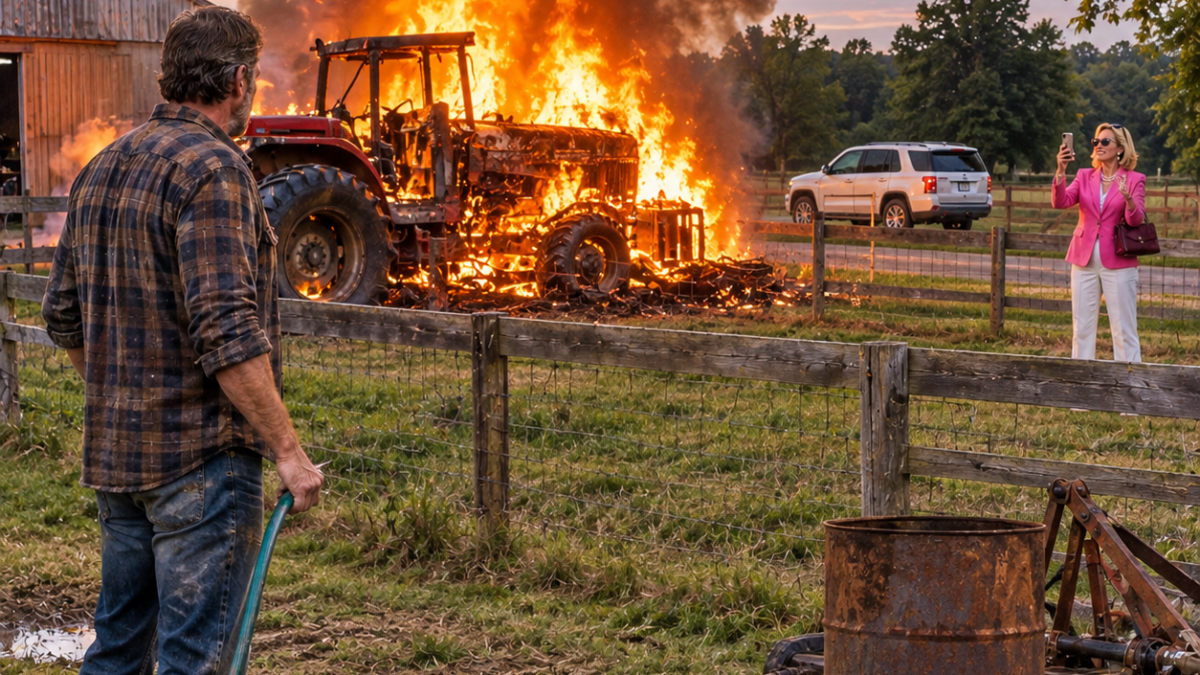
The night my father’s tractor burned in the field beside my barn, I stood barefoot in the gravel with a useless garden hose in my hand, watching forty years of grease, harvest dust, and memories disappear inside orange flames while Karen Holloway—the president of an HOA my land had never belonged to—stood across the road in a pink blazer recording the fire on her phone with a smile she apparently thought I couldn’t see.
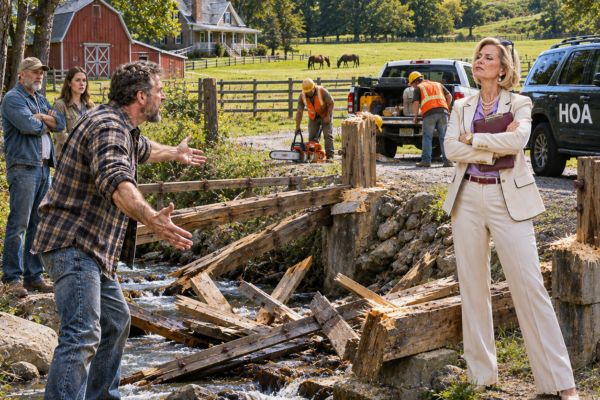
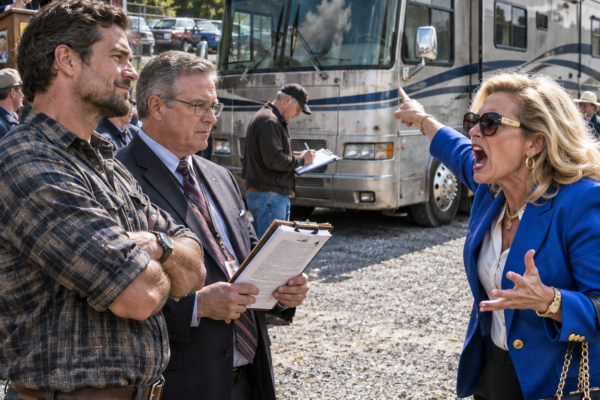
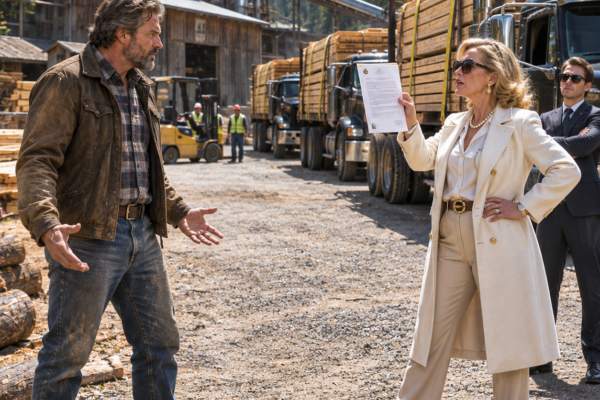
Three weeks earlier she had arrived at my fence with a clipboard and a rehearsed welcome speech, and since the moment I refused to sign my acreage into Willow Creek’s new association, the friendly letters had turned into threats, the threats into surveillance, and the surveillance into somebody painting JOIN OR PAY across the gate my father had built with his own hands.
I might still have believed the fire was only the work of an arrogant woman who had finally gone too far, but when I noticed the water line had been cut before the flames started and saw Karen’s white SUV ease away without its headlights, I understood that the next move had to be made carefully—because whoever had done this wanted me angry enough to make a mistake.
My name is Bill Turner, and my family has owned this patch of county land since 1981.
Back then there was no Willow Creek Estates. No entrance monument. No matching stone mailboxes. No architectural committee debating whether cedar looked more “harmonious” than pressure-treated pine.
There were fields, a creek, three farms, and enough distance between houses that if a neighbor showed up, it usually meant somebody needed a wrench, a hand with a fence, or help pulling a truck out of mud.
Dad bought our first tractor used.
Red paint. Cracked seat. Transmission that fought you on cold mornings.
He taught me to drive it when I was ten, one hand hovering beside the wheel while my boots barely reached the pedals.
“Land remembers who works it,” he used to tell me.
I believed him.
Even after I became county sheriff, that farm remained the place where my badge mattered least.
At home I was Bill.
I fixed fences, cut hay, kept a small orchard alive, and spent Sunday mornings drinking coffee beside the barn.
That was the life Karen walked into.
She first appeared at my fence around four in the afternoon, carrying a clipboard embossed with the green Willow Creek logo.
“Mr. Turner?”
“That’s me.”
“I’m Karen Holloway, president of the newly formed Willow Creek Homeowners Association.”
“I know who you are.”
Her smile paused.
She recovered quickly.
“We’re inviting the remaining legacy properties to become part of the community.”
“My property isn’t in your subdivision.”
“Not yet.”
I leaned on the fence.
“That sounds more like a threat than an invitation.”
She laughed, but her eyes didn’t.
“Boundaries change.”
“County plats don’t change because an HOA president wants them to.”
That was the first time her smile completely disappeared.
She explained dues, landscaping standards, road beautification, community safety, and “shared expectations.”
I listened.
Then I said no.
Not angrily.
Not dramatically.
Just no.
Two days later, an unstamped letter appeared in my mailbox.
**COMMUNITY PARTICIPATION IS ESSENTIAL FOR HARMONY AND SAFETY.**
The following night, a small drone hovered near my barn.
It had a Willow Creek decal on the side.
I pointed a flashlight at the camera.
It disappeared.
By the weekend, three red words had been sprayed across my front gate.
**JOIN OR PAY.**
That was when I started taking photographs.
Karen didn’t know much about my job because I had never felt the need to advertise it around Willow Creek.
People who knew me locally knew.
New residents mostly saw an older man in work boots driving a dusty pickup.
I preferred it that way.
Then came the fire.
At 10:07 on a Thursday night, I heard a soft pop outside.
By the time I reached the window, the tractor was already burning.
I ran for the hose.
Nothing.
Someone had sliced the line near the pump.
I tried the well valve.
Closed.
The heat forced me backward.
Then I looked across the road.
Karen stood beneath the streetlamp.
Phone raised.
Flames reflected in her glasses.
She saw me watching.
And smiled.
Fifteen minutes later, while firefighters fought to save what was left, one of them crouched beside the blackened rear tire and looked up at me.
“Sheriff,” he said quietly, “I think you’re going to want the fire marshal out here.”
Then he pointed his flashlight toward something half melted in the grass.
A red plastic fuel container.
PART 2
I stared at that melted red container until the shape stopped looking like plastic and started looking like intent.
The fire captain, Ray Collins, had known me almost twenty years.
He knew better than to speculate at a scene.
So when he used the word sheriff instead of Bill, I understood what he was really telling me.
This wasn’t the moment for grief.
It was the moment for procedure.
“Don’t touch it,” I said.
“Wasn’t planning to.”
Ray stood.
“You smell that?”
“Gasoline.”
“That’s what I’m getting.”
The tractor hissed behind us as water ran over scorched steel.
One rear tire had collapsed into a black ribbon.
The seat was gone.
Paint had peeled away from the hood in curled flakes.
I could see the little dent near the left fender where Dad had backed into a feed wagon in 1996 and blamed me for distracting him.
For a second, the investigation disappeared.
I was ten again.
Dad’s hand over mine on the steering wheel.
His boot pressing the clutch because my leg wasn’t long enough.
“Easy, Billy.”
Then the tractor frame popped from the heat.
I came back.
Ray studied me.
“You okay?”
“No.”
“Good answer.”
He knew me too well.
A younger firefighter approached.
“Captain, we’ve got a cut line by the pump.”
Ray looked at me.
“You knew about that?”
“I found it when I tried the hose.”
“Anybody been doing maintenance?”
“No.”
“Valve normally shut?”
“Never.”
He exhaled.
“I’ll call the state fire marshal.”
“Do it.”
Then I added:
“And call Chief Deputy Mason Clark.”
Ray’s eyebrows lifted.
“You’re stepping out?”
“I’m the victim.”
“Smart.”
It didn’t feel smart.
It felt like surrendering the one thing I knew how to do.
I had spent thirty-one years in law enforcement, the last twelve as elected sheriff.
My whole professional life had been built around walking toward problems.
Now the problem sat on my land, burned black under emergency lights, and the correct thing to do was back away from the investigation.
I hated it.
But conflict rules existed for a reason.
If Karen Holloway had set that fire, I didn’t want a defense attorney standing in court six months from now telling a jury that Sheriff Turner had investigated his own property, selected his own evidence, directed his own deputies, and arrested the woman he already disliked.
No.
This needed to survive without me.
Mason arrived fifteen minutes later.
He stepped out of his Tahoe wearing jeans and a sheriff’s office windbreaker.
He took one look at the tractor.
His face changed.
“Damn, Bill.”
“Yeah.”
“Your dad’s?”
I nodded.
Mason didn’t say anything for a moment.
He’d been a rookie when Dad was still alive.
Dad used to make fun of how carefully Mason polished his boots.
“You call the marshal?”
“Ray did.”
Mason looked toward the road.
“Anybody see anything?”
“I did.”
“Who?”
I nodded across the road.
“Karen Holloway.”
His head snapped around.
“She was here?”
“Standing under the streetlight. Phone up.”
“Doing what?”
“Watching.”
“Anything else?”
“She smiled when she saw me looking.”
Mason’s eyes narrowed.
“That’s not evidence of arson.”
“I know.”
“Good.”
I gave him a look.
He raised both hands.
“Just making sure Sheriff Turner isn’t going to come back from wherever Farmer Bill has been hiding.”
“Sheriff Turner is going inside.”
“Good.”
I started walking.
Then stopped.
“Mason.”
“Yeah?”
“Treat her like anybody else.”
He held my gaze.
“I always do.”
“And me.”
That got a small smile.
“Especially you.”
I went inside.
For the next four hours, other people walked my land while I sat at my kitchen table.
The state fire marshal arrived.
Deputies photographed tracks.
Evidence technicians bagged the fuel container.
The cut hose section was removed.
My camera system—old and basic then—covered the porch and driveway but not the barn.
I gave Mason the recordings without reviewing them myself.
At two thirty in the morning, the last emergency vehicle pulled away.
I stepped outside.
The field smelled like wet ash, diesel, and burned rubber.
The tractor looked smaller.
That hurt more than I expected.
When Dad died, I’d inherited plenty of things.
Tools.
A watch.
His old Winchester.
Three boxes of tax records nobody wanted.
But the tractor had felt different.
It wasn’t worth much in money.
Maybe six or seven thousand dollars before the fire.
To me, it was a piece of him that still made noise.
I sat on the front step.
My phone buzzed.
Mason.
**GO TO BED.**
I typed:
**YOU’RE NOT MY BOSS.**
His reply came immediately.
**TECHNICALLY TRUE. STILL GO TO BED.**
I didn’t.
At 6:40, Karen Holloway walked down my driveway carrying coffee.
No shame.
No hesitation.
Pink blazer.
Sunglasses.
As though she’d spent the night at a hotel instead of across the road from a burning tractor.
She stopped ten feet from me.
“Oh my goodness.”
I didn’t answer.
“What a tragedy.”
Still nothing.
She looked toward the tractor.
“I heard sirens.”
“I saw you.”
Her coffee paused halfway to her mouth.
“Excuse me?”
“Last night.”
“I don’t know what you mean.”
“Across the road.”
Her expression barely shifted.
“I took a walk when I heard the commotion.”
“At ten at night.”
“I couldn’t sleep.”
“With your phone recording.”
She smiled slightly.
“People record fires.”
I stood.
She was still on my property.
“Leave.”
Her eyebrows rose.
“Bill, I came to check on you.”
“No, you came to enjoy the view.”
The smile disappeared.
“You really shouldn’t make accusations without evidence.”
“Then I won’t.”
That seemed to disappoint her.
She took another sip.
“You know, this might be an opportunity.”
I stared at her.
“For what?”
“To rethink your relationship with Willow Creek.”
I actually laughed.
Behind us, steam still rose from the tractor.
“You’re recruiting me right now?”
“I’m saying community membership provides resources.”
“Such as?”
“Cleanup assistance.”
I looked toward the burned tractor.
“Interesting timing.”
Her lips tightened.
“Your property is now visibly damaged. That’s going to concern residents.”
There it was.
Not sympathy.
Leverage.
“You came here less than nine hours after my tractor burned to tell me the wreck bothers your neighborhood.”
“I came to offer solutions.”
“My solution is the same.”
“What solution?”
“Get off my land.”
She stared.
Then smiled without warmth.
“You’re making this harder than it needs to be.”
“So I’ve been told.”
She turned.
At the driveway entrance, she looked back.
“Things go easier when people cooperate.”
I said:
“Is that advice?”
“Community advice.”
Then she walked away.
I called Mason.
He answered with:
“Tell me you didn’t arrest her.”
“I didn’t even yell.”
“Proud of you.”
“She came to my house.”
“What’d she say?”
I repeated everything.
He went quiet.
“Write it down.”
“Already did.”
“Of course you did.”
“Mason?”
“Yeah?”
“I hate this.”
“I know.”
“I want to work the case.”
“I know.”
“You’re enjoying saying that.”
“A little.”
He hung up.
By noon, the fire marshal’s preliminary opinion was deliberate ignition.
Accelerant present.
Origin near the left rear portion of the tractor.
Water supply intentionally interrupted.
Not yet a final arson determination, but close.
Mason called me into the office that afternoon.
Not my office.
A conference room.
That was intentional.
District Attorney Angela Carter sat at the table.
So did the fire marshal.
Angela had prosecuted cases in our county for fourteen years and had absolutely no patience for theatrical law enforcement.
One reason I trusted her.
She opened with:
“Bill, you’re out.”
“Good afternoon to you too.”
“I mean out of the investigation.”
“I know.”
“No directing Mason.”
“I know.”
“No calling witnesses.”
“I know.”
“No checking databases.”
“Angela.”
“No asking deputies what’s happening every twenty minutes.”
I looked at Mason.
He looked innocent.
“You complained?”
“Constantly.”
Angela continued.
“You can provide evidence as a property owner. Nothing more unless we ask.”
“I understand.”
“Say it.”
I stared at her.
“I understand.”
“Good.”
The fire marshal slid photographs toward me.
Fuel container.
Burn pattern.
Cut hose.
A shoe impression near the fence.
Narrow sole.
Small heel.
“Could be a woman’s shoe,” he said.
“Could be anybody’s.”
“Yes.”
He nodded approvingly.
“See? He’s trainable.”
Angela asked:
“Any known dispute?”
I almost laughed.
Mason handed her the HOA letters I’d given him.
Karen’s welcome notice.
Mandatory participation.
The graffiti report.
Drone photograph.
Three fine notices from an organization with no jurisdiction over my parcel.
Angela read silently.
Then looked up.
“She tried to fine you?”
“Repeatedly.”
“You’re outside the HOA.”
“Yes.”
“She knows that?”
“I told her.”
“County records show it?”
“Clearly.”
Angela leaned back.
“Anything else?”
I handed over the letter from that morning.
A new one had appeared while I was at the office.
**NOTICE OF UNSIGHTLY PROPERTY CONDITION**
**The burned agricultural equipment visible from Willow Creek Estates negatively impacts community aesthetics and may constitute a safety hazard. Immediate removal is requested.**
Angela read it.
Then looked at me.
“She sent this the morning after your tractor burned?”
“Yes.”
Mason rubbed his forehead.
The fire marshal whispered:
“That’s bold.”
Angela didn’t smile.
“Preserve the original.”
“Already bagged.”
She nodded.
“Go home.”
“Anything else?”
“Don’t provoke her.”
“I don’t provoke people.”
Mason coughed.
I looked at him.
“What?”
“Nothing.”
I left.
For three days, nothing happened publicly.
Privately, Willow Creek turned into a rumor mill.
Some residents drove past slowly.
Others stared at the tractor.
Karen posted online about “hazardous legacy properties.”
She never said my name.
She didn’t need to.
One post read:
**When one property owner refuses reasonable community standards, everyone pays the price.**
Another:
**Safety sometimes requires difficult decisions.**
Mrs. Dobbins, an older widow who had lived nearby before Willow Creek was built, brought me pie.
“I don’t believe her.”
“Believe who?”
She gave me a look.
“Don’t play sheriff with me, Billy Turner. I babysat you when you still ate dirt.”
Fair.
She put the pie on my counter.
“Karen came to my house.”
“What did she want?”
“A statement.”
“About?”
“You.”
I stopped.
“What kind?”
“That your tractor was poorly maintained.”
“Have you ever touched my tractor?”
“No.”
“Seen it up close?”
“Hundreds of times.”
“Did it look dangerous?”
“It looked older than Moses.”
I smiled.
“So did my husband.”
“What did you tell her?”
“That I wasn’t signing anything.”
Mrs. Dobbins lowered her voice.
“She got angry.”
“How angry?”
“Said people who stood in the way of progress eventually get moved.”
I took out my phone.
“Can I call Mason?”
She nodded.
“Thought you’d never ask.”
That became the first witness statement from somebody Karen had tried to recruit after the fire.
Then came Frank Miller.
Miller’s Hardware sat nine miles outside town.
Frank called Mason, not me.
Good man.
Mason later told me only after Angela approved disclosure.
Karen had purchased two red five-gallon fuel cans three days before the fire.
Paid cash.
Store camera showed her.
No gasoline purchase there because the store didn’t sell fuel.
Still, the cans matched the brand found near my tractor.
Circumstantial.
Useful.
Not enough.
Then a gas station camera placed her white SUV beside a fuel pump that evening.
Again, not proof.
People buy gasoline.
But cases are built from pieces.
The next piece came from Karen herself.
Willow Creek maintained a private resident forum.
One of the board members, Lynn Cooper, contacted investigators voluntarily.
She had screenshots.
A thread from the week before the fire.
Karen wrote:
**Turner needs to understand refusal has consequences.**
Tom Watkins, the treasurer, replied:
**Don’t create a legal problem over one farm.**
Karen:
**Only a problem if someone can prove who solved it.**
Lynn:
**That doesn’t sound funny.**
Karen:
**It wasn’t meant to.**
Angela called me after reading it.
“Still out.”
“I didn’t say anything.”
“You were thinking loudly.”
“Can I ask one question?”
“One.”
“Enough for a warrant?”
“No.”
I nodded even though she couldn’t see me.
“Okay.”
“Bill.”
“Yeah?”
“That’s not a no forever.”
I hung up.
The investigation moved.
Karen moved faster.
Two nights later, my exterior camera caught her SUV creeping past at 11:47.
She stopped across from the burned tractor.
Window lowered.
Phone came out.
She stayed nearly a minute.
Then left.
Nothing illegal.
But strange.
The next morning, another HOA envelope appeared.
This one demanded removal of the tractor within seventy-two hours or “community corrective action may be initiated.”
I read it on the porch.
Then read it again.
Community corrective action.
I called Mason.
“Can I remove my own tractor?”
“Of course.”
“I’m not.”
“I figured.”
“I want it preserved until the fire investigation is complete.”
“Already marked as evidence-related property.”
“Good.”
“Why?”
I read him the letter.
Silence.
Then:
“I’ll get a copy.”
Karen’s next mistake was greedier.
County property records showed Willow Creek HOA had filed an annexation request seeking to incorporate my parcel into its “future community management area.”
The request had been denied.
Twice.
The map showed my acreage shaded green.
My signature appeared nowhere.
There was no owner consent.
No annexation.
No easement.
No authority.
But on Friday afternoon, I found a small red stake driven into the ground twenty-eight feet inside my fence.
**WILLOW CREEK HOA — FUTURE PROPERTY LINE**
I didn’t touch it.
I called the county survey office.
Then Mason.
Then Angela.
A surveyor arrived.
Measured.
Photographed.
Confirmed the stake was nowhere near any legal boundary.
“Somebody moved the line almost thirty feet,” he said.
“No.”
I shook my head.
“They didn’t move anything.”
He smiled.
“Right. They planted a stick.”
“Exactly.”
That distinction mattered.
A boundary exists in recorded documents and surveyed ground.
A sign doesn’t make property change hands.
Neither does confidence.
We installed better cameras after that.
Not police surveillance.
My private property cameras, disclosed to investigators when needed.
Two nights later, at 10:42, they captured two people approaching the fence.
One shorter.
One taller.
Dark hoodies.
The shorter person pulled loose a board.
The taller one carried stakes.
They entered.
The shorter person pushed blonde hair back beneath the hood.
Karen.
The taller figure was harder to identify.
They placed two more red boundary stakes.
Took photographs.
Then left.
Mason called at six the next morning.
“We have enough to charge trespass.”
“Then charge trespass.”
“Angela wants to hold.”
“For what?”
“Because the fire case isn’t ready.”
I paced the kitchen.
“She’s walking onto my property at night.”
“I know.”
“She burned—”
“You don’t know that yet.”
I stopped.
Mason’s voice stayed calm.
“We suspect it.”
I breathed.
“Right.”
“She wants us to move carefully.”
“Right.”
“And before you ask, yes, patrol is increasing drive-bys.”
“Fine.”
“Bill.”
“What?”
“You’re doing good.”
“Don’t patronize me.”
“Never.”
He hung up.
I hated waiting.
The farmer in me could wait six months for a crop.
The sheriff in me wanted decisions.
Karen exploited that frustration.
Her public campaign grew.
She held a press event under the Willow Creek gazebo.
“Community safety,” she called it.
Residents stood behind her.
Some looked uncomfortable.
Others genuinely believed her.
She showed photographs of my burned tractor.
Called it “abandoned hazardous equipment.”
She showed the broken section of fence.
Didn’t mention that somebody associated with her organization had broken it.
Then she announced a “Willow Creek Community Cleanup Day.”
Saturday.
Volunteers would “restore neglected shared spaces.”
Shared.
That word again.
The event map went online Friday.
My property was shaded.
My barn.
Creek edge.
Fence.
Burned tractor.
All listed as part of Phase One of the Willow Creek Greenway Improvement Area.
I called Angela.
She answered immediately.
“I saw it.”
“What are you doing?”
“County counsel sent a cease-and-desist.”
“She posted twenty minutes ago saying the county has no authority over HOA beautification.”
Angela sighed.
“That’s not how counties work.”
“She plans to enter tomorrow.”
“We know.”
“So?”
“So county survey staff will be present to establish the legal line.”
“And deputies?”
“Mason will be nearby.”
“Nearby?”
“Bill, I am not staging some television arrest.”
“Didn’t ask you to.”
“You wanted to.”
“Maybe.”
“Your job tomorrow is simple.”
“What?”
“Stand on your property.”
“I do that well.”
“Say no.”
“Also good at that.”
“Do not touch anyone.”
“Angela.”
“Do not arrest anyone.”
“I know.”
“Do not issue commands as sheriff unless there’s an immediate safety issue.”
“I know.”
“And wear a body camera?”
I paused.
“Why?”
“Because you’re the complaining witness and elected sheriff. I want every second documented.”
That was smart.
“Okay.”
Saturday morning came bright and cool.
At eight thirty, the county surveyors arrived.
They parked behind my barn where they wouldn’t interfere.
Mason and two deputies staged on a public road around the bend.
Not hidden for theater.
Simply far enough away not to inflame the crowd.
I wore jeans.
Work boots.
Brown jacket.
Badge under the jacket.
Body camera visible.
At 9:14, the convoy appeared.
Six vehicles.
White SUVs.
Pickup trucks.
A landscaping trailer.
About twenty volunteers.
Some carried rakes.
Some gloves.
Two men had chainsaws.
That got my attention.
Karen stepped out first.
Pink blazer.
Clipboard.
Sunglasses.
Smile.
Always the smile.
She stood near my gate.
“All right, everyone. Phase One begins with removal of unsafe debris and establishing the new greenway boundary.”
I walked toward her.
“Morning.”
Her smile sharpened.
“Bill.”
“This is private property.”
“We’ve discussed this.”
“Repeatedly.”
“The board approved community corrective action.”
“Your board doesn’t own my land.”
She raised her voice so the volunteers could hear.
“The county has failed to address ongoing hazards.”
I pointed toward the survey stakes.
“The county addressed your annexation request. Denied.”
She didn’t look at them.
“The HOA’s planning authority remains.”
“No.”
People shifted.
Tom Watkins stood behind her holding a clipboard.
Lynn Cooper filmed from the side.
Karen turned toward two contractors.
“Start with the burned equipment.”
One of them hesitated.
“Ma’am, he says it’s his property.”
“It is.”
She looked at me.
“Bill, step aside.”
“No.”
“Don’t make a scene.”
“You brought twenty people to my gate.”
She smiled.
“This is not your private kingdom.”
I almost admired the sentence.
“No, Karen.”
I pointed around us.
“It’s my farm.”
She waved to the contractors.
“Move the tractor.”
Neither moved.
Karen’s voice hardened.
“I’m paying you.”
The older contractor asked:
“Do you have written authorization from the owner?”
“I represent the community authority.”
“That’s not what I asked.”
Her face reddened.
“Fine.”
She turned to volunteers.
“Start with the fence.”
A young man lifted a post.
I held up a hand.
“Stop.”
He froze.
Not because I shouted.
Because I sounded like myself at work.
Karen snapped:
“You cannot order my volunteers.”
“I can tell anyone not to damage my fence.”
The young man put the post down.
“Sorry, sir.”
Karen glared at him.
Then at me.
“Honey, his side doesn’t exist anymore.”
The sentence was so ridiculous that nobody spoke.
Behind me, the county surveyor cleared his throat.
“Actually, ma’am—”
Karen spun.
“Who are you?”
“County Survey Office.”
Her face changed.
He held up a map.
“The recorded boundary is here.”
He pointed to the original fence line.
“Your markers are inside Mr. Turner’s parcel.”
Karen looked at Tom.
Tom suddenly found the ground interesting.
She recovered.
“We have a pending appeal.”
“No,” the surveyor said. “The appeal was denied Tuesday.”
Lynn’s camera kept recording.
Karen saw it.
“Turn that off.”
Lynn lowered the phone slightly.
“You told me to document.”
“I said turn it off!”
That was the first visible fracture.
I said:
“Why?”
Karen’s head snapped toward me.
“This is harassment.”
“You invited cameras.”
“You manipulated the county against me.”
“No.”
I reached into my jacket.
Not for a weapon.
For my identification wallet.
I opened it.
Badge.
Commission card.
The volunteers nearest me went quiet.
Karen stared.
“What is that?”
I almost laughed.
Then realized she genuinely didn’t know.
“Bill Turner.”
I held the credentials where she could see.
“Sheriff.”
Her mouth opened.
Nothing came out.
Someone behind her whispered:
“Oh my God.”
Tom’s clipboard slipped from his hand and hit the gravel.
Karen looked at me as if I’d suddenly changed species.
“You’re…”
“Yes.”
“The sheriff?”
“Yes.”
“Of this county?”
I looked around.
“That’s generally how county sheriff works.”
A nervous laugh moved through the crowd.
Karen’s face flushed.
“You never told me.”
“You never asked.”
“You let me—”
“I let you what?”
She stopped.
That was the problem with the sentence.
Anything she put after it sounded bad.
You let me fine you.
You let me threaten you.
You let me enter your land.
You let me burn—
She didn’t finish.
Instead she raised her chin.
“Your office does not exempt your property from community standards.”
“Correct.”
She looked surprised.
“And your title doesn’t put my acreage inside your HOA.”
Silence.
Then Mason’s Tahoe came around the bend.
Not lights.
Not siren.
Just slow.
Professional.
He parked outside my gate.
Karen watched him get out.
Another deputy followed.
Mason approached me first.
“Sheriff.”
I nodded.
Then he looked at Karen.
“Ms. Holloway.”
Her posture stiffened.
“What is this?”
Mason held a folder.
“We need to speak with you regarding multiple incidents.”
“This is retaliation.”
“No, ma’am.”
“He’s using his office.”
“Sheriff Turner has been recused from the criminal investigation involving his property.”
That sentence mattered.
I watched several residents look at me differently.
Karen had spent weeks telling them I was an isolated farmer resisting community safety.
Now her easier story—corrupt sheriff abusing power—was gone before she could fully build it.
Mason continued.
“We have documented incidents of unauthorized entry onto Mr. Turner’s property and alteration of boundary markers.”
Karen pointed toward the surveyor.
“This is a civil dispute.”
“Some parts are.”
Mason nodded.
“Entering posted property after notice is not necessarily just a civil matter.”
“I was acting for the HOA.”
“That does not create ownership.”
Her breathing changed.
“Am I under arrest?”
“Not at this moment.”
The disappointment on some volunteers’ faces was almost funny.
Karen saw it.
She regained confidence.
“Then we’re done here.”
“No.”
Mason’s tone stayed calm.
“The cleanup event is done.”
“On whose authority?”
“Property owner.”
He pointed toward me.
“And county survey confirmation.”
Karen looked around.
Her volunteers were already backing away.
One family loaded rakes into their SUV.
The contractors disconnected the trailer.
Tom whispered:
“I think we should leave.”
Karen snapped:
“Stay.”
He didn’t.
Lynn lowered her camera.
“Karen, I’m done.”
“You work for the board.”
“I volunteered for communications.”
“You’ll regret this.”
Lynn stared at her.
Then raised her phone again.
“Say that again.”
Karen realized the camera was still recording.
Too late.
She turned toward me.
“This is because I asked you to join.”
“No.”
Her voice rose.
“You’ve been waiting to humiliate me.”
“No.”
“You hid your identity!”
“I live here.”
“You’re the sheriff!”
“I’m also allowed to own a tractor.”
That triggered something.
Her eyes flicked toward the burned wreck.
Mason saw it.
So did I.
Then she said:
“That ugly thing wouldn’t be there if you’d cooperated.”
Everything stopped.
Mason’s expression changed.
Karen’s mouth tightened.
She knew.
Not necessarily a confession.
But close enough to make everyone hear the implication.
I didn’t respond.
Mason did.
“Ms. Holloway, I’d like you to come with us voluntarily for an interview.”
“No.”
“You may have counsel present.”
“I said no.”
“Then we’re done discussing it here.”
She backed toward her SUV.
“This entire thing is political persecution.”
Mason didn’t follow.
“Your choice to decline is noted.”
She got in.
Slapped the door.
Drove away.
No arrest.
No cuffs.
No dramatic ending.
Not yet.
Karen probably thought she’d won that moment because she left.
I knew better.
The strongest cases rarely arrive as one perfect scene.
They accumulate.
That afternoon, Lynn Cooper walked into the sheriff’s office with her phone.
She gave investigators the entire cleanup video.
Not just the livestream clips.
The raw footage.
Including the moment before I approached.
Karen talking to Tom.
“Once we clear the tractor, we can say the hazard no longer exists.”
Tom replied:
“What about the fire investigation?”
Karen:
“They’ll lose interest.”
Tom:
“Karen, this is evidence.”
Then Karen said something that changed everything.
“It’s scrap metal now. It can’t testify.”
Mason called Angela.
Angela called the state fire marshal.
By Monday, they had a search warrant for specific records and devices connected to the property incidents and suspected arson.
Karen’s house was searched.
So was the HOA office.
They found more than anybody expected.
Not a cartoon villain’s secret room.
Something more believable.
Paper.
Lots of paper.
Receipts.
Invoices.
Draft letters.
Copies of county maps with my boundary manually redrawn.
Unsubmitted petitions carrying signatures investigators later determined some residents had never provided.
A notebook listing “pressure points” for difficult homeowners.
My name had three entries.
**TRACTOR VISIBLE**
**COUNTY LAND — ANNEXATION PRIORITY**
**REFUSAL MAY REQUIRE EXAMPLE**
That last word made my jaw tighten.
Example.
She didn’t see me as a neighbor.
I was an example.
The fuel evidence was stronger.
Investigators found a hardware receipt for two red fuel cans matching the type recovered at my property.
A gas-station transaction.
Her SUV location data placed the vehicle on the county road beside my farm during the likely ignition window.
A deleted video recovered from her phone showed the tractor already burning.
Her own voice, faint but clear:
“Maybe now he’ll understand.”
That was the line.
Not enough alone.
But with everything else?
Enough.
Mason called me Tuesday morning.
“Bill.”
I was in the orchard.
“Yeah?”
“We’re getting the warrant.”
I stopped pruning.
“For arrest?”
“Yes.”
I closed my eyes.
“What charges?”
“Arson. Criminal mischief. Trespass-related counts. Tampering. DA’s still reviewing.”
I leaned against the tree.
“You sure?”
“No.”
That surprised me.
Mason continued.
“That’s why judges exist.”
I smiled faintly.
“Good answer.”
“Angela wants you nowhere near the arrest.”
“I know.”
“She’s serious.”
“She always is.”
“Karen’s at the HOA office.”
“I’m staying home.”
“Good.”
Mason paused.
“Bill?”
“Yeah?”
“I’m sorry about the tractor.”
That hit harder than the arrest news.
“Thanks.”
At 11:32, Karen Holloway was taken into custody at the Willow Creek HOA office.
I didn’t see it.
Didn’t need to.
Lynn later told me Karen demanded to know whether I had ordered the arrest.
Mason apparently answered:
“No, ma’am. A judge signed the warrant.”
Perfect answer.
By noon, news vans arrived.
That part I hated.
**HOA PRESIDENT CHARGED IN FARM TRACTOR ARSON**
**COUNTY SHERIFF RECUSES FROM CASE INVOLVING HIS OWN PROPERTY**
**BOUNDARY DISPUTE ESCALATES INTO CRIMINAL INVESTIGATION**
My phone exploded.
State sheriffs.
Old friends.
Reporters.
My sister.
My sister was the worst.
“You didn’t tell me somebody burned Dad’s tractor?”
“I was busy.”
“William Turner.”
Nobody uses your full name like family.
“I’m fine.”
“The tractor?”
“Not.”
Silence.
Then:
“Dad loved that machine.”
“I know.”
She started crying.
I did too.
Quietly.
That was the first time since the fire.
I had been so focused on evidence, boundaries, procedure, and Karen that I had not let myself mourn what was gone.
My sister said:
“Remember when Dad drove us to the creek on the fender?”
“Yeah.”
“You fell off.”
“I did not.”
“You absolutely did.”
“I stepped off.”
“At eight miles an hour.”
“It was controlled.”
She laughed through tears.
For ten minutes, Karen didn’t exist.
No HOA.
No sheriff.
Just Dad.
When the call ended, I walked to the tractor.
Put one hand against the blackened hood.
The metal was cold.
“Sorry, old man.”
Wind moved through the grass.
Nothing answered.
A week later, the HOA board called an emergency meeting.
Karen was out on bond under strict conditions.
No contact with me.
No entry onto my property.
No participation in enforcement decisions while the case was pending.
The board asked me to attend.
I almost refused.
Angela told me:
“You can go as a property owner.”
“Not sheriff?”
“You don’t stop being sheriff.”
“You know what I mean.”
“Then act like Bill.”
I did.
The clubhouse was packed.
Karen’s chair at the front sat empty.
Tom Watkins stood beside it.
He looked like he hadn’t slept.
Marla Greene, the vice president, opened the meeting.
“We owe several residents an apology.”
Mrs. Dobbins whispered beside me:
“That’s a start.”
Marla continued.
“An independent review has identified enforcement actions that were taken without proper board authorization.”
Murmurs.
“Some of those actions involved properties outside Willow Creek jurisdiction.”
Everybody looked at me.
I looked at the ceiling.
Marla said:
“We are withdrawing all notices sent to Mr. Turner.”
Someone clapped.
Then more.
I didn’t.
She continued.
“We are also suspending all annexation efforts concerning legacy parcels.”
Good.
Then Tom stood.
“I need to say something.”
His hands shook.
“I knew Karen was pushing too hard.”
The room quieted.
“I told myself it was better to keep her calm than challenge her.”
He looked toward me.
“I saw the boundary maps.”
My jaw tightened.
“I knew your property wasn’t ours.”
A woman near the back said:
“Then why didn’t you stop her?”
Tom swallowed.
“Because she threatened to expose mistakes I’d made as treasurer.”
“What mistakes?”
“Late filings. Nothing criminal.”
He shook his head.
“But I was embarrassed.”
Mrs. Dobbins muttered:
“So you let her bully everybody instead.”
Tom nodded.
“Yes.”
No excuse.
That honesty mattered.
Marla then announced an independent financial audit.
Karen’s influence over the HOA went deeper than boundary disputes.
Over the next month, auditors discovered inflated vendor payments.
Unexplained reimbursements.
Cash withdrawals labeled “community initiatives.”
Payments to a consulting company registered to Karen’s cousin.
Election-mailing expenses far beyond actual costs.
Nothing like millions.
Enough to matter.
Enough to turn a criminal case about fire into a separate financial investigation.
Karen’s lawyer publicly called it retaliation.
Angela refused to argue in the press.
Smart.
Mason refused too.
Smarter.
I gave exactly one statement:
“The investigation will be handled through evidence and the courts. I will not discuss pending criminal matters.”
Boring.
Perfect.
Karen hated boring.
Her attorney pushed for dismissal based on conflict of interest.
The hearing was necessary.
I sat in the back.
Her lawyer argued that because I was county sheriff, the entire local investigation was inherently compromised.
Angela stood.
“The sheriff recused himself within hours of the incident.”
She produced records.
“Evidence processing was supervised by the state fire marshal.”
More records.
“Charging decisions were made by this office.”
More.
“Search warrants were reviewed by independent judges.”
More.
“Certain digital evidence was examined through the state laboratory.”
The defense tried to suggest Mason was too close to me.
The judge asked:
“Did Chief Deputy Clark fabricate the defendant’s recovered video?”
“No, Your Honor.”
“Did he manufacture the fuel container?”
“No.”
“Did he compel the defendant to purchase matching fuel cans?”
“No.”
“Then we will address admissibility through proper motions, not insinuation.”
Motion denied.
Karen stared straight ahead.
Not at me.
Trial came nearly three months after the fire.
By then, the field had begun to heal.
Grass grew through the black patch.
I kept the tractor exactly where it had burned.
Insurance wanted to remove it.
I asked them to wait until proceedings finished.
They agreed.
The courtroom filled.
Reporters.
Neighbors.
Deputies.
People who had never attended a criminal trial but suddenly wanted to understand how a woman with a clipboard became a defendant.
The prosecution started with the fire marshal.
Burn pattern.
Accelerant.
Cut water line.
Fuel container.
Then Frank Miller.
He identified Karen from store footage.
The gas station clerk authenticated transaction records.
Mrs. Dobbins testified about Karen seeking a false maintenance statement.
Lynn Cooper testified about the messages and cleanup event.
Tom Watkins testified under a cooperation agreement regarding the false boundary campaign.
Then me.
Angela approached.
“State your name.”
“William Turner.”
“Occupation?”
I looked at the jury.
“County sheriff.”
A few jurors already knew.
“Do you own the property at issue?”
“Yes.”
“How long?”
“My family since 1981. I became owner after my father died.”
“Was it ever part of Willow Creek HOA?”
“No.”
“Did you agree to join?”
“No.”
“Did the defendant ask you?”
“Yes.”
“What happened after you refused?”
I explained the letters.
Drone.
Graffiti.
Boundary stakes.
Then the tractor.
Angela showed a photograph from before.
Red.
Weathered.
Dad’s old dent visible.
“What did this tractor mean to you?”
The defense objected.
“Relevance.”
Angela answered:
“Damages and victim impact related to alleged arson motive.”
The judge allowed limited testimony.
I looked at the photograph.
“My father taught me to drive it.”
My voice almost broke.
I paused.
The courtroom waited.
“He was a hard man to impress.”
A few smiles.
“He believed machinery should last if you respected it.”
I swallowed.
“That tractor lasted longer than he did.”
Silence.
Angela gave me a second.
Then:
“Did you see the defendant on the night of the fire?”
“Yes.”
“Where?”
“Across the county road near the streetlight.”
“What was she doing?”
“Recording.”
“How did you know it was her?”
“I knew her face. Her vehicle was nearby. Lighting was sufficient.”
“Did you see her ignite the tractor?”
“No.”
That mattered.
“No?”
“No.”
“Then what exactly did you witness?”
“Karen standing near the scene after the fire had started.”
“Anything else?”
“When she saw me looking at her, she smiled.”
The defense attorney rose later.
“Sheriff Turner, you disliked my client.”
“Eventually.”
“Eventually?”
“I didn’t know her long enough to dislike her when we first met.”
A few jurors smiled.
“You disagreed with the HOA.”
“Yes.”
“You refused to cooperate.”
“I refused to join an association my property wasn’t part of.”
“You resented her efforts to improve Willow Creek.”
“No.”
“You installed cameras.”
“After vandalism and a fire.”
“You involved your own employees.”
“I called emergency services. My office recused me.”
“But Chief Deputy Clark works for you.”
“Yes.”
“So every deputy investigating knew the alleged victim was their boss.”
“Yes.”
“Wouldn’t that create pressure?”
“It could.”
He paused, perhaps surprised I agreed.
“So the investigation was biased.”
“I didn’t say that.”
“You admit pressure existed.”
“I acknowledge why safeguards were necessary.”
“What safeguards?”
“State fire marshal. District attorney charging decisions. Independent warrant review. State lab work. Documented recusal.”
His jaw tightened.
“You’re very practiced.”
“I testify for a living.”
“You wanted Karen Holloway punished.”
“I wanted whoever burned my tractor held responsible.”
“You believed it was her from the beginning.”
“I suspected her.”
“So confirmation bias—”
“Is why I didn’t run the case.”
Silence.
The prosecutor didn’t need to rehabilitate much after that.
Then came Karen’s recovered video.
The courtroom screen showed darkness.
My tractor burning.
The image shook slightly.
Karen’s voice:
“Maybe now he’ll understand.”
The defense argued she had arrived after ignition and the statement referred to the danger of old equipment.
Possible.
Then prosecutors showed metadata.
The video began before the first 911 call.
Before neighbors reported the flames.
Her phone had been at the roadside for several minutes.
Still circumstantial.
Then came fuel-can footage.
Gas purchase.
Messages.
The cut hose.
The planted boundary campaign.
The cleanup recording.
No single piece shouted guilt.
Together, they spoke clearly.
Karen testified.
Her attorney almost certainly advised against it.
She did it anyway.
Of course she did.
She said she bought fuel cans for lawn equipment.
Plausible.
Said she was driving near my farm because she couldn’t sleep.
Possible.
Said she saw the fire and recorded it.
Possible.
Said “Maybe now he’ll understand” referred to my need to cooperate with safety standards.
That strained things.
Then Angela asked:
“Why didn’t you call 911?”
Karen hesitated.
“I assumed someone else had.”
“You were filming an active fire on property belonging to a man you knew might be asleep inside his house.”
“The house wasn’t burning.”
“You knew that from across the road?”
“Yes.”
“How?”
“I could see.”
“Could you see the cut water line?”
“No.”
“Could you see the closed valve?”
“No.”
“No further questions.”
The jury deliberated less than five hours.
Guilty on arson.
Guilty on criminal property damage.
Guilty on trespass-related counts.
Some lesser charges merged or were resolved separately.
Financial charges were still pending and later became part of a negotiated resolution.
At sentencing, I gave a victim statement.
I kept it short.
“I don’t want a longer sentence because I’m sheriff.”
I looked at the judge.
“And I don’t want a shorter one because the defendant once held an HOA title.”
Then at Karen.
“She burned something that belonged to my father because she believed damaging my property would make me surrender control of it.”
I paused.
“The tractor can be replaced.”
I looked at the crowded gallery.
“The belief that fear makes ownership disappear is the thing that needs correcting.”
Karen received a prison sentence measured in years, followed by supervision and restitution obligations.
Not forever.
Not some fantasy punishment.
Enough to be real.
Her fraud-related case added consequences.
The court ordered repayment connected to misused association funds.
She permanently lost her HOA position.
Her legal fees forced the sale of property.
The organization itself nearly collapsed.
People expected me to celebrate.
I didn’t.
I drove home.
Parked by the barn.
Sat beside the tractor.
The verdict had done nothing to restore red paint.
Nothing to bring Dad back.
Nothing to make the field smell like diesel and fresh-cut hay instead of old smoke when rain hit the soil.
Justice closes legal questions.
Grief doesn’t care.
The next morning, Mrs. Dobbins arrived with three families.
Toolboxes.
Lumber.
Fence posts.
Jerry Pike pulled up behind them with an old red tractor.
I walked toward him.
“What is this?”
“Temporary loan.”
“Jerry.”
“Don’t start.”
His tractor smoked faintly at idle.
“I’ve seen healthier equipment.”
“Then don’t borrow it.”
Mrs. Dobbins handed me a hammer.
“We’re fixing your fence.”
“You don’t have to.”
“No.”
She smiled.
“We want to.”
I looked at the group.
Some had supported Karen.
One had signed her cleanup petition.
Another had shared the photograph labeling my tractor hazardous.
Nobody avoided my eyes.
A younger man named Caleb stepped forward.
“I believed her.”
“Okay.”
“I shouldn’t have.”
“Probably not.”
He nodded.
“I’m sorry.”
That was enough.
We rebuilt the fence.
Not perfectly.
One post leaned.
Jerry complained my measurements were inconsistent.
I reminded him his tractor leaked oil.
Mrs. Dobbins nearly hit her thumb twice.
By lunch, everyone was dirty.
Someone brought sandwiches.
Kids carried boards.
Laughter moved across the same field where volunteers had once arrived to seize a boundary that wasn’t theirs.
I stood with the hammer in my hand and felt something loosen inside me.
That was the first real victory.
Not Karen in cuffs.
Neighbors building instead of taking.
The new HOA board changed almost everything.
Term limits.
Recorded votes.
Independent annual financial review.
Conflict-of-interest rules.
No annexation applications without written owner consent.
No “community corrective action” on non-HOA property.
Complaint appeals handled by more than one board member.
Karen’s name disappeared from the entrance monument.
Marla became president temporarily.
She refused to run again after six months.
“Why?” I asked.
“I’ve seen what happens when people start enjoying the chair too much.”
Good answer.
The old board dissolved and elections were held.
People actually competed on boring issues.
Pool repairs.
Road reserves.
Landscaping contracts.
Beautifully dull.
Then, about a month after Karen’s sentencing, something appeared in my mailbox.
Plain envelope.
No stamp.
Inside was a photograph of me outside the courthouse.
Across the bottom:
**JUSTICE IS TEMPORARY. POWER FINDS A WAY.**
I stared at it.
Old instincts returned immediately.
Not fear.
Assessment.
Who had access?
Who still believed Karen?
Was it serious?
I called Mason.
He arrived that evening.
“Don’t touch anything else.”
“I touched the envelope.”
“Of course you did.”
“I’m not psychic.”
He bagged it.
“You think Karen sent it?”
“She can’t exactly walk to my mailbox.”
“Could have arranged it.”
“Could also be some idiot wanting attention.”
“Which do you prefer?”
“Idiot.”
“Same.”
Two nights later, my mailbox was knocked over.
Three nights after that, the county parcel marker near the road was pulled out.
Then somebody left a dead snake on my porch with a note:
**YOU’RE NEXT.**
That changed the tone.
Mason called Angela.
Patrol increased.
Cameras went back up.
I hated every second.
I had been ready for the case to end.
Instead, Karen’s shadow remained even without Karen.
The cameras caught movement at 2:14 on a Wednesday morning.
Two men.
Dark clothes.
Entering near the old fence gap.
One carried a canister.
The other a pry bar.
I watched from inside.
Called dispatch like any homeowner.
Then stayed behind a locked door.
That was harder than the original arson.
I knew one of the shapes.
Tom Watkins.
Former HOA treasurer.
The man who had testified.
He and another man walked toward the barn.
One poured liquid near the door.
Floodlights activated automatically.
They froze.
The second man ran.
Tom didn’t.
Deputies arrived within minutes.
Mason caught the runner near the drainage ditch.
No gunfight.
No heroic sheriff chase.
Two arrests.
One spilled canister.
One pry bar.
One car parked nearby.
Inside the trunk, investigators found stacks of flyers.
**BRING BACK KAREN — RESTORE WILLOW CREEK**
Tom looked shattered in the interview.
Not ideological.
Afraid.
Karen had convinced him during earlier months that if she fell, everyone who had helped her would be exposed and sued.
After sentencing, a handful of supporters created an online group.
They turned her into a victim.
They blamed me.
Tom joined.
Then let anger become criminal.
His confession was painful to read.
“I just wanted Turner scared.”
Same logic.
Different person.
That was when I finally understood something I had missed.
Karen’s most dangerous legacy wasn’t the fire.
It was the permission she’d given ordinary people to treat intimidation as civic duty.
Tom faced his own charges.
The second man pleaded early.
Karen’s attorneys denied any involvement from prison.
Investigators never proved she ordered the retaliation.
So nobody claimed she did.
That mattered.
Truth doesn’t become more useful because you decorate it.
Her appeal came later.
Main argument:
Conflict.
Sheriff victim.
Sheriff’s office involvement.
The appellate court reviewed the record.
Recusal.
Independent fire investigation.
DA control.
Warrant process.
Evidence.
Conviction affirmed.
I attended the hearing quietly.
Karen was brought in for one proceeding connected to the appeal.
She looked older.
No pink blazer.
No clipboard.
No room bending around her voice.
She saw me.
For a moment, I expected the old glare.
It came.
Then faded.
The judge announced the decision.
Karen’s shoulders dropped.
Not remorse.
Acceptance.
Sometimes that’s the first thing reality gets from people like her.
Afterward, Mason and I drove through Willow Creek.
No patrol signs.
No “community inspection volunteers.”
Kids played basketball near a driveway Karen once cited.
Someone had painted a front door bright yellow.
Mason pointed.
“She would’ve hated that.”
“It’s terrible.”
He laughed.
“You’re becoming her.”
“Never.”
We passed the old HOA hall.
Lights off.
New board had moved meetings to the library.
“Think it’s finally over?”
Mason asked.
I looked through the windshield.
“Cases end.”
“And people?”
“Different story.”
He nodded.
At my farm, Jerry’s borrowed tractor sat beside the barn.
The burned one still rested near the field.
Mason looked at it.
“You keeping that forever?”
“I don’t know.”
“You can’t farm with a monument.”
“I know.”
“Your dad would tell you to scrap it.”
I looked at him.
“You never met my dad sober enough to know what he’d say.”
Mason laughed.
“Fair.”
But he was right.
The next week, I called a restoration shop.
Not to rebuild everything.
That would’ve cost more than the tractor was worth.
I asked them to save what could be saved.
Steering wheel.
Front badge.
One section of hood.
The old metal seat frame.
The rest went to scrap.
Watching the flatbed carry it away hurt.
I stood beside the driveway until it disappeared.
My sister came over that evening.
She touched the rescued steering wheel.
“You cried?”
“No.”
“Liar.”
“Sheriff privilege.”
“You’re impossible.”
We mounted the steering wheel on the barn wall.
Under it, I put a photograph of Dad in 1988.
Younger than I was now.
One boot on the tractor step.
Grinning like somebody had just told him taxes were optional.
That was enough.
Insurance money covered part of a replacement.
Neighbors raised additional funds.
I refused them.
They ignored me.
Jerry said:
“If you don’t take it, we’re buying you a pink tractor.”
I accepted.
The new machine was red.
Of course.
Modern.
Power steering.
Cab.
Air conditioning.
Dad would have called it soft.
The first morning I drove it into the field, I rested my hand on the wheel and expected guilt.
None came.
Just work.
Soil behind me.
Sun ahead.
A machine doing what machines do.
I understood then that keeping Dad’s memory didn’t require preserving every piece of metal he’d touched.
Memory isn’t ownership.
Love isn’t evidence storage.
You can let something go without surrendering what it meant.
Six months after the trial, Willow Creek looked different.
Less polished.
More human.
The HOA still existed, despite early talk of dissolving it.
But it had become boring.
The highest compliment governance can receive.
Budgets were public.
Votes recorded.
Fines rare.
People argued openly.
Then went home.
Outside the subdivision, my farm remained exactly what it had always been.
County land.
Mine.
No annexation.
No shared greenway.
No HOA dues.
The creek stayed open to neighbors because I chose to let kids fish there.
That distinction mattered.
Permission.
Not entitlement.
A group of residents formed a volunteer organization called Willow Creek Commons.
No mandatory dues.
No property authority.
They cleaned roadside litter.
Planted trees.
Helped older residents repair fences.
Mrs. Dobbins handed me their flyer.
**BRING YOUR TOOLS, YOUR TIME, OR JUST YOURSELF.**
At the bottom:
**NO RULES. JUST RESPECT.**
I stared at it.
“Too sentimental.”
“You’re coming.”
“No.”
Saturday morning, I showed up with a rake.
Nobody mentioned it.
We cleared trash near the creek.
A boy found an old red boundary stake under weeds.
“What’s this?”
I took it from him.
Faded letters:
**WILLOW CREEK HOA — FUTURE PROPERTY LINE**
I laughed.
“What?”
“Old mistake.”
“Can I throw it away?”
I looked toward my farm.
Then at the boy.
“Yeah.”
He tossed it into the trash pile.
That felt better than keeping it as a trophy.
Mason became chief deputy officially when I announced I wouldn’t seek another term.
He stood in my office staring at me.
“You’re serious?”
“Yes.”
“You love this job.”
“I did.”
“Did?”
“I still do.”
“Then why leave?”
I looked through the window toward the courthouse.
“Thirty-one years.”
“So?”
“So I’ve spent enough time deciding other people’s worst days.”
He sat.
“You’re going full farmer.”
“Terrifying.”
“You’ll be bored in two weeks.”
“Maybe.”
“You’ll call me.”
“Never.”
“You call me now.”
“That’s different.”
He laughed.
My final year as sheriff was quiet compared with the Karen case.
A few thefts.
Storm damage.
Domestic calls.
Drug investigations handled by people younger and faster than me.
Good.
At my retirement ceremony, Mason gave me a framed photograph.
The burned tractor.
I stared.
“You’re an awful person.”
“Turn it over.”
On the back was another photograph.
The rebuilt fence.
Neighbors lined along it.
Jerry’s tractor.
Mrs. Dobbins holding a hammer.
Underneath, Mason had written:
**THE FIRE WAS THE CASE. THIS WAS THE RESULT.**
I couldn’t speak for a moment.
Then I hugged him.
He complained publicly.
Later that night, alone on the farm, I took my sheriff badge from my belt for the last official time.
Same badge Karen had finally seen at the cleanup event.
It had scratches.
A dent.
Years.
I placed it in the kitchen drawer where Dad used to keep tractor keys.
That felt right.
From then on, I was just Bill.
Mostly.
People still called me Sheriff.
Probably always would.
Karen wrote once from prison.
A single page.
No apology.
At least not in the conventional sense.
**Sheriff Turner,**
**I suppose you think you proved something. Maybe you did. I wanted order. You wanted independence. In the end, the people chose your version.**
**But don’t mistake popularity for truth. Communities always create rules again. They always choose someone to enforce them. One day someone worse than me will sit in that chair, and people will applaud because they think control will make them safe.**
**You and I are more alike than you admit.**
**Karen Holloway**
I read it twice.
The last sentence almost made me laugh.
Then I realized there was one uncomfortable thing she had gotten partly right.
Authority always needs watching.
Mine too.
That was why recusal mattered.
Why judges mattered.
Why appeals mattered.
Why evidence mattered.
Why a sheriff who becomes a victim cannot simply decide he knows who’s guilty and make the system obey.
Karen thought rules were only tools for forcing other people into line.
She never understood that legitimate rules also limit the person enforcing them.
Including me.
I wrote no response.
Folded the letter.
Put it away.
Spring arrived early.
The creek ran high.
The orchard bloomed.
Kids fished along the bank.
One afternoon, a little boy crossed near the fence and stopped at the small wooden sign I had finally installed.
Three words.
**RESPECT THE LINE.**
His mother read it.
“Is that a warning?”
I was fixing a gate nearby.
“No.”
She looked at me.
“What is it?”
“A reminder.”
“For trespassers?”
“For everybody.”
Including me.
The new tractor idled near the barn.
Bright red.
Clean enough that Dad would’ve accused me of not working.
I climbed into the cab.
Turned the key.
The diesel came alive.
Different sound.
Different machine.
Same field.
I drove toward the lower pasture where Dad had first put my hands on a steering wheel decades earlier.
Halfway down, I stopped.
Shut off the engine.
The quiet settled.
Wind moved through grass.
From the barn wall, the old steering wheel wasn’t visible.
Neither was the badge inside my kitchen drawer.
Didn’t matter.
They were part of the same life now.
Farmer.
Sheriff.
Son.
Neighbor.
A man who had spent too many years thinking every boundary had to be defended with force.
Karen taught me something, though not what she intended.
She believed a line only mattered if she had the power to move it.
She was wrong.
Some lines exist precisely because nobody gets to move them alone.
Property lines.
Legal lines.
Ethical lines.
The line between suspicion and proof.
The line between authority and abuse.
The line between justice and revenge.
When Karen burned my father’s tractor, every angry part of me wanted immediate payback.
I wanted to walk across that road with my badge.
I wanted to demand answers.
I wanted her to see exactly who she’d challenged.
If I’d done that, maybe it would’ve felt good for five minutes.
Instead, I stepped aside.
Let Mason work.
Let Angela decide.
Let the fire marshal test.
Let witnesses speak.
Let warrants issue.
Let a jury judge.
That restraint was harder than arresting anyone.
It was also the only reason the outcome meant something.
Karen didn’t fall because I was sheriff.
She fell because the evidence survived even when the sheriff stayed out of its way.
And the tractor?
For years afterward, people still asked about it.
“That’s the one she burned?”
I’d point toward the photograph in the barn.
“That’s the one.”
“You miss it?”
“Every day.”
“Wish you still had it?”
Sometimes I said yes.
Usually I said:
“I still have what mattered.”
Then I’d look toward the field.
Dad’s land.
Straight fence.
New tractor.
Neighbors who now came through the gate only after asking.
That was enough.
One evening, Mason stopped by after work.
Chief Deputy uniform now.
Gray beginning around his temples.
He leaned against the fence.
“You ever miss being sheriff?”
“Sometimes.”
“The badge?”
“No.”
“People listening when you talked?”
“They never listened.”
He laughed.
“Karen definitely didn’t.”
“That was her problem.”
We stood watching sunset stretch red across the field.
Fire colors.
Years earlier, that sight would’ve brought me back to the tractor burning.
Now it didn’t.
It was just a sunset.
Another thing time had returned to me.
Mason nodded toward the sign.
“Respect the line.”
“Yep.”
“A little dramatic.”
“You gave me a framed photo of a burned tractor.”
“Fair.”
He started toward his truck.
“Coffee tomorrow?”
“Seven.”
“You’ll be awake?”
“I’m a farmer.”
“You’re retired.”
“From law enforcement.”
“Unfortunately.”
He drove off.
Darkness settled.
I walked to the barn.
Touched the old steering wheel mounted on the wall.
Then the photograph of Dad.
“I finally replaced it.”
He didn’t answer.
Never did.
But I could almost hear him.
Probably complaining about the cab.
I smiled.
Outside, Willow Creek’s porch lights came on one by one.
No drones.
No patrol volunteers.
No pink blazer at my fence.
Just people going home.
I closed the barn.
Looked once at the sign.
**RESPECT THE LINE.**
Then I walked toward my house.
Not because I’d won a war.
Because there wasn’t one anymore.
And after everything Karen Holloway had tried to take—the tractor, the boundary, the peace, the right to say no—that quiet ordinary walk across my own land was the one thing that felt most like justice.
[END OF STORY]