“YOU DON’T BELONG IN THIS NEIGHBORHOOD—TAKE HIS TRUCK!” HOA Karen Tried to Tow My Pickup From My Own Driveway, but the Police Officers She Called Recognized Me Before She Could Finish Her Lie
“YOU DON’T BELONG IN THIS NEIGHBORHOOD—TAKE HIS TRUCK!” HOA Karen Tried to Tow My Pickup From My Own Driveway, but the Police Officers She Called Recognized Me Before She Could Finish Her Lie
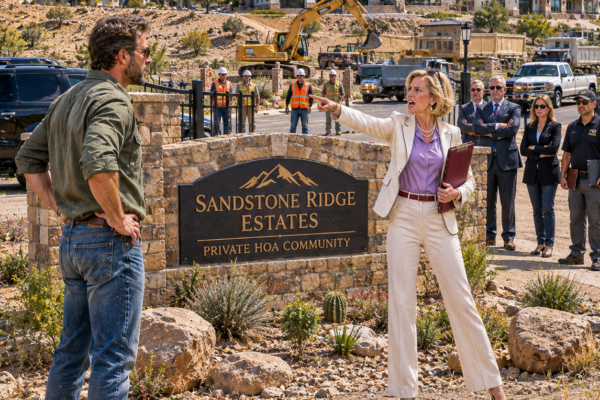
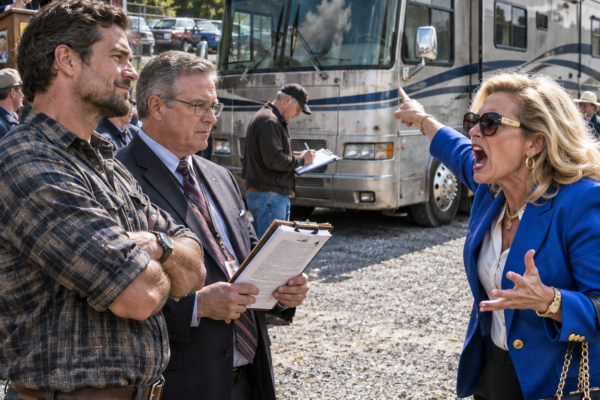
“Take his truck, and if he refuses to leave, I’ll have him arrested—people like him don’t belong in Brier Glenn!” HOA president Diane Hartley shouted as a tow truck lifted the front wheels of my pickup six inches off the driveway of the house I had legally purchased three days earlier.
When three police cruisers arrived, Diane pointed at me and demanded that the officers remove the suspicious stranger from her neighborhood, only to watch her confident smile disappear when one of them addressed me as Chief Reed.
But discovering that I was Glenwood’s new police chief didn’t stop her from coming after my property a second time—and the recorded telephone call she made while I was at work would eventually bring county investigators to the very driveway where she had first humiliated me.
“Put my truck down.”
The tow operator froze with one hand on the control lever.
A woman wearing a bright red jacket stood beside him, clutching a clipboard against her chest.
“You need to step away.”
I walked out of my garage.
Behind me were moving boxes, an unpacked toolbox, and an old lawn mower with a cup of coffee resting on its hood.
I pointed toward the pickup.
“That’s my truck.”
“I know whose truck it is.”
“Then put it down.”
She turned toward the operator.
“Continue.”
He didn’t move.
“Ma’am,” I said, “you’re standing in my driveway.”
She examined my work boots, faded jeans, and gray T-shirt.
“You don’t live here.”
I looked over my shoulder at the house.
“Would you like to try that again?”
“I know the people who own this house. They’re a very nice couple.”
“I’m sure they still are. They sold it.”
Her eyes narrowed.
“They never mentioned someone like you moving in.”
The tow operator looked away.
I didn’t.
“Someone like me?”
“A stranger.”
“That’s not what you meant.”
“I said exactly what I meant!”
“No. You almost did.”
She walked around my pickup, removed an orange sticker from her clipboard, and slapped it against the driver’s window.
UNAUTHORIZED VEHICLE — SUBJECT TO TOW.
I peeled it off.
Her mouth fell open.
“You cannot remove an HOA enforcement notice!”
“I just did.”
“You’re interfering with an authorized removal from association-controlled property!”
I looked down at the concrete beneath my boots.
“My driveway.”
“This is Brier Glenn!”
“It’s still my driveway.”
The operator stepped away from the controls.
“Ma’am, I’m not taking the vehicle until somebody verifies who owns the property.”
She spun toward him.
“I authorized this!”
“That wasn’t what I asked.”
She straightened.
“I am Diane Hartley, president of the Brier Glenn Homeowners Association.”
He nodded.
“Okay.”
She waited for something more.
Nothing came.
Diane turned back toward me.
“What’s your name?”
“You ordered my vehicle removed without knowing my name?”
“I asked you a question!”
“And I asked you to put my truck down.”
She pulled out her phone.
“Fine. We’ll let the police handle you.”
“Go ahead.”
That seemed to surprise her.
When the dispatcher answered, Diane’s voice underwent an extraordinary transformation. It became softer, controlled, almost frightened.
“Yes, I need officers at a residence in Brier Glenn. There’s a suspicious man here who refuses to leave.”
I stared at her.
“He’s interfering with an authorized vehicle removal.”
I turned toward the garage to retrieve my wallet.
“He’s moving toward the house now!”
I stopped.
“Tell them why.”
She lowered the telephone.
“What?”
“Tell them why I’m walking toward the house.”
She said nothing.
“My identification is inside.”
She returned the phone to her ear.
“He’s becoming confrontational.”
The tow operator and I exchanged a look.
Neither of us spoke.
After ending the call, Diane folded her arms.
“They’re on their way.”
“Good.”
“You won’t be so comfortable when they get here.”
I pointed toward the wheel lift underneath my pickup.
“I’m not particularly comfortable now.”
She smiled.
“Now we’ll find out who belongs here.”
I nodded.
“I think we will.”
My name is Marcus Reed. I was fifty-two years old, and I had owned that house for exactly three days.
The previous owners had moved to Arizona. My furniture was still packed, my refrigerator contained little more than mustard, bottled water, and a sandwich, and I hadn’t even decided where to hang the pictures in my living room.
But there was nothing uncertain about my ownership.
The sale had closed. The deed had been submitted for recording. The utilities were in my name.
There was also one thing Diane Hartley hadn’t bothered to discover.
Three weeks earlier, the Glenwood City Council had confirmed my appointment as the city’s new chief of police.
My first official day was Monday.
This was Saturday.
I had spent twenty-seven years in law enforcement, and I knew exactly how seriously officers had to treat a report involving a suspicious person at a private residence.
Six minutes after Diane’s call, the first patrol car turned onto my street.
Then came a second.
Then a third.
Diane’s smile widened.
“Thank God!”
Officer Tyler Morgan stepped out first.
She pointed directly at me.
“That’s him!”
Morgan approached.
“Sir, may I have your name?”
“Marcus Reed.”
Behind him, Officer Elena Ruiz climbed out of her vehicle.
She looked at me.
Stopped.
Then straightened.
“Chief Reed?”
Diane turned toward her.
“What did you just call him?”
PART2
Ruiz looked from Diane to me.
“Chief Reed.”
Diane gave a short, disbelieving laugh.
“No.”
Nobody answered.
She pointed at me.
“He told you his name was Marcus.”
“It is,” I said.
Officer Morgan’s expression changed as recognition finally reached him. He had attended a department walkthrough several weeks earlier, but we hadn’t spent enough time together for him to immediately recognize me in ordinary clothes.
“Chief, I’m sorry. I didn’t realize—”
I raised one hand.
“Don’t.”
He stopped.
“No special treatment.”
Ruiz nodded.
“Yes, sir.”
Diane stared at the three officers.
“You’re telling me THIS man is the police chief?”
I ignored the question.
Instead, I looked toward Morgan.
“You received a call concerning a man who supposedly doesn’t live at this address.”
“Yes, sir.”
“Then handle that call.”
Ruiz began to speak.
“Chief—”
“Right now, I’m the homeowner she called you about. Handle me exactly the way you’d handle anybody else.”
I meant it.
I had no intention of allowing my professional position to become the deciding factor in a dispute over my personal property.
For twenty-seven years, I had watched people invoke their connections, employment, friendships, and titles whenever they believed those things might produce a more favorable outcome.
I wasn’t going to become one of them.
Besides, I didn’t need to be the police chief to own a house.
A closing statement accomplished that far more effectively than a badge.
Morgan turned toward Diane.
“Ma’am, what originally prompted your call?”
She looked at him as though the answer should have been obvious.
“I found him at this residence. He refused to leave, interfered with an authorized tow, and became aggressive when I challenged him.”
“Did somebody report a burglary or other unauthorized entry?”
“No, but the previous owners never informed me that he would be here.”
“Have you contacted the previous owners?”
She hesitated.
“That shouldn’t be necessary. Our management office maintains owner records.”
“Did you check those records?”
“I know practically everybody in this community!”
Morgan glanced toward the open garage. Several cardboard boxes were marked KITCHEN, BOOKS, and BEDROOM. A framed photograph of my parents was leaning against the workbench because I hadn’t yet decided where it belonged.
Then he turned back toward me.
“Mr. Reed, do you have identification showing this address?”
“My wallet’s inside.”
Diane immediately lifted her clipboard.
“SEE?”
Ruiz looked at her.
“See what?”
“He doesn’t even have identification!”
“Ma’am, he just explained that it’s inside the house.”
“That’s what he claims!”
I looked at Ruiz.
“I’m going into the garage to retrieve it.”
She nodded.
“Okay.”
Diane opened her mouth again.
I looked at her.
“That’s what asking looks like.”
Then I walked inside.
My driver’s license still displayed my previous address. I had moved into the house the day before, and updating every administrative record associated with my new residence wasn’t something I could accomplish between unloading furniture and figuring out why the washing machine refused to cooperate.
Fortunately, my closing folder was sitting on the kitchen counter.
I collected it along with my wallet and returned outside.
Morgan examined the available documents. There was the closing statement, the recording submission receipt, temporary address paperwork, and confirmation that the utilities had been activated in my name.
Ruiz compared the property address with the information they had received.
Diane watched them, growing increasingly impatient.
“Even if he purchased the house, that doesn’t mean he has been approved by the HOA.”
Morgan looked up.
“Approved for what?”
“Occupancy!”
He paused.
“Ma’am, the information we’ve reviewed supports his claim that he lives here.”
“The association hasn’t completed its owner registration process!”
“That sounds like an administrative matter between the association and the homeowner.”
“It is an ENFORCEMENT matter!”
“Not the kind we were dispatched to handle.”
She pointed toward my pickup.
“What about that?”
Morgan looked at the vehicle, which was still suspended above the concrete.
“What about it?”
“It isn’t registered with Brier Glenn!”
I took a breath.
“Diane, I moved in yesterday.”
“You should have submitted the registration before bringing your vehicle into the community.”
“Then send me the form.”
“You were already sent one.”
“To which address?”
For the first time, she appeared uncertain.
I nodded.
“That’s what I thought.”
Morgan turned toward the tow operator.
“Why was the vehicle already hooked up when we arrived?”
The operator looked relieved that somebody had finally asked him.
“Our dispatch received an authorization stating that the truck belonged to a nonresident.”
Morgan looked at Diane.
“Did you verify that?”
She tightened her grip on the clipboard.
“I am the HOA president.”
“That wasn’t the question.”
The tow operator walked back toward the controls.
Diane noticed him moving.
“What are you doing?”
“Releasing the vehicle.”
“I didn’t authorize that!”
He operated the equipment. Slowly, the front wheels of my pickup descended until the tires touched the driveway.
I felt a small measure of relief.
The operator disconnected the lift, checked his equipment, and turned toward Diane.
“I’m not taking a resident’s truck out of his driveway based on the information I have now.”
“You’ll still invoice the association!”
“You can discuss that with my office.”
Before climbing into his vehicle, he looked at me.
“Sorry about the trouble.”
“Thank you for stopping.”
He nodded and drove away.
For a moment, Diane stood watching the empty space where the tow truck had been.
Then she turned toward me.
“You may be the police chief outside Brier Glenn, but inside this community, you’re a homeowner like everybody else.”
I raised an eyebrow.
“That’s exactly what I want.”
“You will follow our rules.”
“I intend to.”
“We’ll see about that.”
She began walking toward her white SUV.
“Diane?”
She stopped.
I held up the orange sticker I had removed from my window.
“Please don’t send another tow truck onto my property without checking your facts first.”
Her expression hardened.
“Is that a threat?”
“No.”
I folded the sticker once.
“It’s advice.”
She climbed into her vehicle and drove away.
Morgan remained near the curb while the other officers finished handling the call.
“Chief, I really am sorry I didn’t recognize you.”
“You weren’t required to.”
He looked surprised.
“What you were required to do was handle the complaint properly. That’s what you did.”
“Yes, sir.”
Ruiz smiled slightly.
“Welcome to Glenwood.”
I looked at my pickup, then at the orange sticker in my hand.
“Interesting neighborhood.”
They laughed.
I went back inside, retrieved my coffee, and discovered that it had become cold.
Considering how my morning had started, that seemed like a relatively minor problem.
I put the sticker inside my closing folder.
I didn’t realize that it would become the first item in a collection of evidence eventually handed to a county investigator.
Before moving to Glenwood, I had spent several months considering where I wanted to live.
At fifty-two, I wasn’t particularly interested in a fashionable address. I wanted a comfortable house, a garage large enough for my tools, and somewhere quiet enough that I could come home after a demanding day and stop thinking about work.
The house in Brier Glenn seemed perfect.
It had a modest front porch, a decent backyard, and a two-car garage with a workbench the previous owner had agreed to leave behind.
During the final walkthrough, he had shown me where the electrical panel was located and explained that the garage door sometimes hesitated during particularly cold weather.
His wife had apologized for a small mark on the kitchen wall.
Their moving truck was waiting outside.
They were heading to Arizona, where they intended to spend considerably more time with their grandchildren.
We shook hands, wished each other well, and went our separate ways.
Nobody mentioned that a woman with a clipboard might arrive the following morning and attempt to remove my pickup.
I had chosen the house partly because Brier Glenn seemed peaceful.
People walked their dogs in the evenings. The sidewalks were maintained, the common landscaping looked attractive, and the security gate offered residents controlled access to the neighborhood.
I didn’t object to the homeowners association.
Reasonable rules had never bothered me. After twenty-seven years in law enforcement, I understood better than most people that shared expectations could prevent unnecessary conflict.
But I also understood something else.
Authority had limits.
A person entrusted with authority was supposed to understand those limits particularly well.
Unfortunately, my first encounter with Diane suggested that she regarded the limits of her power as something other people were responsible for discovering.
I spent the remainder of the weekend unpacking.
On Sunday afternoon, I finally assembled my bed, organized several shelves, and hung a photograph of my parents in the living room.
I thought the towing dispute was finished.
It had been embarrassing and unnecessary, but Diane now knew that I owned the house.
There was no reasonable basis for continuing to question my residence.
Or so I believed.
Monday was my first official day at Glenwood Police Headquarters.
The department occupied a brick municipal building with a busy front office, several meeting rooms, and more paperwork than any building that size should reasonably have been capable of containing.
I spent the morning meeting staff members and discussing priorities with Deputy Chief Laura Bennett.
Laura had extensive experience within the department and knew the city considerably better than I did. I appreciated her directness immediately.
She didn’t pretend that everything was working perfectly.
She identified areas that needed attention, introduced me to people responsible for important operations, and discussed several issues the department was facing.
At one point, she glanced toward me.
“I heard you had an interesting moving day.”
I sighed.
“Word travels.”
“Pretty quickly around here.”
“It’s resolved.”
“Good.”
Then she looked down at her notes.
“Anything else I should know?”
“No. It was a personal property dispute. The responding officers handled it appropriately.”
She nodded.
We returned to department business.
By Tuesday afternoon, local television had broadcast a brief introduction to Glenwood’s new police chief. There were photographs, comments concerning my professional background, and references to the city council’s appointment.
If Diane hadn’t recognized me before Saturday, she certainly had no excuse for failing to understand who I was now.
But more importantly, she knew where I lived.
When I arrived home Tuesday evening, two envelopes were taped to my front door.
One concerned my pickup.
The other concerned my garage.
I opened them at the kitchen counter.
The vehicle notice accused me of failing to complete the association’s registration process.
The garage notice alleged that the door had remained open for an excessive period while I was moving boxes.
I looked toward the pile of belongings still occupying half the garage.
“Apparently, moving in is a violation.”
I contacted Brier Glenn Management.
That was when I met Sharon Wells, the professional property manager.
Sharon listened while I explained that I had only recently purchased the house and hadn’t received the vehicle registration form.
She promised to investigate.
The following morning, she called back.
“Mr. Reed, I’ve checked the correspondence. Your registration paperwork was sent to the previous owner.”
I leaned back in my chair.
“So I received a violation for failing to complete a form that was sent to somebody living in Arizona?”
“Essentially, yes.”
“Good system.”
“I didn’t design it.”
I laughed.
“I know.”
She emailed the registration form while we were speaking.
I completed it that morning.
Sharon subsequently confirmed that the vehicle violation had been withdrawn. The garage notice was also addressed.
As far as the management company was concerned, I had responded appropriately to the administrative requirements associated with my new ownership.
I thanked her.
Then I returned to work.
The sensible thing would have been for everybody to move on.
Instead, Diane found another way to interfere with my ability to enter my own neighborhood.
And this time, she involved the security gate.
On Thursday morning, I returned to Brier Glenn after taking care of an appointment outside the neighborhood.
I approached the security entrance, presented my resident credential, and waited for the barrier to rise.
It didn’t.
The guard stepped out of his booth.
“Mr. Reed?”
“That’s me.”
He looked embarrassed.
“I’ve got an instruction here that your resident credential is under review.”
“Why?”
He glanced down at a printed sheet.
“Pending occupancy verification.”
I stared at him.
Then I looked at the document he was holding.
“May I see that?”
He handed it through the window.
There was my name, my address, and an instruction to suspend ordinary resident access pending confirmation of my occupancy status.
Authorized by Diane Hartley.
I read it twice.
“Did management issue this?”
“No, sir.”
“The board president?”
He nodded.
Two cars had stopped behind mine. The guard glanced toward them.
I knew he hadn’t created the instruction. He was an employee attempting to follow whatever directions had been provided to him.
There was absolutely no reason to make his morning more difficult.
“What are you instructed to do if I arrive?”
“Process you through visitor access.”
“Then do that.”
He looked surprised.
“You don’t want me to call somebody?”
“No. Please follow your procedure.”
I handed him my driver’s license.
He scanned it, completed the required entry, and raised the barrier.
“Sorry, Mr. Reed.”
“Not your fault.”
As I drove through the entrance, I noticed a familiar white SUV parked beside the clubhouse.
Diane stood near it.
She was watching the gate.
Our eyes met briefly.
I continued driving.
I wasn’t interested in giving her another confrontation she could describe according to her preferences.
That afternoon, Sharon called me.
“Mr. Reed, I’ve been informed about the access problem.”
“Thank you for calling.”
“I’ve reviewed your file. Your ownership was verified on Monday.”
I stopped writing.
“Monday?”
“Yes.”
“Before Diane issued the instruction restricting my credential?”
There was a pause.
“Yes.”
“Was she informed that my ownership had been verified?”
Another pause.
“Yes.”
I put down my pen.
Something changed for me at that moment.
On Saturday, Diane could argue that she had made an assumption because she didn’t recognize me.
She could claim that she hadn’t been informed about the sale.
She could insist that the towing authorization resulted from a misunderstanding.
Those explanations might not excuse her behavior, but they were at least explanations somebody could examine.
Now there was no missing information.
The management office had established that I owned the house.
Diane knew it.
Nevertheless, she had ordered security to treat me as someone whose residence remained unverified.
“Sharon, would you please send me written confirmation of the ownership verification?”
“Certainly.”
“And I’d like the board to understand something.”
“What is that?”
“I’m not requesting special access because I’m the police chief. I want the same access any other verified homeowner receives.”
“You should already have it.”
“Exactly.”
My resident credential was restored before I came home that evening.
I saved Sharon’s email.
Then I took the original orange towing sticker out of my closing folder and placed it in a separate envelope.
I had a feeling the documents were going to become considerably more important.
Friday morning, another orange sticker appeared on my windshield.
Same warning.
Same pickup.
Same driveway.
Except this time, Diane had already received confirmation that I was the homeowner and that the vehicle registration had been completed.
I stood beside the truck for several seconds.
Then I photographed the sticker before removing it.
At 8:11, an email arrived directly from Diane.
Chief Reed, your position with the city does not exempt you from Brier Glenn rules. Continued attempts to challenge association authority will be documented.
It was signed with her name and official HOA title.
I examined the message.
She hadn’t identified an outstanding registration requirement.
She hadn’t identified a parking restriction my pickup violated.
She hadn’t explained why my access had been suspended after ownership verification.
Instead, she had described my requests for ordinary homeowner treatment as challenges to her authority.
I forwarded the email to Samuel Price.
Samuel was my personal attorney.
Not the city attorney.
Not somebody whose professional responsibilities involved representing the police department.
My attorney.
He called approximately ten minutes later.
“Marcus?”
“Morning, Samuel.”
“What did you do to this woman?”
“Bought a house.”
He was quiet for a second.
“That was reckless.”
I laughed.
“Apparently.”
Then his tone became serious.
“Save everything.”
“I am.”
“Don’t use department resources to investigate any part of this.”
“I haven’t.”
“Don’t ask an officer to look up her vehicle, her records, or anything else associated with her.”
“Of course not.”
“Don’t review the first call through your position as chief.”
“I understand.”
He continued.
“If this becomes a more serious matter, you’re potentially a complainant. We need to maintain a completely separate process.”
I agreed.
The last thing I wanted was for Diane’s personal dispute with me to become an opportunity for anybody to question the integrity of the department.
That afternoon, I prepared a written recusal.
Any matter involving me personally, my residence, my vehicle, Diane Hartley, or the Brier Glenn dispute would be handled without my operational involvement.
Deputy Chief Laura Bennett would oversee any departmental response connected with the matter.
If the circumstances developed into an investigation in which I was a complainant, outside investigative review would be requested.
Laura reviewed the arrangement.
“You think this is going to get worse?”
“I hope not.”
She looked at the recusal document.
“But?”
“But I’d rather establish the separation now than explain later why we didn’t.”
She nodded.
“Understood.”
I signed the document.
Laura assumed responsibility for maintaining the separation.
Then we returned to the actual work of running the department.
Diane had no idea I had done any of that.
I hadn’t prepared the recusal because I expected her to commit a particular offense or because I wanted somebody to investigate her.
I prepared it because I knew what people might reasonably question if a police chief became involved in a personal dispute requiring law enforcement attention.
My responsibilities belonged to the city.
My house belonged to me.
Those two facts needed to remain separate.
Diane, unfortunately, was about to give that distinction a serious test.
The next escalation wasn’t another sticker or another letter.
It was two heavy white plastic barricades.
I discovered them when I returned home on Tuesday evening.
They had been placed across the entrance to my driveway. A laminated sign attached to one of them announced:
BRIER GLENN ACCESS PENDING COMPLIANCE REVIEW.
I stopped in the street.
Behind me, a delivery van slowed.
The driver leaned out of his window.
“You going in?”
I looked at the barricades.
“Eventually.”
He laughed, apparently assuming I was joking.
I pulled into a legal parking space along the curb and walked back toward my house.
The barriers were positioned so that I couldn’t drive my pickup into the garage without moving them.
I photographed both.
Then I called Sharon.
“Have you authorized barricades across my driveway?”
“What barricades?”
“That answers my question.”
I explained what was outside my house.
She said she would come over.
Approximately twenty minutes later, Sharon arrived.
Diane arrived shortly afterward, wearing the same bright red jacket she had worn on the first morning.
She climbed out of her SUV with her clipboard tucked beneath her arm.
“You were instructed to resolve your compliance issues!”
I looked at the barricades.
“My driveway is a compliance issue now?”
“You continue challenging the association’s authority.”
Sharon stepped closer.
“Diane, there is no active violation in Mr. Reed’s account authorizing this restriction.”
Diane turned toward her.
“The president has emergency enforcement discretion.”
“Not discretion to physically block a verified homeowner from accessing his own property under these circumstances.”
“He has demonstrated repeated noncompliance!”
I looked at Sharon.
“Have I?”
“No.”
Diane snapped.
“That’s your interpretation.”
Sharon opened her folder.
“It’s the association’s record.”
Diane looked toward me.
“If you move those barriers, I’ll report interference with association property.”
I nodded.
“Okay.”
Then I took out my telephone.
She narrowed her eyes.
“What are you doing?”
“Calling maintenance.”
“Why?”
“You just told me not to touch your property.”
Sharon turned slightly away.
I suspected she was hiding a smile.
Diane stared at me.
“You think you’re clever, don’t you?”
“No. I think I’d like to park.”
The maintenance employees arrived several minutes later.
Sharon explained the situation and instructed them to remove the unauthorized obstruction.
They loaded the barriers onto their vehicle.
For the first time since arriving home, I had a clear route into my garage.
But Sharon wasn’t finished.
She retrieved a printed letter from her folder.
“Diane, I’m giving you this personally.”
Diane took it reluctantly.
Sharon read the essential points aloud.
“Recorded ownership is confirmed. Resident access is confirmed. Mr. Reed’s vehicle registration is active. Management has no basis for further enforcement based on disputed occupancy.”
Diane barely glanced at the document.
“You don’t determine presidential authority.”
“No,” Sharon answered. “But the ownership record establishes who owns the house.”
Diane folded the letter and tucked it beneath the papers on her clipboard.
I watched her do it.
That mattered.
There could be no later misunderstanding about whether she had received it.
Sharon continued.
“Do not send another vendor onto this property on the basis of an allegation that Mr. Reed is a nonresident.”
Diane stared at her.
Then she looked toward me.
“This isn’t over.”
She returned to her SUV.
I watched her leave.
For the first time since we had met, I found myself hoping she was simply making an empty threat.
I had a new job. A house that still needed organizing. A life I wanted to establish in Glenwood.
I didn’t want to spend my evenings documenting encounters with the president of my homeowners association.
I wanted to come home and park in my driveway.
That was all.
For eight days, Diane finally left me alone.
Then, at 4:17 on a Thursday afternoon, my telephone rang while I was sitting in a department budget meeting.
And a neighbor told me that somebody was taking my truck again.
The neighbor who called was Frank Delaney.
Frank was sixty-four, a retired electrician, and a longtime member of the Brier Glenn board. He lived three houses down and had introduced himself several days earlier while I was carrying an empty cardboard box toward the garage.
“Marcus Reed?”
“That’s me.”
He shook my hand.
“Frank Delaney. Welcome to the neighborhood.”
Then he looked toward Diane’s house.
“I understand you’ve already had the Diane experience.”
I laughed.
“Apparently.”
“Sorry about that.”
“It’s handled.”
He nodded, although his expression suggested he wasn’t entirely convinced.
“I’m not particularly interested in neighborhood politics,” I told him.
Frank smiled.
“That might make you the smartest person here.”
Over the next several days, we occasionally talked about the neighborhood, his previous work as an electrician, and the repairs I was planning around the house.
He seemed like a good man.
Which was why I immediately stepped out of the budget meeting when I saw his name on my telephone.
“Frank? Everything okay?”
“Are you home?”
“No.”
“You need to get here.”
Something in his voice made me stop walking.
“What happened?”
“There’s a tow truck in your driveway.”
I closed my eyes.
“My pickup?”
“They’ve got it hooked.”
“Is Diane there?”
“Yes.”
For several seconds, I felt an anger so intense that I had to remind myself to keep my voice steady.
“Frank, don’t interfere.”
“I’m still on the board, Marcus.”
“I understand.”
“What do you want me to do?”
“Watch. That’s it. Don’t put yourself in the middle of anything dangerous.”
He agreed.
I ended the call, informed the people in the meeting that I needed to attend to a personal matter, and left headquarters.
No emergency lights.
No siren.
No patrol escort.
I drove home like any other person whose neighbor had just told him somebody was taking his truck.
The traffic lights seemed unusually slow.
Every time I stopped, I imagined arriving in time to find the tow operator waiting beside the controls, just as he had been on my first morning.
I imagined explaining that ownership had already been verified.
I imagined showing him my driver’s license, the management confirmation, and the active vehicle registration.
Then I turned onto my street.
My driveway was empty.
For several seconds, I remained behind the wheel.
There were two dark marks on the concrete where my pickup had been parked.
The garage door was closed.
Nothing else looked particularly unusual.
Except Diane’s white SUV was standing at the curb.
And Diane herself was beside it, holding her clipboard.
I parked and got out.
She watched me approach.
“You took my truck.”
“It was removed.”
“You know I own this house.”
“That isn’t the issue.”
“You know the truck is registered.”
“There were unresolved violations.”
“Which violation authorized the removal of a registered vehicle from my private driveway?”
She tightened her lips.
“You have repeatedly refused to comply with association directives.”
“That’s not a parking violation.”
“It demonstrates a pattern!”
I stared at her.
A pattern.
Apparently, that was what she called asking for the registration form, using my homeowner credential, requesting access to my garage, and refusing to acknowledge an authority she hadn’t established.
Frank walked toward us from his yard.
Diane immediately pointed at him.
“This doesn’t concern you.”
“I’m on the board.”
“You weren’t involved in this enforcement action.”
Frank looked toward the empty driveway.
“That’s becoming pretty obvious.”
I interrupted before their disagreement could become the focus.
“Diane, where is my truck?”
“You’ll receive the necessary information.”
“Where is it?”
She hesitated.
“Glenwood Recovery.”
“Thank you.”
I turned toward the vehicle I had arrived in.
Then she said something that stopped me.
“You won’t be able to release it.”
I turned around.
“What?”
“The vehicle is on hold pending HOA authorization.”
Frank stared at her.
“You did what?”
She ignored him.
I walked back toward the sidewalk, stopping several feet away from her.
“You instructed the towing company not to return my vehicle until this compliance matter was resolved?”
“The association has enforcement procedures.”
“Did you place a hold on my truck?”
“Yes.”
For a moment, I considered every possible response.
There were things I wanted to say.
There were questions I wanted answered.
There were several conclusions I was already drawing about the decisions she had made.
But anger wasn’t going to get my truck back.
And I knew that every unnecessary word I spoke could eventually become another allegation.
“Diane, you were told in writing that I own this house.”
She said nothing.
“You were told my vehicle is properly registered.”
Still nothing.
“You were specifically instructed not to send another vendor here on the basis of a nonresident allegation.”
Her jaw tightened.
“I disagree with management’s interpretation.”
I nodded.
“Okay.”
She looked almost disappointed.
“That’s all you have to say?”
“For now.”
I returned to my vehicle and drove away.
In the rearview mirror, I saw Frank turn toward Diane.
They began talking.
I didn’t stop to listen.
I needed to find my truck.
And if the towing company had accepted a written authorization for its removal, I needed to find out exactly what that authorization said.
Glenwood Recovery occupied a fenced commercial yard approximately eight miles across town.
There were rows of vehicles behind the office, several tow trucks parked near a maintenance building, and a collection of warning signs explaining the company’s release procedures.
Inside, a woman behind the counter asked how she could help.
“My pickup was brought here this afternoon.”
She requested the plate information and searched the system.
Then her expression changed.
“Would you mind waiting a moment?”
I nodded.
She disappeared into another office.
A minute later, a man approached wearing a dark work shirt with grease on one sleeve.
“Chief Reed?”
“Marcus today.”
He nodded.
“Kevin Brooks. I’m the manager.”
We shook hands.
“I figured you’d be coming.”
“I’d like my truck.”
His expression became uncomfortable.
“There’s a hold on it.”
“Would you show me the authorization?”
Kevin turned his computer monitor so I could examine the relevant information.
My address was there.
My license plate.
The description of my pickup.
The dispatch time.
Then I noticed the line that mattered.
RESIDENT STATUS: NON-RESIDENT — UNAUTHORIZED OCCUPANT.
I read it twice.
I looked at Kevin.
“Who supplied that information?”
“That’s how the authorization came through.”
“Who signed it?”
He opened an attached document.
There it was.
Diane Hartley.
President, Brier Glenn Homeowners Association.
The authorization was dated that morning.
I stared at her signature.
She had received the ownership verification.
She had received the confirmation that my pickup was registered.
She had been standing beside Sharon when the management company expressly instructed her not to send another vendor to my property based on a nonresident allegation.
Yet she had signed a new document describing me as precisely that.
I pointed toward the screen.
“Please print a copy.”
Kevin did.
“May I also have the hold instruction?”
He opened a second attachment.
DO NOT RELEASE VEHICLE WITHOUT BRIER GLENN AUTHORIZATION.
He printed that, too.
I looked at the papers.
Then I looked toward the window overlooking the vehicle yard.
“Where was the pickup when your driver connected his equipment?”
“In your driveway.”
“Did anybody question whether I actually lived at the property?”
Kevin hesitated.
“Yes.”
“What was the driver told?”
“That you weren’t a recognized resident.”
“By Diane?”
“Yes.”
I took a breath.
Kevin rubbed his jaw.
“There’s something else.”
I turned toward him.
“What?”
“This isn’t the first dispatch we’ve received for your address.”
“The first Saturday.”
He looked surprised.
“You already know?”
“I was standing beside the truck.”
He opened the earlier record.
The cancellation note appeared on his screen.
Resident on site. Ownership confirmed during police response.
For several seconds, I simply looked at it.
Then I looked at the new authorization.
Nonresident.
Unauthorized occupant.
The first company record established that the original tow had been canceled because my residency had been confirmed.
The second authorization claimed the opposite.
Kevin stared at the two entries.
“My driver remembered the first call.”
“Was it the same operator?”
“He was familiar with what had happened.”
“Did he question the second authorization?”
Kevin nodded.
“He called me before taking the truck.”
“What did you do?”
“I contacted Mrs. Hartley.”
I waited.
Kevin looked uncomfortable.
“I asked her whether we should proceed.”
“And?”
“She confirmed the tow.”
“After you raised the previous residency confirmation?”
“Yes.”
I looked down at the paper in my hand.
“Did she know I wasn’t home?”
Kevin hesitated again.
“Yes.”
“How?”
“The driver told her.”
I waited.
He rubbed his forehead.
“Marcus, I don’t like where this is going.”
“Neither do I.”
He took a breath.
“She told us the vehicle should be removed before you returned.”
The office became very quiet.
For a moment, I could hear somebody outside moving equipment across the yard.
I looked at the authorization.
Then at the first cancellation record.
Then at Kevin.
“Please preserve everything.”
He nodded slowly.
“Everything?”
“Dispatch information. Telephone calls. Driver notes. Photographs. Authorizations. The hold instruction. Whatever records you have associated with either incident.”
His expression became serious.
“Do you think this is criminal?”
“I’m not making that determination.”
“You’re the police chief.”
“Which is exactly why I’m not making that determination.”
He studied me.
Then he nodded.
“I’ll preserve it.”
“Thank you.”
Kevin looked at the hold instruction again.
“I’m releasing your truck.”
I appreciated hearing those words.
“Please prepare the normal paperwork for everything charged.”
He glanced at me.
“I can waive the fees.”
“Don’t.”
He looked surprised.
“Why?”
“Because I want the record to show exactly what this cost.”
I wasn’t interested in accepting a favor because he knew my professional position.
I wanted an ordinary transaction record that could be examined alongside the towing authorization.
Kevin understood.
He prepared the necessary documents.
While he worked, I stepped outside and called Samuel.
My attorney listened without interrupting while I described the authorization, the previous cancellation note, and Kevin’s account of Diane’s instructions.
When I finished, he said, “Now you stop.”
“I already have.”
“I mean completely. Retrieve the truck. Keep your documents. Don’t investigate anything else yourself.”
“Agreed.”
“No calls to officers. No access to department records.”
“Understood.”
“I’m contacting Deputy Chief Bennett. Given your position and the fact that you’re the complainant, I believe an outside review is appropriate.”
“Good.”
He was quiet for a moment.
Then he said, “Marcus?”
“Yeah?”
“She knew.”
I looked through the office window toward the rows of vehicles.
“I know.”
That was the difference.
The first time, Diane had made an assumption about a man standing in work boots outside a house she hadn’t known was sold.
It was an ugly assumption.
But an assumption could be corrected.
The police corrected it.
The management company corrected it.
The recorded ownership information corrected it.
My vehicle registration corrected it.
And despite all of that, she had signed another authorization describing me as an unauthorized occupant.
This wasn’t somebody failing to recognize a stranger anymore.
This was somebody refusing to recognize a fact.
I drove my pickup home shortly after seven that evening.
Frank was outside when I arrived.
He walked toward the driveway.
“You got it back.”
“Yeah.”
“What happened?”
“There’s a problem with the authorization.”
“How serious?”
“That isn’t for me to decide.”
He studied my expression.
Then he looked toward Diane’s house.
“You know this isn’t really about the truck.”
I nodded.
He continued.
“She’s been telling the board that you’re using your position to intimidate her.”
“I haven’t used my position.”
“I know.”
“Does the board?”
Frank was quiet for several seconds.
“They’re going to have to look at what happened.”
I nodded.
Then I opened the garage.
My pickup had returned to the same place where it had been parked that morning.
But for the first time since purchasing the house, I didn’t feel entirely comfortable leaving it there.
And that bothered me considerably more than I wanted to admit.
My driveway wasn’t supposed to be somewhere I needed to worry about my vehicle disappearing.
My home wasn’t supposed to be somewhere I had to establish my right to exist every time a board president became angry.
I had moved to Glenwood expecting to spend my working hours dealing with difficult situations and my evenings recovering from them.
Instead, I was coming home to orange stickers, suspended access credentials, barricades, and towing authorizations declaring me an intruder.
I looked at the garage, where several unpacked boxes still sat against the wall.
Then I went inside.
I placed the new documents beside the original orange sticker.
I didn’t call Diane.
I didn’t call anyone at headquarters.
And when the telephone rang the next morning, the first thing Deputy Chief Laura Bennett told me was that county investigators would be handling the complaint.
The second thing she told me was that I wasn’t allowed anywhere near their investigation.
I had never been happier to hear somebody give me an instruction.“You’re locked out of anything involving this matter,” Laura said.
“Good.”
“No dispatch review.”
“I know.”
“No body-camera access.”
“I know.”
“No asking whether anybody has spoken to Diane.”
“Laura.”
“What?”
“I know.”
She laughed.
“Just making sure the new boss can follow instructions.”
“I hired you for a reason.”
“You didn’t hire me.”
“Then somebody before me was very smart.”
We discussed the necessary arrangements.
Afterward, I returned to my ordinary responsibilities.
The county investigator assigned to the complaint was Rachel Hayes.
When we met, I provided the material I possessed as a private citizen.
The two orange stickers.
Diane’s direct email.
Photographs of the driveway barricades.
Sharon’s ownership confirmation.
The second towing authorization.
The hold instruction.
The documents Kevin had provided when I retrieved my vehicle.
Rachel asked questions about the sequence of events. I answered them.
She wanted to know whether I had used department resources to obtain any information associated with the complaint.
I explained that I hadn’t.
I also provided information concerning the recusal that had been established before the second towing incident.
She made notes.
When the interview ended, I asked what she needed from me next.
“If we require additional information, we’ll contact you.”
“Understood.”
I left.
Rachel didn’t tell me what her subsequent investigation established.
I didn’t ask.
Whatever happened next needed to be determined independently of my position, my personal preferences, and my anger about what Diane had done.
Unfortunately, Diane was already preparing a different explanation for the residents of Brier Glenn.
The email reached every homeowner several days later.
Its subject line was:
ABUSE OF PUBLIC OFFICE.
Frank forwarded a copy to me.
According to Diane, the president of the homeowners association was being subjected to intimidation because she had refused to grant special privileges to a high-ranking city official.
She described my objections to her enforcement decisions as an attempt to place myself above the neighborhood rules.
She suggested that the involvement of investigators demonstrated how far I was prepared to go to silence her.
I read the message once.
Then I forwarded it to Samuel.
I didn’t respond.
But ignoring a neighborhood-wide accusation was considerably more difficult than ignoring an irritating violation notice.
I was the new police chief.
My reputation mattered, not merely because I cared what people thought of me, but because public confidence in the department was part of my professional responsibility.
Diane had selected an accusation capable of damaging that confidence.
She knew that if the dispute became a question of public office, some people might assume that the involvement of law enforcement automatically meant I was responsible for directing it.
That was exactly why the recusal mattered.
Yet I couldn’t publicly discuss investigative details merely to defend myself against a neighborhood email.
I had to allow the independent process to continue.
That evening, I noticed several residents talking near the clubhouse as I drove past.
One of them waved.
Another looked toward my vehicle and then returned to the conversation.
I wondered what they had been told.
I wondered whether any of them believed Diane’s account.
Then I reminded myself that I couldn’t control what every person in Brier Glenn thought about me.
I could control my decisions.
So I went home, parked my truck, and continued unpacking.
The following morning, Diane arrived outside my house.
She stood on the sidewalk while I was preparing to leave for work.
“You’re not even going to deny it, then?”
I stopped beside my pickup.
“Deny what?”
“My email.”
“I don’t argue with neighborhood mass emails before work.”
“You’ve turned everyone against me!”
“I’ve barely spoken to anyone.”
“You sent investigators after me!”
“No.”
She laughed bitterly.
“You expect me to believe that?”
“I recused myself from matters involving this dispute.”
“How convenient!”
“It was intended to be convenient for everybody involved.”
She stepped closer.
“You knew exactly what would happen that first morning.”
I looked at her.
“What would happen?”
“When those officers realized who you were!”
“No, I didn’t.”
“You could have told me!”
“Told you what?”
“That you’re the police chief!”
I stared at her.
“Before or after you had my truck lifted?”
Her face tightened.
“You made me look stupid.”
There it was.
For the first time, Diane wasn’t talking about parking registrations or owner databases.
She wasn’t talking about garage doors or the association’s emergency enforcement discretion.
She was talking about the way she had looked when the officers recognized me.
I let the silence sit between us.
Then I said, “You told me I didn’t live here before you knew my name.”
“You looked suspicious.”
“Doing what?”
She hesitated.
“Unloading things in my own garage?”
“You were a stranger!”
“To you.”
“This neighborhood has standards!”
“And those standards told you I couldn’t own this house?”
She looked away.
“You know what I mean.”
“I’d rather hear you say it.”
She didn’t answer.
I opened my truck door.
Then she said, “You think that badge makes you untouchable?”
I stopped.
“Diane, I haven’t shown you a badge once.”
She looked back at me.
I pointed toward the house.
“I own that.”
Then toward the pickup.
“I own this.”
Then toward the concrete beneath my boots.
“And this is my driveway.”
I looked directly at her.
“That’s all I ever needed.”
For several seconds, she didn’t move.
Then she stepped one foot onto the driveway.
I glanced down.
“Please leave my property.”
She laughed.
“You’re ordering me off?”
“I’m asking you to remain on the sidewalk.”
“And if I refuse?”
“I’ll document what happened and handle it through the same appropriate process anybody else would use.”
She stared at me.
Then she stepped backward.
“You’re going to regret this.”
I climbed into the pickup.
“No, Diane.”
I closed the door.
“I think you already do.”
As I drove toward headquarters, I thought about the conversation.
She had finally revealed something that explained why she hadn’t been able to let the situation go.
The original incident had embarrassed her.
Rather than acknowledge the mistake, she had tried to establish that she possessed enough power to punish me anyway.
When the vehicle notice failed, she restricted my access.
When the access restriction failed, she blocked my driveway.
When the barricades were removed, she ordered my truck taken.
Every time one explanation fell apart, she created another one.
And each new decision left additional records.
I had no idea what county investigators would ultimately conclude about those records.
But the growing collection of documents wasn’t something I had manufactured.
Diane had created it herself.
The confrontation that finally ended her enforcement campaign happened the following Monday.
Not inside police headquarters.
Not at a board meeting.
Not in a courtroom.
It happened on my driveway.
I returned home shortly after 5:30 that afternoon.
Before reaching the house, I noticed several vehicles parked along the street.
Diane’s white SUV stood near the curb.
A Glenwood Recovery tow truck was farther down.
Two county vehicles occupied spaces across the street, and three Glenwood patrol vehicles were nearby.
Several neighbors had come outside.
I recognized Sharon.
Frank stood beside his mailbox.
Then I noticed Investigator Rachel Hayes.
My immediate thought was that the investigators needed something concerning the property location or the towing sequence.
I parked toward the end of the block and walked back toward my house.
Diane noticed me immediately.
“There he is!”
Those were almost exactly the words she had used when the first police officers arrived on the morning after I moved in.
Rachel approached me.
“Mr. Reed.”
“Investigator.”
“We’re documenting the location of the vehicle removal and clarifying several statements.”
“Okay.”
Before Rachel could continue, Diane pointed toward the patrol vehicles.
“This is EXACTLY what I’ve been talking about!”
Rachel turned toward her.
“What is?”
“He brings his own police officers every time he wants to intimidate me!”
Deputy Chief Laura Bennett stepped forward.
“They’re under my command for this matter, Mrs. Hartley.”
Diane stared at her.
“That’s ridiculous!”
“Chief Reed is recused.”
“That’s paperwork he created to protect himself!”
Rachel spoke calmly.
“Chief Reed has had no investigative authority over this case.”
“He controls the police department!”
“Not this investigation.”
Diane looked from Rachel to Laura.
Then she looked at me.
I didn’t respond.
There was nothing I needed to add.
Laura had explained the department’s role.
Rachel had explained the independent nature of the investigation.
The rest belonged to them.
Rachel walked toward my driveway.
Kevin had provided photographs associated with the second tow. She compared the images with the property in front of us.
“Where was your truck parked when you left that morning?”
I indicated the location.
“Right there.”
The pickup had been parked well inside the driveway, approximately twenty feet from the street.
Rachel examined the photographs and made a note.
Diane interrupted.
“Brier Glenn has towing authority!”
Sharon answered before anyone else could.
“Not under these circumstances.”
Diane turned sharply toward her.
“You work for this board!”
“Yes.”
“Then act like it!”
“I am.”
Sharon opened her folder.
“Marcus Reed’s ownership was confirmed on Monday, May twelfth.”
Rachel looked at Diane.
“Were you notified of that verification?”
Diane folded her arms.
“Management sent me something.”
Sharon retrieved the letter.
“I handed this to you personally.”
Diane didn’t answer.
Rachel examined the document.
“Recorded ownership confirmed. Resident status confirmed. Vehicle registration active.”
She looked up.
“Did you receive this?”
“Yes.”
“Before the second tow?”
Diane looked toward the neighbors.
Then she answered.
“Yes.”
For the first time that afternoon, nobody seemed interested in arguing about my professional position.
The question was much simpler.
Diane had received written confirmation of my ownership before authorizing the second removal.
Rachel turned toward Kevin.
“Why did your company proceed?”
Kevin opened his folder.
“My driver contacted me from this driveway because he remembered the first canceled tow.”
“What did he ask you?”
“Whether we should take the truck given that residency had been confirmed during the previous police response.”
“What did you do?”
“I called Mrs. Hartley.”
Diane immediately stepped forward.
“This is private vendor communication!”
Kevin looked at her.
“It stopped being private when my company got dragged into this.”
Rachel continued.
“Did Mrs. Hartley confirm that the second tow should proceed?”
“Yes.”
“After you raised the issue of the earlier residency confirmation?”
“Yes.”
Diane shook her head.
“That’s his interpretation!”
Kevin reached into the folder.
“No.”
He handed Rachel a printed dispatch record.
“Our authorization calls are recorded.”
Diane froze.
“What?”
Kevin looked directly at her.
“The system informs callers at the beginning of the call.”
For a moment, her face became completely blank.
Then she said something I could hardly believe.
“I want that recording deleted.”
Rachel looked up.
“Nobody is deleting anything.”
The neighbors standing near the sidewalk became silent.
Diane’s eyes moved toward the document in Rachel’s hand.
And for the first time since our dispute began, she looked like somebody who had finally discovered that she couldn’t simply change the official version of events whenever it became inconvenient.
Rachel examined the dispatch summary.
“According to this record, your driver informed Mrs. Hartley that the vehicle owner appeared to be the same resident whose previous tow had been canceled.”
Kevin nodded.
“That’s correct.”
“And Mrs. Hartley confirmed that the second tow should proceed?”
“Yes.”
Rachel continued reading.
“She stated that Mr. Reed had no recognized residency rights and instructed that the vehicle be removed before he returned.”
Diane’s face changed.
Nobody spoke.
Not Frank.
Not Sharon.
Not even the residents who had been quietly talking among themselves near the sidewalk.
Diane looked at Kevin.
“You’re twisting what I said!”
Kevin shook his head.
“I didn’t write the recording.”
Rachel turned toward Diane.
“Did you authorize the second tow after being told that the first one had been canceled because Mr. Reed’s residency had been confirmed?”
“I authorized an enforcement action!”
“I’m asking about the information you received before authorizing it.”
“I had authority to enforce our rules!”
“Did you receive that information?”
Diane glanced toward Frank.
He didn’t speak.
Finally, she answered.
“Yes.”
Rachel made another note.
Sharon opened her folder.
“There’s something else.”
Diane turned toward her.
“What now?”
Sharon handed Rachel one final page.
It was an email Diane had sent after receiving the ownership confirmation.
Rachel read the relevant sentence aloud.
“I disagree with management’s decision but acknowledge receipt.”
She lowered the document.
“Mrs. Hartley, you acknowledged receiving confirmation that Mr. Reed owned and occupied this property.”
“I disagreed with it!”
Frank finally spoke.
“You don’t have to agree with the deed.”
Diane spun toward him.
“Stay out of this!”
“I’m on the board.”
“You’ve been against me from the beginning!”
Frank shook his head.
“No. Actually, I believed you the first morning.”
That surprised me.
It appeared to surprise Diane, too.
Frank continued.
“You told us there was a stranger at a residence and that you had called the police.”
“That’s what happened!”
“Then the police confirmed he lived there.”
“I still had concerns!”
“Then Sharon verified his ownership.”
“Management doesn’t decide board authority!”
“Then his vehicle registration was completed.”
“He remained noncompliant!”
“With what?”
Diane pointed at me.
“WITH EVERYTHING!”
Frank stared at her.
“Everything isn’t a rule.”
Several neighbors looked toward Diane.
Her expression suggested she had expected Frank to defend her simply because they had served on the same board.
Instead, he was doing something she had avoided throughout the dispute.
He was asking her to identify the actual problem.
Diane’s voice rose.
“You have no idea what it takes to maintain standards in a neighborhood like this!”
I finally spoke.
“Take the badge out of it.”
She looked toward me.
“You love saying that!”
“Then do it.”
I pointed toward the house.
“Who owns that?”
She said nothing.
I pointed down.
“Who owns this driveway?”
Silence.
Then I gestured toward the pickup.
“Who owns the truck you had removed?”
Her eyes moved toward the street.
“You knew the answer to all three questions before you signed the second authorization.”
She shook her head.
“This is about you being the police chief!”
“No.”
“You all treat him differently because of that badge!”
I looked toward Rachel.
“She doesn’t work for me.”
Then toward Kevin.
“He doesn’t work for me.”
Then Sharon.
“She doesn’t work for me.”
Finally, I looked toward Frank.
“And Frank definitely doesn’t work for me.”
“Correct,” Frank said.
A couple of neighbors almost laughed.
I looked back at Diane.
“The Glenwood officers are the only people here who belong to my department. And I removed myself from the decisions they make concerning this matter.”
Laura confirmed that the recusal had been established before the second towing incident.
Diane stared at me.
“You knew what you were doing!”
“I bought a house.”
“You embarrassed me in front of my own neighborhood!”
“I didn’t call the police that first morning.”
She clenched her jaw.
“You LET me!”
That stopped everyone.
I looked at her.
“I let you?”
“You could have told me who you were!”
And finally, the entire situation became painfully clear.
I hadn’t been obligated to identify myself as a police chief before receiving the ordinary consideration any homeowner deserved.
But Diane apparently believed that if she had known about my position, she would have handled me differently.
That was precisely the problem.
“Diane, you wanted me to tell you I was the police chief before you treated me like I belonged in my own home.”
She opened her mouth.
Nothing came out.
I continued.
“The first morning, you didn’t know who I was. Then the officers told you. Management told you. The ownership records told you. And after all of that, you signed another document saying I was an unauthorized occupant.”
She pointed at me.
“Because you refused to respect my authority!”
Frank’s voice became quiet.
“There it is.”
Diane turned.
“What?”
“You just said it.”
“I said he refused to cooperate!”
Frank shook his head.
“No, Diane. You didn’t tow him because you thought he didn’t live here.”
Her breathing became heavier.
“You towed him because he stopped letting you pretend you were right.”
“SHUT UP, FRANK!”
Rachel stepped forward.
“Mrs. Hartley.”
Diane turned toward her.
“WHAT?”
“I need you to listen carefully.”
Diane looked toward the county vehicles.
Then back at Rachel.
“Is this where you threaten me?”
“No.”
Rachel received a document from the other county investigator.
“This investigation did not begin today.”
Diane stopped moving.
Rachel explained that investigators had reviewed the towing records, the recorded vendor authorization, the ownership information, and the statements associated with a subsequent report Diane had submitted after her receipt of the ownership confirmation.
Diane’s expression changed with every sentence.
Then Rachel said, “A judge reviewed the probable-cause submission this afternoon.”
For the first time that day, Diane had absolutely nothing to say.
Rachel held the document where she could see it.
“A warrant was issued before we arrived here.”
Diane looked directly at me.
I didn’t move.
“This is because of him.”
Rachel shook her head.
“No, ma’am.”
“You expect me to believe the police chief had NOTHING to do with this?”
“Chief Reed did not request this warrant.”
“He didn’t have to!”
Rachel’s voice remained level.
“The evidence did.”
Diane stepped backward.
“You can’t arrest me over an HOA disagreement!”
“This is not an arrest over an HOA disagreement.”
“I was enforcing community rules!”
“You’ll have an opportunity to address the allegations through counsel.”
Diane looked toward her white SUV.
Then she turned toward Frank.
“Tell them!”
Frank didn’t move.
“Tell them I had authority!”
He looked at the towing authorization.
“You had authority to enforce actual rules.”
“That’s what I DID!”
“No.”
Frank pointed toward my driveway.
“You had authority until you started inventing facts to get the result you wanted.”
Diane looked toward Sharon.
“You work for ME!”
Sharon shook her head.
“I work for Brier Glenn.”
Diane’s voice cracked.
“I AM BRIER GLENN!”
Frank looked toward the residents standing near the sidewalk.
Then he turned back toward her.
“No, Diane.”
He paused.
“That may be the problem.”
Rachel stepped closer.
“Mrs. Hartley, turn around.”
Diane didn’t move.
Instead, she stared directly at me.
“You wanted this.”
“No.”
“You’ve been waiting for this since the first day.”
“No.”
“You think you won?”
I looked toward my house.
My pickup.
My driveway.
“This was never supposed to be a contest.”
Rachel repeated the instruction.
This time, Diane complied.
The handcuffs closed behind her.
Nobody cheered.
Nobody clapped.
There was only the small metallic click of the cuffs and the sound of a lawn sprinkler running two houses away.
Diane looked over her shoulder.
“You did this to me!”
I shook my head.
“I didn’t call the tow company.”
“You know what I mean!”
“I didn’t sign the authorization.”
“You SET ME UP!”
“I asked you to leave my truck alone.”
Rachel began escorting her toward the county vehicle.
Diane twisted around one last time.
“You think you’re better than me?”
“No.”
I looked down at the driveway beneath my feet.
“I just knew where I lived.”
Rachel placed her inside the county vehicle.
The door closed.
For several seconds, nobody moved.
Then Frank exhaled.
Sharon closed her folder.
Kevin approached me.
“Marcus, I owe you an apology.”
I looked at him.
“My company completed that second tow even though we had information about the first one.”
“You preserved the records.”
“I should’ve stopped it before your truck moved.”
“Yes.”
He nodded.
“No excuses.”
I respected him for saying that.
It didn’t eliminate the company’s responsibility or undo what had happened.
But unlike Diane, he was willing to acknowledge that a mistake had been made and that he had participated in it.
Laura walked toward me.
“You okay?”
“I’m fine.”
“You sure?”
I looked toward the county vehicle.
“Did we keep this clean?”
She nodded.
“That’s what matters.”
For me, that was the most important question of the entire afternoon.
I had established a separation between my personal dispute and my professional responsibilities before the second incident occurred.
The county had conducted the investigation.
A judge had reviewed the probable-cause submission.
Rachel and the other county personnel had handled the warrant.
I hadn’t directed their investigation.
I hadn’t requested the arrest.
And Diane would have the same opportunity as anyone else to respond to the allegations through the legal process.
An arrest wasn’t a conviction.
That distinction mattered just as much when the person arrested was somebody who had caused me considerable trouble.
Frank approached me.
“The board met this afternoon, too.”
I raised one hand.
“Don’t tell me now.”
He frowned.
“Why?”
“Because I’ve had enough neighborhood governance for one day.”
For the first time all evening, Frank laughed.
“Fair enough.”
I smiled.
Then I went inside my house.
Three days later, Frank called.
Diane was no longer president of the Brier Glenn Homeowners Association.
The board had terminated her authority to direct towing vendors, security personnel, and enforcement actions.
Every violation issued against me during the dispute was withdrawn.
The association’s insurer addressed my documented towing expenses and the damage caused to my pickup.
Brier Glenn also changed its procedures so that a single board officer couldn’t independently authorize a residential tow based on disputed occupancy without appropriate verification.
Frank explained that the board had discussed the circumstances at length.
Several directors were particularly concerned about the company’s initial cancellation record and Diane’s subsequent decision to issue a contradictory authorization.
They were also concerned about the restriction of my resident credential after management confirmed my ownership.
Nobody wanted the association exposed to a repetition of those circumstances.
“Sharon’s going to have more involvement in reviewing the enforcement paperwork,” Frank told me.
“That’s probably sensible.”
“And we’re making sure the vendor instructions actually match the association’s records.”
“Good.”
He paused.
“You know, Marcus, we never should’ve let it get that far.”
“No.”
“I wish we’d asked more questions after the first morning.”
I thought about his admission that he had initially believed Diane.
Frank continued.
“She’d been president long enough that some of us got accustomed to accepting what she told us.”
I nodded.
“That happens.”
“It shouldn’t.”
“No. It shouldn’t.”
We talked for several more minutes.
Before ending the call, Frank said, “If there’s anything else you need concerning the association, let me know.”
“Actually, there is.”
“What?”
“I’d like a few months without receiving anything orange.”
He burst out laughing.
“I think we can arrange that.”
The county case continued independently.
I wasn’t involved in deciding its outcome.
Whatever happened next belonged to the investigators, attorneys, and court—not to the police chief whose pickup had been removed.
That was how I wanted it.
Not long afterward, my house finally stopped looking like a place somebody had just purchased.
The moving boxes disappeared.
Pictures went onto the walls.
I found somewhere sensible to store the lawn mower.
The toolbox returned to its proper place beside the workbench, and the garage became a garage again instead of an obstacle course made of cardboard.
I purchased a comfortable chair for the front porch.
Occasionally, after a long day at headquarters, I sat outside watching the neighborhood settle into its evening routine.
Children rode bicycles along the sidewalk.
Neighbors walked their dogs.
Frank sometimes stopped to discuss a project he was working on.
The security guard waved whenever I drove through the entrance.
There were no new instructions questioning my residence.
No barricades.
No towing notices.
Nobody needed to examine my professional credentials before deciding whether I could enter my own garage.
It was the ordinary life I had wanted from the beginning.
And despite everything that had happened, I didn’t regret choosing Brier Glenn.
The community consisted of considerably more than its former president.
There were people like Frank, who had eventually been willing to question what he was told.
People like Sharon, who understood the importance of accurate records.
People who wanted the association to perform its responsibilities without creating unnecessary problems for residents.
Most homeowners wanted precisely what I wanted.
A safe neighborhood.
A reasonably maintained community.
And the freedom to enjoy their homes without constantly worrying that somebody might decide to punish them over a personal disagreement.
That was worth protecting.
One Saturday evening, I was washing my pickup when a white SUV slowed in front of the house.
I recognized it immediately.
Diane.
She still lived in Brier Glenn.
Losing her presidency hadn’t erased her address, nor had it given me any authority over her ordinary life as a homeowner.
She stopped near the curb.
The passenger window came down.
“You got me removed.”
I turned off the hose.
“No.”
She laughed bitterly.
“Of course not.”
I looked at her.
“The officers knew I was police chief on the first day.”
Her expression tightened.
“You lost your presidency because you knew I owned the house and kept going anyway.”
“You think that makes you right?”
“No.”
I looked toward the house.
“The closing documents established that.”
She stared at me.
“You made everyone think I was some kind of monster.”
“I didn’t make you sign anything.”
“You could have handled this differently.”
“So could you.”
For several seconds, she looked toward my pickup.
Then she said, “You never respected me.”
I considered her words.
“I respected every rule you could actually show me.”
“That’s not the same thing.”
“No.”
I looked directly at her.
“It isn’t.”
She placed the vehicle in drive.
Then she stopped.
“You still don’t belong here.”
I picked up the hose.
“That’s not your decision anymore.”
Her window went up.
The white SUV drove away.
I watched it disappear around the corner.
I hadn’t received an apology.
I didn’t expect one.
Some people can acknowledge a mistake, change their behavior, and eventually become better neighbors.
Others remain convinced that their greatest injustice was being held accountable.
I couldn’t decide which kind of person Diane would become.
And I wasn’t going to spend the rest of my time in Glenwood trying.
I turned the water back on and continued washing my truck.
A few minutes later, a patrol vehicle approached.
Officer Morgan was driving.
The same officer who had arrived first on the morning Diane called the police and described me as a suspicious man refusing to leave a residence.
He slowed beside my driveway and lowered his window.
“Evening, Chief.”
“Evening, Morgan.”
He looked toward the pickup.
“Everything good?”
I examined the truck.
Then the garage.
Then the house Diane had once tried to have me removed from.
“I’m off the clock.”
Morgan smiled.
“Then welcome home.”
I smiled back.
“Thanks.”
He continued down the street.
I finished washing the pickup and put away the hose.
The sun was setting behind the houses, and the neighborhood was becoming quiet.
I walked into the garage, placed the cleaning supplies on a shelf, and stood beside the workbench.
On the shelf above it was the folder containing the original closing documents.
I no longer needed to examine those papers every time somebody challenged my presence.
But I kept them exactly where I could find them.
They reminded me of something considerably more important than my dispute with Diane Hartley.
A person’s right to dignity shouldn’t depend on the title appearing beneath his name.
Nobody should have to announce that he’s the police chief before somebody asks whether he actually owns the house.
Nobody should need influential friends, a government position, or an impressive professional background to receive fair treatment.
I closed the garage and walked toward the front porch.
For the first time in weeks, I stood outside without wondering whether another orange sticker might appear on my truck.
I looked across the quiet street.
Then I looked at the house.
My house.
“I’m home.”
Diane Hartley thought discovering I was Glenwood’s new police chief was the worst mistake she could have made—but her real mistake was believing that an HOA president had the right to decide whether an ordinary man belonged in the home he had already paid for.