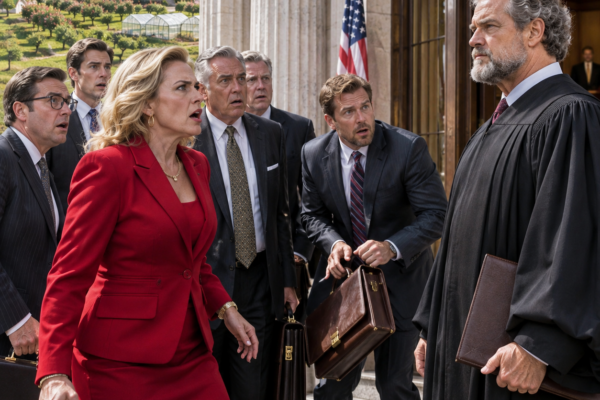
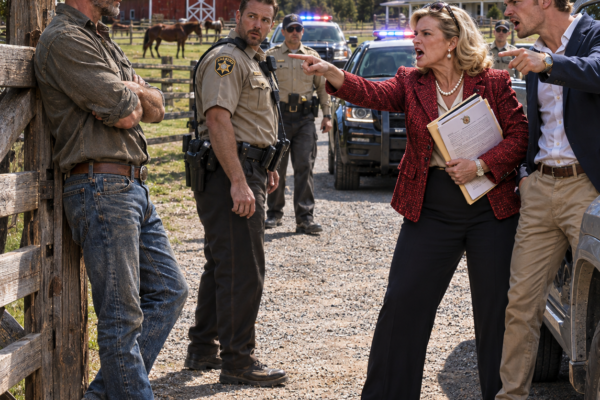
“REGISTER YOUR TRUCK AND PAY US $1,200—THIS CROSSING IS OURS NOW!” HOA Karen Installed a 10-Foot Steel Gate Across the Bridge to My 1,350-Acre Ranch—But on Christmas Morning, She Arrived to Find Nothing Behind It
“REGISTER YOUR TRUCK AND PAY US $1,200—THIS CROSSING IS OURS NOW!” HOA Karen Installed a 10-Foot Steel Gate Across the Bridge to My 1,350-Acre Ranch—But on Christmas Morning, She Arrived to Find Nothing Behind It
“EVERY VEHICLE USING THIS BRIDGE WILL ANSWER TO OUR ASSOCIATION, INCLUDING YOURS!” HOA president Victoria Hale declared after installing a ten-foot steel security gate across the private bridge my father had built in 1998.
She wanted me to register my ranch vehicles, submit visitors for approval, and accept a proposed $1,200 annual infrastructure contribution for a crossing my family had owned, maintained, and paid taxes on for nearly three decades.
But when Victoria arrived at Willow Creek on Christmas morning, she discovered that her expensive electronic gate was guarding empty air—and the property records she had ignored were about to change the future of her entire neighborhood.
My name is Everett Lawson. I was forty-six years old, and until four days before Christmas, my greatest concern had been making sure the cattle on my 1,350-acre Wyoming ranch had enough feed to survive the winter.
Then my phone rang.
I was inside the equipment barn with my ranch manager, Cole Bennett, reviewing our hay inventory when Victoria Hale introduced an entirely new problem.
“Everett, I’m pleased to inform you that we’ve completed an important access improvement near Willow Creek.”
“What kind of improvement?”
“A security gate.”
I put down my clipboard.
“Where?”
“At the bridge entrance, naturally.”
I looked through the barn window toward the southern pasture.
“My bridge?”
“The entrance has become important to our residents. We need a more consistent approach to managing traffic.”
“Victoria, that’s private ranch property.”
“We understand you have a connection to the land.”
“A connection?”
I almost laughed.
“I own it.”
She suggested meeting at the Silver Creek Estates clubhouse the following morning.
Before hanging up, I asked who had authorized her contractors to pour concrete on my property.
“The board has handled everything.”
That was all she would tell me.
Cole looked up from the feed schedule.
“Did that woman just tell you she put a gate on your bridge?”
“Apparently.”
“Did she ask?”
“No.”
He stared at me.
“That’s some confidence.”
I drove down the ranch lane shortly before sunset.
There it was.
Black steel bars nearly ten feet high, two electronic keypads, a security camera, and freshly poured concrete around the supporting posts.
A polished silver plaque displayed the Silver Creek Estates pine tree emblem.
Beneath it hung a sign.
COMMUNITY ACCESS — REGISTERED VEHICLES ONLY.
I stood in the cold, staring through the bars at the sixty-eight-foot bridge my father had built when I was eighteen.
I could remember every summer afternoon we had spent working on it.
Now somebody had installed a gate suggesting I needed her permission to cross it.
I took photographs.
Then I went home and opened my father’s filing cabinet.
The construction permit was there.
The steel invoices.
The concrete receipts.
The contractor’s final payment.
The county survey.
And an envelope bearing my father’s handwriting.
Willow Creek access — read before making any agreement.
Inside was a signed document dated April 1999.
It established that Silver Creek Estates had permission to coordinate snow removal on a short section of approach road.
Nothing more.
The association had no ownership interest in the bridge.
The following morning, Victoria handed me a document titled Community Access Management Proposal.
It included vehicle registration, guest approval, maintenance scheduling, and an annual infrastructure contribution of $1,200.
Then I turned the page.
A proposed visitor parking area.
Decorative lighting.
A scenic overlook.
An extended entrance road.
All shown on a map crossing my ranch.
“Who approved this?” I asked.
“The board discussed it during our planning session.”
“On whose property?”
“The precise boundaries are being reviewed.”
I placed my father’s agreement on the table.
“Then perhaps you should have reviewed them before pouring concrete.”
One board member, Philip Grant, examined the survey.
“Victoria, this appears to be outside our common area.”
She immediately interrupted him.
“We may need an updated interpretation.”
I collected my documents.
“What you need is the owner’s permission.”
That afternoon, I contacted a property attorney.
The following day, a structural engineer examined my bridge.
And on Christmas Eve, as Victoria prepared to defend her association’s access plan, I arrived at the clubhouse carrying a folder containing the original development records.
Beside me was Grace Whitmore, a sixty-eight-year-old former association secretary.
Grace had brought an old planning memorandum that nobody on the current board seemed to remember.
My attorney unfolded the original development map.
Victoria leaned forward.
Then she stopped speaking.
Because the document showed that Silver Creek Estates already possessed something it could have used instead of my father’s bridge.
Its own entrance.
And suddenly, Victoria had a very expensive decision to explain.
PART2
“Where did you get that?” Victoria asked.
Grace Whitmore set her handbag on the floor and leaned toward the table.
“It’s from the original development file.”
Victoria looked at the drawing again.
A decorated Christmas tree stood near the clubhouse windows. Someone had placed a plate of cookies beside a coffee machine, and a radio was playing Christmas music so quietly that I could barely hear it.
The surroundings couldn’t have been more peaceful.
But the atmosphere around that conference table had changed completely.
My attorney, Nathan Brooks, placed a finger against the eastern portion of the development plan.
“This corridor was reserved as a possible future entrance during the original planning process. According to the property records we’ve reviewed, it’s located within land controlled by the association.”
Martin Reeves, one of the board members, leaned closer.
“Hold on. I’ve lived here eleven years. Why haven’t I heard about this?”
Grace smiled sadly.
“The second development phase never happened as originally planned. The entrance remained on paper, and eventually the people who remembered it stopped serving on the board.”
Philip Grant took off his glasses.
“So we’ve been discussing an entrance across Everett’s bridge when we already have another potential route?”
“That’s correct,” Nathan replied. “Whether the eastern corridor can be developed under current conditions is a separate engineering and permitting question. But it’s certainly worth investigating.”
Victoria looked toward Grace.
“Was this information ever formally presented to the board?”
Grace opened her folder.
“I asked about it several years ago.”
She removed a planning memorandum and placed it beside the map.
At the bottom of the document was a short notation.
Revisit eastern corridor following completion of second development phase.
Martin read it aloud.
Then he looked toward Victoria.
“We should have had this information before approving the gate.”
She shifted in her chair.
“The board was working with the information available at the time.”
Grace looked at her.
“The information was available, Victoria. We just needed to look for it.”
Nobody spoke for several seconds.
I watched Nathan unfold another document.
This time, it was the county plat showing the boundaries of my ranch and the recorded limits of the association’s common property.
The contrast couldn’t have been clearer.
On one side of the map was land Silver Creek Estates actually controlled.
On the other was Willow Creek, my father’s bridge, and the property where my family had spent decades building a working ranch.
The line separating the two wasn’t particularly dramatic.
It was a thin black mark on an official drawing.
Yet that little line represented the difference between a project the association could legitimately investigate and one it had no right to undertake without my permission.
Nathan looked around the table.
“I think we should begin by separating the issues. The association wants another entrance. Mr. Lawson wants to retain control of his private ranch crossing. Neither objective is unreasonable.”
He placed the old snow removal agreement beside the map.
“The difficulty is that the association has attempted to accomplish its objective using property it doesn’t own.”
Victoria began speaking.
“Residents have used that bridge for years.”
I nodded.
“Some of them have.”
She looked at me.
“Then surely that establishes something about its importance to the neighborhood.”
“It establishes that my father and I have been good neighbors.”
Nathan raised a hand gently.
“Let’s look at the written agreement.”
He turned to the page my father had signed in April 1999.
It was a surprisingly short document.
The arrangement permitted the association to coordinate winter snow clearing on a limited section of gravel approach road near the subdivision.
It explicitly excluded ownership of the bridge.
It excluded authority over privately owned improvements outside the association’s designated common areas.
And in the margin was my father’s handwritten reminder:
Future access requests must be separately negotiated.
Nathan looked toward Victoria.
“Mr. Lawson’s father agreed to cooperate on snow removal. That is not an agreement transferring control of a private bridge.”
Victoria stared at the document.
Then she looked at the new survey.
For the first time since telling me about her security improvement, she appeared to be considering the possibility that having a board vote didn’t necessarily mean the board possessed the authority to carry it out.
I took a breath.
“Victoria, I need to know something.”
She looked up.
“Did the contractor ever receive permission from the property owner before installing that gate?”
She hesitated.
“The installation was commissioned by the association.”
“That’s not what I asked.”
Philip looked toward her.
Neither of us spoke.
Finally, Victoria admitted that she hadn’t obtained written permission from me.
I nodded slowly.
There was no satisfaction in hearing it.
My family had spent nearly half a century caring for that land.
I would have preferred never to need the conversation at all.
But now we were finally discussing the real problem instead of pretending that an electronic keypad could somehow establish ownership.
Nathan had spent more than thirty years working with ranch families, and I was grateful for the manner in which he handled that meeting.
He didn’t try to embarrass Victoria.
He didn’t raise his voice.
He didn’t suggest that every member of the board had knowingly participated in an attempt to take my property.
He simply made sure nobody could continue pretending the records said something they didn’t.
He produced photographs of the gate posts alongside the current boundary information.
Martin examined them.
“Those concrete supports are inside the ranch parcel?”
“Yes,” Nathan answered.
“And the camera?”
“The installation occupies the private approach.”
Martin sighed.
“That should never have happened.”
Victoria began explaining the concerns residents had raised about deliveries, traffic, and security.
I listened.
Some of those concerns were legitimate.
Silver Creek Estates had grown substantially over the years. Larger homes had appeared, traffic had increased, and the association’s original entrance arrangements weren’t necessarily ideal for the neighborhood it had become.
I could understand why residents wanted another route.
What I couldn’t understand was why anybody believed that wanting one made my bridge available for the taking.
“Victoria,” I said, “if you’d called me three months ago and asked whether I’d discuss possible arrangements, I would’ve listened.”
She glanced toward me.
“I might not have agreed to everything you wanted. But we could have had an honest conversation.”
She nodded faintly.
“Instead, your contractor poured concrete. Then you called to inform me about the improvement.”
Martin looked down.
Philip folded his hands.
Grace remained silent.
I continued.
“When somebody starts a conversation by installing a ten-foot gate across your property, it’s difficult to believe they’re interested in hearing your opinion.”
Victoria didn’t immediately answer.
Nathan allowed the silence to remain.
Then he explained that the access proposal did not establish an easement or an ownership interest merely because the board had prepared it.
The association needed to suspend the southern entrance project, address the unauthorized installation, and investigate alternatives based on verified property rights.
That was when I told them what I intended to do with my bridge.
“I’m rebuilding it.”
Martin looked surprised.
“Rebuilding the whole crossing?”
“The upper structure needs replacement. The concrete abutments can likely be retained and reinforced, but the old timber deck has been through nearly thirty Wyoming winters.”
I explained that Rebecca Sloan, a structural engineer experienced in agricultural crossings, had examined the bridge the previous day.
She had found that several components would benefit from planned replacement and had developed a preliminary reconstruction approach.
Her full engineering work would guide the restoration.
The project would allow me to preserve selected original timber while creating a stronger crossing for the ranch.
Philip nodded.
“That’s probably overdue.”
“It is.”
Victoria looked toward the map.
“How long would the work take?”
“We’re working through the schedule. The first stage is disassembly and assessment.”
She seemed uncomfortable.
“Would that mean the bridge would be unavailable?”
“During the work, yes.”
A silence followed.
The association had installed a gate to control access to infrastructure it hadn’t built, hadn’t maintained, and hadn’t even inspected.
Now its president was discovering that the man who actually owned that infrastructure had plans of his own.
I didn’t need her permission to discuss a lawful reconstruction project on my property.
I didn’t need her committee to select the materials.
And I certainly didn’t need to pay her proposed $1,200 contribution to maintain something my family had been paying for since 1998.
“I want to be clear,” I told the board. “I’m not rebuilding the bridge to make life difficult for your residents. I’m rebuilding it because it’s my responsibility to keep this ranch functioning.”
Grace nodded.
“Raymond would have said exactly the same thing.”
I smiled.
She was probably right.
By the time the meeting ended, the board had agreed to suspend the southern access proposal, arrange removal of its gate and camera, and commission an independent review of the eastern corridor.
Its planning documents would also be updated to distinguish privately owned land from common property.
It wasn’t a courtroom victory.
Nobody had been arrested.
Nobody had lost a house.
But the association had finally acknowledged something it should have established before spending a dollar on construction.
My bridge belonged to my ranch.
And for the first time in four days, I felt that we might find a solution without turning our entire neighborhood into a battlefield.
When I returned home, Cole was standing outside the equipment barn, wearing a heavy canvas jacket and gloves.
He looked toward my truck.
“How’d it go?”
“They’ve suspended the access proposal.”
“Really?”
“And they’re looking into another entrance on their own land.”
Cole smiled.
“Imagine that.”
I laughed.
“They’ve agreed to remove the gate.”
He glanced toward the southern pasture.
“Bet somebody wishes they’d found those property records last week.”
“Probably.”
He opened the barn door.
“Rebecca’s contractor called. Everything’s ready for the morning.”
I nodded.
“Good.”
The timing of the bridge work wasn’t accidental in the sense that I had chosen it for revenge. The contractor’s availability, weather conditions, ranch operations, and engineering recommendations had all been considered.
We had discussed beginning with an early disassembly phase during a manageable period for the ranch.
Christmas morning happened to be when the arrangements came together.
The last major hay deliveries had been completed that afternoon, and Cole had organized sufficient feed and supplies for our operations.
A northern service route remained available for ranch vehicles, although it was a less convenient agricultural route rather than a substitute for our usual southern entrance.
The cattle would be cared for.
The equipment would remain accessible.
The work would take place under Rebecca’s supervision.
Most importantly, the temporary closure would be documented and communicated.
Nathan had prepared written notice for the association and its representative, including the planned schedule and the engineer’s work information.
It wasn’t going to be a surprise demolition undertaken in the middle of the night.
It was going to be a properly organized maintenance and reconstruction project.
Unfortunately, somebody apparently failed to appreciate exactly what the words bridge disassembly meant.
And before the sun rose on Christmas morning, Victoria Hale was going to discover the difference between controlling a gate and owning what lay behind it.
That Christmas Eve, I found myself sitting at the kitchen table long after dinner.
Outside, the wind was moving through the shelter trees my father had planted years earlier. The temperature was dropping, and a thin layer of snow had begun collecting along the stone windowsills.
On the table in front of me was the original bridge construction folder.
I opened it again.
There were receipts from the steel supplier in Billings, concrete invoices, a copy of the construction permit, and several photographs taken during the summer of 1998.
In one photograph, my father stood beside Harold Benson, the local contractor who had helped construct the crossing. Dad was wearing a white T-shirt stained with dirt and sweat, and Harold was laughing at something outside the frame.
In another, I was standing beside a stack of timber holding a tape measure.
I was eighteen.
I looked remarkably impatient.
There was a reason for that.
At eighteen, I had been convinced that my father was unnecessarily particular about everything.
He checked measurements twice.
He wanted tools returned to exactly the place he’d found them.
He insisted that we inspect work before moving on to the next stage, even when I could see perfectly well that everything looked fine.
One afternoon during the bridge construction, he caught me rushing through the measurement of the deck plank spacing.
“Everett.”
I looked up.
“What?”
He held out his hand.
“Give me that tape.”
I handed it to him.
He checked the spacing himself.
Then he handed the tape back.
“Do it again.”
I sighed.
“Dad, it’s close enough.”
He looked at me.
“Close enough for what?”
“For the bridge.”
He shook his head.
“Son, if you want a thing to last, don’t ask it to forgive careless work.”
At the time, I thought he was talking about a few boards.
Sitting at my kitchen table nearly three decades later, I understood that he had been teaching me something considerably larger.
He had purchased the first portion of our ranch in 1978. It hadn’t looked much like the property I knew growing up.
The fences needed work.
The irrigation ditches needed repairs.
The buildings were modest.
There were exposed areas where the Wyoming wind could make an ordinary winter day feel especially unforgiving.
Dad spent the next twenty years improving the land.
He planted trees where shelter was needed.
He added fencing where it would serve a practical purpose.
He repaired existing structures instead of automatically replacing them.
And eventually, he built the stone house where I still lived.
He never talked about the ranch as though its value came exclusively from the number of acres recorded on the deed.
To him, the land was something he had undertaken to care for.
That responsibility extended to the cattle, the water, the pastures, the buildings, and every person who helped keep the operation running.
I understood why he had agreed to coordinate snow removal with the developer in 1999.
It was a practical arrangement.
The neighborhood needed a little help managing winter access.
The ranch already existed beside it.
Both parties could benefit from a limited agreement.
Dad hadn’t needed to treat the development as an enemy merely because it was new.
But he had been careful to establish the limits of the arrangement.
And thanks to that care, I had been able to place a signed document in front of Victoria Hale rather than rely exclusively on my memories of what he intended.
I ran my hand across the photograph of him beside Harold.
For a moment, I wondered what he would say if he knew that the bridge was about to be taken apart.
Part of me felt guilty.
The original timber had carried our vehicles, equipment, and family across Willow Creek for nearly thirty years.
Every weathered board represented something Dad had helped create.
I didn’t want to become the person who decided that old work no longer mattered simply because something newer was available.
That was why I had spent so much time discussing preservation with Rebecca Sloan.
I wanted the sound portions of the original structure identified and saved where possible.
I wanted the existing abutments retained if the engineering assessment supported that decision.
I wanted the new crossing to acknowledge the old one rather than erase it.
Rebecca had understood immediately.
“You don’t have to choose between preserving your father’s work and making the bridge safer,” she had told me.
That sentence stayed with me.
The new structure could carry the ranch into another generation.
And some of the material Dad had worked with in 1998 could remain part of it.
I closed the folder.
Then I looked through the kitchen window toward the dark pasture.
“Merry Christmas, Dad.”
I turned off the lights and went to bed.
There was going to be a great deal of work to do before breakfast.
The contractor arrived while the ranch was still dark.
The sky had just begun showing a faint line of gray above the distant hills. A light dusting of snow covered the ground, and the air was cold enough that every conversation appeared briefly as a cloud.
Rebecca Sloan arrived shortly afterward.
She had spent sixteen years inspecting rural bridges and agricultural crossings, and she possessed the reassuring ability to remain calm while everybody around her worried about equipment, weather, schedules, and money.
She stepped from her vehicle wearing a heavy winter jacket and carrying the engineering documents.
“Morning, Everett.”
“Merry Christmas.”
She smiled.
“Nothing says Christmas like an infrastructure project.”
I laughed.
“Coffee?”
“Absolutely.”
Cole joined us near the equipment staging area.
He reviewed the practical arrangements with the contractor, and Rebecca confirmed that the work would follow the approved sequence.
The ranch supplies had been secured.
The necessary equipment was on site.
The creek bed was to remain clear.
Reusable materials would be identified, documented, and stored.
There was no room for improvisation merely because we wanted to finish quickly.
I stood beside the old railing as the crew prepared.
A thin layer of frost covered the timber.
I brushed some of it away with my glove.
For the last time, I looked along the original deck.
Then I stepped back.
“Whenever you’re ready.”
The crew began with the railings.
Each section was identified and set aside for assessment. The sound timber would be available for restoration and possible reuse in the new design.
Rebecca occasionally called attention to a particular detail.
Cole helped coordinate the storage arrangements.
The contractor’s crew worked steadily.
Watching the first section of railing disappear was unexpectedly difficult.
I had known what was going to happen.
I had discussed the work.
I had agreed to the arrangements.
Yet seeing the bridge gradually change felt different from looking at an engineering drawing.
There were marks on that old wood I remembered making myself.
There were places where Dad had adjusted fittings.
There were repairs I had completed after particularly difficult winters.
For years, I had crossed the bridge without paying much attention to those little details.
Now I found myself looking at each one as though I was being given an opportunity to say goodbye.
Cole noticed.
“You doing all right?”
I nodded.
“Just remembering.”
He looked toward the old timber.
“We’re saving the good stuff.”
“I know.”
“Your dad would’ve wanted that.”
I smiled.
“He would’ve wanted us to save the bad stuff, too, until somebody proved it was actually bad.”
Cole laughed.
“Sounds like Raymond.”
We watched the work continue.
The old decking was recovered in manageable sections. Selected steel components were removed and placed on prepared supports for inspection. The concrete abutments remained standing, exactly as intended.
Nothing was thrown into Willow Creek.
Nothing was damaged merely to make a dramatic statement.
Every significant step was recorded.
By the time the final upper beam had been recovered, the old crossing no longer existed in its assembled form.
There was simply Willow Creek moving between two concrete abutments.
The original materials rested safely on the ranch side.
Rebecca reviewed the completed phase.
She looked toward me.
“That’s the planned disassembly finished.”
I nodded.
“Everything accounted for?”
“Yes.”
I glanced across the water.
And that’s when I saw something so absurd that I couldn’t help smiling.
Victoria’s gate remained standing.
The black steel bars were still there.
The electronic keypads.
The little security camera.
The silver HOA emblem.
The sign announcing that only registered vehicles could use the crossing.
But behind the gate was nothing a registered vehicle could cross.
No decking.
No upper structure.
No bridge.
An expensive security gate had been installed to control access to a piece of infrastructure that now lay in carefully organized sections on the opposite bank.
Cole followed my gaze.
For several seconds, neither of us spoke.
Then he said, “Well, I guess they won’t have much traffic to register this morning.”
I burst out laughing.
Rebecca shook her head.
“Everett.”
“I’m sorry.”
She smiled.
“I know.”
I took a photograph of the site and sent it to Nathan together with the engineer’s progress information.
Then I returned to the house.
The coffee machine was still warm.
I poured myself a fresh cup and sat beside the kitchen window.
For the first time since discovering the gate, the entire situation struck me as genuinely ridiculous.
Somebody had paid a contractor to install elaborate access controls without establishing that the association owned the crossing.
And now those controls were protecting an entrance to thin air.
I wondered how long it would take for the neighborhood to notice.
At seven-thirty, my phone rang.
Cole.
“Everett?”
“Morning.”
“You might want to come down here.”
I put down my coffee.
“What’s happening?”
“There are people standing by the gate.”
“Who?”
“Philip. Martin. Eleanor Price. A couple of others.”
I smiled.
“Are they looking at the creek?”
“Pretty intensely.”
“Anybody doing anything dangerous?”
“No. They’re just standing there.”
I collected my jacket.
“I’m coming.”
As I walked toward my truck, Cole added one final detail.
“Victoria’s on her way.”
Philip Grant was standing beside the gate when I arrived.
Martin Reeves had his hands inside his coat pockets, and Eleanor Price stood a little farther back, studying the neatly stacked timber on the opposite side of the creek.
None of them appeared angry.
They simply looked astonished.
Philip noticed my truck.
“Everett!”
I parked and stepped out.
“Merry Christmas.”
He laughed nervously.
“Merry Christmas. I suppose.”
Martin pointed toward the water.
“Where’s the bridge?”
I looked at the organized materials.
“Being rebuilt.”
He turned toward me.
“You took the entire thing apart?”
“The contractor completed the planned disassembly this morning.”
Philip looked down at the concrete abutments.
“I thought you were talking about replacing a few boards.”
Rebecca approached.
“Several upper components needed a more comprehensive assessment and replacement plan.”
She explained what the crew had completed and what would happen during the reconstruction.
Philip listened carefully.
Then he looked toward the gate.
“I imagine this makes our access plan somewhat irrelevant.”
I smiled.
“The property records already did that.”
He laughed.
“Fair point.”
At that moment, a white SUV approached.
Victoria stepped out wearing a winter coat and boots that looked considerably more suitable for a clubhouse entrance than a snow-covered ranch road.
She looked toward the gate.
Then beyond it.
Her expression changed.
She walked several steps closer before stopping.
“Everett?”
I turned toward her.
“Morning, Victoria.”
She pointed toward the creek.
“What happened to the bridge?”
“It’s been disassembled for reconstruction.”
She stared at me.
“The entire bridge?”
“The upper structure, yes.”
“But—”
She looked toward the gate.
Then toward the empty crossing.
“We’ve only just installed that access equipment!”
I took a breath.
“Victoria, that’s your gate. This is my bridge.”
Nathan arrived while she was still examining the site.
He greeted everybody, then handed Victoria a copy of the written notice delivered to the association the previous day.
“The work schedule was included with the engineering information.”
She read the first page.
Then she turned to the attachment.
“I didn’t realize it would begin this early.”
“The association received the schedule yesterday,” Nathan said.
Victoria looked at the notice again.
Nobody accused her of deliberately ignoring it.
Nobody needed to.
The document was there.
The arrangements had been communicated.
The work had been carried out for the purpose identified in the notice.
And the residents standing beside her could see that the bridge hadn’t been destroyed in anger.
Its materials had been carefully recovered.
The foundations remained.
The creek was undisturbed.
This was exactly what an organized reconstruction project looked like.
Victoria lowered the paperwork.
“I suppose the gate will need to come out.”
Philip looked toward the steel bars.
“Yes,” he said. “I think that’s fairly obvious now.”
Martin covered his mouth.
I couldn’t tell whether he was trying to suppress a cough or a laugh.
Victoria looked at me.
For a moment, I expected another argument.
Instead, she asked, “How long until your new bridge is ready?”
“Rebecca’s developing the complete engineering specifications. We’ll take the time necessary to do it properly.”
She nodded.
Then she glanced toward the residents.
And I could almost see her considering how she was going to explain that her association had installed a gate across somebody else’s crossing just before its owner began a legitimate reconstruction project.
That conversation was going to take place in a very crowded clubhouse.
Before we left the creek, Eleanor Price walked toward the boundary of the work area.
She was looking at the old railing sections.
“Everett, are you keeping those?”
“The pieces that are still sound.”
She smiled.
“My husband helped unload some of that timber.”
I looked at her.
“Really?”
“Oh, yes. He came home absolutely exhausted. Your father sent him back with a container of lemonade and enough leftover food for both of us.”
I laughed.
“That sounds like Dad.”
Eleanor studied the boards for a moment.
“He always said that bridge would last.”
“It lasted nearly thirty years.”
“Then I’d say he was right.”
She looked across the creek.
“And you’re going to put some of the old wood back?”
“Where the design allows it.”
She nodded.
“He’d be pleased to see that.”
Her husband had become considerably less mobile over the years, and she explained that he didn’t often venture down toward the crossing anymore.
I promised that when the bridge was finished, we would arrange an opportunity for him to see the restored timber.
Eleanor thanked me.
Then she turned toward Victoria.
“You know, dear, I don’t think anybody has to lose anything important here.”
Victoria looked at her.
“We need an entrance. Everett needs a bridge. Why don’t we build what belongs to us and let him build what belongs to him?”
There was nothing particularly complicated about Eleanor’s suggestion.
Yet it was perhaps the most sensible thing anybody had said since the gate appeared.
Martin nodded.
“We should discuss the eastern corridor with the rest of the residents.”
Philip agreed.
Victoria glanced toward Nathan.
“Would you be willing to explain the property arrangements at the clubhouse?”
He looked at me.
I nodded.
“Of course,” Nathan said.
And so, instead of spending the remainder of Christmas morning arguing beside an empty creek, we arranged to address the people who had been told that their association was developing an improved entrance.
They deserved to know why that project had changed.
They also deserved to see the alternative their own development records had preserved for them.
Nearly every chair in the Silver Creek Estates clubhouse was occupied when I arrived.
Some residents had come because they had seen the unusual activity near Willow Creek.
Others had received messages from neighbors.
Several carried printed copies of the new survey and the association’s proposed access plan.
There were people wearing Christmas sweaters, winter boots, and scarves. Somebody had brought a plate of pastries, and a few residents looked as though they had postponed opening presents because they wanted to understand what had happened to the southern crossing.
I sat near the side of the room with Nathan.
Cole remained at the ranch to look after the day’s work.
Rebecca had stayed near the project site to complete the necessary technical documentation.
Grace Whitmore was sitting in the front row, holding her old planning folder.
Victoria stood near the Christmas tree and addressed the gathering.
“As many of you are aware, the board has been investigating improvements to neighborhood access.”
A man near the back raised his hand.
“Why’s the bridge gone?”
Several people turned toward him.
Victoria looked at me.
“The bridge is undergoing reconstruction.”
The man frowned.
“Whose bridge?”
Nathan stood.
“That is an important question. It might help if we begin with the property records.”
He displayed the county plat.
The boundaries were clearly marked.
He identified the location of the ranch crossing, the association’s existing common areas, the limited snow clearing arrangement, and the land reserved as a potential eastern entrance.
A woman in the second row looked confused.
“I thought the association maintained the bridge.”
I answered from my seat.
“My family has maintained it since it was constructed.”
She looked surprised.
“Then who paid for it?”
“My father.”
“Was it built as part of the subdivision?”
“No. It was completed in 1998. The original development arrangements came afterward.”
She turned toward Victoria.
“Then why were we discussing an infrastructure contribution from Everett?”
Victoria adjusted her papers.
“The contribution was part of a proposed access management arrangement. It wasn’t a finalized assessment.”
I appreciated that she clarified the distinction.
The proposed $1,200 annual contribution hadn’t become a lawful obligation merely because it appeared in a document presented to me.
That was one reason I had refused to sign anything.
But the fact that it was only a proposal didn’t make its underlying assumption acceptable.
The association had been discussing terms under which I would contribute toward an access arrangement involving property I already owned.
A resident named Douglas Keller, a retired accountant, raised his hand.
“Were the bridge and its maintenance costs included in the association’s historical accounts?”
Martin answered.
“Not as an association-owned structure.”
Douglas frowned.
“Then before we spend anything further, we need to understand the costs of the alternative.”
Several residents nodded.
Nathan returned to the map.
“This is the eastern corridor. Based on the recorded documents, the association possesses land here that was reserved for possible access development.”
A younger man leaned forward.
“So we can build an entrance there?”
“You can investigate whether the route is feasible. You’ll need current engineering information and whatever county and planning approvals apply.”
“But we wouldn’t need Everett’s bridge?”
“Not if the independent route can be developed as intended.”
There was a noticeable change in the room.
People who had arrived looking worried about losing a crossing were beginning to see that their neighborhood might have a solution available without interfering with mine.
Victoria looked toward Grace.
“Would you explain how the corridor was originally identified?”
Grace opened her folder.
She told the residents about the early development years and the proposed second phase.
She explained that plans sometimes remain unfinished for entirely practical reasons. Development schedules change. Financing changes. Volunteers move away. Board members change, and knowledge that once seemed familiar becomes buried in old records.
“The mistake,” Grace said, “is assuming that because nobody remembers something, it no longer exists.”
Douglas smiled.
“That happens with accounting records, too.”
A few people laughed.
Grace held up the memorandum.
“I kept this because I believed somebody might eventually want to know what the original plan was.”
Martin examined the projected drawing again.
“I’m glad you did.”
Several residents applauded.
Grace looked slightly embarrassed.
She sat down.
Victoria thanked her.
Then the discussion began moving toward the questions that should have been asked long before anybody purchased a steel gate.
Drainage.
Snow removal.
Road geometry.
Construction costs.
Maintenance.
Landscaping.
The availability of reserve funds.
Douglas wanted preliminary estimates before any commitment was made.
Martin explained that the engineers would need to examine current conditions.
Philip recommended that the association establish clearly defined responsibilities before selecting a contractor.
Eleanor suggested native wildflowers along the new road.
Grace suggested preserving the original community name on a simple wooden entrance sign.
People began offering ideas.
Not demands.
Ideas.
And something I hadn’t expected started happening.
Instead of discussing how to obtain control of my bridge, the residents were becoming enthusiastic about creating something of their own.
Victoria invited me to speak.
I stood and looked around the clubhouse.
There were faces I recognized.
People who had lived beside our ranch for years.
People who had attended early neighborhood gatherings.
People whose children I had occasionally waved to as they rode bicycles near the property.
There were also people I had never properly met.
Some of them had undoubtedly heard about the bridge only through the association’s description of its proposed improvement.
I wanted them to hear directly from me.
“I’ve never objected to Silver Creek Estates having a second entrance,” I began. “I understand why a growing neighborhood would want one.”
Several people nodded.
“My concern is that my father’s bridge was included in a development proposal without my family’s permission.”
I glanced toward Victoria.
Then I looked back at the residents.
“My father purchased the first part of our ranch in 1978. He built the house where I live. He repaired the irrigation system. He planted the trees that protect our buildings from the wind.”
I pointed toward the photograph of the bridge displayed beside the map.
“He supervised the construction of that crossing in 1998. I helped him.”
I paused.
“That bridge isn’t simply a convenient line connecting two roads. It’s part of a working ranch that my family has been responsible for maintaining for decades.”
The room was quiet.
I continued.
“Over the years, some of you have crossed the ranch with permission. My father was happy to help when it was practical, and I’ve tried to continue that.”
Eleanor smiled.
“But a friendly arrangement isn’t the same thing as transferring ownership.”
I let the words settle.
“When I found that gate, I felt as though somebody had decided my family’s history and our responsibility for the property no longer mattered because the neighborhood wanted a more convenient entrance.”
A woman near the front lowered her eyes.
I looked toward the eastern corridor on the screen.
“Now we know there’s another option worth investigating. You can develop the route intended for your community, subject to the necessary professional reviews and approvals. I can rebuild the bridge that belongs to my ranch.”
I looked around the room again.
“We don’t need to fight each other to accomplish those two things.”
Philip stood.
“I think that’s a reasonable distinction.”
Martin nodded.
Several residents began applauding.
Then more joined them.
It wasn’t the kind of applause you hear when somebody delivers a great speech.
It was quieter.
Almost relieved.
People were recognizing that the situation didn’t have to become an endless dispute.
And for me, that mattered.
I hadn’t wanted to become the ranch owner everybody in Silver Creek Estates disliked.
I hadn’t wanted to spend years arguing with neighbors about whether they had permission to enter my land.
I wanted to return to the life I had been living before the steel gate arrived.
I wanted to take care of the cattle.
Maintain the ranch.
Rebuild my father’s bridge.
And enjoy the occasional peaceful afternoon beside Willow Creek.
That was all.
After the meeting, Victoria approached me near the entrance.
For the first time since our original conversation, she wasn’t holding a folder full of plans she wanted me to accept.
“Everett, do you have a minute?”
“Sure.”
She looked toward the residents who were still discussing the eastern corridor.
“I became too focused on demonstrating that the board was making progress.”
I waited.
She continued.
“People had been asking about access improvements for a long time. I wanted to show them something had actually been accomplished.”
I could understand the feeling.
I had encountered similar pressure while managing a working ranch.
There were projects that seemed to remain unfinished forever, people who wanted to see progress, and decisions that became tempting to make simply because everybody was tired of waiting.
But my father had taught me not to ask important work to forgive carelessness.
“The gate looked like progress,” Victoria said. “Once the board approved it, I treated the installation as the starting point.”
I nodded.
“The starting point should’ve been the property records.”
She looked at me.
“Yes.”
There was no argument.
No attempt to tell me that the board possessed some special right to proceed before obtaining permission.
She simply acknowledged the mistake.
“I should have checked everything first.”
I appreciated hearing it.
But I also wanted the agreement documented properly.
“Let’s finish the paperwork,” I told her. “Make sure the association’s records clearly establish which property belongs to whom. Arrange the removal of the equipment. Then we won’t be having the same conversation ten years from now.”
She nodded.
“That seems sensible.”
We shook hands.
I wasn’t ready to pretend that the installation hadn’t happened.
It had.
It had interrupted ranch operations, caused unnecessary worry, and forced me to spend several days protecting rights that should never have been questioned.
But I also recognized the importance of somebody acknowledging a mistake and beginning to correct it.
There was no reason to make that correction harder merely because I had been angry.
Outside, I walked toward my truck.
Nathan joined me.
“Not a bad outcome.”
I laughed.
“Considering the week started with a ten-foot steel gate.”
“Exactly.”
He looked toward the neighborhood.
“They’ve got some work ahead.”
“So do I.”
He smiled.
“Your father’s records certainly helped.”
I looked toward the ranch.
“He was always making me organize things.”
“Good habit.”
“Didn’t appreciate it much when I was eighteen.”
Nathan laughed.
“Most valuable habits are annoying when somebody first teaches them to you.”
I thought about that on the drive home.
Then I thought about the little envelope bearing Dad’s handwriting.
Read before making any agreement.
Somewhere between my eighteenth birthday and my forty-sixth Christmas, I had finally become old enough to understand why he had written those words.
And I intended to make sure the next chapter of our property records was just as clear.
The first weeks of January were cold enough that the ranch seemed to creak.
Snow collected along the fences, the ponds froze, and the cattle developed a particular enthusiasm for appearing whenever Cole approached with feed.
The northern service route was doing its job, although using it regularly required additional coordination and more time than our usual crossing.
Cole handled the adjustments with his customary patience.
One morning, he came into the kitchen carrying an updated schedule.
“Good news.”
“What?”
“Nothing’s running out.”
I laughed.
“That’s usually your definition of good news.”
“It’s a ranch. You want exciting news, buy a newspaper.”
He sat down and reviewed the supply arrangements.
The temporary bridge closure meant planning deliveries and equipment movements carefully, but the preparations we had made before Christmas were proving valuable.
There had been no emergency requiring us to use an unsafe crossing.
No cattle had been left without feed.
No essential ranch operations had been abandoned.
We had simply adjusted.
Meanwhile, the association arranged for its gate and camera equipment to be removed.
I was near the barn when the contractor’s vehicle arrived.
The worker responsible for the job approached me before entering the affected area.
“Mr. Lawson?”
“Yes.”
“I’m here regarding the Silver Creek gate.”
I nodded.
“We’ve received the information from the association. I just wanted to confirm the arrangements with you before we start.”
I smiled.
“Thank you for asking.”
He looked a little uncomfortable.
“I understand there was some confusion about the original installation.”
“There was.”
He glanced toward the creek.
“We’ll follow the agreed removal arrangements and make sure the site is left in the required condition.”
“Appreciate it.”
That brief exchange was everything the original installation should have involved.
A contractor identifying the property owner.
The owner understanding the proposed work.
Clear permission.
A proper plan.
Nobody needed to shout.
Nobody needed to threaten anyone.
By the time the authorized removal work was completed, the steel bars, electronic access equipment, and association emblem were gone.
The approach looked strangely open.
Of course, the old bridge remained disassembled, and the area would continue to be managed as an active reconstruction site.
But there was no longer an HOA sign declaring that my own crossing was reserved for registered community vehicles.
Cole stood beside me as we looked across the creek.
“That’s better.”
“Much.”
“Think they’re going to put that gate at their new entrance?”
I shrugged.
“That’s their decision.”
He grinned.
“At least it’ll be their decision on their property.”
I laughed.
“Exactly.”
For the first time, the distinction appeared to be understood by everybody involved.
During January, the association completed its initial review of the eastern corridor.
The findings were encouraging.
The land appeared suitable for further planning, although the engineers recommended drainage improvements and a revised turning area.
The preliminary estimate was $214,000.
Martin Reeves presented the figure at a board meeting.
I heard about it afterward from Grace, who stopped at the ranch with another tin of cookies.
“Two hundred fourteen thousand?” I asked.
She nodded.
“More than the reserve account contains.”
“That’s a significant project.”
“It is. But at least people know what they’re discussing now.”
She explained that the association was considering a two-year contribution schedule to address the funding difference, together with careful project management.
The residents approved the planning budget.
They wanted current estimates and a clear understanding of the proposed work before making further commitments.
Douglas Keller had been particularly interested in how the contributions would be managed.
“Good,” I said. “They ought to understand where every dollar goes.”
Grace smiled.
“That’s what Douglas keeps saying.”
She looked toward the creek.
“How’s your project coming along?”
“Rebecca’s working on the specifications.”
“Do you know what it’ll cost?”
“I’m about to find out.”
Grace laughed.
“Then perhaps you need another cookie.”
I accepted one.
She had a point.
There was something satisfying about watching the two projects proceed independently.
Silver Creek Estates was addressing its own access needs through its own resources.
I was addressing the maintenance and reconstruction requirements of my ranch.
Nobody was suggesting that the association should acquire my property by adopting a resolution.
Nobody was suggesting that I should contribute $1,200 toward a system that would regulate my use of my own crossing.
We had replaced an argument about control with two practical infrastructure projects.
And although neither project would be cheap, both were being approached with considerably more respect for the facts than Victoria’s gate had received.
Rebecca presented the completed engineering specifications at the ranch.
She spread the drawings across the kitchen table and explained the proposed design.
The existing concrete abutments could be retained with the appropriate reinforcement and resurfacing.
The new bridge would use galvanized steel beams and a durable composite deck.
The crossing would be wider than the original, while remaining consistent with the approved engineering design.
The railings would be stronger.
Selected timber from the original bridge could be incorporated where its condition and the design allowed.
There was also room for the small covered seating area I had mentioned.
I studied the drawings.
“That’s a good-looking bridge.”
Rebecca smiled.
“It should serve you well.”
Cole stood beside the table, examining the proposed width.
“Be nice not having to think about every inch when we bring equipment across.”
Rebecca nodded.
“That was one of the considerations.”
Then she handed me the estimate.
$138,500.
I looked at the figure.
Then looked at Rebecca.
Then looked at the figure again, in case it had changed out of sympathy.
It hadn’t.
Cole leaned over my shoulder.
“Ouch.”
I laughed.
“Thank you for that professional analysis.”
Rebecca explained the principal costs and the work involved. We reviewed the specifications, the reinforcement requirements, the new materials, the construction arrangements, and the need for proper inspection.
The amount was higher than I had initially expected.
But the more we discussed it, the more I understood why I didn’t want to reduce the project to the least expensive possible replacement.
This crossing served a working ranch.
It needed to accommodate the realities of our operations.
It needed to withstand winter conditions.
It needed to be maintainable.
And I wanted to build something that would remain useful long after my own working years ended.
My father had thought that way in 1998.
The original bridge had been a substantial investment for him.
He hadn’t built it simply to get through the next season.
He had built it because he understood the ranch would need a dependable crossing for decades.
Now I had the same responsibility.
“Let’s do it properly,” I said.
Rebecca nodded.
“Good.”
Cole looked at the estimate again.
“Raymond would’ve asked whether they could find a discount on the steel.”
I laughed.
“Raymond would’ve called three suppliers before breakfast.”
Rebecca smiled.
“Then he’d have appreciated how much comparison work went into this.”
I signed off on the next stages of the project arrangements after reviewing the details.
It was my investment.
My decision.
My responsibility.
And if the completed bridge served the ranch for another generation, the money would have been spent on something that actually mattered.
One of the most important parts of the reconstruction involved deciding what could be saved from the original timber.
Cole had arranged a suitable storage area for the recovered materials.
We kept the pieces organized while the necessary assessments were completed.
Then we contacted Daniel Foster, a local woodworking craftsman.
Daniel was seventy years old and had spent much of his life restoring barns, farmhouses, and wooden structures that younger people occasionally dismissed as beyond saving.
He arrived in an old pickup, stepped into the storage area, and walked slowly along the stacked railing sections.
He didn’t speak immediately.
Instead, he examined the grain, the condition of the wood, the old fittings, and the places where decades of exposure had left their marks.
Finally, he rested his hand against one of the boards.
“This is good timber.”
I nodded.
“Dad was particular about what he bought.”
Daniel smiled.
“I can see that.”
“Can you save much of it?”
“Not every piece. Some portions have done their work and shouldn’t be asked to do more. But there’s enough here to preserve the character of the old bridge.”
I was relieved.
That was precisely what I had hoped to hear.
We discussed the pieces that might be suitable for reuse and the importance of respecting the engineering requirements of the new structure.
Daniel wasn’t interested in making unsound timber perform a job it could no longer safely handle.
Neither was I.
The objective was to preserve the original material where appropriate, not pretend that age and sentiment eliminated the need for sound construction.
He turned over one section of railing.
Then he stopped.
“Everett, come look at this.”
I walked closer.
Beneath the old top rail were two small letters.
R.L.
My father’s initials.
I stared at them.
I remembered seeing Dad mark tools and equipment over the years. He wasn’t the kind of man who ordered commemorative plaques or installed enormous signs bearing his name.
His initials were usually enough.
Simple marks in places nobody else was particularly interested in looking.
I touched the old letters.
Daniel looked at me.
“You want this one?”
“More than anything.”
He nodded.
“We’ll see how best to preserve it.”
I swallowed.
“Can we put it somewhere it’ll be visible without exposing it to unnecessary wear?”
“We can work that into the restoration.”
I thanked him.
He looked back at the timber.
“Your dad didn’t expect somebody to be reading those initials thirty years later, did he?”
I smiled.
“Probably not.”
“That’s how these things happen.”
He rubbed his hand along the grain.
“People build something because it needs building. Then years later, somebody else realizes how much of their life is still sitting inside it.”
I looked at him.
Daniel returned to examining the wood.
For a moment, I couldn’t speak.
He had described exactly why the gate had upset me so deeply.
It wasn’t because I objected to new things.
It wasn’t because I believed every improvement threatened the past.
It was because somebody had approached a structure containing years of my family’s work and treated it as though it were an unclaimed asset waiting for her association to manage.
My father’s bridge deserved better than that.
And now, thanks to people who understood both its practical purpose and its history, part of it would remain.
As winter gradually gave way to spring, both projects began taking shape.
The association’s engineers continued evaluating the eastern corridor.
There were questions about drainage, turning arrangements, and how the entrance would function during Wyoming winters.
The board was considerably more careful about obtaining answers than it had been when Victoria commissioned the gate.
Martin provided residents with updates.
Philip reviewed the available information.
Grace helped locate older records that offered useful context.
And Victoria, to her credit, began asking questions that would have prevented our original dispute.
Who owned the affected property?
What did the recorded documents establish?
Which approvals were necessary?
What would the long-term maintenance obligations be?
Had the proposed work been professionally reviewed?
The difference wasn’t particularly glamorous.
There were no elaborate signs announcing that the association had already accomplished something before construction was ready.
There was simply a more deliberate planning process.
One afternoon, Philip stopped at the ranch.
He was carrying a copy of a preliminary entrance drawing.
“Thought you might be interested.”
I examined it.
The proposed route remained within the association’s property, and the engineers had identified areas requiring attention before the design could be finalized.
“Looks promising,” I said.
Philip nodded.
“Still a lot to do.”
“Better now than after construction.”
He laughed.
“We’ve learned that.”
Then he looked toward the bridge site.
“How’s yours coming?”
“Slowly but surely.”
He glanced at the recovered materials.
“I’m glad you’re keeping some of the original wood.”
“So am I.”
He paused.
“Everett, I wanted to tell you something.”
“What?”
“When Victoria first presented the access improvement, I assumed somebody had already checked the land records.”
I nodded.
“That’s understandable.”
He shook his head.
“Maybe. But I’m on the board. I should’ve asked.”
I appreciated his willingness to acknowledge that.
The original gate hadn’t been the product of Victoria’s confidence alone.
It had also been made possible by people assuming somebody else had verified the necessary facts.
That happened in organizations everywhere.
One person believed the contractor had checked.
The contractor believed the association possessed permission.
The association believed its planning committee understood the property arrangements.
And everybody proceeded until the person who actually owned the land discovered what they had done.
Philip continued.
“I don’t want us making another decision like that.”
“Then don’t be afraid to ask the boring questions.”
He smiled.
“The boring questions?”
“Who owns it? What does it cost? Who maintains it? What happens if something goes wrong?”
He laughed.
“Sounds like a good checklist.”
“Dad would’ve approved.”
Philip nodded.
Then he returned to the neighborhood with his drawings.
I stood beside the creek watching his vehicle disappear.
I hadn’t expected the dispute to produce a better relationship with the association’s directors.
But that was slowly becoming one of its most valuable results.
By July, the new bridge had begun to look like something my father would have recognized.
The concrete abutments had been reinforced and resurfaced.
The galvanized steel supports were in place.
The composite deck gave the crossing a clean, substantial appearance.
And along the edges, the restored timber railings brought back something of the character that had made the original bridge feel like part of the ranch rather than an anonymous piece of infrastructure.
I walked down there almost every evening.
Sometimes Rebecca was still reviewing details.
Sometimes Cole joined me after finishing his work.
Sometimes I stood alone beside Willow Creek and watched the water move beneath the new structure.
There were moments when I could almost imagine my father walking toward me from the other side, carrying a tape measure and asking whether everything had been checked properly.
I would smile.
“Rebecca’s taking care of it, Dad.”
I could practically hear his response.
“Good. Check it again.”
We also built the small covered seating area on the ranch side.
Nothing extravagant.
A modest shelter overlooking the creek, designed so visitors could enjoy the surroundings without interfering with ranch operations.
I placed two wooden benches beneath it.
One faced the water.
The other faced the mountains.
As I stood looking at them, I thought about my mother.
She had always believed that beautiful places deserved somewhere comfortable to sit.
Whenever Dad became too occupied with a project to appreciate what was around him, she would bring out a chair, hand him something to drink, and persuade him to stop working for a little while.
Sometimes she succeeded.
Sometimes he drank the coffee while continuing to work.
Either way, she usually smiled.
The covered seating area reminded me of her.
It would be a place where people could slow down.
Where conversations didn’t need to revolve around cattle, equipment, construction, property disputes, or how much something was going to cost.
Where somebody could sit beside Willow Creek simply because the evening was beautiful.
I imagined my parents sitting there together.
Dad looking toward the new crossing.
Mom watching the mountains.
Both of them probably agreeing that I ought to have thought of building the shelter sooner.
I laughed to myself.
Some memories hurt because they remind you of what you’ve lost.
Others comfort you because they remind you how much remains.
The new bridge was beginning to offer me both kinds.
In August, the eastern entrance project passed its engineering review.
The association received the necessary approvals and scheduled the opening for early September.
Martin called me personally.
“Everett, we’d like you to attend.”
I smiled.
“Are you sure?”
“Absolutely.”
“Any access fees?”
He laughed.
“No access fees.”
“Vehicle registration?”
“No.”
“Ten-foot gate?”
“Everett.”
I burst out laughing.
“Sorry.”
He chuckled.
“We’d genuinely appreciate having you there.”
“Then I’ll come.”
The morning of the opening was warm and bright.
The new entrance followed the route identified in the original development plans. It was the product of careful review, revised engineering, drainage work, and a series of decisions the association could legitimately make concerning its own property.
A simple wooden sign displayed the words Silver Creek Estates.
There were folding chairs beside the entrance.
Coffee.
Homemade desserts.
Several residents had brought their children.
Eleanor was discussing the proposed native plantings with another homeowner, and Douglas was examining a printed financial summary Martin had made available.
I stood near the back.
Victoria approached the gathering and thanked the planning committee, the contractors, and the residents who had supported the project.
Martin recognized the volunteers who had helped coordinate the work.
Philip spoke about the original development vision and the importance of keeping proper records.
Then Grace stepped forward holding an old photograph.
It showed the neighborhood during its first year.
The houses were smaller.
The trees were younger.
Much of the surrounding land looked almost untouched.
Grace studied it for a moment.
“Communities are built one decision at a time,” she said. “Sometimes the most important thing we can do is remember what was intended before making something new.”
People applauded.
I joined them.
Grace hadn’t needed to embarrass anybody to make her point.
Her old folder had helped the association rediscover a possibility that might otherwise have remained forgotten.
Her knowledge had been treated as valuable rather than inconvenient.
And the residents were now standing beside an entrance they could legitimately call their own.
Victoria noticed me afterward.
“Thank you for coming, Everett.”
“Congratulations.”
She looked toward the new road.
“It’s turned out well, hasn’t it?”
“It has.”
She smiled.
“We should have started here.”
I nodded.
“Yes.”
Neither of us needed to say anything more about the gate.
The new entrance was right there in front of us.
It represented the answer to almost every question we had argued about the previous December.
The neighborhood could improve its access.
The ranch could retain control of its bridge.
Both projects could exist without conflict.
And the people living on either side of Willow Creek could remain neighbors instead of becoming permanent opponents.
A week later, Rebecca arrived to complete the final inspection of my bridge.
I waited while she and the relevant personnel finished the required checks.
Cole stood beside the covered seating area drinking coffee.
“Think she’ll make us wait long?”
“However long it takes.”
He laughed.
“You’re starting to sound like your father.”
“I’ve been hearing that a lot lately.”
When Rebecca finally approached, she was carrying the signed report.
“Everything meets the approved specifications.”
I accepted the document.
For a few seconds, I simply looked at it.
There were measurements, inspection findings, references to the engineering requirements, and the professional confirmation I had been waiting for.
To somebody else, it might have appeared to be another collection of technical paperwork.
To me, it represented the completion of a responsibility I had been carrying since Christmas.
The bridge was ready.
I shook Rebecca’s hand.
“Thank you.”
She smiled.
“You’ve got a good crossing here.”
I looked toward the restored timber.
“I think so.”
Daniel Foster completed the final railing details, including the preserved section bearing my father’s initials.
When he showed it to me, I immediately recognized the grain of the old wood.
The little letters remained.
R.L.
I rested my hand beside them.
Daniel stood nearby.
“Should last a good while longer now.”
I nodded.
“That’s all I wanted.”
The original bridge had changed.
It needed to change.
Its materials had aged, our operations had evolved, and the requirements of a dependable ranch crossing had become different from those my father considered in 1998.
But that didn’t mean his work had disappeared.
The old abutments remained.
The restored timber remained.
His initials remained.
And perhaps most importantly, the principle behind the original construction remained.
Build something useful.
Build it carefully.
Maintain it responsibly.
Remember who and what it serves.
I looked at the new deck stretching across Willow Creek.
Then I looked at Cole.
“Ready to try it?”
He smiled.
“Been ready since January.”
We laughed.
And after months of planning, careful construction, professional review, and patient adjustments to our ranch operations, our private crossing was finally available again.
That evening, I invited several people to the ranch.
Cole.
Nathan.
Rebecca.
Daniel.
Grace.
Philip.
Martin.
Eleanor.
And some of the neighbors whose memories had become part of the story of the original bridge.
We set up tables beneath the covered seating area.
Eleanor brought homemade apple pastries.
Martin brought coffee.
Grace arrived with photographs.
Philip carried a particularly beautiful picture of my father supervising the construction in 1998.
“Thought you should have this.”
I accepted it.
Dad was standing beside Harold Benson, holding his tape measure and looking toward the partially completed deck.
He appeared younger than I remembered.
Stronger, too.
I smiled.
“Where’d you find this?”
“An old collection of neighborhood photographs.”
I looked at it for a long time.
“Thank you.”
Philip nodded.
“Figured it belonged here.”
Eleanor told us another story about her husband helping unload the timber.
Grace remembered how Dad had insisted that everybody stop for something to eat.
Daniel spoke about the quality of the original wood.
Nathan mentioned the remarkable organization of my father’s property records.
Then Cole decided to tell everybody about the time, years earlier, when he had mistaken a stack of carefully selected lumber for firewood.
“Raymond came out of the barn looking like I’d personally insulted his entire family.”
Everybody laughed.
I shook my head.
“He talked about that for weeks.”
Cole grinned.
“I know.”
“Couldn’t believe you’d put the boards beside the woodpile.”
“I was younger.”
“You were still old enough to know the difference between lumber and firewood.”
The laughter grew louder.
For a moment, the shelter felt exactly like the kind of place my mother would have loved.
People sitting together.
Good food.
Coffee.
Old stories.
The sound of Willow Creek beneath their conversations.
No one discussing violation notices or demanding permission to use somebody else’s property.
Just neighbors enjoying an evening together.
Victoria arrived shortly after sunset.
She walked toward the bridge and stopped near the restored railing.
“It’s beautiful,” she said.
“Thank you.”
She studied the timber.
“Is this part of the original?”
“Yes.”
I showed her the initials.
“My father marked this piece during construction.”
She leaned closer.
Then she smiled.
“I think he would have liked what you’ve done.”
I looked toward the creek.
“I hope so.”
We joined the others beneath the shelter.
For the next hour, the conversation moved comfortably between ranch work, the new neighborhood entrance, family stories, weather, and plans for the coming winter.
Victoria didn’t try to control the discussion.
She didn’t explain community standards.
She didn’t arrive carrying an access proposal.
She simply sat with the rest of us and listened.
And as the gathering began to end, she approached me again.
“Everett, I wanted to thank you for being patient throughout all of this.”
I smiled faintly.
“There were a few days when I didn’t feel particularly patient.”
She laughed.
“I can imagine.”
Then she became serious.
“I’ve learned something, too.”
I waited.
“A community isn’t better simply because it has more rules. It’s better when people understand one another.”
I nodded.
“That’s a good lesson.”
She looked toward the bridge.
“The eastern entrance has made a tremendous difference already. Residents are using it, and the landscaping is coming along nicely.”
“I’m glad.”
She hesitated.
Then she said something I hadn’t expected to hear quite so plainly.
“And I’m sorry about the gate.”
There it was.
No justification attached.
No explanation about how the board had been trying to show progress.
No suggestion that I should have handled things differently.
Just an apology.
I looked at her.
“Thank you, Victoria.”
She nodded.
We shook hands.
And that was enough.
I didn’t need to spend the evening reminding her of every frustrating conversation we had experienced the previous December.
She knew what had happened.
The association’s records had been corrected.
The unauthorized installation had been removed.
Its residents had a separate entrance.
My ranch had a better bridge.
The practical consequences of the dispute had been addressed.
An apology couldn’t change the past.
But it could help determine whether we spent the future repeating it.
And I had no desire to repeat any part of that week.
The following Christmas morning arrived beneath a pale Wyoming sky.
Snow covered the pastures, the hills, and the old red barn.
A thin white dusting rested along the restored timber railings.
I woke early, made coffee, and put on my winter coat.
Cole was already in the kitchen.
“Breakfast when you get back?”
I nodded.
“Sounds good.”
He glanced toward the window.
“Going down to the bridge?”
“Yeah.”
He smiled.
“Thought you might.”
I followed the ranch lane toward Willow Creek.
The landscape was quiet.
The shelter trees Dad had planted decades earlier moved gently in the winter breeze.
I could see smoke rising from several chimneys near Silver Creek Estates.
Between the trees, the lights of the neighborhood’s eastern entrance were visible.
There was no black steel gate across my approach.
No electronic keypad.
No camera bearing the association’s emblem.
No sign announcing that my family’s crossing was reserved for registered vehicles.
I walked onto the bridge.
The deck was firm beneath my boots.
The restored railing felt cold beneath my glove.
I stopped near the center and looked down at the creek.
Water moved beneath the reinforced abutments, carrying little pieces of ice along its surface.
A year earlier, there had been no assembled bridge beneath my feet.
Victoria had stood across the creek staring at the empty crossing, trying to understand what happened to the infrastructure she had intended to control.
Now there were two separate access routes.
Each serving the people responsible for it.
Each located where it belonged.
And nobody needed to fight about which organization possessed the right to decide what happened to my father’s work.
A vehicle approached.
Nathan Brooks stepped out carrying a tin of cookies.
“Merry Christmas, Everett.”
“Merry Christmas.”
He held up the tin.
“My wife insisted I bring these.”
“Then she’s got excellent judgment.”
He laughed and joined me beside the railing.
For a while, we watched the creek.
Then Nathan looked toward the eastern entrance.
“Do you ever think about that first night?”
“The night I found the gate?”
He nodded.
“Every once in a while.”
“What do you remember most?”
I considered the question.
“The old envelope in Dad’s filing cabinet.”
Nathan smiled.
“Good records.”
“Very good records.”
I looked toward the restored timber.
“But I think about my father more than the gate.”
Nathan waited.
“At first, I believed the whole situation was about who controlled the bridge. Victoria wanted to manage access, and I wanted her to stop interfering.”
He nodded.
“But the longer it went on, the more I realized it was about something simpler.”
“What?”
“People had forgotten to ask what belonged to whom.”
Nathan smiled.
“That’s a surprisingly common problem.”
“The records were there all along. Grace remembered the original plan. We had the snow clearing agreement. The county plat established the boundaries.”
I took a sip of coffee.
“We just needed to read the documents, understand what they meant, and actually talk to each other.”
Nathan looked toward the neighborhood.
“And now?”
“Now they’ve got their own entrance. We’ve got a better bridge. Everybody understands the property boundaries.”
He laughed.
“Not a bad Christmas arrangement.”
“No.”
We stood there quietly.
Across the creek, I noticed two figures walking near the neighborhood entrance.
Victoria and Grace.
Both wore winter coats and carried small gift bags.
They stopped near the property line.
I raised my hand.
Victoria waved back.
Grace did the same.
Then they continued toward the clubhouse.
Nothing about that little exchange was dramatic.
There were no documents to sign.
No negotiations.
No demands.
Just neighbors acknowledging each other on a Christmas morning.
And after everything that had happened, I found that ordinary moment especially satisfying.
Nathan returned to his vehicle a little later.
I remained beside the railing.
My fingers moved across the restored timber until they reached my father’s initials.
R.L.
I thought about the eighteen-year-old boy who had been too impatient to check the spacing between the old deck planks.
I thought about Dad handing me the tape measure again.
If you want a thing to last, don’t ask it to forgive careless work.
He had been right.
The same principle applied to our dealings with other people.
You couldn’t build a strong relationship by ignoring its foundations.
You couldn’t create trust by making decisions for somebody else and expecting them to accept the consequences.
And you couldn’t bring people together by pretending the things that belonged to one person automatically became available to everybody who wanted them.
Good relationships, like good bridges, required preparation.
Care.
Patience.
And respect for the things supporting them.
I turned toward the ranch house.
The kitchen lights were glowing.
Cole had promised breakfast.
The cattle would need feeding later, and there were always things waiting to be done on 1,350 acres of Wyoming land.
For the moment, however, everything was peaceful.
Victoria Hale had once believed that installing a ten-foot steel gate was the beginning of a better neighborhood.
Instead, it became the mistake that forced all of us to remember what a good neighborhood actually required.
She had wanted control.
Eventually, she learned cooperation.
The residents had wanted another entrance.
They received one built on their own property.
I had wanted my father’s bridge respected.
I rebuilt it stronger, preserving the parts of his work that could still serve another generation.
And as I walked home beneath the rising Christmas sun, I realized that the most important thing we had rebuilt that year wasn’t made of galvanized steel, restored timber, or reinforced concrete.
It was something far easier to damage and considerably more valuable to preserve.
A bridge can connect two pieces of land, but only respect can connect the people living on either side—and no gate, no board resolution, and no amount of money can ever replace that.