“PAY US $18,600 OR STAY OFF THAT LAND—YOUR UNCLE IS DEAD, AND WE RUN IT NOW!” HOA Karen Built Four Luxury Rental Cabins on My 186-Acre Ranch, but She Never Expected Me to Open the Cedar Box My Uncle Had Left Behind
“PAY US $18,600 OR STAY OFF THAT LAND—YOUR UNCLE IS DEAD, AND WE RUN IT NOW!” HOA Karen Built Four Luxury Rental Cabins on My 186-Acre Ranch, but She Never Expected Me to Open the Cedar Box My Uncle Had Left Behind
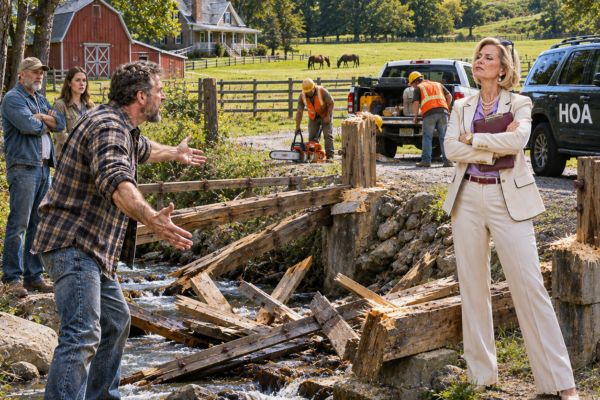
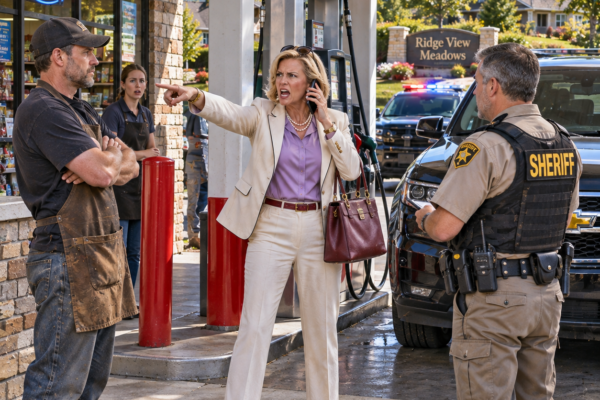
“You have forty-eight hours to cooperate, Mr. Bennett, and if you interfere with our vacation rentals again, I’ll make sure you pay another $350 every single day!” HOA president Patricia Whitmore shouted as she stood on the driveway of the Colorado ranch I had inherited from my late uncle.
Her association had built four luxury cabins on my land, collected more than $280,000 from paying vacationers, and advertised my family’s private meadow as HOA-owned property—yet somehow, she believed I owed her $18,600 for getting in the way of her business.
What Patricia didn’t know was that my uncle had spent years collecting evidence, and inside a locked cedar box beneath a lifetime of forgotten paperwork was a financial secret that would turn her most profitable investment into a very expensive lesson in property ownership.
I had been living at the ranch for exactly four days when Patricia appeared.
She climbed out of a silver SUV wearing a white blazer, expensive sunglasses, and the expression of somebody arriving to collect an overdue debt.
“Mr. Bennett, I’m trying to make this easy.”
She held out a clipboard.
I didn’t take it.
“Make what easy?”
“Your transition into our established recreational arrangement.”
Behind her, four beautiful cedar cabins overlooked a pond in the southern meadow. Each had a private porch, outdoor seating, polished windows, and a sign bearing the Cedar Brook association’s logo.
A couple was unloading suitcases outside the nearest cabin.
“Those are your rentals?” I asked.
“Community rentals,” she corrected.
“On my land?”
“Cedar Brook has managed that property for years.”
“Then I’d like to see the agreement.”
Her smile tightened.
“Our office maintains the appropriate records.”
“Why did you bring me a bill instead?”
She looked down at her clipboard.
“Your recent conduct has interfered with an established commercial operation.”
I stared at her.
“I’ve been here four days. The most disruptive thing I’ve done is replace a gate hinge.”
“This is serious, Mr. Bennett.”
“I agree. There are four houses on my property that I didn’t know existed.”
She tapped the paperwork.
“Eighteen thousand six hundred dollars. Additional charges of three hundred and fifty dollars per day will accumulate until you acknowledge the existing arrangement.”
I looked toward the farmhouse where my uncle Walter had lived since 1988.
“Did my uncle sign something?”
“Your uncle understood the importance of our community investment.”
“That wasn’t my question.”
Patricia put on her sunglasses.
“You have forty-eight hours to cooperate.”
Then she drove away.
My name is Daniel Bennett. I’m forty-two years old, recently arrived from Columbus, Ohio, and the sole owner of the 186-acre Bennett Ranch outside Millstone, Colorado.
Or at least I thought I was.
I called Helen Porter, the attorney who had handled Uncle Walter’s estate.
“Helen, does the deed include the southern meadow?”
“Every acre.”
“Even the land around the pond?”
“Daniel, why are you asking?”
“Because somebody’s running a resort on it.”
Silence.
“Don’t sign anything.”
That evening, I searched the Cedar Brook website.
The cabins were advertised at rates ranging from $295 to $425 per night.
Fireplaces. Private porches. Exclusive access to a scenic recreational reserve.
The listing specifically described the location as association-owned property.
I opened the photographs.
Behind one smiling family stood a red tractor shed Uncle Walter had built with his own hands.
They were selling vacations on the land where my mother and I had spent our summers.
And they wanted me to pay for the privilege of owning it.
The next morning, I searched Walter’s office.
There were tax records, equipment manuals, irrigation maps, and enough receipts to establish the purchase history of practically every fence staple in Colorado.
Behind a drawer labeled WATER, I discovered a thin blue folder.
Four words were written across the cover.
CABINS. DO NOT DISCARD.
Inside was a letter from Patricia thanking Walter for supporting Cedar Brook’s recreational vision.
On the back, in my uncle’s familiar handwriting, was a response.
I have not donated, sold, or leased this land. Please provide the agreement you believe authorizes construction.
Patricia’s next letter stated that her planning committee considered the matter settled.
Walter had written beneath it:
A committee cannot give away my property.
I felt my chest tighten.
At the bottom of the folder was a surveying receipt referencing a cedar document box.
I found the box in Walter’s closet.
Locked.
Dusty.
And taped underneath was a handwritten message addressed specifically to me.
Daniel, check the original boundary markers before believing anybody’s new map.
I sat down.
Uncle Walter had known something was wrong.
He had been trying to establish what happened.
And the woman who had just threatened me with an $18,600 bill was apparently counting on the fact that the only man who could challenge her version of events was now dead.
PART2
Walter Bennett had never been a wealthy man in the way people usually understood wealth.
He wore the same brown work jacket for almost twenty years. His pickup truck had a dent in the passenger door that he refused to repair because, according to him, the dent had never prevented the truck from going anywhere.
He owned three decent pairs of boots and considered buying a fourth an unnecessary display of extravagance.
But he owned land.
One hundred and eighty-six acres of rolling Colorado pasture, timber, meadow, and quiet places where a man could spend an entire afternoon without hearing anything more complicated than the wind moving through the grass.
And every acre meant something to him.
My mother used to call him the most stubborn man west of the Mississippi.
Walter considered it a compliment.
He was her older brother, and when I was a kid growing up in Ohio, he was the relative whose house I always wanted to visit during summer vacation. There were horses on neighboring properties, an old red tractor in the equipment shed, a pond full of frogs, and more open space than I could comprehend.
My mother would bring a suitcase full of clothes that she insisted I keep clean.
Within twenty minutes of arriving, I would be covered in dirt.
Walter never minded.
“Boy’s on a ranch,” he would tell her. “If he’s clean, he isn’t doing anything.”
She would roll her eyes, and he would hand me a smaller version of whatever tool he happened to be using.
He taught me how to repair a loose board, how to identify a gate that needed adjustment, and how to walk through a pasture without making the livestock unnecessarily nervous.
Most importantly, he taught me that taking responsibility for something was different from merely possessing it.
Once, when I was twelve, I borrowed his favorite hammer and left it outside overnight. It rained, and the next morning I found him cleaning rust from its head.
I expected him to yell.
Instead, he handed me a rag.
“Anything you borrow belongs to somebody else until they tell you otherwise.”
I nodded.
“And anything you own is your responsibility, even when you’re tired of dealing with it.”
I spent the next hour cleaning tools.
At the time, I thought he was giving me a lesson about a hammer.
Thirty years later, sitting in his office with a locked cedar box in front of me, I realized he had been teaching me something considerably more important.
Walter had never married or had children. After my mother died, he became the person I called whenever life seemed particularly complicated.
He rarely offered elaborate advice.
Sometimes he listened to me complain for twenty minutes and then asked whether I had eaten dinner.
Sometimes he told me that a difficult decision would still be difficult the following morning, so I might as well get some sleep.
Whenever I discussed a contract, a major purchase, or a disagreement involving money, he repeated the same warning.
“Never sign anything until you understand what happens when the other person changes their mind.”
I thought he was talking about equipment purchases and insurance policies.
Now I wondered whether the cabins had been on his mind during some of those conversations.
When I learned that he had left me the ranch, my initial plan was to travel to Colorado, organize his belongings, determine what needed to be repaired, and decide what to do with the property.
I hadn’t expected to stay permanently.
And I certainly hadn’t expected to inherit an argument involving a homeowners association, four vacation rentals, and hundreds of thousands of dollars.
But the first time I walked through Walter’s farmhouse after his death, I found myself reluctant to leave.
His coat still hung beside the back door. An old coffee cup rested near the sink. His calendar contained handwritten reminders about equipment maintenance and the dates when he intended to check several sections of fence.
His presence was everywhere.
Then Patricia Whitmore arrived and informed me that part of the ranch belonged, in some undefined manner, to her organization.
It was a particularly unpleasant way to discover that the man who had taught me to protect borrowed property had spent his final years trying to protect his own.
The formal notice arrived on May 14, 2026.
Across the top of the page, in bold lettering, was the phrase:
NOTICE OF CONTINUING ADMINISTRATIVE NONCOMPLIANCE
The association demanded payment of $18,600 by May 21, with additional charges of $350 per day.
According to the notice, my interference threatened Cedar Brook’s hospitality investment. I was instructed to refrain from entering the cabin area while the association conducted an ownership review.
I read the letter at Walter’s kitchen table.
Then I looked through the window toward the meadow.
The nearest cabin stood far enough away that I could see its roof above the grass without hearing the people staying there. The distance made the situation seem almost peaceful.
The paperwork in front of me was anything but.
I called the Cedar Brook office.
A young woman answered.
“Good morning. How may I help you?”
“I’m Daniel Bennett. I’ve received an administrative noncompliance notice.”
There was a pause.
“Oh, yes. Mrs. Whitmore mentioned your situation.”
“I’m trying to obtain the agreement referenced in the notice.”
“Which agreement?”
“The one supposedly allowing the association to use my ranch for commercial rentals.”
I heard typing.
“Association documents are available to members.”
“I’m not a member.”
“Yes, sir. That’s what makes this a little complicated.”
I looked at the enormous bill.
“Apparently, charging me isn’t complicated.”
She hesitated.
“I’m sorry?”
“You’ve sent me an eighteen-thousand-dollar bill based on an agreement you won’t let me read because I’m not a member of your organization.”
“I understand your frustration.”
“Then please have your association’s attorney send the agreement to my attorney.”
She promised Patricia would return my call.
No call came.
Instead, another notice appeared on the farmhouse door.
This one requested that I refrain from using the existing cabin access road.
The road had been part of Walter’s ranch long before Cedar Brook Estates appeared on a planning map. I remembered riding down it in the back of his pickup, holding onto the side while he warned me about the potholes.
Now somebody had informed me that using it might interfere with vacation guests.
I removed the notice, photographed where it had been placed, and added it to the growing folder.
Then I drove into Millstone.
If the association wouldn’t show me the documents establishing its authority, I would begin with the public records establishing mine.
The Millstone County Records Office occupied a plain municipal building downtown.
Inside, the air smelled faintly of paper, coffee, and old carpeting. Several people waited at the counter holding folders containing the sort of documents nobody found particularly interesting until they needed to prove something important.
A clerk named Susan Hale helped me locate the recorded deed.
She wore reading glasses attached to a chain and had an efficient way of answering questions without pretending to know things outside her responsibilities.
I explained the situation.
“You inherited the Bennett Ranch?”
“Yes.”
“And you’re concerned about the cabin area?”
“I’m concerned that somebody else apparently thinks they inherited it.”
She smiled.
Then she retrieved the relevant records.
The deed described the 186-acre parcel, including the southern meadow.
She showed me the original boundary information and the associated survey.
There was nothing in those records establishing that Walter had conveyed an eleven-acre recreational parcel to Cedar Brook.
“Can we look at the county mapping system?” I asked.
“Certainly.”
She opened the online map.
The familiar shape of the ranch appeared on the screen.
Then she zoomed toward the southern meadow.
There was the pond.
There was the access road.
And there, covering approximately eleven acres surrounding the four cabins, was a green overlay labeled:
CEDAR BROOK RECREATIONAL RESERVE
I leaned closer.
“What is that?”
Susan examined the available information.
“A planning designation.”
“Does that mean the association owns it?”
“No.”
She turned toward me.
“The planning map and the recorded ownership documents are different records.”
“Then why is my uncle’s land colored as an HOA recreational reserve?”
“Let’s look at the submission history.”
Several clicks later, she located the entry.
The overlay had been added in 2022.
The submitting entity was Whitmore Land Services.
I stared at the name.
“Whitmore?”
“That’s what’s listed.”
“Like Patricia Whitmore?”
Susan shook her head.
“I can’t establish a connection beyond the name on this record.”
I appreciated her caution.
The similarity was certainly worth investigating, but it wasn’t proof of ownership or wrongdoing by itself.
Susan recommended that I visit the planning department and request the supporting application materials.
Before leaving, I asked for copies of the recorded documents I needed.
She handed them across the counter.
“Mr. Bennett, a colored area on a map doesn’t establish a transfer of property.”
I smiled.
“That may be the best news I’ve heard all week.”
She returned to her computer.
“Make sure your attorney reviews the complete record.”
“I will.”
Outside, I stood beside my truck and looked at the copies.
Patricia had spoken as though the association’s control of the meadow was established fact.
Yet the county’s ownership records told a different story.
I wondered how many homeowners inside Cedar Brook had been shown the green planning overlay and told that it meant their association had acquired the land.
And I wondered who had authorized that representation.
Robert Ellis worked in the county planning department.
He was a gray-haired man who read every page before answering even a straightforward question.
When I explained why I was there, he requested the relevant property information and located the permit application associated with the cabins.
I watched him review it.
There were site drawings, descriptions of the proposed buildings, access information, and several documents relating to the proposed use of the land.
Then he reached a single-page consent form dated September 8, 2021.
“Here’s a land-use consent document.”
I leaned forward.
Walter Bennett’s name was printed beneath a signature.
A handwritten note beside it read:
Community arrangement—see private agreement.
I stared at the signature.
Something looked wrong.
My uncle had always signed his name Walter J. Bennett. The middle initial was there on equipment purchases, correspondence, and practically every official form I had ever seen him complete.
His final pen stroke was usually long enough to occupy more space than necessary.
This signature was different.
Just Walter Bennett.
No middle initial.
No familiar finishing stroke.
I wanted to say that somebody had signed his name.
But I didn’t know that.
A person could sign differently on a particular day. There could be circumstances I didn’t understand. And the absence of a document in a particular file didn’t prove that it had never existed.
So I asked the question that could actually be answered.
“Where’s the private agreement referenced here?”
Robert searched the file.
Then he searched again.
“I don’t see it.”
“Wouldn’t that be important?”
“We’d generally expect documentation establishing the applicant’s authority to use the property.”
“Does this application make Cedar Brook the owner?”
He looked up.
“No. A construction permit addresses construction requirements. It isn’t a deed.”
I took a breath.
It was the first truly clear explanation I had received concerning the cabins.
Patricia had repeatedly emphasized that the project had been approved.
What she hadn’t explained was what those approvals actually established.
A building might satisfy construction requirements while the applicant still had a separate unresolved property issue.
A planning map might identify an area for a proposed use without transferring ownership.
And a consent form referencing a private agreement couldn’t automatically answer every question about what that agreement contained.
Robert agreed that the department needed to examine the discrepancy.
I requested copies of the relevant documents and informed him that Helen would follow up through the appropriate channels.
On my way home, I thought about the signature.
I remembered Walter insisting that I read every page of a vehicle purchase agreement when I was twenty-three.
I remembered him questioning an equipment invoice because a replacement part had been described incorrectly.
And I remembered the note taped beneath the cedar box.
Check the original boundary markers before believing anybody’s new map.
The more I learned, the more convinced I became that Walter had been trying to establish exactly what had happened.
But why hadn’t he succeeded in stopping the construction?
Why had the cabins remained open?
And what had happened during the years between Patricia’s original proposal and my arrival?
The answer began with two strangers standing outside Cabin One.
The couple had apparently arrived for an anniversary weekend.
Their luggage stood beside the porch, and the woman was repeatedly entering a code into the electronic lock.
Her husband looked toward the farmhouse when he saw me.
“Excuse me. Do you work here?”
“Depends what you mean by here.”
He smiled apologetically.
“We can’t get into the cabin. The code isn’t working.”
I could have told them that their booking was somebody else’s problem.
After all, they were customers of an organization attempting to charge me thousands of dollars.
But they hadn’t done anything wrong.
I helped them contact the rental manager and waited nearby until somebody confirmed that the access problem was being addressed.
While we waited, the woman looked across the meadow.
“Isn’t this a beautiful place?”
“It is.”
“We come here every year.”
Her husband nodded.
“Third anniversary we’ve spent in this cabin.”
She looked toward the fence separating the cabin area from Walter’s working pasture.
“There used to be an older gentleman who sat over there sometimes. We always enjoyed talking to him.”
I felt something tighten in my chest.
“Walter?”
Her face brightened.
“Yes! That’s his name.”
“He was my uncle.”
“Oh, how lovely. Is he around?”
I shook my head.
“He passed away.”
Her expression changed immediately.
“I’m so sorry.”
“Thank you.”
She looked toward the fence.
“He was such a kind man. He always asked whether we enjoyed the pond.”
I swallowed.
“Did he ever talk about the cabins?”
She thought for a moment.
“Last summer, he said somebody would eventually have to explain how they ended up there.”
Her husband laughed softly.
“We thought he was joking.”
I stared toward the cabin.
Walter had watched guests arrive.
He had spoken to them.
He had treated them courteously even while questioning the very existence of the business they were visiting.
That explained something about his character, but it raised another question about the dispute.
He hadn’t simply discovered the cabins and ignored them.
He knew they were there.
He had attempted to get answers.
And apparently, Patricia had been willing to take reservations year after year without resolving the questions he kept raising.
The couple received an updated access code.
Before entering, the woman turned toward me.
“Your uncle made us feel very welcome.”
I managed to smile.
“That’s the kind of man he was.”
Then I walked back to the farmhouse.
For the first time since discovering the cabins, I understood what I wanted my response to accomplish.
I wanted to defend Walter’s property without betraying the way he had treated people.
I wasn’t going to punish innocent guests.
But I wasn’t going to let Patricia use those guests as an excuse to continue making money from an arrangement nobody could establish, either.
Marcus Reed arrived the following morning carrying a rolled drawing.
He was thirty-five, wore a green polo shirt with the Cedar Brook Retreat logo, and had the exhausted politeness of somebody who spent most of his working life apologizing to customers for problems he hadn’t created.
“Mr. Bennett?”
“Daniel’s fine.”
“I’m Marcus. I manage the cabin reservations and daily operations.”
I shook his hand.
“Good to meet you.”
He looked toward the old barn.
“Mrs. Whitmore asked me to discuss a new arrival arrangement.”
He unrolled the drawing on the hood of his vehicle.
The proposal showed a guest check-in area beside Walter’s barn. It included several parking spaces, a sign, and a designated route through the barnyard.
I stared at it.
“Who approved this?”
“Mrs. Whitmore told me it was approved.”
“By whom?”
Marcus looked uncomfortable.
“She didn’t say.”
I pointed toward the barn.
“That’s where I keep equipment. I’m repairing the fences and trying to get the ranch organized. I can’t have vacationers driving through that area while I’m working.”
He nodded.
“That makes sense.”
“Please keep guests on the existing access road while the ownership issue is being resolved. No new signs, parking spaces, or routes through the barnyard.”
“Understood.”
I expected him to argue.
Instead, he rolled the drawing up.
“Honestly, the existing arrangement works fine. I’m not sure why she wanted to change it.”
Then he hesitated.
“There’s something else you might want to know.”
“What?”
“The utility service corridor.”
I waited.
“Some of the service documentation identifies the corridor as part of the Bennett property.”
I looked toward the meadow.
“So the cabins depend on my ranch for both access and utilities?”
“That’s what the records indicate.”
“Does the association have a separate agreement covering those?”
“I’m not responsible for negotiating property arrangements.”
He glanced toward the farmhouse.
“Mr. Bennett, I don’t want you thinking I’m part of whatever happened before these cabins opened.”
“I’m not assuming that.”
“I manage reservations. I coordinate maintenance. I try to make sure people enjoy their vacations and the employees know what they’re supposed to do.”
He looked increasingly relieved as he spoke.
“Your uncle was always respectful to me. Even when he was frustrated about something, he never took it out on the guests.”
I nodded.
“He would’ve expected the same from me.”
Marcus smiled.
“Then hopefully we can keep things reasonable.”
Before he left, I asked whether he could preserve the operational records associated with the property and communicate any proposed changes through Helen while the dispute continued.
He agreed to cooperate through the appropriate arrangements.
Then I watched him drive toward the cabins.
He had accomplished more in one conversation than Patricia had in several days of threatening correspondence.
He had explained what he knew.
Admitted what he didn’t know.
And accepted that changing the use of somebody else’s property required discussing it with the owner.
Apparently, none of those things required an expensive clipboard.
Patricia returned the next afternoon.
This time, she brought a man in a charcoal suit carrying a leather document case.
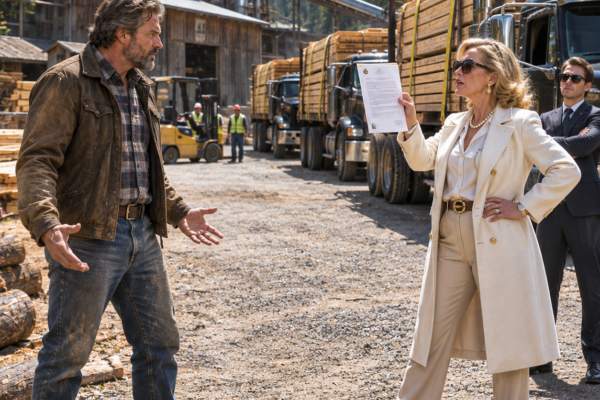
“Mr. Bennett,” she announced, “I’d like you to meet Thomas Avery, our real estate consultant.”
Thomas shook my hand.
“Pleasure to meet you.”
He seemed considerably less interested in confrontation than Patricia did.
We stood on the porch while she opened a folder.
“Following further consideration,” she began, “the association is prepared to offer you a generous accommodation.”
I looked at Thomas.
He opened the document case.
“The proposed payment is twelve thousand dollars.”
“For what?”
“A permanent arrangement concerning recreational use of the cabin site.”
I waited.
“Permanent?”
“Yes.”
“Eleven acres?”
“Approximately.”
I took a moment to make certain I understood.
“You want me to grant permanent use of eleven acres of my ranch, including an operating vacation rental business and its supporting access arrangements, in exchange for one payment of twelve thousand dollars?”
Patricia smiled.
“That’s a substantial amount of money.”
I looked toward the cabins.
“At four hundred dollars a night, that’s thirty bookings.”
Thomas shifted his weight.
Patricia’s smile disappeared.
“The association has invested hundreds of thousands of dollars developing that property.”
“Then why are you offering to purchase rights you told me you already possess?”
Thomas glanced at her.
I continued.
“If your agreement is established, why do you need my signature?”
Patricia closed the folder halfway.
“We’re simply clarifying a historical arrangement.”
“Excellent. Show me the historical arrangement.”
“Some of the records are still being organized.”
“Then let’s wait until they’re organized.”
She lowered her voice.
“Your uncle understood that the community’s interests needed to be protected. Unfortunately, he is no longer here to participate in those discussions.”
I looked directly at her.
“No, he isn’t.”
“Which means we need a practical resolution, Mr. Bennett.”
“Absolutely.”
She held out the folder.
“Signing this would be practical.”
“Reading the documents you’re relying on would be practical.”
Her face tightened.
“Do you really intend to obstruct a business that has been operating successfully for years?”
I thought about Marcus.
I thought about the couple celebrating their anniversary.
Then I looked at the proposed agreement.
“No. But I’m not granting permanent commercial rights to my property because you’re uncomfortable answering questions.”
Thomas finally spoke.
“Perhaps it would be best if both sides reviewed the available records before committing to a particular arrangement.”
Patricia turned toward him.
“We’ve already reviewed the situation.”
He remained calm.
“Mr. Bennett hasn’t seen the underlying agreement. I think additional review would be appropriate.”
She stared at him.
Apparently, Thomas had been hired to help persuade me, not to agree with me.
He didn’t appear especially troubled by that distinction.
Patricia gathered her documents.
“The association cannot remain in uncertainty indefinitely.”
“Then please send the records to Helen.”
She turned toward the steps.
I looked at the folder beneath her arm.
“Patricia?”
She stopped.
“Does that twelve thousand dollars come with cancellation of the eighteen thousand six hundred you claim I owe?”
She looked at me.
“We would consider the administrative balance separately.”
I laughed.
I couldn’t help it.
“You want to pay me twelve thousand for permanent use of eleven acres, but you might still charge me eighteen thousand six hundred?”
Thomas examined the porch railing with extraordinary concentration.
Patricia walked toward her vehicle.
“You’ll hear from our office.”
I nodded.
“Looking forward to it.”
When they departed, I returned to Walter’s study.
If Uncle Walter had received a similar proposal, I could imagine exactly what he would have said.
You can’t afford the land, so you’re hoping I can’t afford the argument.
And somewhere inside his old cedar box was the information I needed to discover whether Patricia had tried something similar with him.
I found the key behind a wooden ruler hanging on the office wall.
It was small, made of brass, and attached to a little metal ring.
Walter had placed it somewhere so ordinary that I had looked directly at it several times without noticing.
I carried it to the cedar box.
The lock opened immediately.
Inside were folded maps, photographs, letters, receipts, and a sealed document packet from High Mesa Title.
I lifted the first survey.
It showed the proposed cabin locations in the southern meadow.
All four were inside Walter’s recorded boundary.
A note associated with the survey indicated that no completed transfer or permanent recreational easement had been identified.
I placed the map flat on his desk.
Then I picked up the next document.
It was correspondence concerning a proposed land-use transaction.
The amount mentioned in the letter made me sit down.
Ninety-six thousand dollars.
A $96,000 deposit had been placed in escrow in connection with the proposed arrangement between Walter and Cedar Brook.
I read the letter again.
The funds were to remain in escrow until the parties completed an agreement.
There was no indication in that particular document that the agreement had been completed.
No indication that Walter had received the money.
And no indication that the association had obtained permanent property rights.
Yet the existence of such a large deposit revealed something important.
At some stage, Cedar Brook had apparently understood that obtaining land rights involved a financial transaction.
The association had actually set aside money for it.
Now Patricia was claiming the arrangement already existed and offering me only $12,000 to make it permanent.
I placed her recent proposal beside the escrow letter.
The difference was enormous.
I called Helen.
She answered on the second ring.
“Daniel?”
“I opened the cedar box.”
“What did you find?”
“Survey records. Letters. And something about ninety-six thousand dollars in escrow.”
She became quiet.
“Does the correspondence say the funds were disbursed?”
“No. It says they were being held until completion of the agreement.”
“Any completed agreement?”
“Not in what I’ve opened.”
“Anything else?”
“A sealed packet from High Mesa Title.”
Helen immediately asked me to preserve the documents together and leave the packet unopened until we could review it properly.
She arranged to travel to Colorado.
After we ended the call, I remained at Walter’s desk.
I thought about the original construction.
Four luxury cabins.
A commercial operation that had generated hundreds of thousands of dollars.
An eleven-acre planning designation.
And an escrow arrangement whose outcome I didn’t understand.
Had the transaction fallen apart?
Had the association obtained some limited permission that it later interpreted too broadly?
Had money been returned?
I didn’t yet know.
But one thing was becoming obvious.
Patricia’s confident explanation of an established arrangement left out practically every detail that mattered.
The homeowners needed to see those details.
And as it happened, their monthly association meeting was scheduled before Helen’s arrival.
I attended the meeting as an observer.
The Cedar Brook clubhouse contained roughly sixty residents seated in folding chairs. A projector displayed photographs of the retreat, including the cabins illuminated by warm evening lights.
One photograph showed the pond at sunrise.
Another showed a couple enjoying drinks on a cabin porch.
Across the top of the screen was a heading announcing the association’s successful hospitality program.
Patricia stood beside the projector wearing a navy outfit and holding a remote control.
She looked delighted.
She discussed reservation trends, community revenue, operating costs, and the retreat’s contribution to Cedar Brook’s reputation.
Then she advanced to the next slide.
CURRENT OPERATIONAL CHALLENGES
My name appeared underneath.
I had been in Colorado barely a week.
Already, I was a PowerPoint presentation.
Several residents turned toward me.
Patricia explained that the recent ownership transfer of the neighboring ranch had created uncertainties concerning historical arrangements.
She suggested that the association was working to ensure the continued protection of its investment.
A woman near the front raised her hand.
“Does that mean the cabins might close?”
“Your board is taking every necessary measure to protect the program.”
Another homeowner asked whether additional expenses would affect their dues.
Patricia assured him that the board was exploring all available options.
I waited until there was an opportunity to speak.
Then I raised my hand.
“May I clarify something?”
Patricia immediately looked irritated.
“This is an association meeting.”
“I understand.”
“You aren’t a member.”
“I’m not asking to vote.”
She folded her arms.
“Then what do you want?”
“To explain the ownership question you’re discussing.”
A man sitting near the aisle turned toward her.
“Let him speak.”
Several residents agreed.
Patricia looked around the room.
Finally, she nodded.
“Briefly.”
I stood.
“My name is Daniel Bennett. I inherited the ranch immediately beside Cedar Brook. The recorded deed includes the southern meadow where all four cabins are located.”
The room became quieter.
“I’ve requested the signed agreement authorizing the association’s commercial use of that land. So far, I haven’t received it.”
Patricia interrupted.
“We have historical documentation.”
I looked at her.
“Then please share it.”
A man wearing a green sweater leaned forward.
“Does Cedar Brook have a deed to that part of the property?”
Patricia adjusted the remote control in her hand.
“The records are under review.”
He frowned.
“But do we own it?”
“As I said, the records are being reviewed.”
A woman several seats away raised her hand.
“I paid a special assessment when those cabins were developed.”
Patricia nodded.
“Yes.”
“We were told the land had been acquired.”
I watched Patricia.
The woman continued.
“Are you saying it wasn’t?”
Patricia attempted to redirect the discussion toward the importance of maintaining a stable relationship with neighboring property owners.
But the residents had already heard enough to identify the central question.
They didn’t want to discuss hypothetical future arrangements.
They wanted to know what their money had purchased.
I returned to my seat.
I didn’t mention the $96,000 escrow deposit.
Helen hadn’t reviewed the complete documents, and I didn’t want to draw conclusions before the records were properly understood.
But after the meeting, a woman approached me carrying an old newsletter.
“Daniel Bennett?”
“Yes.”
“I’m Evelyn Carter.”
She was sixty-seven, a retired librarian, and wore a navy cardigan over a pale blouse.
Her expression was kind but serious.
“My husband knew Walter.”
I smiled.
“Did he?”
“Frank. He served on the landscaping committee here.”
I remembered Walter mentioning a man named Frank who occasionally helped with gardening projects at the community center.
Evelyn looked down at the newsletter.
“My husband had questions about those cabins.”
“What sort of questions?”
She handed me the document.
“The money.”
I looked at the printed financial information.
The original development budget was $420,000.
Construction: $286,000.
Recreational land acquisition: $96,000.
Planning and administration: $38,000.
I felt a chill.
There it was again.
Ninety-six thousand dollars.
Except this time, the amount appeared under recreational land acquisition in a report circulated to homeowners.
“Who received that money?” I asked.
Evelyn shook her head.
“Frank asked the same question.”
“What did Patricia tell him?”
“That it was a private transaction.”
She looked toward the board table.
“He asked again at a later meeting. She told him the details weren’t necessary for the landscaping committee.”
I examined the report.
“How long ago was that?”
“A few years.”
She paused.
“Frank passed away, but I kept the records he’d collected. I didn’t know whether they would ever matter.”
I looked at her.
“I think they might.”
Evelyn smiled sadly.
“Your uncle would have wanted us to understand this.”
The two of us stood near the clubhouse entrance while residents continued discussing the unanswered ownership questions.
Then she said something that made me realize how much more than money was involved.
“Frank used to say Walter was the only person around here who could disagree with somebody without making them feel foolish.”
I swallowed.
“That sounds like him.”
“He liked the community. He just didn’t trust some of the decisions being made in its name.”
I looked back at Patricia.
She was talking to several homeowners, apparently attempting to reassure them that the association’s hospitality program remained secure.
For years, two men had been asking questions about the same project from opposite sides of the property line.
Walter had preserved his records.
Frank had preserved his.
Neither man was here to see what the combined documents might establish.
But Evelyn and I were.
And the following morning, she arrived at the farmhouse with two boxes of papers that her husband had never thrown away.
Evelyn arrived shortly after nine.
The two boxes were heavier than they looked.
I carried them into the kitchen while she placed a container of homemade cookies on the counter.
“Frank never threw away an association newsletter,” she explained.
“Neither did Walter, apparently.”
She looked toward the paperwork occupying half the table.
“I see you’ve inherited his filing habits.”
“Against my will.”
She laughed.
We spent the next several hours arranging documents by date.
Frank had saved the original development announcement, budget summaries, assessment notices, newsletters celebrating construction progress, and several reports issued after the cabins opened.
The early documents described the meadow as the proposed location for the recreational retreat.
Later reports described it as an established association facility.
And the financial summaries consistently included the $96,000 land acquisition amount.
I compared those documents with Walter’s escrow correspondence.
The money had been deposited for a proposed transaction.
But the reports Evelyn brought appeared to describe land acquisition as an accomplished expenditure.
Something between those two descriptions needed explaining.
Helen joined us by video.
She examined the relevant pages as we held them toward the camera.
“Let’s be careful,” she said. “These summaries don’t establish where the money ultimately went.”
Evelyn nodded.
“Frank thought something was being concealed.”
“That may be why the original transaction records are important. But we need to determine what actually happened rather than assume the worst.”
I appreciated her approach.
The distinction between questionable reporting and missing money mattered.
If the escrow had been completed, we needed to know what agreement supported its completion.
If it hadn’t, we needed to know what happened to the deposit.
Either way, homeowners deserved a clear explanation.
Helen also pointed out that the original $420,000 development budget was divided into three distinct categories. Understanding how the association accounted for the land portion would require more than reading one newsletter.
“Daniel,” she said, “preserve the documents in their original order wherever possible. We’ll make working copies.”
I looked toward Evelyn.
“Looks like we’ve got homework.”
She smiled.
“I was a librarian for thirty-eight years. I’ve been waiting for somebody to appreciate organized paperwork.”
We continued working until the afternoon light moved across the kitchen floor.
Occasionally, Evelyn would stop when she found one of Frank’s handwritten notes.
There were little comments beside figures.
Questions beside particular statements.
Dates recording meetings where he had requested additional information.
One note made her particularly quiet.
Ask again about Walter’s agreement.
She ran her fingers across the handwriting.
“He hated leaving things unfinished.”
I looked toward Uncle Walter’s office.
“So did mine.”
For several minutes, we sat without touching the documents.
Then Evelyn straightened the stack in front of her.
“Well, I suppose we’d better finish asking.”
When Helen arrived, she carried a laptop, several empty folders, and a practical determination to make sense of everything before anybody signed another piece of paper.
She was fifty-four, wore rectangular glasses, and possessed the invaluable ability to explain complicated property arrangements without making the person listening feel unintelligent.
We opened the sealed packet from High Mesa Title together.
The first document was a statement Walter had signed on December 2, 2022.
His familiar signature appeared at the bottom.
Walter J. Bennett.
The long finishing stroke.
I stared at it longer than I intended.
Helen noticed.
“That’s his usual signature?”
“Yes.”
She compared it with the 2021 consent form.
“There are differences. We’ll preserve both documents, but the signature question shouldn’t be decided solely by visual comparison.”
I nodded.
Then she began reading Walter’s statement.
He described Patricia’s original proposal for a recreational lease.
He had been willing to discuss allowing Cedar Brook to use a defined portion of the meadow.
But any agreement would need to address rent, insurance, guest access, maintenance, and protection of the ranch’s ordinary operations.
Those weren’t unreasonable requirements.
In fact, they were the very requirements any responsible commercial arrangement ought to have addressed.
Helen reached the final sentence.
Walter had underlined it twice.
She read it aloud.
“ No permanent right to occupy, improve, rent, or manage any portion of my property has been granted.”
I looked at the words.
Occupy.
Improve.
Rent.
Manage.
Walter hadn’t left much room for misunderstanding.
He had specifically addressed the activities the association was now conducting.
And he had specifically denied granting permanent rights to do them.
Helen placed the statement beside Patricia’s consent form.
“Your uncle was very clear.”
I nodded.
My eyes were beginning to sting.
All week, people had spoken about what Walter supposedly understood, what he supposedly approved, and what he supposedly wanted for the community.
Patricia had presented her understanding of his intentions as though his death made her the only remaining authority on them.
Now Walter’s own statement lay on the table.
He had been willing to negotiate.
He had not completed the deal.
And he had understood perfectly well the difference between those two things.
I looked at Helen.
“Why would they keep saying he agreed?”
She shook her head.
“We need to give them an opportunity to produce whatever they’re relying on.”
She turned another page.
“Fortunately, this establishes his position in his own words.”
The next letter was dated January 11, 2023.
It confirmed that the $96,000 deposit remained in escrow because the proposed land-use agreement had not been completed.
I looked toward Evelyn’s financial summaries.
By then, the homeowners had been shown an amount for recreational land acquisition.
Yet as of January 2023, the transaction remained pending.
Helen contacted High Mesa Title.
A representative reviewed the available escrow information and confirmed that the account had been closed in August 2023.
The funds had been returned to the depositor.
I leaned forward.
“All ninety-six thousand?”
Helen obtained confirmation of the basic status, then ended the call after discussing the process required to obtain detailed transaction documentation.
She looked at me.
“The money was returned.”
“Not paid to Walter?”
“The escrow transaction was not completed. The funds were returned to the depositing party. The association needs to obtain its full transaction records so the financial review can establish what happened afterward.”
I looked at the old newsletter.
Recreational land acquisition: $96,000.
Then I looked at Patricia’s latest proposed payment.
$12,000.
“She’s been telling homeowners they acquired the land.”
Helen nodded.
“And she has been telling you she already has authority to use it.”
I sat back.
“She can’t have it both ways.”
Helen closed the file.
“That’s exactly why we need the board to examine the complete evidence.”
I wanted to call Patricia immediately.
I wanted to ask her how much of the previous discussion she remembered and whether she still intended to collect $350 per day from me.
But Walter’s warning was practically visible in every drawer of his office.
Understand the agreement.
Preserve the records.
Don’t sign anything you don’t understand.
So I did something more useful.
I arranged for an independent survey.
James Holloway arrived at the ranch wearing a faded blue work shirt and carrying a collection of equipment that looked considerably more expensive than his vehicle.
He was forty-eight, a licensed surveyor with twenty years of rural Colorado experience, and a man who seemed to regard unnecessary conversation as an avoidable professional expense.
He examined the original deed and survey.
Then he asked me to show him the relevant access routes.
We walked toward the meadow.
The four cabins looked particularly attractive that morning. Their cedar siding caught the sunlight, and someone had arranged decorative chairs beside the nearest porch.
James studied the surrounding terrain.
“Nice buildings.”
I nodded.
“Shame about the address.”
He smiled faintly.
For the next two days, he and his team reviewed the records, recovered original boundary monuments, and established the relationship between the recorded property and the cabin development.
I occasionally accompanied him when appropriate, particularly when he needed information about the ranch’s existing roads or features Walter had mentioned in his notes.
At one point, we reached a stone marker partly concealed by grass near the pond.
James brushed the vegetation aside.
A familiar marking appeared.
He checked it against his records.
“This matches the original description.”
I knelt beside it.
Walter had known exactly where that marker was.
He had written about it in the note beneath the cedar box.
Now I understood why.
The little stone had survived years of weather, construction, landscaping, and committee decisions.
The colored planning overlay had changed.
The cabins had appeared.
The property boundary had not moved.
When James completed his work, the conclusion was straightforward.
Every one of the four cabins stood inside the Bennett parcel.
Even the one closest to the boundary was approximately 140 feet inside it.
One hundred and forty feet.
Not fourteen inches.
Not a questionable corner of a porch.
An entire commercial development situated well within the property Walter had owned.
The access road crossed my land, too.
James prepared a signed report with a clear map identifying the cabin locations and road corridor.
Helen reviewed it.
Then she laid it beside the county planning map.
“Now we can show both documents together.”
The green overlay on the planning map looked convincing if you didn’t know what it represented.
James’s report showed the actual boundary against which the development had to be understood.
The difference was impossible to overlook.
I took a copy of his survey outside and stood near the old fence.
From there, I could see the pond, the cabins, and the road winding toward the ranch entrance.
Guests were checking out of one of the units.
Marcus stood nearby speaking with a maintenance employee.
They had a genuine business.
Real customers.
Employees.
Reservations.
Buildings somebody had paid to construct.
But the ground beneath all of it belonged to me.
For the first time, I understood the enormous decision I was eventually going to have to make.
Winning the ownership argument wouldn’t automatically resolve the consequences of a business being built on somebody else’s land.
I could insist upon an appropriate legal remedy.
I could consider negotiating a sale.
Or I could explore an arrangement allowing the retreat to remain without surrendering the property.
Each option had consequences.
And I knew what Walter would have told me.
Find out what you’re agreeing to before anybody hands you a pen.
Patricia didn’t wait for the independent records to be fully reviewed before producing another proposed agreement.
The document arrived as part of material prepared for the association’s upcoming hospitality planning cycle.
Its language was considerably more troubling than her earlier offer.
It stated that I acknowledged the historical consent given by Walter and recognized the association’s permanent control of the cabin area.
My name appeared throughout the document.
I stared at the first page.
“That’s convenient.”
Helen looked over my shoulder.
“What?”
“Apparently, I’ve acknowledged something.”
She read it.
“Have you?”
“No.”
“Then you haven’t.”
I called Patricia.
She answered in a voice suggesting she was already tired of the conversation.
“Mr. Bennett.”
“I’ve received the proposed hospitality agreement.”
“Good.”
“I need my name removed from the statement acknowledging historical consent.”
“That’s the purpose of the agreement.”
“No. That’s a statement suggesting I’ve already accepted your version of what happened.”
She sighed.
“We are attempting to formalize our relationship.”
“Then don’t describe a consent I haven’t given.”
“The board will discuss the document Monday evening.”
“Will the board have Walter’s written statement?”
There was a pause.
“What statement?”
“The one dated December second, 2022, in which he specifically denied granting permanent rights.”
She became quiet.
I continued.
“And the original survey. And the escrow information.”
She interrupted.
“The association has no obligation to discuss private financial matters with you.”
“I’m not asking to decide what your homeowners do with their money. I’m asking you not to represent that you obtained rights to my land when the records I’ve reviewed say otherwise.”
She responded that the board would consider the matter at its meeting.
I asked whether Helen and I could present our information.
After a long silence, she agreed.
Then she added, “You should remember that people rely on these cabins.”
“I do remember.”
“Closing them would create considerable problems.”
“I haven’t asked Marcus to cancel any existing reservations.”
Her tone changed.
“Then perhaps you’re prepared to be reasonable.”
I looked toward Walter’s survey.
“I’ve been trying to be reasonable since I got here.”
After the call ended, Helen and I prepared the presentation.
We didn’t assemble an enormous collection of accusations.
We created a short timeline.
The original recorded property.
The planning consent form referencing an absent private agreement.
The survey showing the cabin locations.
Walter’s subsequent written objections.
The escrow correspondence.
The planning overlay.
The independent survey confirming the present boundary.
And finally, Patricia’s proposed agreement requiring me to acknowledge rights that remained unestablished.
We made copies for the board.
Evelyn prepared her own questions concerning the $96,000.
James agreed to explain his measurements.
Robert Ellis was invited to clarify the distinction between the county planning records and the recorded ownership documents.
I knew Patricia would attempt to make the evening about my personality.
About the outsider from Ohio.
The inexperienced heir.
The man supposedly obstructing a successful neighborhood business.
But when Monday evening arrived, I wasn’t bringing my personality to the board table.
I was bringing Uncle Walter’s records.
And this time, the homeowners were going to hear exactly what he had been trying to tell them.
Patricia sat at the center of the board table wearing a navy blazer and a pearl necklace.
Thomas Avery sat beside her, and Richard Lawson, the board secretary, arranged copies of the agenda in front of the directors.
The meeting room was crowded.
Several residents had brought financial reports.
Evelyn sat in the second row with one of Frank’s old newsletters resting on her lap.
When Patricia noticed Helen and me entering, she gave us a brief smile.
“Thank you for coming.”
I nodded.
“Thank you for inviting us.”
She began the meeting by discussing the success of the retreat.
The reservation history showed that the cabins had attracted a steady stream of visitors. The business employed people, generated income, and represented a significant investment by the homeowners.
Nobody disputed those facts.
But as Patricia moved toward the proposed agreement, she began describing the issue as though it concerned nothing more than the administrative clarification of an existing relationship.
“The neighboring property owner has inherited land associated with our historical recreational arrangements.”
Helen glanced at me.
I remained quiet.
Thomas introduced the proposed hospitality agreement.
He explained that it was intended to reduce uncertainty and provide a more clearly defined framework for future operations.
He discussed several commercial considerations.
But throughout his explanation, he avoided saying who owned the actual land beneath the buildings.
Finally, Evelyn raised her hand.
“Before we discuss another agreement, could somebody explain the original ninety-six thousand dollars?”
Patricia looked toward her.
“That’s part of the development budget, Evelyn.”
“Yes. Recreational land acquisition.”
Evelyn opened the newsletter.
“Was it paid to Walter Bennett?”
Patricia adjusted the papers in front of her.
“The transaction was handled through a professional title company.”
Evelyn nodded.
“Did Walter receive the money?”
Patricia looked uncomfortable.
“Those details involve private negotiations.”
“Then perhaps you can tell us whether the negotiations were completed.”
Richard looked up from his agenda.
“Do we have a signed agreement?”
Patricia reached into her folder.
“We have the original consent document.”
She placed the single-page form on the table.
Helen asked to examine it.
Patricia handed it over.
Helen pointed toward the handwritten note.
“This references a private agreement.”
“Correct.”
“Where is that agreement?”
“The discussions took place several years ago.”
“Was a final agreement signed?”
“My understanding was that it was.”
Helen looked at her.
“Do you have a copy?”
Patricia hesitated.
“Not here.”
The room became very quiet.
Helen returned the document to the table.
“Then we shouldn’t describe a proposed arrangement as completed until the agreement establishing that arrangement can be produced.”
Richard examined the consent form.
Another director leaned closer.
I opened my folder.
“May I show you something?”
Richard nodded.
I distributed copies of Walter’s December 2022 statement.
The directors began reading.
Patricia picked up her copy.
Her expression changed when she reached the final sentence.
“That’s not a complete account of the historical discussions.”
Helen replied, “It is a signed statement from the landowner identifying the status of those discussions at the time.”
Patricia looked toward the audience.
“Walter supported the community’s recreational plans.”
I nodded.
“He was willing to consider a lease. His statement says exactly that.”
“Then you understand that he consented to the development.”
“No. His willingness to negotiate a lease isn’t the same thing as granting permanent control of the land.”
I pointed toward the underlined sentence.
“And he specifically stated that no permanent right to occupy, improve, rent, or manage his property had been granted.”
Several residents began murmuring.
One man near the back asked, “Did the cabins open after that?”
Nobody immediately answered.
I turned toward the directors.
“I don’t want you to rely solely on what I’m telling you. That’s why we obtained an independent survey.”
James Holloway stepped forward.
He placed the signed survey where the board could examine it.
Using the original recorded description and the recovered boundary monuments, he explained how the cabin sites related to the Bennett parcel.
He identified the access road.
The pond.
The approximate eleven-acre development area.
Then he pointed toward the closest cabin.
“Even this structure stands approximately one hundred and forty feet inside Mr. Bennett’s property boundary.”
The room erupted in conversation.
A woman near the front stared at the map.
“One hundred and forty feet?”
James nodded.
Patricia immediately retrieved another document.
“But the county map identifies this entire section as the Cedar Brook Recreational Reserve!”
James looked at the map.
“That’s a planning overlay.”
“It’s an official county map!”
“Yes. It serves a different purpose from the recorded property boundary.”
Patricia turned toward Thomas.
“Explain it to them.”
Thomas examined both documents.
After several seconds, he spoke.
“The surveyor is correct. A planning designation isn’t a conveyance of ownership.”
Patricia stared at him.
Richard looked toward the audience.
“Is there somebody from the county who can clarify this?”
Robert Ellis stood near the back of the room.
He introduced himself and explained that the planning overlay originated from applicant-supplied information.
The planning department’s records contained no deed transferring the eleven-acre cabin site to Cedar Brook and no completed agreement establishing permanent recreational use.
He also explained that construction permits and ownership documents addressed different matters.
Richard asked him a direct question.
“Does the planning file establish that Cedar Brook owns the land beneath these cabins?”
Robert answered without hesitation.
“No.”
Nobody spoke.
For the first time since I had arrived, the association’s president couldn’t redirect the discussion toward community benefit, operational uncertainty, or my supposedly unreasonable objections.
Her own consultant had confirmed that the planning map didn’t transfer property.
An independent surveyor had established the cabin locations.
A county planner had confirmed that the available file didn’t establish permanent recreational rights.
And Walter’s written statement contradicted her description of his supposed consent.
Then Evelyn stood.
“I still have a question about the money.”
She held up the old financial summary.
“If the agreement wasn’t completed, what happened to the ninety-six thousand dollars we were told had been spent acquiring the land?”
Helen explained the preliminary confirmation from High Mesa Title.
The escrow account had been closed in August 2023.
The deposit had been returned to the depositor.
The detailed association records would be necessary to establish how the money was subsequently handled.
Patricia interrupted.
“This makes it sound as though money is missing!”
Helen looked at her.
“We haven’t made that allegation.”
“Then why bring this up?”
Evelyn answered.
“Because you told us we bought land.”
Patricia’s face tightened.
Evelyn continued.
“My husband asked about that expense while he was alive. You told him the details weren’t necessary.”
She held up Frank’s newsletter.
“I think they’re necessary now.”
A man sitting near the aisle raised his hand.
“I want the financial statements reviewed.”
Another homeowner agreed.
Then another.
Richard looked at the other directors.
“We cannot responsibly approve a new hospitality agreement without establishing what happened with the original one.”
Patricia leaned toward him.
“Richard, we need to protect the reservations.”
He nodded.
“That’s why we need an agreement that actually works.”
She attempted to speak again.
Richard continued.
“I move that consideration of the proposed agreement be postponed pending an independent review of the property and financial records.”
Another director seconded the motion.
The vote was unanimous.
I looked toward Patricia.
Even she had not voted against examining the records in front of everyone.
For several seconds, she remained seated with her hands resting on the table.
Then she turned toward me.
“Are you satisfied, Mr. Bennett?”
I thought about Walter’s note.
“No.”
Her expression hardened.
“I’ll be satisfied when the records are accurate, the land rights are clear, and your community has a fair arrangement.”
She looked toward the photographs of the cabins.
“People depend on this business.”
“I know.”
I gathered my documents.
“That’s why I’ve kept existing reservations in mind from the beginning.”
Evelyn smiled at me.
The meeting was over.
But Patricia’s attempt to force me into signing away permanent rights had failed.
And for the first time, the association was going to examine its own investment without allowing her to dictate what the records meant.
The independent review took six weeks.
Those weeks were uncomfortable for everybody.
The homeowners wanted to know whether their investment could be protected. Marcus worried about reservations and staff schedules. I needed to determine how the ranch could operate normally while the commercial use remained unresolved.
Helen helped establish a temporary arrangement.
Existing bookings would be honored.
The association would maintain appropriate insurance and keep guests on the established access route.
Revenue from new bookings would be accounted for separately during the review.
There would be no additional construction or unilateral expansion into the ranch’s working areas.
The arrangement did not concede that the association possessed permanent historical rights.
It simply allowed the parties to manage the immediate circumstances while examining the records.
I could see Marcus’s relief when we explained it to him.
“So I don’t have to start calling guests and canceling their vacations?”
“Not under the temporary arrangement we’ve established.”
He took a long breath.
“Thank goodness.”
I asked him to continue providing the agreed operating reports.
He smiled.
“Gladly.”
The people staying in the cabins never needed to understand every detail of the ownership dispute. They had paid for peaceful weekends in Colorado, and wherever possible, I wanted them to receive exactly that.
One Saturday afternoon, I saw a father teaching his little girl how to cast a fishing line near the pond.
She was terrible at it.
Her first attempt landed somewhere behind her father.
The second landed in a nearby patch of grass.
On the third attempt, she managed to reach the water and celebrated as though she had won a championship.
I watched them from the existing ranch path.
It reminded me of my own summers with Walter.
And I realized that preserving the meadow didn’t necessarily mean making certain nobody else could enjoy it.
Walter had never been that kind of man.
He had shared vegetables, allowed people to visit, and treated paying cabin guests kindly despite his unresolved objections to the business.
What he had wanted was an agreement.
A real one.
Something that respected both his generosity and his right to decide how the ranch was used.
I was beginning to think that honoring his wishes might require a different outcome from the one Patricia expected.
She seemed to believe the dispute could end only with one side defeating the other.
I was starting to see a third possibility.
But before I could seriously consider it, the accountants had to answer Evelyn’s question.
When the review was completed, Richard called me.
“Daniel, we know what happened to the escrow money.”
I sat down.
“Tell me.”
The detailed records confirmed that the $96,000 deposit had been returned to Cedar Brook’s general account in August 2023.
The money hadn’t disappeared.
It hadn’t been established as a secret payment to Patricia.
Instead, it had subsequently supported furnishings, marketing, and operating expenses associated with the retreat.
The problem was that the financial summaries continued presenting land acquisition as a completed expense.
Homeowners had been left with the impression that their association had purchased the property rights required for the development.
It hadn’t.
I looked toward the meadow.
“So you’ve got cabins, operating expenses, and a land acquisition entry for land that was never acquired.”
“That’s essentially what the review established.”
Richard sounded exhausted.
“We’re instructing the accountant to correct the reports and explain the transaction to the membership.”
“Good.”
“And we’re going to require independent review of significant property agreements going forward.”
I nodded.
“That sounds sensible.”
After the call, I contacted Evelyn.
I explained the findings carefully.
She was relieved that the money could be accounted for.
But she was angry that the original financial presentation hadn’t been corrected.
“Frank would’ve wanted them to tell people the truth,” she said.
“They’re preparing a correction.”
She paused.
“Good.”
Then her voice became quiet.
“I wish he’d been able to hear that.”
I understood.
There were two men whose questions had finally been answered.
Neither could sit at the kitchen table and listen to us explain what happened.
I looked toward Walter’s cedar box.
“I wish they both could.”
A week later, the association’s directors selected new leadership.
Richard Lawson became interim president.
Patricia remained a homeowner, but she was no longer leading the cabin negotiations.
And the first thing Richard did after taking over was call me.
“Daniel, I’d like to start fresh.”
I smiled.
“That would be nice.”
He took a breath.
“We have four cabins, a business with real customers, and land we don’t own.”
There it was.
One honest sentence.
After months of threats, complicated explanations, and missing agreements, somebody representing Cedar Brook had finally described the situation accurately.
Then he asked me a question.
“Would you consider selling us the site?”
I didn’t answer immediately.
The eleven-acre site represented a relatively small portion of the 186-acre ranch. Selling it might have resolved the conflict permanently and provided a substantial payment.
But every time I imagined signing a deed transferring that part of the property, I thought about Walter sitting beside the pond.
I remembered the old photographs of my mother standing near the meadow when she was young.
I remembered that the access road connected the cabins to other parts of the ranch.
And I remembered that selling land was considerably easier than getting it back.
“I’m willing to discuss the options,” I told Richard. “But I don’t want to rush into a sale.”
He understood.
Helen suggested that we consider a commercial ground lease.
The association would retain ownership of the four buildings and continue operating its vacation rental business under clearly established conditions.
I would retain ownership of the land.
The agreement would define the exact lease area, the permitted access route, the utility arrangements, maintenance obligations, insurance requirements, guest operations, and restrictions on future development.
It would also address what happened to the buildings when the lease eventually ended.
Most importantly, the arrangement would be documented so future property owners and association officials could understand the rights and responsibilities of both parties.
I took Walter’s original correspondence from the cedar box and read it again.
Rent.
Insurance.
Access.
Maintenance.
Protection of ranch operations.
Those were the conditions he had wanted addressed years earlier.
He hadn’t demanded that the meadow remain empty forever.
He had demanded that anybody using it commercially reach a fair agreement with him first.
A properly negotiated ground lease could accomplish exactly that.
“Let’s find out what the land use is worth,” I told Helen.
We arranged for an independent commercial appraisal.
The appraiser considered the location, the defined eleven-acre site, the supporting access corridor, existing improvements, and the income potential associated with the retreat.
When the recommendation arrived, Helen and I reviewed it at Walter’s kitchen table.
The proposed base rent was $5,200 per month, with periodic adjustments under the agreement.
I read the figure twice.
“That’s sixty-two thousand four hundred dollars a year.”
Helen nodded.
“And the land remains yours.”
I looked through the window toward the cabins.
Fifteen years at the initial rental rate would represent $936,000 in base rent before considering adjustments or future changes, provided the agreement remained in effect and its obligations were met.
The number was extraordinary to me.
But I didn’t want to treat it as guaranteed money appearing magically in my bank account.
There would be taxes, responsibilities, maintenance coordination, and circumstances that neither side could predict.
That’s why the contract mattered.
Helen watched me studying the appraisal.
“What are you thinking?”
“Patricia offered twelve thousand dollars for permanent use.”
She nodded.
“Which is why obtaining independent professional advice was important.”
I laughed.
“Less than three months’ rent at this rate.”
Helen smiled.
“An agreement is only useful when both sides understand what they’re giving and what they’re receiving.”
I looked toward Walter’s old office.
“He would’ve liked that sentence.”
“I suspect he would.”
Before authorizing Helen to develop the proposal, I established two conditions.
First, the association needed to withdraw the $18,600 administrative charge and the threatened $350 daily penalties.
Not reduce them.
Not postpone collection.
Withdraw them.
Second, homeowners needed to receive a clear explanation of the proposed arrangement before voting.
I wasn’t going to enter a fifteen-year commercial relationship with people who had been encouraged to misunderstand its terms.
Richard agreed to both conditions.
He sent written confirmation that I owed nothing.
The association also offered reimbursement of my documented survey costs and a contribution toward the professional expenses necessary to resolve the ownership question.
Helen incorporated those matters into the settlement documents.
When she handed me the proposed terms, I looked at the confirmation withdrawing the administrative charges.
The woman who had arrived at my house demanding $18,600 was no longer in charge.
And the association that had attempted to charge me for walking across my own property was now considering paying me $5,200 every month for its continued use.
I wanted to call Walter.
For a moment, I actually reached toward my telephone.
Then I remembered.
I lowered my hand.
Helen noticed but said nothing.
She quietly returned to her documents while I stared through the kitchen window.
I would have given up the first month’s rent, and considerably more, for one afternoon sitting beside my uncle and explaining how everything had turned out.
Evelyn helped organize an information session for the homeowners before the vote.
This time, there were no photographs of my house presented as an operational challenge.
No suggestions that I was an outsider threatening the community.
Richard opened the meeting by explaining the independent review and the proposed terms.
The association’s previous land acquisition transaction had not been completed.
Its financial reporting would be corrected.
The ranch remained privately owned.
The proposed lease represented a new commercial agreement rather than confirmation of permanent rights the association had previously acquired.
Residents asked sensible questions.
Would the rent affect profitability?
Who would maintain the access road?
What insurance would be required?
Could the association sell the buildings?
What happened if the business stopped attracting enough customers?
Helen and the association’s advisers addressed the relevant provisions.
Some homeowners favored preserving the retreat.
Others believed the association should consider disposing of the buildings rather than committing to a long-term lease.
Those were legitimate discussions.
I didn’t expect everyone to agree.
What mattered was that they were finally discussing the actual options instead of being told that the ownership issue was irrelevant.
A man near the front raised his hand.
“Could Mr. Bennett simply donate the land to the association?”
Several people turned toward me.
I thought for a moment.
“A gift that large should be a choice,” I said. “My uncle spent decades caring for that property. I want to respect what he left me.”
The man nodded.
Another homeowner asked about a proposed fifth cabin.
Richard explained that the new arrangement would not permit expansion without my separate written approval.
I looked around the room.
“Four cabins are the basis of this agreement. If something else is proposed in the future, we’ll discuss it before anybody begins construction.”
Several residents laughed.
One woman said, “That would’ve saved us a lot of trouble the first time.”
Then Patricia stood.
She wore a cream jacket, dark trousers, and the same carefully arranged silver-blonde hairstyle she had worn the day she appeared at my farmhouse.
Without the president’s seat behind her, she looked different.
Not defeated, exactly.
Just like another homeowner with a question.
“We’ve used that land for years,” she said. “Now the association will have to pay monthly rent.”
Richard nodded.
“Under the proposed agreement, yes.”
She looked toward me.
“Doesn’t that strike you as an unusually generous outcome for somebody who simply inherited property?”
I felt the room become uncomfortable.
For several seconds, I considered how to respond.
Then I asked her a question.
“Patricia, if you inherited your parents’ house and discovered a business operating in the backyard, wouldn’t you want a proper agreement?”
She didn’t answer.
I continued.
“If that business had been collecting money from customers, wouldn’t you expect it to pay for its use of the property?”
She looked away.
“I’m not asking the association for a special benefit,” I said. “I’m offering a normal commercial lease. The cabins remain open, the guests keep coming, and the homeowners receive a clearly established arrangement that protects their investment.”
Evelyn spoke from the second row.
“The retreat earns rental income. Paying for the land is part of operating responsibly.”
A man sitting beside her nodded.
“We should have done this from the beginning.”
Patricia returned to her seat.
Nobody applauded.
Nobody needed to humiliate her.
Her objection had been answered.
And the conversation returned to the terms of the agreement, which was precisely where it belonged.
On August 18, 2026, the homeowners approved the ground lease by a substantial majority.
Richard signed on behalf of Cedar Brook.
I signed as owner of the Bennett Ranch.
Helen supervised the paperwork, and the appropriate documents were submitted for recording.
The agreement established a fifteen-year term with renewal options and an initial base rent of $5,200 per month.
It clearly identified the land included in the lease.
It established the supporting access and utility arrangements.
It defined responsibility for maintenance, insurance, and guest operations.
It preserved the association’s ownership of the four cabins under the lease.
And it specifically stated that my ranch remained private property outside Cedar Brook HOA.
No fifth cabin could be constructed without my separate written approval.
No new parking area could appear beside Walter’s barn merely because somebody had drawn it on a planning document.
No president could announce that the association had permanently acquired an additional section of my property because its board thought doing so would benefit the community.
The agreement protected both sides.
And for the first time since the retreat had been proposed, that protection rested on an arrangement the landowner had actually accepted.
On September 1, the first rental payment arrived.
I was sitting at Walter’s kitchen table drinking coffee when the notification appeared.
I opened my account.
$5,200.
I closed it.
Then I opened it again.
Still $5,200.
I laughed.
Richard called a little later.
“Daniel, just confirming the transfer went through.”
“It did.”
“Excellent.”
He paused.
“I appreciate you giving the community an opportunity to keep the cabins.”
“The homeowners made a sensible decision.”
“They did.”
He sounded relieved.
Before ending the call, he told me that Marcus would continue providing the agreed operating reports and that the corrected financial statements would be distributed to the membership.
The association would postpone the proposed fifth cabin and reduce some discretionary expenditures as it adjusted to the new lease obligations.
The existing four cabins remained profitable under the revised budget.
There was no need to pretend the original decisions hadn’t created problems.
There was simply a way to move forward without repeating them.
After we hung up, I took my coffee outside.
The meadow looked exactly as it had the previous afternoon.
The four cabins stood beside the pond.
A maintenance vehicle was parked near the established access road.
Birds moved through the grass.
Nothing physically dramatic had happened.
No bulldozers had arrived.
Nobody had been escorted away in handcuffs.
There had been no spectacular destruction of expensive buildings.
Instead, the most significant change was invisible from where I stood.
A business that had been operating without an established permanent land-use arrangement now had one.
A community that had misunderstood what its investment purchased now had accurate information.
And the ranch that Patricia had tried to control through threats was finally being treated as what it had always been.
My property.
Helen sent me the final confirmation that the disputed administrative charges had been removed from the association’s records.
At the bottom, she had attached a handwritten note.
Congratulations. You are officially not an HOA member.
I laughed.
Then I framed it beside Walter’s deed.
It was the only association notice I had ever wanted to display.
Patricia eventually stepped away from community administration.
I heard she began volunteering with a local gardening club.
I wished her well.
Gardens generally respond better to patience than committee resolutions.
I had no interest in following her activities or finding additional reasons to embarrass her.
The land records were accurate.
The lease was working.
And I had a ranch to maintain.
What I had initially imagined would be a temporary stay in Colorado gradually became something more permanent.
I repaired fences, organized Walter’s equipment, and arranged to lease a portion of the pasture to a neighboring cattle rancher.
A local contractor helped restore the old barn.
I improved the lighting in Walter’s workshop and replaced a workbench that had apparently been wobbling since the Reagan administration.
Most of his other belongings remained where he had left them.
His wooden ruler still hung on the wall.
His brown jacket still rested beside the back door.
And the cedar box occupied a shelf in the office where I could find it whenever I needed to examine the original records.
One October afternoon, Evelyn arrived carrying an apple pie.
We sat on the porch overlooking the pasture.
She told me something about Walter that I hadn’t known.
For years, he had occasionally delivered baskets of vegetables to the Cedar Brook Community Center.
He would leave them near the entrance with a handwritten note.
Take what you need.
“Never asked anybody to pay,” Evelyn said.
I smiled.
“Sounds like him.”
“He knew some of our residents were having difficult years.”
She looked toward the meadow.
“He cared about this community, Daniel.”
“I know.”
“That’s why it bothered Frank when people started talking about Walter as though he was unreasonable for asking questions.”
I nodded.
We watched the grass moving in the afternoon wind.
Then Evelyn said, “I think he’d be pleased with the agreement.”
I hoped she was right.
I had preserved his land.
I had established the responsibilities he had wanted addressed.
And I hadn’t made the ordinary people living beside his ranch pay for Patricia’s mistakes by needlessly destroying a business they could operate responsibly.
As we finished our coffee, an idea occurred to me.
“What would you think about an annual community appreciation day?”
Evelyn turned toward me.
“Here?”
“In the cabin meadow. Within the lease conditions. People could visit the pond overlook, learn a little about the ranch, and see the original survey.”
She laughed.
“You really want to give everybody a lesson about boundary markers?”
“I’ll keep it to the exciting parts.”
“Daniel, are there exciting parts?”
“Depends how much you’ve spent building in the wrong place.”
She laughed so hard that she nearly spilled her coffee.
The first appreciation day took place the following spring.
Marcus arranged cabin tours.
Volunteers prepared refreshments.
Families walked along the designated paths and enjoyed the pond overlook.
Near the entrance was a small display containing a photograph of Walter standing beside his old red tractor.
The accompanying words described him as a careful steward, a generous neighbor, and a man who believed agreements should mean what they said.
I stood in front of that photograph for a long time.
Walter wore his familiar brown jacket.
His expression suggested somebody had persuaded him to stop working long enough to take a picture, and he wasn’t entirely convinced that doing so represented a sensible use of his afternoon.
I smiled.
“You’d hate all this attention, Uncle Walter.”
Then I imagined him examining the refreshments and asking whether they were free.
I laughed.
Richard approached and stood beside me.
“Good turnout.”
“Very good.”
He looked at Walter’s photograph.
“We should’ve listened to him.”
I nodded.
“Yes.”
He was quiet for a moment.
“I’m sorry it took us this long.”
I looked toward the families walking near the pond.
“Let’s make sure nobody has to go through it again.”
He nodded.
“That sounds fair.”
We stood there together.
No clipboard.
No threatening notice.
No argument about whose property we were occupying.
Just two people who had reached an agreement and intended to honor it.
By the end of the first lease year, the arrangement had become ordinary business.
Rent arrived on schedule.
Guests enjoyed their vacations.
Marcus coordinated operations.
Cedar Brook maintained the agreed access road and provided financial updates to its homeowners.
When a repair needed approval, we consulted the agreement.
When somebody proposed a change affecting the ranch, we discussed it before work began.
Most guests had no idea that the beautiful meadow where they spent their weekends had once been the subject of an enormous dispute.
That was fine with me.
Good agreements are supposed to make life simpler.
They aren’t supposed to become permanent arguments.
One evening, I sat in Walter’s office organizing the ranch records into a new binder.
The deed went inside.
Then the independent survey.
Then the recorded lease.
The final settlement confirmation.
The maintenance calendar.
And on the first page, I wrote the words Walter had repeated throughout my adult life.
Never sign anything until you understand what happens when the other person changes their mind.
I placed the binder beside his cedar box.
Outside, the last sunlight settled across the pasture.
The cabins’ porch lights began coming on.
I remembered Patricia standing in my driveway, threatening to charge me $350 every day until I accepted an arrangement she couldn’t produce.
I remembered the $12,000 offer for permanent use.
I remembered the green planning overlay, the disputed financial summary, Evelyn’s boxes of newsletters, and the old stone marker James had uncovered beside the pond.
Then I remembered Walter.
He hadn’t been around to defend himself when Patricia attempted to describe his intentions for him.
But he had left his own words.
His surveys.
His correspondence.
His insistence that a committee couldn’t give away property it didn’t own.
And those records had accomplished what no amount of shouting could have accomplished.
I still owned all 186 acres.
The association still owned its four cabins.
The homeowners finally understood what they were paying for.
And instead of receiving another threatening bill, I received a monthly rental payment under an agreement I had freely negotiated and signed.
Patricia once told me that ownership was complicated.
She wasn’t entirely wrong.
Owning land involves expense, responsibility, patience, and decisions that can affect more people than you initially expect.
But one principle remains remarkably simple.
If somebody wants to build a business on another person’s property, the agreement should come before the first foundation is poured—not after the owner’s funeral.
I walked onto the porch, sat in Walter’s old chair, and watched the evening settle over the ranch.
For the first time in years, I felt that I was building a life somewhere I genuinely belonged.
“Thank you, Uncle Walter.”
The wind moved through the meadow.
A light appeared in the nearest cabin window.
And I smiled.
Patricia Whitmore demanded $18,600 for the privilege of walking across my own ranch, but the quiet uncle she thought could no longer challenge her left behind the evidence that protected all 186 acres, erased every dollar of her bogus charges, and turned her unauthorized vacation resort into a fifteen-year lease paying me $5,200 a month—all without surrendering a single acre of the land he loved.