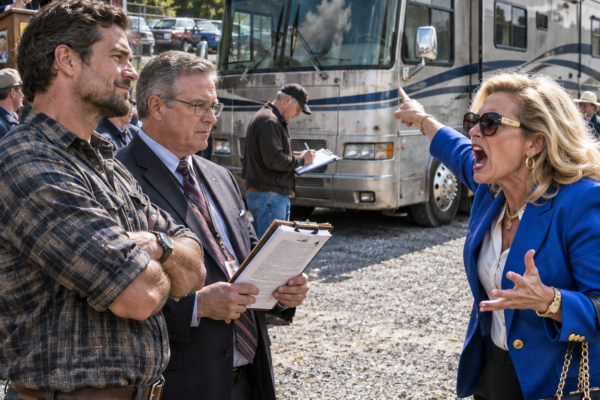
“YOU OWN THE DIRT, OLD MAN—BUT I OWN THE VIEW!” HOA Karen Built a $40,000 Balcony Over My Private Backyard and Mocked Me in Front of 15 Guests—Twelve Weeks Later, 20 Pigs Had Her Begging Me to Help Tear It Down
“YOU OWN THE DIRT, OLD MAN—BUT I OWN THE VIEW!” HOA Karen Built a $40,000 Balcony Over My Private Backyard and Mocked Me in Front of 15 Guests—Twelve Weeks Later, 20 Pigs Had Her Begging Me to Help Tear It Down
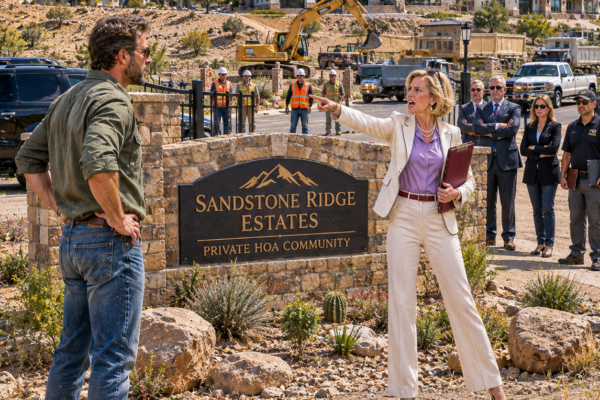
“LOOK AT THAT DISGUSTING BACKYARD—MAYBE HAVING US WATCH HIM WILL FINALLY TEACH THIS OLD SOLDIER HOW TO LIVE!” HOA president Diane Whitmore announced from her luxurious $40,000 balcony as fifteen champagne-drinking guests looked down at me and laughed.
She had knowingly extended her balcony two feet across my surveyed property boundary, ignored my written objections, and turned the peaceful backyard where I enjoyed my military retirement into her personal observation platform.
But twelve weeks after Diane raised her champagne glass and declared that she owned the view, she appeared at my gate without her sunglasses, without her arrogant smile, and practically begged me to help remove the entire structure—because twenty pigs had taught her a lesson that neither my surveyor nor my attorney had managed to explain.
I was watering my tomatoes when Diane decided to humiliate me in front of her guests.
“Jack! We’re showing everybody the improvements!”
I looked up.
There she was, leaning against an expensive railing that extended directly over my property.
Behind her stood several HOA board members, wealthy neighbors, and people holding champagne glasses.
“This is exactly why I’ve been fighting for higher community standards,” she announced. “Some people invest in their homes. Others are perfectly comfortable living like this.”
She gestured toward my workshop.
My vegetable garden.
My old Ford pickup.
Several guests laughed.
I set down my watering can.
“Enjoying the party, Diane?”
“Immensely.”
One gentleman glanced toward the fence.
“Isn’t this balcony awfully close to the property line?”
Diane laughed.
“Oh, Jack thinks he owns the air!”
“Just the part above my property that you’re occupying.”
She raised her champagne glass.
“You might own the dirt, Jack, but I own the view.”
More laughter.
I was fifty-eight years old, retired from the United States Army after twenty years in logistics.
I had spent enough of my life solving difficult problems to recognize that shouting rarely improved anything.
But standing beneath that balcony, watching strangers laugh at the home I had worked decades to purchase, I felt something inside me change.
My backyard wasn’t a public exhibition.
It wasn’t an extension of Diane’s expensive home.
And I certainly wasn’t going to spend my retirement asking a homeowners association president for permission to enjoy my own land.
“Enjoy the view while you can, Diane.”
She laughed again.
I picked up my watering can and went inside.
On my refrigerator was the ridiculous invitation announcing the grand opening of her Sunset Terrace.
I took it down.
Then I opened a drawer and retrieved a folder I hadn’t examined in six months.
Inside was a business proposal from my longtime friend, Tom Ellis.
Tom operated a small livestock business with his nephew. He had previously asked whether I would consider providing land for an expansion.
At the time, I had declined.
I valued my peaceful retirement.
But apparently, my peaceful retirement had already become somebody else’s entertainment.
I called him.
He answered on the fourth ring.
“Jack? Everything okay?”
“Tom, are you still looking for additional agricultural land?”
“Possibly. Why?”
I looked through my kitchen window.
Diane was standing above my fence, pointing toward my workshop while her guests laughed.
“How many animals were you planning to add?”
“Twenty, assuming we find somewhere suitable.”
I smiled.
“Still interested in discussing a partnership?”
There was a long silence.
“Jack, you told me you didn’t want livestock.”
“I’ve reconsidered.”
“Something happen?”
I looked at Diane’s champagne glass catching the evening sunlight.
“You could say I’ve developed a new appreciation for agricultural enterprise.”
Tom laughed.
“What kind of agricultural enterprise?”
“The kind we discussed six months ago.”
He stopped laughing.
“You’re serious?”
“Come over Monday. Bring your figures.”
After hanging up, I returned to the window.
Diane was giving another speech about refined outdoor living.
I wondered how many of her guests would enjoy that same speech when the landscape beneath her balcony contained twenty healthy young hogs.
But before I could find out, I needed to answer several important questions.
Was the land suitable?
Could the animals be properly cared for?
Would the operation be financially viable?
And could we establish it lawfully?
Because unlike Diane Whitmore, I intended to verify my rights before spending a dollar.
She had built her balcony first and asked questions later.
I was going to do things in precisely the opposite order.
PART2
Tom arrived at eight o’clock Monday morning carrying two cups of coffee, a yellow legal pad, and the skeptical expression of a man who knew me too well to accept my sudden interest in livestock without asking questions.
He parked beside my workshop, handed me one of the coffees, and looked up at Diane’s balcony.
“Good Lord, Jack. Is she opening a restaurant up there?”
“Apparently, it’s a luxury observation platform.”
“Observation of what?”
“Me.”
Tom studied the railing.
He was sixty-two, had spent most of his adult life raising livestock, and possessed the wonderfully practical attitude of somebody who had never needed an expensive suit to make an important decision.
“That’s hanging over your fence.”
“Approximately two feet beyond the actual property boundary, according to the survey.”
He looked at me.
“Why’s it still there?”
“Because the surveyor doesn’t carry a demolition permit in her back pocket.”
Tom laughed.
“Fair enough.”
We went into the workshop, where I had laid out the preliminary business information.
Tom sat across from me and opened the folder.
“You’ve been busy.”
“I like to know what things cost.”
“I remember.”
I showed him the property information, preliminary infrastructure estimates, and the questions I intended to address with the relevant local offices.
He examined the pages quietly.
Then he closed the folder.
“Before we discuss anything else, I need you to tell me the truth.”
“About what?”
“Diane.”
I took a sip of coffee.
“What about her?”
“You’re interested in raising pigs because she’s built that ridiculous balcony.”
“She influenced the timing.”
Tom stared at me.
“All right,” I admitted. “She influenced my enthusiasm.”
He didn’t laugh.
Instead, he leaned forward.
“Jack, we’re talking about living animals. They need appropriate housing, clean water, feed, veterinary care, and somebody looking after them every single day. Including Christmas. Including Sundays. Including the days when your neighbor finally decides to leave you alone.”
I nodded.
He continued.
“You don’t get to buy twenty pigs to make a woman miserable and then decide six months later that the joke isn’t funny anymore.”
I placed my coffee on the table.
“I understand.”
“Do you?”
“Yes.”
He studied me for another moment.
“Because I’m not interested in putting my reputation, my money, or the welfare of those animals at risk over a property dispute.”
That was why I had called Tom instead of attempting to establish the operation myself.
He wasn’t afraid to tell me when I was wrong.
In twenty years of military logistics, I had learned that the people most useful to an operation weren’t necessarily the ones who agreed with every decision.
They were the ones who identified a problem before it became an emergency.
Tom was one of those people.
“Here’s what I propose,” I told him. “We evaluate the site properly. If it isn’t suitable, we don’t proceed. If it is suitable, we establish a genuine business arrangement and operate it responsibly.”
“And Diane?”
“Diane can continue using her balcony.”
Tom smiled faintly.
“Although she might not enjoy the scenery quite as much.”
“That’s possible.”
He shook his head.
“Let’s go look at the land.”
We walked past the vegetable garden and toward the open section behind my workshop.
My property had a history of agricultural use. Long before the neighboring subdivision appeared, the surrounding area contained small farms, pastureland, and people who understood that country living occasionally involved the presence of animals.
The suburban development had gradually expanded toward my acreage.
I hadn’t moved my property closer to Diane’s expensive house.
Her expensive house had been built beside my property.
There was an important distinction there, although she had never appeared particularly interested in understanding it.
Tom stopped near the fence beneath the balcony.
“Not here.”
“I figured.”
“This area’s too close to the residential boundary. We’d be creating problems we don’t need.”
We continued farther back.
The agricultural portion of the property offered considerably more room. From ground level, it was separated from the neighboring homes by distance, fencing, and the natural layout of the land.
From Diane’s elevated balcony, however, practically everything was visible.
That was one of the disadvantages of constructing a platform specifically designed to look across somebody else’s privacy fence.
Once you created the view, you didn’t get to choose everything that appeared in it.
Tom examined the terrain, discussed the shelter and animal management requirements, and identified several questions that needed professional attention.
I made notes.
By the time we returned to the workshop, my yellow legal pad contained considerably more information than his.
He glanced at it.
“Jack, you’re not organizing an armored division.”
“Of course not.”
“It’s twenty pigs.”
“Twenty pigs still require supplies.”
He laughed.
“Lord help me.”
For the remainder of the week, we reviewed the applicable conditions for operating on the property, sought the necessary guidance, and developed a realistic budget.
Fencing.
Shelter.
Water.
Feed.
Drainage.
Transportation.
Labor.
Veterinary expenses.
Contingency funds.
The numbers had to work regardless of whether Diane enjoyed the result.
Tom would oversee livestock management and animal health. I would contribute the site, infrastructure, supply coordination, and daily assistance. Our expenses and revenue would be shared according to a written partnership agreement.
It wasn’t an extravagant operation.
Neither of us expected to become wealthy.
But there was a legitimate opportunity to expand his business while giving me something useful to do during retirement.
When I showed Tom the completed spreadsheet, he stared at it for several seconds.
“This is the first time I’ve seen twenty pigs presented like an international supply operation.”
I smiled.
“The international version would have required three additional signatures.”
He laughed.
Then he signed the partnership agreement.
We shook hands.
And just like that, the telephone call I had made while Diane was mocking my backyard became a real business commitment.
I should explain why that balcony had bothered me so deeply.
When I bought the property after retiring from the Army, I wasn’t looking for anything impressive.
I wanted a modest house, a workshop, enough land to grow vegetables, and somewhere quiet to sit in the mornings.
Beneath a large maple tree in my backyard stood an old wooden chair.
Nothing expensive.
The arms were slightly worn, and one of the legs had required repair.
But every morning, I could sit there with my coffee and appreciate something I had spent twenty years earning.
Peace.
During my military career, I worked in logistics. My responsibilities involved making sure people received food, equipment, transportation, and supplies when they needed them.
That might not sound particularly exciting to somebody who imagines military service exclusively through action movies.
But try feeding four hundred people when two trucks are unavailable, a delivery schedule has changed, and somebody has misplaced an important shipment.
Suddenly, logistics becomes everybody’s favorite subject.
I learned to plan carefully.
I learned that mistakes had consequences.
And I learned that raising your voice didn’t make a missing shipment appear.
By the time I retired, I was perfectly happy never to attend another early morning briefing.
My coffee chair represented that freedom.
Then Diane Whitmore moved next door.
She was fifty-five, president of the neighboring homeowners association, and apparently incapable of looking at something without evaluating whether it satisfied her personal standards.
Our first disagreement involved my pickup.
She stopped beside my driveway wearing sunglasses, a pearl necklace, and the expression of somebody examining a suspicious object.
“Mr. Reed, do you intend to leave that vehicle there permanently?”
I glanced toward my old Ford.
“Generally, I park it in the driveway.”
“It’s visible from the road.”
“That’s normally how driveways work.”
She informed me that the neighborhood had standards.
I explained that my land wasn’t within the association’s recorded boundaries.
She looked genuinely offended.
As though I had deliberately purchased property outside her jurisdiction simply to inconvenience her.
Then she moved on to my fence.
Too old.
My workshop.
Needed painting.
My vegetable garden.
Too rustic.
She pronounced the word rustic as though she had discovered something medically concerning.
One afternoon, she suggested that I plant ornamental hedges so she wouldn’t have to see my tools.
I suggested that she stop looking.
She didn’t speak to me for four days.
They were four of the finest days of my retirement.
Unfortunately, Diane didn’t remain quiet.
She began photographing my backyard from her upstairs windows. She complained when friends visited. She objected to the presence of a wheelbarrow beside the workshop.
She even criticized the maple tree.
“It drops leaves everywhere.”
I looked up at the branches.
“It’s been doing that for years.”
“Something should be done.”
“Autumn usually handles it.”
She walked away.
I mostly ignored her.
I had dealt with difficult people throughout my career. The Army had supplied several of them free of charge.
But there was a significant difference between somebody criticizing my vegetable garden and somebody constructing part of a permanent structure above my property.
When the heavy beams, steel brackets, and decking materials arrived at Diane’s house, I initially assumed she was replacing her back porch.
Then I noticed where the new structure was going.
Toward my fence.
And beyond it.
Her contractor, Ray Collins, was studying the drawings when I approached him.
“Ray, how far is this supposed to extend?”
He showed me the proposed outer edge.
I examined it.
“That looks awfully close to the boundary.”
Before he could answer, Diane stepped outside.
“Is there a problem, Jack?”
“I’m checking where your balcony’s going.”
“Everything has been approved.”
“Approved to occupy whose property?”
She stared at me.
“It’s attached to my house.”
“That doesn’t answer the question.”
She folded her arms.
“I don’t need permission from a man who parks a rusty truck in his driveway.”
I glanced toward the Ford.
It had carried tools, furniture, and most of my belongings across three states.
I wasn’t particularly offended on its behalf.
“Diane, that truck has never crossed your property line.”
Ray became remarkably interested in his drawings.
I went home and called Laura, a licensed surveyor.
By the time she completed her measurements the following week, the balcony was nearly finished.
The result was clear.
The outer edge projected approximately two feet across the surveyed boundary and into the space above my backyard.
No support posts occupied my land, but the overhang itself crossed the line.
I took the report directly to Diane.
She barely glanced at it.
“My contractor has a building permit.”
“A building permit doesn’t give you ownership of my property.”
“That’s your interpretation.”
“That’s the boundary Laura measured.”
She laughed.
“What are you going to do? Get a ladder and cut it off?”
“No.”
“Then stop bothering my contractor.”
I remember standing there, holding the survey, realizing that Diane wasn’t confused about the situation.
She simply believed the expense and inconvenience of challenging her would discourage me from doing anything.
I sent a formal written objection.
I checked the relevant permit records.
I consulted a property attorney.
The survey provided a basis for challenging the encroachment, but it didn’t magically produce an order requiring immediate removal.
There were procedures.
Potentially disputed claims.
Professional expenses.
And a legal process that would take time.
Diane knew that.
She treated the delay as a victory.
Then she completed the balcony, furnished it, installed decorative lighting, and celebrated its grand opening with champagne.
Now Tom and I stood on the same land, preparing to establish something Diane hadn’t anticipated.
An agricultural business she possessed no demonstrated authority to control.
And when she saw the first survey stakes associated with our project, she immediately decided to investigate.
Tom was checking measurements near the proposed enclosure when I heard Diane’s sliding glass door open.
“JACK!”
I looked up.
She was standing on the balcony holding binoculars.
Actual binoculars.
Tom followed my gaze.
“Is she watching us through those?”
“Apparently, the regular view package wasn’t enough.”
He laughed.
Diane lowered the binoculars.
“What are those stakes for?”
“Marking a work area.”
“What work?”
“An agricultural project.”
She straightened.
“Anything built within view of an association residence requires architectural approval.”
I looked toward Tom.
He looked toward me.
Neither of us immediately answered.
Diane continued.
“I expect to receive the plans before any construction begins.”
“Diane, my property isn’t governed by your association.”
“I’m the president!”
“I remember.”
She waited for an argument.
Instead, I returned to measuring.
After a few moments, she disappeared inside.
Tom shook his head.
“Does she actually think her rules apply wherever she can see?”
“That’s been her working theory.”
“Must be exhausting.”
“It certainly is for the people she can see.”
We continued working.
Unfortunately, Diane wasn’t content to remain an observer.
That afternoon, one of our suppliers contacted me.
He sounded uncomfortable.
“Jack, we’ve received a call concerning your construction project.”
“What sort of call?”
“Someone’s claiming the work hasn’t been authorized and that our delivery vehicles could be entering a restricted area.”
I closed my eyes.
“Did she identify herself as an HOA president?”
There was a pause.
“Yes.”
I explained the actual property arrangements and provided the information necessary to reassure him.
The delivery eventually proceeded, but the call disrupted our schedule.
Tom wasn’t pleased.
“Jack, I’ve got another business to run. We can’t spend every afternoon reorganizing deliveries because your neighbor likes making telephone calls.”
He was right.
I arranged backup options for the materials most important to our schedule and contacted the suppliers to clarify our access arrangements.
It was a manageable inconvenience.
But it was also a reminder that Diane’s behavior could affect people who hadn’t agreed to become involved in our dispute.
I needed to protect the operation from unnecessary interference rather than simply enjoy frustrating her.
Three days later, the delayed shipment arrived.
Work resumed.
Then the weather introduced a problem neither of us could blame on Diane.
Rain.
It began late in the afternoon and continued throughout most of the night.
By the following morning, standing water had collected near one end of the unfinished livestock enclosure.
Tom and I met the contractor on site.
We looked at the ground.
Then at each other.
Tom pointed toward the wet area.
“We’re not putting animals in there.”
“No argument.”
The grading hadn’t performed as anticipated under the heavy rainfall. The layout required adjustment, and additional drainage work would be necessary.
The contractor explained the problem and prepared a revised estimate.
It wasn’t catastrophic.
But it was expensive enough to matter.
That afternoon, I sat in my workshop looking at the spreadsheet I had been so proud of several days earlier.
I had allowed for unexpected expenses.
But I hadn’t expected to begin using the contingency budget before the first pig arrived.
Tom sat across from me.
“We could postpone the expansion.”
“I know.”
“Or we could investigate another site.”
I studied the figures.
What bothered me wasn’t exclusively the money.
It was the fact that I had made a planning error.
I’d spent considerable time reviewing transportation, construction costs, delivery schedules, and supplies, then underestimated how water would behave across part of the property during a heavy storm.
In the Army, I had learned to distrust the phrase it should be fine.
Apparently, retirement hadn’t made me immune to it.
I began working through the budget.
Several optional improvements could be postponed without compromising animal welfare or operational requirements.
The schedule could be adjusted.
The contingency funds existed precisely because plans occasionally encountered circumstances that required correction.
What we couldn’t do was accept inadequate conditions simply because we wanted to meet a particular delivery date.
I turned the revised figures toward Tom.
“We can correct the drainage, postpone these optional expenses, and retain enough operating funds to proceed.”
He examined the proposal.
“This leaves us less room for surprises.”
“Yes.”
“You still want to do it?”
I thought about the question.
The honest answer was more complicated than it had been when I called him from my kitchen.
At first, Diane’s behavior had made the idea attractive.
Now we had invested genuine time, money, and effort into creating something useful.
Tom had made professional commitments.
Our contractor had scheduled work.
And twenty animals would eventually depend on us to manage the operation properly.
I looked at him.
“When I called you, I wanted to get under Diane’s skin.”
He smiled faintly.
“I figured.”
“But we’ve put real work into this now. If we’re going ahead, I want to do it right.”
Tom nodded.
“That’s the answer I needed.”
We authorized the correction.
The contractor completed the additional work, and we reviewed the site again following more rainfall.
This time, the results were satisfactory.
Meanwhile, Diane had been telling her neighbors that the association had successfully stopped my unauthorized construction.
Beth Miller called to ask whether that was true.
Beth had attended Diane’s balcony party. She was one of the few guests who hadn’t laughed when Diane mocked my property.
“Jack, has your agricultural project been suspended?”
“No.”
“Diane told us the HOA intervened.”
“We found a drainage problem and corrected it.”
There was a pause.
“That’s all?”
“That’s all.”
Beth sighed.
“She said the board’s efforts had been successful.”
“Did the board actually take any action?”
“No.”
“Then apparently she’s giving herself credit for the weather.”
Beth laughed.
It was a small laugh, but it told me something.
Diane’s version of events was beginning to concern people inside her own association.
And they were about to receive an extraordinarily clear demonstration of how little influence her alleged intervention had actually accomplished.
By the end of the third week, the livestock facilities were ready.
Tom inspected the shelter, fencing, water supply, and handling arrangements. We made sure the necessary conditions had been addressed and that the supplies were available.
Then he scheduled delivery of twenty healthy young hogs for the following Thursday.
I had been awake since five that morning.
The truck was due shortly after eight, but twenty years of military logistics had taught me never to assume an important delivery would occur precisely as scheduled.
Tom arrived with coffee.
“Excited?”
“Prepared.”
He laughed.
“That’s military for excited, isn’t it?”
“Something like that.”
At eight-fifteen, the truck entered my driveway.
The driver reviewed the paperwork with us.
Tom examined the animals and confirmed the arrangements for transferring them into their new enclosure.
Everything was ready.
The first pig stepped onto the ramp and stopped.
The second attempted to move around it.
A third appeared to have developed a personal objection to the entire procedure.
Tom handled them patiently.
I worked the gate and counted.
Four.
Seven.
Eleven.
Sixteen.
Twenty.
All accounted for.
I checked the paperwork again, because apparently some military habits survive retirement indefinitely.
Tom smiled.
“Congratulations, partner.”
I looked at the animals moving around their new home.
“Looks like we’re in business.”
At that exact moment, Diane’s sliding door opened.
She stepped onto her balcony wearing a cream-colored robe and carrying a coffee mug.
For several seconds, she simply watched.
Then she leaned forward.
“Jack?”
I looked up.
“Morning, Diane.”
“What are those?”
Tom looked at the enclosure.
Then he looked at me.
“Pigs, Diane.”
“I CAN SEE THEY’RE PIGS!”
I waited.
She stared at the animals.
“How many?”
“Twenty.”
Her mouth opened.
“Twenty pigs?”
“That’s correct.”
She looked toward the shelter.
Then at the fencing.
Then at the feed delivery paperwork I was holding.
Suddenly, the entire construction project made sense to her.
“You’re starting a pig farm?”
“Tom and I are operating a small livestock business.”
“HERE?”
“That’s the plan.”
She gripped the railing.
“You cannot possibly be serious!”
Tom quietly continued checking the animals.
I looked up at Diane.
“We’ve established the arrangements for operating on our property.”
“This is a luxury residential neighborhood!”
“Your side of the fence is residential.”
She stared.
“YOU CAN’T DO THIS NEXT TO MY HOUSE!”
I didn’t respond by shouting back.
We had already addressed the applicable requirements with the relevant offices.
Diane was free to raise legitimate concerns.
She wasn’t entitled to settle the matter by announcing a prohibition from her balcony.
“I’ll report this immediately!”
I nodded.
“Have a good morning.”
She turned, walked inside, and slammed the sliding door.
Tom waited approximately five seconds.
Then he looked at me.
“Well, that went about as expected.”
“Actually, I thought she’d ask their names.”
He burst out laughing.
I returned my attention to the enclosure.
The pigs had already discovered several interesting things to investigate.
One was inspecting the fence.
Another appeared particularly interested in the water.
A small pink sow with a dark patch near her ear walked toward my boots, sniffed them, and looked up at me.
Tom pointed toward her.
“Number six.”
I smiled.
“I’m calling her the Inspector.”
“Why?”
“She’s already checking everybody’s equipment.”
Tom laughed again.
And as we began the ordinary work associated with caring for our new animals, I glanced once toward Diane’s empty balcony.
She had spent forty thousand dollars creating the perfect place from which to observe my life.
Now she had twenty additional subjects to observe.
I wondered how long it would take before she regretted paying for the privilege.
The first week taught me more about livestock than I had expected.
Tom had an established routine, and I followed his instructions carefully.
We monitored feed and water.
We inspected the fencing and equipment.
We maintained the enclosure.
We kept appropriate records and paid attention to the animals’ condition.
There was always something to check, repair, replenish, or organize.
The Inspector developed a habit of greeting me whenever I entered her vicinity.
I began suspecting she possessed a better attendance record than several people I had supervised during my military career.
Tom caught me talking to her one morning.
“Giving her a briefing?”
“Performance review.”
“How’s she doing?”
“Excellent attendance. Questionable respect for personal space.”
He laughed.
I found myself enjoying the work.
Not because it was easy.
It wasn’t.
But there was something satisfying about having clear responsibilities and seeing the direct results of meeting them.
The animals didn’t care what military rank I had held.
They didn’t care about the appearance of my pickup.
They didn’t care whether my workshop matched the decorative standards of the neighboring subdivision.
They expected appropriate care.
And providing it was my responsibility.
That was refreshingly straightforward.
Diane, on the other hand, appeared to be discovering that her balcony was no longer the peaceful outdoor retreat advertised in her invitation.
The first sign was the appearance of two enormous outdoor fans.
They were positioned near her seating area and looked expensive.
Then came decorative planters.
Then a privacy screen along the railing.
I watched the screen being installed one afternoon.
Tom glanced up from the equipment.
“Interesting.”
“What?”
“She spent forty thousand dollars building somewhere she could look over your privacy fence.”
“Right.”
“Now she’s buying another privacy fence.”
I laughed.
“Progress.”
The screen concealed portions of my workshop from her seating area, but it didn’t make the agricultural operation disappear.
The animals remained visible from other sections of the balcony.
Their ordinary activity could be heard.
And occasionally, depending on the weather, the familiar smell of livestock reached her outdoor furniture.
We maintained responsible sanitation practices.
Neither Tom nor I had any intention of creating unnecessary odors or compromising the conditions in which the animals lived.
But a working agricultural operation wasn’t going to smell like a luxury hotel’s lavender-scented lobby every hour of every day.
Diane discovered that distinction quickly.
One morning, while I was checking the water supply, she called down.
“Those animals are making noise!”
I looked up.
“They do communicate.”
“This is completely unacceptable!”
I returned to work.
She continued talking.
I continued checking the equipment.
After a while, she went inside.
I had begun to understand that Diane didn’t always want answers.
Sometimes she simply wanted an audience.
And now, instead of an audience of champagne-drinking guests, she had an old veteran who was more interested in a water connection than another lecture about community standards.
That wasn’t enough for her.
She wanted somebody with official authority to make the animals disappear.
So she began filing complaints.
The first complaint concerned noise.
The next concerned odors.
Then came sanitation, drainage, and allegedly unauthorized business activity.
Diane submitted them to the local offices responsible for evaluating those issues.
When Tom heard about the complaints, he looked at me over his coffee cup.
“Here we go.”
I nodded.
“Looks that way.”
“Think she’s going to complain about the pigs not matching the approved neighborhood color scheme?”
“Give her time.”
We laughed, but we took the complaints seriously.
Regardless of Diane’s motives, an inspection could identify legitimate issues requiring correction.
We assembled the relevant business records, the information associated with the site, and the documentation concerning our animal care and operating arrangements.
When an inspector arrived, I met him beside the workshop.
He explained the concerns that had been submitted.
I listened.
Then Tom and I accompanied him as he examined the facilities.
He asked questions about housing, water, feed storage, sanitation, waste management, and the way the site performed during wet conditions.
We answered them.
Most of what he examined was satisfactory.
However, he identified a storage issue requiring correction and recommended an additional improvement to the runoff management arrangements.
I wasn’t thrilled.
We had already spent money addressing the original drainage problem.
Now we faced further work.
For a moment, I felt the familiar temptation to blame Diane.
If she hadn’t filed the complaints, I wouldn’t have been standing there discussing another expense.
But that wasn’t a particularly useful way to think about the situation.
If a legitimate problem existed, correcting it was our responsibility.
Whether the inspector discovered it because of a routine visit or because my neighbor wanted to recover her expensive view didn’t change that.
I asked him to explain the requirements clearly.
Tom took notes.
We arranged the corrections and completed the appropriate follow-up.
The operation continued.
Diane didn’t get the shutdown she had demanded.
She did, however, create another round of expenses that our business hadn’t originally anticipated.
That evening, Tom arrived at the workshop carrying an updated expense sheet.
He placed it on the table.
“Jack, we need to talk.”
I looked at the figures.
Our reserves were lower than expected.
The original drainage correction, delivery disruption, and additional improvements had consumed part of the financial flexibility we wanted to retain.
We weren’t in immediate trouble.
But our margins had become narrower.
Tom sat across from me.
“I know why you started this.”
I looked down.
“And I understand why you enjoy watching Diane discover that she doesn’t control your property.”
“Tom—”
“Let me finish.”
I nodded.
He pointed toward the expense sheet.
“We’re responsible for twenty animals. We have customers, supplies, operating expenses, and a partnership. We need to make decisions based on the business, not based on whether they’re going to produce another entertaining reaction from the woman next door.”
I studied the numbers.
There had been a time, shortly after Diane’s first party, when I would have considered almost any inconvenience worthwhile if it meant she stopped laughing at me.
But Tom was asking me to consider something more important.
He had trusted me.
He had invested in the operation.
The animals depended on our work.
And the future of the business couldn’t be allowed to revolve around an HOA president’s mood.
I looked at him.
“If there’s a problem, we fix it because it needs fixing.”
He waited.
“We don’t make anything worse to annoy her. We don’t compromise the animals’ care. And we don’t spend money we can’t justify as a business.”
Tom nodded slowly.
“Good.”
I tapped the expense sheet.
“Let’s go through these together.”
We spent the remainder of the evening reviewing our operating costs.
Some expenses could be managed more efficiently.
Others were simply the cost of conducting the business responsibly.
By the time we finished, we had a more realistic operating forecast.
Tom collected his papers.
Then he smiled.
“Still, her face when that trailer opened was something.”
I laughed.
“An unexpected operational benefit.”
He shook his head.
“You’re a terrible man.”
“That’s why you went into business with me.”
He laughed and left.
I sat in the workshop for a few minutes after his truck disappeared.
Then I looked toward the enclosure.
The animals were settling down for the evening.
Diane’s balcony lights were glowing above the fence.
For once, I didn’t particularly care whether she was standing out there.
I had more important things to think about.
And that was when I realized something.
The agricultural operation had started partly because I wanted to prove a point.
It was becoming something that gave my retirement a new purpose.
Diane might have influenced my decision.
She was no longer going to control it.
Having failed to persuade the local authorities to shut us down, Diane turned to the homeowners association.
She wanted the board to authorize legal expenditures aimed at challenging our operation.
As far as I knew, nobody had provided a satisfactory explanation of how the association could impose its rules on my land.
Nevertheless, Diane continued insisting that the business affected community standards and property values.
The argument became public one Saturday afternoon.
I was working near my front gate when Diane emerged from her house with Beth Miller and two other board members.
They were still discussing the matter as they walked toward their vehicles.
Diane’s voice carried across the driveway.
“I don’t understand why you’re refusing to protect our neighborhood!”
Beth stopped.
“Because you’re asking us to spend association funds on a dispute involving property outside our jurisdiction.”
“It affects our residents!”
“That doesn’t automatically give us the authority to close somebody else’s business.”
One of the other board members nodded.
Diane noticed me beside the gate.
Her expression immediately hardened.
“THOSE ANIMALS ARE LOWERING OUR PROPERTY VALUES!”
I remained where I was.
Beth looked directly at her.
“Then we can examine whatever legitimate concerns exist. But I’m not approving the use of association money to pursue your private disagreement without a clear legal basis.”
Diane stared.
“This is about the entire community!”
“Then why are you the only person insisting we spend the money?”
Nobody answered.
Beth continued.
“And we still have an unresolved boundary dispute involving the balcony you’ve built toward his property.”
Diane’s face reddened.
“That has absolutely nothing to do with this!”
Beth glanced toward the balcony.
“It has a great deal to do with why you’re angry at him.”
For a moment, I thought Diane might scream.
Instead, she turned and marched back toward her house.
The remaining board members exchanged uncomfortable looks.
Then they went to their cars.
Beth approached my gate.
“I’m sorry you had to hear that.”
I shrugged.
“I’ve heard worse.”
She glanced toward the balcony.
“I should have asked more questions at the beginning.”
I remembered her standing among the guests during Diane’s first party.
She had looked uncomfortable when Diane joked about my truck.
But she hadn’t openly challenged her.
Now she was doing precisely that.
“Better late than never,” I said.
Beth nodded.
“Some people think that because she’s the president, everything she says represents an official association decision.”
“Does it?”
“Not necessarily.”
I smiled.
“Probably worth reminding them.”
She laughed quietly.
Then she became serious.
“I want you to understand something. I do prefer a quiet residential neighborhood. I’m not pretending I particularly enjoy the smell of livestock.”
“I wouldn’t expect you to.”
“But your property isn’t ours. And if there’s a legitimate problem, it should be addressed through the people responsible for addressing it.”
I nodded.
“That’s all I’ve been asking for.”
Beth looked toward Diane’s house.
“I think things have gone too far.”
I appreciated her honesty.
She didn’t need to suddenly become an enthusiastic supporter of my business.
She didn’t need to pretend that pigs were her favorite animals.
She simply needed to recognize that personal preferences didn’t create unlimited authority over the people living nearby.
It was a surprisingly reasonable position.
And it was one Diane couldn’t tolerate, because she had spent years treating agreement with her opinions as the definition of community loyalty.
Now one of her own directors had refused to support her.
The balcony remained empty most evenings.
And Diane was beginning to discover that if she wanted to recover its reputation as a luxury outdoor entertaining area, she would have to accomplish that without the association paying to remove my livestock.
So she decided to throw another party.
By the seventh week following her original celebration, preparations were underway for a second gathering.
A catering van arrived.
Workers rearranged the outdoor furniture.
Fresh cushions appeared.
A florist delivered decorative arrangements.
The outdoor fans were repositioned, and additional screens were installed near the seating area.
Tom watched a worker carry a large planter upstairs.
“She’s having another party?”
“Looks like it.”
He glanced toward the pigs.
“She’s optimistic.”
I laughed.
“That’s one word for it.”
Apparently, Diane had decided that sufficient money, decoration, and determination could transform the Sunset Terrace into the impressive showpiece she had originally imagined.
She moved the dining table farther from the outer railing.
She arranged flowers around the bar.
She selected music.
And she invited a smaller group of guests, several of whom had attended the original celebration.
This time, the invitation emphasized elegance, intimacy, and a refined evening outdoors.
I hoped they enjoyed themselves.
I genuinely did.
But Tom and I had no intention of interrupting our ordinary operations to make Diane’s gathering more convenient.
The animals needed their evening care.
We would complete it as usual.
At six-thirty, the first guests arrived.
Diane greeted them wearing white.
She smiled broadly.
Champagne was served.
The music began.
For approximately twenty minutes, everything appeared to be going according to her plans.
Then a woman walked toward the railing.
“Oh,” she said.
Another guest joined her.
“What?”
The woman pointed toward the agricultural area.
“Those really are pigs.”
Diane approached quickly.
“Yes. Unfortunately, our neighbor has decided to conduct a temporary agricultural experiment.”
The guest looked at her.
“Temporary?”
“I’m working on having it addressed.”
A gentleman leaned toward the railing.
“How many are there?”
Diane’s smile tightened.
“Twenty.”
He stared at the enclosure.
“That’s quite a few.”
Beth, who had also attended, asked whether the association had actually approved any action concerning the operation.
Diane changed the subject.
“Let’s enjoy the sunset, shall we?”
Unfortunately for her, the sunset happened to be in the same general direction as the livestock enclosure.
Several guests continued looking toward it.
Tom and I were completing our normal evening routine when some of the animals began communicating with one another.
Their grunts carried across the open ground.
Diane raised her voice.
“As many of you know, this terrace was designed to create a sophisticated outdoor entertaining experience—”
Another series of grunts interrupted her.
She tried again.
The pigs continued their conversation.
Tom glanced toward the balcony.
“She’s giving a speech.”
I nodded.
He waited for me to say something.
I didn’t.
Occasionally, the funniest thing you can contribute to a situation is absolutely nothing.
Diane continued describing the custom railings, the lighting, and the care she had invested in selecting the furniture.
Then the breeze shifted.
An ordinary livestock smell drifted toward her seating area.
One guest stepped back from the railing.
Another picked up her champagne glass and quietly moved indoors.
A third followed.
Diane noticed.
She began speaking more loudly about the quality of the construction.
One gentleman asked whether the balcony had been extended across the property boundary.
For a moment, she stopped talking.
Then she smiled.
“My contractor obtained the required building permit.”
Beth answered before anybody else could.
“That doesn’t automatically establish the right to build over somebody else’s property.”
The gentleman looked surprised.
“Has there actually been a survey?”
Beth nodded.
Another guest turned toward Diane.
“Then why hasn’t the problem been resolved?”
Her smile became strained.
“It’s a complicated matter.”
The gentleman glanced toward my fence.
“Is the structure on the wrong side of the boundary or not?”
Diane looked toward the house.
“Perhaps we should have another drink.”
Nobody immediately moved.
The evening she had carefully organized to demonstrate the elegance of her home had become a discussion about the ownership of the space beneath her balcony.
And the twenty pigs in the distance weren’t making her argument any easier.
Then she noticed me near the fence.
“JACK!”
I looked up.
“Evening, Diane.”
“You did this deliberately!”
I waited.
Several guests turned toward me.
Diane pointed toward the enclosure.
“You know exactly what you’re doing!”
I looked toward Tom, who continued working.
Then I answered.
“I’m running the business you can see from your balcony.”
“You’re trying to ruin my home!”
I looked at her house.
It remained large, beautiful, and perfectly intact.
“I’m not touching your home, Diane.”
She turned toward her guests.
Perhaps she expected somebody to defend her.
Nobody volunteered.
Beth lowered her champagne glass.
The gentleman who had asked about the survey went indoors.
Another guest followed him.
Diane stood beside the railing, gripping it so tightly that I could see the tension in her shoulders.
For the first time, she was facing an audience that didn’t appear particularly interested in agreeing with her.
And unlike the first gathering, nobody was laughing at me.
There was no spectacular disaster at Diane’s second party.
Nobody fainted.
Nobody ran screaming down the driveway.
Nobody threw a champagne glass.
The evening simply deteriorated.
Guests gradually moved indoors.
Conversations became quieter.
The outdoor music eventually stopped.
The caterer began clearing dishes that hadn’t been finished.
By eight o’clock, the balcony was empty.
Tom and I completed our work and returned to the workshop.
He sat down heavily.
“Well.”
I handed him a bottle of water.
“Well, what?”
He gestured toward the house.
“Think she’ll invite us to the next one?”
I laughed.
“Probably not.”
He grinned.
“Shame. Those appetizers looked expensive.”
We spent a few minutes reviewing the following morning’s arrangements.
Then he went home.
I sat beneath my maple tree for a while.
The balcony lights were still glowing, but nobody stood above me.
I thought about Diane’s first celebration.
How she had pointed toward my workshop.
How she had called my yard an eyesore.
How several of her guests had laughed when she suggested that being watched from above might teach me to maintain my property according to her standards.
Now the same balcony was deserted.
Not because I had interfered with her gathering.
Because the people she wanted to impress no longer enjoyed the view.
The next morning, two expensive outdoor chairs were carried inside her house.
Several days later, most of the remaining furniture followed.
The bar was covered.
The dining area was abandoned.
The decorative screens remained, but the Sunset Terrace stopped hosting social events.
Then Beth told me something particularly revealing.
We encountered each other outside the hardware store.
“Jack, you’ll probably appreciate this.”
“What?”
“One of Diane’s friends declined an invitation for outdoor drinks.”
I smiled.
“Did she?”
“Suggested meeting at a restaurant instead.”
“That sounds reasonable.”
Beth laughed.
“Diane apparently didn’t think so.”
I looked toward my truck.
“Was her friend rude about it?”
“No. Perfectly polite.”
That was what made the situation interesting.
Nobody needed to insult Diane.
Nobody needed to criticize her choice of furniture or the architecture of her home.
People were simply making decisions about where they preferred to spend their time.
And the luxurious observation platform Diane had constructed specifically to impress other people was no longer their preferred location.
Beth shook her head.
“I don’t think she knows what to do with herself.”
I considered the thought.
“She could always sit in her own backyard.”
Beth laughed.
“Imagine that.”
We said goodbye.
I returned home, unloaded my supplies, and went back to work.
Three days later, Diane appeared on my front porch.
For months, she had preferred addressing me from above.
Now she was standing at ground level, holding a leather handbag and looking as though she considered the visit an enormous personal defeat.
“Jack, we need to settle this.”
I opened the door a little farther.
“Good morning, Diane.”
“I’m serious.”
“I can see that.”
She glanced toward the backyard.
“I want those animals moved.”
I stepped outside.
“Tom and I are operating a business. We’re not relocating it simply because you dislike the scenery.”
Her jaw tightened.
“I’m willing to compensate you.”
That was new.
She opened her handbag and retrieved a folded piece of paper.
A figure had been written on it.
I examined the amount.
It wasn’t an insignificant offer.
But it failed to address the realistic costs and practical difficulties associated with moving an established livestock operation.
There was the existing infrastructure.
The partnership.
The availability of another suitable site.
The applicable requirements at any new location.
The transportation arrangements and the needs of the animals.
Diane appeared to believe she could write down a number and have twenty pigs disappear.
I handed the paper back.
“No.”
Her eyes widened.
“You haven’t even considered it!”
“I’ve considered what relocation would involve.”
She shook her head.
“Everything has a price.”
“Not everything is for sale.”
For a moment, she stared at me.
Then she retrieved a pen and wrote a larger number.
“Now?”
I looked at the paper.
“Any serious relocation proposal would have to address Tom’s partnership interest, the investment we’ve made, and where the business could actually operate.”
She waved dismissively.
“That’s your responsibility.”
“Exactly.”
I handed it back.
“And I’m not interested in moving it.”
Diane looked furious.
“You did this to spite me!”
I didn’t pretend that her conduct had played no part in my decision.
“Your balcony certainly helped me make up my mind. But the business is real, Diane. We established it to continue operating.”
“Then I’ll keep filing complaints!”
“You’re free to raise legitimate concerns. We’ll address anything we’re responsible for.”
She looked toward the maple tree.
“And that ridiculous survey?”
I waited.
She appeared to regret mentioning it.
“It’s two feet, Jack.”
“Two feet on my side of the line.”
She folded the paper and returned it to her handbag.
“This isn’t finished.”
“I know.”
She turned and walked away.
I watched her return to her house.
The conversation hadn’t resolved the property dispute.
But it had revealed an enormous change.
Diane was no longer demanding that I comply with standards she had invented for my backyard.
She was offering me money to change it.
She wanted to buy back the view she no longer enjoyed.
And I wasn’t selling.
During the following weeks, Tom and I settled into a more predictable routine.
The animals were growing.
Our expenses became easier to forecast.
We continued monitoring the budget closely, but the operation was functioning as a genuine small business.
I wasn’t getting rich.
Neither was Tom.
But the work had become a meaningful part of my life.
One morning, I woke before sunrise, made coffee, and went outside to begin my usual checks.
The maple tree moved gently in the breeze.
Birds were calling from the branches.
Farther back, the animals were beginning to stir.
I realized I hadn’t looked toward Diane’s balcony once since stepping outside.
For months, I had been aware of that structure every time I entered my backyard.
I had wondered whether she was watching me.
Whether she was taking photographs.
Whether somebody was standing beside her railing, examining the details of my life as though my property belonged in an exhibition.
Now I had become so occupied with my own responsibilities that her presence mattered considerably less.
It was a wonderful feeling.
And it occurred to me that perhaps the most valuable consequence of the livestock operation wasn’t the fact that Diane had stopped entertaining her friends outdoors.
It was that I had stopped organizing my thoughts around her behavior.
I could enjoy my retirement again.
Admittedly, retirement now involved considerably more work than I had originally intended.
But it was work I had chosen.
That made all the difference.
During the ninth week, Ray Collins’s truck returned.
He arrived at Diane’s house with another man carrying measuring equipment and construction drawings.
They spent much of the morning examining the balcony.
They checked the support arrangement.
They measured the outer edge.
They studied the connection to the house.
Then they disappeared inside with Diane.
I didn’t interfere.
Later that afternoon, Ray approached my fence.
“Jack, got a minute?”
“Sure.”
He looked toward Diane’s house.
“She’s asked us to evaluate some changes to the balcony.”
“What kind of changes?”
“Possibly removing the section that extends over the property line.”
I waited.
“Possibly removing the entire addition.”
That surprised me.
“All of it?”
“That’s one of the options.”
Ray explained that Diane had initially asked whether he could simply shorten the structure by two feet.
To somebody unfamiliar with construction, the request sounded relatively simple.
But the balcony was an interconnected elevated structure. Changing its dimensions could affect the support arrangement, load distribution, railing connections, and other components.
Any modification would require appropriate professional evaluation.
There were essentially two directions to investigate.
A smaller, properly designed balcony entirely within Diane’s property.
Or removal of the addition and restoration of the rear of the house.
Neither would be free.
Ray leaned against the fence.
“She wasn’t particularly happy with either estimate.”
“I imagine not.”
“She kept asking whether there was some cheaper way to make the balcony compliant.”
I nodded.
“That’s understandable.”
“Then she asked me something interesting.”
“What?”
“Whether a smaller balcony would still overlook your livestock enclosure.”
I looked toward the pigs.
“And what did you tell her?”
“The obvious answer.”
I smiled.
“Yes?”
“Yes.”
Ray shook his head.
“I think that’s when she started considering removing the whole thing.”
I thought about the absurdity of the situation.
For months, I had requested that Diane correct an encroachment of approximately two feet.
She had refused.
She had spent money completing and furnishing the structure.
She had used it to entertain guests.
She had argued that the survey was merely my interpretation of the property boundary.
Now she was contemplating removing the entire addition, not just the portion crossing the line.
Because even if she corrected the encroachment, she would still be looking at twenty pigs.
The animals hadn’t changed the surveyed boundary.
They hadn’t issued a demolition order.
They hadn’t somehow given me authority over her house.
They had simply changed what the balcony was worth to the woman who owned it.
And that had accomplished something months of correspondence hadn’t.
Ray continued.
“If she chooses removal, we might need temporary access from your side to carry out parts of the work safely.”
I looked at him.
“Have you got a plan?”
“Not finalized.”
“Then send it to me when you do.”
He nodded.
“I wanted to make sure you’d at least consider it.”
“I will. But I need to know exactly what access is required, how my fence and the livestock area will be protected, and who’s responsible for restoring anything disturbed by the work.”
Ray smiled.
“That’s reasonable.”
We shook hands.
He returned to his truck.
I stood beside the fence for another minute.
Diane was visible through her upstairs window.
She appeared to be looking at the drawings.
I wondered how it felt to discover that removing an expensive improvement could become more attractive than keeping it.
Especially when she had built that improvement to demonstrate how much authority she possessed over me.
Now the entire project depended on whether she could reach a reasonable agreement with the man she had mocked.
Ray returned several times during the tenth and eleventh weeks.
A structural consultant examined the balcony.
Revised drawings appeared.
Diane occasionally stood near the empty railing, looking toward the enclosure.
There were days when I thought she might reconsider her options and keep a smaller balcony.
That would have been entirely her decision, provided the encroachment was properly resolved.
I didn’t need the whole structure to disappear merely to feel that I had won.
I needed her to stop occupying the space beyond the property boundary.
And I wanted the privacy I had enjoyed before she decided my backyard was part of her entertainment area.
One afternoon, I saw her standing alone on the terrace.
The furniture was gone.
The outdoor bar remained covered.
She held a telephone against her ear while looking toward the pigs.
Then she walked back inside.
For the first time, I almost felt sorry for her.
Forty thousand dollars was a great deal of money.
She had purchased materials, labor, furniture, decorative lighting, and custom finishes.
She had organized two gatherings.
She had expected the balcony to become an important part of her social life.
And now the only things regularly occupying it were planters and unused equipment.
But whenever I began feeling particularly sympathetic, I remembered the conversation we had before construction was completed.
I had shown her the survey.
I had requested that the problem be corrected.
She had laughed.
“What are you going to do? Get a ladder and cut it off?”
She could have avoided much of the subsequent expense by addressing the boundary when I first brought it to her attention.
Instead, she chose to finish the structure.
Then she invited people to stand on it and laugh at the man whose property she was encroaching upon.
I didn’t need to feel guilty because she was now reconsidering those choices.
Her balcony had become an expense she no longer wanted.
And for once, solving the problem was going to require her to ask rather than demand.
During the twelfth week after her first party, Diane appeared at my back gate.
I was completing an evening check near the livestock enclosure.
Tom had just carried the last empty bucket toward the storage area when he noticed her.
“Jack.”
I looked up.
“Company.”
Diane stood outside the gate holding a folder.
No sunglasses.
No champagne.
No expensive white blazer.
No audience of neighbors.
Just Diane.
She looked tired and profoundly unhappy.
I approached the gate.
“Evening.”
“Jack, we need to discuss the balcony.”
I set down the bucket I was carrying.
“All right.”
She looked toward her house.
“I’ve decided to remove the addition.”
I stared at her for a moment.
“All of it?”
“Yes.”
I nodded.
She opened the folder.
“Ray says his crew may need access through your yard.”
“He mentioned that possibility.”
“Then you’ll allow it?”
“I’ll review the written plan.”
Her expression tightened.
“What’s there to review?”
“The area the workers need to access. How they’ll protect my fence and livestock facilities. The schedule. Responsibility for restoring any disturbed property.”
She sighed.
“Must you make absolutely everything difficult?”
“No, Diane. Just things happening on my property.”
She stared at me.
For a moment, I recognized the familiar expression that usually preceded another lecture about community standards.
I expected her to tell me how important her house was to the neighborhood.
How reasonable people should cooperate with association leadership.
How unfortunate it was that I insisted on being difficult.
Instead, she looked up at her empty balcony.
“I’m already paying a fortune to get rid of that thing.”
I remained silent.
She continued.
“And I don’t intend to spend another month arguing about access.”
“Then we should establish the conditions and make sure everybody understands them.”
She exhaled slowly.
Then she said something I had never expected to hear from Diane Whitmore.
“Jack, please.”
I looked at her.
She glanced toward the enclosure.
Then toward the balcony.
“Please, just help me get the damn thing taken down.”
Tom stopped near the storage area.
I could tell he had heard her.
For several seconds, I didn’t answer.
Not because I wanted to prolong her embarrassment.
Because I was remembering the first party.
The champagne glass.
The laughter.
The way she had leaned against the railing and declared that although I might own the dirt, she owned the view.
Now the same woman was standing outside my gate, asking permission to remove the structure she had spent forty thousand dollars constructing.
She wasn’t offering a graceful apology.
She wasn’t admitting every mistake she had made.
She certainly hadn’t developed an entirely different personality.
But she had finally recognized that there were circumstances in which she needed my cooperation.
And cooperation couldn’t be obtained by declaring herself president of something.
I looked toward her house.
“Why remove the entire balcony?”
Her mouth tightened.
“Because I don’t want it anymore.”
“You don’t want a smaller version?”
“What would be the point?”
She gestured toward the livestock enclosure.
“I’d still be looking at those pigs!”
I nodded.
She continued.
“I can’t entertain out there. Nobody wants to sit outside. I don’t even enjoy having coffee on it anymore.”
I said nothing.
“And I’m tired of spending money fighting over something I don’t use!”
There it was.
The complete reversal.
The balcony had been intended to demonstrate her refined lifestyle, increase the enjoyment of her home, and give her an elevated position from which to inspect my property.
Now she wanted nothing to do with it.
I thought about my own coffee chair beneath the maple tree.
Unlike Diane’s expensive terrace, it had never required me to interfere with somebody else’s property.
It had never required association approval.
And it had never existed to impress an audience.
Perhaps that was why it had provided me with considerably more happiness than her forty-thousand-dollar addition had provided her.
I turned toward Diane.
“Have Ray send the finalized plan. If the work can be carried out safely and the responsibilities are clear, I’ll cooperate.”
For half a second, she looked relieved.
Then she seemed to remember how angry she was supposed to be.
“You’re enjoying this.”
I considered the question.
“A little.”
She glared.
I looked toward the balcony.
“You told me you owned the view, Diane.”
She closed her eyes.
I smiled faintly.
“I just changed what you were looking at.”
For once, she had nothing to say.
She gathered her folder and walked back toward her house.
Tom waited until she was well out of earshot.
Then he approached.
“Did I just hear what I think I heard?”
“Probably.”
“She wants the entire balcony removed?”
“Apparently.”
He looked toward the house.
Then at the pigs.
Then at me.
“Twenty pigs.”
I nodded.
He shook his head.
“Most expensive neighborhood improvement I’ve ever seen livestock accomplish.”
I laughed.
“Let’s finish the evening checks.”
We returned to work.
Because even on the evening Diane Whitmore finally asked for my help, twenty animals were still expecting us to complete our responsibilities.
The removal began the following week.
Before the work started, Ray supplied the necessary information, and we agreed on the conditions for temporary access to my property.
The work area would be clearly identified.
My fence and other property would be protected.
The animals would remain safely separated from the construction activity.
The responsibilities for restoration and any damage would be established in advance.
There was nothing particularly complicated about reaching that understanding.
Ray was a reasonable man.
I was willing to cooperate.
And Diane, for once, wasn’t attempting to replace an ordinary agreement with a declaration of authority.
On the morning his crew arrived, Ray met me beside the gate.
“Everything’s ready, Jack.”
I nodded.
“Tom and I have made the arrangements on our side.”
“Appreciate your cooperation.”
“No problem.”
He glanced toward the balcony.
“Shame it came to this.”
I looked at the structure.
“Could’ve been avoided.”
Ray nodded slowly.
“Probably.”
We didn’t discuss it further.
His responsibility was to carry out the work according to the appropriate removal plan.
Mine was to make sure the agreed access arrangements were respected and that our livestock operation remained safe.
There was no need for another argument about the survey.
No need for somebody to climb a ladder in the middle of the night carrying a saw.
No need for another expensive confrontation.
The people responsible for the work knew what needed to happen.
And as the first railing section came down, I experienced a feeling I hadn’t expected.
Relief.
Diane watched from inside her house during portions of the removal.
I occasionally saw her near the window.
She didn’t come outside to address the workers.
She didn’t accuse me of destroying her property.
She didn’t contact the association or demand that the work stop.
She had authorized the removal herself.
And she was paying for it.
The expensive railings were carefully recovered.
The decking was removed in accordance with the work plan.
The supporting components gradually disappeared.
Every section that came down restored a little more open space above my backyard.
I watched from a safe distance.
When the crew reached the portion that had projected beyond the surveyed boundary, I thought about the day Laura first showed me the measurements.
Two feet.
Diane had repeatedly acted as though the distance was too insignificant to justify my objection.
But it had never been exclusively about the measurement.
If I had extended my workshop two feet across her property boundary, I doubted she would have considered it insignificant.
If I had built an elevated platform overlooking her private seating area, photographed her belongings, and invited people to laugh at her lifestyle, I doubted she would have called it a harmless improvement.
The issue was respect.
The same respect she expected everybody else to demonstrate toward her property.
The same respect she had refused to demonstrate toward mine.
Now the unauthorized overhang was disappearing.
I looked toward the maple tree.
For months, whenever I sat beneath it, the elevated structure had occupied part of my view.
Soon, there would be nothing above the old wooden chair except branches and sky.
Ray approached me after the remaining portion had been removed.
“That’s the overhang gone.”
I smiled.
“Looks considerably better.”
He laughed.
“From your side, anyway.”
We discussed the remaining restoration work.
I thanked him.
Then I went back toward the enclosure to help Tom.
There was still work to do, and the animals didn’t appear particularly impressed by the disappearance of a forty-thousand-dollar balcony.
The Inspector greeted me near my boots.
“Well,” I told her, “you’ve certainly made an impression around here.”
She grunted.
Tom laughed from the other side of the enclosure.
“Don’t let it go to her head.”
When the restoration was complete, Ray and I inspected the temporary access area together.
The fence was intact.
The livestock facilities were intact.
The agreed conditions had been respected.
And the elevated addition no longer projected toward my backyard.
He handed me the relevant completion information.
“Think we’re all finished.”
I shook his hand.
“Thank you, Ray.”
He nodded.
“Hopefully, your next property project will be a little less complicated.”
I laughed.
“That’s what I’m hoping.”
As he drove away, I looked toward Diane’s house.
It was still an expensive, attractive suburban home.
The stone driveway remained.
The landscaping remained.
The decorative lights remained.
She hadn’t lost her house.
Nobody had taken her property.
Nobody had damaged her belongings to punish her.
She had chosen to remove an addition that had become financially and personally undesirable.
And that decision had resolved the encroachment without requiring the kind of prolonged legal confrontation both of us had originally faced.
I informed my attorney that the removal had been completed.
We addressed the remaining documentation concerning the matter.
Then I put the survey and the related correspondence away.
For months, those papers had occupied a prominent place inside my workshop.
Now they could return to the filing cabinet.
I had no intention of throwing them away.
Twenty years in military logistics had taught me the value of retaining accurate records.
But I was glad I no longer needed to look at them every week.
The boundary was where it had always been.
The difference was that Diane’s house finally respected it.
A few days later, Beth stopped beside my driveway.
She looked toward Diane’s house.
“It’s strange seeing it without the balcony.”
I smiled.
“Looks pretty much the way it did before all this started.”
She nodded.
“Diane doesn’t really want to discuss it.”
“I wouldn’t imagine she does.”
Beth glanced toward the livestock enclosure.
“And you’re keeping the business?”
“Of course.”
She laughed.
“I thought so.”
We spoke briefly about the association.
Beth explained that she and several other members wanted greater care taken before association resources were committed to disputes involving adjoining properties.
The board needed to understand the limits of its authority.
It needed to distinguish a genuine neighborhood concern from an individual director’s personal frustration.
And it needed to avoid treating neighboring landowners as unwilling participants in association governance.
I appreciated hearing that.
I didn’t expect the HOA to disappear.
I didn’t expect its residents to abandon their architectural preferences or stop caring about the appearance of their homes.
People were entitled to make appropriate arrangements concerning property subject to their association.
But they weren’t entitled to extend those arrangements across my boundary simply because they found my pickup unattractive.
Beth looked toward the Ford.
“You’ve certainly had that truck for a while.”
“Long time.”
“Still runs?”
“Better than some new ones.”
She laughed.
“Diane would hate hearing that.”
“Then perhaps we shouldn’t tell her.”
Beth smiled.
Before leaving, she looked back toward the house.
“I’m glad you two finally resolved it.”
“So am I.”
And I meant it.
For all the satisfaction I had experienced watching Diane reconsider her balcony, I didn’t want our dispute to continue indefinitely.
Life was too short to spend every morning waiting for a neighbor to make another unreasonable demand.
I had a garden.
A workshop.
A business partner.
Twenty animals requiring attention.
And a wooden chair beneath a maple tree.
Those things were considerably more interesting than anything Diane Whitmore might have said at her next board meeting.
The first morning after all the work was finished, I woke early.
I made coffee, opened the back door, and carried my mug toward the maple tree.
The wooden chair was waiting exactly where I had left it.
I sat down.
For a few seconds, I simply looked up.
Open sky.
Branches.
Morning sunlight moving through the leaves.
No elaborate railing.
No expensive planters.
No woman leaning over the property boundary to announce that my wheelbarrow was an eyesore.
I took a sip of coffee.
It tasted exactly the way it always had.
Somehow, the morning felt different.
A little later, Tom arrived.
He walked toward the enclosure, completed an initial check, and then came back carrying his own coffee.
He looked toward Diane’s house.
“Well,” he said, “she actually took it down.”
“She did.”
He pulled over another chair and sat beside me.
For a while, neither of us spoke.
Farther back, the pigs were beginning their morning routine.
Tom watched them for a moment.
Then he turned toward me.
“Worth all the trouble?”
I considered the question.
There had been paperwork.
Professional expenses.
Delivery delays.
Drainage problems.
Additional inspections.
Revised budgets.
There had been mornings when I wondered whether establishing a livestock operation during retirement was the most sensible decision I had ever made.
There had been evenings when Tom and I sat inside the workshop discussing expenses instead of enjoying the peaceful freedom we had both imagined.
It hadn’t been effortless.
And I certainly hadn’t acquired twenty animals simply by making a telephone call and watching a problem disappear.
We had built a business.
We had accepted responsibilities.
We had made mistakes and corrected them.
We had invested time and money in something that could continue long after Diane stopped worrying about her balcony.
I looked toward the enclosure.
Then I looked at the open sky above my chair.
“Yes,” I answered.
Tom nodded.
“Thought you might say that.”
He took a sip of coffee.
“Good neighbors, those pigs.”
I smiled.
“Best I’ve had in years.”
One of the animals grunted from farther back.
Tom laughed.
I raised my coffee cup.
“And not one of them has ever tried to join the HOA.”
We both laughed.
It was the kind of ordinary morning I had wanted when I purchased the property.
No military briefings.
No urgent delivery problems.
No champagne-drinking strangers laughing at my backyard.
Just two old friends drinking coffee beneath a maple tree while the countryside came to life around them.
Diane Whitmore had spent forty thousand dollars constructing a balcony because she wanted an impressive place to entertain guests.
But she had also wanted something else.
An elevated position from which she could observe, criticize, and control a man who had refused to acknowledge her authority.
She had mistaken physical height for importance.
She had believed that because she could see my property, she possessed some right to determine how I used it.
And she had assumed that because challenging the encroachment would require time and expense, I would eventually accept it.
She was wrong.
I never damaged her balcony.
I never destroyed her furniture.
I never entered her house or interfered with her ownership.
I pursued the boundary issue through the appropriate channels, established a legitimate agricultural partnership on my own land, and cooperated when she finally decided to correct the problem.
The twenty pigs weren’t a substitute for the survey.
They didn’t determine the property line.
They simply lived on land Diane had decided she was entitled to look across.
And that turned out to be considerably more effective at changing her opinion of the balcony than anything I could have said during her champagne party.
Sometimes people believe that purchasing an expensive house entitles them to control everything surrounding it.
The scenery.
The neighboring properties.
The activities of the people living nearby.
But there is an enormous difference between owning a beautiful view and owning everything that happens to be visible from your windows.
Diane learned that difference twelve weeks after declaring that the view belonged to her.
As for me, I learned something, too.
Retirement wasn’t necessarily about doing nothing.
It was about having the freedom to choose what I did.
Whether I repaired something in my workshop, grew tomatoes in the garden, worked alongside Tom, or spent an entire morning sitting beneath the maple tree, those decisions belonged to me.
And nobody needed to approve them from an expensive balcony.
I finished my coffee.
Tom stood and stretched.
“Ready to get back to work?”
“In a minute.”
He nodded and walked toward the enclosure.
I remained in the chair, listening to the birds above me and the animals farther back on the property.
Sunlight warmed my face.
The breeze moved gently through the maple leaves.
For the first time in months, nobody was looking down on me.
Nobody was inspecting my yard.
Nobody was telling me that my home wasn’t good enough.
And the woman who had once raised her champagne glass and declared that she owned my view had paid to remove the very platform from which she made that announcement.
I smiled.
She could keep her beautiful house, her expensive driveway, her spotless vehicle, and every rule that legitimately applied to her own property.
I had never wanted any of those things.
I just wanted the freedom to sit beneath my tree without somebody leaning over my fence and laughing at the life I had built.
Diane spent $40,000 trying to prove she was above me, but twenty pigs brought her back down to earth—and for the first time in months, the only thing above my head was the open sky.