The HOA President Called 911 to Shut Down My Garage Party and Demanded the Police Chief Arrest Me—Then the Quiet Man Beside My ’67 Mustang Stepped Forward.
The HOA President Called 911 to Shut Down My Garage Party and Demanded the Police Chief Arrest Me—Then the Quiet Man Beside My ’67 Mustang Stepped Forward.
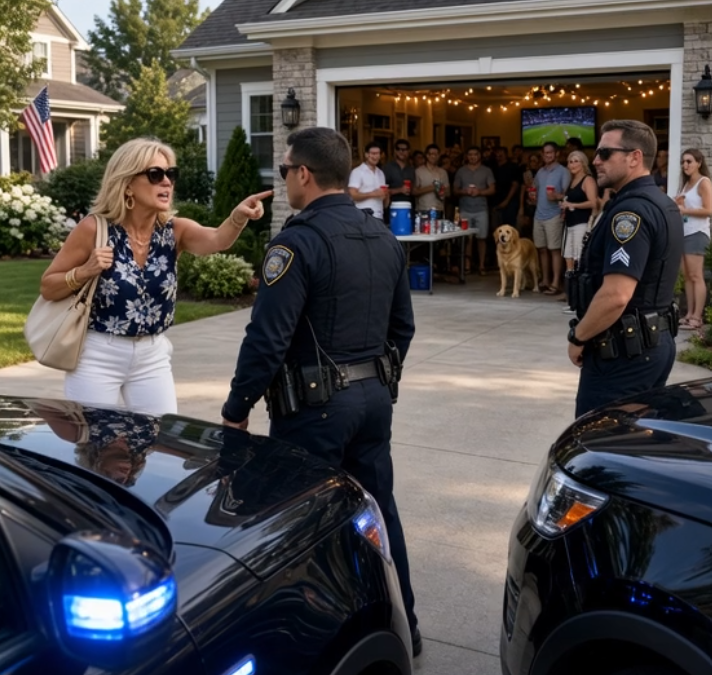
The HOA president stormed into my garage with her phone already connected to 911, screaming that she was finally shutting down my “illegal operation” in front of nearly fifty neighbors.
Every conversation stopped, every engine went quiet, and she smiled like eight years of intimidation had finally delivered the victory she wanted.
What Delilah Thornfield did not know was that the quiet man in jeans standing beside my restored 1967 Mustang was the police chief she was demanding dispatch send to arrest me.
My name is Miles Juliet.
I was forty-five years old when Delilah Thornfield walked into my garage and destroyed the only thing she had ever truly owned in Willowbrook.
Fear.
Twenty years in the Navy had taught me a lot about pressure, patience, and people who confuse authority with competence. After two Gulf deployments and enough time working around machinery to understand that almost anything mechanical can be saved if you are stubborn enough, I retired and became something much simpler.
A dad.
A mechanic.
And the owner of a house with the biggest garage I could afford.
That garage was the reason I bought the place.
It sat on the corner of Oak Street in Willowbrook, a clean suburban neighborhood where most homes had two-car garages designed to store bicycles, Christmas decorations, and cars nobody actually worked on.
Mine was different.
The previous owner had expanded it years earlier. Before I moved in, I had the conversion inspected, updated the wiring, installed proper ventilation, added fire suppression equipment, upgraded the electrical system to handle welders and compressors, and obtained every permit the city required.
Then I turned it into a restoration workshop.
Classic American muscle was my weakness.
Mustangs.
Cudas.
Chevelles.
Chargers.
Camaros.
Old machines built in an era when designers seemed personally offended by the idea of subtlety.
I loved bringing them back.
There was something satisfying about taking an engine that had sat dead for thirty years, opening it piece by piece, cleaning out decades of neglect, replacing what could not be saved, and hearing it fire again.
The garage smelled like motor oil, WD-40, coffee, leather, and old metal.
To me, it smelled like home.
My sixteen-year-old daughter, Zoe, practically grew up inside it.
She could identify a carburetor before half her classmates could identify a spark plug. Her dream was automotive engineering. She wanted to study at Cal Poly and design electric vehicles that still had the attitude of American muscle.
“Silent cars are depressing,” she told me once.
“They don’t have to be silent.”
“That’s not how electric motors work.”
“Then I’ll fix that.”
I believed her.
Zoe had her mother’s intelligence and my unfortunate habit of taking apart anything that looked repairable. Her mother, Karen—not that kind of Karen, thankfully—had died when Zoe was nine. Cancer. Fast, unfair, and unmoved by how much a little girl still needed her.
After that, the garage became our language.
Some fathers and daughters talked over dinner.
Zoe and I talked while rebuilding transmissions.
Some families kept photo albums.
We kept labeled bins of bolts and old Polaroids taped above the workbench.
The garage also became something neither of us originally planned.
A community center.
Not officially.
Nobody elected it.
Nobody issued rules.
It simply happened.
Veterans stopped by.
Neighbors brought projects.
Kids watched me work.
Retired mechanics wandered over and started conversations that lasted three hours.
And once a month, I opened the garage and driveway for a small charity car show.
PART2:
The idea started after a friend from my veteran support group told me his daughter had been accepted to college but was struggling to cover tuition. We raised a little money. Then another military family needed help. Then another.
Eventually, I created a scholarship fund for children of veterans.
Nothing huge at first.
Twenty dollars here.
Fifty there.
A local shop donated.
A restaurant helped with food.
Classic car owners volunteered to display their cars.
The first Saturday of every month became something people looked forward to. Kids chased one another between parked classics while their parents talked. Veterans told stories they could not always tell anywhere else. People dropped cash or checks into the scholarship jar. Sometimes we raised two thousand dollars. Sometimes five.
Every dollar mattered.
The event that started this whole disaster was supposed to fund three scholarships.
One applicant was the son of a Marine who had died after leaving the service.
Another was the daughter of an Army medic.
The third applicant was my own daughter, Zoe.
That mattered to me.
I made sure I had no role in deciding who received anything. I built the fund, hosted the events, and fixed the cars, but the scholarship committee reviewed the applications without me. Zoe knew that. She expected no favors. Honestly, she would have been insulted if I tried to give her one.
PART3:
But I wanted the fund strong enough that she had a fair shot like everybody else.
Most people in Willowbrook loved the shows.
One person did not.
Delilah Thornfield.
If you have never lived under a bad HOA president, it is difficult to explain the particular kind of power they can convince themselves they possess.
Delilah had been president for eight years.
Eight years with no serious challenger.
Eight years of people deciding it was easier to pay twenty-five-dollar fines than argue.
Eight years of residents lowering their voices whenever her white BMW appeared.
Her vanity plate said HOA ENFRCR.
I am not making that up.
She was fifty-two, always dressed like she was on her way to a luxury real-estate closing, because that was her actual profession. Designer heels. Sharp jackets. Perfect hair. Acrylic nails. The kind of smile that said she had already decided what you had done wrong before you opened your mouth.
Her house sat across the street from mine.
Biggest house on the block.
Oversized windows facing directly toward my garage.
Sometimes I would glance up while working and see movement behind the blinds.
Delilah watching.
Photographing.
Documenting.
Waiting.
The first few months after I moved in, she treated me politely.
Then she learned I did not scare easily.
That ended the honeymoon.
My first violation notice involved “commercial activity inconsistent with neighborhood character.”
I walked the notice down to the HOA office.
Delilah sat behind a table arranging paperwork.
“What is this?” I asked.
She looked up.
“A violation notice.”
“I can see that.”
“Then what’s the problem?”
“My workshop is legal.”
“That is your opinion.”
“No. It’s the city’s opinion.”
I placed copies of my business license, zoning approval, and permit documents on the table. Her smile tightened.
“The HOA has separate standards.”
“Show me which standard I violated.”
She pushed the papers back.
“Commercial automotive activity is disruptive.”
“Where is that written?”
“Community standards give the board discretion.”
“Where?”
Her eyes narrowed.
“You seem very confrontational.”
“I’m asking you to point to the rule.”
“I don’t appreciate your tone.”
“I don’t appreciate fines for rules that don’t exist.”
That was our relationship from then on.
I asked for documentation.
She interpreted questions as rebellion.
A month later came a noise complaint.
My compressor supposedly violated quiet hours.
The problem?
The complaint timestamp showed 2:14 p.m.
Quiet hours began at ten.
Then came a complaint about hazardous materials.
An inspector arrived. He found properly stored oil, coolant, solvents, and cleaning products. Everything compliant.
Then came an accusation that I was operating a full commercial auto repair shop with customer traffic.
I restored vehicles.
I did not run a repair business open to the public.
Different zoning category.
My permits reflected that.
The city agreed.
Delilah did not care.
She started filing complaints everywhere.
Building and safety.
Fire marshal.
Business licensing.
Environmental health.
Code enforcement.
City planning.
Forty-seven complaints.
I learned that number later.
Forty-seven.
All from the same address.
One Tuesday morning, I was drinking coffee in my garage when the doorbell rang repeatedly.
Chief Antonio Rodriguez was with me.
I had met Antonio through a veterans support group. He had served before entering law enforcement. We bonded over engines and the strange experience of leaving military life and having civilians ask if we “missed the action.”
Mostly, we talked about cars.
Every Tuesday morning, before his shift when schedules allowed, he stopped by.
Coffee.
Engines.
Life.
Delilah had photographed him several times.
She had no idea who he was because Antonio usually arrived in an unmarked Crown Victoria and wore civilian clothes.
That morning, a nervous city planner stood at my door holding a folder.
“Mr. Juliet?”
“Yes.”
“My name is Steve Morrison. City planning.”
“What happened?”
“We received several complaints regarding potential zoning violations.”
“How many?”
He looked uncomfortable.
“Several.”
Antonio stayed in the garage while I walked Steve through everything.
Permit.
Business license.
Fire clearance.
Electrical certification.
Environmental documentation.
Steve inspected.
Took notes.
Measured.
Asked questions.
After nearly an hour, he closed the folder.
“Everything checks out.”
“Good.”
He hesitated.
Then looked toward the street.
Delilah’s curtains moved.
Steve lowered his voice.
“I probably shouldn’t say this.”
“Then don’t.”
He smiled slightly.
“The same complainant has filed forty-seven reports this year.”
“Against me?”
“Not all.”
That caught my attention.
“How many people?”
“Eight addresses.”
“What kind?”
“I’m not discussing private details.”
“Understood.”
He reached into his folder and pulled out a public records request form.
“This might be useful.”
I looked at him.
“Why?”
“Complaints to public agencies are generally records you can request.”
He tapped the paper.
“Patterns are sometimes informative.”
Then he walked away.
Antonio had heard enough.
He leaned against my Mustang.
“You’ve got a fan.”
“Obsessed fan.”
“You keeping copies?”
“Everything.”
“Good.”
I looked across the street.
“Forty-seven complaints.”
Antonio shook his head.
“People with too much free time are dangerous.”
I filed the request.
A week later, the records arrived.
Steve had been right.
Delilah was not just targeting me.
The Martinez family had questioned why one landscaping contractor kept receiving HOA work without competitive bids. Two weeks later, their yard became the target of repeated landscaping complaints.
Tommy Brooks, a firefighter who lived around the corner, voted against Delilah’s proposed dues increase. Suddenly his pickup became an “improper commercial vehicle.”
Mrs. Patterson questioned a repair invoice. Then her cat became the subject of nuisance animal reports.
Sarah Nguyen challenged one of Delilah’s fines. City inspectors appeared at Sarah’s house twice within a month.
Different people.
Same pattern.
Question Delilah.
Get targeted.
I started documenting everything.
That was Navy habit.
If something keeps happening, stop arguing about whether it is coincidence.
Build a timeline.
Zoe helped.
She loved spreadsheets almost as much as engines.
“That’s unsettling,” I told her one night.
“What?”
“How organized you are.”
“You raised me.”
“Exactly my concern.”
She created folders.
Dates.
Complaint numbers.
Outcomes.
Photos.
Documents.
Every official complaint involving me had resulted in either no violation or a minor clarification.
Nothing supported Delilah’s claims.
Then Delilah made things worse for herself.
She called an emergency community meeting.
I attended.
Twenty-five people packed into a room built for maybe fifteen. Delilah had a projector. Her title slide read:
PRESERVING OUR COMMUNITY VALUES
A CALL TO ACTION
I almost walked out laughing.
Then the slides started.
Photos of my garage.
Photos of neighbors drinking beer.
Photos of veterans standing near classic cars.
Photos of children looking under hoods.
She called it “commercial infiltration.”
Then came photos of Antonio’s unmarked Crown Victoria parked near my garage.
Several.
Different Tuesdays.
License plate visible.
Timestamp visible.
Delilah pointed dramatically.
“Unknown vehicles routinely arrive early in the morning.”
I looked at Antonio, who had attended quietly in the back.
He raised one eyebrow.
I tried not to smile.
She continued.
“This kind of activity threatens neighborhood safety.”
Mrs. Patterson raised her hand.
“How?”
Delilah stopped.
“How what?”
“How does Miles drinking coffee with someone threaten neighborhood safety?”
“We don’t know who these people are.”
Antonio looked down at his shoes.
Tommy started coughing to cover a laugh.
Another resident raised a hand.
“My kids like the car shows.”
Delilah frowned.
“That is not relevant.”
“They raised money for three military kids last month.”
“We are discussing zoning.”
“The city says he’s legal.”
“That does not mean the HOA must tolerate everything the city permits.”
Then Mrs. Patterson stood.
That little woman had spent thirty years as a school district treasurer and possessed the calmest form of aggression I had ever seen.
“Delilah.”
“What?”
“Why are you photographing your neighbors from your bedroom?”
The room went silent.
Delilah blinked.
“For documentation.”
Mrs. Patterson nodded slowly.
“So you’re monitoring Miles’ driveway.”
“I’m ensuring compliance.”
Tommy spoke.
“Looks more like stalking.”
Three people laughed.
Delilah lost control of the meeting almost immediately after that.
Instead of condemning my car shows, people started sharing their own experiences with her.
The Martinez family.
Tommy.
Mrs. Patterson.
Sarah.
Others.
By the end, fifteen residents signed a statement supporting the charity shows.
Three off-duty officers also signed.
Antonio did not.
He preferred not to insert his official role unnecessarily.
But as we walked out, he looked at me.
“She just did your organizing for you.”
“Meaning?”
He nodded toward residents talking together.
“You walked into a room with complaints about you. You’re leaving with a coalition.”
He was right.
Delilah knew it too.
She stormed toward her BMW. Before getting in, she pointed at me.
“This isn’t finished.”
“I know.”
“You’re going to regret humiliating me.”
“I didn’t give your presentation.”
Her face turned red.
She drove away.
A week later came another surprise inspection.
This time a building inspector named Bradley Hoffman marched up my driveway wearing a cheap suit, holding a clipboard, and carrying the aggressive posture of a man who had decided the verdict before seeing the evidence.
Antonio happened to be sitting at my workbench drinking coffee.
Bradley entered.
“Building inspection.”
I looked at him.
“Scheduled?”
“Emergency compliance review.”
“Based on what?”
“Complaint.”
Of course.
He began examining outlets.
Electrical panels.
Ventilation.
He frowned at my professionally installed 240-volt system.
“This looks questionable.”
“It was inspected.”
“By who?”
I pointed to the approval sticker.
He ignored it.
“These permits seem irregular.”
Antonio walked over casually.
Coffee mug still in hand.
“Morning, Brad.”
Bradley froze.
He looked at Antonio.
Then at the mug.
Then at Antonio again.
“Chief.”
Delilah had been watching from across the street.
I could practically feel disappointment traveling through her windows.
Antonio smiled.
“Interesting inspection technique.”
Bradley swallowed.
“I’m conducting a standard review.”
“Emergency review, I heard.”
“We received a complaint.”
Antonio nodded.
“Carry on.”
Suddenly every permit became acceptable.
Every outlet passed.
Ventilation perfect.
Fire suppression excellent.
No violations.
When Bradley finished, he lingered near the garage.
Antonio walked toward his car.
Bradley lowered his voice.
“Mr. Juliet.”
“Yes?”
“I should probably tell you something.”
I waited.
“Mrs. Thornfield contacted me directly.”
“That does not surprise me.”
“She mentioned business referrals.”
“What kind?”
“Her real estate office.”
My posture changed.
Bradley rubbed his forehead.
“She said if I found enough violations to create problems for your permit, she could direct inspection and consulting referrals my way through her real estate clients.”
I stared.
“You’re saying she offered you business in exchange for violations?”
“I’m saying she strongly suggested a relationship.”
Antonio was not as far away as Bradley thought.
He heard everything.
Bradley saw his face.
“Oh, hell.”
Antonio returned.
“Brad.”
“Chief.”
“You should put that in writing.”
Bradley did.
That evening, I filed an ethics complaint with Delilah’s real estate licensing board.
I attached Bradley’s statement.
Then she tried changing the HOA bylaws.
Emergency board meeting.
New proposal.
Retroactively prohibit automotive businesses on residential property.
I attended with the HOA charter.
When she called for a vote, I stood.
“Point of order.”
Her jaw tightened.
“What now?”
“Bylaw changes require thirty days’ written notice.”
“Our attorney has advised—”
“Thirty days.”
I held up the charter.
“And two-thirds of all board members. Plus public comment.”
Her attorney took the document.
Read it.
Then leaned toward Delilah and whispered.
Her face changed.
The vote was tabled unanimously.
As people left, she cornered me in the parking lot.
“You think you’re clever.”
“No.”
“You enjoy embarrassing me.”
“No.”
“You’ve turned everyone against me.”
“No, Delilah. You’re doing that.”
“You’re going to regret crossing me.”
Twenty feet away, Antonio stood beside his car.
His phone was pointed generally toward us.
Recording.
Evidence had started collecting itself.
Then Delilah moved online.
Concerned Citizens of Willowbrook.
New Facebook group.
Within hours, distorted pictures of my workshop appeared. Posts claimed an “industrial automotive facility” was destroying property values.
Anonymous testimonials complained about traffic.
Noise.
Hazardous materials.
Dangerous strangers.
Zoe sat at the kitchen table scrolling.
“Dad.”
“What?”
“She’s using fake accounts.”
“How do you know?”
“Same phrasing.”
“That doesn’t prove anything.”
“Same posting pattern.”
“Still not proof.”
She looked offended.
“Dad.”
“What?”
“I have screenshots.”
Of course she did.
Over the following days, Zoe saved everything.
Posts.
Comments.
Deleted posts.
Fake testimonials.
Timestamps.
I did not let her retaliate.
“Document only.”
“She’s lying about you.”
“I know.”
“I can destroy her online.”
“That sentence concerns me.”
“I mean factually.”
“Still concerns me.”
We created our own page.
Real Willowbrook Community.
No attacks.
No insults.
Just photographs from scholarship events.
Recipients.
Veterans.
Donation totals.
Letters from families.
Photos of children learning about cars.
The contrast was obvious.
Delilah’s feed looked angry.
Ours looked like exactly what the events were.
Charity.
Community.
Cars.
Then she filed a police report claiming I threatened her.
Officer Rivera came to my home.
Professional.
Neutral.
“What happened during your interaction Wednesday?”
“Nothing like what she described.”
“Any witnesses?”
“Yes.”
Mrs. Patterson had a Ring camera covering part of the street. The footage showed Delilah never came near me during the period she claimed. Tommy had photographs timestamped during the supposed confrontation. Delilah was visible across the street.
Her timeline was impossible.
Officer Rivera wrote his report.
No credible evidence.
Multiple witnesses contradicted allegations.
Complainant warned about false reporting.
That should have ended things.
Instead, Delilah called 911 during a Channel 7 interview.
The station had come to feature the scholarship fund.
Tuesday afternoon.
Two o’clock.
Reporter standing in my driveway.
No music.
No engines.
Just conversation.
Police arrived responding to an excessive noise complaint.
The camera kept rolling.
The reporter asked, “Officer, what noise are you responding to?”
The officer looked around.
“You’re looking at it.”
The reporter almost laughed.
That night the story changed.
Instead of only “veteran mechanic raises scholarship money,” viewers saw an HOA president repeatedly calling police on a quiet charity operation.
Delilah hated it.
Antonio visited that evening.
Coffee.
Garage.
Usual place.
His tone was different.
“Miles.”
“Yeah?”
“My department is documenting a pattern.”
“I assumed.”
“Repeated reports from this area are consuming resources.”
“Her?”
“I’m not naming anyone outside the proper process.”
“Understood.”
“But whoever is filing them needs to stop.”
I nodded.
“She won’t.”
Antonio looked at me.
“Then consequences escalate.”
The real turning point came from Mrs. Patterson.
Eight in the morning.
Doorbell.
She stood holding a thick manila folder.
“Coffee?” I asked.
“Yes.”
That meant trouble.
She sat at my kitchen table.
Zoe joined us.
Mrs. Patterson opened the folder.
“I think Delilah has been stealing from us.”
The room went silent.
“What?”
She placed invoices in neat rows.
Tree removal.
Billed $2,800.
Market rate around $1,200.
Parking lot resurfacing.
Billed $15,000.
Comparable bids around $8,000.
Pool maintenance.
Double market rate.
Work apparently incomplete.
Then came contractor records.
Same companies.
No competitive bidding.
Then the piece that changed everything.
Payments from those contractors to Thornfield Realty Consulting Services.
Delilah’s company.
Mrs. Patterson tapped a calculator.
“Fifty-two thousand dollars.”
I stared.
“You’re sure?”
“I was a school treasurer for thirty years.”
“I know.”
“I checked four times.”
Zoe leaned closer.
“These transfers happen right after HOA payments.”
“Yes.”
Mrs. Patterson pulled another statement.
“And look here.”
BMW payment.
From the consulting account.
The same white BMW Delilah drove while delivering fines.
Zoe whispered, “You’re kidding.”
Mrs. Patterson smiled.
“I wish.”
She had built a complete financial timeline.
Invoices.
Transfers.
Accounts.
Payments.
The irony was almost unbelievable.
Delilah had spent months accusing me of permit violations while apparently using HOA money for personal enrichment.
I looked at Mrs. Patterson.
“What do you want to do?”
“Demand an independent audit.”
“When?”
“At your event.”
I blinked.
“My car show?”
“Half the neighborhood will be there.”
“That sounds confrontational.”
“It is transparent.”
Zoe grinned.
I pointed at her.
“Do not encourage her.”
Mrs. Patterson continued.
“Delilah survives because people talk privately and surrender publicly.”
She closed the folder.
“I am done surrendering publicly.”
Our next charity event was three days away.
Antonio already planned to attend. He wanted to see the finished 1967 Mustang Fastback I had been restoring for six months.
Dark green.
Rebuilt engine.
Perfect chrome.
We had texted about the car like two teenagers.
The timing suddenly felt dangerous.
Not because we planned to ambush Delilah.
Because it was increasingly obvious she would create her own confrontation.
Antonio stopped by Wednesday.
“I’ve been thinking about Saturday.”
I poured coffee.
“That sounds dangerous.”
“With everything happening, community outreach might be useful.”
“How much outreach?”
“Six or seven officers.”
I stared.
“In uniform?”
“Some.”
“That’s a lot of outreach.”
“Also some city council members are interested.”
I laughed.
“What did you tell them?”
“That veterans are raising scholarship money.”
“That’s actually true.”
“Channel 7 wants a follow-up.”
“Of course they do.”
He smiled.
“I’ll bring the Cuda.”
Antonio owned a restored 1970 Plymouth Cuda.
Beautiful car.
He rarely took it out.
Saturday was becoming less like my little garage show and more like a county event.
Tommy coordinated classic cars.
Thirty vehicles committed.
Firefighters.
Paramedics.
Off-duty officers.
Veterans.
Mrs. Patterson organized food.
Sarah handled guest lists.
Zoe built QR codes linking to scholarship information and public HOA financial records.
I stopped her when I saw one folder.
“What’s this?”
“Delilah evidence.”
“No.”
“What?”
“We’re not turning a scholarship fundraiser into a revenge website.”
“It’s public information.”
“Scholarship first.”
She sighed.
“Fine.”
“Transparency information can be available separately.”
She smiled.
“That’s exactly what I did.”
I had raised a lawyer.
Or a hacker.
Possibly both.
Every permit for Saturday was displayed.
Street activity approval.
Fire clearance.
Food service.
Charity documentation.
Noise rules.
Nothing left to ambiguity.
Friday night, my security system woke me at 2:47 a.m.
Motion.
Garage exterior.
I checked the camera.
Delilah.
Black yoga pants.
Dark jacket.
Flashlight.
Toolbox.
I sat upright.
“What the hell?”
She moved toward my breaker panel.
I did not confront her.
I called Antonio.
Then watched.
She opened the exterior access box, fumbled with tools, and cut power to part of the garage.
Lights went out.
She hurried away.
My backup system automatically switched.
Lights returned.
Years earlier, after hurricane deployment work, I had installed a generator and redundant electrical circuits.
Delilah apparently did not know that.
Police documented the damage.
Camera footage saved.
Another piece.
Saturday morning, she began calling neighbors.
Mrs. Patterson phoned me.
“That woman just told me you’re suffering from violent PTSD.”
I closed my eyes.
“She said what?”
“That you’re unstable.”
“Wonderful.”
“I told her the only unstable person I know is the one calling people at six in the morning.”
I appreciated Mrs. Patterson.
Veteran groups learned about the calls.
The American Legion issued public support for the fundraiser.
VFW representatives announced they would attend.
Attendance grew.
Then Bradley Hoffman contacted Antonio.
Delilah had approached him again.
This time, Bradley cooperated with investigators.
He recorded the interaction.
Delilah offered future real-estate referrals if he identified safety violations serious enough to shut down my event.
Bradley asked directly, “Are you asking me to fabricate violations?”
Delilah avoided saying yes.
But according to the recording, she described a “mutually beneficial partnership” where he would find concerns and her business would reward him with referrals.
That evidence went to investigators.
By noon, agencies were already reviewing multiple matters involving her.
Still, she kept going.
She called city hall demanding cancellation.
The mayor’s office refused.
Fire department confirmed compliance.
Police confirmed community outreach presence.
She threatened lawsuits.
Then she tried emergency court action.
At three in the afternoon, a judge rejected her request to stop the event.
The judge found no credible evidence of an emergency and warned against abusing court procedures.
By then, I thought Delilah had exhausted every possible move.
I underestimated her.
At 4:47 p.m., someone called 911 reporting explosives in my garage.
Not noise.
Not zoning.
Not traffic.
A bomb.
The response was immediate.
Police.
Fire.
Bomb technicians.
Federal personnel.
The street was evacuated.
My garage was cleared.
Neighbors were moved away.
For almost an hour, Willowbrook looked like the site of a terrorism investigation.
I stood behind a perimeter watching a robot roll toward the garage where I had spent months rebuilding the Mustang.
Zoe stood beside me.
“Dad.”
“Yeah?”
“This is insane.”
“I know.”
“What if they damage the car?”
I looked at her.
“That is your concern?”
“It took six months.”
“She has priorities.”
Nothing was found.
No explosives.
No suspicious devices.
Just tools.
Car parts.
Wax.
Coffee maker.
Donation jars.
Investigators began tracing the call.
The report originated from Delilah’s home line.
I remember looking across the street.
Her curtains were closed.
Antonio walked toward me.
His expression was harder than I had ever seen it.
“This just became very serious.”
“It wasn’t serious before?”
“Different level.”
“Event canceled?”
He looked toward my driveway.
Then back at me.
“No.”
“You sure?”
“Once the scene is cleared, your permits remain valid.”
I laughed.
“She called in a bomb threat and still didn’t stop it.”
Antonio’s face did not change.
“That is not the part I’d focus on.”
He was right.
Shortly after six, authorities contacted Delilah. She was taken into custody for questioning and then formally arrested as the investigation developed.
The story spread fast.
Local media first.
Then regional.
Online clips.
A veterans charity car show disrupted by a false emergency report connected to the HOA president who had spent months fighting the organizer.
People became angry.
Then generous.
Donations started arriving online.
Military organizations called.
Local businesses offered matching funds.
The event that Delilah wanted to destroy became much larger than I ever intended.
By seven, authorities had cleared my property.
Cars began arriving.
Not twenty anymore.
Thirty-five.
Then more.
Neighbors.
Veterans.
Officers.
Firefighters.
Reporters.
I looked at Zoe.
“We should cancel.”
Her face dropped.
“What?”
“This has become a circus.”
“Dad.”
“This was supposed to be scholarships.”
She pointed toward the driveway.
“It still is.”
A little boy wearing an Army shirt stood beside a Camaro while his mother explained something about the engine. Donation jars were already filling. Veterans were talking. Families were gathering.
Zoe looked at me.
“She tried to turn it into something ugly.”
I nodded.
“So don’t let her.”
That was my daughter.
Sixteen.
Smarter than me.
We continued.
Antonio arrived in his Cuda.
Jeans.
Work boots.
No dramatic entrance.
Just my friend bringing his car.
People admired it.
He parked beside the Mustang.
For twenty minutes, the night felt normal.
Classic rock.
Barbecue smoke.
Chrome reflecting string lights.
Kids laughing.
Then someone shouted.
I looked toward the street.
Delilah.
Somehow released pending further proceedings and apparently incapable of going home and calling an attorney.
She was marching toward us.
Phone in one hand.
Bullhorn in the other.
“This is illegal!”
Every head turned.
My stomach sank.
“Of course,” Zoe muttered.
Delilah lifted the bullhorn.
“SHUT THIS DOWN!”
The music stopped.
She walked directly into the event.
“This gathering is illegal. I have contacted the police.”
Antonio stood near the Mustang.
Civilian clothes.
Delilah passed within five feet of him without recognition.
“I need police at 1247 Oak Street,” she shouted into her phone after lowering the bullhorn.
I walked toward her.
“Delilah.”
“Stay away from me.”
“You need to leave.”
“This is HOA property jurisdiction.”
“It is my driveway.”
“This is an unlawful commercial gathering.”
“It’s a permitted charity event.”
“You’re lying.”
I pointed toward framed permits on a display board.
She refused to look.
“I want everybody off this property.”
Someone in the crowd laughed.
Delilah spun.
“This isn’t funny!”
“No,” I said. “It really isn’t.”
She lifted the phone.
“Yes, 911? I need officers immediately.”
Several uniformed officers were literally standing thirty feet away talking beside a Charger.
They looked at one another.
Antonio rubbed his face.
Delilah continued.
“The homeowner is refusing to shut down an illegal event.”
The dispatcher apparently asked a question.
“Yes. I’m HOA president.”
Mrs. Patterson whispered, “Not for long.”
Delilah continued.
“There are dangerous vehicles, alcohol, crowd safety issues, possibly weapons.”
Antonio stepped forward.
“Delilah.”
She spun.
“You stay out of this.”
He stopped.
I bit the inside of my cheek.
“You’re one of his friends.”
Antonio nodded.
“Yes.”
“Then you’re part of the problem.”
“Possibly.”
“I have police coming.”
“I know.”
“You should leave before they get here.”
Antonio looked around.
Several officers were visibly struggling not to laugh.
“Ma’am.”
“What?”
“I think you need to end the call.”
“Don’t tell me what to do.”
He reached into his car.
Delilah kept talking.
“I want a supervisor.”
Antonio pulled out his department identification and held it up.
“My name is Antonio Rodriguez.”
She stared.
“I’m the police chief.”
Silence.
Complete silence.
Somewhere behind us, a little kid dropped a plastic cup.
It sounded incredibly loud.
Delilah’s phone slowly lowered.
“What?”
Antonio remained calm.
“I’m Chief Rodriguez.”
Her eyes moved from the identification to his face.
Then to the officers.
One of them nodded.
“Yes, ma’am.”
Delilah looked at me.
Then back at Antonio.
“You?”
“Yes.”
“But…”
She pointed at his Cuda.
“You drive that.”
“Yes.”
“You come here.”
“Yes.”
“Every Tuesday.”
“Yes.”
Antonio smiled faintly.
“That is generally how friendship works.”
Her face went pale.
“You never told me.”
I almost laughed.
“You never asked.”
Delilah stared at me.
“You knew.”
“That he was chief?”
“Yes.”
“You let me…”
“What?”
I stepped closer.
“Photograph him?”
Her eyes widened.
“You filed complaints about his car.”
Antonio tilted his head.
“You did?”
Delilah shook her head.
“That isn’t relevant.”
“I’m suddenly very interested.”
She tried recovering.
“This event is still illegal.”
Antonio pointed to the permit board.
“No.”
“It violates HOA rules.”
“We have reviewed the applicable permits.”
“You’re biased.”
“I did not issue the permits.”
“You’re his friend.”
“Yes.”
“So you cannot—”
“Delilah.”
Mrs. Patterson’s voice cut through the crowd.
Everyone turned.
She stood beside the donation table holding a folder.
“Before you say another word about HOA rules, homeowners deserve answers about HOA money.”
Delilah froze.
“What are you talking about?”
Mrs. Patterson opened the folder.
“Fifty-two thousand dollars.”
No sound.
Delilah stared.
“Excuse me?”
“Payments routed from HOA contractors to Thornfield Realty Consulting.”
“That is business income.”
“Then perhaps you can explain why payments consistently followed inflated HOA invoices.”
Delilah laughed nervously.
“This is ridiculous.”
Mrs. Patterson held up charts.
“Tree removal.”
“Accounting error.”
“Parking lot resurfacing.”
“Different scope.”
“Pool maintenance.”
“You don’t understand vendor management.”
“BMW payments.”
Delilah stopped.
Mrs. Patterson continued.
“The same BMW you use to deliver violation notices appears to have been paid from the account receiving contractor consulting money.”
Neighbors began murmuring.
Delilah looked around.
“This is a setup.”
“No,” I said.
Her eyes snapped toward me.
“You did this.”
“I didn’t touch your accounts.”
“You’ve been conspiring against me.”
“You filed forty-seven complaints.”
“Because you violated rules.”
“The city cleared me.”
“You manipulated them.”
“You offered Bradley Hoffman business referrals.”
Her mouth opened.
Closed.
Antonio watched carefully.
She shook her head.
“He’s lying.”
Antonio spoke.
“Bradley provided a recorded statement.”
That broke something inside her.
“You’re all against me.”
Nobody answered.
She turned toward residents.
“I protected this neighborhood for eight years.”
Mrs. Patterson said quietly, “You controlled it.”
“I increased property values.”
“You increased fees.”
“I maintained standards.”
“You punished disagreement.”
“I kept people safe.”
Tommy called from the crowd.
“You filed a bomb threat.”
Her face twitched.
“I did not.”
Antonio’s expression hardened.
“That investigation is active. I strongly suggest you stop speaking about it without counsel.”
For once, Delilah listened.
Then a federal agent who had remained near the street approached.
Badge visible.
“Mrs. Thornfield?”
Her shoulders dropped.
“Yes?”
“We need to speak with you regarding several pending matters.”
She stepped backward.
“This is harassment.”
“No, ma’am.”
“I have rights.”
“Yes, you do.”
“Then I’m leaving.”
“Not yet.”
A deputy moved nearby.
Delilah’s eyes found me.
“You ruined my life.”
That angered me more than anything else she had said.
“No.”
My voice stayed quiet.
“You filed the complaints. You fabricated reports. You targeted neighbors. You interfered with inspections. You threatened me. You sabotaged my power. You called emergency services. You handled the HOA money. None of us made you do that.”
Her face twisted.
“This neighborhood needed someone strong.”
Mrs. Patterson replied, “It needed someone honest.”
The agent asked Delilah to turn around.
Handcuffs clicked.
Nobody cheered.
I was glad.
This had stopped being funny a long time earlier.
She was led toward the vehicle.
Halfway there, she looked back.
“This isn’t over.”
Antonio shook his head.
“For once, Delilah, stop talking.”
She disappeared into the car.
For almost a minute, the event stayed silent.
Then Zoe stepped onto a chair.
She held up the scholarship jar.
“So…”
Everyone looked at her.
“Anybody still want to help send military kids to college?”
Laughter exploded.
Then applause.
Not for Delilah’s arrest.
For Zoe.
For the reason everyone had come.
Music restarted.
Engines started.
Food came out.
And donations poured in.
By nine o’clock, we had raised approximately forty-seven thousand dollars.
I stared at the total.
“Check it again.”
Zoe did.
“Forty-seven.”
Mrs. Patterson looked over her shoulder.
“That’s nearly what she stole.”
“Do not say that on television.”
A Channel 7 reporter standing nearby said, “Too late.”
I groaned.
The fundraiser became the most successful event we had ever held.
Corporate sponsors contacted us.
Veterans organizations pledged matching contributions.
People donated because they believed in the scholarship.
Some donated because they were angry about what happened.
I accepted both as long as the money helped students.
Three months later, Willowbrook felt like a different neighborhood.
Delilah was no longer HOA president.
The board removed her after the criminal proceedings began. An independent financial audit confirmed serious irregularities involving approximately fifty-two thousand dollars in misused HOA funds. The investigation into contractor payments led to restitution requirements and additional charges. Her real-estate license faced disciplinary action and was ultimately revoked. The false emergency reporting case brought additional penalties.
The final court outcomes were not as dramatic as every rumor floating around the neighborhood, but they were serious.
Delilah received prison time and restitution obligations.
I did not attend every hearing.
At some point, I decided her punishment did not need to become my hobby.
Mrs. Patterson was elected HOA president.
Unanimously.
The first thing she did was open the books.
Every resident received monthly financial statements. Vendor contracts required competitive bids. Board members disclosed conflicts. Large expenditures required independent review.
HOA fees dropped by roughly forty percent after unnecessary contracts were eliminated.
Turns out honesty is cheaper.
Tommy became safety coordinator.
Sarah joined the scholarship committee.
Zoe continued managing our online systems because apparently nobody else understood them.
The garage shows became officially recognized neighborhood charity events.
Not because I demanded it.
Because residents voted.
Attendance grew.
Fifty cars.
Then seventy.
Enthusiasts came from neighboring towns.
The scholarship fund grew beyond anything I imagined.
Within a year, we had raised more than two hundred thousand dollars.
Military kids went to college.
Trade school.
Engineering programs.
Nursing programs.
Some came back to visit.
One brought me a framed photograph from graduation.
Another sent a letter from engineering school.
One young man joined the Navy.
I told him he should have chosen a smarter branch.
He laughed.
Zoe got her scholarship.
Cal Poly.
Automotive engineering.
The day the acceptance letter arrived, she ran into the garage screaming.
I thought something was wrong.
“Dad!”
“What?”
She shoved the letter into my chest.
I read.
Then read again.
“You got in.”
She was crying.
“No.”
I looked at her.
“What?”
“We got in.”
That nearly broke me.
I hugged her.
For years I had worried that my retirement, single parenthood, the shop, money, everything would somehow limit her.
Instead, the garage that Delilah tried to destroy had helped create the opportunity she wanted most.
Zoe left for school that fall.
The garage felt too quiet.
Antonio still came Tuesday mornings.
Coffee.
Cars.
He eventually announced plans to retire.
“I’m tired,” he said.
“You’re old.”
“We’re almost the same age.”
“You look older.”
“I can still arrest you.”
“For what?”
“Insulting a public servant.”
“That is not illegal.”
“It should be.”
He wanted to spend retirement restoring cars and volunteering with veterans.
We expanded part of the workshop into the Willowbrook Veterans Workshop.
Free basic repairs for military families.
Oil changes.
Brake work.
Minor repairs.
Training classes.
Veterans taught one another.
Teenagers learned.
Neighbors volunteered.
The garage became more of what Delilah had always claimed to value.
Community.
The real version.
Not control disguised as community.
Mrs. Patterson ran board meetings with coffee and donuts.
No one feared attending.
People disagreed.
Votes happened.
Sometimes Mrs. Patterson lost.
She accepted it.
That was probably the most revolutionary change.
An HOA president who understood she could be wrong.
One Tuesday morning, I was replacing a carburetor when Antonio walked in.
“Coffee?”
“Already made.”
He poured a cup.
Looked around.
Three veterans worked on a pickup.
A teenager watched Tommy explain brake pads.
Mrs. Patterson had left a box of donuts.
Antonio smiled.
“Remember when she called this an illegal operation?”
“Yes.”
“She wasn’t completely wrong.”
I stared.
He pointed at Tommy.
“That man’s haircut should be illegal.”
Tommy threw a shop rag at him.
Normal.
That became my favorite word.
Normal.
For months, every ring of the doorbell had meant inspector.
Every unknown vehicle meant complaint.
Every HOA envelope meant threat.
Then, eventually, the neighborhood became normal.
The Thornfield McMansion sold.
A retired Air Force couple bought it.
First weekend, they walked across the street.
The husband held a six-pack.
His wife held cookies.
“I hear you like cars.”
I looked at their driveway.
“What do you have?”
He smiled.
“1969 GTO.”
I opened the garage.
“You may live across the street.”
His wife laughed.
Their grandchildren started attending the shows.
The same driveway where Delilah once stood photographing suspicious vehicles became a place where kids lined up to look at classic cars.
Life has a sense of humor.
Sarah and I became close through all of this.
At first, we were simply neighbors.
She was the nurse practitioner who kept everyone calm during the chaos.
Then she started staying after events.
Coffee.
Conversation.
One evening after everyone left, she sat on the tailgate of my truck while I packed tables.
“You know,” she said, “you’re terrible at realizing when someone likes you.”
I stopped.
“What?”
“Exactly.”
We started dating.
Slowly.
Carefully.
Zoe approved after conducting what felt like a federal background investigation.
A year later, Sarah and I got engaged.
We planned the wedding in the same driveway where Delilah once tried to shut down the scholarship fundraiser.
Mrs. Patterson joked about requiring an HOA permit.
I told her she was fired.
She told me the president could not be fired.
Antonio said he would handle security.
Tommy said firefighters were better dancers than cops.
The argument lasted three months.
The wedding had classic cars.
Veterans.
Family.
Neighbors.
No violation notices.
No emergency calls.
No drama.
Exactly the kind of community event Delilah always claimed she wanted but never knew how to create.
People occasionally asked what I thought about her after everything.
Was I happy she went to prison?
No.
Satisfied that she faced consequences?
Yes.
Those are different things.
I did not want Delilah destroyed.
I wanted her to stop.
At dozens of points, she could have stopped.
After the first failed complaint.
After inspectors cleared me.
After the community meeting.
After the bribery allegation.
After the bylaw vote.
After the false police report warning.
After the judge rejected her injunction.
Instead, every setback became proof in her mind that she needed to escalate.
That is what made her dangerous.
Not the clipboard.
Not the BMW.
Not the HOA title.
Her inability to accept no.
People like Delilah believe resistance is evidence that they have not applied enough pressure.
If one complaint fails, file five.
If five fail, call inspectors.
If inspectors fail, change rules.
If rules fail, attack reputation.
If reputation attacks fail, use police.
If police refuse, manufacture an emergency.
By the end, she was no longer defending community standards.
She was defending her identity.
She needed to be right because admitting she was wrong would force her to confront everything she had done.
So she kept digging.
Eventually, the hole became too deep.
I learned something too.
For months, I wanted one dramatic moment where Delilah got exposed.
I imagined some perfect showdown.
Turns out real accountability is rarely one moment.
It is paperwork.
Forty-seven complaints documented.
Security footage.
Permit files.
Meeting minutes.
Inspector statements.
Financial records.
Bank transfers.
911 recordings.
Witnesses.
Each piece alone seemed small.
Together, they became impossible to ignore.
My Navy buddy had been right.
Follow the paper trail.
Entitled people document their own behavior because they are convinced the rules will protect them.
Delilah put things in writing because she believed she controlled the interpretation.
Violation notices.
Emails.
Complaints.
Invoices.
Contracts.
Fake emergency claims.
She built the case against herself.
The irony of Chief Rodriguez still makes people laugh.
Whenever someone tells the story, that is the part they remember.
“She called the police and the police chief was already there.”
Yes.
Funny.
But Antonio being my friend was not why I won.
That distinction matters.
If Antonio had been a plumber, Delilah’s actions would still have been wrong.
If I had never served, the permits would still have been valid.
If my daughter had not been brilliant with digital records, Delilah’s financial irregularities would still have existed.
The law should not depend on knowing powerful people.
Antonio helped ensure the process was handled correctly, but evidence mattered more than friendship.
That was something he insisted on.
One evening after the worst of it, I thanked him.
“For what?”
“For backing me.”
He shook his head.
“I didn’t back you.”
I stared.
He smiled.
“I backed the facts.”
“That sounds like a police chief answer.”
“It is.”
Then he added, “You just happened to have the facts.”
That stayed with me.
Facts.
Not outrage.
Not revenge.
Facts.
Years later, Willowbrook’s annual Community Transparency Car Show became one of the county’s biggest charity events.
I hated the name.
Mrs. Patterson loved it.
Sponsors came.
Automotive companies.
Veterans groups.
Local businesses.
Students displayed engineering projects.
People brought cars from three states.
Every year, someone asked me to tell the story.
I usually refused.
Zoe told it better.
One year she came home from college and stood near the Mustang. A group of teenagers gathered.
She pointed toward the garage.
“My dad almost lost this workshop because one person thought authority meant never being questioned.”
I watched from the side.
“She was wrong,” Zoe said.
Then she pointed toward the scholarship banners.
“But the important part isn’t that she lost. It’s what everyone built after she left.”
That kid was better than me at speeches too.
The scholarship program expanded.
Veterans Workshop became permanent.
HOA finances remained public.
Complaint procedures changed.
Anonymous complaints still existed for legitimate safety concerns, but repeated unverified accusations could no longer be weaponized without review.
No president could personally direct enforcement against someone who challenged them.
Conflict-of-interest rules were strengthened.
Vendor bidding became mandatory above certain amounts.
Every reform was boring.
I loved that.
Good government is often boring.
Good HOA management should be incredibly boring.
Budgets.
Landscaping.
Repairs.
Meeting minutes.
Nobody should be afraid when their HOA president walks up the driveway.
The moment an HOA becomes exciting for the wrong reasons, somebody has probably forgotten what it exists to do.
Antonio died several years later.
Heart attack.
Unexpected.
His Cuda was still immaculate.
At the funeral, his son asked me if I wanted to say something.
I stood in front of a room full of police officers, veterans, family, and neighbors.
I told them about Tuesday morning coffee.
Not the famous night.
Not the chief confronting Delilah.
Coffee.
Engines.
Antonio quietly holding a mug while I complained about carburetors.
Because that was who he was to me.
A friend before a chief.
Afterward, his son handed me a small envelope.
Inside was a note in Antonio’s handwriting.
Miles,
Stop tuning the Mustang too rich.
Also, if you ever let Tommy touch the Cuda, I will haunt you.
Antonio.
I laughed and cried at the same time.
His son kept the Cuda.
Good decision.
Tuesday mornings changed after that.
For a while, I still poured two coffees by habit.
Then one.
The garage carried memories.
Zoe did.
Sarah did.
Antonio did.
Hundreds of people did.
Buildings absorb stories.
Maybe that was why Delilah’s attempt to shut it down had felt so personal.
She saw square footage.
I saw life.
Looking back, I sometimes wonder what would have happened if Delilah simply walked over one morning and talked to me.
“Miles, the shows are getting bigger. Can we discuss parking?”
Absolutely.
“Can we make sure noise ends by nine?”
Of course.
“Can you coordinate with neighbors when street traffic increases?”
Reasonable.
We could have solved every legitimate concern in fifteen minutes.
She never wanted solutions.
She wanted obedience.
That distinction is everything.
A person seeking a solution asks questions.
A person seeking control gives orders.
Delilah gave orders.
Then punished people who questioned them.
When punishment stopped working, she increased force.
That ended exactly the way unchecked escalation usually ends.
Someone with actual authority finally asked what she was doing.
No answer could save her.
The famous moment happened at 7:47 that Saturday night.
I know because Zoe saved the timestamp.
Delilah stood in my garage party yelling that the police were coming.
Antonio stepped forward.
“I am the police.”
People always ask what I felt.
Satisfaction?
A little.
Relief?
Definitely.
Vindication?
Yes.
But mostly exhaustion.
Eight months of complaints.
Inspections.
Meetings.
Rumors.
Police calls.
Threats.
By the time her expression changed, I did not feel like celebrating.
I wanted quiet.
I wanted the fundraiser to continue.
I wanted kids to get scholarships.
I wanted my daughter to stop worrying that someone would shut down the garage she loved.
That was the victory.
Not watching Delilah fail.
Watching everybody else continue.
After she was taken away, people could have gone home.
They did not.
They stayed.
They donated.
They talked.
They laughed.
A veteran brought out a guitar.
Children danced near the driveway.
Thirty-five old engines reflected string lights.
Mrs. Patterson argued with a reporter.
Tommy burned hamburgers.
Antonio spent twenty minutes debating ignition timing with a teenager.
Zoe counted donations twice.
That image is the ending I remember.
Not handcuffs.
Not flashing lights.
People staying.
Delilah had spent years using fear to empty rooms.
That night, people refused to leave.
Years later, Sarah once asked me, “If you could go back and avoid all of it, would you?”
I thought carefully.
“Yes.”
She seemed surprised.
“You would?”
“Of course.”
“Even knowing what came afterward?”
“I’d rather have raised the scholarship money without bomb squads.”
Fair answer.
Then she asked, “But if you couldn’t avoid it?”
I looked toward the garage.
“I’d document sooner.”
She laughed.
“That is the most Miles answer possible.”
Maybe.
I do not romanticize conflict.
Nobody should need harassment to create community reform.
Nobody should need a corrupt HOA president to discover financial transparency.
Nobody should need a false 911 call to bring neighbors together.
The lesson is not “fight everyone.”
The lesson is this:
Pay attention early.
Ask questions.
Keep records.
Support neighbors when something is wrong.
Do not wait until one person is isolated.
Because isolation is how petty power grows.
Delilah targeted individuals.
She lost when individuals became a group.
Not a mob.
A community.
People sharing evidence.
Using procedures.
Voting.
Auditing.
Reporting actual misconduct.
That difference matters.
A few months ago, Zoe visited with her own daughter.
My granddaughter is four.
She walked into the garage and pointed at the Mustang.
“Grandpa’s car?”
“Yes.”
“Fast?”
“Very.”
Zoe interrupted.
“No.”
I looked at her.
“What?”
“You are not teaching her that.”
“She asked.”
“She’s four.”
“Best age.”
My granddaughter climbed into the passenger seat.
Zoe sighed.
“You created me. Now you deserve this.”
Fair.
I started the engine.
The garage filled with that deep old V8 rumble.
My granddaughter’s eyes widened.
Pure joy.
Three generations.
One garage.
I thought about Delilah.
Briefly.
She once argued that this place damaged neighborhood character.
I looked at my daughter.
My granddaughter.
Scholarship photographs.
Veterans Workshop signs.
Antonio’s picture.
Then I laughed.
She had been spectacularly wrong.
Community character is not measured by how identical every house looks.
It is measured by what people do for one another when nobody forces them.
That is what my garage became.
No HOA rule could create it.
No president could own it.
No violation notice could destroy it.
People built it.
Choice by choice.
Coffee by coffee.
Donation by donation.
Repair by repair.
And it started surviving the moment we stopped confusing Delilah’s title with unlimited authority.
If there is one part of the whole story I still enjoy, it is her original confidence.
She marched into my driveway convinced one phone call would end everything.
Phone raised.
Designer heels clicking.
Guests falling silent.
“I’m calling the police!”
She thought that sentence ended arguments.
She had used official systems as weapons for so long that she assumed law enforcement would arrive and ask only one question.
“What does the HOA president want?”
Instead, she called a department whose chief was standing ten feet away admiring a Mustang.
And when actual authority stepped forward, it did not ask what Delilah wanted.
It asked what the law said.
Permits valid.
Event authorized.
Noise compliant.
Fundraiser legal.
Emergency claims unsupported.
Financial questions documented.
The facts did not care that she had been president eight years.
Her title could not change them.
That is why I still smile when people ask me what happened after she said, “I called the police.”
I usually answer, “They were already there.”
But the full truth is better.
The police were there.
The neighbors were there.
The veterans were there.
The evidence was there.
The people she had spent years bullying were there.
And for the first time in eight years, Delilah Thornfield stood in the center of Willowbrook without the only thing that had ever made her powerful.
Fear.
Nobody was afraid of her anymore.
That was when her reign actually ended.
Not when the cuffs clicked.
Not when the board removed her.
Not when the audit finished.
It ended the moment she shouted an order and nobody obeyed simply because she was the one shouting.
Everything after that was paperwork.
Today, the first Saturday of every month still begins the same way.
I open the garage.
String lights come on.
Classic cars arrive.
Someone starts the grill.
Coffee appears.
Kids gather around engines.
Veterans pull folding chairs into the driveway.
Scholarship jars go on the table.
The Mustang sits near the center.
Sometimes I stand in the doorway before everyone arrives.
Just me.
Motor oil.
Morning air.
Old memories.
Then engines begin turning onto Oak Street.
One by one.
Nobody comes because an HOA ordered them.
Nobody stays because they are afraid to leave.
They come because they want to.
That is the difference between control and community.
Delilah spent eight years trying to teach Willowbrook the first.
In the end, she accidentally taught all of us the second.
And every time the garage fills with laughter now, I remember the night she marched through those doors, raised her phone, and promised that the police were going to shut me down.
She was right about one thing.
The police did show up.
They just weren’t there for me.








