They Sealed an Elderly Cat Inside Two Bags and Left Her to D!e—But the Bag Moved, and So Did the Truth
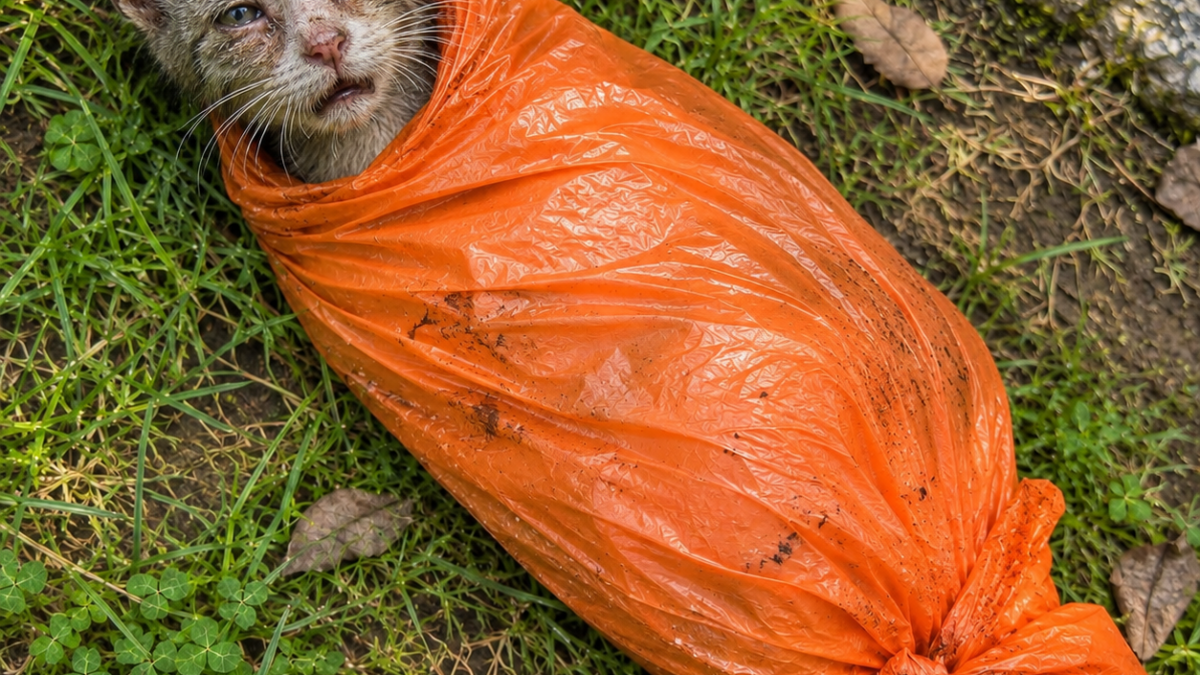
They Sealed an Elderly Cat Inside Two Bags and Left Her to D!e—But the Bag Moved, and So Did the Truth
Milagros should have disappeared in that field like garbage, because the person she had trusted for years sealed the elderly cat inside two plastic bags and drove away—but a married couple saw the bundle move.
What Mateo and Lucía found inside was a frail gray cat too frightened and exhausted to run, and when her former owner came back demanding her property, the old animal did something that exposed a truth uglier than simple abandonment.
By the time the case reached a courtroom, the woman who had thrown Milagros away would discover that the quietest witness against her could not speak, could not understand legal arguments, and could not be intimidated into pretending she was not afraid.
The first thing Mateo Alvarez noticed was not the car.
It was the silence after it left.
He had been repairing a sagging wire fence along the back edge of his sister’s property outside Luque, Paraguay, on a humid Tuesday afternoon when a silver sedan rolled slowly onto the narrow dirt road bordering the vacant field.
Mateo straightened and wiped sweat from his forehead with the back of his wrist.
“Lucía,” he called toward the porch. “You expecting somebody?”
His wife looked up from a basket of laundry.
“No.”
The sedan stopped.
For several seconds, nothing happened.
Then the driver’s door opened.
A woman stepped out.
From seventy yards away, Mateo could not see her face clearly.
He noticed only an expensive-looking blouse, dark pants, oversized sunglasses, and the impatient way she opened the rear passenger door.
She reached inside.
Then pulled out a black plastic bundle.
It was not huge.
Maybe the size of a duffel bag packed too tightly.
But whatever was inside had enough weight that she used both hands.
The woman glanced toward the road.
Then toward the nearest houses.
Then carried the bundle several yards into the tall grass.
And dropped it.
Not gently.
Mateo could not hear the impact clearly from where he stood, but he saw the shape hit the ground and roll slightly.
Something tightened in his chest.
“What is she doing?” Lucía asked.
“I don’t know.”
The woman hurried back toward the sedan.
Mateo stepped toward the fence.
“Hey!”
PART2:
She either did not hear him or pretended not to.
The car door slammed.
The engine revved.
Gravel sprayed beneath the tires.
Then the sedan disappeared down the dirt road.
Lucía came off the porch.
“What did she leave?”
Mateo stared at the black bundle.
“Probably trash.”
“Then why drive all the way out here?”
Mateo was about to answer.
Then the bag moved.
Barely.
A tiny twitch.
So small he thought the heat might have distorted what he saw.
He stared.
Nothing.
Then it moved again.
Lucía saw it.
“Oh my God.”
The laundry basket hit the dirt.
They ran.
The field was uneven and thick with weeds.
Mateo nearly fell crossing the shallow drainage ditch between the property and the road.
Lucía reached the bundle first.
It was a black garbage bag.
The top had been twisted tightly and tied into a knot.
Something inside shifted.
Not violently.
Weakly.
Lucía dropped to her knees.
“There’s something alive in there.”
Mateo knelt beside her.
“Knife.”
She already had the small folding blade she used for gardening.
Mateo worked the point under the plastic without stabbing toward whatever was inside.
His hands shook.
He cut through the first knot.
The black plastic loosened.
Inside was another bag.
Clearer.
Thinner.
Twisted tightly.
For one terrible second, neither of them moved.
Then Mateo saw gray fur pressed against the translucent plastic.
A paw.
Small.
Motionless.
Then one claw flexed.
Lucía made a sound Mateo would remember for years.
Not quite a scream.
More like the air had been punched out of her.
“It’s a cat.”
Mateo’s fingers trembled harder.
“Open it.”
“I am.”
“Mateo, open it!”
He cut the second bag.
Air rushed inward.
The plastic loosened.
An old gray face appeared.
White around the muzzle.
Clouded amber eyes.
Ears flattened.
Mouth open.
Breathing fast but shallow.
The cat did not leap out.
Did not hiss.
Did not scratch.
She simply stared.
Mateo tore the plastic wider.
“Easy, sweetheart.”
The cat tried to move.
Her front legs stretched forward.
Her hindquarters followed a second later.
Then she collapsed onto her side.
Lucía knelt opposite him.
“Water.”
“I’ll get—”
“No. Don’t leave her.”
Something in Lucía’s voice stopped him.
She pulled her own water bottle from her pocket, poured some into the cap, and set it near the cat’s mouth.
The old cat stared at it.
Then at Lucía.
Then back at the water.
As if she expected a trick.
“It’s okay,” Lucía whispered. “Nobody’s going to hurt you.”
The cat lowered her nose.
One lick.
Then another.
Then she stopped.
Her head turned toward the road.
Mateo followed her gaze.
The silver sedan was gone.
The cat kept staring anyway.
Lucía’s eyes filled.
“She’s waiting.”
“For what?”
“For the car.”
The words settled between them.
Mateo looked down at the torn plastic.
He imagined hands twisting those knots.
A person placing the cat inside one layer of darkness.
Then another.
He imagined the plastic tightening around an old body.
Familiar hands.
Familiar smell.
Familiar car.
Then grass.
Impact.
Silence.
Left.
His hands began shaking again.
“We’re calling the police.”
Lucía nodded.
“First we get her somewhere safe.”
The cat managed to sit upright.
She was smaller than either of them had expected.
Thin.
Her spine showed beneath the dull gray coat.
One ear had a ragged edge, probably from an old injury.
Her claws were overgrown.
Her hips looked stiff.
No blood.
No broken bones anyone could immediately see.
No catastrophic wound.
That almost made it worse.
She had not been discarded because she was visibly dying.
She had simply been discarded.
Lucía extended one hand.
The cat flattened herself.
Lucía froze.
Then lowered her hand to the grass.
“Okay.”
The cat watched.
“You don’t have to trust me.”
Mateo called the local police station and described the sedan.
Then they created a path through the weeds and slowly moved toward the house.
They did not carry the cat.
Every time Mateo tried getting close enough, her body tightened.
So they let her choose.
She followed.
Three steps.
Stop.
Look toward the road.
Two more steps.
Stop.
Road.
Again.
By the time they reached the yard, Lucía had placed water beneath the shade of a mango tree.
The cat drank.
Then walked to the farthest corner beside the wall and curled tightly against it.
Lucía brought an old blanket.
The cat moved away.
Lucía stopped.
“Fine.”
She laid the blanket several feet from her.
“You choose.”
Mateo leaned against the porch post.
“We need a veterinarian.”
“I know.”
“And somebody from rescue.”
“I know.”
“She may have a microchip.”
Lucía nodded.
Her eyes remained on the cat.
“What?”
Mateo followed her stare.
“She’s still watching the gate.”
Before Lucía could answer, an engine sounded on the road.
The old cat lifted her head.
Her ears rose.
Her whole body became alert.
The silver sedan turned into the drive.
Lucía whispered:
“No.”
The cat stood.
Not quickly.
Her arthritic hind legs needed a moment.
Then the same woman climbed out.
No sunglasses now.
Late fifties.
Maybe early sixties.
Carefully styled dark hair streaked with gray.
Her gaze landed on the cat.
“There she is.”
Lucía stepped between them.
The woman frowned.
“Move.”
Mateo stared.
“Excuse me?”
“That’s my cat.”
Lucía’s voice became very calm.
“You put her inside two bags.”
The woman exhaled sharply.
“You don’t understand.”
“I understand exactly what I cut open.”
“You had no right to take her.”
Mateo almost laughed.
“Take her?”
“She belongs to me.”
The cat stood behind Lucía now.
Head low.
The woman pointed toward the sedan.
“Come, Mila.”
The cat did not move.
Again:
“Mila. Come here.”
Lucía glanced down.
“Mila?”
“That’s her name.”
Mateo looked toward the torn plastic still visible in the field.
“You knew her name while you were tying the bags?”
The woman flushed.
“I was not trying to kill her.”
Lucía stared.
“You sealed her in plastic.”
“She keeps making messes.”
“What?”
“She urinates outside the litter box. She cries at night. She scratches doors. She doesn’t settle anymore.”
Mateo’s expression changed.
“So you put her in garbage bags?”
“I was taking her somewhere.”
“You left.”
“I panicked.”
“You drove away.”
“I came back.”
“Because you saw us?”
The woman’s eyes flicked toward Mateo.
That was enough.
“You saw us running toward the bag.”
“No.”
“You checked the houses before you dropped her.”
“I said no.”
Lucía raised one hand.
“Mateo.”
He stopped.
Milagros pressed closer behind Lucía.
The woman saw it.
Something flashed across her face.
Not grief.
Possession.
“Give me my cat.”
“No.”
“You can’t keep her.”
“I’m not giving an animal back to someone I watched dump her alive.”
“You don’t know what I’ve been through with that cat.”
Lucía’s expression sharpened.
“No. But I know what she’s been through with you.”
The woman stepped forward.
Milagros backed away.
Not toward the road.
Toward Lucía.
The woman noticed.
So did Mateo.
“She’s old,” the woman said. “She’s confused. She yowls half the night. She ruins furniture. She soils rugs. She claws at doors. I haven’t slept properly in months.”
Mateo stared.
“You came back to explain why an old cat deserved a plastic bag?”
“That is not what I said.”
“It’s exactly what you said.”
“She’s my responsibility.”
“You abandoned that responsibility in a field.”
The woman looked toward the road.
“You’re making this dramatic.”
Lucía went pale.
“Dramatic?”
“I was overwhelmed.”
“You could have taken her to a shelter.”
“They wouldn’t take her.”
“A rescue.”
“No room.”
“A veterinarian.”
“I don’t have endless money.”
Mateo glanced toward the sedan.
“You’re driving a car worth more than my house.”
“That is none of your business.”
“You made it our business when your garbage moved.”
The woman flinched.
Then became cold.
“You have no idea who I am.”
Mateo folded his arms.
“That supposed to scare us?”
“You should think carefully before accusing me publicly.”
Lucía bent slightly toward Milagros without touching her.
“Look at her.”
The woman said nothing.
“Look what happens when you walk closer.”
“Mila has always been nervous.”
“Then why did she stand when she heard your car?”
“Because she knows me.”
Lucía looked at her.
“That’s what makes it worse.”
A police vehicle appeared at the end of the road.
The woman’s entire demeanor changed.
Anger vanished.
Her shoulders dropped.
Her eyes filled.
“Oh, thank God.”
Mateo stared.
By the time Inspector Benítez stepped out, the woman was crying carefully.
“My cat got away from me,” she said immediately. “These people found her and now refuse to return her.”
Mateo’s temper surged.
Lucía touched his arm.
“Let her finish.”
Inspector Benítez looked from the woman to Mateo.
Then Lucía.
Then Milagros.
“What happened?”
The woman spoke quickly.
“She’s old. Sometimes confused. I was transporting her because she had an accident in my car and she got away—”
Mateo pointed toward the plastic.
“She got away from those?”
The inspector looked.
The woman stopped talking.
Lucía said:
“We watched her remove the bag from her car, carry it into the field, drop it, and drive away.”
“That is a lie.”
Mateo stepped forward.
Inspector Benítez lifted a hand.
“Sir.”
Mateo stopped.
The inspector crouched near the torn bags.
“You opened these?”
“Yes,” Lucía said.
“How many?”
“Two.”
“Both closed?”
“Tied.”
The woman shook her head.
“They’re exaggerating.”
Lucía reached for her phone.
“I took a picture.”
The woman went still.
Mateo turned.
“You did?”
“You were cutting the first bag. I thought we might need proof.”
She showed the inspector.
The outer black bag had already been opened.
Inside, the transparent inner bag was still twisted around Milagros’s body.
The outline of the cat was unmistakable.
Inspector Benítez studied it.
The woman tried again.
“You don’t know the context.”
Then she reached toward Milagros.
The cat recoiled so violently that her feet slipped on the dirt.
She scrambled behind Lucía.
And stayed there.
The inspector looked at the woman.
“You’re not taking the cat today.”
“You can’t do that.”
“I can while this is investigated.”
“This is theft.”
“No.”
Benítez looked toward Milagros.
“This is evidence.”
The word changed the woman’s expression.
She looked at the old cat as though Milagros had suddenly become dangerous.
Not because the cat might scratch.
Because she could prove something.
The woman turned to Lucía.
“You think you’re saving her?”
Lucía said nothing.
“You have no idea what she’s like.”
Lucía looked behind her.
Milagros was pressed against her calf.
“I know she’s alive.”
The woman left.
This time Milagros did not watch the sedan disappear.
She watched Lucía.
That night, rain hammered the tin awning.
Mateo sat at the kitchen table writing his statement for police.
Lucía made a temporary bed in the laundry room.
Milagros refused it.
Instead she chose a patch of covered concrete just outside the doorway.
“Should we bring her in?” Mateo asked.
“No.”
“She’ll get cold.”
“She’s dry.”
“There’s thunder.”
“I know.”
Mateo watched his wife sit on the floor six feet away.
“You’ve been there two hours.”
“She’s been through worse than me sitting quietly.”
“What if she never comes inside?”
“Then tomorrow we try again.”
“And if she never trusts us?”
Lucía looked toward the old cat.
“Then she can spend the rest of her life not trusting us somewhere nobody hurts her.”
Mateo sat beside her.
Lightning flashed.
Milagros flinched.
Lucía did not reach.
Minutes later, the cat shifted.
One paw forward.
Then another.
Maybe six inches closer.
Lucía pretended not to notice.
Mateo whispered:
“You saw that.”
“Yes.”
“Why are you pretending?”
“Because maybe she needs to know she can come closer without somebody grabbing her.”
At one in the morning, Lucía woke on the laundry-room floor.
Milagros was gone.
Panic hit instantly.
Then she saw a gray muzzle resting on the threshold.
Half the cat’s body was inside.
Half remained outside.
Not on the bed.
Not beside Lucía.
Just across the line.
Lucía covered her mouth.
She did not touch her.
The next day, veterinarian Dr. Emilia Ferreira examined Milagros.
The clinic terrified her.
She crouched inside the carrier with her back against the wall.
Lucía refused to pull her out until Dr. Ferreira suggested opening the carrier top and examining as much as possible with Milagros still inside.
“Good,” the veterinarian said. “Let her keep choices.”
Heart.
Eyes.
Ears.
Teeth.
Joints.
Skin.
Weight.
Blood.
The examination took nearly an hour.
Finally Dr. Ferreira sat on the floor.
“Well?” Lucía asked.
“She is old.”
“That’s all?”
“Not all. She has arthritis. Dental disease. She’s underweight. Hearing loss. Her kidneys need monitoring because she is a senior cat. But right now I’m not seeing a catastrophic illness that explains throwing her away.”
Mateo frowned.
“So she isn’t dying?”
Dr. Ferreira gave him a sad smile.
“Being old is not the same as actively dying.”
Lucía looked down.
Milagros had positioned herself beside her shoe.
“Could she have suffocated?”
“Yes.”
“How quickly?”
“It depends on temperature, air volume, how tightly the bags were tied, whether plastic blocked her nose, how much she struggled.”
Dr. Ferreira’s expression hardened.
“But an elderly cat enclosed inside two plastic bags on a humid afternoon could absolutely die.”
Lab results returned the next morning.
No terminal cancer.
No catastrophic organ failure.
No hidden disease that made death imminent.
Milagros was simply old.
The conclusion spread through the local rescue community with quiet anger.
Not because terminal illness would have justified abandonment.
It would not.
But because the likely reason appeared brutally ordinary.
Caring for her had become inconvenient.
Lucía contacted a rescue known for senior cats.
Ana Belén Ruiz arrived that afternoon.
Forty-three.
Sun-browned.
Quick-moving.
Cat treats in every pocket.
She did not offer Milagros one immediately.
Lucía noticed.
“You’re not bribing her?”
Ana smiled.
“Not yet.”
She sat on the ground.
Milagros stayed beside the wall.
Ana watched for several minutes.
Then said:
“She’s shut down.”
“What does that mean?”
“It means people expect rescued animals to understand rescue.”
Ana rolled a blade of grass between her fingers.
“We think we open the cage, cut the bag, remove the chain, and they should know the bad part is over.”
Milagros lowered her head.
“They don’t know.”
Mateo leaned against the fence.
“So what do we do?”
“Stop trying to prove you’re good.”
He frowned.
Ana smiled.
“Be predictable.”
She pointed toward the water bowl.
“Same place.”
Toward the covered sleeping area.
“Same bed.”
Toward Lucía.
“Same people.”
Then she looked at Milagros.
“Trust is boring.”
Lucía blinked.
“What?”
“Real trust. Food arrives. Nobody yells. Night comes. Nobody disappears. Morning comes. Same person. Door opens. Door closes. Nobody traps you in anything.”
Lucía looked at the cat.
“How long?”
Ana shrugged.
“However long she needs.”
That became the rule.
No forced affection.
No picking her up unless medically necessary.
No crowd of visitors.
No demanding that she be grateful.
Breakfast appeared at seven.
At first, Lucía placed the bowl near the wall and left.
Milagros waited until she was alone.
Fourth morning, Lucía stayed ten feet away.
Milagros ate.
Sixth morning, eight feet.
Ninth morning, six.
Then came the first victory.
Lucía sat on the porch reading messages when something touched her sandal.
She froze.
Milagros stood behind her.
The old cat’s nose rested against Lucía’s ankle.
Lucía looked straight ahead.
Tears filled her eyes.
Mateo came outside carrying coffee.
Lucía raised one finger.
Do not move.
Milagros stayed perhaps five seconds.
Then walked away.
Lucía started crying.
Mateo whispered:
“That’s it?”
She laughed.
“That’s everything.”
Meanwhile, Inspector Benítez investigated.
A grocery-store camera at the nearby junction captured the silver sedan.
Entering at 2:16.
Leaving at 2:24.
Returning at 2:31.
Seven minutes.
The owner was Verónica Salcedo.
She ran a small property-management company and was known in her neighborhood.
Her first explanation:
She had been overwhelmed.
Never intended the cat to die.
Then details changed.
She said she planned to leave Milagros where rescuers might find her.
Asked why she used two tied bags, she claimed the cat had soiled the car.
Asked why the bags were tied, she said they were not tight.
The photograph contradicted her.
Then she claimed Milagros was terminally ill.
Veterinary records contradicted that.
Then she said the cat was aggressive.
Nobody caring for Milagros saw aggression.
They saw fear.
Avoidance.
Crouching.
Trembling.
Hiding.
Never aggression.
Then a woman named Rosa Méndez contacted the rescue.
“I used to clean Verónica’s house.”
“For how long?” Ana asked.
“Six years.”
“You knew Milagros?”
A pause.
“I knew her when she was young.”
Ana sat straighter.
Rosa described a completely different cat.
Young Milagros sleeping beside Verónica’s bed.
Following her through the kitchen.
Waiting by the door.
Curling under her desk while she worked.
Riding inside the same silver sedan in a proper carrier.
“She loved that woman,” Rosa said.
“What changed?”
“Milagros got old.”
There were litter-box accidents.
Stiff mornings.
Nighttime yowling.
Occasional confusion.
She sometimes scratched at bedroom doors because she wanted someone awake with her.
Verónica’s complaints became harsher.
“She called her disgusting.”
Rosa remembered finding Milagros outside during heavy rain.
Verónica said the cat had urinated on a rug and was not allowed inside.
Rosa brought her in anyway.
She was fired two weeks later.
The testimony did not prove the bags.
But it gave Milagros a history.
She had not been a stray Verónica barely knew.
Milagros had spent years loving her.
When Ana told Lucía, both women sat silently.
“She had her for years?”
“Yes.”
Lucía looked toward Milagros.
“She wasn’t just abandoned.”
Ana nodded.
“She was betrayed.”
That word felt heavier.
Betrayal required trust first.
Milagros had given it.
For years.
Then the person at the center of her world tied her inside plastic.
The story spread online.
Ana hated it at first.
“I don’t want her turned into content.”
But attention brought witnesses.
A neighbor remembered Verónica saying she was “done dealing with that old cat.”
A former friend remembered her asking whether anyone knew somewhere to leave elderly animals.
Then a veterinary receptionist found a previous phone record.
Verónica had asked months earlier about euthanasia.
That fact itself was not sinister.
Loving owners sometimes ask difficult questions when senior animals decline.
But the receptionist’s note mattered.
Verónica wanted to know whether old age by itself was enough.
The clinic told her no.
No ethical veterinarian would euthanize a stable elderly cat merely because senior care had become inconvenient.
No appointment was scheduled.
Verónica responded by attacking everyone.
Rosa was disgruntled.
Mateo and Lucía wanted attention.
The rescue wanted donations.
The veterinarian was biased.
Police were exaggerating.
Everyone misunderstood.
Then Verónica made the mistake that changed the case.
She went to Lucía’s house.
Alone.
At dusk.
Mateo was at work.
Lucía watered plants near the porch.
Milagros lay beneath a chair.
The silver sedan stopped.
Milagros stood immediately.
Her body changed.
Back low.
Tail tucked close.
Ears flattened.
She moved toward the doorway.
Lucía followed her gaze.
“No.”
She walked toward the gate.
Verónica lifted both hands.
“I’m not here to fight.”
“You shouldn’t be here.”
“I want to talk.”
“Talk to the police.”
“They won’t listen.”
“That sounds like your problem.”
Verónica looked past her.
“Mila.”
Milagros retreated farther.
“Don’t call her.”
“I raised her.”
“You abandoned her.”
“I made one mistake.”
“One?”
“You think you know everything because you’ve had her a few weeks.”
“I know she hides when she hears your car.”
“That is not because of me.”
“She stared down the road after we opened the bags.”
Verónica looked away.
Lucía saw it.
Then Verónica said:
“I loved that cat.”
For half a second, Lucía’s anger changed.
Because the sentence sounded real.
Perhaps that was the ugliest part.
Verónica may have loved Milagros once.
Maybe some part of her still believed she did.
People liked imagining cruelty came only from monsters incapable of affection.
Sometimes it came from ordinary people who decided comfort mattered more than the living thing that depended on them.
“What happened to you?” Lucía asked.
Verónica stared.
“You loved her. What happened?”
“You have no right to judge me.”
“I watched you throw her away.”
“You have no idea what the last year was like.”
“Then tell me.”
Verónica’s eyes filled.
“My husband left.”
Lucía said nothing.
“My daughter moved to Spain. My mother died. My company nearly collapsed. I had debt. Milagros started ruining rugs. She cried every night. She scratched at the doors. Every morning there was another mess.”
Her voice shook.
“I couldn’t sleep.”
For a moment she looked exhausted.
Human.
Broken.
Then she said:
“I needed one thing in my life to stop being a problem.”
Lucía looked behind her.
Milagros crouched near the doorway.
“So you chose the one thing that couldn’t defend herself.”
Verónica flinched.
“You don’t understand.”
“I understand being tired.”
“No.”
“I understand grief.”
“No, you don’t.”
“My father died in my house after I cared for him for fourteen months.”
Verónica went silent.
“I cleaned him. Fed him. Changed sheets at three in the morning. Dementia made him scream at me because he was afraid. Sometimes I locked myself in the bathroom wishing somebody else would take over.”
Lucía’s eyes filled.
“I understand being tired.”
Verónica looked down.
“But I never put him in a bag.”
The words landed quietly.
Verónica’s face crumpled.
Then shame became anger.
“She is not a person.”
Lucía stared.
There it was.
“No,” she said. “She’s a cat.”
She looked back at Milagros.
“And somehow she was still more loyal to you than you were to her.”
Verónica gripped the gate.
“I want her back.”
Milagros retreated.
Lucía almost laughed.
“After everything you just said?”
“If I get her back, this ends.”
“This isn’t about her anymore.”
Verónica’s face tightened.
“It’s about getting your reputation back.”
“That matters.”
“More than she does.”
Silence.
Lucía removed her phone.
“I recorded this conversation.”
Verónica went pale.
“You what?”
“I was advised to record any contact.”
“You had no right.”
“Leave.”
“You manipulative—”
“Leave.”
Verónica grabbed the gate.
Milagros hissed.
The first clear hiss Lucía had heard from her.
One sharp warning.
Everyone froze.
The old cat stood ten feet away.
Body trembling.
Back slightly arched.
“Mila,” Verónica whispered.
Milagros turned away.
Walked to Lucía.
Then sat behind her legs.
Verónica left without another word.
The recording became evidence.
Not because it contained a direct confession that she intended death.
It did not.
But because it contradicted the story that Milagros simply escaped during transport.
Verónica viewed the aging cat as a problem she wanted removed.
The legal process moved slowly.
Milagros healed slowly too.
Eventually Ana transferred her from Lucía’s temporary care to the rescue home, where facilities were better suited to senior cats.
Lucía cried.
“I feel like I’m abandoning her.”
“You’re not.”
“She doesn’t know that.”
“Then come with us.”
So Lucía rode beside Milagros’s carrier.
No garbage bags.
No dark trunk.
No sealed plastic.
The carrier door faced Lucía.
She could see her the whole trip.
At the rescue house, several cats watched from behind a screen door.
Milagros froze.
Ana waited.
A black senior cat named Coco approached.
He sniffed through the mesh.
Milagros sniffed back.
Then Coco walked away.
“That’s good?” Lucía asked.
Ana smiled.
“That’s perfect.”
No drama.
No pressure.
Just another cat saying:
You can exist here.
Milagros hid beneath a low shelf the first night.
Second too.
Fourth night she slept under a covered chair.
Ninth night, just inside the kitchen doorway.
On the twelfth morning, Ana woke and found Milagros sleeping several inches from Coco.
She took a picture.
Not for social media.
For Lucía.
Lucía called immediately.
“I’m crying.”
“I knew you would.”
“She chose that?”
“Yes.”
“She went there herself?”
“Yes.”
“Don’t move them.”
“I wasn’t planning to.”
Recovery became a collection of tiny moments.
The first time Milagros finished a meal while Ana stayed in the room.
The first time she slept deeply enough to dream.
Paws twitching.
Whiskers moving.
Tiny chirping sound.
Ana cried quietly because frightened cats do not sleep deeply unless some part of their body believes it can afford to.
The first time Milagros allowed someone to touch her collar.
The first storm when she came indoors on her own.
The first time she followed Ana from the kitchen into the bedroom.
One morning Ana stopped suddenly and Milagros bumped into her ankle because she had been following too closely.
Milagros froze.
Then the tip of her tail curved upward.
Once.
Then again.
Ana covered her mouth.
“Oh, sweetheart.”
Milagros rubbed one cheek against her calf.
Then followed Coco down the hallway.
Ana sat on the floor and cried.
Someone who had never rehabilitated a frightened cat might have seen nothing remarkable.
A tail.
A cheek rub.
Ana saw:
I am still here.
During those months, Verónica’s life unraveled.
Ana refused to celebrate it.
“Public cruelty does not cure private cruelty.”
Clients left Verónica’s company.
Her sister stopped defending her after hearing Lucía’s recording.
Her daughter called from Spain.
The conversation lasted nearly an hour.
Nobody knew exactly what was said.
Afterward, Verónica sat alone in her kitchen beside an old ceramic food bowl she had never thrown away.
Eventually she opened a folder of photographs.
Milagros at two.
Beside a Christmas tree.
Milagros at four.
Riding in the car inside a blue carrier.
Milagros asleep beneath Verónica’s office chair.
Milagros wearing a ridiculous red scarf.
Milagros beside Verónica’s husband before he left.
Milagros beside her daughter at graduation.
The cat was present in every version of the family Verónica said she had lost.
When the marriage broke.
When the daughter left.
When her mother became sick.
When business struggled.
Milagros had become slower.
Messier.
Needier.
But she had stayed.
Verónica found one photograph of herself younger, holding Milagros against her chest.
On the back, her daughter had written:
Mom and her favorite girl.
Verónica put it facedown.
Then cried.
That did not absolve her.
Regret is not innocence.
Understanding why someone becomes cruel does not make cruelty smaller.
The hearing was scheduled months later.
Ana initially refused to bring Milagros.
“I’m not putting an elderly cat through a courtroom for theater.”
The prosecutor agreed.
Photos.
Veterinary reports.
Witnesses.
Video timeline.
Lucía’s recording.
Rosa’s testimony.
Enough.
But Verónica’s attorney suggested Milagros’s fear had been exaggerated.
Maybe she had always been nervous.
Maybe rescuers interpreted normal senior-cat behavior as trauma.
Dr. Ferreira testified first.
“Fear is an observable behavioral state.”
“Can you prove her fear came from my client?”
“I can say her avoidance became markedly stronger when your client approached.”
“That could have other explanations.”
“Yes.”
“So you cannot say why.”
“I can say the response was stronger around your client than unfamiliar people.”
The attorney shifted.
“Older cats can become confused?”
“Yes.”
“Anxious?”
“Yes.”
“Disoriented?”
“Yes.”
“So these behaviors may simply be age.”
Dr. Ferreira looked directly at him.
“Age can explain gray fur.”
She paused.
“It does not explain being found inside two tied plastic bags.”
The courtroom went silent.
Rosa testified next.
She described young Milagros.
The years of attachment.
The cat waiting at the door.
Sleeping near Verónica.
Then aging.
Accidents.
Night crying.
Being left outside in rain.
The defense attorney asked:
“Were you fired by Ms. Salcedo?”
“Yes.”
“So you may resent her.”
“I did.”
“Exactly.”
“I resented her because she left an elderly cat outside in a storm.”
The attorney sighed.
“You see what I mean.”
Rosa looked at him.
“No. You see what I mean.”
Lucía testified about the field.
The sedan.
The bundle.
The movement.
The two bags.
“What happened after you opened them?”
“She did not run.”
“Why is that important?”
“I don’t know whether it is legally important.”
“Then tell us what you saw.”
Lucía swallowed.
“She looked like she didn’t understand why she was free.”
Verónica stared at the table.
“She kept looking toward the road.”
“How long?”
“Minutes.”
“What did you think she was doing?”
The defense objected.
Speculation.
Sustained.
The prosecutor continued.
“When Ms. Salcedo returned?”
“Milagros stood.”
“And when Ms. Salcedo approached?”
“She moved behind me.”
The recording from the gate played.
Verónica’s voice filled the room.
My husband left.
My daughter moved to Spain.
My mother died.
The company nearly collapsed.
Milagros ruined the floors.
She cried all night.
There was another mess every morning.
Then:
I needed one thing in my life to stop being a problem.
Lucía’s recorded voice followed.
So you chose the one thing that couldn’t defend herself.
The defense attorney stood afterward.
“Mrs. Alvarez, did Ms. Salcedo also say she had loved Milagros?”
“Yes.”
“Did she describe emotional stress?”
“Yes.”
“Did you believe she was suffering?”
“Yes.”
He seemed surprised.
“So you agree?”
“Of course.”
“Then perhaps you can understand why somebody under extreme stress might make a terrible decision.”
Lucía looked toward Verónica.
“I understand becoming overwhelmed.”
The attorney nodded.
“I understand wanting help.”
Another nod.
“I understand crying because responsibility feels too heavy.”
The attorney almost smiled.
Then Lucía continued:
“I do not understand tying a living cat inside two garbage bags.”
The smile disappeared.
Inspector Benítez testified last.
He gave the timeline.
The grocery-store footage.
The changing statements.
The photograph.
“When Ms. Salcedo returned, what did she first claim?”
“That Milagros had escaped.”
“And was that consistent with the evidence?”
“No.”
“Why?”
“The cat did not escape from two sealed bags and then climb back inside them before the witnesses found her.”
The hearing did not end with some theatrical sentence.
Real legal processes rarely do.
There were questions about intent.
Statutory limits.
Procedure.
But the court found sufficient evidence that Verónica deliberately abandoned Milagros in conditions that endangered her life.
She could not reclaim the cat.
She was fined.
Ordered to cover veterinary and care costs.
Required to perform community service away from direct animal handling.
And prohibited for a period from owning or taking custody of another animal.
The most important ruling, to Ana and Lucía, was simpler.
Permanent custody stayed with the rescue.
Verónica barely reacted to the financial penalties.
But when the judge said she would never regain Milagros, her face broke.
Outside court, a reporter asked Ana:
“Was justice served?”
Ana stopped.
She could have talked about punishment.
Instead:
“Justice for Milagros started before today.”
“What do you mean?”
“It started when two people saw a bag move and decided it mattered.”
That afternoon Ana returned home.
Milagros slept beneath the kitchen table.
Coco lay nearby.
Ana put down her bag.
Milagros opened one eye.
The tip of her tail moved.
“Hi, old lady.”
Another movement.
Ana sat on the floor.
For months, she had avoided pulling Milagros close.
She allowed Milagros to decide.
That afternoon the old cat stood.
Walked slowly toward her.
Then pressed her forehead against Ana’s knee.
Ana stopped breathing.
One hand hovered.
“Can I?”
Milagros closed her eyes.
Ana touched the gray fur behind her ears.
Slowly.
Milagros leaned into the hand.
Then climbed awkwardly into the space beside Ana’s leg and stayed.
Ana cried.
Not because she had won a case.
Because Milagros had chosen contact.
Months earlier, strangers had cut two bags and given her air.
Now she was giving someone trust.
That was harder.
Over the next year, Milagros became almost unrecognizable.
Not younger.
Never younger.
Her muzzle remained gray.
Her joints worsened.
She needed anti-inflammatory medication.
Her hearing faded.
Her eyes clouded slightly.
But the personality under the fear finally appeared.
Milagros was stubborn.
Spectacularly stubborn.
She refused dry food unless warm broth was mixed through it.
She stole Coco’s heated bed despite owning three beds herself.
She discovered Ana kept treats in the second kitchen drawer.
She would sit beneath it staring upward until someone surrendered.
During storms, she no longer hid outside.
She demanded a blanket near the sofa.
If Ana forgot, Milagros yowled once and stared at her like management had failed.
Lucía visited every Sunday.
At first Milagros approached cautiously.
Then one Sunday Lucía opened the gate.
Milagros saw her.
And hurried forward.
Not a run.
She was too old for that.
More of an awkward senior-cat trot, tail rising as she crossed the patio.
Lucía dropped to her knees.
Milagros reached her.
Pressed her forehead against Lucía’s chin.
“Oh, no,” Lucía cried. “You don’t get to do this to me.”
Mateo laughed.
“You’ve been waiting months.”
“I wasn’t ready.”
Milagros rubbed against her chest.
Lucía cried harder.
Ana stood on the porch smiling.
Trust, she thought.
Boring until suddenly it isn’t.
Eventually the public moved on.
Other stories replaced Milagros.
That was fine.
She did not need strangers remembering her daily.
She needed Ana to remember her medication.
Coco to leave half the heated bed.
Lucía to visit.
Water in the same place.
Breakfast at the same time.
A door that opened.
A person who came back.
That was what she received.
Nearly two years later, Ana received a letter.
No return address.
Inside:
Verónica Salcedo.
Ana almost threw it away.
Instead, she read.
It began:
I do not expect forgiveness.
For two pages, Verónica described therapy.
Her daughter refusing to speak to her for months.
The collapse of her business.
Being recognized in public.
But this time she did not present herself as the victim.
She wrote that she had spent much of her life measuring love by convenience.
Loved people when they made her feel needed.
Loved animals when they gave affection easily.
Loved work when it made her feel important.
Then age and grief demanded something else.
Patience without reward.
Care without gratitude.
Loyalty when nothing felt easy.
And she failed.
One line stopped Ana.
I kept saying Milagros became a burden when she got old, but the truth is that she became a mirror, and I hated what I saw in myself.
Ana looked toward Milagros.
The cat snored softly on a cushion.
The letter continued:
I do not want her back.
I understand now that asking would be another selfish act.
I only want to know whether she is safe.
Ana called Lucía.
“What do you think?”
“You’re asking me?”
“You were there first.”
“Do you believe her?”
“I believe she regrets it.”
“That’s different from being forgiven.”
“I know.”
Silence.
“Do you think people can change?” Lucía asked.
Ana looked toward Milagros.
“I have living proof.”
“That cat changed because people gave her safety.”
“Yes.”
“Verónica has to change while living with consequences.”
“Yes.”
Another silence.
“Tell her Milagros is safe.”
“That’s all?”
“That’s all.”
Ana wrote four sentences.
Milagros is safe.
She lives indoors by choice now.
She has cat companions, people she trusts, good veterinary care, and more beds than any cat reasonably needs.
She will remain here for the rest of her life.
No photo.
No invitation.
No forgiveness offered on Milagros’s behalf.
Some boundaries were part of justice too.
Months later, an anonymous donation appeared in the rescue’s senior-cat medical fund.
Ana never proved who sent it.
She did not try.
Milagros turned fourteen.
Then fifteen.
The birthdays were estimates because records were incomplete.
Ana celebrated anyway.
No hats.
Milagros hated anything placed on her head.
She got chicken.
Soft food.
A ridiculous orthopedic heated bed.
A new blanket.
Lucía brought cake for the humans.
Mateo secretly brought cooked fish for the cats.
“Why does Coco have salmon?”
“No idea.”
“Mateo.”
“He found it.”
“On a plate?”
“He’s talented.”
Milagros sat in the kitchen while everyone laughed.
There had been a time when raised voices made her disappear.
Now she stayed.
That mattered more than anyone knew.
Later that evening, Ana found Milagros in the yard.
The old cat sat beneath a dark summer sky not unlike the one over the field where she had once been abandoned.
Ana walked beside her.
Milagros looked toward the gate.
For a moment, something old and sad moved through Ana.
Then Milagros turned.
Walked toward the house.
At the doorway she did not pause.
Years earlier she had slept across thresholds.
Half inside.
Half out.
Always preserving an escape route.
Now she walked straight through.
Her bed waited beside Ana’s bedroom.
Milagros lowered herself into it with a little grunt.
Ana covered part of her body with the blanket.
One eye opened.
“You know,” Ana whispered, “you made a lot of people think about things they didn’t want to think about.”
The eye remained open.
“What happens when love becomes inconvenient.”
Milagros blinked.
“Whether loyalty expires.”
Ana stroked her forehead.
“And whether old things are still allowed to take up space.”
Milagros slept.
The final year came quietly.
Arthritis worsened.
More veterinary visits.
More medication.
A small ramp appeared beside the sofa because Milagros still insisted on climbing up.
Some mornings she ate everything.
Others, half.
Ana watched the details.
Breathing.
Appetite.
Grooming.
Mobility.
Comfort.
Interest.
Joy.
She had cared for enough senior animals to know that loving them eventually required asking the question the human heart always wanted to postpone.
Are there still more good days than bad?
For months, yes.
Then one winter morning, Milagros could not stand.
Ana found her awake.
Calm.
The cat tried once.
Her hind legs failed.
She looked toward Ana.
Not panicked.
Just tired.
Ana sat beside her.
“No.”
The word escaped before she could stop it.
Milagros rested her chin on the blanket.
Ana called Dr. Ferreira.
Then Lucía.
The veterinarian came to the house.
Her heart was weaker.
Her body was failing in ways medicine might briefly ease but could not reverse.
“There are options,” Dr. Ferreira said carefully.
Ana looked at her.
“Would they be for her?”
The veterinarian understood.
“Some would be for us.”
Ana began crying.
Lucía arrived.
Mateo followed.
Coco lay several feet away, watching.
Nobody said much.
They did not need to.
The cat who had once had nobody protecting her from another person’s terrible decision was now surrounded by people terrified of making a selfish one.
Ana lay beside Milagros.
“You don’t have to stay because I’m scared to lose you.”
Lucía covered her mouth.
Mateo looked toward the window.
Milagros’s eyes opened.
Ana stroked the gray face.
“You stayed long enough.”
Her voice broke.
“You stayed so much longer than anybody had the right to ask.”
Milagros breathed slowly.
“Thank you.”
Dr. Ferreira gave them time.
When the moment came, Milagros rested against Ana.
Lucía’s hand lay gently beside one paw.
No plastic.
No darkness.
No field.
No stranger deciding that old age made her disposable.
Only familiar voices.
A familiar blanket.
Hands she had learned meant safety.
Ana whispered until the end.
“You can stay.”
She cried.
“You can go.”
Then softer:
“You belong either way.”
Milagros took one final breath.
And did not have to be afraid of what happened next.
For a long time nobody moved.
Eventually Lucía looked toward the window.
Morning light had reached the porch.
“She got old,” she whispered.
Ana nodded.
“That’s all.”
The same truth Dr. Ferreira had given them years earlier.
Milagros was old.
Once, that had been treated as a reason to throw her away.
In the end, getting older had become a privilege.
She had been allowed to become slower.
Needier.
More fragile.
She had been allowed to require things.
Medication.
Soft food.
Help grooming.
Warm beds.
Veterinary care.
Patience.
Time.
She had been allowed to be inconvenient.
And still loved.
Weeks later, Ana buried Milagros’s ashes beneath a flowering lapacho tree at the rescue.
Lucía placed a smooth stone beside it.
No long inscription.
Only one word.
MILAGROS.
Miracles.
People later asked Ana what the miracle had been.
That Mateo saw the bag move?
Yes.
That they opened it in time?
Yes.
That police believed them?
Important.
That the court imposed consequences?
Necessary.
That Verónica eventually confronted what she had done?
Perhaps.
But Ana believed the real miracle had happened much more quietly.
It happened beside food bowls.
Under kitchen tables.
On blankets.
Inside doorways.
It happened every morning Milagros woke and discovered nobody had disappeared.
Every night she slept deeply enough to dream.
Every time she moved closer instead of farther away.
Every time the tip of her tail rose.
Every time she rubbed her cheek against a hand she could have avoided.
Every time she walked through a doorway without fearing it would close behind her forever.
Nothing erased the field.
Healing was not an eraser.
It was evidence.
Evidence that one terrible afternoon did not have to own every day afterward.
Verónica had taught Milagros that somebody she loved could decide she had become disposable.
Mateo and Lucía taught her strangers could stop.
Ana taught her someone could stay.
Coco taught her that heated beds were technically communal property no matter what humans said.
Dr. Ferreira reminded everyone that aging was not a disease requiring apology.
And Milagros taught them something harder.
Love was easiest when the thing you loved was young.
Healthy.
Beautiful.
Independent.
Quiet.
Clean.
Convenient.
But that was not where love proved itself.
Love proved itself when the litter box was missed.
When medication had to be hidden in food.
When sleep was interrupted by nighttime yowling.
When veterinary bills arrived.
When an old cat needed another blanket.
When jumping onto a sofa required a ramp.
When patience had to be repeated the next day.
And the next.
And the next.
Milagros had spent years beside a woman she trusted.
Then when she became old enough to need loyalty returned, she had been sealed into darkness.
But darkness was not the final thing people taught her.
That mattered.
The last thing she learned was not abandonment.
It was belonging.
The last hands she knew did not push her away.
They held her gently.
The last room she knew was not a field.
It was home.
The last voice she heard did not tell her she was a problem.
It told her she had stayed long enough.
Maybe that was why her name had fit all along.
Milagros.
Miracles.
The miracle was never simply that an elderly cat survived being thrown away.
The miracle was that after everything people had taught her about betrayal, she found enough courage to trust them again.
For the rest of her life, nobody asked Milagros to become young.
Nobody demanded she stop being afraid on command.
Nobody expected gratitude for rescuing her.
They simply kept showing up.
Breakfast after breakfast.
Night after night.
Storm after storm.
Until one day, without anyone knowing exactly when it changed, the cat who once curled herself into the smallest corner she could find began sleeping in the center of the room.
Taking up space.
Snoring.
Stealing beds.
Following footsteps.
Demanding broth in her food.
Expecting dinner.
Waiting near the door not because she feared being abandoned—
but because she knew somebody she loved was coming back through it.
And every ordinary day she lived that way became an answer to the woman who had once decided her life was worth less because she had grown old.
Milagros was worth the trouble.
Worth the time.
Worth the medicine.
Worth the mess.
Worth opening the bag.
Worth staying for.
And in the end, that was the only kind of justice Milagros ever needed to understand.




